REASON TO CREATE INSTRUCTIONAL MATERIALS
TO REINFORCE TEACHING EFFECTIVENESS.
TO PROVIDE A CLOSER LOOK TO THE INFORMATIONS NEEDED BOTH BY THE TEACHER ANDTHE STUDENT.
DUE TO MODIFICATIONS, NEW INFORMATIONS ON TRENDS SOME OF THE BASIC TOPICS WERE
NEGLECTED IS NOT AVAILABLE ONLINE AND AMONG ANY OTHER REFERENCES.
TO HAVE A LESSER TIME ON TEACHER – STUDENT DISCUSSIONS / LECTURES DUE TO WRITING ALL THE
INFORMATION NEEDED ON THE BOARD.
TO PROVIDE AMPLE TIME FOR LABORATORY WORKS AND PLATE PREPARATIONS.
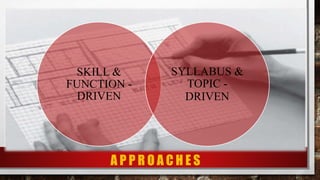
A P P R O A C H E S
SKILL &
FUNCTION -
DRIVEN
SYLLABUS &
TOPIC -
DRIVEN
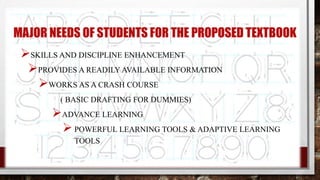
MAJOR NEEDS OF STUDENTS FOR THE PROPOSED TEXTBOOK
SKILLS AND DISCIPLINE ENHANCEMENT
PROVIDES A READILY AVAILABLE INFORMATION
WORKS AS A CRASH COURSE
( BASIC DRAFTING FOR DUMMIES)
ADVANCE LEARNING
POWERFUL LEARNING TOOLS & ADAPTIVE LEARNING
TOOLS
FRAMEWORK DESIGN FOR BASIC DRAFTING
O
C
A
S
P
M
OMPETENCY BASED EDUCATION (NC-II Compliant)
UTCOMES – BASED EDUCATION
ULTIMEDIA - ENRICHED INSTRUCTION
ORTFOLIO – BASED LEARNING
CTION – LEARNING MODEL (Activity, Analysis, Abstraction, Application)
KILLS – BASED APPROACH
S TUDENTS – CENTERED APPROACH
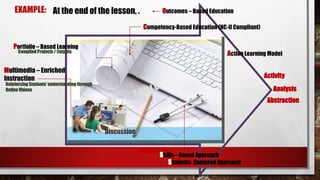
EXAMPLE: At the end of the lesson, . Outcomes – Based Education
Discussion
Multimedia – Enriched
Instruction
Portfolio – Based Learning
CompiledProjects / Outputs
Reinforcing Students’ understanding through
Online Videos
Activity
Action Learning Model
Analysis
Abstraction
Application
Skills – Based Approach
Students- Centered Approach
Competency-Based Education (NC-II Compliant)
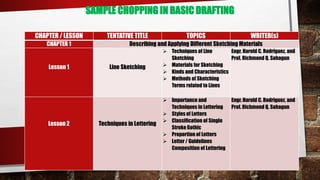
SAMPLE CHOPPING IN BASIC DRAFTING
CHAPTER / LESSON TENTATIVE TITLE TOPICS WRITER(s)
CHAPTER 1 Describing and Applying Different Sketching Materials
Lesson 1 Line Sketching
 Techniques of Line
Sketching
 Materials for Sketching
 Kinds and Characteristics
 Methods of Sketching
Terms related to Lines
Engr. Harold C. Rodriguez, and
Prof. Richmond Q. Sahagun
Lesson 2 Techniques in Lettering
 Importance and
Techniques in Lettering
 Styles of Letters
 Classification of Single
Stroke Gothic
 Proportion of Letters
 Letter / Guidelines
Composition of Lettering
Engr. Harold C. Rodriguez, and
Prof. Richmond Q. Sahagun
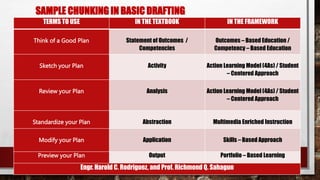
SAMPLE CHUNKING IN BASIC DRAFTING
TERMS TO USE IN THE TEXTBOOK IN THE FRAMEWORK
Think of a Good Plan Statement of Outcomes /
Competencies
Outcomes – Based Education /
Competency – Based Education
Sketch your Plan Activity Action Learning Model (4As) / Student
– Centered Approach
Review your Plan Analysis Action Learning Model (4As) / Student
– Centered Approach
Standardize your Plan Abstraction Multimedia Enriched Instruction
Modify your Plan Application Skills – Based Approach
Preview your Plan Output Portfolio – Based Learning
Engr. Harold C. Rodriguez, and Prof. Richmond Q. Sahagun
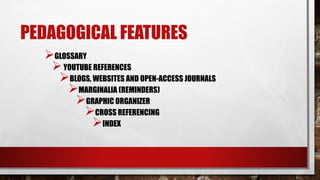
PEDAGOGICAL FEATURES
GLOSSARY
YOUTUBE REFERENCES
BLOGS, WEBSITES AND OPEN-ACCESS JOURNALS
MARGINALIA (REMINDERS)
GRAPHIC ORGANIZER
CROSS REFERENCING
INDEX

Basic drafting principles Workshop.pptx

  • 2.
    REASON TO CREATEINSTRUCTIONAL MATERIALS TO REINFORCE TEACHING EFFECTIVENESS. TO PROVIDE A CLOSER LOOK TO THE INFORMATIONS NEEDED BOTH BY THE TEACHER ANDTHE STUDENT. DUE TO MODIFICATIONS, NEW INFORMATIONS ON TRENDS SOME OF THE BASIC TOPICS WERE NEGLECTED IS NOT AVAILABLE ONLINE AND AMONG ANY OTHER REFERENCES. TO HAVE A LESSER TIME ON TEACHER – STUDENT DISCUSSIONS / LECTURES DUE TO WRITING ALL THE INFORMATION NEEDED ON THE BOARD. TO PROVIDE AMPLE TIME FOR LABORATORY WORKS AND PLATE PREPARATIONS.
  • 3.
    A P PR O A C H E S SKILL & FUNCTION - DRIVEN SYLLABUS & TOPIC - DRIVEN
  • 4.
    MAJOR NEEDS OFSTUDENTS FOR THE PROPOSED TEXTBOOK SKILLS AND DISCIPLINE ENHANCEMENT PROVIDES A READILY AVAILABLE INFORMATION WORKS AS A CRASH COURSE ( BASIC DRAFTING FOR DUMMIES) ADVANCE LEARNING POWERFUL LEARNING TOOLS & ADAPTIVE LEARNING TOOLS
  • 5.
    FRAMEWORK DESIGN FORBASIC DRAFTING O C A S P M OMPETENCY BASED EDUCATION (NC-II Compliant) UTCOMES – BASED EDUCATION ULTIMEDIA - ENRICHED INSTRUCTION ORTFOLIO – BASED LEARNING CTION – LEARNING MODEL (Activity, Analysis, Abstraction, Application) KILLS – BASED APPROACH S TUDENTS – CENTERED APPROACH
  • 6.
    EXAMPLE: At theend of the lesson, . Outcomes – Based Education Discussion Multimedia – Enriched Instruction Portfolio – Based Learning CompiledProjects / Outputs Reinforcing Students’ understanding through Online Videos Activity Action Learning Model Analysis Abstraction Application Skills – Based Approach Students- Centered Approach Competency-Based Education (NC-II Compliant)
  • 7.
    SAMPLE CHOPPING INBASIC DRAFTING CHAPTER / LESSON TENTATIVE TITLE TOPICS WRITER(s) CHAPTER 1 Describing and Applying Different Sketching Materials Lesson 1 Line Sketching  Techniques of Line Sketching  Materials for Sketching  Kinds and Characteristics  Methods of Sketching Terms related to Lines Engr. Harold C. Rodriguez, and Prof. Richmond Q. Sahagun Lesson 2 Techniques in Lettering  Importance and Techniques in Lettering  Styles of Letters  Classification of Single Stroke Gothic  Proportion of Letters  Letter / Guidelines Composition of Lettering Engr. Harold C. Rodriguez, and Prof. Richmond Q. Sahagun
  • 8.
    SAMPLE CHUNKING INBASIC DRAFTING TERMS TO USE IN THE TEXTBOOK IN THE FRAMEWORK Think of a Good Plan Statement of Outcomes / Competencies Outcomes – Based Education / Competency – Based Education Sketch your Plan Activity Action Learning Model (4As) / Student – Centered Approach Review your Plan Analysis Action Learning Model (4As) / Student – Centered Approach Standardize your Plan Abstraction Multimedia Enriched Instruction Modify your Plan Application Skills – Based Approach Preview your Plan Output Portfolio – Based Learning Engr. Harold C. Rodriguez, and Prof. Richmond Q. Sahagun
  • 9.
    PEDAGOGICAL FEATURES GLOSSARY YOUTUBE REFERENCES BLOGS,WEBSITES AND OPEN-ACCESS JOURNALS MARGINALIA (REMINDERS) GRAPHIC ORGANIZER CROSS REFERENCING INDEX