Answer the followingquestions on semen
extension:
a) What must be the whole sperm to extender ratio?
b) Why is semen extension done?
c) What do semen extenders contain?
d) If a 300 ml whole sperm is extended, how many
sows/gilts can be artificially inseminated using the
extended semen?
Discuss how thefollowing pregnancy diagnosis
methods are done:
a) Physical evaluation
b) Ballottement/tactile percussion
c) Rectal palpitation
d) Ultrasonography
e) Radioimmunoassay
23.
Which among thefollowing pregnancy
diagnosis methods are difficult to conduct in
swine?
a) Physical evaluation
b) Ballottement/tactile percussion
c) Rectal palpitation
d) Ultrasonography
e) Radioimmunoassay
24.
How many timesis pregnancy diagnosis done
during gestation and when?
25.
After weaning, check
thebody condition
scores of the sows.
What does each body
condition score imply
about the sow’s
productivity?
True or False:Nutrition is a critical aspect in
swine production, for it affects both the
performance of the animal as well as the
profitability of the business
38.
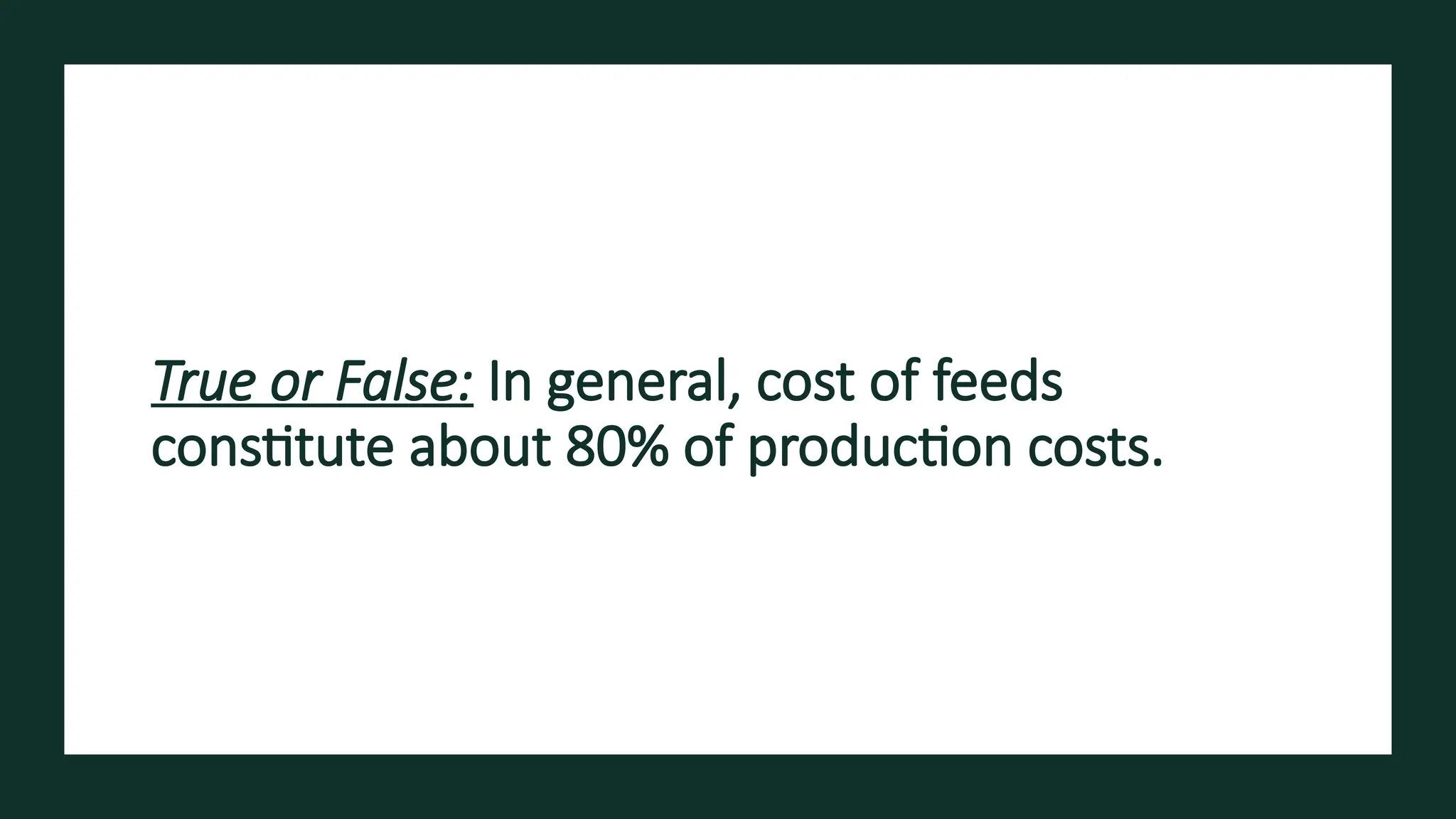
True or False:In general, cost of feeds
constitute about 80% of production costs.
39.
Why is feedformulation more suitable for
commercial farms than backyard farmers?
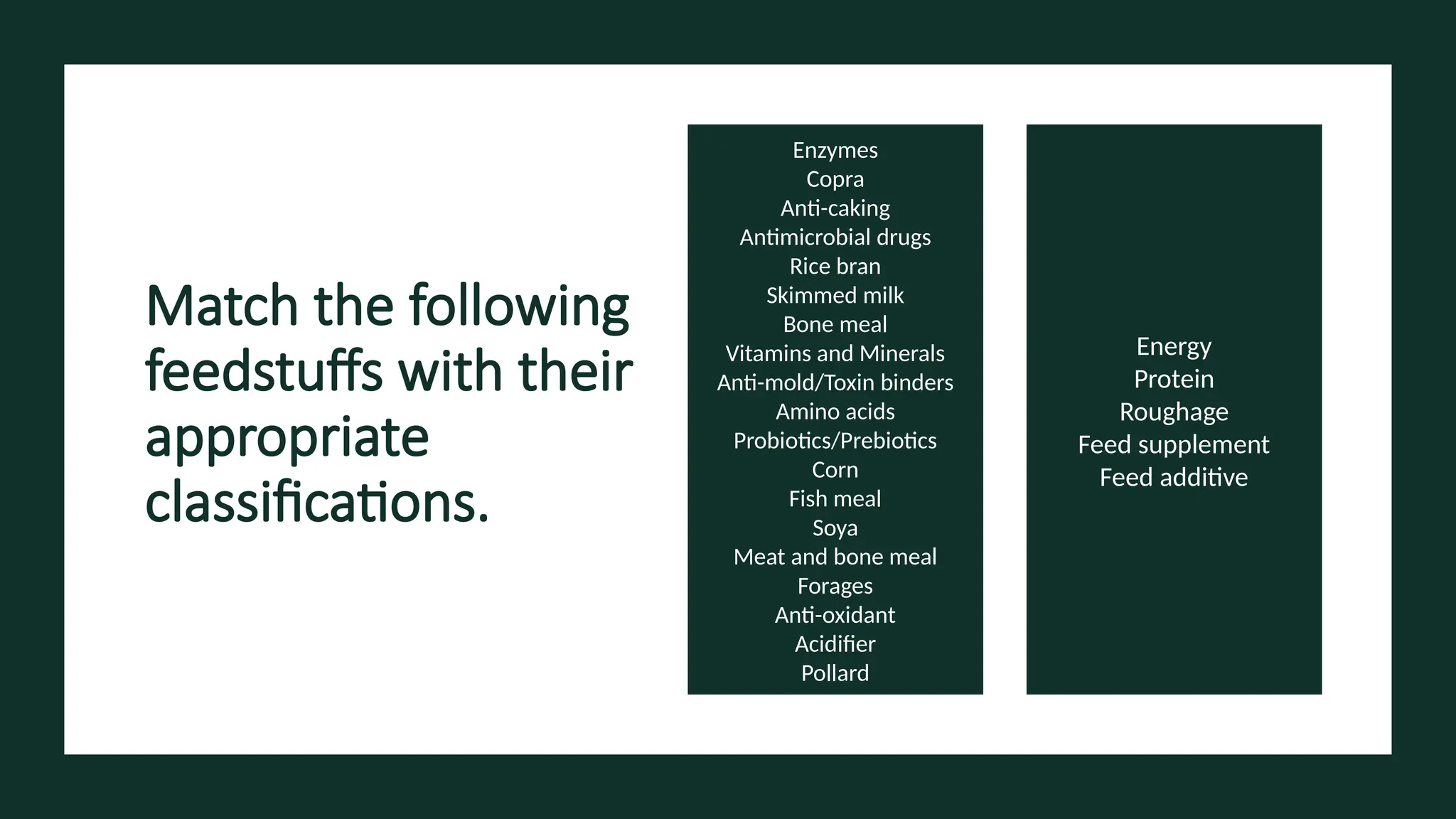
Match the following
feedstuffswith their
appropriate
classifications.
Enzymes
Copra
Anti-caking
Antimicrobial drugs
Rice bran
Skimmed milk
Bone meal
Vitamins and Minerals
Anti-mold/Toxin binders
Amino acids
Probiotics/Prebiotics
Corn
Fish meal
Soya
Meat and bone meal
Forages
Anti-oxidant
Acidifier
Pollard
Energy
Protein
Roughage
Feed supplement
Feed additive
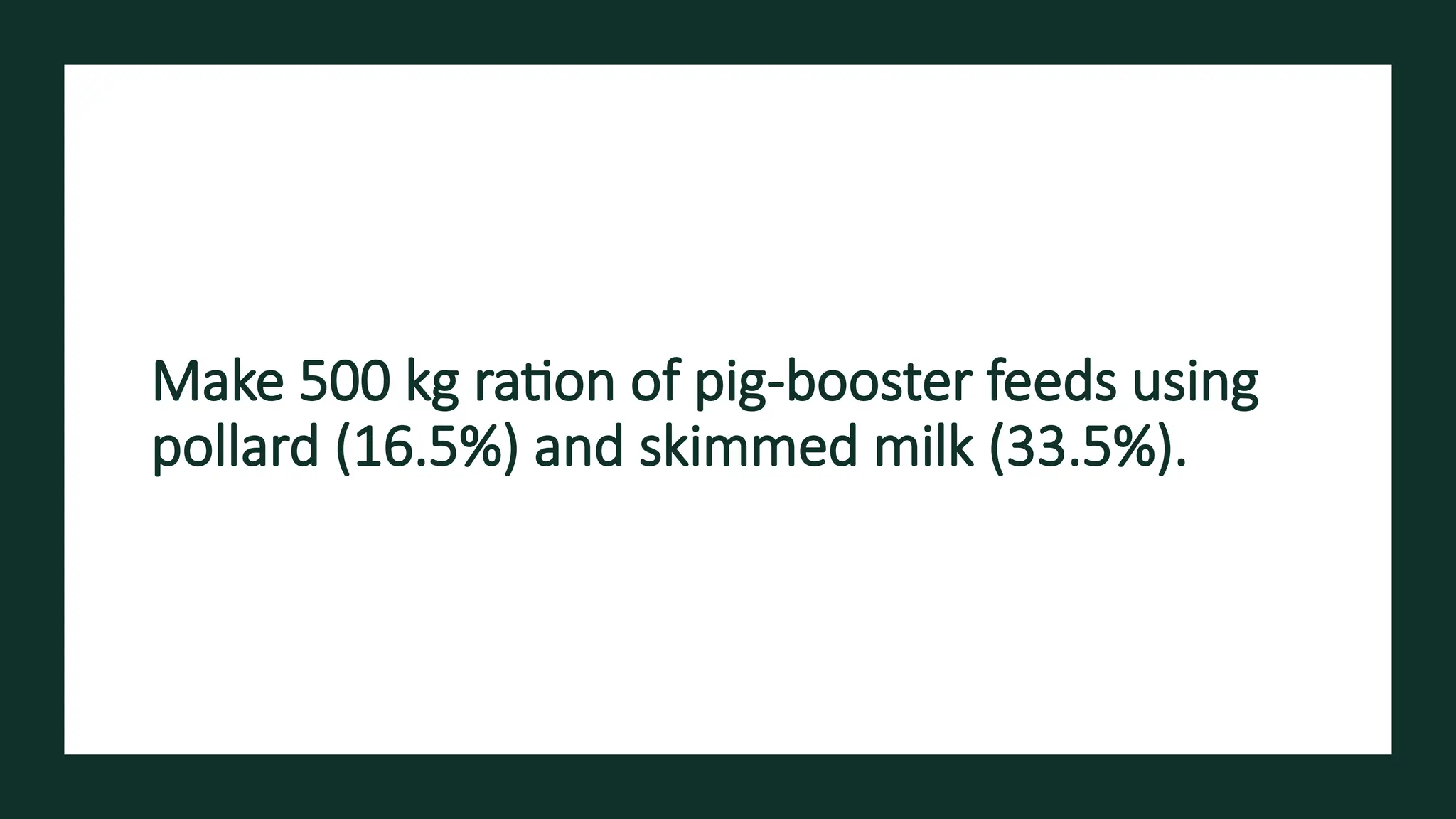
Make 500 kgration of pig-booster feeds using
pollard (16.5%) and skimmed milk (33.5%).
51.
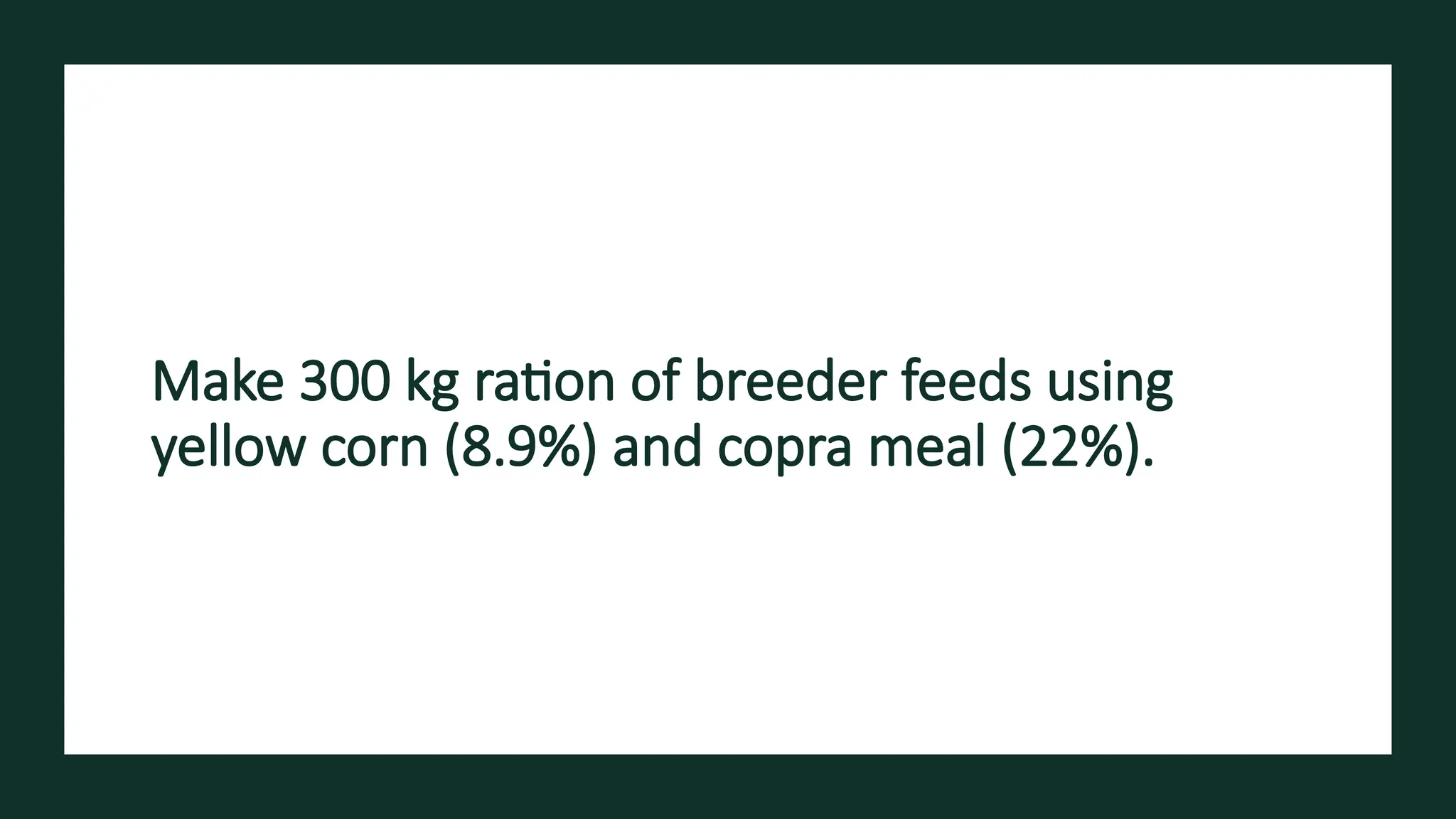
Make 300 kgration of breeder feeds using
yellow corn (8.9%) and copra meal (22%).
52.
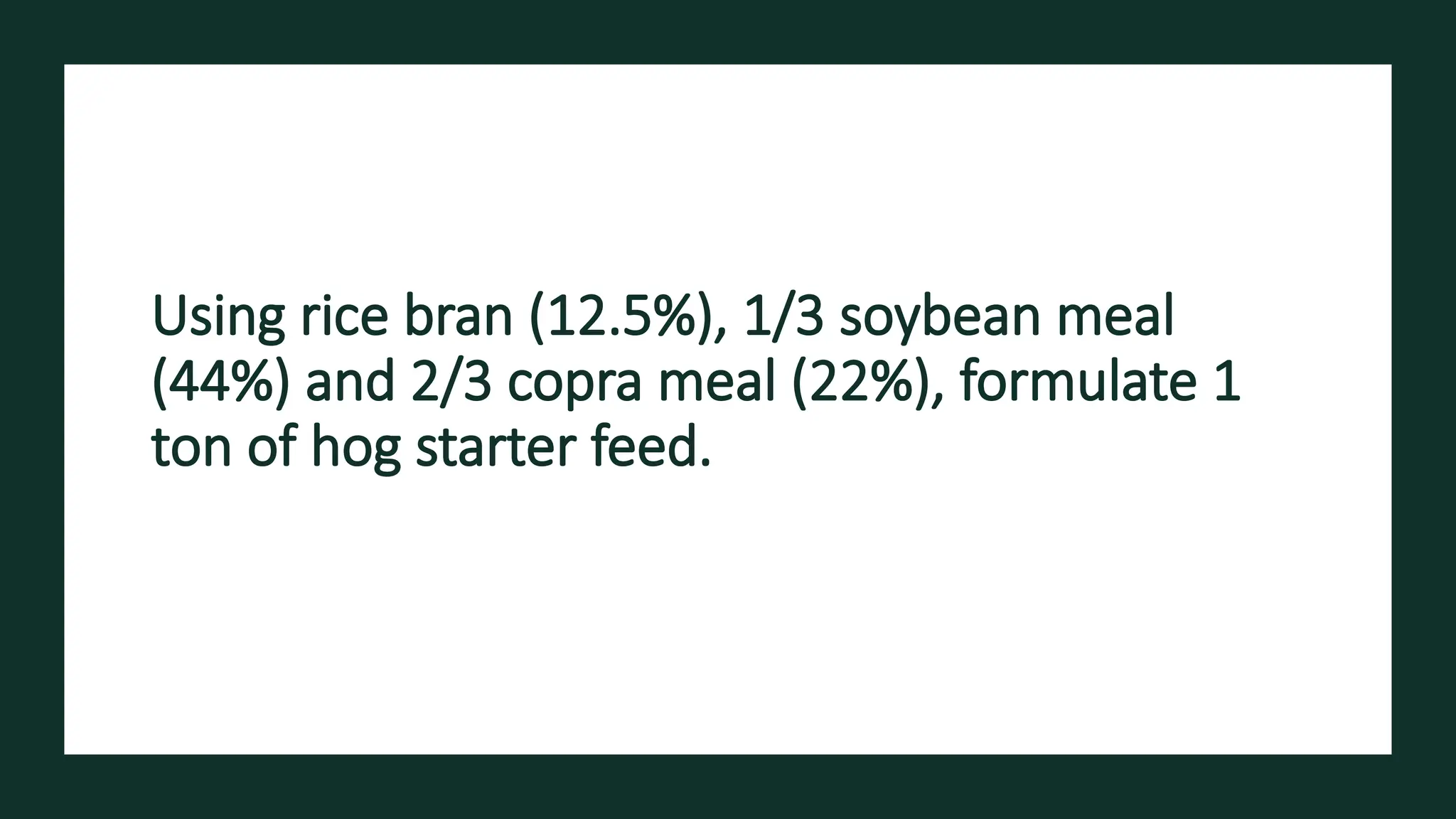
Using rice bran(12.5%), 1/3 soybean meal
(44%) and 2/3 copra meal (22%), formulate 1
ton of hog starter feed.
53.
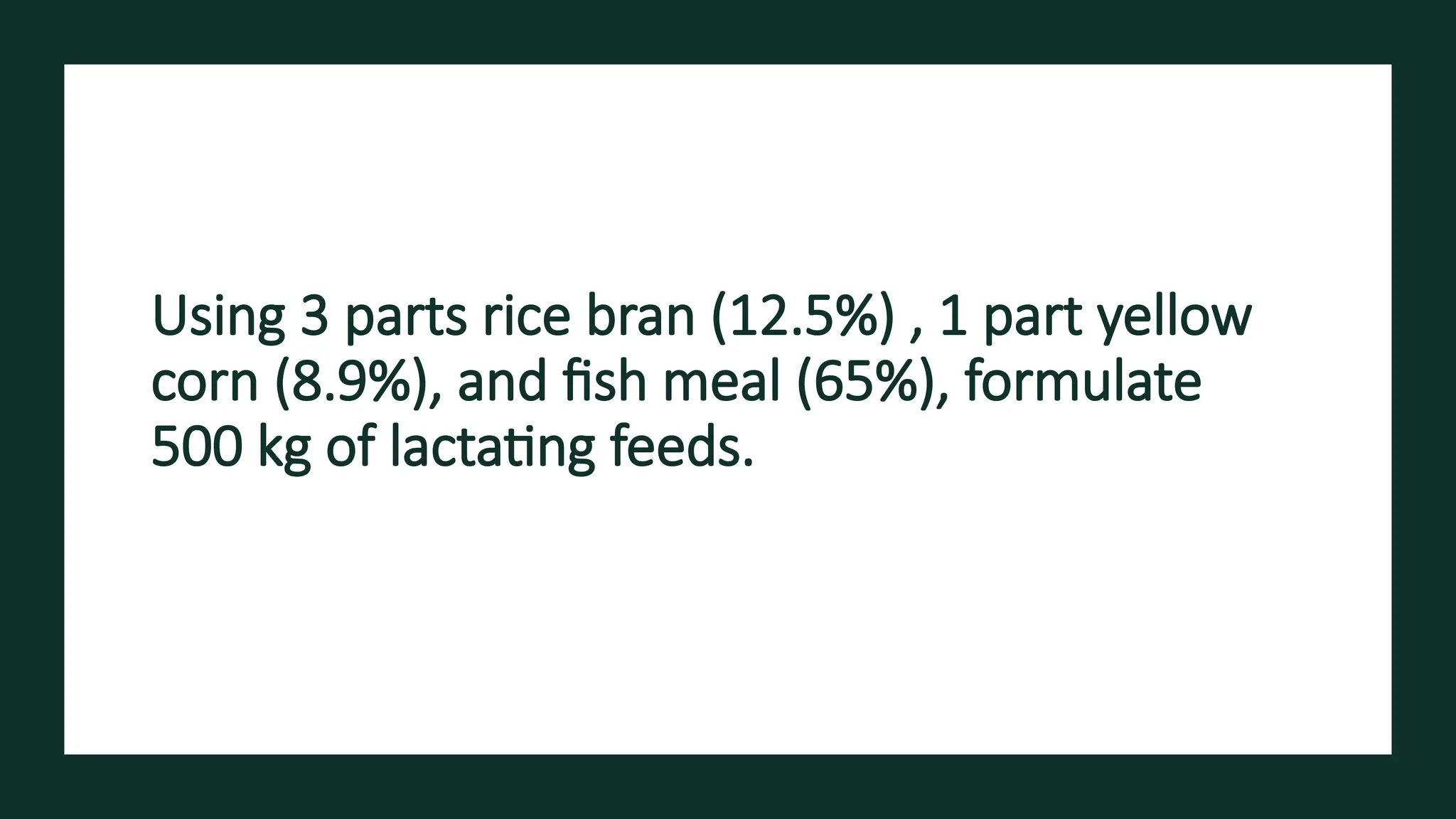
Using 3 partsrice bran (12.5%) , 1 part yellow
corn (8.9%), and fish meal (65%), formulate
500 kg of lactating feeds.
54.
Using 2/5 ricebran (12.5%), 3/5 pollard
(16.5%), 5/8 skimmed milk (33.5%) and 3/8
copra meal (22%), formulate 750 kg of pre-
starter feed.
55.
Using 3 partsyellow corn (8.9%), 2 parts rice
bran (12.5%), 6 parts fish meal (65%) and 1
part meat and bone meal (45%), formulate 1.5
tons of fattener feeds.
56.
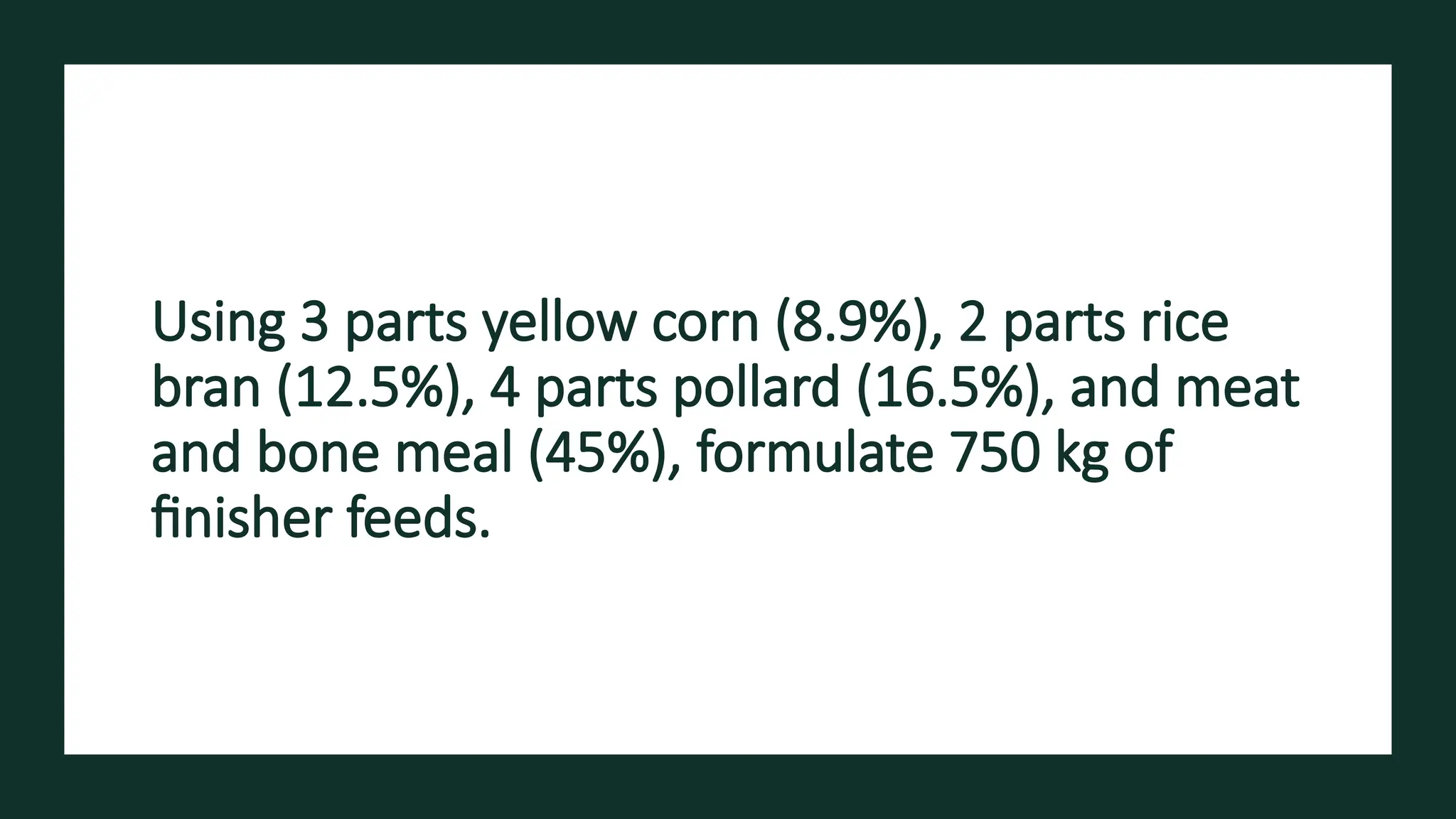
Using 3 partsyellow corn (8.9%), 2 parts rice
bran (12.5%), 4 parts pollard (16.5%), and meat
and bone meal (45%), formulate 750 kg of
finisher feeds.
57.
Using pollard (16.5%),and 2/7 skimmed milk
(33.5%), 2/7 meat and bone meal (45%), 3/7
soybean meal (44%) formulate 750 kg of
finisher feeds.
Estimate the liveweight of a finisher hog
with heart girth of 23 inches and body
length of 31 inches.
86.
Estimate the livewt of grower hog with
heart girth of 0.85 meters and body length
of 1.04 meters.
87.
Estimate the liveweight of a finisher hog
with heart girth of 25 inches and body
length of 33 inches.
88.
Estimate the livewt of grower hog with
heart girth of 1.27 meters and body length
of 1.02 meters.
89.
Estimate the liveweight of a finisher hog
with heart girth of 29 inches and body
length of 35 inches.
90.
Estimate the livewt of grower hog with
heart girth of 1.53 meters and body length
of 1.06 meters.
91.
From these data:150 sow-level
80 % farrowing
12 ave live litter size
10 ave weaning size
9 ave growers marketed
compute for : a) # of sow to be bred weekly
b) farrowing mortality
c) growing mortality
d) farrowing mortality rate
e)growing mortality rate
92.
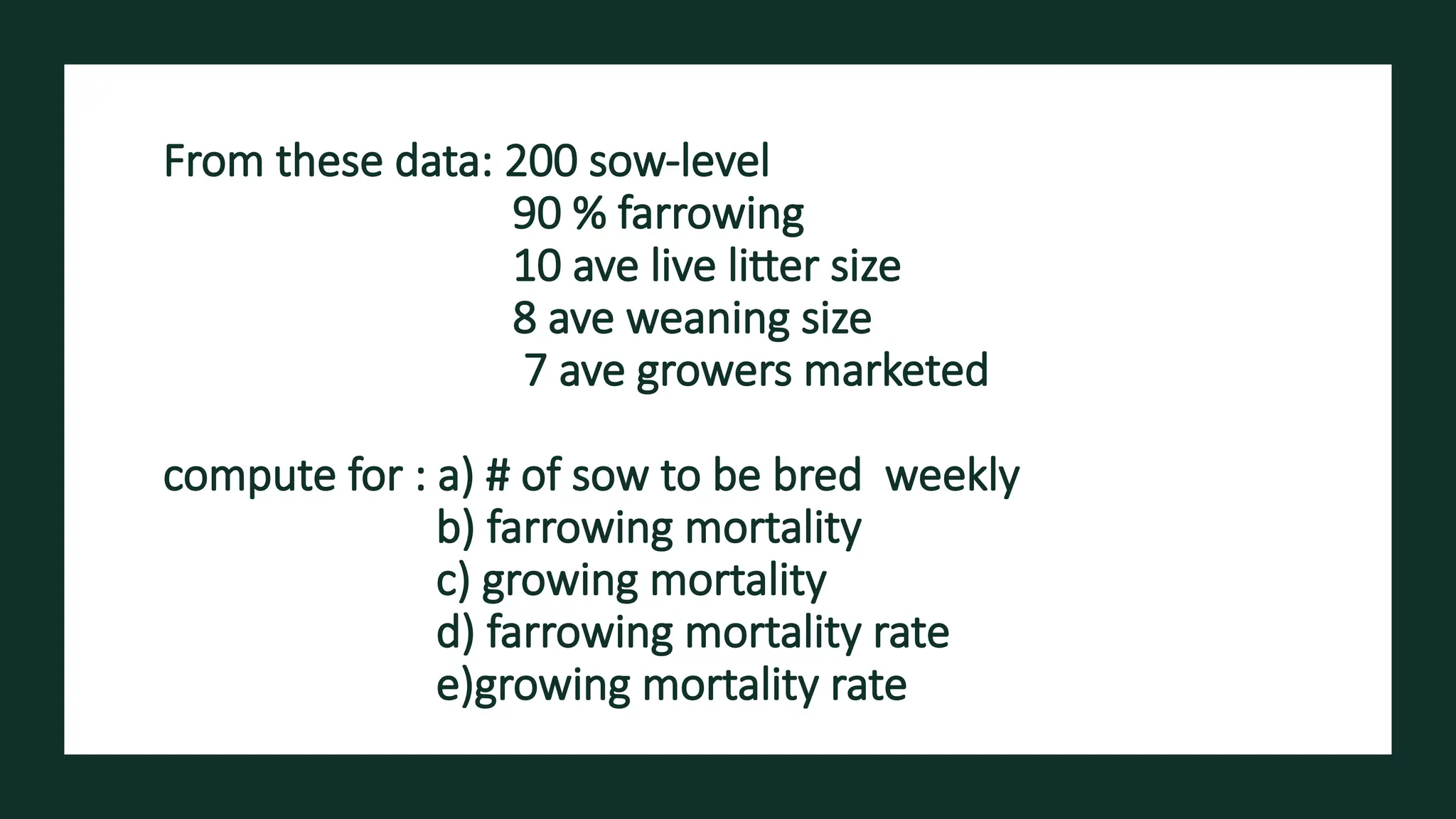
From these data:200 sow-level
90 % farrowing
10 ave live litter size
8 ave weaning size
7 ave growers marketed
compute for : a) # of sow to be bred weekly
b) farrowing mortality
c) growing mortality
d) farrowing mortality rate
e)growing mortality rate
93.
From these data:100 sow-level
70 % farrowing
9 ave live litter size
6 ave weaning size
4 ave growers marketed
compute for : a) # of sow to be bred weekly
b) farrowing mortality
c) growing mortality
d) farrowing mortality rate
e)growing mortality rate
94.
From these data:300 sow-level
90 % farrowing
12 ave live litter size
11 ave weaning size
8 ave growers marketed
compute for : a) # of sow to be bred weekly
b) farrowing mortality
c) growing mortality
d) farrowing mortality rate
e)growing mortality rate
95.
From these data:400 sow-level
85 % farrowing
11 ave live litter size
17 ave weaning size
5 ave growers marketed
compute for : a) # of sow to be bred weekly
b) farrowing mortality
c) growing mortality
d) farrowing mortality rate
e)growing mortality rate
#3 Natural
Actual mating occurs between a boar and a gilt/sow
Artificial insemination
A technician collects the semen, processes it in the lab, and inseminates the gilt/sow in heat
#4 By breed
Up-grading – native x purebred (e.g., jalajala x Berkshire = berkjala)
Pure-breeding – purebred x purebred (e.g., duroc x duroc)
Cross-breeding – involved crossing between different breeds (e.g., duroc x landrace)
By relationship
Outbreeding – breeding between non-related individuals (e.g., duroc from Tarlac x duroc from Batangas)
Inbreeding – breeding between closely related individuals (e.g., father x daughter, siblings, mother x son, cousin x aunt)
Linebreeding – between distantly related inidividuals (from the 4th genera and older)
#5 Purebreeding (advantages)
Superior to hybrids in terms of transmitting desired traits
Purebreds are uniform in type and in other characteristics (increased homozygosity)
Purebreeding (disadvantages)
Some are “never-do-wells”
Genetic abnormalities appear with increased frequency
Crossbreeding (advantages)
Increased profit through hybrid vigor/heterosis
Increased litter size
Increased growth rate
Increased feed conversion ratio
Increased meatiness
Crossbreeding (disadvantages)
Hogs lack the uniformity in in color and general attractiveness of pure breeds
Qualities are dependent on the quality and superiority of parental stocks
#6 Proestrus
Increased development of the ovarian follicle
External signs due to the release of FSH and LH first appear at the age of puberty (i.e., 6-8 mos, vulva swells and reddens)
FSH and LH from the pituitary gland stimulates the release estrogen in the ovaries, thus triggering the development of the ovarian follicles
Estrus
Period of sexual receptivity
Ovulation occurs (Mature follicle ruptures and releases the ovum to the oviduct)
Metestrus
Post-ovulatory phase
Corpus luteum functions
The ruptured follicle develops into a corpus luteum which produces progesterone
Anestrus
Long period of rest between breeding season (i.e., gestation)
Diestrus
Short period of rest between estrus in polyestrus animals
#7 Physiological signs
Swelling of the vulva
Redness of the vulva
Mucus secretion
Behavioral signs
Anorexia
Euphoria/sounding
Mounting other animals
Frequent urination
Standing heat (sexual receptivity)
#12 In medical terms, anorexia is generally defined as a loss of appetite.
If a sow/gilt exhibits anorexia WITHOUT euphoria or sounding, it is most likely a symptom of an underlying disease.
If a sow/gilt exhibits anorexia WITH euphoria or sounding, it is most likely a sign of estrus.
#14 Methods of estrus detection
Haunch pressure test (commonly used in the Philippines)
Riding the back test (commonly used in the Philippines)
Teaser method
#15 Whole semen – pure semen
Extended semen – Pure semen + extender
Frozen semen – Extended semen is frozen using liquid nitrogen tank
#16 Semen Collection
Done early in the morning and late in the afternoon (heat kills the sperm)
Use a teaser/dummy sow
Boars are trained to mount the teaser/dummy sow
Make sure that the beaker to be used for semen collection and the hands of the technician are clean. The beaker must have a filter paper or plastic filter to prevent bacterial contamination.
Early in the morning or late in the afternoon, bring the boar to the semen collection site and allow it to mount the dummy sow/teaser.
Once the boar has mounted, wipe its penis and prepuce with mild antiseptic.
Hold the boar’s penis and wait for it to finish ejaculating. This usually lasts for 15 mins or longer. Do not collect the first and third fractions of the boar’s semen. They have very low sperm concentration.
The first fraction is a watery, colorless liquid.
The second fraction is creamy white and sperm-rich.
The third fraction is tapioca/sago.
Release the boar’s penis only when ejaculation is complete, and the penis is no longer erect.
Semen Evaluation
Semen Extension
During semen extension, make sure that both beakers have a filter paper/plastic filter.
Pour the extender gently into the whole sperm. (Never the other way around and abruptly. These will cause the sperm to die.)
Refrigeration
Do not freeze the semen
Insemination
Done 12 hrs after collection and extension.
Identify gilts/sows in estrus.
Wipe the vulva of the gilt/sow clean using a mild antiseptic. Make sure that the hands of the technician and the AI catheter to be used are also clean.
Pull the end of the vulva slightly such that it is perpendicular to the ground.
Insert the AI catheter gently in a counterclockwise motion until it locks with the cervix.
Open the locks of the AI catheter and AI bottle to connect them.
Squeeze the AI bottle until all of the semen is deposited.
After breeding, transfer the sow to the gestating pens. If the sow returns to heat 18-24 days (ave. 21 days) after breeding, return the sow to the breeding pens.
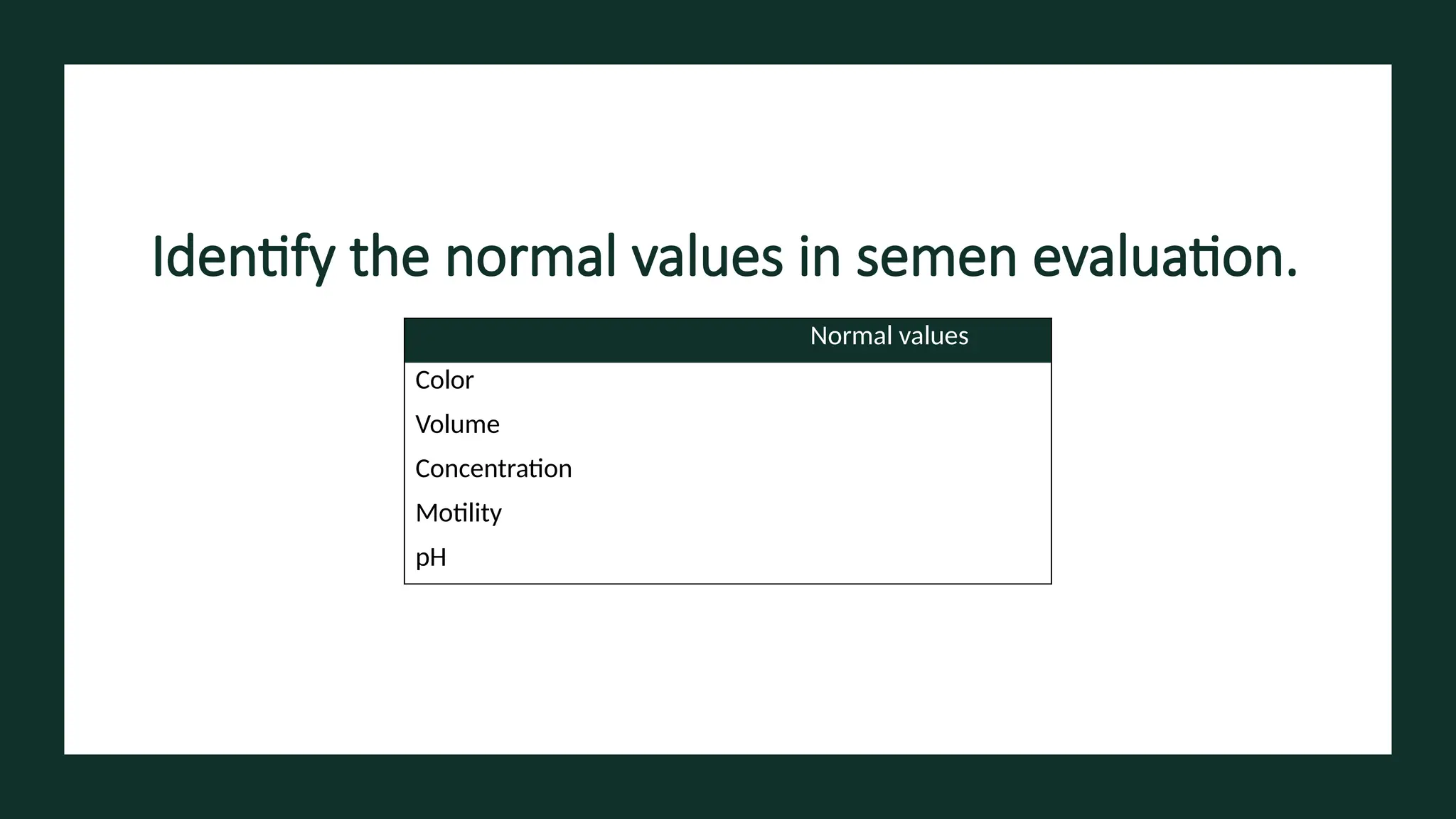
#17 Color – creamy white
Volume – ave. of 200 ml
Concentration – 240 Million sperm/ml
Motility – at least 80%
pH – slightly alkaline
#18 Parts of sperm
Head
Midpiece
Tail
*Sperm morphology
Presence and location of droplets (e.g., droplets inside the head, on the tail)
Sperm abnormalities (e.g., abnormal tail shape, head and midpiece are detached)
#19 1:1
Purposes of semen extension:
Maximize the use of semen
Keeps the sperm motile (the extender provides food for sperm)
Protects the sperm from bacterial contamination (due to the antibiotics present in the extenders)
Extends the life of semen
Semen extenders contain nutrients to help the sperm survive outside the testes and antibiotics to protect the sperm from bacterial contamination.
(300x2)/50=12; 12 sows/gilts can be artificially inseminated using 600 ml extended semen.
#20 The tip of the AI catheter is purposely designed to imitate the shape of the boar’s penis thus simulating the cervical lock which occurs during natural breeding.
#22 Physical evaluation – check for physical signs of estrus and development of the abdominal cavity and mammary glands
Ballottement/tactile percussion – intermittent, firm push-stroke is applied with the object evoking motion in the underlying organ/fetus, causing it to rebound on the fingertips
Rectal palpitation – While wearing obstetric gloves, manually check the presence of developing fetus by inserting your arm in the hog’s anus
Ultrasonography
A mode (amplitude mode) – Detection of fetus via doppler (fetal circulation). Wear headphones to hear sonar/echo
B mode – real time ultrasound scanning
Radioimmunoassay – using tests (e.g., ELISA test kit), progesterone is detected in milk, blood (serum), or urine and estrone sulfate in blood (serum); During gestation, CL is active and produces progesterone to nourish the developing young.
#23 Ballottement/tactile percussion (thicker backfat makes it difficult)
Rectal palpitation
#25 1 or 2
Sow may have thin sow syndrome
Symptoms: hair loss, thin body
Sow will not return to heat until 2-3 months
3 or 4
Standard
5
Sow is obese and will not return to heat immediately
Management practices: feed is regulated, and sow is subject to physical exercise
#26 Administer oxytocin when the sow exhibits the following signs:
Sticky and clear discharge (”sipon”)
Clear and watery discharge (“tubig”)
Bloody discharge (“dugo”)
The presence of all of these signs indicates that the cervix is now open, and the cervical seal has disintegrated.
When a sow is pregnant, the cervix releases sticky mucus to seal it. This protects the developing fetus from infections caused by pathogens which enter through the vagina.
Dystocia occurs when piglets block the body of the uterus, causing difficulty in farrowing.
Oxytocin must not be administered when the cervix is closed to avoid the piglets from piling on top of each other in the body of the uterus then crushing each other. In addition, the uterus will easily tire itself.
#28 Water
Carbohydrates
Protein
Fats
Minerals
Vitamins
#31 For 4 days after weaning - To stimulate the ovaries, to produce large number of eggs which in turn result to large litter size
During the last 4 weeks of pregnancy up to 5 days before farrowing – to prepare the sow for the stress that comes along with the forth coming farrowing
#32 Upon farrowing, the sow has enough milk in its mammary glands to feed its newly-farrowed piglets for one day due to the lactating feeds fed prior to farrowing. Thus, feed is withheld from sows 24 hours after farrowing to temporarily halt milk production, thus preventing mastitis. Newly-farrowed piglets tend to consume less milk and they cannot deplete the milk stored in the mammary glands. If the sow continues to produce milk despite this, the mammary glands will be inflamed.
#34 The younger the animal, the higher the nutrient requirement.
#39 Ingredients are bought in bulk/wholesale, typically at least 1000 kg (1 metric ton) each. (complexity of preparation) Thus, buying commercial feeds is more cost efficient.
For commercial farms, formulating their own feeds is advisable because there may be discrepancies in lab analysis of commercial feeds due to processing and distribution. It is also more cost efficient.
#40 Availability of feedstuff – Some feedstuff grow in time with season; therefore, they are not available all year round.
Cost - Feedstuff available near the farm are most likely cheaper. (e.g., Soya is usually imported into the Philippines. Thus, its price rises along with inflation.)
Palatability – Animals may not consume feed that do not satisfy their palate. (e.g., Guar, which is imported from India, may be used as an alternative to soya because of its equally promising crude protein content and cheaper price. However, it is not as palatable thus affecting the acceptability of the feed)
Nutrient Content – Formulate feeds which satisfy the animal’s nutrient requirement. In addition, proper processing of feeds is needed to avoid losing the nutrients of feedstuff. (e.g., When soya is not processed properly, the trypsin inhibitor it contains blocks the action of trypsin in the small intestine. This causes protein digestion and absorption to be inhibited.)
Possible presence of toxic substances – (e.g., Camote is used as an alternative for corn as a carbohydrate source when corn is unavailable due to extreme weather conditions. However, it contains oxalic acid, an irritant which causes discomfort and redness in the oral cavity.; Ipil-ipil leaf meal must not be given to breeders (sows and gilts) for it contains mimosine, an abortifacient. However, its high crude protein content is good for weanlings, growers, and fatteners.)
#43 False,
A low fiber diet INCREASES the risk of digestive diseases.
#44 Feed supplements directly affect growth and development.
Feed additives do not directly affect growth and development, but they are added to the feeds for their intended purpose.
#45 Probiotics are good bacteria which aid in digestion. (e.g., Lactobacilli)
Prebiotics are food for the good bacteria which aid in digestion (e.g., betaglucans, FOS or fructooligosaccharides, mannans)
#46 Energy
Yellow corn
Rice bran
Pollard
Protein
Bone meal
Meat and bone meal
Skimmed milk
Fish meal
Soya
Copra
Roughage
Forages
Feed supplement
Vit and mineral
Amino acids
Enzymes
Probiotics/Prebiotics
Feed additive
Antimicrobial drugs
Anti-mold/toxin binders
Acidifiers
Decrease ammonia content of manure
Anti-caking
#47 Pearson square
Trial and Error
Linear programming (e.g., Brill, format, Mix-it, Optima)
#48 They are added to control the strength of the manure’s odor. Thus it also aids in preventing respiratory diseases.
#49 Anticaking agents are added in feeds to prevent them from caking in the walls of the machine (e.g., feed mill).
#59 Live animals (i.e., piglets, fatteners, culled gilts and boars)
Farm recycle products (i.e., sacks, containers, fertilizers)
#60 Individuals/direct buyers/middle men
Companies/supermarkets/processing plants
#61 Weight
Acceptable in the market: 80-90 kg, easily managed by the butcher
Pigs weighing 100kg and above require more labor from the butcher
Age
Ave. 5 months for fatteners (4-6 months is okay, as long as the pig weighs 80-90 kg).
10-12 months for gilts (typically those that did not come in heat)
200 days for boars
Avoid selling young pigs (i.e., 3 months old). Their tissues have low water binding capacity thus they produce watery meat which deflate upon cooking.
Avoid selling older pigs (i.e., 6 mos. Old and above) because they have higher backfat thickness and their meat is inferior in terms of palatability.
For boars, take note of boar taint.
Pigs for slaughter are generally sold at 5 months old at a weight measuring between 80-90 kg. When the pig weighs greater than or equal to 100 lkg, they are usually sold for a lower price due to higher backfat thickness.
The peak of a pig’s growth is at 5 months. At 5-6 months, they still grow albeit at a slower rate. At 6 months, they stop growing completely but their backfat thickness still increases.
Sex
According to research, there’s no significant difference between the weight and meat quality of pork based on sex.
However in the Philippines, buyers prefer the meat of male pigs because it is “heavier, and bigger.” In truth, the notion that boars produce a better carcass is false. Good body conformation is dictated by breed, and good feeding and health management.
Gilts, boars, and young boars are best for processing.
Finishing
Finishing – the distribution and quality of fat in pork
Marbling (8-12%)
Total fat (20-35%)
Health
Do not sell sick pigs
#62 Color, texture, exudation – PSE (Pale, soft, and Exudative), RFN (Reddish, Firm, and Non-exudative), and DFD (Dark, Firm, and Dry)
Color standards – From pale (1) to dark (6)
Marbling standards – From least (1) to most marbling (10)
#63 Fasting – animals are fasted 12-24 hrs before transport and before slaughter. This induces thorough bleeding and minimize accidental cutting of internal organs. Note that feeding in the holding pen will not increase meat production.
Relaxation – Animals should be given at least 6-8 hours of rest before slaughter. This maintains glycogen in the muscle and decreases lactic acid production. Loss of glycogen in the muscle due to stress may cause PSE and increases lactic acid production. Higher lactic acid content in the carcass would mean faster spoilage. It also does not cure well and are low in quality.
Gentle handling - hitting and kicking will cause breakage of small blood vessels leading to bloody meat and blood meat can’t be cured
Clean the animal – to remove contamination
#67 Ante-mortem Exam
Passed: Not lame, smooth skin, walang muta, walang sipon, healthy, no fever
Denied/Rejected: scouring, may sipon, pus in the body, unhealthy, with fever
Suspect: no signs of disease but the animal is lethargic and is having breathing difficulties
Animals classified under “suspect” are either tired or sick. Increase their rest period and bathe the pig. If lethargy and breathing difficulties persist, the anim
Stunning
Stunning – the process of rendering an animal unconscious before slaughter
Done via hammer, electrocution, or anesthetic drug (CO2)
In the Philippines, stunning is usually done using a hammer/pitting or electrocution.
Sticking and Bleeding
Must be done 3 min. after stunning because doing it too long after increases blood pressure.
Done using a 7-inch knife.
Stick at the hollow portion above the tip of the breast bone at an angle of 35-40° .
Cut the jugular and carotid arteries. All of the blood inside the body must be removed.
Do not pierce the heart. This causes blood clotting and in turn results to dark meat.
When the knife is dull and is unable to efficiently cut off the jugular and carotid veins, this causes the blood to flow slowly during sticking thus providing time for the blood to clot inside. This in turn leads to DFD.
Scalding and Scraping
Scalding must be done at 54-82°C in 3-6 min. At the right temperature, the hair follicle opens allowing for efficient hair removal.
When the temperature is too high, it causes the skin to burn and for the hair to set. Thus, causing difficulty during scraping.
When the temperature is too low, it is not enough to loosen the hair. Thus, causing difficulty during scraping.
Removing the head
Sever the head at the atlas joint/2-3 fingers from the base of the ear
Evisceration
Evisceration is the removal of internal organs.
Cut into halves
Final washing
Gambrelling
Hanging the pork carcass at the hock joint
Post-mortem exam
Muscles and internal organs are inspected for signs of diseases.
Pass – Fit for human consumption
Chilling
Chill the pork carcass at 0-4°C for 24 hours.
Maintain the temperature at 2°C so that firmness and condition is ideal for fabrication.
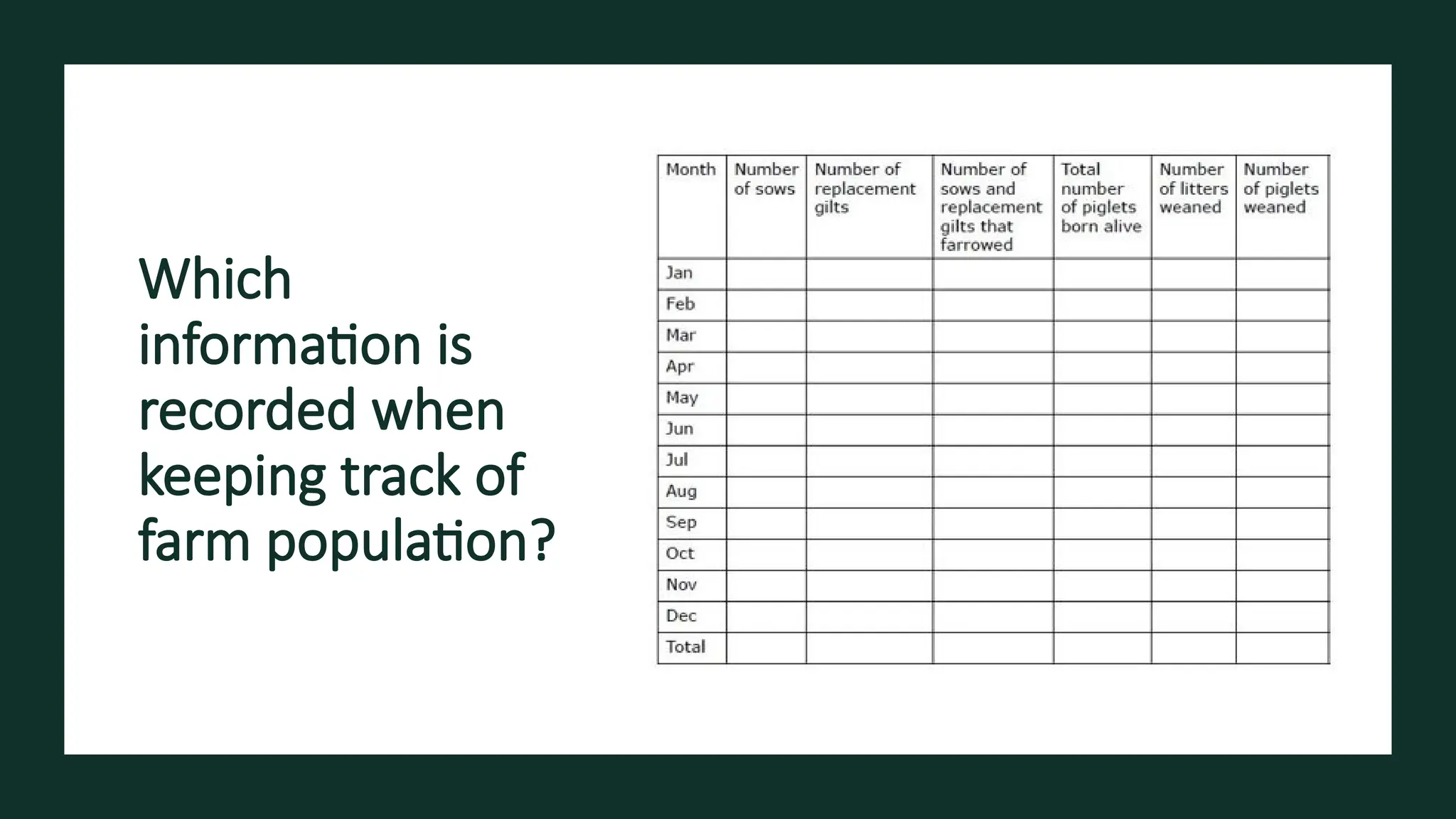
#70 For inventory purposes (herd and items)
To compute for financial statements
Make a monthly and yearly report on the following to keep track of the status of the farm
Production
Population
Mortality
Feeds
Medicines/supplies/equipments
Sales/Expenses
Collectibles/Payables
#71 Supplies – consumable
Equipment – tools used for long term
#72 Collectibles – sinisingil mo
Payables – utang mo
#73 Animal identification is important for a more accurate recording of individual animals.
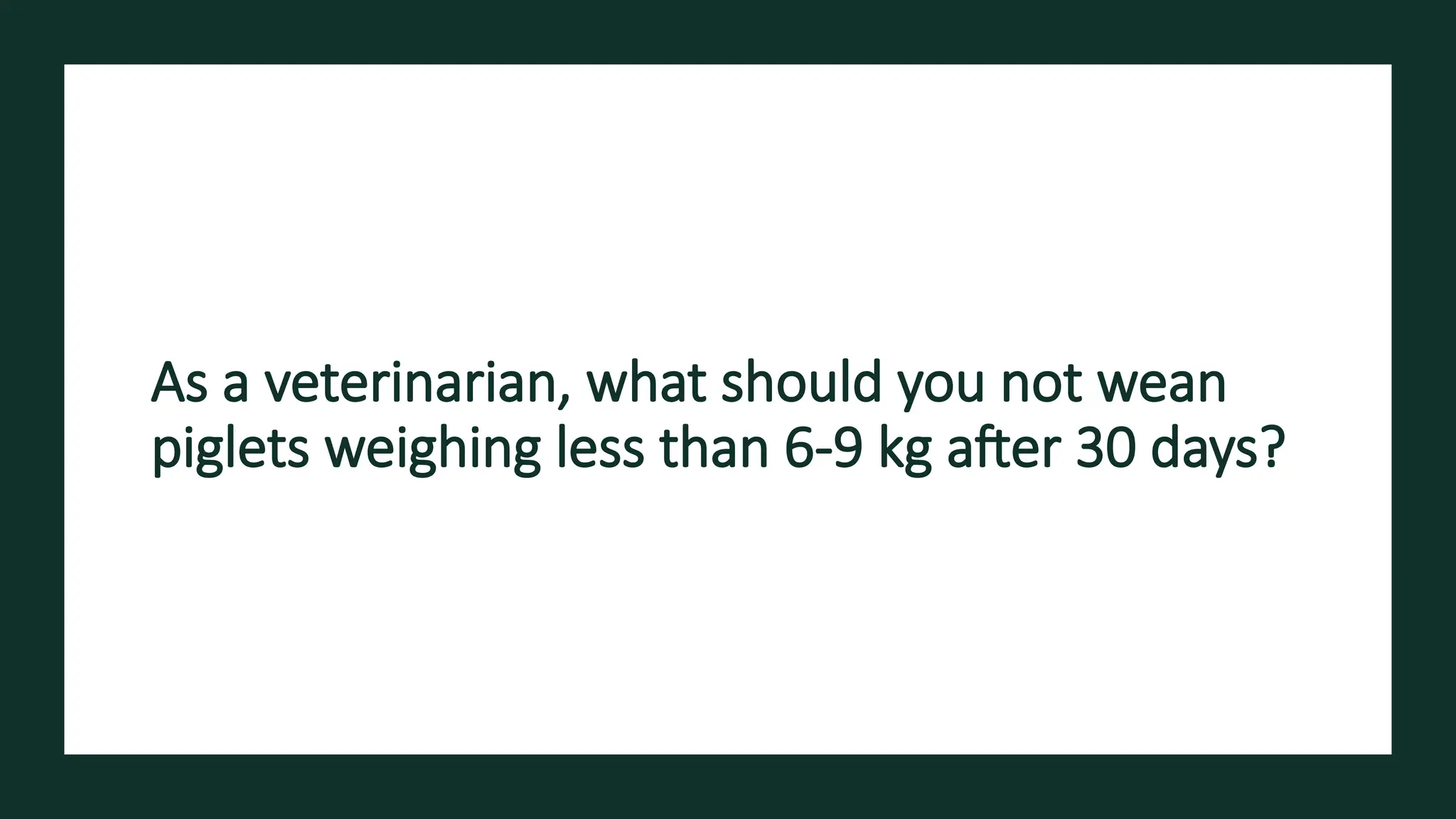
#74 Yes, provided that the piglets have a good weaning weight (i.e., 6-9 kg)
#76 Piglets weighing less than 6-9 kg are easily stressed. Therefore, it is more advisable to cross foster them until they reach a good weaning weight.
#77 It can be used as a basis for incentives to be given to employees. Incentives boost the employee’s morale/motivates them.
To ensure that as a vet, you are properly compensated for the good production output you produce.
aside from keeping track of the farm’s status
#78 To troubleshoot lapses in management practices at the soonest possible time thus avoiding cumulative economic losses.
#97 Compost improves soil quality in terms of:
Fertility
Water-holding capacity
Bulk density
Biological properties
Reduces odor and fly eggs
Due to the high temperatures occurring during microbial decomposition
Reduces hauling costs and is more energy efficient
Due to the decrease in volume and density by 60-65%
An effective way to kill pathogens
#98 Dry
Sloping (2-4%)
Has drainage
Drains into a containment pad
Does not run-off to bodies of water
#99 Manure
EMO
Temperature
Low temperature causes EMO action to stop
Temperature is read daily
Moisture
Oxygen
Needed by aerobic EMO
#100 It incorporates oxygen thus providing aeration for aerobic microorganisms, homogenizes the pile, and breaks up clumps.
Windrow turner
Bucket Tractor
#101 Horse manure (cartbon-to-nitrogen ratio 30:1)
Swine manure (12:1)
#103 Good drainage
Elevated/sloping
Plants must be far (soil foundation should be stable and away from tree roots intrusion)
Utilization of biogas is near
Must be near as possible to the animal pen
#104 Floating dome type – gas holder floats
Fixed dome type – biogas can be read through the gas control valve/biogas meter
Balloon type – balloon inflates; biogas meter is also available
#108 Floating dome type
Collecting pit
Digester
Gas chamber
Slurry store
Gas pipe
Fill pipe
Guide frame
#109 Fixed dome type
Collecting pit
Digester
Compensation and removal tank
Gas chamber
Gas pipe
Entry hatch, with gas tight seal
Accumulation of thick sludge
Outlet pipe
Reference level
Supernatant scum, broken up by varying level
#110 Balloon type
Inlet
Gaspipe
Gas chamber
Slurry volume
Outlet pipe













































![The farm population is recorded by _____
[month/year].](https://image.slidesharecdn.com/basc106afinalsreviewer-250721061134-05ad67c7/75/BASC106A-Finals-Reviewer-Ruminant-Produ-79-2048.jpg)