




Vascularized Composite Allotransplantation
Banff VCA
Linda C. Cendales, M.D.
Associate Professor of Surgery
Duke University Medical Center
on behalf of
The Banff VCA Working Group
< 250 VCA recipients worldwide
Congratulations
to the field of
Vascularized Composite
Allotransplantation
for organizing themselves
under the Banff Structure
Coming together and agreeing to
systematically study VCA pathology is
a significant step
But the hard work starts now
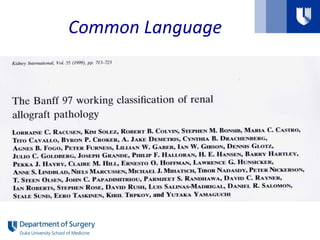
We started talking together in a
common language
We can now argue
The Towel of Babel
Painting by Peter Bruegel the Elder, 1583
We cannot have arguments and
organize ourselves until we have a
common language.
A common language facilitates
disagreement in a good way
A common language allows for
collaboration
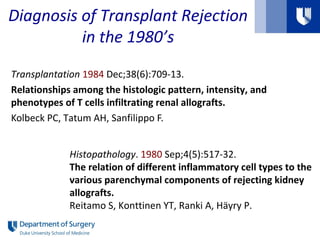
Diagnosis of Transplant Rejection
in the 1980’s
Transplantation 1984 Dec;38(6):709-13.
Relationships among the histologic pattern, intensity, and
phenotypes of T cells infiltrating renal allografts.
Kolbeck PC, Tatum AH, Sanfilippo F.
Histopathology. 1980 Sep;4(5):517-32.
The relation of different inflammatory cell types to the
various parenchymal components of rejecting kidney
allografts.
Reitamo S, Konttinen YT, Ranki A, Häyry P.
Common Language
Vascularized Composite
Allotransplantation
Before 2007
Nothing
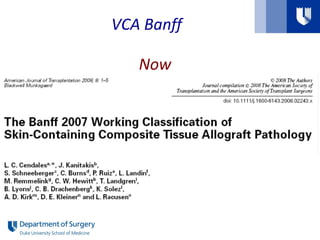
VCA Banff
Now
Keeping this group together under this
framework is how this is going to go
forward
We can now answer the questions
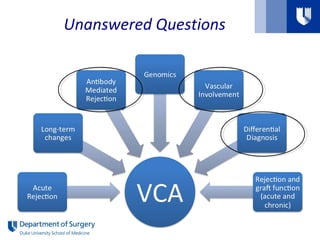
Unanswered Questions
Histologic Features of Antibody Mediated Rejection after
Face Transplantation
Anil Chandraker MD FASN FAST FRCP
Medical Director of Kidney and Pancreas Transplantation
Brigham and Women’s Hospital
Director, Schuster Family Transplantation Research Center
Brigham and Women's Hospital
Associate Professor of Medicine, Harvard Medical School
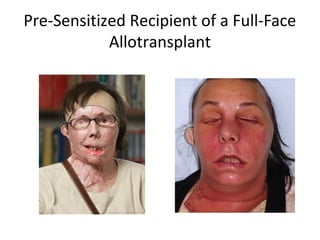
Pre-Sensitized Recipient of a Full-Face
Allotransplant
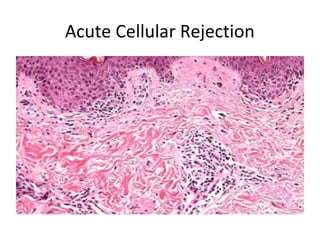
Acute Cellular Rejection
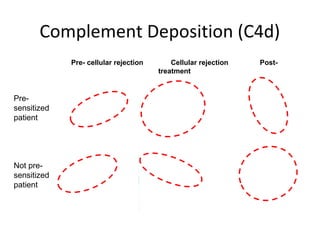
Complement Deposition (C4d)
Pre- cellular rejection Cellular rejection Post-
treatment
Pre-
sensitized
patient
Not pre-
sensitized
patient
Graft vasculopathy in the skin
in vascularized composite allografts
J. Kanitakis
Depts. of Dermatology/Pathology
Ed. Herriot Hospital, Lyon, France
BANFF‐CST Joint Scientific Meeting
October 8, 2015 Vancouver, British Columbia
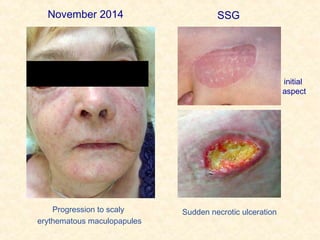
Sudden necrotic ulcerationProgression to scaly
erythematous maculopapules
SSG
initial
aspect
SSGNovember 2014
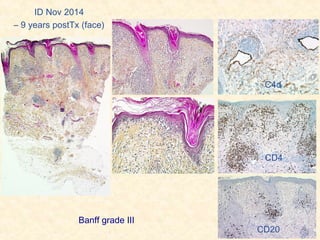
ID Nov 2014
– 9 years postTx (face)
CD20
CD4
C4d
Banff grade III
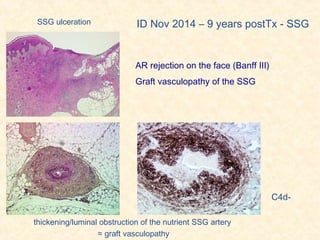
thickening/luminal obstruction of the nutrient SSG artery
≈ graft vasculopathy
SSG ulceration ID Nov 2014 – 9 years postTx - SSG
C4d-
AR rejection on the face (Banff III)
Graft vasculopathy of the SSG
Cutaneous Changes among
Transplant Patients
Adela Rambi G. Cardones, M.D.
Immunodermatology, Chronic GVHD Clinic
Director, Inpatient Consult Service
Assistant Professor
Duke University Department of Dermatology
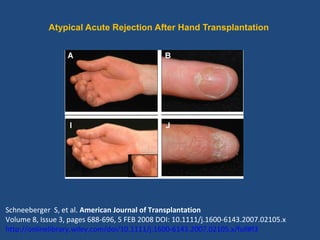
Atypical Acute Rejection After Hand Transplantation
Schneeberger S, et al. American Journal of Transplantation
Volume 8, Issue 3, pages 688-696, 5 FEB 2008 DOI: 10.1111/j.1600-6143.2007.02105.x
http://onlinelibrary.wiley.com/doi/10.1111/j.1600-6143.2007.02105.x/full#f3
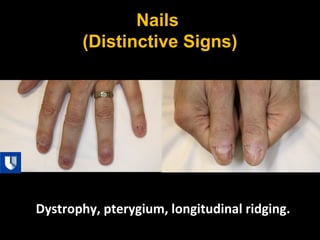
Nails
(Distinctive Signs)
Dystrophy, pterygium, longitudinal ridging.
VCA Research Laboratory - Mission
Expanding the Banff VCA Criteria
Gerald Brandacher, MD, FAST
Associate Professor or Surgery
Scientific Director
Reconstructive Transplantation Program
Johns Hopkins University School of Medicine
Baltimore, MD, USA
on behalf of the AST VCA Advisory Council Working Group
Question from the AST Working Group
Does biopsy site matter? The skin anatomy and characteristics differ
significantly depending where on the hand or face the biopsy is taken. Should
this be reflected in the Banff Criteria?
While 4 mm biopsies provide a great deal of information, many centers do not
feel a biopsy of this size is practical. Should this criteria be revisited?
Additionally would more information be gained from two smaller biopsies,
one taken from an area of involvement and one from a “normal” area?
There appears to be distinct differences between infiltrates and histology of skin
from hand vs. face transplants. Should these differences be reflected in the
histological grade of rejection?
Question from the AST Working Group
Specific criteria to be reconsidered
a.Is the PAS stain still relevant and routinely performed?
b.CD163 may be a preferable marker to CD68 for macrophages.
c.What is the rationale to include both CD19 and CD20?
d.Why is CMV proposed as a recommended immunohistological stain
(would be unusual in the differential of rejection).
e.Inclusion of additional immunohistochemistry markers e.g. FoxP3.
Question from the AST Working Group
Many centers continue to report histological grades of 0-I, I-II and II-III
from review of VCA skin biopsies. As it is still unclear what histology
that is less severe than a grade I means, should we expand the
criteria?
Is the granularity of the current criteria sufficient?
Discussion
• Unanswered questions collected over the
years by the Banff VCA group
• Reviewed results of Banff VCA survey
• Reviewed Proposal for collection data
form
• Reviewed AST VCA advisory council
questions
• VCA Working Group Workshop, May 21,
2016, Durham, NC
• Challenges grading Banff VCA 0-I-II
• Specificity of isolated dyskeratotic/apoptotic
keratinocytes
• Does location alter the specificity of isolated
dyskeratotic/apoptotic cells?
– Epidermis
– Follicular epithelium
– Sweat gland epithelium
– Basal vs. suprabasal/at all levels
• Analogy to GVHD
• Value of a numeric threshold
• Role of mast cells in chronic immune injury
• Role of C4d staining and/or DIF staining for C4d in the
management of rejection
Banff VCA – Unanswered Questions
• Significance of focal epidermal changes (i.e. spongiosis
and/or lymphocyte exocytosis) in Banff VCA grades
• Study of effector functions of antibody and its
manifestations in tissues (acute and chronic)
• Detection of antibody functions
– Biopsy: histology, genomics
– Blood: serological, cellular
• Chronic changes
• Relationship of graft function and rejection
– Acute and Chronic
Banff VCA – Unanswered Questions
•Interpretation of long-term changes and related
biomarkers
•Differential diagnosis of inflammation vs. rejection
•Scope of Disease - Antibody Mediated Rejection
•Significance of myointimal proliferation
•Vasculopathy, role of antibody
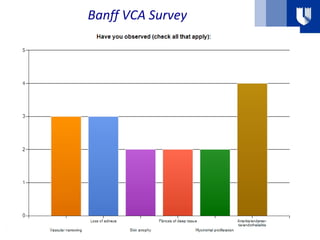
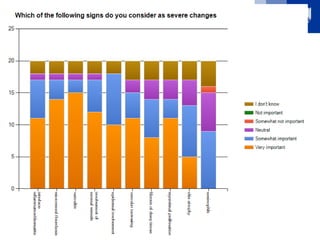
Banff VCA Survey
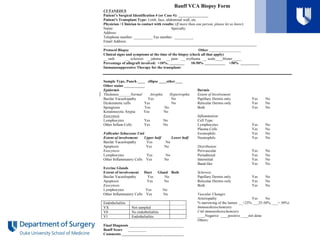
We translated these results into
a one-page form to standardize
the collection of data
Banff VCA Biopsy Form
CUTANEOUS
Patient’s Surgical Identification # (or Case #): ________________
Patient’s Transplant Type: Limb, face, abdominal wall, etc.
Physician / Clinician to contact with results: (If more than one person, please let us know)
Name: Specialty:
Address:
Telephone number: __________ Fax number: __________
Email Address:
----------------------------------------------------------------------------------------------------------------------------
Protocol Biopsy Other _________________
Clinical signs and symptoms at the time of the biopsy (check all that apply)
__ rash __ sclerosis __edema __ pain __ erythema __ scale____blister_____
Percentage of allograft involved: <10%, ________ 10-50% ___________ >50% __________
Immunosuppressive Therapy for the transplant:
Sample Type, Punch ____ ellipse ____other____
Other stains ___________
Epidermis
Thickness Normal Atrophic Hypertrophic
Basilar Vacuolopathy Yes No
Dyskeratotic cells Yes No
Spongiosis Yes No
Keratinocytic Atypia Yes No
Exocytosis
Lymphocytes Yes No
Other Inflam Cells Yes No
Follicular Sebaceous Unit
Extent of involvement Upper half Lower half
Basilar Vacuolopathy Yes No
Apoptosis Yes No
Exocytosis
Lymphocytes Yes No
Other Inflammatory Cells Yes No
Eccrine Glands
Extent of involvement Duct Gland Both
Basilar Vacuolopathy Yes No
Apoptosis Yes No
Exocytosis
Lymphocytes Yes No
Other Inflammatory Cells Yes No
Endothelialitis
VX Not sampled
V0 No endothelialitis
V1 Endothelialitis
Final Diagnosis _____________________________
Banff Score __________
Comments _________________________________
Dermis
Extent of Involvement
Papillary Dermis only Yes No
Reticular Dermis only Yes No
Both Yes No
Inflammation:
Cell Type:
Lymphocytes Yes No
Plasma Cells Yes No
Eosinophils Yes No
Neutrophils Yes No
Distribution:
Perivascular Yes No
Periadnexal Yes No
Interstitial Yes No
Band-like Yes No
Sclerosis
Papillary Dermis only Yes No
Reticular Dermis only Yes No
Both Yes No
Vascular Changes
Arteriopathy Yes No
% narrowing of the lumen __<25% ___25-50%, ___> 50%)
Immunohistochemistry
C4d immunohistochemistry
____Negative ____positive ____not done
Others:
Banff VCA Resource
Human and Animal Histology/Immunohistochemistry Core
• VCA clinical samples (>2000)
– Tissue samples: muscle, skin, tendon, nerve, artery, vein
• Histopathology Core
• Digital Library
– Digital slide scanning – Aperio AT [400 slide scan capability]
• Dedicated Lab Space
• Histology Staff
Digital Library
AST VCA advisory council
questions
• Many centers continue to report histological grades of 0-I, I-II and II-
III from review of VCA skin biopsies. As it is still unclear what
histology that is less severe than a grade I means, should we
expand the criteria?
• New information is accumulating regarding the importance of loss of
capillaries and importance of evaluating small vessel vasculopathy.
Should a grading scale for early signs of “chronic” rejection be
proposed?
• There appears to be distinct differences between infiltrates and
histology of skin from hand vs. face transplants. Should these
differences be reflected in the histological grade of rejection?
• While 4 mm biopsies provide a great deal of information, many
centers do not feel a biopsy of this size is practical. Should this
criteria be revisited? Additionally would more information be gained
from two smaller biopsies, one taken from an area of involvement
and one from a “normal” area?
• While the current criteria do note that the level of involvement in the
graft should be reported, this is not reflected in the histological
score. Practically, this histologic score is used interchangeable as
“Grade of Rejection”. Should the working group propose an actual
“Grade of Rejection” vs. “grade of histology” that would reflect
clinical parameters such as
a. level of involvement, b. Edema, c. Induration
• Does biopsy site matter? The skin anatomy and characteristics
differ significantly depending where on the hand or face the biopsy
is taken. Should this be reflected in the Banff Criteria?
AST VCA advisory council questions
Workshop on VCA Pathology
May 21, 2016
Durham, NC
Thank you

Banff vca consensus statemet l cendales sent to kim

  • 1.
    Vascularized Composite Allotransplantation BanffVCA Linda C. Cendales, M.D. Associate Professor of Surgery Duke University Medical Center on behalf of The Banff VCA Working Group
  • 2.
    < 250 VCArecipients worldwide
  • 3.
    Congratulations to the fieldof Vascularized Composite Allotransplantation for organizing themselves under the Banff Structure
  • 4.
    Coming together andagreeing to systematically study VCA pathology is a significant step But the hard work starts now
  • 5.
    We started talkingtogether in a common language We can now argue
  • 6.
    The Towel ofBabel Painting by Peter Bruegel the Elder, 1583
  • 7.
    We cannot havearguments and organize ourselves until we have a common language.
  • 8.
    A common languagefacilitates disagreement in a good way A common language allows for collaboration
  • 9.
    Diagnosis of TransplantRejection in the 1980’s Transplantation 1984 Dec;38(6):709-13. Relationships among the histologic pattern, intensity, and phenotypes of T cells infiltrating renal allografts. Kolbeck PC, Tatum AH, Sanfilippo F. Histopathology. 1980 Sep;4(5):517-32. The relation of different inflammatory cell types to the various parenchymal components of rejecting kidney allografts. Reitamo S, Konttinen YT, Ranki A, Häyry P.
  • 10.
  • 11.
  • 12.
  • 13.
    Keeping this grouptogether under this framework is how this is going to go forward We can now answer the questions
  • 14.
  • 15.
    Histologic Features ofAntibody Mediated Rejection after Face Transplantation Anil Chandraker MD FASN FAST FRCP Medical Director of Kidney and Pancreas Transplantation Brigham and Women’s Hospital Director, Schuster Family Transplantation Research Center Brigham and Women's Hospital Associate Professor of Medicine, Harvard Medical School
  • 16.
    Pre-Sensitized Recipient ofa Full-Face Allotransplant
  • 17.
  • 18.
    Complement Deposition (C4d) Pre-cellular rejection Cellular rejection Post- treatment Pre- sensitized patient Not pre- sensitized patient
  • 19.
    Graft vasculopathy inthe skin in vascularized composite allografts J. Kanitakis Depts. of Dermatology/Pathology Ed. Herriot Hospital, Lyon, France BANFF‐CST Joint Scientific Meeting October 8, 2015 Vancouver, British Columbia
  • 20.
    Sudden necrotic ulcerationProgressionto scaly erythematous maculopapules SSG initial aspect SSGNovember 2014
  • 21.
    ID Nov 2014 –9 years postTx (face) CD20 CD4 C4d Banff grade III
  • 22.
    thickening/luminal obstruction ofthe nutrient SSG artery ≈ graft vasculopathy SSG ulceration ID Nov 2014 – 9 years postTx - SSG C4d- AR rejection on the face (Banff III) Graft vasculopathy of the SSG
  • 23.
    Cutaneous Changes among TransplantPatients Adela Rambi G. Cardones, M.D. Immunodermatology, Chronic GVHD Clinic Director, Inpatient Consult Service Assistant Professor Duke University Department of Dermatology
  • 24.
    Atypical Acute RejectionAfter Hand Transplantation Schneeberger S, et al. American Journal of Transplantation Volume 8, Issue 3, pages 688-696, 5 FEB 2008 DOI: 10.1111/j.1600-6143.2007.02105.x http://onlinelibrary.wiley.com/doi/10.1111/j.1600-6143.2007.02105.x/full#f3
  • 25.
  • 26.
    VCA Research Laboratory- Mission Expanding the Banff VCA Criteria Gerald Brandacher, MD, FAST Associate Professor or Surgery Scientific Director Reconstructive Transplantation Program Johns Hopkins University School of Medicine Baltimore, MD, USA on behalf of the AST VCA Advisory Council Working Group
  • 27.
    Question from theAST Working Group Does biopsy site matter? The skin anatomy and characteristics differ significantly depending where on the hand or face the biopsy is taken. Should this be reflected in the Banff Criteria? While 4 mm biopsies provide a great deal of information, many centers do not feel a biopsy of this size is practical. Should this criteria be revisited? Additionally would more information be gained from two smaller biopsies, one taken from an area of involvement and one from a “normal” area? There appears to be distinct differences between infiltrates and histology of skin from hand vs. face transplants. Should these differences be reflected in the histological grade of rejection?
  • 28.
    Question from theAST Working Group Specific criteria to be reconsidered a.Is the PAS stain still relevant and routinely performed? b.CD163 may be a preferable marker to CD68 for macrophages. c.What is the rationale to include both CD19 and CD20? d.Why is CMV proposed as a recommended immunohistological stain (would be unusual in the differential of rejection). e.Inclusion of additional immunohistochemistry markers e.g. FoxP3.
  • 29.
    Question from theAST Working Group Many centers continue to report histological grades of 0-I, I-II and II-III from review of VCA skin biopsies. As it is still unclear what histology that is less severe than a grade I means, should we expand the criteria? Is the granularity of the current criteria sufficient?
  • 30.
    Discussion • Unanswered questionscollected over the years by the Banff VCA group • Reviewed results of Banff VCA survey • Reviewed Proposal for collection data form • Reviewed AST VCA advisory council questions • VCA Working Group Workshop, May 21, 2016, Durham, NC
  • 31.
    • Challenges gradingBanff VCA 0-I-II • Specificity of isolated dyskeratotic/apoptotic keratinocytes • Does location alter the specificity of isolated dyskeratotic/apoptotic cells? – Epidermis – Follicular epithelium – Sweat gland epithelium – Basal vs. suprabasal/at all levels • Analogy to GVHD • Value of a numeric threshold • Role of mast cells in chronic immune injury • Role of C4d staining and/or DIF staining for C4d in the management of rejection Banff VCA – Unanswered Questions
  • 32.
    Banff VCA –Unanswered Questions • Significance of focal epidermal changes (i.e. spongiosis and/or lymphocyte exocytosis) in Banff VCA grades • Study of effector functions of antibody and its manifestations in tissues (acute and chronic) • Detection of antibody functions – Biopsy: histology, genomics – Blood: serological, cellular • Chronic changes • Relationship of graft function and rejection – Acute and Chronic
  • 33.
    Banff VCA –Unanswered Questions •Interpretation of long-term changes and related biomarkers •Differential diagnosis of inflammation vs. rejection •Scope of Disease - Antibody Mediated Rejection •Significance of myointimal proliferation •Vasculopathy, role of antibody
  • 34.
  • 36.
    We translated theseresults into a one-page form to standardize the collection of data
  • 37.
    Banff VCA BiopsyForm CUTANEOUS Patient’s Surgical Identification # (or Case #): ________________ Patient’s Transplant Type: Limb, face, abdominal wall, etc. Physician / Clinician to contact with results: (If more than one person, please let us know) Name: Specialty: Address: Telephone number: __________ Fax number: __________ Email Address: ---------------------------------------------------------------------------------------------------------------------------- Protocol Biopsy Other _________________ Clinical signs and symptoms at the time of the biopsy (check all that apply) __ rash __ sclerosis __edema __ pain __ erythema __ scale____blister_____ Percentage of allograft involved: <10%, ________ 10-50% ___________ >50% __________ Immunosuppressive Therapy for the transplant: Sample Type, Punch ____ ellipse ____other____ Other stains ___________ Epidermis Thickness Normal Atrophic Hypertrophic Basilar Vacuolopathy Yes No Dyskeratotic cells Yes No Spongiosis Yes No Keratinocytic Atypia Yes No Exocytosis Lymphocytes Yes No Other Inflam Cells Yes No Follicular Sebaceous Unit Extent of involvement Upper half Lower half Basilar Vacuolopathy Yes No Apoptosis Yes No Exocytosis Lymphocytes Yes No Other Inflammatory Cells Yes No Eccrine Glands Extent of involvement Duct Gland Both Basilar Vacuolopathy Yes No Apoptosis Yes No Exocytosis Lymphocytes Yes No Other Inflammatory Cells Yes No Endothelialitis VX Not sampled V0 No endothelialitis V1 Endothelialitis Final Diagnosis _____________________________ Banff Score __________ Comments _________________________________ Dermis Extent of Involvement Papillary Dermis only Yes No Reticular Dermis only Yes No Both Yes No Inflammation: Cell Type: Lymphocytes Yes No Plasma Cells Yes No Eosinophils Yes No Neutrophils Yes No Distribution: Perivascular Yes No Periadnexal Yes No Interstitial Yes No Band-like Yes No Sclerosis Papillary Dermis only Yes No Reticular Dermis only Yes No Both Yes No Vascular Changes Arteriopathy Yes No % narrowing of the lumen __<25% ___25-50%, ___> 50%) Immunohistochemistry C4d immunohistochemistry ____Negative ____positive ____not done Others:
  • 38.
  • 39.
    Human and AnimalHistology/Immunohistochemistry Core • VCA clinical samples (>2000) – Tissue samples: muscle, skin, tendon, nerve, artery, vein • Histopathology Core • Digital Library – Digital slide scanning – Aperio AT [400 slide scan capability] • Dedicated Lab Space • Histology Staff Digital Library
  • 40.
    AST VCA advisorycouncil questions • Many centers continue to report histological grades of 0-I, I-II and II- III from review of VCA skin biopsies. As it is still unclear what histology that is less severe than a grade I means, should we expand the criteria? • New information is accumulating regarding the importance of loss of capillaries and importance of evaluating small vessel vasculopathy. Should a grading scale for early signs of “chronic” rejection be proposed? • There appears to be distinct differences between infiltrates and histology of skin from hand vs. face transplants. Should these differences be reflected in the histological grade of rejection?
  • 41.
    • While 4mm biopsies provide a great deal of information, many centers do not feel a biopsy of this size is practical. Should this criteria be revisited? Additionally would more information be gained from two smaller biopsies, one taken from an area of involvement and one from a “normal” area? • While the current criteria do note that the level of involvement in the graft should be reported, this is not reflected in the histological score. Practically, this histologic score is used interchangeable as “Grade of Rejection”. Should the working group propose an actual “Grade of Rejection” vs. “grade of histology” that would reflect clinical parameters such as a. level of involvement, b. Edema, c. Induration • Does biopsy site matter? The skin anatomy and characteristics differ significantly depending where on the hand or face the biopsy is taken. Should this be reflected in the Banff Criteria? AST VCA advisory council questions
  • 42.
    Workshop on VCAPathology May 21, 2016 Durham, NC
  • 43.