Understanding the
Balanced
Scorecard: A
C omprehensive
Overview
Introduction to Balanced
Scorecard
The Balanced Scorecard is a
strategic planning and
management tool that helps
organizations align business
activities to the vision and strategy.
It improves internal and external
communications and monitors
organizational performance against
strategic goals.
History and Development
Developed in the early 1990s by
Robert
S. Kaplan and David P. Norton,
the Balanced Scorecard evolved
from
traditional performance metrics. It
introduced a more comprehensive
framework that includes financial
and non-financial measures for
better strategic alignment.
Four Perspectives
The Balanced Scorecard comprises four
perspectives: Financial, Customer,
Internal Processes, and Learning &
Growth. Each perspective provides a
unique view of the organization, helping
to create a balanced approach to
performance management.
Financial Perspective
The Financial Perspective focuses on
financial objectives and performance
indicators. Key metrics include
revenue growth, profitability, and
return on investment. This
perspective helps organizations
assess their financial health and
strategic success.
Customer Perspective
The Customer Perspective evaluates how well
an organization meets customer needs and
expectations. Metrics include customer
satisfaction, retention rates, and market share.
This perspective is crucial for
understanding customer value and
loyalty.
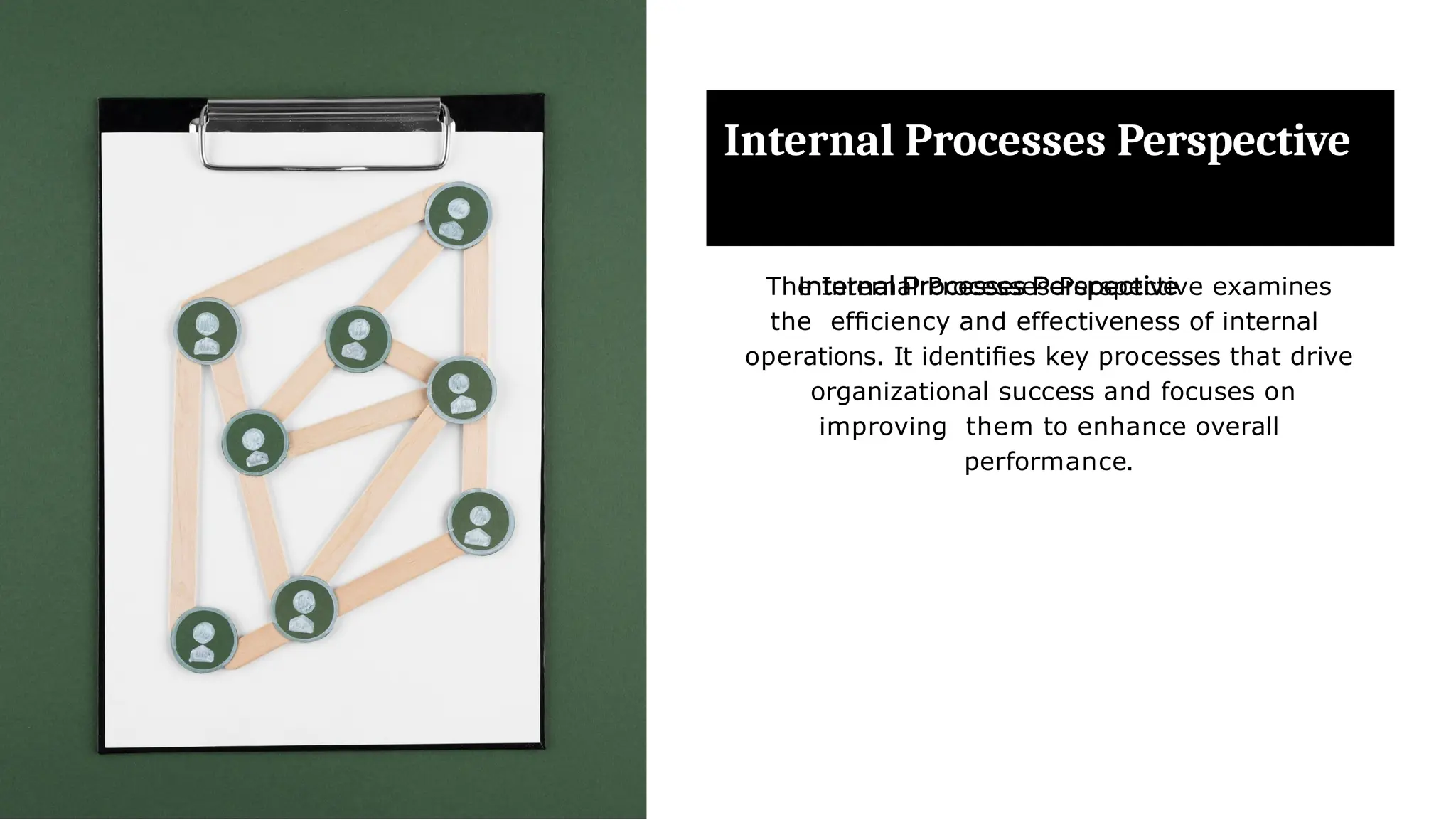
Internal Processes Perspective
The Internal Processes Perspective examines
the efficiency and effectiveness of internal
operations. It identifies key processes that drive
organizational success and focuses on
improving them to enhance overall
performance.
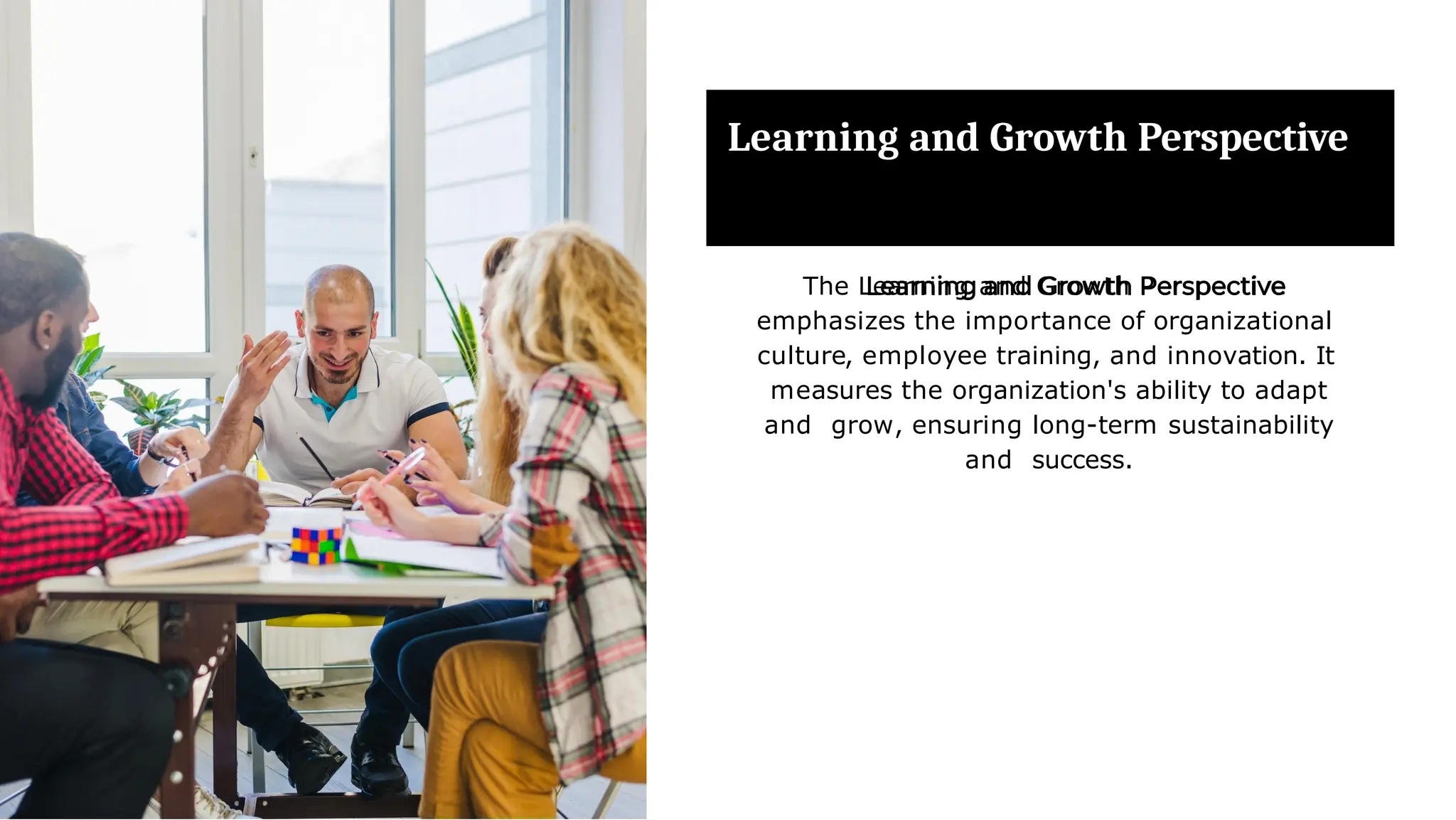
Learning and Growth Perspective
The Learning and Growth Perspective
emphasizes the importance of organizational
culture, employee training, and innovation. It
measures the organization's ability to adapt
and grow, ensuring long-term sustainability
and success.
Conclusion
The Balanced Scorecard is a vital tool for organizations
aiming to achieve strategic alignment and performance
excellence.
By integrating multiple perspectives, it fosters a
comprehensive approach to management and helps
organizations navigate complex business
environments.
Thanks!
Do you have any
questions? info
@hrhelpboard.com
+91 9899990261
www.hrhelpboard.com

Balanced Scorecard in Human Resource Management

  • 1.
  • 2.
    Introduction to Balanced Scorecard TheBalanced Scorecard is a strategic planning and management tool that helps organizations align business activities to the vision and strategy. It improves internal and external communications and monitors organizational performance against strategic goals.
  • 3.
    History and Development Developedin the early 1990s by Robert S. Kaplan and David P. Norton, the Balanced Scorecard evolved from traditional performance metrics. It introduced a more comprehensive framework that includes financial and non-financial measures for better strategic alignment.
  • 4.
    Four Perspectives The BalancedScorecard comprises four perspectives: Financial, Customer, Internal Processes, and Learning & Growth. Each perspective provides a unique view of the organization, helping to create a balanced approach to performance management.
  • 5.
    Financial Perspective The FinancialPerspective focuses on financial objectives and performance indicators. Key metrics include revenue growth, profitability, and return on investment. This perspective helps organizations assess their financial health and strategic success.
  • 6.
    Customer Perspective The CustomerPerspective evaluates how well an organization meets customer needs and expectations. Metrics include customer satisfaction, retention rates, and market share. This perspective is crucial for understanding customer value and loyalty.
  • 7.
    Internal Processes Perspective TheInternal Processes Perspective examines the efficiency and effectiveness of internal operations. It identifies key processes that drive organizational success and focuses on improving them to enhance overall performance.
  • 8.
    Learning and GrowthPerspective The Learning and Growth Perspective emphasizes the importance of organizational culture, employee training, and innovation. It measures the organization's ability to adapt and grow, ensuring long-term sustainability and success.
  • 9.
    Conclusion The Balanced Scorecardis a vital tool for organizations aiming to achieve strategic alignment and performance excellence. By integrating multiple perspectives, it fosters a comprehensive approach to management and helps organizations navigate complex business environments.
  • 10.
    Thanks! Do you haveany questions? info @hrhelpboard.com +91 9899990261 www.hrhelpboard.com