GOOD AFTERNOON
FTIS
TTERBA
RACAMEZELI
REEPU
FFSTI KAEP
BAKING TERMINOLOGY
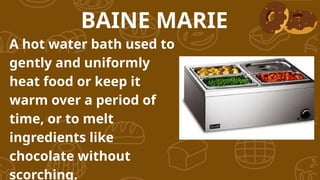
A hot water bath used to
gently and uniformly
heat food or keep it
warm over a period of
time, or to melt
ingredients like
chocolate without
scorching.
BAINE MARIE
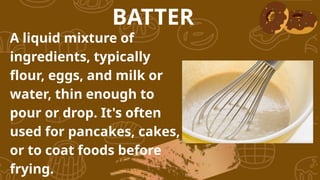
A liquid mixture of
ingredients, typically
flour, eggs, and milk or
water, thin enough to
pour or drop. It's often
used for pancakes, cakes,
or to coat foods before
frying.
BATTER
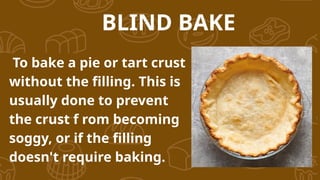
BLIND BAKE
To bake a pie or tart crust
without the filling. This is
usually done to prevent
the crust f rom becoming
soggy, or if the filling
doesn't require baking.
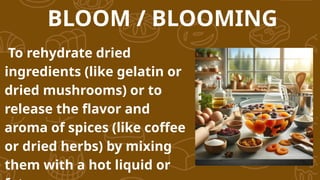
BLOOM / BLOOMING
To rehydrate dried
ingredients (like gelatin or
dried mushrooms) or to
release the flavor and
aroma of spices (like coffee
or dried herbs) by mixing
them with a hot liquid or
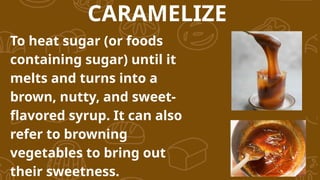
To heat sugar (or foods
containing sugar) until it
melts and turns into a
brown, nutty, and sweet-
flavored syrup. It can also
refer to browning
vegetables to bring out
their sweetness.
CARAMELIZE
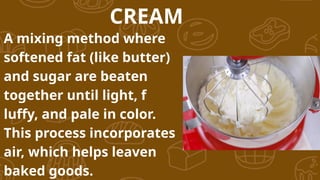
CREAM
A mixing method where
softened fat (like butter)
and sugar are beaten
together until light, f
luffy, and pale in color.
This process incorporates
air, which helps leaven
baked goods.
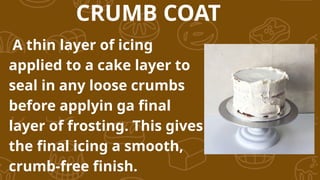
A thin layer of icing
applied to a cake layer to
seal in any loose crumbs
before applyin ga final
layer of frosting. This gives
the final icing a smooth,
crumb-free finish.
CRUMB COAT
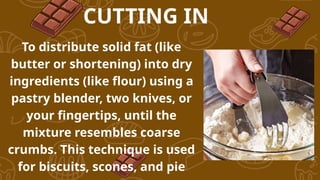
To distribute solid fat (like
butter or shortening) into dry
ingredients (like flour) using a
pastry blender, two knives, or
your fingertips, until the
mixture resembles coarse
crumbs. This technique is used
for biscuits, scones, and pie
CUTTING IN
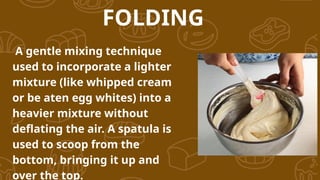
FOLDING
A gentle mixing technique
used to incorporate a lighter
mixture (like whipped cream
or be aten egg whites) into a
heavier mixture without
deflating the air. A spatula is
used to scoop from the
bottom, bringing it up and
over the top.
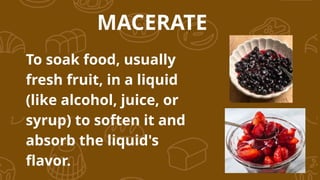
To soak food, usually
fresh fruit, in a liquid
(like alcohol, juice, or
syrup) to soften it and
absorb the liquid's
flavor.
MACERATE
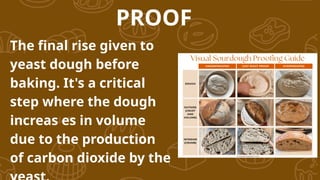
PROOF
The final rise given to
yeast dough before
baking. It's a critical
step where the dough
increas es in volume
due to the production
of carbon dioxide by the
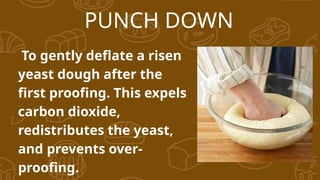
PUNCH DOWN
To gently deflate a risen
yeast dough after the
first proofing. This expels
carbon dioxide,
redistributes the yeast,
and prevents over-
proofing.
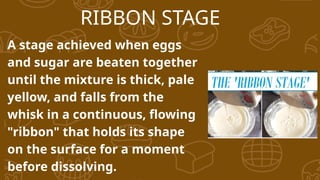
RIBBON STAGE
A stage achieved when eggs
and sugar are beaten together
until the mixture is thick, pale
yellow, and falls from the
whisk in a continuous, flowing
"ribbon" that holds its shape
on the surface for a moment
before dissolving.
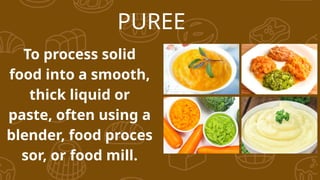
PUREE
To process solid
food into a smooth,
thick liquid or
paste, often using a
blender, food proces
sor, or food mill.
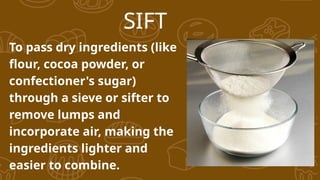
SIFT
To pass dry ingredients (like
flour, cocoa powder, or
confectioner's sugar)
through a sieve or sifter to
remove lumps and
incorporate air, making the
ingredients lighter and
easier to combine.
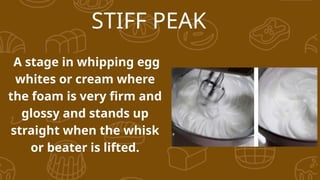
STIFF PEAK
A stage in whipping egg
whites or cream where
the foam is very firm and
glossy and stands up
straight when the whisk
or beater is lifted.
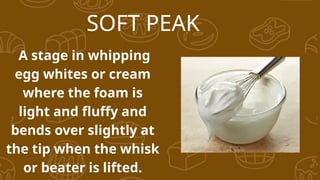
SOFT PEAK
A stage in whipping
egg whites or cream
where the foam is
light and fluffy and
bends over slightly at
the tip when the whisk
or beater is lifted.
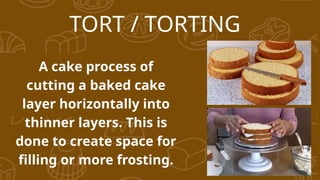
TORT / TORTING
A cake process of
cutting a baked cake
layer horizontally into
thinner layers. This is
done to create space for
filling or more frosting.
TEMPER
A process of stabilizing an ingredient by carefully
controlling its temperature. It's most commonly
used for:
1. Chocolate: Melting and cooling chocolate to make
it shiny and prevent blooming.
2. Eggs: Gradually raising the temperature of eggs
by adding hot liquid to prevent them from curdling
when mixing them into a hot sauce or custard.
Thank You

Baking-terminologiesGrade10.pptxh you jj

  • 1.
  • 2.
  • 3.
  • 4.
    A hot waterbath used to gently and uniformly heat food or keep it warm over a period of time, or to melt ingredients like chocolate without scorching. BAINE MARIE
  • 5.
    A liquid mixtureof ingredients, typically flour, eggs, and milk or water, thin enough to pour or drop. It's often used for pancakes, cakes, or to coat foods before frying. BATTER
  • 6.
    BLIND BAKE To bakea pie or tart crust without the filling. This is usually done to prevent the crust f rom becoming soggy, or if the filling doesn't require baking.
  • 7.
    BLOOM / BLOOMING Torehydrate dried ingredients (like gelatin or dried mushrooms) or to release the flavor and aroma of spices (like coffee or dried herbs) by mixing them with a hot liquid or
  • 8.
    To heat sugar(or foods containing sugar) until it melts and turns into a brown, nutty, and sweet- flavored syrup. It can also refer to browning vegetables to bring out their sweetness. CARAMELIZE
  • 9.
    CREAM A mixing methodwhere softened fat (like butter) and sugar are beaten together until light, f luffy, and pale in color. This process incorporates air, which helps leaven baked goods.
  • 10.
    A thin layerof icing applied to a cake layer to seal in any loose crumbs before applyin ga final layer of frosting. This gives the final icing a smooth, crumb-free finish. CRUMB COAT
  • 11.
    To distribute solidfat (like butter or shortening) into dry ingredients (like flour) using a pastry blender, two knives, or your fingertips, until the mixture resembles coarse crumbs. This technique is used for biscuits, scones, and pie CUTTING IN
  • 12.
    FOLDING A gentle mixingtechnique used to incorporate a lighter mixture (like whipped cream or be aten egg whites) into a heavier mixture without deflating the air. A spatula is used to scoop from the bottom, bringing it up and over the top.
  • 13.
    To soak food,usually fresh fruit, in a liquid (like alcohol, juice, or syrup) to soften it and absorb the liquid's flavor. MACERATE
  • 14.
    PROOF The final risegiven to yeast dough before baking. It's a critical step where the dough increas es in volume due to the production of carbon dioxide by the
  • 15.
    PUNCH DOWN To gentlydeflate a risen yeast dough after the first proofing. This expels carbon dioxide, redistributes the yeast, and prevents over- proofing.
  • 16.
    RIBBON STAGE A stageachieved when eggs and sugar are beaten together until the mixture is thick, pale yellow, and falls from the whisk in a continuous, flowing "ribbon" that holds its shape on the surface for a moment before dissolving.
  • 17.
    PUREE To process solid foodinto a smooth, thick liquid or paste, often using a blender, food proces sor, or food mill.
  • 18.
    SIFT To pass dryingredients (like flour, cocoa powder, or confectioner's sugar) through a sieve or sifter to remove lumps and incorporate air, making the ingredients lighter and easier to combine.
  • 19.
    STIFF PEAK A stagein whipping egg whites or cream where the foam is very firm and glossy and stands up straight when the whisk or beater is lifted.
  • 20.
    SOFT PEAK A stagein whipping egg whites or cream where the foam is light and fluffy and bends over slightly at the tip when the whisk or beater is lifted.
  • 21.
    TORT / TORTING Acake process of cutting a baked cake layer horizontally into thinner layers. This is done to create space for filling or more frosting.
  • 22.
    TEMPER A process ofstabilizing an ingredient by carefully controlling its temperature. It's most commonly used for: 1. Chocolate: Melting and cooling chocolate to make it shiny and prevent blooming. 2. Eggs: Gradually raising the temperature of eggs by adding hot liquid to prevent them from curdling when mixing them into a hot sauce or custard.
  • 23.