Bailment & pledge
 Section 148 of indian contract act 1872
 Delivery of goods by 1 person to another for some
    purpose
   Contract to return after use or to dispose as asked by
    the person who delivered the goods
   Bailor: who gives
   Bailee : who takes
   Bailment: transaction
Examples
 Hiring a bicycle
 Giving cloth to a tailor
 Delivering watch for repair
Kinds of bailment
Kinds of bailment Based on benefit:
Bailment for the exclusive benefit of :
1] bailor: leaving goods in safe custody without paying
2] bailee :a loan of some article like a pen
3] mutual benefit: contracts for hiring, repair ,etc
Kinds of bailment:
 Based on reward:
1] Gratuitous bailment: neither bailor nor bailee is
entitled for remuneration, example: lending a book to a
friend
2] Non-gratuitous bailment: bailment of reward: either
bailee or bailor is entitled to a remuneration , example:
hire, tailor, etc
Difference between sale &
bailment
 Ownership transferred?
 Buyer under no obligation to return goods?
Duties of bailee:
 Take reasonable care of goods[S.151]
 Not to make unauthorized use of goods[S.154]
 Not to mix goods with his own goods[S.155-157]
 Duty to return goods[S.160&161]
 Not doing any act inconistent with terms of
  bailment[S.153]
 Returning any profit [S.163]
Rights of bailee
 Right to compensation for loss on account of fault in
    goods bailed[S.150]
   Right to receive necessary expenses[S.158]
   Right against premature termination of
    bailment[S.159]
   Right to compensation in case of defective title[S.164]
   Delivery of goods to one of the joint owners[S.165]
   Right against third parties
Duties of bailor
 To Disclose faults in goods bailed [S.150]
 To repay the necessary expenses [S.158]
 To indemnify the bailee [S.164]
 Liability on premature breach of bailment[S.159]
Rights of bailor
 Right of indemnity for losses due to negligence by
    bailee[S.152]
   Termination of bailment on inconsistent use by the
    bailee[S.153]
   Compensation for unauthorised use by the
    bailee[S.154]
   Compensation when the bailee mixes the goods bailed
    with own goods [S.155]
   Right of return of goods back[S.160]
   Right to profit from goods bailed[S.163]
Termination of bailment
 Doing an act inconsistent with terms of
    bailment[S.153]
   At desire of the bailor in case of gratuitous
    bailment[S.159]
   On expiry of period[S.160]
   On accomplishment of object[S.160]
   Death of the bailor or bailee [S.162]
PLEDGE OR PAWN :
 Bailment of goods as security for payment of debt or
  performance of a promise :PLEDGE
 Bailor: PAWNER
 Bailee: PAWNEE
  Example: A borrows Rs.100 from B & keeps his watch
  as security : pledge
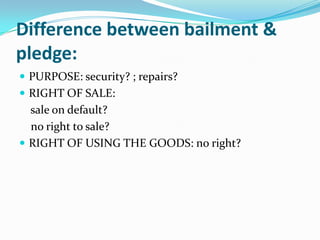
Difference between bailment &
pledge:
 PURPOSE: security? ; repairs?
 RIGHT OF SALE:
  sale on default?
  no right to sale?
 RIGHT OF USING THE GOODS: no right?
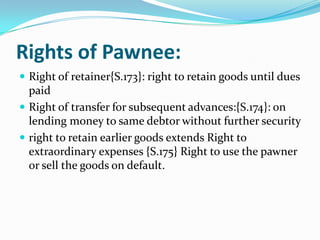
Rights of Pawnee:
 Right of retainer{S.173}: right to retain goods until dues
  paid
 Right of transfer for subsequent advances:{S.174}: on
  lending money to same debtor without further security
 right to retain earlier goods extends Right to
  extraordinary expenses {S.175} Right to use the pawner
  or sell the goods on default.
Rights of Pawner
Rights of Pawner:
Enforcement of pawnee’s duties Defaulting pawnor’s
right to redeem
?
Thank you

Bailment

  • 2.
    Bailment & pledge Section 148 of indian contract act 1872  Delivery of goods by 1 person to another for some purpose  Contract to return after use or to dispose as asked by the person who delivered the goods  Bailor: who gives  Bailee : who takes  Bailment: transaction
  • 3.
    Examples  Hiring abicycle  Giving cloth to a tailor  Delivering watch for repair
  • 4.
    Kinds of bailment Kindsof bailment Based on benefit: Bailment for the exclusive benefit of : 1] bailor: leaving goods in safe custody without paying 2] bailee :a loan of some article like a pen 3] mutual benefit: contracts for hiring, repair ,etc
  • 5.
    Kinds of bailment: Based on reward: 1] Gratuitous bailment: neither bailor nor bailee is entitled for remuneration, example: lending a book to a friend 2] Non-gratuitous bailment: bailment of reward: either bailee or bailor is entitled to a remuneration , example: hire, tailor, etc
  • 6.
    Difference between sale& bailment  Ownership transferred?  Buyer under no obligation to return goods?
  • 7.
    Duties of bailee: Take reasonable care of goods[S.151]  Not to make unauthorized use of goods[S.154]  Not to mix goods with his own goods[S.155-157]  Duty to return goods[S.160&161]  Not doing any act inconistent with terms of bailment[S.153]  Returning any profit [S.163]
  • 8.
    Rights of bailee Right to compensation for loss on account of fault in goods bailed[S.150]  Right to receive necessary expenses[S.158]  Right against premature termination of bailment[S.159]  Right to compensation in case of defective title[S.164]  Delivery of goods to one of the joint owners[S.165]  Right against third parties
  • 9.
    Duties of bailor To Disclose faults in goods bailed [S.150]  To repay the necessary expenses [S.158]  To indemnify the bailee [S.164]  Liability on premature breach of bailment[S.159]
  • 10.
    Rights of bailor Right of indemnity for losses due to negligence by bailee[S.152]  Termination of bailment on inconsistent use by the bailee[S.153]  Compensation for unauthorised use by the bailee[S.154]  Compensation when the bailee mixes the goods bailed with own goods [S.155]  Right of return of goods back[S.160]  Right to profit from goods bailed[S.163]
  • 11.
    Termination of bailment Doing an act inconsistent with terms of bailment[S.153]  At desire of the bailor in case of gratuitous bailment[S.159]  On expiry of period[S.160]  On accomplishment of object[S.160]  Death of the bailor or bailee [S.162]
  • 12.
    PLEDGE OR PAWN:  Bailment of goods as security for payment of debt or performance of a promise :PLEDGE  Bailor: PAWNER  Bailee: PAWNEE Example: A borrows Rs.100 from B & keeps his watch as security : pledge
  • 13.
    Difference between bailment& pledge:  PURPOSE: security? ; repairs?  RIGHT OF SALE: sale on default? no right to sale?  RIGHT OF USING THE GOODS: no right?
  • 14.
    Rights of Pawnee: Right of retainer{S.173}: right to retain goods until dues paid  Right of transfer for subsequent advances:{S.174}: on lending money to same debtor without further security  right to retain earlier goods extends Right to extraordinary expenses {S.175} Right to use the pawner or sell the goods on default.
  • 15.
    Rights of Pawner Rightsof Pawner: Enforcement of pawnee’s duties Defaulting pawnor’s right to redeem
  • 16.
  • 17.