This is
  Great-Aunt Bea.

 She came to the
  local ER today
because she had a
nose bleed, but it
has now stopped.
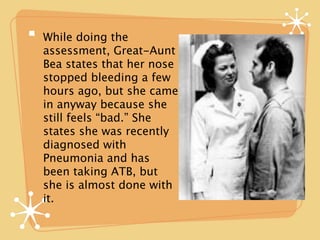
While doing the
assessment, Great-Aunt
Bea states that her nose
stopped bleeding a few
hours ago, but she came
in anyway because she
still feels “bad.” She
states she was recently
diagnosed with
Pneumonia and has
been taking ATB, but
she is almost done with
it.
Her History
Great-Aunt Bea has:
 CHF
 Controlled A-Fib
 Diabetes, Non-Insulin
 Dependent
 A Recent Diagnosis of
 Pneumonia
Her Medications
Great-Aunt Bea takes:
 Albuterol Inhaler
 Coumadin
 Furosemide
 Metformin
 Azithromycin (for the Pneumonia)
Allergies


No Known Allergies
Vitals:
Blood Pressure: 134/67
Respirations: 18 and
regular
Oxygen Saturation: 97% on
Room Air
Heart Rate: 62 and in A-Fib
Great-Aunt Bea looks uncomfortable.
She tells the nurse that she has noticed
blood in her urine, bright red blood in her
stool, and shows the Nurse a skin tear from
yesterday that is still scantly bleeding.
Also, Great-Aunt Bea states she had her
Coumadin Level checked the day she was
told she has Pneumonia. It was fine
according to her PCP.
The nurse’s first impression is that she stills
feels bad from the Pneumonia.
What does the Nurse do?
Do an EKG
She has a History of A-Fib,
the Doctor will want one.
Get a urine sample.
 The Nurse notices that the urine
 Great-Aunt Bea gives is pink
Start an IV
 Draw enough labs for
 a PT/INR
 Blood Cultures
Xray Results
     Return!!

Great-Aunt Bea still
    has a small
The Labs Return!!!
Everything is normal
    on her labs,
     except.....
  Great-Aunt Bea’s
       INR is
       13!!!!
Why is 13 a BIG Deal?
According to IU Health lab
standards, found on the Pulse Page
 Normal INR ranges at 0.78 -
 1.26
 Therapeutic Level for a patient
 on Coumadin is 2 - 3
 Critical is > 5.0
But why was Great-Aunt
    Bea’s so high?
Here’s why...
According to Micromedex,
found on the Pulse Page
 “Concurrent use of
 AZITHROMYCIN and
 WARFARIN may result in an
 increased risk of bleeding.”
The “Probable Mechanism”
according to Micromedex
 The disruption of vitamin K
 synthesis
So now what does the Nurse do?
  Let the Physician know
  Prepare to admit the
  patient
   The patient cannot go home
   with an INR that high. She will
   be at risk for hemorrhaging,
   unknown internal bleeding,
   and in case of trauma, a head
   bleed.
Make sure that she has, at
least, a 20 gauge IV for
receiving blood products.
Also, avoid multiple blood
draws and IV starts.
MAKE HER A FALL
    RISK!!!
If not already done so
 Draw a tall purple for an ABO
  Blood typing will be needed if the
  Doctor orders Fresh Frozen
  Plasma
  Also, the lab label will need 2
  readable RN signatures
    This is according to the Blood
    Products Protocol and
    Procedure
Orders to Expect
According to Lexi-Drugs,
found on the Pulse Page
 INR >10 with no evidence
 of bleeding
  Administer oral Vitamin
  K
Again, according to Lexi-
Drugs
 INR >10 with minor
 bleeding
  Administer oral vitamin K
  more frequently
Major bleeding at any INR
elevation
 Administer IV vitamin K
 Prepare to give Fresh
 Frozen Plasma
Other Interactions with Coumadin
 Major Interactions that may enhance
 Coumadin:
  Pomegranate
  Cranberry Juice
  Fenugreek
  Ginkgo Biloba
  Green Tea
  Alfalfa
  Metronidazole (Flagyl)
  Omega 3
Cont’ed
Penicillins
NSAIDS
Salicylates
Celery
Tramadol
Tricyclic Antidepressants (Elavil)
Alcohol
Allopurinol (used to treat Gout)
Phenytoin (Dilantin)
Items that may decrease
Coumadin effectiveness
 Vitamin K Foods (dark green leafy
 vegetables, brussels sprouts,
 prunes)
 High- Protein Diets
 Trazodone
 St. John’s Wart
 Ranitidine
 Omeprazole
 Ginseng
Tobacco


May falsely increase or
decrease INR
Noni Juice

May cause an increase in
acquiring Warfarin/
Coumadin resistance.
So how is
Great-Aunt Bea?
She’s
good!
Thank you for your time!

Azith

  • 1.
    This is Great-Aunt Bea. She came to the local ER today because she had a nose bleed, but it has now stopped.
  • 2.
    While doing the assessment,Great-Aunt Bea states that her nose stopped bleeding a few hours ago, but she came in anyway because she still feels “bad.” She states she was recently diagnosed with Pneumonia and has been taking ATB, but she is almost done with it.
  • 3.
    Her History Great-Aunt Beahas: CHF Controlled A-Fib Diabetes, Non-Insulin Dependent A Recent Diagnosis of Pneumonia
  • 4.
    Her Medications Great-Aunt Beatakes: Albuterol Inhaler Coumadin Furosemide Metformin Azithromycin (for the Pneumonia)
  • 5.
  • 6.
    Vitals: Blood Pressure: 134/67 Respirations:18 and regular Oxygen Saturation: 97% on Room Air Heart Rate: 62 and in A-Fib
  • 7.
    Great-Aunt Bea looksuncomfortable. She tells the nurse that she has noticed blood in her urine, bright red blood in her stool, and shows the Nurse a skin tear from yesterday that is still scantly bleeding. Also, Great-Aunt Bea states she had her Coumadin Level checked the day she was told she has Pneumonia. It was fine according to her PCP. The nurse’s first impression is that she stills feels bad from the Pneumonia.
  • 8.
    What does theNurse do?
  • 9.
    Do an EKG Shehas a History of A-Fib, the Doctor will want one.
  • 10.
    Get a urinesample. The Nurse notices that the urine Great-Aunt Bea gives is pink
  • 11.
    Start an IV Draw enough labs for a PT/INR Blood Cultures
  • 12.
    Xray Results Return!! Great-Aunt Bea still has a small
  • 13.
  • 14.
    Everything is normal on her labs, except..... Great-Aunt Bea’s INR is 13!!!!
  • 15.
    Why is 13a BIG Deal? According to IU Health lab standards, found on the Pulse Page Normal INR ranges at 0.78 - 1.26 Therapeutic Level for a patient on Coumadin is 2 - 3 Critical is > 5.0
  • 16.
    But why wasGreat-Aunt Bea’s so high?
  • 17.
    Here’s why... According toMicromedex, found on the Pulse Page “Concurrent use of AZITHROMYCIN and WARFARIN may result in an increased risk of bleeding.”
  • 18.
    The “Probable Mechanism” accordingto Micromedex The disruption of vitamin K synthesis
  • 19.
    So now whatdoes the Nurse do? Let the Physician know Prepare to admit the patient The patient cannot go home with an INR that high. She will be at risk for hemorrhaging, unknown internal bleeding, and in case of trauma, a head bleed.
  • 20.
    Make sure thatshe has, at least, a 20 gauge IV for receiving blood products. Also, avoid multiple blood draws and IV starts.
  • 21.
    MAKE HER AFALL RISK!!!
  • 22.
    If not alreadydone so Draw a tall purple for an ABO Blood typing will be needed if the Doctor orders Fresh Frozen Plasma Also, the lab label will need 2 readable RN signatures This is according to the Blood Products Protocol and Procedure
  • 23.
    Orders to Expect Accordingto Lexi-Drugs, found on the Pulse Page INR >10 with no evidence of bleeding Administer oral Vitamin K
  • 24.
    Again, according toLexi- Drugs INR >10 with minor bleeding Administer oral vitamin K more frequently
  • 25.
    Major bleeding atany INR elevation Administer IV vitamin K Prepare to give Fresh Frozen Plasma
  • 26.
    Other Interactions withCoumadin Major Interactions that may enhance Coumadin: Pomegranate Cranberry Juice Fenugreek Ginkgo Biloba Green Tea Alfalfa Metronidazole (Flagyl) Omega 3
  • 27.
  • 28.
    Items that maydecrease Coumadin effectiveness Vitamin K Foods (dark green leafy vegetables, brussels sprouts, prunes) High- Protein Diets Trazodone St. John’s Wart Ranitidine Omeprazole Ginseng
  • 29.
  • 30.
    Noni Juice May causean increase in acquiring Warfarin/ Coumadin resistance.
  • 31.
  • 32.
  • 33.
    Thank you foryour time!