“I am a black poet who will not remain silent
while this nation murders black people.
I have a right to be angry.”
#blackpoetsspeakout
“Luxury, then, is a way of
being ignorant, comfortably
An approach to the open market
of least information. Where theories
can thrive, under heavy tarpaulins
without being cracked by ideas.”
-- Amiri Baraka, Poet +
:: INTRO ::
Here I continue the conversation.
I hope you’ll join when we’re finished.
I’ll present some ideas that have sustained me
and my ongoing reimagination of political
poetry and meet/precede them with short
poems from my finishing collection,
Consequences of the Laws of Thermodynamics.
Once we’re through, these poems are yours,
whoever you are who comes to choose one.
“It is not an abstract, distanced issue out there
that just affects all those other unfortunate
people. Racism begins with you and me,
here and now, and consists in our tendency
to try to eradicate each other’s singularity
through stereotyped conceptualization.”
–Adrian Piper, Artist + Philosopher
Third Law
Each September, we suck coffee down like arsenic.
Tony vanishes through the annex bowel. Again.
Chain split vowels give me away like television.
Each café blazes to approximate ash.
Teevees rush the streets on their own two feet.
Air pockets meet hush meet crush meet moan.
We eat our phones.
“Of course there is a real need for thought and
language momentarily to focus attention on
one thing or another as the occasion demands.
But when each such thing is regarded
as separately existent and essentially
independent of the broader context of the
whole in which it has its origin, its sustenance,
and its ultimate dissolution, then one is
no longer merely focusing attention, but,
rather one is engaged in breaking the field of
awareness into disjointed parts, whose deep
unity can no longer be perceived.”
–David Bohm, Physicist + Theorist
“Seventh of all. The sheer scale of the
misanthropocene. Our minds feel small and
inert. Once every fragment seemed to bear
within it the whole. Now the whole being too
large for the mind to see stands before us
always as a fragment.”
–Juliana Spahr & Joshua Clover, Poets +
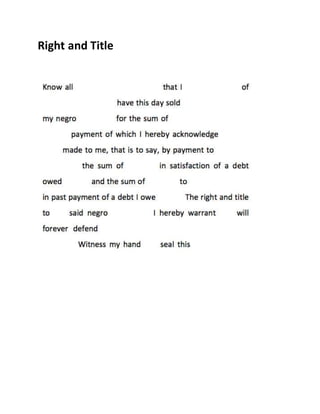
Right and Title
“if you ain’t gon’ get down then what you come
here for?
what they bring your ass up in here for if you
ain’t gon’
tear shit up? if you wasn’t just as happy to be
here as you was
to come then what you gon’ do, simple
motherfucker? the salve trade”
—Fred Moten, Poet +
“You think I’ll be the dark sky so you can be the
star? I’ll eat you whole.”
– Warsan Shire, Poet +
Paleontology
I step from the airplane. My hair melts dead air. I walk
quickly: click-clunk, click-clunk, click-clunk. Barbara Jordan,
bronze and sober, glasses poised, the last like myself I’ll see
for three more days and three more days forever. Outside I
slow the click-clunk to a three-sound crawl: click-clickclunk.
Click-clickclunk. I am a woolly mammoth waiting at the cab
stand. I am a woolly mammoth stuffed into a cab. I bear the
long silence of my extinction through the rear view. My head
on the back seat, horns akimbo, I melt dead air. Humans
shoulder blame for the loss of large mammals like me, a new
study finds. The cabbie is my cousin. My cousin carts my
husk to my diorama. The radio says: "The tide is high.” The
radio says: “I'm gonna be your number one."
“There is a … type of political poetry …
that seeks not so much to marshal forces
but to dramatize society’s forces as they are
marshaled, to reveal … through a manner of
approach, the effective ramifications of
living-in-the-world.”
– Stu Watson, Poet +
Zeroth Law
Brother I don’t either understand
this skipscrapple world —
these slick bubble cars zip feverish
down rushes of notcorn of notbeets
notcabbage and the land and the land —
you should know, man, nothing
grows down here anymore except
walloped wishes and their gouged out
oil cans. Where notbloodroot spans us
sit towers land mined in the sand.
They twist us. They tornado us. No —
Do spring breezes bring the scent of smelt?
Remember? Even on strike our mother
gathered smelt by gross fingery bagfuls
and fried them whole. I wish I knew
how she did it. It was almost enough.
“It was a difficult and painful process of
sorting out my own dislocation, understanding
how my own displacement has been
translated by others and represented in the
official narratives of power. So I understood
and still understand my translation and
writing work as a decolonizing act.”
– Don Mee Choi, Poet + Translator +
second law
Who was warned about these things:
the neverhush, the maddening chafe
sliding down a reddened bridge, print
disappearing disappearing?
Who was told how to brook it?
The houndstooth stench of olding.
That time just runs itself out. That
we Sisyphus ourselves to glasses,
hobble wreckage down stair
after bricky stair.
That once we leave home—its gaseous
oven—that once we walk the same slow
steps as our hide-and-seek sun that
once we face our anti-lovers’ anti-gaze:
bright, open, later, now eyes smoldered
coats swept open to flash our own
scarred bellies our own hot hands
ablaze with spent matches with burnt-out
love —
Who remembers love?
How it loosed its jaw to our kisses?
How it unhinged us? How it tried us
like so many keys like so many rusted
locks? How it missed its target despite its
kicking? How maybe its force could kill us?
Without it what’s left day after day
to trundle our legs? What’s left to push
breath ragged and torn from our lungs?
Who was warned
how these solar winds would leave us
brown and bruised as apples over-
-ripe host and blowsy seed dis-
appearing disappearing?
Were you?
Me too.
“Poetry as well implies community and
relationship but the question I ask is:
Is it more accurate to say that poetry generates
community and relationships. Is, perhaps,
its greatest social function its apparent
lack of social function?”
– M. NourbeSe Philip, Poet +
A Small Matter of Engineering
The old water tower once stored
every drop we lived on. Its walls
dark-capped brick beige as
supermarket pantyhose still rise
erect astride the main drag
where our road splits between
opposing camps. On this side
everything gone as long as anyone
remembers and winter still cold
as it’s ever been. On the other side?
Listen. You’ve always had the broadest
swath of the river, friend. Thing is: we’re
still here. Whatever else you’ve got left—
well—let us stay parched. G’head, I dare you:
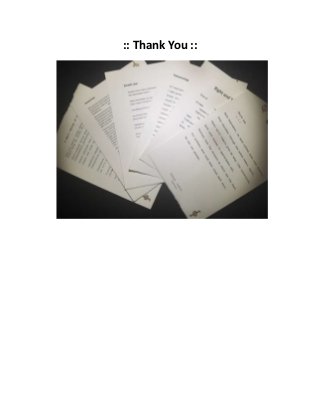
:: Thank You ::

Awp 2015 - presentation

  • 1.
    “I am ablack poet who will not remain silent while this nation murders black people. I have a right to be angry.” #blackpoetsspeakout
  • 2.
    “Luxury, then, isa way of being ignorant, comfortably An approach to the open market of least information. Where theories can thrive, under heavy tarpaulins without being cracked by ideas.” -- Amiri Baraka, Poet +
  • 3.
    :: INTRO :: HereI continue the conversation. I hope you’ll join when we’re finished. I’ll present some ideas that have sustained me and my ongoing reimagination of political poetry and meet/precede them with short poems from my finishing collection, Consequences of the Laws of Thermodynamics. Once we’re through, these poems are yours, whoever you are who comes to choose one.
  • 4.
    “It is notan abstract, distanced issue out there that just affects all those other unfortunate people. Racism begins with you and me, here and now, and consists in our tendency to try to eradicate each other’s singularity through stereotyped conceptualization.” –Adrian Piper, Artist + Philosopher
  • 5.
    Third Law Each September,we suck coffee down like arsenic. Tony vanishes through the annex bowel. Again. Chain split vowels give me away like television. Each café blazes to approximate ash. Teevees rush the streets on their own two feet. Air pockets meet hush meet crush meet moan. We eat our phones.
  • 6.
    “Of course thereis a real need for thought and language momentarily to focus attention on one thing or another as the occasion demands. But when each such thing is regarded as separately existent and essentially independent of the broader context of the whole in which it has its origin, its sustenance, and its ultimate dissolution, then one is no longer merely focusing attention, but, rather one is engaged in breaking the field of awareness into disjointed parts, whose deep unity can no longer be perceived.” –David Bohm, Physicist + Theorist
  • 7.
    “Seventh of all.The sheer scale of the misanthropocene. Our minds feel small and inert. Once every fragment seemed to bear within it the whole. Now the whole being too large for the mind to see stands before us always as a fragment.” –Juliana Spahr & Joshua Clover, Poets +
  • 8.
  • 9.
    “if you ain’tgon’ get down then what you come here for? what they bring your ass up in here for if you ain’t gon’ tear shit up? if you wasn’t just as happy to be here as you was to come then what you gon’ do, simple motherfucker? the salve trade” —Fred Moten, Poet +
  • 10.
    “You think I’llbe the dark sky so you can be the star? I’ll eat you whole.” – Warsan Shire, Poet +
  • 11.
    Paleontology I step fromthe airplane. My hair melts dead air. I walk quickly: click-clunk, click-clunk, click-clunk. Barbara Jordan, bronze and sober, glasses poised, the last like myself I’ll see for three more days and three more days forever. Outside I slow the click-clunk to a three-sound crawl: click-clickclunk. Click-clickclunk. I am a woolly mammoth waiting at the cab stand. I am a woolly mammoth stuffed into a cab. I bear the long silence of my extinction through the rear view. My head on the back seat, horns akimbo, I melt dead air. Humans shoulder blame for the loss of large mammals like me, a new study finds. The cabbie is my cousin. My cousin carts my husk to my diorama. The radio says: "The tide is high.” The radio says: “I'm gonna be your number one."
  • 12.
    “There is a… type of political poetry … that seeks not so much to marshal forces but to dramatize society’s forces as they are marshaled, to reveal … through a manner of approach, the effective ramifications of living-in-the-world.” – Stu Watson, Poet +
  • 13.
    Zeroth Law Brother Idon’t either understand this skipscrapple world — these slick bubble cars zip feverish down rushes of notcorn of notbeets notcabbage and the land and the land — you should know, man, nothing grows down here anymore except walloped wishes and their gouged out oil cans. Where notbloodroot spans us sit towers land mined in the sand. They twist us. They tornado us. No — Do spring breezes bring the scent of smelt? Remember? Even on strike our mother gathered smelt by gross fingery bagfuls and fried them whole. I wish I knew how she did it. It was almost enough.
  • 14.
    “It was adifficult and painful process of sorting out my own dislocation, understanding how my own displacement has been translated by others and represented in the official narratives of power. So I understood and still understand my translation and writing work as a decolonizing act.” – Don Mee Choi, Poet + Translator +
  • 15.
    second law Who waswarned about these things: the neverhush, the maddening chafe sliding down a reddened bridge, print disappearing disappearing? Who was told how to brook it? The houndstooth stench of olding. That time just runs itself out. That we Sisyphus ourselves to glasses, hobble wreckage down stair after bricky stair. That once we leave home—its gaseous oven—that once we walk the same slow steps as our hide-and-seek sun that once we face our anti-lovers’ anti-gaze: bright, open, later, now eyes smoldered coats swept open to flash our own scarred bellies our own hot hands ablaze with spent matches with burnt-out love — Who remembers love? How it loosed its jaw to our kisses? How it unhinged us? How it tried us like so many keys like so many rusted locks? How it missed its target despite its kicking? How maybe its force could kill us? Without it what’s left day after day to trundle our legs? What’s left to push breath ragged and torn from our lungs? Who was warned how these solar winds would leave us brown and bruised as apples over- -ripe host and blowsy seed dis- appearing disappearing? Were you? Me too.
  • 16.
    “Poetry as wellimplies community and relationship but the question I ask is: Is it more accurate to say that poetry generates community and relationships. Is, perhaps, its greatest social function its apparent lack of social function?” – M. NourbeSe Philip, Poet +
  • 17.
    A Small Matterof Engineering The old water tower once stored every drop we lived on. Its walls dark-capped brick beige as supermarket pantyhose still rise erect astride the main drag where our road splits between opposing camps. On this side everything gone as long as anyone remembers and winter still cold as it’s ever been. On the other side? Listen. You’ve always had the broadest swath of the river, friend. Thing is: we’re still here. Whatever else you’ve got left— well—let us stay parched. G’head, I dare you:
  • 18.