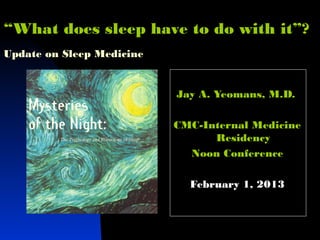
“What does sleep have to do with it”?
Update on Sleep Medicine
Jay A. Yeomans, M.D.
CMC-Internal Medicine
Residency
Noon Conference
February 1, 2013
Sleep is not a passive state
we spend 1/3 of our lives sleeping
1960 the average american slept 8 & 1/2 hours/nite
2000 the average american slept 7 hours/nite
The incidence of childhood obesity and metabolic disorders has
increased over the past 30 yrs - at the same time the prevalence of
chronic sleep deprivation has increased precipitously
"You'll feel better
tomorrow"
American Academy of Sleep MedicineAmerican Academy of Sleep Medicine
Deja’ review sleep physiology
• The neural impact of Sleep
on Memory
• The neural impact of Sleep
on Emotion (MDD / PTSD)
• Chronobiology
• Psychiatric Disorders
• Treatments
“Sleep, the chief nourisher
of
life’s great feast”
William Shakespear (MacBeth; Act II, Scene II)
SLEEP ARCHITECTURESLEEP ARCHITECTURE
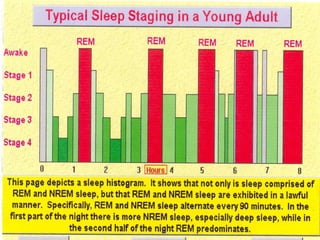
NREM : 1-4…orthodox, quiet, slow-wave
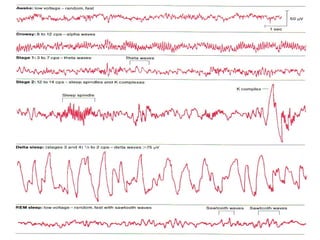
• Stage 1: transition phase from wakefulness & sleep
EEG:EEG: activity between 3-7 Hz (Theta waves)
length:length: ½ min. – 7 min.
mentation: thinking no longer reality-oriented
…short dreams …hypnic myoclonia
• Stage 2: first bona fide sleep stage
EEG: Sleep spindles - burst of 12-24 Hz act. (½ -2 sec)
K complexes (well delineated, slow, neg. EEG deflections
followed by a ‘+’ component )
length: approx. 20 – 30 min.
mentation: short, mundane fragmented thoughts
SLEEP ARCHITECTURESLEEP ARCHITECTURE
NREM
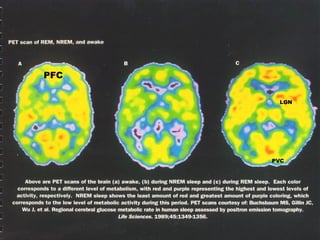
• Stage 3 & 4: deepest / SWS / high voltage Delta waves
“core sleep hypothesis” – SWS serves to “repair the
effects of waking wear & tear on the cerebrum”, i.e. lower
metabolic rate & brain temperature allows repair from free-
radical damage
decreases with age (40 y/o ↓↓ 50% / elderly nonexistent)
SWS: ↑↑↑ GH, Prolactin, Cortisol; inhibition of TSH
vagal tone increased; decrease in sympathetic NS activity,
HR, BP and cerebral glucose utilization decreased
↓ Schizophrenia (Am J Psych ’08)
SLEEP ARCHITECTURESLEEP ARCHITECTURE
REM
• ‘paradoxical sleep’ : ‘active’ brain
/adrenaline, pulse & oxygen consumption come
closest to those in wakefulness with muscle atonia
• REM: occurs approx every 90 min with each REM
period progressively more dense and longer in
duration (1st
REM 9 min; doubles each time)
• Episodic burst of rapid eye movements
• controlled by the pons (brain stem, i.e. primitive
brain) which also controls breathing & heart rate
• plateaus around 20 yrs., then decreases with age
SLEEP ARCHITECTURESLEEP ARCHITECTURE
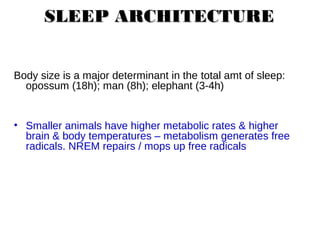
Body size is a major determinant in the total amt of sleep:
opossum (18h); man (8h); elephant (3-4h)
• Smaller animals have higher metabolic rates & higher
brain & body temperatures – metabolism generates free
radicals. NREM repairs / mops up free radicals
PVC
LGN
PFC
The Elephant lies
down during
non-REM sleep but
stands
during REM sleep.
American Academy of Sleep MedicineAmerican Academy of Sleep Medicine
• The neural
impact of
Sleep on
Memory
The Neural Impact of Sleep on Memory
• CONTENT MEMORY (Hippocampus)
• Episodic memory (min-yrs)
• explicit & declarative
• Medial temporal lobes (incl hippocampus), PFC, mammillary body (Korsakoff’s, Alzheimer’s)
• remembering a short story, what you had for dinner last night, what you did on your last B’day
• Semantic memory (min-yrs)
• explicit & declarative
• inferolateral temporal lobes (Alzheimer’s)
• Knowing who was the first president of the US, the color of a lion, how a fork differs from a comb
• Procedural memory (min-yrs)
• explicit or implicit, nondeclarative
• basal ganglia, cerebellum, motor areas (Parkinson’s)
• driving a car w/standard transmission (ex), learning a sequence of #s on a touch tone phone w/out trying
(im)
• Working memory (sec-min- rehearsed)
• explicit & declarative
• (phono) PFC, Broca’s & Wernicke’s; (spa) PFC, visual-assoc areas (nl aging, VD, Schizophrenia)
• (phonologic) keeping a phone # ‘in your head’ before dialing, (spatial) mentally following a route or
rotating an object in your mind
The Neural Impact of Sleep on Memory
•
Hippocampus: Content Memory vs. Amygdala: Emotional Memory
Content Memory
dual process hypothesis
Hippocampus
NREM: stage 2 Sleep spindles
generated in the thalamocortical circuit
mediates sleep dependent consolidation of procedural & declarative memory
NREM: SWS important for sleep dependent memory consolidation: the
consolidation of hippocampus dependent declarative memory
NREM moves newly acquired memory undisturbed from the hippocampus to
the neocortex - efficiently integrated in existing neuronal networks
REM: → pruning / consolidation (semantic)
enhances procedural memory
The Neural Impact of Sleep on Memory
Matthew P. Walker, PhD, University of California, Berkeley
• Roman rhetorician, Quintilian, who stated: “... it is a curious fact, of which the
reason is not obvious, that the interval of a single night will greatly increase the
strength of the memory...”
• 1800’s: memory associated with dreaming
• 1920’s: demonstrated that sleep was associate with memory consolidation
• 1950’s: discovery of REM / NREM
• ‘sleep-dependent memory processing’
• memories initially formed or ‘encoded’ when the brain is engaged in an idea,
image, etc.
• memory requires consolidation (stabilize memory over time - more resistant to
interference)
• ability to form & retain nonemotional ‘fact based’ (‘episodic’) memory linked to
SWS
• primary insomnia, >30 yrs of age associated with a decline in sleep related memory
consolidation
The Neural Impact of Sleep on Memory
Matthew P. Walker, PhD, University of California, Berkeley
‘Sleep-dependent memory processing’
• Lack of sleep before a task will compromise memory formation. …
need to ‘prime the brain’
• Sleep BEFORE learning is critical for initial memory formation (dry
sponge to prepare for next days soaking)
• Sleep restores the next-day encoding capacity of the hippocampus
• Sleep AFTER learning is critical to consolidate new memories
-supports overnight consolidation of new memory
-need for adequate sleep (primarily SWS) for nonemotional episodic
declarative memory after learning
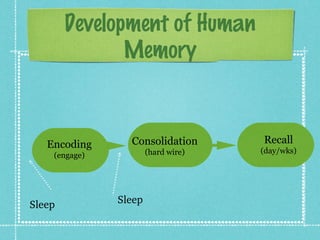
Development of Human
Memory
Consolidation
(hard wire)
Recall
(day/wks)
Encoding
(engage)
Sleep Sleep
The Neural Impact of Sleep on Memory
“Deep Sleep beats all-nighter for retaining what you learn”
(USA TODAY)
• Amplification of Slow Wave Activity during sleep
improves consolidation of declarative memory
increase SWS ? ...rTMS & tiagabine & gaboxadol
• “Declarative Memory Performance Is Associated
w/the # of Sleep Spindles (SS) in Elderly Women”
• Hirschner, et. al., Am J Geriatr Psychiatry 20:9, Sept 2012
• declarative memory performance in elderly women - high performers exhibited
greater # SS & higher Spindle density compared with low performers
decrease in SS density in Schizophrenia (Am J of Psychiatry, 2007)
Increase SS density ? ... zolpidem
“If you don’t snooze you lose”
American Academy of Sleep MedicineAmerican Academy of Sleep Medicine
• The neural
impact of
Sleep on
Emotion
The Neural Impact of Sleep Loss on EmotionThe Neural Impact of Sleep Loss on Emotion
Matthew P. Walker, PhDMatthew P. Walker, PhD
University of California, BerkeleyUniversity of California, Berkeley
• Sleep disturbance: criteria for many psychiatric
disorders
• Major Depressive Disorder and Post Traumatic
Sleep Disorder
• Cause / consequence or co-morbid?
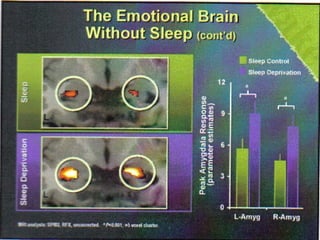
• Amygdala - emotional memory
• What happens to the Amygdala secondary to
sleep deprivation
The Neural Impact of Sleep Loss on EmotionThe Neural Impact of Sleep Loss on Emotion
Matthew P. Walker, PhDMatthew P. Walker, PhD
University of California, BerkeleyUniversity of California, Berkeley
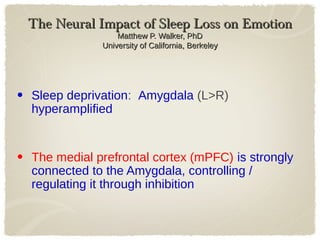
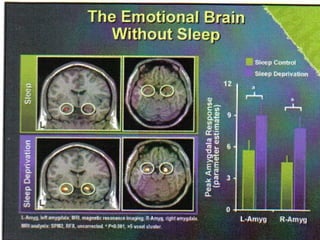
• Sleep deprivation: Amygdala (L>R)
hyperamplified
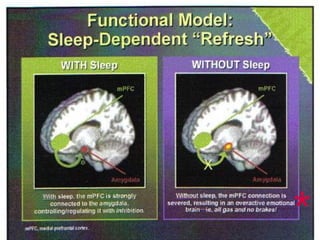
• The medial prefrontal cortex (mPFC) is strongly
connected to the Amygdala, controlling /
regulating it through inhibition
*
“Sleep Deprivation Impairs the Accurate Recognition of Human Emotions”
M. Walker, PhD; Sleep. Vol. 33, No. 3, 2010
almost all psych & neuro mood disorders express co-occurring abnormalities in
sleep - suggesting a potential interdependence between sleep and affective
brain function
used a affective face recognition task
single night of sleep deprivation signif disrupts the ability of the human brain to
accurately id salient emotional expressions in others particularly in the
moderate intensity range of emotion
most dramatic for emotions eliciting high emotional arousal - Angry and Happy
- corresponding to the greatest threat relevant and reward relevant value,
respectively
influence of sleep deprivation on emotional recognition was observed most
significantly in females
findings indicate that females have a greater degree of sensitivity to the effects
of sleep loss in the context of affective dysregulation
consistent with reported trends in clinical mood disorders
The Neural Impact of Sleep Loss on Emotion
Matthew P. Walker, PhD
University of California, Berkeley
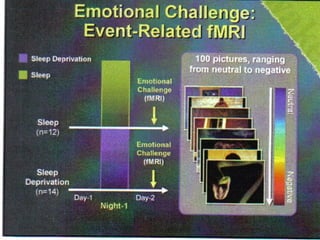
• Sleep deprivation obliterates positive memory
• Sleep deprivation disproportionately amplifies emotional
brain reactivity
• Depression / PTSD
• results in amplification of emotional memory /
accentuation of negative memory
• REM sleep palliative - depotentiates the overemotional
brain by consolidating emotional memory
• emotional memory memory of emotion
• affective stripping as REM decreases adrenergic tone
• (prazosin: alpha-1 antagonist / AASM)
• “Sleep to forget”
• sleep refreshes the emotional brain / modulates affective
memories
---------------------
The Neural Impact of Sleep Loss on Emotion
Matthew P. Walker, PhD
QUIET!
SLEEPING BRAIN AT
WORK!
’’09 American Academy of Sleep Medicine09 American Academy of Sleep Medicine
• Chronobiology
Chronobiology
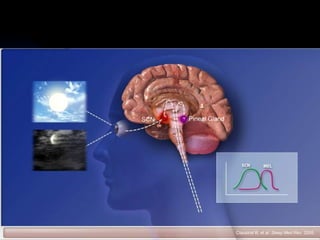
• Mammalian ‘master biological clock’ (pacemaker)
located in the paired (SCN) suprachiasmatic nuclei of
anterior hypothalamus
• generates circadian rhythms
• External stimuli = zeitgebers – exert Circadian Rhythm
(CR) synchronizing effect
• Principal entraining zeitgeber of the human endogenous
CR is the LD cycle
• circadian oscillators are found in all neurons of the brain
and all cells of the body, e.g. eye, heart, liver & kidneys
• misalignment / desynchronized
• Daylight Savings Time
• 15% increase in MVA the next Monday
Chronobiologyr
• major synchronizer or ‘Zeitgeber’ for the SCN: light
• mediated through light-sensitive receptors of the retina –
distinct, non-image-forming subset of retinal ganglion
cells (contain light sensitive pigment, i.e photopigment
melanopsin) functions in circadian entrainment by
transducing light into neural impulses that project via
directly from the retina via the retinohypothalamic tract
(RHT) sensitive to blue light directly to the SCN pathway
• RHT releases glutamate, inhibitory GABA - PVN
(paraventricular hypothalamic nucleus
• without PVN inhibition (‘night’) - SCG (superior cervical
ganglion) releases NE-promotes synthesis of the hormone
melatonin (from serotonin) in the pineal gland
The Wall Street Journal: Personal Journal
September 26, 2012
“The Peak Time for Everything”
Sue Shellenbarger
• 8AM: twitter users are in a more energetic mood shortly after waking & tend
to send more cheerful tweets
• 9AM: high energy - difficult conversation best undertaken
• 10AM: as body temp rises throughout the morning, cognitive skills improve,
working memory and concentration peak mid-to-late morning
• 2PM: sleepiness hits its daytime peak, esp after lunch
• 4PM: eye-hand coordination rises in the afternoon - complex task require
coordination & strength best undertaken while physical strength & alertness
are still high
• 5PM: muscle strength and flexibility peak late in the day thus improving
performance and results from workouts or competition (lungs perform 18%
better at 5PM than at midday)
• 9PM: people’s freshest, most original thinking occurs at non-peak times of
the day - usually evenings
“For our body is like a clock; if one wheel be
amiss, all the rest are disordered, the
whole fabric suffers; with such admirable
art and harmony is a man composed”
The Anatomy of Melancholy
Robert Burton
1621
Sleep & Circadian Rhythms in
Affective Disorder
diurnal variation of mood and early morning
awakening suggest rhythmic dysfunction
Dysregulation of circadian rhythms & sleep
disturbances
core elements of affective disorders
sleep disturbances: frequent residual sxs of
depression
insomnia appears before, predicts & increases risk of
relapse & recurrence
misalignment of sleep & rhythms - mood fluctuation
Sleep & Circadian Rhythms in
Affective Disorder
greater incidence of depressive episodes after a
west flight or manic episode after flying east
unipolar depression (seasonal affective disorder)
BAD (rapid cycling)
↓need for sleep: symptom of mania & hypomania;
insomnia or hypersomnia: symptom of depression
Sleep & Circadian Rhythms in
Bipolar Affective Disorder
Allison G. Harvey, PhD University of California, Berkeley
‘Sleep loss is a major symptom as well as a trigger of manic episodes & sleep
deprivation is one of the most effective antidepressant interventions’
Am J Psych 165:7, July 2008: 820-829
• Sleep disturbance is among the most prominent correlates of mood episodes &
inadequate recovery, yet minimally studied
• Model: recognizes a role for genetic vulnerability; suggest there is a bi-
directional relationship between daytime affect regulation & nighttime sleep,
e.g. escalating vicious circle of disturbance in daily affect regulation interferes
w/nighttime sleep/CR
• Sleep disturbances in Bipolar I, Bipolar II & Cyclothymia
• Sleep disruption +/or circadian rhythm disturbance
• Shortcomings of the Diagnostic Criteria (subjective judgment or quantitative
criteria)
Sleep & Circadian Rhythms in
Bipolar Affective Disorder
Sleep Disturbance in Bipolar Disorder: Therapeutic Implications
Plante & Winkelman; Am J Psych 165:7, July 2008: 830-843
Psychoeducation: identify prodromal symptoms &
lifestyle regularity (stabilize sleep-wake rhythms)
• APA Practice Guidelines
for the Treatment of Patients with BAD:
A. Psychiatric Management
• 7. Promote awareness of stressors & regular patterns of activity & sleep: …
Social rhythm disruption with disturbed sleep/wake cycles may specifically
trigger manic episodes ...
• 8. Work with the patient to anticipate & address early signs of relapse: …
Many patients experience changes in sleep patterns early in the
development of an episode…
American Academy of Sleep MedicineAmerican Academy of Sleep Medicine
• Light Therapy
• Wake Therapy
• Dark Therapy
• Melatonin
• Clinical benefits of light therapy comes from phase
advancement of the Circadian Rhythm
• Unit of intensity for visible light is lux (e.g. sunlight at midday >100 K lux /
ordinary room light ~180 lux)
• Wavelength (WL): visible light: 380nm (violet) to 750nm (red)
• Violet / Indigo / Blue / Green …yellow-green (max. effective for visualization) /
Yellow / Orange / Red
• Light Box: downward-tilted diffusion screen w/a UV filter; 10 k lux at approx.12
inches; provide broad-spectrum white illumination & filter WL lower than 450nm
to min levels.
• Timing of light therapy (Horne-Ostberg Morningness-Eveningness Questionnaire)
• Dawn stimulation - naturalistic dawn (dim signal-0.001 lux (starlight) to approx. 300 lux (sunrise)
during last period of pt’s sleep episode (?bedsd commercial alarm clock lamps)
Blue Light Special?
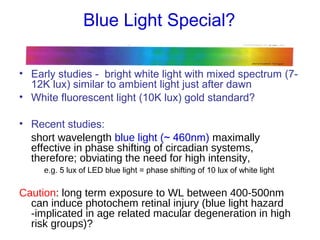
• Early studies - bright white light with mixed spectrum (7-
12K lux) similar to ambient light just after dawn
• White fluorescent light (10K lux) gold standard?
• Recent studies:
short wavelength blue light (~ 460nm) maximally
effective in phase shifting of circadian systems,
therefore; obviating the need for high intensity,
e.g. 5 lux of LED blue light = phase shifting of 10 lux of white light
Caution: long term exposure to WL between 400-500nm
can induce photochem retinal injury (blue light hazard
-implicated in age related macular degeneration in high
risk groups)?
Light Therapy
(Rosenthal - Arch Gen Psychiatry ’84)
Disorders Responsive to light therapy
Circadian Rhythm Sleep Disorders
Delayed Sleep Phase Type
Advanced Sleep Phase Type
CRSD, nonentrained
Shift Work Disorder
Jet Lag
Dementia
Mood Disorders
Non-seasonal depression (monotherapy or adjunct)
insomnia
Light Therapy
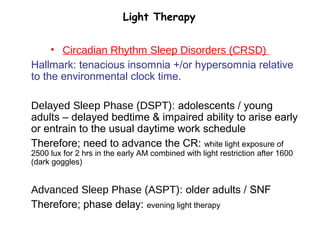
• Circadian Rhythm Sleep Disorders (CRSD)
Hallmark: tenacious insomnia +/or hypersomnia relative
to the environmental clock time.
Delayed Sleep Phase (DSPT): adolescents / young
adults – delayed bedtime & impaired ability to arise early
or entrain to the usual daytime work schedule
Therefore; need to advance the CR: white light exposure of
2500 lux for 2 hrs in the early AM combined with light restriction after 1600
(dark goggles)
Advanced Sleep Phase (ASPT): older adults / SNF
Therefore; phase delay: evening light therapy
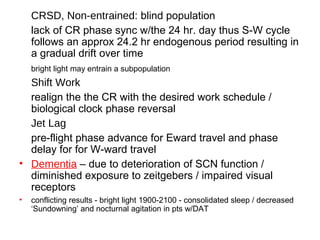
CRSD, Non-entrained: blind population
lack of CR phase sync w/the 24 hr. day thus S-W cycle
follows an approx 24.2 hr endogenous period resulting in
a gradual drift over time
bright light may entrain a subpopulation
Shift Work
realign the the CR with the desired work schedule /
biological clock phase reversal
Jet Lag
pre-flight phase advance for Eward travel and phase
delay for for W-ward travel
• Dementia – due to deterioration of SCN function /
diminished exposure to zeitgebers / impaired visual
receptors
• conflicting results - bright light 1900-2100 - consolidated sleep / decreased
‘Sundowning’ and nocturnal agitation in pts w/DAT
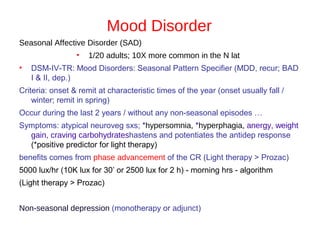
Mood Disorder
Seasonal Affective Disorder (SAD)
• 1/20 adults; 10X more common in the N lat
• DSM-IV-TR: Mood Disorders: Seasonal Pattern Specifier (MDD, recur; BAD
I & II, dep.)
Criteria: onset & remit at characteristic times of the year (onset usually fall /
winter; remit in spring)
Occur during the last 2 years / without any non-seasonal episodes …
Symptoms: atypical neuroveg sxs; *hypersomnia, *hyperphagia, anergy, weight
gain, craving carbohydrateshastens and potentiates the antidep response
(*positive predictor for light therapy)
benefits comes from phase advancement of the CR (Light therapy > Prozac)
5000 lux/hr (10K lux for 30’ or 2500 lux for 2 h) - morning hrs - algorithm
(Light therapy > Prozac)
Non-seasonal depression (monotherapy or adjunct)
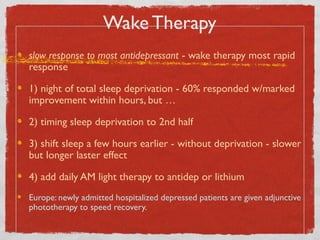
Wake Therapy
slow response to most antidepressant - wake therapy most rapid
response
1) night of total sleep deprivation - 60% responded w/marked
improvement within hours, but …
2) timing sleep deprivation to 2nd half
3) shift sleep a few hours earlier - without deprivation - slower
but longer laster effect
4) add daily AM light therapy to antidep or lithium
Europe: newly admitted hospitalized depressed patients are given adjunctive
phototherapy to speed recovery.
Wake Therapy
wake & light therapy reduce duration of hospitalization.
General Psych Hospital: combo of wake therapy (3
sessions/week) w/antidep resulted in d’c 3 days sooner than
drug tx alone
(Benedetti, et. al. J Clin Psych: 2005; 66:1535-1540)
retrospective analysis: 3 day advantage for patients exposed to
more natural light in sunny hospital rooms than those staying
in dimmer rooms
(Beauchemin, et. al. J Affect Disord.1996; 40: 49-51)
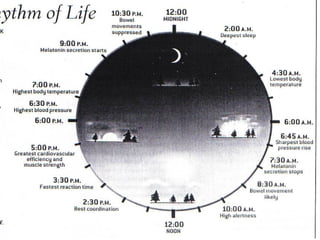
Melatonin
signal of darkness
evening rise in serum melatonin level sets a
thermophysiological cascade in motion (warm hand / feet, heat
loss, cooling of core body temp) prepare organism for sleep
if rhythms out of sync (CRSD, depression) melatonin secreted
at the wrong time and sleep disturbance is accentuated
exogenous melatonin (zeitgeber) to synchronize circadian
rhythms & promote sleep onset
Melatonin
initial research disappointing - depressive sxs worsen?
Carman, et. al.AmJ Psych. 1976; 133: 1181-1186
indiscriminate use / melatonin containing beverages / lack of
quality control
Exogenous Melatonin: Rozerem (5-7 hrs before)
Circadin (Europe) for elderly
Tasimelteon (Vanda) completed phase 3 (CR in blind)
agomelatine (Europe) regulates sleep but has a serotonergic
antagonist component
OTC
Sleep Hygiene
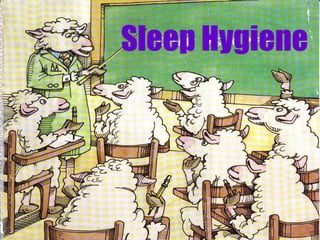
Sleep Hygiene
• Wake up same time every day
• Relaxing bedtime routine
• Get out of bed if not asleep after 15-30 min
• Keep bedroom dark, cool & quiet
• Eliminate naps
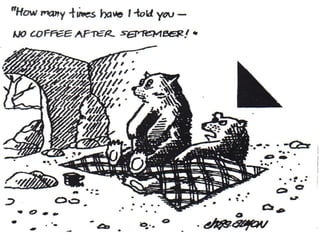
• Avoid heavy meals / EtOH / caffeine in PM
• Don’t work in bed
• Etc.
Awake to Sleep2
Awake to Sleep2

Awake to Sleep2

  • 1.
    “What does sleephave to do with it”? Update on Sleep Medicine Jay A. Yeomans, M.D. CMC-Internal Medicine Residency Noon Conference February 1, 2013
  • 2.
    Sleep is nota passive state we spend 1/3 of our lives sleeping 1960 the average american slept 8 & 1/2 hours/nite 2000 the average american slept 7 hours/nite The incidence of childhood obesity and metabolic disorders has increased over the past 30 yrs - at the same time the prevalence of chronic sleep deprivation has increased precipitously "You'll feel better tomorrow"
  • 3.
    American Academy ofSleep MedicineAmerican Academy of Sleep Medicine Deja’ review sleep physiology • The neural impact of Sleep on Memory • The neural impact of Sleep on Emotion (MDD / PTSD) • Chronobiology • Psychiatric Disorders • Treatments
  • 4.
    “Sleep, the chiefnourisher of life’s great feast” William Shakespear (MacBeth; Act II, Scene II)
  • 6.
    SLEEP ARCHITECTURESLEEP ARCHITECTURE NREM: 1-4…orthodox, quiet, slow-wave • Stage 1: transition phase from wakefulness & sleep EEG:EEG: activity between 3-7 Hz (Theta waves) length:length: ½ min. – 7 min. mentation: thinking no longer reality-oriented …short dreams …hypnic myoclonia • Stage 2: first bona fide sleep stage EEG: Sleep spindles - burst of 12-24 Hz act. (½ -2 sec) K complexes (well delineated, slow, neg. EEG deflections followed by a ‘+’ component ) length: approx. 20 – 30 min. mentation: short, mundane fragmented thoughts
  • 7.
    SLEEP ARCHITECTURESLEEP ARCHITECTURE NREM •Stage 3 & 4: deepest / SWS / high voltage Delta waves “core sleep hypothesis” – SWS serves to “repair the effects of waking wear & tear on the cerebrum”, i.e. lower metabolic rate & brain temperature allows repair from free- radical damage decreases with age (40 y/o ↓↓ 50% / elderly nonexistent) SWS: ↑↑↑ GH, Prolactin, Cortisol; inhibition of TSH vagal tone increased; decrease in sympathetic NS activity, HR, BP and cerebral glucose utilization decreased ↓ Schizophrenia (Am J Psych ’08)
  • 8.
    SLEEP ARCHITECTURESLEEP ARCHITECTURE REM •‘paradoxical sleep’ : ‘active’ brain /adrenaline, pulse & oxygen consumption come closest to those in wakefulness with muscle atonia • REM: occurs approx every 90 min with each REM period progressively more dense and longer in duration (1st REM 9 min; doubles each time) • Episodic burst of rapid eye movements • controlled by the pons (brain stem, i.e. primitive brain) which also controls breathing & heart rate • plateaus around 20 yrs., then decreases with age
  • 9.
    SLEEP ARCHITECTURESLEEP ARCHITECTURE Bodysize is a major determinant in the total amt of sleep: opossum (18h); man (8h); elephant (3-4h) • Smaller animals have higher metabolic rates & higher brain & body temperatures – metabolism generates free radicals. NREM repairs / mops up free radicals
  • 10.
  • 12.
    The Elephant lies downduring non-REM sleep but stands during REM sleep.
  • 13.
    American Academy ofSleep MedicineAmerican Academy of Sleep Medicine • The neural impact of Sleep on Memory
  • 14.
    The Neural Impactof Sleep on Memory • CONTENT MEMORY (Hippocampus) • Episodic memory (min-yrs) • explicit & declarative • Medial temporal lobes (incl hippocampus), PFC, mammillary body (Korsakoff’s, Alzheimer’s) • remembering a short story, what you had for dinner last night, what you did on your last B’day • Semantic memory (min-yrs) • explicit & declarative • inferolateral temporal lobes (Alzheimer’s) • Knowing who was the first president of the US, the color of a lion, how a fork differs from a comb • Procedural memory (min-yrs) • explicit or implicit, nondeclarative • basal ganglia, cerebellum, motor areas (Parkinson’s) • driving a car w/standard transmission (ex), learning a sequence of #s on a touch tone phone w/out trying (im) • Working memory (sec-min- rehearsed) • explicit & declarative • (phono) PFC, Broca’s & Wernicke’s; (spa) PFC, visual-assoc areas (nl aging, VD, Schizophrenia) • (phonologic) keeping a phone # ‘in your head’ before dialing, (spatial) mentally following a route or rotating an object in your mind
  • 15.
    The Neural Impactof Sleep on Memory • Hippocampus: Content Memory vs. Amygdala: Emotional Memory Content Memory dual process hypothesis Hippocampus NREM: stage 2 Sleep spindles generated in the thalamocortical circuit mediates sleep dependent consolidation of procedural & declarative memory NREM: SWS important for sleep dependent memory consolidation: the consolidation of hippocampus dependent declarative memory NREM moves newly acquired memory undisturbed from the hippocampus to the neocortex - efficiently integrated in existing neuronal networks REM: → pruning / consolidation (semantic) enhances procedural memory
  • 16.
    The Neural Impactof Sleep on Memory Matthew P. Walker, PhD, University of California, Berkeley • Roman rhetorician, Quintilian, who stated: “... it is a curious fact, of which the reason is not obvious, that the interval of a single night will greatly increase the strength of the memory...” • 1800’s: memory associated with dreaming • 1920’s: demonstrated that sleep was associate with memory consolidation • 1950’s: discovery of REM / NREM • ‘sleep-dependent memory processing’ • memories initially formed or ‘encoded’ when the brain is engaged in an idea, image, etc. • memory requires consolidation (stabilize memory over time - more resistant to interference) • ability to form & retain nonemotional ‘fact based’ (‘episodic’) memory linked to SWS • primary insomnia, >30 yrs of age associated with a decline in sleep related memory consolidation
  • 17.
    The Neural Impactof Sleep on Memory Matthew P. Walker, PhD, University of California, Berkeley ‘Sleep-dependent memory processing’ • Lack of sleep before a task will compromise memory formation. … need to ‘prime the brain’ • Sleep BEFORE learning is critical for initial memory formation (dry sponge to prepare for next days soaking) • Sleep restores the next-day encoding capacity of the hippocampus • Sleep AFTER learning is critical to consolidate new memories -supports overnight consolidation of new memory -need for adequate sleep (primarily SWS) for nonemotional episodic declarative memory after learning
  • 18.
    Development of Human Memory Consolidation (hardwire) Recall (day/wks) Encoding (engage) Sleep Sleep
  • 19.
    The Neural Impactof Sleep on Memory “Deep Sleep beats all-nighter for retaining what you learn” (USA TODAY) • Amplification of Slow Wave Activity during sleep improves consolidation of declarative memory increase SWS ? ...rTMS & tiagabine & gaboxadol • “Declarative Memory Performance Is Associated w/the # of Sleep Spindles (SS) in Elderly Women” • Hirschner, et. al., Am J Geriatr Psychiatry 20:9, Sept 2012 • declarative memory performance in elderly women - high performers exhibited greater # SS & higher Spindle density compared with low performers decrease in SS density in Schizophrenia (Am J of Psychiatry, 2007) Increase SS density ? ... zolpidem
  • 20.
    “If you don’tsnooze you lose”
  • 21.
    American Academy ofSleep MedicineAmerican Academy of Sleep Medicine • The neural impact of Sleep on Emotion
  • 22.
    The Neural Impactof Sleep Loss on EmotionThe Neural Impact of Sleep Loss on Emotion Matthew P. Walker, PhDMatthew P. Walker, PhD University of California, BerkeleyUniversity of California, Berkeley • Sleep disturbance: criteria for many psychiatric disorders • Major Depressive Disorder and Post Traumatic Sleep Disorder • Cause / consequence or co-morbid? • Amygdala - emotional memory • What happens to the Amygdala secondary to sleep deprivation
  • 23.
    The Neural Impactof Sleep Loss on EmotionThe Neural Impact of Sleep Loss on Emotion Matthew P. Walker, PhDMatthew P. Walker, PhD University of California, BerkeleyUniversity of California, Berkeley • Sleep deprivation: Amygdala (L>R) hyperamplified • The medial prefrontal cortex (mPFC) is strongly connected to the Amygdala, controlling / regulating it through inhibition
  • 27.
  • 28.
    “Sleep Deprivation Impairsthe Accurate Recognition of Human Emotions” M. Walker, PhD; Sleep. Vol. 33, No. 3, 2010 almost all psych & neuro mood disorders express co-occurring abnormalities in sleep - suggesting a potential interdependence between sleep and affective brain function used a affective face recognition task single night of sleep deprivation signif disrupts the ability of the human brain to accurately id salient emotional expressions in others particularly in the moderate intensity range of emotion most dramatic for emotions eliciting high emotional arousal - Angry and Happy - corresponding to the greatest threat relevant and reward relevant value, respectively influence of sleep deprivation on emotional recognition was observed most significantly in females findings indicate that females have a greater degree of sensitivity to the effects of sleep loss in the context of affective dysregulation consistent with reported trends in clinical mood disorders The Neural Impact of Sleep Loss on Emotion Matthew P. Walker, PhD University of California, Berkeley
  • 29.
    • Sleep deprivationobliterates positive memory • Sleep deprivation disproportionately amplifies emotional brain reactivity • Depression / PTSD • results in amplification of emotional memory / accentuation of negative memory • REM sleep palliative - depotentiates the overemotional brain by consolidating emotional memory • emotional memory memory of emotion • affective stripping as REM decreases adrenergic tone • (prazosin: alpha-1 antagonist / AASM) • “Sleep to forget” • sleep refreshes the emotional brain / modulates affective memories --------------------- The Neural Impact of Sleep Loss on Emotion Matthew P. Walker, PhD
  • 30.
  • 31.
    ’’09 American Academyof Sleep Medicine09 American Academy of Sleep Medicine • Chronobiology
  • 32.
    Chronobiology • Mammalian ‘masterbiological clock’ (pacemaker) located in the paired (SCN) suprachiasmatic nuclei of anterior hypothalamus • generates circadian rhythms • External stimuli = zeitgebers – exert Circadian Rhythm (CR) synchronizing effect • Principal entraining zeitgeber of the human endogenous CR is the LD cycle • circadian oscillators are found in all neurons of the brain and all cells of the body, e.g. eye, heart, liver & kidneys • misalignment / desynchronized • Daylight Savings Time • 15% increase in MVA the next Monday
  • 33.
    Chronobiologyr • major synchronizeror ‘Zeitgeber’ for the SCN: light • mediated through light-sensitive receptors of the retina – distinct, non-image-forming subset of retinal ganglion cells (contain light sensitive pigment, i.e photopigment melanopsin) functions in circadian entrainment by transducing light into neural impulses that project via directly from the retina via the retinohypothalamic tract (RHT) sensitive to blue light directly to the SCN pathway • RHT releases glutamate, inhibitory GABA - PVN (paraventricular hypothalamic nucleus • without PVN inhibition (‘night’) - SCG (superior cervical ganglion) releases NE-promotes synthesis of the hormone melatonin (from serotonin) in the pineal gland
  • 37.
    The Wall StreetJournal: Personal Journal September 26, 2012 “The Peak Time for Everything” Sue Shellenbarger • 8AM: twitter users are in a more energetic mood shortly after waking & tend to send more cheerful tweets • 9AM: high energy - difficult conversation best undertaken • 10AM: as body temp rises throughout the morning, cognitive skills improve, working memory and concentration peak mid-to-late morning • 2PM: sleepiness hits its daytime peak, esp after lunch • 4PM: eye-hand coordination rises in the afternoon - complex task require coordination & strength best undertaken while physical strength & alertness are still high • 5PM: muscle strength and flexibility peak late in the day thus improving performance and results from workouts or competition (lungs perform 18% better at 5PM than at midday) • 9PM: people’s freshest, most original thinking occurs at non-peak times of the day - usually evenings
  • 38.
    “For our bodyis like a clock; if one wheel be amiss, all the rest are disordered, the whole fabric suffers; with such admirable art and harmony is a man composed” The Anatomy of Melancholy Robert Burton 1621
  • 39.
    Sleep & CircadianRhythms in Affective Disorder diurnal variation of mood and early morning awakening suggest rhythmic dysfunction Dysregulation of circadian rhythms & sleep disturbances core elements of affective disorders sleep disturbances: frequent residual sxs of depression insomnia appears before, predicts & increases risk of relapse & recurrence misalignment of sleep & rhythms - mood fluctuation
  • 40.
    Sleep & CircadianRhythms in Affective Disorder greater incidence of depressive episodes after a west flight or manic episode after flying east unipolar depression (seasonal affective disorder) BAD (rapid cycling) ↓need for sleep: symptom of mania & hypomania; insomnia or hypersomnia: symptom of depression
  • 41.
    Sleep & CircadianRhythms in Bipolar Affective Disorder Allison G. Harvey, PhD University of California, Berkeley ‘Sleep loss is a major symptom as well as a trigger of manic episodes & sleep deprivation is one of the most effective antidepressant interventions’ Am J Psych 165:7, July 2008: 820-829 • Sleep disturbance is among the most prominent correlates of mood episodes & inadequate recovery, yet minimally studied • Model: recognizes a role for genetic vulnerability; suggest there is a bi- directional relationship between daytime affect regulation & nighttime sleep, e.g. escalating vicious circle of disturbance in daily affect regulation interferes w/nighttime sleep/CR • Sleep disturbances in Bipolar I, Bipolar II & Cyclothymia • Sleep disruption +/or circadian rhythm disturbance • Shortcomings of the Diagnostic Criteria (subjective judgment or quantitative criteria)
  • 42.
    Sleep & CircadianRhythms in Bipolar Affective Disorder Sleep Disturbance in Bipolar Disorder: Therapeutic Implications Plante & Winkelman; Am J Psych 165:7, July 2008: 830-843 Psychoeducation: identify prodromal symptoms & lifestyle regularity (stabilize sleep-wake rhythms) • APA Practice Guidelines for the Treatment of Patients with BAD: A. Psychiatric Management • 7. Promote awareness of stressors & regular patterns of activity & sleep: … Social rhythm disruption with disturbed sleep/wake cycles may specifically trigger manic episodes ... • 8. Work with the patient to anticipate & address early signs of relapse: … Many patients experience changes in sleep patterns early in the development of an episode…
  • 44.
    American Academy ofSleep MedicineAmerican Academy of Sleep Medicine • Light Therapy • Wake Therapy • Dark Therapy • Melatonin
  • 45.
    • Clinical benefitsof light therapy comes from phase advancement of the Circadian Rhythm • Unit of intensity for visible light is lux (e.g. sunlight at midday >100 K lux / ordinary room light ~180 lux) • Wavelength (WL): visible light: 380nm (violet) to 750nm (red) • Violet / Indigo / Blue / Green …yellow-green (max. effective for visualization) / Yellow / Orange / Red • Light Box: downward-tilted diffusion screen w/a UV filter; 10 k lux at approx.12 inches; provide broad-spectrum white illumination & filter WL lower than 450nm to min levels. • Timing of light therapy (Horne-Ostberg Morningness-Eveningness Questionnaire) • Dawn stimulation - naturalistic dawn (dim signal-0.001 lux (starlight) to approx. 300 lux (sunrise) during last period of pt’s sleep episode (?bedsd commercial alarm clock lamps)
  • 46.
    Blue Light Special? •Early studies - bright white light with mixed spectrum (7- 12K lux) similar to ambient light just after dawn • White fluorescent light (10K lux) gold standard? • Recent studies: short wavelength blue light (~ 460nm) maximally effective in phase shifting of circadian systems, therefore; obviating the need for high intensity, e.g. 5 lux of LED blue light = phase shifting of 10 lux of white light Caution: long term exposure to WL between 400-500nm can induce photochem retinal injury (blue light hazard -implicated in age related macular degeneration in high risk groups)?
  • 47.
    Light Therapy (Rosenthal -Arch Gen Psychiatry ’84) Disorders Responsive to light therapy Circadian Rhythm Sleep Disorders Delayed Sleep Phase Type Advanced Sleep Phase Type CRSD, nonentrained Shift Work Disorder Jet Lag Dementia Mood Disorders Non-seasonal depression (monotherapy or adjunct) insomnia
  • 48.
    Light Therapy • CircadianRhythm Sleep Disorders (CRSD) Hallmark: tenacious insomnia +/or hypersomnia relative to the environmental clock time. Delayed Sleep Phase (DSPT): adolescents / young adults – delayed bedtime & impaired ability to arise early or entrain to the usual daytime work schedule Therefore; need to advance the CR: white light exposure of 2500 lux for 2 hrs in the early AM combined with light restriction after 1600 (dark goggles) Advanced Sleep Phase (ASPT): older adults / SNF Therefore; phase delay: evening light therapy
  • 49.
    CRSD, Non-entrained: blindpopulation lack of CR phase sync w/the 24 hr. day thus S-W cycle follows an approx 24.2 hr endogenous period resulting in a gradual drift over time bright light may entrain a subpopulation Shift Work realign the the CR with the desired work schedule / biological clock phase reversal Jet Lag pre-flight phase advance for Eward travel and phase delay for for W-ward travel • Dementia – due to deterioration of SCN function / diminished exposure to zeitgebers / impaired visual receptors • conflicting results - bright light 1900-2100 - consolidated sleep / decreased ‘Sundowning’ and nocturnal agitation in pts w/DAT
  • 50.
    Mood Disorder Seasonal AffectiveDisorder (SAD) • 1/20 adults; 10X more common in the N lat • DSM-IV-TR: Mood Disorders: Seasonal Pattern Specifier (MDD, recur; BAD I & II, dep.) Criteria: onset & remit at characteristic times of the year (onset usually fall / winter; remit in spring) Occur during the last 2 years / without any non-seasonal episodes … Symptoms: atypical neuroveg sxs; *hypersomnia, *hyperphagia, anergy, weight gain, craving carbohydrateshastens and potentiates the antidep response (*positive predictor for light therapy) benefits comes from phase advancement of the CR (Light therapy > Prozac) 5000 lux/hr (10K lux for 30’ or 2500 lux for 2 h) - morning hrs - algorithm (Light therapy > Prozac) Non-seasonal depression (monotherapy or adjunct)
  • 52.
    Wake Therapy slow responseto most antidepressant - wake therapy most rapid response 1) night of total sleep deprivation - 60% responded w/marked improvement within hours, but … 2) timing sleep deprivation to 2nd half 3) shift sleep a few hours earlier - without deprivation - slower but longer laster effect 4) add daily AM light therapy to antidep or lithium Europe: newly admitted hospitalized depressed patients are given adjunctive phototherapy to speed recovery.
  • 53.
    Wake Therapy wake &light therapy reduce duration of hospitalization. General Psych Hospital: combo of wake therapy (3 sessions/week) w/antidep resulted in d’c 3 days sooner than drug tx alone (Benedetti, et. al. J Clin Psych: 2005; 66:1535-1540) retrospective analysis: 3 day advantage for patients exposed to more natural light in sunny hospital rooms than those staying in dimmer rooms (Beauchemin, et. al. J Affect Disord.1996; 40: 49-51)
  • 54.
    Melatonin signal of darkness eveningrise in serum melatonin level sets a thermophysiological cascade in motion (warm hand / feet, heat loss, cooling of core body temp) prepare organism for sleep if rhythms out of sync (CRSD, depression) melatonin secreted at the wrong time and sleep disturbance is accentuated exogenous melatonin (zeitgeber) to synchronize circadian rhythms & promote sleep onset
  • 55.
    Melatonin initial research disappointing- depressive sxs worsen? Carman, et. al.AmJ Psych. 1976; 133: 1181-1186 indiscriminate use / melatonin containing beverages / lack of quality control Exogenous Melatonin: Rozerem (5-7 hrs before) Circadin (Europe) for elderly Tasimelteon (Vanda) completed phase 3 (CR in blind) agomelatine (Europe) regulates sleep but has a serotonergic antagonist component OTC
  • 56.
  • 57.
    Sleep Hygiene • Wakeup same time every day • Relaxing bedtime routine • Get out of bed if not asleep after 15-30 min • Keep bedroom dark, cool & quiet • Eliminate naps • Avoid heavy meals / EtOH / caffeine in PM • Don’t work in bed • Etc.

Editor's Notes

  • #20 The majority of MT1/MT2 receptors are found in the SCN. This limited distribution of MT1 and MT2 receptors combined with an increased understanding of the role of melatonin in sleep-wake regulation suggests that selective MT1 and MT2 agonists may have significant therapeutic potential. [pp. 1099-1103] Dubocovich ML, Rivera-Bermudez MA, Gerdin MJ, Masana MI. Molecular pharmacology, regulation and function of mammalian melatonin receptors. Front Biosci. 2003;8:1093-1108.
  • #30 Electro-oculogram
  • #104 Circadian rhythms are important for normal sleep-wake cycling. Since the intrinsic circadian clock cycle is slightly longer than 24 hours, accuracy of the master clock is maintained by signals that adjust (or entrain) it to match the 24-hour day. For most mammals, the light-dark cycle is recognized via a retinal hypothalamic tract which connects to the SCN. The SCN receives these signals and provides the principal timing cues for entrainment via phase shifting of the circadian cycle. Scheduled retinal stimulation by bright light can shift multiple rhythms regulated by the SCN, including the rhythm of sleep propensity and pineal melatonin secretion. [Monk, pp. 456-B, 463-A; Dijk, p. 855] Exogenous factors beyond light, such as exercise, and endogenous factors, like the hormone melatonin, can influence the circadian rhythmicity of the SCN. In humans, the pineal hormone melatonin exhibits a circadian rhythm of secretion regulated by the SCN, and melatonin can be considered a reliable output marker of the endogenous clock. Circulating levels of melatonin increase shortly after the onset of darkness, peak between 3 AM and 4 AM, and gradually decrease during the second half of the night. The secretion of melatonin is synchronized with the earth’s 24-hour light-dark cycle, and melatonin secretion is potently inhibited by light as the result of photic information detected by the retina and transmitted to the SCN via the retino-hypothalamic tract. At night melatonin is secreted by the pineal gland in response to stimulatory signals originating in the SCN and relayed through preganglionic cell bodies of the superior cervical ganglia. Melatonin is not only regulated by an SCN-driven circadian cycle but can also provide entrainment signals to the SCN by synchronizing the circadian clock, thus modifying the rhythm of its own production and of other circadian variables. [Claustrat, pp. 12, 13, 14 (including fig. 1), 15; Monk, PP. 456-B, 462; Lavie, pp. 296-297A] Claustrat B, Brun J, Chazot G. The basic physiology and pathology of melatonin. Sleep Med Rev. 2005;9:11-24. Dijk D-J, Lockley SW. Integration of human sleep-wake regulation and circadian rhythmicity. J Appl Physiol. 2002;92:852-862. Lavie P. Sleep-wake as a biological rhythm. Annu Rev Psychol. 2001;52:277-303. Monk TH, Welsh DK. The role of chronobiology in sleep disorders medicine. Sleep Med Rev. 2003;7:455-473.
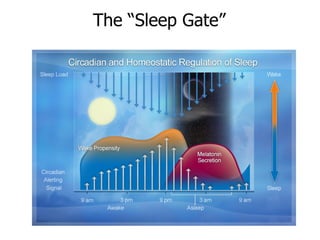
  • #106 The primary physiological function of melatonin is to convey information concerning the daily cycle of light and darkness to body physiology. Melatonin is thought to affect the physiology of the circadian pacemaker of the SCN in two ways, facilitating the synchronization of circadian rhythms and attenuating the SCN-generated alerting signals. In this capacity, night-time melatonin production allows the homeostatic sleep load to exert its influence unopposed by the circadian alerting signal. As a result, wake propensity diminishes, and sleep ensues. Nocturnal onset of melatonin secretion correlates well with the opening of a “sleep gate.” As the night progresses, melatonin levels drop. As morning approaches, the alerting signal increases, promoting wakefulness. [Lavie, pp. 296, 297-A & -B; Bzrezinski, p. 42] Lavie P. Sleep-wake as a biological rhythm. Annu Rev Psychol. 2001;52:277-303. Brzezinski A, Vangel MG, Wurtman RJ, et al. Effects of exogenous melatonin on sleep: a meta-analysis. Sleep Med Rev. 2005;9:41-50 Graph: Kennaway DJ, Voultsios A. Circadian rhythm of free melatonin in human plasma. J Clin Endocrinol Metab. 1998;83:1013-1015. [Figure 1, p. 1014] Kilduff TS, Kushida CA. Circadian regulation of sleep. In: Chokroverty S, ed. Sleep Disorders Medicine: Basic Science, Technical Considerations, and Clinical Aspects. 2nd ed. Oxford: Butterworth Heinemann; 1999:135-147.
  • #114 Sleep is a complex process involving multiple neurotransmitters impacting on highly interconnected brain circuits. One of the most critical “networks” for wakefulness is the reticular activating system (RAS) that sends projections from the brainstem to multiple areas of the forebrain. Included in this wake system are cholinergic (ACh) fibers that interconnect with key forebrain targets such as the thalamus, an area critical to regulating cortical activity. Other important wake-inducing signals emanate from histaminergic (HIST), serotonergic (5-HT), and noradrenergic (NE) neurons that diffusely innervate the forebrain, regulating cortical and hypothalamic function. Conversely, the recently described ventrolateral preoptic nucleus (VLPO) appears to play a critical role in sleep initiation and maintenance. GABA and galanin are the primary inhibitory neurotransmitters of the VLPO. [pp. 726, 727-A, 729-A,including Figure 1 & Figure 3] Saper CB, Chou TC, Scammell TE. The sleep switch: hypothalamic control of sleep and wakefulness. Trends Neurosci. 2001;24:726-731.
  • #115 The ventrolateral preoptic nucleus (VLPO) appears to play a critical role in sleep initiation and maintenance. GABA and galanin are the primary inhibitory neurotransmitters of the VLPO. This nucleus sends out multiple inhibitory projections that innervate neurons that release the wake-promoting neurotransmitters. [pp. 727-B, 728-A] Researchers have learned that neurons in the VLPO fire at a rapid rate during sleep with substantial attenuation of firing during wakefulness. Likewise, neurons in wake-promoting centers fire rapidly during wakefulness and are relatively quiescent during sleep, with the exception of the cholinergic neurons, which fire rapidly during REM sleep. It is through this reciprocal interplay of stimulation and inhibition that stable states of sleep and wakefulness are maintained. [pp. 726-B & -C, 727-B, 728-A, and 729-A (Figure 3)] Saper CB, Chou TC, Scammell TE. The sleep switch: hypothalamic control of sleep and wakefulness. Trends Neurosci. 2001;24:726-731.
  • #117 The primary physiological function of melatonin is to convey information concerning the daily cycle of light and darkness to body physiology. Melatonin is thought to affect the physiology of the circadian pacemaker of the SCN in two ways, facilitating the synchronization of circadian rhythms and attenuating the SCN-generated alerting signals. In this capacity, night-time melatonin production allows the homeostatic sleep load to exert its influence unopposed by the circadian alerting signal. As a result, wake propensity diminishes, and sleep ensues. Nocturnal onset of melatonin secretion correlates well with the opening of a “sleep gate.” As the night progresses, melatonin levels drop. As morning approaches, the alerting signal increases, promoting wakefulness. [Lavie, pp. 296, 297-A & -B; Bzrezinski, p. 42] Lavie P. Sleep-wake as a biological rhythm. Annu Rev Psychol. 2001;52:277-303. Brzezinski A, Vangel MG, Wurtman RJ, et al. Effects of exogenous melatonin on sleep: a meta-analysis. Sleep Med Rev. 2005;9:41-50 Graph: Kennaway DJ, Voultsios A. Circadian rhythm of free melatonin in human plasma. J Clin Endocrinol Metab. 1998;83:1013-1015. [Figure 1, p. 1014] Kilduff TS, Kushida CA. Circadian regulation of sleep. In: Chokroverty S, ed. Sleep Disorders Medicine: Basic Science, Technical Considerations, and Clinical Aspects. 2nd ed. Oxford: Butterworth Heinemann; 1999:135-147.
  • #129 The primary physiological function of melatonin is to convey information concerning the daily cycle of light and darkness to body physiology. Melatonin is thought to affect the physiology of the circadian pacemaker of the SCN in two ways, facilitating the synchronization of circadian rhythms and attenuating the SCN-generated alerting signals. In this capacity, night-time melatonin production allows the homeostatic sleep load to exert its influence unopposed by the circadian alerting signal. As a result, wake propensity diminishes, and sleep ensues. Nocturnal onset of melatonin secretion correlates well with the opening of a “sleep gate.” As the night progresses, melatonin levels drop. As morning approaches, the alerting signal increases, promoting wakefulness. [Lavie, pp. 296, 297-A & -B; Bzrezinski, p. 42] Lavie P. Sleep-wake as a biological rhythm. Annu Rev Psychol. 2001;52:277-303. Brzezinski A, Vangel MG, Wurtman RJ, et al. Effects of exogenous melatonin on sleep: a meta-analysis. Sleep Med Rev. 2005;9:41-50 Graph: Kennaway DJ, Voultsios A. Circadian rhythm of free melatonin in human plasma. J Clin Endocrinol Metab. 1998;83:1013-1015. [Figure 1, p. 1014] Kilduff TS, Kushida CA. Circadian regulation of sleep. In: Chokroverty S, ed. Sleep Disorders Medicine: Basic Science, Technical Considerations, and Clinical Aspects. 2nd ed. Oxford: Butterworth Heinemann; 1999:135-147.
  • #132 Circadian rhythms are important for normal sleep-wake cycling. Since the intrinsic circadian clock cycle is slightly longer than 24 hours, accuracy of the master clock is maintained by signals that adjust (or entrain) it to match the 24-hour day. For most mammals, the light-dark cycle is recognized via a retinal hypothalamic tract which connects to the SCN. The SCN receives these signals and provides the principal timing cues for entrainment via phase shifting of the circadian cycle. Scheduled retinal stimulation by bright light can shift multiple rhythms regulated by the SCN, including the rhythm of sleep propensity and pineal melatonin secretion. [Monk, pp. 456-B, 463-A; Dijk, p. 855] Exogenous factors beyond light, such as exercise, and endogenous factors, like the hormone melatonin, can influence the circadian rhythmicity of the SCN. In humans, the pineal hormone melatonin exhibits a circadian rhythm of secretion regulated by the SCN, and melatonin can be considered a reliable output marker of the endogenous clock. Circulating levels of melatonin increase shortly after the onset of darkness, peak between 3 AM and 4 AM, and gradually decrease during the second half of the night. The secretion of melatonin is synchronized with the earth’s 24-hour light-dark cycle, and melatonin secretion is potently inhibited by light as the result of photic information detected by the retina and transmitted to the SCN via the retino-hypothalamic tract. At night melatonin is secreted by the pineal gland in response to stimulatory signals originating in the SCN and relayed through preganglionic cell bodies of the superior cervical ganglia. Melatonin is not only regulated by an SCN-driven circadian cycle but can also provide entrainment signals to the SCN by synchronizing the circadian clock, thus modifying the rhythm of its own production and of other circadian variables. [Claustrat, pp. 12, 13, 14 (including fig. 1), 15; Monk, PP. 456-B, 462; Lavie, pp. 296-297A] Claustrat B, Brun J, Chazot G. The basic physiology and pathology of melatonin. Sleep Med Rev. 2005;9:11-24. Dijk D-J, Lockley SW. Integration of human sleep-wake regulation and circadian rhythmicity. J Appl Physiol. 2002;92:852-862. Lavie P. Sleep-wake as a biological rhythm. Annu Rev Psychol. 2001;52:277-303. Monk TH, Welsh DK. The role of chronobiology in sleep disorders medicine. Sleep Med Rev. 2003;7:455-473.