Avoiding
Bias in
Language
FOR APASTYLE
1
Created
by
Alice
Frye,
Ph.D.,
Department
of
Psychology,
University
of
Massachusetts,
Lowell
2.
Goal
THE GOAL OFTHIS TUTORIAL IS TO
MAKE SURE YOU UNDERSTAND
WHAT BIASED LANGUAGE IS
YOU SHOULD AVOID USING BIASED
LANGUAGE IN YOUR WORK
APA HAS GUIDELINES FOR
AVOIDING IT—ONE OF THE
REASONS WE USE THIS FORMAT
3.
Objectives
By theend of this tutorial you should
be able to
Identify biased language
Articulate why biased language
should be avoided
Be able to edit your own writing so
that you avoid biased language
4.
What is Biasin Language
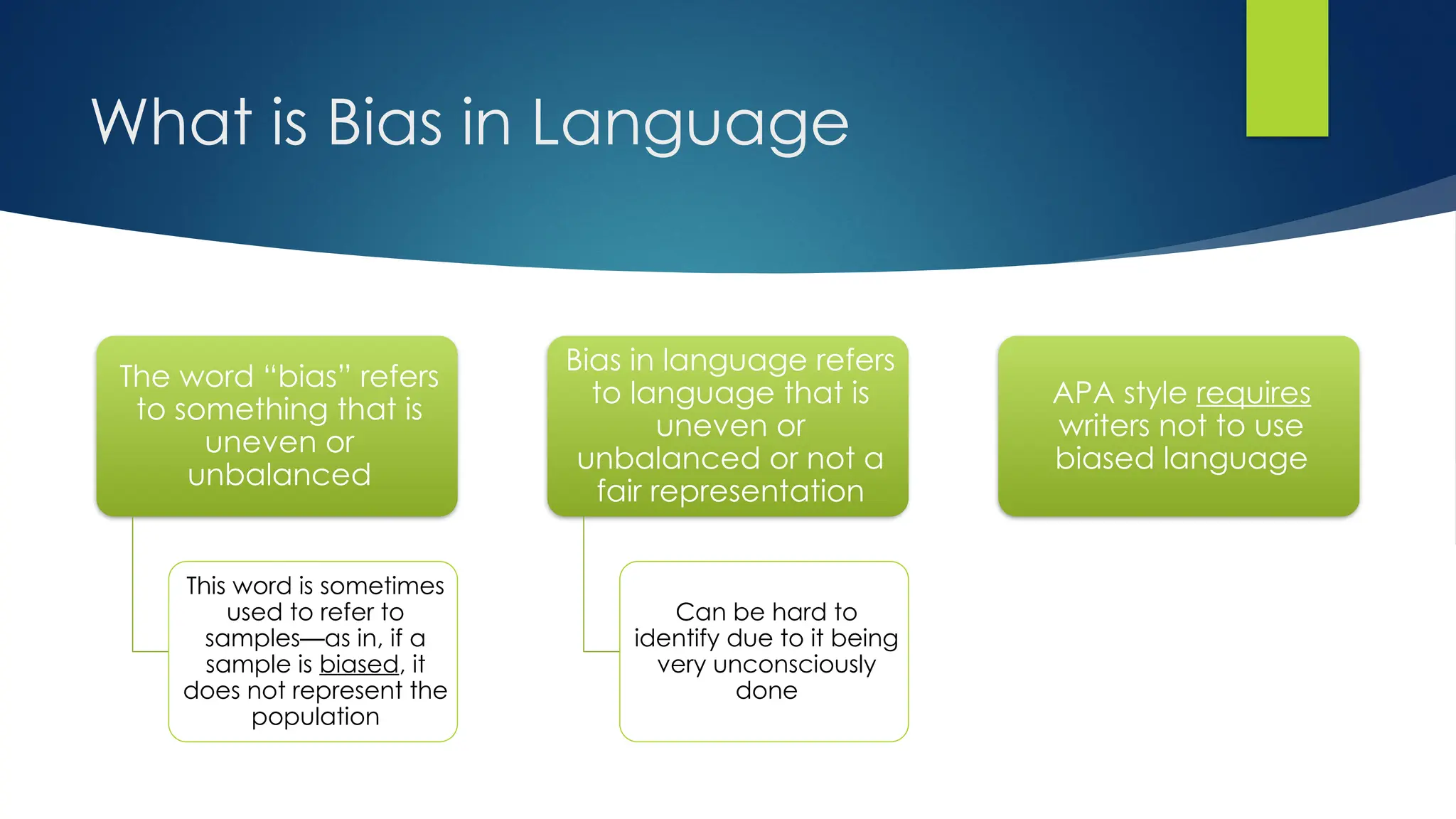
The word “bias” refers
to something that is
uneven or
unbalanced
This word is sometimes
used to refer to
samples—as in, if a
sample is biased, it
does not represent the
population
Bias in language refers
to language that is
uneven or
unbalanced or not a
fair representation
Can be hard to
identify due to it being
very unconsciously
done
APA style requires
writers not to use
biased language
5.
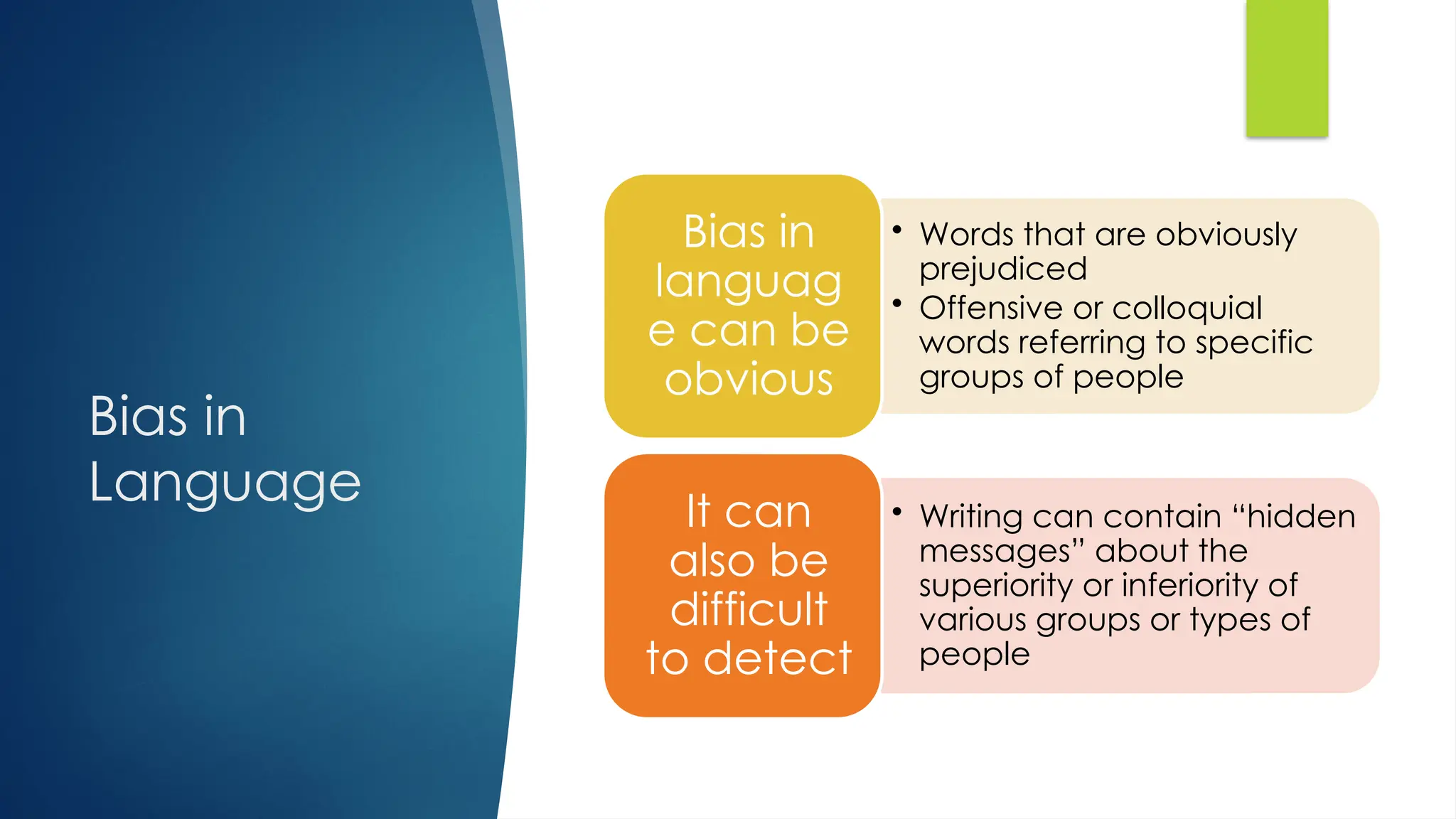
Bias in
Language
• Wordsthat are obviously
prejudiced
• Offensive or colloquial
words referring to specific
groups of people
Bias in
languag
e can be
obvious
• Writing can contain “hidden
messages” about the
superiority or inferiority of
various groups or types of
people
It can
also be
difficult
to detect
6.
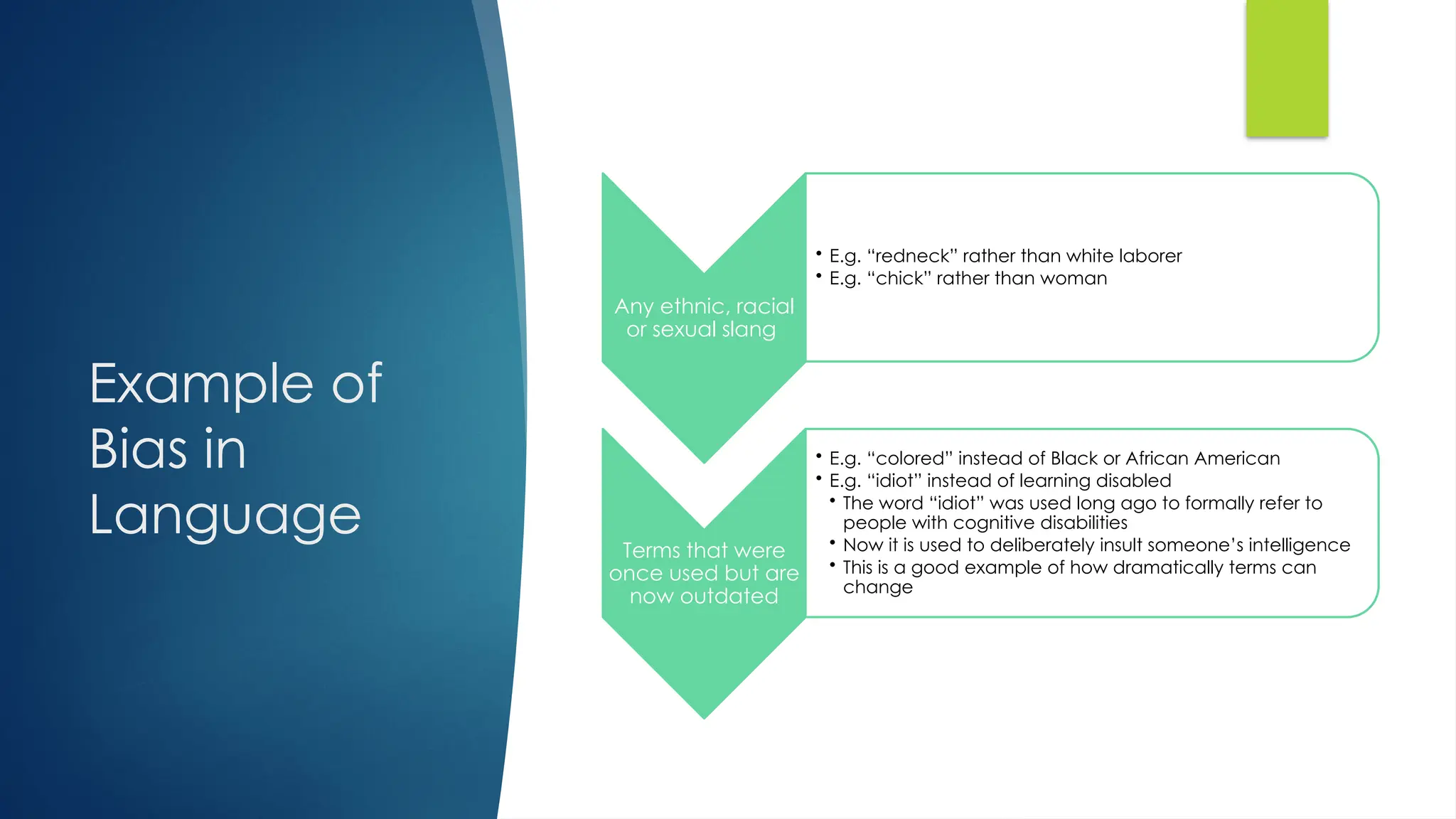
Example of
Bias in
Language
Anyethnic, racial
or sexual slang
• E.g. “redneck” rather than white laborer
• E.g. “chick” rather than woman
Terms that were
once used but are
now outdated
• E.g. “colored” instead of Black or African American
• E.g. “idiot” instead of learning disabled
• The word “idiot” was used long ago to formally refer to
people with cognitive disabilities
• Now it is used to deliberately insult someone’s intelligence
• This is a good example of how dramatically terms can
change
7.
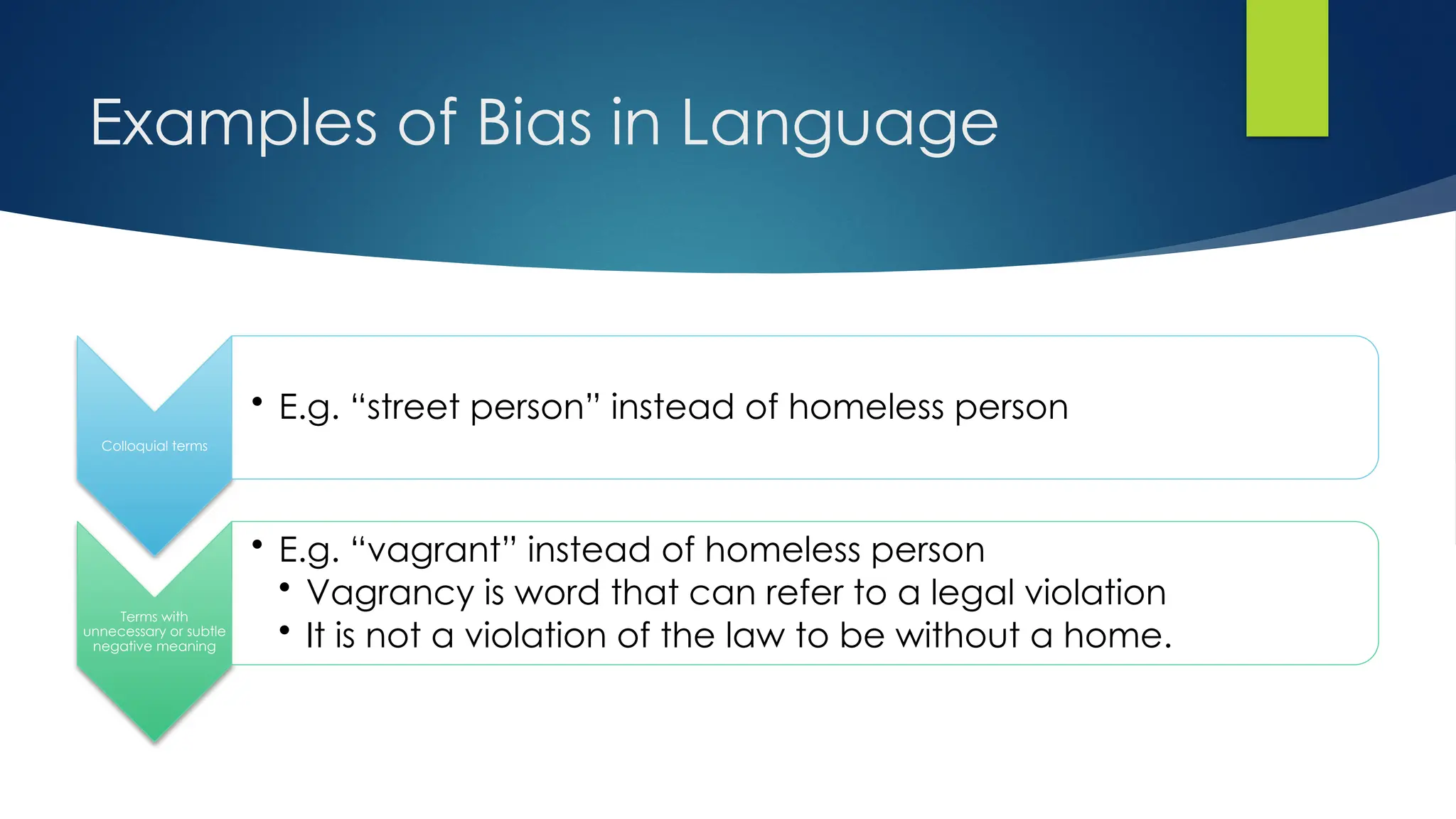
Examples of Biasin Language
Colloquial terms
• E.g. “street person” instead of homeless person
Terms with
unnecessary or subtle
negative meaning
• E.g. “vagrant” instead of homeless person
• Vagrancy is word that can refer to a legal violation
• It is not a violation of the law to be without a home.
8.
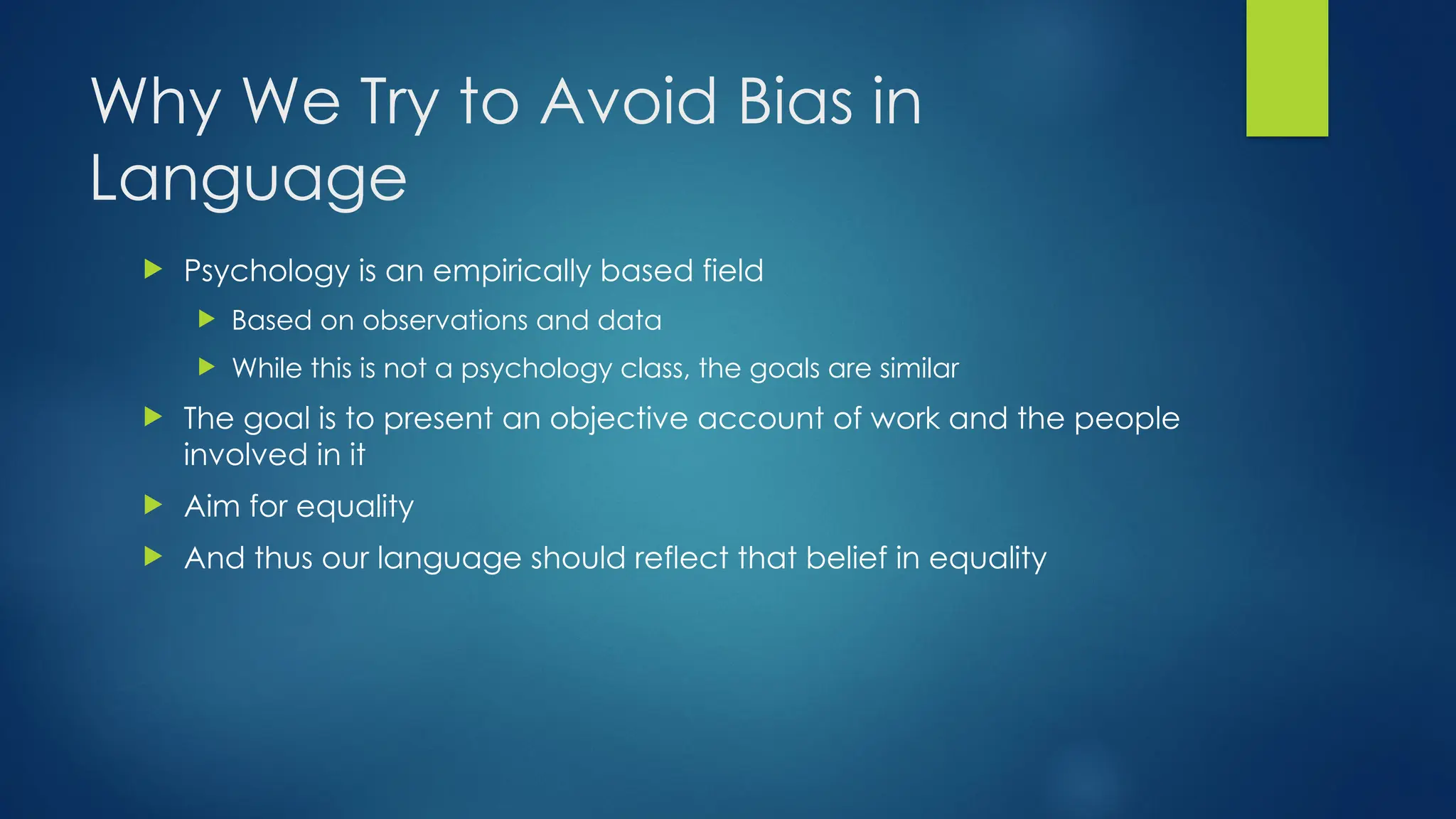
Why We Tryto Avoid Bias in
Language
Psychology is an empirically based field
Based on observations and data
While this is not a psychology class, the goals are similar
The goal is to present an objective account of work and the people
involved in it
Aim for equality
And thus our language should reflect that belief in equality
9.
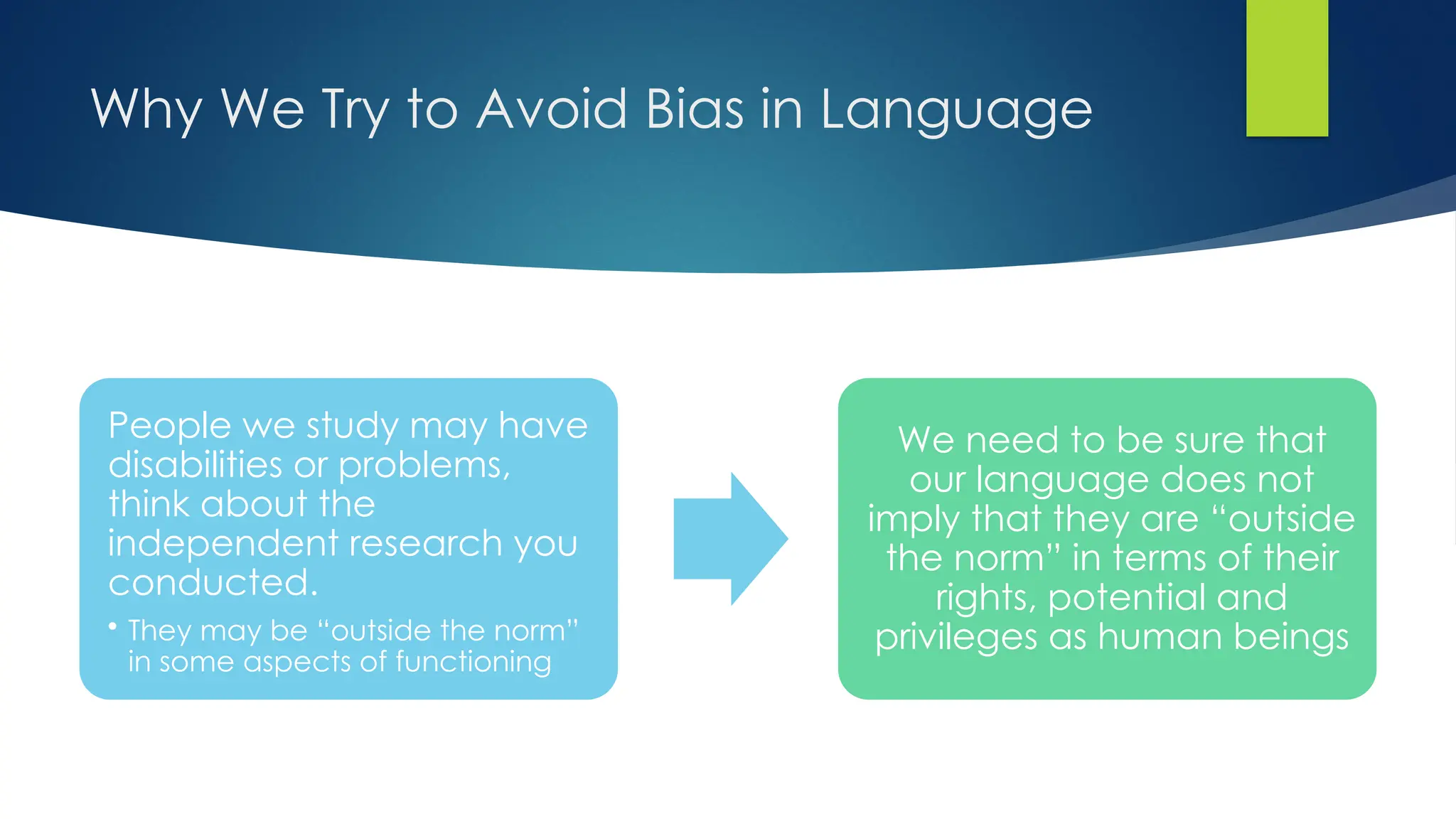
Why We Tryto Avoid Bias in Language
People we study may have
disabilities or problems,
think about the
independent research you
conducted.
• They may be “outside the norm”
in some aspects of functioning
We need to be sure that
our language does not
imply that they are “outside
the norm” in terms of their
rights, potential and
privileges as human beings
10.
Why We Tryto Avoid Bias in Language
STRENGTH OF
ARGUMENT
CREDIBILITY (ETHOS)
11.
How to avoidbias in language
This can be hard because what is considered “biased” changes
over time
Terms that were once acceptable are not acceptable now
Groups change over time regarding the words they are
comfortable with
It is our responsibility keep up with these changes
Asking our friends and colleagues is a start, but not a certain solution
for avoiding bias
Using common media and cultural terms will not be a certain
solution for avoiding bias
They can be wrong (Fallacy)
12.
Guidelines for avoidingBias
(1) Describe at appropriate level of specificity
(2) Be sensitive to labels
These guidelines are a start
Following them will help you avoid bias
But not guarantee it
13.
Appropriate Level ofSpecificity
The goal is to make sure participants or the objectives are fully and
fairly described
In terms of race and ethnicity
In terms of sex and sexual orientation
In terms of age
In terms of any relevant conditions or illnesses they may have
The terms you use to describe the objectives etc.
Characteristics that are not relevant should not be described
So you need to think about what is actually relevant
14.
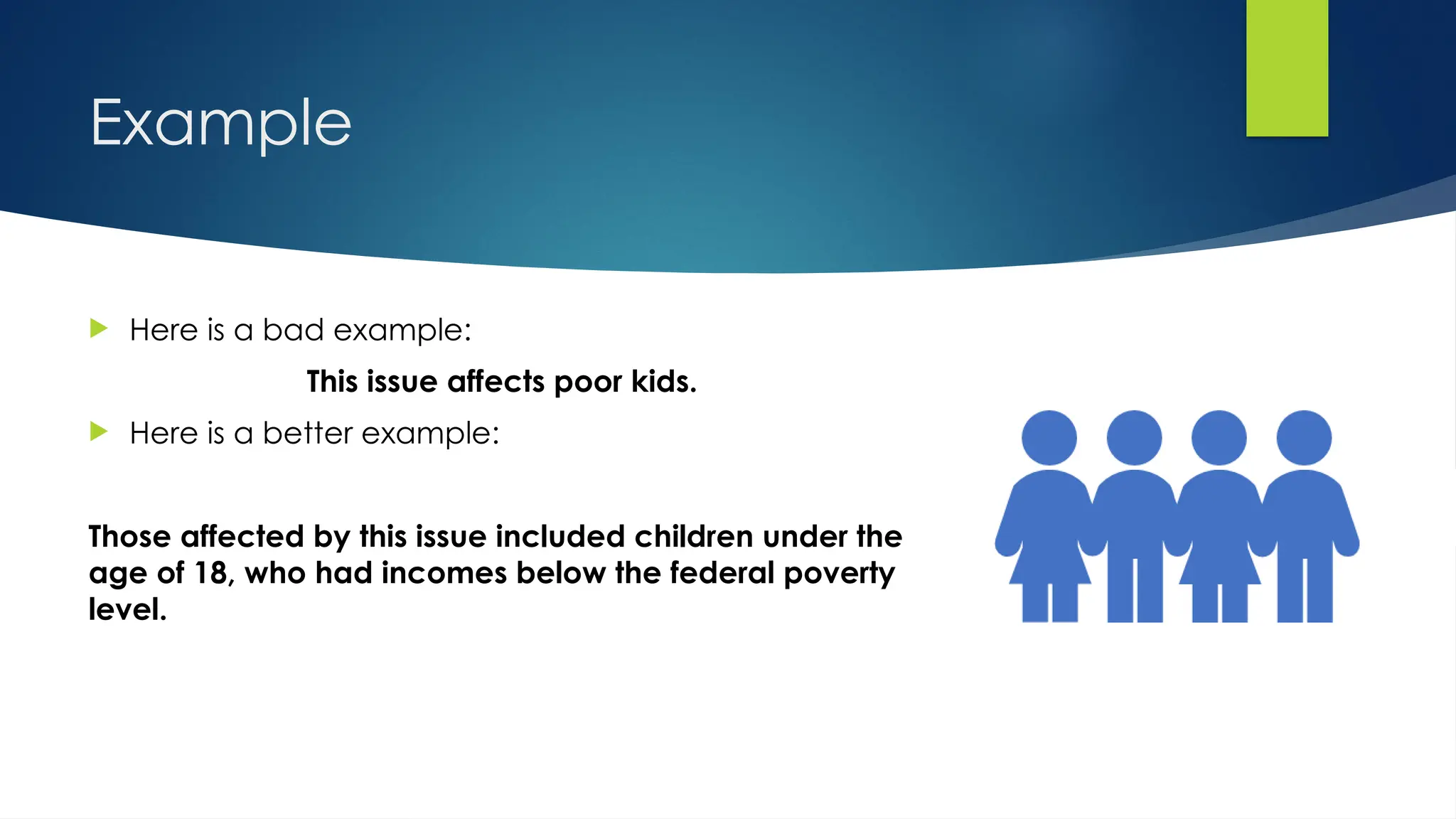
Example
Here isa bad example:
This issue affects poor kids.
Here is a better example:
Those affected by this issue included children under the
age of 18, who had incomes below the federal poverty
level.
15.
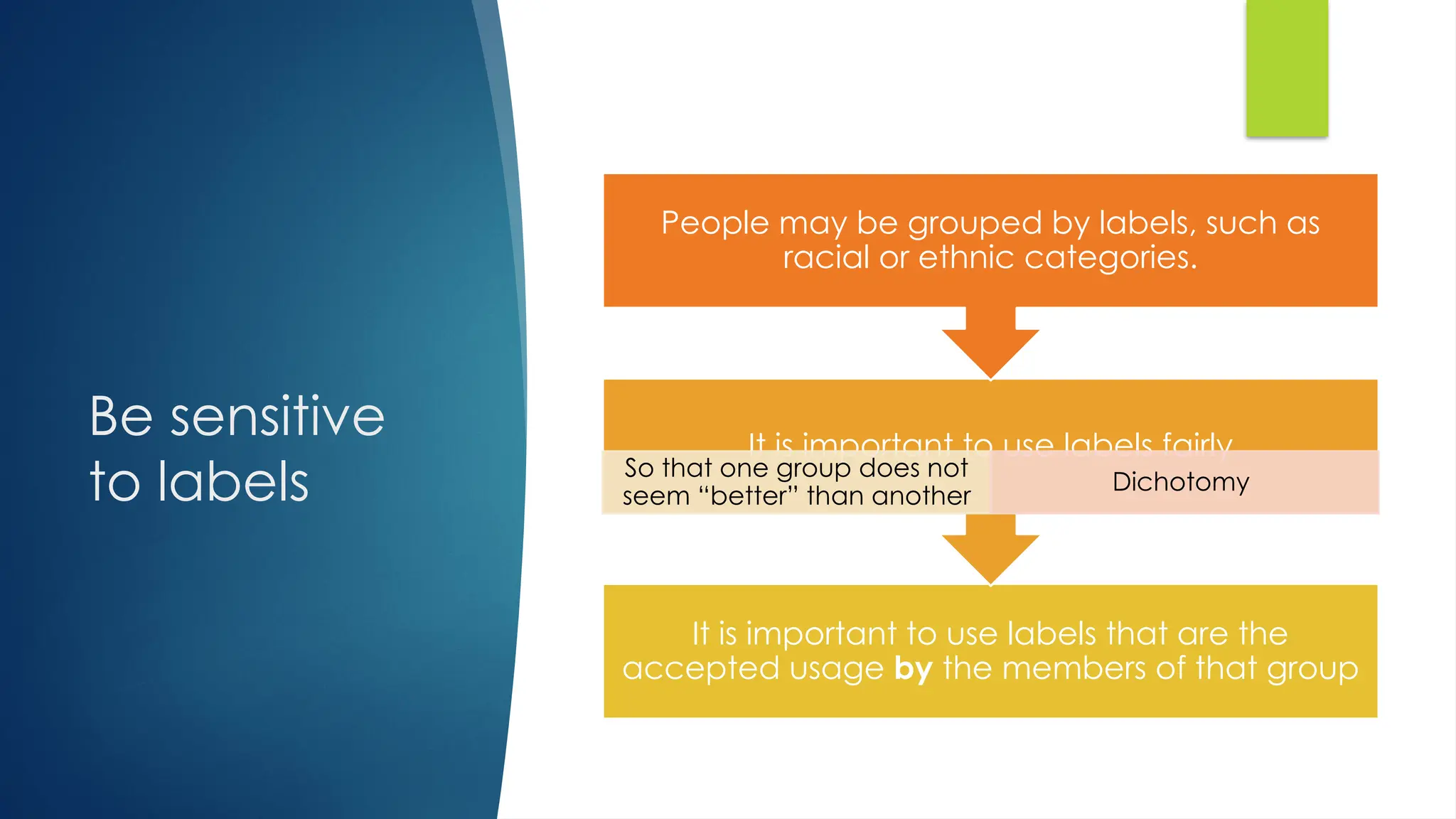
Be sensitive
to labels
Itis important to use labels that are the
accepted usage by the members of that group
It is important to use labels fairly
So that one group does not
seem “better” than another
Dichotomy
People may be grouped by labels, such as
racial or ethnic categories.
16.
Guideline 2-Example
Abad example
This organization deals with mentally ill urban youth.
A better example
The organization provides outreach to adolescents aged 13 to 18 who
lived in metropolitan areas and met criteria for schizophrenia or
depression.
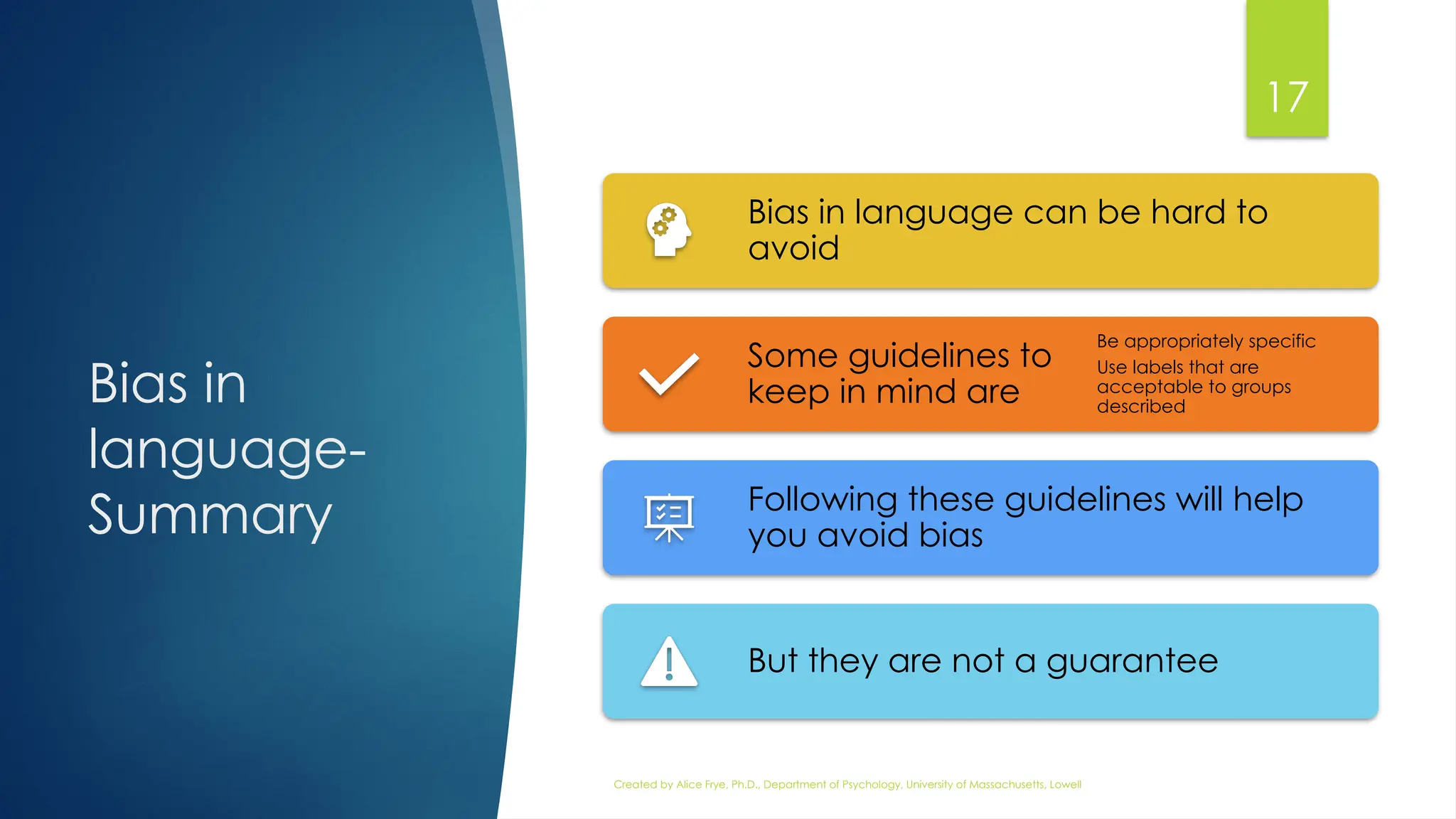
17.
Bias in
language-
Summary
17
Created byAlice Frye, Ph.D., Department of Psychology, University of Massachusetts, Lowell
Bias in language can be hard to
avoid
Some guidelines to
keep in mind are
Be appropriately specific
Use labels that are
acceptable to groups
described
Following these guidelines will help
you avoid bias
But they are not a guarantee


![BIAS AND PREJUDICE [Autosaved].pptx](https://cdn.slidesharecdn.com/ss_thumbnails/biasandprejudiceautosaved-240213134039-2ceea7fb-thumbnail.jpg?width=640&height=640&fit=bounds)


![Apa stylistics[1]](https://cdn.slidesharecdn.com/ss_thumbnails/apastylistics1-121104035943-phpapp01-thumbnail.jpg?width=640&height=640&fit=bounds)


