SYMPATHATIC NERVOUS
SYSTEM
Dr Iram Tassaduq
AUTONOMIC NERVOUS
SYSTEM
The portions of the CENTRAL & PERIPHERAL
nervous system that are concerned primarily
with the regulation & control of visceral
functions are termed collectively the visceral,
vegetative, or autonomic nervous system
AUTONOMIC NERVOUS
SYSTEM
 Innervate organs not usually under voluntary control.
 Effectors include cardiac and smooth muscles and
glands.
 Effectors are part of visceral organs and blood vessels.
ORGANIZATION OF ANS
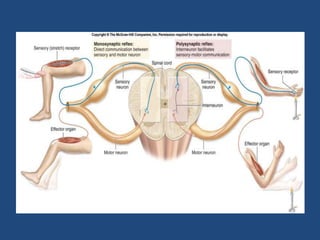
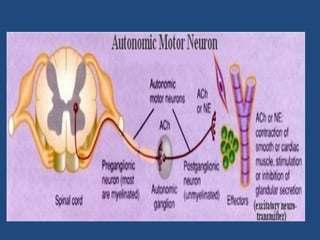
 AFFERENT NEURONS
 EFFERENT NEURONS
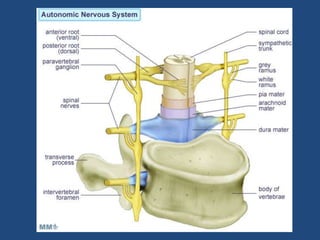
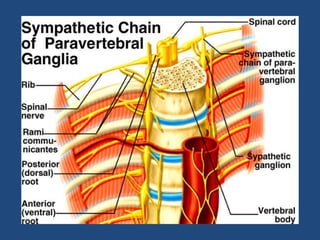
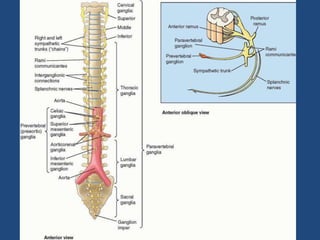
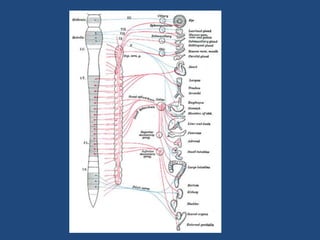
SYMPATHETIC TRUNKS
 Two ganglionated nerve trunks -
paravertebral ganglia
 Extend the whole length of vertebral column
from the cranial base to the coccyx.
 Joined to spinal nerves by rami
communicantes.
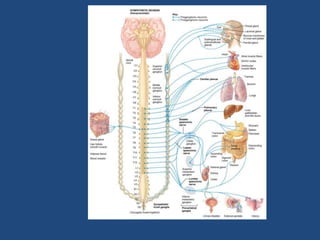
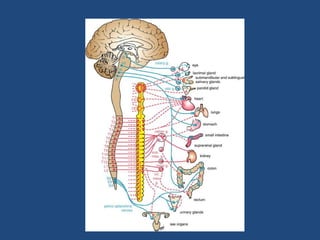
SYMPATHETIC PART OF ANS
• Larger part
• Widely distributed
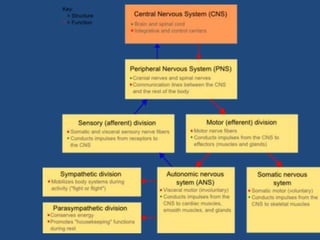
• Prepares body for emergency & stress – (fight,
fright & flight)
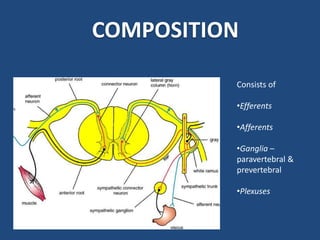
COMPOSITION
Consists of
•Efferents
•Afferents
•Ganglia –
paravertebral &
prevertebral
•Plexuses
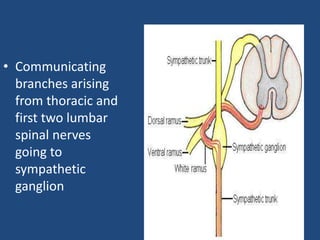
• Communicating
branches arising
from thoracic and
first two lumbar
spinal nerves
going to
sympathetic
ganglion
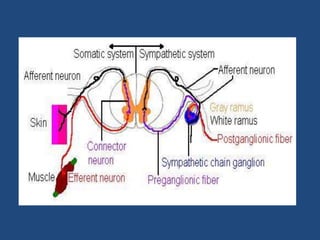
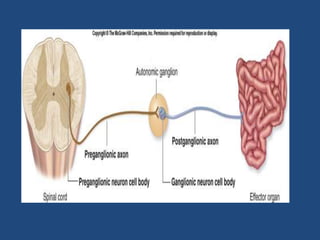
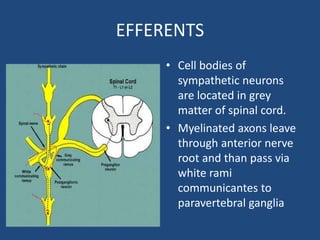
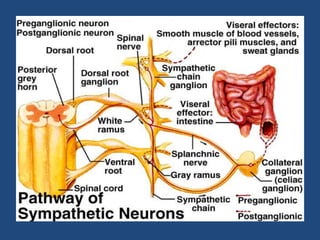
EFFERENTS
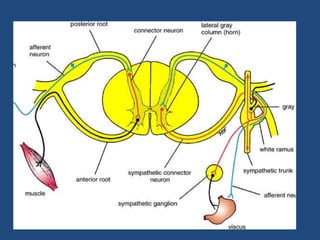
• Cell bodies of
sympathetic neurons
are located in grey
matter of spinal cord.
• Myelinated axons leave
through anterior nerve
root and than pass via
white rami
communicantes to
paravertebral ganglia
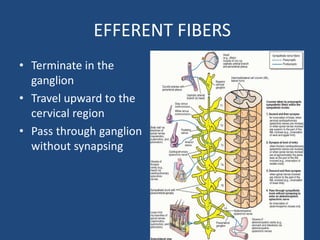
EFFERENT FIBERS
• Terminate in the
ganglion
• Travel upward to the
cervical region
• Pass through ganglion
without synapsing
AFFERENTS
 The afferent myelinated nerve fibers travel
from the viscera through the sympathetic
ganglia without synapsing.
 They reach their cell bodies in the posterior
root ganglion of the corresponding spinal
nerve
Autonomic Nervous System.pptx

Autonomic Nervous System.pptx