AUTONOMIC NERVOURS
SYSTEM
Dr Awot Luke
Autonomic nervous system
• Autos: self
• Nomos: Control
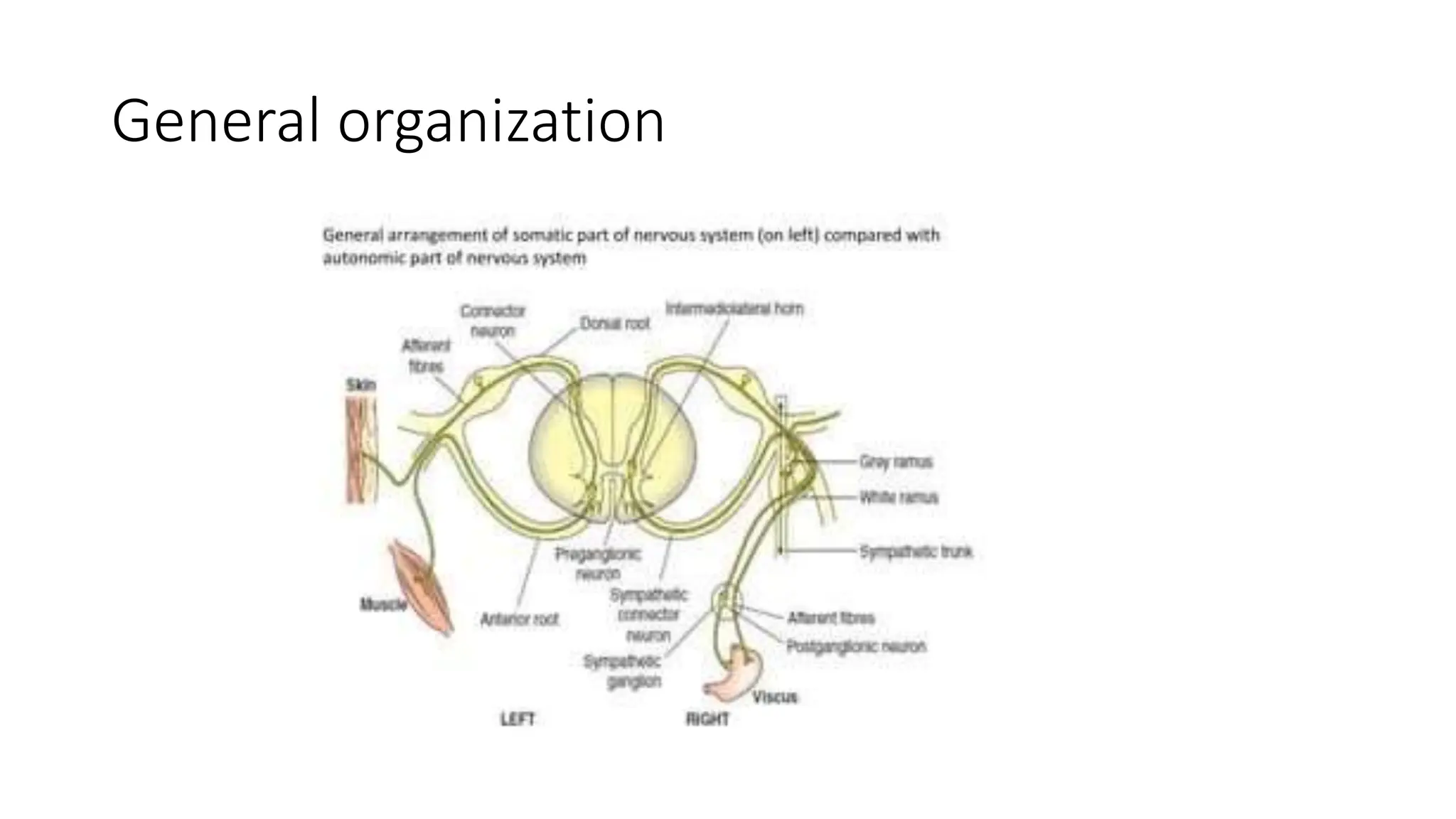
General organization
Centers in the nervous system
• Autonomic areas in the cerebral hemispheres are: Structures included
in limbic system ,Prefrontal cortex, Hypothalamus and Part of
thalamus.
• Autonomic centers in the brain stem :located in the reticular
formation and in the general visceral nuclei of cranial nerves.
• Autonomic centers in the spinal cord
• Peripheral part of ANS
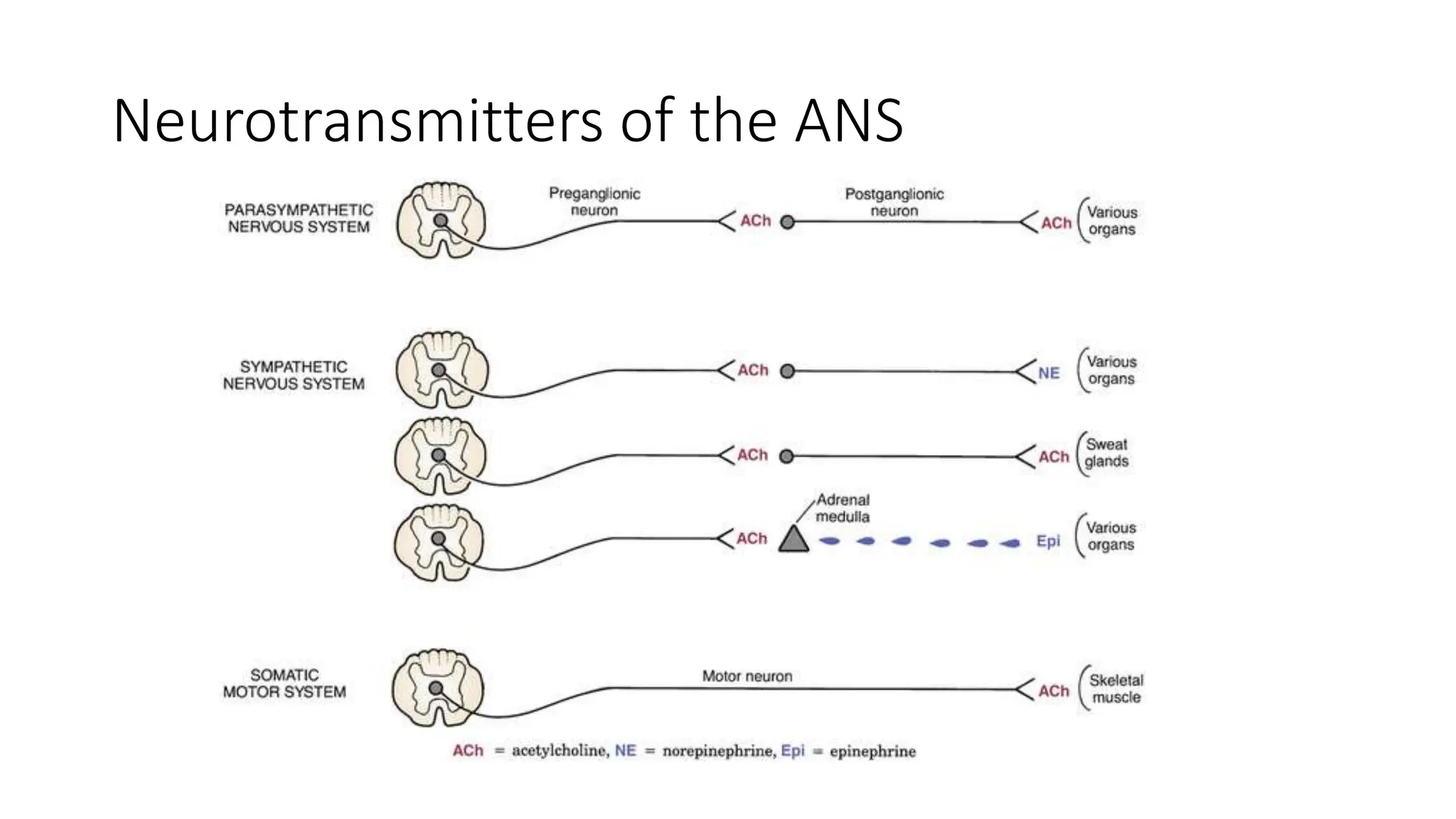
Neurotransmitters of the ANS
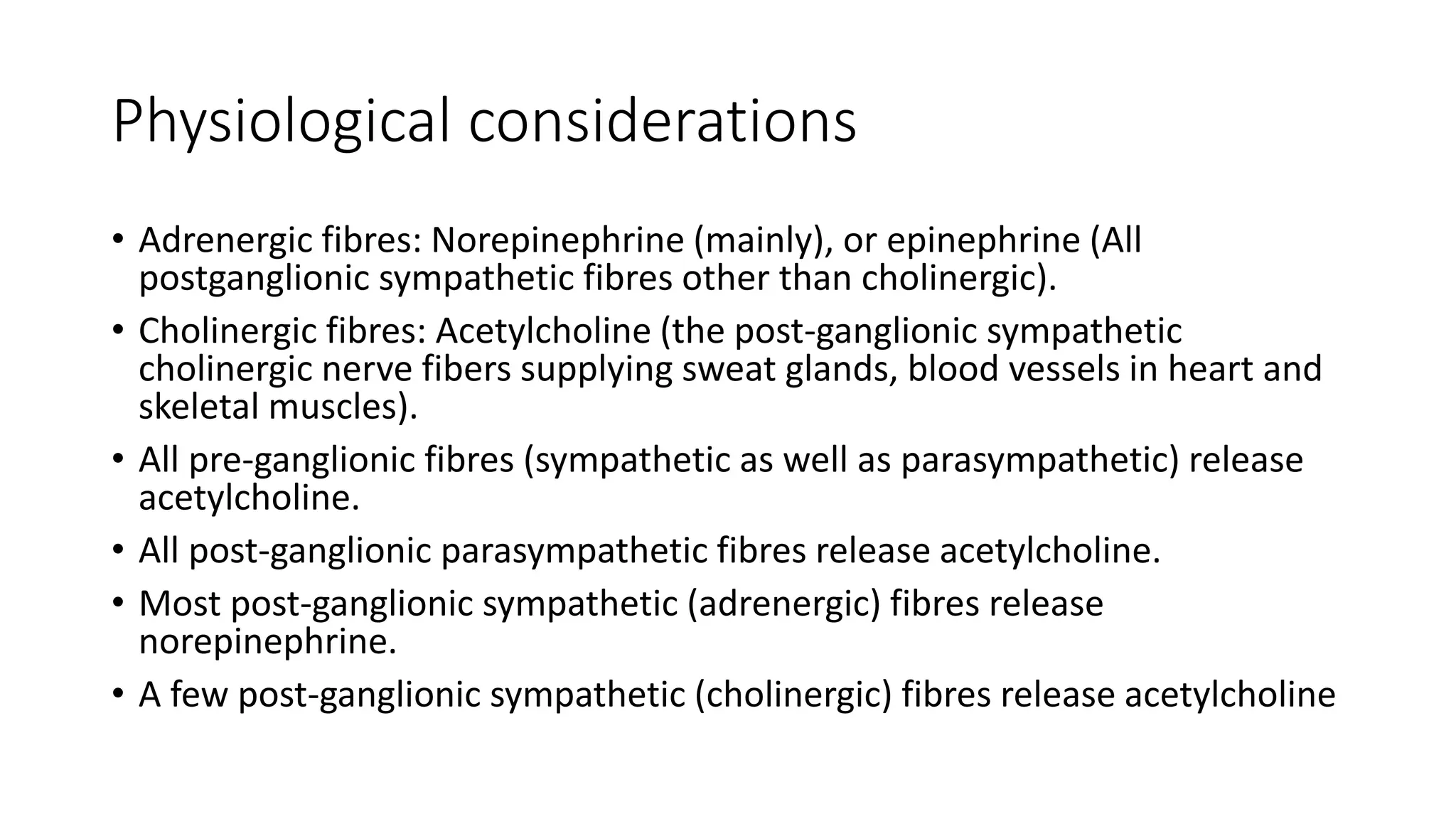
Physiological considerations
• Adrenergic fibres: Norepinephrine (mainly), or epinephrine (All
postganglionic sympathetic fibres other than cholinergic).
• Cholinergic fibres: Acetylcholine (the post-ganglionic sympathetic
cholinergic nerve fibers supplying sweat glands, blood vessels in heart and
skeletal muscles).
• All pre-ganglionic fibres (sympathetic as well as parasympathetic) release
acetylcholine.
• All post-ganglionic parasympathetic fibres release acetylcholine.
• Most post-ganglionic sympathetic (adrenergic) fibres release
norepinephrine.
• A few post-ganglionic sympathetic (cholinergic) fibres release acetylcholine
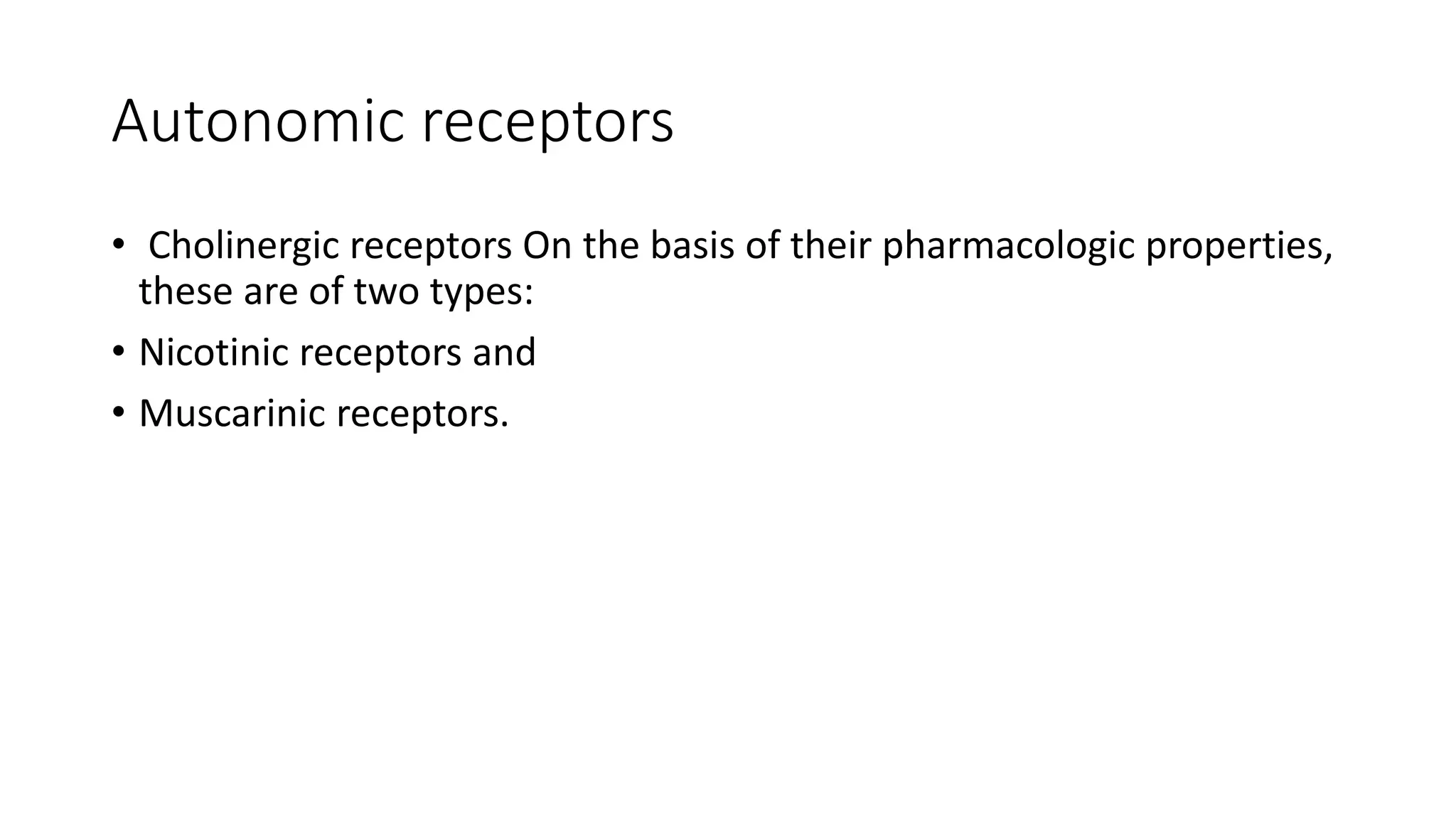
Autonomic receptors
• Cholinergic receptors On the basis of their pharmacologic properties,
these are of two types:
• Nicotinic receptors and
• Muscarinic receptors.
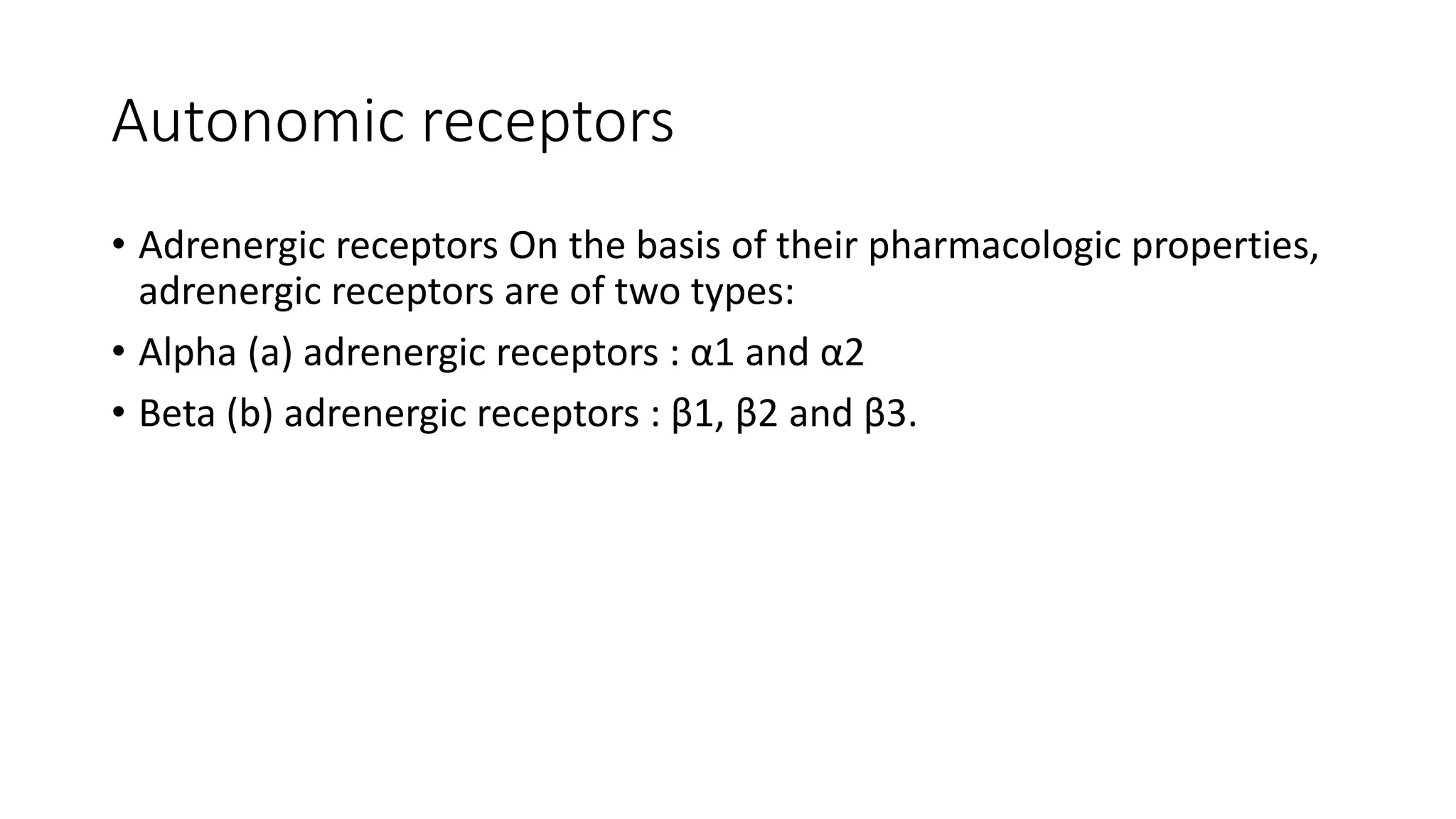
Autonomic receptors
• Adrenergic receptors On the basis of their pharmacologic properties,
adrenergic receptors are of two types:
• Alpha (a) adrenergic receptors : α1 and α2
• Beta (b) adrenergic receptors : β1, β2 and β3.
Applied aspects
• Autonomic drugs
• Autonomic failure
• Autonomic function tests.
Autonomic nervous system and neurophysiology

Autonomic nervous system and neurophysiology

  • 1.
  • 4.
    Autonomic nervous system •Autos: self • Nomos: Control
  • 5.
  • 6.
    Centers in thenervous system • Autonomic areas in the cerebral hemispheres are: Structures included in limbic system ,Prefrontal cortex, Hypothalamus and Part of thalamus. • Autonomic centers in the brain stem :located in the reticular formation and in the general visceral nuclei of cranial nerves. • Autonomic centers in the spinal cord • Peripheral part of ANS
  • 7.
  • 9.
    Physiological considerations • Adrenergicfibres: Norepinephrine (mainly), or epinephrine (All postganglionic sympathetic fibres other than cholinergic). • Cholinergic fibres: Acetylcholine (the post-ganglionic sympathetic cholinergic nerve fibers supplying sweat glands, blood vessels in heart and skeletal muscles). • All pre-ganglionic fibres (sympathetic as well as parasympathetic) release acetylcholine. • All post-ganglionic parasympathetic fibres release acetylcholine. • Most post-ganglionic sympathetic (adrenergic) fibres release norepinephrine. • A few post-ganglionic sympathetic (cholinergic) fibres release acetylcholine
  • 10.
    Autonomic receptors • Cholinergicreceptors On the basis of their pharmacologic properties, these are of two types: • Nicotinic receptors and • Muscarinic receptors.
  • 11.
    Autonomic receptors • Adrenergicreceptors On the basis of their pharmacologic properties, adrenergic receptors are of two types: • Alpha (a) adrenergic receptors : α1 and α2 • Beta (b) adrenergic receptors : β1, β2 and β3.
  • 12.
    Applied aspects • Autonomicdrugs • Autonomic failure • Autonomic function tests.