AUTHENTICATION IN THE 
CLOUD 
Are we really safe in the cloud?
OUTLINE 
1. Problem definition 
2. Businesses and cloud 
3. Cloud models and Issues 
3. The difference 
3. Authentication issues
SECURITY PROBLEM SELECTED 
The security problem that G Force has selected is the 
authentication of different devices and users in cloud 
computing. 
This is an important issue all of our employers have in 
common as more companies migrate to cloud computing 
and they need more secure solutions implemented. 
Corporate concerns are: 
Single point of failure for authentication 
Data breaches because of weak authentication 
Security in the cloud is the #1 concern of businesses 
All sectors are migrating to cloud computing because IT 
costs can be cut, it reduces capital expenses, and is a 
viable option to modernize legacy systems.
BUSINESSES AND CLOUD 
 Business requirements: Netflix, Adobe connect, 
Expense reporting, Timesheet, Payroll systems 
 Support customers with multiple devices accessing their 
system 
 Moving existing applications out of the datacenter and 
into virtual private and fully public clouds. 
 Fully embracing virtual datacenters, which means 
consolidating physical datacenters, and (if the 
company’s large enough) forming a private cloud. 
 Outsourcing applications. There’s SaaS applications 
like Workday, ADP, Concur, and SalesForce.com that 
have replaced functions that used to run in the 
datacenter, and then there’s also custom apps for data 
that’s proprietary, sensitive or regulated, which many 
people are running in a platform-as-a-service (PaaS) 
extension.
CLOUD MODELS AND ISSUES 
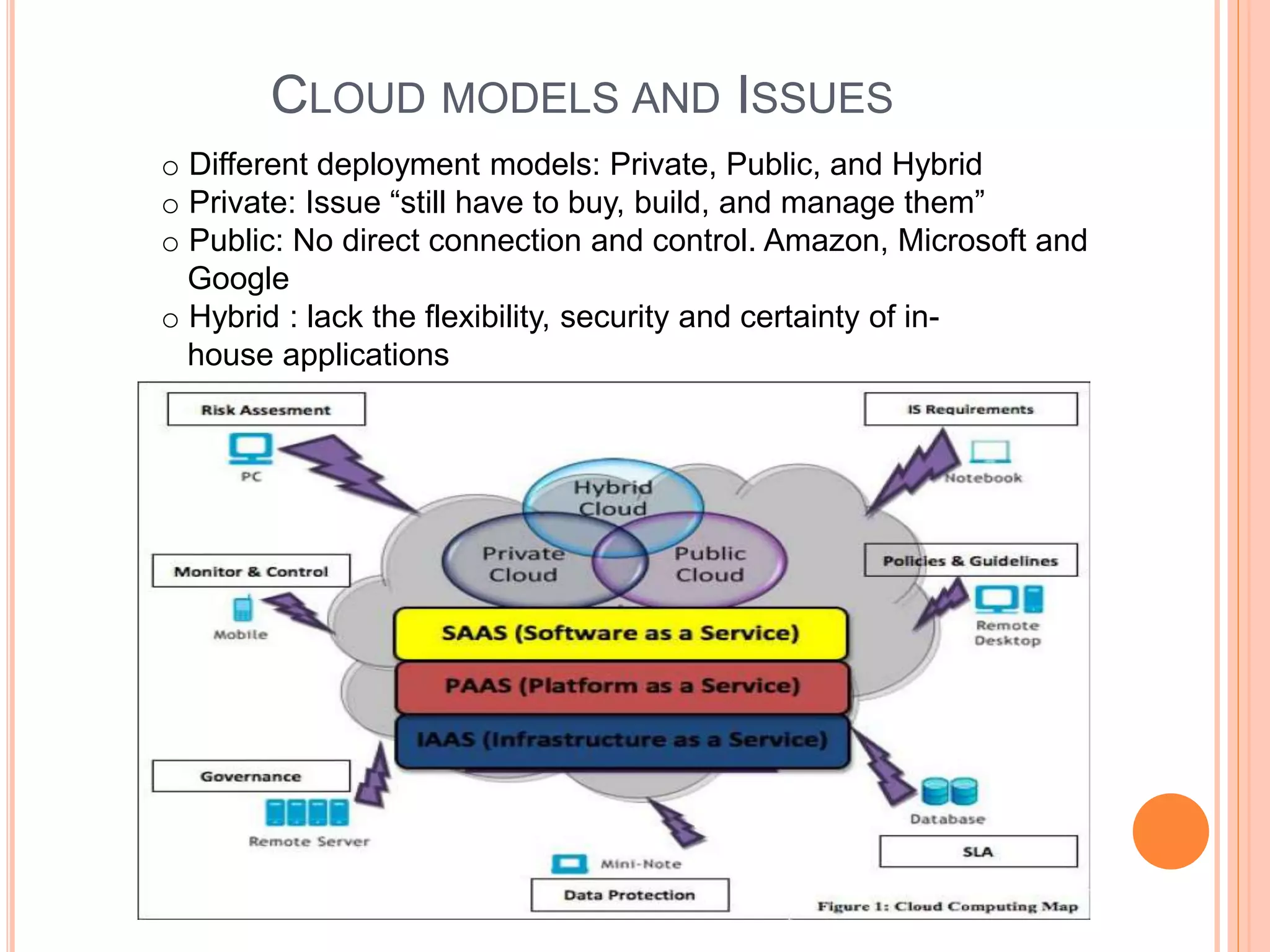
o Different deployment models: Private, Public, and Hybrid 
o Private: Issue “still have to buy, build, and manage them” 
o Public: No direct connection and control. Amazon, Microsoft and 
Google 
o Hybrid : lack the flexibility, security and certainty of in-house 
applications
THE DIFFERENCE 
 Internal System 
More secure authentication like LDAP, KERBOES 
Company has a control over the data and process 
User management is easy and more controlled 
 Cloud System 
Proprietary authentication system 
It is a nightmare to manage the users remotely. We 
wont know what the vendor is doing 
Migration is very difficult. It is difficult to synchronise 
login and authentication data between external clouds 
and internal systems without exposing internal security 
data.
CLOUD AUTHENTICATION ISSUES 
 Cloud service providers request customers to store their account 
information in the cloud, cloud service providers have the access to 
these information. This presents a privacy issue to the customer’s 
privacy information. 
 Many SLAs have specified the privacy of the sensitive information, 
however, it is difficult for customers to make sure the proper rules are 
enforced. There is a lack of transparency in the cloud that allows the 
customers to monitor their own privacy information. 
 When a customer decide to use multiple cloud service, the customer will 
have to store his/her password in multiple cloud, the more cloud service 
the customer is subscript to, the more copy of the user’s information will 
be. This is a security issue for the customers and the cloud service 
providers. 
 The multiple copies of account will lead to multiple authentication 
processes. For every cloud service, the customer needs to exchange 
his/her authentication information. This redundant actions may lead to an 
exploit of the authentication mechanism. 
 Cloud service providers use different authentication technologies for 
authenticating users, this may have less impact on SaaS than PaaS 
and IaaS, but it is present a challenge to the customers.
AUTHENTICATION ISSUES - CONTD 
 Wells Fargo Customer Data Breached – How Did 
Cyber-Criminals Get The Access Codes? – Why No 
Strong Authentication? 
Dictionary attack? 
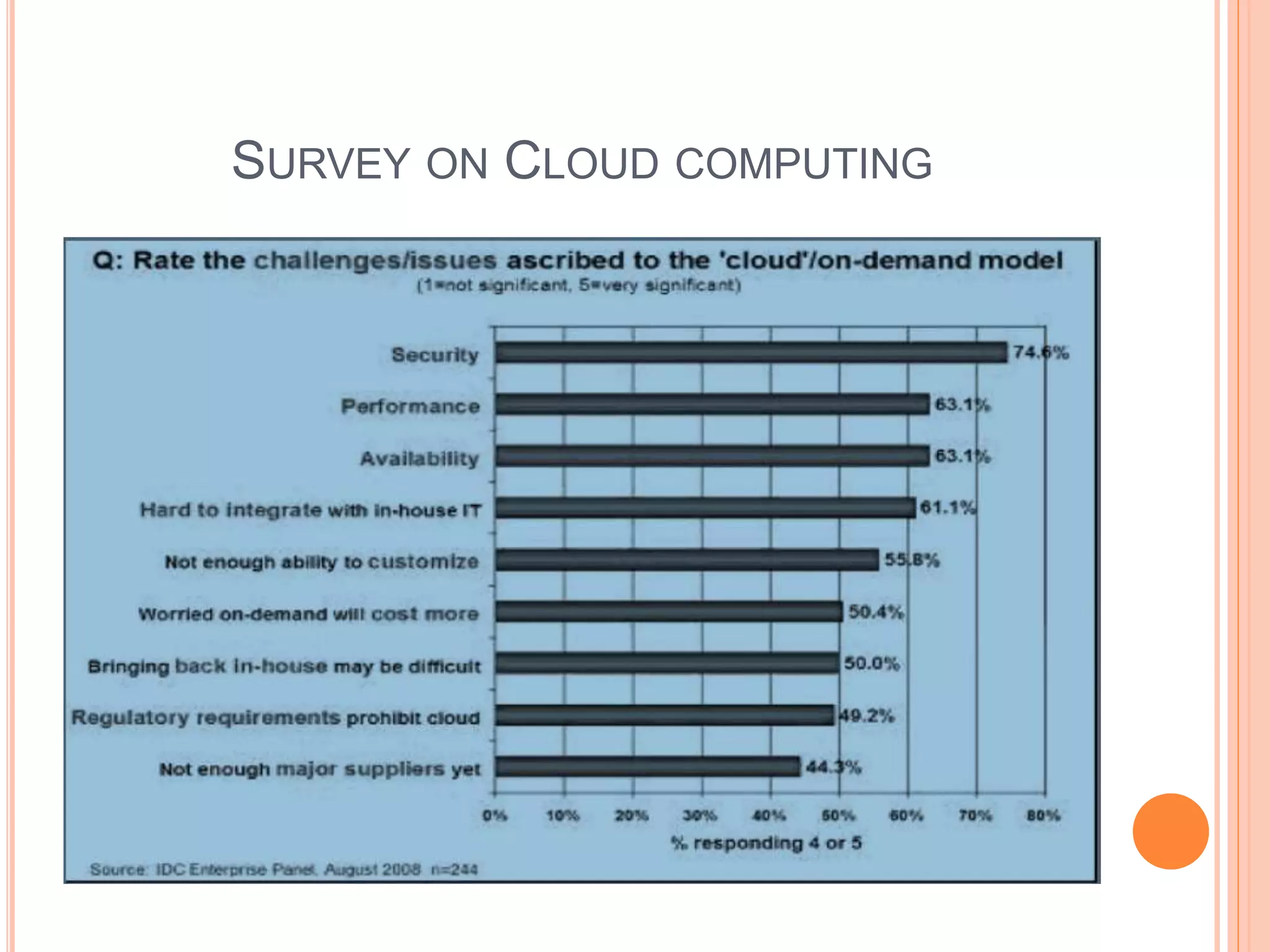
 Security issues in cloud computing has played a 
major role in slowing down its acceptance, in fact 
security ranked first as the greatest challenge issue of 
cloud computing as depicted in the chart.
SURVEY ON CLOUD COMPUTING
REFERENCES 
 http://en.wikipedia.org/wiki/Two-factor_ 
authentication 
 http://blog.ironkey.com/?p=437 
 http://cscjournals.org/csc/manuscript/Journals/IJCN 
/volume3/Issue5/IJCN-176.pdf 
 http://en.wikipedia.org/wiki/Cloud_computing#Hybri 
d_cloud 
 http://www.sersc.org/journals/IJMUE/vol7_no3_201 
2/18.pdf 
 http://data-protection.safenet-inc. 
com/2012/05/cloud-computing-migration-from-physical- 
datacenter-to-the-cloud/

Authentication cloud

  • 1.
    AUTHENTICATION IN THE CLOUD Are we really safe in the cloud?
  • 2.
    OUTLINE 1. Problemdefinition 2. Businesses and cloud 3. Cloud models and Issues 3. The difference 3. Authentication issues
  • 3.
    SECURITY PROBLEM SELECTED The security problem that G Force has selected is the authentication of different devices and users in cloud computing. This is an important issue all of our employers have in common as more companies migrate to cloud computing and they need more secure solutions implemented. Corporate concerns are: Single point of failure for authentication Data breaches because of weak authentication Security in the cloud is the #1 concern of businesses All sectors are migrating to cloud computing because IT costs can be cut, it reduces capital expenses, and is a viable option to modernize legacy systems.
  • 4.
    BUSINESSES AND CLOUD  Business requirements: Netflix, Adobe connect, Expense reporting, Timesheet, Payroll systems  Support customers with multiple devices accessing their system  Moving existing applications out of the datacenter and into virtual private and fully public clouds.  Fully embracing virtual datacenters, which means consolidating physical datacenters, and (if the company’s large enough) forming a private cloud.  Outsourcing applications. There’s SaaS applications like Workday, ADP, Concur, and SalesForce.com that have replaced functions that used to run in the datacenter, and then there’s also custom apps for data that’s proprietary, sensitive or regulated, which many people are running in a platform-as-a-service (PaaS) extension.
  • 5.
    CLOUD MODELS ANDISSUES o Different deployment models: Private, Public, and Hybrid o Private: Issue “still have to buy, build, and manage them” o Public: No direct connection and control. Amazon, Microsoft and Google o Hybrid : lack the flexibility, security and certainty of in-house applications
  • 6.
    THE DIFFERENCE Internal System More secure authentication like LDAP, KERBOES Company has a control over the data and process User management is easy and more controlled  Cloud System Proprietary authentication system It is a nightmare to manage the users remotely. We wont know what the vendor is doing Migration is very difficult. It is difficult to synchronise login and authentication data between external clouds and internal systems without exposing internal security data.
  • 7.
    CLOUD AUTHENTICATION ISSUES  Cloud service providers request customers to store their account information in the cloud, cloud service providers have the access to these information. This presents a privacy issue to the customer’s privacy information.  Many SLAs have specified the privacy of the sensitive information, however, it is difficult for customers to make sure the proper rules are enforced. There is a lack of transparency in the cloud that allows the customers to monitor their own privacy information.  When a customer decide to use multiple cloud service, the customer will have to store his/her password in multiple cloud, the more cloud service the customer is subscript to, the more copy of the user’s information will be. This is a security issue for the customers and the cloud service providers.  The multiple copies of account will lead to multiple authentication processes. For every cloud service, the customer needs to exchange his/her authentication information. This redundant actions may lead to an exploit of the authentication mechanism.  Cloud service providers use different authentication technologies for authenticating users, this may have less impact on SaaS than PaaS and IaaS, but it is present a challenge to the customers.
  • 8.
    AUTHENTICATION ISSUES -CONTD  Wells Fargo Customer Data Breached – How Did Cyber-Criminals Get The Access Codes? – Why No Strong Authentication? Dictionary attack?  Security issues in cloud computing has played a major role in slowing down its acceptance, in fact security ranked first as the greatest challenge issue of cloud computing as depicted in the chart.
  • 9.
    SURVEY ON CLOUDCOMPUTING
  • 10.
    REFERENCES  http://en.wikipedia.org/wiki/Two-factor_ authentication  http://blog.ironkey.com/?p=437  http://cscjournals.org/csc/manuscript/Journals/IJCN /volume3/Issue5/IJCN-176.pdf  http://en.wikipedia.org/wiki/Cloud_computing#Hybri d_cloud  http://www.sersc.org/journals/IJMUE/vol7_no3_201 2/18.pdf  http://data-protection.safenet-inc. com/2012/05/cloud-computing-migration-from-physical- datacenter-to-the-cloud/