
Authentic Storytelling
Brings Your Messages to Life
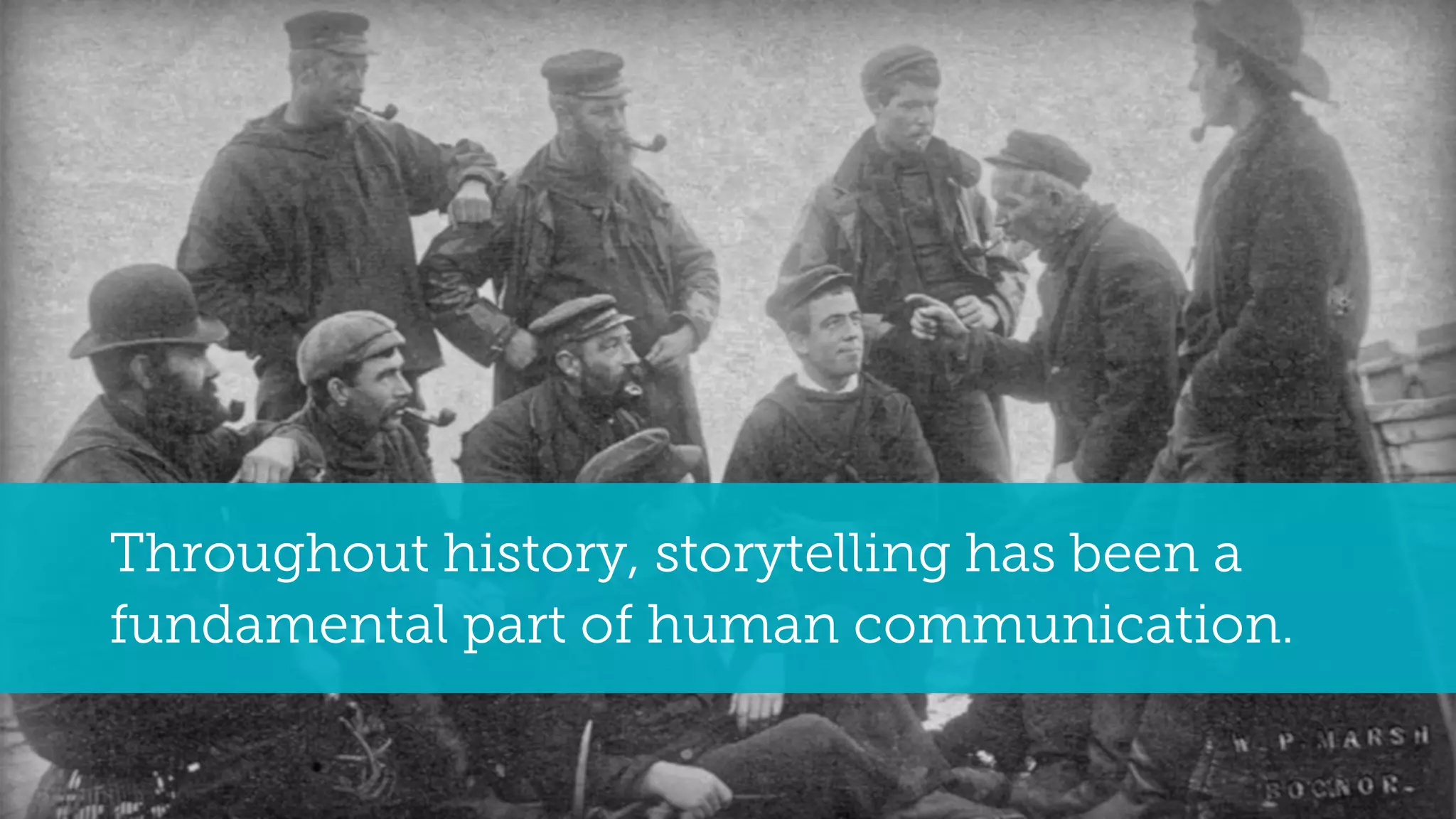
Throughout history, storytelling has been a
fundamental part of human communication.
The earliest evidence of storytelling
predates recorded history.
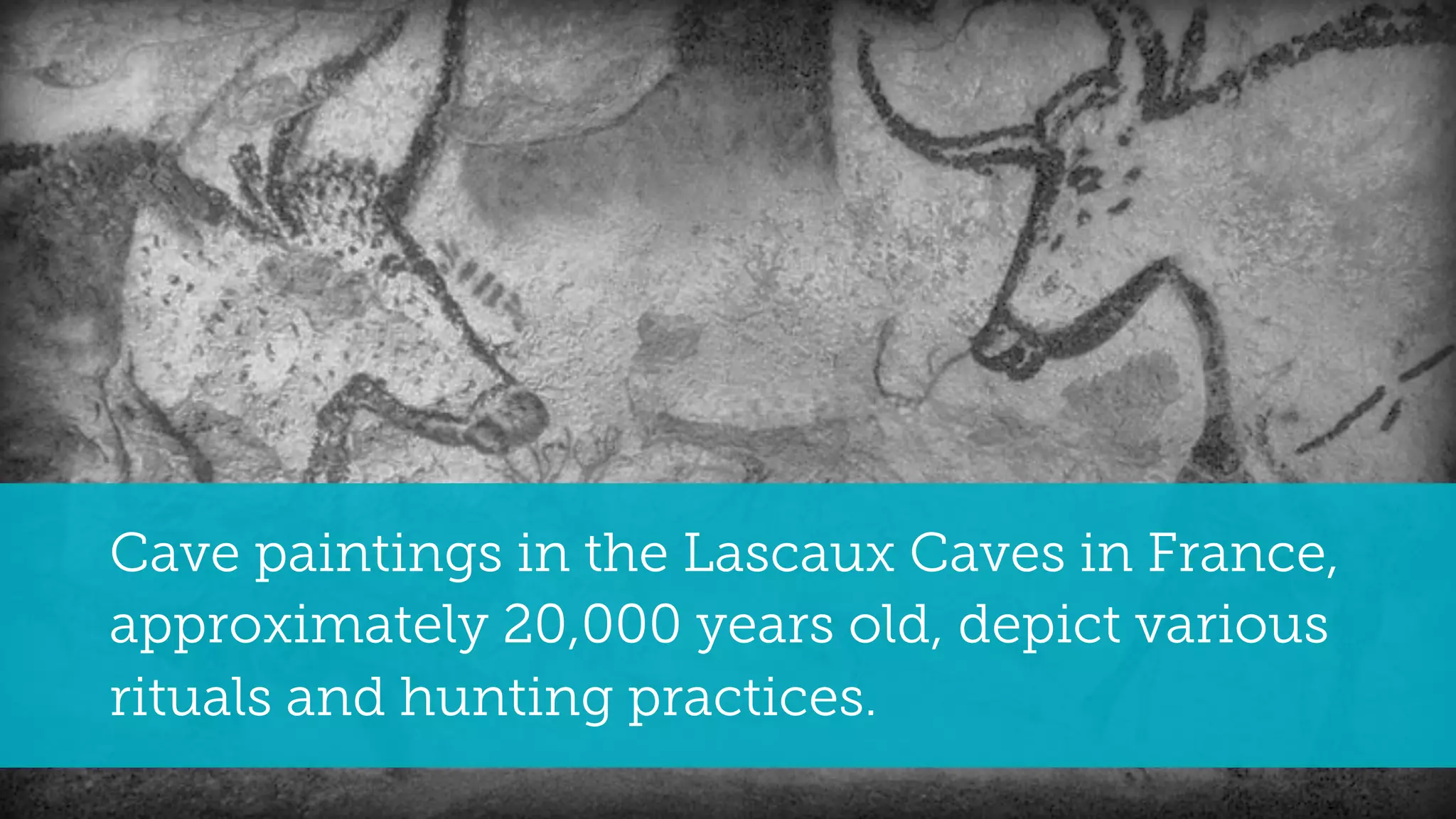
Cave paintings in the Lascaux Caves in France,
approximately 20,000 years old, depict various
rituals and hunting practices.
A story was being told.
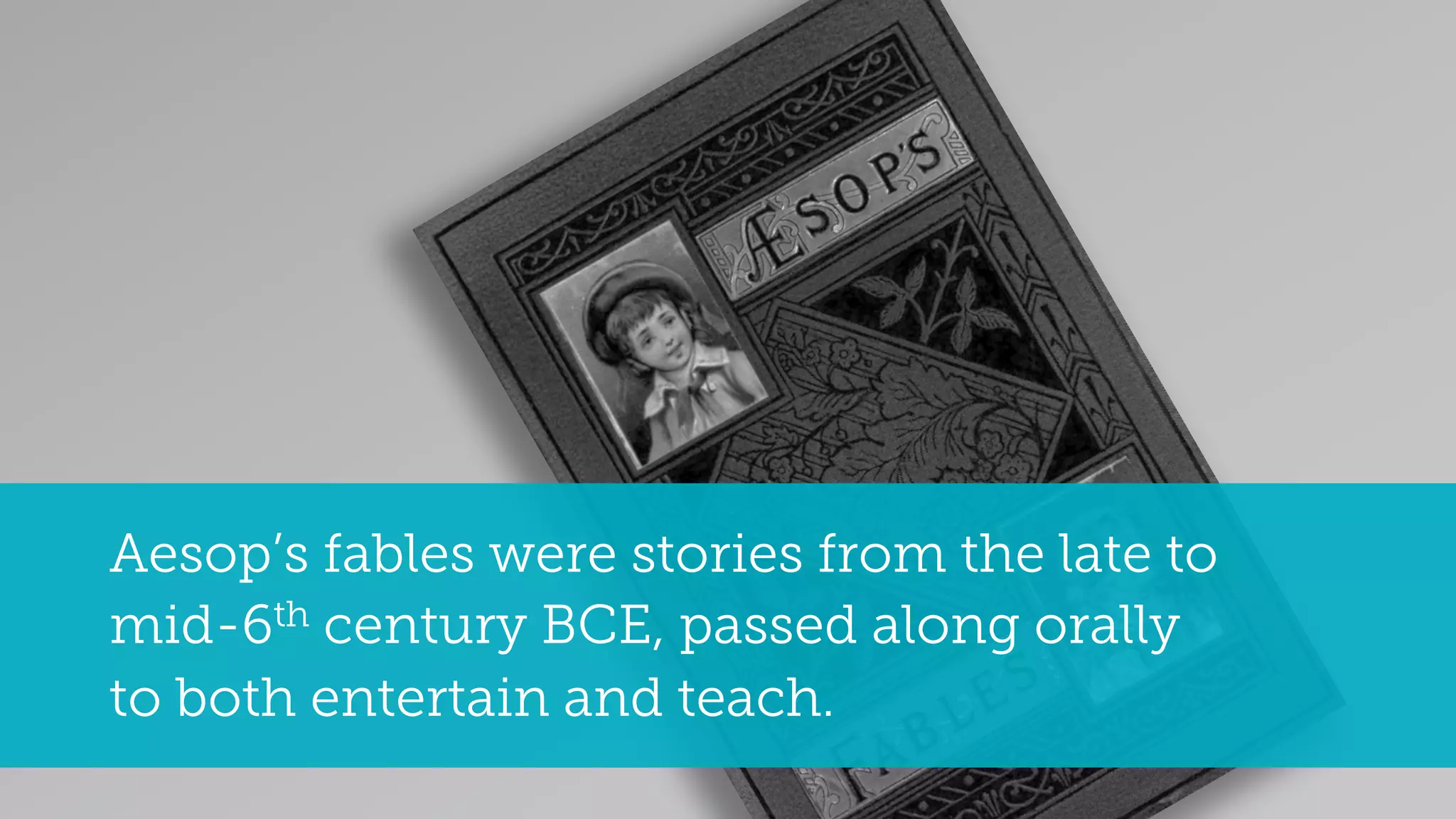
Aesop’s fables were stories from the late to
mid-6th century BCE, passed along orally
to both entertain and teach.
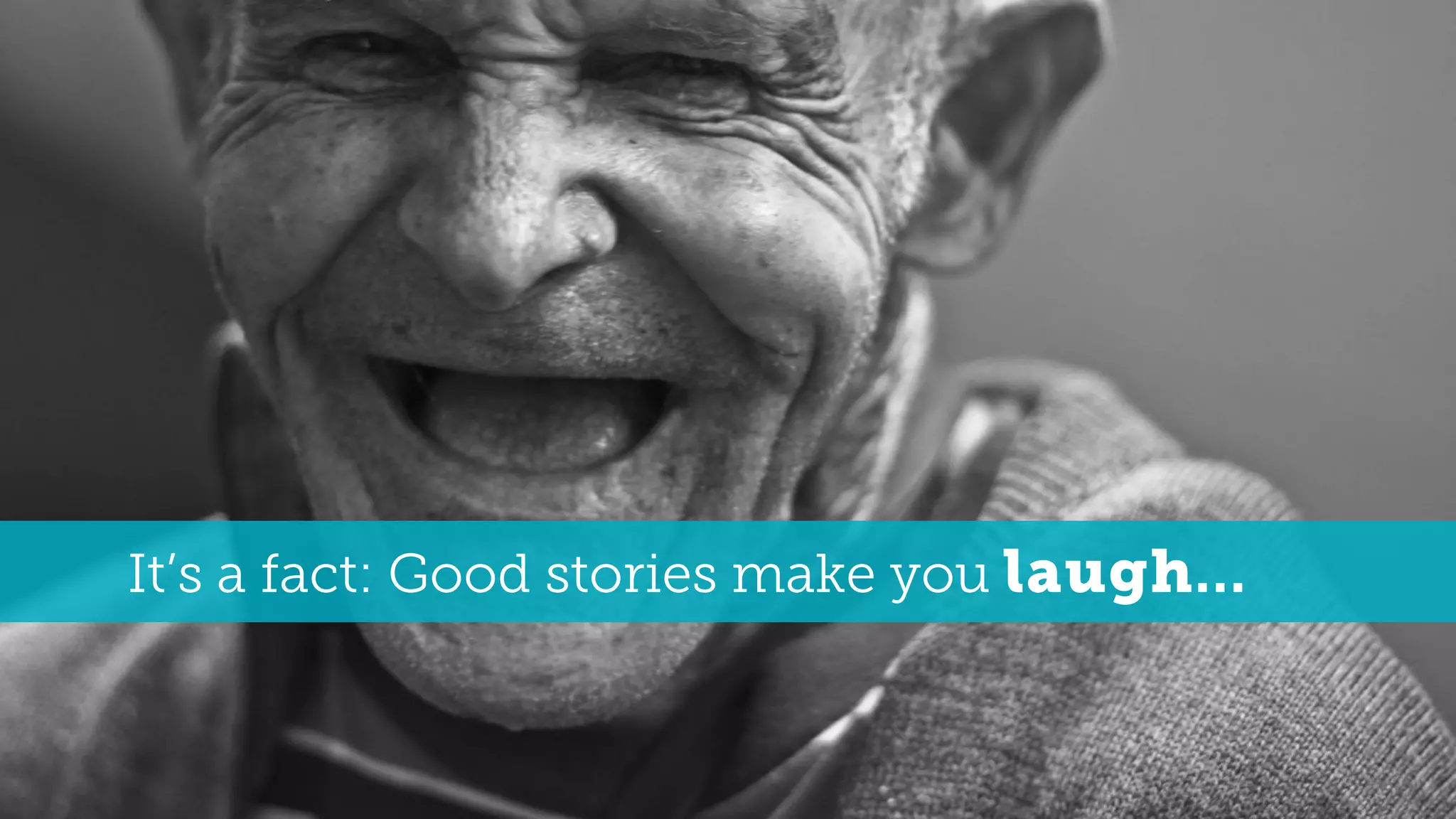
It’s a fact: Good stories make you laugh…
or cry…
or think…
or buy…
• We become part of the story
• We experience the story versus just consume it
• And we relay the story to others
Good stories create an
emotional connection
We normally associate stories
with books or movies.
(We don’t normally associate stories
with companies, brands or executives.)
Yet storytelling is one of the most
powerful persuasion tools available
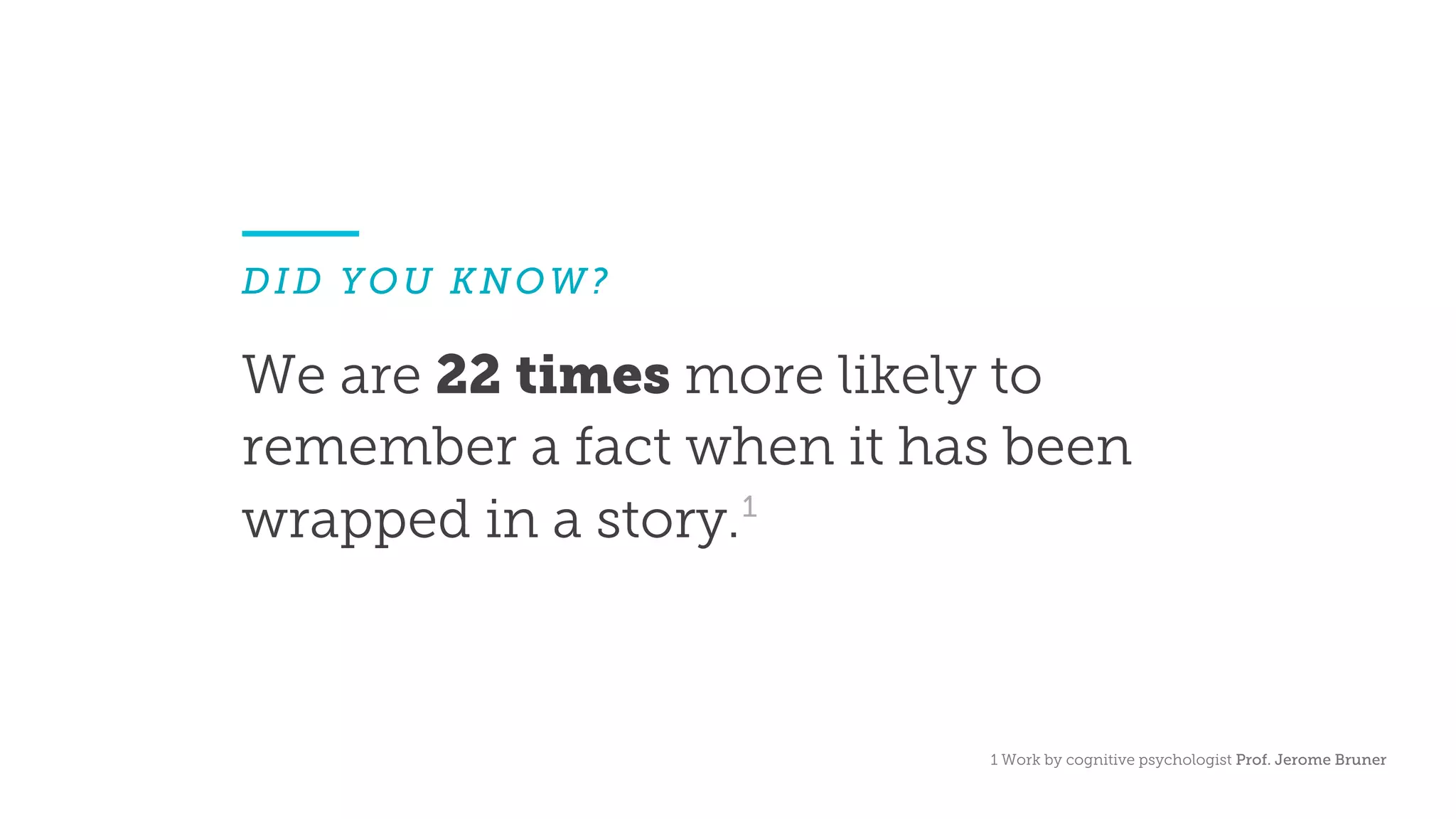
We are 22 times more likely to
remember a fact when it has been
wrapped in a story.¹
1 Work by cognitive psychologist Prof. Jerome Bruner
DID YOU KNOW?
Research from The Ohio State University
shows that when we’re immersed in a
story, we embrace the beliefs and
worldviews the story presents.2
2 Melanie Green and Timothy Brock, “The Role of Transportation in the Persuasiveness of Public Narratives”
More executives than ever are trying to
get the story behind facts or figures.
In essence…
What story does the data tell us?
Storytelling is more memorable,
and helps listeners adopt the
perspective of the storyteller.
It makes the complex approachable
and enables decision-making.
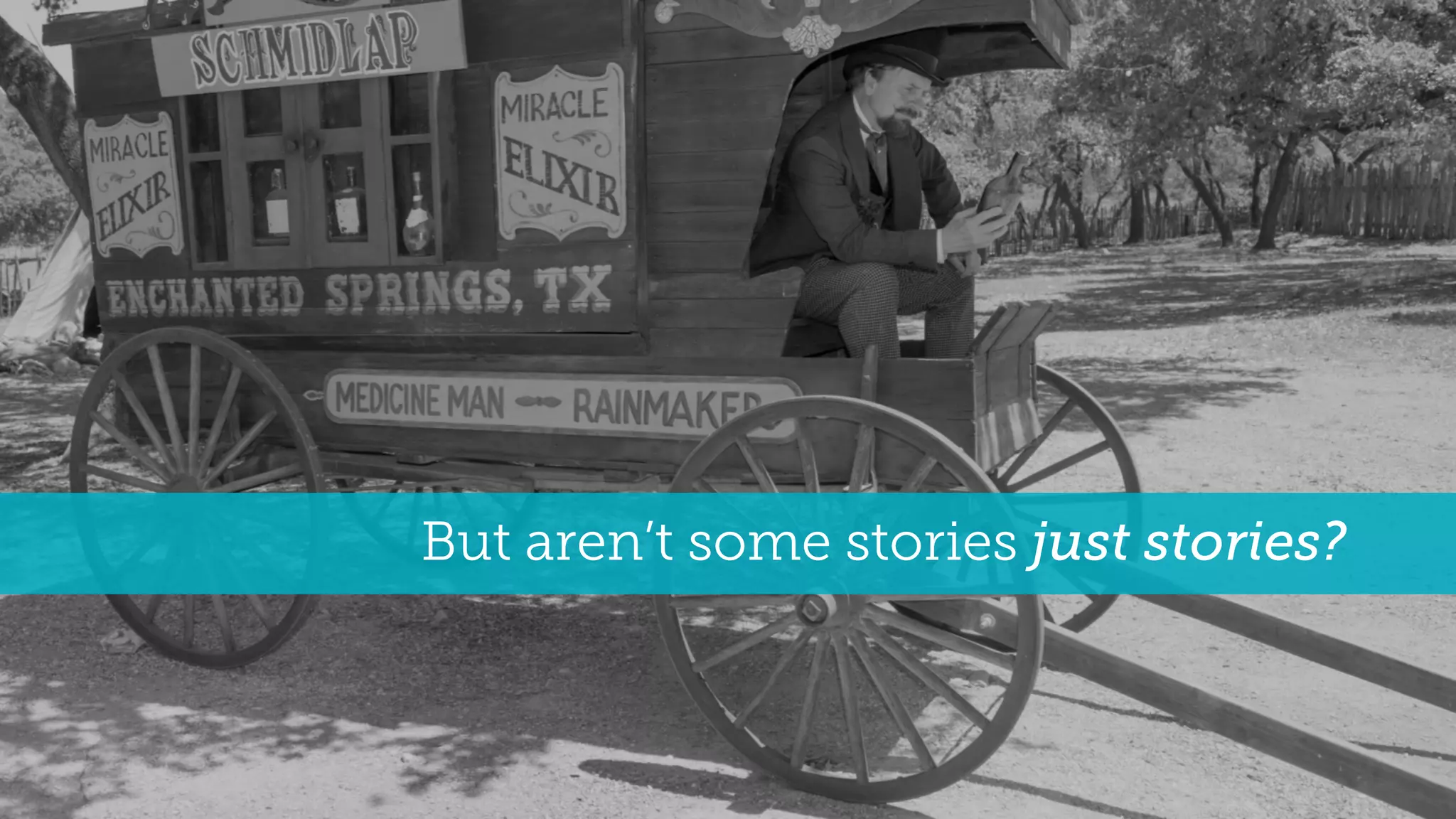
But aren’t some stories just stories?
How can storytelling be a serious
business tool if “telling a story” means
either lying or exaggerating the truth
to many people?
That’s why you need
authentic storytelling
(Content that is based on the company’s experience
and history, made relevant for today and tomorrow.)
Authentic storytelling is rooted in the
authentic content that every company has.
But how does authentic storytelling
help different functions or
departments in an organization?
Let’s start with marketing…
• Higher brand awareness and customer engagement
• Better content to customers and stakeholders
• Improved metrics (e.g. customer acquisition and
retention rates)
• Greater appreciation of the value of marketing internally
Authentic storytelling
helps marketing deliver…
It can help sales too…
• Build relationships
• Create faster trust with customers and prospects
• Stand out from competing salespeople
• Accelerate the sales cycle
• Increase close rates
In fact, every executive or leader
can benefit from more effective storytelling:
• Increase success in delivering information so it’s
memorable and motivating to a wide variety of
audiences
• Persuade more effectively
• Higher memorability of your messages
So how does someone create
and tell an authentic story?
There are five steps.
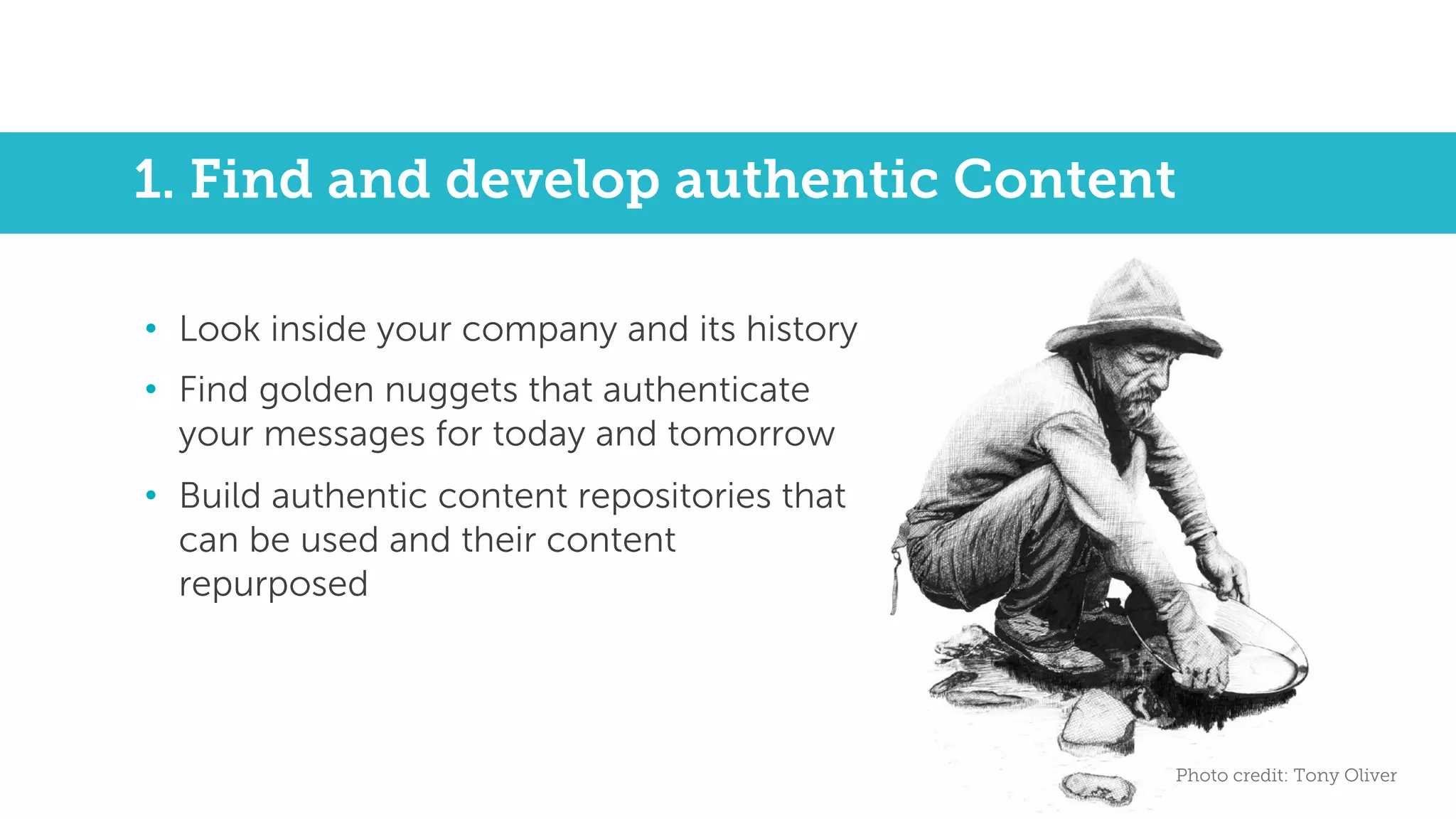
1. Find and develop authentic Content
• Look inside your company and its history
• Find golden nuggets that authenticate
your messages for today and tomorrow
• Build authentic content repositories that
can be used and their content
repurposed
Photo credit: Tony Oliver
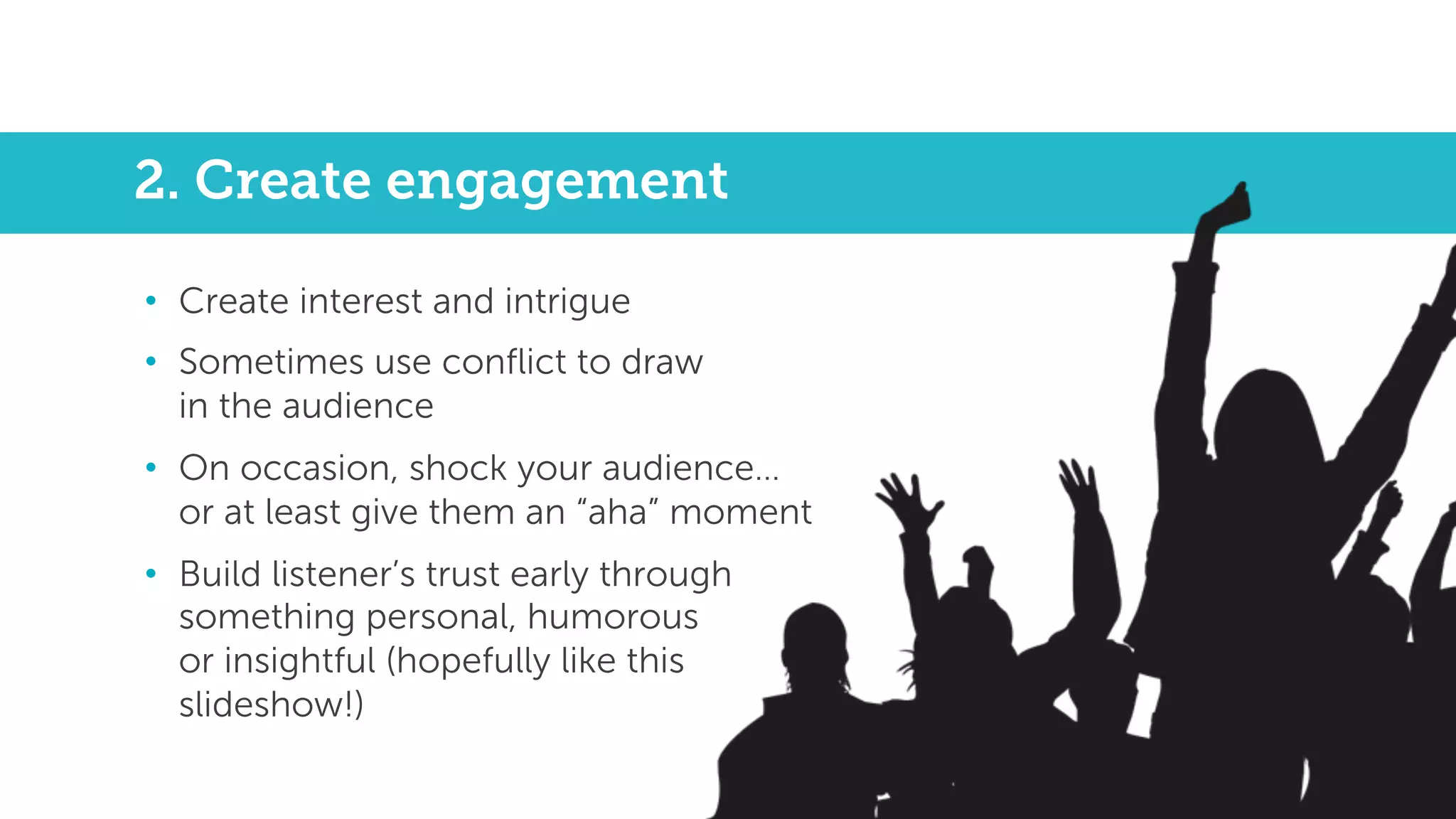
2. Create engagement
• Create interest and intrigue
• Sometimes use conflict to draw
in the audience
• On occasion, shock your audience…
or at least give them an “aha” moment
• Build listener’s trust early through
something personal, humorous
or insightful (hopefully like this
slideshow!)
3. Align with your audience
• Know who you’re talking to and
what style of story makes sense
• Purposely plan how you want your
listeners to feel, think and act
differently after they’ve heard
your story
• Ensure the story can deliver on this
plan, adjust if needed
4. Inspire
• Use proven models, methodologies
or processes to take your authentic
content and create concise,
memorable stories
• If delivering the story in person,
• Practice
• Practice
• Practice
• And practice some more!
5. Impact
• Create a plan to actively
incorporate authentic
storytelling into your everyday
communications
• Have a reserve of “ready to go
stories” to deal with common
situations
• And refresh that reserve frequently,
so you avoid repetition or story
fatigue
• Authentic content research
and development programs
• Custom training on
authentic storytelling for
marketing, sales, and
executive management.
www.historyfactory.com
History Factory offers… (703) 227-9576
info@historyfactory.com
Need Help?
Because who doesn’t love a good story…
especially when it’s authentic?

Authentic Storytelling Bring Your Messages to Life

  • 1.
  • 2.
    Throughout history, storytellinghas been a fundamental part of human communication.
  • 3.
    The earliest evidenceof storytelling predates recorded history.
  • 4.
    Cave paintings inthe Lascaux Caves in France, approximately 20,000 years old, depict various rituals and hunting practices.
  • 5.
    A story wasbeing told.
  • 6.
    Aesop’s fables werestories from the late to mid-6th century BCE, passed along orally to both entertain and teach.
  • 7.
    It’s a fact:Good stories make you laugh…
  • 8.
  • 9.
  • 10.
  • 11.
    • We becomepart of the story • We experience the story versus just consume it • And we relay the story to others Good stories create an emotional connection
  • 12.
    We normally associatestories with books or movies. (We don’t normally associate stories with companies, brands or executives.)
  • 13.
    Yet storytelling isone of the most powerful persuasion tools available
  • 14.
    We are 22times more likely to remember a fact when it has been wrapped in a story.¹ 1 Work by cognitive psychologist Prof. Jerome Bruner DID YOU KNOW?
  • 15.
    Research from TheOhio State University shows that when we’re immersed in a story, we embrace the beliefs and worldviews the story presents.2 2 Melanie Green and Timothy Brock, “The Role of Transportation in the Persuasiveness of Public Narratives”
  • 16.
    More executives thanever are trying to get the story behind facts or figures. In essence…
  • 17.
    What story doesthe data tell us?
  • 18.
    Storytelling is morememorable, and helps listeners adopt the perspective of the storyteller. It makes the complex approachable and enables decision-making.
  • 19.
    But aren’t somestories just stories?
  • 20.
    How can storytellingbe a serious business tool if “telling a story” means either lying or exaggerating the truth to many people?
  • 21.
    That’s why youneed authentic storytelling
  • 22.
    (Content that isbased on the company’s experience and history, made relevant for today and tomorrow.) Authentic storytelling is rooted in the authentic content that every company has.
  • 23.
    But how doesauthentic storytelling help different functions or departments in an organization? Let’s start with marketing…
  • 24.
    • Higher brandawareness and customer engagement • Better content to customers and stakeholders • Improved metrics (e.g. customer acquisition and retention rates) • Greater appreciation of the value of marketing internally Authentic storytelling helps marketing deliver…
  • 25.
    It can helpsales too… • Build relationships • Create faster trust with customers and prospects • Stand out from competing salespeople • Accelerate the sales cycle • Increase close rates
  • 26.
    In fact, everyexecutive or leader can benefit from more effective storytelling: • Increase success in delivering information so it’s memorable and motivating to a wide variety of audiences • Persuade more effectively • Higher memorability of your messages
  • 27.
    So how doessomeone create and tell an authentic story?
  • 28.
  • 29.
    1. Find anddevelop authentic Content • Look inside your company and its history • Find golden nuggets that authenticate your messages for today and tomorrow • Build authentic content repositories that can be used and their content repurposed Photo credit: Tony Oliver
  • 30.
    2. Create engagement •Create interest and intrigue • Sometimes use conflict to draw in the audience • On occasion, shock your audience… or at least give them an “aha” moment • Build listener’s trust early through something personal, humorous or insightful (hopefully like this slideshow!)
  • 31.
    3. Align withyour audience • Know who you’re talking to and what style of story makes sense • Purposely plan how you want your listeners to feel, think and act differently after they’ve heard your story • Ensure the story can deliver on this plan, adjust if needed
  • 32.
    4. Inspire • Useproven models, methodologies or processes to take your authentic content and create concise, memorable stories • If delivering the story in person, • Practice • Practice • Practice • And practice some more!
  • 33.
    5. Impact • Createa plan to actively incorporate authentic storytelling into your everyday communications • Have a reserve of “ready to go stories” to deal with common situations • And refresh that reserve frequently, so you avoid repetition or story fatigue
  • 34.
    • Authentic contentresearch and development programs • Custom training on authentic storytelling for marketing, sales, and executive management. www.historyfactory.com History Factory offers… (703) 227-9576 info@historyfactory.com Need Help?
  • 35.
    Because who doesn’tlove a good story… especially when it’s authentic?