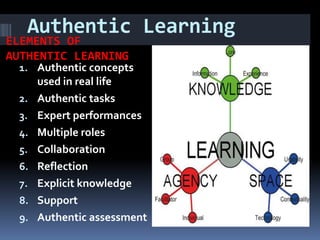
Authentic Learning
ELEMENTS OF
AUTHENTIC LEARNING
 1. Authentic concepts
      used in real life
 2.   Authentic tasks
 3.   Expert performances
 4.   Multiple roles
 5.   Collaboration
 6.   Reflection
 7.   Explicit knowledge
 8.   Support
 9.   Authentic assessment
Elements of authentic
knowledge explained
1. Construct own responses
2. Apply knowledge and skills to real life
     situations
3.   Consult different sources
4.   Wear different hats/ look at different
     point of views
5.   Work with all relevant stakeholders
6.   Which concept is working, what
     needs improvement
Elements of authentic knowledge
explained continued. . .
7. Detailed articulation
    of knowledge
8. Guidance from the
    educator and
    relevant
    stakeholders like
    peers and parents
9. Demonstrate
    understanding
    through performing
    meaningful
    complex tasks
Example of an authentic task
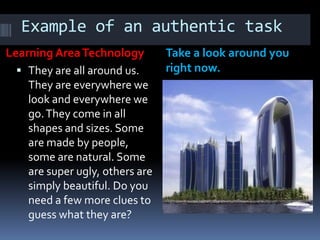
Learning Area Technology         Take a look around you
   They are all around us.      right now.
    They are everywhere we
    look and everywhere we
    go. They come in all
    shapes and sizes. Some
    are made by people,
    some are natural. Some
    are super ugly, others are
    simply beautiful. Do you
    need a few more clues to
    guess what they are?
Project brief
 Designers and              These towers will be erected at
  technologists are men       various schools to irrigate the
  and women who set           schools food garden that
  out to solve practical      provide food for disadvantaged
  problems which arise        learners through the feeding
  out of life’s situations.   scheme.
 As part of a water         You have to design, make and
    awareness campaign,         test a model of the structure
    you as a technology         and present this to the
    leaner are tasked to        organizers of the campaign at
    design a tower to           their next general meeting. The
    support a fairly large      model tower that can carry the
    and heavy (when filled)     heaviest load will be considered
    water tank to               the optimum solution. Work in
    collecting rain water.      groups of three.
   .
Stages in the design process
to guide the project
1. Situation               8. Prepare working
2. Analyze situation           drawings and plan
3. Write a brief               ahead
4. Carry out research      9. Construct a proto
                               type
5. Write a specification
                           10. Test and evaluate
6. Work out possible           the design
   solutions
                           11. Write a report
7. Select preferred
   solution
The design process
 The numbers show how
 normal progress is
 from one stage to the
 next. However , you will
 soon discover that
 problem solving is not
 always this
 straightforward. Often
 you will have an idea, or
 discover something
 which will make you re-
 think an earlier stage.
Materials and tools
            50 plastic drinking
               straws
              A box of pins
              Scissors
              Rulers
              Articles/ books
              Internet
              The natural world
Why this task is authentic
 Real life problem
 Engaging with real life
    situations
   Apply ones mind
   Theoretical and
    practical knowledge
   Community
    engagement
   Acquire different skills
    like communication
Why the assessment comply with
the points of authentic learning

Authentic learning

  • 1.
    Authentic Learning ELEMENTS OF AUTHENTICLEARNING 1. Authentic concepts used in real life 2. Authentic tasks 3. Expert performances 4. Multiple roles 5. Collaboration 6. Reflection 7. Explicit knowledge 8. Support 9. Authentic assessment
  • 2.
    Elements of authentic knowledgeexplained 1. Construct own responses 2. Apply knowledge and skills to real life situations 3. Consult different sources 4. Wear different hats/ look at different point of views 5. Work with all relevant stakeholders 6. Which concept is working, what needs improvement
  • 3.
    Elements of authenticknowledge explained continued. . . 7. Detailed articulation of knowledge 8. Guidance from the educator and relevant stakeholders like peers and parents 9. Demonstrate understanding through performing meaningful complex tasks
  • 4.
    Example of anauthentic task Learning Area Technology Take a look around you  They are all around us. right now. They are everywhere we look and everywhere we go. They come in all shapes and sizes. Some are made by people, some are natural. Some are super ugly, others are simply beautiful. Do you need a few more clues to guess what they are?
  • 5.
    Project brief  Designersand  These towers will be erected at technologists are men various schools to irrigate the and women who set schools food garden that out to solve practical provide food for disadvantaged problems which arise learners through the feeding out of life’s situations. scheme.  As part of a water  You have to design, make and awareness campaign, test a model of the structure you as a technology and present this to the leaner are tasked to organizers of the campaign at design a tower to their next general meeting. The support a fairly large model tower that can carry the and heavy (when filled) heaviest load will be considered water tank to the optimum solution. Work in collecting rain water. groups of three.  .
  • 6.
    Stages in thedesign process to guide the project 1. Situation 8. Prepare working 2. Analyze situation drawings and plan 3. Write a brief ahead 4. Carry out research 9. Construct a proto type 5. Write a specification 10. Test and evaluate 6. Work out possible the design solutions 11. Write a report 7. Select preferred solution
  • 7.
    The design process The numbers show how normal progress is from one stage to the next. However , you will soon discover that problem solving is not always this straightforward. Often you will have an idea, or discover something which will make you re- think an earlier stage.
  • 8.
    Materials and tools  50 plastic drinking straws  A box of pins  Scissors  Rulers  Articles/ books  Internet  The natural world
  • 9.
    Why this taskis authentic  Real life problem  Engaging with real life situations  Apply ones mind  Theoretical and practical knowledge  Community engagement  Acquire different skills like communication
  • 10.
    Why the assessmentcomply with the points of authentic learning