Augmented Personalized Health
An explicit knowledge enhanced neurosymbolic dHealth approach to patient empowerment
for managing chronic disease burden
Background: http://bit.ly/APH-TED, http://bit.ly/k-APH, http://bit.ly/kAsthma
SWAT4HCLS 2022
Semantic Web Applications and Tools for Health Care and Life Science
Keynote on 12 Jan 2022
2
Amit Sheth
Founding Director,
Artificial Intelligence Institute http://aiisc.ai
The University of South Carolina
amit@sc.edu http://amit.aiisc.ai
Special Thanks
Some of the Healthcare collaborators:
Maninder Kalra (Dayton Children’s Hospital)
Phillis Raynor, Ronda Huges, Sara Donevant(UofSC)
Lisa Knight (Prisma Health)
Some of the CS collaborators:
Manas Gaur (AIISC)
Krishnaprasad Thirunarayan (Wright State University)
Kaushik Roy
AIISC, kaushikr@email.sc.edu
Utkarshani Jaimini
AIISC, ujaimini@email.sc.edu
Ack: NIH/NICHD 1 R01 HD087132-01: KHealth: Semantic Multisensory
Mobile Approach to Personalized Asthma Care
Hong Yung (Joey) Yip
AIISC, hyip@email.sc.edu
Revathy Venkataramanan
AIISC, revathy@email.sc.edu
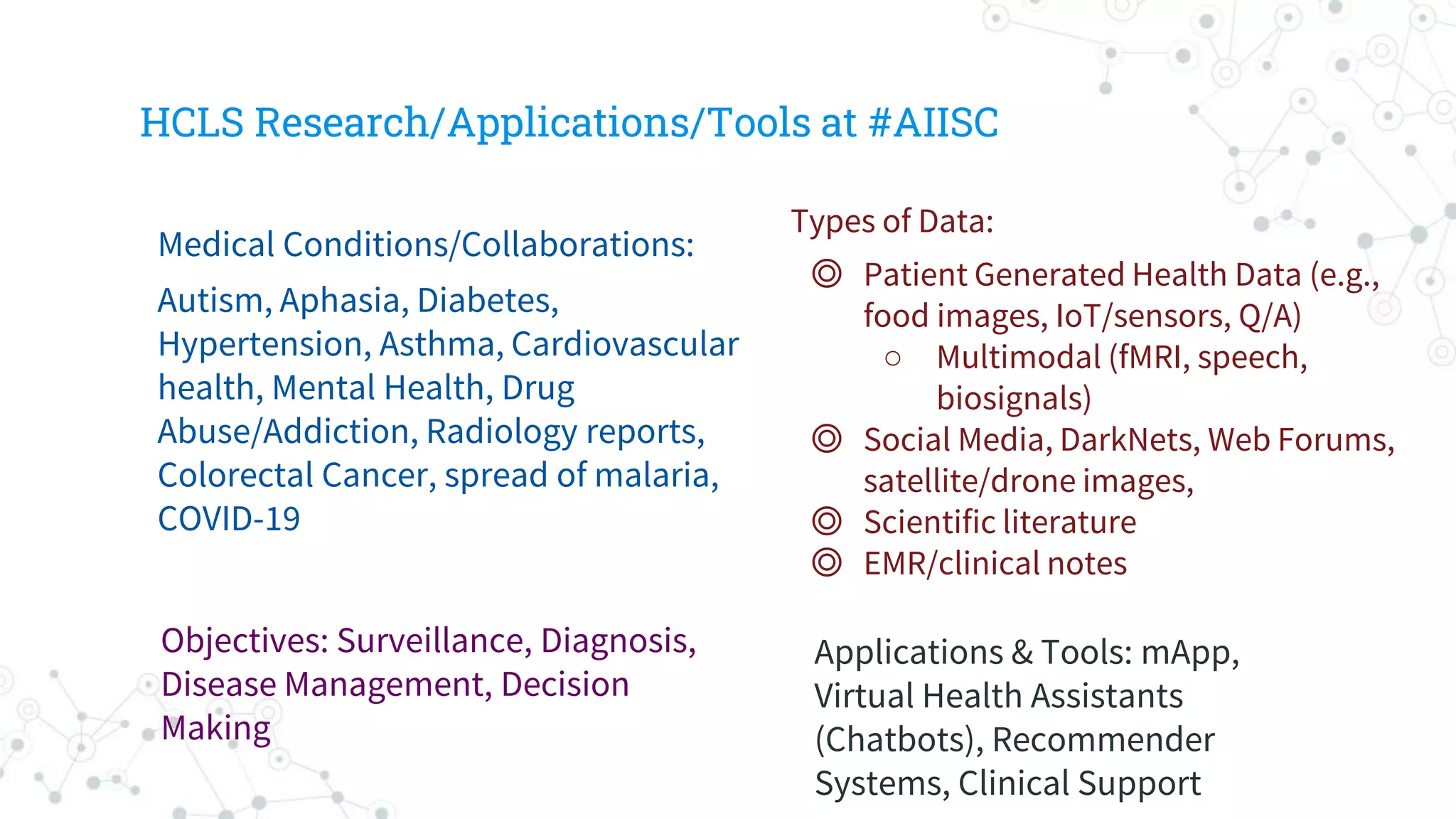
HCLS Research/Applications/Tools at #AIISC
Types of Data:
◎ Patient Generated Health Data (e.g.,
food images, IoT/sensors, Q/A)
○ Multimodal (fMRI, speech,
biosignals)
◎ Social Media, DarkNets, Web Forums,
satellite/drone images,
◎ Scientific literature
◎ EMR/clinical notes
Medical Conditions/Collaborations:
Autism, Aphasia, Diabetes,
Hypertension, Asthma, Cardiovascular
health, Mental Health, Drug
Abuse/Addiction, Radiology reports,
Colorectal Cancer, spread of malaria,
COVID-19
Applications & Tools: mApp,
Virtual Health Assistants
(Chatbots), Recommender
Systems, Clinical Support
Objectives: Surveillance, Diagnosis,
Disease Management, Decision
Making
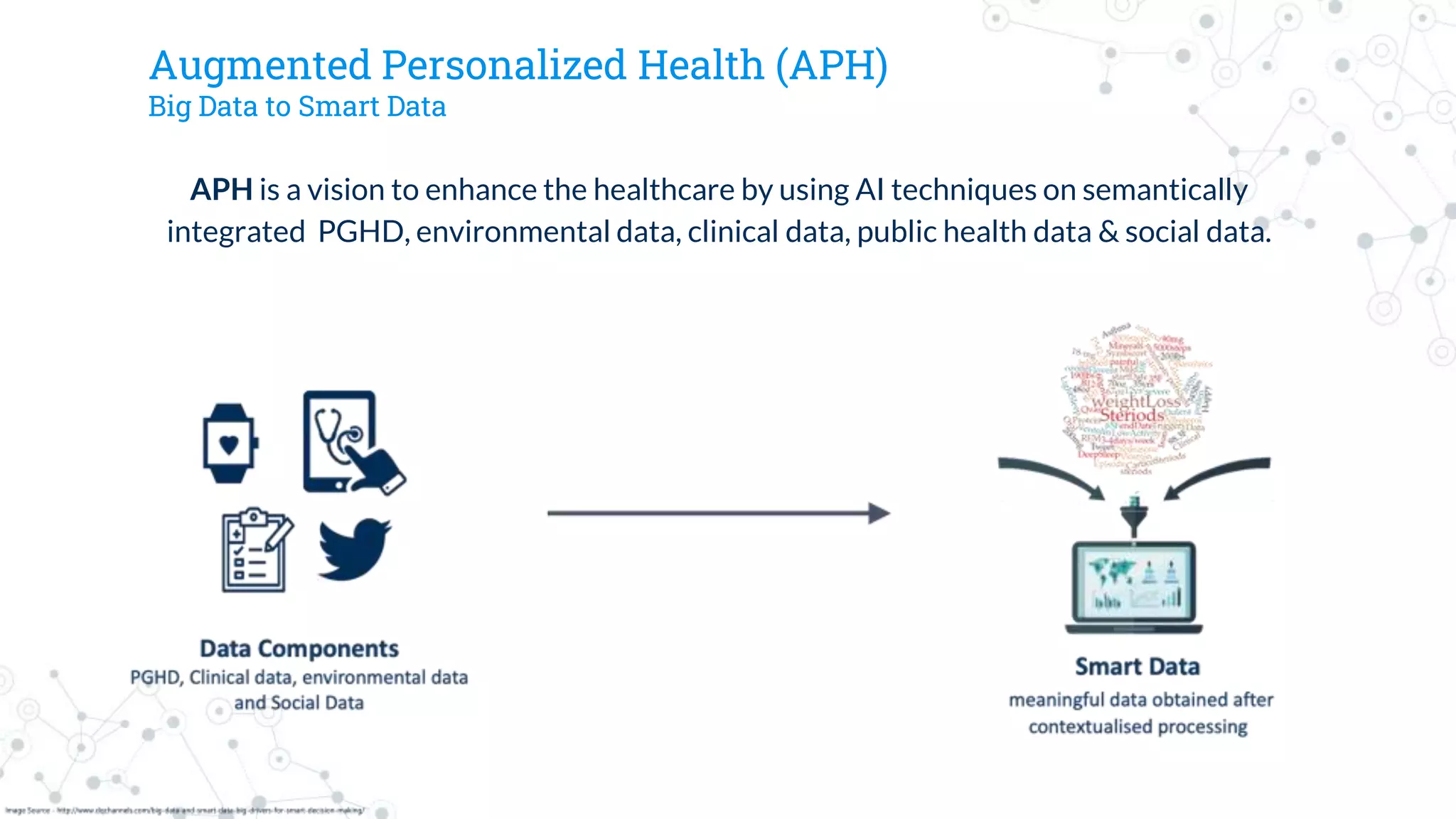
Augmented Personalized Health (APH)
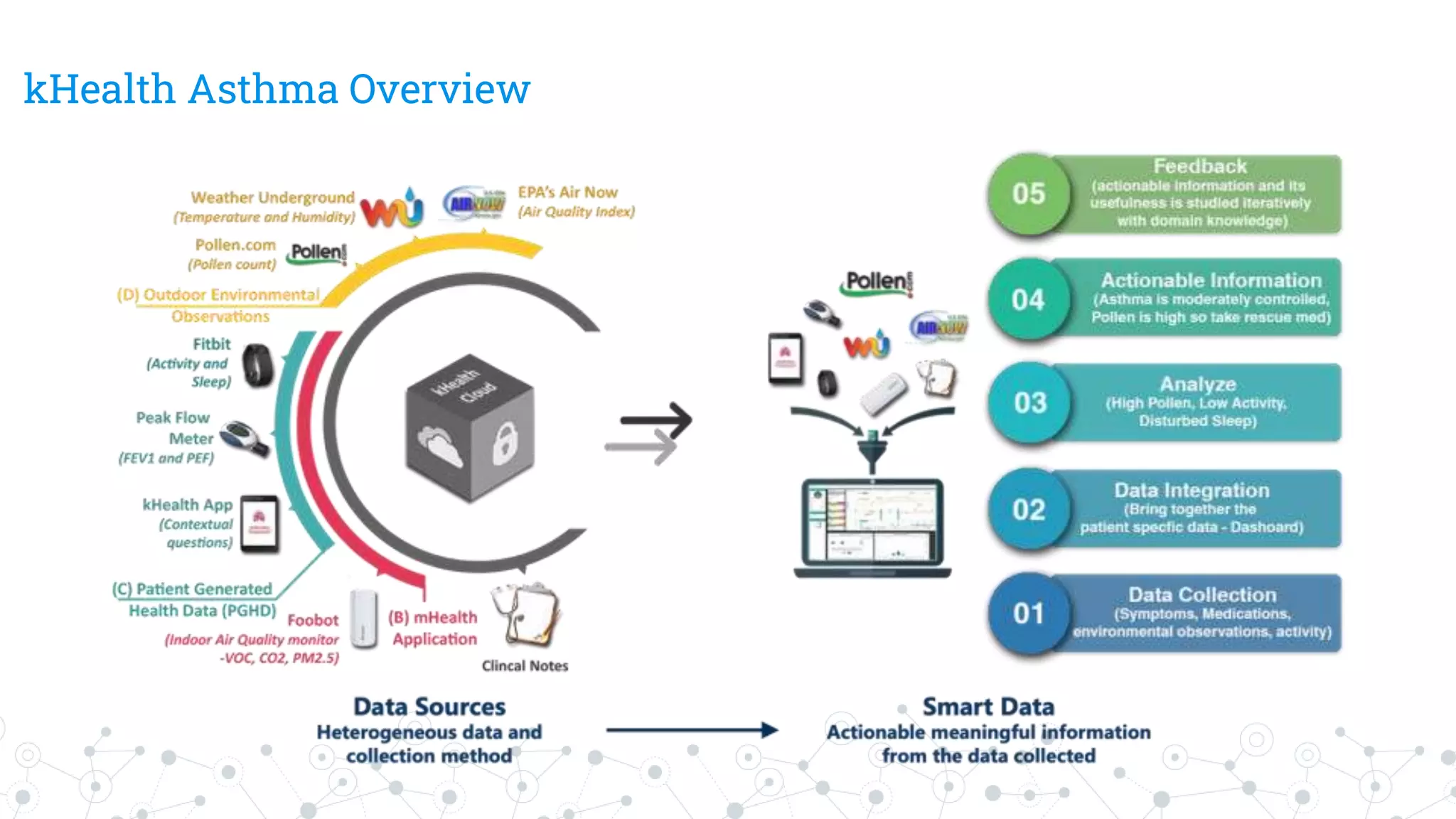
Big Data to Smart Data
APH is a vision to enhance the healthcare by using AI techniques on semantically
integrated PGHD, environmental data, clinical data, public health data & social data.
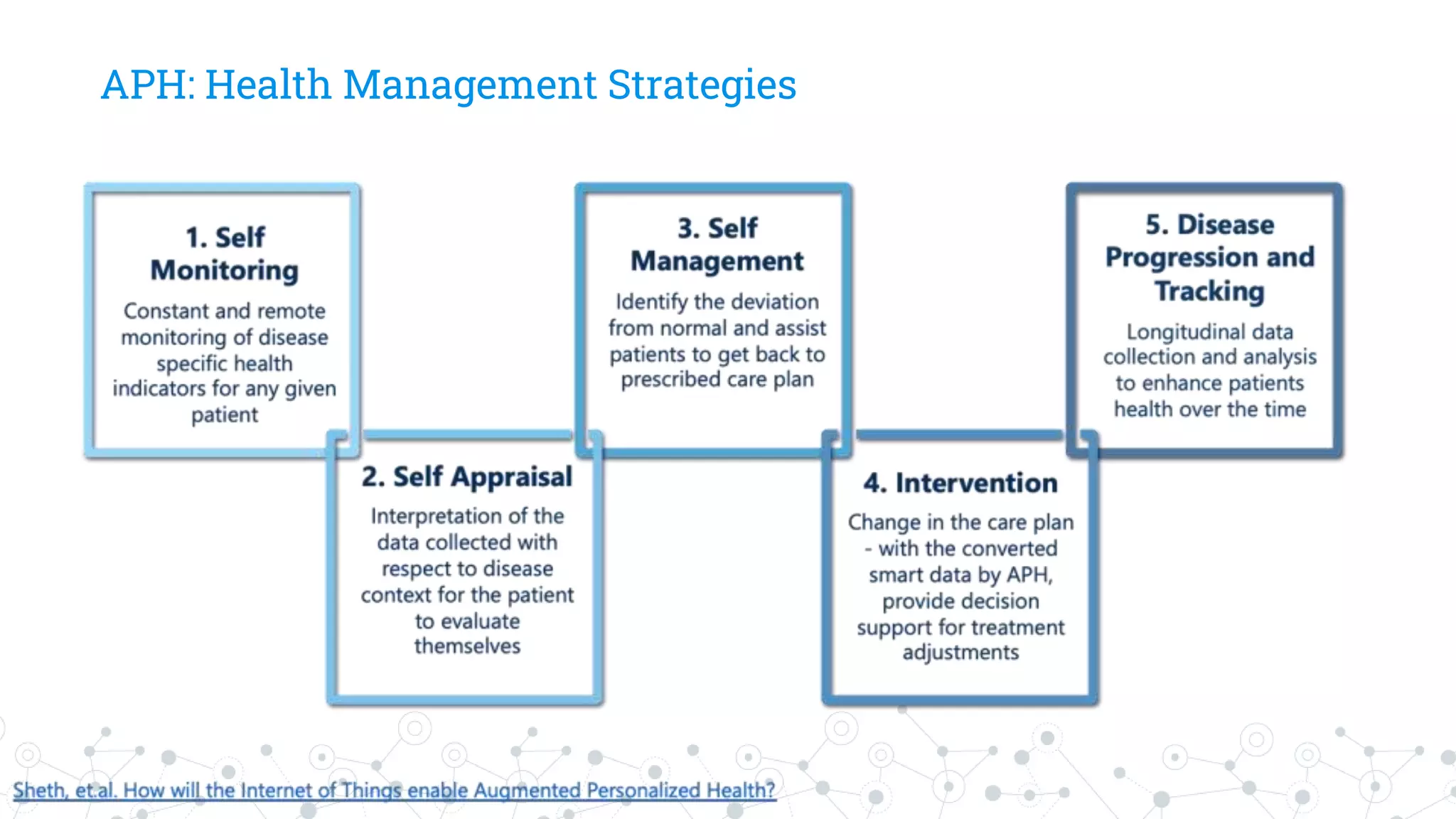
APH: Health Management Strategies
APH/Knowledge-enabled Healthcare:
kHealth Asthma
A multisensory approach for personalized asthma care for children
◎ 6.3 million children in USA are affected by Asthma; 300 million adults & children worldwide
◎ Multifactorial disease, difficult to diagnose based on episodic visits and clinical records
◎ Stage 1: Mobile App with 29 parameters collected
◎ Stage 2: Virtual Health Assistant
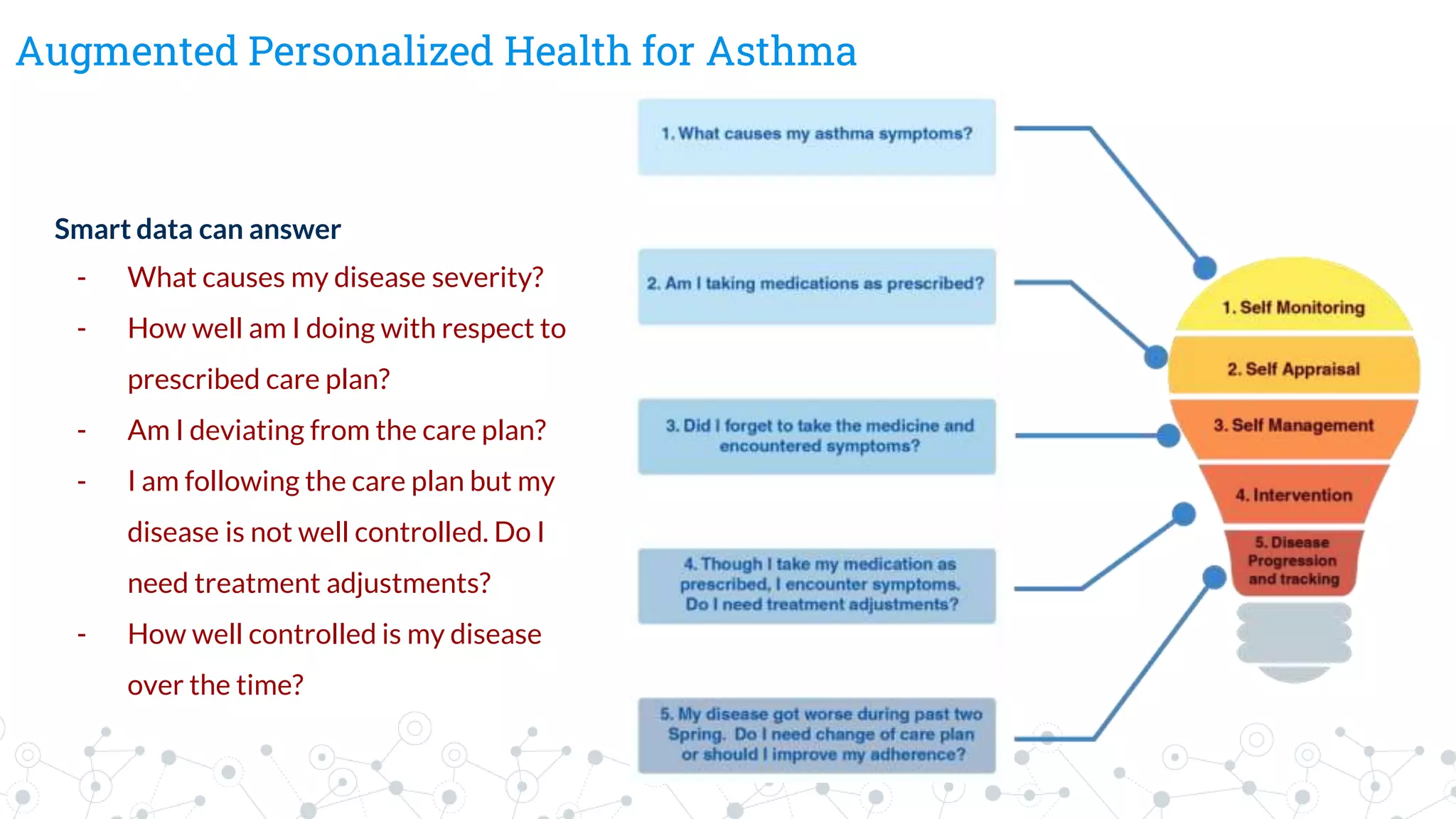
Augmented Personalized Health for Asthma
Smart data can answer
- What causes my disease severity?
- How well am I doing with respect to
prescribed care plan?
- Am I deviating from the care plan?
- I am following the care plan but my
disease is not well controlled. Do I
need treatment adjustments?
- How well controlled is my disease
over the time?
kHealth Asthma Overview
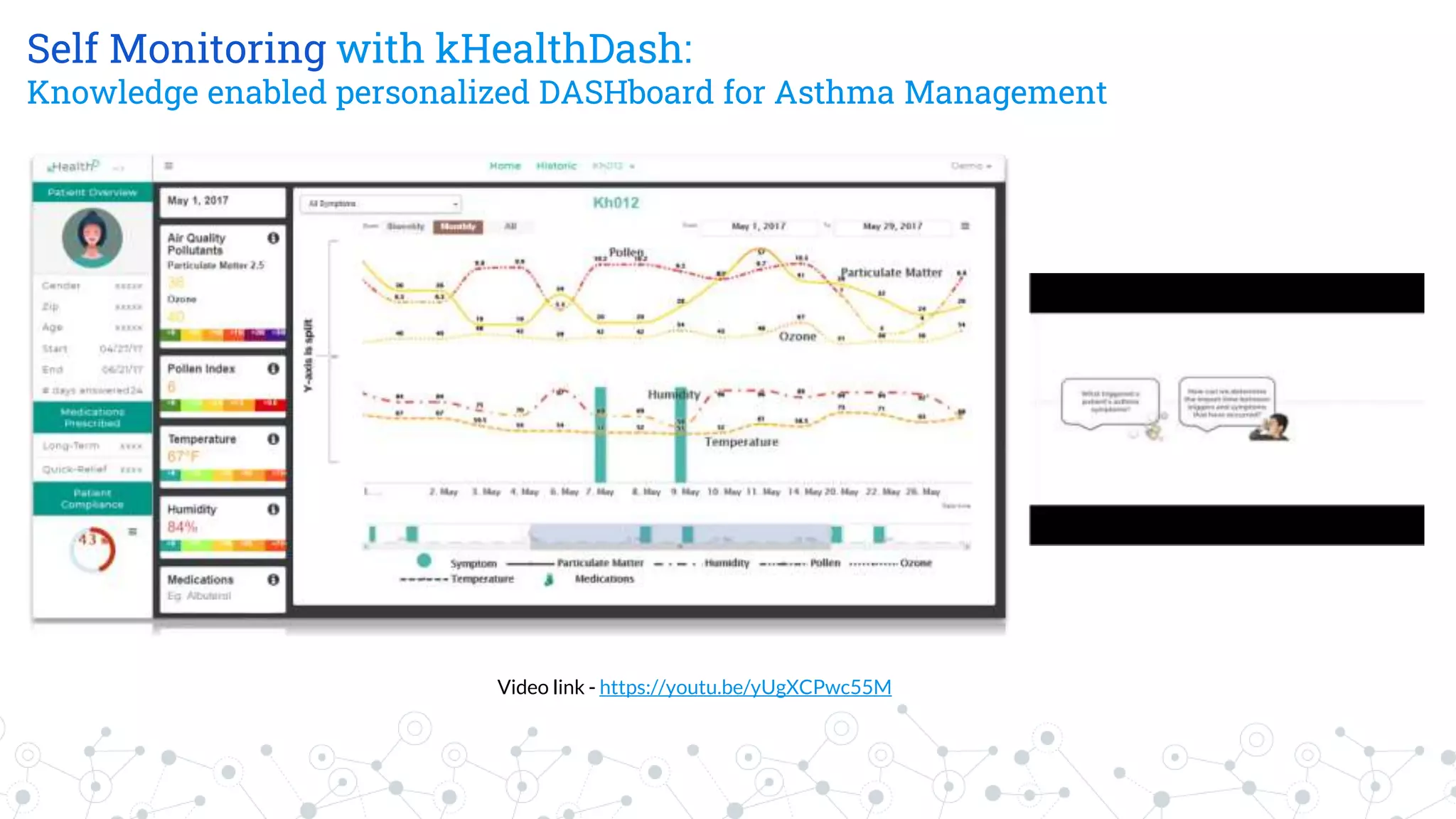
Self Monitoring with kHealthDash:
Knowledge enabled personalized DASHboard for Asthma Management
Video link - https://youtu.be/yUgXCPwc55M
Self Appraisal with Digital Phenotype Score
Jaimini U, Thirunarayan K, Kalra M, Venkataraman R, Kadariya D, Sheth A, “How Is My Child’s Asthma?” Digital Phenotype and Actionable Insights for Pediatric Asthma, JMIR Pediatric Parent 2018;1(2):e11988
https://medium.com/leoilab/digital-phenotyping-turning-our-smartphones-inward-141a75b2f2a3
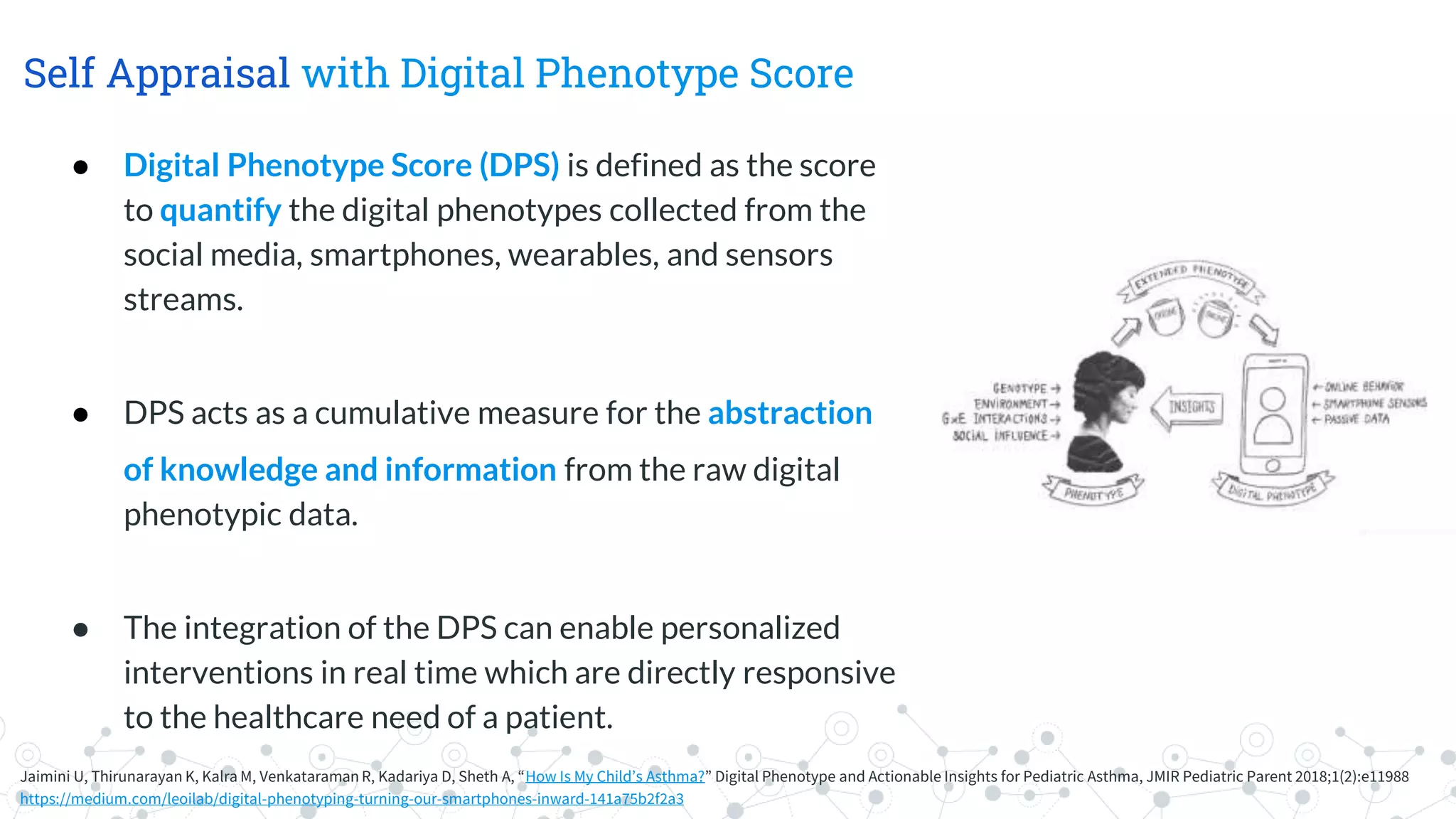
● Digital Phenotype Score (DPS) is defined as the score
to quantify the digital phenotypes collected from the
social media, smartphones, wearables, and sensors
streams.
● DPS acts as a cumulative measure for the abstraction
of knowledge and information from the raw digital
phenotypic data.
● The integration of the DPS can enable personalized
interventions in real time which are directly responsive
to the healthcare need of a patient.
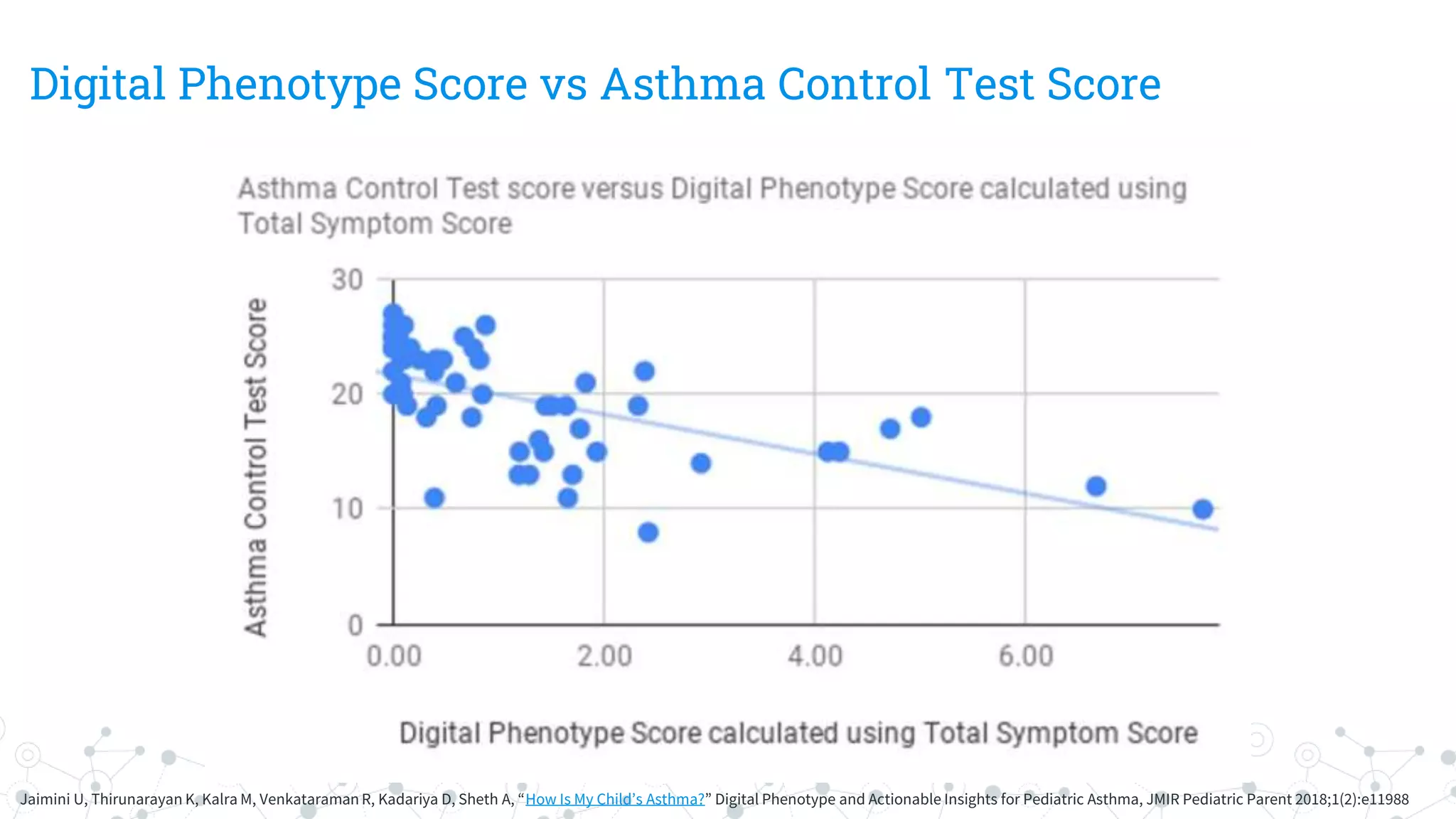
Digital Phenotype Score vs Asthma Control Test Score
Jaimini U, Thirunarayan K, Kalra M, Venkataraman R, Kadariya D, Sheth A, “How Is My Child’s Asthma?” Digital Phenotype and Actionable Insights for Pediatric Asthma, JMIR Pediatric Parent 2018;1(2):e11988
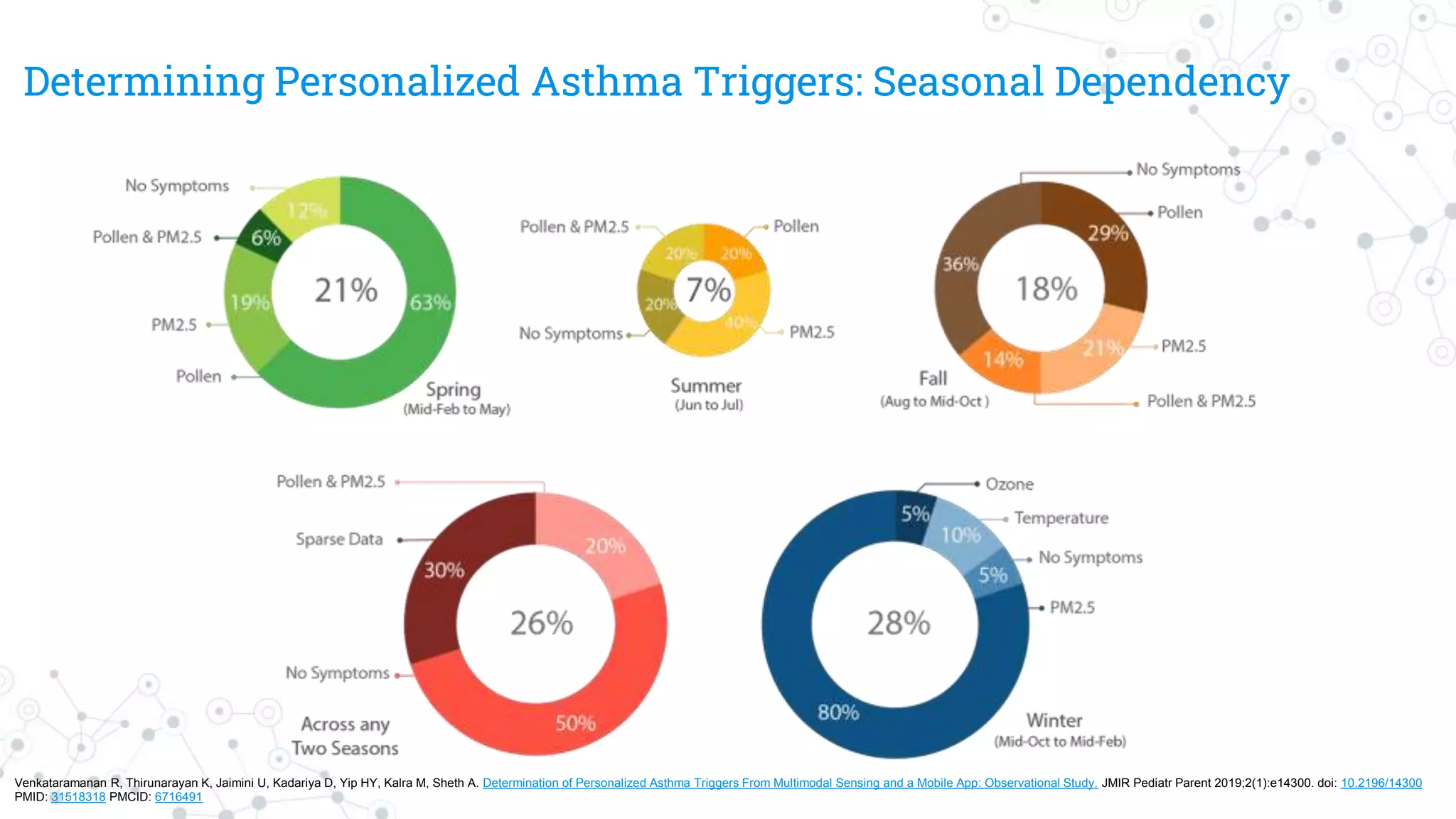
Determining Personalized Asthma Triggers: Seasonal Dependency
Venkataramanan R, Thirunarayan K, Jaimini U, Kadariya D, Yip HY, Kalra M, Sheth A. Determination of Personalized Asthma Triggers From Multimodal Sensing and a Mobile App: Observational Study. JMIR Pediatr Parent 2019;2(1):e14300. doi: 10.2196/14300
PMID: 31518318 PMCID: 6716491
Evidence based Path to Personalization
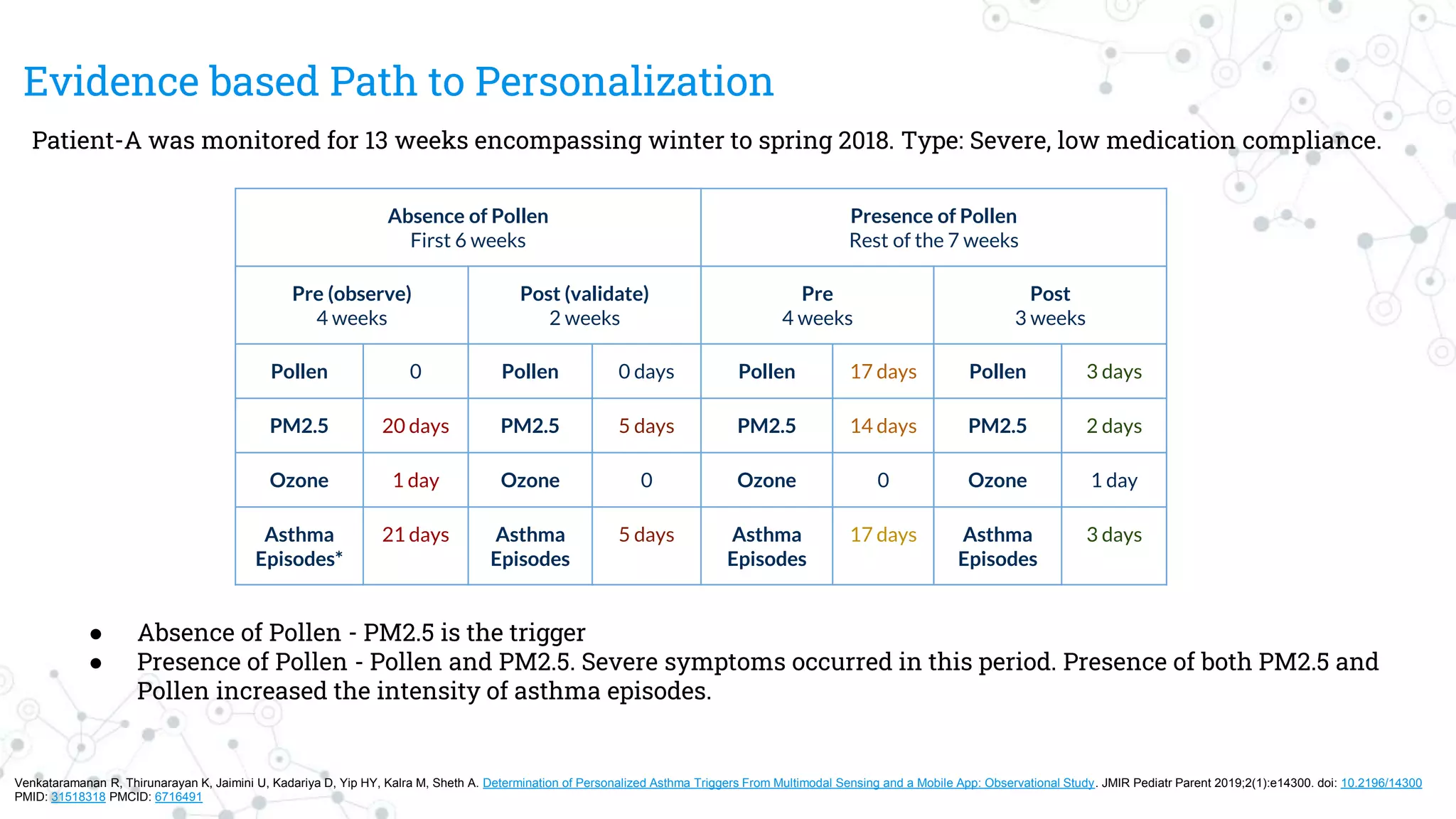
Patient-A was monitored for 13 weeks encompassing winter to spring 2018. Type: Severe, low medication compliance.
Absence of Pollen
First 6 weeks
Presence of Pollen
Rest of the 7 weeks
Pre (observe)
4 weeks
Post (validate)
2 weeks
Pre
4 weeks
Post
3 weeks
Pollen 0 Pollen 0 days Pollen 17 days Pollen 3 days
PM2.5 20 days PM2.5 5 days PM2.5 14 days PM2.5 2 days
Ozone 1 day Ozone 0 Ozone 0 Ozone 1 day
Asthma
Episodes*
21 days Asthma
Episodes
5 days Asthma
Episodes
17 days Asthma
Episodes
3 days
● Absence of Pollen - PM2.5 is the trigger
● Presence of Pollen - Pollen and PM2.5. Severe symptoms occurred in this period. Presence of both PM2.5 and
Pollen increased the intensity of asthma episodes.
Venkataramanan R, Thirunarayan K, Jaimini U, Kadariya D, Yip HY, Kalra M, Sheth A. Determination of Personalized Asthma Triggers From Multimodal Sensing and a Mobile App: Observational Study. JMIR Pediatr Parent 2019;2(1):e14300. doi: 10.2196/14300
PMID: 31518318 PMCID: 6716491
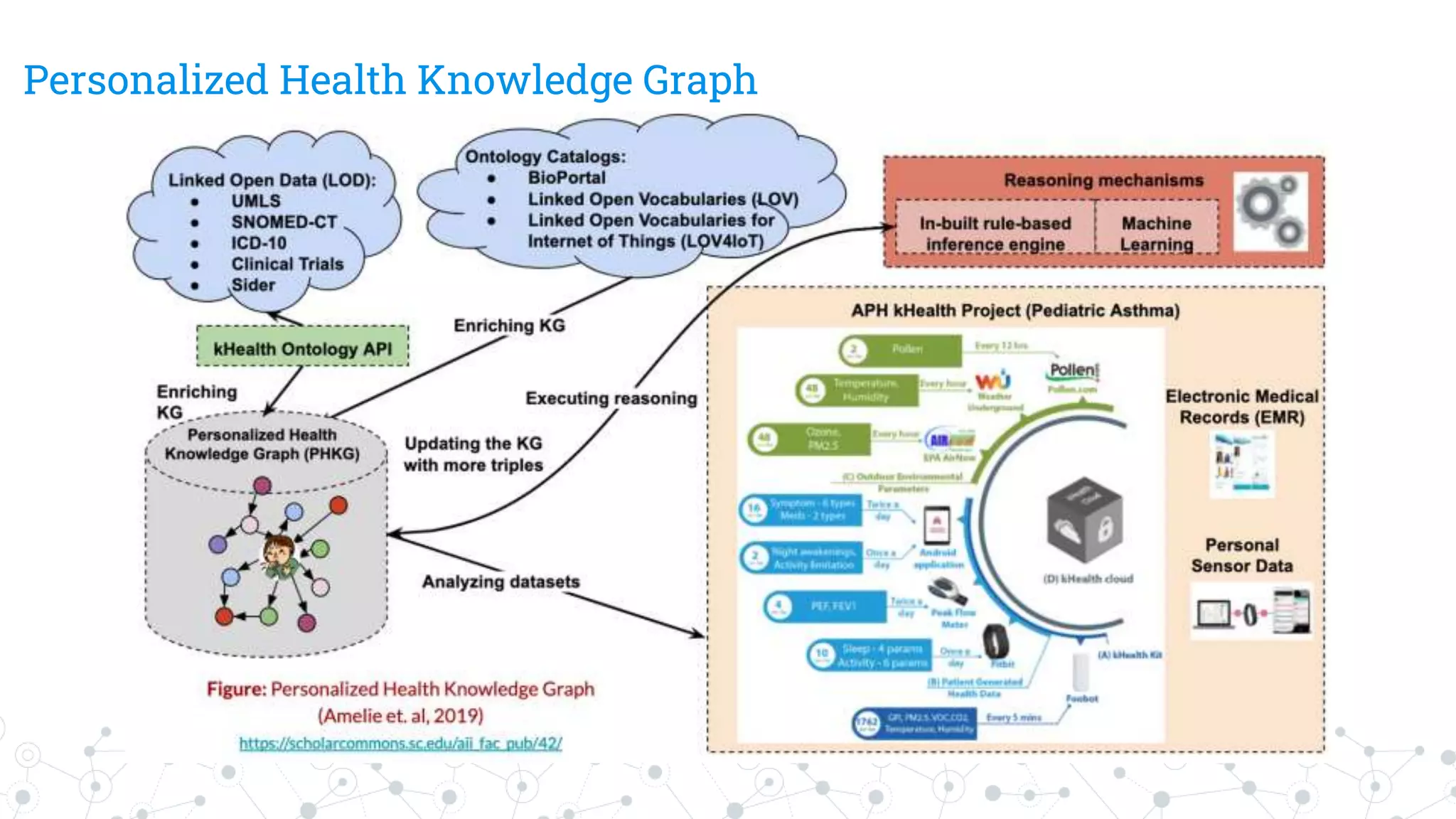
Personalized Health Knowledge Graph
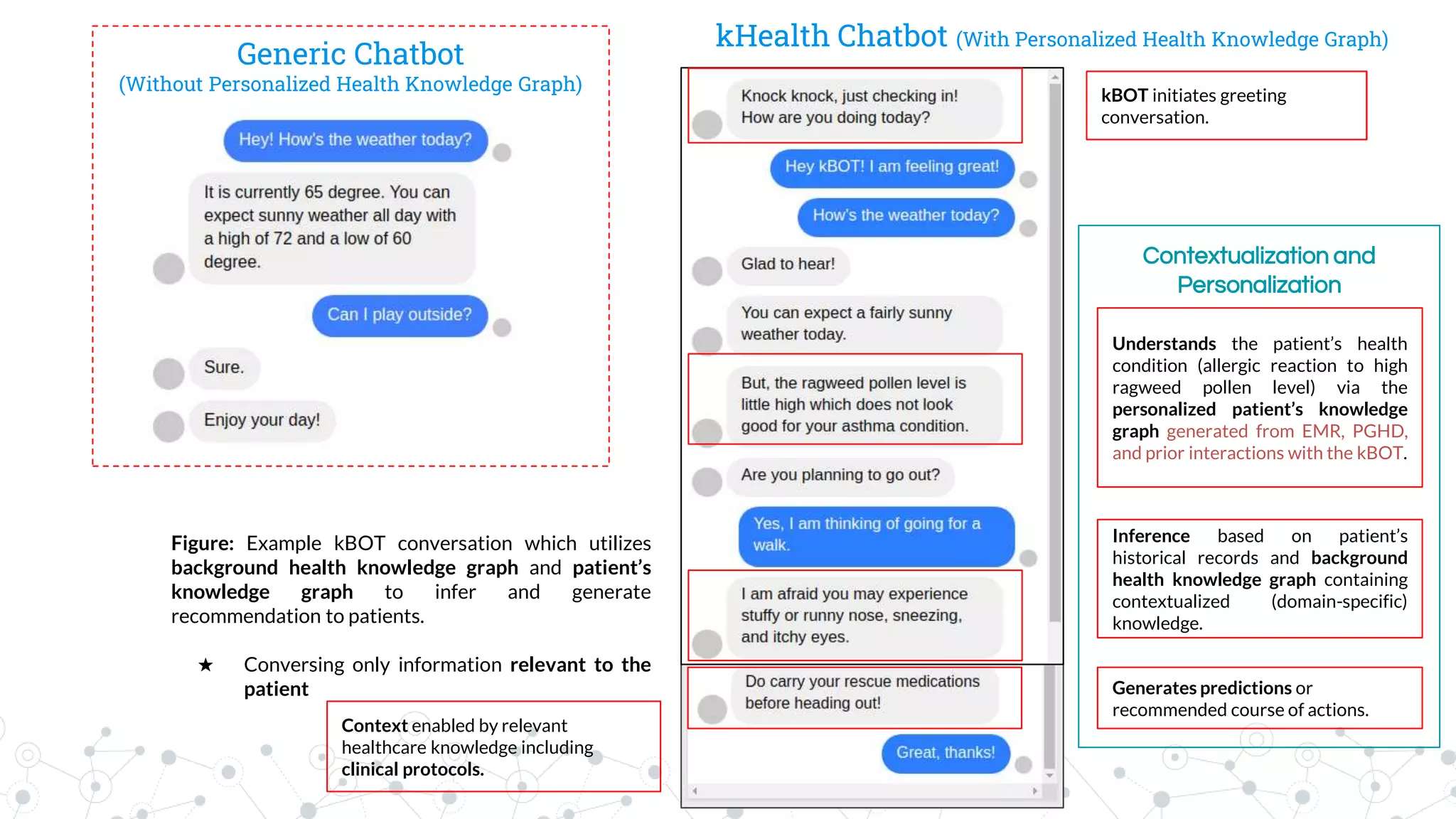
kHealth Chatbot (With Personalized Health Knowledge Graph)
Contextualization and
Personalization
kBOT initiates greeting
conversation.
Understands the patient’s health
condition (allergic reaction to high
ragweed pollen level) via the
personalized patient’s knowledge
graph generated from EMR, PGHD,
and prior interactions with the kBOT.
Generates predictions or
recommended course of actions.
Inference based on patient’s
historical records and background
health knowledge graph containing
contextualized (domain-specific)
knowledge.
Figure: Example kBOT conversation which utilizes
background health knowledge graph and patient’s
knowledge graph to infer and generate
recommendation to patients.
★ Conversing only information relevant to the
patient
Context enabled by relevant
healthcare knowledge including
clinical protocols.
kBOT initiates greeting
conversation.
Generic Chatbot
(Without Personalized Health Knowledge Graph)
kHealth Chatbot Demo
https://youtu.be/oZCaM7rhJAg
More on: https://www.slideshare.net/aiisc/kbot-knowledgeenabled-personalized-chatbot-for-selfmanagement-of-asthma-in-pediatric-population
CausalKG
Causal Knowledge Graph
Utkarshani Jaimini and Amit Sheth, "CausalKG: Causal Knowledge Graph: Explainability using interventional and counterfactual reasoning, " IEEE Internet Computing, 26 (1), Jan-Feb 2022
Why CausalKG?
● Humans have innate understanding of causality
● Causality is a complex relationship
● Asthma trigger causes-
➔ An occurrence of a symptom
➔ Intake of medication
Personalized Causal Bayesian Network
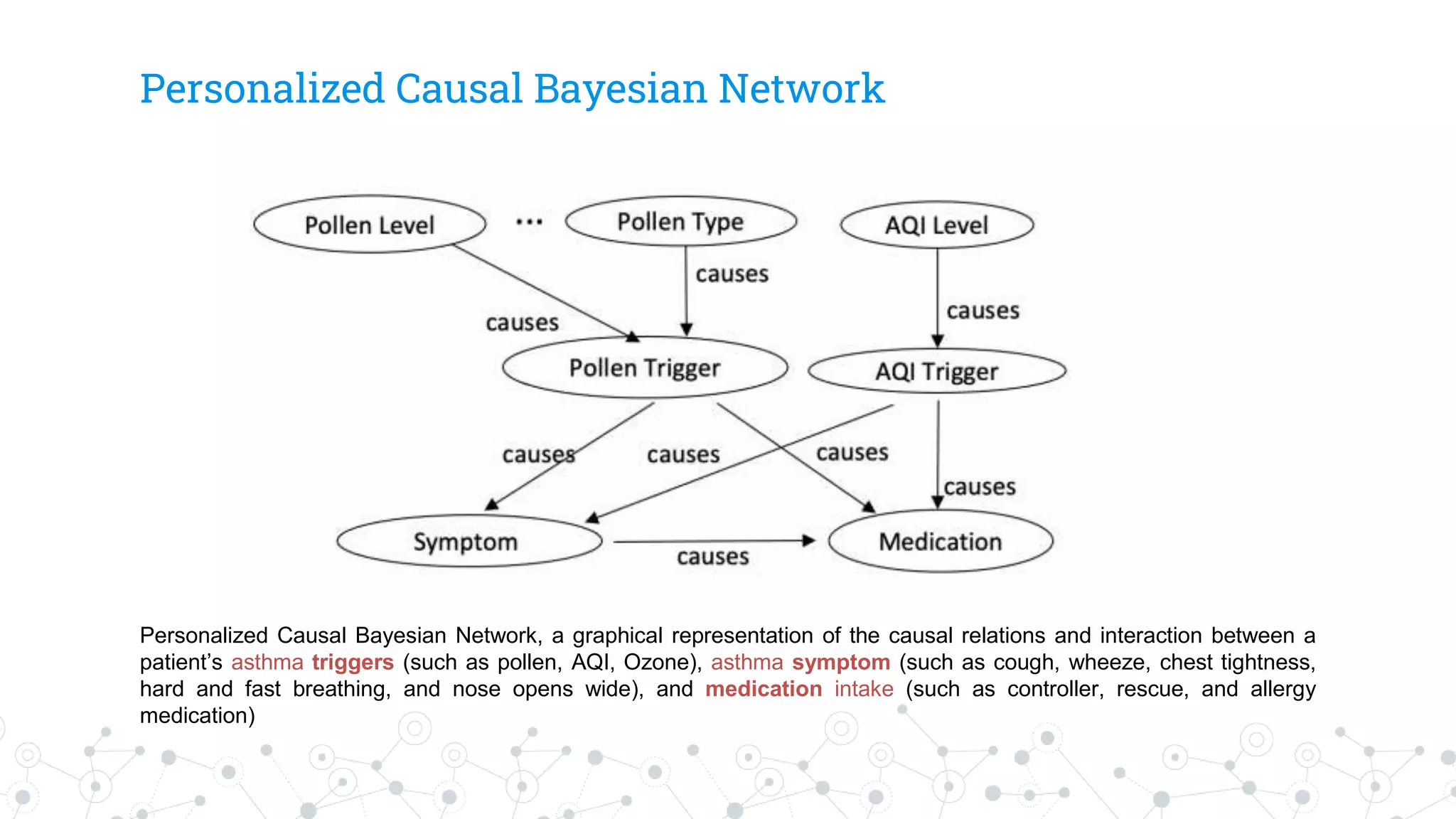
Personalized Causal Bayesian Network, a graphical representation of the causal relations and interaction between a
patient’s asthma triggers (such as pollen, AQI, Ozone), asthma symptom (such as cough, wheeze, chest tightness,
hard and fast breathing, and nose opens wide), and medication intake (such as controller, rescue, and allergy
medication)
CausalKG Architecture
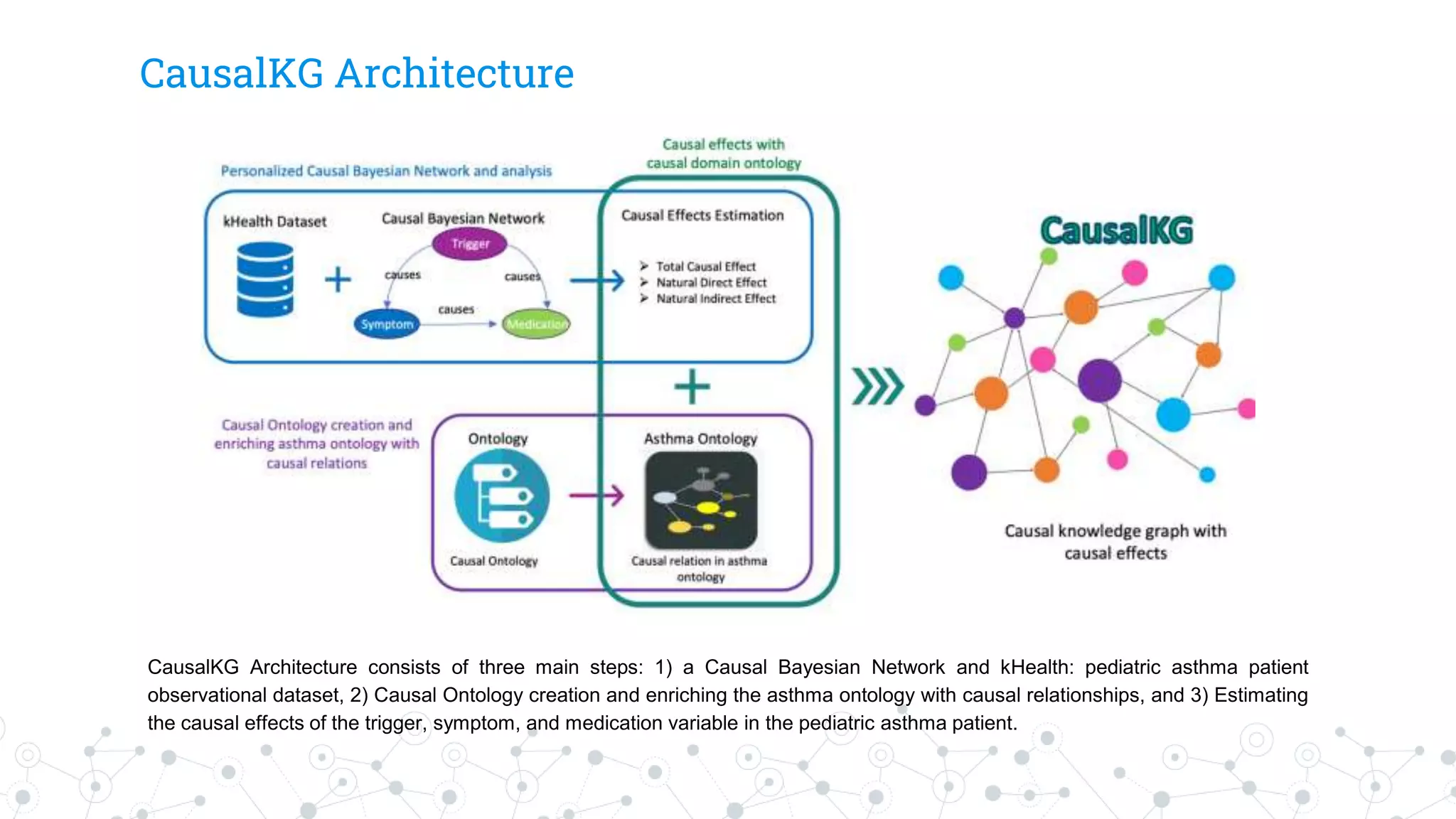
CausalKG Architecture consists of three main steps: 1) a Causal Bayesian Network and kHealth: pediatric asthma patient
observational dataset, 2) Causal Ontology creation and enriching the asthma ontology with causal relationships, and 3) Estimating
the causal effects of the trigger, symptom, and medication variable in the pediatric asthma patient.
CausalKG:
Personalized Causal Knowledge Graph for the asthma patient
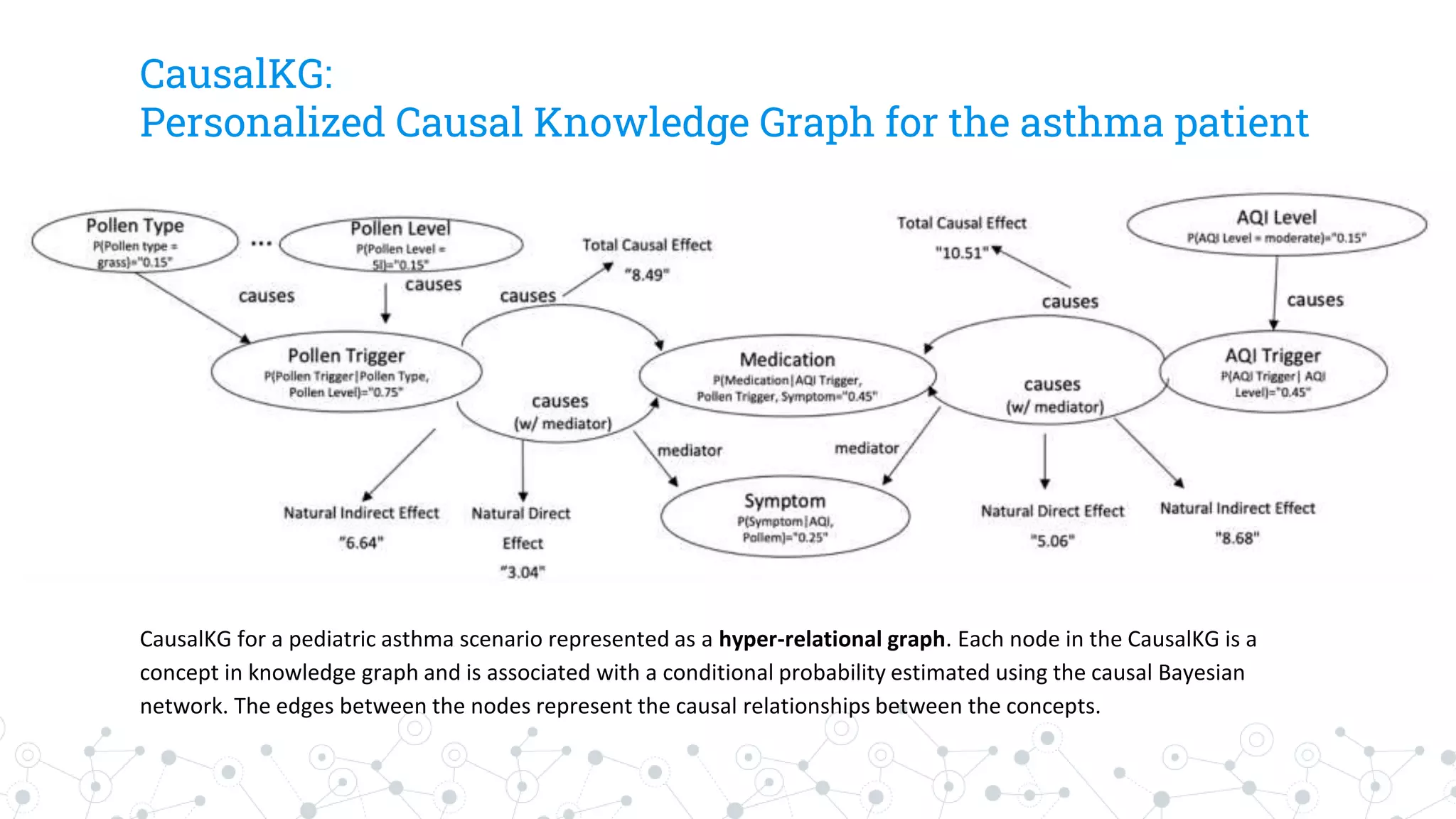
CausalKG for a pediatric asthma scenario represented as a hyper-relational graph. Each node in the CausalKG is a
concept in knowledge graph and is associated with a conditional probability estimated using the causal Bayesian
network. The edges between the nodes represent the causal relationships between the concepts.
Current AI to Future Hybrid AI
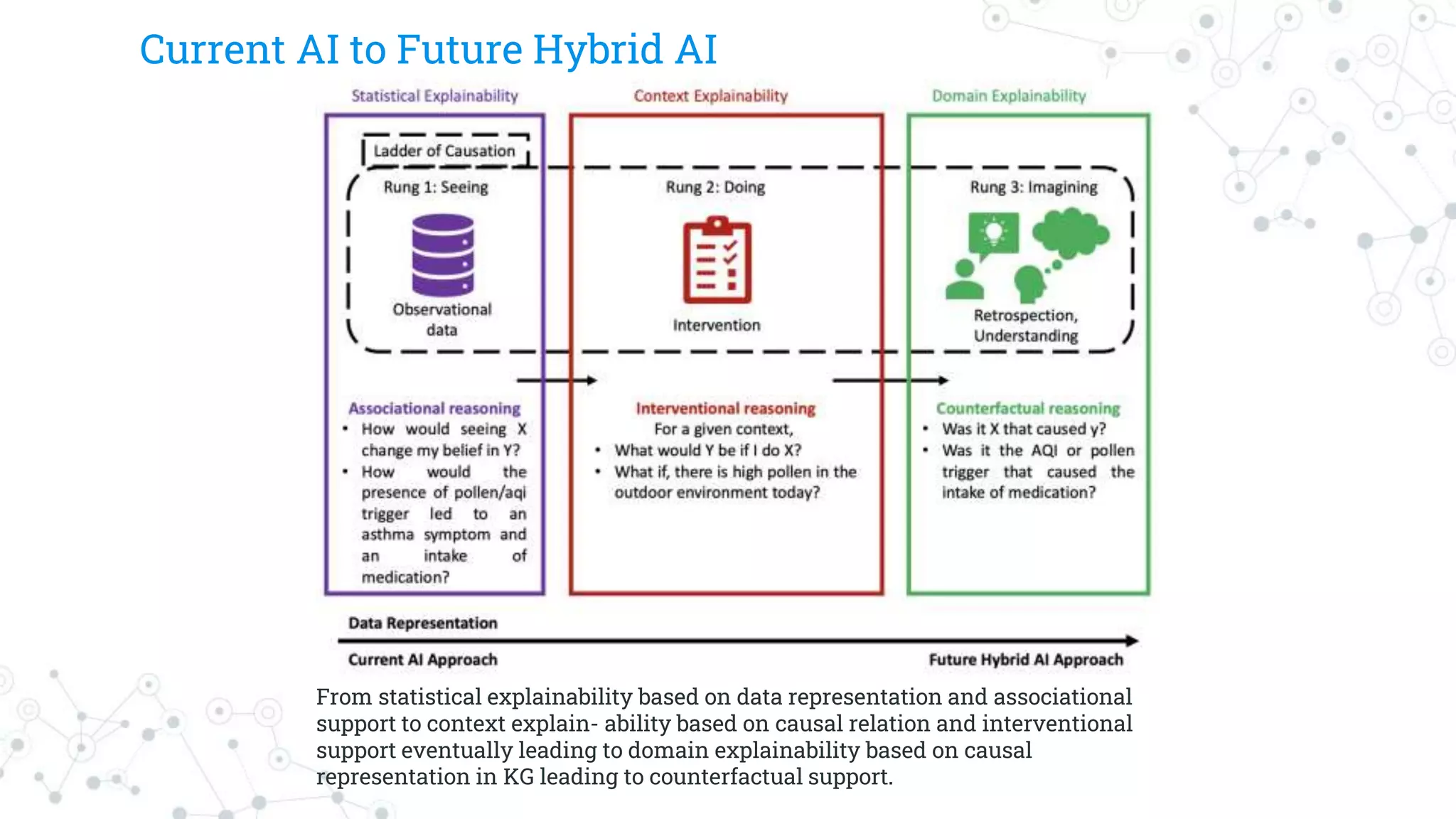
From statistical explainability based on data representation and associational
support to context explain- ability based on causal relation and interventional
support eventually leading to domain explainability based on causal
representation in KG leading to counterfactual support.
APH: Virtual Health Assistant assisted Self
Management using Reinforcement Learning and
Personalized Knowledge Graph
Use case: Mental Health
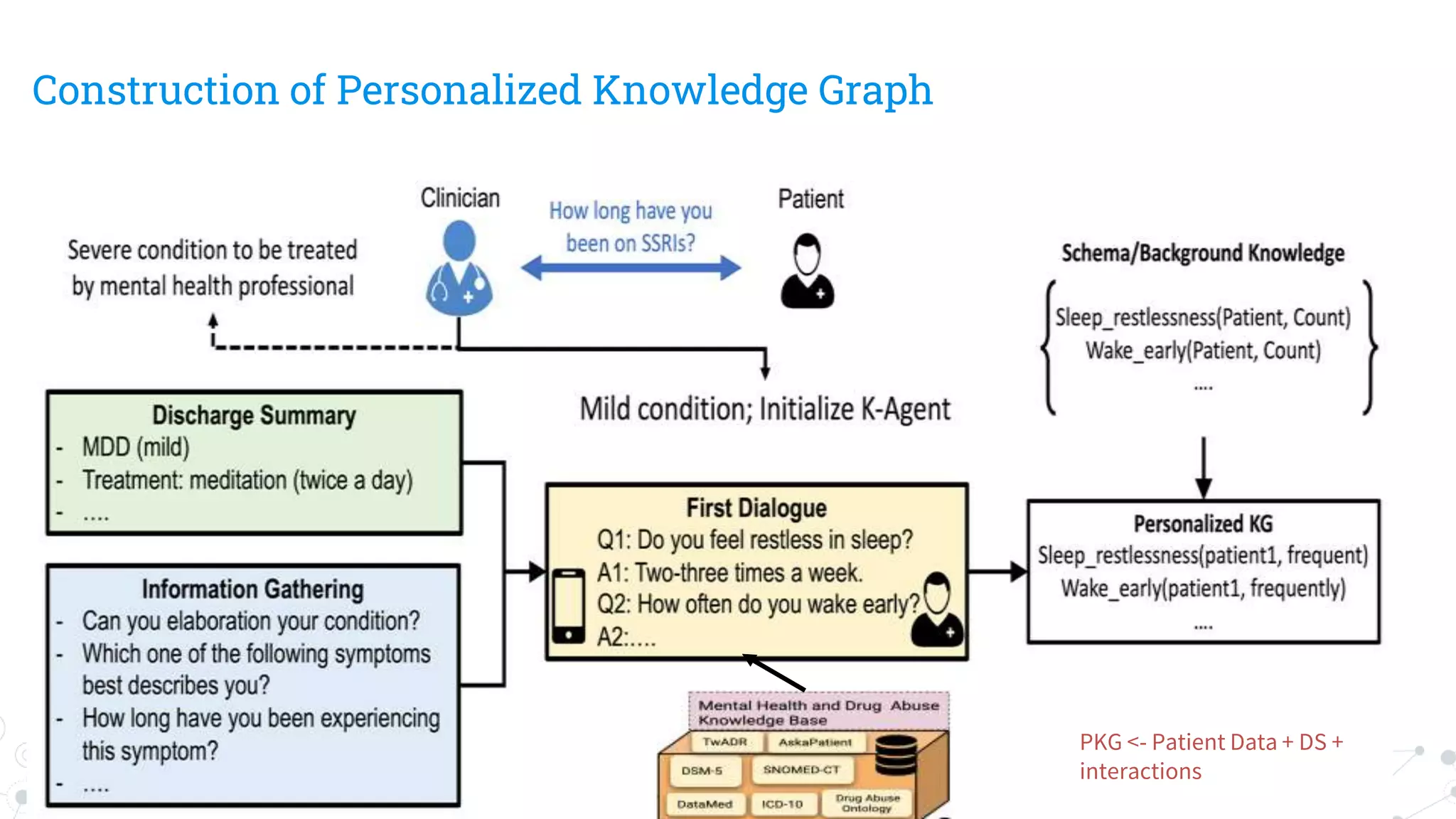
Construction of Personalized Knowledge Graph
PKG <- Patient Data + DS +
interactions
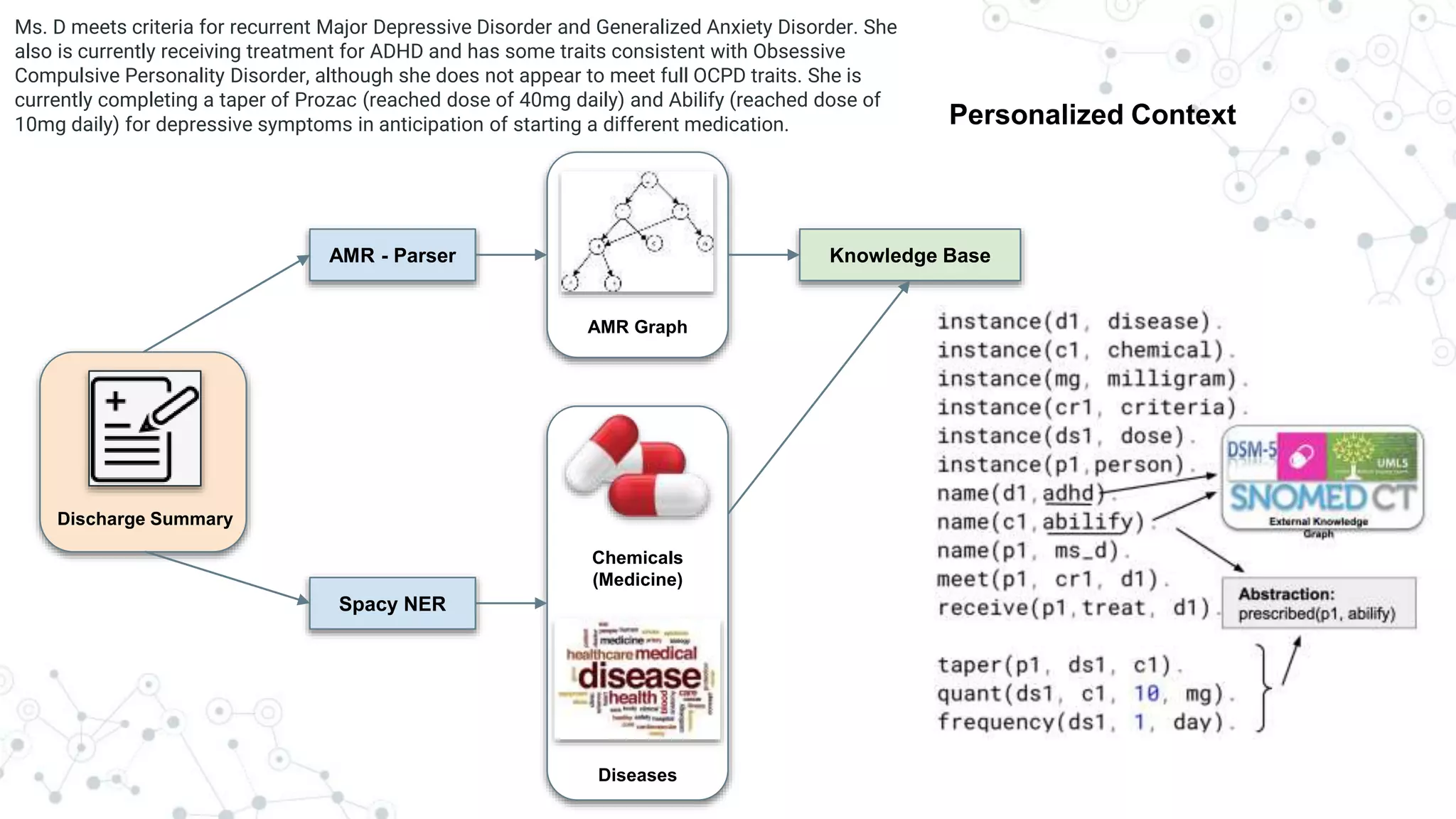
AMR - Parser
Discharge Summary
Spacy NER
AMR Graph
Chemicals
(Medicine)
Diseases
Knowledge Base
Personalized Context
Ms. D meets criteria for recurrent Major Depressive Disorder and Generalized Anxiety Disorder. She
also is currently receiving treatment for ADHD and has some traits consistent with Obsessive
Compulsive Personality Disorder, although she does not appear to meet full OCPD traits. She is
currently completing a taper of Prozac (reached dose of 40mg daily) and Abilify (reached dose of
10mg daily) for depressive symptoms in anticipation of starting a different medication.
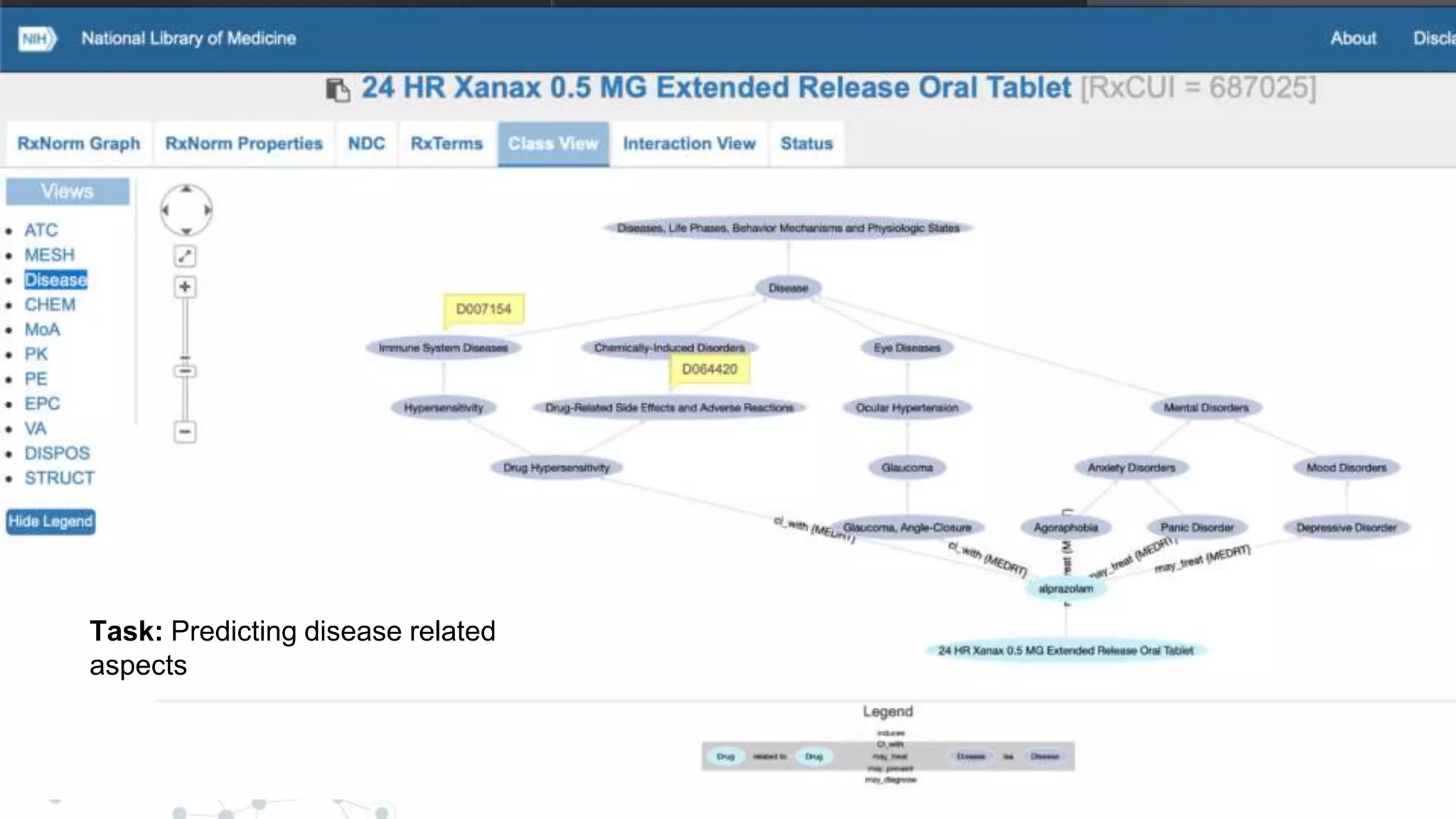
Task: Predicting disease related
aspects
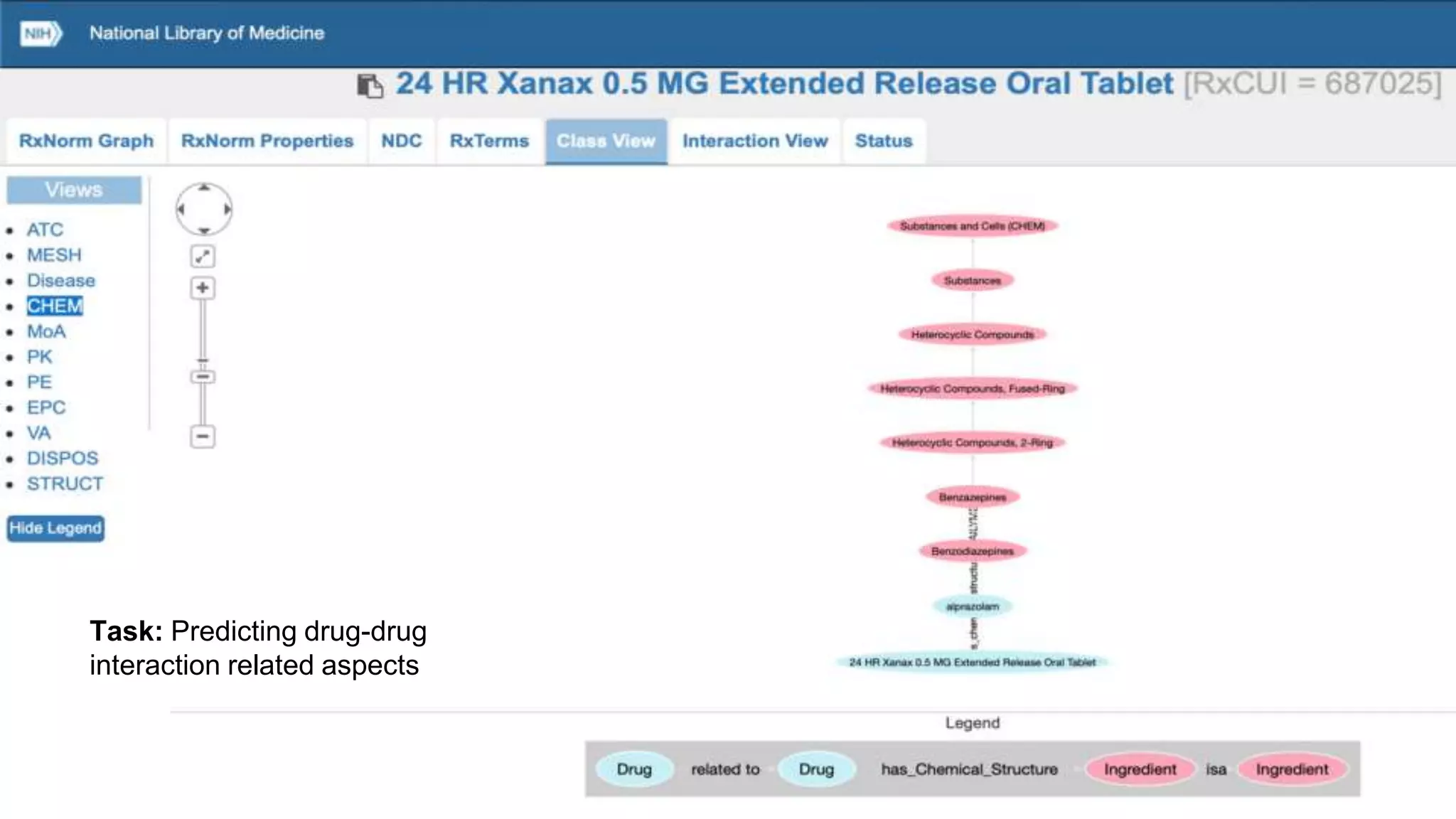
Task: Predicting drug-drug
interaction related aspects
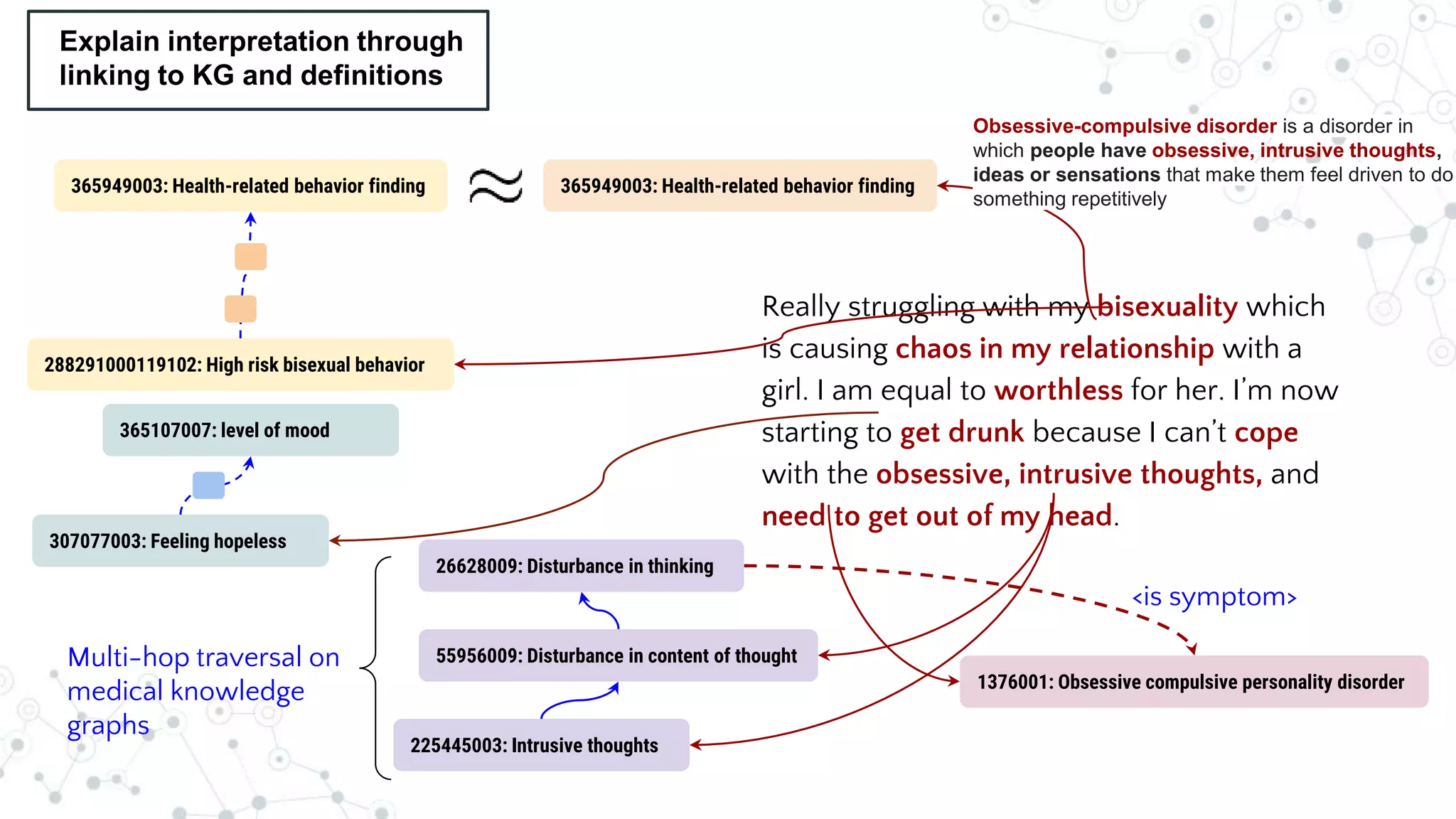
Really struggling with my bisexuality which
is causing chaos in my relationship with a
girl. I am equal to worthless for her. I’m now
starting to get drunk because I can’t cope
with the obsessive, intrusive thoughts, and
need to get out of my head.
288291000119102: High risk bisexual behavior
365949003: Health-related behavior finding 365949003: Health-related behavior finding
307077003: Feeling hopeless
365107007: level of mood
225445003: Intrusive thoughts
55956009: Disturbance in content of thought
26628009: Disturbance in thinking
1376001: Obsessive compulsive personality disorder
Multi-hop traversal on
medical knowledge
graphs
<is symptom>
Obsessive-compulsive disorder is a disorder in
which people have obsessive, intrusive thoughts,
ideas or sensations that make them feel driven to do
something repetitively
Explain interpretation through
linking to KG and definitions
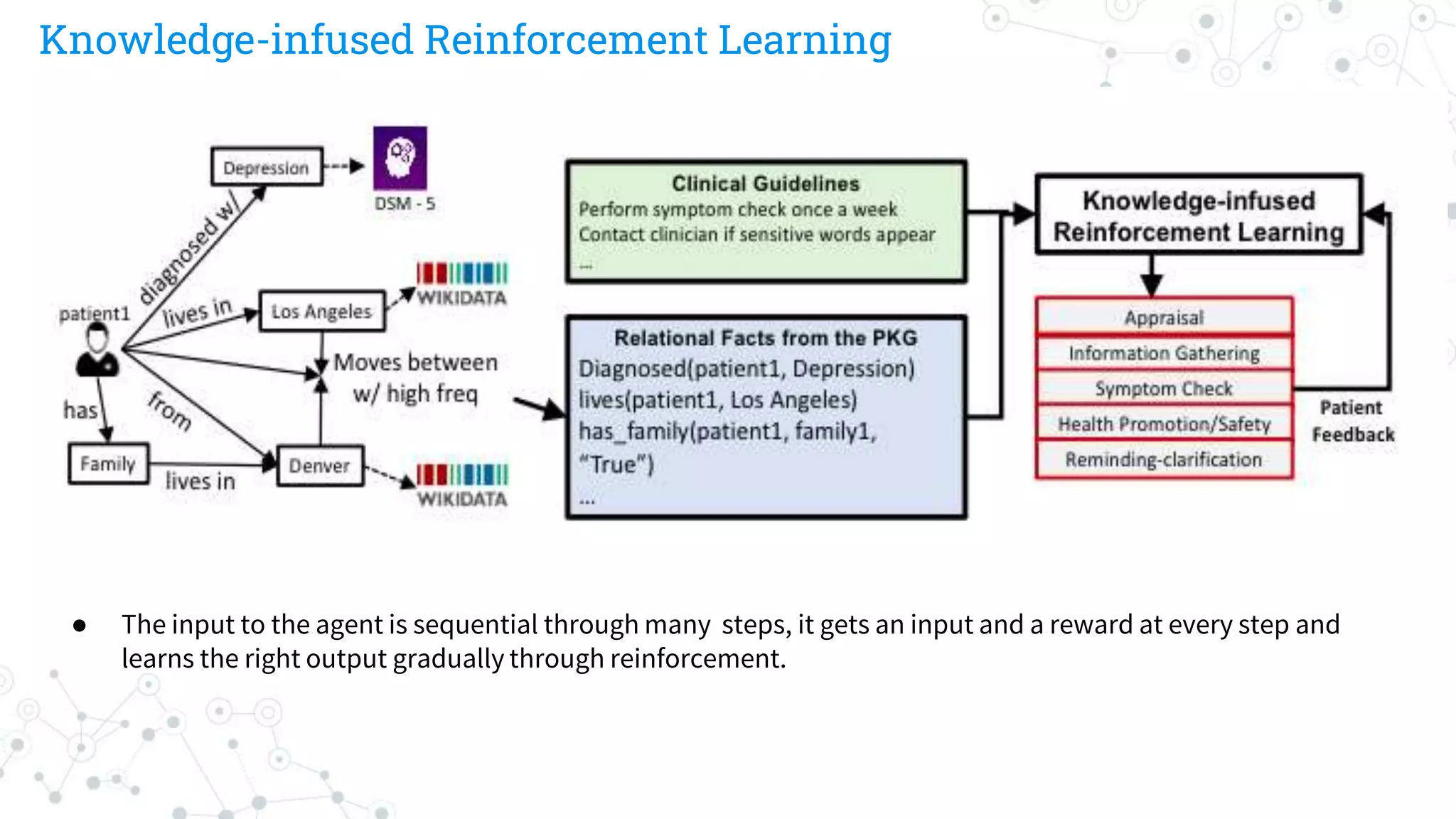
Knowledge-infused Reinforcement Learning
● The input to the agent is sequential through many steps, it gets an input and a reward at every step and
learns the right output gradually through reinforcement.
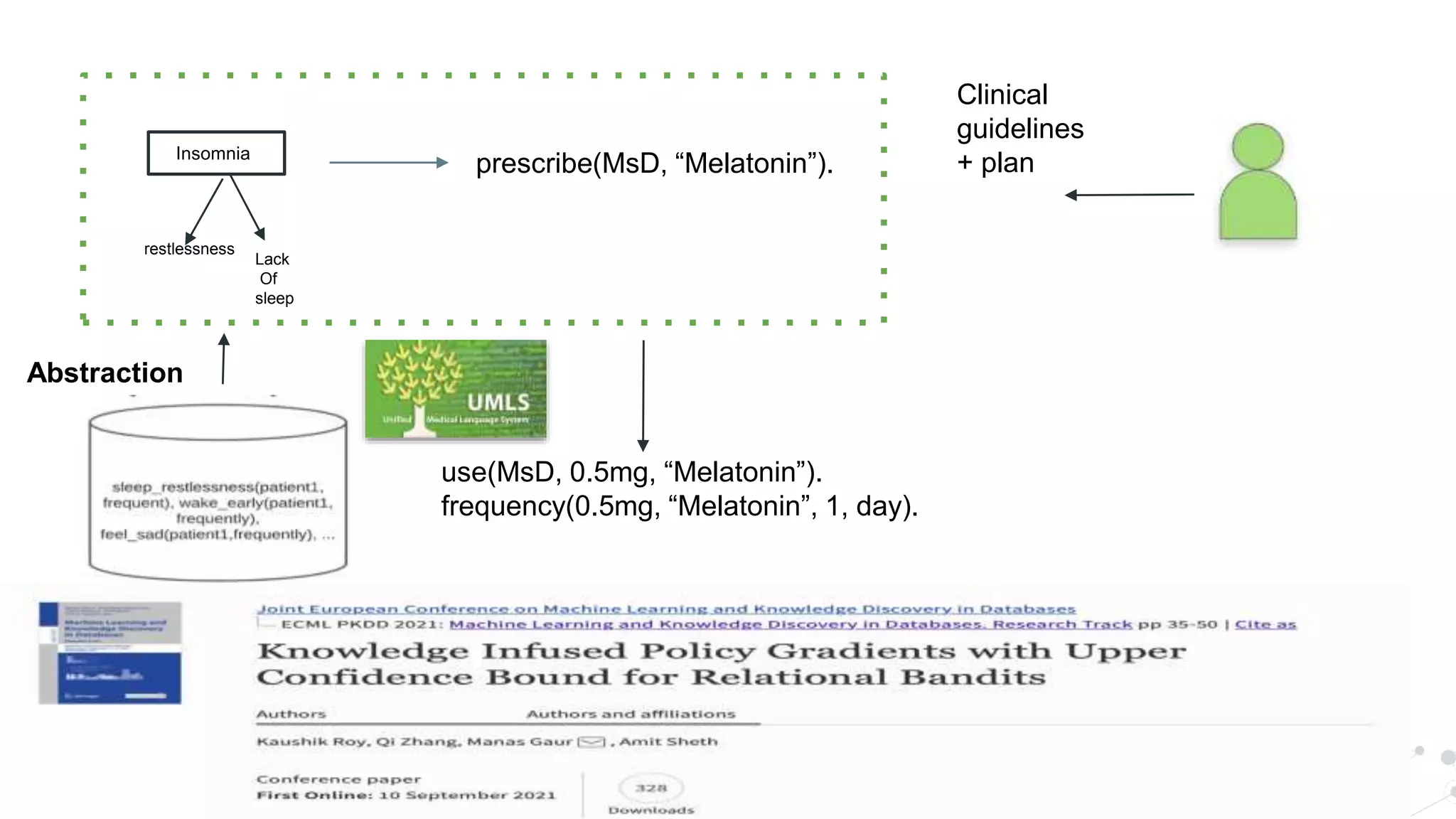
Insomnia
restlessness
Lack
Of
sleep
prescribe(MsD, “Melatonin”).
use(MsD, 0.5mg, “Melatonin”).
frequency(0.5mg, “Melatonin”, 1, day).
Clinical
guidelines
+ plan
Abstraction
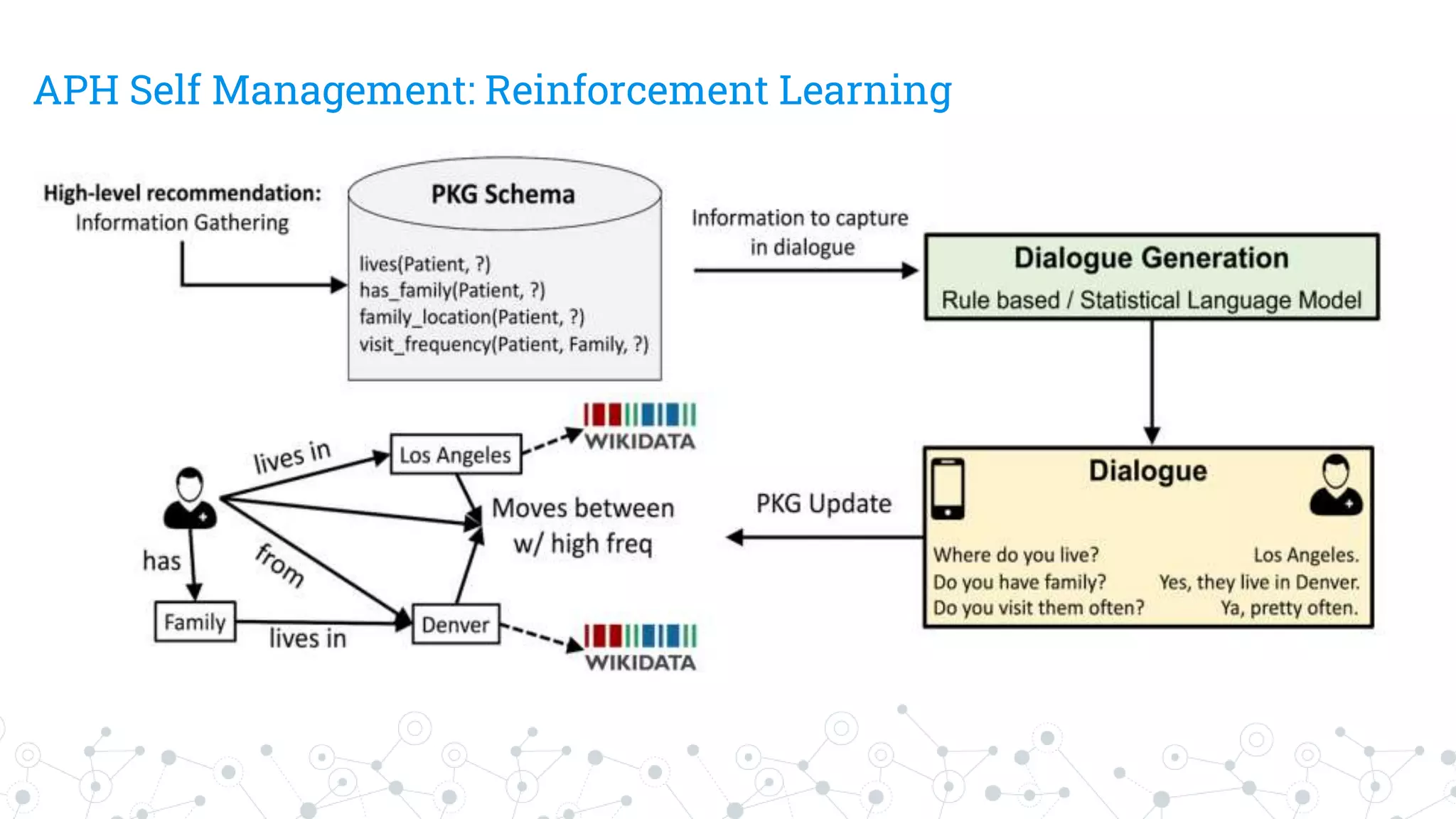
APH Self Management: Reinforcement Learning
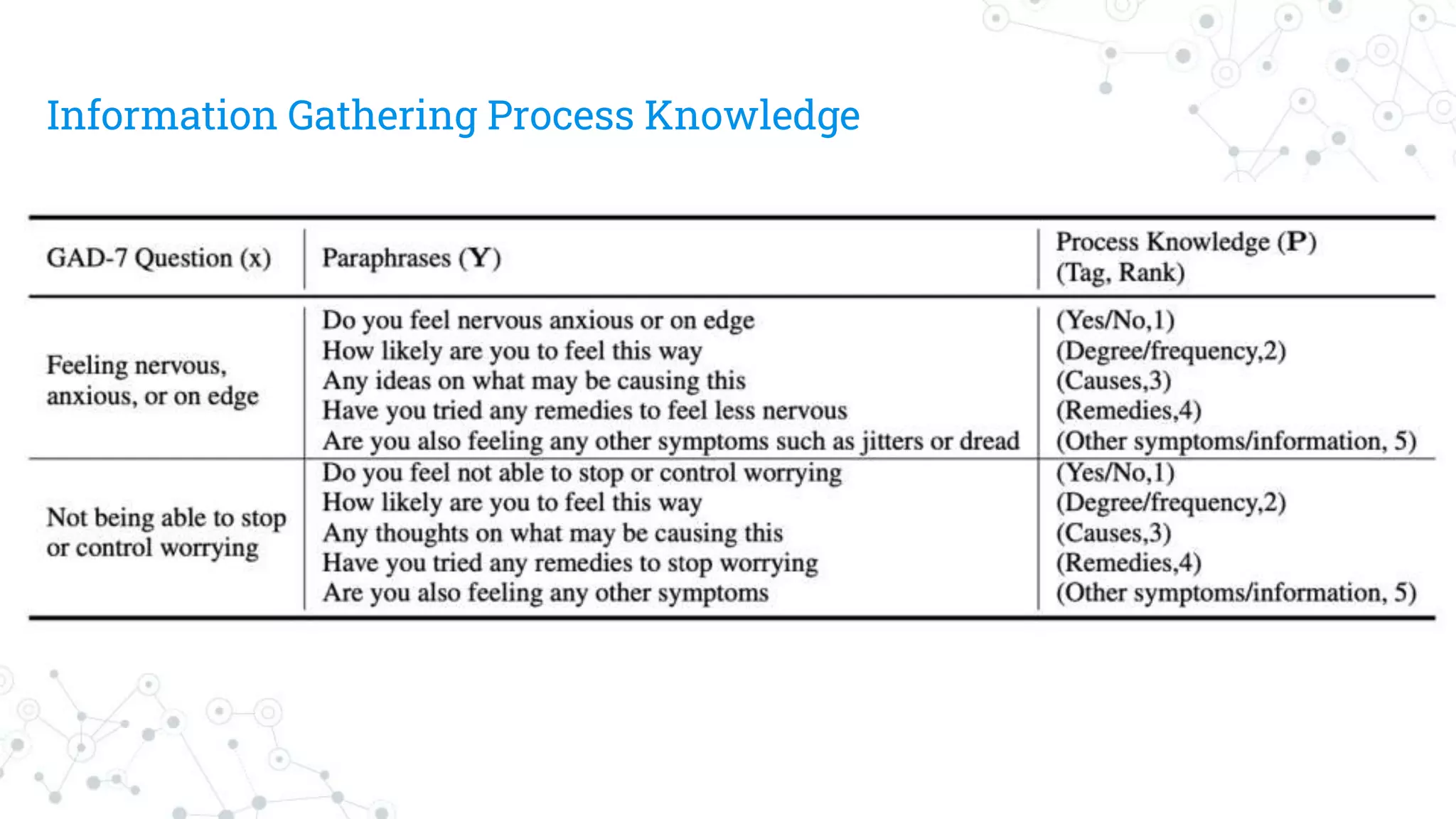
Information Gathering Process Knowledge
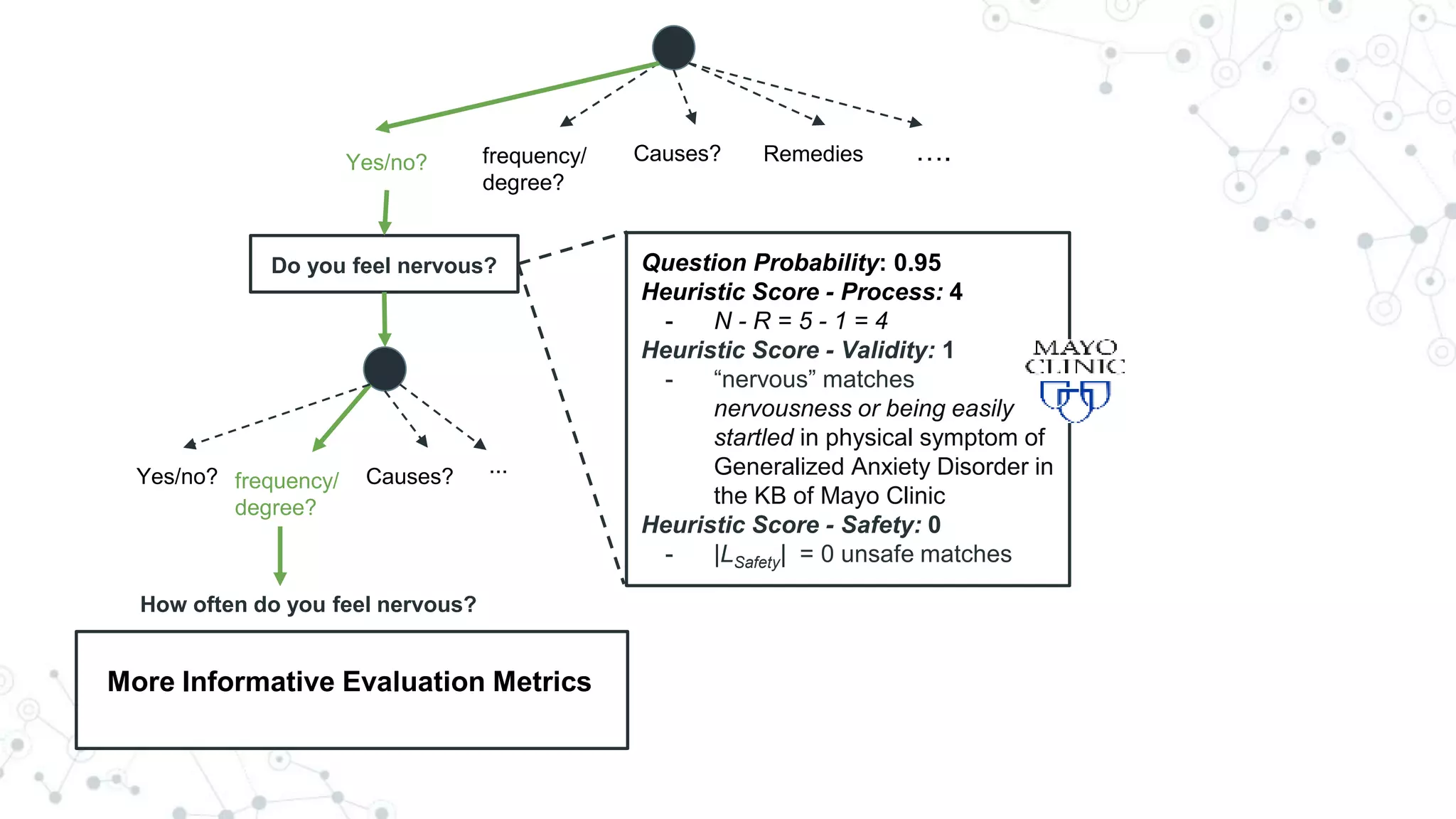
Yes/no? frequency/
degree?
Causes? Remedies ….
Do you feel nervous?
Yes/no?
How often do you feel nervous?
Question Probability: 0.95
Heuristic Score - Process: 4
- N - R = 5 - 1 = 4
Heuristic Score - Validity: 1
- “nervous” matches
nervousness or being easily
startled in physical symptom of
Generalized Anxiety Disorder in
the KB of Mayo Clinic
Heuristic Score - Safety: 0
- |LSafety| = 0 unsafe matches
frequency/
degree?
Causes? ...
More Informative Evaluation Metrics
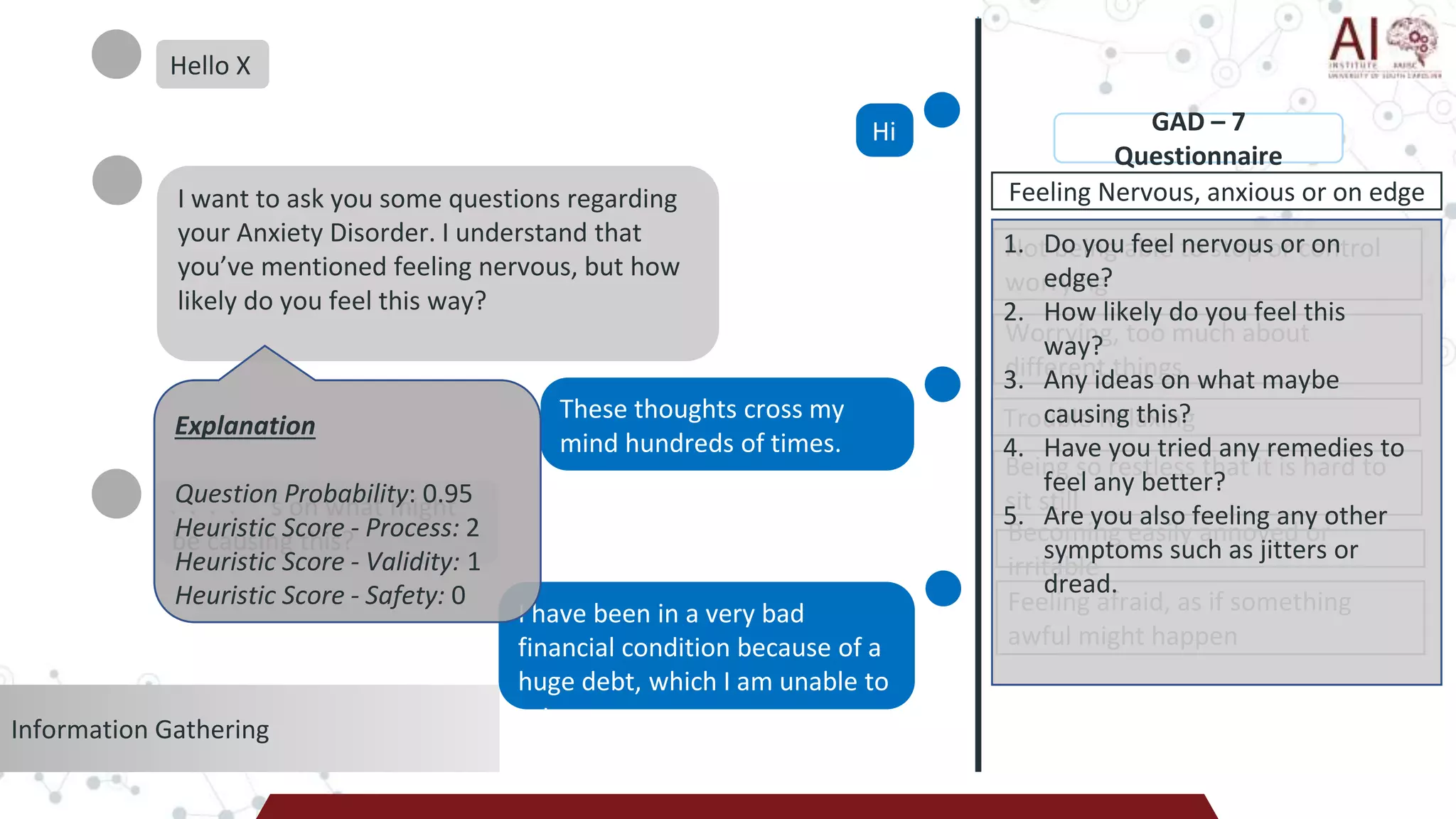
Information Gathering
Hello X
Hi
I want to ask you some questions regarding
your Anxiety Disorder. I understand that
you’ve mentioned feeling nervous, but how
likely do you feel this way?
These thoughts cross my
mind hundreds of times.
Any ideas on what might
be causing this?
I have been in a very bad
financial condition because of a
huge debt, which I am unable to
return.
. . . .
. . . .
GAD – 7
Questionnaire
Feeling Nervous, anxious or on edge
Not being able to stop or control
worrying
Worrying, too much about
different things
Trouble Relaxing
Being so restless that it is hard to
sit still
Becoming easily annoyed or
irritable
Feeling afraid, as if something
awful might happen
1. Do you feel nervous or on
edge?
2. How likely do you feel this
way?
3. Any ideas on what maybe
causing this?
4. Have you tried any remedies to
feel any better?
5. Are you also feeling any other
symptoms such as jitters or
dread.
Explanation
Question Probability: 0.95
Heuristic Score - Process: 2
Heuristic Score - Validity: 1
Heuristic Score - Safety: 0
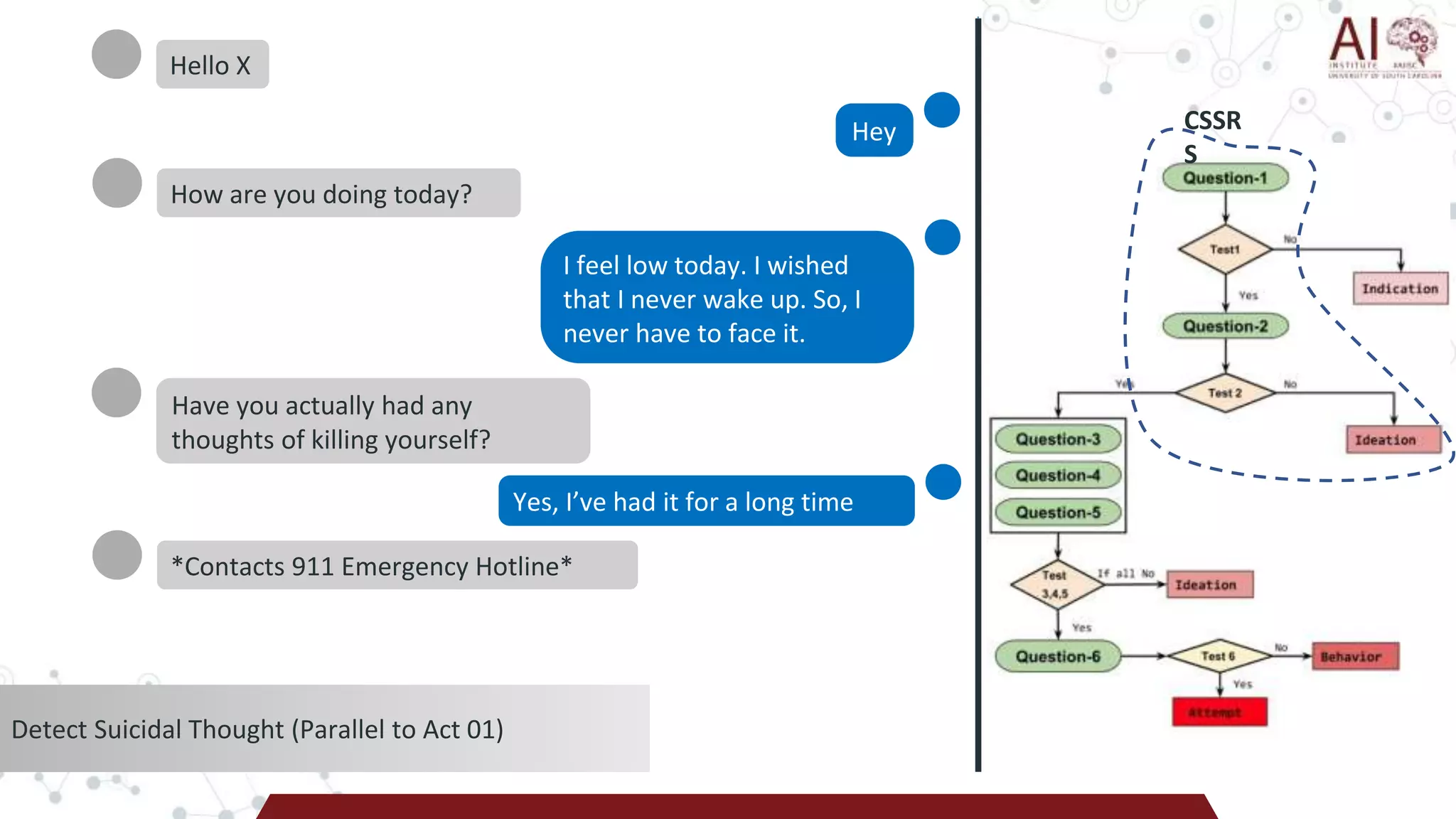
Detect Suicidal Thought (Parallel to Act 01)
Hello X
Hey
How are you doing today?
I feel low today. I wished
that I never wake up. So, I
never have to face it.
Have you actually had any
thoughts of killing yourself?
Yes, I’ve had it for a long time
now.
*Contacts 911 Emergency Hotline*
CSSR
S
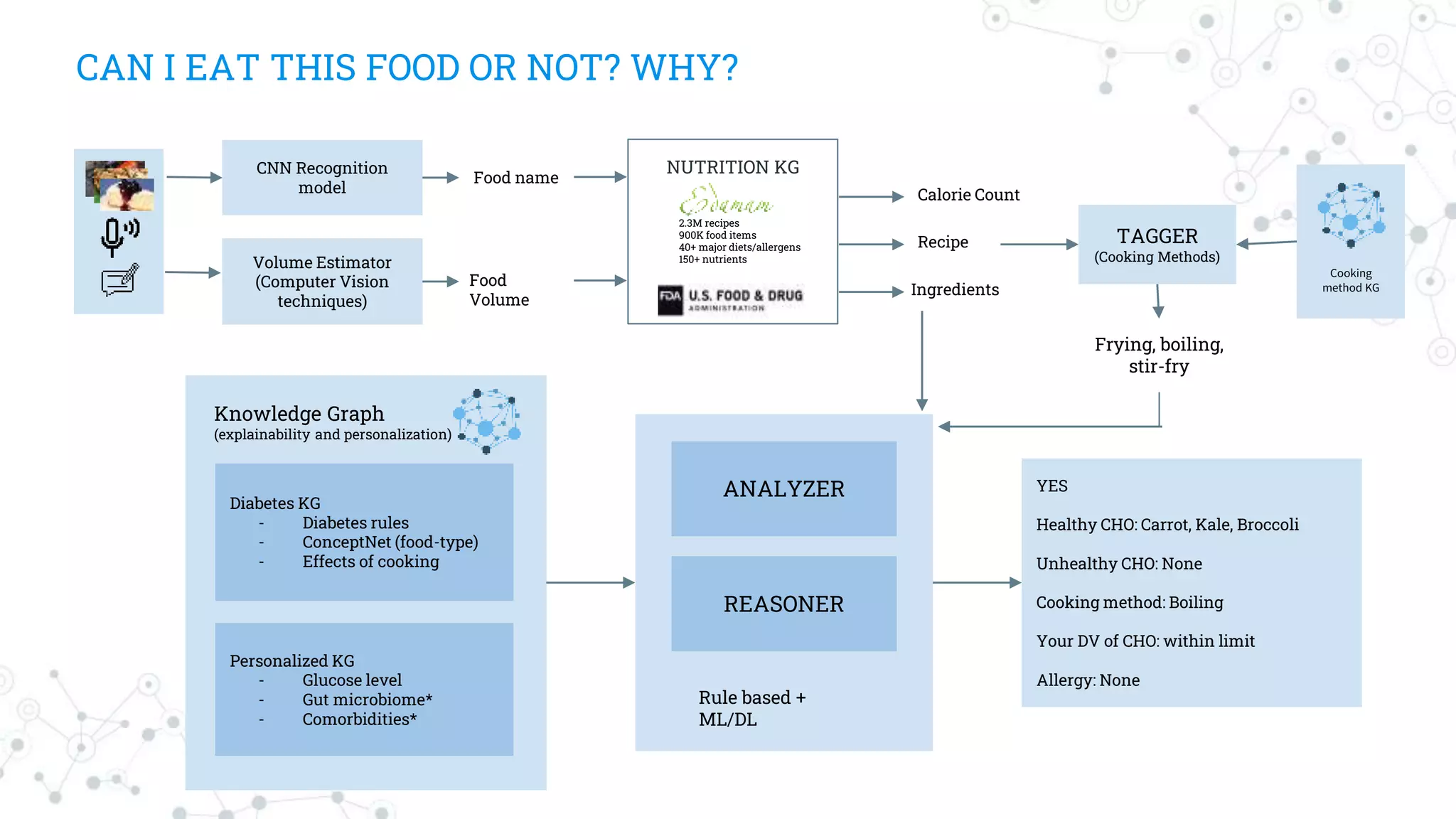
Food plays pivotal role in managing
(preventing, treating) many diseases.
Dietary Guideline of Americans:
Focus on reducing excess calorie
consumption and making an informed
decision about food choices and physical
activity can help attain a healthier weight and
reduce the risk of chronic illness.
Key questions:
What is in the food?
How is the food
prepared?
What is the
nutrition break
down?
Is this food good for
my health?
Food that matches
my preference
APH: Self-Management of Diet for Chronic Conditions with
Knowledge Graph for Explainability
(an example of Precision Nutrition)
System capabilities
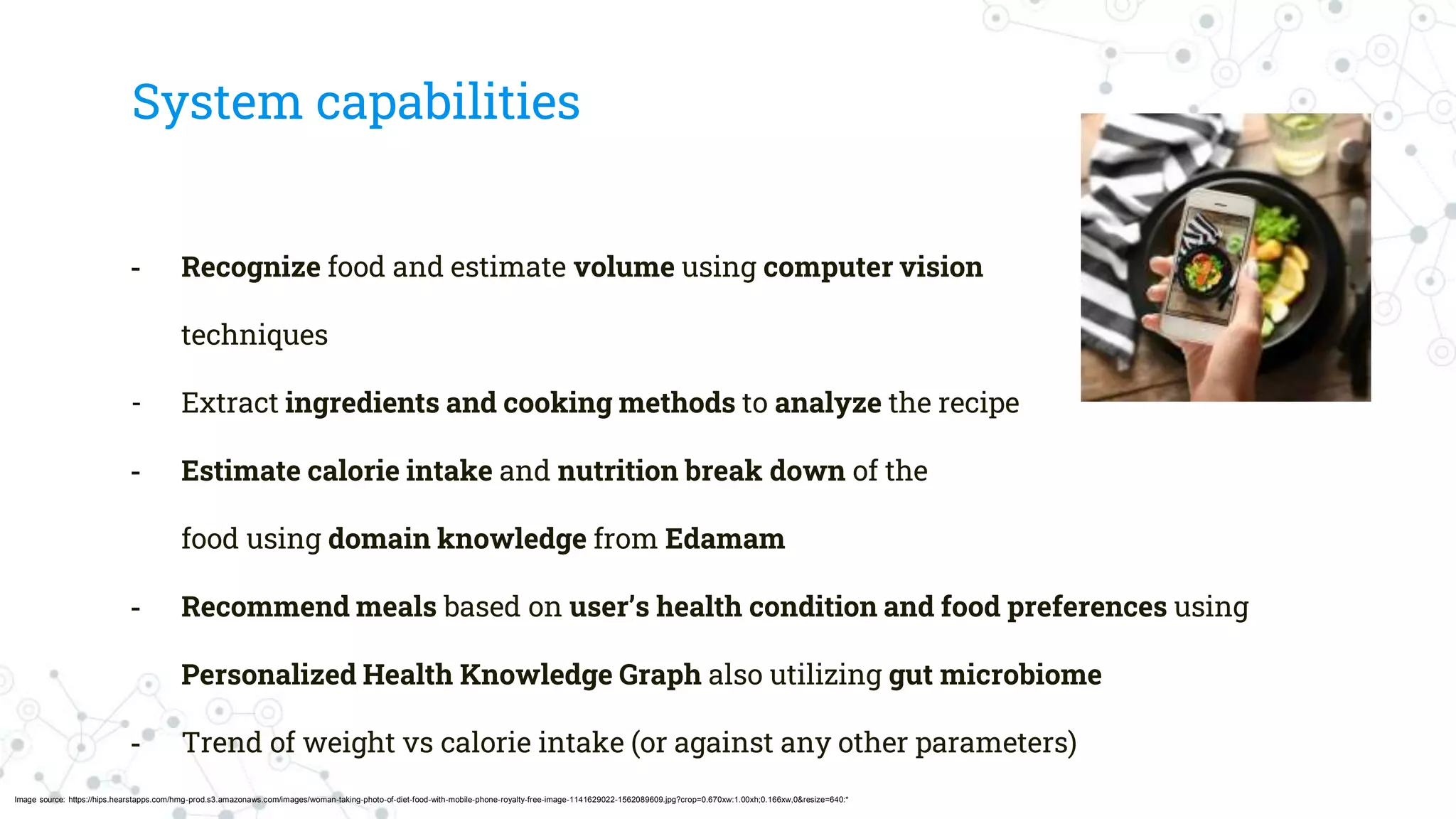
- Recognize food and estimate volume using computer vision
techniques
- Extract ingredients and cooking methods to analyze the recipe
- Estimate calorie intake and nutrition break down of the
food using domain knowledge from Edamam
- Recommend meals based on user’s health condition and food preferences using
Personalized Health Knowledge Graph also utilizing gut microbiome
- Trend of weight vs calorie intake (or against any other parameters)
Image source: https://hips.hearstapps.com/hmg-prod.s3.amazonaws.com/images/woman-taking-photo-of-diet-food-with-mobile-phone-royalty-free-image-1141629022-1562089609.jpg?crop=0.670xw:1.00xh;0.166xw,0&resize=640:*
CNN Recognition
model
Volume Estimator
(Computer Vision
techniques)
Food name
Food
Volume
NUTRITION KG
Calorie Count
ANALYZER
REASONER
Personalized KG
- Glucose level
- Gut microbiome*
- Comorbidities*
Diabetes KG
- Diabetes rules
- ConceptNet (food-type)
- Effects of cooking
YES
Healthy CHO: Carrot, Kale, Broccoli
Unhealthy CHO: None
Cooking method: Boiling
Your DV of CHO: within limit
Allergy: None
CAN I EAT THIS FOOD OR NOT? WHY?
Knowledge Graph
(explainability and personalization)
Rule based +
ML/DL
TAGGER
(Cooking Methods)
Ingredients
Recipe
Frying, boiling,
stir-fry
2.3M recipes
900K food items
40+ major diets/allergens
150+ nutrients
Cooking
method KG
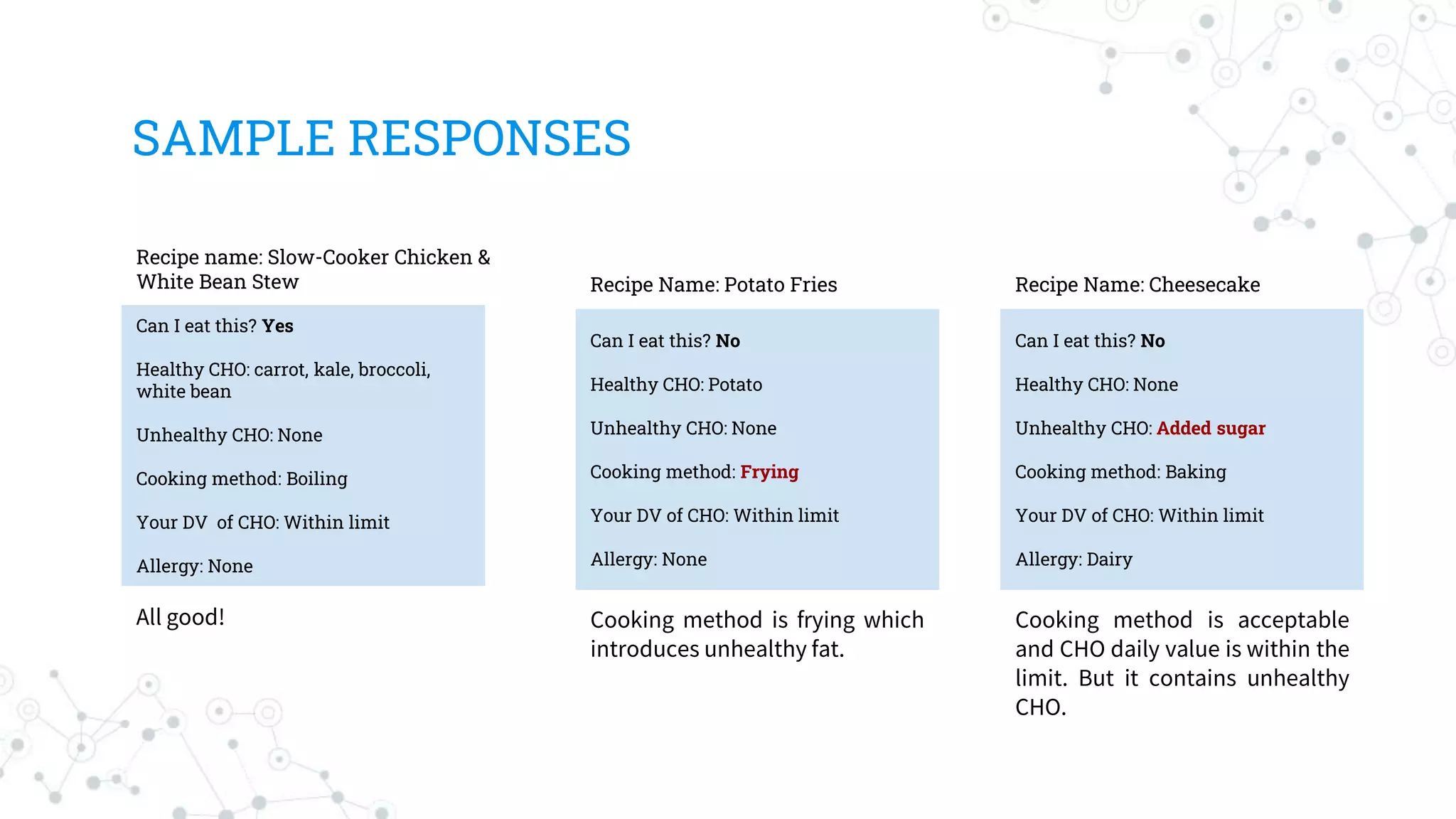
Can I eat this? Yes
Healthy CHO: carrot, kale, broccoli,
white bean
Unhealthy CHO: None
Cooking method: Boiling
Your DV of CHO: Within limit
Allergy: None
Can I eat this? No
Healthy CHO: Potato
Unhealthy CHO: None
Cooking method: Frying
Your DV of CHO: Within limit
Allergy: None
SAMPLE RESPONSES
Recipe name: Slow-Cooker Chicken &
White Bean Stew Recipe Name: Potato Fries
Can I eat this? No
Healthy CHO: None
Unhealthy CHO: Added sugar
Cooking method: Baking
Your DV of CHO: Within limit
Allergy: Dairy
Recipe Name: Cheesecake
Cooking method is acceptable
and CHO daily value is within the
limit. But it contains unhealthy
CHO.
Cooking method is frying which
introduces unhealthy fat.
All good!
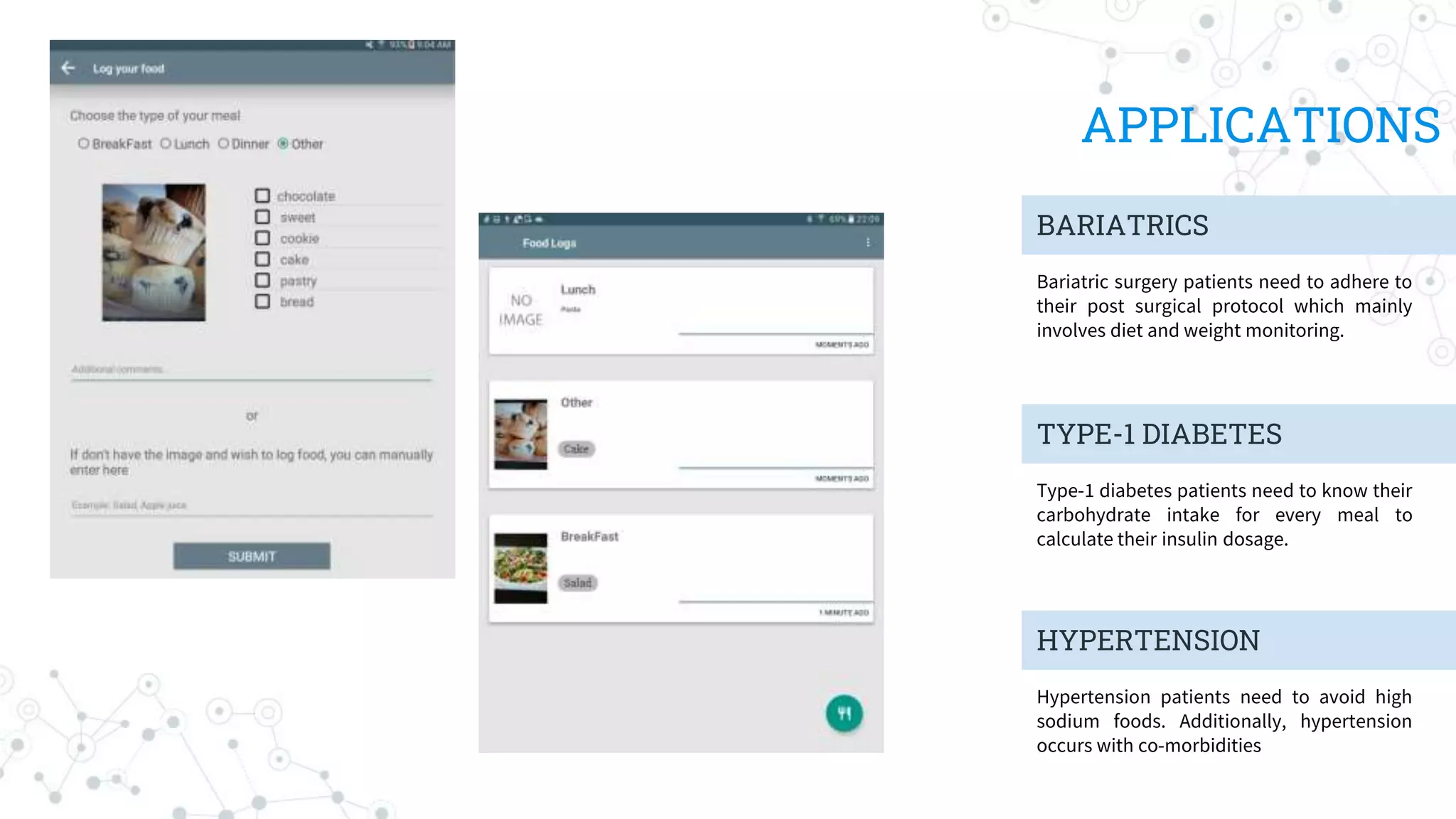
BARIATRICS
TYPE-1 DIABETES
Bariatric surgery patients need to adhere to
their post surgical protocol which mainly
involves diet and weight monitoring.
Type-1 diabetes patients need to know their
carbohydrate intake for every meal to
calculate their insulin dosage.
HYPERTENSION
Hypertension patients need to avoid high
sodium foods. Additionally, hypertension
occurs with co-morbidities
APPLICATIONS
“
42
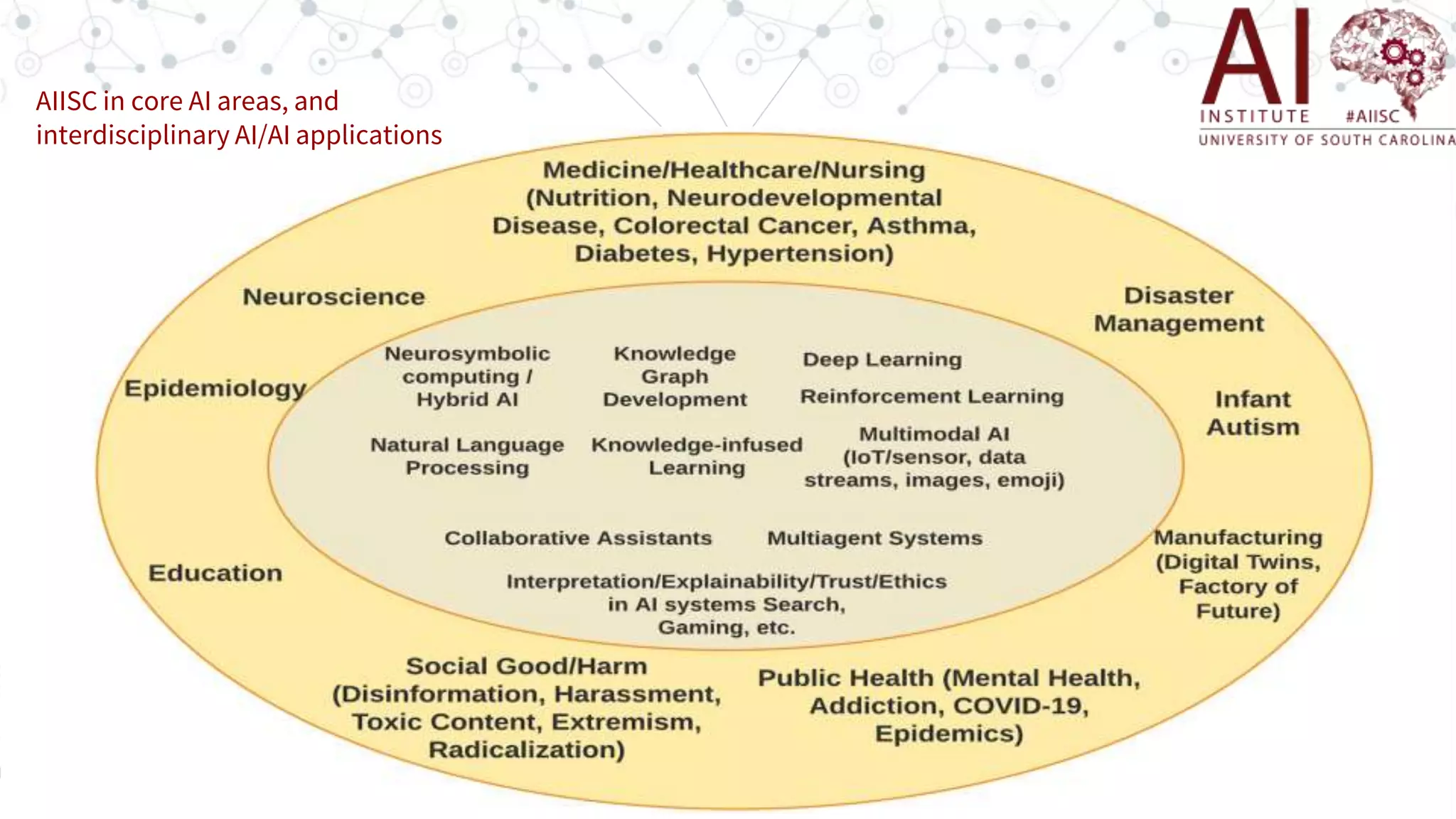
AIISC in core AI areas, and
interdisciplinary AI/AI applications
Thanks!
Open to Questions?
You can find me at:
amit@sc.edu
https://aiisc.ai/
https://www.linkedin.com/company/1054055/
http://bit.ly/AIISC
43
Acknowledgement
This research is supported by National Institutes of
Health under the Grant Number 1 R01HD087132. The
content of this study is solely the responsibility of the
authors and does not necessarily represent the official
views of the National Institutes of Health.

Augmented Personalized Health: an explicit knowledge enhanced neurosymbolic dHealth approach to patient empowerment for managing chronic disease burden

  • 1.
    Augmented Personalized Health Anexplicit knowledge enhanced neurosymbolic dHealth approach to patient empowerment for managing chronic disease burden Background: http://bit.ly/APH-TED, http://bit.ly/k-APH, http://bit.ly/kAsthma SWAT4HCLS 2022 Semantic Web Applications and Tools for Health Care and Life Science Keynote on 12 Jan 2022
  • 2.
    2 Amit Sheth Founding Director, ArtificialIntelligence Institute http://aiisc.ai The University of South Carolina amit@sc.edu http://amit.aiisc.ai Special Thanks Some of the Healthcare collaborators: Maninder Kalra (Dayton Children’s Hospital) Phillis Raynor, Ronda Huges, Sara Donevant(UofSC) Lisa Knight (Prisma Health) Some of the CS collaborators: Manas Gaur (AIISC) Krishnaprasad Thirunarayan (Wright State University) Kaushik Roy AIISC, kaushikr@email.sc.edu Utkarshani Jaimini AIISC, ujaimini@email.sc.edu Ack: NIH/NICHD 1 R01 HD087132-01: KHealth: Semantic Multisensory Mobile Approach to Personalized Asthma Care Hong Yung (Joey) Yip AIISC, hyip@email.sc.edu Revathy Venkataramanan AIISC, revathy@email.sc.edu
  • 3.
    HCLS Research/Applications/Tools at#AIISC Types of Data: ◎ Patient Generated Health Data (e.g., food images, IoT/sensors, Q/A) ○ Multimodal (fMRI, speech, biosignals) ◎ Social Media, DarkNets, Web Forums, satellite/drone images, ◎ Scientific literature ◎ EMR/clinical notes Medical Conditions/Collaborations: Autism, Aphasia, Diabetes, Hypertension, Asthma, Cardiovascular health, Mental Health, Drug Abuse/Addiction, Radiology reports, Colorectal Cancer, spread of malaria, COVID-19 Applications & Tools: mApp, Virtual Health Assistants (Chatbots), Recommender Systems, Clinical Support Objectives: Surveillance, Diagnosis, Disease Management, Decision Making
  • 4.
    Augmented Personalized Health(APH) Big Data to Smart Data APH is a vision to enhance the healthcare by using AI techniques on semantically integrated PGHD, environmental data, clinical data, public health data & social data.
  • 5.
  • 6.
    APH/Knowledge-enabled Healthcare: kHealth Asthma Amultisensory approach for personalized asthma care for children ◎ 6.3 million children in USA are affected by Asthma; 300 million adults & children worldwide ◎ Multifactorial disease, difficult to diagnose based on episodic visits and clinical records ◎ Stage 1: Mobile App with 29 parameters collected ◎ Stage 2: Virtual Health Assistant
  • 7.
    Augmented Personalized Healthfor Asthma Smart data can answer - What causes my disease severity? - How well am I doing with respect to prescribed care plan? - Am I deviating from the care plan? - I am following the care plan but my disease is not well controlled. Do I need treatment adjustments? - How well controlled is my disease over the time?
  • 8.
  • 9.
    Self Monitoring withkHealthDash: Knowledge enabled personalized DASHboard for Asthma Management Video link - https://youtu.be/yUgXCPwc55M
  • 10.
    Self Appraisal withDigital Phenotype Score Jaimini U, Thirunarayan K, Kalra M, Venkataraman R, Kadariya D, Sheth A, “How Is My Child’s Asthma?” Digital Phenotype and Actionable Insights for Pediatric Asthma, JMIR Pediatric Parent 2018;1(2):e11988 https://medium.com/leoilab/digital-phenotyping-turning-our-smartphones-inward-141a75b2f2a3 ● Digital Phenotype Score (DPS) is defined as the score to quantify the digital phenotypes collected from the social media, smartphones, wearables, and sensors streams. ● DPS acts as a cumulative measure for the abstraction of knowledge and information from the raw digital phenotypic data. ● The integration of the DPS can enable personalized interventions in real time which are directly responsive to the healthcare need of a patient.
  • 11.
    Digital Phenotype Scorevs Asthma Control Test Score Jaimini U, Thirunarayan K, Kalra M, Venkataraman R, Kadariya D, Sheth A, “How Is My Child’s Asthma?” Digital Phenotype and Actionable Insights for Pediatric Asthma, JMIR Pediatric Parent 2018;1(2):e11988
  • 12.
    Determining Personalized AsthmaTriggers: Seasonal Dependency Venkataramanan R, Thirunarayan K, Jaimini U, Kadariya D, Yip HY, Kalra M, Sheth A. Determination of Personalized Asthma Triggers From Multimodal Sensing and a Mobile App: Observational Study. JMIR Pediatr Parent 2019;2(1):e14300. doi: 10.2196/14300 PMID: 31518318 PMCID: 6716491
  • 13.
    Evidence based Pathto Personalization Patient-A was monitored for 13 weeks encompassing winter to spring 2018. Type: Severe, low medication compliance. Absence of Pollen First 6 weeks Presence of Pollen Rest of the 7 weeks Pre (observe) 4 weeks Post (validate) 2 weeks Pre 4 weeks Post 3 weeks Pollen 0 Pollen 0 days Pollen 17 days Pollen 3 days PM2.5 20 days PM2.5 5 days PM2.5 14 days PM2.5 2 days Ozone 1 day Ozone 0 Ozone 0 Ozone 1 day Asthma Episodes* 21 days Asthma Episodes 5 days Asthma Episodes 17 days Asthma Episodes 3 days ● Absence of Pollen - PM2.5 is the trigger ● Presence of Pollen - Pollen and PM2.5. Severe symptoms occurred in this period. Presence of both PM2.5 and Pollen increased the intensity of asthma episodes. Venkataramanan R, Thirunarayan K, Jaimini U, Kadariya D, Yip HY, Kalra M, Sheth A. Determination of Personalized Asthma Triggers From Multimodal Sensing and a Mobile App: Observational Study. JMIR Pediatr Parent 2019;2(1):e14300. doi: 10.2196/14300 PMID: 31518318 PMCID: 6716491
  • 14.
  • 15.
    kHealth Chatbot (WithPersonalized Health Knowledge Graph) Contextualization and Personalization kBOT initiates greeting conversation. Understands the patient’s health condition (allergic reaction to high ragweed pollen level) via the personalized patient’s knowledge graph generated from EMR, PGHD, and prior interactions with the kBOT. Generates predictions or recommended course of actions. Inference based on patient’s historical records and background health knowledge graph containing contextualized (domain-specific) knowledge. Figure: Example kBOT conversation which utilizes background health knowledge graph and patient’s knowledge graph to infer and generate recommendation to patients. ★ Conversing only information relevant to the patient Context enabled by relevant healthcare knowledge including clinical protocols. kBOT initiates greeting conversation. Generic Chatbot (Without Personalized Health Knowledge Graph)
  • 16.
    kHealth Chatbot Demo https://youtu.be/oZCaM7rhJAg Moreon: https://www.slideshare.net/aiisc/kbot-knowledgeenabled-personalized-chatbot-for-selfmanagement-of-asthma-in-pediatric-population
  • 17.
    CausalKG Causal Knowledge Graph UtkarshaniJaimini and Amit Sheth, "CausalKG: Causal Knowledge Graph: Explainability using interventional and counterfactual reasoning, " IEEE Internet Computing, 26 (1), Jan-Feb 2022
  • 18.
    Why CausalKG? ● Humanshave innate understanding of causality ● Causality is a complex relationship ● Asthma trigger causes- ➔ An occurrence of a symptom ➔ Intake of medication
  • 19.
    Personalized Causal BayesianNetwork Personalized Causal Bayesian Network, a graphical representation of the causal relations and interaction between a patient’s asthma triggers (such as pollen, AQI, Ozone), asthma symptom (such as cough, wheeze, chest tightness, hard and fast breathing, and nose opens wide), and medication intake (such as controller, rescue, and allergy medication)
  • 20.
    CausalKG Architecture CausalKG Architectureconsists of three main steps: 1) a Causal Bayesian Network and kHealth: pediatric asthma patient observational dataset, 2) Causal Ontology creation and enriching the asthma ontology with causal relationships, and 3) Estimating the causal effects of the trigger, symptom, and medication variable in the pediatric asthma patient.
  • 21.
    CausalKG: Personalized Causal KnowledgeGraph for the asthma patient CausalKG for a pediatric asthma scenario represented as a hyper-relational graph. Each node in the CausalKG is a concept in knowledge graph and is associated with a conditional probability estimated using the causal Bayesian network. The edges between the nodes represent the causal relationships between the concepts.
  • 22.
    Current AI toFuture Hybrid AI From statistical explainability based on data representation and associational support to context explain- ability based on causal relation and interventional support eventually leading to domain explainability based on causal representation in KG leading to counterfactual support.
  • 23.
    APH: Virtual HealthAssistant assisted Self Management using Reinforcement Learning and Personalized Knowledge Graph Use case: Mental Health
  • 24.
    Construction of PersonalizedKnowledge Graph PKG <- Patient Data + DS + interactions
  • 25.
    AMR - Parser DischargeSummary Spacy NER AMR Graph Chemicals (Medicine) Diseases Knowledge Base Personalized Context Ms. D meets criteria for recurrent Major Depressive Disorder and Generalized Anxiety Disorder. She also is currently receiving treatment for ADHD and has some traits consistent with Obsessive Compulsive Personality Disorder, although she does not appear to meet full OCPD traits. She is currently completing a taper of Prozac (reached dose of 40mg daily) and Abilify (reached dose of 10mg daily) for depressive symptoms in anticipation of starting a different medication.
  • 26.
    Task: Predicting diseaserelated aspects
  • 27.
  • 28.
    Really struggling withmy bisexuality which is causing chaos in my relationship with a girl. I am equal to worthless for her. I’m now starting to get drunk because I can’t cope with the obsessive, intrusive thoughts, and need to get out of my head. 288291000119102: High risk bisexual behavior 365949003: Health-related behavior finding 365949003: Health-related behavior finding 307077003: Feeling hopeless 365107007: level of mood 225445003: Intrusive thoughts 55956009: Disturbance in content of thought 26628009: Disturbance in thinking 1376001: Obsessive compulsive personality disorder Multi-hop traversal on medical knowledge graphs <is symptom> Obsessive-compulsive disorder is a disorder in which people have obsessive, intrusive thoughts, ideas or sensations that make them feel driven to do something repetitively Explain interpretation through linking to KG and definitions
  • 29.
    Knowledge-infused Reinforcement Learning ●The input to the agent is sequential through many steps, it gets an input and a reward at every step and learns the right output gradually through reinforcement.
  • 30.
    Insomnia restlessness Lack Of sleep prescribe(MsD, “Melatonin”). use(MsD, 0.5mg,“Melatonin”). frequency(0.5mg, “Melatonin”, 1, day). Clinical guidelines + plan Abstraction
  • 31.
    APH Self Management:Reinforcement Learning
  • 32.
  • 33.
    Yes/no? frequency/ degree? Causes? Remedies…. Do you feel nervous? Yes/no? How often do you feel nervous? Question Probability: 0.95 Heuristic Score - Process: 4 - N - R = 5 - 1 = 4 Heuristic Score - Validity: 1 - “nervous” matches nervousness or being easily startled in physical symptom of Generalized Anxiety Disorder in the KB of Mayo Clinic Heuristic Score - Safety: 0 - |LSafety| = 0 unsafe matches frequency/ degree? Causes? ... More Informative Evaluation Metrics
  • 34.
    Information Gathering Hello X Hi Iwant to ask you some questions regarding your Anxiety Disorder. I understand that you’ve mentioned feeling nervous, but how likely do you feel this way? These thoughts cross my mind hundreds of times. Any ideas on what might be causing this? I have been in a very bad financial condition because of a huge debt, which I am unable to return. . . . . . . . . GAD – 7 Questionnaire Feeling Nervous, anxious or on edge Not being able to stop or control worrying Worrying, too much about different things Trouble Relaxing Being so restless that it is hard to sit still Becoming easily annoyed or irritable Feeling afraid, as if something awful might happen 1. Do you feel nervous or on edge? 2. How likely do you feel this way? 3. Any ideas on what maybe causing this? 4. Have you tried any remedies to feel any better? 5. Are you also feeling any other symptoms such as jitters or dread. Explanation Question Probability: 0.95 Heuristic Score - Process: 2 Heuristic Score - Validity: 1 Heuristic Score - Safety: 0
  • 35.
    Detect Suicidal Thought(Parallel to Act 01) Hello X Hey How are you doing today? I feel low today. I wished that I never wake up. So, I never have to face it. Have you actually had any thoughts of killing yourself? Yes, I’ve had it for a long time now. *Contacts 911 Emergency Hotline* CSSR S
  • 36.
    Food plays pivotalrole in managing (preventing, treating) many diseases. Dietary Guideline of Americans: Focus on reducing excess calorie consumption and making an informed decision about food choices and physical activity can help attain a healthier weight and reduce the risk of chronic illness. Key questions: What is in the food? How is the food prepared? What is the nutrition break down? Is this food good for my health? Food that matches my preference APH: Self-Management of Diet for Chronic Conditions with Knowledge Graph for Explainability (an example of Precision Nutrition)
  • 37.
    System capabilities - Recognizefood and estimate volume using computer vision techniques - Extract ingredients and cooking methods to analyze the recipe - Estimate calorie intake and nutrition break down of the food using domain knowledge from Edamam - Recommend meals based on user’s health condition and food preferences using Personalized Health Knowledge Graph also utilizing gut microbiome - Trend of weight vs calorie intake (or against any other parameters) Image source: https://hips.hearstapps.com/hmg-prod.s3.amazonaws.com/images/woman-taking-photo-of-diet-food-with-mobile-phone-royalty-free-image-1141629022-1562089609.jpg?crop=0.670xw:1.00xh;0.166xw,0&resize=640:*
  • 38.
    CNN Recognition model Volume Estimator (ComputerVision techniques) Food name Food Volume NUTRITION KG Calorie Count ANALYZER REASONER Personalized KG - Glucose level - Gut microbiome* - Comorbidities* Diabetes KG - Diabetes rules - ConceptNet (food-type) - Effects of cooking YES Healthy CHO: Carrot, Kale, Broccoli Unhealthy CHO: None Cooking method: Boiling Your DV of CHO: within limit Allergy: None CAN I EAT THIS FOOD OR NOT? WHY? Knowledge Graph (explainability and personalization) Rule based + ML/DL TAGGER (Cooking Methods) Ingredients Recipe Frying, boiling, stir-fry 2.3M recipes 900K food items 40+ major diets/allergens 150+ nutrients Cooking method KG
  • 39.
    Can I eatthis? Yes Healthy CHO: carrot, kale, broccoli, white bean Unhealthy CHO: None Cooking method: Boiling Your DV of CHO: Within limit Allergy: None Can I eat this? No Healthy CHO: Potato Unhealthy CHO: None Cooking method: Frying Your DV of CHO: Within limit Allergy: None SAMPLE RESPONSES Recipe name: Slow-Cooker Chicken & White Bean Stew Recipe Name: Potato Fries Can I eat this? No Healthy CHO: None Unhealthy CHO: Added sugar Cooking method: Baking Your DV of CHO: Within limit Allergy: Dairy Recipe Name: Cheesecake Cooking method is acceptable and CHO daily value is within the limit. But it contains unhealthy CHO. Cooking method is frying which introduces unhealthy fat. All good!
  • 40.
    BARIATRICS TYPE-1 DIABETES Bariatric surgerypatients need to adhere to their post surgical protocol which mainly involves diet and weight monitoring. Type-1 diabetes patients need to know their carbohydrate intake for every meal to calculate their insulin dosage. HYPERTENSION Hypertension patients need to avoid high sodium foods. Additionally, hypertension occurs with co-morbidities APPLICATIONS
  • 41.
    “ 42 AIISC in coreAI areas, and interdisciplinary AI/AI applications
  • 42.
    Thanks! Open to Questions? Youcan find me at: amit@sc.edu https://aiisc.ai/ https://www.linkedin.com/company/1054055/ http://bit.ly/AIISC 43 Acknowledgement This research is supported by National Institutes of Health under the Grant Number 1 R01HD087132. The content of this study is solely the responsibility of the authors and does not necessarily represent the official views of the National Institutes of Health.