Many voices, making choices: Audiences with disabilities and museums
Almost 20%, or 1 in 5,  Australians have some form of disability People with disabilities have generally positive view of the arts Potential to increase visitor numbers: they visit in groups strong networks & word of mouth Huge amount of literature/guidelines available: yet little from the perspective of audiences with disabilities themselves none in museums sector in Australia Reasons for study 1
Better ways to meet needs of disabled groups means all audiences benefit Reasons for study 2
Literature Review Focus Groups Sydney + Canberra: Mixed groups physical disabilities intellectual disabilities Deaf community Carers Mix of visitors and non-visitors Email survey Workshops with range of museum staff/peak body groups in Sydney/Canberra Research method
Mixed groups: heard from many different types of disabilities identified common issues from range of perspectives more enjoyable for participants networking opportunities learning experience for disability groups as they hear experiences of others  Exceptions: carers, deaf culture, some intellectual Research issues 1
Sourcing the sample: email & posting to websites people with disabilities are tech-savvy word of mouth is key use peak bodies consultants that are credible within the community Participants: identify as disabled interested in museums (even if haven't visited) able & comfortable to attend group discussion Research issues 2
Organising the research groups “tested” the capacity of each organisation to supply services for these groups: parking & transport location of rooms easy to find, no stairs catering staff needed to be comfortable with people with disabilities &/or had awareness training signing receipts for payment Research issues 3
Intellectual disabilities: involved in mixed group to give different perspective Year 10 high school group (Canberra): valuable experience for skills development & social integration Research issues 4
Supportive of museums Interested & frequent visitors if: something there they want to see range of access services available See museums as excellent environments for learning, educational & social experiences with family and friends Knew of staff concerns about & problems with access, yet wanted these dealt with General findings
Access museums on their own terms: understand it is hard to visit alone but increases confidence & self-esteem choosing their own type of visiting experience gives them independence need good information/separate section on websites about accessibility “ Having to book  [parking]  means having to make a commitment. It means you can’t think ‘Oh, I’ll just go to the museum today’.  [I want to be]  flexible and spontaneous.” They want to …
Physical: include whether possible to independently enter & enjoy the museum on their terms Failure to provide specific services (e.g. captioning) Staff attitudes, awareness & training Cost: admission, transport, food, carers’ costs Uninteresting, irrelevant topics & content Barriers
Conclusions Museums have much to offer audiences with disabilities Museums are being asked to open their doors, invite people with disabilities in and let them enter independently, assured of good access, and with the chance to make their own choices about their museum experience in a respectful, enjoyable and stimulating environment
Respect for them as individuals Choice Welcoming atmosphere from trained & aware; friendly & knowledgeable staff: both front & back of house See themselves reflected in programs, exhibitions, collections  & staffing: the “work” of the museum Active & varied learning experiences Involvement Contemporary: in communication & interpretation modes content/issues covered that are relevant & current All audiences want
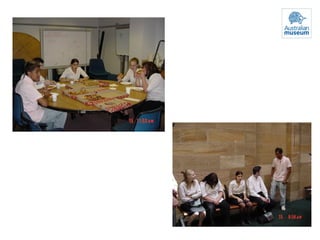
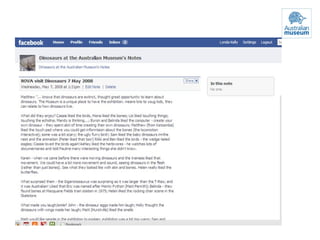
NOVA Employment Group (Sydney): develop skills in answering questions, completing worksheets, reading, writing & talking increase sense of social integration develop capacity to visit museums a way of earning money – effort and reward provide trainees and job coaches an enjoyable, social experience that will encourage them to return Current work
 
 
http.//www.australianmuseum.net.au/amarc/

Audiences with diabilities and museums

  • 1.
    Many voices, makingchoices: Audiences with disabilities and museums
  • 2.
    Almost 20%, or1 in 5, Australians have some form of disability People with disabilities have generally positive view of the arts Potential to increase visitor numbers: they visit in groups strong networks & word of mouth Huge amount of literature/guidelines available: yet little from the perspective of audiences with disabilities themselves none in museums sector in Australia Reasons for study 1
  • 3.
    Better ways tomeet needs of disabled groups means all audiences benefit Reasons for study 2
  • 4.
    Literature Review FocusGroups Sydney + Canberra: Mixed groups physical disabilities intellectual disabilities Deaf community Carers Mix of visitors and non-visitors Email survey Workshops with range of museum staff/peak body groups in Sydney/Canberra Research method
  • 5.
    Mixed groups: heardfrom many different types of disabilities identified common issues from range of perspectives more enjoyable for participants networking opportunities learning experience for disability groups as they hear experiences of others Exceptions: carers, deaf culture, some intellectual Research issues 1
  • 6.
    Sourcing the sample:email & posting to websites people with disabilities are tech-savvy word of mouth is key use peak bodies consultants that are credible within the community Participants: identify as disabled interested in museums (even if haven't visited) able & comfortable to attend group discussion Research issues 2
  • 7.
    Organising the researchgroups “tested” the capacity of each organisation to supply services for these groups: parking & transport location of rooms easy to find, no stairs catering staff needed to be comfortable with people with disabilities &/or had awareness training signing receipts for payment Research issues 3
  • 8.
    Intellectual disabilities: involvedin mixed group to give different perspective Year 10 high school group (Canberra): valuable experience for skills development & social integration Research issues 4
  • 9.
    Supportive of museumsInterested & frequent visitors if: something there they want to see range of access services available See museums as excellent environments for learning, educational & social experiences with family and friends Knew of staff concerns about & problems with access, yet wanted these dealt with General findings
  • 10.
    Access museums ontheir own terms: understand it is hard to visit alone but increases confidence & self-esteem choosing their own type of visiting experience gives them independence need good information/separate section on websites about accessibility “ Having to book [parking] means having to make a commitment. It means you can’t think ‘Oh, I’ll just go to the museum today’. [I want to be] flexible and spontaneous.” They want to …
  • 11.
    Physical: include whetherpossible to independently enter & enjoy the museum on their terms Failure to provide specific services (e.g. captioning) Staff attitudes, awareness & training Cost: admission, transport, food, carers’ costs Uninteresting, irrelevant topics & content Barriers
  • 12.
    Conclusions Museums havemuch to offer audiences with disabilities Museums are being asked to open their doors, invite people with disabilities in and let them enter independently, assured of good access, and with the chance to make their own choices about their museum experience in a respectful, enjoyable and stimulating environment
  • 13.
    Respect for themas individuals Choice Welcoming atmosphere from trained & aware; friendly & knowledgeable staff: both front & back of house See themselves reflected in programs, exhibitions, collections & staffing: the “work” of the museum Active & varied learning experiences Involvement Contemporary: in communication & interpretation modes content/issues covered that are relevant & current All audiences want
  • 14.
    NOVA Employment Group(Sydney): develop skills in answering questions, completing worksheets, reading, writing & talking increase sense of social integration develop capacity to visit museums a way of earning money – effort and reward provide trainees and job coaches an enjoyable, social experience that will encourage them to return Current work
  • 15.
  • 16.
  • 17.