AUDIENCE RESEARCH
Classifying an audience
Within the media, there are many ways in which an
audience can be classified. This include gender, race,
sexuality, age, religion and location. These are simple
demographics.
Class
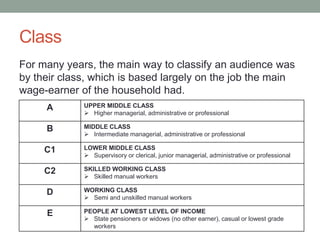
For many years, the main way to classify an audience was
by their class, which is based largely on the job the main
wage-earner of the household had.
A UPPER MIDDLE CLASS
 Higher managerial, administrative or professional
B MIDDLE CLASS
 Intermediate managerial, administrative or professional
C1 LOWER MIDDLE CLASS
 Supervisory or clerical, junior managerial, administrative or professional
C2 SKILLED WORKING CLASS
 Skilled manual workers
D WORKING CLASS
 Semi and unskilled manual workers
E PEOPLE AT LOWEST LEVEL OF INCOME
 State pensioners or widows (no other earner), casual or lowest grade
workers
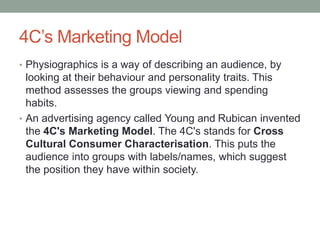
4C’s Marketing Model
• Physiographics is a way of describing an audience, by
looking at their behaviour and personality traits. This
method assesses the groups viewing and spending
habits.
• An advertising agency called Young and Rubican invented
the 4C's Marketing Model. The 4C's stands for Cross
Cultural Consumer Characterisation. This puts the
audience into groups with labels/names, which suggest
the position they have within society.
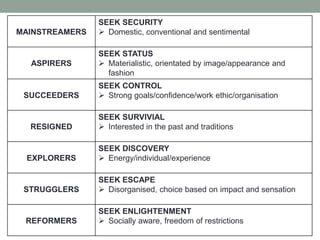
MAINSTREAMERS
SEEK SECURITY
 Domestic, conventional and sentimental
ASPIRERS
SEEK STATUS
 Materialistic, orientated by image/appearance and
fashion
SUCCEEDERS
SEEK CONTROL
 Strong goals/confidence/work ethic/organisation
RESIGNED
SEEK SURVIVIAL
 Interested in the past and traditions
EXPLORERS
SEEK DISCOVERY
 Energy/individual/experience
STRUGGLERS
SEEK ESCAPE
 Disorganised, choice based on impact and sensation
REFORMERS
SEEK ENLIGHTENMENT
 Socially aware, freedom of restrictions
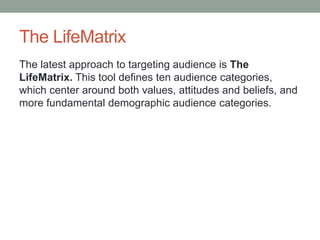
The LifeMatrix
The latest approach to targeting audience is The
LifeMatrix. This tool defines ten audience categories,
which center around both values, attitudes and beliefs, and
more fundamental demographic audience categories.
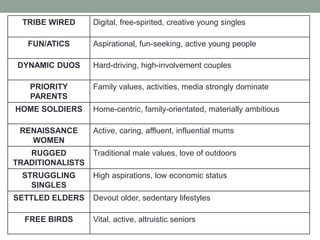
TRIBE WIRED Digital, free-spirited, creative young singles
FUN/ATICS Aspirational, fun-seeking, active young people
DYNAMIC DUOS Hard-driving, high-involvement couples
PRIORITY
PARENTS
Family values, activities, media strongly dominate
HOME SOLDIERS Home-centric, family-orientated, materially ambitious
RENAISSANCE
WOMEN
Active, caring, affluent, influential mums
RUGGED
TRADITIONALISTS
Traditional male values, love of outdoors
STRUGGLING
SINGLES
High aspirations, low economic status
SETTLED ELDERS Devout older, sedentary lifestyles
FREE BIRDS Vital, active, altruistic seniors

Audience Research

  • 1.
  • 2.
    Classifying an audience Withinthe media, there are many ways in which an audience can be classified. This include gender, race, sexuality, age, religion and location. These are simple demographics.
  • 3.
    Class For many years,the main way to classify an audience was by their class, which is based largely on the job the main wage-earner of the household had. A UPPER MIDDLE CLASS  Higher managerial, administrative or professional B MIDDLE CLASS  Intermediate managerial, administrative or professional C1 LOWER MIDDLE CLASS  Supervisory or clerical, junior managerial, administrative or professional C2 SKILLED WORKING CLASS  Skilled manual workers D WORKING CLASS  Semi and unskilled manual workers E PEOPLE AT LOWEST LEVEL OF INCOME  State pensioners or widows (no other earner), casual or lowest grade workers
  • 4.
    4C’s Marketing Model •Physiographics is a way of describing an audience, by looking at their behaviour and personality traits. This method assesses the groups viewing and spending habits. • An advertising agency called Young and Rubican invented the 4C's Marketing Model. The 4C's stands for Cross Cultural Consumer Characterisation. This puts the audience into groups with labels/names, which suggest the position they have within society.
  • 5.
    MAINSTREAMERS SEEK SECURITY  Domestic,conventional and sentimental ASPIRERS SEEK STATUS  Materialistic, orientated by image/appearance and fashion SUCCEEDERS SEEK CONTROL  Strong goals/confidence/work ethic/organisation RESIGNED SEEK SURVIVIAL  Interested in the past and traditions EXPLORERS SEEK DISCOVERY  Energy/individual/experience STRUGGLERS SEEK ESCAPE  Disorganised, choice based on impact and sensation REFORMERS SEEK ENLIGHTENMENT  Socially aware, freedom of restrictions
  • 6.
    The LifeMatrix The latestapproach to targeting audience is The LifeMatrix. This tool defines ten audience categories, which center around both values, attitudes and beliefs, and more fundamental demographic audience categories.
  • 7.
    TRIBE WIRED Digital,free-spirited, creative young singles FUN/ATICS Aspirational, fun-seeking, active young people DYNAMIC DUOS Hard-driving, high-involvement couples PRIORITY PARENTS Family values, activities, media strongly dominate HOME SOLDIERS Home-centric, family-orientated, materially ambitious RENAISSANCE WOMEN Active, caring, affluent, influential mums RUGGED TRADITIONALISTS Traditional male values, love of outdoors STRUGGLING SINGLES High aspirations, low economic status SETTLED ELDERS Devout older, sedentary lifestyles FREE BIRDS Vital, active, altruistic seniors