Understand how media 
producers think about their 
audiences 
Audience Profiling
Lecture contents 
Psychographics - Interests and lifestyles 
Demographics and Generational Markets - 
Sub-division of people 
Social grading – Categorisation and audience 
profiling
Psychographics 
Definition: 
Study of lifestyles, values, attitudes, 
interests and personalities
Media use 
Used in media industries to market 
potential new product or gauge opinion 
Often employ ā€˜VALS’ method
ā€˜VALS’ 
Values and Lifestyles 
Five main categories
Belongers 
Conformists, mainstream values, reluctant to 
take risks 
Fit ā€˜Middle Class’ stereotype 
Traditional in outlook and habits
Achievers 
Prosperous 
Make their own decisions 
A lot of advertising directed to them
Socially Conscious 
Aware of social issues 
Politically active 
Positive outlook & self-motivated
Aspirers 
Aspire to a better life, but aren’t sure how 
to achieve it 
Aiming for prosperity 
Status-seekers
Experientials 
5% of the population 
Try new things in their attempts to 
experience life fully - risk takers 
An ā€˜upscale’ audience with regards to 
media producers
ā€˜I-Am-Me’ people 
Work hard to set themselves apart 
Appeal of products make themselves 
different 
Youthful, energetic & demanding
Explorers 
Creative and prosperous 
Willing to try different products and ways 
of doing things 
Have the financial means to do it
Demographics 
Definition: 
Characteristics of a population including: 
Age 
Gender 
Behaviour
Demographic Generations 
Potential audiences for products can be 
categorised by era they were born in 
This can be referred to as ā€˜generational 
market’
World War 2 Generation 
Born between 1928 – 1945 
Key characteristics: 
Conformity 
Conservative 
Traditional family values
Baby Boomer 1 
Born between 1946 – 1954 
Key Characteristics: 
Experimental 
Free spirited 
Social cause orientated
Baby Boomer 2 
Born between 1955 – 1965 
Key characteristics: 
Less optimistic 
Pragmatic 
Cynical
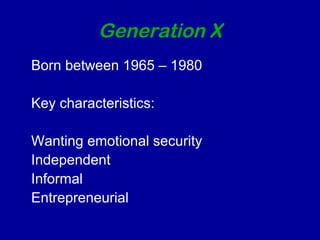
Generation X 
Born between 1965 – 1980 
Key characteristics: 
Wanting emotional security 
Independent 
Informal 
Entrepreneurial
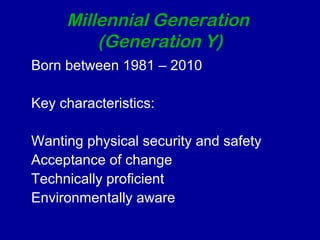
Millennial Generation 
(Generation Y) 
Born between 1981 – 2010 
Key characteristics: 
Wanting physical security and safety 
Acceptance of change 
Technically proficient 
Environmentally aware
Demographics 
Can also include : 
Gender and Sexuality 
Geographical location 
Employment
Socio-Economic 
Categorised by income/status 
Broken down into six categories
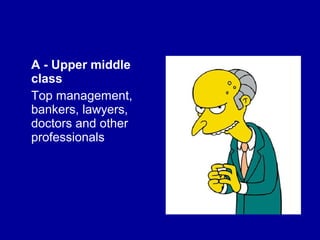
A - Upper middle 
class 
Top management, 
bankers, lawyers, 
doctors and other 
professionals
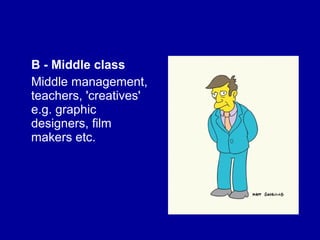
B - Middle class 
Middle management, 
teachers, 'creatives' 
e.g. graphic 
designers, film 
makers etc.
C1 - Lower middle 
class 
Office supervisors, 
junior managers, 
nurses, specialist 
clerical staff etc
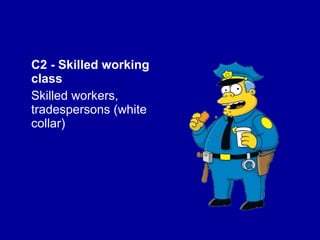
C2 - Skilled working 
class 
Skilled workers, 
tradespersons (white 
collar)
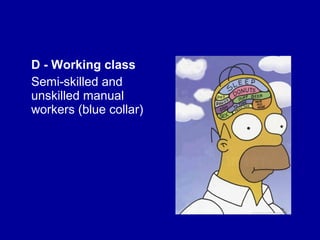
D - Working class 
Semi-skilled and 
unskilled manual 
workers (blue collar)
E - People at lowest 
level of income 
Unemployed, 
students, pensioners, 
casual workers

As media defining the audience part two 2014-15

  • 1.
    Understand how media producers think about their audiences Audience Profiling
  • 2.
    Lecture contents Psychographics- Interests and lifestyles Demographics and Generational Markets - Sub-division of people Social grading – Categorisation and audience profiling
  • 3.
    Psychographics Definition: Studyof lifestyles, values, attitudes, interests and personalities
  • 4.
    Media use Usedin media industries to market potential new product or gauge opinion Often employ ā€˜VALS’ method
  • 5.
    ā€˜VALS’ Values andLifestyles Five main categories
  • 6.
    Belongers Conformists, mainstreamvalues, reluctant to take risks Fit ā€˜Middle Class’ stereotype Traditional in outlook and habits
  • 7.
    Achievers Prosperous Maketheir own decisions A lot of advertising directed to them
  • 8.
    Socially Conscious Awareof social issues Politically active Positive outlook & self-motivated
  • 9.
    Aspirers Aspire toa better life, but aren’t sure how to achieve it Aiming for prosperity Status-seekers
  • 10.
    Experientials 5% ofthe population Try new things in their attempts to experience life fully - risk takers An ā€˜upscale’ audience with regards to media producers
  • 11.
    ā€˜I-Am-Me’ people Workhard to set themselves apart Appeal of products make themselves different Youthful, energetic & demanding
  • 12.
    Explorers Creative andprosperous Willing to try different products and ways of doing things Have the financial means to do it
  • 13.
    Demographics Definition: Characteristicsof a population including: Age Gender Behaviour
  • 14.
    Demographic Generations Potentialaudiences for products can be categorised by era they were born in This can be referred to as ā€˜generational market’
  • 15.
    World War 2Generation Born between 1928 – 1945 Key characteristics: Conformity Conservative Traditional family values
  • 16.
    Baby Boomer 1 Born between 1946 – 1954 Key Characteristics: Experimental Free spirited Social cause orientated
  • 17.
    Baby Boomer 2 Born between 1955 – 1965 Key characteristics: Less optimistic Pragmatic Cynical
  • 18.
    Generation X Bornbetween 1965 – 1980 Key characteristics: Wanting emotional security Independent Informal Entrepreneurial
  • 19.
    Millennial Generation (GenerationY) Born between 1981 – 2010 Key characteristics: Wanting physical security and safety Acceptance of change Technically proficient Environmentally aware
  • 20.
    Demographics Can alsoinclude : Gender and Sexuality Geographical location Employment
  • 21.
    Socio-Economic Categorised byincome/status Broken down into six categories
  • 22.
    A - Uppermiddle class Top management, bankers, lawyers, doctors and other professionals
  • 23.
    B - Middleclass Middle management, teachers, 'creatives' e.g. graphic designers, film makers etc.
  • 24.
    C1 - Lowermiddle class Office supervisors, junior managers, nurses, specialist clerical staff etc
  • 25.
    C2 - Skilledworking class Skilled workers, tradespersons (white collar)
  • 26.
    D - Workingclass Semi-skilled and unskilled manual workers (blue collar)
  • 27.
    E - Peopleat lowest level of income Unemployed, students, pensioners, casual workers