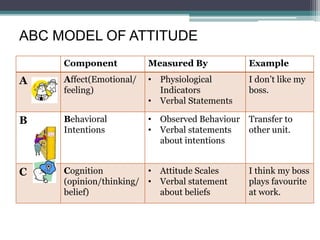
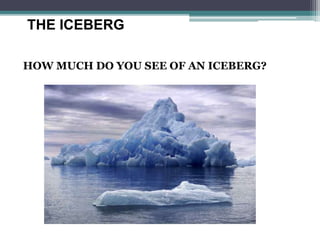
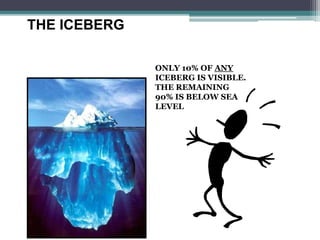
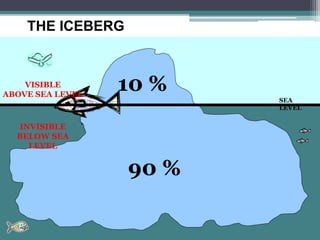
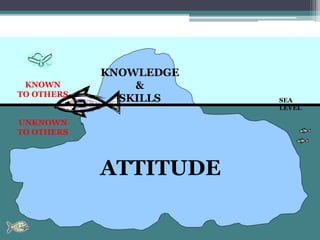
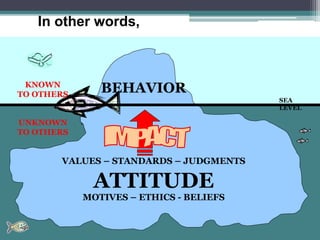
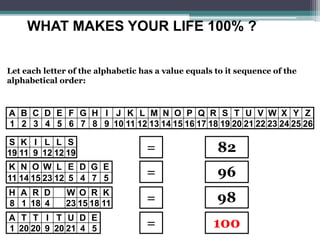
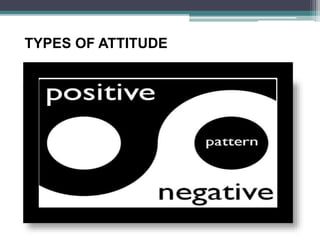
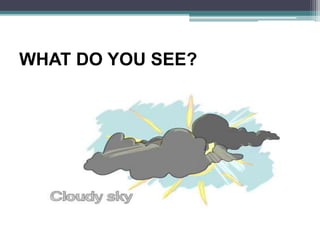
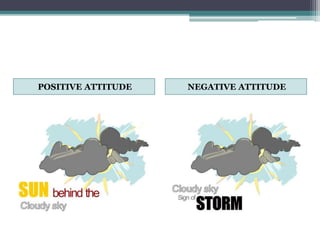
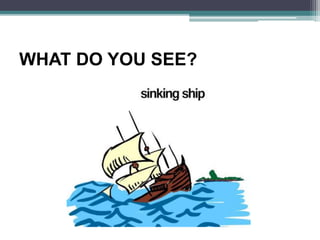
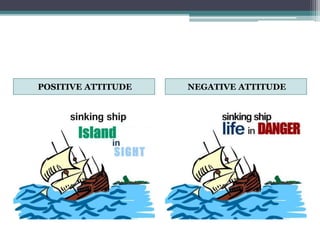
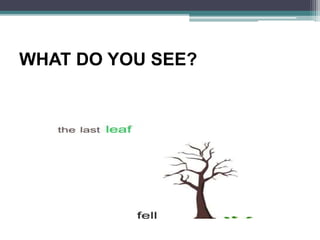
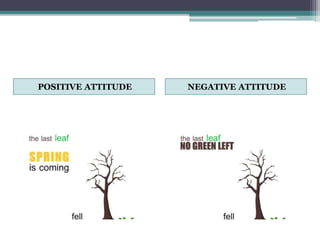
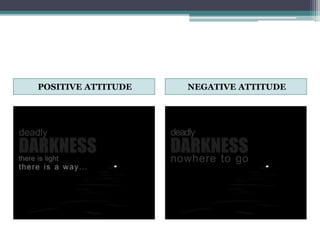
The document discusses attitudes and how they are formed. It defines an attitude as a mental state of readiness influenced by experience. Attitudes are made up of affective (emotional), behavioral, and cognitive components. It uses the analogy of an iceberg to represent how much of a person's attitudes, values, and beliefs are visible to others. Only a small portion (10%) of attitudes are visible above the surface, while most (90%) remain below the surface, unknown to others. A person's attitudes significantly influence their behavior more than their visible knowledge and skills. The document explores how perception shapes attitudes and different types of attitudes like positive vs. negative.