


ATTACK Toolkit & Social Norms Webinar
               6/23/11

            www.ATTACKtobacco.net
Social Norms Presenter


Linda Hancock, Ph.D, CFNP, RN
Virginia Commonwealth University
lhancock@vcu.edu
www.thewell.vcu.edu


                   www.ATTACKtobacco.net
Social Norms
  Marketing:
A campus story


         Linda Hancock FNP, PhD
         Wellness Resource Center
               quit@vcu.edu
            www.thewell.vcu.edu
g{xç átç ÑxÉÑÄx uxz|Ç àÉ ÄÉÉ~ Ä|~x à{x|Ü Ñxàá‹
POLL
   How much do you know about
    “social norms marketing”?

1. Zippo, Zilch, Nothing
2. A little, heard of it. Never ran a campaign.
3. A moderate amount.
4. I could write a book!
There are 3 types of marketing
• 1. Product or Consumer Marketing
   – Sells Products or Services
• 2. Social Marketing
   – Changes behavior to increase social
     good
• 3. Social Norms Marketing
   – Changes behavior by telling the truth
     about what’s normal.
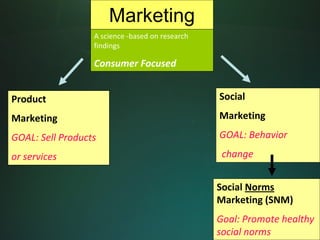
Marketing
                  A science ‐based on research 
                  findings

                  Consumer Focused


Product                                           Social

Marketing                                         Marketing

GOAL: Sell Products                               GOAL: Behavior

or services                                        change


                                                  Social Norms
                                                  Marketing (SNM)
                                                  Goal: Promote healthy 
                                                  social norms
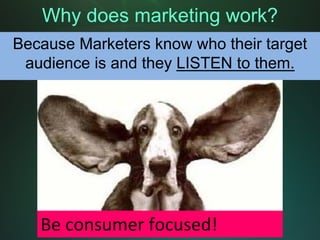
Why does marketing work?
Because Marketers know who their target
 audience is and they LISTEN to them.


   Be consumer focused!
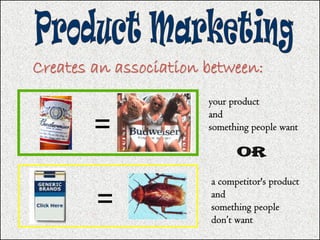
Creates an association between:
                       your product
                       and
        =              something people want


                       a competitor's product

        =              and
                       something people
                       don’t want
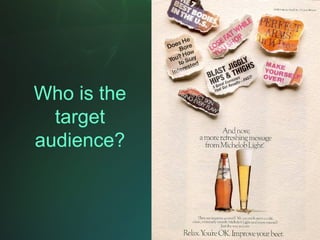
Who is the
  target
audience?
Why use Social Norms Marketing?
•   Need to reach a large number of people.
•   Limited $$$ and time.
•   BECAUSE IT WORKS!
•   You need to understand the approach…
          but it’s worth the effort.

Social Justice: Young people should make
 decisions based on TRUTH not
 misperception
POLL
       Perception Question
 How many cups of coffee do you
 think most people drink per day?
1.   None
2.   One
3.   Two
4.   Three
5.   Four
6.   Five or more
POLL
    Real Behavior Question
 How many cups of coffee do you
        drink per day?
1.   None
2.   One
3.   Two
4.   Three
5.   Four
6.   Five or more
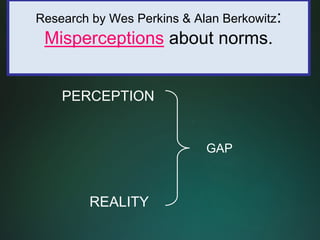
Research by Wes Perkins & Alan Berkowitz:
 Misperceptions about norms.


    PERCEPTION


                            GAP


        REALITY
People tend to
 under-estimate health
           &
over-estimate un-health.
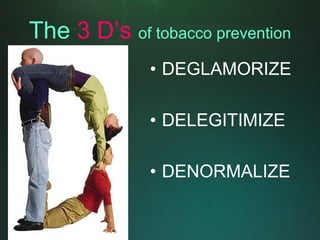
The 3 D’s of tobacco prevention
              • DEGLAMORIZE

              • DELEGITIMIZE

              • DENORMALIZE
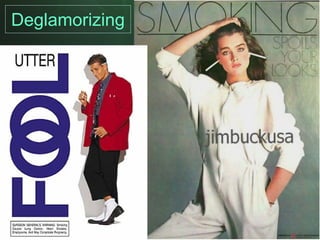
Deglamorizing
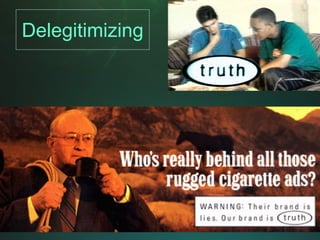
Delegitimizing
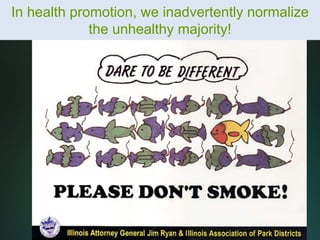
In health promotion, we inadvertently normalize
             the unhealthy majority!
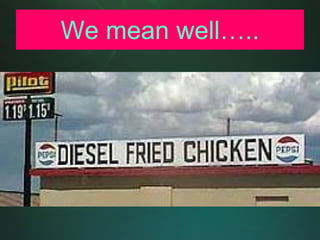
We mean well…..
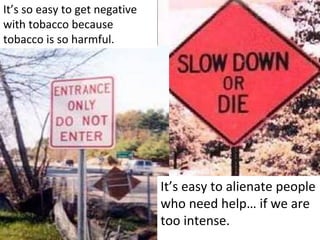
It’s so easy to get negative 
with tobacco because 
tobacco is so harmful.


                                It’s easy to alienate people 
                                who need help… if we are 
                                too intense.
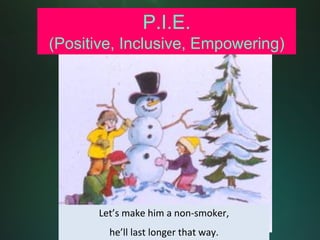
P.I.E.
(Positive, Inclusive, Empowering)


       Let’s make him a non‐smoker,
         he’ll last longer that way.
Social Norms Campaigns are
              different!
• For “how to” guides check out
  –www.socialnorms.org

• FIRST you need
• BASELINE PERCEPTION AND
  BEHAVIOR DATA

• SECOND look in your data for…
• A “Gap” between perception and reality
• A “Norm” has to be over 51 percent
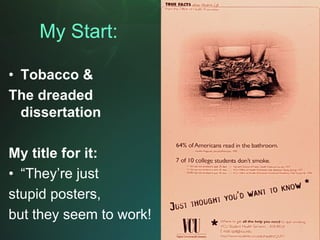
My Start:

• Tobacco &
The dreaded
  dissertation

My title for it:
• “They’re just
stupid posters,
but they seem to work!
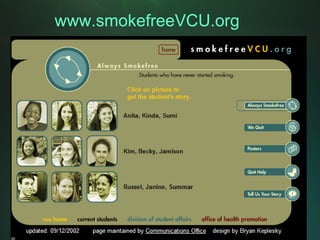
www.smokefreeVCU.org
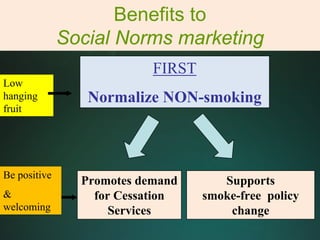
Benefits to
              Social Norms marketing
                           FIRST
Low
hanging          Normalize NON-smoking
fruit


Be positive
                Promotes demand       Supports
&                 for Cessation    smoke-free policy
welcoming            Services          change
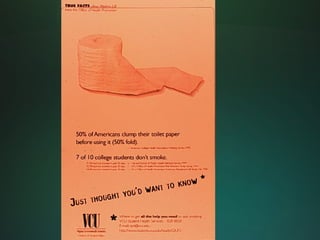
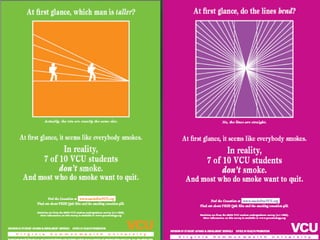
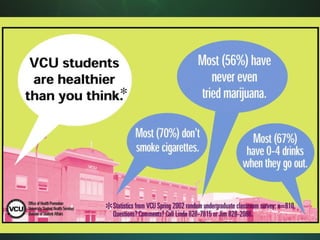
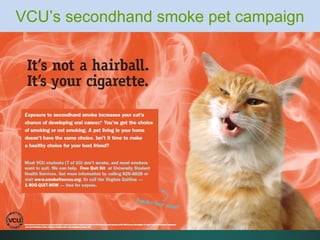
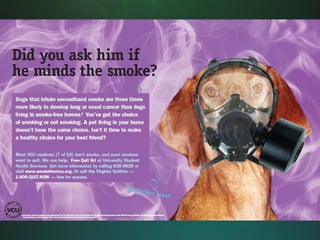
VCU’s secondhand smoke pet campaign
www.yourstrategy.org
media library – posters available
A brief word on “Clickers”
Audience Response Technology
             “BLING”
Brief Live Interactive Normative
              Groups
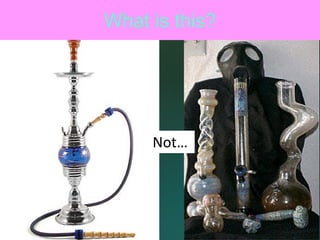
What is this?


     Not…
POLL

     Which has more cancer causing
              chemicals?
1. Cigarette smoke (filtered through cellulose)
2. Hookah smoke (filtered through water)
3. Both are tobacco smoke… so about the
   same
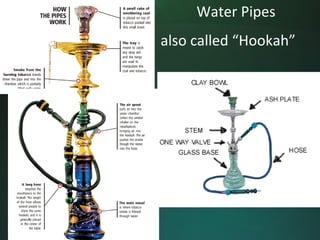
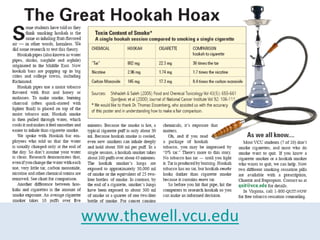
Water Pipes
also called “Hookah”
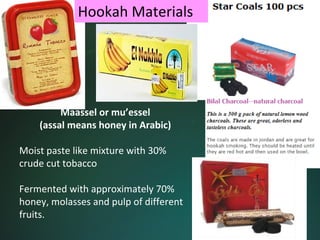
Hookah Materials


         Maassel or mu’essel
    (assal means honey in Arabic)

Moist paste like mixture with 30% 
crude cut tobacco

Fermented with approximately 70% 
honey, molasses and pulp of different 
fruits.
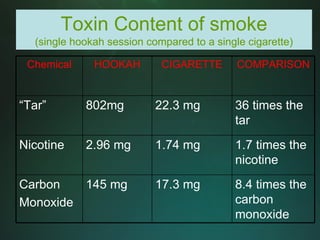
Toxin Content of smoke
  (single hookah session compared to a single cigarette)

 Chemical     HOOKAH        CIGARETTE       COMPARISON


“Tar”       802mg          22.3 mg         36 times the
                                           tar
Nicotine    2.96 mg        1.74 mg         1.7 times the
                                           nicotine
Carbon      145 mg         17.3 mg         8.4 times the
Monoxide                                   carbon
                                           monoxide
www.thewell.vcu.edu
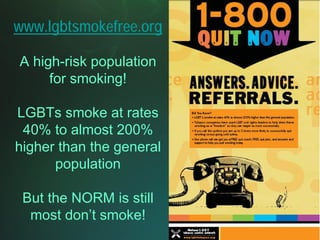
www.lgbtsmokefree.org

A high-risk population
     for smoking!

LGBTs smoke at rates
 40% to almost 200%
higher than the general
      population

 But the NORM is still
  most don’t smoke!
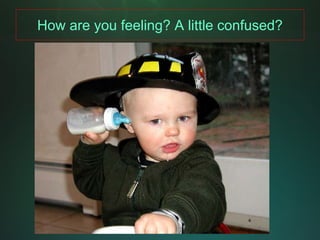
How are you feeling? A little confused?
Summary & Resources
• www.socialnorms.org

• www.thewell.vcu.edu

• www.smokefreeVCU.org


              www.ATTACKtobacco.net
ATTACK Toolkit Project
www.ATTACKtobacco.net

Alex Tyannikov – Project Manager
atyannikov@sacbreathe.org
916-444-5900 x206

Kimberly Bankston-Lee – Senior Project Director
klee@sacbreathe.org
916-444-5900 x211

Breathe California of Sacramento-Emigrant Trails
Sacramento, CA
www.SacBreathe.org

                        www.ATTACKtobacco.net

Attack Toolkit & Social Norms

  • 1.
    ATTACK Toolkit &Social Norms Webinar 6/23/11 www.ATTACKtobacco.net
  • 3.
    Social Norms Presenter LindaHancock, Ph.D, CFNP, RN Virginia Commonwealth University lhancock@vcu.edu www.thewell.vcu.edu www.ATTACKtobacco.net
  • 4.
    Social Norms Marketing: A campus story Linda Hancock FNP, PhD Wellness Resource Center quit@vcu.edu www.thewell.vcu.edu
  • 5.
    g{xç átç ÑxÉÑÄxuxz|Ç àÉ ÄÉÉ~ Ä|~x à{x|Ü Ñxàá‹
  • 6.
    POLL How much do you know about “social norms marketing”? 1. Zippo, Zilch, Nothing 2. A little, heard of it. Never ran a campaign. 3. A moderate amount. 4. I could write a book!
  • 7.
    There are 3types of marketing • 1. Product or Consumer Marketing – Sells Products or Services • 2. Social Marketing – Changes behavior to increase social good • 3. Social Norms Marketing – Changes behavior by telling the truth about what’s normal.
  • 8.
    Marketing A science ‐based on research  findings Consumer Focused Product Social Marketing Marketing GOAL: Sell Products  GOAL: Behavior or services change Social Norms Marketing (SNM) Goal: Promote healthy  social norms
  • 10.
    Why does marketingwork? Because Marketers know who their target audience is and they LISTEN to them. Be consumer focused!
  • 11.
    Creates an associationbetween: your product and = something people want a competitor's product = and something people don’t want
  • 13.
    Who is the target audience?
  • 15.
    Why use SocialNorms Marketing? • Need to reach a large number of people. • Limited $$$ and time. • BECAUSE IT WORKS! • You need to understand the approach… but it’s worth the effort. Social Justice: Young people should make decisions based on TRUTH not misperception
  • 16.
    POLL Perception Question How many cups of coffee do you think most people drink per day? 1. None 2. One 3. Two 4. Three 5. Four 6. Five or more
  • 17.
    POLL Real Behavior Question How many cups of coffee do you drink per day? 1. None 2. One 3. Two 4. Three 5. Four 6. Five or more
  • 18.
    Research by WesPerkins & Alan Berkowitz: Misperceptions about norms. PERCEPTION GAP REALITY
  • 19.
    People tend to under-estimate health & over-estimate un-health.
  • 20.
    The 3 D’sof tobacco prevention • DEGLAMORIZE • DELEGITIMIZE • DENORMALIZE
  • 21.
  • 22.
  • 23.
    In health promotion,we inadvertently normalize the unhealthy majority!
  • 24.
  • 25.
    It’s so easy to get negative  with tobacco because  tobacco is so harmful. It’s easy to alienate people  who need help… if we are  too intense.
  • 26.
    P.I.E. (Positive, Inclusive, Empowering) Let’s make him a non‐smoker, he’ll last longer that way.
  • 27.
    Social Norms Campaignsare different! • For “how to” guides check out –www.socialnorms.org • FIRST you need • BASELINE PERCEPTION AND BEHAVIOR DATA • SECOND look in your data for… • A “Gap” between perception and reality • A “Norm” has to be over 51 percent
  • 28.
    My Start: • Tobacco& The dreaded dissertation My title for it: • “They’re just stupid posters, but they seem to work!
  • 30.
  • 33.
    Benefits to Social Norms marketing FIRST Low hanging Normalize NON-smoking fruit Be positive Promotes demand Supports & for Cessation smoke-free policy welcoming Services change
  • 34.
  • 36.
  • 37.
    A brief wordon “Clickers” Audience Response Technology “BLING” Brief Live Interactive Normative Groups
  • 38.
  • 39.
    POLL Which has more cancer causing chemicals? 1. Cigarette smoke (filtered through cellulose) 2. Hookah smoke (filtered through water) 3. Both are tobacco smoke… so about the same
  • 40.
  • 41.
    Hookah Materials Maassel or mu’essel (assal means honey in Arabic) Moist paste like mixture with 30%  crude cut tobacco Fermented with approximately 70%  honey, molasses and pulp of different  fruits.
  • 42.
    Toxin Content ofsmoke (single hookah session compared to a single cigarette) Chemical HOOKAH CIGARETTE COMPARISON “Tar” 802mg 22.3 mg 36 times the tar Nicotine 2.96 mg 1.74 mg 1.7 times the nicotine Carbon 145 mg 17.3 mg 8.4 times the Monoxide carbon monoxide
  • 43.
  • 44.
    www.lgbtsmokefree.org A high-risk population for smoking! LGBTs smoke at rates 40% to almost 200% higher than the general population But the NORM is still most don’t smoke!
  • 45.
    How are youfeeling? A little confused?
  • 46.
    Summary & Resources •www.socialnorms.org • www.thewell.vcu.edu • www.smokefreeVCU.org www.ATTACKtobacco.net
  • 47.
    ATTACK Toolkit Project www.ATTACKtobacco.net AlexTyannikov – Project Manager atyannikov@sacbreathe.org 916-444-5900 x206 Kimberly Bankston-Lee – Senior Project Director klee@sacbreathe.org 916-444-5900 x211 Breathe California of Sacramento-Emigrant Trails Sacramento, CA www.SacBreathe.org www.ATTACKtobacco.net

Editor's Notes

  • #2 Hello Introduction Brother story “who smokes these days?” If we don’t spend time around the people who smoke it is possible to think that barely anyone smokes!
  • #11 All marketing creates an association. The product is either equated with something the target population wants , in this example sex, (I call this a positive association) or a competitors product is associated with something the target doesn’t want (I refer to this as a negative association). I will ask the audience if they can give me examples of what the equation would look like if a marketer were selling sneakers to youth versus senior citizens. I will sometimes ask if anyone can think of an example of the negative association. Most can’t really. I bring up that political campaigns do it often but for the most part, product marketers spend most of their time telling their audience how great their lives will be if they by the marketed product and don’t waste their time giving attention to someone else’s product because any press is good press. I also explain here that the way marketing works is to use images to create a desirable feeling and images in the target audience. Like the Pavlov’s dog experiment, the audience starts to equate the funny, sexy, hopeful, relaxed, etc. feelings they experience from the ad with the product logo. Later when they go to the store to shop, they see the logo and their subconscious automatically and largely inperceptively restimulates those feelings.
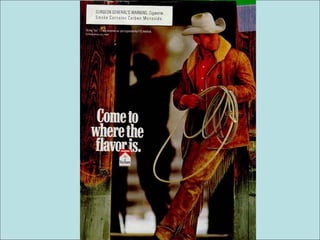
  • #14 On this ad I acknowledge how most everyone has probably seen the Marlboro man before. He’s timeless. I ask the audience if they can figure out how the marketing equation works in this ad. On the left of the equals sign is the Marlboro brand but what’s on the right? Some answers I usually supply are: rugged independence, manly strength, no limits. I also draw their attention to the figure in the back and point out that as the Marlboro man has evolved over the years, marketers have given him a friend. Focus groups found that he looked rugged and independent but lonely, so they gave him a friend but didn’t make that friend too obvious so as not to take away from the independence. I also ask participants who they think the target audience is for this ad.