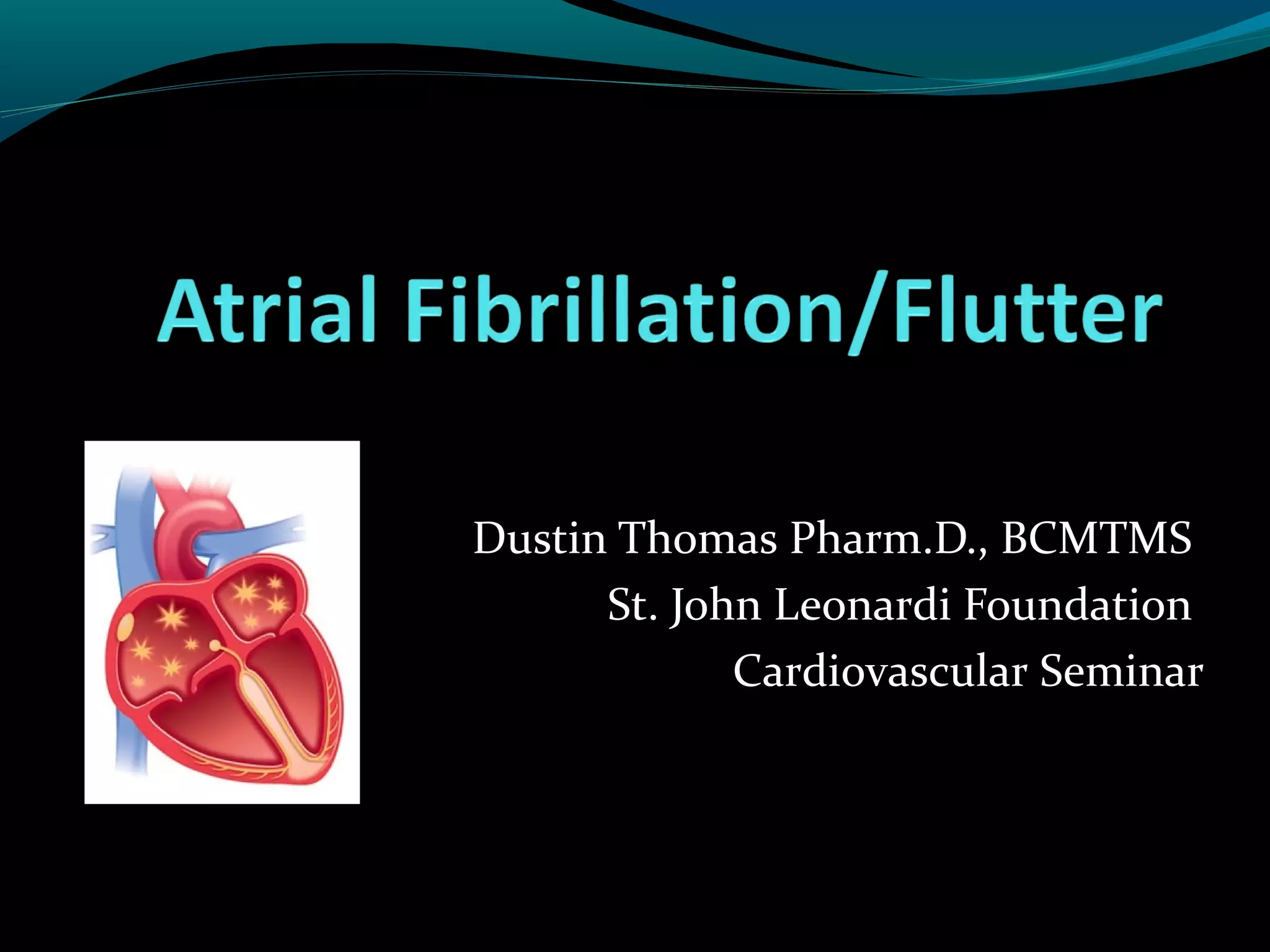
Dustin Thomas Pharm.D., BCMTMS
St. John Leonardi Foundation
Cardiovascular Seminar
Defining Afib/Flutter
Definition
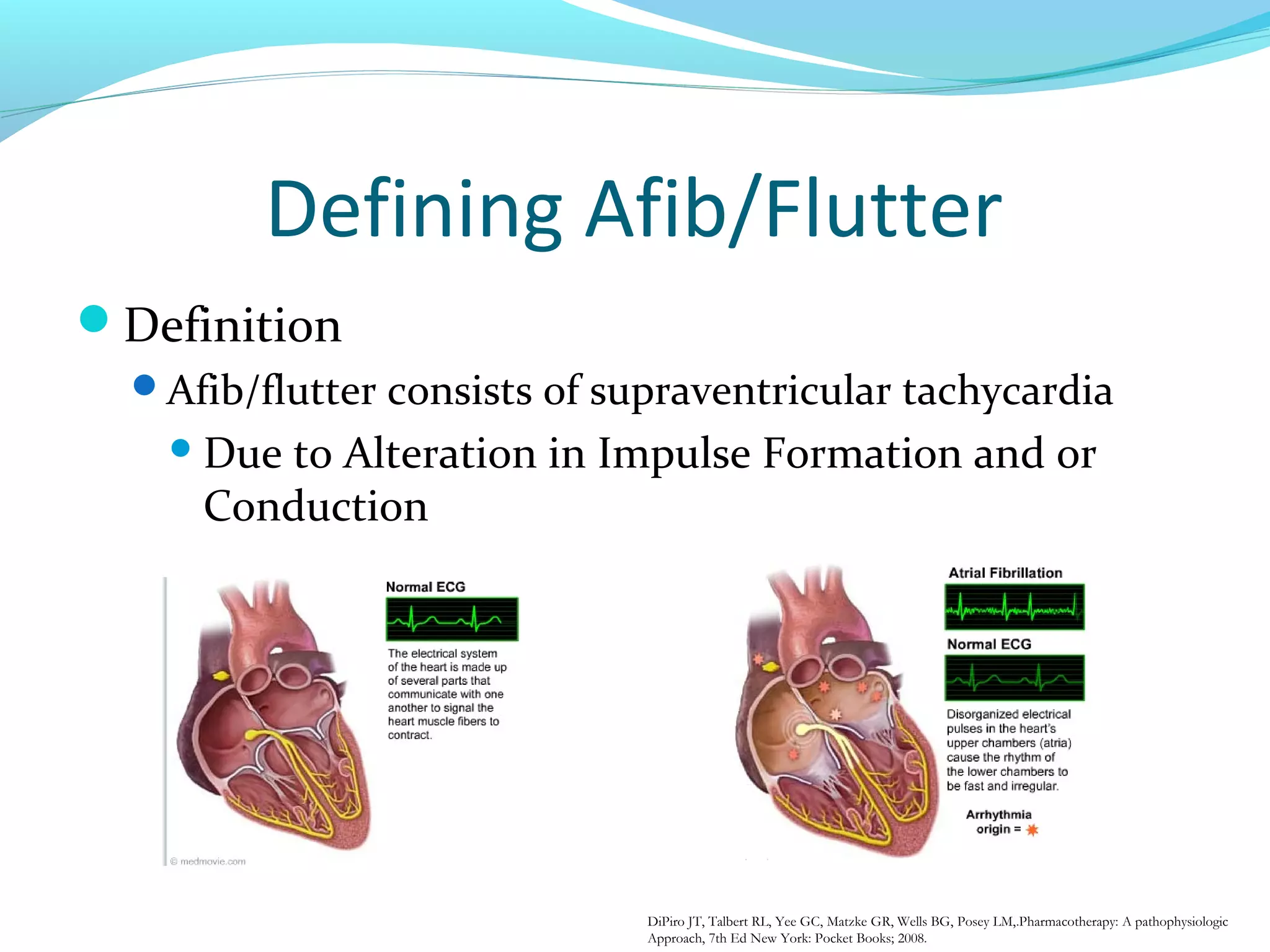
Afib/flutter consists of supraventricular tachycardia
Due to Alteration in Impulse Formation and or
Conduction
DiPiro JT, Talbert RL, Yee GC, Matzke GR, Wells BG, Posey LM,.Pharmacotherapy: A pathophysiologic
Approach, 7th Ed New York: Pocket Books; 2008.
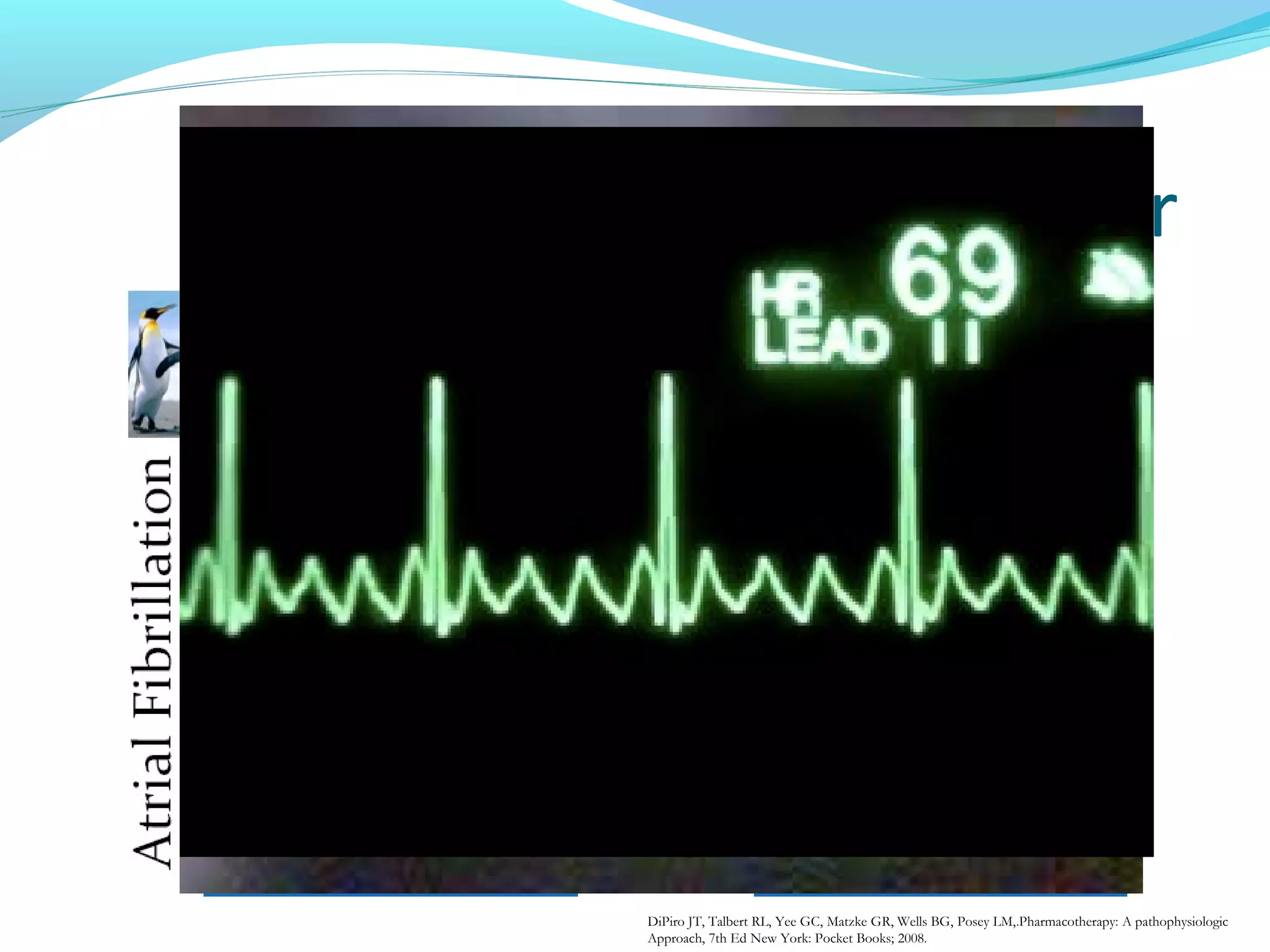
Differentiating Afib/Aflutter
DiPiro JT, Talbert RL, Yee GC, Matzke GR, Wells BG, Posey LM,.Pharmacotherapy: A pathophysiologic
Approach, 7th Ed New York: Pocket Books; 2008.
Atrial Fibrillation and Flutter
Occur more often in Men, especially elderly men
Prevalance of Atrial Fibrillation is about 0.4%
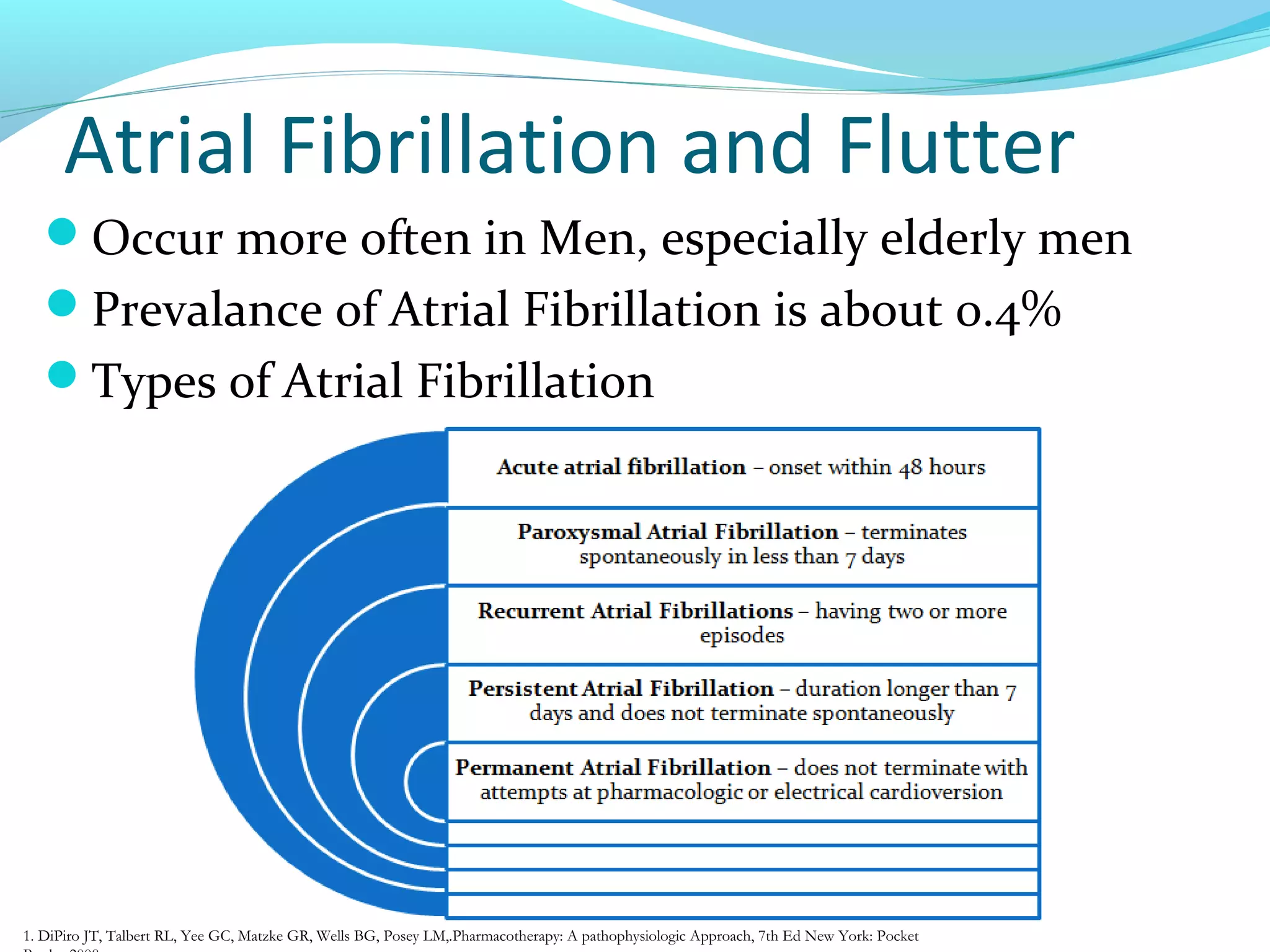
Types of Atrial Fibrillation
1. DiPiro JT, Talbert RL, Yee GC, Matzke GR, Wells BG, Posey LM,.Pharmacotherapy: A pathophysiologic Approach, 7th Ed New York: Pocket
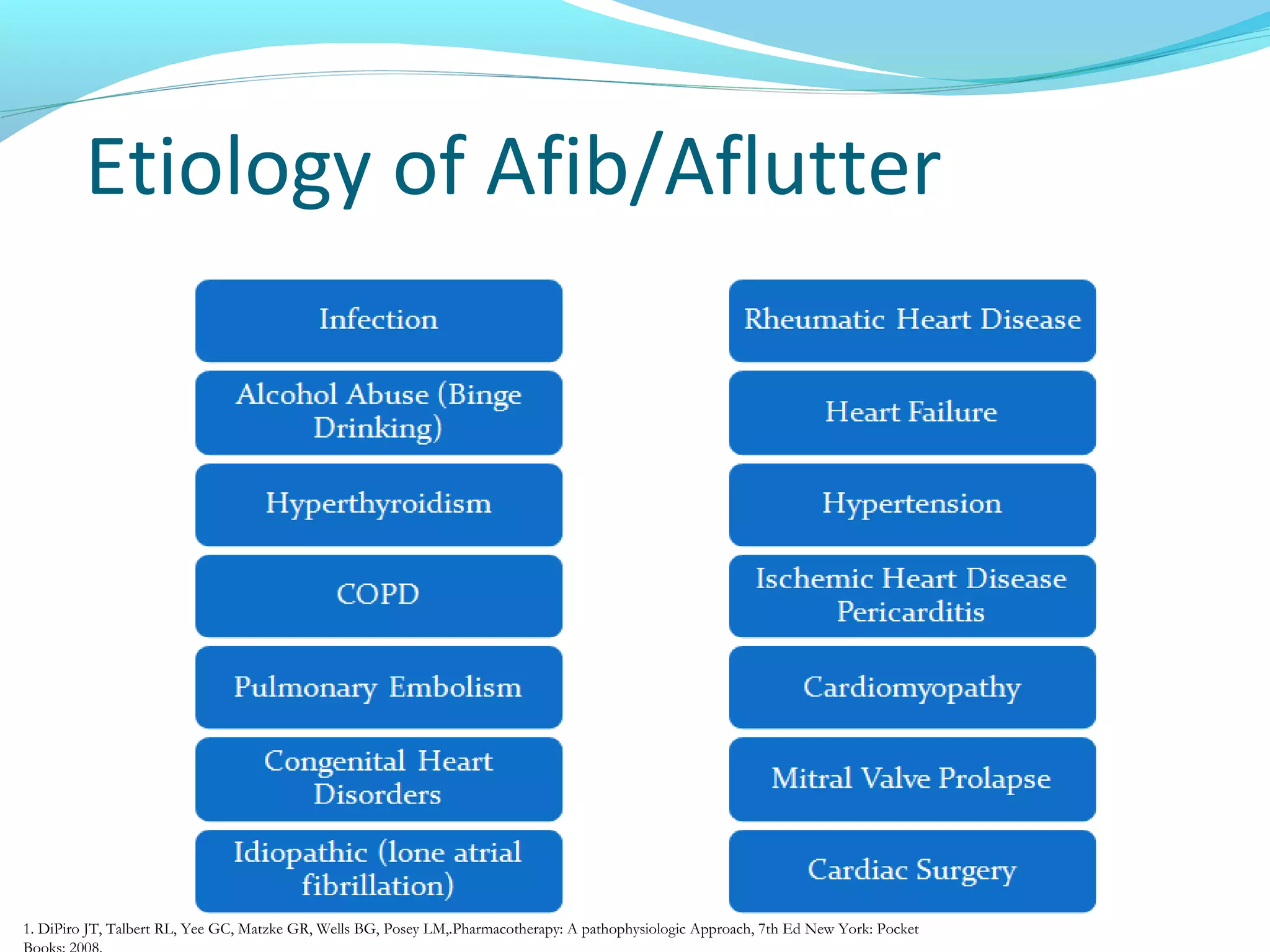
Etiology of Afib/Aflutter
1. DiPiro JT, Talbert RL, Yee GC, Matzke GR, Wells BG, Posey LM,.Pharmacotherapy: A pathophysiologic Approach, 7th Ed New York: Pocket
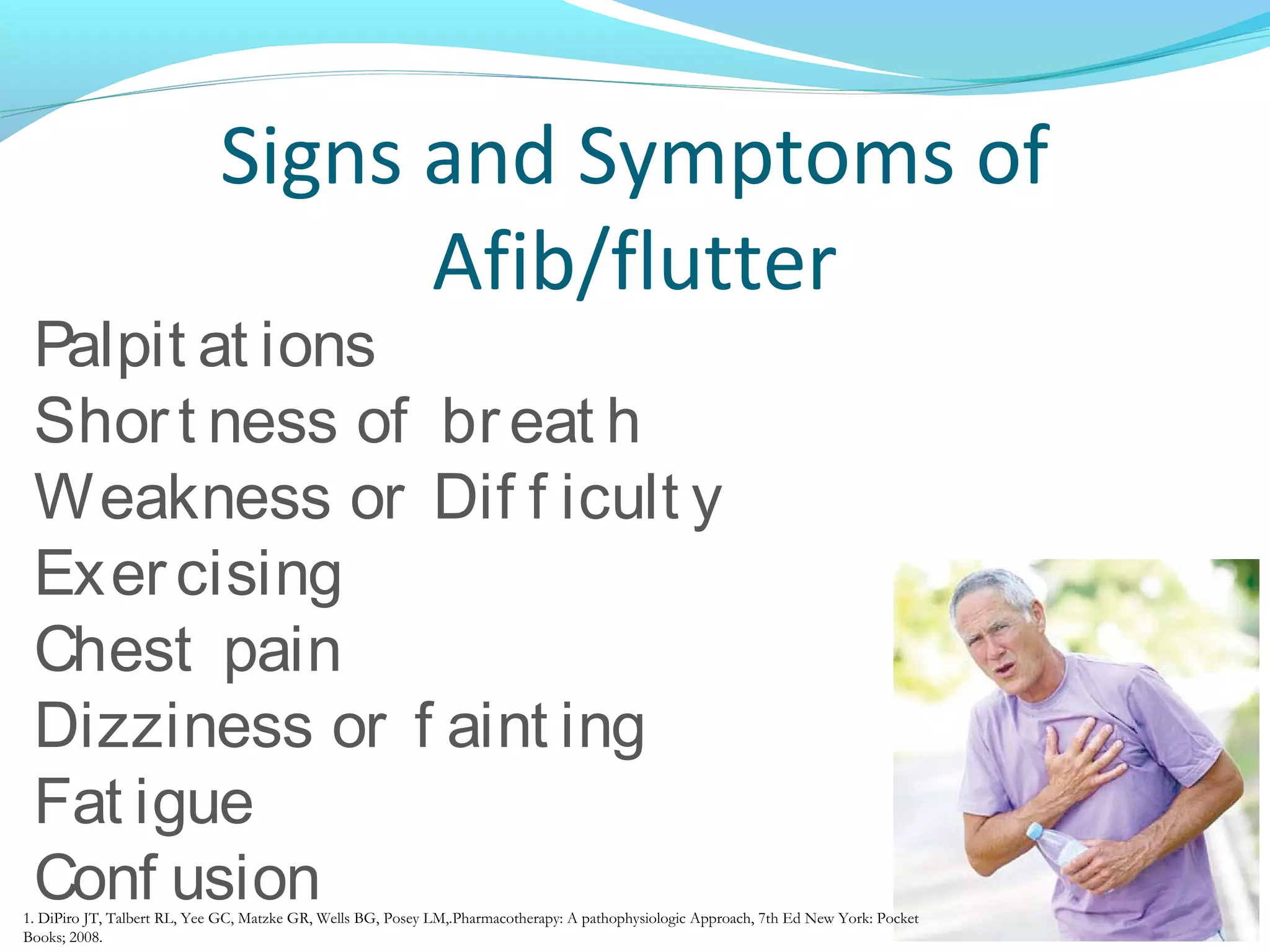
Signs and Symptoms of
Afib/flutter
Palpit at ions
Short ness of breat h
Weakness or Dif f icult y
Exercising
Chest pain
Dizziness or f aint ing
Fat igue
Conf usion1. DiPiro JT, Talbert RL, Yee GC, Matzke GR, Wells BG, Posey LM,.Pharmacotherapy: A pathophysiologic Approach, 7th Ed New York: Pocket
Books; 2008.
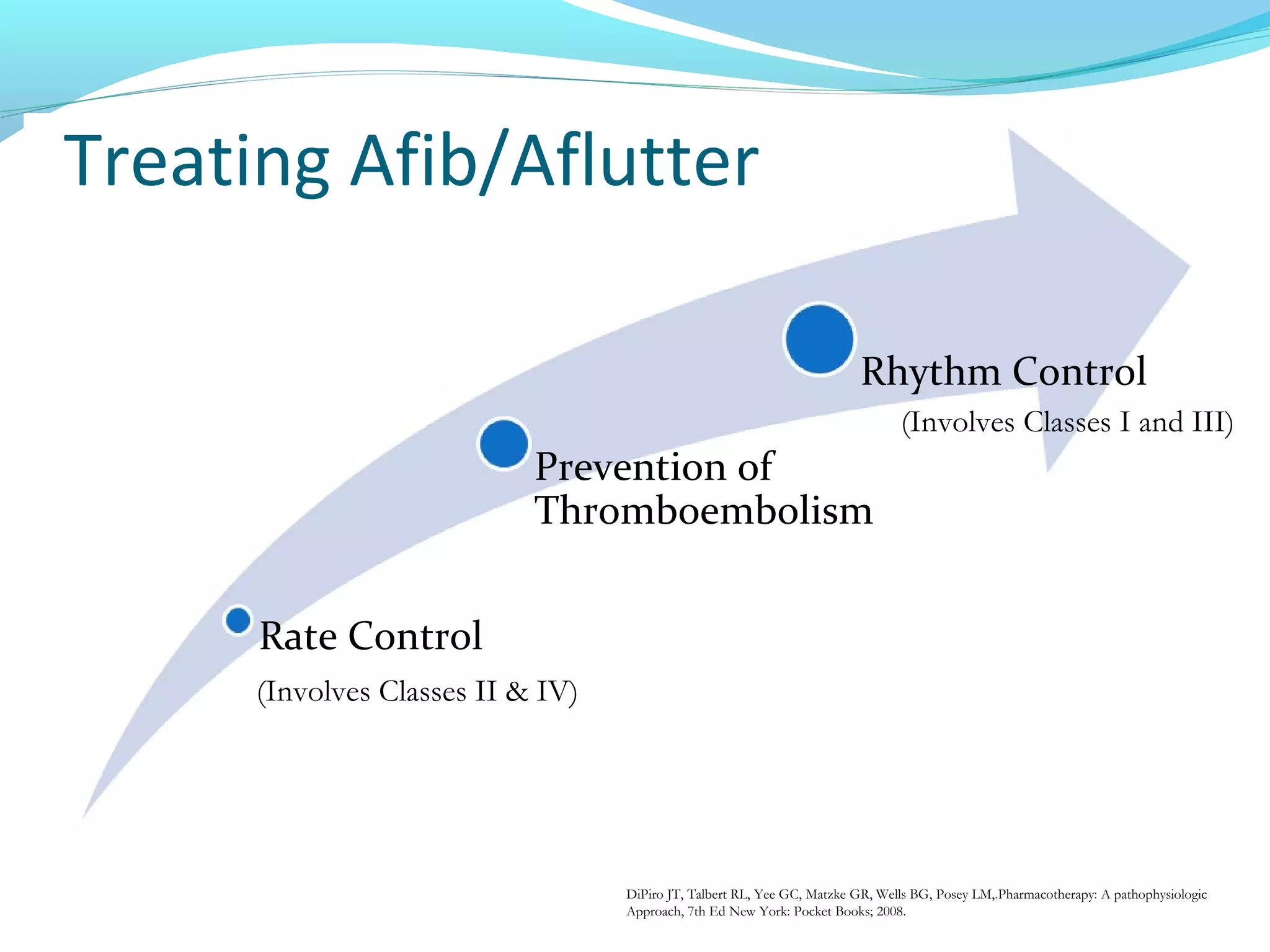
Treating Afib/Aflutter
DiPiro JT, Talbert RL, Yee GC, Matzke GR, Wells BG, Posey LM,.Pharmacotherapy: A pathophysiologic
Approach, 7th Ed New York: Pocket Books; 2008.
Rate Control
Prevention of
Thromboembolism
Rhythm Control
(Involves Classes II & IV)
(Involves Classes I and III)
1. DiPiro JT, Talbert RL, Yee GC, Matzke GR, Wells BG, Posey LM,.Pharmacotherapy: A pathophysiologic Approach, 7th Ed New York: Pocket
Books; 2008.
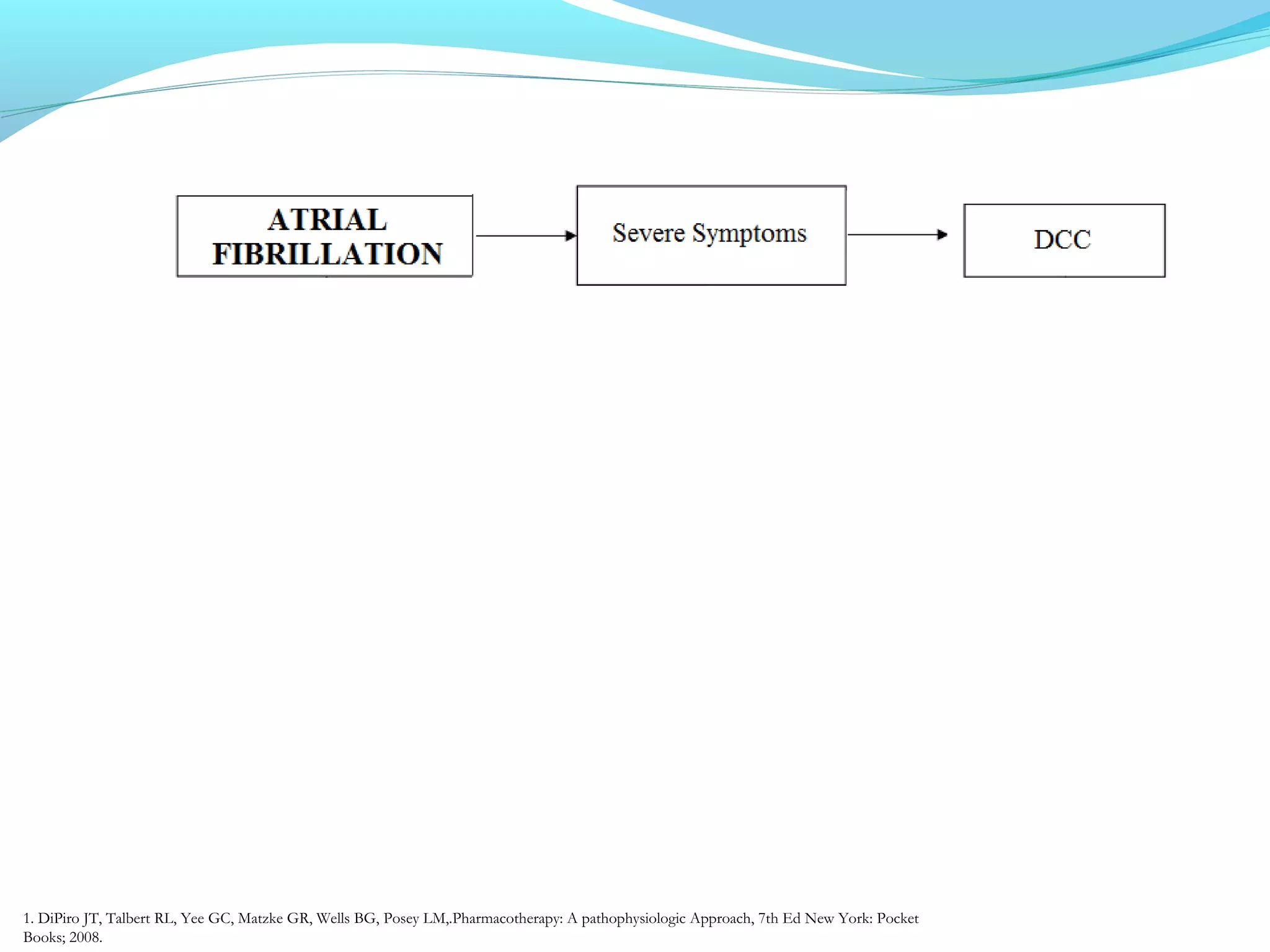
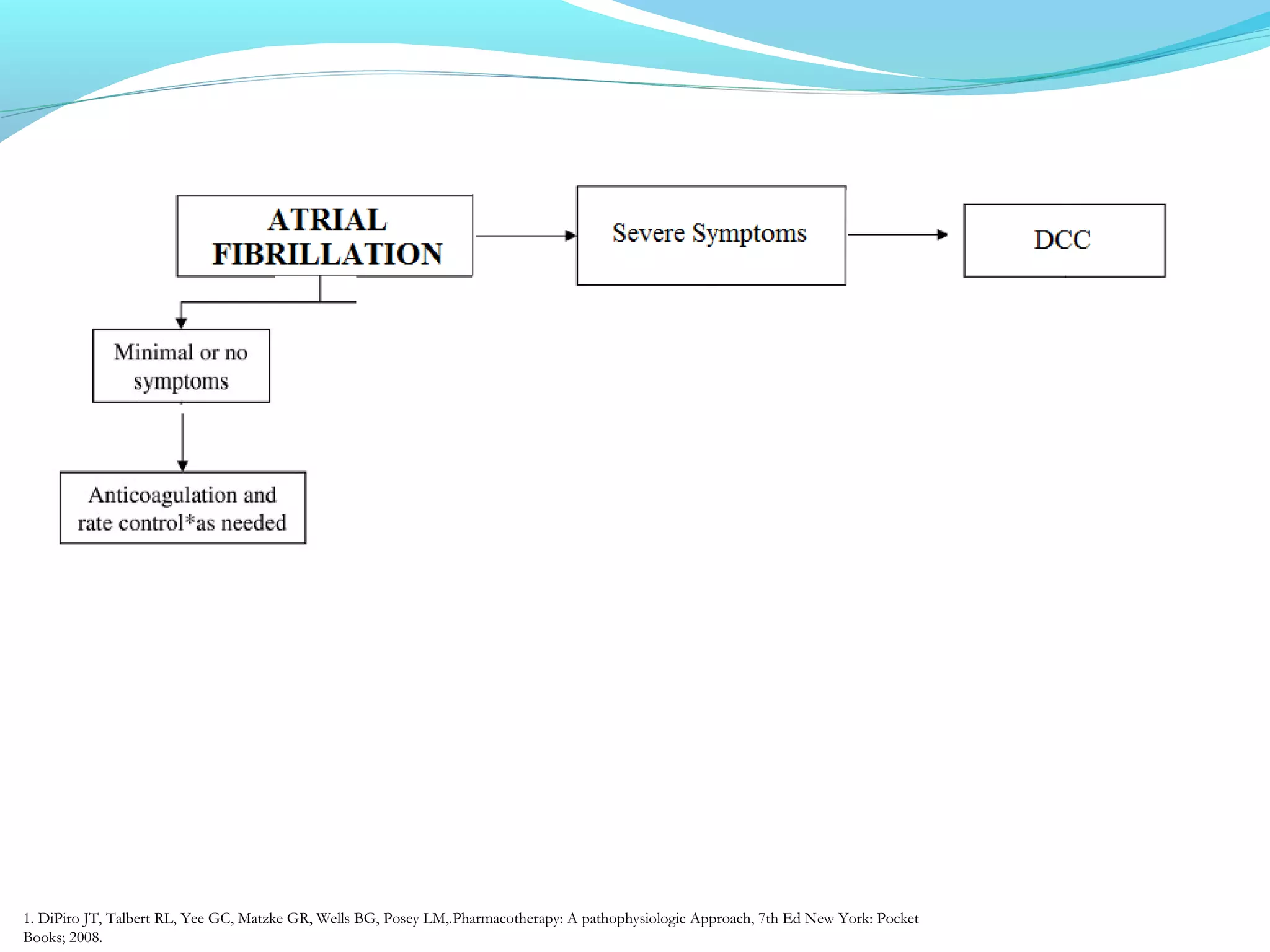
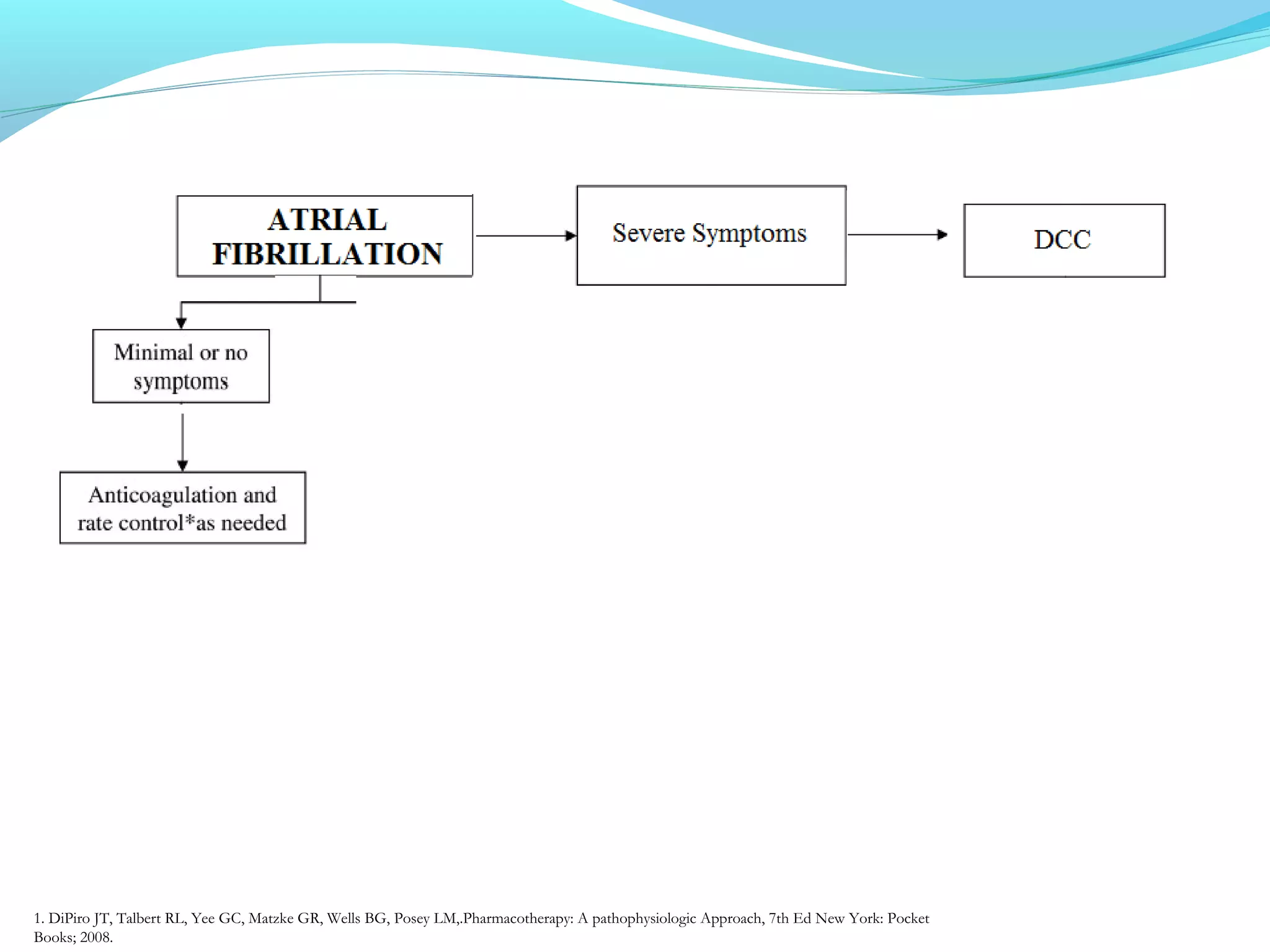
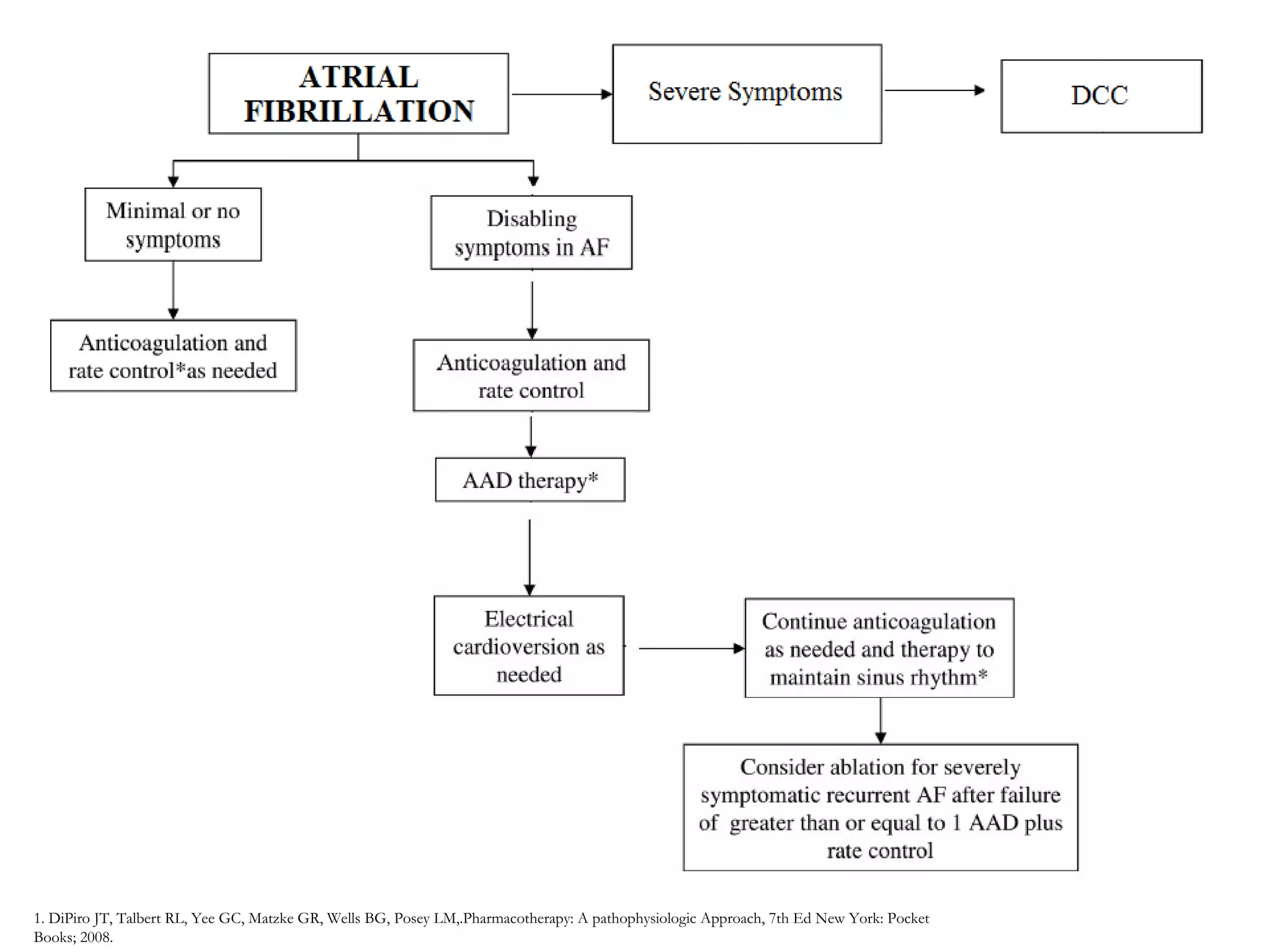
Severe Symptoms
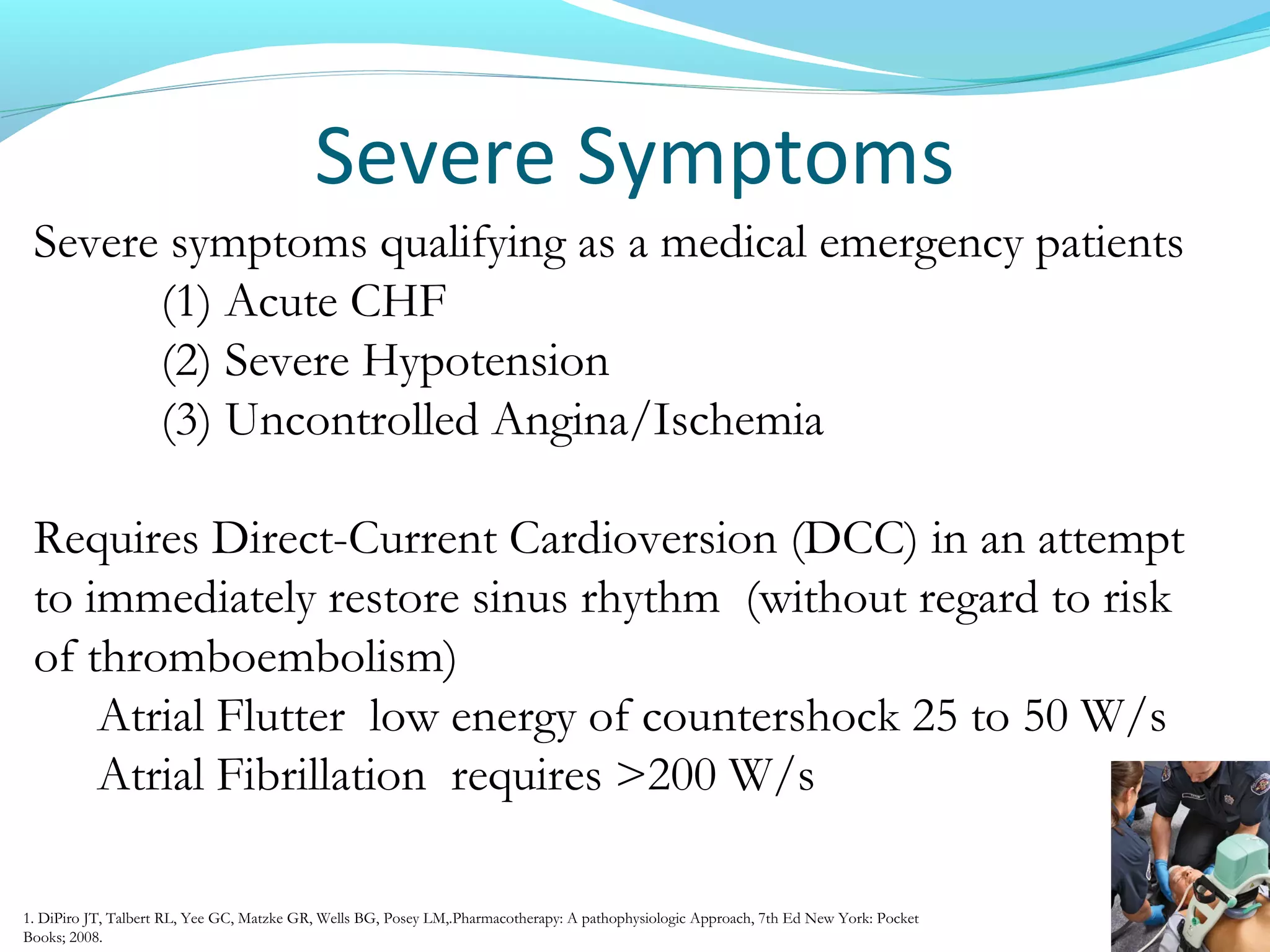
Severe symptoms qualifying as a medical emergency patients
(1) Acute CHF
(2) Severe Hypotension
(3) Uncontrolled Angina/Ischemia
Requires Direct-Current Cardioversion (DCC) in an attempt
to immediately restore sinus rhythm (without regard to risk
of thromboembolism)
Atrial Flutter low energy of countershock 25 to 50 W/s
Atrial Fibrillation requires >200 W/s
1. DiPiro JT, Talbert RL, Yee GC, Matzke GR, Wells BG, Posey LM,.Pharmacotherapy: A pathophysiologic Approach, 7th Ed New York: Pocket
Books; 2008.
1. DiPiro JT, Talbert RL, Yee GC, Matzke GR, Wells BG, Posey LM,.Pharmacotherapy: A pathophysiologic Approach, 7th Ed New York: Pocket
Books; 2008.
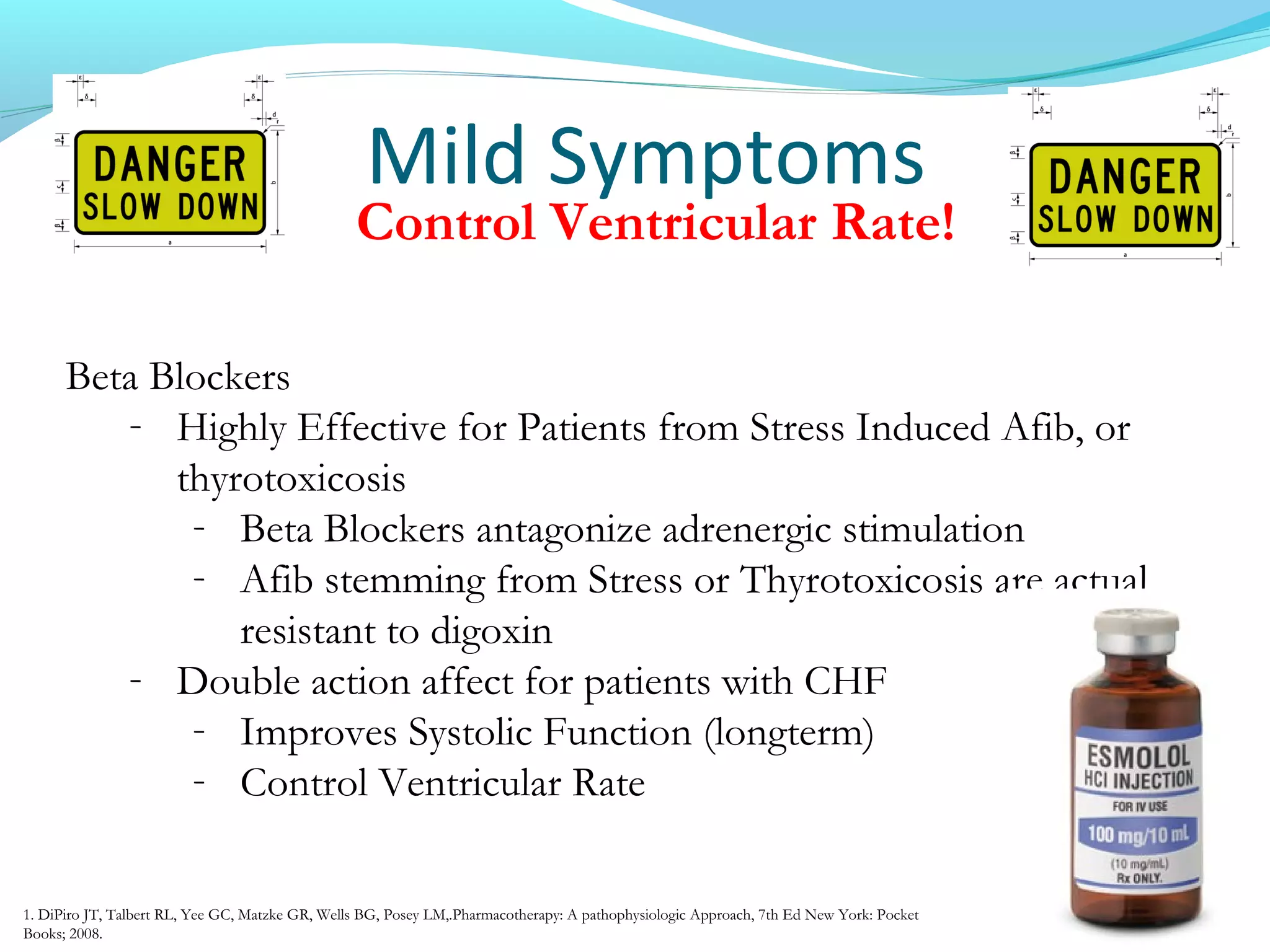
Mild Symptoms
Control Ventricular Rate!
Loading dosages of digoxin historically have been recommended as
first line treatment to slow ventricular rate, particularly in patients
with heart failure
- Loading Dose 0.25mg q2h PO or IV max 1.5mg daily dose
- Slow to Onset
- Decrease in ventricular response sometimes can be
observed within 1 hour of intravenous administration
-Full control usually is not achieved for 24 to 48 hours.
- Will not control exercise-related increase in ventricular response
and tachycardia symptoms
- If given, it is recommended to give small doses of CCB or beta
blockers
1. DiPiro JT, Talbert RL, Yee GC, Matzke GR, Wells BG, Posey LM,.Pharmacotherapy: A pathophysiologic Approach, 7th Ed New York: Pocket
Books; 2008.
Mild Symptoms
Control Ventricular Rate!
- Non-Dihydropyridine Calcium Channel Blockers (e.g. diltiazem or verapamil)
provide an alternative approach, allowing for a rapid decrease in ventricular rate and
symptomatic relief without the need for DCC
- Because control of ventricular response can be transient, verapamil or diltiazem can
be given as an intial intravenous bolus, followed by a continuous infusion titrated to
heart rate without worrying about much toxicity as with digoxin
- Diltiazem Dose: IV bolus 0.25mg/kg IV over 2 minutes, may give
second bolus if not adequate of 0.35mg/kg after 15 minutes.
- Verapamil Dose: 0.075 to 0.15mg/kg IV over 3 minutes. Additional
10mg after minutes.
- According to a head to head double blinded study in the Journal of
Pharmacotherapy, Diltiazem was shown to be safer and effective in treating acute
atrial fibrillation/flutter compared to Verapamil.
Phillips BG, Gandhi AJ, Sanoski CA, et al. Comparison of intravenous diltiazem and verapamil for the acute treatment of atrial fibrillation and
flutter. Pharmacotherapy 1997;17:1238–1245.
Mild Symptoms
Beta Blockers
- Highly Effective for Patients from Stress Induced Afib, or
thyrotoxicosis
- Beta Blockers antagonize adrenergic stimulation
- Afib stemming from Stress or Thyrotoxicosis are actual
resistant to digoxin
- Double action affect for patients with CHF
- Improves Systolic Function (longterm)
- Control Ventricular Rate
Control Ventricular Rate!
1. DiPiro JT, Talbert RL, Yee GC, Matzke GR, Wells BG, Posey LM,.Pharmacotherapy: A pathophysiologic Approach, 7th Ed New York: Pocket
Books; 2008.
1. DiPiro JT, Talbert RL, Yee GC, Matzke GR, Wells BG, Posey LM,.Pharmacotherapy: A pathophysiologic Approach, 7th Ed New York: Pocket
Books; 2008.
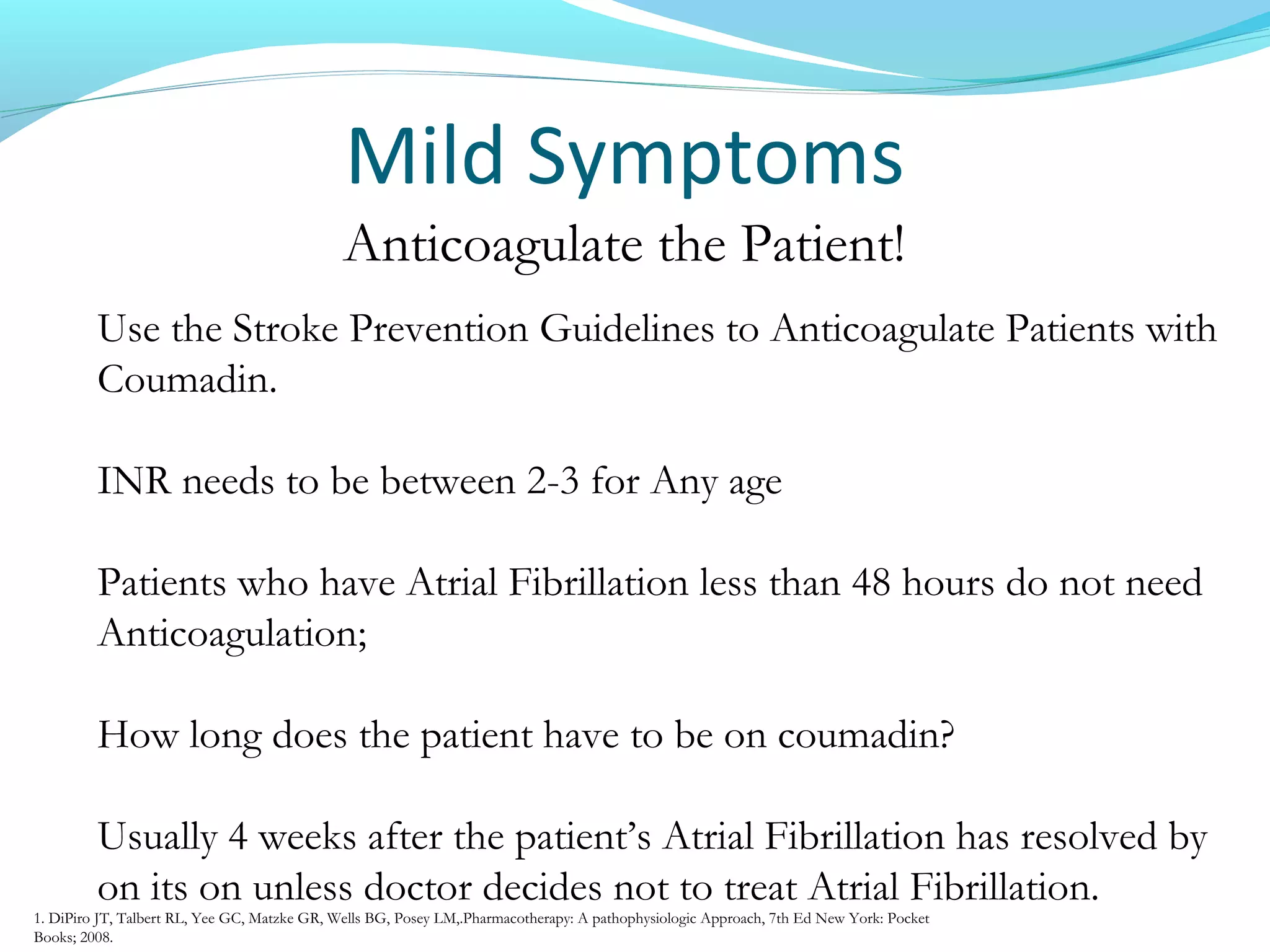
Mild Symptoms
Anticoagulate the Patient!
Use the Stroke Prevention Guidelines to Anticoagulate Patients with
Coumadin.
INR needs to be between 2-3 for Any age
Patients who have Atrial Fibrillation less than 48 hours do not need
Anticoagulation;
How long does the patient have to be on coumadin?
Usually 4 weeks after the patient’s Atrial Fibrillation has resolved by
on its on unless doctor decides not to treat Atrial Fibrillation.
1. DiPiro JT, Talbert RL, Yee GC, Matzke GR, Wells BG, Posey LM,.Pharmacotherapy: A pathophysiologic Approach, 7th Ed New York: Pocket
Books; 2008.
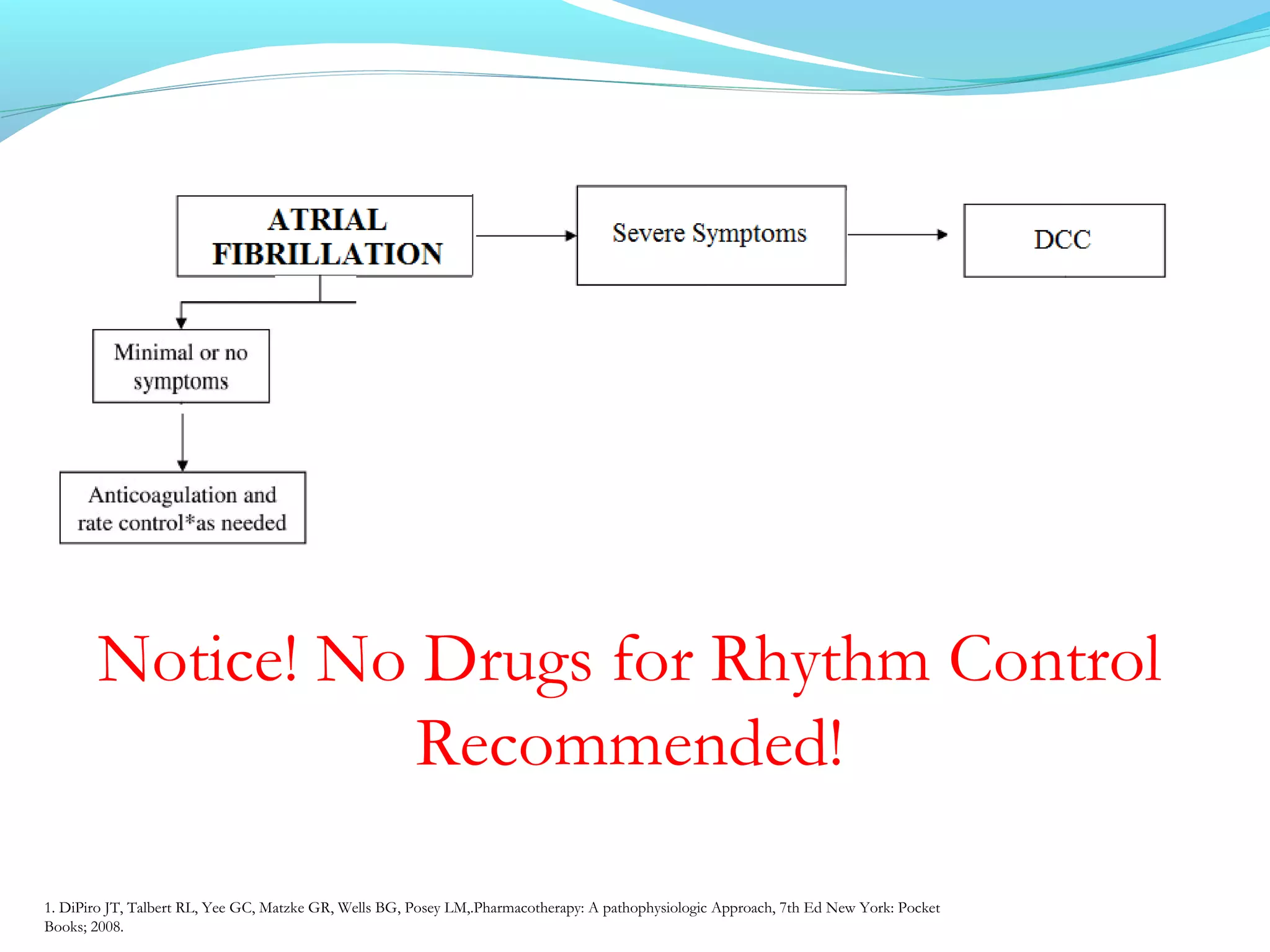
Notice! No Drugs for Rhythm Control
Recommended!
1. DiPiro JT, Talbert RL, Yee GC, Matzke GR, Wells BG, Posey LM,.Pharmacotherapy: A pathophysiologic Approach, 7th Ed New York: Pocket
Books; 2008.
Drug Therapy?
Restoring Sinus Rhythm Vs. Rate Control
- An Important Trial National Institute of Health (NIH) – sponsored
(AFFIRM) that compared strategies to maintain sinus rhythm with those
just to control ventricular rate, allowing atrial fibrillation to remain;
Cumulative mortality was not statistically different between the two
strategies, but tended (p=0.08) to be higher in the group given
antiarrhythmic drugs to maintain sinus rhythm
- Many clinicians believe the benefits of giving type I or type III
(specific for rhythm control) for sinus rhythm control does not
outweigh the risks of possible side effects. Side effects including blood
dyscreaseas and proarrythmias.
1. DiPiro JT, Talbert RL, Yee GC, Matzke GR, Wells BG, Posey LM,.Pharmacotherapy: A pathophysiologic Approach, 7th Ed New York: Pocket
Books; 2008.
1. DiPiro JT, Talbert RL, Yee GC, Matzke GR, Wells BG, Posey LM,.Pharmacotherapy: A pathophysiologic Approach, 7th Ed New York: Pocket
Books; 2008.
Maintaining Sinus Rhythm
Two ways to restore sinus rhythm
- Electrical Cardioversion
- Administration of Antiarrhythmic Drugs
* Chronic Antiarrhythmic therapy is usually reserved for patients with
recurrent, symptomatic episodes.
One economic analysis published in the American Journal of Cardiology
showed that, DCC as first line therapy was less costly then proceeding to
DCC in the event of drug failure.
Nearly all type Ia, Ic, and III agents have been demonstrated to possess
some effectiveness in terminating atrial fibrillation
Murdock DK, Schumock GT, Kaliebe J, et al. Clinical and case comparison ibutilide and direct-current cardioversion for atrial fibrillation
and flutter. Am J Cardiol 2000;85:503–506.
Antithrombic Therapy for Patients undergoing
Electronic Cardioversion
- Patients are required to be anticoagulated 3 to 4 weeks prior to cardioversion
unless transesophageal echocardiography TEE rules out atrial thrombus and to
continue 4 weeks postcardioversion.
- Risk Factors for NonValvular Atrial Fibrillation Thromboembolism:
- Previous Stroke or TIA
- Hypertension
- Congestive Heart Failure
- Diabetes Mellitus
- Age > 75 years
- Recommended Antithrombotic Therapy
- Aspirin 325mg daily
- < 65 years and no risk factors
Coumadin (INR 2-3)
- Age >75
- Any age and presence of risk factors for thromboembolism
1. DiPiro JT, Talbert RL, Yee GC, Matzke GR, Wells BG, Posey LM,.Pharmacotherapy: A pathophysiologic Approach, 7th Ed New York: Pocket
Books; 2008.
Antithrombic Therapy for Patients Undergoing
Electronic Cardioversion
-Why patients need to be on coumadin?
The reason for this is that the return of sinus rhythm restores an
effective contraction, which may dislodge poorly adherent thrombi.
-I can get a 90 day supply of generic warfarin for $10, why do I
have to get an expensive TEE test to rule out whether or not I
need to be anticoagulant?
In large multicenter, randomized trial done from the New England
Journal of Medicine, the incidence of thromboembolic events was not
different between the two strategies, but bleeding episodes were higher
in the 3 weeks of warfarin group.
Klein AL, Grimm RA, Murray D, et al. Use of transesophageal echocardiography to guide cardioversion in patients with atrial fibrillation.N Engl J Med 2001;344:1411–1420.
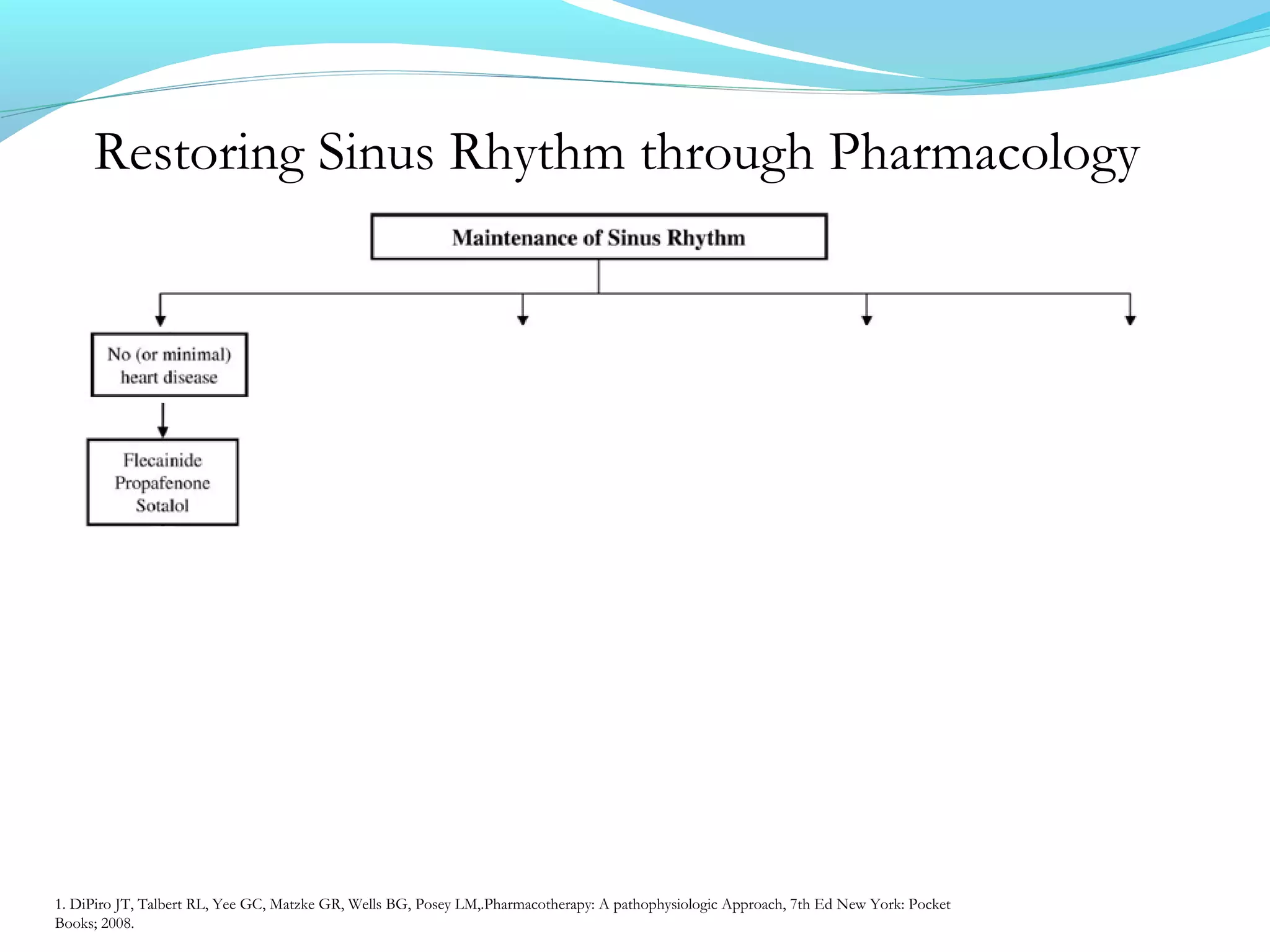
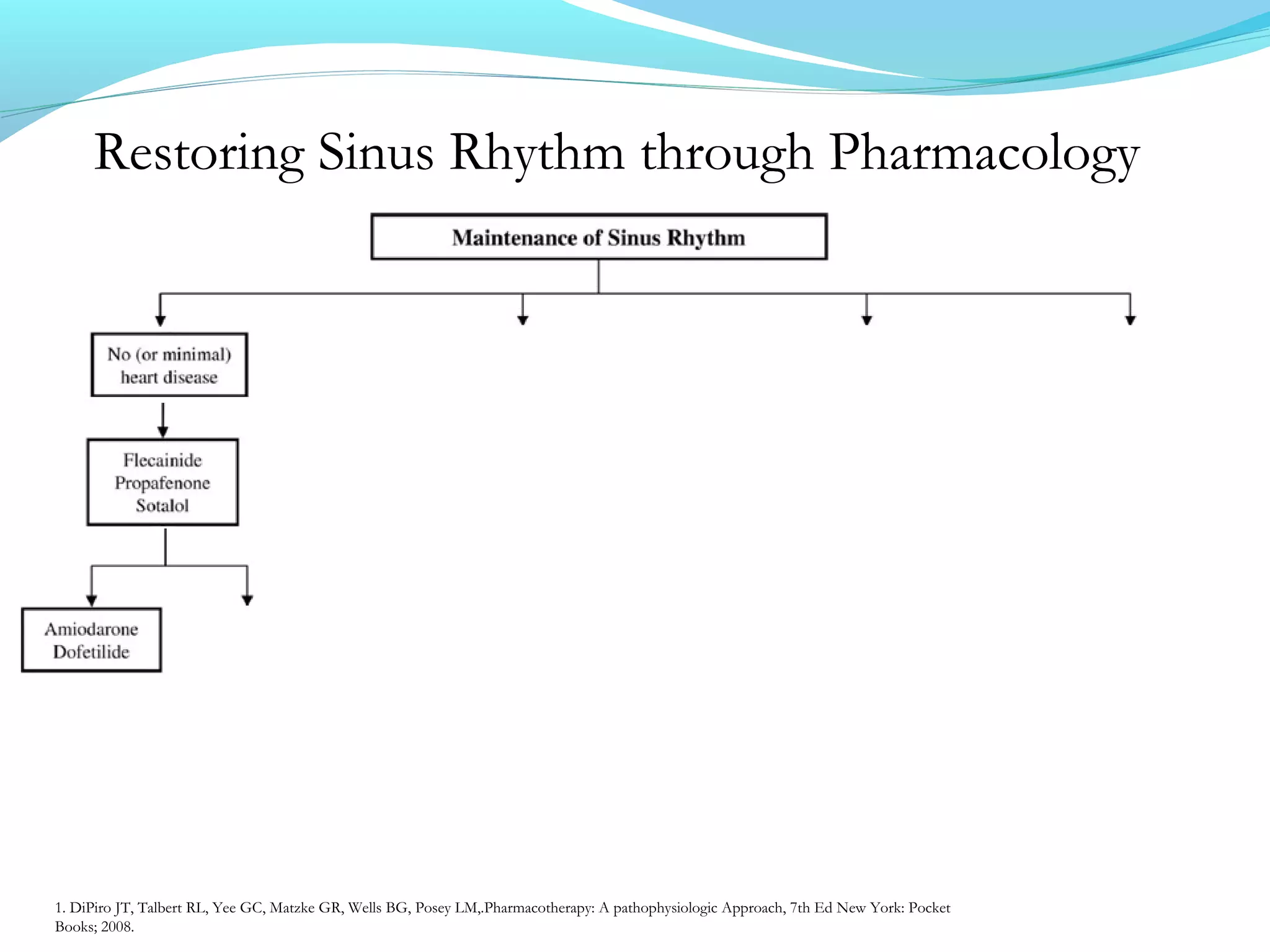
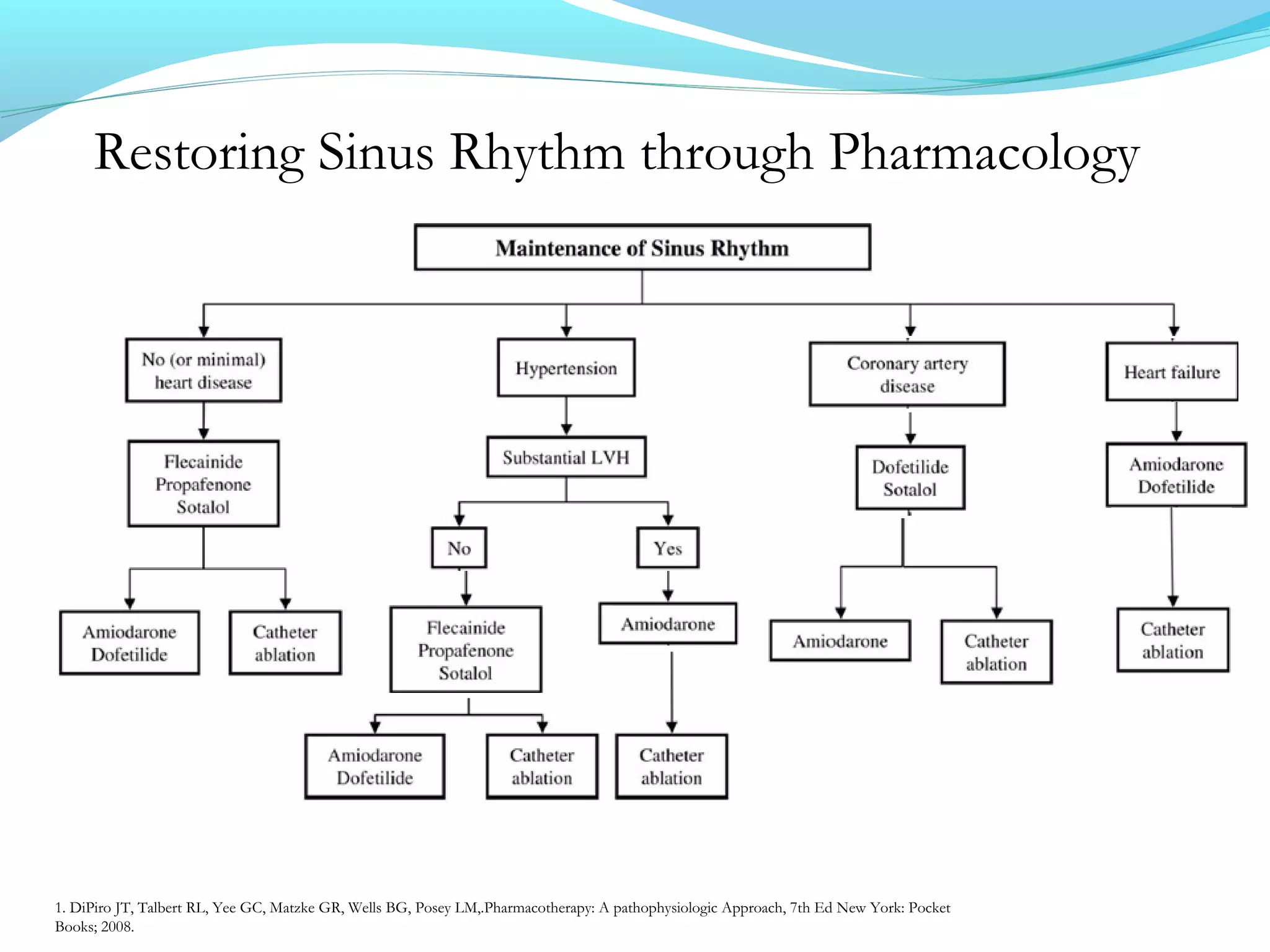
Restoring Sinus Rhythm through Pharmacology
Although, recent findings of AFFIRM trial question the need to use
antiarrhythmic drugs to prevent recurrence of atrial fibrillation.
Patients with paroxysmal atrial fibrillation and intolerable symptoms
during recurrences do require antiarrhythmic drugs to prevent
attacks
Although nearly all type I or III antiarrhythmic drugs has some
published evidence of effectiveness in preventing recurrences of
Afib/flutter, Amiodarone is clearly the most effective agent and
now the most frequent chosen despite its impressive toxicity.
1. DiPiro JT, Talbert RL, Yee GC, Matzke GR, Wells BG, Posey LM,.Pharmacotherapy: A pathophysiologic Approach, 7th Ed New York: Pocket
Books; 2008.
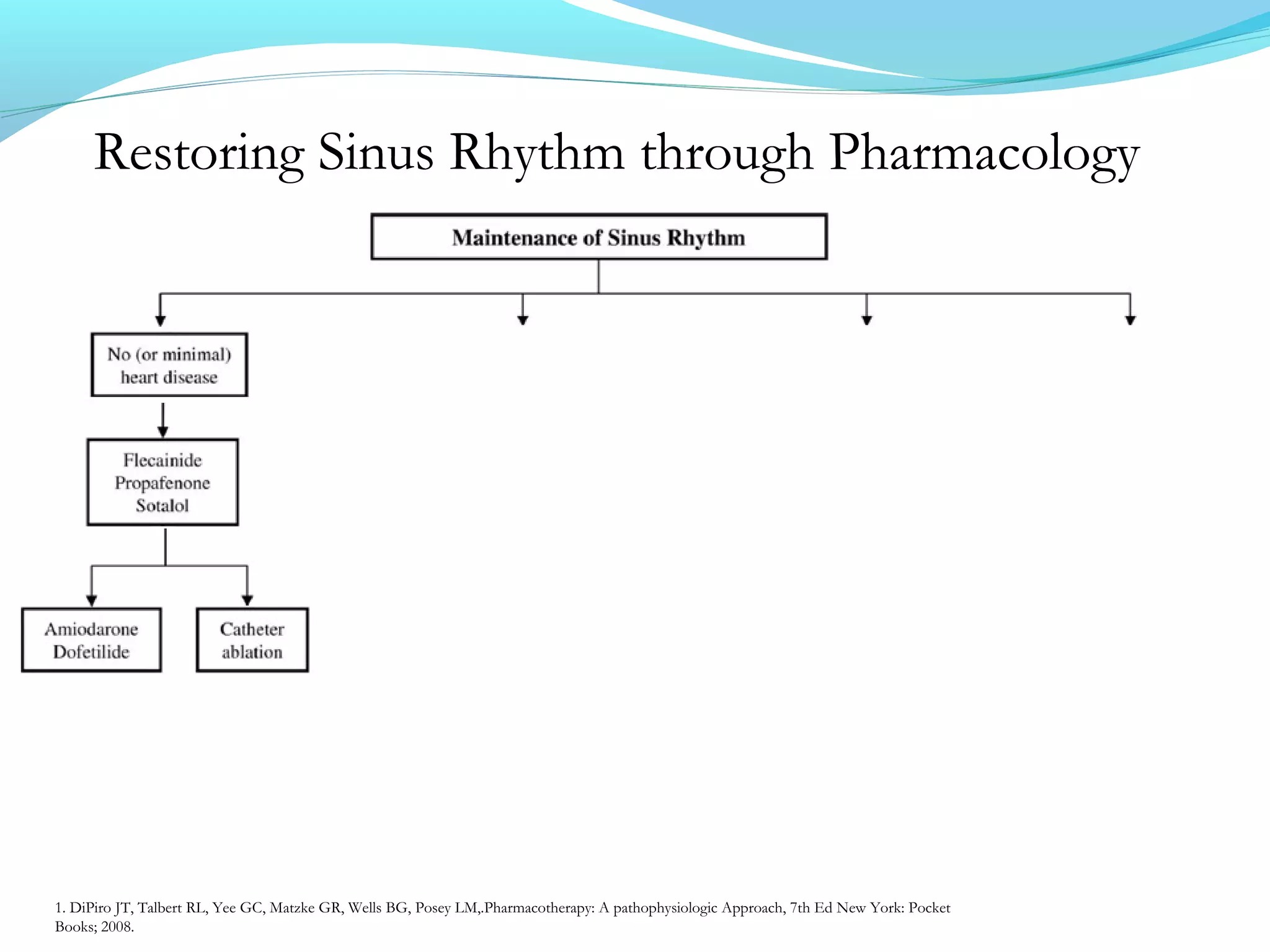
Restoring Sinus Rhythm through Pharmacology
1. DiPiro JT, Talbert RL, Yee GC, Matzke GR, Wells BG, Posey LM,.Pharmacotherapy: A pathophysiologic Approach, 7th Ed New York: Pocket
Books; 2008.
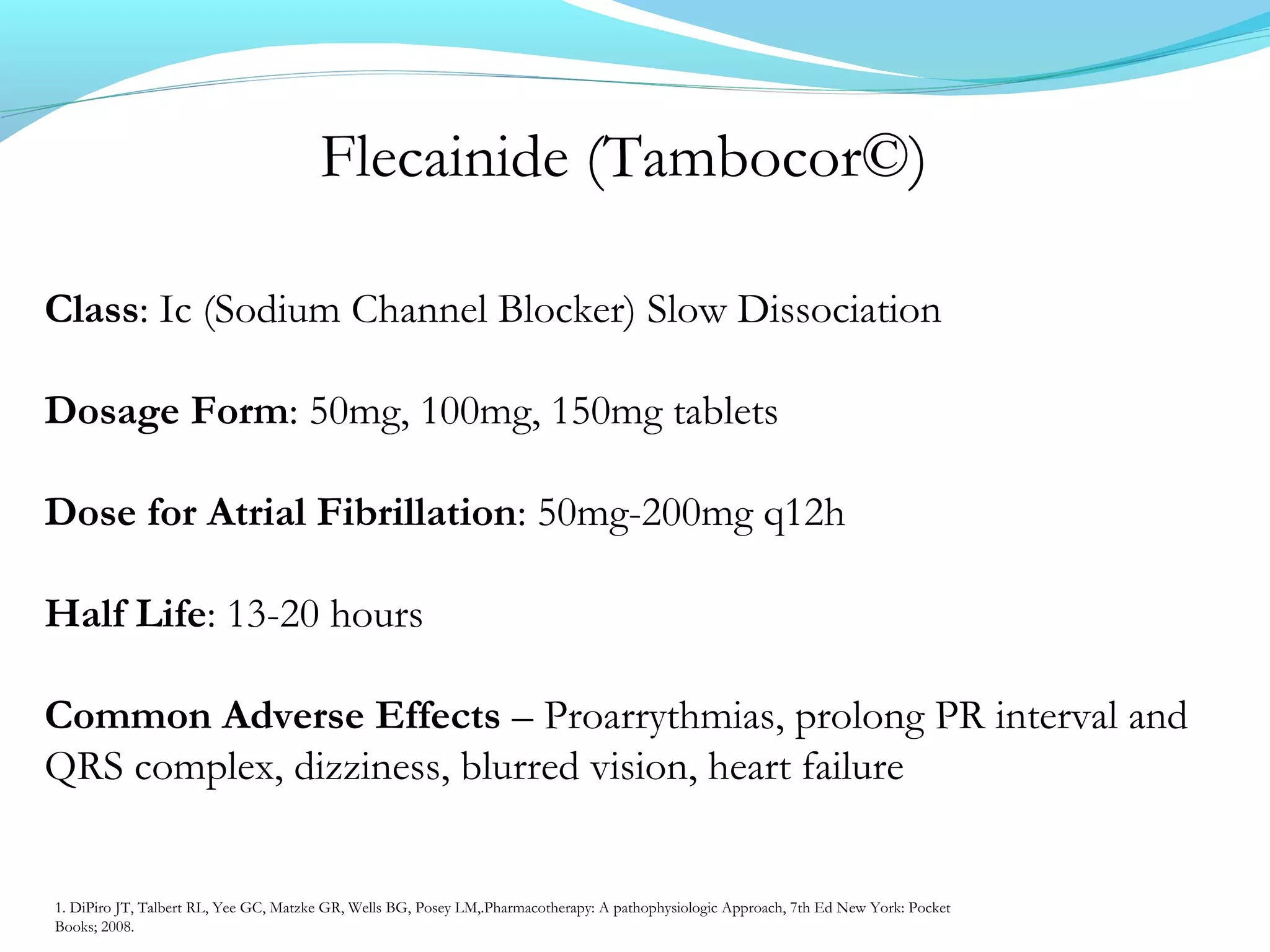
Flecainide (Tambocor©)
Class: Ic (Sodium Channel Blocker) Slow Dissociation
Dosage Form: 50mg, 100mg, 150mg tablets
Dose for Atrial Fibrillation: 50mg-200mg q12h
Half Life: 13-20 hours
Common Adverse Effects – Proarrythmias, prolong PR interval and
QRS complex, dizziness, blurred vision, heart failure
1. DiPiro JT, Talbert RL, Yee GC, Matzke GR, Wells BG, Posey LM,.Pharmacotherapy: A pathophysiologic Approach, 7th Ed New York: Pocket
Books; 2008.
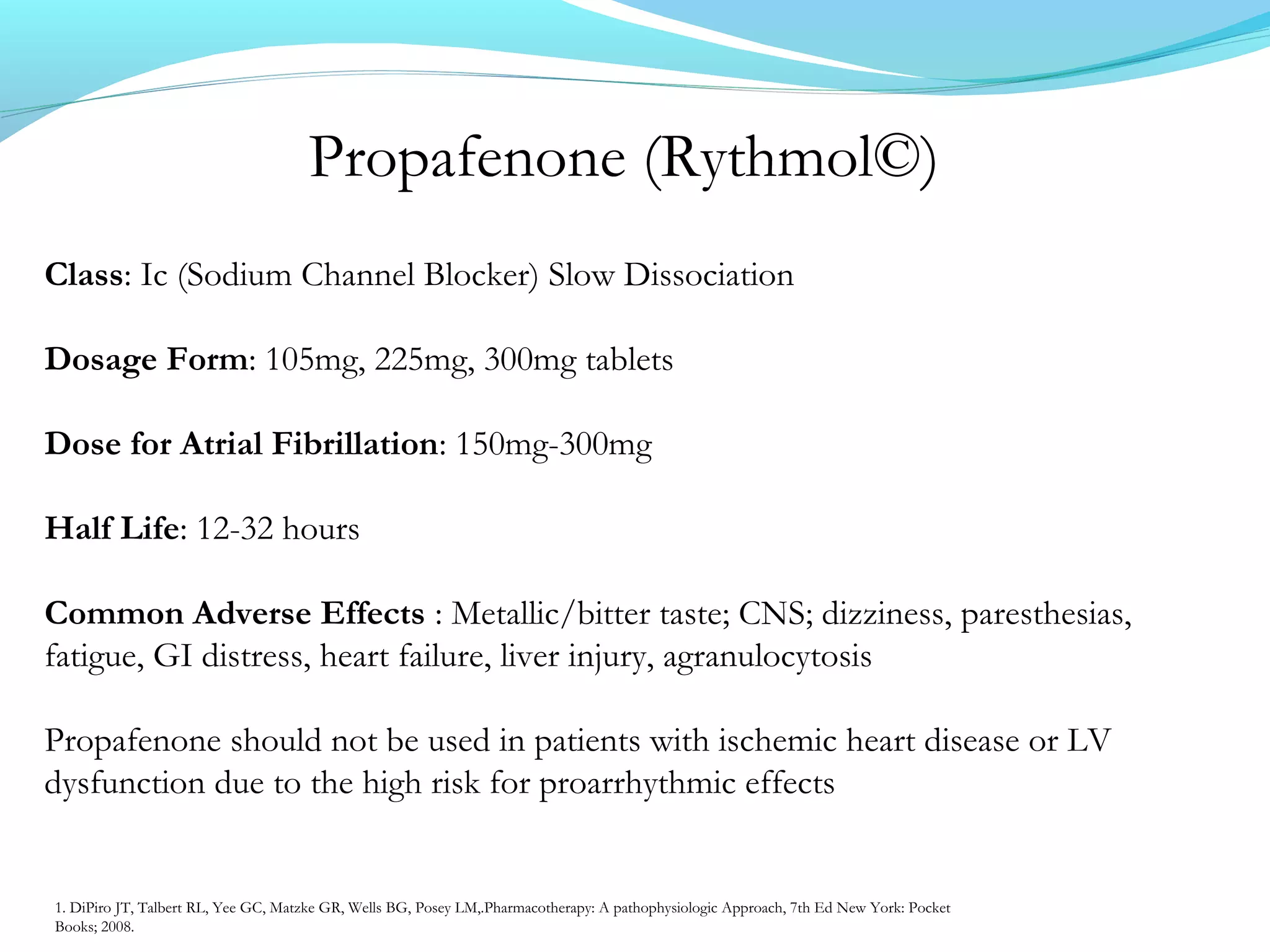
Propafenone (Rythmol©)
Class: Ic (Sodium Channel Blocker) Slow Dissociation
Dosage Form: 105mg, 225mg, 300mg tablets
Dose for Atrial Fibrillation: 150mg-300mg
Half Life: 12-32 hours
Common Adverse Effects : Metallic/bitter taste; CNS; dizziness, paresthesias,
fatigue, GI distress, heart failure, liver injury, agranulocytosis
Propafenone should not be used in patients with ischemic heart disease or LV
dysfunction due to the high risk for proarrhythmic effects
1. DiPiro JT, Talbert RL, Yee GC, Matzke GR, Wells BG, Posey LM,.Pharmacotherapy: A pathophysiologic Approach, 7th Ed New York: Pocket
Books; 2008.
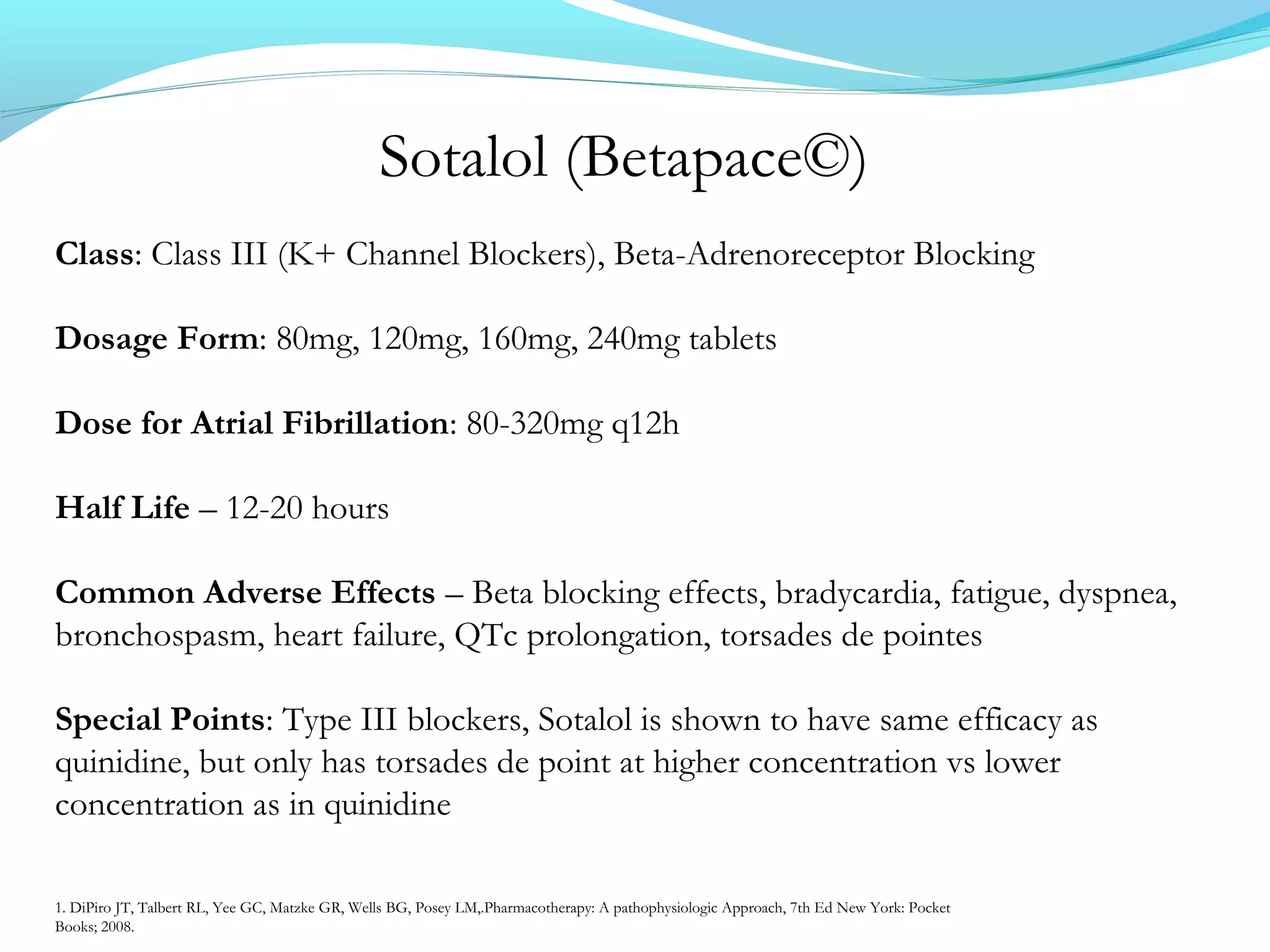
Sotalol (Betapace©)
Class: Class III (K+ Channel Blockers), Beta-Adrenoreceptor Blocking
Dosage Form: 80mg, 120mg, 160mg, 240mg tablets
Dose for Atrial Fibrillation: 80-320mg q12h
Half Life – 12-20 hours
Common Adverse Effects – Beta blocking effects, bradycardia, fatigue, dyspnea,
bronchospasm, heart failure, QTc prolongation, torsades de pointes
Special Points: Type III blockers, Sotalol is shown to have same efficacy as
quinidine, but only has torsades de point at higher concentration vs lower
concentration as in quinidine
1. DiPiro JT, Talbert RL, Yee GC, Matzke GR, Wells BG, Posey LM,.Pharmacotherapy: A pathophysiologic Approach, 7th Ed New York: Pocket
Books; 2008.
Restoring Sinus Rhythm through PharmacologyRestoring Sinus Rhythm through Pharmacology
1. DiPiro JT, Talbert RL, Yee GC, Matzke GR, Wells BG, Posey LM,.Pharmacotherapy: A pathophysiologic Approach, 7th Ed New York: Pocket
Books; 2008.
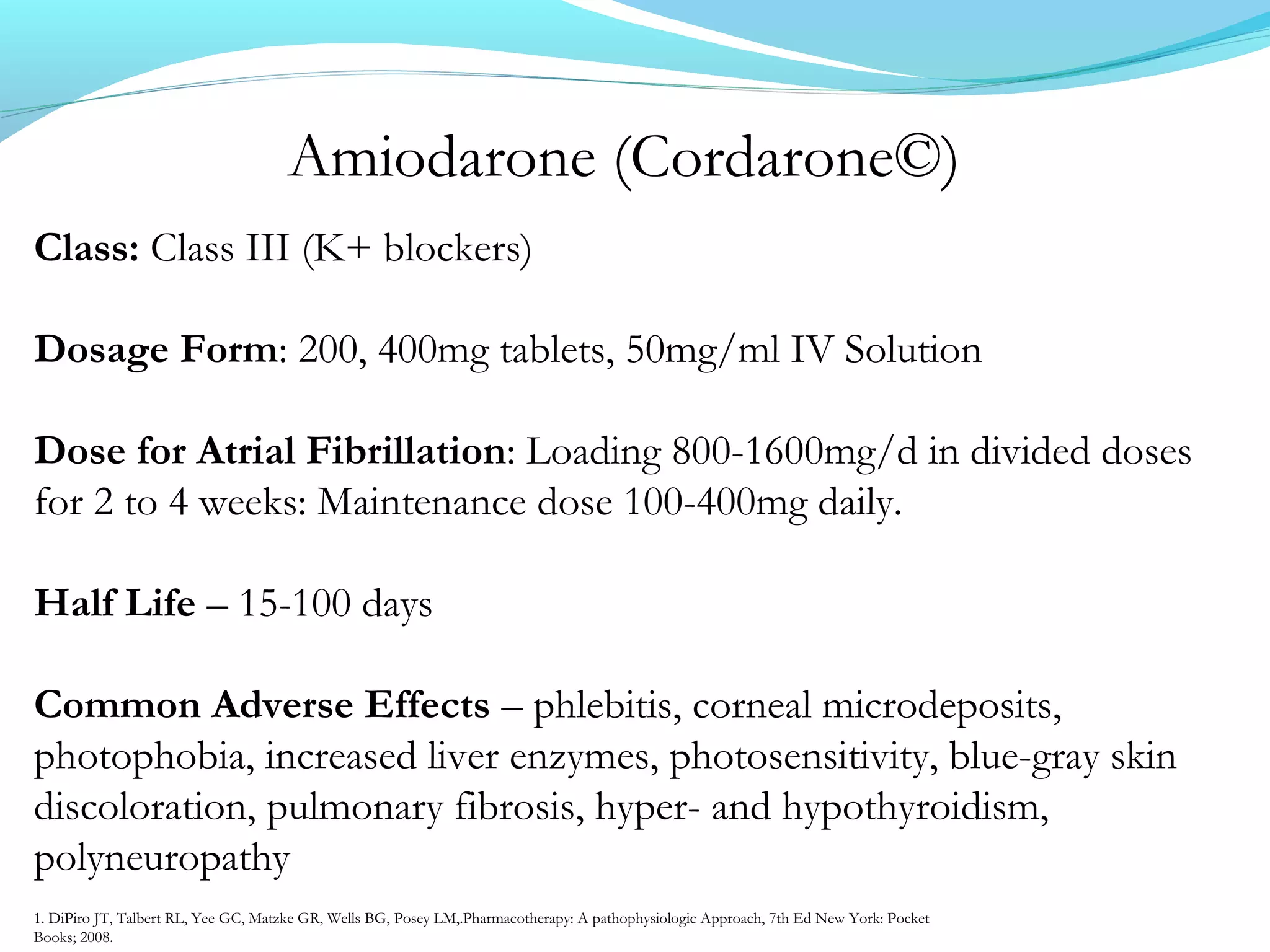
Amiodarone (Cordarone©)
Class: Class III (K+ blockers)
Dosage Form: 200, 400mg tablets, 50mg/ml IV Solution
Dose for Atrial Fibrillation: Loading 800-1600mg/d in divided doses
for 2 to 4 weeks: Maintenance dose 100-400mg daily.
Half Life – 15-100 days
Common Adverse Effects – phlebitis, corneal microdeposits,
photophobia, increased liver enzymes, photosensitivity, blue-gray skin
discoloration, pulmonary fibrosis, hyper- and hypothyroidism,
polyneuropathy
1. DiPiro JT, Talbert RL, Yee GC, Matzke GR, Wells BG, Posey LM,.Pharmacotherapy: A pathophysiologic Approach, 7th Ed New York: Pocket
Books; 2008.
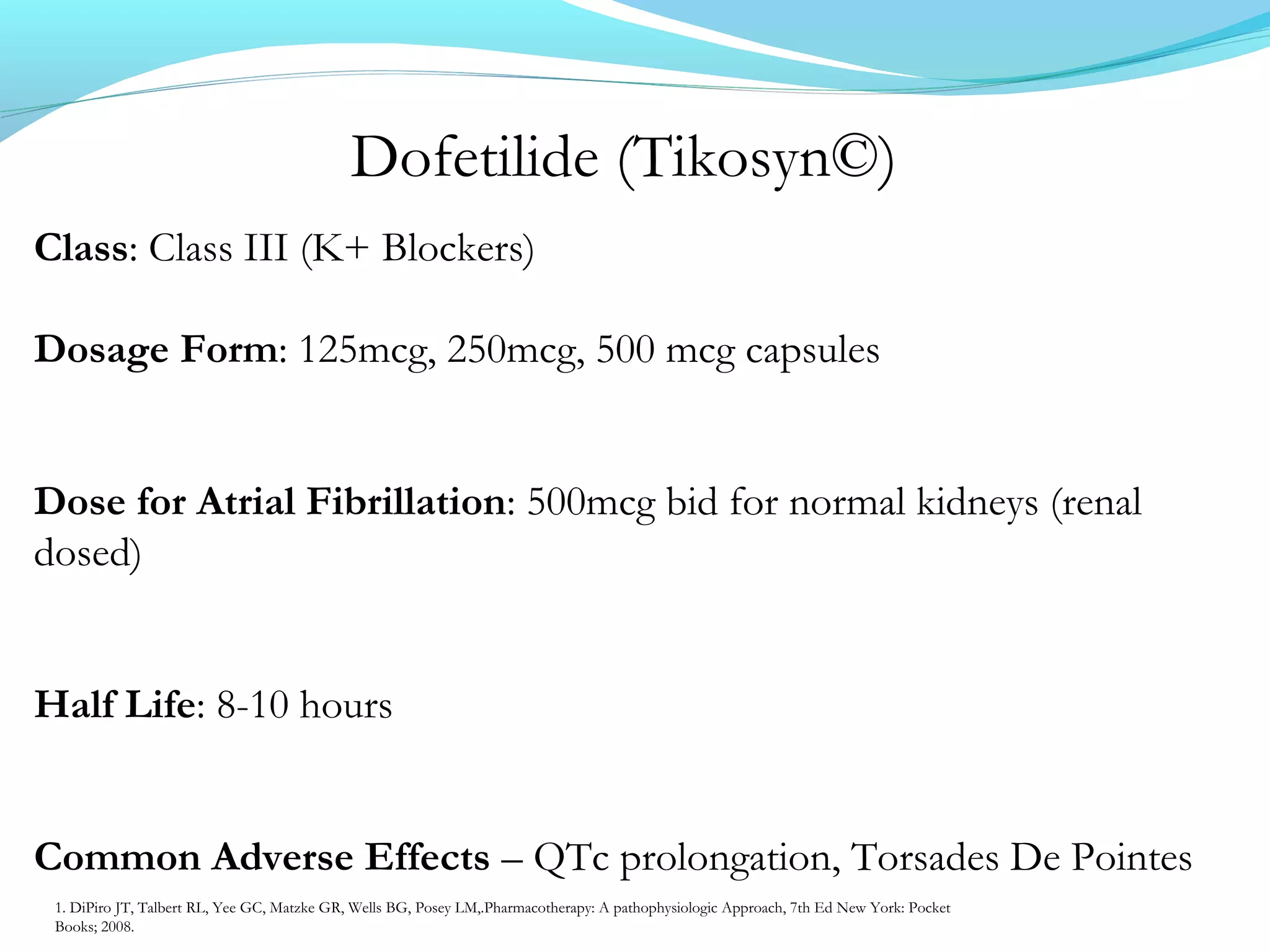
Dofetilide (Tikosyn©)
Class: Class III (K+ Blockers)
Dosage Form: 125mcg, 250mcg, 500 mcg capsules
Dose for Atrial Fibrillation: 500mcg bid for normal kidneys (renal
dosed)
Half Life: 8-10 hours
Common Adverse Effects – QTc prolongation, Torsades De Pointes
1. DiPiro JT, Talbert RL, Yee GC, Matzke GR, Wells BG, Posey LM,.Pharmacotherapy: A pathophysiologic Approach, 7th Ed New York: Pocket
Books; 2008.
Restoring Sinus Rhythm through PharmacologyRestoring Sinus Rhythm through Pharmacology
1. DiPiro JT, Talbert RL, Yee GC, Matzke GR, Wells BG, Posey LM,.Pharmacotherapy: A pathophysiologic Approach, 7th Ed New York: Pocket
Books; 2008.
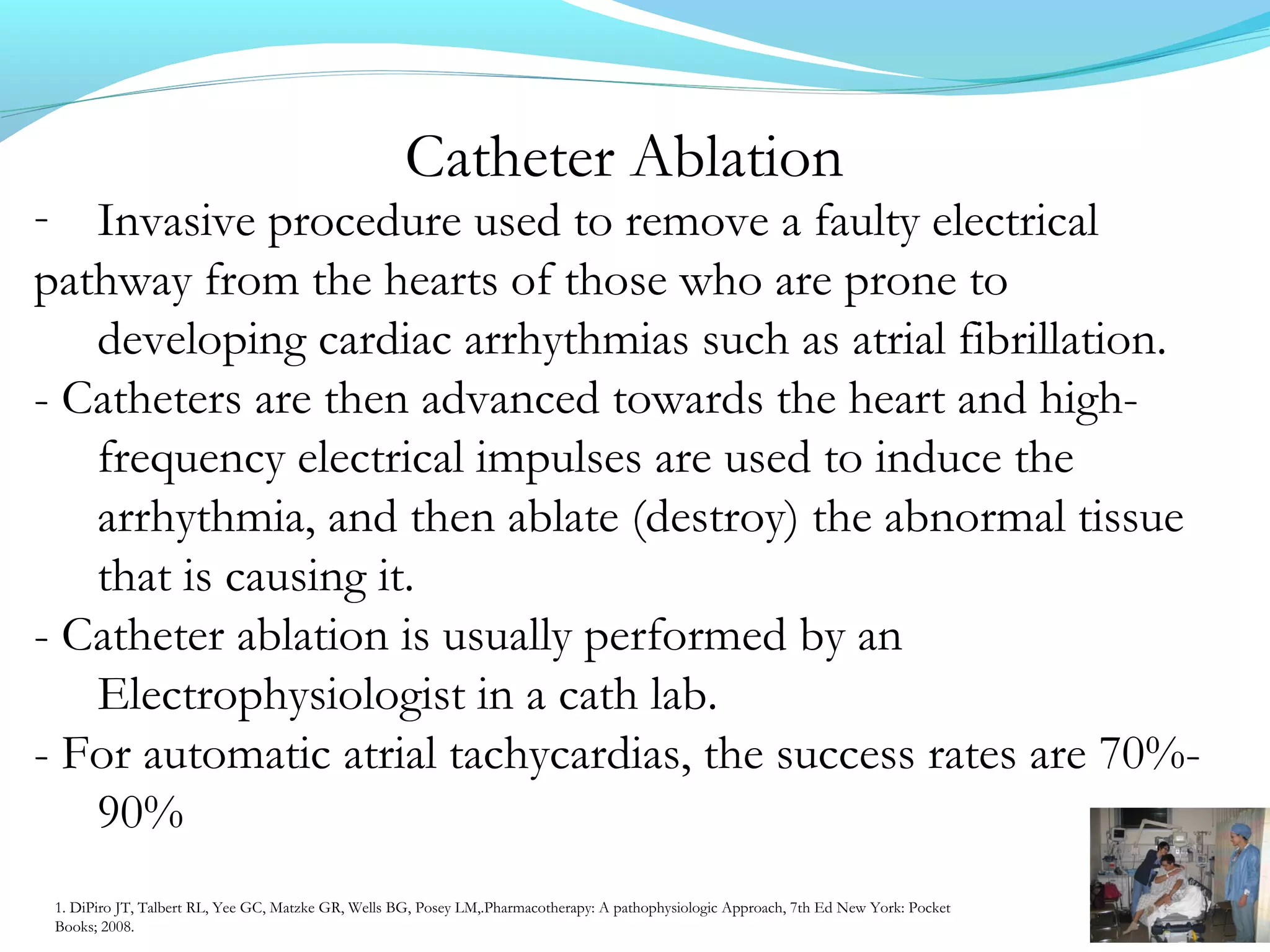
Catheter Ablation
- Invasive procedure used to remove a faulty electrical
pathway from the hearts of those who are prone to
developing cardiac arrhythmias such as atrial fibrillation.
- Catheters are then advanced towards the heart and high-
frequency electrical impulses are used to induce the
arrhythmia, and then ablate (destroy) the abnormal tissue
that is causing it.
- Catheter ablation is usually performed by an
Electrophysiologist in a cath lab.
- For automatic atrial tachycardias, the success rates are 70%-
90%
1. DiPiro JT, Talbert RL, Yee GC, Matzke GR, Wells BG, Posey LM,.Pharmacotherapy: A pathophysiologic Approach, 7th Ed New York: Pocket
Books; 2008.
Restoring Sinus Rhythm through Pharmacology
1. DiPiro JT, Talbert RL, Yee GC, Matzke GR, Wells BG, Posey LM,.Pharmacotherapy: A pathophysiologic Approach, 7th Ed New York: Pocket
Books; 2008.
Conclusion
In patients with atrial fibrillation, therapy traditionally has been aimed at
- Controlling Ventricular Response (e.g.,
digoxin, calcium antagonists, and β-blockers)
- Preventing Thromboembolic Complications (e.g., warfarin and
aspirin),
- Restoring and Maintaining Sinus Rhythm (e.g., antiarrhythmic
drugs and direct-current cardioversion).
Recent studies show that there is no need to pursue strategies
aggressively to maintain sinus rhythm (e.g., long-term antiarrhythmic
drugs); rate control alone is often sufficient in patients
who can tolerate it.
References
1. DiPiro JT, Talbert RL, Yee GC, Matzke GR, Wells BG, Posey LM,.Pharmacotherapy: A
pathophysiologic Approach, 7th Ed New York: Pocket Books; 2008.
2. Klein AL, Grimm RA, Murray D, et al. Use of transesophageal echocardiography to guide
cardioversion in patients with atrial fibrillation.N Engl J Med 2001;344:1411–1420.
3. Murdock DK, Schumock GT, Kaliebe J, et al. Clinical and case comparison ibutilide and
direct-current cardioversion for atrial fibrillation
and flutter. Am J Cardiol 2000;85:503–506.
4. Phillips BG, Gandhi AJ, Sanoski CA, et al. Comparison of intravenous diltiazem and
verapamil for the acute treatment of atrial fibrillation and flutter. Pharmacotherapy
1997;17:1238–1245.

Atrial Fibrillation/Flutter Presentation

  • 1.
    Dustin Thomas Pharm.D.,BCMTMS St. John Leonardi Foundation Cardiovascular Seminar
  • 2.
    Defining Afib/Flutter Definition Afib/flutter consistsof supraventricular tachycardia Due to Alteration in Impulse Formation and or Conduction DiPiro JT, Talbert RL, Yee GC, Matzke GR, Wells BG, Posey LM,.Pharmacotherapy: A pathophysiologic Approach, 7th Ed New York: Pocket Books; 2008.
  • 3.
    Differentiating Afib/Aflutter DiPiro JT,Talbert RL, Yee GC, Matzke GR, Wells BG, Posey LM,.Pharmacotherapy: A pathophysiologic Approach, 7th Ed New York: Pocket Books; 2008.
  • 4.
    Atrial Fibrillation andFlutter Occur more often in Men, especially elderly men Prevalance of Atrial Fibrillation is about 0.4% Types of Atrial Fibrillation 1. DiPiro JT, Talbert RL, Yee GC, Matzke GR, Wells BG, Posey LM,.Pharmacotherapy: A pathophysiologic Approach, 7th Ed New York: Pocket
  • 5.
    Etiology of Afib/Aflutter 1.DiPiro JT, Talbert RL, Yee GC, Matzke GR, Wells BG, Posey LM,.Pharmacotherapy: A pathophysiologic Approach, 7th Ed New York: Pocket
  • 6.
    Signs and Symptomsof Afib/flutter Palpit at ions Short ness of breat h Weakness or Dif f icult y Exercising Chest pain Dizziness or f aint ing Fat igue Conf usion1. DiPiro JT, Talbert RL, Yee GC, Matzke GR, Wells BG, Posey LM,.Pharmacotherapy: A pathophysiologic Approach, 7th Ed New York: Pocket Books; 2008.
  • 7.
    Treating Afib/Aflutter DiPiro JT,Talbert RL, Yee GC, Matzke GR, Wells BG, Posey LM,.Pharmacotherapy: A pathophysiologic Approach, 7th Ed New York: Pocket Books; 2008. Rate Control Prevention of Thromboembolism Rhythm Control (Involves Classes II & IV) (Involves Classes I and III)
  • 8.
    1. DiPiro JT,Talbert RL, Yee GC, Matzke GR, Wells BG, Posey LM,.Pharmacotherapy: A pathophysiologic Approach, 7th Ed New York: Pocket Books; 2008.
  • 9.
    Severe Symptoms Severe symptomsqualifying as a medical emergency patients (1) Acute CHF (2) Severe Hypotension (3) Uncontrolled Angina/Ischemia Requires Direct-Current Cardioversion (DCC) in an attempt to immediately restore sinus rhythm (without regard to risk of thromboembolism) Atrial Flutter low energy of countershock 25 to 50 W/s Atrial Fibrillation requires >200 W/s 1. DiPiro JT, Talbert RL, Yee GC, Matzke GR, Wells BG, Posey LM,.Pharmacotherapy: A pathophysiologic Approach, 7th Ed New York: Pocket Books; 2008.
  • 10.
    1. DiPiro JT,Talbert RL, Yee GC, Matzke GR, Wells BG, Posey LM,.Pharmacotherapy: A pathophysiologic Approach, 7th Ed New York: Pocket Books; 2008.
  • 11.
    Mild Symptoms Control VentricularRate! Loading dosages of digoxin historically have been recommended as first line treatment to slow ventricular rate, particularly in patients with heart failure - Loading Dose 0.25mg q2h PO or IV max 1.5mg daily dose - Slow to Onset - Decrease in ventricular response sometimes can be observed within 1 hour of intravenous administration -Full control usually is not achieved for 24 to 48 hours. - Will not control exercise-related increase in ventricular response and tachycardia symptoms - If given, it is recommended to give small doses of CCB or beta blockers 1. DiPiro JT, Talbert RL, Yee GC, Matzke GR, Wells BG, Posey LM,.Pharmacotherapy: A pathophysiologic Approach, 7th Ed New York: Pocket Books; 2008.
  • 12.
    Mild Symptoms Control VentricularRate! - Non-Dihydropyridine Calcium Channel Blockers (e.g. diltiazem or verapamil) provide an alternative approach, allowing for a rapid decrease in ventricular rate and symptomatic relief without the need for DCC - Because control of ventricular response can be transient, verapamil or diltiazem can be given as an intial intravenous bolus, followed by a continuous infusion titrated to heart rate without worrying about much toxicity as with digoxin - Diltiazem Dose: IV bolus 0.25mg/kg IV over 2 minutes, may give second bolus if not adequate of 0.35mg/kg after 15 minutes. - Verapamil Dose: 0.075 to 0.15mg/kg IV over 3 minutes. Additional 10mg after minutes. - According to a head to head double blinded study in the Journal of Pharmacotherapy, Diltiazem was shown to be safer and effective in treating acute atrial fibrillation/flutter compared to Verapamil. Phillips BG, Gandhi AJ, Sanoski CA, et al. Comparison of intravenous diltiazem and verapamil for the acute treatment of atrial fibrillation and flutter. Pharmacotherapy 1997;17:1238–1245.
  • 13.
    Mild Symptoms Beta Blockers -Highly Effective for Patients from Stress Induced Afib, or thyrotoxicosis - Beta Blockers antagonize adrenergic stimulation - Afib stemming from Stress or Thyrotoxicosis are actual resistant to digoxin - Double action affect for patients with CHF - Improves Systolic Function (longterm) - Control Ventricular Rate Control Ventricular Rate! 1. DiPiro JT, Talbert RL, Yee GC, Matzke GR, Wells BG, Posey LM,.Pharmacotherapy: A pathophysiologic Approach, 7th Ed New York: Pocket Books; 2008.
  • 14.
    1. DiPiro JT,Talbert RL, Yee GC, Matzke GR, Wells BG, Posey LM,.Pharmacotherapy: A pathophysiologic Approach, 7th Ed New York: Pocket Books; 2008.
  • 15.
    Mild Symptoms Anticoagulate thePatient! Use the Stroke Prevention Guidelines to Anticoagulate Patients with Coumadin. INR needs to be between 2-3 for Any age Patients who have Atrial Fibrillation less than 48 hours do not need Anticoagulation; How long does the patient have to be on coumadin? Usually 4 weeks after the patient’s Atrial Fibrillation has resolved by on its on unless doctor decides not to treat Atrial Fibrillation. 1. DiPiro JT, Talbert RL, Yee GC, Matzke GR, Wells BG, Posey LM,.Pharmacotherapy: A pathophysiologic Approach, 7th Ed New York: Pocket Books; 2008.
  • 16.
    Notice! No Drugsfor Rhythm Control Recommended! 1. DiPiro JT, Talbert RL, Yee GC, Matzke GR, Wells BG, Posey LM,.Pharmacotherapy: A pathophysiologic Approach, 7th Ed New York: Pocket Books; 2008.
  • 17.
    Drug Therapy? Restoring SinusRhythm Vs. Rate Control - An Important Trial National Institute of Health (NIH) – sponsored (AFFIRM) that compared strategies to maintain sinus rhythm with those just to control ventricular rate, allowing atrial fibrillation to remain; Cumulative mortality was not statistically different between the two strategies, but tended (p=0.08) to be higher in the group given antiarrhythmic drugs to maintain sinus rhythm - Many clinicians believe the benefits of giving type I or type III (specific for rhythm control) for sinus rhythm control does not outweigh the risks of possible side effects. Side effects including blood dyscreaseas and proarrythmias. 1. DiPiro JT, Talbert RL, Yee GC, Matzke GR, Wells BG, Posey LM,.Pharmacotherapy: A pathophysiologic Approach, 7th Ed New York: Pocket Books; 2008.
  • 18.
    1. DiPiro JT,Talbert RL, Yee GC, Matzke GR, Wells BG, Posey LM,.Pharmacotherapy: A pathophysiologic Approach, 7th Ed New York: Pocket Books; 2008.
  • 19.
    Maintaining Sinus Rhythm Twoways to restore sinus rhythm - Electrical Cardioversion - Administration of Antiarrhythmic Drugs * Chronic Antiarrhythmic therapy is usually reserved for patients with recurrent, symptomatic episodes. One economic analysis published in the American Journal of Cardiology showed that, DCC as first line therapy was less costly then proceeding to DCC in the event of drug failure. Nearly all type Ia, Ic, and III agents have been demonstrated to possess some effectiveness in terminating atrial fibrillation Murdock DK, Schumock GT, Kaliebe J, et al. Clinical and case comparison ibutilide and direct-current cardioversion for atrial fibrillation and flutter. Am J Cardiol 2000;85:503–506.
  • 20.
    Antithrombic Therapy forPatients undergoing Electronic Cardioversion - Patients are required to be anticoagulated 3 to 4 weeks prior to cardioversion unless transesophageal echocardiography TEE rules out atrial thrombus and to continue 4 weeks postcardioversion. - Risk Factors for NonValvular Atrial Fibrillation Thromboembolism: - Previous Stroke or TIA - Hypertension - Congestive Heart Failure - Diabetes Mellitus - Age > 75 years - Recommended Antithrombotic Therapy - Aspirin 325mg daily - < 65 years and no risk factors Coumadin (INR 2-3) - Age >75 - Any age and presence of risk factors for thromboembolism 1. DiPiro JT, Talbert RL, Yee GC, Matzke GR, Wells BG, Posey LM,.Pharmacotherapy: A pathophysiologic Approach, 7th Ed New York: Pocket Books; 2008.
  • 21.
    Antithrombic Therapy forPatients Undergoing Electronic Cardioversion -Why patients need to be on coumadin? The reason for this is that the return of sinus rhythm restores an effective contraction, which may dislodge poorly adherent thrombi. -I can get a 90 day supply of generic warfarin for $10, why do I have to get an expensive TEE test to rule out whether or not I need to be anticoagulant? In large multicenter, randomized trial done from the New England Journal of Medicine, the incidence of thromboembolic events was not different between the two strategies, but bleeding episodes were higher in the 3 weeks of warfarin group. Klein AL, Grimm RA, Murray D, et al. Use of transesophageal echocardiography to guide cardioversion in patients with atrial fibrillation.N Engl J Med 2001;344:1411–1420.
  • 22.
    Restoring Sinus Rhythmthrough Pharmacology Although, recent findings of AFFIRM trial question the need to use antiarrhythmic drugs to prevent recurrence of atrial fibrillation. Patients with paroxysmal atrial fibrillation and intolerable symptoms during recurrences do require antiarrhythmic drugs to prevent attacks Although nearly all type I or III antiarrhythmic drugs has some published evidence of effectiveness in preventing recurrences of Afib/flutter, Amiodarone is clearly the most effective agent and now the most frequent chosen despite its impressive toxicity. 1. DiPiro JT, Talbert RL, Yee GC, Matzke GR, Wells BG, Posey LM,.Pharmacotherapy: A pathophysiologic Approach, 7th Ed New York: Pocket Books; 2008.
  • 23.
    Restoring Sinus Rhythmthrough Pharmacology 1. DiPiro JT, Talbert RL, Yee GC, Matzke GR, Wells BG, Posey LM,.Pharmacotherapy: A pathophysiologic Approach, 7th Ed New York: Pocket Books; 2008.
  • 24.
    Flecainide (Tambocor©) Class: Ic(Sodium Channel Blocker) Slow Dissociation Dosage Form: 50mg, 100mg, 150mg tablets Dose for Atrial Fibrillation: 50mg-200mg q12h Half Life: 13-20 hours Common Adverse Effects – Proarrythmias, prolong PR interval and QRS complex, dizziness, blurred vision, heart failure 1. DiPiro JT, Talbert RL, Yee GC, Matzke GR, Wells BG, Posey LM,.Pharmacotherapy: A pathophysiologic Approach, 7th Ed New York: Pocket Books; 2008.
  • 25.
    Propafenone (Rythmol©) Class: Ic(Sodium Channel Blocker) Slow Dissociation Dosage Form: 105mg, 225mg, 300mg tablets Dose for Atrial Fibrillation: 150mg-300mg Half Life: 12-32 hours Common Adverse Effects : Metallic/bitter taste; CNS; dizziness, paresthesias, fatigue, GI distress, heart failure, liver injury, agranulocytosis Propafenone should not be used in patients with ischemic heart disease or LV dysfunction due to the high risk for proarrhythmic effects 1. DiPiro JT, Talbert RL, Yee GC, Matzke GR, Wells BG, Posey LM,.Pharmacotherapy: A pathophysiologic Approach, 7th Ed New York: Pocket Books; 2008.
  • 26.
    Sotalol (Betapace©) Class: ClassIII (K+ Channel Blockers), Beta-Adrenoreceptor Blocking Dosage Form: 80mg, 120mg, 160mg, 240mg tablets Dose for Atrial Fibrillation: 80-320mg q12h Half Life – 12-20 hours Common Adverse Effects – Beta blocking effects, bradycardia, fatigue, dyspnea, bronchospasm, heart failure, QTc prolongation, torsades de pointes Special Points: Type III blockers, Sotalol is shown to have same efficacy as quinidine, but only has torsades de point at higher concentration vs lower concentration as in quinidine 1. DiPiro JT, Talbert RL, Yee GC, Matzke GR, Wells BG, Posey LM,.Pharmacotherapy: A pathophysiologic Approach, 7th Ed New York: Pocket Books; 2008.
  • 27.
    Restoring Sinus Rhythmthrough PharmacologyRestoring Sinus Rhythm through Pharmacology 1. DiPiro JT, Talbert RL, Yee GC, Matzke GR, Wells BG, Posey LM,.Pharmacotherapy: A pathophysiologic Approach, 7th Ed New York: Pocket Books; 2008.
  • 28.
    Amiodarone (Cordarone©) Class: ClassIII (K+ blockers) Dosage Form: 200, 400mg tablets, 50mg/ml IV Solution Dose for Atrial Fibrillation: Loading 800-1600mg/d in divided doses for 2 to 4 weeks: Maintenance dose 100-400mg daily. Half Life – 15-100 days Common Adverse Effects – phlebitis, corneal microdeposits, photophobia, increased liver enzymes, photosensitivity, blue-gray skin discoloration, pulmonary fibrosis, hyper- and hypothyroidism, polyneuropathy 1. DiPiro JT, Talbert RL, Yee GC, Matzke GR, Wells BG, Posey LM,.Pharmacotherapy: A pathophysiologic Approach, 7th Ed New York: Pocket Books; 2008.
  • 29.
    Dofetilide (Tikosyn©) Class: ClassIII (K+ Blockers) Dosage Form: 125mcg, 250mcg, 500 mcg capsules Dose for Atrial Fibrillation: 500mcg bid for normal kidneys (renal dosed) Half Life: 8-10 hours Common Adverse Effects – QTc prolongation, Torsades De Pointes 1. DiPiro JT, Talbert RL, Yee GC, Matzke GR, Wells BG, Posey LM,.Pharmacotherapy: A pathophysiologic Approach, 7th Ed New York: Pocket Books; 2008.
  • 30.
    Restoring Sinus Rhythmthrough PharmacologyRestoring Sinus Rhythm through Pharmacology 1. DiPiro JT, Talbert RL, Yee GC, Matzke GR, Wells BG, Posey LM,.Pharmacotherapy: A pathophysiologic Approach, 7th Ed New York: Pocket Books; 2008.
  • 31.
    Catheter Ablation - Invasiveprocedure used to remove a faulty electrical pathway from the hearts of those who are prone to developing cardiac arrhythmias such as atrial fibrillation. - Catheters are then advanced towards the heart and high- frequency electrical impulses are used to induce the arrhythmia, and then ablate (destroy) the abnormal tissue that is causing it. - Catheter ablation is usually performed by an Electrophysiologist in a cath lab. - For automatic atrial tachycardias, the success rates are 70%- 90% 1. DiPiro JT, Talbert RL, Yee GC, Matzke GR, Wells BG, Posey LM,.Pharmacotherapy: A pathophysiologic Approach, 7th Ed New York: Pocket Books; 2008.
  • 32.
    Restoring Sinus Rhythmthrough Pharmacology 1. DiPiro JT, Talbert RL, Yee GC, Matzke GR, Wells BG, Posey LM,.Pharmacotherapy: A pathophysiologic Approach, 7th Ed New York: Pocket Books; 2008.
  • 33.
    Conclusion In patients withatrial fibrillation, therapy traditionally has been aimed at - Controlling Ventricular Response (e.g., digoxin, calcium antagonists, and β-blockers) - Preventing Thromboembolic Complications (e.g., warfarin and aspirin), - Restoring and Maintaining Sinus Rhythm (e.g., antiarrhythmic drugs and direct-current cardioversion). Recent studies show that there is no need to pursue strategies aggressively to maintain sinus rhythm (e.g., long-term antiarrhythmic drugs); rate control alone is often sufficient in patients who can tolerate it.
  • 34.
    References 1. DiPiro JT,Talbert RL, Yee GC, Matzke GR, Wells BG, Posey LM,.Pharmacotherapy: A pathophysiologic Approach, 7th Ed New York: Pocket Books; 2008. 2. Klein AL, Grimm RA, Murray D, et al. Use of transesophageal echocardiography to guide cardioversion in patients with atrial fibrillation.N Engl J Med 2001;344:1411–1420. 3. Murdock DK, Schumock GT, Kaliebe J, et al. Clinical and case comparison ibutilide and direct-current cardioversion for atrial fibrillation and flutter. Am J Cardiol 2000;85:503–506. 4. Phillips BG, Gandhi AJ, Sanoski CA, et al. Comparison of intravenous diltiazem and verapamil for the acute treatment of atrial fibrillation and flutter. Pharmacotherapy 1997;17:1238–1245.

Editor's Notes

  • #6 Any disease that is associated with distention of the heart valves.
  • #8 Contemplate methods to restore sinus rhythm