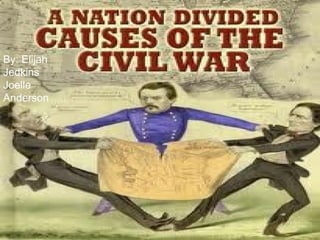
By: Elijah
Jedkins
Joelle
Anderson
Slavery
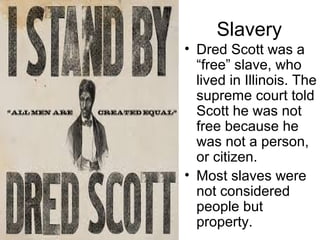
• Dred Scott was a
“free” slave, who
lived in Illinois. The
supreme court told
Scott he was not
free because he
was not a person,
or citizen.
• Most slaves were
not considered
people but
property.
Slavery
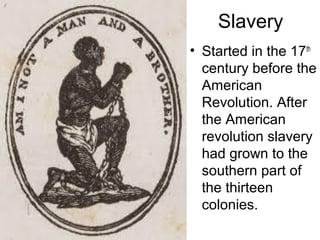
• Started in the 17th
century before the
American
Revolution. After
the American
revolution slavery
had grown to the
southern part of
the thirteen
colonies.
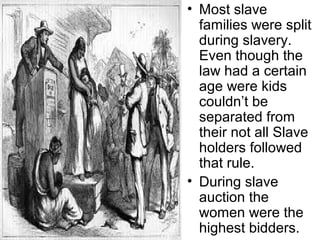
• Most slave
families were split
during slavery.
Even though the
law had a certain
age were kids
couldn’t be
separated from
their not all Slave
holders followed
that rule.
• During slave
auction the
women were the
highest bidders.
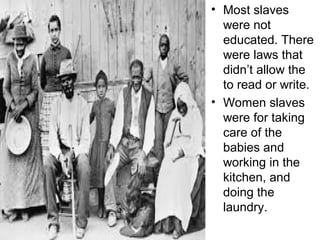
• Most slaves
were not
educated. There
were laws that
didn’t allow the
to read or write.
• Women slaves
were for taking
care of the
babies and
working in the
kitchen, and
doing the
laundry.
Slavery
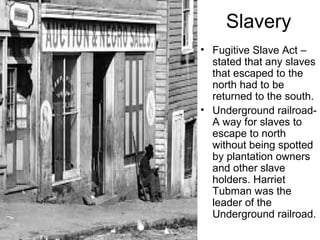
• Fugitive Slave Act –
stated that any slaves
that escaped to the
north had to be
returned to the south.
• Underground railroad-
A way for slaves to
escape to north
without being spotted
by plantation owners
and other slave
holders. Harriet
Tubman was the
leader of the
Underground railroad.
Candidates for the
Election of 1860
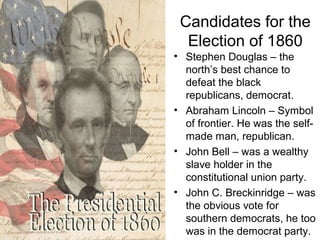
• Stephen Douglas – the
north’s best chance to
defeat the black
republicans, democrat.
• Abraham Lincoln – Symbol
of frontier. He was the self-
made man, republican.
• John Bell – was a wealthy
slave holder in the
constitutional union party.
• John C. Breckinridge – was
the obvious vote for
southern democrats, he too
was in the democrat party.
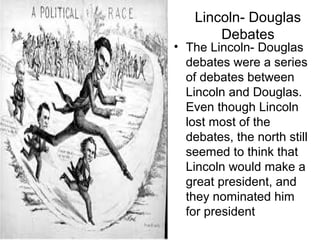
Lincoln- Douglas
Debates
• The Lincoln- Douglas
debates were a series
of debates between
Lincoln and Douglas.
Even though Lincoln
lost most of the
debates, the north still
seemed to think that
Lincoln would make a
great president, and
they nominated him
for president
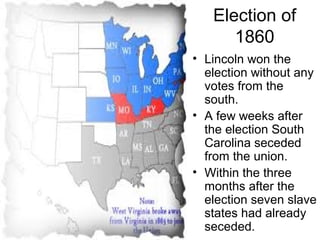
Election of
1860
• Lincoln won the
election without any
votes from the
south.
• A few weeks after
the election South
Carolina seceded
from the union.
• Within the three
months after the
election seven slave
states had already
seceded.
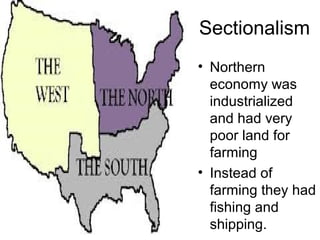
Sectionalism
• Northern
economy was
industrialized
and had very
poor land for
farming
• Instead of
farming they had
fishing and
shipping.
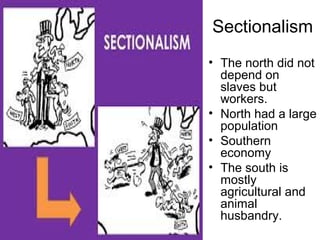
Sectionalism
• The north did not
depend on
slaves but
workers.
• North had a large
population
• Southern
economy
• The south is
mostly
agricultural and
animal
husbandry.
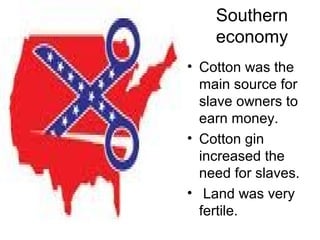
Southern
economy
• Cotton was the
main source for
slave owners to
earn money.
• Cotton gin
increased the
need for slaves.
• Land was very
fertile.
Sectionalism
• Tariffs were another
reason for sectionalism.
• North benefited from
tariffs the most since
they made the foreign
goods and exported
them.
• South unfortunately had
to buy the foreign
goods, which made
them made because the
north got the raw
materials from the
south.
• Other reasons for
sectionalism was
• Slavery and states’
rights
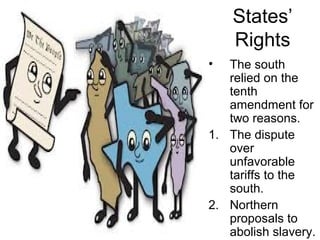
States’
Rights
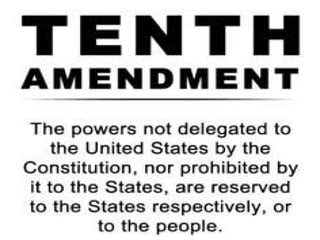
• The south
relied on the
tenth
amendment for
two reasons.
1. The dispute
over
unfavorable
tariffs to the
south.
2. Northern
proposals to
abolish slavery.
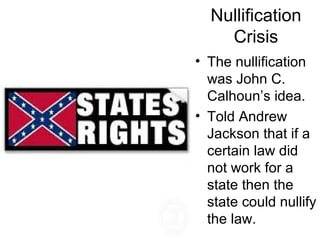
Nullification
Crisis
• The nullification
was John C.
Calhoun’s idea.
• Told Andrew
Jackson that if a
certain law did
not work for a
state then the
state could nullify
the law.
Work cited
• “Incidents in the Life of a Slave Girl (Slave Narrative)” in
Children and Youth in History, item #473, 22 Aug. 2010. web
9 May 2014
N.p. Causes of the Civil War. America’s Civil War. Sep. 2010. web
11 May 2014
N.p. Causes and Effects of the Civil War. MrNussbaucom. n.d. web
11 May 2014
Independence Hall Association. The South Secedes. n.d. web.
11 May 2014
Epperson, James F. Causes of the Civil War. OTTN Publishing. 2005.
print. 11 May 2014

Causes of the Civil War

  • 1.
  • 2.
    Slavery • Dred Scottwas a “free” slave, who lived in Illinois. The supreme court told Scott he was not free because he was not a person, or citizen. • Most slaves were not considered people but property.
  • 3.
    Slavery • Started inthe 17th century before the American Revolution. After the American revolution slavery had grown to the southern part of the thirteen colonies.
  • 4.
    • Most slave familieswere split during slavery. Even though the law had a certain age were kids couldn’t be separated from their not all Slave holders followed that rule. • During slave auction the women were the highest bidders.
  • 5.
    • Most slaves werenot educated. There were laws that didn’t allow the to read or write. • Women slaves were for taking care of the babies and working in the kitchen, and doing the laundry.
  • 6.
    Slavery • Fugitive SlaveAct – stated that any slaves that escaped to the north had to be returned to the south. • Underground railroad- A way for slaves to escape to north without being spotted by plantation owners and other slave holders. Harriet Tubman was the leader of the Underground railroad.
  • 7.
    Candidates for the Electionof 1860 • Stephen Douglas – the north’s best chance to defeat the black republicans, democrat. • Abraham Lincoln – Symbol of frontier. He was the self- made man, republican. • John Bell – was a wealthy slave holder in the constitutional union party. • John C. Breckinridge – was the obvious vote for southern democrats, he too was in the democrat party.
  • 8.
    Lincoln- Douglas Debates • TheLincoln- Douglas debates were a series of debates between Lincoln and Douglas. Even though Lincoln lost most of the debates, the north still seemed to think that Lincoln would make a great president, and they nominated him for president
  • 9.
    Election of 1860 • Lincolnwon the election without any votes from the south. • A few weeks after the election South Carolina seceded from the union. • Within the three months after the election seven slave states had already seceded.
  • 10.
    Sectionalism • Northern economy was industrialized andhad very poor land for farming • Instead of farming they had fishing and shipping.
  • 11.
    Sectionalism • The northdid not depend on slaves but workers. • North had a large population • Southern economy • The south is mostly agricultural and animal husbandry.
  • 12.
    Southern economy • Cotton wasthe main source for slave owners to earn money. • Cotton gin increased the need for slaves. • Land was very fertile.
  • 13.
    Sectionalism • Tariffs wereanother reason for sectionalism. • North benefited from tariffs the most since they made the foreign goods and exported them. • South unfortunately had to buy the foreign goods, which made them made because the north got the raw materials from the south. • Other reasons for sectionalism was • Slavery and states’ rights
  • 15.
    States’ Rights • The south reliedon the tenth amendment for two reasons. 1. The dispute over unfavorable tariffs to the south. 2. Northern proposals to abolish slavery.
  • 16.
    Nullification Crisis • The nullification wasJohn C. Calhoun’s idea. • Told Andrew Jackson that if a certain law did not work for a state then the state could nullify the law.
  • 17.
    Work cited • “Incidentsin the Life of a Slave Girl (Slave Narrative)” in Children and Youth in History, item #473, 22 Aug. 2010. web 9 May 2014 N.p. Causes of the Civil War. America’s Civil War. Sep. 2010. web 11 May 2014 N.p. Causes and Effects of the Civil War. MrNussbaucom. n.d. web 11 May 2014 Independence Hall Association. The South Secedes. n.d. web. 11 May 2014 Epperson, James F. Causes of the Civil War. OTTN Publishing. 2005. print. 11 May 2014