ASTHMA
PRESENTATION
MASENO UNIVERSITY
SCHOOL OF NURSING
DEPARTMENT OF MIDWIFERY
MN/03005/016
MN/03006/016
Introduction
■ Asthma is a chronic disease involving the airways in the lungs.
■ These airways or bronchial tubes allow air to come in and out of the lungs.
■ It may be due to airway inflammation hence poor air passage hence coughing,
wheezing, shortness of breath and chest tightness.
■ At pregnancy stage of a woman, the foetus in the womb depends on the
oxygen that the mother breaths.
■ The implant of an asthma exacerbation lack of enough oxygen to the
developing foetus hence great danger.
■ It then implies that women should manage asthma with prescribed medication
even in pregnancy unless clinically contraindicated.
Symptoms
■ There are general symptoms of asthma but different pregnant women may
manifest differently either severely or lesser.
Risk Factor
■ Respiratory infections such as cold, flu, bronchitis . Both bacterial and viral infections.
■ Cigarette smoking.
■ Gastroesophageal reflux disease.
■ Smoke from cooking or wood fire.
■ Emotionally upset.
■ Food allergy.
■ Allergic rhinitis.
■ Weather change especially cold.
■ Exercise.
■ Strong smell, spray, perfume, allergic reactions to certain chemicals.
Risk of Anaemia Pregnancy
■ Premature birth.
■ Low birth weight.
■ Still birth.
■ Hypertension in pregnancy.
Classification of Asthma Severity
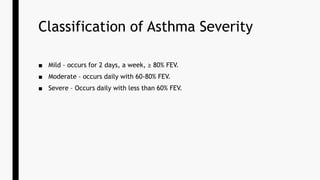
■ Mild – occurs for 2 days, a week, ≥ 80% FEV.
■ Moderate – occurs daily with 60-80% FEV.
■ Severe – Occurs daily with less than 60% FEV.
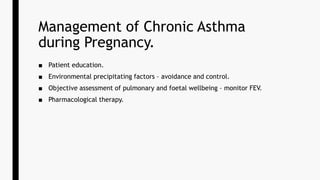
Management of Chronic Asthma
during Pregnancy.
■ Patient education.
■ Environmental precipitating factors – avoidance and control.
■ Objective assessment of pulmonary and foetal wellbeing – monitor FEV.
■ Pharmacological therapy.
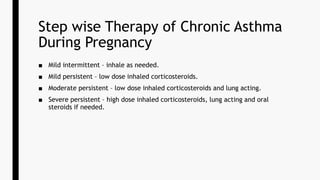
Step wise Therapy of Chronic Asthma
During Pregnancy
■ Mild intermittent – inhale as needed.
■ Mild persistent – low dose inhaled corticosteroids.
■ Moderate persistent – low dose inhaled corticosteroids and lung acting.
■ Severe persistent – high dose inhaled corticosteroids, lung acting and oral
steroids if needed.

ASTHMA PRESENTATION.pptx midwifery pregnancy

  • 1.
    ASTHMA PRESENTATION MASENO UNIVERSITY SCHOOL OFNURSING DEPARTMENT OF MIDWIFERY MN/03005/016 MN/03006/016
  • 2.
    Introduction ■ Asthma isa chronic disease involving the airways in the lungs. ■ These airways or bronchial tubes allow air to come in and out of the lungs. ■ It may be due to airway inflammation hence poor air passage hence coughing, wheezing, shortness of breath and chest tightness. ■ At pregnancy stage of a woman, the foetus in the womb depends on the oxygen that the mother breaths. ■ The implant of an asthma exacerbation lack of enough oxygen to the developing foetus hence great danger. ■ It then implies that women should manage asthma with prescribed medication even in pregnancy unless clinically contraindicated.
  • 3.
    Symptoms ■ There aregeneral symptoms of asthma but different pregnant women may manifest differently either severely or lesser.
  • 4.
    Risk Factor ■ Respiratoryinfections such as cold, flu, bronchitis . Both bacterial and viral infections. ■ Cigarette smoking. ■ Gastroesophageal reflux disease. ■ Smoke from cooking or wood fire. ■ Emotionally upset. ■ Food allergy. ■ Allergic rhinitis. ■ Weather change especially cold. ■ Exercise. ■ Strong smell, spray, perfume, allergic reactions to certain chemicals.
  • 5.
    Risk of AnaemiaPregnancy ■ Premature birth. ■ Low birth weight. ■ Still birth. ■ Hypertension in pregnancy.
  • 6.
    Classification of AsthmaSeverity ■ Mild – occurs for 2 days, a week, ≥ 80% FEV. ■ Moderate – occurs daily with 60-80% FEV. ■ Severe – Occurs daily with less than 60% FEV.
  • 7.
    Management of ChronicAsthma during Pregnancy. ■ Patient education. ■ Environmental precipitating factors – avoidance and control. ■ Objective assessment of pulmonary and foetal wellbeing – monitor FEV. ■ Pharmacological therapy.
  • 8.
    Step wise Therapyof Chronic Asthma During Pregnancy ■ Mild intermittent – inhale as needed. ■ Mild persistent – low dose inhaled corticosteroids. ■ Moderate persistent – low dose inhaled corticosteroids and lung acting. ■ Severe persistent – high dose inhaled corticosteroids, lung acting and oral steroids if needed.