Estate & Asset Protection Planning Karen Brady & Associates, P.C. Attorneys at Law © Karen Brady, 2005
Definition of Asset Protection Organizing assets and affairs to minimize against risks of future loss Preventative, not curative (vaccines, not antibiotics)
Reasons to Protect Assets Why Build Estate But Not Consider Risks? Potential for Lawsuits Reduce Insurance Coverage Peace of Mind Concentrate on Your Job
What Asset Protection Is Not Hiding assets, i.e. confidentiality is a plus, but secrecy is not the lynchpin of the plan Taxation avoidance
Title to Assets The Manner of Holding Title to Property Affects a Creditor’s Rights
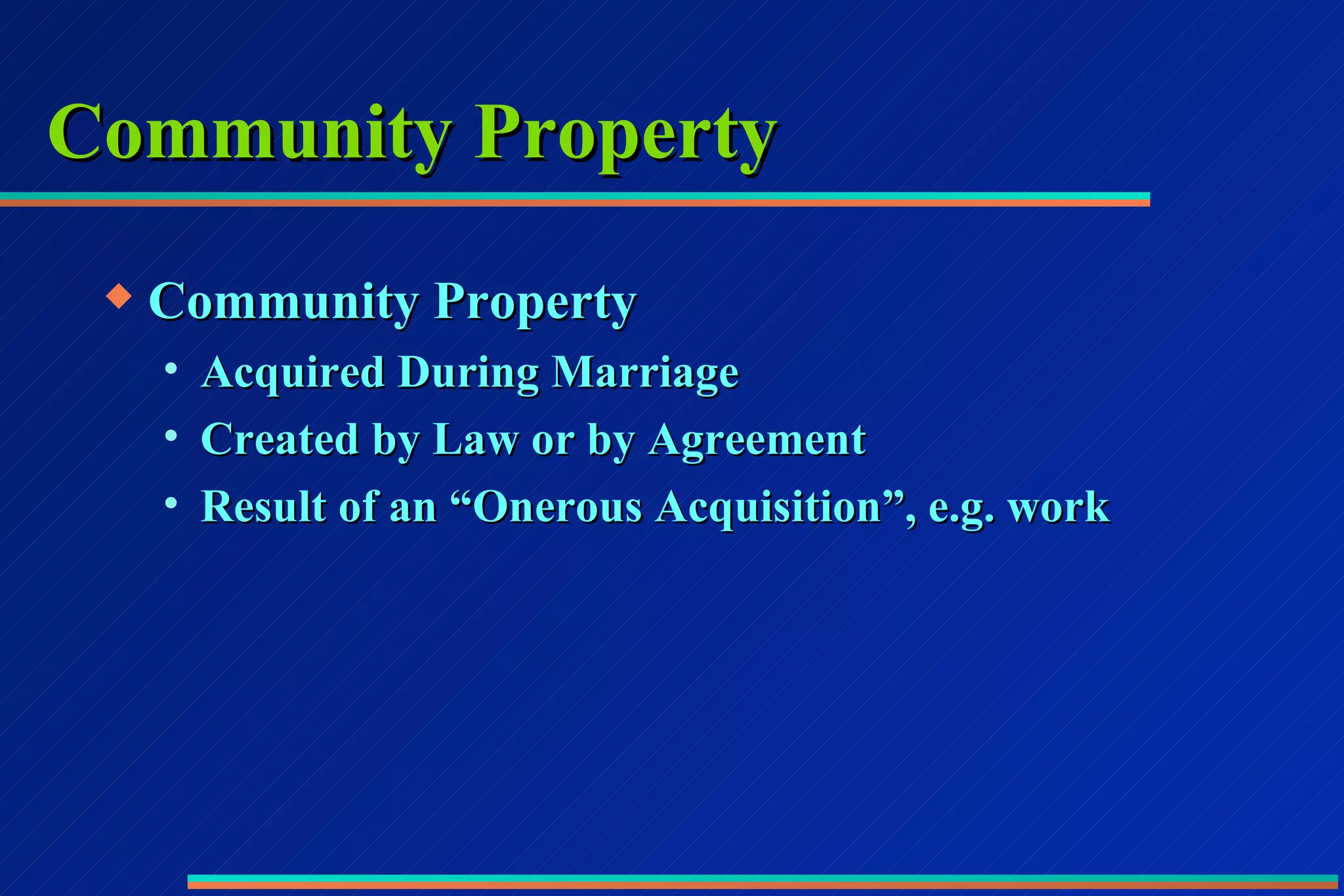
Community Property Community Property Acquired During Marriage Created by Law or by Agreement Result of an “Onerous Acquisition”, e.g. work
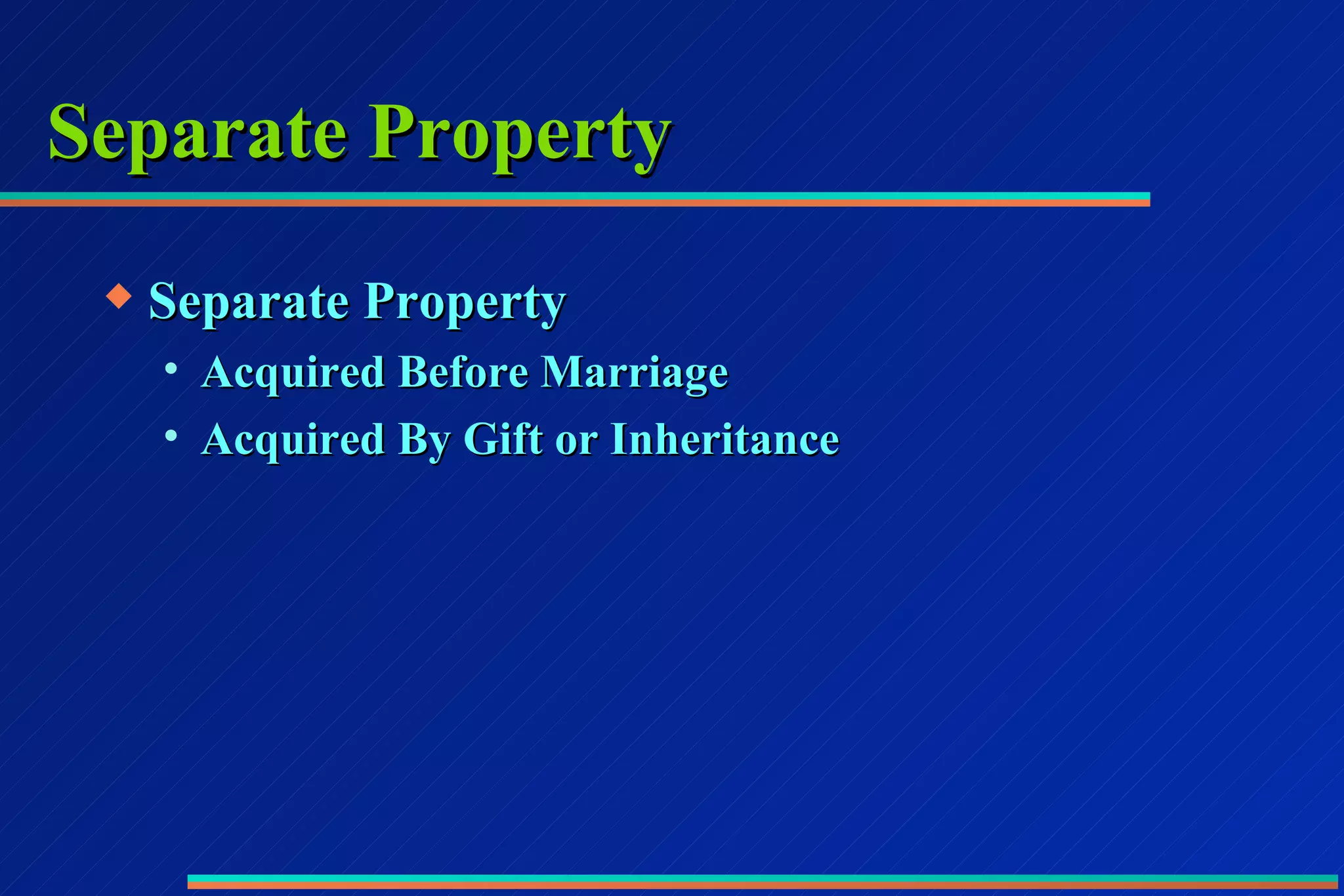
Separate Property Separate Property Acquired Before Marriage Acquired By Gift or Inheritance
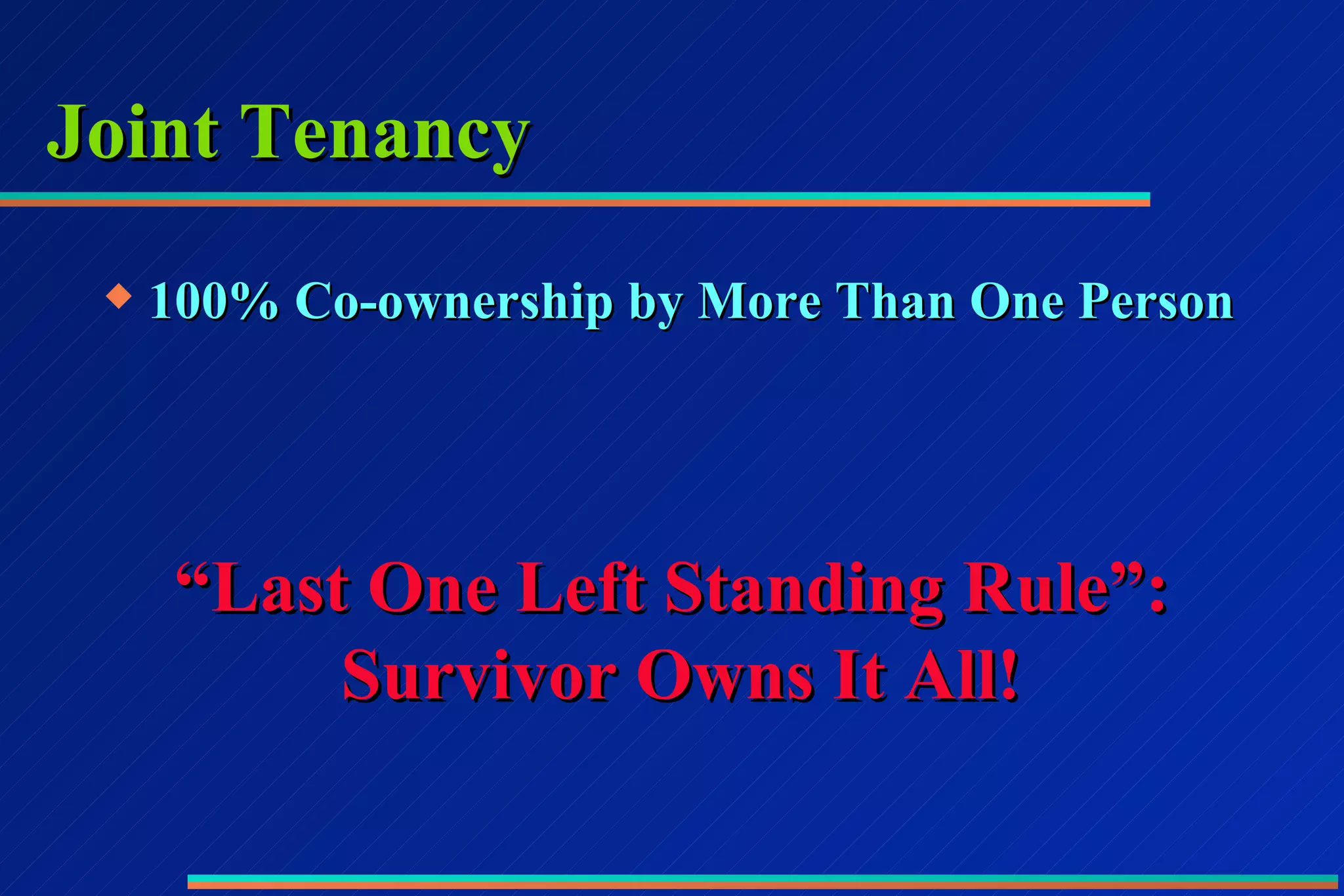
Joint Tenancy 100% Co-ownership by More Than One Person  “ Last One Left Standing Rule”:  Survivor Owns It All!
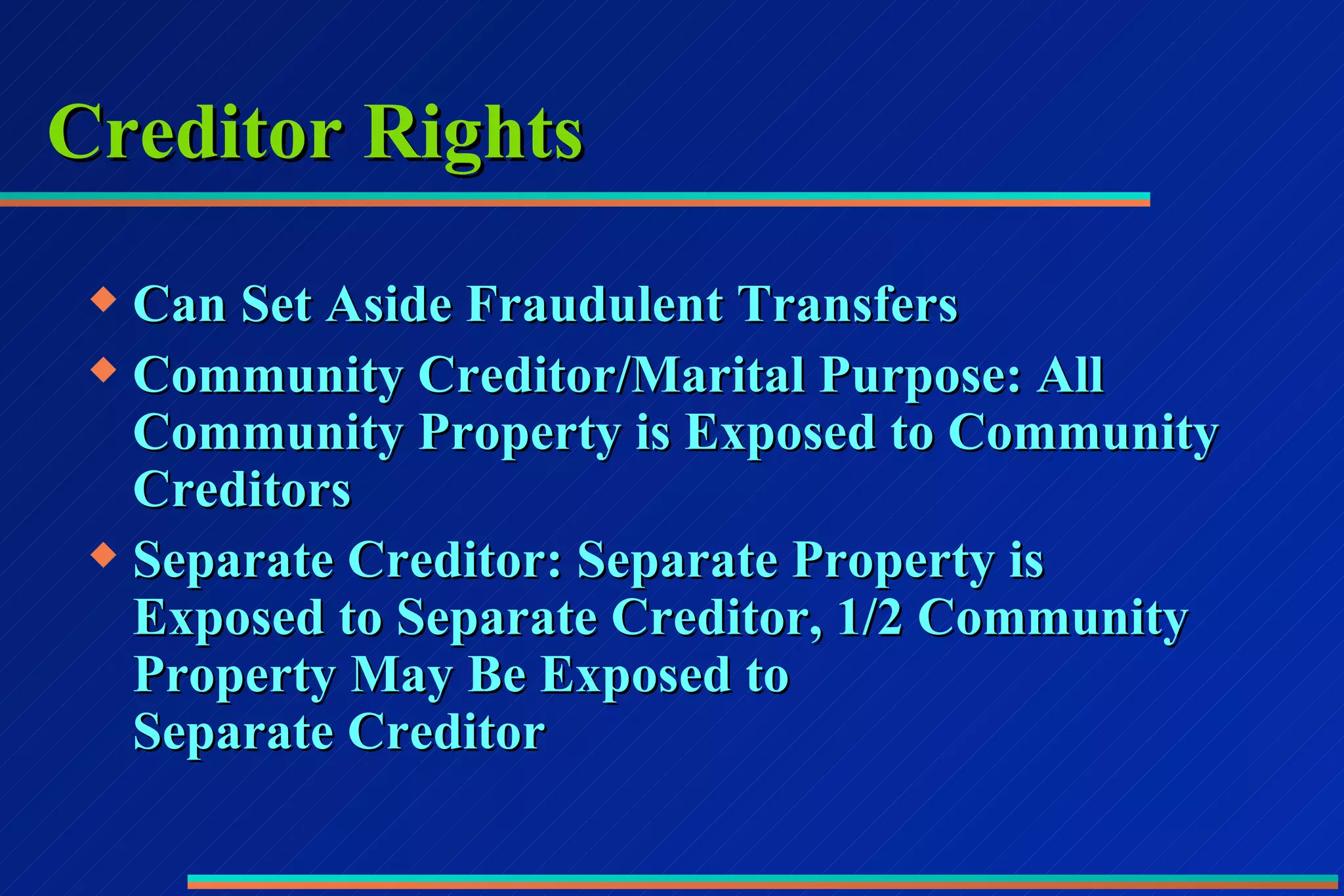
Creditor Rights Can Set Aside Fraudulent Transfers Community Creditor/Marital Purpose: All Community Property is Exposed to Community Creditors Separate Creditor: Separate Property is Exposed to Separate Creditor, 1/2 Community Property May Be Exposed to  Separate Creditor
Creditor Rights (cont.) Divorce Court May Have Jurisdiction Over Both Community and Separate Property All Joint Tenancy Property is at Risk of Any Single Joint Tenant’s Creditors!
One Threat Creditor Claims
Types of Claims Officer/Director Liability (Corp.) Professional Liability Divorce Creditor Lawsuits Liability for Other People’s Debts Partnership Liability Hard to Control Claims Product Liability Environmental Liability
Attempts to Avoid Creditor Claims Methods That Don’t Work Fraudulent Transfers “Hiding” Assets (2005 Bankruptcy Act now requires 3 years of tax returns) “Constitutional” Trusts, “Pure Trusts” and the like
Fraudulent Transfers Intent to Defraud, Hinder or Delay Known or Likely Creditors Intent is Generally Presumed Badges of Fraud such as insolvency, lack of consideration for a transfer, close relationship with transferee, pending or threatened litigation, concealment, deviation from usual practice, transfer of all assets, retaining possession, benefit, or control after transfer
Fraudulent Conveyance Pending or present creditors will have a greater presumption of a fraudulent conveyance than future creditors Generally, fraudulent conveyance is NOT our common understanding of fraud.  Fraudulent conveyance is remedial, i.e. a conveyance which can be undone only to the point a creditor is hindered. No other damages are usually allowed. However, some states allow for criminal or civil penalties, including for the advisor.
Another Threat Estate Taxes
Estate Taxes Changing ownership of assets often also removes them from the estate, offering the additional benefit of reduced estate taxes along with asset protection
Asset Protection Techniques Methods That Work Save Administrative Fees and Costs Reduce Taxes Provide Multiple Layers of Defense Allow Opportunity for Early Settlement Voluntary Bankruptcy Now Less Attractive as Final Option
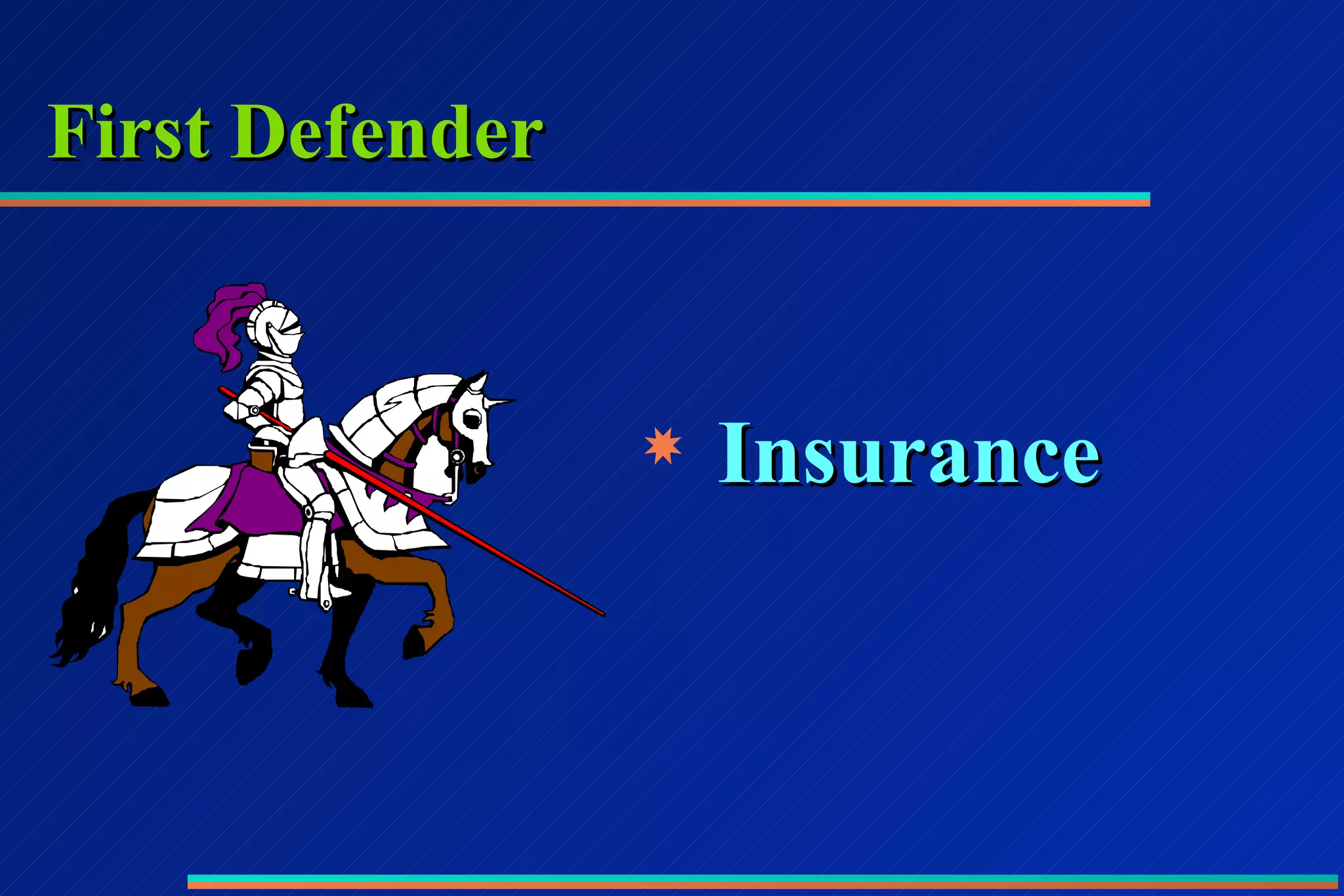
First Defender Insurance
Strengths and Weaknesses Covers Loss Cash to Settle Duty to Defend Getting Costly May not Qualify Insolvency of Carrier May get Cancelled Coverage Exemptions Hazardous Waste Intentional Acts Punitive Damages Strengths Weaknesses
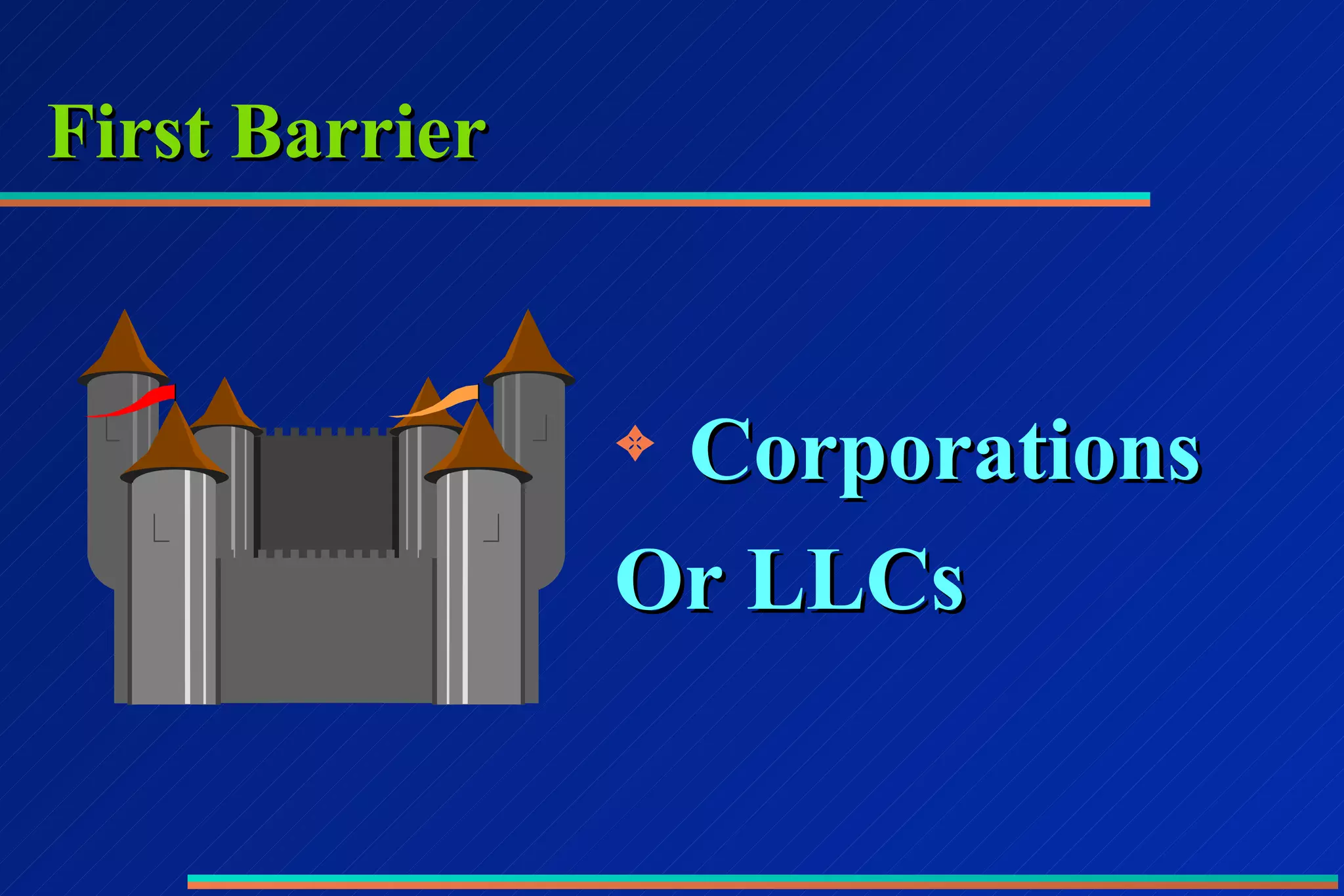
First Barrier Corporations Or LLCs
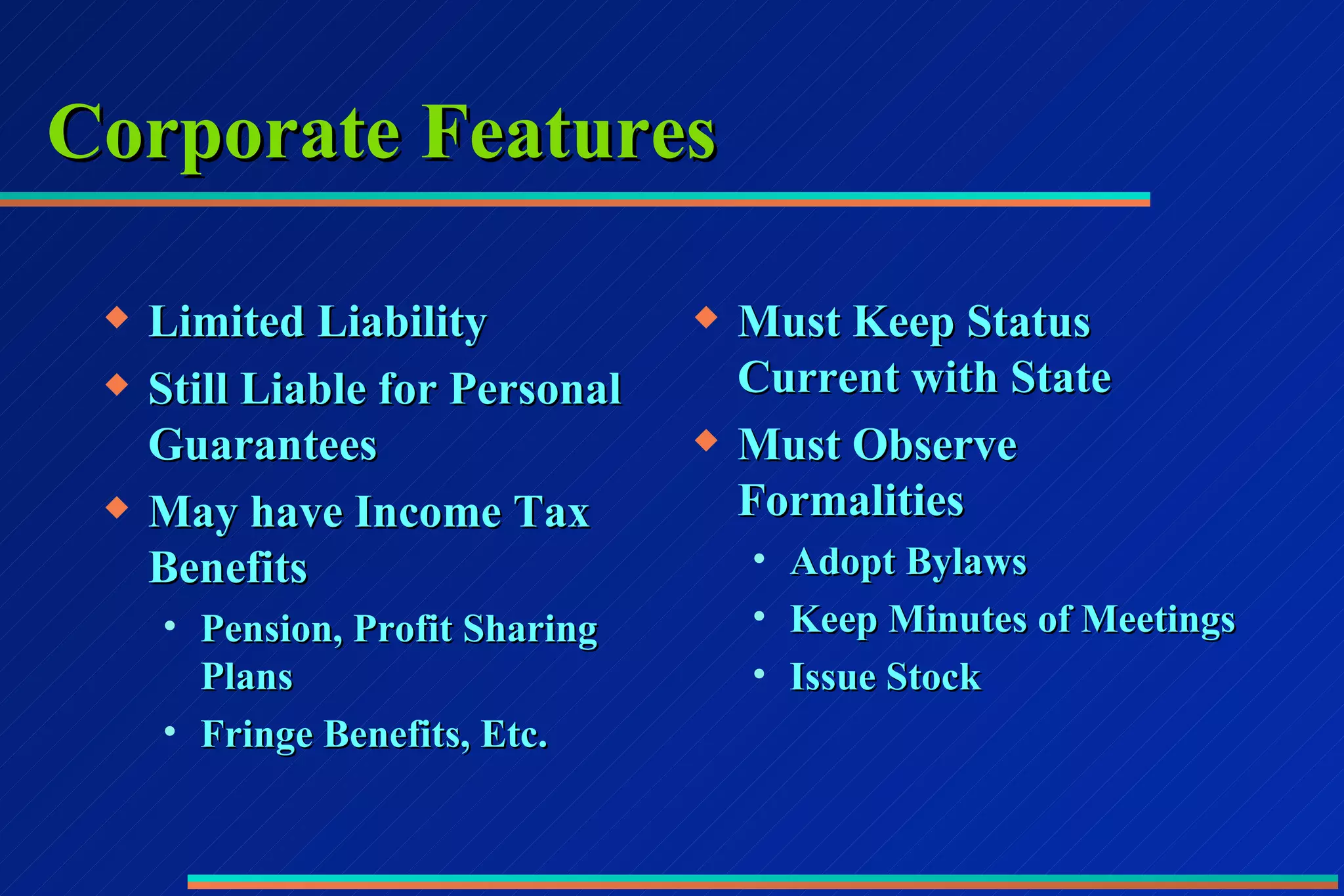
Corporate Features Limited Liability Still Liable for Personal Guarantees May have Income Tax Benefits Pension, Profit Sharing Plans Fringe Benefits, Etc. Must Keep Status Current with State Must Observe Formalities Adopt Bylaws Keep Minutes of Meetings Issue Stock
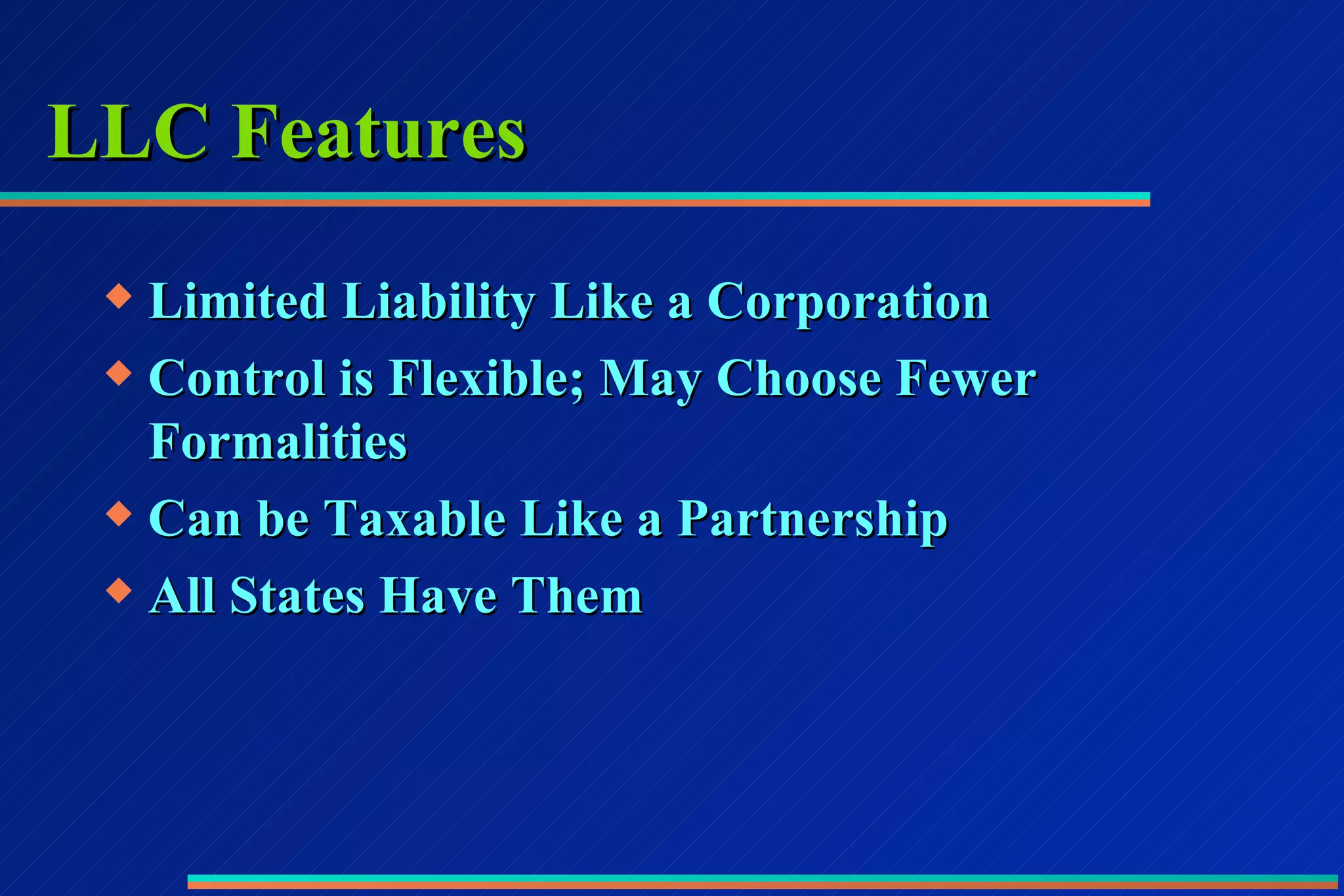
LLC Features Limited Liability Like a Corporation Control is Flexible; May Choose Fewer Formalities Can be Taxable Like a Partnership All States Have Them
Second Defender Exempt Property
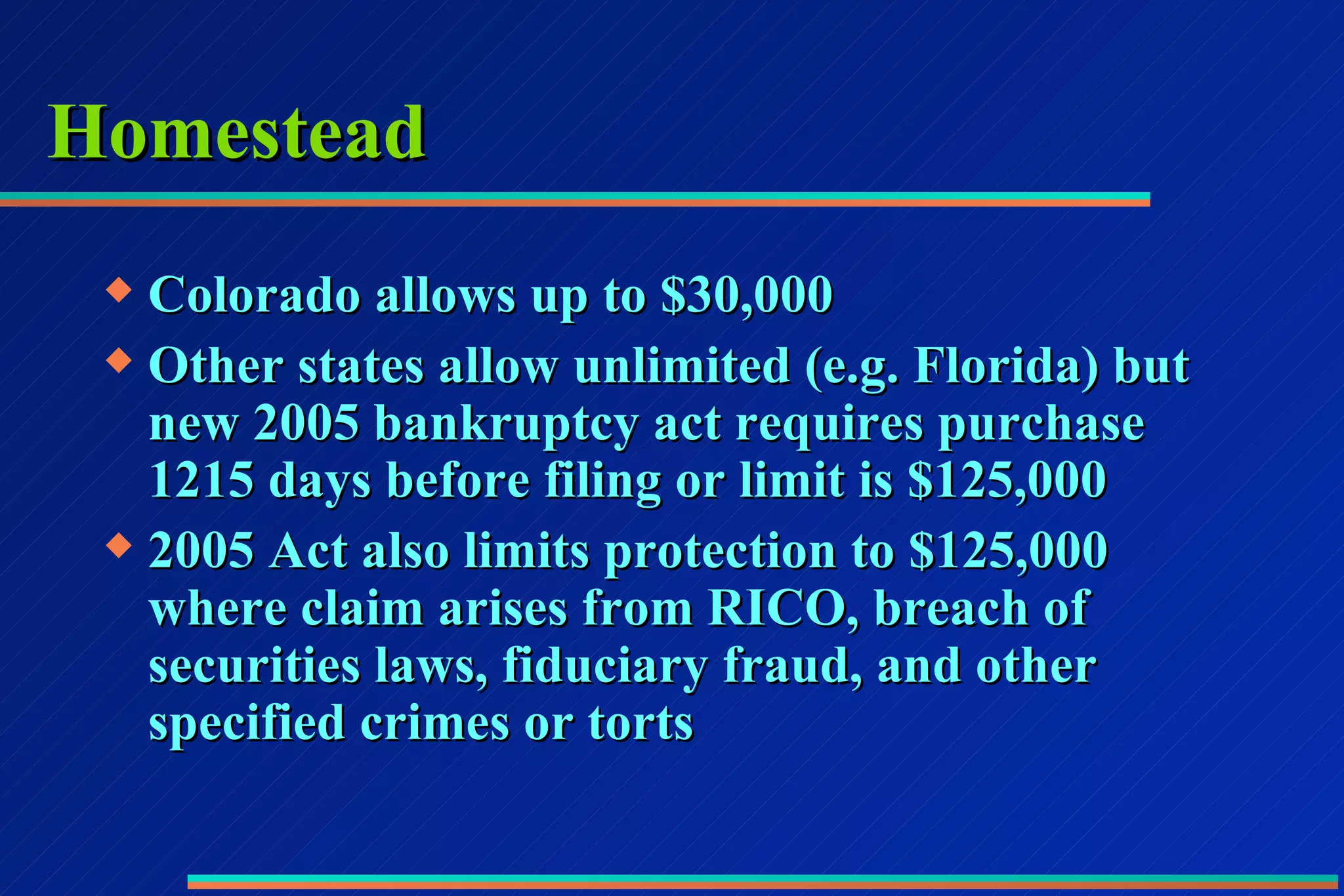
Homestead Colorado allows up to $30,000  Other states allow unlimited (e.g. Florida) but new 2005 bankruptcy act requires purchase 1215 days before filing or limit is $125,000 2005 Act also limits protection to $125,000 where claim arises from RICO, breach of securities laws, fiduciary fraud, and other specified crimes or torts
Insurance Federal exemption is for death benefits and limited cash value (less than $9,000) Colorado exemption is $50,000 where estate is beneficiary and contributions were more than 4 years before filing State exemptions can be more generous, e.g. Florida, Hawaii, Louisiana, but new 2005 Act requires residency in that state for at least 2 years
Retirement Plans 2005 Act makes clear contributions to ERISA covered plans are exempt, as are entire interest in IRAs (up to $1 million?).
529 Plans 529 Plans are Exempt if: Funded more than 2 years before filing Funded by parent, grandparent, stepparent,    stepgrandparent of beneficiary of plan $5,000 limit if funded more than one year    but less than two years before filing Fraudulent transfer rules still apply
Other Exemptions in Colorado Property of business partnership where held in name of partnership Burial plot Health Aids Business or professional supplies up to $10,000
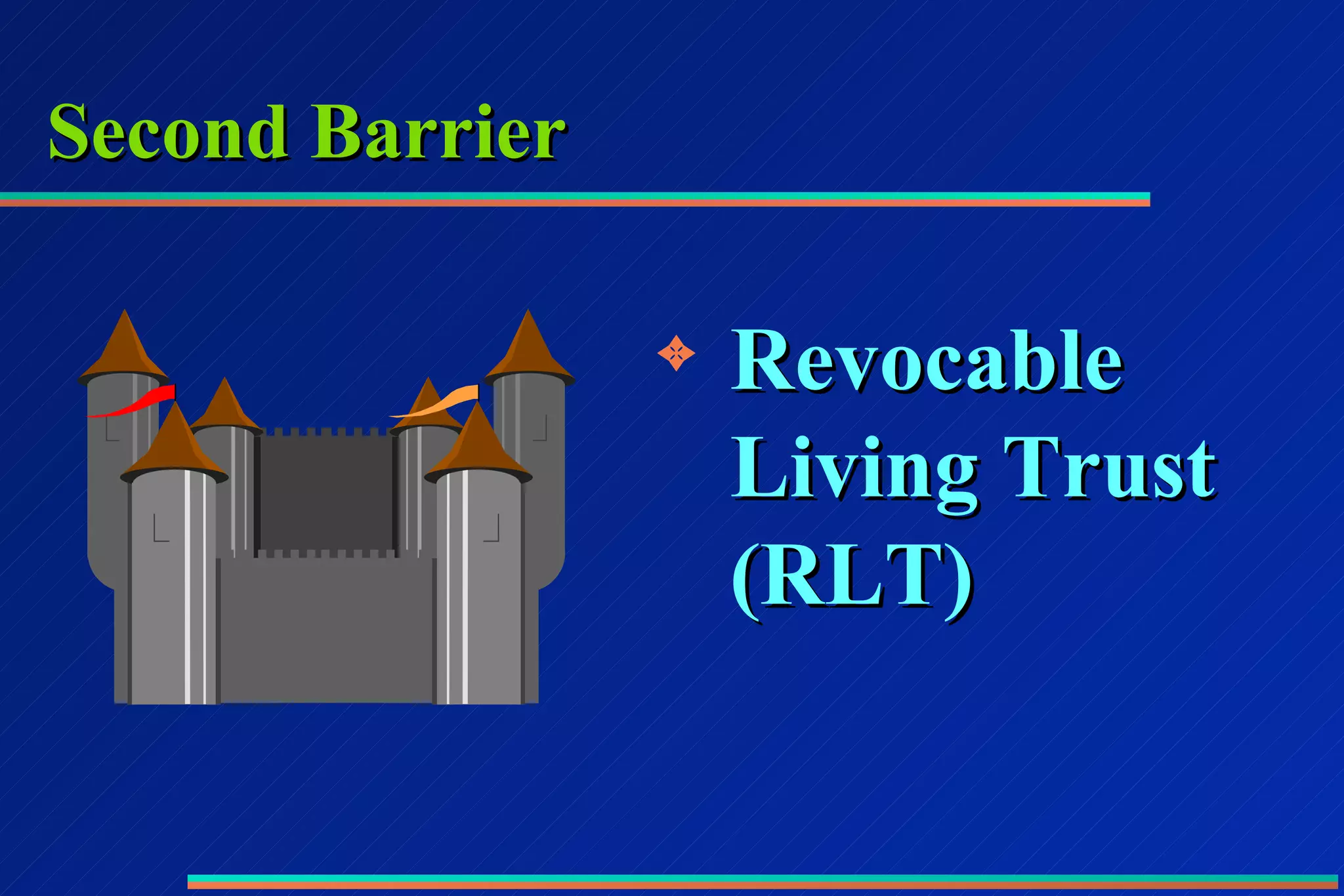
Second Barrier Revocable Living Trust (RLT)
RLT Asset Protection Features No Court Involvement on Death Private No Forum Provided for Creditor Can “Cut Off” Creditors through “insolvent” probate or other methods If Property is Partitioned: Two Separate Property Trusts; Each Spouse Shares Management
Asset Protection Features (Cont.) Can Provide  “Spendthrift”  Protection for Heirs Grantor not Protected Creditors of Non-Grantor Beneficiaries Cannot Look to Trust for Payment Beneficiary Cannot be Forced to Pledge or Assign Trust Assets Protect Children from Divorce, Lawsuits
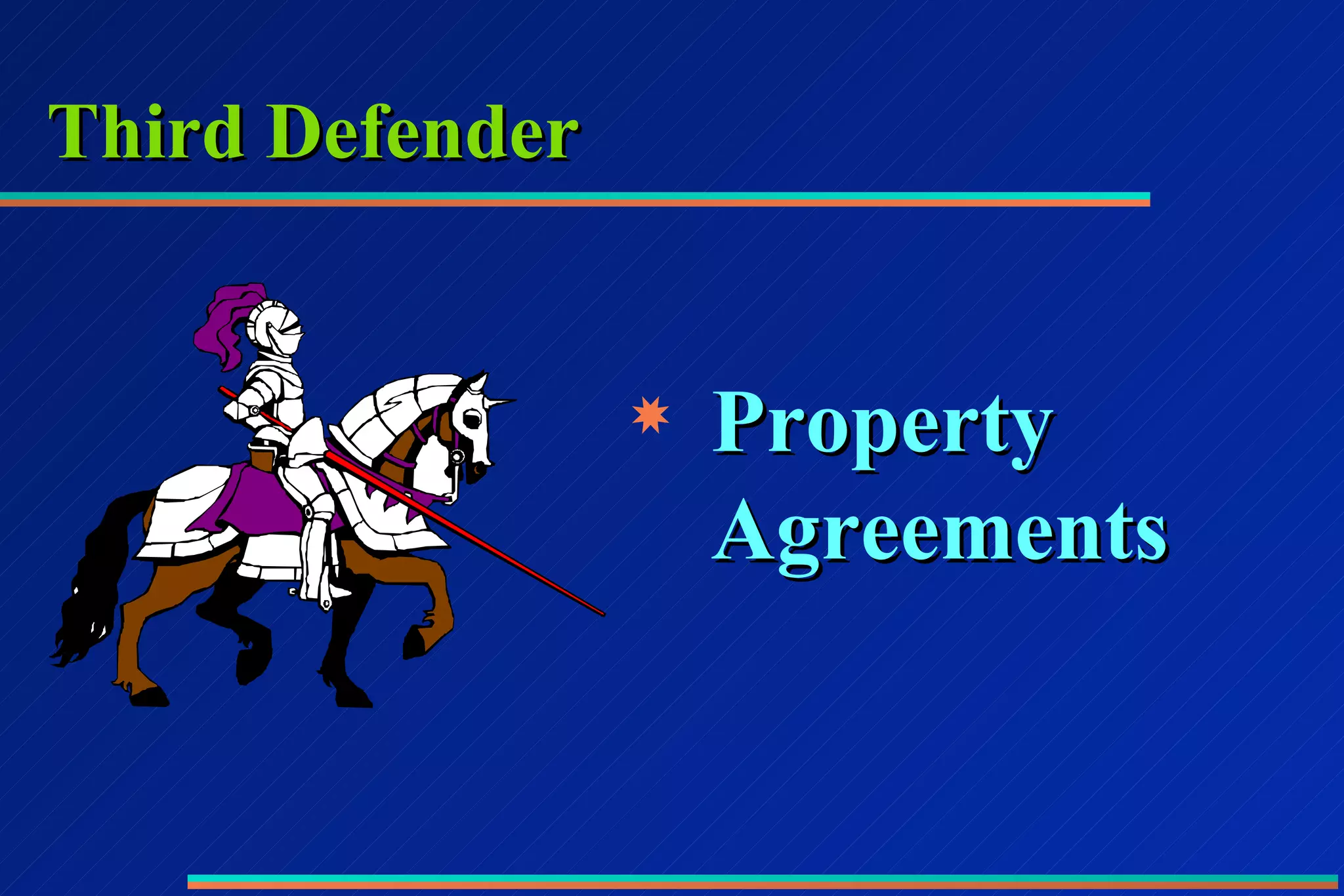
Third Defender Property Agreements
Partitioning Property Works for Families Where One Spouse has Significant Liability Exposure Use With Additional Techniques CAUTION: WHAT ABOUT POTENTIAL FOR DIVORCE?
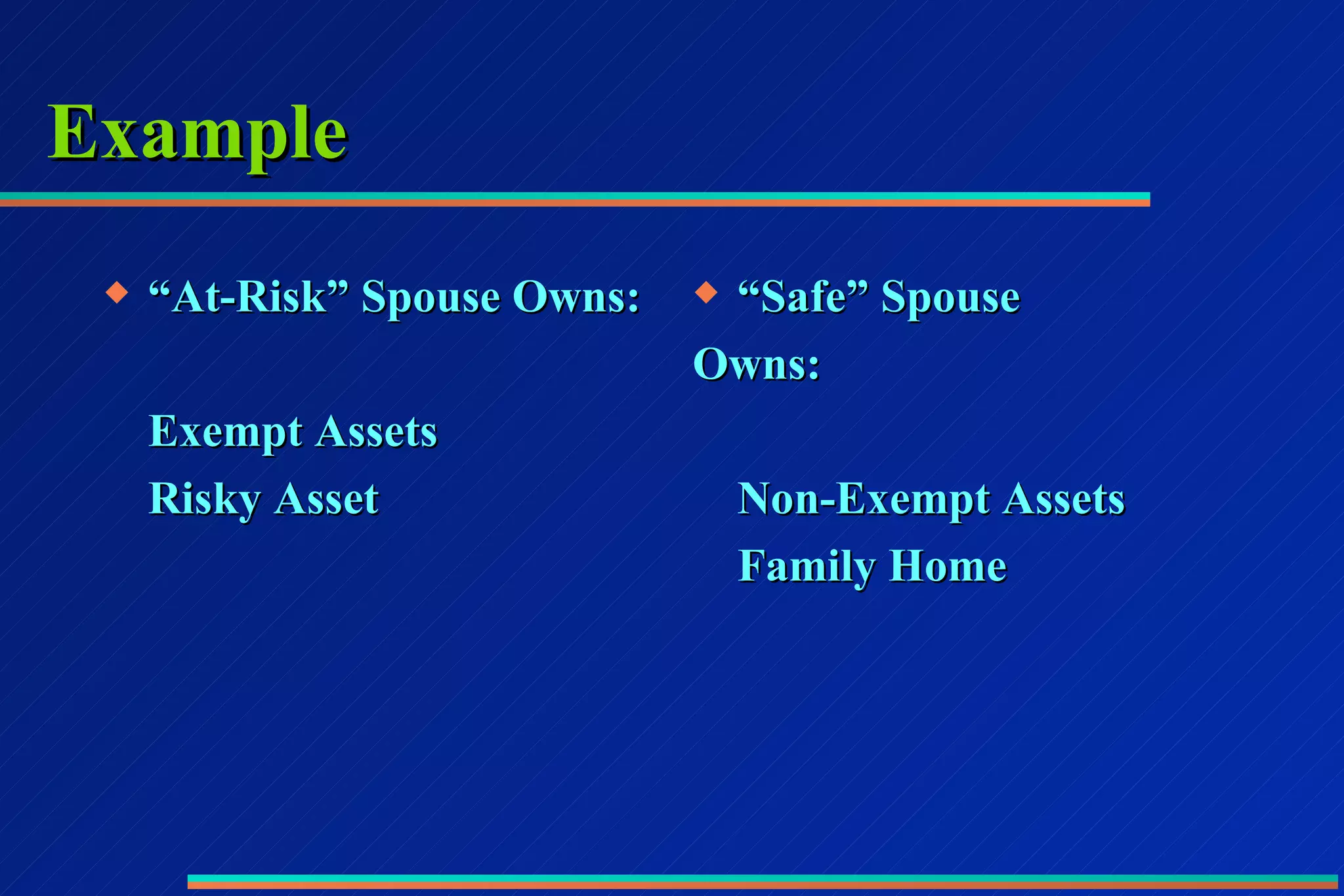
Example “ At-Risk” Spouse Owns: Exempt Assets Risky Asset “ Safe” Spouse Owns: Non-Exempt Assets Family Home
Third Barrier Family Limited Partnerships (FLP) or FLLC
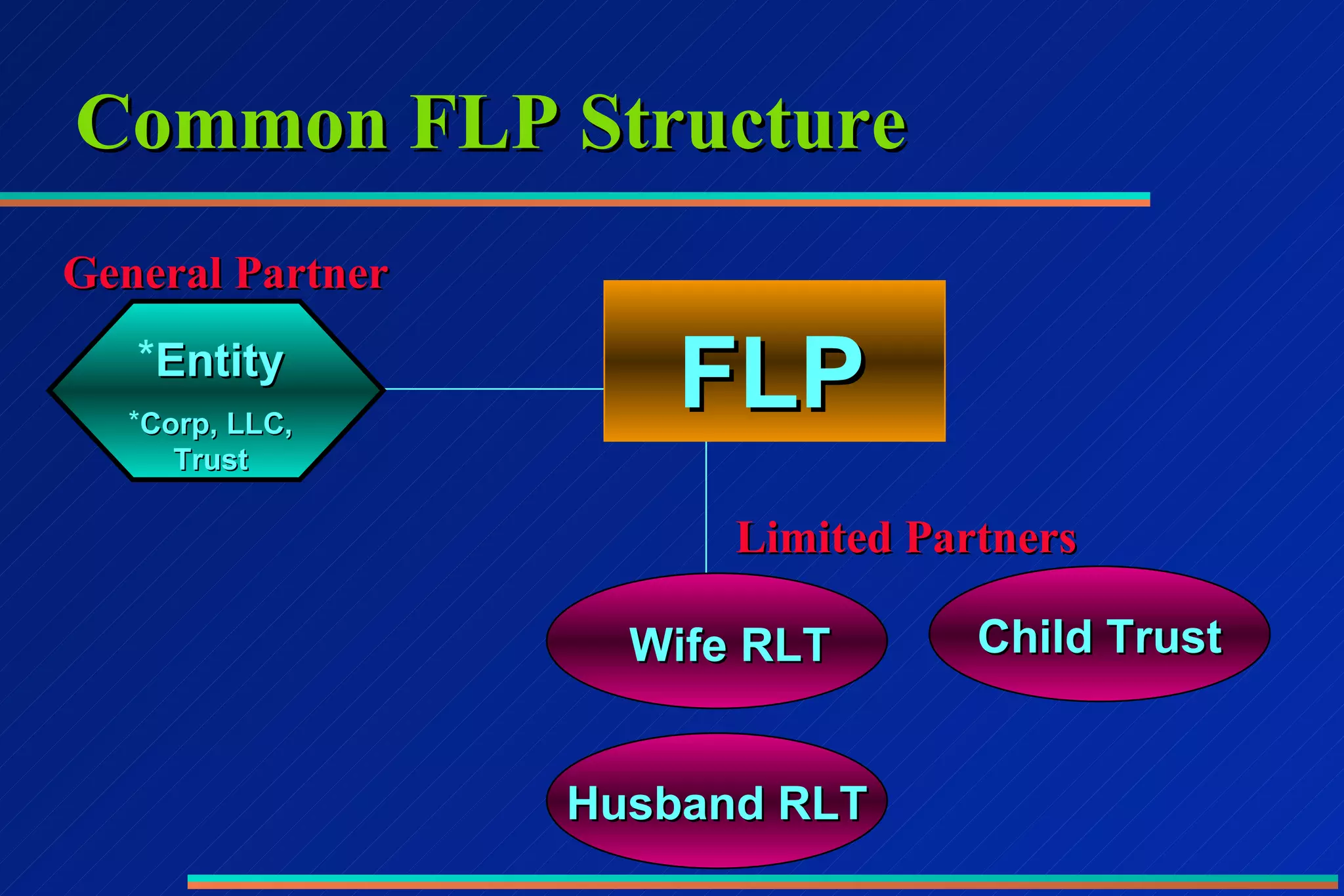
FLP Features Partners: General and Limited General Partner has 100% Control Usually Income Tax Neutral Easy to Gift Shares Use of Discounts May Substantially Lower Federal Estate Tax
FLP Features (Cont.) Converts Real Property to Personal Property Can Set Up Multiple FLPs to Protect Different Assets Divide and Conquer Charging Order May Be the Exclusive Remedy for Claims Against a Partner
Claims vs. Partnership Take Insurance Take Partnership Assets Collect Against General Partner Use Entity General Partner Use Multiple Partnerships Divide and Conquer
Claims vs. Individual Partner Does Not Become Partner No Right to Partnership Assets Charging Order Sole Remedy If GP Distributes, Can Get Creditor MUST PAY INCOME TAX Even if No Income Received! Phantom Income
Creditor Nightmare Does not Become a Limited Partner No Right to Demand Assets No Transfer of Assets Without Partner Approval No Fraudulent Transfer When FLP Established Can’t Force Termination of FLP General Partner Maintains Income Control
FLPs Leverage Gifts Each Person May Gift Up to $10,000 per  Person in Shares Value of Gifts is the Fair Market Value of Gift Partnership Rules Can Allow Value of Shares to be Deeply Discounted!
FLP Discounts What is a FLP Share Worth? Can’t be Easily Sold or Transferred Can’t be Pledged Can’t Demand Distributions Income Allocated to LP for Income Tax Even if not Paid FMV of LP Share May Be Substantially Less than the Value of the Assets!
FLP Summary Juicy Red Apple is a Sour Lemon for Creditors Family Involved, Parents Control the Assets Estate Tax Reduction Can Distribute Income to Children or Others at Lower Tax Rates
Common FLP Structure FLP Entity Corp, LLC, Trust Husband RLT Child Trust Wife RLT General Partner Limited Partners
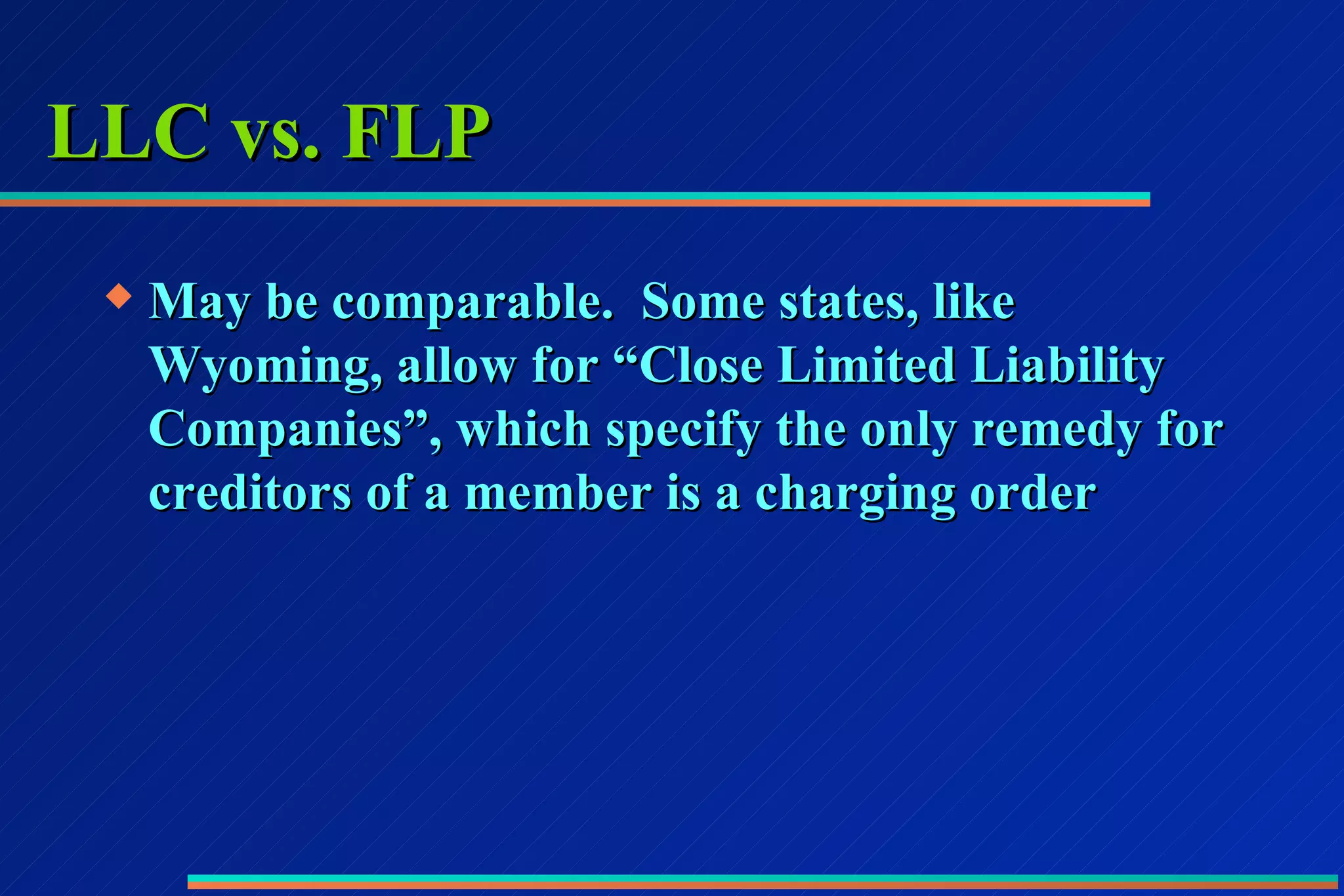
LLC vs. FLP May be comparable.  Some states, like Wyoming, allow for “Close Limited Liability Companies”, which specify the only remedy for creditors of a member is a charging order
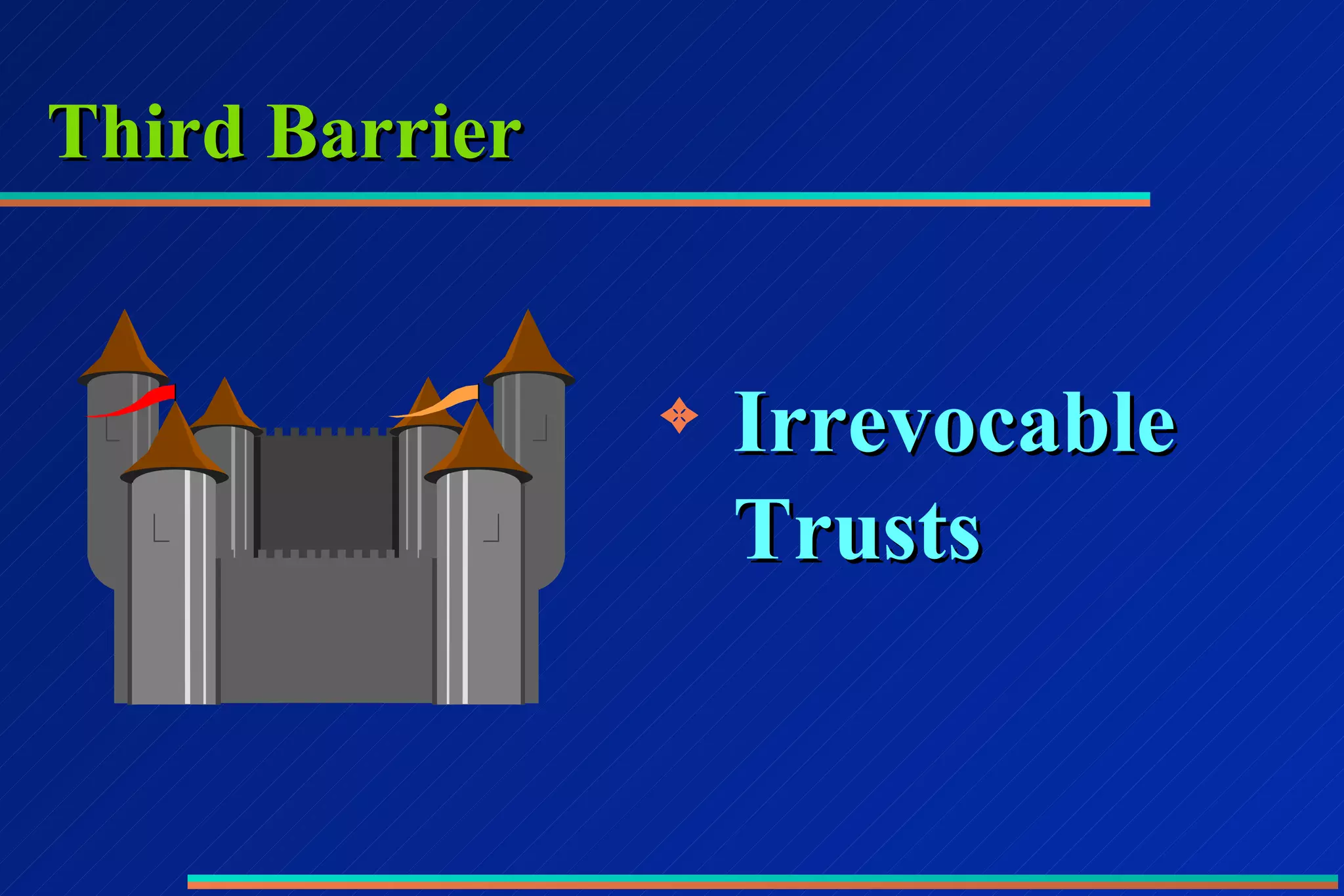
Third Barrier Irrevocable Trusts
Irrevocable Trust Features Grantor is Usually not Trustee Not Part of Grantor’s Taxable Estate May Own Life Insurance Income and Federal Estate Tax-Free  When Received Spendthrift Protection Controlled Distribution to Beneficiaries
Special Irrevocable Trusts BERT Trusts Each spouse is trustee and beneficiary of separate trust Grantor is other spouse Assets of trust are separate property providing asset protection from claims against other spouse Assets of trust are outside estate of either spouse
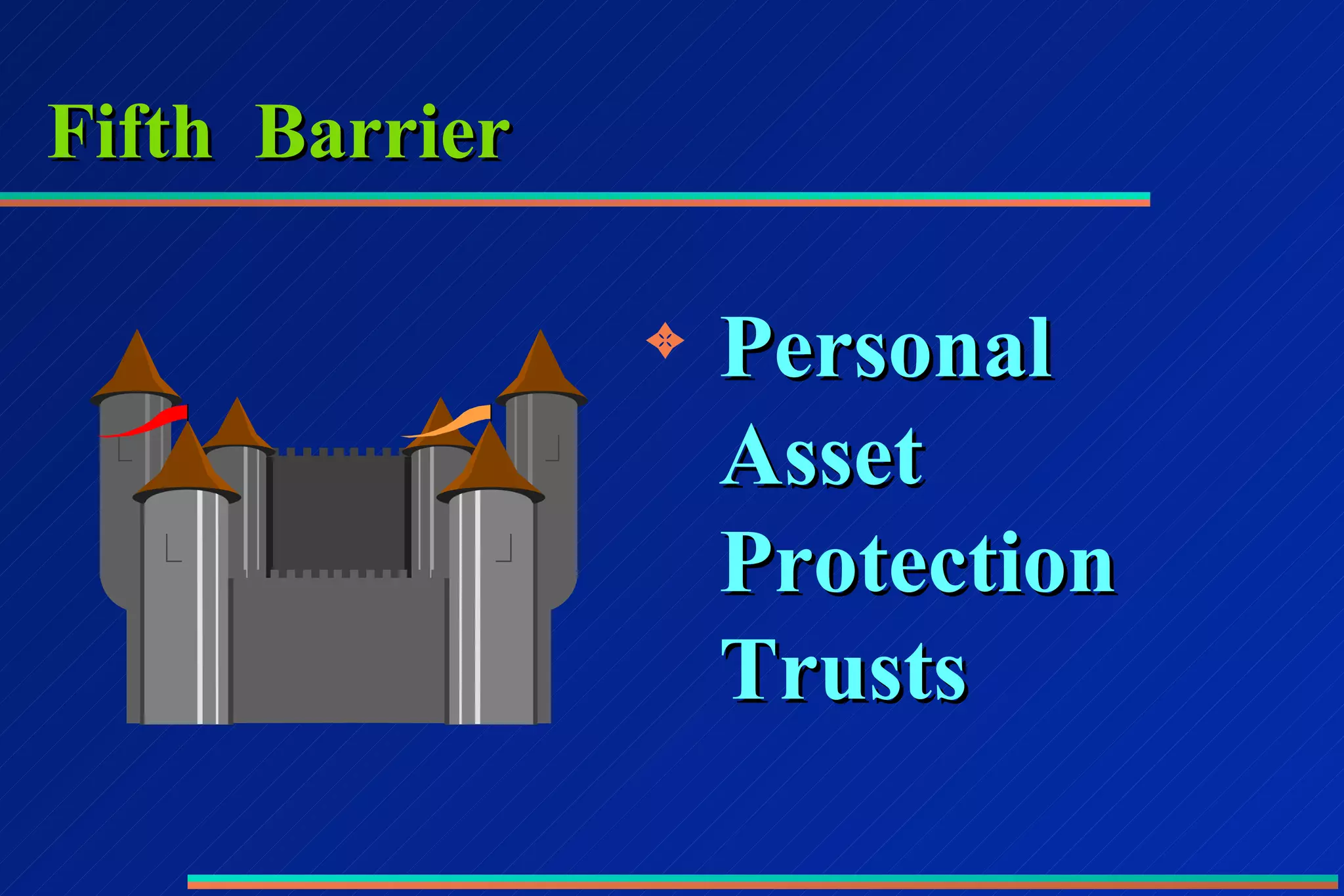
Fifth  Barrier Personal Asset Protection Trusts
Concept Set Up a Trust that Limits or Eliminates Creditor Rights to Seize Assets Integrated With Your Estate Plan You can be a Beneficiary You can Remove Assets from Your Estate You can Sleep Soundly
APT Planning Choose Your Jurisdiction (e.g. Alaska or Offshore) Generally Unfriendly to Creditors Offshore has Similar Legal Concepts English Language Tax Neutral for U.S. Tax Purposes Domestic is Convenient and Familiar Offshore is Disclosable, but not Answerable to  U.S. Courts
APT Planning (cont.) Eliminates or Reduces Coercion in Lawsuits Is Done For Estate Planning and Business Reasons Is not a Violation of U.S. Law (2005 Act seems to acknowledge validity after 10 years) Is not Tax Evasion
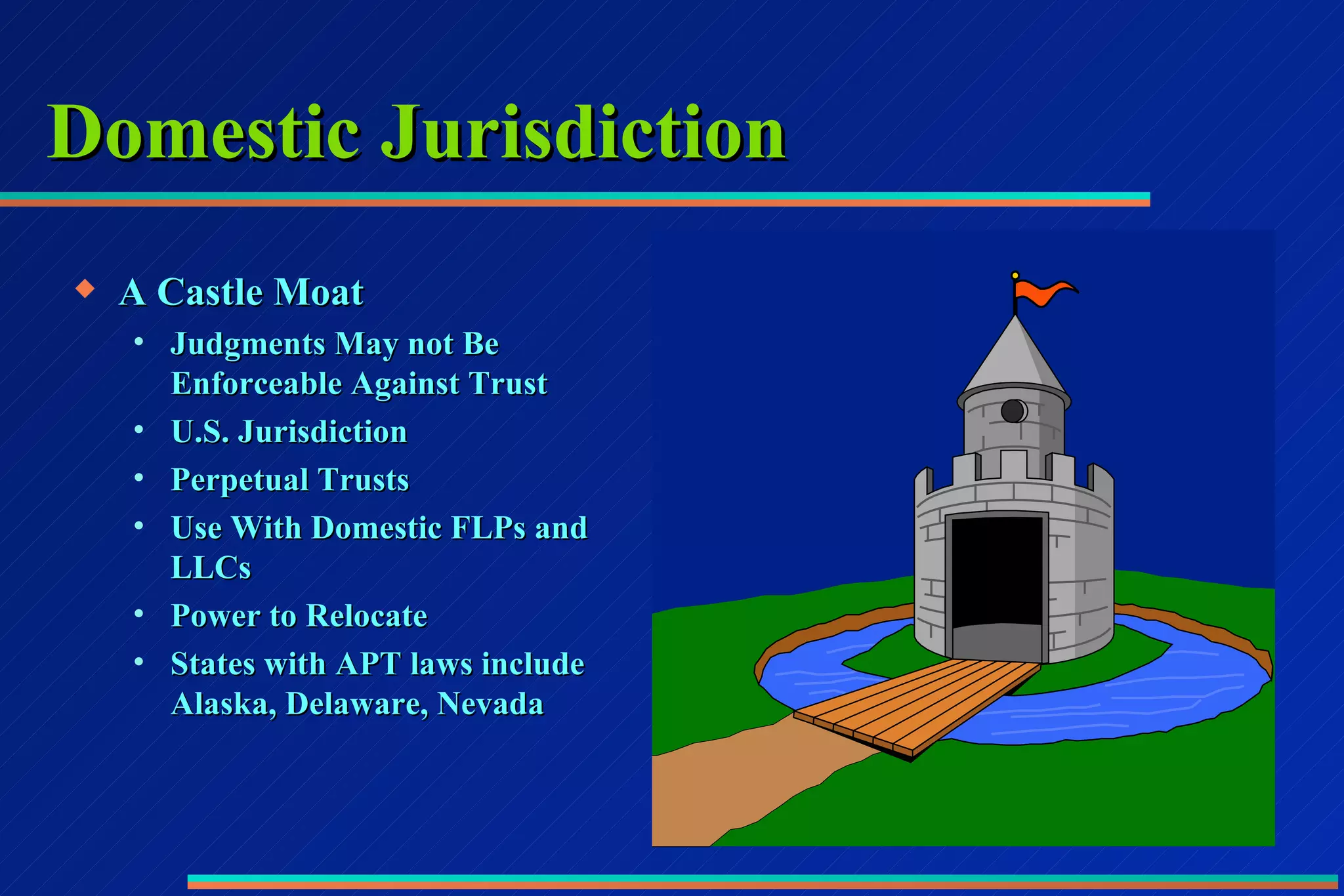
Domestic Jurisdiction A Castle Moat Judgments May not Be Enforceable Against Trust U.S. Jurisdiction Perpetual Trusts Use With Domestic FLPs and LLCs Power to Relocate States with APT laws include Alaska, Delaware, Nevada
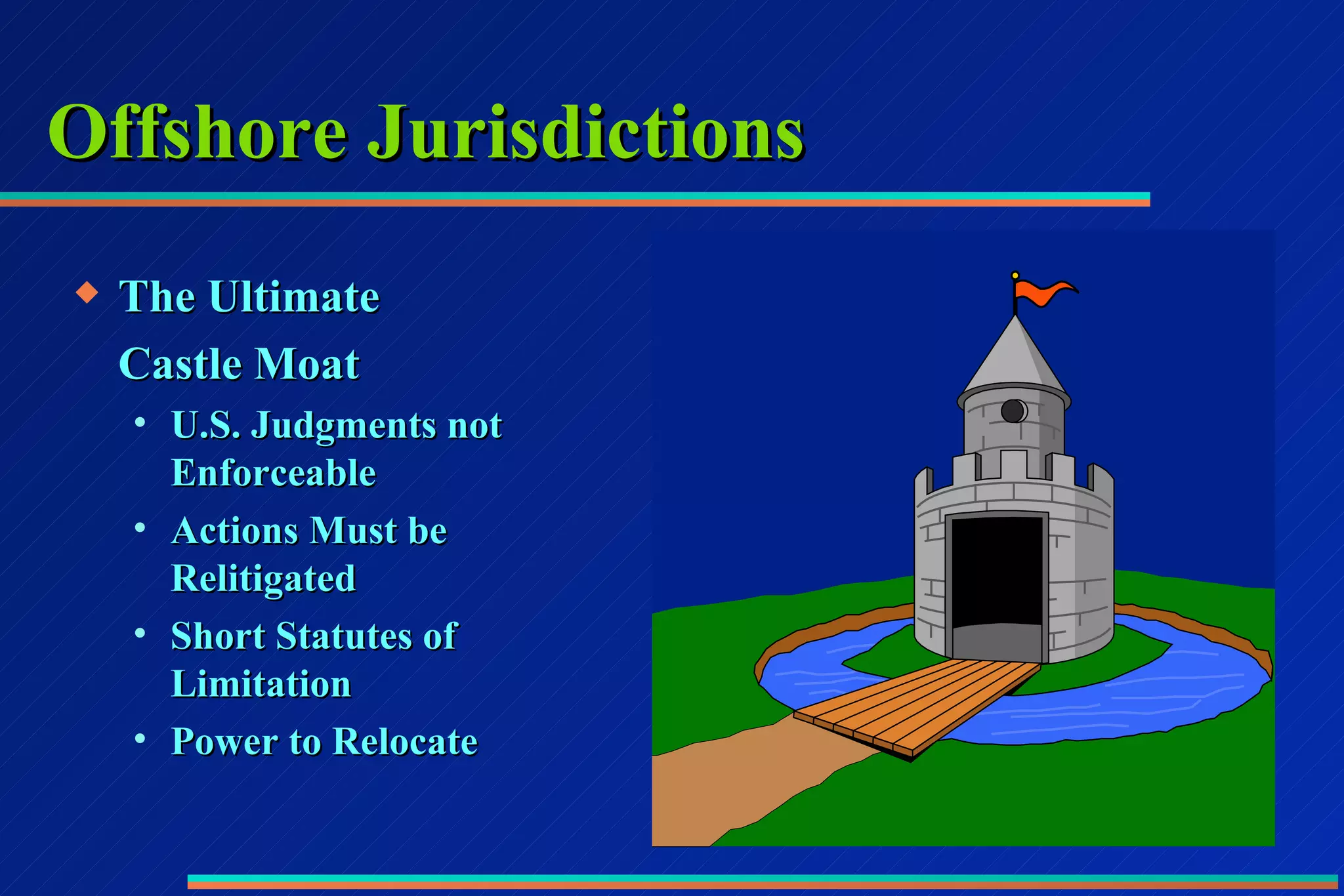
Offshore Jurisdictions The Ultimate Castle Moat U.S. Judgments not Enforceable Actions Must be Relitigated Short Statutes of Limitation Power to Relocate
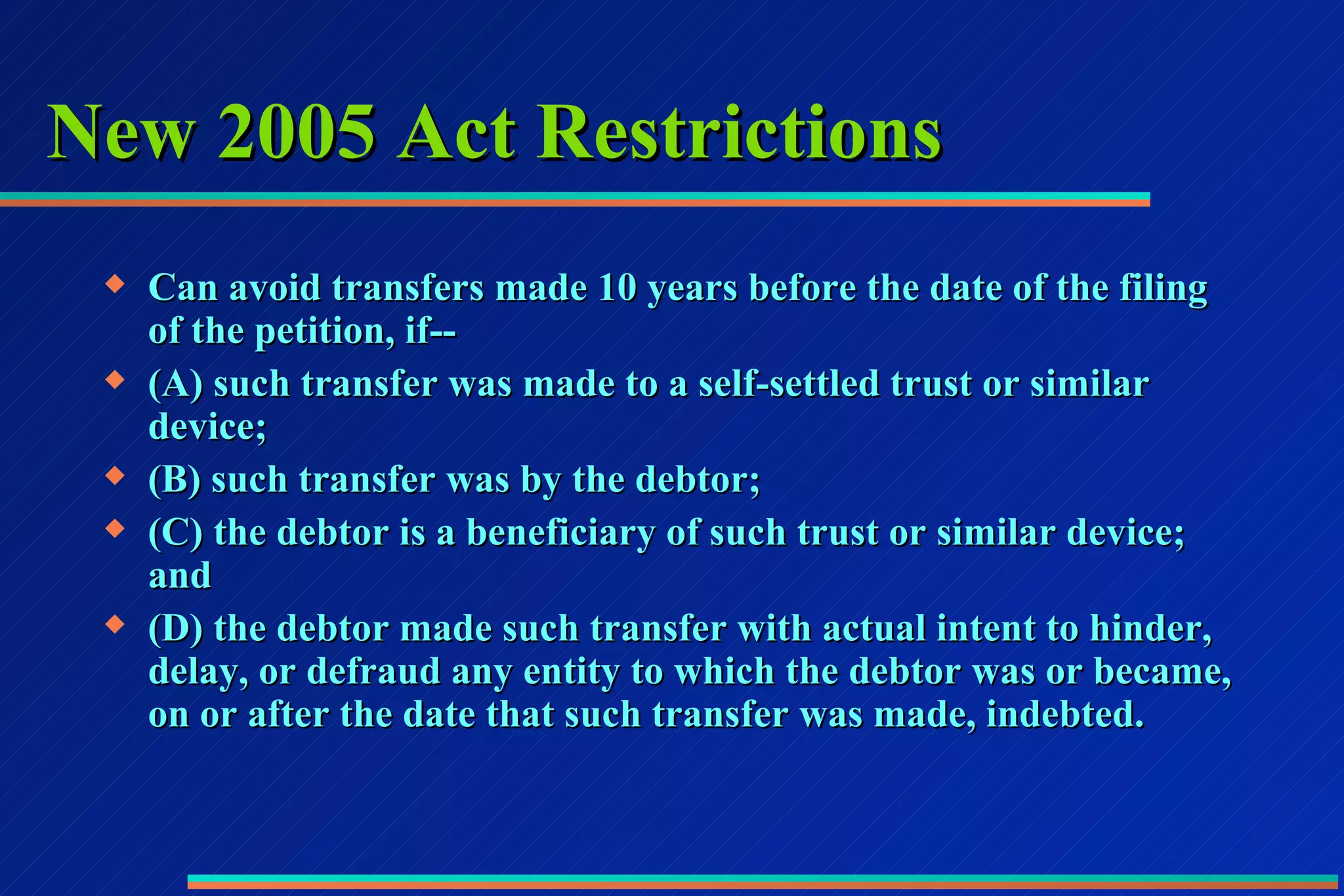
New 2005 Act Restrictions Can avoid transfers made 10 years before the date of the filing of the petition, if-- (A) such transfer was made to a self-settled trust or similar device; (B) such transfer was by the debtor; (C) the debtor is a beneficiary of such trust or similar device; and (D) the debtor made such transfer with actual intent to hinder, delay, or defraud any entity to which the debtor was or became, on or after the date that such transfer was made, indebted.
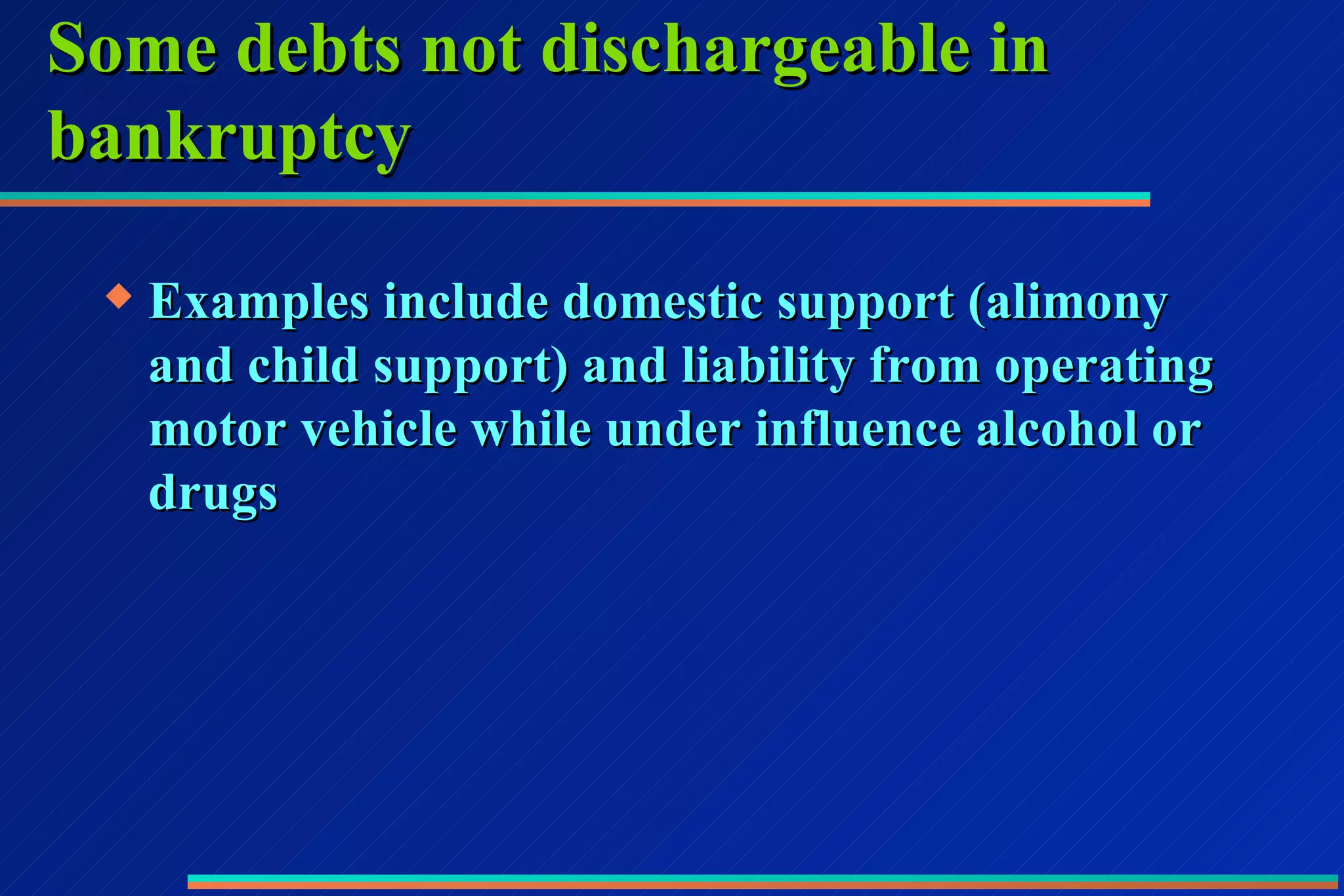
Some debts not dischargeable in bankruptcy Examples include domestic support (alimony and child support) and liability from operating motor vehicle while under influence alcohol or drugs
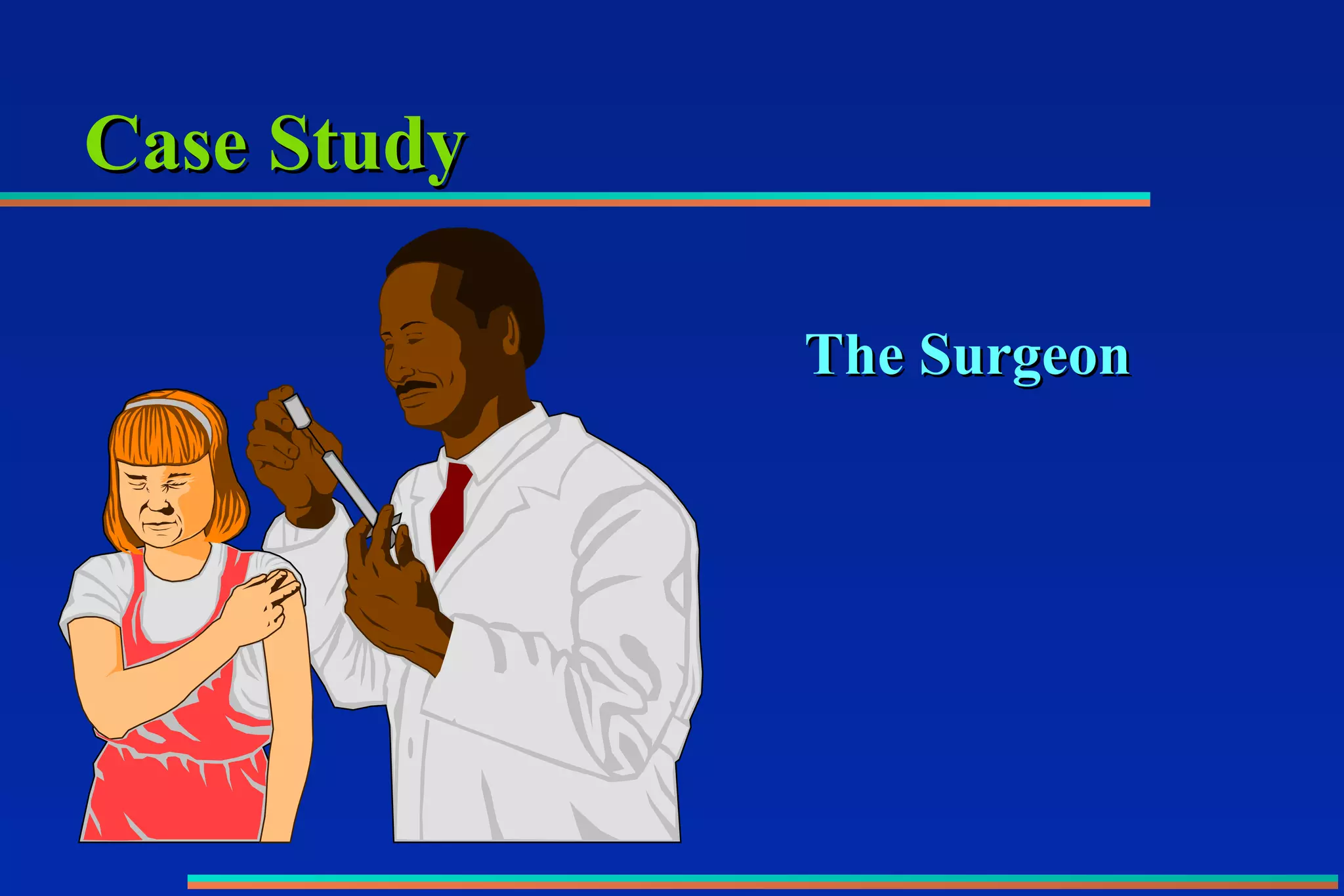
Case Study The Surgeon
Leon Cutter, M.D., F.A.C.S. Orthopedic Surgeon Six Suits in Ten Years; All Settled Large Insurance Premiums Professional Corp. Leases Building Owns Equipment Married to Janet Former Teacher Expert Investor Two Children Mary, Tim Family Owns Home, Investments, Retirement Plan
Cutter Family Goals Protect Nonexempt Assets Keep Home Absolutely Safe Protect Practice Assets Building and Equipment Lower Malpractice Premiums Maintain Control and Privacy Plan for Federal Estate Taxes
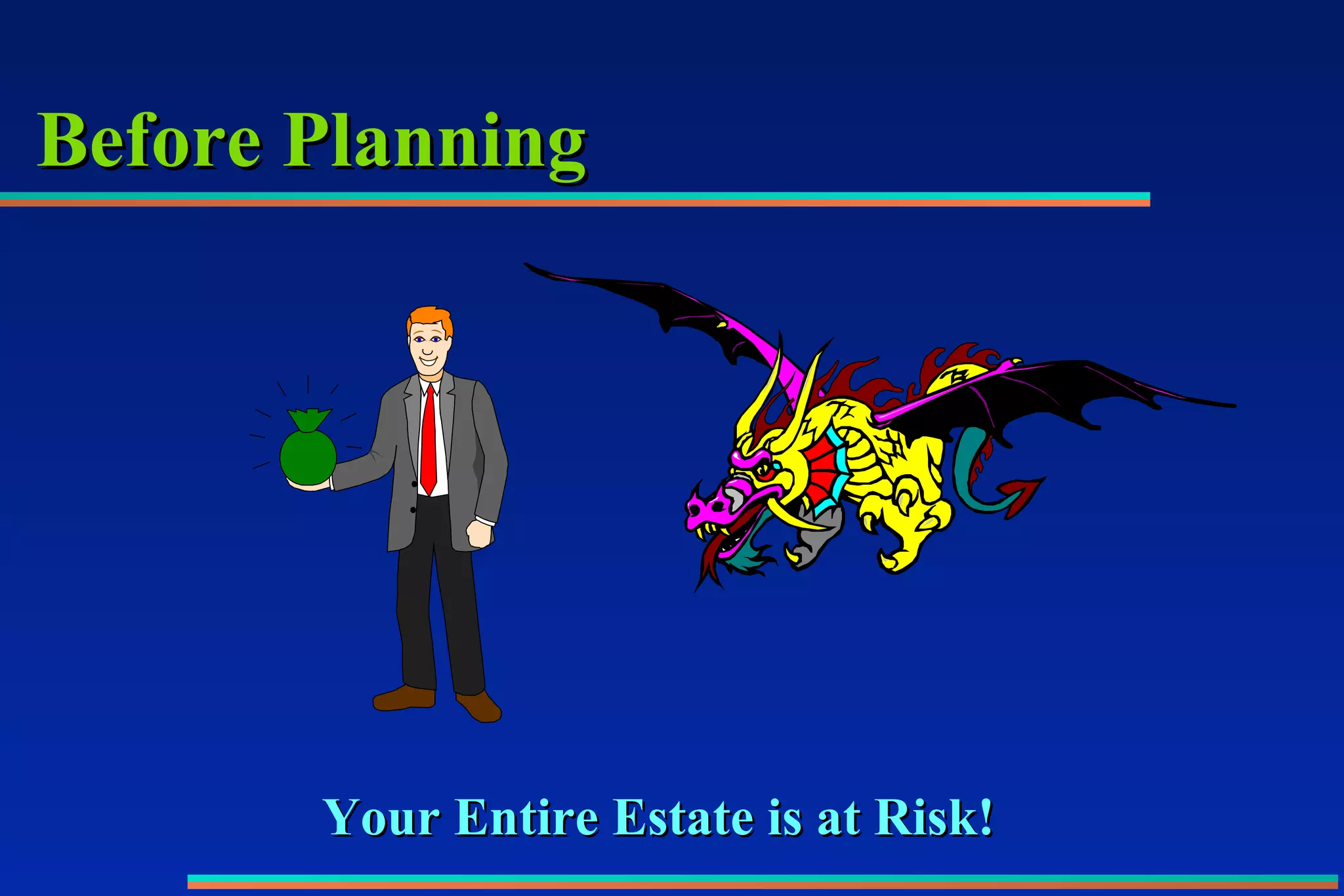
Before Planning Your Entire Estate is at Risk!
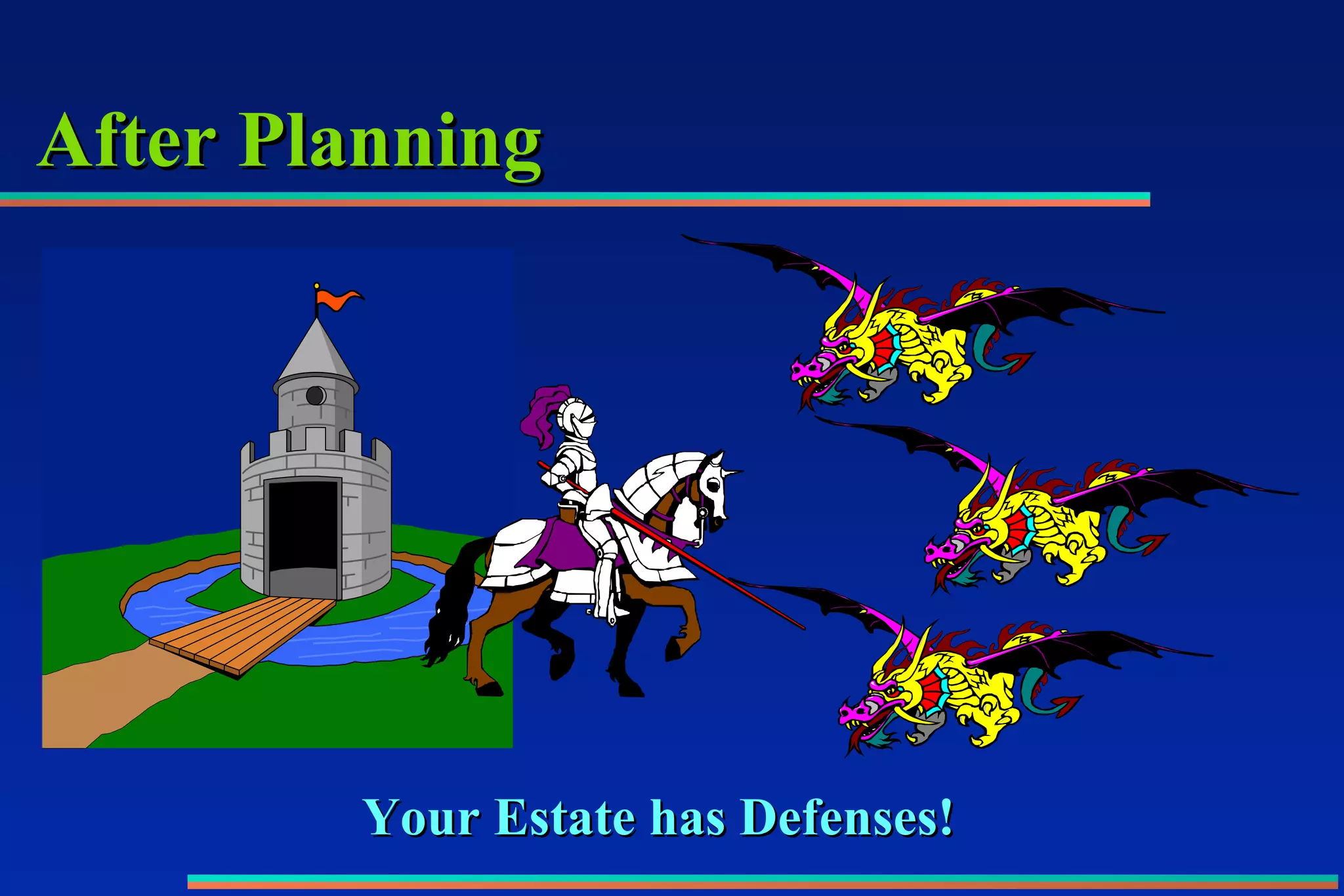
After Planning Your Estate has Defenses!
Keys to a Successful Plan Team Approach Custom Design Cutting Edge Solutions
Thank You for Attending Questions?

Asset Protection Planning

  • 1.
    Estate & AssetProtection Planning Karen Brady & Associates, P.C. Attorneys at Law © Karen Brady, 2005
  • 2.
    Definition of AssetProtection Organizing assets and affairs to minimize against risks of future loss Preventative, not curative (vaccines, not antibiotics)
  • 3.
    Reasons to ProtectAssets Why Build Estate But Not Consider Risks? Potential for Lawsuits Reduce Insurance Coverage Peace of Mind Concentrate on Your Job
  • 4.
    What Asset ProtectionIs Not Hiding assets, i.e. confidentiality is a plus, but secrecy is not the lynchpin of the plan Taxation avoidance
  • 5.
    Title to AssetsThe Manner of Holding Title to Property Affects a Creditor’s Rights
  • 6.
    Community Property CommunityProperty Acquired During Marriage Created by Law or by Agreement Result of an “Onerous Acquisition”, e.g. work
  • 7.
    Separate Property SeparateProperty Acquired Before Marriage Acquired By Gift or Inheritance
  • 8.
    Joint Tenancy 100%Co-ownership by More Than One Person “ Last One Left Standing Rule”: Survivor Owns It All!
  • 9.
    Creditor Rights CanSet Aside Fraudulent Transfers Community Creditor/Marital Purpose: All Community Property is Exposed to Community Creditors Separate Creditor: Separate Property is Exposed to Separate Creditor, 1/2 Community Property May Be Exposed to Separate Creditor
  • 10.
    Creditor Rights (cont.)Divorce Court May Have Jurisdiction Over Both Community and Separate Property All Joint Tenancy Property is at Risk of Any Single Joint Tenant’s Creditors!
  • 11.
  • 12.
    Types of ClaimsOfficer/Director Liability (Corp.) Professional Liability Divorce Creditor Lawsuits Liability for Other People’s Debts Partnership Liability Hard to Control Claims Product Liability Environmental Liability
  • 13.
    Attempts to AvoidCreditor Claims Methods That Don’t Work Fraudulent Transfers “Hiding” Assets (2005 Bankruptcy Act now requires 3 years of tax returns) “Constitutional” Trusts, “Pure Trusts” and the like
  • 14.
    Fraudulent Transfers Intentto Defraud, Hinder or Delay Known or Likely Creditors Intent is Generally Presumed Badges of Fraud such as insolvency, lack of consideration for a transfer, close relationship with transferee, pending or threatened litigation, concealment, deviation from usual practice, transfer of all assets, retaining possession, benefit, or control after transfer
  • 15.
    Fraudulent Conveyance Pendingor present creditors will have a greater presumption of a fraudulent conveyance than future creditors Generally, fraudulent conveyance is NOT our common understanding of fraud. Fraudulent conveyance is remedial, i.e. a conveyance which can be undone only to the point a creditor is hindered. No other damages are usually allowed. However, some states allow for criminal or civil penalties, including for the advisor.
  • 16.
  • 17.
    Estate Taxes Changingownership of assets often also removes them from the estate, offering the additional benefit of reduced estate taxes along with asset protection
  • 18.
    Asset Protection TechniquesMethods That Work Save Administrative Fees and Costs Reduce Taxes Provide Multiple Layers of Defense Allow Opportunity for Early Settlement Voluntary Bankruptcy Now Less Attractive as Final Option
  • 19.
  • 20.
    Strengths and WeaknessesCovers Loss Cash to Settle Duty to Defend Getting Costly May not Qualify Insolvency of Carrier May get Cancelled Coverage Exemptions Hazardous Waste Intentional Acts Punitive Damages Strengths Weaknesses
  • 21.
  • 22.
    Corporate Features LimitedLiability Still Liable for Personal Guarantees May have Income Tax Benefits Pension, Profit Sharing Plans Fringe Benefits, Etc. Must Keep Status Current with State Must Observe Formalities Adopt Bylaws Keep Minutes of Meetings Issue Stock
  • 23.
    LLC Features LimitedLiability Like a Corporation Control is Flexible; May Choose Fewer Formalities Can be Taxable Like a Partnership All States Have Them
  • 24.
  • 25.
    Homestead Colorado allowsup to $30,000 Other states allow unlimited (e.g. Florida) but new 2005 bankruptcy act requires purchase 1215 days before filing or limit is $125,000 2005 Act also limits protection to $125,000 where claim arises from RICO, breach of securities laws, fiduciary fraud, and other specified crimes or torts
  • 26.
    Insurance Federal exemptionis for death benefits and limited cash value (less than $9,000) Colorado exemption is $50,000 where estate is beneficiary and contributions were more than 4 years before filing State exemptions can be more generous, e.g. Florida, Hawaii, Louisiana, but new 2005 Act requires residency in that state for at least 2 years
  • 27.
    Retirement Plans 2005Act makes clear contributions to ERISA covered plans are exempt, as are entire interest in IRAs (up to $1 million?).
  • 28.
    529 Plans 529Plans are Exempt if: Funded more than 2 years before filing Funded by parent, grandparent, stepparent, stepgrandparent of beneficiary of plan $5,000 limit if funded more than one year but less than two years before filing Fraudulent transfer rules still apply
  • 29.
    Other Exemptions inColorado Property of business partnership where held in name of partnership Burial plot Health Aids Business or professional supplies up to $10,000
  • 30.
    Second Barrier RevocableLiving Trust (RLT)
  • 31.
    RLT Asset ProtectionFeatures No Court Involvement on Death Private No Forum Provided for Creditor Can “Cut Off” Creditors through “insolvent” probate or other methods If Property is Partitioned: Two Separate Property Trusts; Each Spouse Shares Management
  • 32.
    Asset Protection Features(Cont.) Can Provide “Spendthrift” Protection for Heirs Grantor not Protected Creditors of Non-Grantor Beneficiaries Cannot Look to Trust for Payment Beneficiary Cannot be Forced to Pledge or Assign Trust Assets Protect Children from Divorce, Lawsuits
  • 33.
  • 34.
    Partitioning Property Worksfor Families Where One Spouse has Significant Liability Exposure Use With Additional Techniques CAUTION: WHAT ABOUT POTENTIAL FOR DIVORCE?
  • 35.
    Example “ At-Risk”Spouse Owns: Exempt Assets Risky Asset “ Safe” Spouse Owns: Non-Exempt Assets Family Home
  • 36.
    Third Barrier FamilyLimited Partnerships (FLP) or FLLC
  • 37.
    FLP Features Partners:General and Limited General Partner has 100% Control Usually Income Tax Neutral Easy to Gift Shares Use of Discounts May Substantially Lower Federal Estate Tax
  • 38.
    FLP Features (Cont.)Converts Real Property to Personal Property Can Set Up Multiple FLPs to Protect Different Assets Divide and Conquer Charging Order May Be the Exclusive Remedy for Claims Against a Partner
  • 39.
    Claims vs. PartnershipTake Insurance Take Partnership Assets Collect Against General Partner Use Entity General Partner Use Multiple Partnerships Divide and Conquer
  • 40.
    Claims vs. IndividualPartner Does Not Become Partner No Right to Partnership Assets Charging Order Sole Remedy If GP Distributes, Can Get Creditor MUST PAY INCOME TAX Even if No Income Received! Phantom Income
  • 41.
    Creditor Nightmare Doesnot Become a Limited Partner No Right to Demand Assets No Transfer of Assets Without Partner Approval No Fraudulent Transfer When FLP Established Can’t Force Termination of FLP General Partner Maintains Income Control
  • 42.
    FLPs Leverage GiftsEach Person May Gift Up to $10,000 per Person in Shares Value of Gifts is the Fair Market Value of Gift Partnership Rules Can Allow Value of Shares to be Deeply Discounted!
  • 43.
    FLP Discounts Whatis a FLP Share Worth? Can’t be Easily Sold or Transferred Can’t be Pledged Can’t Demand Distributions Income Allocated to LP for Income Tax Even if not Paid FMV of LP Share May Be Substantially Less than the Value of the Assets!
  • 44.
    FLP Summary JuicyRed Apple is a Sour Lemon for Creditors Family Involved, Parents Control the Assets Estate Tax Reduction Can Distribute Income to Children or Others at Lower Tax Rates
  • 45.
    Common FLP StructureFLP Entity Corp, LLC, Trust Husband RLT Child Trust Wife RLT General Partner Limited Partners
  • 46.
    LLC vs. FLPMay be comparable. Some states, like Wyoming, allow for “Close Limited Liability Companies”, which specify the only remedy for creditors of a member is a charging order
  • 47.
  • 48.
    Irrevocable Trust FeaturesGrantor is Usually not Trustee Not Part of Grantor’s Taxable Estate May Own Life Insurance Income and Federal Estate Tax-Free When Received Spendthrift Protection Controlled Distribution to Beneficiaries
  • 49.
    Special Irrevocable TrustsBERT Trusts Each spouse is trustee and beneficiary of separate trust Grantor is other spouse Assets of trust are separate property providing asset protection from claims against other spouse Assets of trust are outside estate of either spouse
  • 50.
    Fifth BarrierPersonal Asset Protection Trusts
  • 51.
    Concept Set Upa Trust that Limits or Eliminates Creditor Rights to Seize Assets Integrated With Your Estate Plan You can be a Beneficiary You can Remove Assets from Your Estate You can Sleep Soundly
  • 52.
    APT Planning ChooseYour Jurisdiction (e.g. Alaska or Offshore) Generally Unfriendly to Creditors Offshore has Similar Legal Concepts English Language Tax Neutral for U.S. Tax Purposes Domestic is Convenient and Familiar Offshore is Disclosable, but not Answerable to U.S. Courts
  • 53.
    APT Planning (cont.)Eliminates or Reduces Coercion in Lawsuits Is Done For Estate Planning and Business Reasons Is not a Violation of U.S. Law (2005 Act seems to acknowledge validity after 10 years) Is not Tax Evasion
  • 54.
    Domestic Jurisdiction ACastle Moat Judgments May not Be Enforceable Against Trust U.S. Jurisdiction Perpetual Trusts Use With Domestic FLPs and LLCs Power to Relocate States with APT laws include Alaska, Delaware, Nevada
  • 55.
    Offshore Jurisdictions TheUltimate Castle Moat U.S. Judgments not Enforceable Actions Must be Relitigated Short Statutes of Limitation Power to Relocate
  • 56.
    New 2005 ActRestrictions Can avoid transfers made 10 years before the date of the filing of the petition, if-- (A) such transfer was made to a self-settled trust or similar device; (B) such transfer was by the debtor; (C) the debtor is a beneficiary of such trust or similar device; and (D) the debtor made such transfer with actual intent to hinder, delay, or defraud any entity to which the debtor was or became, on or after the date that such transfer was made, indebted.
  • 57.
    Some debts notdischargeable in bankruptcy Examples include domestic support (alimony and child support) and liability from operating motor vehicle while under influence alcohol or drugs
  • 58.
  • 59.
    Leon Cutter, M.D.,F.A.C.S. Orthopedic Surgeon Six Suits in Ten Years; All Settled Large Insurance Premiums Professional Corp. Leases Building Owns Equipment Married to Janet Former Teacher Expert Investor Two Children Mary, Tim Family Owns Home, Investments, Retirement Plan
  • 60.
    Cutter Family GoalsProtect Nonexempt Assets Keep Home Absolutely Safe Protect Practice Assets Building and Equipment Lower Malpractice Premiums Maintain Control and Privacy Plan for Federal Estate Taxes
  • 61.
    Before Planning YourEntire Estate is at Risk!
  • 62.
    After Planning YourEstate has Defenses!
  • 63.
    Keys to aSuccessful Plan Team Approach Custom Design Cutting Edge Solutions
  • 64.
    Thank You forAttending Questions?