ASCITES
VIGNESH G
ASCITES
• The pulmonary hypertension syndrome
(PHS)or ascitis is related to the rapid
growth and enhanced metabolic
processes in broilers.
• Affected chickens are with a strongly
distended abdomen,reluctance to move,
respiratory troubles and cyanosis.
• Ascites occurs in mostly 5-7 week old
broiler
• Affects mainly in males
ASCITES
• Ascites is a symptoms commonly noticed
as BPHS (Broiler Pulmonary Hypertension
Syndrome)
• High altitude disease
• Oedema disease
• Heart failure syndrome
ASCITES
ASCITES
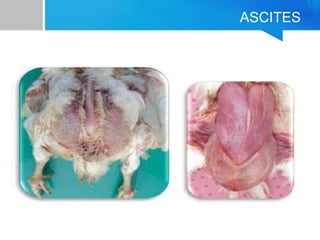
• The pleuroperitoneaI cavity of affected
chickens is filled with straw-yellow fluid .
• The rapid growth in contemporary broilers
is related to higher needs for oxygen, and
the lung remains relatively small vs body
dimensions.
ASCITES
ASCITES
• Immediate causes for hypoxaemia are the
inadequate ventilation, the high ammonia
or dust levels in premises, low
temperatures, stimulating the metabolic
processes.
• Generalized passive venous hyperaemia
and stasis in the liver and other viscera
are observed.
ASCITES
ASCITES
• The posterior vena cava and the right half
of theheart are overfilled with blood.The
stasis is sometimes causing liver rupture
and internal bleeding.
Symptoms
Water belly
Abdominal distension
Reluctant (unwilling) to move
Dyspenic (labored breathing)
Cyanotic (discoloration) lesions can be
seen
Listless (lacking energy)
Ruffled feathers
Mortality range – 20% of the flock
ASCITES
• The main factor for PH is hypoxaemia that
results in enhanced cardiac activity.
• The consequences are pulmonary
hypertension,right cardiac failure and
leads to ascitis.
ASCITES
PM lesions
Water belly (straw coloured fluid in abdominal
cavity)
Swollen liver
Enlargement of right side of the heart
Congested and blood clots in lungs
TREATMENT
Adequate temperature control of the
house, good air and litter
management.
Vitamin C (500 ppm) has been reported to
be of benefit
Practice mash feeding instead of
pellets

Ascites

  • 1.
  • 2.
    ASCITES • The pulmonaryhypertension syndrome (PHS)or ascitis is related to the rapid growth and enhanced metabolic processes in broilers. • Affected chickens are with a strongly distended abdomen,reluctance to move, respiratory troubles and cyanosis. • Ascites occurs in mostly 5-7 week old broiler • Affects mainly in males
  • 3.
    ASCITES • Ascites isa symptoms commonly noticed as BPHS (Broiler Pulmonary Hypertension Syndrome) • High altitude disease • Oedema disease • Heart failure syndrome
  • 4.
  • 5.
    ASCITES • The pleuroperitoneaIcavity of affected chickens is filled with straw-yellow fluid . • The rapid growth in contemporary broilers is related to higher needs for oxygen, and the lung remains relatively small vs body dimensions.
  • 6.
  • 7.
    ASCITES • Immediate causesfor hypoxaemia are the inadequate ventilation, the high ammonia or dust levels in premises, low temperatures, stimulating the metabolic processes. • Generalized passive venous hyperaemia and stasis in the liver and other viscera are observed.
  • 8.
  • 9.
    ASCITES • The posteriorvena cava and the right half of theheart are overfilled with blood.The stasis is sometimes causing liver rupture and internal bleeding.
  • 10.
    Symptoms Water belly Abdominal distension Reluctant(unwilling) to move Dyspenic (labored breathing) Cyanotic (discoloration) lesions can be seen Listless (lacking energy) Ruffled feathers Mortality range – 20% of the flock
  • 11.
    ASCITES • The mainfactor for PH is hypoxaemia that results in enhanced cardiac activity. • The consequences are pulmonary hypertension,right cardiac failure and leads to ascitis.
  • 12.
  • 13.
    PM lesions Water belly(straw coloured fluid in abdominal cavity) Swollen liver Enlargement of right side of the heart Congested and blood clots in lungs
  • 14.
    TREATMENT Adequate temperature controlof the house, good air and litter management. Vitamin C (500 ppm) has been reported to be of benefit Practice mash feeding instead of pellets