John In 5 minutes @ #arvcrisis :
It is a democratic right to have equity of access
              to cultural resources
 The purpose of the position paper/chapter is to reclaim the notion of
  „cultural resources‟ for educational discourse as it seems powerful to us
  in the context of discussions about social mobility and fairness of
  access.
    Not just “cultural heritage” and “high culture”
    Avoid „Two Cultures‟ debate
 Why take a wide ranging theoretical approach to reconceptualising
  „cultural resources‟?
    We don‟t want to be instrumental
    We want to encourage divergent thinking first, and following debate,
     we can move to more convergent thinking.
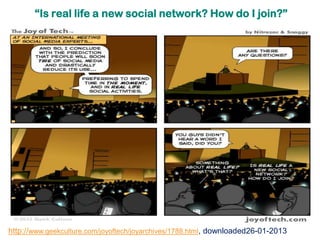
“Is real life a new social network? How do I join?”


http://www.geekculture.com/joyoftech/joyarchives/1788.html, downloaded26-01-2013
Argument and caveats
 Real life (I include digital social media) has the potential to involve people in different types social
  networks
 Social network sites (SNS) and mobile technology have the potential for bridging what we call ‘social
  capital‟
     Membership in a group provides each of its members with the backing of the collectively-owned
      capital (Bourdieu 1986)
     Putnam (2001), and along seemingly similar lines to Bourdieu, sees social capital as the creation
      of social networks between socially heterogeneous groups; face-to-face examples are choirs and
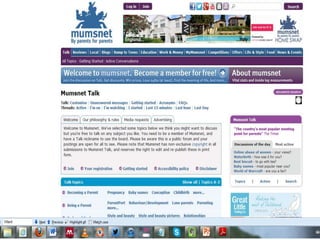
      bowling clubs, online examples include the SNSs (e.g. http://www.mumsnet.com/Talk)
     We emphasise the informational benefits of a heterogeneous network of weak ties
     But note that the „concept of a social network reduces the social human actor to a point – not
      even a point of view – but a point that connects in various ways to other points‟‟ (Merchant, 2011)
 We view
     the technologies themselves (artefacts such as mobile devices and SNSs)
     and the processes/practices attendant to them (knowledge, skills and understandings that
      underpin an analytical engagement)
     as cultural resources for learning
What do we mean by cultural resources?

 We believe in access for all to such cultural resources as:
   learning resources,
   health information,
   cultural events,
   employment opportunities, etc.
   BUT just as important access to the practices (e.g.
    mumsnet)
 We also believe that digital media can mediate this access.
 However, the process, practices and artifacts surrounding
  such an undertaking needs further thought and debate.
Relevance to theme 3
 It is the growing significance of mobile devices in learners‟ everyday lives as well as their
  increasing use for engaging with, and making sense of the world that motivates our
  interest in them.
 However, although there is great ownership of mobile devices, not all citizens have equity
  of access to cultural resources
 We believe our reconceptualization of „cultural resources‟ will
     allow us to describe how cultural resources are distributed and
     provide an assessment of whether that distribution is „fair‟.
 Some evidence that new digital media and devices enable at-risk learners and those not
  in education, employment or training (NEETs) to gain access to cultural resources (for
  example, see: Learning and Skills Network, 2009; Spies and Tredop, 2006).
 Some research (Steinfield et al., 2008) suggests that in HE Facebook, for example,
  provides affordances that can help reduce barriers that students with lower self-esteem
  might experience in forming the kinds of large, heterogeneous networks that are sources
  of social capital. „Trust‟ (process and practice) is a key issue in this respect.
 Thus, there appears to be considerable potential but the reports show mixed results.
STOP here for debate
Using Social Network Sites and Mobile Technology to Scaffold Equity
                 of Access to Cultural Resources


                                 JOHN COOK
              University of the West of England, United Kingdom

                             NORBERT PACHLER
        Institute of Education, University of London, United Kingdom

                               BEN BACHMAIR
        Institute of Education, University of London, United Kingdom

                             Part of #arvcrisis
 Theme 3: http://arv13crisisforum.wordpress.com/draft-programme/crisis-
                                 theme-3/

download position paper from: http://www.slideshare.net/johnnigelcook/proposal-cook-
                                      16112641

  Full book chapter: http://www.academia.edu/attachments/30402434/download_file
Real life (I include digital social media) has the potential
      to involve people in different social networks
 Social capital is an elastic construct used to describe the benefits one
  receives from one‟s relationships with other people
 Bridging social capital (Putnam) is a term that emphasises the
  informational benefits of a heterogeneous network of weak ties
  whereas bonding social capital emphasises emotional benefits from
  strong ties to close friends and family (Steinfield et al., 2008: 435).
 This notion of weak ties provides a slight variation on the definition of
  social capital provided by Bourdieu in that if we allow weak ties, „mutual
  acquaintance‟ in a network is not (necessarily) required.
 Furthermore, a key problem is one of creating and sustaining a spiral of
  social capital; such an endeavour may require scaffolding as a bridging
  activity (particularly for NEETs and at-risk learners).
 A key question is therefore: how can we enable formal and informal
  learning activities of individuals and groups to become linked together
  through scaffolding as a bridging activity mediated by network and
  mobile technology?
Example
 An example of access to cultural resources is given in the book chapter based on a case
  study.
    The cultural resources on the Internet are images, written texts for a Rap lyric or the
     mobile photo app for the teacher‟s portfolio.
    Images, text, photo app etc. are becoming personal resources by being internalized
     and externalised (or represented) within the school context.
    We combine the dynamic of internalization and externalization with the term
     appropriation.
    Appropriation has three dynamic components:
        firstly, bringing cultural resources into a person‟s inner horizon of preferences,
         values, arguments or feeling etc.,
        secondly, processing e.g. the images of the Internet and,
        thirdly, bringing out the results by expressions within the context of the school.
Theoretical background
 The philosophical traditions of Idealism take account of
  cultural resources, for example in the work of Humboldt
  (1792/2002).
 integrated the notion of the appropriation of cultural
  products within cultural forms and the resulting
  development into an education model, which sees
  appropriation embedded in the creative shaping of the
  world.
 creative shaping and forming is mainly a transformation of
  a personally experienced, unstructured, overwhelming
  world into a holistic, coherent rich unity = „life-world‟
 Creation of „life-world‟ is a formative task for people; and, it
  is a risky task with high complexity.
Theoretical background
 theoretical field of Cultural Studies inter alia contains a view
  of mass communication as a cultural form,
 based on objectified cultural products and their
  appropriation,
 e.g. by way of modes of reading (Hall 1980, p. 136). Hall,
  S. (1980) „Encoding/Decoding‟.
 The old mass communicative push system is an expression
  of producing media in the centralised form of industry; this
  is a process of encoding.
 Appropriation is decoding with different modes of reading
  (Hall 1980).
Theoretical background
 But there is the obvious risk of getting lost in the
  overwhelming world of mobile, individualized consumption
  and mass communication.
 With reference to Vygotsky (1978/ 1930, p. 84) and his
  concept of „zones of proximal development‟ we argue that
  development needs sensitive and responsive contexts to
  enable reflective appropriation/analytical engagement, for
  the provision of which education and the school are
  responsible.
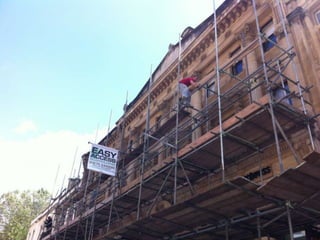
 Scaffolding extends the socio-cultural approach of
  Vygotsky, although he never used this term – it was coined
  by (Wood, Bruner, & Ross, 1976).
Theoretical background
 Social class differences in the relevance of language to
  socialization (Bernstein & Henderson, 1973; Bernstein,
  1987) are important to us.
 Are cultural resources accessed, in terms of their
  educational function, by being appropriated?
 Other key concepts could be explored in the ARV Crisis
  Forum using the above key question as a lens: cultural
  capital (Bourdieu, 1986), social capital (Bourdieu, 1986;
  Putnam, 2001),
Related questions for stimulating debate at
                ARV Crisis Forum
 Is our reconceptualization of cultural resources helpful? Could it help us articulate a
  research agenda?
 Are cultural resources accessed, in terms of their education function, by being
  appropriated?
 How are cultural resources distributed? Is this a fair distribution? Is there a crisis?
 What potential does Social Network Sites and mobile technology offer as a genuine
  bridge for people with few other social/cultural resources (e.g. NEETs) into informal
  learning with high value cultural resources?
 What potential do digital media offer for sustainability and scalability in the integration of
  informal and formal institutional dimensions of learning?
 Where is the evidence? The suspicion must be that despite the widespread adoption of
  digital media, their use to access life-changing learning opportunities will remain unevenly
  distributed. Perhaps this kind of informal learning will be even MORE unevenly
  distributed. Will access to further and higher education, being more dependent on
  resources in the home and immediate environs and less subject to socially centralised
  efforts (if there are any) to democratise educational opportunity? What is the evidence
  that „digital‟ is a route not just to greater access but also to greater educational and
  cultural opportunity?
 How can we inform educational and political/strategic actions for responding to the crises

Arv2013

  • 1.
    John In 5minutes @ #arvcrisis : It is a democratic right to have equity of access to cultural resources  The purpose of the position paper/chapter is to reclaim the notion of „cultural resources‟ for educational discourse as it seems powerful to us in the context of discussions about social mobility and fairness of access.  Not just “cultural heritage” and “high culture”  Avoid „Two Cultures‟ debate  Why take a wide ranging theoretical approach to reconceptualising „cultural resources‟?  We don‟t want to be instrumental  We want to encourage divergent thinking first, and following debate, we can move to more convergent thinking.
  • 2.
    “Is real lifea new social network? How do I join?” http://www.geekculture.com/joyoftech/joyarchives/1788.html, downloaded26-01-2013
  • 3.
    Argument and caveats Real life (I include digital social media) has the potential to involve people in different types social networks  Social network sites (SNS) and mobile technology have the potential for bridging what we call ‘social capital‟  Membership in a group provides each of its members with the backing of the collectively-owned capital (Bourdieu 1986)  Putnam (2001), and along seemingly similar lines to Bourdieu, sees social capital as the creation of social networks between socially heterogeneous groups; face-to-face examples are choirs and bowling clubs, online examples include the SNSs (e.g. http://www.mumsnet.com/Talk)  We emphasise the informational benefits of a heterogeneous network of weak ties  But note that the „concept of a social network reduces the social human actor to a point – not even a point of view – but a point that connects in various ways to other points‟‟ (Merchant, 2011)  We view  the technologies themselves (artefacts such as mobile devices and SNSs)  and the processes/practices attendant to them (knowledge, skills and understandings that underpin an analytical engagement)  as cultural resources for learning
  • 5.
    What do wemean by cultural resources?  We believe in access for all to such cultural resources as:  learning resources,  health information,  cultural events,  employment opportunities, etc.  BUT just as important access to the practices (e.g. mumsnet)  We also believe that digital media can mediate this access.  However, the process, practices and artifacts surrounding such an undertaking needs further thought and debate.
  • 6.
    Relevance to theme3  It is the growing significance of mobile devices in learners‟ everyday lives as well as their increasing use for engaging with, and making sense of the world that motivates our interest in them.  However, although there is great ownership of mobile devices, not all citizens have equity of access to cultural resources  We believe our reconceptualization of „cultural resources‟ will  allow us to describe how cultural resources are distributed and  provide an assessment of whether that distribution is „fair‟.  Some evidence that new digital media and devices enable at-risk learners and those not in education, employment or training (NEETs) to gain access to cultural resources (for example, see: Learning and Skills Network, 2009; Spies and Tredop, 2006).  Some research (Steinfield et al., 2008) suggests that in HE Facebook, for example, provides affordances that can help reduce barriers that students with lower self-esteem might experience in forming the kinds of large, heterogeneous networks that are sources of social capital. „Trust‟ (process and practice) is a key issue in this respect.  Thus, there appears to be considerable potential but the reports show mixed results.
  • 7.
  • 8.
    Using Social NetworkSites and Mobile Technology to Scaffold Equity of Access to Cultural Resources JOHN COOK University of the West of England, United Kingdom NORBERT PACHLER Institute of Education, University of London, United Kingdom BEN BACHMAIR Institute of Education, University of London, United Kingdom Part of #arvcrisis Theme 3: http://arv13crisisforum.wordpress.com/draft-programme/crisis- theme-3/ download position paper from: http://www.slideshare.net/johnnigelcook/proposal-cook- 16112641 Full book chapter: http://www.academia.edu/attachments/30402434/download_file
  • 9.
    Real life (Iinclude digital social media) has the potential to involve people in different social networks  Social capital is an elastic construct used to describe the benefits one receives from one‟s relationships with other people  Bridging social capital (Putnam) is a term that emphasises the informational benefits of a heterogeneous network of weak ties whereas bonding social capital emphasises emotional benefits from strong ties to close friends and family (Steinfield et al., 2008: 435).  This notion of weak ties provides a slight variation on the definition of social capital provided by Bourdieu in that if we allow weak ties, „mutual acquaintance‟ in a network is not (necessarily) required.  Furthermore, a key problem is one of creating and sustaining a spiral of social capital; such an endeavour may require scaffolding as a bridging activity (particularly for NEETs and at-risk learners).  A key question is therefore: how can we enable formal and informal learning activities of individuals and groups to become linked together through scaffolding as a bridging activity mediated by network and mobile technology?
  • 10.
    Example  An exampleof access to cultural resources is given in the book chapter based on a case study.  The cultural resources on the Internet are images, written texts for a Rap lyric or the mobile photo app for the teacher‟s portfolio.  Images, text, photo app etc. are becoming personal resources by being internalized and externalised (or represented) within the school context.  We combine the dynamic of internalization and externalization with the term appropriation.  Appropriation has three dynamic components:  firstly, bringing cultural resources into a person‟s inner horizon of preferences, values, arguments or feeling etc.,  secondly, processing e.g. the images of the Internet and,  thirdly, bringing out the results by expressions within the context of the school.
  • 11.
    Theoretical background  Thephilosophical traditions of Idealism take account of cultural resources, for example in the work of Humboldt (1792/2002).  integrated the notion of the appropriation of cultural products within cultural forms and the resulting development into an education model, which sees appropriation embedded in the creative shaping of the world.  creative shaping and forming is mainly a transformation of a personally experienced, unstructured, overwhelming world into a holistic, coherent rich unity = „life-world‟  Creation of „life-world‟ is a formative task for people; and, it is a risky task with high complexity.
  • 12.
    Theoretical background  theoreticalfield of Cultural Studies inter alia contains a view of mass communication as a cultural form,  based on objectified cultural products and their appropriation,  e.g. by way of modes of reading (Hall 1980, p. 136). Hall, S. (1980) „Encoding/Decoding‟.  The old mass communicative push system is an expression of producing media in the centralised form of industry; this is a process of encoding.  Appropriation is decoding with different modes of reading (Hall 1980).
  • 13.
    Theoretical background  Butthere is the obvious risk of getting lost in the overwhelming world of mobile, individualized consumption and mass communication.  With reference to Vygotsky (1978/ 1930, p. 84) and his concept of „zones of proximal development‟ we argue that development needs sensitive and responsive contexts to enable reflective appropriation/analytical engagement, for the provision of which education and the school are responsible.  Scaffolding extends the socio-cultural approach of Vygotsky, although he never used this term – it was coined by (Wood, Bruner, & Ross, 1976).
  • 15.
    Theoretical background  Socialclass differences in the relevance of language to socialization (Bernstein & Henderson, 1973; Bernstein, 1987) are important to us.  Are cultural resources accessed, in terms of their educational function, by being appropriated?  Other key concepts could be explored in the ARV Crisis Forum using the above key question as a lens: cultural capital (Bourdieu, 1986), social capital (Bourdieu, 1986; Putnam, 2001),
  • 16.
    Related questions forstimulating debate at ARV Crisis Forum  Is our reconceptualization of cultural resources helpful? Could it help us articulate a research agenda?  Are cultural resources accessed, in terms of their education function, by being appropriated?  How are cultural resources distributed? Is this a fair distribution? Is there a crisis?  What potential does Social Network Sites and mobile technology offer as a genuine bridge for people with few other social/cultural resources (e.g. NEETs) into informal learning with high value cultural resources?  What potential do digital media offer for sustainability and scalability in the integration of informal and formal institutional dimensions of learning?  Where is the evidence? The suspicion must be that despite the widespread adoption of digital media, their use to access life-changing learning opportunities will remain unevenly distributed. Perhaps this kind of informal learning will be even MORE unevenly distributed. Will access to further and higher education, being more dependent on resources in the home and immediate environs and less subject to socially centralised efforts (if there are any) to democratise educational opportunity? What is the evidence that „digital‟ is a route not just to greater access but also to greater educational and cultural opportunity?  How can we inform educational and political/strategic actions for responding to the crises