ARTIFICIAL INTELLIGENCE
AI IS A TOOL, NOT A THREAT.
- I.ABDUL KALAM & V.JAYAPRAKASH
1st
year Bsc Computer Science
Govt. Arts & Science College
Vadalur.
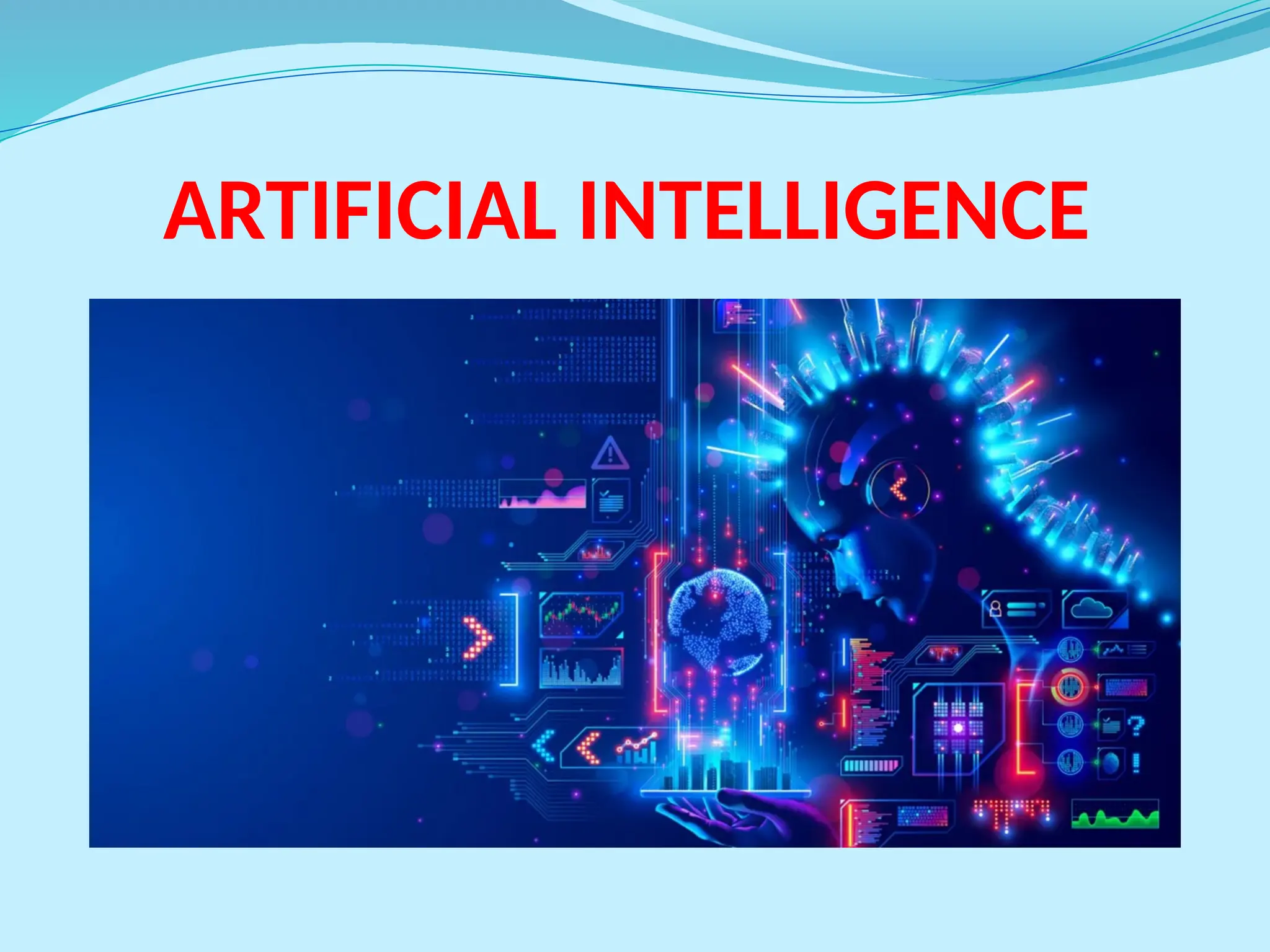
ARTIFICIAL INTELLIGENCE
CONTENT
 WHAT IS ARTIFICIAL INTELLIGENCE?
 WHY WE NEED ARTIFICIAL INTELLIGENCE?
 APPLICATION OF ARTIFICIAL INTELLIGENCE
 TYPES OF ARTIFICIAL INTELLIGENCE
 ADVANTAGES OF ARTIFICIAL INTELLIGENCE
 DISADVANTAGES OF ARTIFICIAL INTELLIGENCE
 CONCLUSION
WHAT IS ARTIFICIAL INTELLIGENCE
 It is a branch of computer
science by which we can create
intelligent machine which can
behave like a human, think like
humans and able to make
decisions.
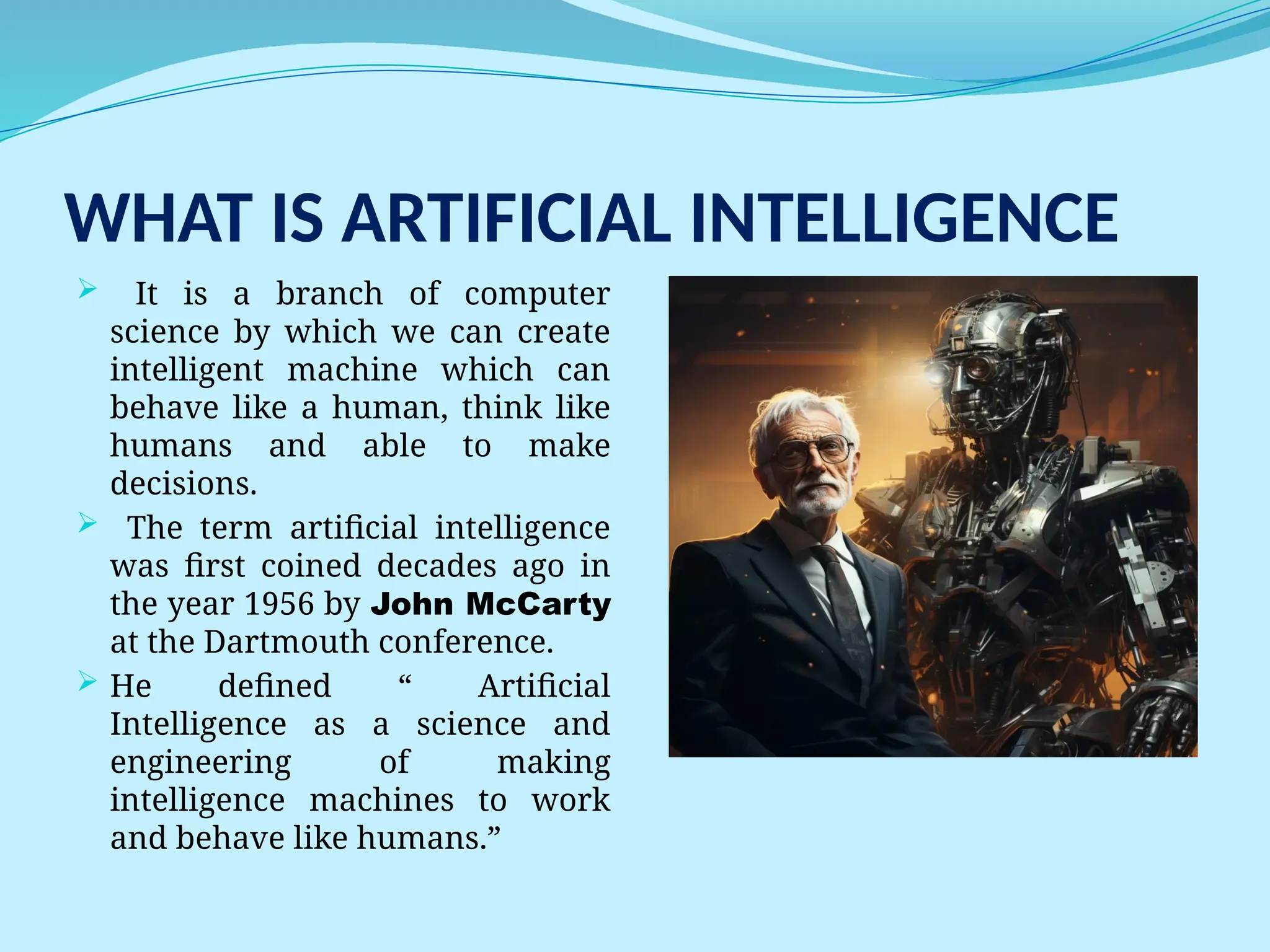
 The term artificial intelligence
was first coined decades ago in
the year 1956 by John McCarty
at the Dartmouth conference.
 He defined “ Artificial
Intelligence as a science and
engineering of making
intelligence machines to work
and behave like humans.”
WHY WE NEED ARTIFICIAL
INTELLIGENCE ?
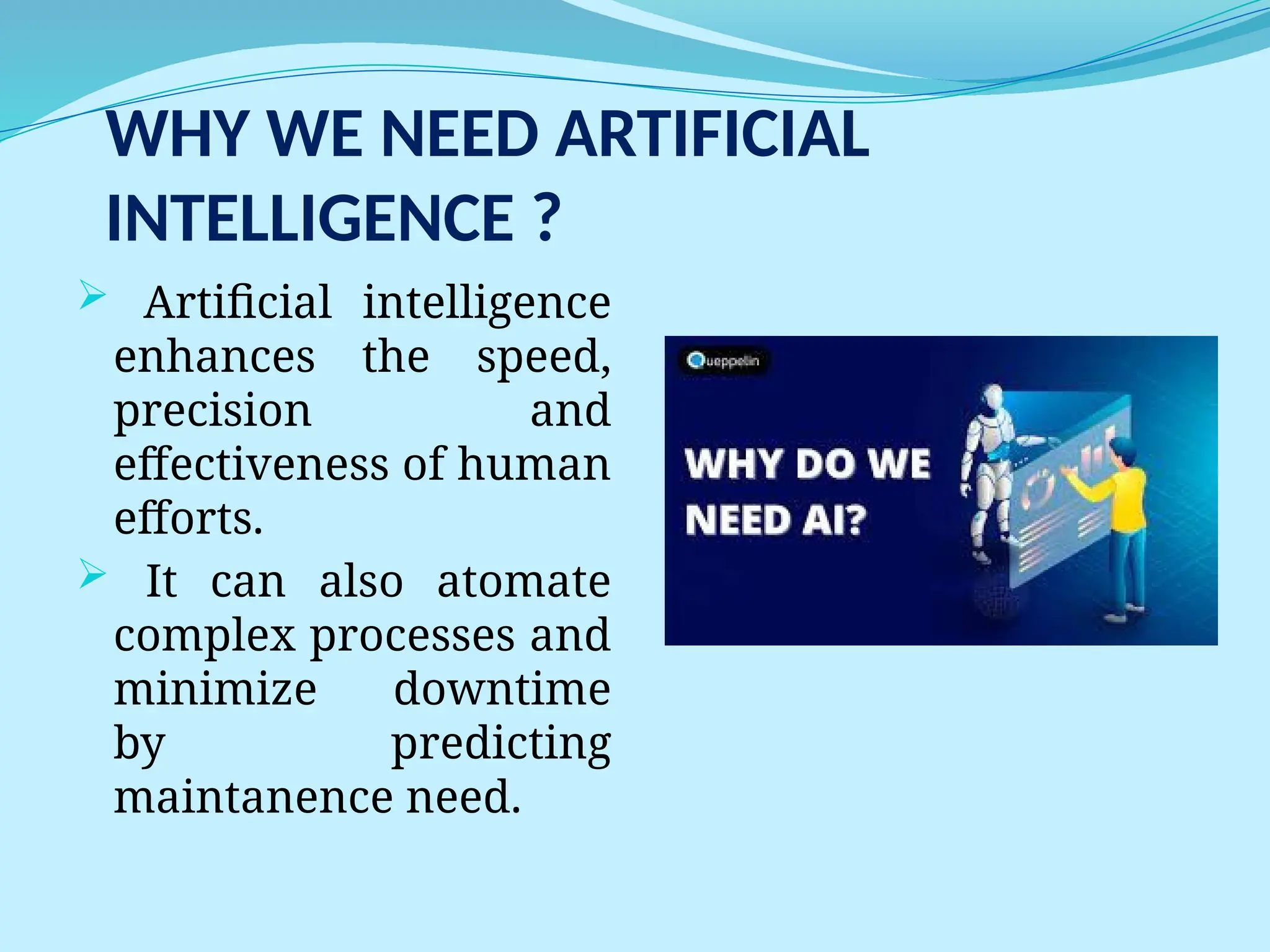
 Artificial intelligence
enhances the speed,
precision and
effectiveness of human
efforts.
 It can also atomate
complex processes and
minimize downtime
by predicting
maintanence need.
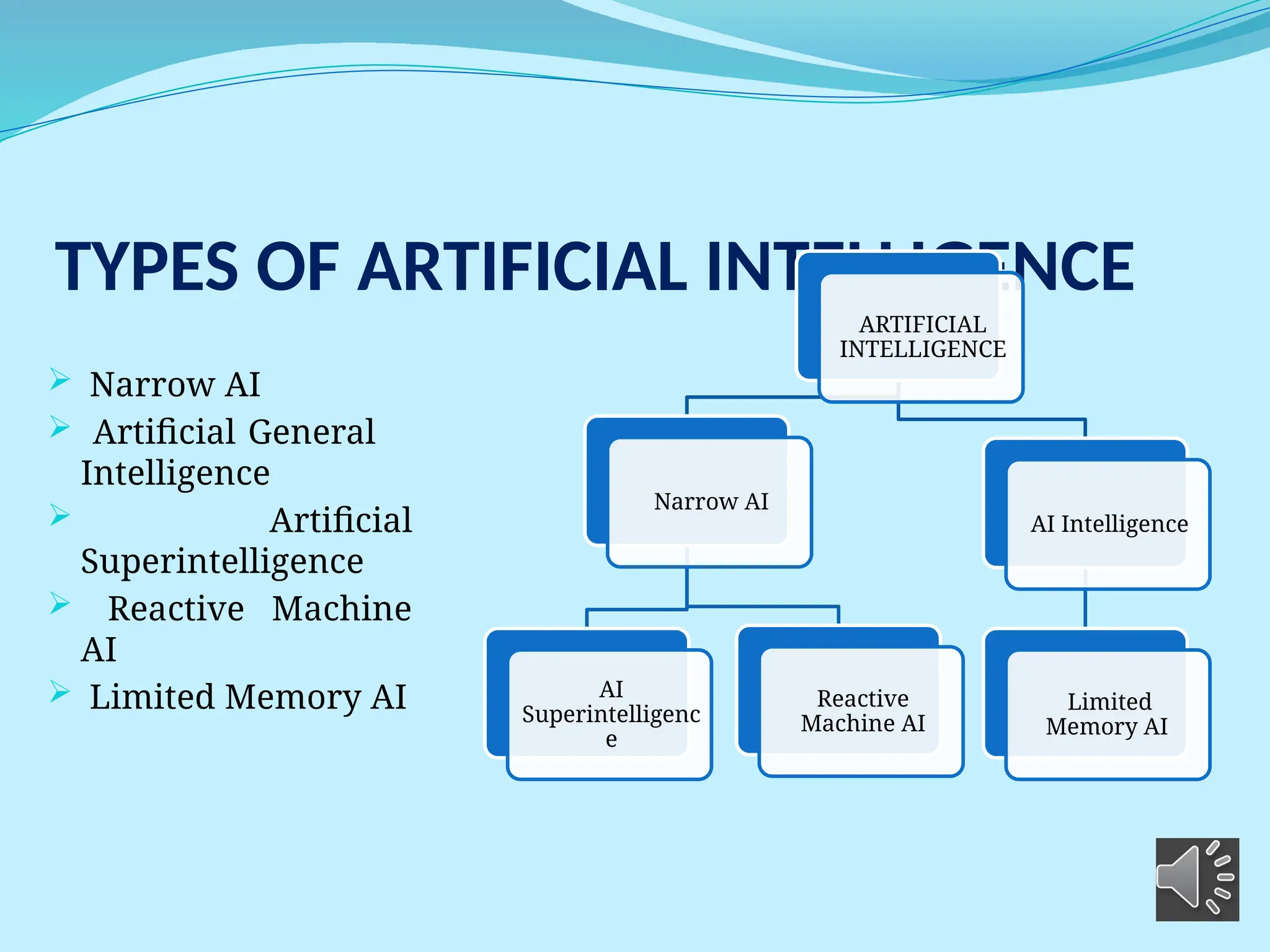
TYPES OF ARTIFICIAL INTELLIGENCE
 Narrow AI
 Artificial General
Intelligence
 Artificial
Superintelligence
 Reactive Machine
AI
 Limited Memory AI
ARTIFICIAL
INTELLIGENCE
Narrow AI
AI
Superintelligenc
e
Reactive
Machine AI
AI Intelligence
Limited
Memory AI
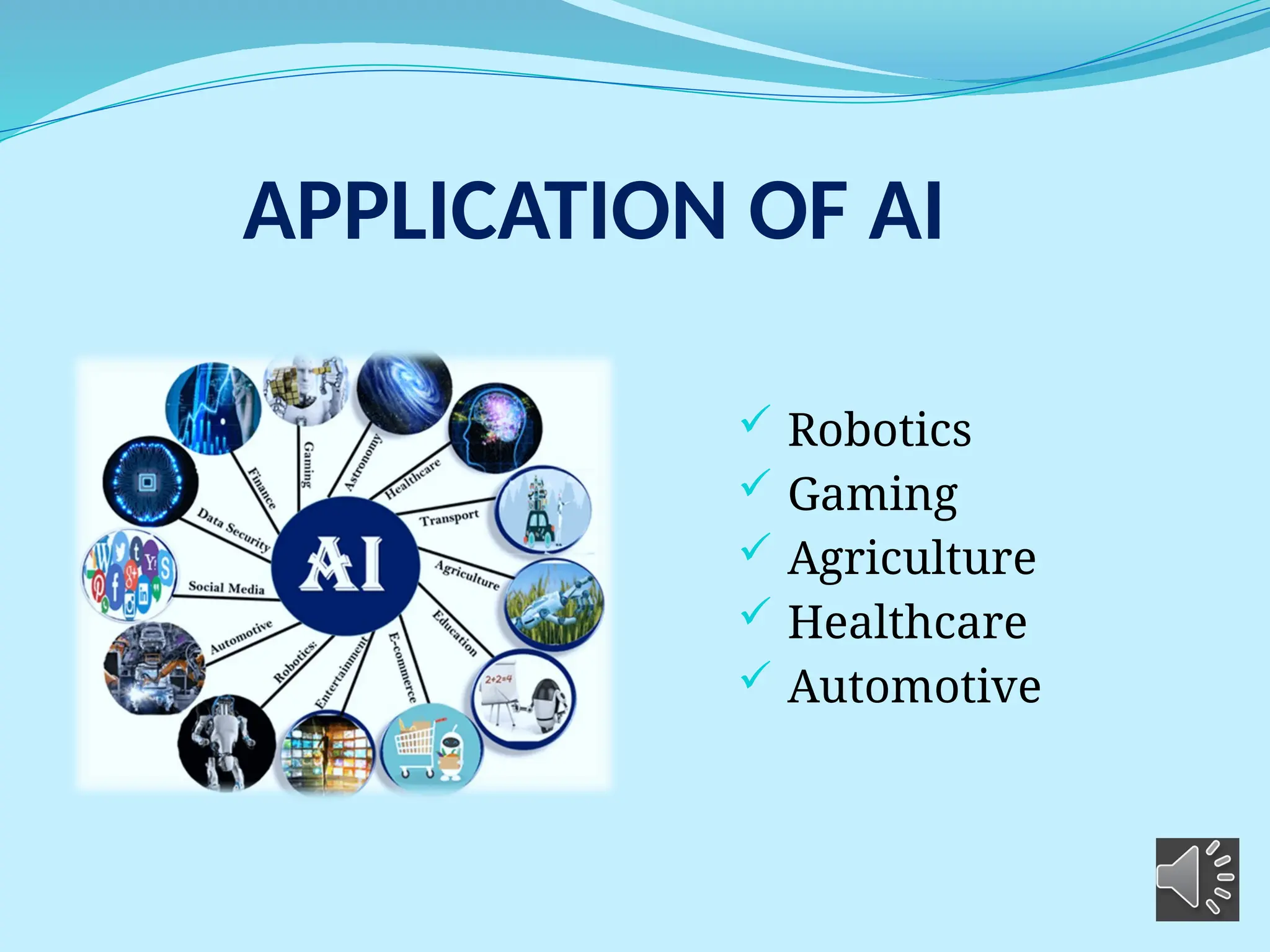
APPLICATION OF AI
 Robotics
 Gaming
 Agriculture
 Healthcare
 Automotive
ADVANTAGES OF ARTIFICIAL
INTELLIGENCE
 Reduction in Human error – One of the biggest benefits of AI is
that it can significantly reduce errors and increase accuracy and
precision.
 Zero Risks – Another big benefit of AI is that humans can
overcome many risks by letting AI robots do them for us. Like
defusing a bomb, going to space etc.
 24x7 Availability – There are many studies that shows humans are
productive only about 3 to 4 hours in a day. But AI can work
endlessly without breaks, they can even handle tedious jobs easily.
 New inventions – In practically every field, AI is the driving force
behind numerous innovations that will aid humans in resolving the
majority of challenging issues.
DISADVANTAGES OF ARTIFICIAL
INTELLIGENCE
 High Costs – It requires plenty of time and resources and can
cost a huge deal of money.
 No creativity – A big disadvantage of AI is that if cannot learn to
think outside the box.
 Unemployment – One application of artificial intelligence is a
robot, which is displacing occupation and increasing
unemployment and there is always a chance of unemployement
as a result of chatbots and robots replacing humans.
 Making humans lazy – AI applications automate the majority of
tedious tasks. Since we do not have to memorize things or solve
puzzles to get the jog done and we tend to use our brain less and
less.
CONCLUSION
 conclusion about the future of education with
AI. Artificial intelligence is changing how we
learn and teach. With the ability to personalize
learning, automate administrate tasks, provide
innovative eductional content, and much more,
AI is creating an exciting future for education.
ANY
QUERIS ?
ARTIFICIAL INTELLIGENCE PPT BY ABDUL KALAM AND JAYAPRAKASH..pptx

ARTIFICIAL INTELLIGENCE PPT BY ABDUL KALAM AND JAYAPRAKASH..pptx

  • 1.
    ARTIFICIAL INTELLIGENCE AI ISA TOOL, NOT A THREAT. - I.ABDUL KALAM & V.JAYAPRAKASH 1st year Bsc Computer Science Govt. Arts & Science College Vadalur.
  • 2.
  • 3.
    CONTENT  WHAT ISARTIFICIAL INTELLIGENCE?  WHY WE NEED ARTIFICIAL INTELLIGENCE?  APPLICATION OF ARTIFICIAL INTELLIGENCE  TYPES OF ARTIFICIAL INTELLIGENCE  ADVANTAGES OF ARTIFICIAL INTELLIGENCE  DISADVANTAGES OF ARTIFICIAL INTELLIGENCE  CONCLUSION
  • 4.
    WHAT IS ARTIFICIALINTELLIGENCE  It is a branch of computer science by which we can create intelligent machine which can behave like a human, think like humans and able to make decisions.  The term artificial intelligence was first coined decades ago in the year 1956 by John McCarty at the Dartmouth conference.  He defined “ Artificial Intelligence as a science and engineering of making intelligence machines to work and behave like humans.”
  • 5.
    WHY WE NEEDARTIFICIAL INTELLIGENCE ?  Artificial intelligence enhances the speed, precision and effectiveness of human efforts.  It can also atomate complex processes and minimize downtime by predicting maintanence need.
  • 6.
    TYPES OF ARTIFICIALINTELLIGENCE  Narrow AI  Artificial General Intelligence  Artificial Superintelligence  Reactive Machine AI  Limited Memory AI ARTIFICIAL INTELLIGENCE Narrow AI AI Superintelligenc e Reactive Machine AI AI Intelligence Limited Memory AI
  • 7.
    APPLICATION OF AI Robotics  Gaming  Agriculture  Healthcare  Automotive
  • 9.
    ADVANTAGES OF ARTIFICIAL INTELLIGENCE Reduction in Human error – One of the biggest benefits of AI is that it can significantly reduce errors and increase accuracy and precision.  Zero Risks – Another big benefit of AI is that humans can overcome many risks by letting AI robots do them for us. Like defusing a bomb, going to space etc.  24x7 Availability – There are many studies that shows humans are productive only about 3 to 4 hours in a day. But AI can work endlessly without breaks, they can even handle tedious jobs easily.  New inventions – In practically every field, AI is the driving force behind numerous innovations that will aid humans in resolving the majority of challenging issues.
  • 10.
    DISADVANTAGES OF ARTIFICIAL INTELLIGENCE High Costs – It requires plenty of time and resources and can cost a huge deal of money.  No creativity – A big disadvantage of AI is that if cannot learn to think outside the box.  Unemployment – One application of artificial intelligence is a robot, which is displacing occupation and increasing unemployment and there is always a chance of unemployement as a result of chatbots and robots replacing humans.  Making humans lazy – AI applications automate the majority of tedious tasks. Since we do not have to memorize things or solve puzzles to get the jog done and we tend to use our brain less and less.
  • 12.
    CONCLUSION  conclusion aboutthe future of education with AI. Artificial intelligence is changing how we learn and teach. With the ability to personalize learning, automate administrate tasks, provide innovative eductional content, and much more, AI is creating an exciting future for education.
  • 13.