The Art of Making Meaning With TechnologyBy Shaunna Smith, ARED 7315, Spring 2011
IntroductionThe Makers of Things
Implications for Education
Art Education & TechnologyIntroduction: The Makers of ThingsThroughout history humans have had an intrinsic desire to make meaning.
Art is representation of “an embodiment of things that matter and a testament to the human condition (Delacruz, 2009, p. 26).”
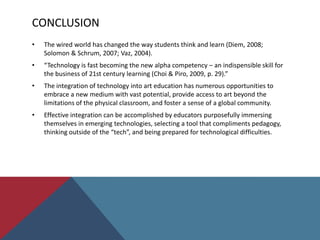
Technological advancements have enabled everyday people to become equipped with the tools to make what they want, when they want, all by themselves (Bull & Garofalo, 2009; Hendrix, 2008). Introduction: Implications for EducationWhether we agree that “the world is flat” (Friedman, 2005) or that our future workforce needs “a whole new mind” (Pink, 2005), a global market is begging for originality and innovation to flourish from modern technology capabilities.
Creativity and innovation are invaluable skills that will be rewarded in an increasingly competitive global economy(Obama, 2011; Berry, et al. 2010).
There is a need to provide students with the necessary tools to transition from a culture of consumption to a culture of creation(Eisenberg, 2011).
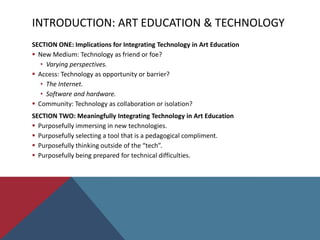
Interdisciplinary standards indicate a need for students to have a capacity for creativity and innovation, whether in the development of thought, verbal communication, or the physical act of making objects to demonstrate knowledge and meaningful self-expression (NCTE, 2010, NAEA, 2011b; ISTE, 2011; P21, 2009). Introduction: Art Education & TechnologySECTION ONE: Implications for Integrating Technology in Art EducationNew Medium: Technology as friend or foe?Varying perspectives.Access: Technology as opportunity or barrier?The Internet.
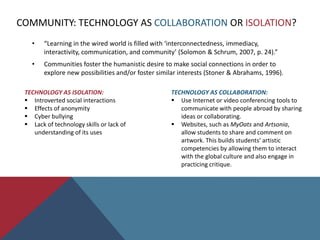
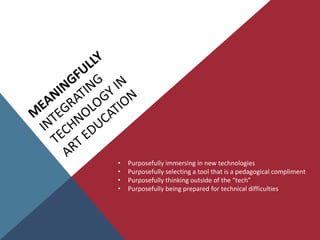
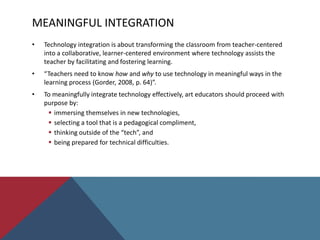
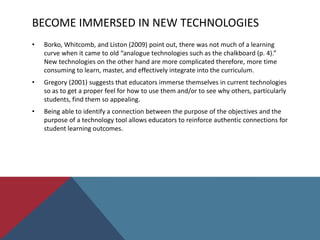
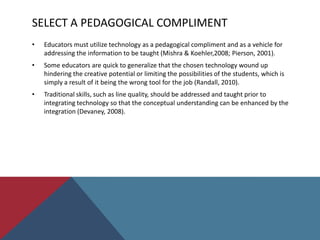
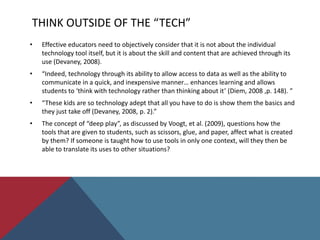
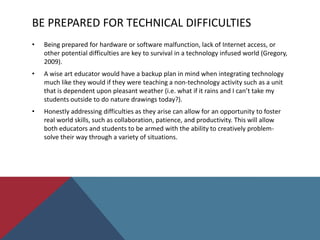
Software and hardware.Community: Technology as collaboration or isolation?SECTION TWO: Meaningfully Integrating Technology in Art EducationPurposefully immersing in new technologies.Purposefully selecting a tool that is a pedagogical compliment.Purposefully thinking outside of the “tech”.Purposefully being prepared for technical difficulties.
Implicationsfor Integrating Technology in Art EducationNew Medium
Access
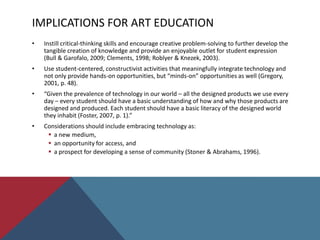
CommunityImplications For Art EducationInstill critical-thinking skills and encourage creative problem-solving to further develop the tangible creation of knowledge and provide an enjoyable outlet for student expression (Bull & Garofalo, 2009; Clements, 1998; Roblyer & Knezek, 2003).
Use student-centered, constructivist activities that meaningfully integrate technology and not only provide hands-on opportunities, but “minds-on” opportunities as well (Gregory, 2001, p. 48).
“Given the prevalence of technology in our world – all the designed products we use every day – every student should have a basic understanding of how and why those products are designed and produced. Each student should have a basic literacy of the designed world they inhabit (Foster, 2007, p. 1).”
Considerations should include embracing technology as:a new medium, an opportunity for access, and a prospect for developing a sense of community (Stoner & Abrahams, 1996).
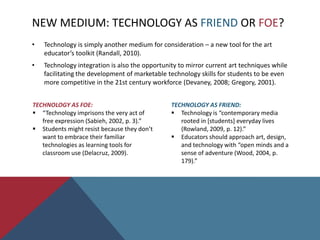
New Medium: Technology as friend or foe?Technology is simply another medium for consideration – a new tool for the art educator’s toolkit (Randall, 2010).
Technology integration is also the opportunity to mirror current art techniques while facilitating the development of marketable technology skills for students to be even more competitive in the 21st century workforce (Devaney, 2008; Gregory, 2001).TECHNOLOGY AS FOE:“Technology imprisons the very act of free expression (Sabieh, 2002, p. 3).”
Students might resist because they don’t want to embrace their familiar technologies as learning tools for classroom use (Delacruz, 2009). TECHNOLOGY AS FRIEND:Technology is “contemporary media rooted in [students] everyday lives (Rowland, 2009, p. 12).”
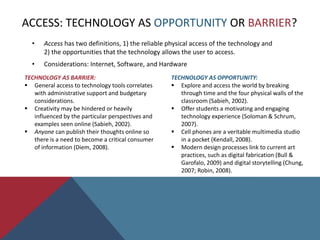
Educators should approach art, design, and technology with “open minds and a sense of adventure (Wood, 2004, p. 179).” Access: Technology as Opportunity or Barrier?Access has two definitions, 1) the reliable physical access of the technology and       2) the opportunities that the technology allows the user to access.
Considerations: Internet, Software, and HardwareTECHNOLOGY AS BARRIER:General access to technology tools correlates with administrative support and budgetary considerations.
Creativity may be hindered or heavily influenced by the particular perspectives and examples seen online(Sabieh, 2002).
Anyonecan publish their thoughts online so there is a need to become a critical consumer of information (Diem, 2008). TECHNOLOGY AS OPPORTUNITY:Explore and access the world by breaking through time and the four physical walls of the classroom (Sabieh, 2002).
Offer students a motivating and engaging technology experience (Soloman & Schrum, 2007).

Art + Technology

  • 1.
    The Art ofMaking Meaning With TechnologyBy Shaunna Smith, ARED 7315, Spring 2011
  • 2.
  • 3.
  • 4.
    Art Education &TechnologyIntroduction: The Makers of ThingsThroughout history humans have had an intrinsic desire to make meaning.
  • 5.
    Art is representationof “an embodiment of things that matter and a testament to the human condition (Delacruz, 2009, p. 26).”
  • 6.
    Technological advancements haveenabled everyday people to become equipped with the tools to make what they want, when they want, all by themselves (Bull & Garofalo, 2009; Hendrix, 2008). Introduction: Implications for EducationWhether we agree that “the world is flat” (Friedman, 2005) or that our future workforce needs “a whole new mind” (Pink, 2005), a global market is begging for originality and innovation to flourish from modern technology capabilities.
  • 7.
    Creativity and innovationare invaluable skills that will be rewarded in an increasingly competitive global economy(Obama, 2011; Berry, et al. 2010).
  • 8.
    There is aneed to provide students with the necessary tools to transition from a culture of consumption to a culture of creation(Eisenberg, 2011).
  • 9.
    Interdisciplinary standards indicatea need for students to have a capacity for creativity and innovation, whether in the development of thought, verbal communication, or the physical act of making objects to demonstrate knowledge and meaningful self-expression (NCTE, 2010, NAEA, 2011b; ISTE, 2011; P21, 2009). Introduction: Art Education & TechnologySECTION ONE: Implications for Integrating Technology in Art EducationNew Medium: Technology as friend or foe?Varying perspectives.Access: Technology as opportunity or barrier?The Internet.
  • 10.
    Software and hardware.Community:Technology as collaboration or isolation?SECTION TWO: Meaningfully Integrating Technology in Art EducationPurposefully immersing in new technologies.Purposefully selecting a tool that is a pedagogical compliment.Purposefully thinking outside of the “tech”.Purposefully being prepared for technical difficulties.
  • 11.
    Implicationsfor Integrating Technologyin Art EducationNew Medium
  • 12.
  • 13.
    CommunityImplications For ArtEducationInstill critical-thinking skills and encourage creative problem-solving to further develop the tangible creation of knowledge and provide an enjoyable outlet for student expression (Bull & Garofalo, 2009; Clements, 1998; Roblyer & Knezek, 2003).
  • 14.
    Use student-centered, constructivistactivities that meaningfully integrate technology and not only provide hands-on opportunities, but “minds-on” opportunities as well (Gregory, 2001, p. 48).
  • 15.
    “Given the prevalenceof technology in our world – all the designed products we use every day – every student should have a basic understanding of how and why those products are designed and produced. Each student should have a basic literacy of the designed world they inhabit (Foster, 2007, p. 1).”
  • 16.
    Considerations should includeembracing technology as:a new medium, an opportunity for access, and a prospect for developing a sense of community (Stoner & Abrahams, 1996).
  • 17.
    New Medium: Technologyas friend or foe?Technology is simply another medium for consideration – a new tool for the art educator’s toolkit (Randall, 2010).
  • 18.
    Technology integration isalso the opportunity to mirror current art techniques while facilitating the development of marketable technology skills for students to be even more competitive in the 21st century workforce (Devaney, 2008; Gregory, 2001).TECHNOLOGY AS FOE:“Technology imprisons the very act of free expression (Sabieh, 2002, p. 3).”
  • 19.
    Students might resistbecause they don’t want to embrace their familiar technologies as learning tools for classroom use (Delacruz, 2009). TECHNOLOGY AS FRIEND:Technology is “contemporary media rooted in [students] everyday lives (Rowland, 2009, p. 12).”
  • 20.
    Educators should approachart, design, and technology with “open minds and a sense of adventure (Wood, 2004, p. 179).” Access: Technology as Opportunity or Barrier?Access has two definitions, 1) the reliable physical access of the technology and 2) the opportunities that the technology allows the user to access.
  • 21.
    Considerations: Internet, Software,and HardwareTECHNOLOGY AS BARRIER:General access to technology tools correlates with administrative support and budgetary considerations.
  • 22.
    Creativity may behindered or heavily influenced by the particular perspectives and examples seen online(Sabieh, 2002).
  • 23.
    Anyonecan publish theirthoughts online so there is a need to become a critical consumer of information (Diem, 2008). TECHNOLOGY AS OPPORTUNITY:Explore and access the world by breaking through time and the four physical walls of the classroom (Sabieh, 2002).
  • 24.
    Offer students amotivating and engaging technology experience (Soloman & Schrum, 2007).

Editor's Notes

  • #13 Put the technology in the hands of the students!!!
  • #16 Avoid tutorial heavy instruction that focuses on logistical step-by-step procedures. Instead, encourage students to creatively problem solve and explore the tools.
  • #19 Technology integration is not just about increased productivity, it is about increased opportunity to go above and beyond our own physical abilities by pushing the limits of our own creativity and innovation.Setting the course towards purposeful and meaningful technology integration will ensure that art education remains plugged in to both the needs of student learning and the global society.