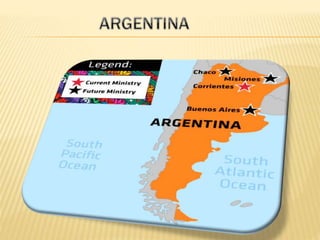
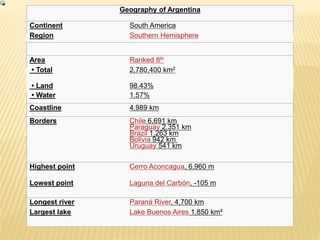
Geography of Argentina
Continent South America
Region Southern Hemisphere
Area Ranked 8th
• Total 2,780,400 km2
• Land 98.43%
• Water 1.57%
Coastline 4,989 km
Borders Chile 6,691 km
Paraguay 2,351 km
Brazil 1,263 km
Bolivia 942 km
Uruguay 541 km
Highest point Cerro Aconcagua, 6,960 m
Lowest point Laguna del Carbón, -105 m
Longest river Paraná River, 4,700 km
Largest lake Lake Buenos Aires 1,850 km²
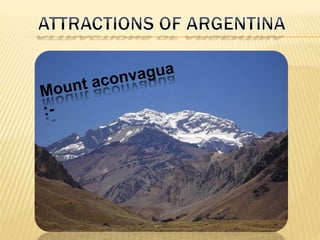
Aconcagua :- is the highest mountain outside
of Asia, at 6,960.8 metres ,and by extension
the highest point in the Southern
Hemisphere. It is located in
the Andes mountain range, in
the province of Mendoza,Argentina, and lies
112 kilometres northwest of its capital,
the city of Mendoza
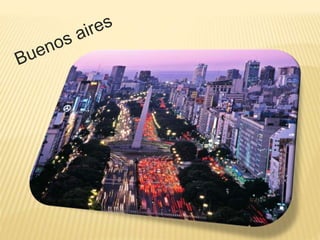
Buenos Aires:- is the capital and largest city
of Argentina, and thesecond-largest metropolitan
area in South America, after Greater São Paulo.It
is located on the western shore of the estuary of
the Río de la Plata, on the continent's
southeastern coast. The Greater Buenos
Aires conurbation, which also includes several
Buenos Aires Province districts, constitutes the
third-largest conurbation in Latin America, with a
population of around fifteen and a half million.
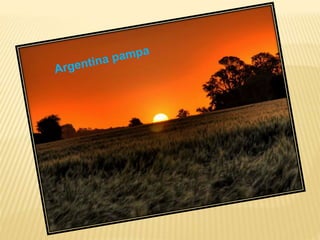
The Pampas:- are fertile South
American lowlands, covering more than
750,000 km2, that include
the Argentine provinces of Buenos
Aires, La Pampa, Santa
Fe, and Córdoba; These vast plains are
a natural region only interrupted by the
low Ventana and Tandil hills near Bahía
Blanca and Tandil with a height of
1,300 mtr.
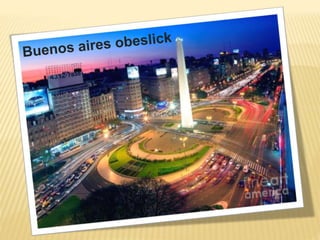
The building Construction began on
March 20, 1936, and it was
inaugurated on May 23 of the same
year. It was designed by
architect Alberto Prebisch at the
request of the mayor Mariano de
Vedia y Mitre For its construction,
which cost 200,000 pesos moneda
nacional.
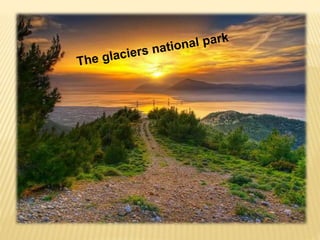
Los Glaciares National Park is
located in the area known as
Austral Andes in Argentina, in the
south west of Santa Cruz on the
border with Chile. By his
magnificent natural beauty, it
constitutes a wonder in the world,
and was declared "World
Heritage" by UNESCO in 1981
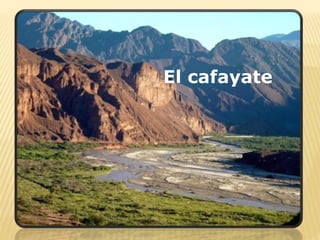
El cafayate
Cafayate is a town located at the
central zone of the Valles
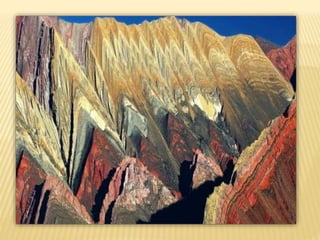
Calchaquíes in
the province of Salta,Argentina. It sits
1,683 metres above mean sea level,
at a distance of 189 kilometres
from Salta City and 1,329 kilometres
from Buenos Aires. It has about
12,000 inhabitants
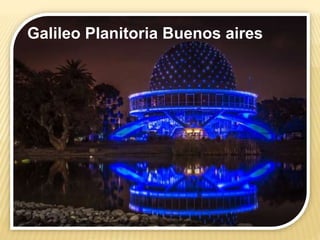
Galileo Planitoria Buenos aires
The Galileo Galilei planetarium,
commonly known as Planetario, is
located in Parque Tres de Febrero in
the Palermo district of Buenos
Aires, Argentina. The idea that Buenos
Aires should have a planetarium began
to take shape in 1958 by an agreement
between Socialist Councilman José
Luis Peña and the municipal Secretary
of Culture, Dr. Aldo Cocca.
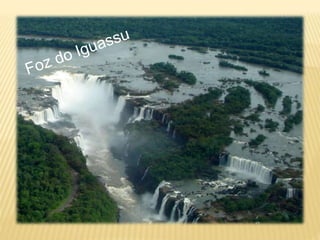
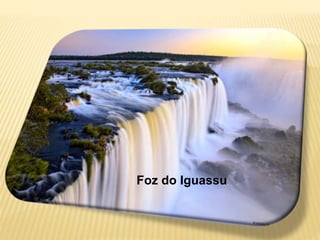
Foz do Iguassu
Iguazu Falls, Iguazú Falls, Iguassu Falls,
or Iguaçu Falls are waterfalls of the Iguazu
River on theborder of the Argentina
province of Misiones and the Brazilian state
of Paraná. The falls divide the river into the
upper and lower Iguazu. The Iguazu River
rises near the city of Curitiba. For most of its
course, the river flows through Brazil, however,
most of the falls are on the Argentine side.
Below its confluence with the San Antonio
River, the Iguazu River forms the boundary
between Argentina and Brazil.
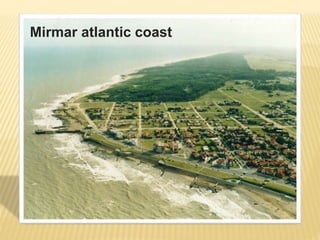
Mirmar atlantic coast
Miramar is an Argentine city located
on the coast of the Atlantic
Ocean in Buenos Aires Province,
450 km south of Buenos Aires. It is the
seat of General Alvarado Partido. The
name “Miramar” cames from the
words Mira (look) and Mar (sea).
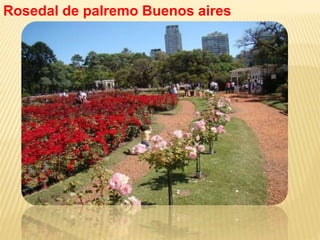
Rosedal de palremo Buenos aires
The park itself, inside the fences,
is beautiful and well conservated.
A nice lake, grass and tress. But,
what makes it great is everything
else outside the fences. People
walking, using the park, picnicing
in the grass, skateboarding,
rollerblading, running, small
children having fun.
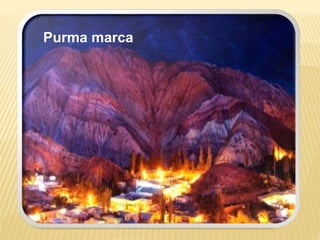
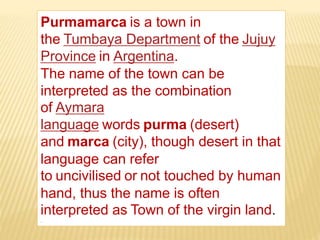
Purma marca
Purmamarca is a town in
the Tumbaya Department of the Jujuy
Province in Argentina.
The name of the town can be
interpreted as the combination
of Aymara
language words purma (desert)
and marca (city), though desert in that
language can refer
to uncivilised or not touched by human
hand, thus the name is often
interpreted as Town of the virgin land.
.
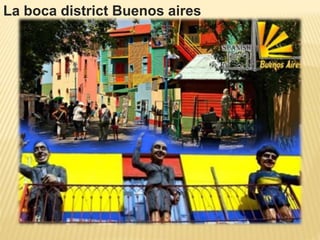
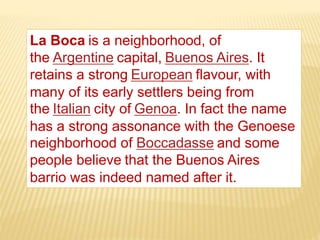
La boca district Buenos aires
La Boca is a neighborhood, of
the Argentine capital, Buenos Aires. It
retains a strong European flavour, with
many of its early settlers being from
the Italian city of Genoa. In fact the name
has a strong assonance with the Genoese
neighborhood of Boccadasse and some
people believe that the Buenos Aires
barrio was indeed named after it.
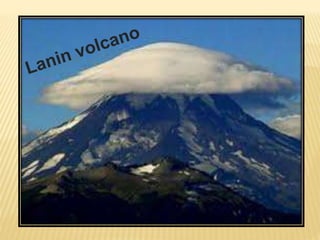
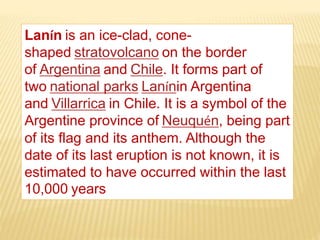
Lanín is an ice-clad, cone-
shaped stratovolcano on the border
of Argentina and Chile. It forms part of
two national parks Lanínin Argentina
and Villarrica in Chile. It is a symbol of the
Argentine province of Neuquén, being part
of its flag and its anthem. Although the
date of its last eruption is not known, it is
estimated to have occurred within the last
10,000 years
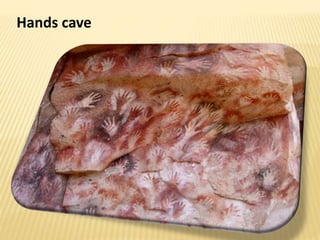
Hands cave
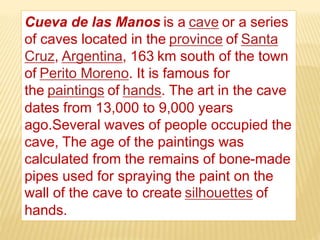
Cueva de las Manos is a cave or a series
of caves located in the province of Santa
Cruz, Argentina, 163 km south of the town
of Perito Moreno. It is famous for
the paintings of hands. The art in the cave
dates from 13,000 to 9,000 years
ago.Several waves of people occupied the
cave, The age of the paintings was
calculated from the remains of bone-made
pipes used for spraying the paint on the
wall of the cave to create silhouettes of
hands.
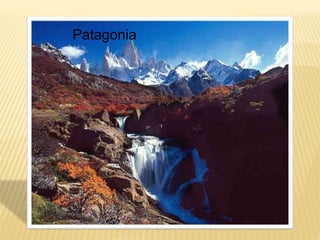
Patagonia
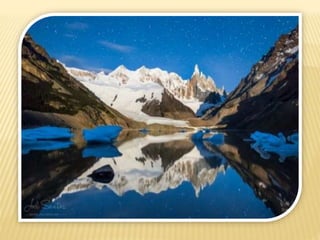
Patagonia is a sparsely populated
region located at the southern end
of South America, shared
by Argentina and Chile. The region
comprises the southern section of
the Andes mountains as well as
the deserts, steppes and grasslands
east of this southern portion of the
Andes. Patagonia has two coasts a
western one towards the Pacific
Ocean and an eastern one towards
the Atlantic Ocean.
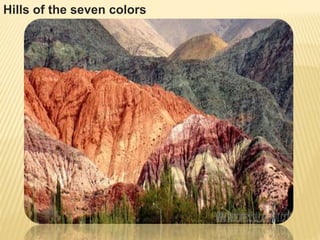
Hills of the seven colors
The most outstanding, which has
made the city that lodges it so
popular, is the hill of the seven
colors It bears such a name due to
the various pigments aquired by
the minerals that make up its walls.
This hill is part of the eastern
mountain range and is located right
West of the population nucleus of
Purmamarca.
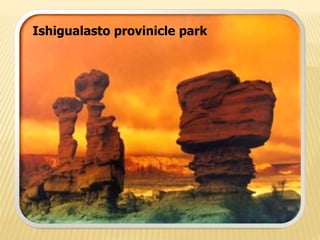
Ishigualasto provinicle park
Established on 3 November 1971, the park
has an area of 60,37 Ischigualasto
Provincial Park also called Valle de la
Luna is a provincial protected area in the
north-east of San Juan Province, north-
westernArgentina, limiting to the north with
the Talampaya National Park, in La Rioja
Province. Both areas belong to the same
geological formation, the Ischigualasto
Formation 0
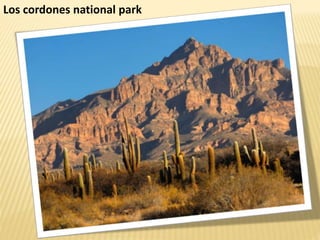
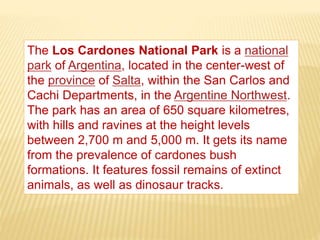
Los cordones national park
The Los Cardones National Park is a national
park of Argentina, located in the center-west of
the province of Salta, within the San Carlos and
Cachi Departments, in the Argentine Northwest.
The park has an area of 650 square kilometres,
with hills and ravines at the height levels
between 2,700 m and 5,000 m. It gets its name
from the prevalence of cardones bush
formations. It features fossil remains of extinct
animals, as well as dinosaur tracks.
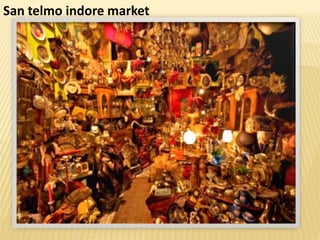
San telmo indore market
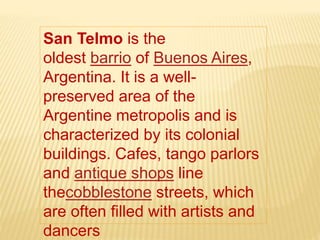
San Telmo is the
oldest barrio of Buenos Aires,
Argentina. It is a well-
preserved area of the
Argentine metropolis and is
characterized by its colonial
buildings. Cafes, tango parlors
and antique shops line
thecobblestone streets, which
are often filled with artists and
dancers
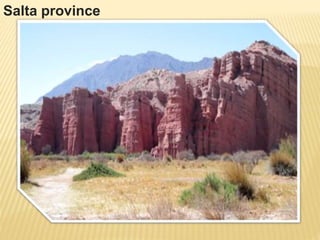
Salta province
Salta province is
a province of Argentina, located in the
northwest of the country. Neighboring
provinces are from the east
clockwise Formosa, Chaco, Santiago
del Estero, Tucumán and Catamarca. It
also surrounds Jujuy. To the north it
borders Bolivia and Paraguay and to
the west lies Chile.
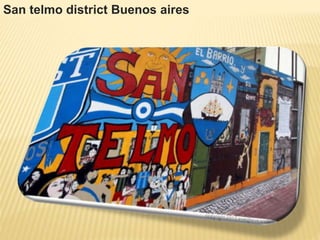
San telmo district Buenos aires
Blessed
with cobblestoned streets,
a crumbling, faded
grandeur, an amazing
weekly street market and
many good places to eat
and drink, San Telmo is
a Buenos Aires barrio that
simply cannot be missed.
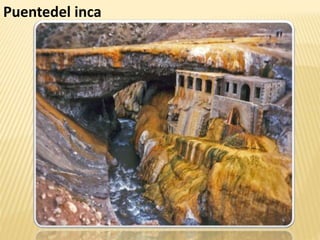
Puentedel inca
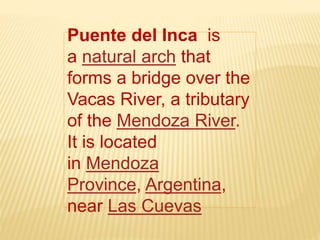
Puente del Inca is
a natural arch that
forms a bridge over the
Vacas River, a tributary
of the Mendoza River.
It is located
in Mendoza
Province, Argentina,
near Las Cuevas
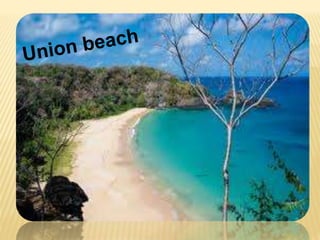
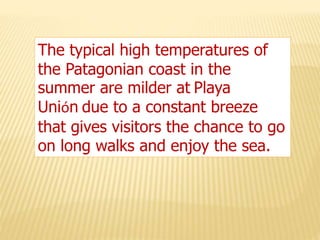
The typical high temperatures of
the Patagonian coast in the
summer are milder at Playa
Unión due to a constant breeze
that gives visitors the chance to go
on long walks and enjoy the sea.
Puetro madero ponarmic
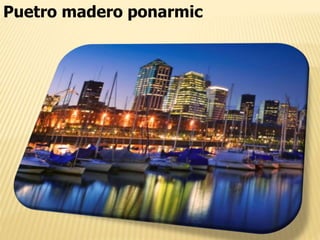
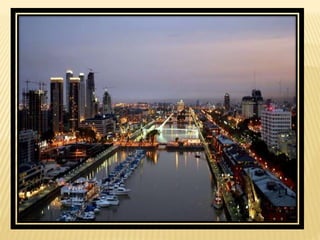
Puerto Madero, also known within
the urban planning community as
the Puerto Madero Waterfront, is
a barrio of theArgentine capital
at Buenos Aires CBD, occupying a
significant portion of the Río de la
Plata riverbank and representing
the latest architectural trends in
the city of Buenos Aires.
Argentina tourism

Argentina tourism

  • 4.
    Geography of Argentina ContinentSouth America Region Southern Hemisphere Area Ranked 8th • Total 2,780,400 km2 • Land 98.43% • Water 1.57% Coastline 4,989 km Borders Chile 6,691 km Paraguay 2,351 km Brazil 1,263 km Bolivia 942 km Uruguay 541 km Highest point Cerro Aconcagua, 6,960 m Lowest point Laguna del Carbón, -105 m Longest river Paraná River, 4,700 km Largest lake Lake Buenos Aires 1,850 km²
  • 6.
    Aconcagua :- isthe highest mountain outside of Asia, at 6,960.8 metres ,and by extension the highest point in the Southern Hemisphere. It is located in the Andes mountain range, in the province of Mendoza,Argentina, and lies 112 kilometres northwest of its capital, the city of Mendoza
  • 8.
    Buenos Aires:- isthe capital and largest city of Argentina, and thesecond-largest metropolitan area in South America, after Greater São Paulo.It is located on the western shore of the estuary of the Río de la Plata, on the continent's southeastern coast. The Greater Buenos Aires conurbation, which also includes several Buenos Aires Province districts, constitutes the third-largest conurbation in Latin America, with a population of around fifteen and a half million.
  • 10.
    The Pampas:- arefertile South American lowlands, covering more than 750,000 km2, that include the Argentine provinces of Buenos Aires, La Pampa, Santa Fe, and Córdoba; These vast plains are a natural region only interrupted by the low Ventana and Tandil hills near Bahía Blanca and Tandil with a height of 1,300 mtr.
  • 12.
    The building Constructionbegan on March 20, 1936, and it was inaugurated on May 23 of the same year. It was designed by architect Alberto Prebisch at the request of the mayor Mariano de Vedia y Mitre For its construction, which cost 200,000 pesos moneda nacional.
  • 14.
    Los Glaciares NationalPark is located in the area known as Austral Andes in Argentina, in the south west of Santa Cruz on the border with Chile. By his magnificent natural beauty, it constitutes a wonder in the world, and was declared "World Heritage" by UNESCO in 1981
  • 15.
  • 16.
    Cafayate is atown located at the central zone of the Valles Calchaquíes in the province of Salta,Argentina. It sits 1,683 metres above mean sea level, at a distance of 189 kilometres from Salta City and 1,329 kilometres from Buenos Aires. It has about 12,000 inhabitants
  • 17.
  • 18.
    The Galileo Galileiplanetarium, commonly known as Planetario, is located in Parque Tres de Febrero in the Palermo district of Buenos Aires, Argentina. The idea that Buenos Aires should have a planetarium began to take shape in 1958 by an agreement between Socialist Councilman José Luis Peña and the municipal Secretary of Culture, Dr. Aldo Cocca.
  • 20.
  • 21.
    Iguazu Falls, IguazúFalls, Iguassu Falls, or Iguaçu Falls are waterfalls of the Iguazu River on theborder of the Argentina province of Misiones and the Brazilian state of Paraná. The falls divide the river into the upper and lower Iguazu. The Iguazu River rises near the city of Curitiba. For most of its course, the river flows through Brazil, however, most of the falls are on the Argentine side. Below its confluence with the San Antonio River, the Iguazu River forms the boundary between Argentina and Brazil.
  • 22.
  • 23.
    Miramar is anArgentine city located on the coast of the Atlantic Ocean in Buenos Aires Province, 450 km south of Buenos Aires. It is the seat of General Alvarado Partido. The name “Miramar” cames from the words Mira (look) and Mar (sea).
  • 24.
    Rosedal de palremoBuenos aires
  • 25.
    The park itself,inside the fences, is beautiful and well conservated. A nice lake, grass and tress. But, what makes it great is everything else outside the fences. People walking, using the park, picnicing in the grass, skateboarding, rollerblading, running, small children having fun.
  • 26.
  • 27.
    Purmamarca is atown in the Tumbaya Department of the Jujuy Province in Argentina. The name of the town can be interpreted as the combination of Aymara language words purma (desert) and marca (city), though desert in that language can refer to uncivilised or not touched by human hand, thus the name is often interpreted as Town of the virgin land. .
  • 28.
    La boca districtBuenos aires
  • 29.
    La Boca isa neighborhood, of the Argentine capital, Buenos Aires. It retains a strong European flavour, with many of its early settlers being from the Italian city of Genoa. In fact the name has a strong assonance with the Genoese neighborhood of Boccadasse and some people believe that the Buenos Aires barrio was indeed named after it.
  • 31.
    Lanín is anice-clad, cone- shaped stratovolcano on the border of Argentina and Chile. It forms part of two national parks Lanínin Argentina and Villarrica in Chile. It is a symbol of the Argentine province of Neuquén, being part of its flag and its anthem. Although the date of its last eruption is not known, it is estimated to have occurred within the last 10,000 years
  • 32.
  • 33.
    Cueva de lasManos is a cave or a series of caves located in the province of Santa Cruz, Argentina, 163 km south of the town of Perito Moreno. It is famous for the paintings of hands. The art in the cave dates from 13,000 to 9,000 years ago.Several waves of people occupied the cave, The age of the paintings was calculated from the remains of bone-made pipes used for spraying the paint on the wall of the cave to create silhouettes of hands.
  • 34.
  • 36.
    Patagonia is asparsely populated region located at the southern end of South America, shared by Argentina and Chile. The region comprises the southern section of the Andes mountains as well as the deserts, steppes and grasslands east of this southern portion of the Andes. Patagonia has two coasts a western one towards the Pacific Ocean and an eastern one towards the Atlantic Ocean.
  • 37.
    Hills of theseven colors
  • 39.
    The most outstanding,which has made the city that lodges it so popular, is the hill of the seven colors It bears such a name due to the various pigments aquired by the minerals that make up its walls. This hill is part of the eastern mountain range and is located right West of the population nucleus of Purmamarca.
  • 40.
  • 41.
    Established on 3November 1971, the park has an area of 60,37 Ischigualasto Provincial Park also called Valle de la Luna is a provincial protected area in the north-east of San Juan Province, north- westernArgentina, limiting to the north with the Talampaya National Park, in La Rioja Province. Both areas belong to the same geological formation, the Ischigualasto Formation 0
  • 42.
  • 43.
    The Los CardonesNational Park is a national park of Argentina, located in the center-west of the province of Salta, within the San Carlos and Cachi Departments, in the Argentine Northwest. The park has an area of 650 square kilometres, with hills and ravines at the height levels between 2,700 m and 5,000 m. It gets its name from the prevalence of cardones bush formations. It features fossil remains of extinct animals, as well as dinosaur tracks.
  • 44.
  • 45.
    San Telmo isthe oldest barrio of Buenos Aires, Argentina. It is a well- preserved area of the Argentine metropolis and is characterized by its colonial buildings. Cafes, tango parlors and antique shops line thecobblestone streets, which are often filled with artists and dancers
  • 46.
  • 47.
    Salta province is aprovince of Argentina, located in the northwest of the country. Neighboring provinces are from the east clockwise Formosa, Chaco, Santiago del Estero, Tucumán and Catamarca. It also surrounds Jujuy. To the north it borders Bolivia and Paraguay and to the west lies Chile.
  • 48.
    San telmo districtBuenos aires
  • 49.
    Blessed with cobblestoned streets, acrumbling, faded grandeur, an amazing weekly street market and many good places to eat and drink, San Telmo is a Buenos Aires barrio that simply cannot be missed.
  • 50.
  • 51.
    Puente del Incais a natural arch that forms a bridge over the Vacas River, a tributary of the Mendoza River. It is located in Mendoza Province, Argentina, near Las Cuevas
  • 53.
    The typical hightemperatures of the Patagonian coast in the summer are milder at Playa Unión due to a constant breeze that gives visitors the chance to go on long walks and enjoy the sea.
  • 54.
  • 56.
    Puerto Madero, alsoknown within the urban planning community as the Puerto Madero Waterfront, is a barrio of theArgentine capital at Buenos Aires CBD, occupying a significant portion of the Río de la Plata riverbank and representing the latest architectural trends in the city of Buenos Aires.