Web Distributed Systems 
Web Distributed Systems Design
Principles
Availability 
The uptime of a website is absolutely critical to the reputation and functionality 
of many companies. For some of the larger online retail sites, being unavailable 
for even minutes can result in thousands or millions of dollars in lost revenue, so 
designing their systems to be constantly available and resilient to failure is both a 
fundamental business and a technology requirement. High availability in 
distributed systems requires the careful consideration of redundancy for key 
components, rapid recovery in the event of partial system failures, and graceful 
degradation when problems occur.
Performance 
Website performance has become an important consideration for most sites. The 
speed of a website affects usage and user satisfaction, as well as search engine 
rankings, a factor that directly correlates to revenue and retention. As a result, 
creating a system that is optimized for fast responses and low latency is key.
Reliability 
A system needs to be reliable, such that a request for data will consistently return 
the same data. In the event the data changes or is updated, then that same 
request should return the new data. Users need to know that if something is 
written to the system, or stored, it will persist and can be relied on to be in place 
for future retrieval.
Scalability 
When it comes to any large distributed system, size is just one aspect of scale that 
needs to be considered. Just as important is the effort required to increase capacity to 
handle greater amounts of load, commonly referred to as the scalability of the system. 
Scalability can refer to many different parameters of the system: how much additional 
traffic can it handle, how easy is it to add more storage capacity, or even how many 
more transactions can be processed.
Manageability 
Designing a system that is easy to operate is another important consideration. The 
manageability of the system equates to the scalability of operations: maintenance and 
updates. Things to consider for manageability are the ease of diagnosing and 
understanding problems when they occur, ease of making updates or modifications, 
and how simple the system is to operate. (I.e., does it routinely operate without failure 
or exceptions?)
Cost 
Cost is an important factor. This obviously can include hardware and software costs, 
but it is also important to consider other facets needed to deploy and maintain the 
system. The amount of developer time the system takes to build, the amount of 
operational effort required to run the system, and even the amount of training 
required should all be considered. Cost is the total cost of ownership.
So , how to start?
Oracle, JBoss, REST, NoSQL, 
Spring, Clusters, VMware???
Stop, Stop, Stop!!!
Technologies First???
Architecture First !!!
First step-> B2B or B2C??? 
Business-to-business (B2B) or Business-to-consumer(B2C)? 
or 
B2G(Business-to-government)?
May be O2O? - a new Model for the Development 
of E-Commerce 
Online2offline?
Let’s Start 
We need architecture which support – 
Flexibility, Scalability , Manageability 
But what is Software architecture?
Architecture is the fundamental organization of a system 
embodied in its components, their relationships to each 
other, and to the environment, and the principles guiding its 
design and evolution.
A system is a collection of components organized to 
accomplish a specific function or set of functions. The term 
system encompasses individual applications, systems in the 
traditional sense, subsystems, systems of systems, product 
lines, product families, whole enterprises, and other 
aggregations of interest. A system exists to fulfill one or more 
missions in its environment.
The environment, or context, determines the setting and 
circumstances of developmental, operational, political, and 
other influences upon that system.
A mission is a use or operation for which a system is intended 
by one or more stakeholders to meet some set of objectives.
A stakeholder is an individual, team, or organization (or 
classes thereof) with interests in, or concerns relative to, a 
system.
A component is a modular part of a system that encapsulates 
its contents and whose manifestation is replaceable within 
its environment. A component defines its behavior in terms 
of provided and required interfaces. As such, a component 
serves as a type, whose conformance is defined by these 
provided and required interfaces (encompassing both their 
static as well as dynamic semantics).
The software architecture of a system or a collection of 
systems consists of all the important design decisions about 
the software structures and the interactions between those 
structures that comprise the systems. The design decisions 
support a desired set of qualities that the system should 
support to be successful. The design decisions provide a 
conceptual basis for system development, support, and 
maintenance. [McGovern]
One component example: 
MessagingService
SOA!!! 
Service-oriented Architecture
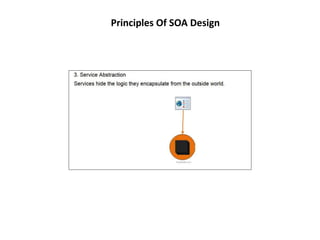
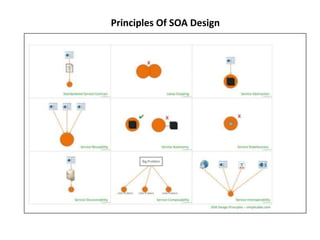
Principles Of SOA Design
Forgot about global data model 
Choose Service model
Relations
One REDWrong Relation
Say no to RED!
Technologies? 
Java EE – EJB3.2, JSF2.2, JMS 
REST 
NoSQL 
SQL 
WILDFLY
Slides author: Armen Arzumanyan 
Slides source: www 
Linkedin : https://www.linkedin.com/pub/armen-arzumanyan/4/b24/605 
Blog: https://armdev.wordpress.com/ 
Github: https://github.com/armdev 
E-mail: armen.arzumanyan@gmail.com
Discover Armenia!
Discover Armenia!
Discover Armenia!
Discover Armenia!
Discover Armenia!
Discover Armenia!
Discover Armenia!
Discover Armenia!
Discover Armenia!
Discover Armenia!
Discover Armenia!
Discover Armenia!
Architecture and Distributed Systems, Web Distributed Systems Design

Architecture and Distributed Systems, Web Distributed Systems Design

  • 1.
    Web Distributed Systems Web Distributed Systems Design
  • 2.
  • 3.
    Availability The uptimeof a website is absolutely critical to the reputation and functionality of many companies. For some of the larger online retail sites, being unavailable for even minutes can result in thousands or millions of dollars in lost revenue, so designing their systems to be constantly available and resilient to failure is both a fundamental business and a technology requirement. High availability in distributed systems requires the careful consideration of redundancy for key components, rapid recovery in the event of partial system failures, and graceful degradation when problems occur.
  • 4.
    Performance Website performancehas become an important consideration for most sites. The speed of a website affects usage and user satisfaction, as well as search engine rankings, a factor that directly correlates to revenue and retention. As a result, creating a system that is optimized for fast responses and low latency is key.
  • 5.
    Reliability A systemneeds to be reliable, such that a request for data will consistently return the same data. In the event the data changes or is updated, then that same request should return the new data. Users need to know that if something is written to the system, or stored, it will persist and can be relied on to be in place for future retrieval.
  • 6.
    Scalability When itcomes to any large distributed system, size is just one aspect of scale that needs to be considered. Just as important is the effort required to increase capacity to handle greater amounts of load, commonly referred to as the scalability of the system. Scalability can refer to many different parameters of the system: how much additional traffic can it handle, how easy is it to add more storage capacity, or even how many more transactions can be processed.
  • 7.
    Manageability Designing asystem that is easy to operate is another important consideration. The manageability of the system equates to the scalability of operations: maintenance and updates. Things to consider for manageability are the ease of diagnosing and understanding problems when they occur, ease of making updates or modifications, and how simple the system is to operate. (I.e., does it routinely operate without failure or exceptions?)
  • 8.
    Cost Cost isan important factor. This obviously can include hardware and software costs, but it is also important to consider other facets needed to deploy and maintain the system. The amount of developer time the system takes to build, the amount of operational effort required to run the system, and even the amount of training required should all be considered. Cost is the total cost of ownership.
  • 9.
    So , howto start?
  • 10.
    Oracle, JBoss, REST,NoSQL, Spring, Clusters, VMware???
  • 11.
  • 12.
  • 13.
  • 14.
    First step-> B2Bor B2C??? Business-to-business (B2B) or Business-to-consumer(B2C)? or B2G(Business-to-government)?
  • 15.
    May be O2O?- a new Model for the Development of E-Commerce Online2offline?
  • 16.
    Let’s Start Weneed architecture which support – Flexibility, Scalability , Manageability But what is Software architecture?
  • 17.
    Architecture is thefundamental organization of a system embodied in its components, their relationships to each other, and to the environment, and the principles guiding its design and evolution.
  • 18.
    A system isa collection of components organized to accomplish a specific function or set of functions. The term system encompasses individual applications, systems in the traditional sense, subsystems, systems of systems, product lines, product families, whole enterprises, and other aggregations of interest. A system exists to fulfill one or more missions in its environment.
  • 19.
    The environment, orcontext, determines the setting and circumstances of developmental, operational, political, and other influences upon that system.
  • 20.
    A mission isa use or operation for which a system is intended by one or more stakeholders to meet some set of objectives.
  • 21.
    A stakeholder isan individual, team, or organization (or classes thereof) with interests in, or concerns relative to, a system.
  • 22.
    A component isa modular part of a system that encapsulates its contents and whose manifestation is replaceable within its environment. A component defines its behavior in terms of provided and required interfaces. As such, a component serves as a type, whose conformance is defined by these provided and required interfaces (encompassing both their static as well as dynamic semantics).
  • 23.
    The software architectureof a system or a collection of systems consists of all the important design decisions about the software structures and the interactions between those structures that comprise the systems. The design decisions support a desired set of qualities that the system should support to be successful. The design decisions provide a conceptual basis for system development, support, and maintenance. [McGovern]
  • 24.
    One component example: MessagingService
  • 25.
  • 26.
  • 27.
  • 28.
  • 29.
  • 30.
  • 31.
  • 32.
  • 33.
  • 34.
  • 35.
  • 36.
  • 37.
    Forgot about globaldata model Choose Service model
  • 39.
  • 40.
  • 42.
  • 43.
    Technologies? Java EE– EJB3.2, JSF2.2, JMS REST NoSQL SQL WILDFLY
  • 44.
    Slides author: ArmenArzumanyan Slides source: www Linkedin : https://www.linkedin.com/pub/armen-arzumanyan/4/b24/605 Blog: https://armdev.wordpress.com/ Github: https://github.com/armdev E-mail: armen.arzumanyan@gmail.com
  • 45.
  • 46.
  • 47.
  • 48.
  • 49.
  • 50.
  • 51.
  • 52.
  • 53.
  • 54.
  • 55.
  • 56.