Cloud & AI
Conference 2023
Asia's Largest
17 - 18, November 2023
IIT Madras Research Park, Chennai
Architecting Multi Cloud Ready applications
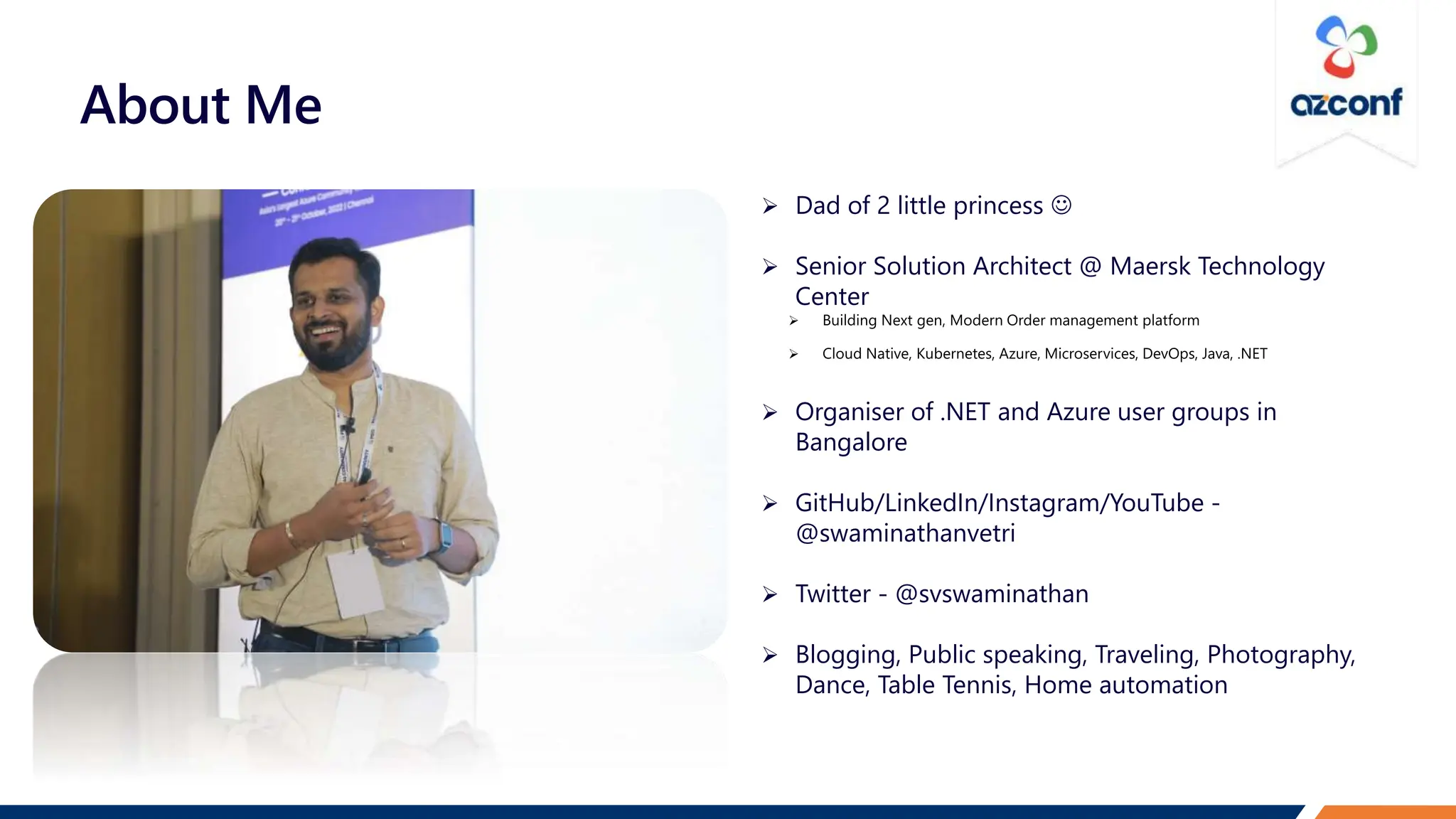
Swaminathan Vetri
Senior Solution Architect – Maersk Technology Centre
About Me
 Dad of 2 little princess 
 Senior Solution Architect @ Maersk Technology
Center
 Organiser of .NET and Azure user groups in
Bangalore
 GitHub/LinkedIn/Instagram/YouTube -
@swaminathanvetri
 Twitter - @svswaminathan
 Blogging, Public speaking, Traveling, Photography,
Dance, Table Tennis, Home automation
Agenda
 What are Multi cloud applications?
 Why Multi Cloud ?
 Architectural choices for multi cloud ready apps
 Tools & Technologies that enables multi cloud
What is Multi-cloud?
 Multi-cloud refers to using services from more than one public cloud provider
at the same time.
 A multi-cloud environment allows your cloud environments to be private,
public, or a combination of both.
 The primary goal of a multi-cloud strategy is to give you flexibility to operate
with the best computing environment for each workload.
Hybrid Cloud vs Multi-Cloud?
Hybrid Cloud
 Common workloads are deployed
across Private and Public cloud
 Combines Private Cloud (on-
premise Datacenter) with Public
Cloud (Azure, AWS, GCP etc.,)
Multi-Cloud
 Using cloud computing service
from more than one public cloud
for different workloads
 Interconnects different services
across clouds and without having
to connect the clouds themselves
Why Multi-cloud?
Leverage Best of each cloud
Avoids Vendor lock in
Cost efficiency
Innovative Technology
Advanced security and regulatory compliance
Increased reliability and resiliency
Increased performance
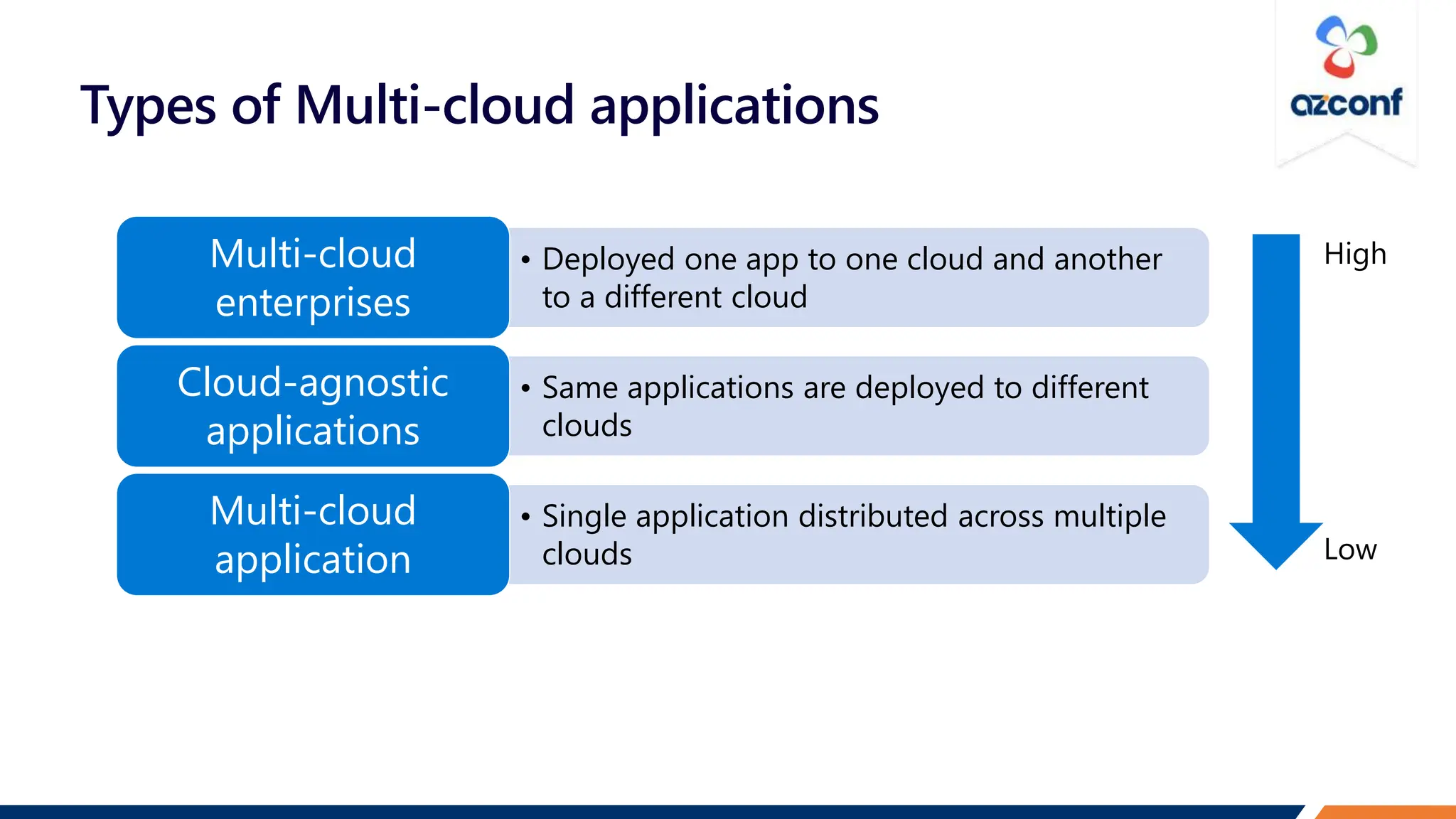
Types of Multi-cloud applications
• Deployed one app to one cloud and another
to a different cloud
Multi-cloud
enterprises
• Same applications are deployed to different
clouds
Cloud-agnostic
applications
• Single application distributed across multiple
clouds
Multi-cloud
application
Every other company does it 😁
Why should you go Multi-cloud ???
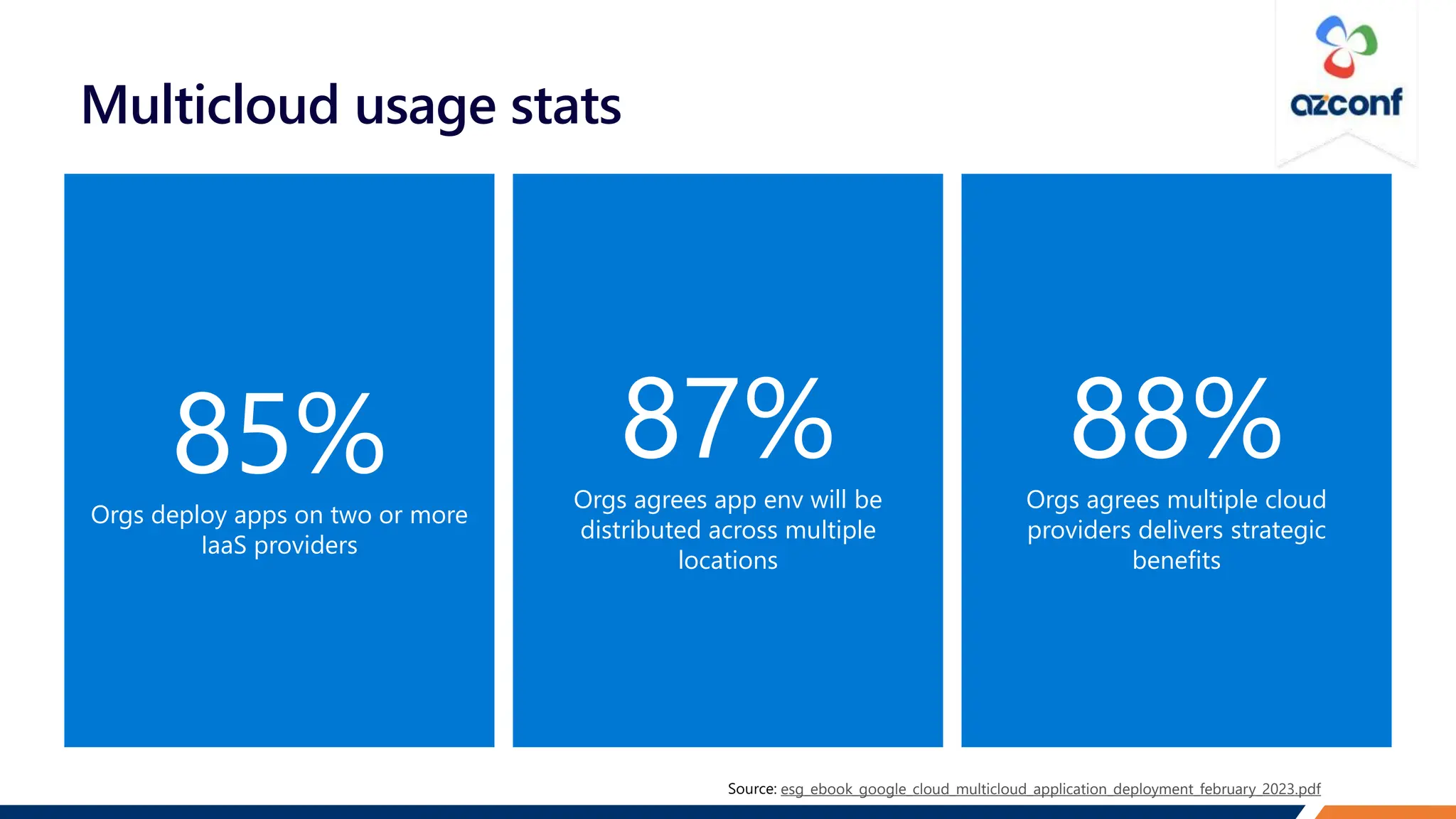
Multicloud usage stats
Orgs deploy apps on two or more
IaaS providers
Orgs agrees multiple cloud
providers delivers strategic
benefits
esg_ebook_google_cloud_multicloud_application_deployment_february_2023.pdf
Orgs agrees app env will be
distributed across multiple
locations
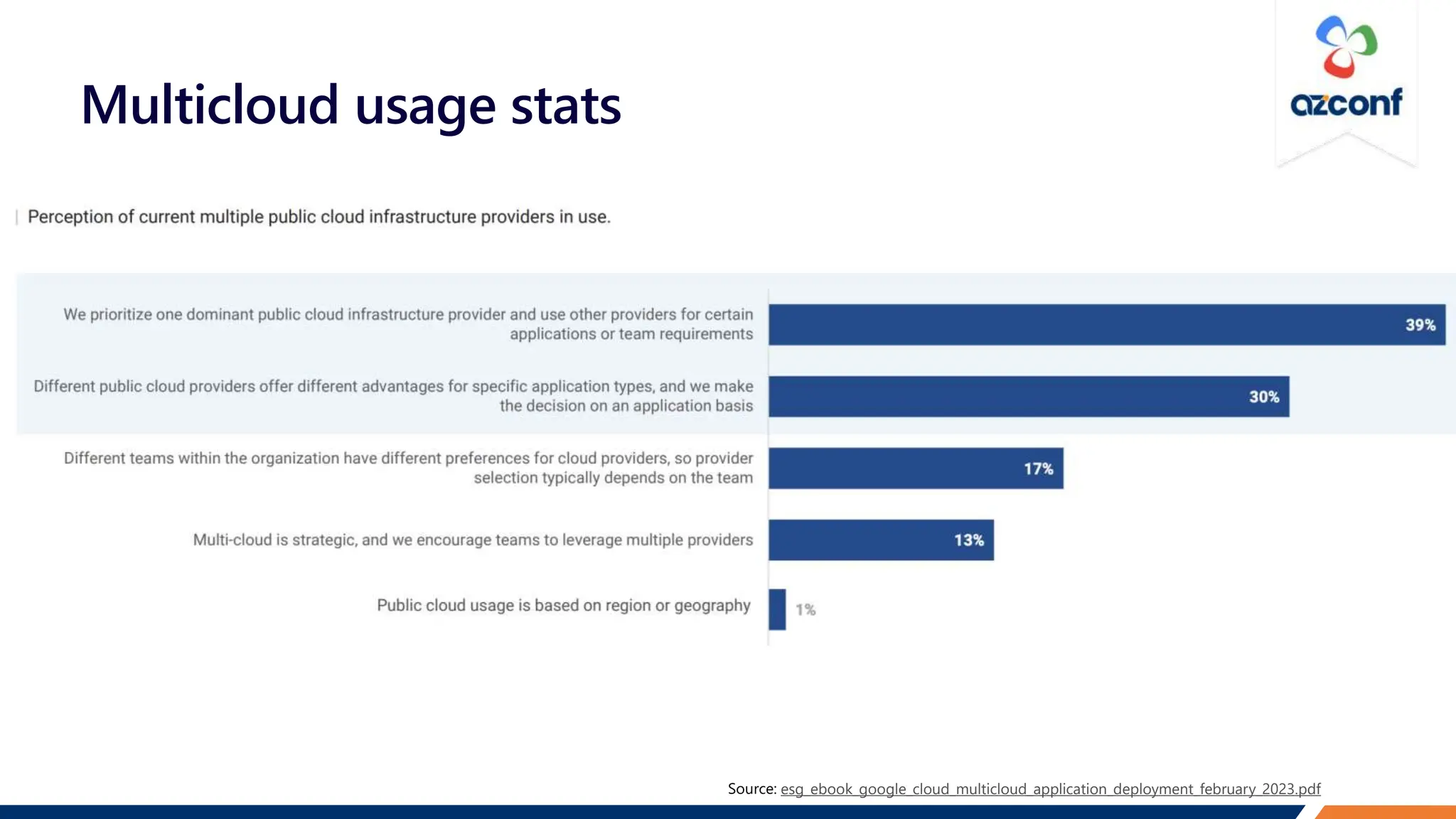
Multicloud usage stats
esg_ebook_google_cloud_multicloud_application_deployment_february_2023.pdf
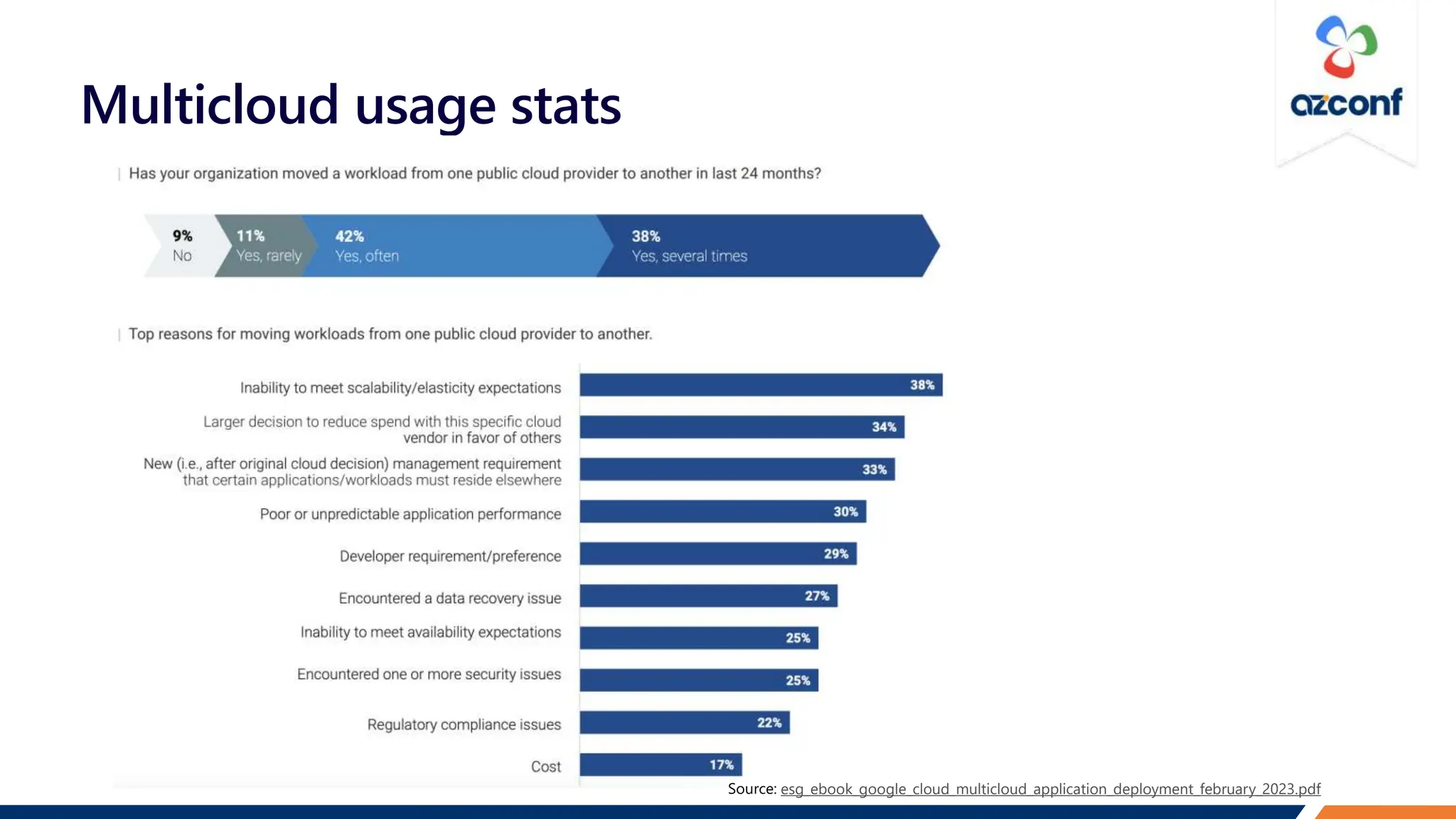
Multicloud usage stats
esg_ebook_google_cloud_multicloud_application_deployment_february_2023.pdf
Multi-cloud Architectural choices
• Same applications are deployed to different clouds
Cloud-agnostic applications
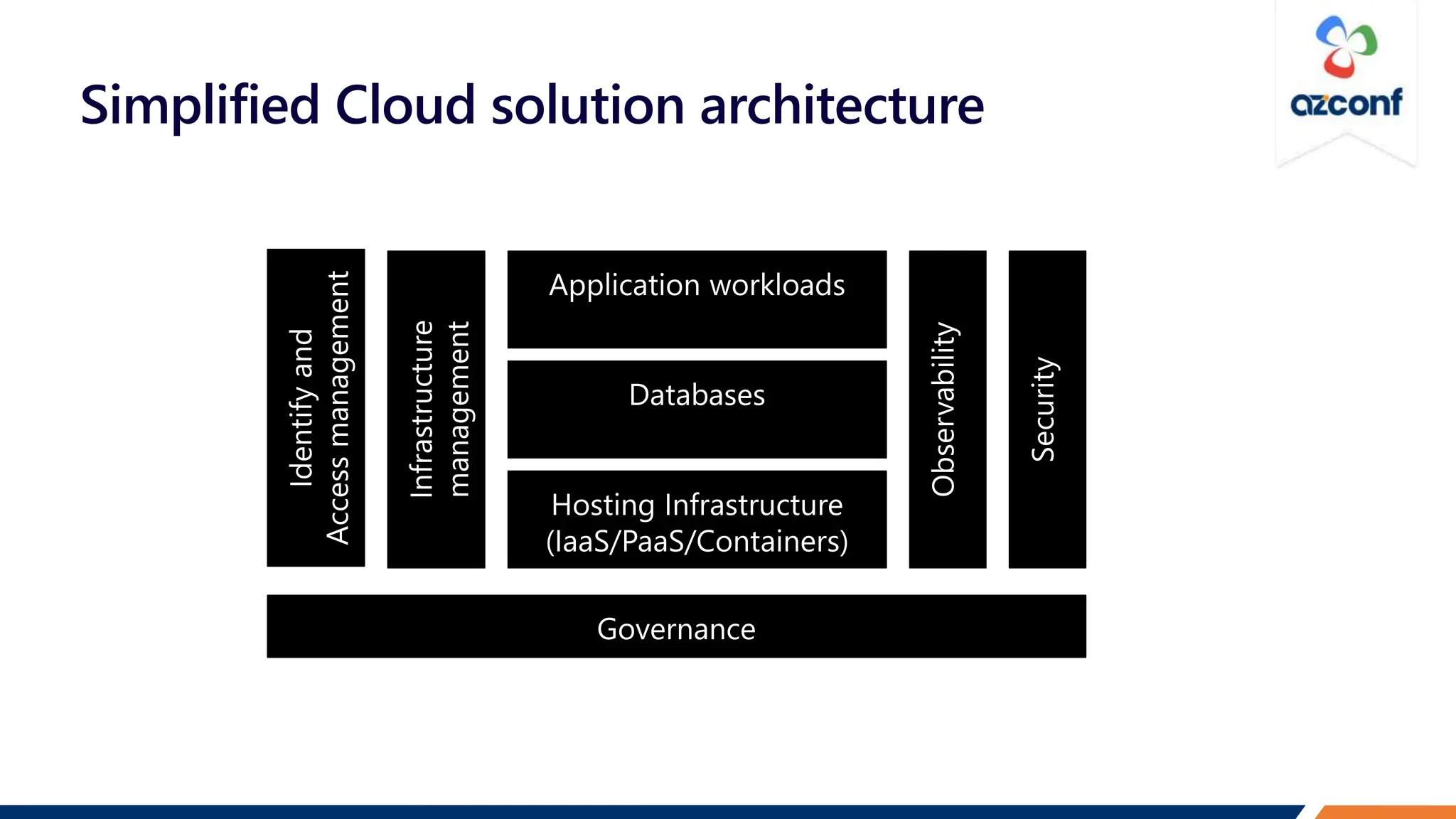
Simplified Cloud solution architecture
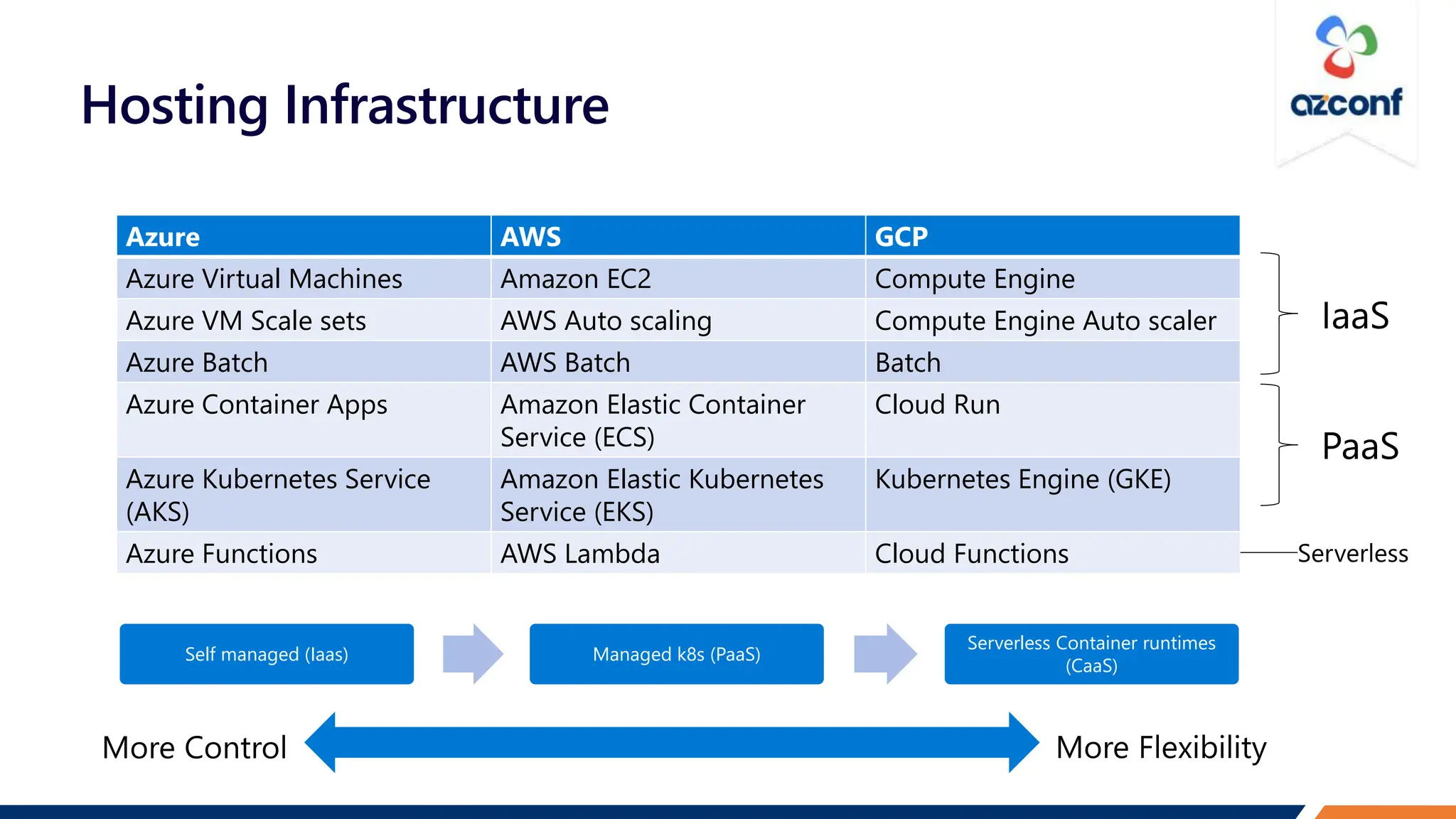
Hosting Infrastructure
Azure AWS GCP
Azure Virtual Machines Amazon EC2 Compute Engine
Azure VM Scale sets AWS Auto scaling Compute Engine Auto scaler
Azure Batch AWS Batch Batch
Azure Container Apps Amazon Elastic Container
Service (ECS)
Cloud Run
Azure Kubernetes Service
(AKS)
Amazon Elastic Kubernetes
Service (EKS)
Kubernetes Engine (GKE)
Azure Functions AWS Lambda Cloud Functions
Self managed (Iaas) Managed k8s (PaaS)
Serverless Container runtimes
(CaaS)
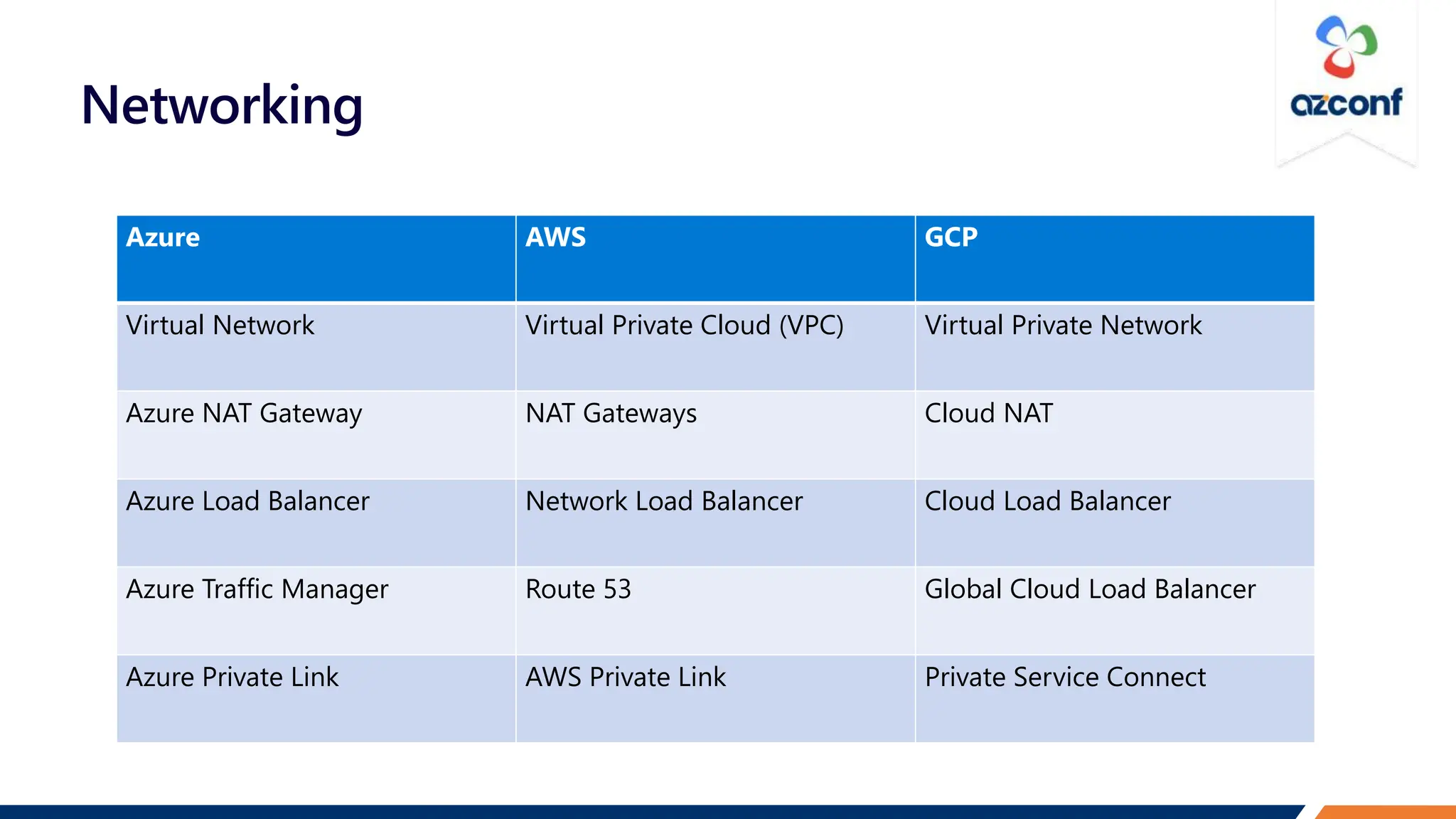
Networking
Azure AWS GCP
Virtual Network Virtual Private Cloud (VPC) Virtual Private Network
Azure NAT Gateway NAT Gateways Cloud NAT
Azure Load Balancer Network Load Balancer Cloud Load Balancer
Azure Traffic Manager Route 53 Global Cloud Load Balancer
Azure Private Link AWS Private Link Private Service Connect
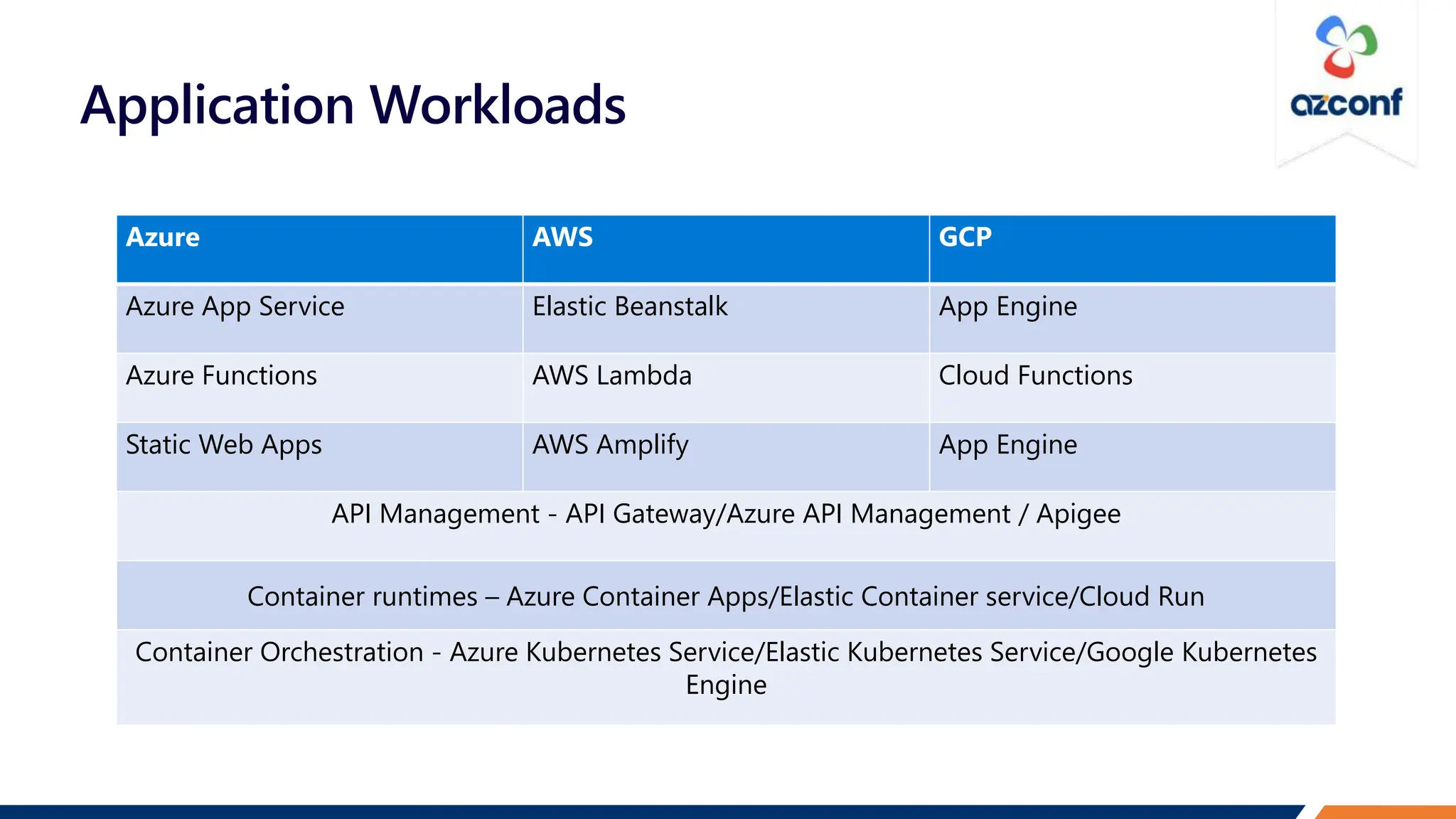
Application Workloads
Azure AWS GCP
Azure App Service Elastic Beanstalk App Engine
Azure Functions AWS Lambda Cloud Functions
Static Web Apps AWS Amplify App Engine
API Management - API Gateway/Azure API Management / Apigee
Container runtimes – Azure Container Apps/Elastic Container service/Cloud Run
Container Orchestration - Azure Kubernetes Service/Elastic Kubernetes Service/Google Kubernetes
Engine
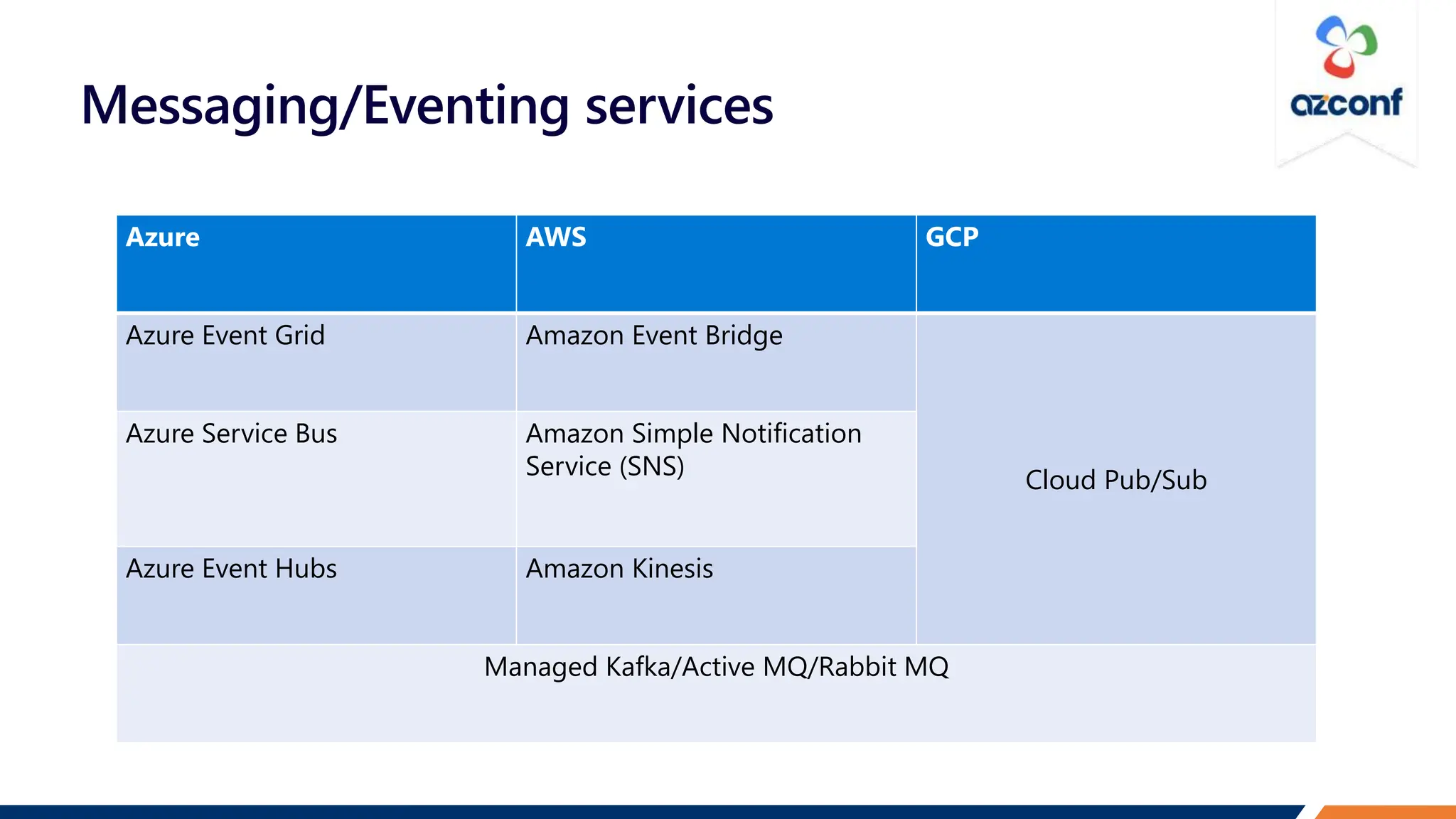
Messaging/Eventing services
Azure AWS GCP
Azure Event Grid Amazon Event Bridge
Cloud Pub/Sub
Azure Service Bus Amazon Simple Notification
Service (SNS)
Azure Event Hubs Amazon Kinesis
Managed Kafka/Active MQ/Rabbit MQ
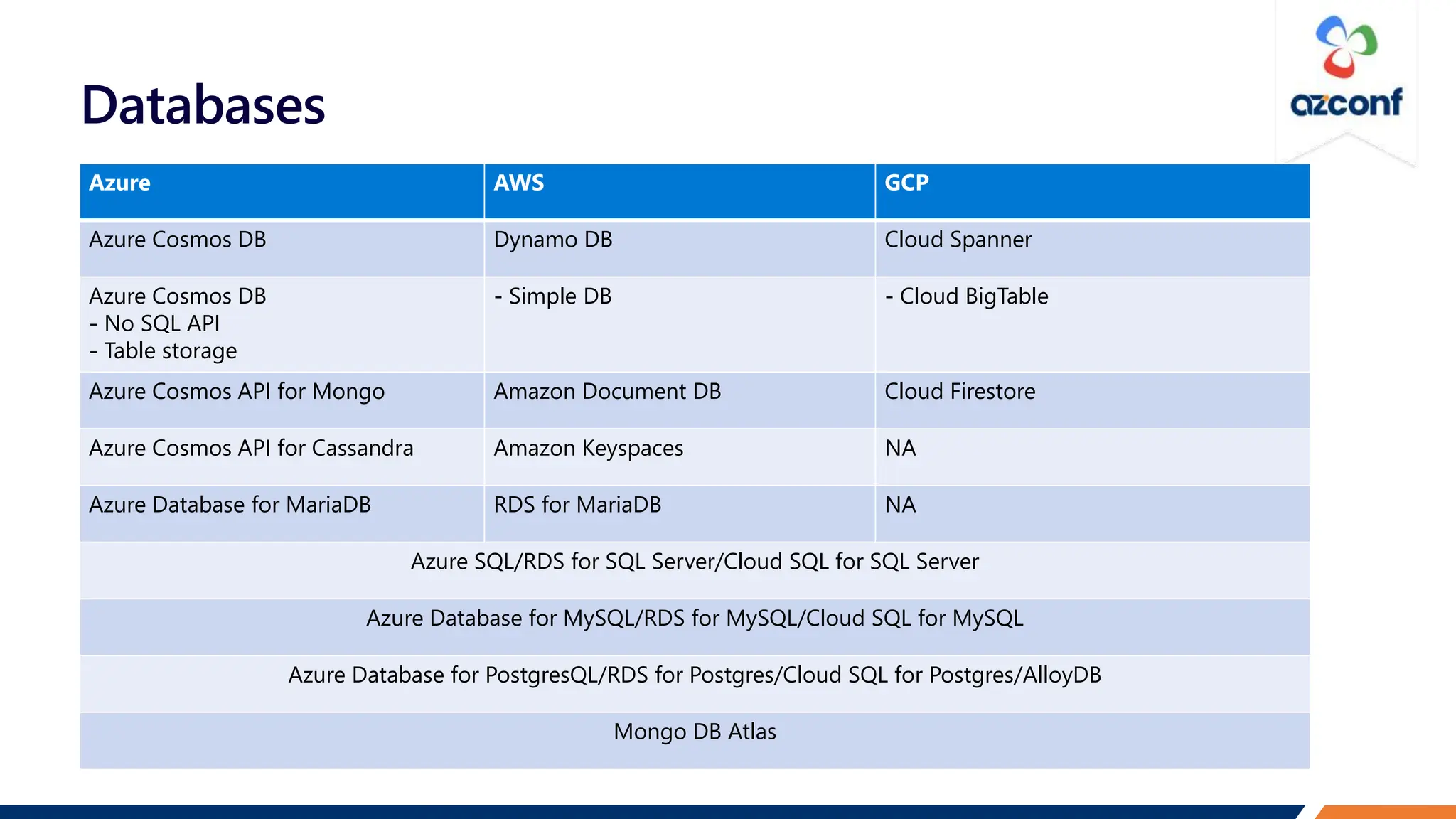
Databases
Azure AWS GCP
Azure Cosmos DB Dynamo DB Cloud Spanner
Azure Cosmos DB
- No SQL API
- Table storage
- Simple DB - Cloud BigTable
Azure Cosmos API for Mongo Amazon Document DB Cloud Firestore
Azure Cosmos API for Cassandra Amazon Keyspaces NA
Azure Database for MariaDB RDS for MariaDB NA
Azure SQL/RDS for SQL Server/Cloud SQL for SQL Server
Azure Database for MySQL/RDS for MySQL/Cloud SQL for MySQL
Azure Database for PostgresQL/RDS for Postgres/Cloud SQL for Postgres/AlloyDB
Mongo DB Atlas
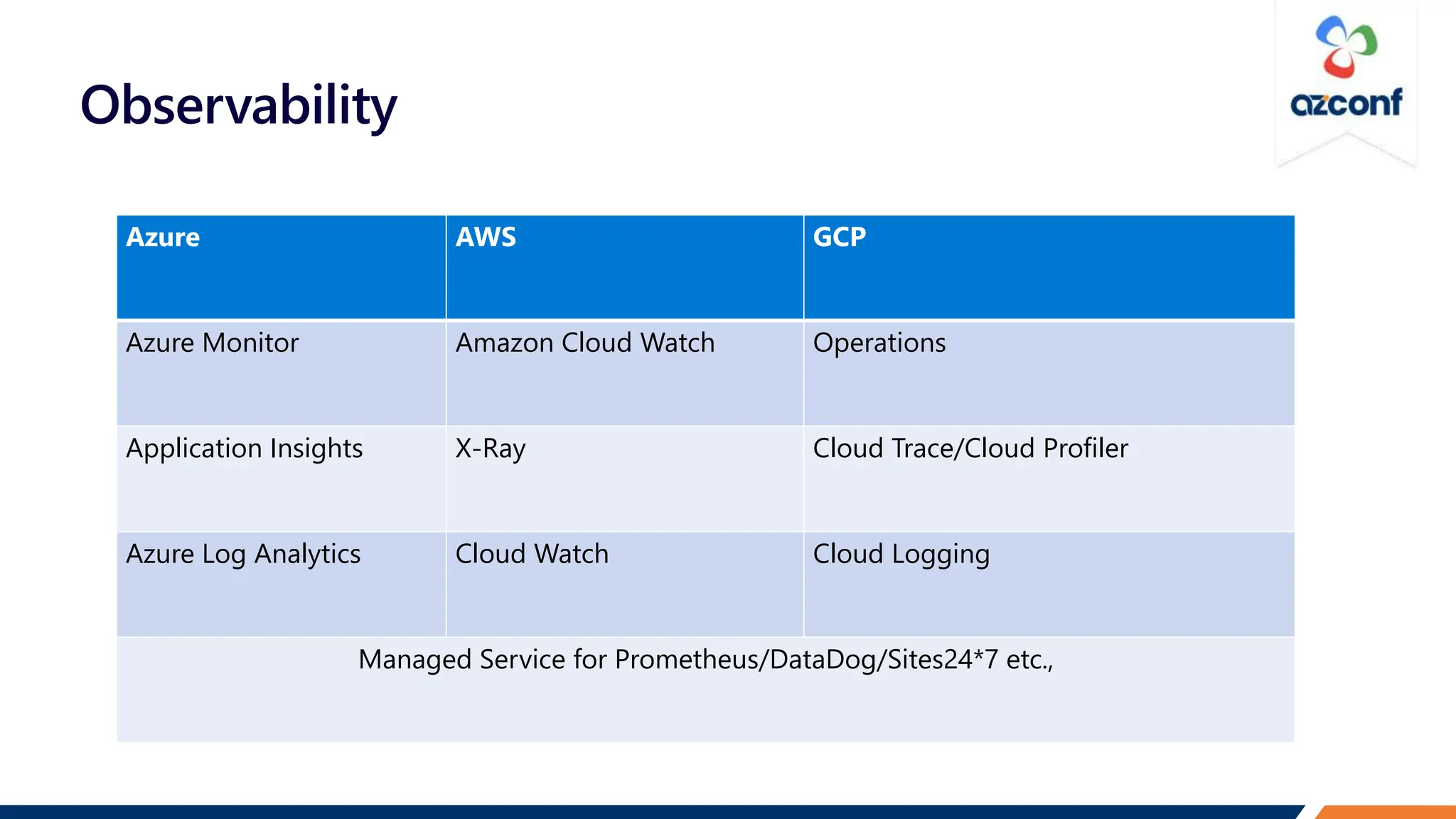
Observability
Azure AWS GCP
Azure Monitor Amazon Cloud Watch Operations
Application Insights X-Ray Cloud Trace/Cloud Profiler
Azure Log Analytics Cloud Watch Cloud Logging
Managed Service for Prometheus/DataDog/Sites24*7 etc.,
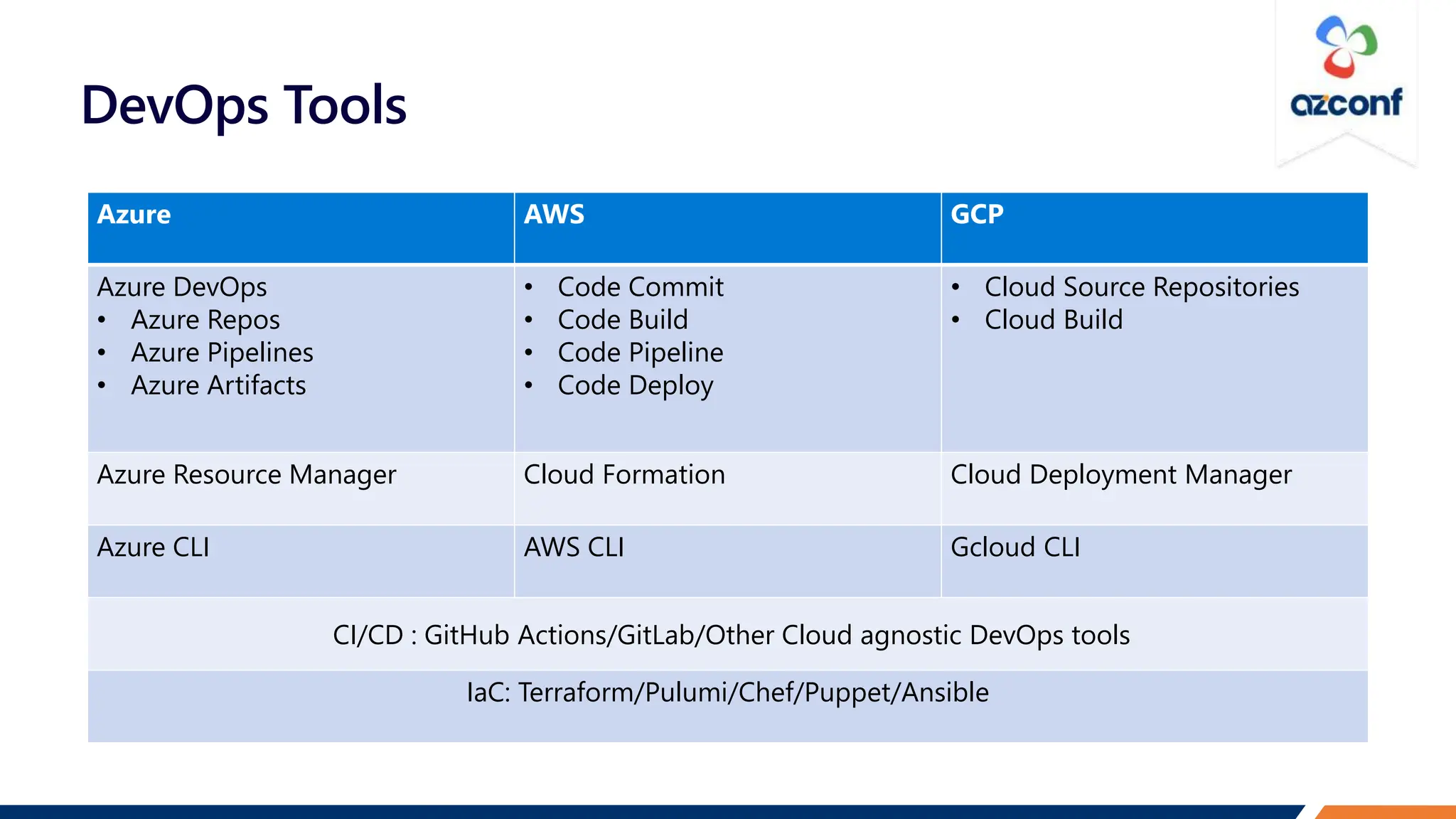
DevOps Tools
Azure AWS GCP
Azure DevOps
• Azure Repos
• Azure Pipelines
• Azure Artifacts
• Code Commit
• Code Build
• Code Pipeline
• Code Deploy
• Cloud Source Repositories
• Cloud Build
Azure Resource Manager Cloud Formation Cloud Deployment Manager
Azure CLI AWS CLI Gcloud CLI
CI/CD : GitHub Actions/GitLab/Other Cloud agnostic DevOps tools
IaC: Terraform/Pulumi/Chef/Puppet/Ansible
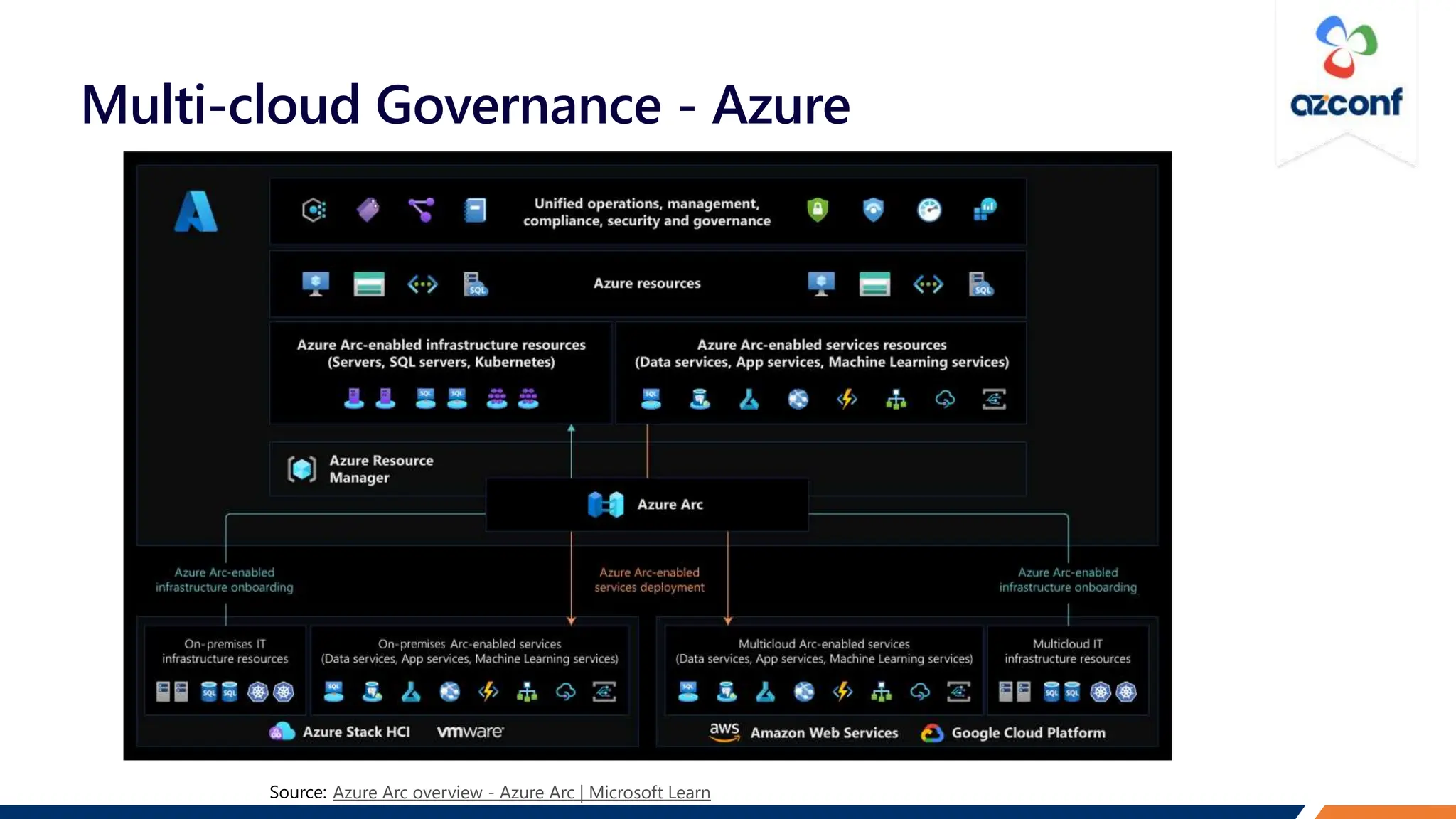
Multi-cloud Governance - Azure
Azure Arc overview - Azure Arc | Microsoft Learn
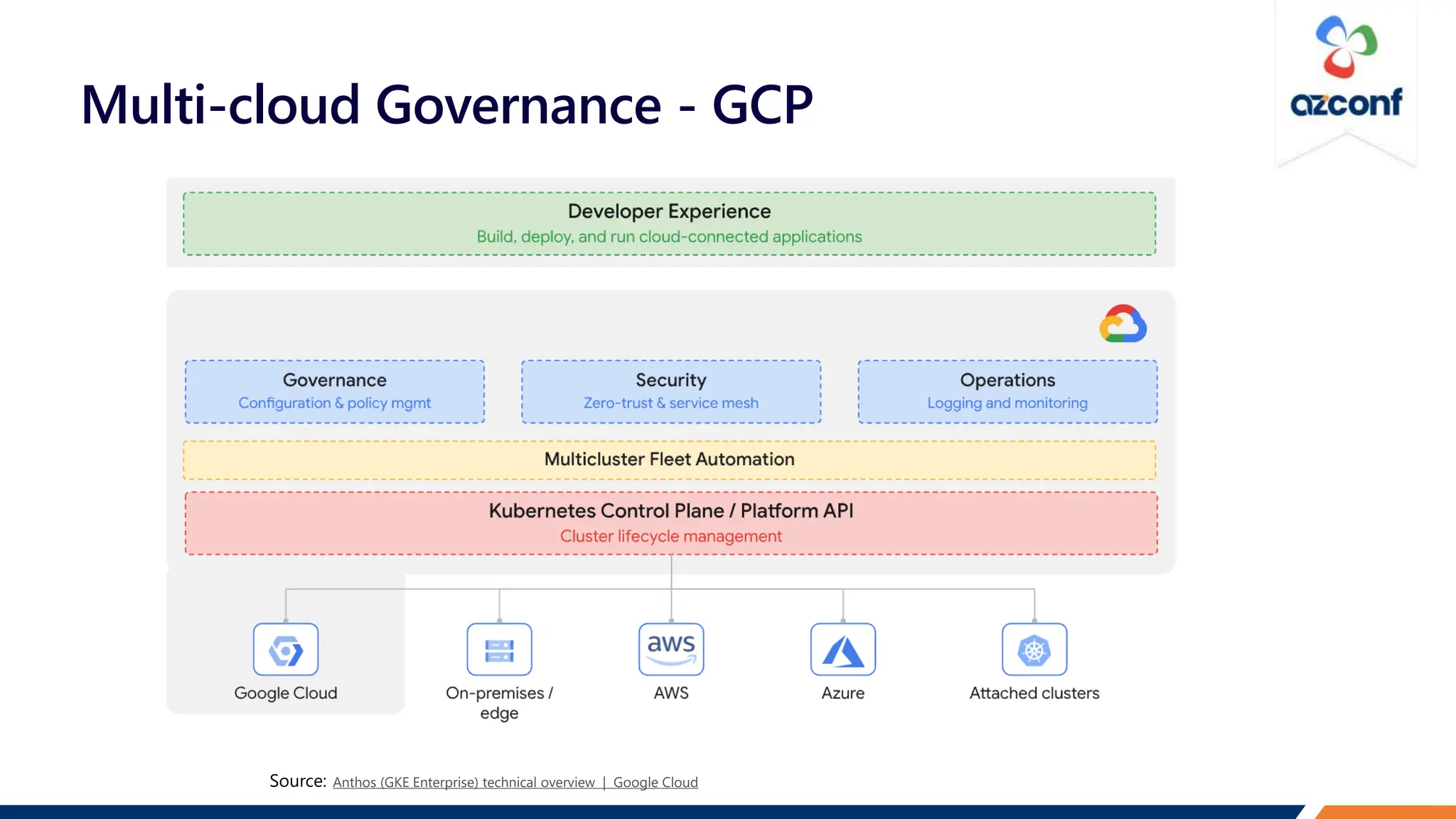
Multi-cloud Governance - GCP
Anthos (GKE Enterprise) technical overview | Google Cloud
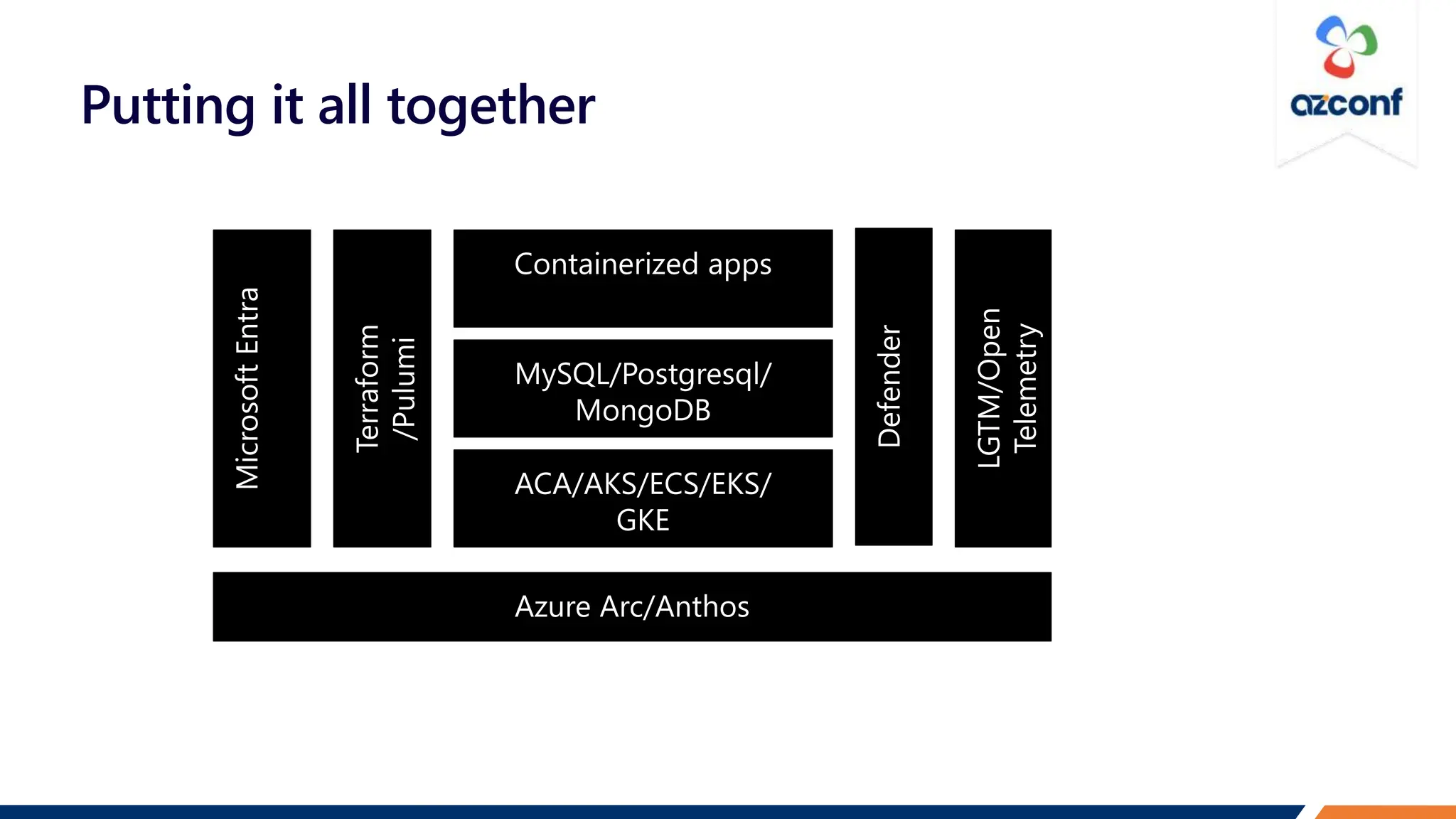
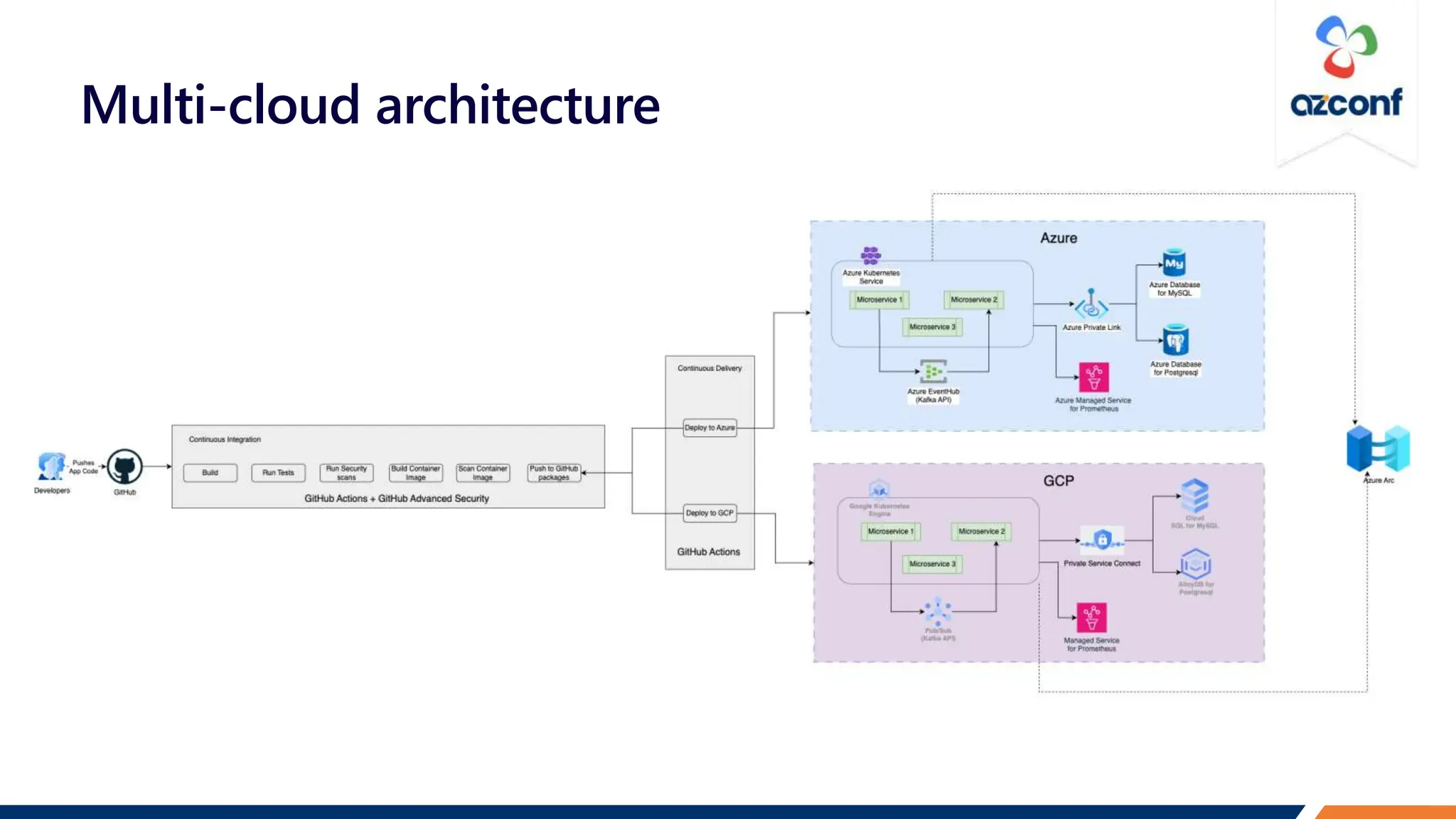
Putting it all together
Multi-cloud architecture
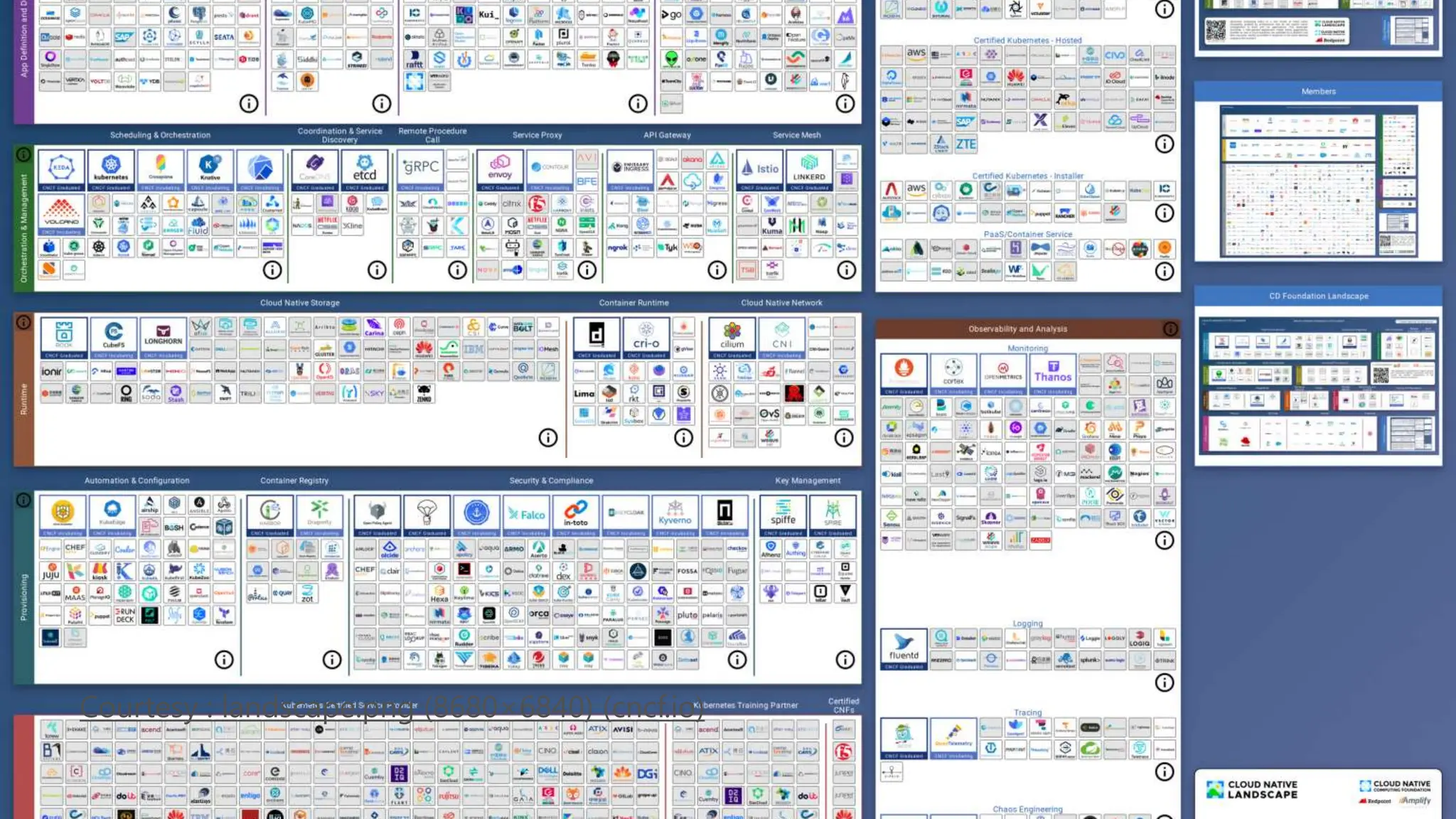
Can’t we leverage CNCF toolset for Multi-cloud ??
Of course, Yes!!!
Courtesy : landscape.png (8680×6840) (cncf.io)
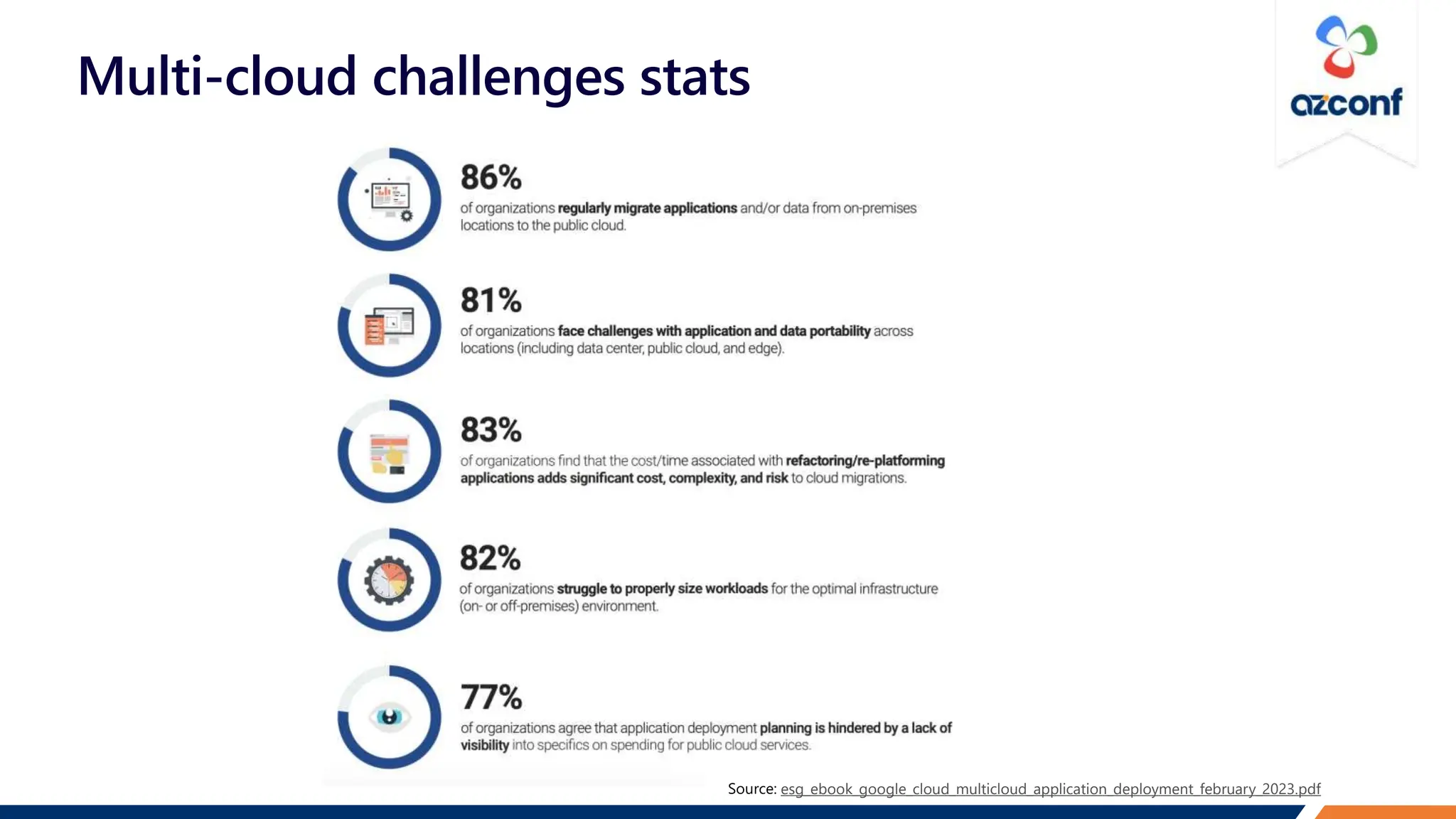
Multi-cloud apps - Challenges
Choosing LCD from every cloud
Management Complexity (Monitoring/Operations)
Consistent Security
Integrating Software environments
Consistent performance & reliability
Consistent developer experience
Governance across multiple clouds
Multi-cloud challenges stats
esg_ebook_google_cloud_multicloud_application_deployment_february_2023.pdf
To Be, or Not To Be
Why not if the business benefits outweighs challenges …
Multi-cloud is NOT a silver bullet
Like any other tech buzzword 
Tools & Tech to build multi-cloud apps
Dapr - Distributed Application Runtime
Dapr is a portable, event-driven runtime that makes it easy for any developer to
build resilient, stateless, and stateful applications that run on the cloud and edge
and embraces the diversity of languages and developer frameworks
Overview | Dapr Docs
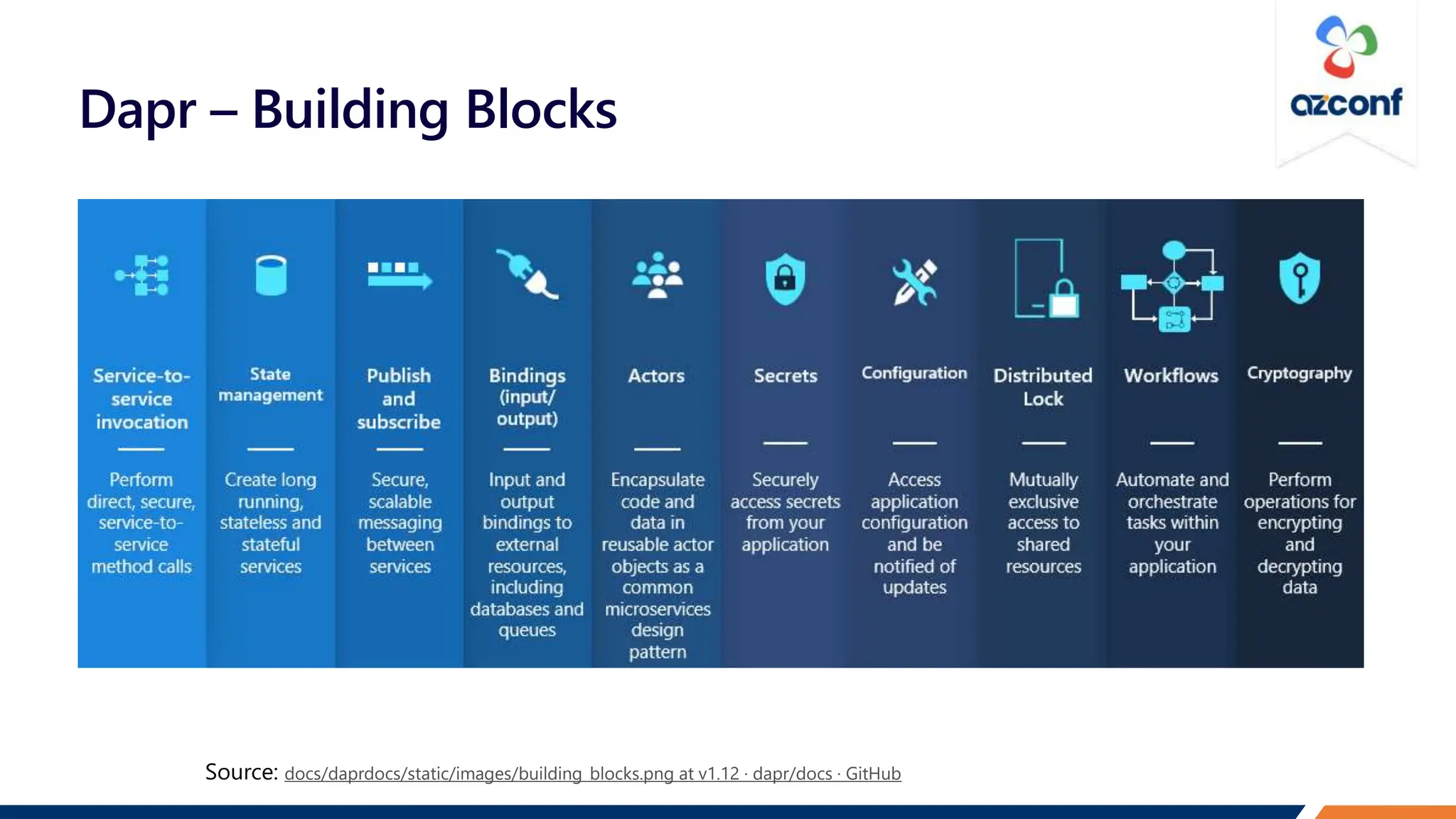
Dapr – Building Blocks
docs/daprdocs/static/images/building_blocks.png at v1.12 · dapr/docs · GitHub
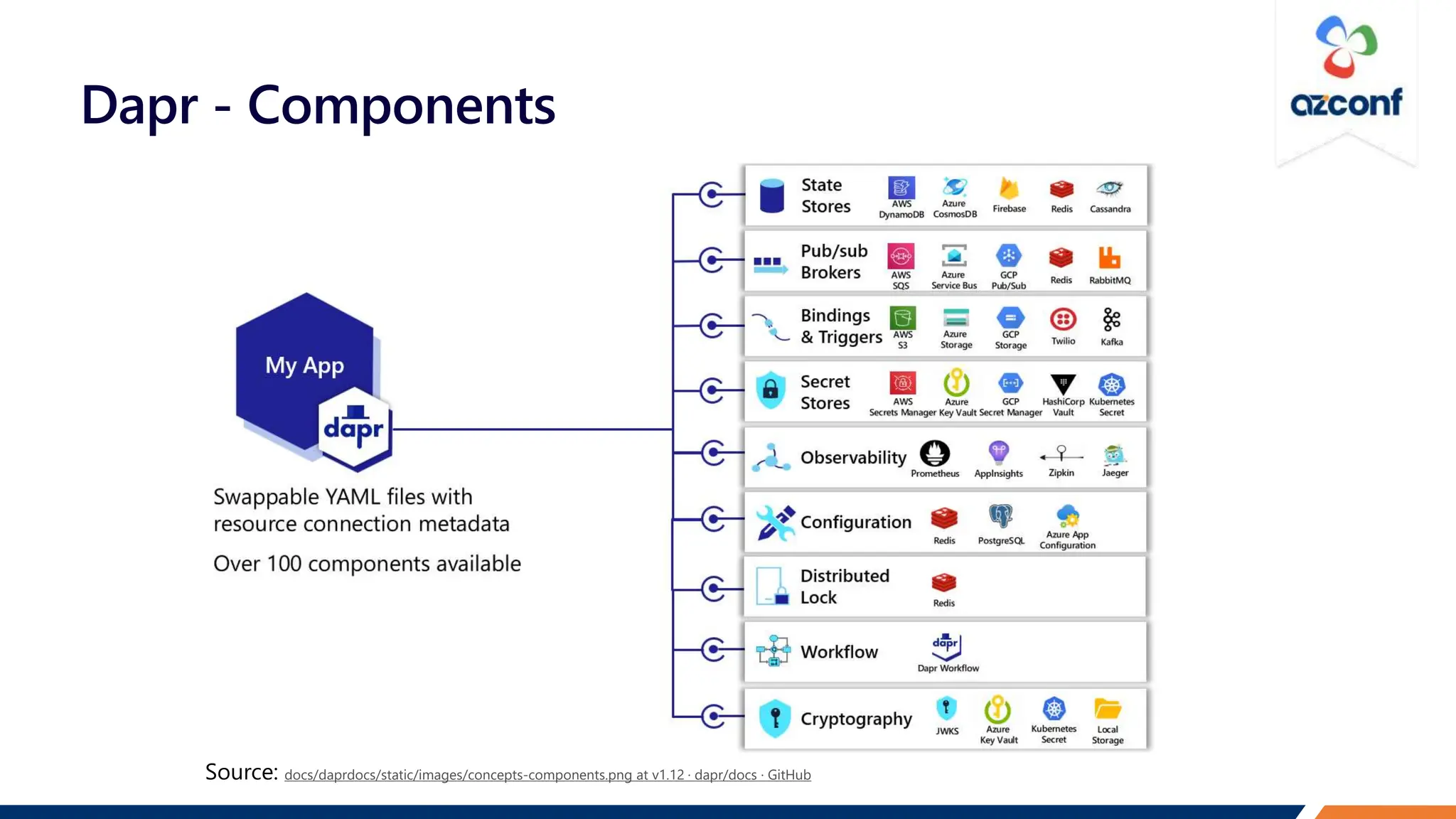
Dapr - Components
docs/daprdocs/static/images/concepts-components.png at v1.12 · dapr/docs · GitHub
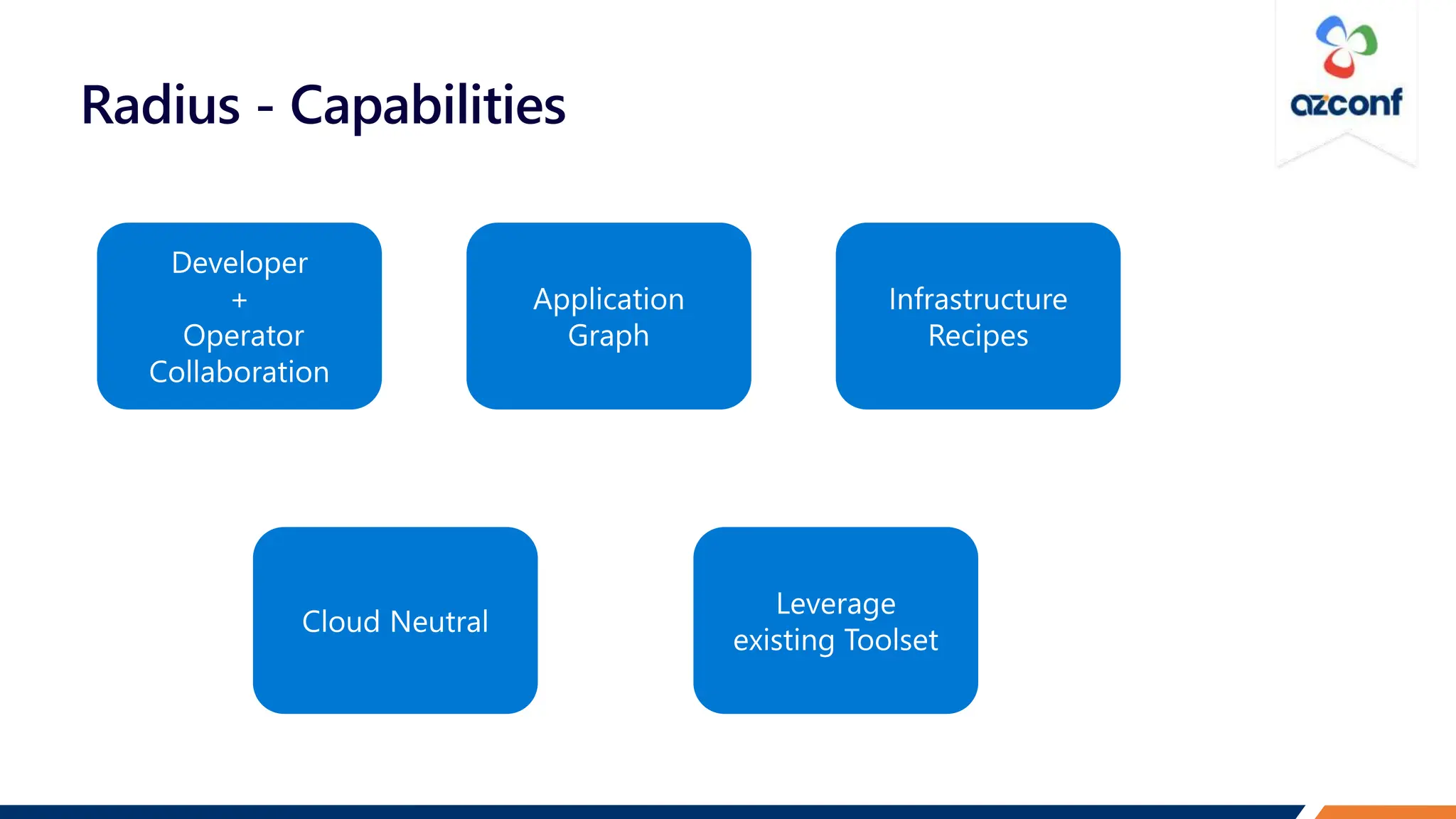
Radius
Radius is an open-source, cloud-native, application platform that enables developers and
the operators that support them to define, deploy, and collaborate on cloud-native
applications across public clouds and private infrastructure
**Early release and not production ready toolset
Radius (radapp.io)
Radius - Capabilities
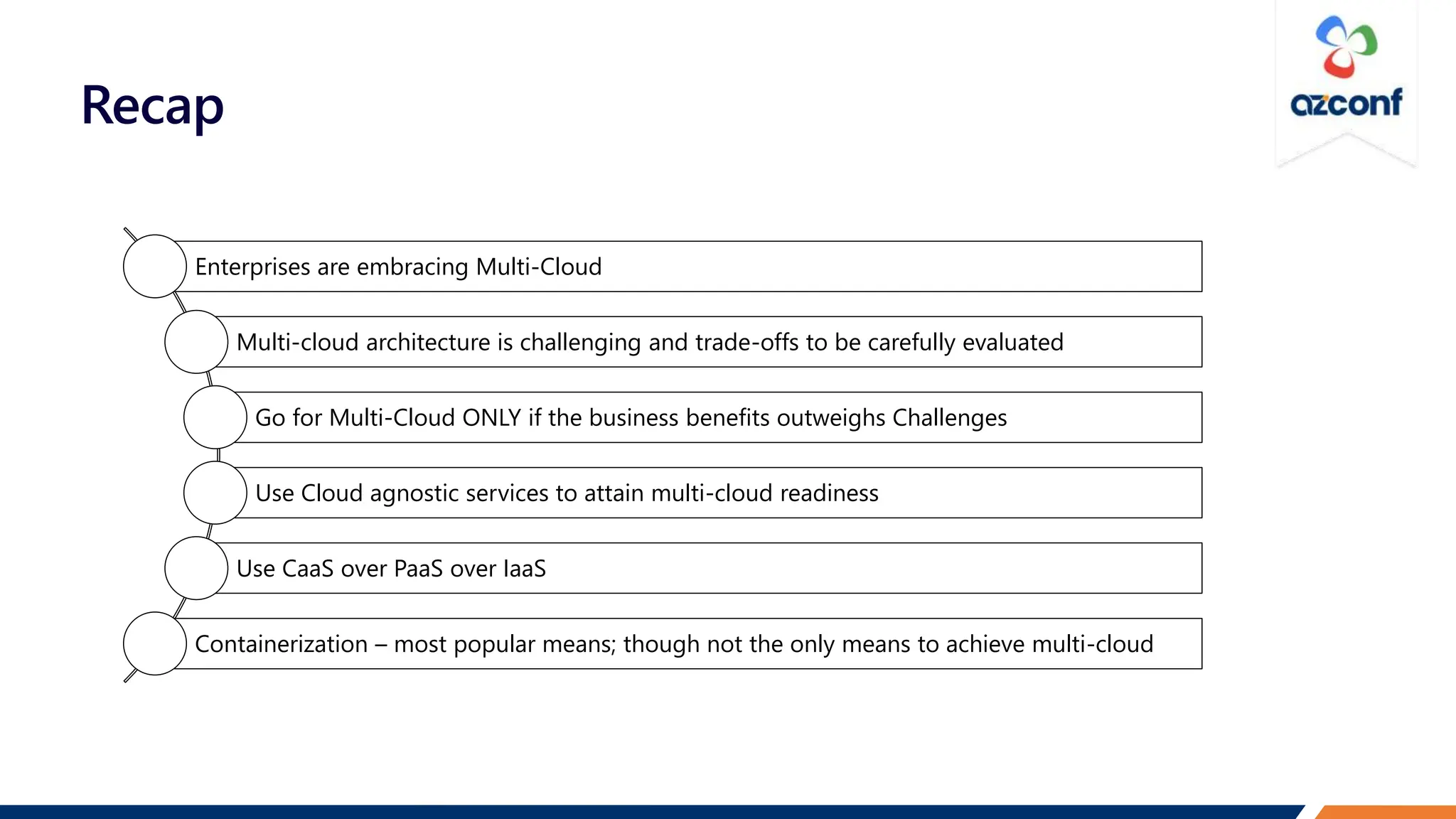
Recap
Enterprises are embracing Multi-Cloud
Multi-cloud architecture is challenging and trade-offs to be carefully evaluated
Go for Multi-Cloud ONLY if the business benefits outweighs Challenges
Use Cloud agnostic services to attain multi-cloud readiness
Use CaaS over PaaS over IaaS
Containerization – most popular means; though not the only means to achieve multi-cloud
References
 Introduction to hybrid and multicloud - Cloud Adoption Framework | Microsoft Learn
 What Is multicloud? Definition and benefits | Google Cloud
 Cloud Native Landscape (cncf.io)
 40 cloud computing stats and trends to know in 2023 | Google Cloud Blog
 esg_ebook_google_cloud_multicloud_application_deployment_february_2023.pdf
 Multi-Cloud: Reaching the Tipping Point (vmware.com)
 Google Cloud to Azure services comparison - Azure Architecture Center | Microsoft Learn
 AWS to Azure services comparison - Azure Architecture Center | Microsoft Learn
 Azure Arc overview - Azure Arc | Microsoft Learn
 Anthos Powers Enterprise Container Platforms | Google Cloud
 Overview | Dapr Docs
 Radius Docs (radapp.io)
Gold Partner
Silver Partner
Swaminathan Vetri
Senior Solution Architect @ Maersk Technology Center
Architecting Multi Cloud Ready Applications

Architecting multi-cloud ready applications

  • 1.
    Cloud & AI Conference2023 Asia's Largest 17 - 18, November 2023 IIT Madras Research Park, Chennai
  • 2.
    Architecting Multi CloudReady applications Swaminathan Vetri Senior Solution Architect – Maersk Technology Centre
  • 3.
    About Me  Dadof 2 little princess   Senior Solution Architect @ Maersk Technology Center  Organiser of .NET and Azure user groups in Bangalore  GitHub/LinkedIn/Instagram/YouTube - @swaminathanvetri  Twitter - @svswaminathan  Blogging, Public speaking, Traveling, Photography, Dance, Table Tennis, Home automation
  • 4.
    Agenda  What areMulti cloud applications?  Why Multi Cloud ?  Architectural choices for multi cloud ready apps  Tools & Technologies that enables multi cloud
  • 5.
    What is Multi-cloud? Multi-cloud refers to using services from more than one public cloud provider at the same time.  A multi-cloud environment allows your cloud environments to be private, public, or a combination of both.  The primary goal of a multi-cloud strategy is to give you flexibility to operate with the best computing environment for each workload.
  • 6.
    Hybrid Cloud vsMulti-Cloud? Hybrid Cloud  Common workloads are deployed across Private and Public cloud  Combines Private Cloud (on- premise Datacenter) with Public Cloud (Azure, AWS, GCP etc.,) Multi-Cloud  Using cloud computing service from more than one public cloud for different workloads  Interconnects different services across clouds and without having to connect the clouds themselves
  • 7.
    Why Multi-cloud? Leverage Bestof each cloud Avoids Vendor lock in Cost efficiency Innovative Technology Advanced security and regulatory compliance Increased reliability and resiliency Increased performance
  • 8.
    Types of Multi-cloudapplications • Deployed one app to one cloud and another to a different cloud Multi-cloud enterprises • Same applications are deployed to different clouds Cloud-agnostic applications • Single application distributed across multiple clouds Multi-cloud application
  • 9.
    Every other companydoes it 😁 Why should you go Multi-cloud ???
  • 10.
    Multicloud usage stats Orgsdeploy apps on two or more IaaS providers Orgs agrees multiple cloud providers delivers strategic benefits esg_ebook_google_cloud_multicloud_application_deployment_february_2023.pdf Orgs agrees app env will be distributed across multiple locations
  • 11.
  • 12.
  • 13.
    Multi-cloud Architectural choices •Same applications are deployed to different clouds Cloud-agnostic applications
  • 14.
  • 15.
    Hosting Infrastructure Azure AWSGCP Azure Virtual Machines Amazon EC2 Compute Engine Azure VM Scale sets AWS Auto scaling Compute Engine Auto scaler Azure Batch AWS Batch Batch Azure Container Apps Amazon Elastic Container Service (ECS) Cloud Run Azure Kubernetes Service (AKS) Amazon Elastic Kubernetes Service (EKS) Kubernetes Engine (GKE) Azure Functions AWS Lambda Cloud Functions Self managed (Iaas) Managed k8s (PaaS) Serverless Container runtimes (CaaS)
  • 16.
    Networking Azure AWS GCP VirtualNetwork Virtual Private Cloud (VPC) Virtual Private Network Azure NAT Gateway NAT Gateways Cloud NAT Azure Load Balancer Network Load Balancer Cloud Load Balancer Azure Traffic Manager Route 53 Global Cloud Load Balancer Azure Private Link AWS Private Link Private Service Connect
  • 17.
    Application Workloads Azure AWSGCP Azure App Service Elastic Beanstalk App Engine Azure Functions AWS Lambda Cloud Functions Static Web Apps AWS Amplify App Engine API Management - API Gateway/Azure API Management / Apigee Container runtimes – Azure Container Apps/Elastic Container service/Cloud Run Container Orchestration - Azure Kubernetes Service/Elastic Kubernetes Service/Google Kubernetes Engine
  • 18.
    Messaging/Eventing services Azure AWSGCP Azure Event Grid Amazon Event Bridge Cloud Pub/Sub Azure Service Bus Amazon Simple Notification Service (SNS) Azure Event Hubs Amazon Kinesis Managed Kafka/Active MQ/Rabbit MQ
  • 19.
    Databases Azure AWS GCP AzureCosmos DB Dynamo DB Cloud Spanner Azure Cosmos DB - No SQL API - Table storage - Simple DB - Cloud BigTable Azure Cosmos API for Mongo Amazon Document DB Cloud Firestore Azure Cosmos API for Cassandra Amazon Keyspaces NA Azure Database for MariaDB RDS for MariaDB NA Azure SQL/RDS for SQL Server/Cloud SQL for SQL Server Azure Database for MySQL/RDS for MySQL/Cloud SQL for MySQL Azure Database for PostgresQL/RDS for Postgres/Cloud SQL for Postgres/AlloyDB Mongo DB Atlas
  • 20.
    Observability Azure AWS GCP AzureMonitor Amazon Cloud Watch Operations Application Insights X-Ray Cloud Trace/Cloud Profiler Azure Log Analytics Cloud Watch Cloud Logging Managed Service for Prometheus/DataDog/Sites24*7 etc.,
  • 21.
    DevOps Tools Azure AWSGCP Azure DevOps • Azure Repos • Azure Pipelines • Azure Artifacts • Code Commit • Code Build • Code Pipeline • Code Deploy • Cloud Source Repositories • Cloud Build Azure Resource Manager Cloud Formation Cloud Deployment Manager Azure CLI AWS CLI Gcloud CLI CI/CD : GitHub Actions/GitLab/Other Cloud agnostic DevOps tools IaC: Terraform/Pulumi/Chef/Puppet/Ansible
  • 22.
    Multi-cloud Governance -Azure Azure Arc overview - Azure Arc | Microsoft Learn
  • 23.
    Multi-cloud Governance -GCP Anthos (GKE Enterprise) technical overview | Google Cloud
  • 24.
  • 25.
  • 26.
    Can’t we leverageCNCF toolset for Multi-cloud ?? Of course, Yes!!!
  • 27.
    Courtesy : landscape.png(8680×6840) (cncf.io)
  • 28.
    Multi-cloud apps -Challenges Choosing LCD from every cloud Management Complexity (Monitoring/Operations) Consistent Security Integrating Software environments Consistent performance & reliability Consistent developer experience Governance across multiple clouds
  • 29.
  • 30.
    To Be, orNot To Be Why not if the business benefits outweighs challenges …
  • 31.
    Multi-cloud is NOTa silver bullet Like any other tech buzzword 
  • 32.
    Tools & Techto build multi-cloud apps
  • 33.
    Dapr - DistributedApplication Runtime Dapr is a portable, event-driven runtime that makes it easy for any developer to build resilient, stateless, and stateful applications that run on the cloud and edge and embraces the diversity of languages and developer frameworks Overview | Dapr Docs
  • 34.
    Dapr – BuildingBlocks docs/daprdocs/static/images/building_blocks.png at v1.12 · dapr/docs · GitHub
  • 35.
  • 36.
    Radius Radius is anopen-source, cloud-native, application platform that enables developers and the operators that support them to define, deploy, and collaborate on cloud-native applications across public clouds and private infrastructure **Early release and not production ready toolset Radius (radapp.io)
  • 37.
  • 38.
    Recap Enterprises are embracingMulti-Cloud Multi-cloud architecture is challenging and trade-offs to be carefully evaluated Go for Multi-Cloud ONLY if the business benefits outweighs Challenges Use Cloud agnostic services to attain multi-cloud readiness Use CaaS over PaaS over IaaS Containerization – most popular means; though not the only means to achieve multi-cloud
  • 39.
    References  Introduction tohybrid and multicloud - Cloud Adoption Framework | Microsoft Learn  What Is multicloud? Definition and benefits | Google Cloud  Cloud Native Landscape (cncf.io)  40 cloud computing stats and trends to know in 2023 | Google Cloud Blog  esg_ebook_google_cloud_multicloud_application_deployment_february_2023.pdf  Multi-Cloud: Reaching the Tipping Point (vmware.com)  Google Cloud to Azure services comparison - Azure Architecture Center | Microsoft Learn  AWS to Azure services comparison - Azure Architecture Center | Microsoft Learn  Azure Arc overview - Azure Arc | Microsoft Learn  Anthos Powers Enterprise Container Platforms | Google Cloud  Overview | Dapr Docs  Radius Docs (radapp.io)
  • 41.
  • 42.
    Swaminathan Vetri Senior SolutionArchitect @ Maersk Technology Center Architecting Multi Cloud Ready Applications

Editor's Notes

  • #20 Application runtimes Messaging & eventing services
  • #21 GCP has Datastax Cassandra via Market place GCP has Neo4J Aura via Market place
  • #22 - Add Application monitoring using LGTM stack
  • #24 Manage your entire environment together by projecting your existing non-Azure and/or on-premises resources into Azure Resource Manager. Manage virtual machines, Kubernetes clusters, and databases as if they are running in Azure. Use familiar Azure services and management capabilities, regardless of where your resources live. Continue using traditional ITOps while introducing DevOps practices to support new cloud native patterns in your environment. Configure custom locations as an abstraction layer on top of Azure Arc-enabled Kubernetes clusters and cluster extensions.
  • #25 Manage your entire environment together by projecting your existing non-Azure and/or on-premises resources into Azure Resource Manager. Manage virtual machines, Kubernetes clusters, and databases as if they are running in Azure. Use familiar Azure services and management capabilities, regardless of where your resources live. Continue using traditional ITOps while introducing DevOps practices to support new cloud native patterns in your environment. Configure custom locations as an abstraction layer on top of Azure Arc-enabled Kubernetes clusters and cluster extensions.