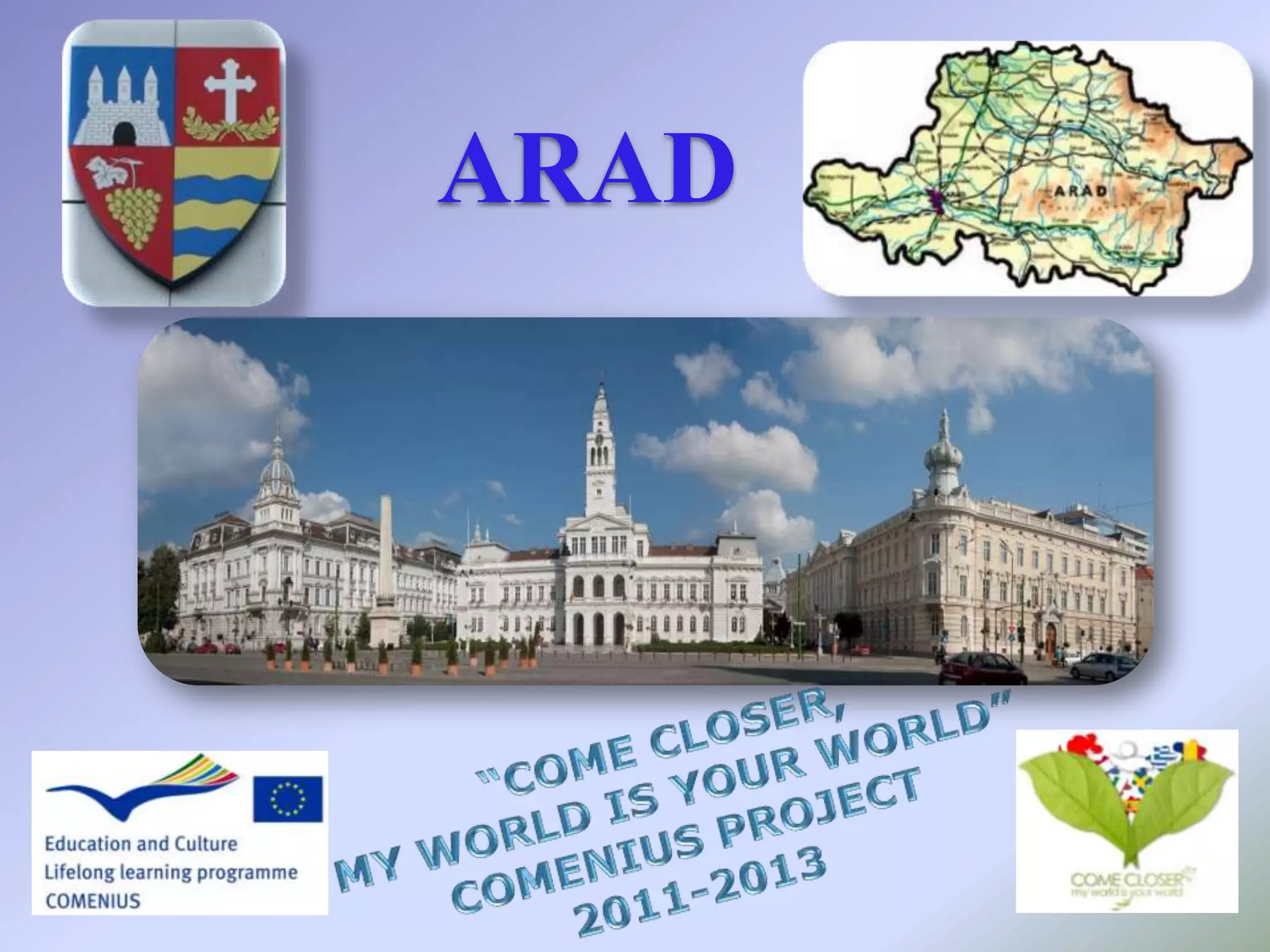
ARAD
The City of Arad is situated in the western
part of Romania, on the banks of the river Mures.
It was first mentioned in documents in the 11th
century and it was under the rule of the Kingdom of
Hungary, Ottoman Empire and the Habsburg Empire.
In the 19th and 20th centuries Arad became an
important economic and cultural centre.
In 1918 the city of Arad played an important
part in the movement for the unification of Romania.
Now Arad is the capital city of Arad
County, and the third largest city in the western part of
Romania.
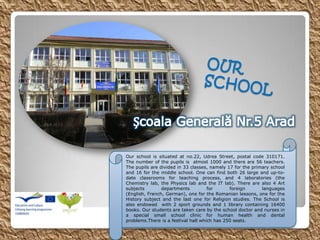
Our school is situated at no.22, Udrea Street, postal code 310171.
The number of the pupils is almost 1000 and there are 56 teachers.
The pupils are divided in 33 classes, namely 17 for the primary school
and 16 for the middle school. One can find both 26 large and up-to-
date classrooms for teaching process, and 4 laboratories (the
Chemistry lab, the Physics lab and the IT lab). There are also 4 Art
subjects departments for foreign languages
(English, French, German), one for the Romanian lessons, one for the
History subject and the last one for Religion studies. The School is
also endowed with 2 sport grounds and 1 library containing 16400
books. Our students are taken care by the school doctor and nurses in
a special small school clinic for human health and dental
problems.There is a festival hall which has 250 seats.
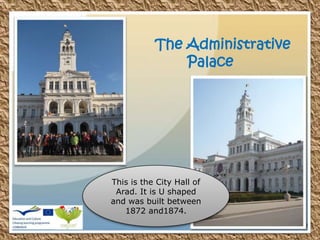
This is the City Hall of
Arad. It is U shaped
and was built between
1872 and1874.
The Administrative
Palace
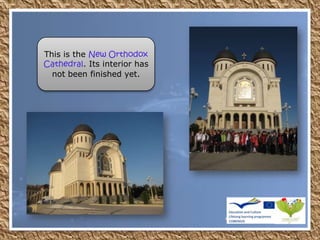
This is the New Orthodox
Cathedral. Its interior has
not been finished yet.
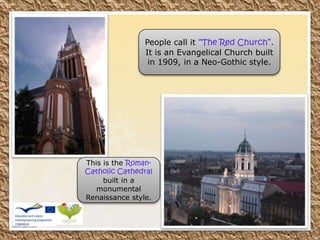
People call it “The Red Church”.
It is an Evangelical Church built
in 1909, in a Neo-Gothic style.
This is the Roman-
Catholic Cathedral
built in a
monumental
Renaissance style.
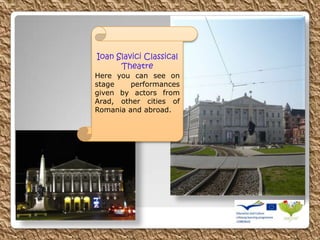
Ioan Slavici Classical
Theatre
Here you can see on
stage performances
given by actors from
Arad, other cities of
Romania and abroad.
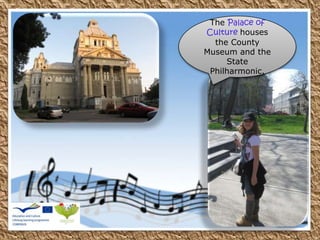
The Palace of
Culture houses
the County
Museum and the
State
Philharmonic.
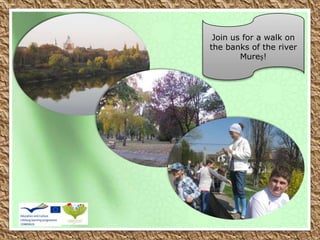
Join us for a walk on
the banks of the river
Mureș!
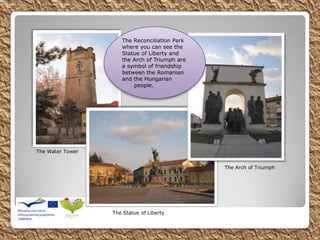
The Water Tower
The Arch of Triumph
The Statue of Liberty
The Reconciliation Park
where you can see the
Statue of Liberty and
the Arch of Triumph are
a symbol of friendship
between the Romanian
and the Hungarian
people.
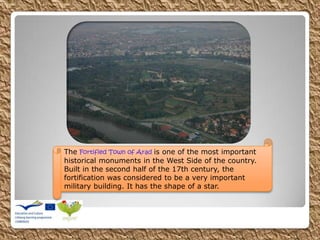
The Fortified Town of Arad is one of the most important
historical monuments in the West Side of the country.
Built in the second half of the 17th century, the
fortification was considered to be a very important
military building. It has the shape of a star.
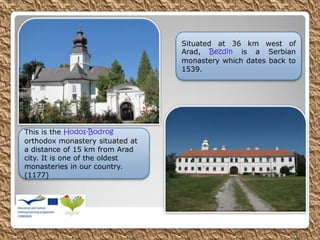
This is the Hodos-Bodrog
orthodox monastery situated at
a distance of 15 km from Arad
city. It is one of the oldest
monasteries in our country.
(1177)
Situated at 36 km west of
Arad, Bezdin is a Serbian
monastery which dates back to
1539.
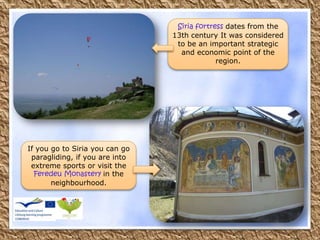
If you go to Siria you can go
paragliding, if you are into
extreme sports or visit the
Feredeu Monastery in the
neighbourhood.
Siria fortress dates from the
13th century It was considered
to be an important strategic
and economic point of the
region.
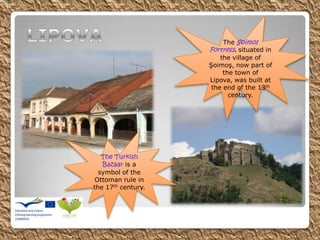
The Soimos
Fortress, situated in
the village of
Şoimoş, now part of
the town of
Lipova, was built at
the end of the 13th
century.
The Turkish
Bazaar is a
symbol of the
Ottoman rule in
the 17th century.
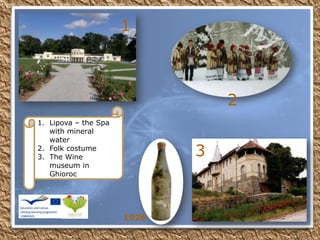
1. Lipova – the Spa
with mineral
water
2. Folk costume
3. The Wine
museum in
Ghioroc
1
2
3
1926
We hope you
have enjoyed the
trip through
Arad!

Arad

  • 1.
  • 2.
    The City ofArad is situated in the western part of Romania, on the banks of the river Mures. It was first mentioned in documents in the 11th century and it was under the rule of the Kingdom of Hungary, Ottoman Empire and the Habsburg Empire. In the 19th and 20th centuries Arad became an important economic and cultural centre. In 1918 the city of Arad played an important part in the movement for the unification of Romania. Now Arad is the capital city of Arad County, and the third largest city in the western part of Romania.
  • 3.
    Our school issituated at no.22, Udrea Street, postal code 310171. The number of the pupils is almost 1000 and there are 56 teachers. The pupils are divided in 33 classes, namely 17 for the primary school and 16 for the middle school. One can find both 26 large and up-to- date classrooms for teaching process, and 4 laboratories (the Chemistry lab, the Physics lab and the IT lab). There are also 4 Art subjects departments for foreign languages (English, French, German), one for the Romanian lessons, one for the History subject and the last one for Religion studies. The School is also endowed with 2 sport grounds and 1 library containing 16400 books. Our students are taken care by the school doctor and nurses in a special small school clinic for human health and dental problems.There is a festival hall which has 250 seats.
  • 4.
    This is theCity Hall of Arad. It is U shaped and was built between 1872 and1874. The Administrative Palace
  • 5.
    This is theNew Orthodox Cathedral. Its interior has not been finished yet.
  • 6.
    People call it“The Red Church”. It is an Evangelical Church built in 1909, in a Neo-Gothic style. This is the Roman- Catholic Cathedral built in a monumental Renaissance style.
  • 7.
    Ioan Slavici Classical Theatre Hereyou can see on stage performances given by actors from Arad, other cities of Romania and abroad.
  • 8.
    The Palace of Culturehouses the County Museum and the State Philharmonic.
  • 9.
    Join us fora walk on the banks of the river Mureș!
  • 10.
    The Water Tower TheArch of Triumph The Statue of Liberty The Reconciliation Park where you can see the Statue of Liberty and the Arch of Triumph are a symbol of friendship between the Romanian and the Hungarian people.
  • 11.
    The Fortified Townof Arad is one of the most important historical monuments in the West Side of the country. Built in the second half of the 17th century, the fortification was considered to be a very important military building. It has the shape of a star.
  • 12.
    This is theHodos-Bodrog orthodox monastery situated at a distance of 15 km from Arad city. It is one of the oldest monasteries in our country. (1177) Situated at 36 km west of Arad, Bezdin is a Serbian monastery which dates back to 1539.
  • 13.
    If you goto Siria you can go paragliding, if you are into extreme sports or visit the Feredeu Monastery in the neighbourhood. Siria fortress dates from the 13th century It was considered to be an important strategic and economic point of the region.
  • 14.
    The Soimos Fortress, situatedin the village of Şoimoş, now part of the town of Lipova, was built at the end of the 13th century. The Turkish Bazaar is a symbol of the Ottoman rule in the 17th century.
  • 15.
    1. Lipova –the Spa with mineral water 2. Folk costume 3. The Wine museum in Ghioroc 1 2 3 1926
  • 17.
    We hope you haveenjoyed the trip through Arad!