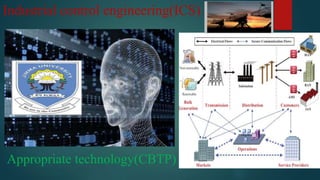
Industrial control engineering(ICS)
Appropriate technology(CBTP)
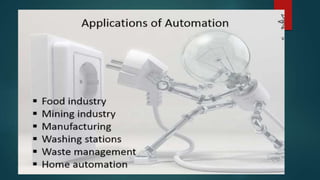
Introduction to automation
 Engineering is concerned with understanding and controlling the materials and
forces of nature for the benefit of humankind.
 Control system engineers are concerned with understanding and controlling
segments of their environment to provide useful economic products for
society.
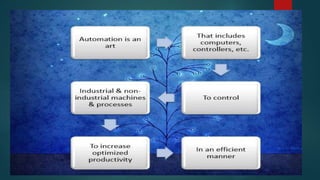
 The control of an industrial process by automatic rather than manual means is
often called automation. Automation is prevalent in the chemical, electric
power, paper, automobile, and steel industries, among others
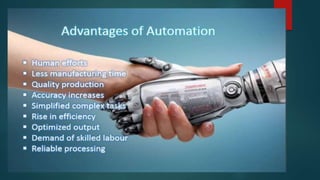
 Automation is used to improve productivity and obtain high-quality products.
ICS System Design Considerations
 CONTROL TIMING REQUIREMENTS: ICS processes have a wide range of time-
related requirements, including very high speed, consistency, regularity, and
synchronization. Humans may not be able to reliably and consistently meet these
requirements; automated controllers may be necessary.
 GEOGRAPHIC DISTRIBUTION: Systems have varying degrees of distribution,
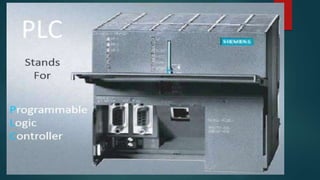
ranging from a small system (e.g., local PLC-controlled process) to large,
distributed systems (e.g., oil pipelines, electric power grid).
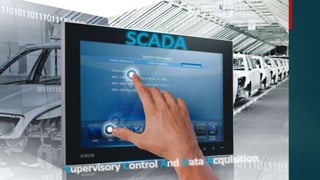
 HIERARCHY: Supervisory control is used to provide a central location that can
aggregate data from multiple locations, hierarchical/centralized control is used to
provide human operators with a comprehensive view of the entire system.
Cont.…
 CONTROL COMPLEXITY: Often control functions can be performed by simple
controllers and preset algorithms. (e.g., air traffic control) require human operators
to ensure that all control actions are appropriate to meet the larger objectives of
the system.
 AVAILABILITY: The system’s availability (i.e., reliability) requirements are also an important factor in
design.
 IMPACT OF FAILURES: The failure of a control function could incur substantially
different impacts across domains. Systems with greater impacts often require the
ability to continue operations through redundant controls, or the ability to operate
in a degraded state. The design needs to address these requirements.
 SAFETY: The system’s safety requirements area also an important factor in design.
Systems must be able to detect unsafe conditions and trigger actions to reduce
unsafe conditions to safe ones. In most safety-critical operations, human oversight
and control of a potentially dangerous process is an essential part of the safety
system.
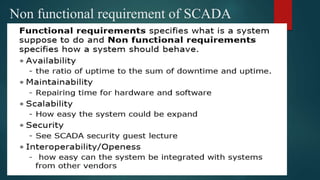
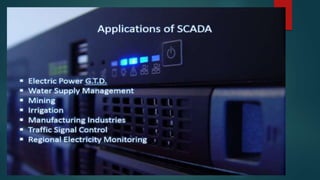
Non functional requirement of SCADA
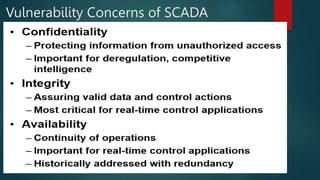
Vulnerability Concerns of SCADA
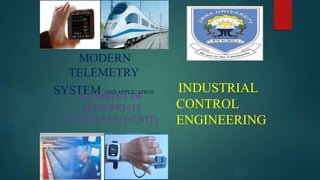
MODERN
TELEMETRY
SYSTEM AND APPLICATION
AS ASPECT OF
APPROPRIATE
TECHNOLOGY(CBTP)
INDUSTRIAL
CONTROL
ENGINEERING
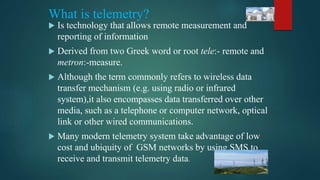
What is telemetry?
 Is technology that allows remote measurement and
reporting of information
 Derived from two Greek word or root tele:- remote and
metron:-measure.
 Although the term commonly refers to wireless data
transfer mechanism (e.g. using radio or infrared
system),it also encompasses data transferred over other
media, such as a telephone or computer network, optical
link or other wired communications.
 Many modern telemetry system take advantage of low
cost and ubiquity of GSM networks by using SMS to
receive and transmit telemetry data.
Why telemetry?
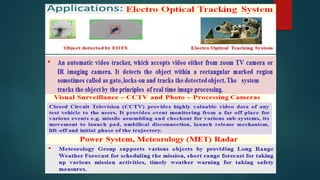
 Telemetry lets you stay in a safe location while
monitoring what's taking place in unsafe (inconvenient)
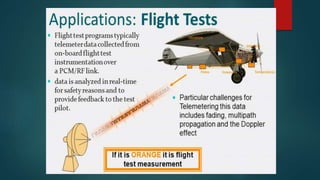
location . For example, in aircraft development.
 for industrial application telemetry :-
saves time ,reduces overheads, improves customer
satisfactions, provides additional selling features and in
app has a rapid payback.
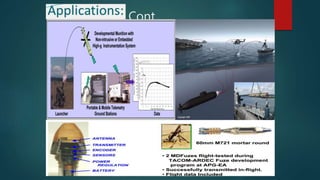
 telemetry is used with satellites, space probes, and
mobile robots. Telemetry is employed in manned
spacecraft, such as the space shuttle and the
international space station (ISS),to monitor the physical
condition of astronauts and to ensure the maintenance
of proper working environment for them.
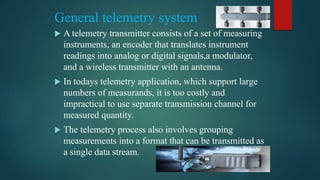
General telemetry system
 A telemetry transmitter consists of a set of measuring
instruments, an encoder that translates instrument
readings into analog or digital signals,a modulator,
and a wireless transmitter with an antenna.
 In todays telemetry application, which support large
numbers of measurands, it is too costly and
impractical to use separate transmission channel for
measured quantity.
 The telemetry process also involves grouping
measurements into a format that can be transmitted as
a single data stream.
General telemetry system
Cont. . . .
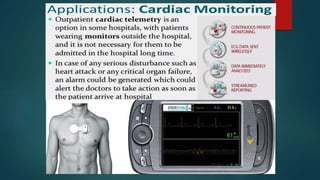
 Consumer Empowerment- Make available a consumer-directed and
secure electronic record of health care registration information and a
medication history for patients.
 Chronic Care- Allow the widespread use of secure messaging, as
appropriate, as a means of communication between doctors and
patients about care delivery.
 Bio surveillance- Enable the transfer of standardized and anonymous
health data from the point of health care delivery to authorized public
health agencies within 24 hours of its collection.
 Electronic Health Records- Create an electronic health record that
includes laboratory results and interpretations, that is standardized,
widely available and secure.
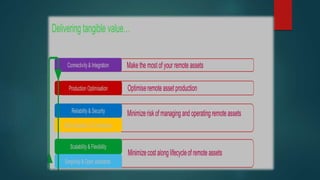
Generally Why We Go Telemetry
 Easy Access to Information.
 Automatic Software Integration
 Quick Deployment.
 Easier scale of services
 Deliver new services
 optimize response of time
 improve monitoring and control over extended distance
 improve operator safety and efficiency
 improve access to specialists
 Reduces cost for manual labor and maximizes efficiency
 Cost saving
Appropriate technology in control and telemeter.pptx

Appropriate technology in control and telemeter.pptx

  • 1.
  • 3.
    Introduction to automation Engineering is concerned with understanding and controlling the materials and forces of nature for the benefit of humankind.  Control system engineers are concerned with understanding and controlling segments of their environment to provide useful economic products for society.  The control of an industrial process by automatic rather than manual means is often called automation. Automation is prevalent in the chemical, electric power, paper, automobile, and steel industries, among others  Automation is used to improve productivity and obtain high-quality products.
  • 8.
    ICS System DesignConsiderations  CONTROL TIMING REQUIREMENTS: ICS processes have a wide range of time- related requirements, including very high speed, consistency, regularity, and synchronization. Humans may not be able to reliably and consistently meet these requirements; automated controllers may be necessary.  GEOGRAPHIC DISTRIBUTION: Systems have varying degrees of distribution, ranging from a small system (e.g., local PLC-controlled process) to large, distributed systems (e.g., oil pipelines, electric power grid).  HIERARCHY: Supervisory control is used to provide a central location that can aggregate data from multiple locations, hierarchical/centralized control is used to provide human operators with a comprehensive view of the entire system.
  • 9.
    Cont.…  CONTROL COMPLEXITY:Often control functions can be performed by simple controllers and preset algorithms. (e.g., air traffic control) require human operators to ensure that all control actions are appropriate to meet the larger objectives of the system.  AVAILABILITY: The system’s availability (i.e., reliability) requirements are also an important factor in design.  IMPACT OF FAILURES: The failure of a control function could incur substantially different impacts across domains. Systems with greater impacts often require the ability to continue operations through redundant controls, or the ability to operate in a degraded state. The design needs to address these requirements.  SAFETY: The system’s safety requirements area also an important factor in design. Systems must be able to detect unsafe conditions and trigger actions to reduce unsafe conditions to safe ones. In most safety-critical operations, human oversight and control of a potentially dangerous process is an essential part of the safety system.
  • 23.
  • 24.
  • 26.
    MODERN TELEMETRY SYSTEM AND APPLICATION ASASPECT OF APPROPRIATE TECHNOLOGY(CBTP) INDUSTRIAL CONTROL ENGINEERING
  • 27.
    What is telemetry? Is technology that allows remote measurement and reporting of information  Derived from two Greek word or root tele:- remote and metron:-measure.  Although the term commonly refers to wireless data transfer mechanism (e.g. using radio or infrared system),it also encompasses data transferred over other media, such as a telephone or computer network, optical link or other wired communications.  Many modern telemetry system take advantage of low cost and ubiquity of GSM networks by using SMS to receive and transmit telemetry data.
  • 28.
    Why telemetry?  Telemetrylets you stay in a safe location while monitoring what's taking place in unsafe (inconvenient) location . For example, in aircraft development.  for industrial application telemetry :- saves time ,reduces overheads, improves customer satisfactions, provides additional selling features and in app has a rapid payback.  telemetry is used with satellites, space probes, and mobile robots. Telemetry is employed in manned spacecraft, such as the space shuttle and the international space station (ISS),to monitor the physical condition of astronauts and to ensure the maintenance of proper working environment for them.
  • 29.
    General telemetry system A telemetry transmitter consists of a set of measuring instruments, an encoder that translates instrument readings into analog or digital signals,a modulator, and a wireless transmitter with an antenna.  In todays telemetry application, which support large numbers of measurands, it is too costly and impractical to use separate transmission channel for measured quantity.  The telemetry process also involves grouping measurements into a format that can be transmitted as a single data stream.
  • 30.
  • 34.
  • 38.
     Consumer Empowerment-Make available a consumer-directed and secure electronic record of health care registration information and a medication history for patients.  Chronic Care- Allow the widespread use of secure messaging, as appropriate, as a means of communication between doctors and patients about care delivery.  Bio surveillance- Enable the transfer of standardized and anonymous health data from the point of health care delivery to authorized public health agencies within 24 hours of its collection.  Electronic Health Records- Create an electronic health record that includes laboratory results and interpretations, that is standardized, widely available and secure.
  • 39.
    Generally Why WeGo Telemetry  Easy Access to Information.  Automatic Software Integration  Quick Deployment.  Easier scale of services  Deliver new services  optimize response of time  improve monitoring and control over extended distance  improve operator safety and efficiency  improve access to specialists  Reduces cost for manual labor and maximizes efficiency  Cost saving