3 keys takeaway/ learning step
Learn about the steps of design thinking
Learn new way of using technology for studying.
Learn about how to interact with others and how to peer,
evaluate others perception.
How to see problem in different aspects.
How to begin solving problem.
How to empathy, define the problem.
How to ideate and prototype the ideas to make them tangible.
How to test and reflect to the problem.
How to reframe problem if solutions don’t work.
What kind of resource use for reference to solve problem.
Quantity of the ideas will give many solutions.
When giving solutions, remember to stick with the empathy step.
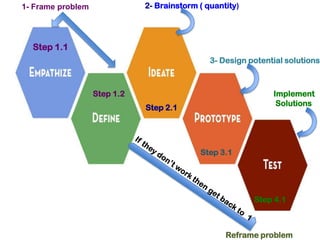
1- Frame problem 2- Brainstorm ( quantity)
Reframe problem
Step 1.1
Step 1.2
Step 2.1
3- Design potential solutions
Step 3.1
Implement
Solutions
Step 4.1
Design by: Ha Ngo
Observing
Experience
Ideate
Prototype
Test
Need key
Padlock
Hard to recognize
Breakout lock easily
Same type of
design and colors
Put some drugs, cigarettes,
knives, chemical poisons , …
Less book and
having computer,
iPAD, phone…
Technical devices( charges) Can happen
fire, explosion, chemical poisons…
Signs: No cigarettes,
drugs, …
Take much time to
find the locker
Technological devices
(need smaller locker)
Interview students
(locker)
Recognize locker easily
Security with personal stuff
Don’t need to use key,
padlock
Don’t want to loose key
Need charges for
technical devices
Need
Good material
To against fire,
explosion,
chemical
poisons.
Prevent cigarettes,
drugs, weapons…
Charges for technical devices
Signs: No cigarettes,
drugs, …
Lock: use keycard, human electromagnetic
lock, Voice lock, fingerprint lock…
Screen in front of
locker: update
schedule
information from
class and school
Size of locker
smaller than old one
looker room
and scan machine
to prevent weapons
drugs, poisons
Camera in locker room
High secure
technology
Electromagnetic
Waves
Green Electric
Software programming
Mechanical engineering or manufacturing
Human being
Recycle materials
Voice
Technological control
Representative
samples of
lockers
Physical test
Software testing
Chemical test Legal test of lockers
Detailed level design of locker, key,
lock, charges
OLD DESIGN OF LOCKER
NEW DESIGN OF LOCKER AT PUBLIC HIGH
SCHOOL
• PROCESS OF DESIGN FOR LOCKER IS THE SAME BUT
IT SHOULD BE CHANGED 3 PARTS OF PROCESS:
• IDEATE (QUANTITY)
• PROTOTYPE – (STICK TO EMPATHY)
• TESTING-( GET BACK TO EMPATHY AND DEFINE IF
SOLUTIONS DON’T WORK)
NEW DESIGN OF LOCKER AT PUBLIC HIGH SCHOOL
IDEATE: (QUANTITY)
• BRAINSTORM : AT LEAST 50 IDEAS
• COMPARE IDEAS
• CHOOSE FEW IDEAS TO MAKE PROTOTYPES FOR LOCKER.
NEW DESIGN OF LOCKER AT PUBLIC HIGH
SCHOOL
PROTOTYPE AND TESTING.
• STICK TO THE EMPATHY AND DEFINE PART.
• BULDING A PHYSICAL OBJECTS - LOCKER.
• SIZE OF LOCKER, LOCK, COLOR, SCREEN, USEFULNESS
OF LOCK, SECURITY, CONVENIENCE.
• APPLY TECHNOLOGY TO THE DESIGN OF LOCKER.
• ASK FOR FEEDBACK FROM STUDENTS, TEACHERS,…
• MAKE SERVEY TO NEW LOCKER.
• TESTING PROCESS TO QUALITY AND SAFETY OF
LOCKER.
• CHANGE TO NEW DESIGN IF THE OLD PROTOTYPE
DOESN’T WORK.
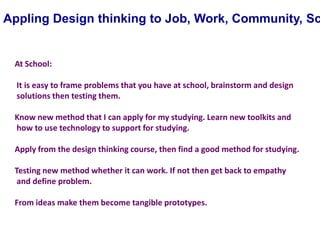
Appling Design thinking to Job, Work, Community, Sc
At School:
It is easy to frame problems that you have at school, brainstorm and design
solutions then testing them.
Know new method that I can apply for my studying. Learn new toolkits and
how to use technology to support for studying.
Apply from the design thinking course, then find a good method for studying.
Testing new method whether it can work. If not then get back to empathy
and define problem.
From ideas make them become tangible prototypes.

Apply design thinking.

  • 1.
    3 keys takeaway/learning step Learn about the steps of design thinking Learn new way of using technology for studying. Learn about how to interact with others and how to peer, evaluate others perception. How to see problem in different aspects. How to begin solving problem. How to empathy, define the problem. How to ideate and prototype the ideas to make them tangible. How to test and reflect to the problem. How to reframe problem if solutions don’t work. What kind of resource use for reference to solve problem. Quantity of the ideas will give many solutions. When giving solutions, remember to stick with the empathy step.
  • 2.
    1- Frame problem2- Brainstorm ( quantity) Reframe problem Step 1.1 Step 1.2 Step 2.1 3- Design potential solutions Step 3.1 Implement Solutions Step 4.1
  • 3.
    Design by: HaNgo Observing Experience Ideate Prototype Test Need key Padlock Hard to recognize Breakout lock easily Same type of design and colors Put some drugs, cigarettes, knives, chemical poisons , … Less book and having computer, iPAD, phone… Technical devices( charges) Can happen fire, explosion, chemical poisons… Signs: No cigarettes, drugs, … Take much time to find the locker Technological devices (need smaller locker) Interview students (locker) Recognize locker easily Security with personal stuff Don’t need to use key, padlock Don’t want to loose key Need charges for technical devices Need Good material To against fire, explosion, chemical poisons. Prevent cigarettes, drugs, weapons… Charges for technical devices Signs: No cigarettes, drugs, … Lock: use keycard, human electromagnetic lock, Voice lock, fingerprint lock… Screen in front of locker: update schedule information from class and school Size of locker smaller than old one looker room and scan machine to prevent weapons drugs, poisons Camera in locker room High secure technology Electromagnetic Waves Green Electric Software programming Mechanical engineering or manufacturing Human being Recycle materials Voice Technological control Representative samples of lockers Physical test Software testing Chemical test Legal test of lockers Detailed level design of locker, key, lock, charges OLD DESIGN OF LOCKER
  • 4.
    NEW DESIGN OFLOCKER AT PUBLIC HIGH SCHOOL • PROCESS OF DESIGN FOR LOCKER IS THE SAME BUT IT SHOULD BE CHANGED 3 PARTS OF PROCESS: • IDEATE (QUANTITY) • PROTOTYPE – (STICK TO EMPATHY) • TESTING-( GET BACK TO EMPATHY AND DEFINE IF SOLUTIONS DON’T WORK)
  • 5.
    NEW DESIGN OFLOCKER AT PUBLIC HIGH SCHOOL IDEATE: (QUANTITY) • BRAINSTORM : AT LEAST 50 IDEAS • COMPARE IDEAS • CHOOSE FEW IDEAS TO MAKE PROTOTYPES FOR LOCKER.
  • 6.
    NEW DESIGN OFLOCKER AT PUBLIC HIGH SCHOOL PROTOTYPE AND TESTING. • STICK TO THE EMPATHY AND DEFINE PART. • BULDING A PHYSICAL OBJECTS - LOCKER. • SIZE OF LOCKER, LOCK, COLOR, SCREEN, USEFULNESS OF LOCK, SECURITY, CONVENIENCE. • APPLY TECHNOLOGY TO THE DESIGN OF LOCKER. • ASK FOR FEEDBACK FROM STUDENTS, TEACHERS,… • MAKE SERVEY TO NEW LOCKER. • TESTING PROCESS TO QUALITY AND SAFETY OF LOCKER. • CHANGE TO NEW DESIGN IF THE OLD PROTOTYPE DOESN’T WORK.
  • 7.
    Appling Design thinkingto Job, Work, Community, Sc At School: It is easy to frame problems that you have at school, brainstorm and design solutions then testing them. Know new method that I can apply for my studying. Learn new toolkits and how to use technology to support for studying. Apply from the design thinking course, then find a good method for studying. Testing new method whether it can work. If not then get back to empathy and define problem. From ideas make them become tangible prototypes.