MiFID II
Dr. Wolfgang Göb
Head of Business Development
Wolfgang.Goeb@sds.at
Software Daten Service GmbH
Rennweg 97-99, 1030 Wien, AT
www.sds.at
info@sds.at
Application design for MiFID II-
compliant operations
© 2015
SDS company profile
2
 Founded 1974, located in Vienna/Austria
 Member of Deutsche Telekom Group
 170 FTE
SDS solutions are built to
modernize, automate and optimize
the back office processes of financial institutions.
Software Daten Service (SDS) specialises in the development of
standard software for the financial industry.
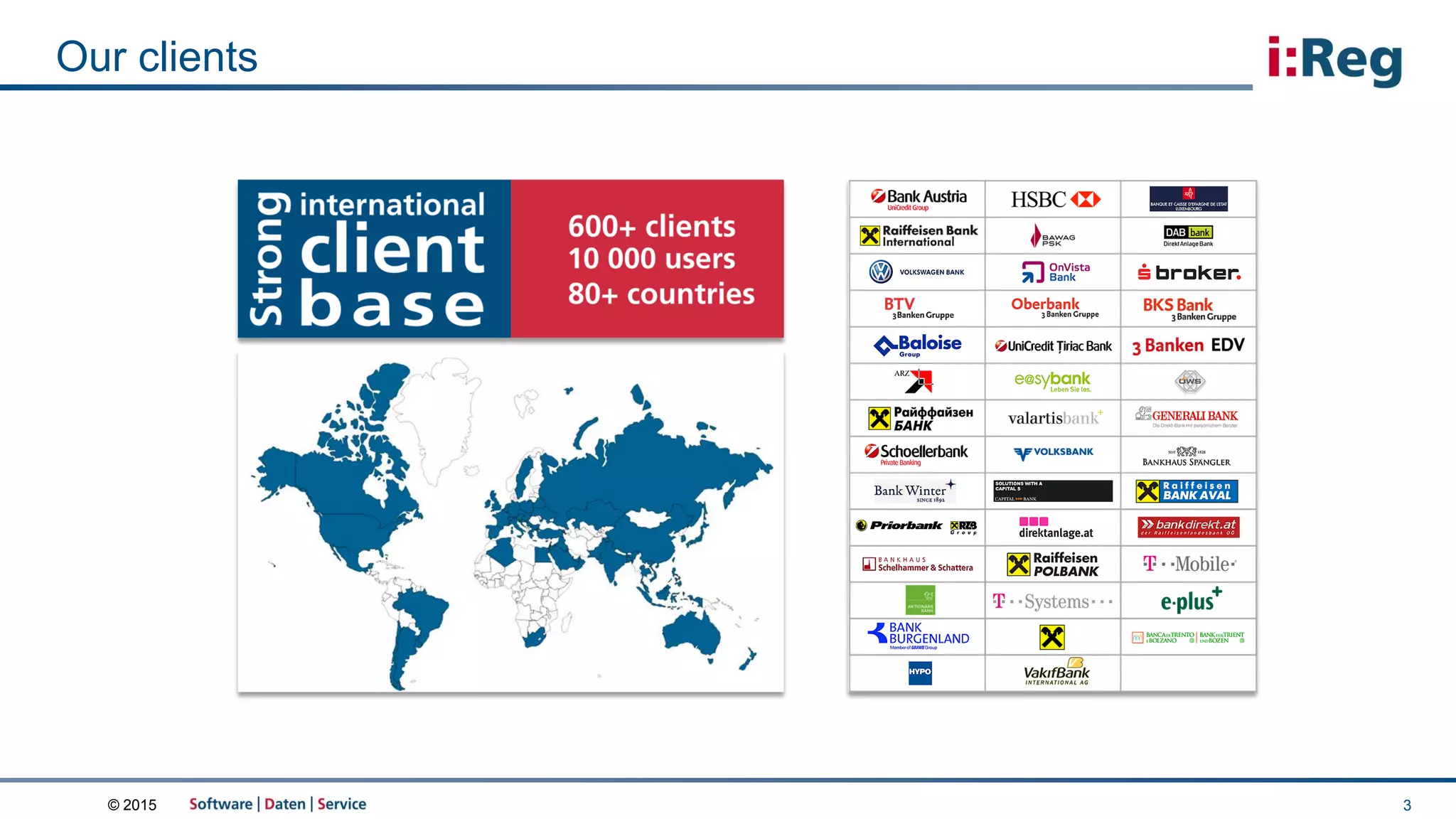
For worldwide 600+ clients, our solutions settle hundreds of millions
securities transactions per year, and serve as backbones of their back
office operations.
SDS is operating one of the largest European automated testing
centers for standard software solutions.
© 2015
Our clients
3
© 2015
MiFID – the “Markets in Financial Instruments Directive”
MiFID in a nutshell
4
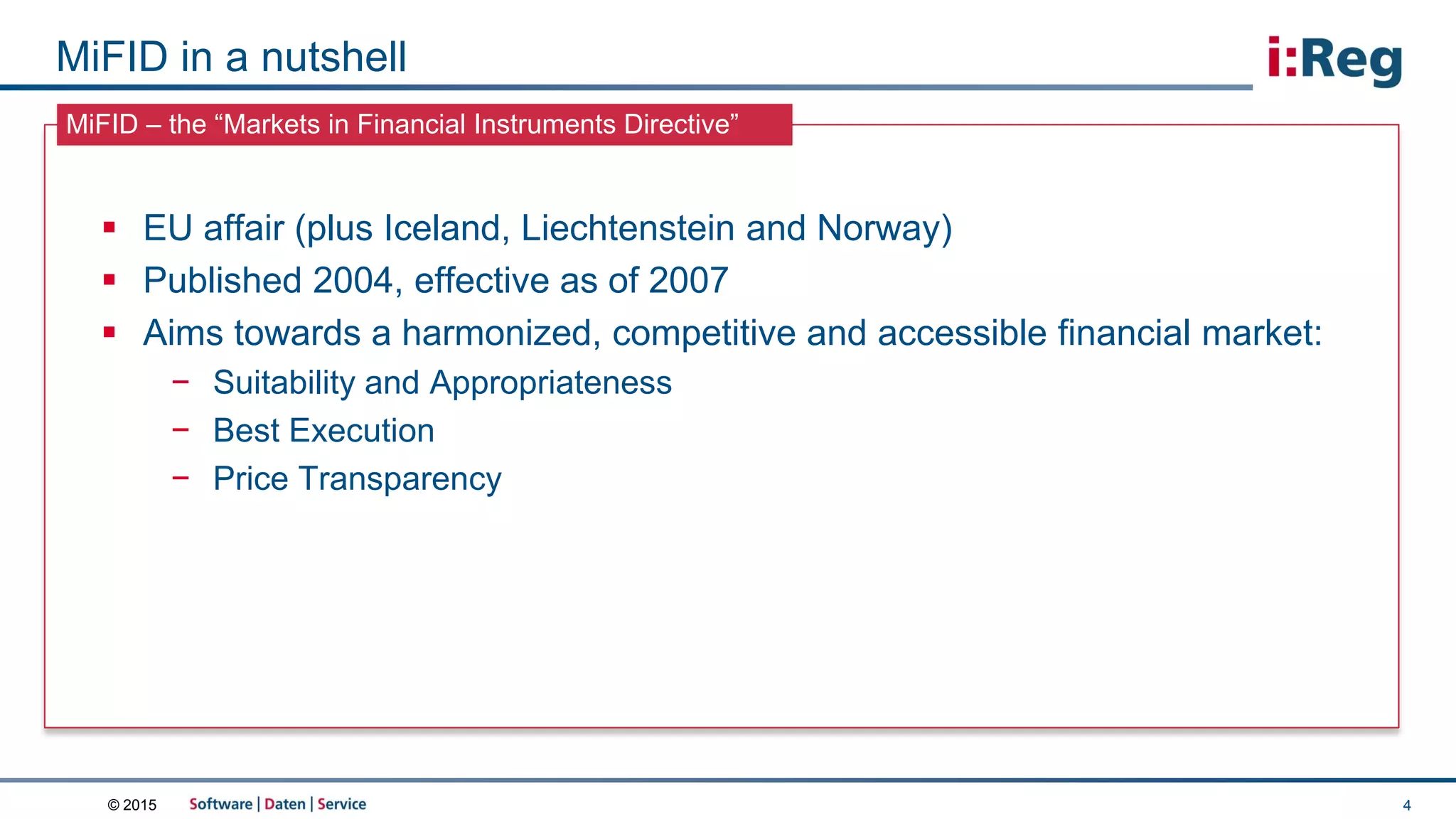
 EU affair (plus Iceland, Liechtenstein and Norway)
 Published 2004, effective as of 2007
 Aims towards a harmonized, competitive and accessible financial market:
− Suitability and Appropriateness
− Best Execution
− Price Transparency
© 2015
“Lessons Learned” from 2008
MiFID in a nutshell
 New players on the market, new and complex instruments
 Rapid technology advancement
 Bundle of regulatory measures:
− EMIR (derivatives)
− MAD (market abuse)
− Basel III (capital requirements)
− MiFID II
 MiFID II (MiFID II and MiFIR) published 2014, to be applied starting 2017
5
© 2015
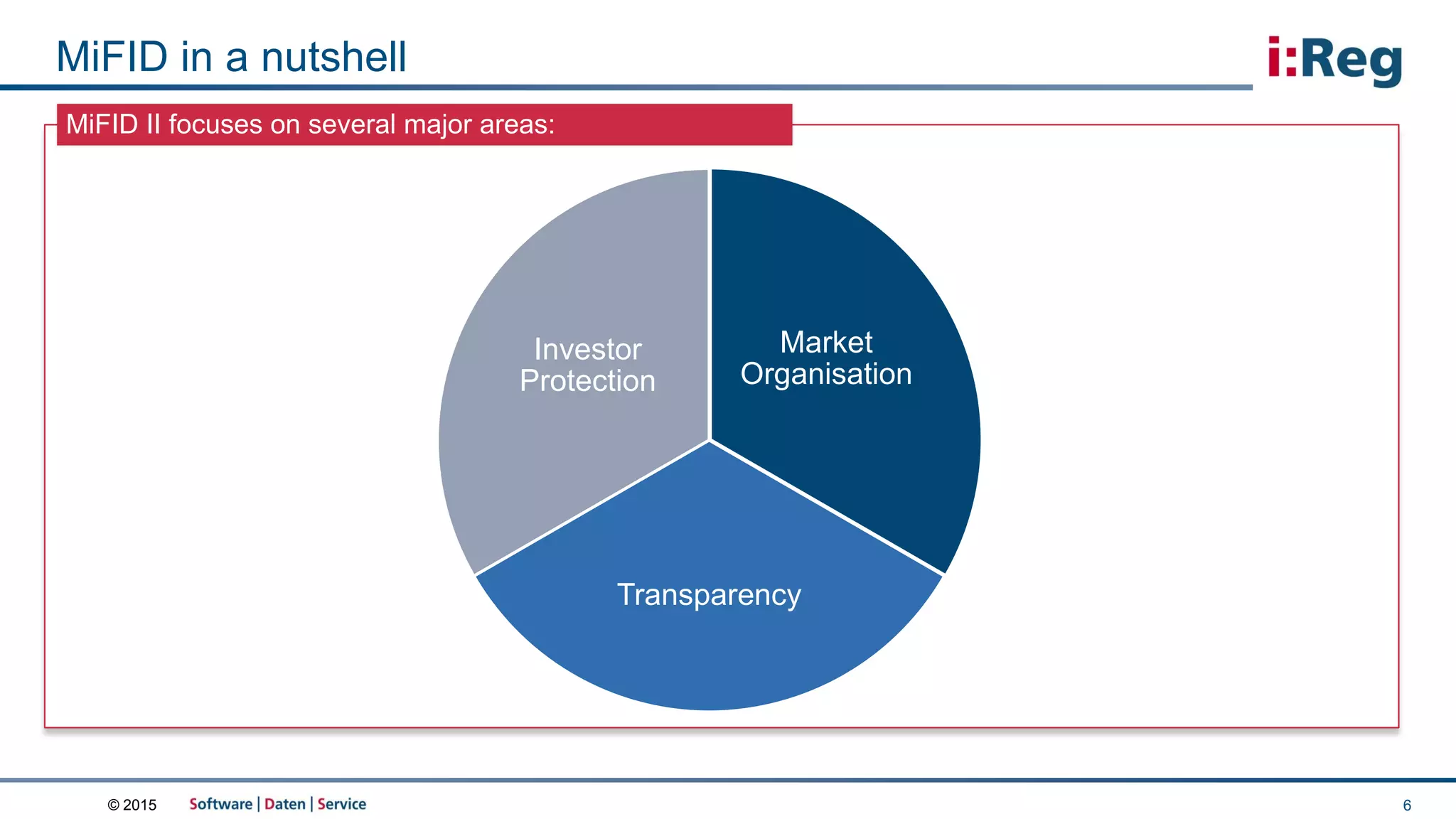
MiFID II focuses on several major areas:
MiFID in a nutshell
6
Market
Organisation
Transparency
Investor
Protection
© 2015
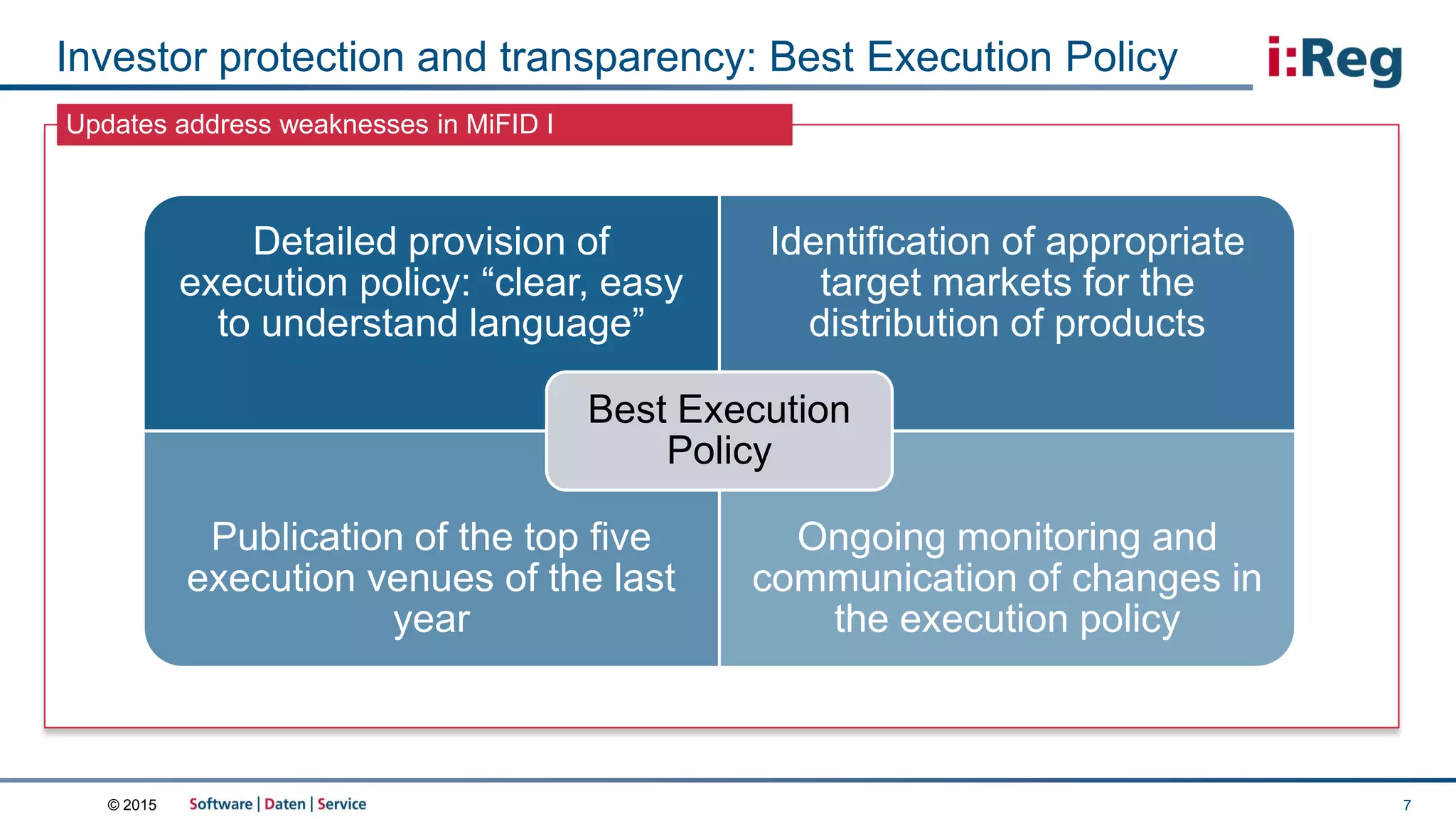
Updates address weaknesses in MiFID I
Investor protection and transparency: Best Execution Policy
7
Detailed provision of
execution policy: “clear, easy
to understand language”
Identification of appropriate
target markets for the
distribution of products
Publication of the top five
execution venues of the last
year
Ongoing monitoring and
communication of changes in
the execution policy
Best Execution
Policy
© 2015
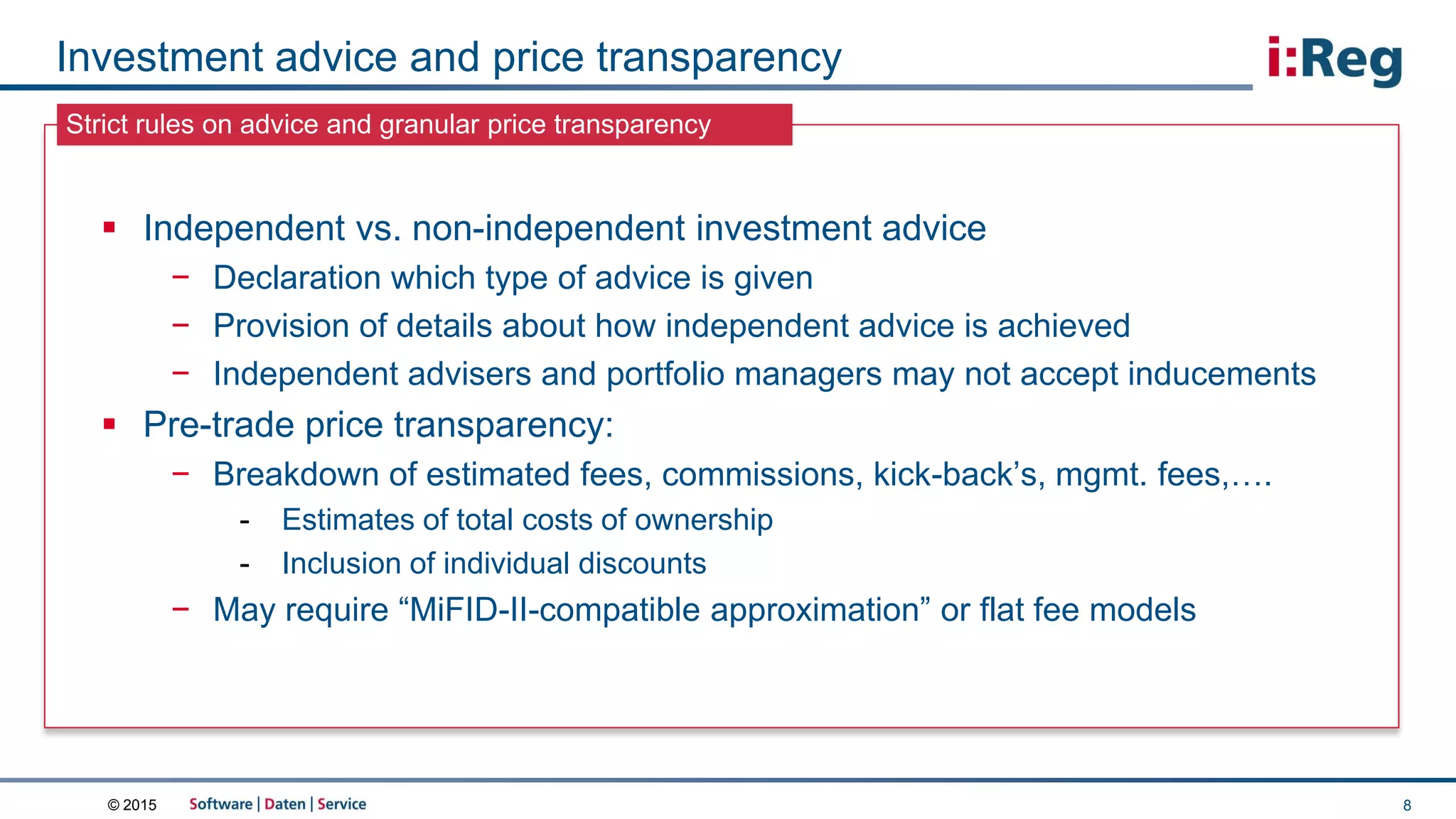
Strict rules on advice and granular price transparency
Investment advice and price transparency
8
 Independent vs. non-independent investment advice
− Declaration which type of advice is given
− Provision of details about how independent advice is achieved
− Independent advisers and portfolio managers may not accept inducements
 Pre-trade price transparency:
− Breakdown of estimated fees, commissions, kick-back’s, mgmt. fees,….
- Estimates of total costs of ownership
- Inclusion of individual discounts
− May require “MiFID-II-compatible approximation” or flat fee models
© 2015
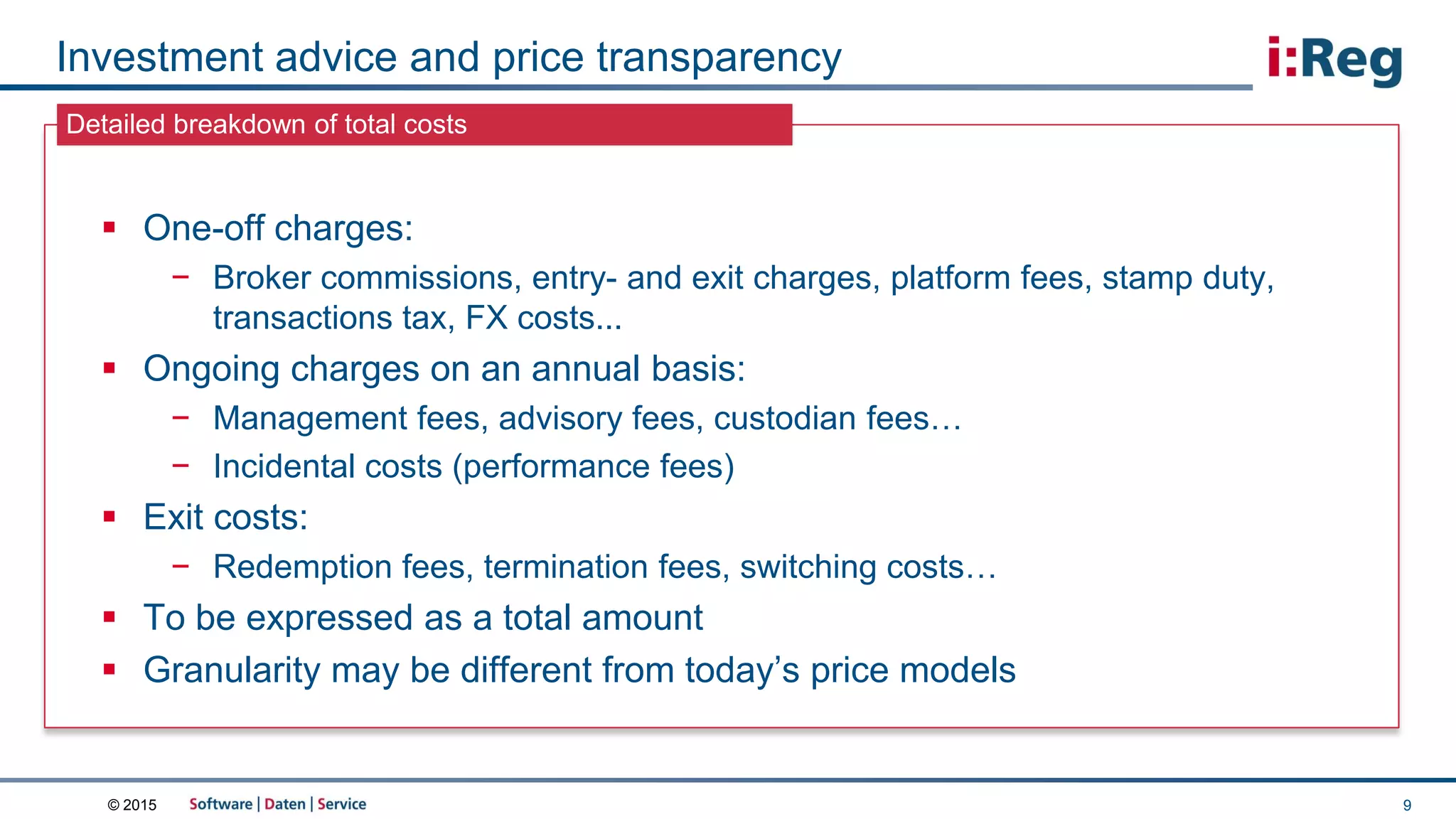
Detailed breakdown of total costs
Investment advice and price transparency
9
 One-off charges:
− Broker commissions, entry- and exit charges, platform fees, stamp duty,
transactions tax, FX costs...
 Ongoing charges on an annual basis:
− Management fees, advisory fees, custodian fees…
− Incidental costs (performance fees)
 Exit costs:
− Redemption fees, termination fees, switching costs…
 To be expressed as a total amount
 Granularity may be different from today’s price models
© 2015
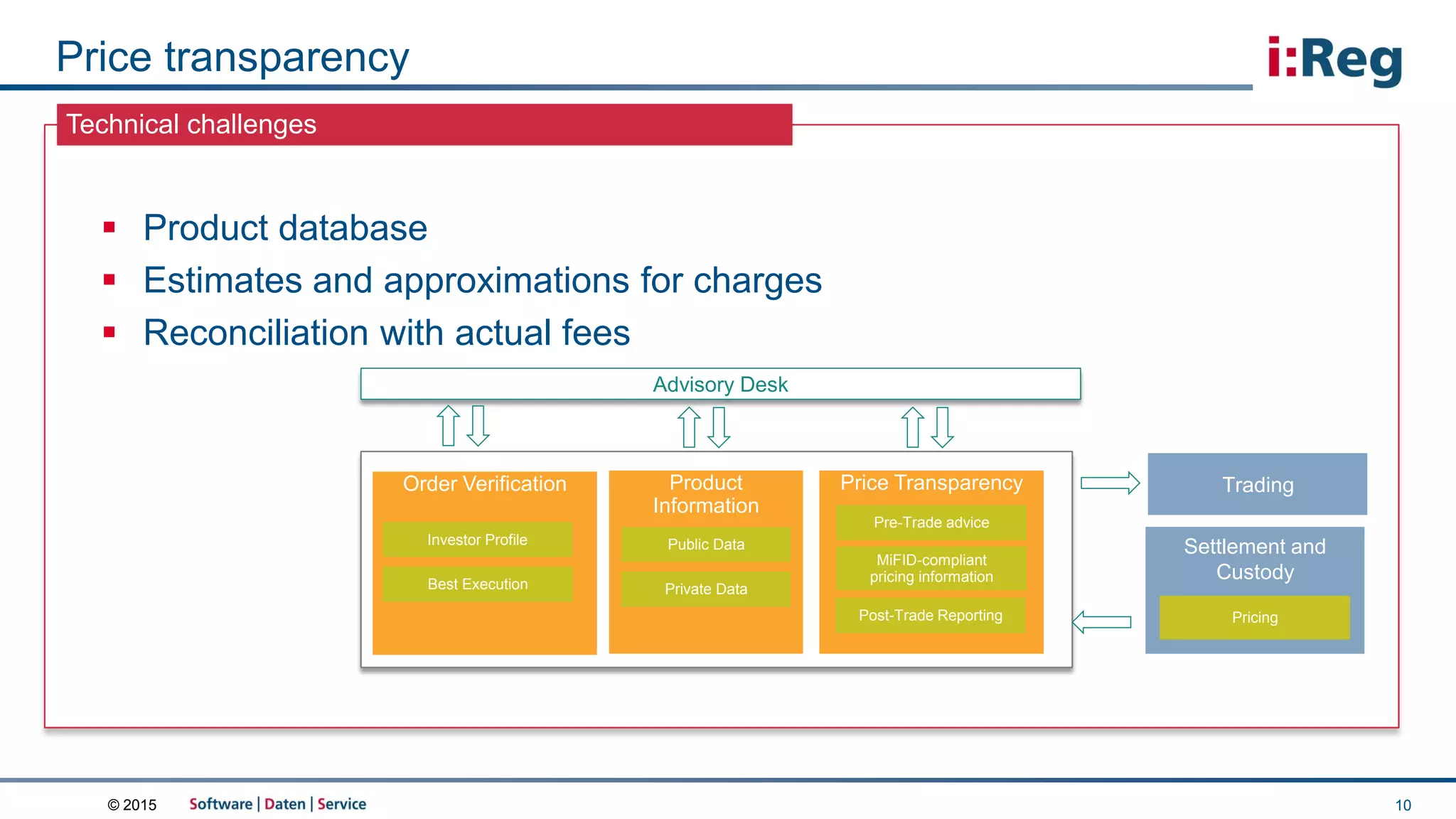
Technical challenges
Price transparency
10
 Product database
 Estimates and approximations for charges
 Reconciliation with actual fees
Settlement and
Custody
Price Transparency
Advisory Desk
MiFID-compliant
pricing information
Pre-Trade advice
Post-Trade Reporting
Product
Information
Order Verification
Best Execution
Investor Profile Public Data
Private Data
Pricing
Trading
© 2015
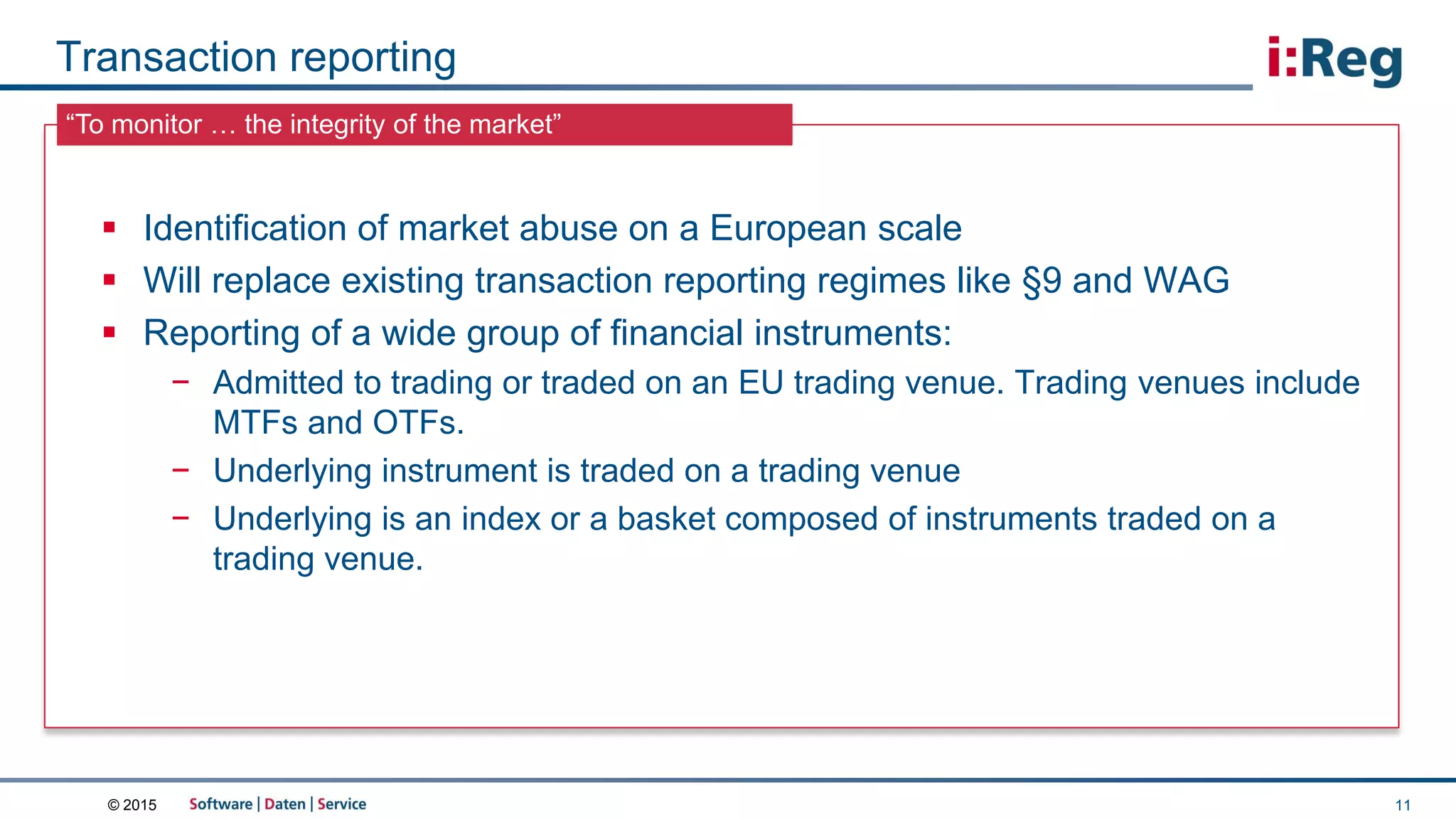
“To monitor … the integrity of the market”
Transaction reporting
11
 Identification of market abuse on a European scale
 Will replace existing transaction reporting regimes like §9 and WAG
 Reporting of a wide group of financial instruments:
− Admitted to trading or traded on an EU trading venue. Trading venues include
MTFs and OTFs.
− Underlying instrument is traded on a trading venue
− Underlying is an index or a basket composed of instruments traded on a
trading venue.
© 2015
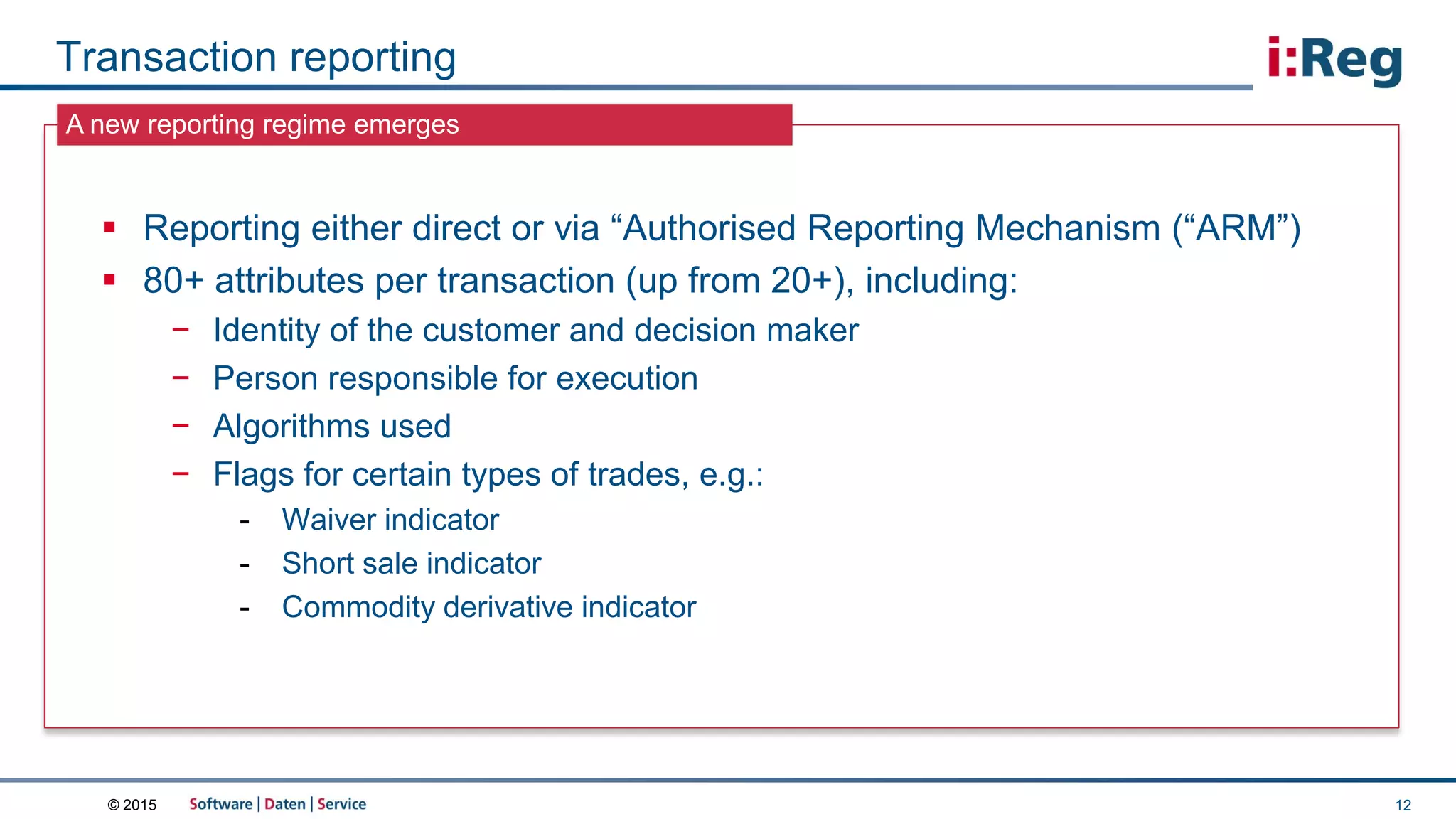
A new reporting regime emerges
Transaction reporting
12
 Reporting either direct or via “Authorised Reporting Mechanism (“ARM”)
 80+ attributes per transaction (up from 20+), including:
− Identity of the customer and decision maker
− Person responsible for execution
− Algorithms used
− Flags for certain types of trades, e.g.:
- Waiver indicator
- Short sale indicator
- Commodity derivative indicator
© 2015
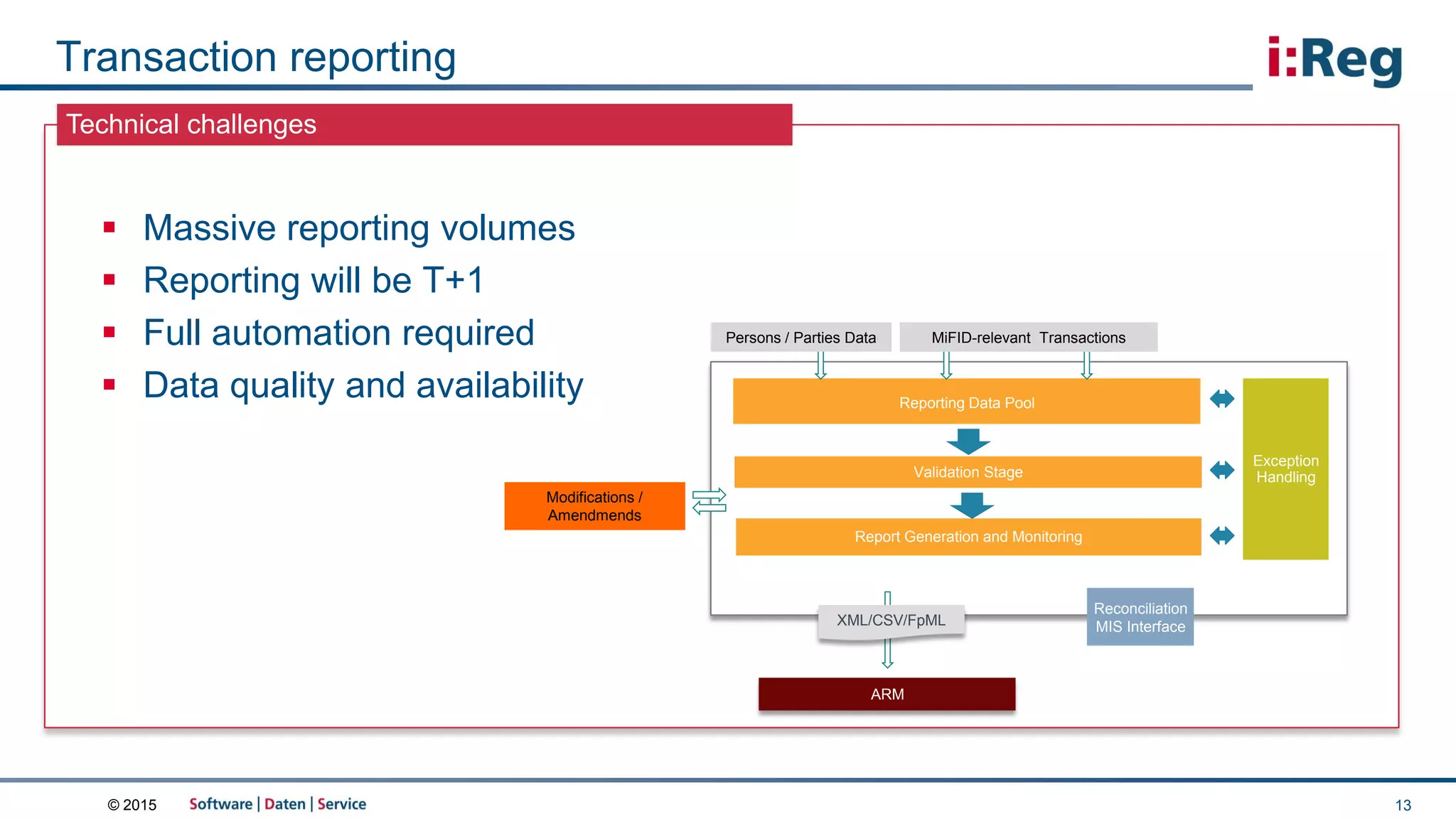
Technical challenges
Transaction reporting
13
 Massive reporting volumes
 Reporting will be T+1
 Full automation required
 Data quality and availability
Exception
HandlingValidation Stage
Report Generation and Monitoring
Reporting Data Pool
ARM
MiFID-relevant TransactionsPersons / Parties Data
Reconciliation
MIS Interface
Modifications /
Amendmends
XML/CSV/FpML
© 2015
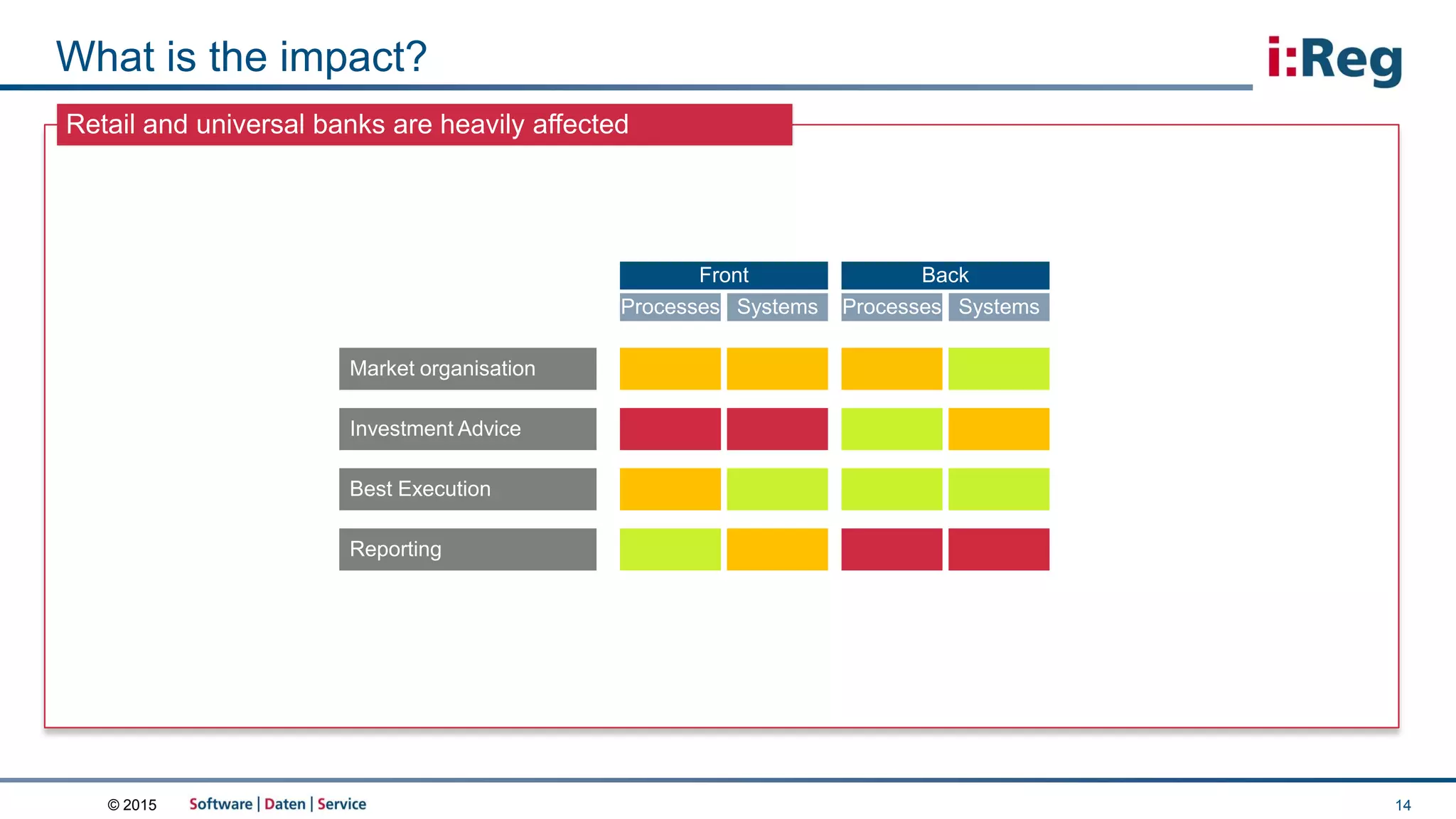
Retail and universal banks are heavily affected
What is the impact?
14
Processes
Back
SystemsProcesses
Front
Systems
Market organisation
Reporting
Investment Advice
Best Execution
© 2015
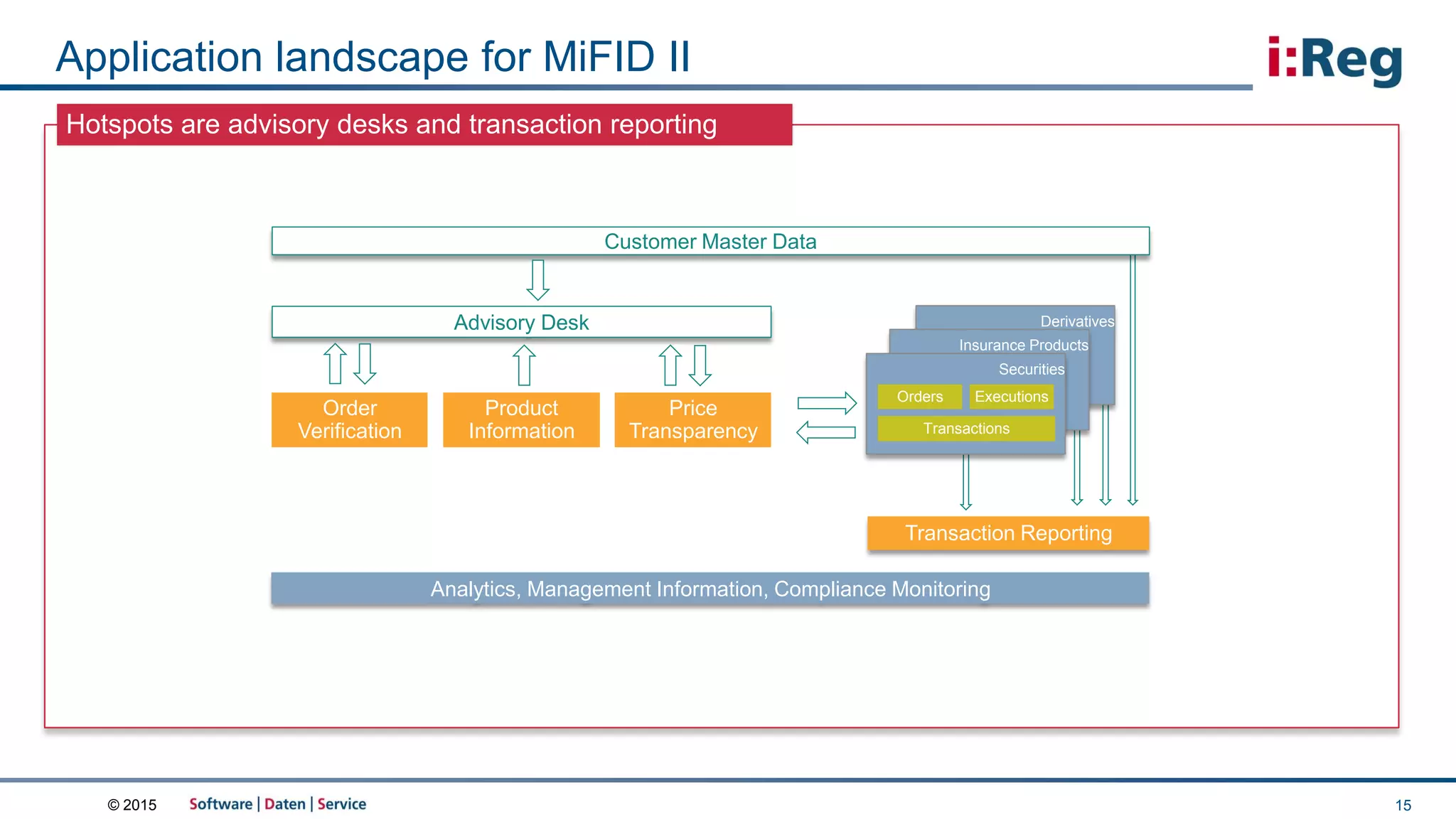
Hotspots are advisory desks and transaction reporting
Application landscape for MiFID II
15
Derivatives
Customer Master Data
Transaction Reporting
Price
Transparency
Advisory Desk
Product
Information
Insurance Products
Securities
Orders
Transactions
Order
Verification
Analytics, Management Information, Compliance Monitoring
Executions
© 2015
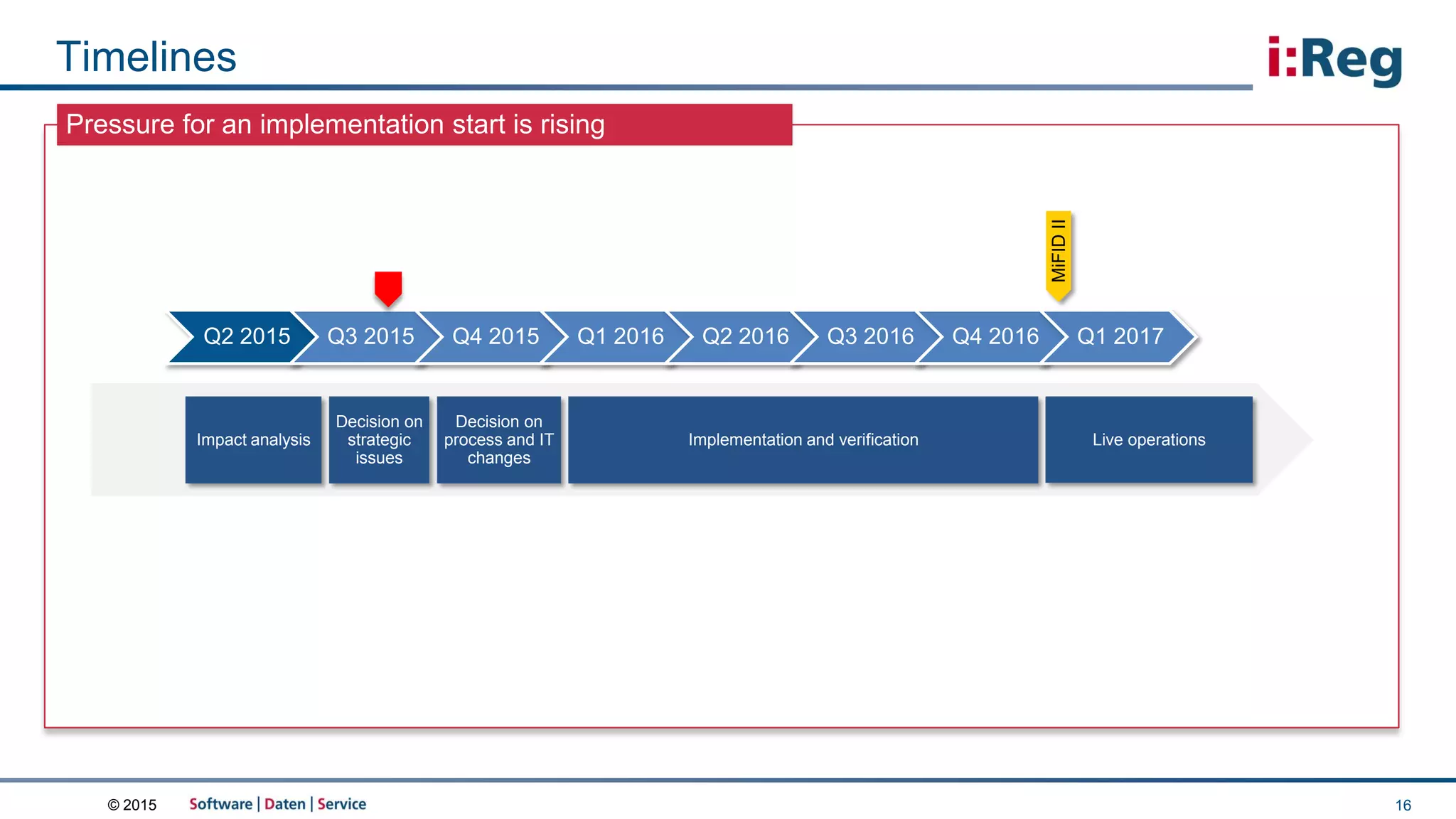
Pressure for an implementation start is rising
Timelines
16
Q2 2015 Q3 2015 Q4 2015 Q1 2016 Q2 2016 Q3 2016 Q4 2016 Q1 2017
Implementation and verification
MiFIDII
Impact analysis
Decision on
strategic
issues
Decision on
process and IT
changes
Live operations
© 2015
The next big regulatory wave
Wrap up
17
 MiFID II is a significant enhancement of the current MiFID regulation
− May fundamentally change business models for product sales
− Will have a significant impact on processes, applications and cost
 Deadlines are tight, and immediate action is required
“Transparency is very important so that investors and
regulators are able to know the truth."

Application design for MiFID II-compliant operations

  • 1.
    MiFID II Dr. WolfgangGöb Head of Business Development Wolfgang.Goeb@sds.at Software Daten Service GmbH Rennweg 97-99, 1030 Wien, AT www.sds.at info@sds.at Application design for MiFID II- compliant operations
  • 2.
    © 2015 SDS companyprofile 2  Founded 1974, located in Vienna/Austria  Member of Deutsche Telekom Group  170 FTE SDS solutions are built to modernize, automate and optimize the back office processes of financial institutions. Software Daten Service (SDS) specialises in the development of standard software for the financial industry. For worldwide 600+ clients, our solutions settle hundreds of millions securities transactions per year, and serve as backbones of their back office operations. SDS is operating one of the largest European automated testing centers for standard software solutions.
  • 3.
  • 4.
    © 2015 MiFID –the “Markets in Financial Instruments Directive” MiFID in a nutshell 4  EU affair (plus Iceland, Liechtenstein and Norway)  Published 2004, effective as of 2007  Aims towards a harmonized, competitive and accessible financial market: − Suitability and Appropriateness − Best Execution − Price Transparency
  • 5.
    © 2015 “Lessons Learned”from 2008 MiFID in a nutshell  New players on the market, new and complex instruments  Rapid technology advancement  Bundle of regulatory measures: − EMIR (derivatives) − MAD (market abuse) − Basel III (capital requirements) − MiFID II  MiFID II (MiFID II and MiFIR) published 2014, to be applied starting 2017 5
  • 6.
    © 2015 MiFID IIfocuses on several major areas: MiFID in a nutshell 6 Market Organisation Transparency Investor Protection
  • 7.
    © 2015 Updates addressweaknesses in MiFID I Investor protection and transparency: Best Execution Policy 7 Detailed provision of execution policy: “clear, easy to understand language” Identification of appropriate target markets for the distribution of products Publication of the top five execution venues of the last year Ongoing monitoring and communication of changes in the execution policy Best Execution Policy
  • 8.
    © 2015 Strict ruleson advice and granular price transparency Investment advice and price transparency 8  Independent vs. non-independent investment advice − Declaration which type of advice is given − Provision of details about how independent advice is achieved − Independent advisers and portfolio managers may not accept inducements  Pre-trade price transparency: − Breakdown of estimated fees, commissions, kick-back’s, mgmt. fees,…. - Estimates of total costs of ownership - Inclusion of individual discounts − May require “MiFID-II-compatible approximation” or flat fee models
  • 9.
    © 2015 Detailed breakdownof total costs Investment advice and price transparency 9  One-off charges: − Broker commissions, entry- and exit charges, platform fees, stamp duty, transactions tax, FX costs...  Ongoing charges on an annual basis: − Management fees, advisory fees, custodian fees… − Incidental costs (performance fees)  Exit costs: − Redemption fees, termination fees, switching costs…  To be expressed as a total amount  Granularity may be different from today’s price models
  • 10.
    © 2015 Technical challenges Pricetransparency 10  Product database  Estimates and approximations for charges  Reconciliation with actual fees Settlement and Custody Price Transparency Advisory Desk MiFID-compliant pricing information Pre-Trade advice Post-Trade Reporting Product Information Order Verification Best Execution Investor Profile Public Data Private Data Pricing Trading
  • 11.
    © 2015 “To monitor… the integrity of the market” Transaction reporting 11  Identification of market abuse on a European scale  Will replace existing transaction reporting regimes like §9 and WAG  Reporting of a wide group of financial instruments: − Admitted to trading or traded on an EU trading venue. Trading venues include MTFs and OTFs. − Underlying instrument is traded on a trading venue − Underlying is an index or a basket composed of instruments traded on a trading venue.
  • 12.
    © 2015 A newreporting regime emerges Transaction reporting 12  Reporting either direct or via “Authorised Reporting Mechanism (“ARM”)  80+ attributes per transaction (up from 20+), including: − Identity of the customer and decision maker − Person responsible for execution − Algorithms used − Flags for certain types of trades, e.g.: - Waiver indicator - Short sale indicator - Commodity derivative indicator
  • 13.
    © 2015 Technical challenges Transactionreporting 13  Massive reporting volumes  Reporting will be T+1  Full automation required  Data quality and availability Exception HandlingValidation Stage Report Generation and Monitoring Reporting Data Pool ARM MiFID-relevant TransactionsPersons / Parties Data Reconciliation MIS Interface Modifications / Amendmends XML/CSV/FpML
  • 14.
    © 2015 Retail anduniversal banks are heavily affected What is the impact? 14 Processes Back SystemsProcesses Front Systems Market organisation Reporting Investment Advice Best Execution
  • 15.
    © 2015 Hotspots areadvisory desks and transaction reporting Application landscape for MiFID II 15 Derivatives Customer Master Data Transaction Reporting Price Transparency Advisory Desk Product Information Insurance Products Securities Orders Transactions Order Verification Analytics, Management Information, Compliance Monitoring Executions
  • 16.
    © 2015 Pressure foran implementation start is rising Timelines 16 Q2 2015 Q3 2015 Q4 2015 Q1 2016 Q2 2016 Q3 2016 Q4 2016 Q1 2017 Implementation and verification MiFIDII Impact analysis Decision on strategic issues Decision on process and IT changes Live operations
  • 17.
    © 2015 The nextbig regulatory wave Wrap up 17  MiFID II is a significant enhancement of the current MiFID regulation − May fundamentally change business models for product sales − Will have a significant impact on processes, applications and cost  Deadlines are tight, and immediate action is required “Transparency is very important so that investors and regulators are able to know the truth."