APPENDICITIS
LYAZI EMMANUEL BSN III
Appendix
• The appendix is a small, fingerlike appendage about 10 cm (4 in)
long that is attached to the cecum just below the ileocecal valve.
• The appendix fills with food and empties regularly into the cecum.
Because it empties inefficiently and its lumen is small, the
appendix is prone to obstruction and is particularly vulnerable to
infection (ie, appendicitis).
• Appendicitis, the most common cause of acute surgical abdomen
, is the most common reason for emergency abdominal surgery.
• Although it can occur at any age, it more commonly occurs
between the ages of 10 and 30 years
Cont……
Definition.
• Appendicitis is an inflammation of the appendix, a small, finger-
shaped pouch attached to the cecum in the lower right abdomen. It is
a medical emergency that typically requires surgical removal of the
appendix (appendectomy).
Pathophysiology
• The appendix becomes inflamed and edematous as a result
of becoming kinked or occluded by a fecalith (ie, hardened
mass of stool), tumor, or foreign body.
• The inflammatory process increases intraluminal pressure,
initiating a progressively severe, generalized, or
periumbilical pain that becomes localized to the right lower
quadrant of the abdomen within a few hours. Eventually, the
inflamed appendix fill with pus
Cont…
• Appendicitis typically occurs due to obstruction of the appendix
lumen, which can be caused by:
1.Fecaliths: Hardened fecal matter blocking the appendix.
2.Lymphoid Hyperplasia: Often secondary to infection, particularly in
younger individuals.
3.Foreign Bodies: Rare but possible causes of obstruction.
4.Tumors: Less common but possible in older patients.
Cont..
• Obstruction leads to:
1.Increased Intraluminal Pressure: Causing ischemia.
2.Bacterial Overgrowth: Leading to inflammation and pus formation.
3.Potential Perforation: Resulting in peritonitis or localized abscess.
Clinical Manifestations
1.Abdominal Pain:
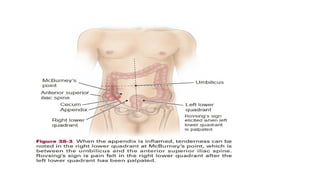
1. Initially peri-umbilical and dull, then shifts to the right lower quadrant
(McBurney’s point) as sharp, localized pain.
2.Nausea and Vomiting: Often follows the onset of pain. usually
accompanied by a low-grade fever and nausea and
sometimes by vomiting
3.Anorexia: (Loss of appetite )A hallmark symptom, with patients
often refusing to eat.
4.Fever: Low-grade initially; higher fevers suggest perforation.
5.Other Symptoms: Constipation, diarrhea, or bloating in some patients.
Assessment and Diagnostic Finding
• Diagnosis is based on results of a complete physical examination and on laboratory
findings and imaging studies
• Clinical Examination:
1.Tenderness: Localized to the right lower quadrant.
2.Rebound Tenderness: Pain upon release of pressure. (ie, production or
intensification of pain when pressure is released) may be present
• Special Signs:
• Rovsing’s Sign: Pain in the right lower quadrant when palpating the left lower
quadrant.
Cont…
• Psoas Sign: Pain with passive extension of the right hip.
• Obturator Sign: Pain with internal rotation of the right hip.
• Laboratory Tests:
• The complete blood cell count(CBC) demonstrates an
elevated white blood cell count with an elevation of the
neutrophils
Cont…
• Imaging:
• A pregnancy test may be performed for women of childbearing age
to rule out ectopic pregnancy and before x-rays are obtained
• Abdominal x-ray films, ultrasound studies, and CT scans may reveal a
right lower quadrant density or localized distention of the bowel
1.Ultrasound: First-line in children and pregnant women; shows a non-
compressible, thickened appendix.
2.CT Scan: Gold standard; confirms diagnosis with high sensitivity and specificity.
3.MRI: Occasionally used, especially during pregnancy.
Complications
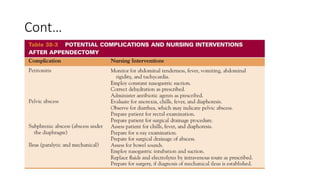
• The major complication of appendicitis is perforation of the appendix, which can
lead to peritonitis, abscess formation (collection of purulent material)
• Perforation generally occurs 24 hours after the onset of pain.
• portal pylephlebitis, which is septic thrombosis of the portal vein
caused by vegetative emboli that arise from septic intestines
• If the appendix has ruptured, the pain becomes more diffuse;
abdominal distention develops as a result of paralytic ileus, and the
patient’s condition worsens.
Medical Management
• Immediate surgery is typically indicated if appendicitis is diagnosed.
• To correct or prevent fluid and electrolyte imbalance, dehydration, and sepsis, antibiotics
and IV fluids are administered until surgery is performed.
• Appendectomy (ie, surgical removal of the appendix) is performed as soon as possible to
decrease the risk of perforation.
• When perforation of the appendix occurs, an abscess may form. If this occurs, the patient
may be initially treated with antibiotics, and the surgeon may place a drain in the abscess.
• After the abscess is drained and there is no further evidence of infection, an
appendectomy is then typically performed
• It may be performed using general or spinal anesthesia with a low abdominal incision
(laparotomy) or by laparoscopy.
• Both laparotomy and laparoscopy are safe and effective in the treatment of appendicitis
with perforation. However, recovery after laparoscopic surgery is generally quicker.
Consequently, laparoscopic appendectomy is more common
Nursing Management
• Goals include relieving pain, preventing fluid volume deficit,
reducing anxiety, eliminating infection due to the potential or
actual disruption of the GI tract, maintaining skin integrity, and
attaining optimal nutrition
• The nurse prepares the patient for surgery, which includes an IV
infusion to replace fluid loss and promote adequate renal function
and antibiotic therapy to prevent infection. If there is evidence or
likelihood of paralytic ileus, a nasogastric tube is inserted.
• An enema is not administered because it can lead to perforation
Cont….
• After surgery, the nurse places the patient in a high
Fowler’s position. This position reduces the tension on the
incision and abdominal organs, helping to reduce pain.
• An opioid, usually morphine sulfate, is prescribed to relieve
pain. When tolerated, oral fluids are administered. Any
patient who was dehydrated before surgery receives IV
fluids.
• Food is provided as desired and tolerated on the day of
surgery when normal bowel sounds are present
Cont….
• The patient may be discharged on the day of surgery if the
temperature is within normal limits, there is no undue discomfort
in the operative area, and the appendectomy was uncomplicated.
• Discharge teaching for the patient and family is imperative. The
nurse instructs the patient to make an appointment to have the
surgeon remove the sutures between the 5th and 7th days after
surgery.
• Incision care and activity guidelines are discussed; heavy lifting is
to be avoided postoperatively, although normal activity can
usually be resumed within 2 to 4 weeks.
Cont…
• If there is a possibility of peritonitis, a drain is left in place at the area
of the incision. Patients at risk for this complication may be kept in
the hospital for several days and are monitored carefully for signs of
intestinal obstruction or secondary hemorrhage.
• Secondary abscesses may form in the pelvis, under the diaphragm,
or in the liver, causing elevation of the temperature, pulse rate, and
white blood cell count.
• When the patient is ready for discharge, the patient and family are
taught to care for the incision and perform dressing changes and
irrigations as prescribed.
Preoperative Nursing Care for a Patient with
Appendicitis
• 1. Assessment
• Vital Signs: Monitor temperature, pulse, respiration, and blood pressure for signs of
infection or sepsis.
• Pain Assessment: Evaluate the location, intensity, and nature of pain (typically
periumbilical shifting to right lower quadrant at McBurney's point).
• Gastrointestinal Symptoms: Assess for nausea, vomiting, anorexia, bloating, and changes
in bowel habits.
• Abdominal Examination: Check for guarding, rebound tenderness, and rigidity.
• Hydration Status: Monitor for dehydration signs due to vomiting and reduced oral intake.
• Laboratory Investigations: Review CBC (leukocytosis), CRP, electrolytes, and urinalysis.
• Diagnostic Tests: Prepare the patient for an abdominal ultrasound or CT scan.
Cont….
• 2. Immediate Nursing Interventions
• NPO (Nothing by Mouth): Prevent oral intake to reduce the risk of aspiration
and complications during surgery.
• IV Fluid Therapy: Maintain hydration with IV fluids (e.g., normal saline or
Ringer’s lactate).
• Pain Management: Administer analgesics (as prescribed, avoiding strong opioids
that may mask symptoms).
• Antibiotic Therapy: Administer prophylactic antibiotics as ordered to reduce
infection risk.
• Monitor for Complications: Watch for signs of perforation (sudden relief of pain
followed by severe worsening, fever, tachycardia).
Cont..
• Patient Preparation for Surgery
• Explain the Procedure: Educate the patient about the surgical process
(laparoscopic vs. open appendectomy).
• Consent: Ensure informed consent is signed.
• Preoperative Hygiene: Assist with hygiene, including perineal care and
changing into a surgical gown.
• Bowel Preparation: Usually not required unless indicated by the surgeon.
• Remove Accessories: Ensure dentures, jewelry, and prosthetics are
removed.
Cont….
• Emotional Support
• Address Anxiety: Provide reassurance and answer questions about
the surgery.
• Encourage Family Support: Allow communication with loved ones for
emotional well-being.
Postoperative Nursing Care for a Patient with
Appendicitis
• After an appendectomy, postoperative care focuses on pain
management, prevention of complications, wound care, early
mobilization, and patient education. The approach may differ based
on whether the procedure was laparoscopic or open appendectomy
and whether there were complications like perforation or peritonitis.
Cont…
• 1. Immediate Postoperative Care (First 24 Hours)
• A. Assessment and Monitoring
• ✅ Vital Signs:
• Monitor blood pressure, pulse, temperature, respiratory rate, and oxygen saturation
every 15 minutes initially, then every hour until stable.
• Watch for hypotension, tachycardia, or fever, which could indicate bleeding,
infection, or shock.
• ✅ Pain Management:
• Assess pain intensity, location, and characteristics regularly.
• Administer prescribed analgesics (e.g., IV paracetamol, NSAIDs, or opioids if needed).
• Encourage non-pharmacological pain relief (e.g., deep breathing, positioning).
Cont…
• ✅ Respiratory Function:
• Encourage deep breathing and coughing exercises (to prevent atelectasis or
pneumonia).
• Use an incentive spirometer if necessary.
• Monitor for dyspnea, tachypnea, or decreased oxygen saturation, which could
indicate complications.
• ✅ Fluid and Electrolyte Balance:
• Maintain IV fluids as prescribed until oral intake is tolerated.
• Monitor urine output (should be >30 mL/hr).
• Watch for signs of dehydration or electrolyte imbalances (especially hypokalemia
from vomiting).
Cont…
• ✅ Gastrointestinal Function:
• Assess for return of bowel sounds and presence of flatus (indicating resolution of ileus).
• Monitor for nausea, vomiting, or abdominal distension, which may indicate paralytic
ileus.
• ✅ Surgical Site and Drain (if present):
• Inspect wound dressing for bleeding, redness, swelling, or discharge.
• If a drain is placed, monitor drainage amount, color, and consistency.
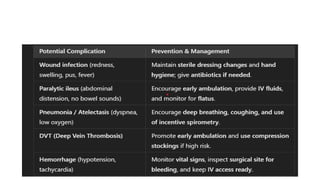
• ✅ Preventing Venous Thromboembolism (VTE):
• Encourage early ambulation (helps prevent DVT and promotes bowel function).
• Use compression stockings or low-dose anticoagulants if the patient is at risk for
thrombosis.
Cont..
• 2. Ongoing Postoperative Care (First Few Days)
• A. Pain and Comfort Management
• Transition from IV to oral pain medications as tolerated.
• Encourage mobility to prevent pain from immobility.
• Provide emotional support to alleviate anxiety.
• B. Nutrition and Hydration
• Start oral fluids once bowel sounds return.
• Gradually progress to a soft diet as tolerated.
• Avoid carbonated drinks and heavy meals initially to prevent bloating.
Cont…
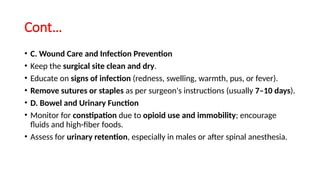
• C. Wound Care and Infection Prevention
• Keep the surgical site clean and dry.
• Educate on signs of infection (redness, swelling, warmth, pus, or fever).
• Remove sutures or staples as per surgeon's instructions (usually 7–10 days).
• D. Bowel and Urinary Function
• Monitor for constipation due to opioid use and immobility; encourage
fluids and high-fiber foods.
• Assess for urinary retention, especially in males or after spinal anesthesia.
Cont…
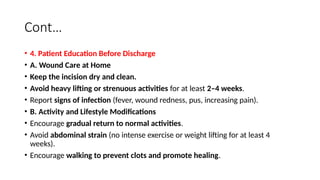
• 4. Patient Education Before Discharge
• A. Wound Care at Home
• Keep the incision dry and clean.
• Avoid heavy lifting or strenuous activities for at least 2–4 weeks.
• Report signs of infection (fever, wound redness, pus, increasing pain).
• B. Activity and Lifestyle Modifications
• Encourage gradual return to normal activities.
• Avoid abdominal strain (no intense exercise or weight lifting for at least 4
weeks).
• Encourage walking to prevent clots and promote healing.
Cont…
• C. Diet and Bowel Management
• Stay hydrated and eat fiber-rich foods to prevent constipation.
• Avoid fatty, greasy, or spicy foods for a few days.
• Monitor for normal bowel movements and report persistent constipation or diarrhea.
• D. Follow-Up and Warning Signs
• Return for follow-up as scheduled (usually within 1–2 weeks).
• Seek medical attention if experiencing:
• Severe abdominal pain
• High fever (>38.5°C)
• Persistent nausea and vomiting
• Redness, swelling, or pus from incision site
Cont…
Nursing Concerns for a Postoperative
Appendectomy Patient
1. Pain Management
• 🔹 Concerns:
• Acute pain at the incision site
• Anxiety-related pain perception
• 🔹 Nursing Interventions:
✅ Assess pain level using a pain scale (0–10).
✅ Administer prescribed analgesics (NSAIDs, opioids if necessary, IV
paracetamol).
✅ Encourage positioning adjustments (e.g., semi-Fowler’s position for
comfort).
✅ Use non-pharmacologic methods (deep breathing, relaxation techniques).
cont,…
• Risk of Infection
• 🔹 Concerns:
• Wound infection (redness, swelling, pus, fever)
• Peritonitis (if perforated appendix before surgery)
• Sepsis (in case of systemic infection)
• 🔹 Nursing Interventions:
✅ Monitor for signs of infection (fever, increased WBC count, wound drainage).
✅ Perform sterile dressing changes and keep incision clean and dry.
✅ Administer prescribed antibiotics (especially for perforated appendix cases).
✅ Educate patient on signs of infection and proper wound care.
Cont…
• 3. Impaired Gastrointestinal Function
• 🔹 Concerns:
• Paralytic ileus (bowel inactivity after surgery)
• Nausea and vomiting due to anesthesia or pain meds
• Constipation from reduced mobility and opioid use
• 🔹 Nursing Interventions:
✅ Assess for bowel sounds and return of flatus before resuming oral intake.
✅ Encourage early ambulation to stimulate bowel function.
✅ Administer antiemetics if nausea persists.
✅ Increase fluid intake and provide a high-fiber diet once tolerated.
Cont….
• Impaired Gastrointestinal Function
• 🔹 Concerns:
• Paralytic ileus (bowel inactivity after surgery)
• Nausea and vomiting due to anesthesia or pain meds
• Constipation from reduced mobility and opioid use
• 🔹 Nursing Interventions:
✅ Assess for bowel sounds and return of flatus before resuming oral intake.
✅ Encourage early ambulation to stimulate bowel function.
✅ Administer antiemetics if nausea persists.
✅ Increase fluid intake and provide a high-fiber diet once tolerated.
Cont…
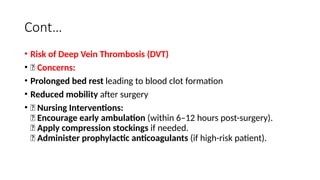
• Risk of Deep Vein Thrombosis (DVT)
• 🔹 Concerns:
• Prolonged bed rest leading to blood clot formation
• Reduced mobility after surgery
• 🔹 Nursing Interventions:
✅ Encourage early ambulation (within 6–12 hours post-surgery).
✅ Apply compression stockings if needed.
✅ Administer prophylactic anticoagulants (if high-risk patient).
Cont…
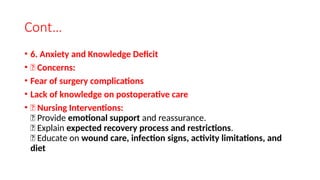
• 6. Anxiety and Knowledge Deficit
• 🔹 Concerns:
• Fear of surgery complications
• Lack of knowledge on postoperative care
• 🔹 Nursing Interventions:
✅ Provide emotional support and reassurance.
✅ Explain expected recovery process and restrictions.
✅ Educate on wound care, infection signs, activity limitations, and
diet
Cont..
• Risk of Delayed Wound Healing
• 🔹 Concerns:
• Obesity, diabetes, poor nutrition affecting healing
• Wound dehiscence (opening of surgical wound)
• 🔹 Nursing Interventions:
✅ Monitor wound closely for any delayed healing signs.
✅ Encourage protein-rich diet for tissue repair.
✅ Avoid excessive strain on the abdomen (no heavy lifting for 4–6
weeks

APPENDICITIS Nursing managment[Autosaved].pptx

  • 1.
  • 2.
    Appendix • The appendixis a small, fingerlike appendage about 10 cm (4 in) long that is attached to the cecum just below the ileocecal valve. • The appendix fills with food and empties regularly into the cecum. Because it empties inefficiently and its lumen is small, the appendix is prone to obstruction and is particularly vulnerable to infection (ie, appendicitis). • Appendicitis, the most common cause of acute surgical abdomen , is the most common reason for emergency abdominal surgery. • Although it can occur at any age, it more commonly occurs between the ages of 10 and 30 years
  • 3.
  • 4.
    Definition. • Appendicitis isan inflammation of the appendix, a small, finger- shaped pouch attached to the cecum in the lower right abdomen. It is a medical emergency that typically requires surgical removal of the appendix (appendectomy).
  • 5.
    Pathophysiology • The appendixbecomes inflamed and edematous as a result of becoming kinked or occluded by a fecalith (ie, hardened mass of stool), tumor, or foreign body. • The inflammatory process increases intraluminal pressure, initiating a progressively severe, generalized, or periumbilical pain that becomes localized to the right lower quadrant of the abdomen within a few hours. Eventually, the inflamed appendix fill with pus
  • 6.
    Cont… • Appendicitis typicallyoccurs due to obstruction of the appendix lumen, which can be caused by: 1.Fecaliths: Hardened fecal matter blocking the appendix. 2.Lymphoid Hyperplasia: Often secondary to infection, particularly in younger individuals. 3.Foreign Bodies: Rare but possible causes of obstruction. 4.Tumors: Less common but possible in older patients.
  • 7.
    Cont.. • Obstruction leadsto: 1.Increased Intraluminal Pressure: Causing ischemia. 2.Bacterial Overgrowth: Leading to inflammation and pus formation. 3.Potential Perforation: Resulting in peritonitis or localized abscess.
  • 8.
    Clinical Manifestations 1.Abdominal Pain: 1.Initially peri-umbilical and dull, then shifts to the right lower quadrant (McBurney’s point) as sharp, localized pain. 2.Nausea and Vomiting: Often follows the onset of pain. usually accompanied by a low-grade fever and nausea and sometimes by vomiting 3.Anorexia: (Loss of appetite )A hallmark symptom, with patients often refusing to eat. 4.Fever: Low-grade initially; higher fevers suggest perforation. 5.Other Symptoms: Constipation, diarrhea, or bloating in some patients.
  • 9.
    Assessment and DiagnosticFinding • Diagnosis is based on results of a complete physical examination and on laboratory findings and imaging studies • Clinical Examination: 1.Tenderness: Localized to the right lower quadrant. 2.Rebound Tenderness: Pain upon release of pressure. (ie, production or intensification of pain when pressure is released) may be present • Special Signs: • Rovsing’s Sign: Pain in the right lower quadrant when palpating the left lower quadrant.
  • 10.
    Cont… • Psoas Sign:Pain with passive extension of the right hip. • Obturator Sign: Pain with internal rotation of the right hip. • Laboratory Tests: • The complete blood cell count(CBC) demonstrates an elevated white blood cell count with an elevation of the neutrophils
  • 11.
    Cont… • Imaging: • Apregnancy test may be performed for women of childbearing age to rule out ectopic pregnancy and before x-rays are obtained • Abdominal x-ray films, ultrasound studies, and CT scans may reveal a right lower quadrant density or localized distention of the bowel 1.Ultrasound: First-line in children and pregnant women; shows a non- compressible, thickened appendix. 2.CT Scan: Gold standard; confirms diagnosis with high sensitivity and specificity. 3.MRI: Occasionally used, especially during pregnancy.
  • 12.
    Complications • The majorcomplication of appendicitis is perforation of the appendix, which can lead to peritonitis, abscess formation (collection of purulent material) • Perforation generally occurs 24 hours after the onset of pain. • portal pylephlebitis, which is septic thrombosis of the portal vein caused by vegetative emboli that arise from septic intestines • If the appendix has ruptured, the pain becomes more diffuse; abdominal distention develops as a result of paralytic ileus, and the patient’s condition worsens.
  • 13.
    Medical Management • Immediatesurgery is typically indicated if appendicitis is diagnosed. • To correct or prevent fluid and electrolyte imbalance, dehydration, and sepsis, antibiotics and IV fluids are administered until surgery is performed. • Appendectomy (ie, surgical removal of the appendix) is performed as soon as possible to decrease the risk of perforation. • When perforation of the appendix occurs, an abscess may form. If this occurs, the patient may be initially treated with antibiotics, and the surgeon may place a drain in the abscess. • After the abscess is drained and there is no further evidence of infection, an appendectomy is then typically performed • It may be performed using general or spinal anesthesia with a low abdominal incision (laparotomy) or by laparoscopy. • Both laparotomy and laparoscopy are safe and effective in the treatment of appendicitis with perforation. However, recovery after laparoscopic surgery is generally quicker. Consequently, laparoscopic appendectomy is more common
  • 14.
    Nursing Management • Goalsinclude relieving pain, preventing fluid volume deficit, reducing anxiety, eliminating infection due to the potential or actual disruption of the GI tract, maintaining skin integrity, and attaining optimal nutrition • The nurse prepares the patient for surgery, which includes an IV infusion to replace fluid loss and promote adequate renal function and antibiotic therapy to prevent infection. If there is evidence or likelihood of paralytic ileus, a nasogastric tube is inserted. • An enema is not administered because it can lead to perforation
  • 15.
    Cont…. • After surgery,the nurse places the patient in a high Fowler’s position. This position reduces the tension on the incision and abdominal organs, helping to reduce pain. • An opioid, usually morphine sulfate, is prescribed to relieve pain. When tolerated, oral fluids are administered. Any patient who was dehydrated before surgery receives IV fluids. • Food is provided as desired and tolerated on the day of surgery when normal bowel sounds are present
  • 16.
    Cont…. • The patientmay be discharged on the day of surgery if the temperature is within normal limits, there is no undue discomfort in the operative area, and the appendectomy was uncomplicated. • Discharge teaching for the patient and family is imperative. The nurse instructs the patient to make an appointment to have the surgeon remove the sutures between the 5th and 7th days after surgery. • Incision care and activity guidelines are discussed; heavy lifting is to be avoided postoperatively, although normal activity can usually be resumed within 2 to 4 weeks.
  • 17.
    Cont… • If thereis a possibility of peritonitis, a drain is left in place at the area of the incision. Patients at risk for this complication may be kept in the hospital for several days and are monitored carefully for signs of intestinal obstruction or secondary hemorrhage. • Secondary abscesses may form in the pelvis, under the diaphragm, or in the liver, causing elevation of the temperature, pulse rate, and white blood cell count. • When the patient is ready for discharge, the patient and family are taught to care for the incision and perform dressing changes and irrigations as prescribed.
  • 18.
    Preoperative Nursing Carefor a Patient with Appendicitis • 1. Assessment • Vital Signs: Monitor temperature, pulse, respiration, and blood pressure for signs of infection or sepsis. • Pain Assessment: Evaluate the location, intensity, and nature of pain (typically periumbilical shifting to right lower quadrant at McBurney's point). • Gastrointestinal Symptoms: Assess for nausea, vomiting, anorexia, bloating, and changes in bowel habits. • Abdominal Examination: Check for guarding, rebound tenderness, and rigidity. • Hydration Status: Monitor for dehydration signs due to vomiting and reduced oral intake. • Laboratory Investigations: Review CBC (leukocytosis), CRP, electrolytes, and urinalysis. • Diagnostic Tests: Prepare the patient for an abdominal ultrasound or CT scan.
  • 19.
    Cont…. • 2. ImmediateNursing Interventions • NPO (Nothing by Mouth): Prevent oral intake to reduce the risk of aspiration and complications during surgery. • IV Fluid Therapy: Maintain hydration with IV fluids (e.g., normal saline or Ringer’s lactate). • Pain Management: Administer analgesics (as prescribed, avoiding strong opioids that may mask symptoms). • Antibiotic Therapy: Administer prophylactic antibiotics as ordered to reduce infection risk. • Monitor for Complications: Watch for signs of perforation (sudden relief of pain followed by severe worsening, fever, tachycardia).
  • 20.
    Cont.. • Patient Preparationfor Surgery • Explain the Procedure: Educate the patient about the surgical process (laparoscopic vs. open appendectomy). • Consent: Ensure informed consent is signed. • Preoperative Hygiene: Assist with hygiene, including perineal care and changing into a surgical gown. • Bowel Preparation: Usually not required unless indicated by the surgeon. • Remove Accessories: Ensure dentures, jewelry, and prosthetics are removed.
  • 21.
    Cont…. • Emotional Support •Address Anxiety: Provide reassurance and answer questions about the surgery. • Encourage Family Support: Allow communication with loved ones for emotional well-being.
  • 22.
    Postoperative Nursing Carefor a Patient with Appendicitis • After an appendectomy, postoperative care focuses on pain management, prevention of complications, wound care, early mobilization, and patient education. The approach may differ based on whether the procedure was laparoscopic or open appendectomy and whether there were complications like perforation or peritonitis.
  • 23.
    Cont… • 1. ImmediatePostoperative Care (First 24 Hours) • A. Assessment and Monitoring • ✅ Vital Signs: • Monitor blood pressure, pulse, temperature, respiratory rate, and oxygen saturation every 15 minutes initially, then every hour until stable. • Watch for hypotension, tachycardia, or fever, which could indicate bleeding, infection, or shock. • ✅ Pain Management: • Assess pain intensity, location, and characteristics regularly. • Administer prescribed analgesics (e.g., IV paracetamol, NSAIDs, or opioids if needed). • Encourage non-pharmacological pain relief (e.g., deep breathing, positioning).
  • 24.
    Cont… • ✅ RespiratoryFunction: • Encourage deep breathing and coughing exercises (to prevent atelectasis or pneumonia). • Use an incentive spirometer if necessary. • Monitor for dyspnea, tachypnea, or decreased oxygen saturation, which could indicate complications. • ✅ Fluid and Electrolyte Balance: • Maintain IV fluids as prescribed until oral intake is tolerated. • Monitor urine output (should be >30 mL/hr). • Watch for signs of dehydration or electrolyte imbalances (especially hypokalemia from vomiting).
  • 25.
    Cont… • ✅ GastrointestinalFunction: • Assess for return of bowel sounds and presence of flatus (indicating resolution of ileus). • Monitor for nausea, vomiting, or abdominal distension, which may indicate paralytic ileus. • ✅ Surgical Site and Drain (if present): • Inspect wound dressing for bleeding, redness, swelling, or discharge. • If a drain is placed, monitor drainage amount, color, and consistency. • ✅ Preventing Venous Thromboembolism (VTE): • Encourage early ambulation (helps prevent DVT and promotes bowel function). • Use compression stockings or low-dose anticoagulants if the patient is at risk for thrombosis.
  • 26.
    Cont.. • 2. OngoingPostoperative Care (First Few Days) • A. Pain and Comfort Management • Transition from IV to oral pain medications as tolerated. • Encourage mobility to prevent pain from immobility. • Provide emotional support to alleviate anxiety. • B. Nutrition and Hydration • Start oral fluids once bowel sounds return. • Gradually progress to a soft diet as tolerated. • Avoid carbonated drinks and heavy meals initially to prevent bloating.
  • 27.
    Cont… • C. WoundCare and Infection Prevention • Keep the surgical site clean and dry. • Educate on signs of infection (redness, swelling, warmth, pus, or fever). • Remove sutures or staples as per surgeon's instructions (usually 7–10 days). • D. Bowel and Urinary Function • Monitor for constipation due to opioid use and immobility; encourage fluids and high-fiber foods. • Assess for urinary retention, especially in males or after spinal anesthesia.
  • 28.
    Cont… • 4. PatientEducation Before Discharge • A. Wound Care at Home • Keep the incision dry and clean. • Avoid heavy lifting or strenuous activities for at least 2–4 weeks. • Report signs of infection (fever, wound redness, pus, increasing pain). • B. Activity and Lifestyle Modifications • Encourage gradual return to normal activities. • Avoid abdominal strain (no intense exercise or weight lifting for at least 4 weeks). • Encourage walking to prevent clots and promote healing.
  • 29.
    Cont… • C. Dietand Bowel Management • Stay hydrated and eat fiber-rich foods to prevent constipation. • Avoid fatty, greasy, or spicy foods for a few days. • Monitor for normal bowel movements and report persistent constipation or diarrhea. • D. Follow-Up and Warning Signs • Return for follow-up as scheduled (usually within 1–2 weeks). • Seek medical attention if experiencing: • Severe abdominal pain • High fever (>38.5°C) • Persistent nausea and vomiting • Redness, swelling, or pus from incision site
  • 31.
  • 32.
    Nursing Concerns fora Postoperative Appendectomy Patient 1. Pain Management • 🔹 Concerns: • Acute pain at the incision site • Anxiety-related pain perception • 🔹 Nursing Interventions: ✅ Assess pain level using a pain scale (0–10). ✅ Administer prescribed analgesics (NSAIDs, opioids if necessary, IV paracetamol). ✅ Encourage positioning adjustments (e.g., semi-Fowler’s position for comfort). ✅ Use non-pharmacologic methods (deep breathing, relaxation techniques).
  • 33.
    cont,… • Risk ofInfection • 🔹 Concerns: • Wound infection (redness, swelling, pus, fever) • Peritonitis (if perforated appendix before surgery) • Sepsis (in case of systemic infection) • 🔹 Nursing Interventions: ✅ Monitor for signs of infection (fever, increased WBC count, wound drainage). ✅ Perform sterile dressing changes and keep incision clean and dry. ✅ Administer prescribed antibiotics (especially for perforated appendix cases). ✅ Educate patient on signs of infection and proper wound care.
  • 34.
    Cont… • 3. ImpairedGastrointestinal Function • 🔹 Concerns: • Paralytic ileus (bowel inactivity after surgery) • Nausea and vomiting due to anesthesia or pain meds • Constipation from reduced mobility and opioid use • 🔹 Nursing Interventions: ✅ Assess for bowel sounds and return of flatus before resuming oral intake. ✅ Encourage early ambulation to stimulate bowel function. ✅ Administer antiemetics if nausea persists. ✅ Increase fluid intake and provide a high-fiber diet once tolerated.
  • 35.
    Cont…. • Impaired GastrointestinalFunction • 🔹 Concerns: • Paralytic ileus (bowel inactivity after surgery) • Nausea and vomiting due to anesthesia or pain meds • Constipation from reduced mobility and opioid use • 🔹 Nursing Interventions: ✅ Assess for bowel sounds and return of flatus before resuming oral intake. ✅ Encourage early ambulation to stimulate bowel function. ✅ Administer antiemetics if nausea persists. ✅ Increase fluid intake and provide a high-fiber diet once tolerated.
  • 36.
    Cont… • Risk ofDeep Vein Thrombosis (DVT) • 🔹 Concerns: • Prolonged bed rest leading to blood clot formation • Reduced mobility after surgery • 🔹 Nursing Interventions: ✅ Encourage early ambulation (within 6–12 hours post-surgery). ✅ Apply compression stockings if needed. ✅ Administer prophylactic anticoagulants (if high-risk patient).
  • 37.
    Cont… • 6. Anxietyand Knowledge Deficit • 🔹 Concerns: • Fear of surgery complications • Lack of knowledge on postoperative care • 🔹 Nursing Interventions: ✅ Provide emotional support and reassurance. ✅ Explain expected recovery process and restrictions. ✅ Educate on wound care, infection signs, activity limitations, and diet
  • 38.
    Cont.. • Risk ofDelayed Wound Healing • 🔹 Concerns: • Obesity, diabetes, poor nutrition affecting healing • Wound dehiscence (opening of surgical wound) • 🔹 Nursing Interventions: ✅ Monitor wound closely for any delayed healing signs. ✅ Encourage protein-rich diet for tissue repair. ✅ Avoid excessive strain on the abdomen (no heavy lifting for 4–6 weeks