IMPROVING PROJECT
HANDOVER
RESEARCH TOPIC
How can we hand
projects over better?
A project is a delivery device for benefits
Handover is the start not the end
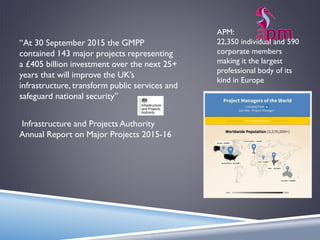
“At 30 September 2015 the GMPP
contained 143 major projects representing
a £405 billion investment over the next 25+
years that will improve the UK’s
infrastructure, transform public services and
safeguard national security”
Infrastructure and Projects Authority
Annual Report on Major Projects 2015-16
APM:
22,350 individual and 590
corporate members
making it the largest
professional body of its
kind in Europe
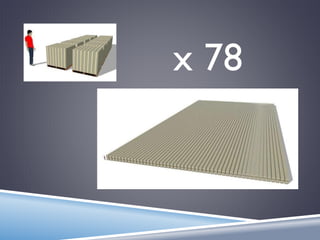
“Worldwide, infrastructure spending will grow from $4 trillion per year in
2012 to more than $9 trillion per year by 2025. Overall, close to $78
trillion is expected to be spent globally between 2014 and 2025.”
Capital project and infrastructure spending Outlook to 2025 - PWC &
Oxford Economics
x 78
Infrastructure projects alone
equate to 12% of GLOBAL GDP
A GOOD HANDOVER
The client gets what they pay for, when they were expecting to get it, it
does what you all agreed it would and they know what to do with it once
they’ve got it
A GOOD HANDOVER
 You as PM have done your job well – reputation / market value /
personal satisfaction
 You walk away feeling good leaving happy clients
 You get more work – you sold a good car!
After 2 months, PMs are rarely judged on how well they managed the
project, they are judged on whether the benefits the project was funded to
deliver in the first place actually transpired.
As a practitioner, are you prepared to leave your professional reputation in
the hands of people improperly briefed?
APPROACH
INTERVIEWS:
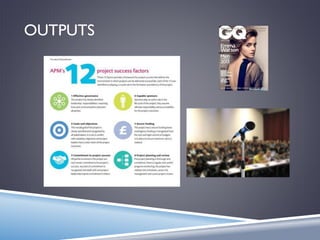
OUTPUTS
WHAT IS HANDOVER?
“The point in the life cycle where
deliverables are handed over to the sponsor
and users”. APM
“The project should have a clear end with a
correct handover of information and
responsibility.” PRINCE2
MAYBE IT’S…
 practical completion.
 the end of the defects and liability period
 when the on site support from the project team leaves site
 no more snags noted on the snagging list and all are signed off as complete
 once the last of three post occupancy evaluations is completed
 when no members of the project team are involved on a scheme anymore
 financial close
 when the benefits established at the outset have been delivered (which
could be when the project deliverables have completed their lifespan and
been decommissioned)
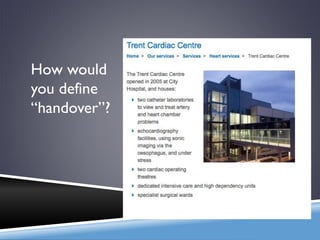
How would
you define
“handover”?
IT’S NOT A DATE
IT’S A PROCESS
HANDOVER IS ATRANSITION
of…
 Ownership
 Management
 Responsibility
 Knowledge
 Continuity
 Benefit realisation
 Operational responsibility
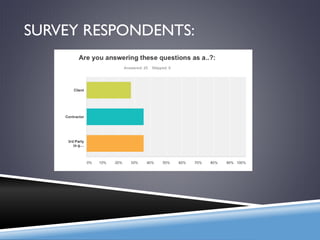
SURVEY RESPONDENTS:
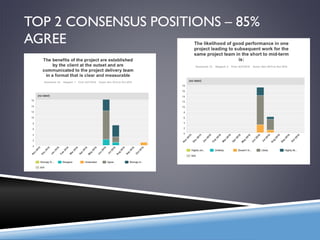
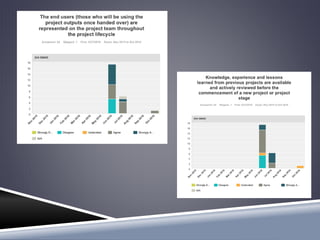
TOP 2 CONSENSUS POSITIONS – 85%
AGREE
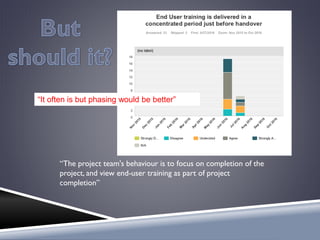
“It often is but phasing would be better”
“The project team's behaviour is to focus on completion of the
project, and view end-user training as part of project
completion”
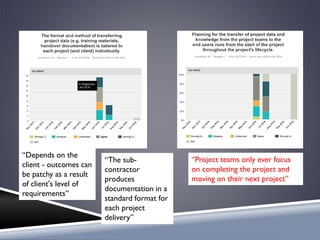
“Depends on the
client - outcomes can
be patchy as a result
of client's level of
requirements”
“The sub-
contractor
produces
documentation in a
standard format for
each project
delivery”
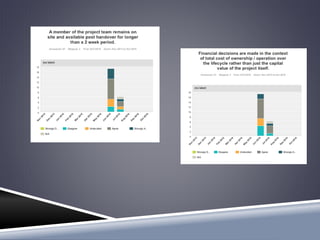
“Project teams only ever focus
on completing the project and
moving on their next project”
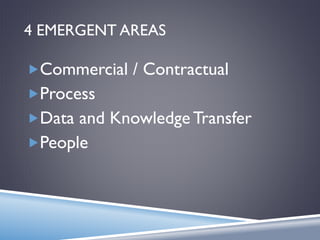
4 EMERGENT AREAS
Commercial / Contractual
Process
Data and Knowledge Transfer
People
TOP 3 FROM EACH AREA – COMMERCIAL /
CONTRACTUAL
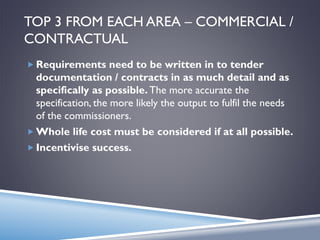
 Requirements need to be written in to tender
documentation / contracts in as much detail and as
specifically as possible. The more accurate the
specification, the more likely the output to fulfil the needs
of the commissioners.
 Whole life cost must be considered if at all possible.
 Incentivise success.
TOP 3 FROM EACH AREA – PROCESS
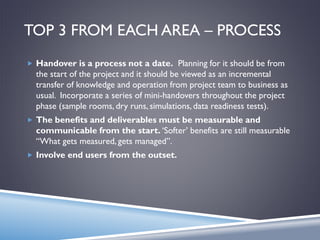
 Handover is a process not a date. Planning for it should be from
the start of the project and it should be viewed as an incremental
transfer of knowledge and operation from project team to business as
usual. Incorporate a series of mini-handovers throughout the project
phase (sample rooms, dry runs, simulations, data readiness tests).
 The benefits and deliverables must be measurable and
communicable from the start. ‘Softer’ benefits are still measurable
“What gets measured, gets managed”.
 Involve end users from the outset.
TOP 3 FROM EACH AREA – DATA &
KNOWLEDGE TRANSFER
 Documentation must be written for the end users.
 Collate lessons learned as the project progresses. It
provides more meaningful data for future projects, it can be
tied to stage gateways or key deliverables. It also provides a
form of decision log
 Agree the information requirements at the outset.
TOP 3 FROM EACH AREA – PEOPLE
 Get good people on your project and keep them for as long as
you are able. Fight for the project team you want and fight to keep
them.
 Definition of stakeholders should be carried out throughout
and in detail. Don’t assume a single end user representative is
sufficient or will yield the best outcomes.
 The Client role is pivotal. Not necessarily in a ‘customer is always
right’ way although that is a factor. In the transcripts of the interviews
the word that was most frequently repeated was ‘client’.
How do you define “the client” and
what do you think their role would be?
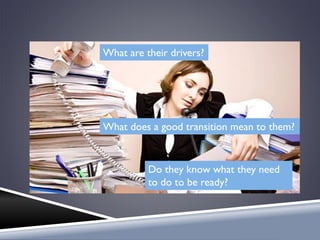
What are their drivers?
What does a good transition mean to them?
Do they know what they need
to do to be ready?
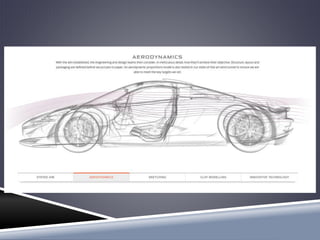
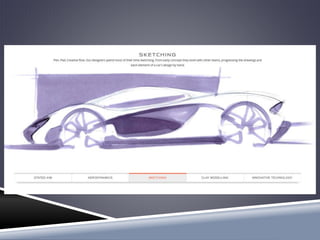
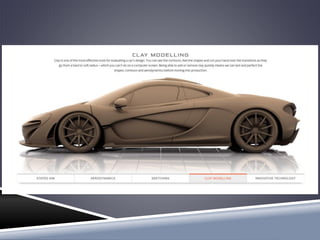
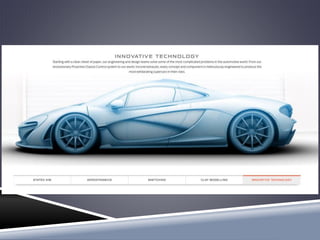
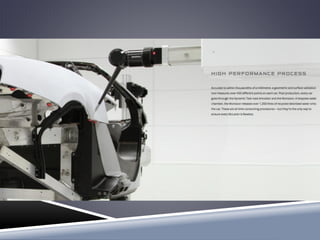
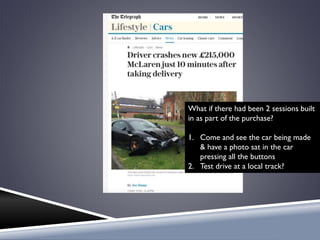
What if there had been 2 sessions built
in as part of the purchase?
1. Come and see the car being made
& have a photo sat in the car
pressing all the buttons
2. Test drive at a local track?
3 THINGS TO CHECK TOMORROW
What changes in practice are required by BAU
to deliver them?
How can the project team better prepare
the end users in advance?
What benefits are your project(s) enabling?
THANKYOU
owenanthony@icloud.com
www.owenanthonyprojects.co.uk
Tel: 07850741543

APM Improving project handover, 6 April 2017

  • 1.
  • 2.
    RESEARCH TOPIC How canwe hand projects over better?
  • 13.
    A project isa delivery device for benefits Handover is the start not the end
  • 15.
    “At 30 September2015 the GMPP contained 143 major projects representing a £405 billion investment over the next 25+ years that will improve the UK’s infrastructure, transform public services and safeguard national security” Infrastructure and Projects Authority Annual Report on Major Projects 2015-16 APM: 22,350 individual and 590 corporate members making it the largest professional body of its kind in Europe
  • 16.
    “Worldwide, infrastructure spendingwill grow from $4 trillion per year in 2012 to more than $9 trillion per year by 2025. Overall, close to $78 trillion is expected to be spent globally between 2014 and 2025.” Capital project and infrastructure spending Outlook to 2025 - PWC & Oxford Economics
  • 17.
  • 18.
  • 19.
    A GOOD HANDOVER Theclient gets what they pay for, when they were expecting to get it, it does what you all agreed it would and they know what to do with it once they’ve got it
  • 20.
    A GOOD HANDOVER You as PM have done your job well – reputation / market value / personal satisfaction  You walk away feeling good leaving happy clients  You get more work – you sold a good car!
  • 21.
    After 2 months,PMs are rarely judged on how well they managed the project, they are judged on whether the benefits the project was funded to deliver in the first place actually transpired. As a practitioner, are you prepared to leave your professional reputation in the hands of people improperly briefed?
  • 23.
  • 24.
  • 25.
  • 26.
    WHAT IS HANDOVER? “Thepoint in the life cycle where deliverables are handed over to the sponsor and users”. APM “The project should have a clear end with a correct handover of information and responsibility.” PRINCE2
  • 27.
    MAYBE IT’S…  practicalcompletion.  the end of the defects and liability period  when the on site support from the project team leaves site  no more snags noted on the snagging list and all are signed off as complete  once the last of three post occupancy evaluations is completed  when no members of the project team are involved on a scheme anymore  financial close  when the benefits established at the outset have been delivered (which could be when the project deliverables have completed their lifespan and been decommissioned)
  • 28.
  • 29.
    IT’S NOT ADATE IT’S A PROCESS
  • 30.
    HANDOVER IS ATRANSITION of… Ownership  Management  Responsibility  Knowledge  Continuity  Benefit realisation  Operational responsibility
  • 31.
  • 32.
    TOP 2 CONSENSUSPOSITIONS – 85% AGREE
  • 35.
    “It often isbut phasing would be better” “The project team's behaviour is to focus on completion of the project, and view end-user training as part of project completion”
  • 36.
    “Depends on the client- outcomes can be patchy as a result of client's level of requirements” “The sub- contractor produces documentation in a standard format for each project delivery” “Project teams only ever focus on completing the project and moving on their next project”
  • 37.
    4 EMERGENT AREAS Commercial/ Contractual Process Data and Knowledge Transfer People
  • 38.
    TOP 3 FROMEACH AREA – COMMERCIAL / CONTRACTUAL  Requirements need to be written in to tender documentation / contracts in as much detail and as specifically as possible. The more accurate the specification, the more likely the output to fulfil the needs of the commissioners.  Whole life cost must be considered if at all possible.  Incentivise success.
  • 39.
    TOP 3 FROMEACH AREA – PROCESS  Handover is a process not a date. Planning for it should be from the start of the project and it should be viewed as an incremental transfer of knowledge and operation from project team to business as usual. Incorporate a series of mini-handovers throughout the project phase (sample rooms, dry runs, simulations, data readiness tests).  The benefits and deliverables must be measurable and communicable from the start. ‘Softer’ benefits are still measurable “What gets measured, gets managed”.  Involve end users from the outset.
  • 40.
    TOP 3 FROMEACH AREA – DATA & KNOWLEDGE TRANSFER  Documentation must be written for the end users.  Collate lessons learned as the project progresses. It provides more meaningful data for future projects, it can be tied to stage gateways or key deliverables. It also provides a form of decision log  Agree the information requirements at the outset.
  • 41.
    TOP 3 FROMEACH AREA – PEOPLE  Get good people on your project and keep them for as long as you are able. Fight for the project team you want and fight to keep them.  Definition of stakeholders should be carried out throughout and in detail. Don’t assume a single end user representative is sufficient or will yield the best outcomes.  The Client role is pivotal. Not necessarily in a ‘customer is always right’ way although that is a factor. In the transcripts of the interviews the word that was most frequently repeated was ‘client’.
  • 42.
    How do youdefine “the client” and what do you think their role would be?
  • 46.
    What are theirdrivers? What does a good transition mean to them? Do they know what they need to do to be ready?
  • 48.
    What if therehad been 2 sessions built in as part of the purchase? 1. Come and see the car being made & have a photo sat in the car pressing all the buttons 2. Test drive at a local track?
  • 49.
    3 THINGS TOCHECK TOMORROW What changes in practice are required by BAU to deliver them? How can the project team better prepare the end users in advance? What benefits are your project(s) enabling?
  • 50.