Authorization is on the rise.


What if there was an API for it?
@dschenkelman
Building software in 2021…
Security
Privacy
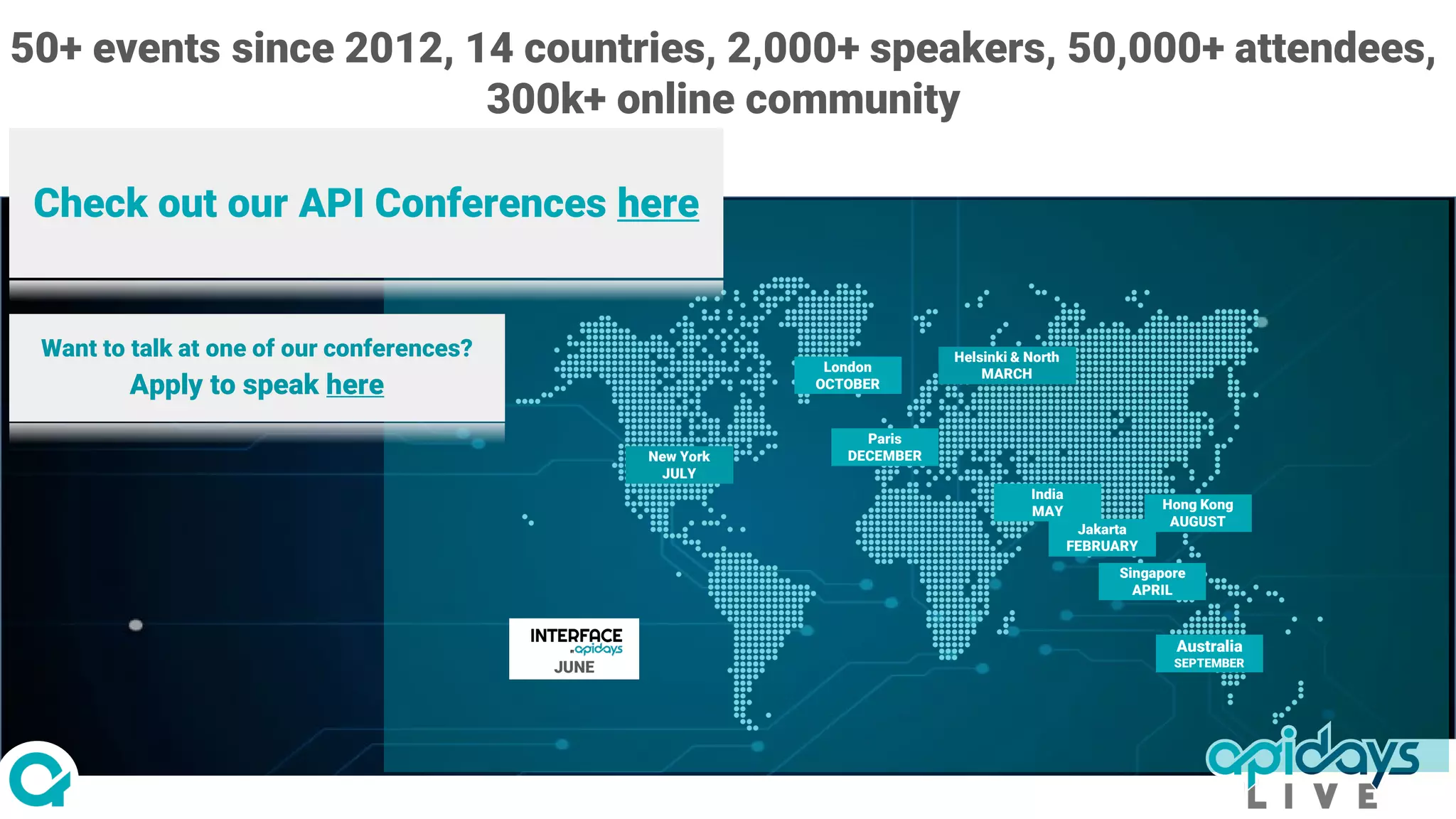
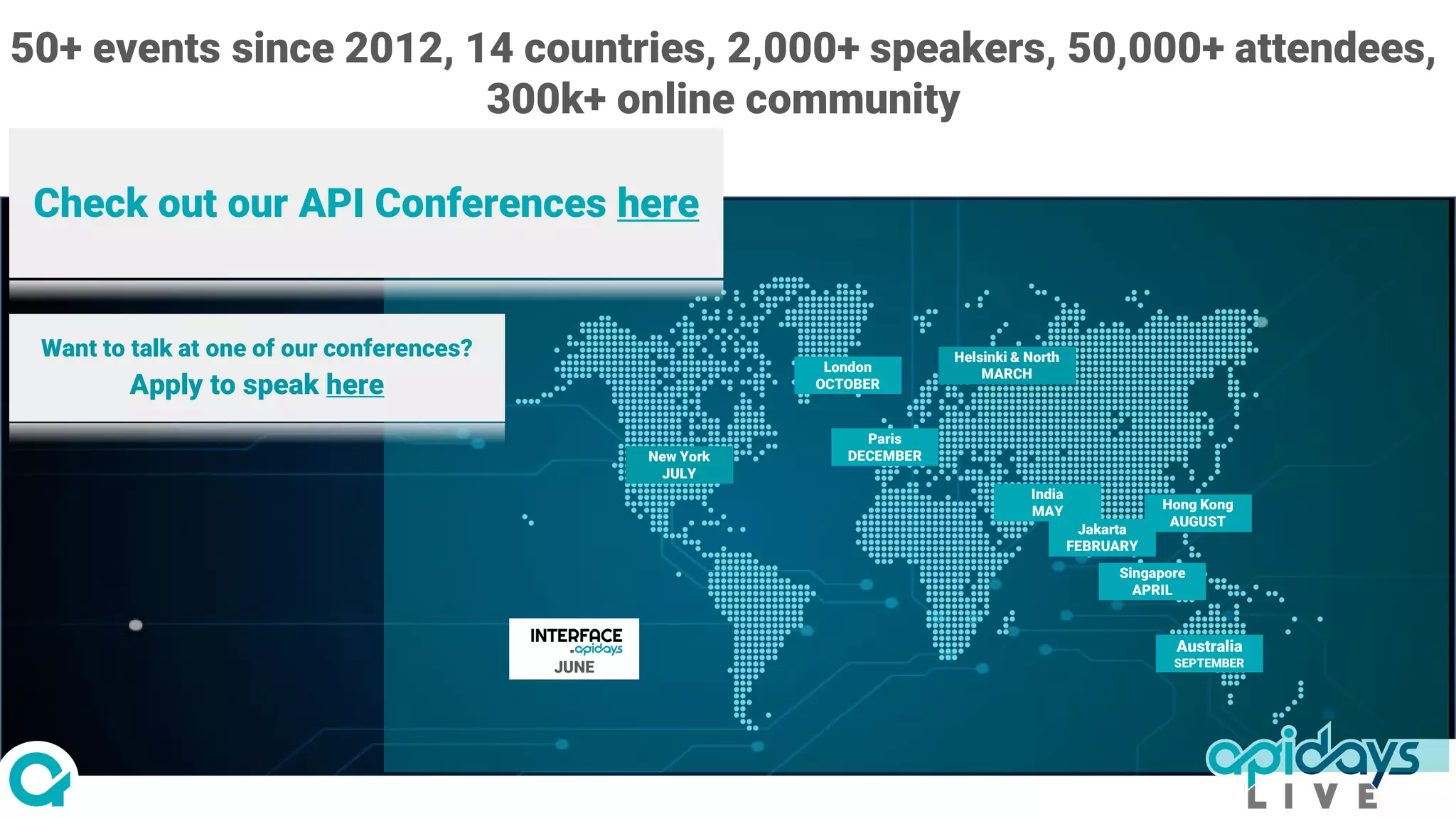
New York
JULY
Australia
SEPTEMBER
Singapore
APRIL
Helsinki & North
MARCH
Paris
DECEMBER
London
OCTOBER
Jakarta
FEBRUARY
Hong Kong
AUGUST
JUNE
India
MAY
Check out our API Conferences here
50+ events since 2012, 14 countries, 2,000+ speakers, 50,000+ attendees,
300k+ online community
Want to talk at one of our conferences?
Apply to speak here
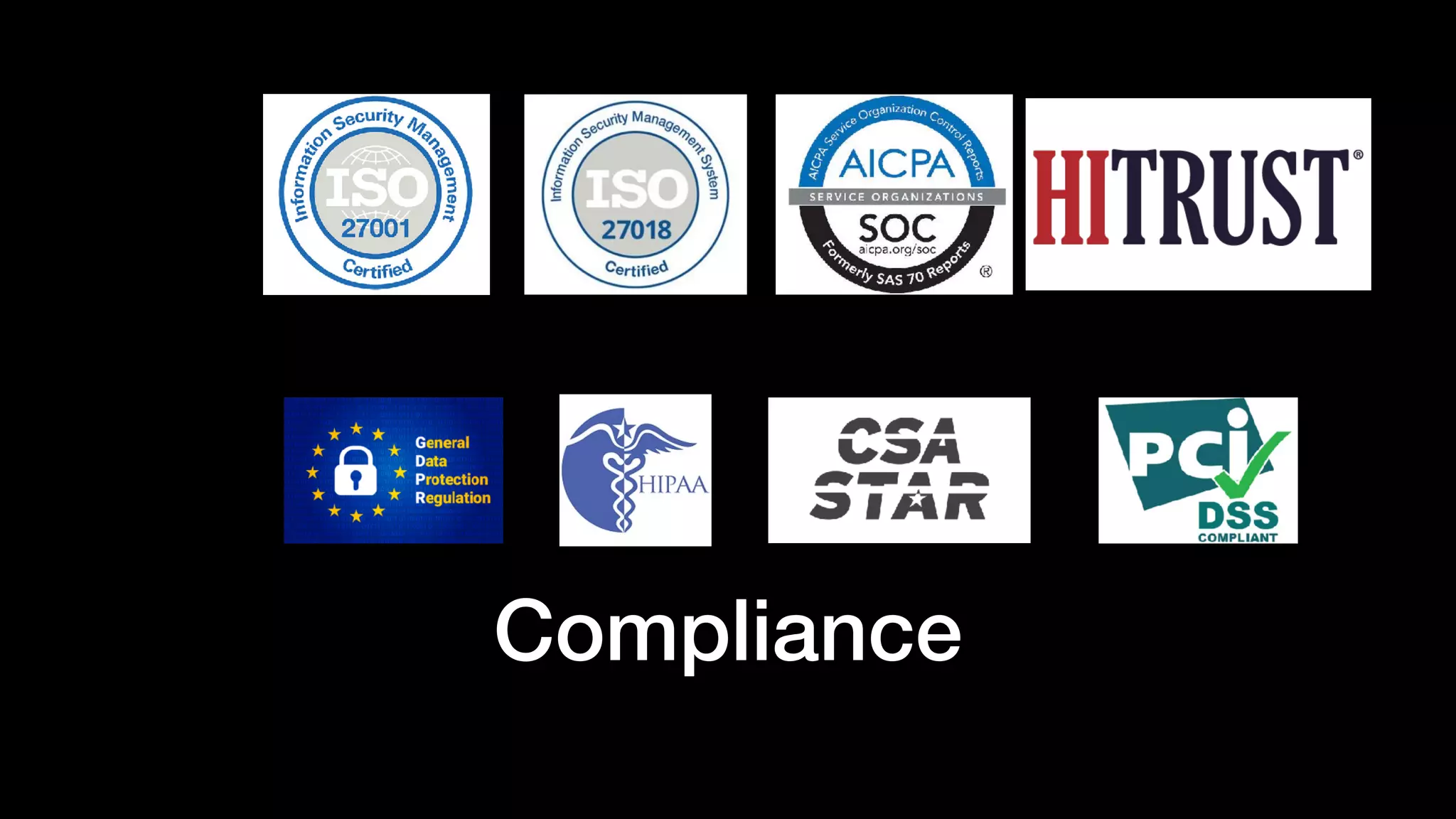
Compliance
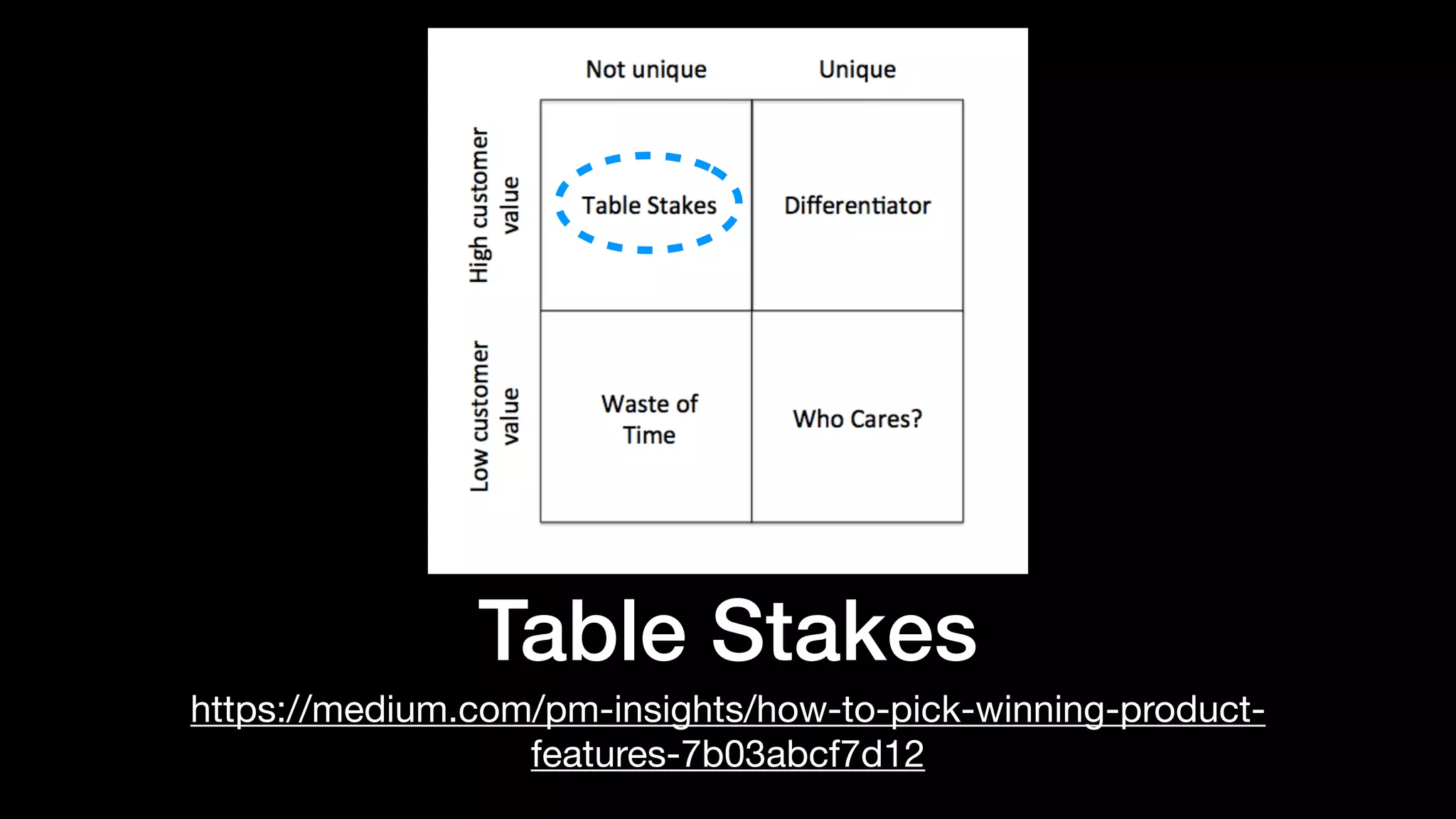
Table Stakes
https://medium.com/pm-insights/how-to-pick-winning-product-
features-7b03abcf7d12
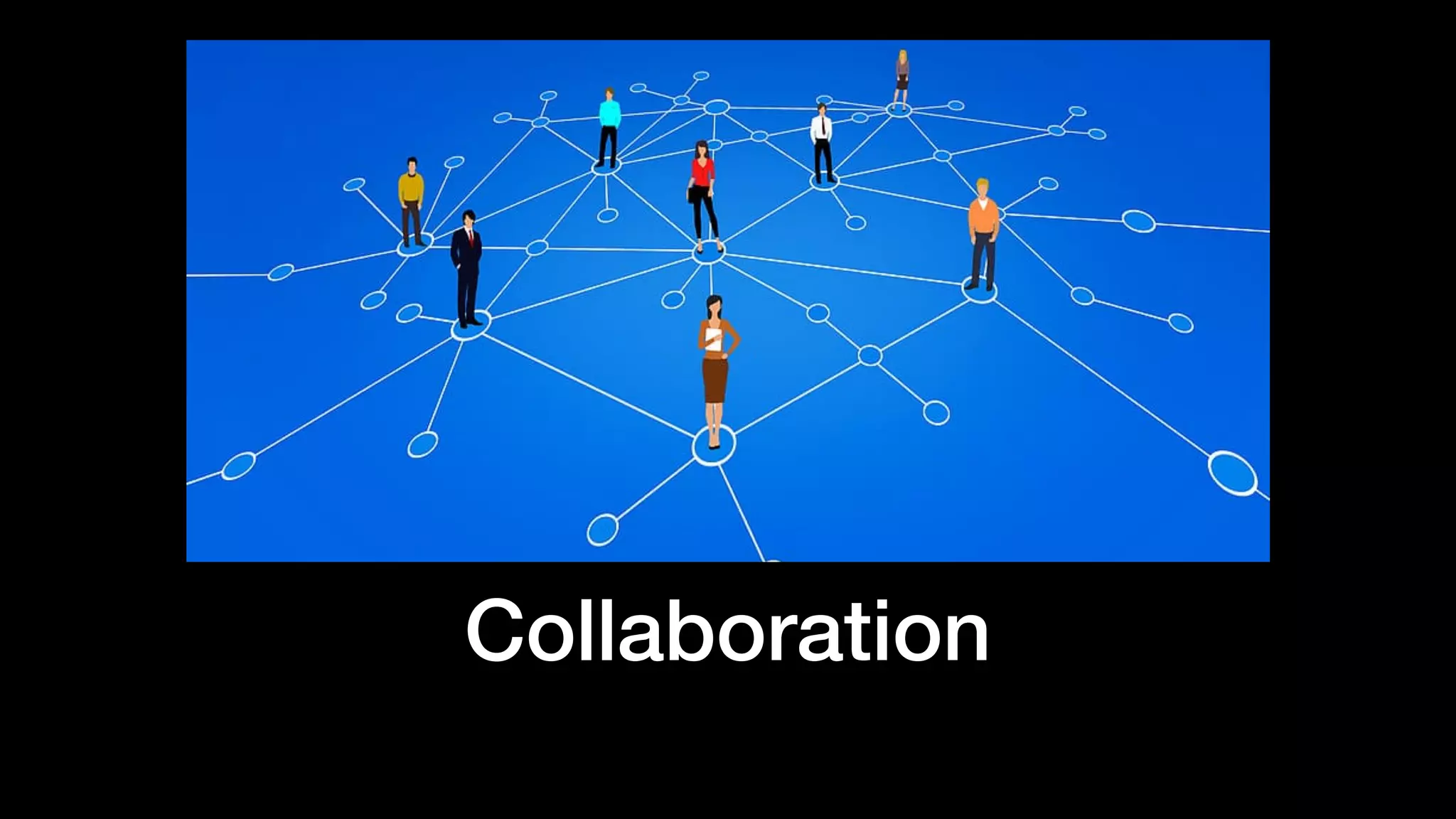
Collaboration
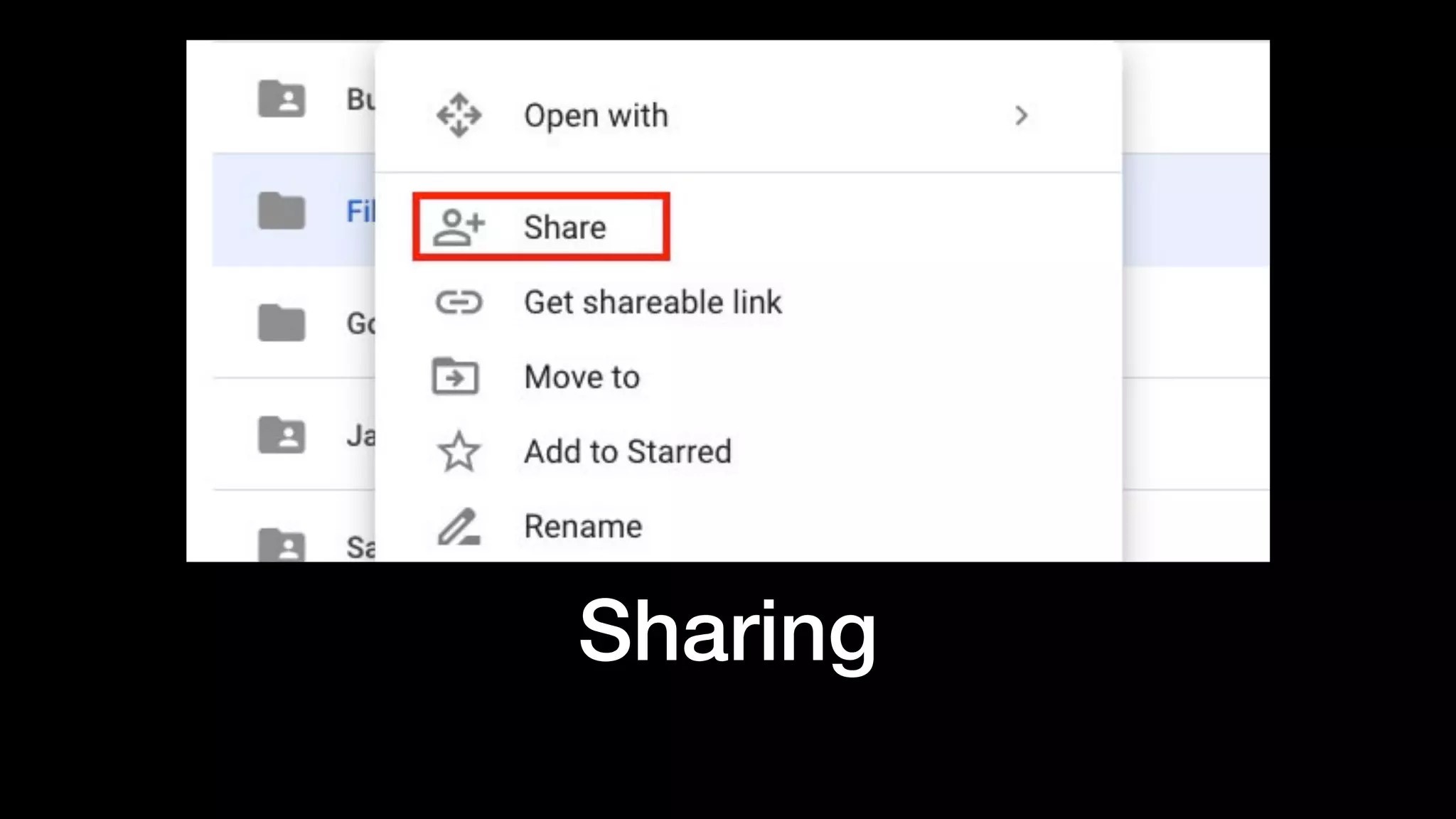
Sharing
Partnerships
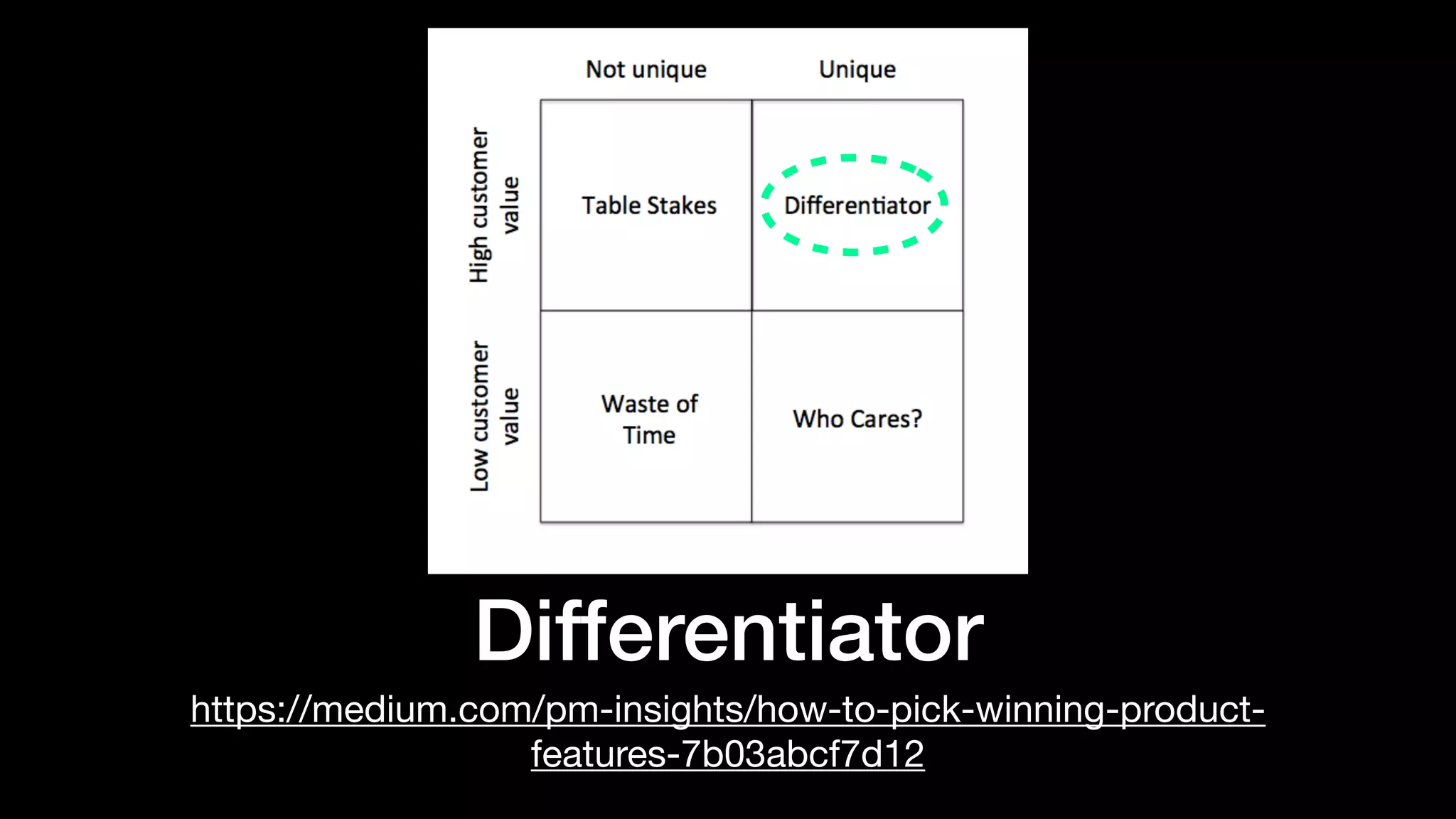
Differentiator
https://medium.com/pm-insights/how-to-pick-winning-product-
features-7b03abcf7d12
Authorization
NOT Authentication
Authorization
OWASP TOP 1
https://owasp.org/Top10/
Broken Access Control
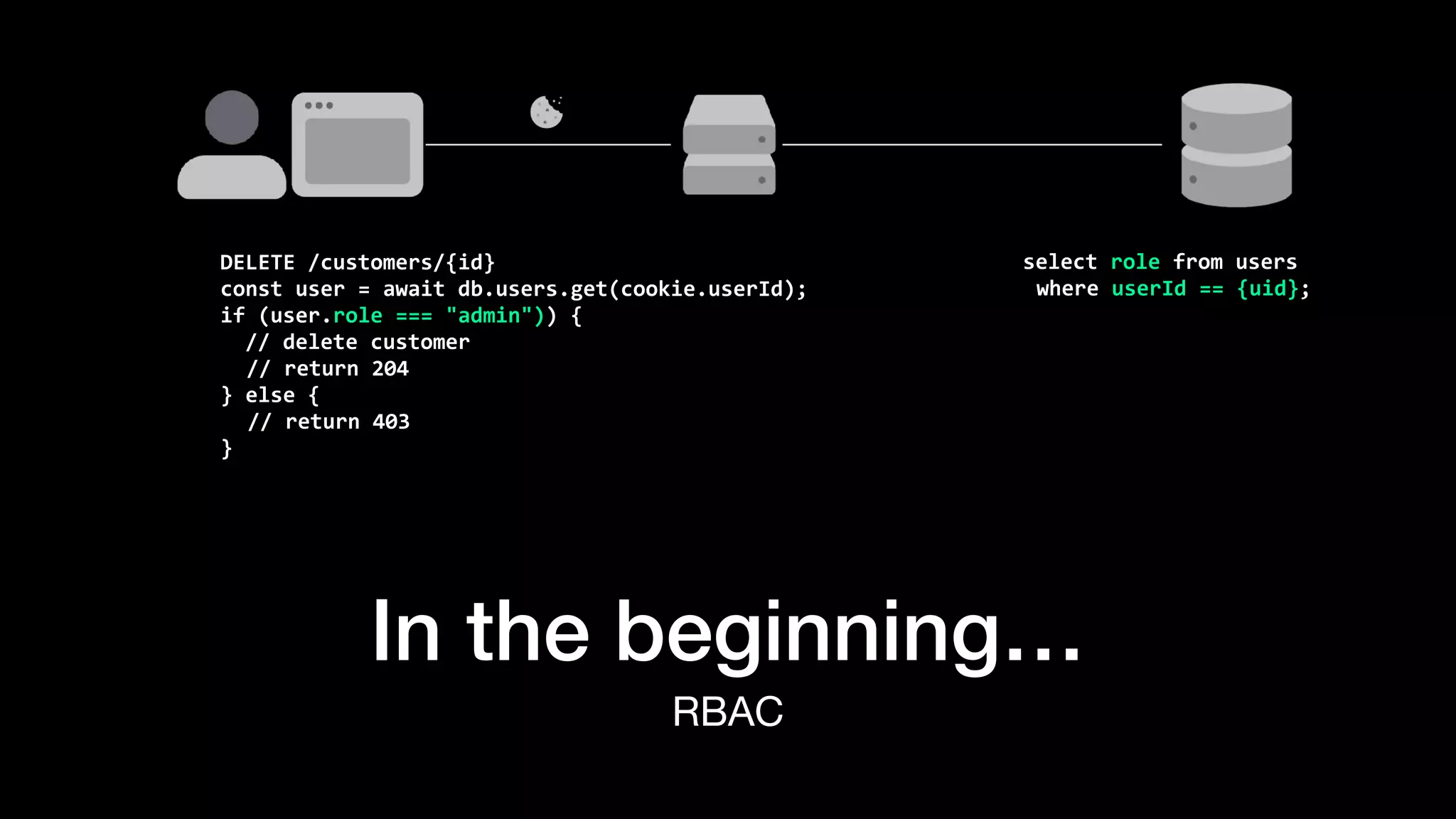
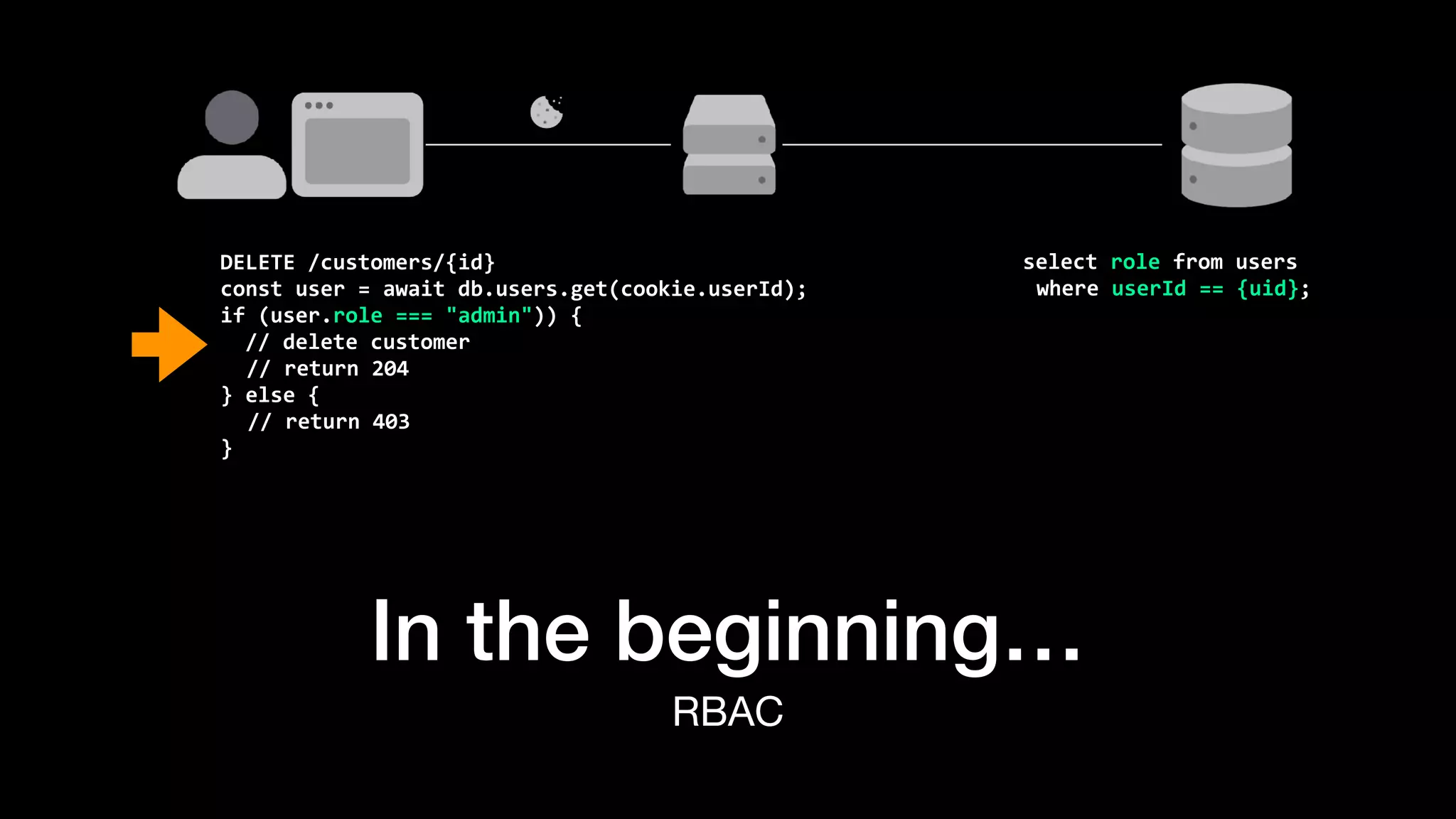
In the beginning…
RBAC
DELETE	/customers/{id}


const	user	=	await	db.users.get(cookie.userId);


if	(user.role	===	"admin"))	{


		//	delete	customer


	//	return	204


}	else	{


//	return	403


}
select	role	from	users


where	userId	==	{uid};
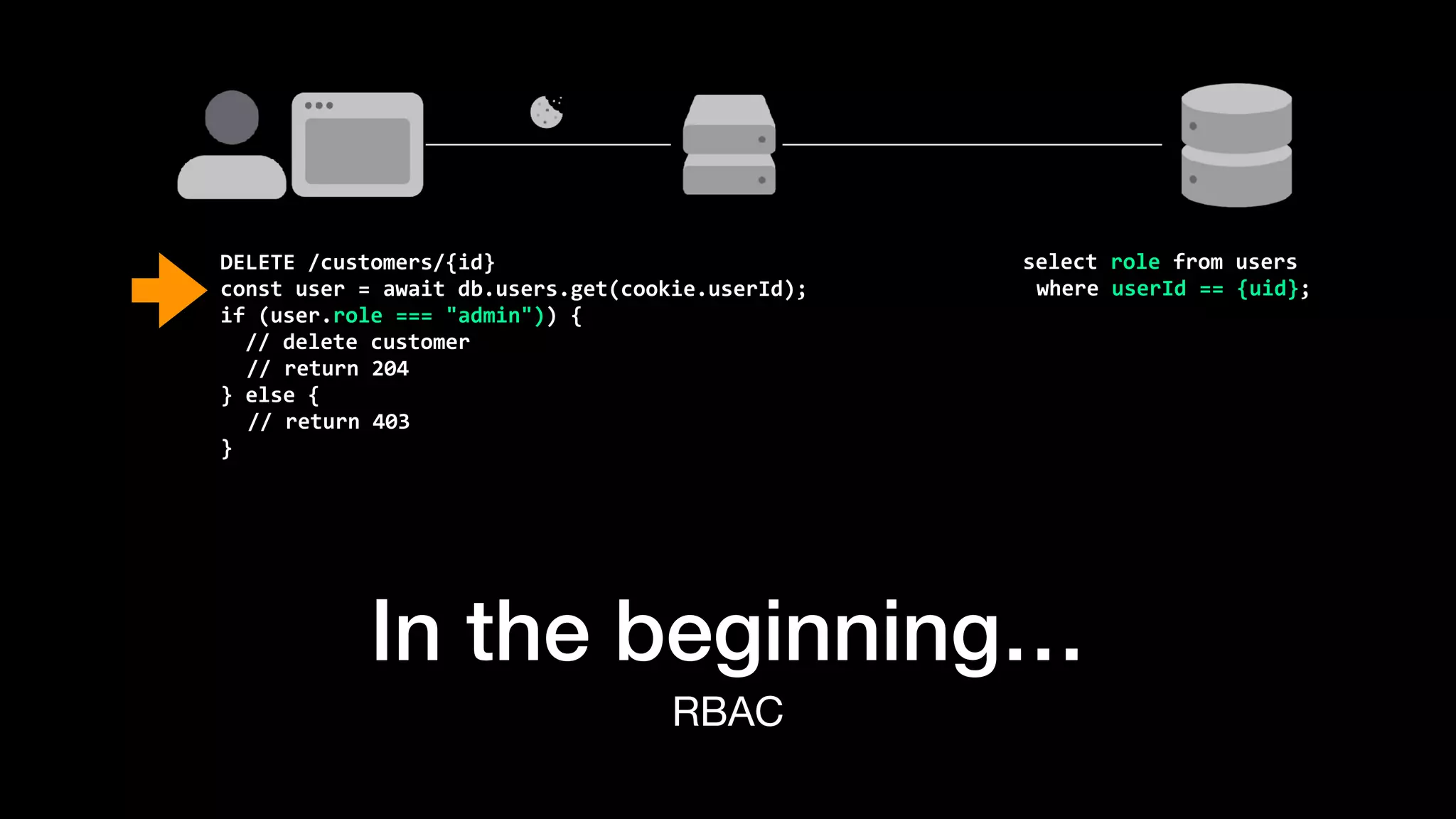
In the beginning…
RBAC
DELETE	/customers/{id}


const	user	=	await	db.users.get(cookie.userId);


if	(user.role	===	"admin"))	{


		//	delete	customer


	//	return	204


}	else	{


//	return	403


}
select	role	from	users


where	userId	==	{uid};
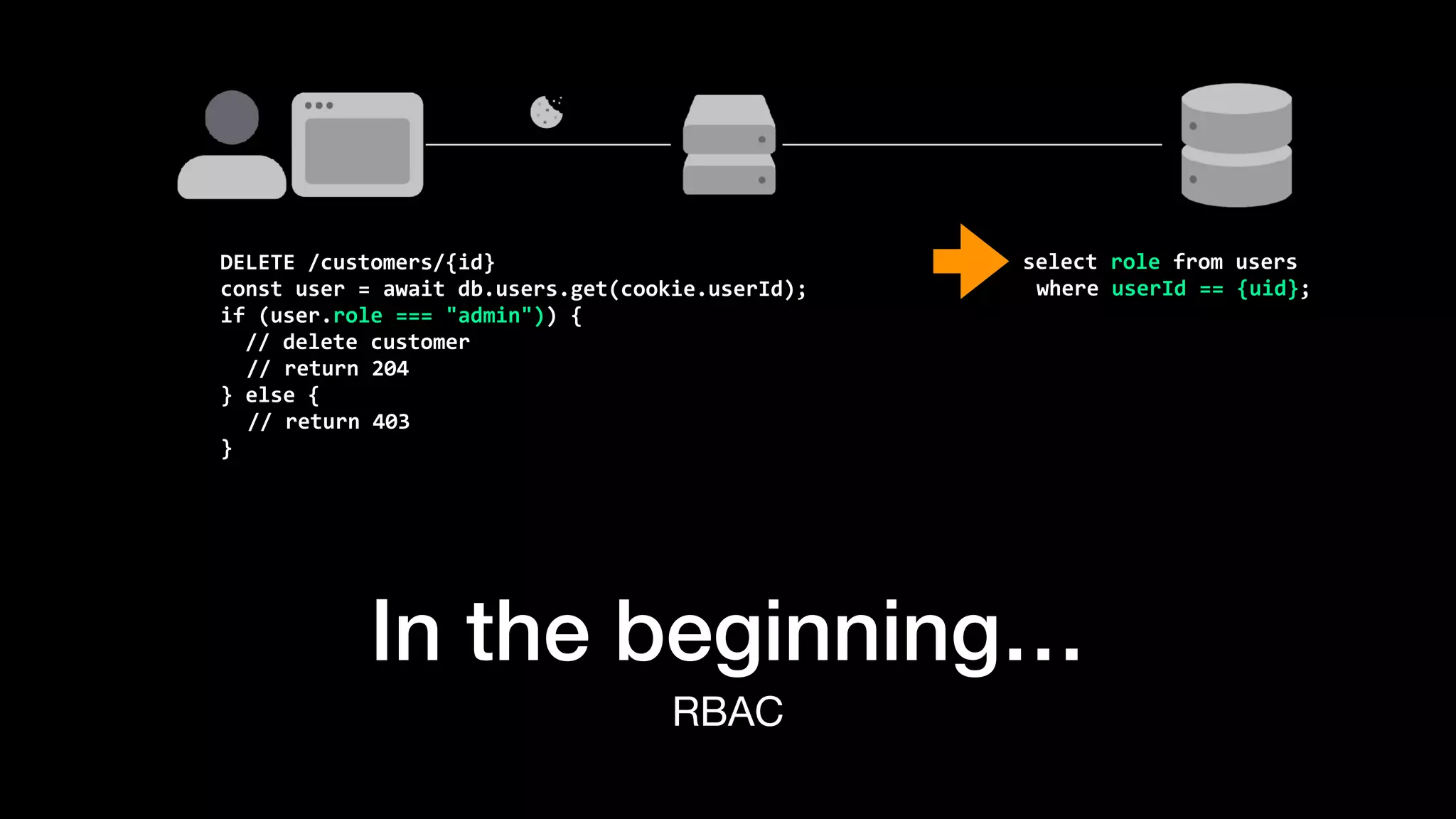
In the beginning…
RBAC
DELETE	/customers/{id}


const	user	=	await	db.users.get(cookie.userId);


if	(user.role	===	"admin"))	{


		//	delete	customer


	//	return	204


}	else	{


//	return	403


}
select	role	from	users


where	userId	==	{uid};
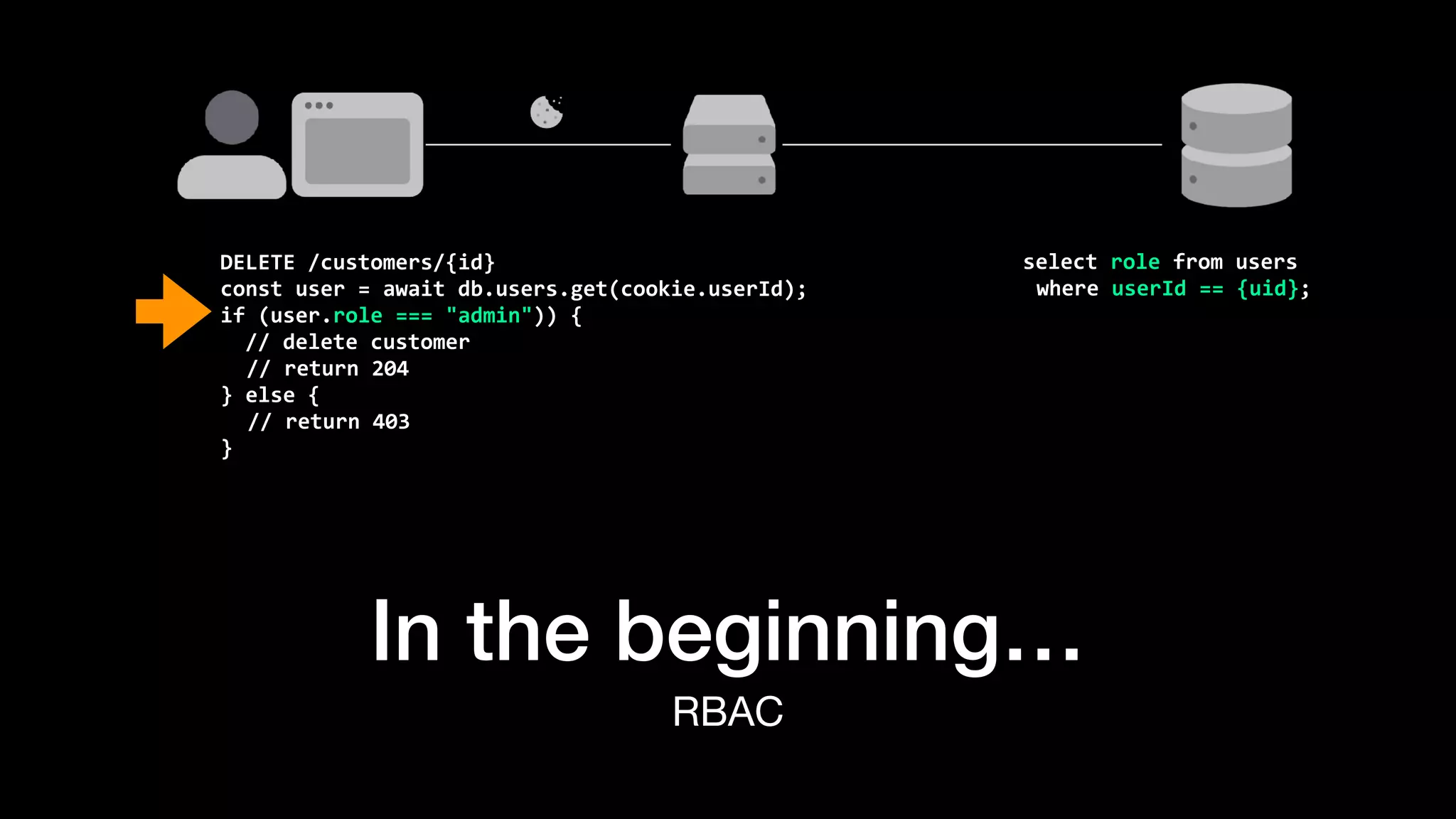
In the beginning…
RBAC
DELETE	/customers/{id}


const	user	=	await	db.users.get(cookie.userId);


if	(user.role	===	"admin"))	{


		//	delete	customer


	//	return	204


}	else	{


//	return	403


}
select	role	from	users


where	userId	==	{uid};
In the beginning…
RBAC
DELETE	/customers/{id}


const	user	=	await	db.users.get(cookie.userId);


if	(user.role	===	"admin"))	{


		//	delete	customer


	//	return	204


}	else	{


//	return	403


}
select	role	from	users


where	userId	==	{uid};
Finer Grained Authorization
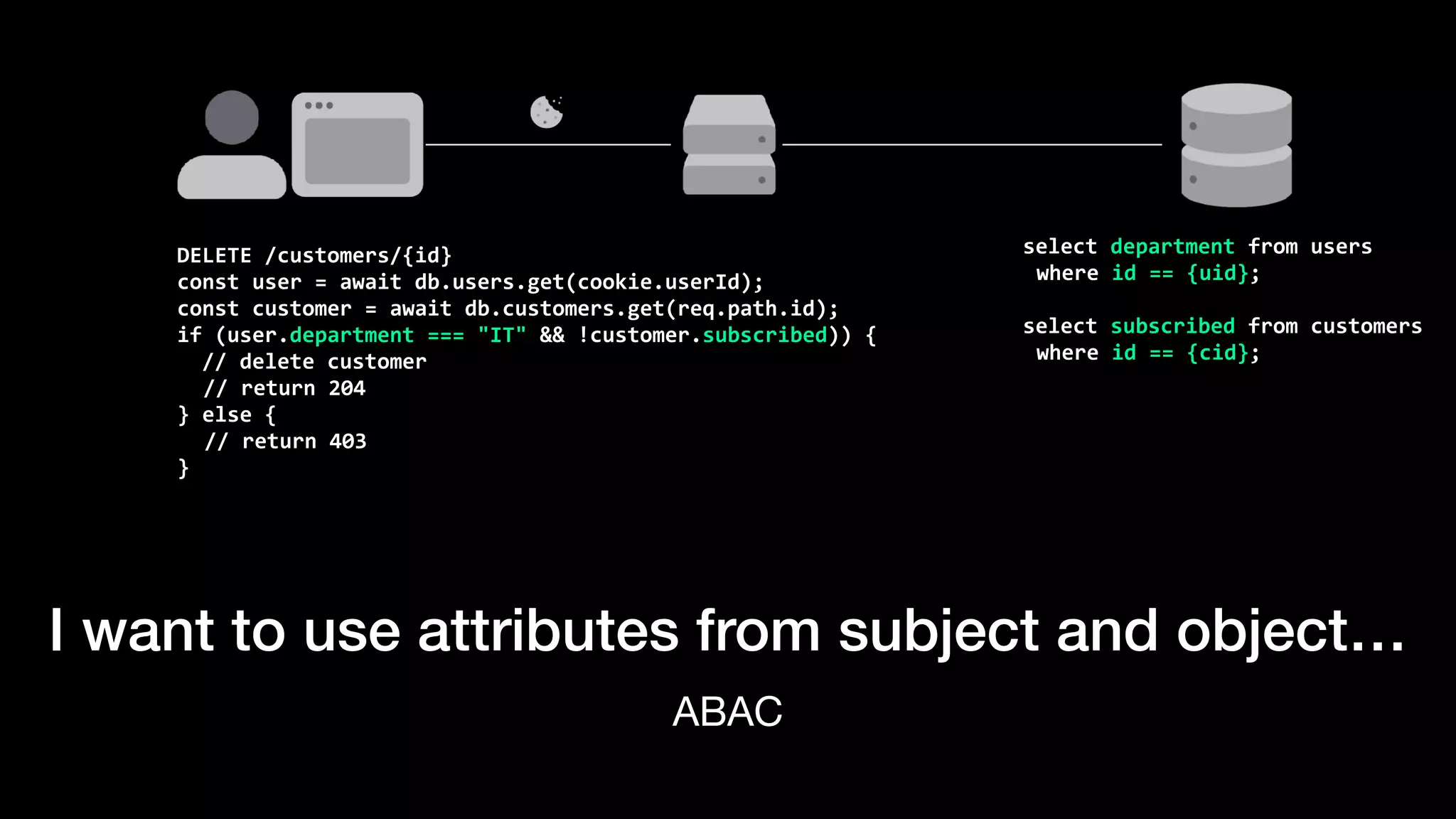
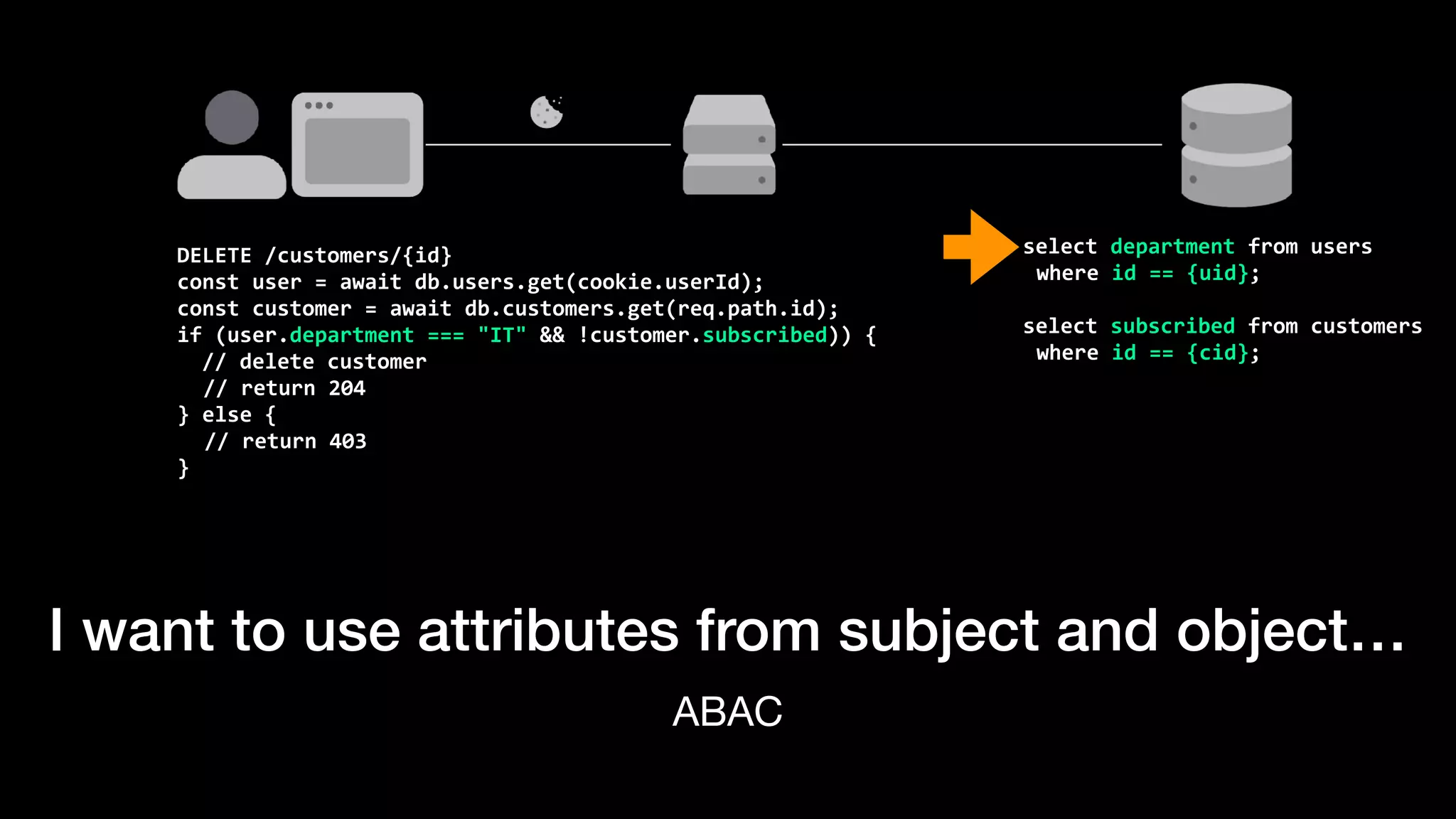
I want to use attributes from subject and object…
ABAC
DELETE	/customers/{id}


const	user	=	await	db.users.get(cookie.userId);


const	customer	=	await	db.customers.get(req.path.id);


if	(user.department	===	"IT"	&&	!customer.subscribed))	{


		//	delete	customer


	//	return	204


}	else	{


//	return	403


}
select	department	from	users


where	id	==	{uid};


select	subscribed	from	customers


where	id	==	{cid};
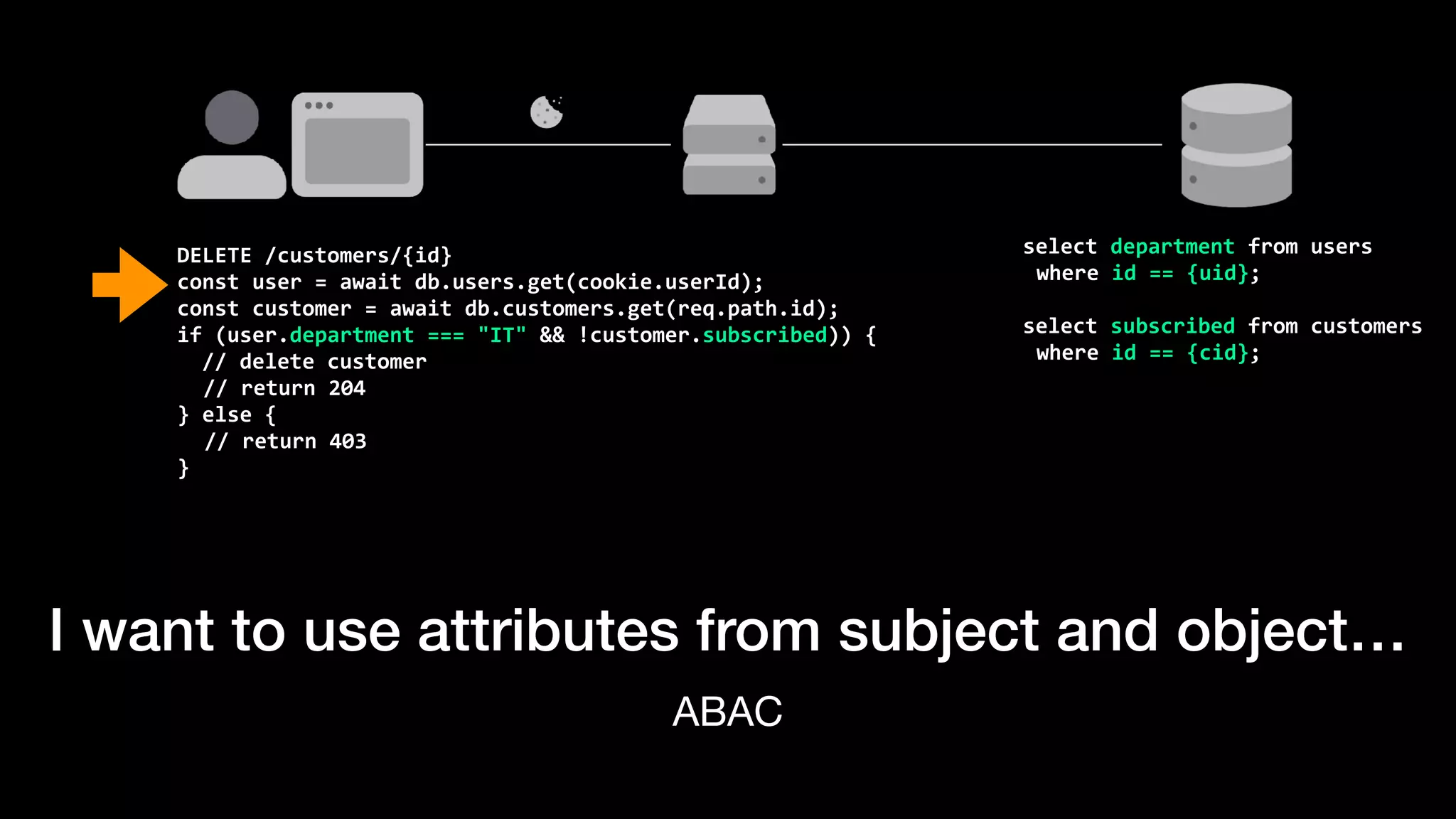
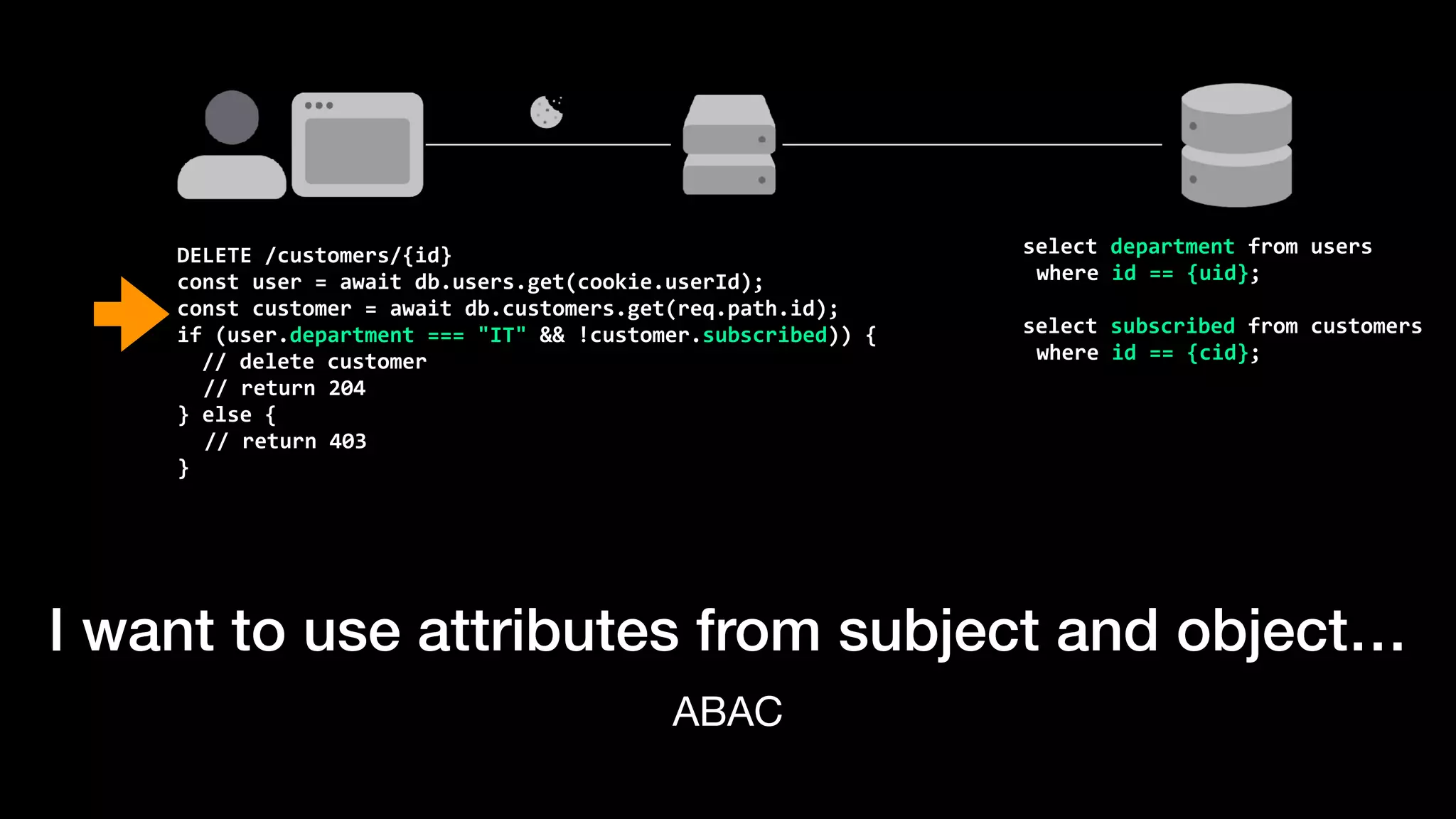
I want to use attributes from subject and object…
ABAC
DELETE	/customers/{id}


const	user	=	await	db.users.get(cookie.userId);


const	customer	=	await	db.customers.get(req.path.id);


if	(user.department	===	"IT"	&&	!customer.subscribed))	{


		//	delete	customer


	//	return	204


}	else	{


//	return	403


}
select	department	from	users


where	id	==	{uid};


select	subscribed	from	customers


where	id	==	{cid};
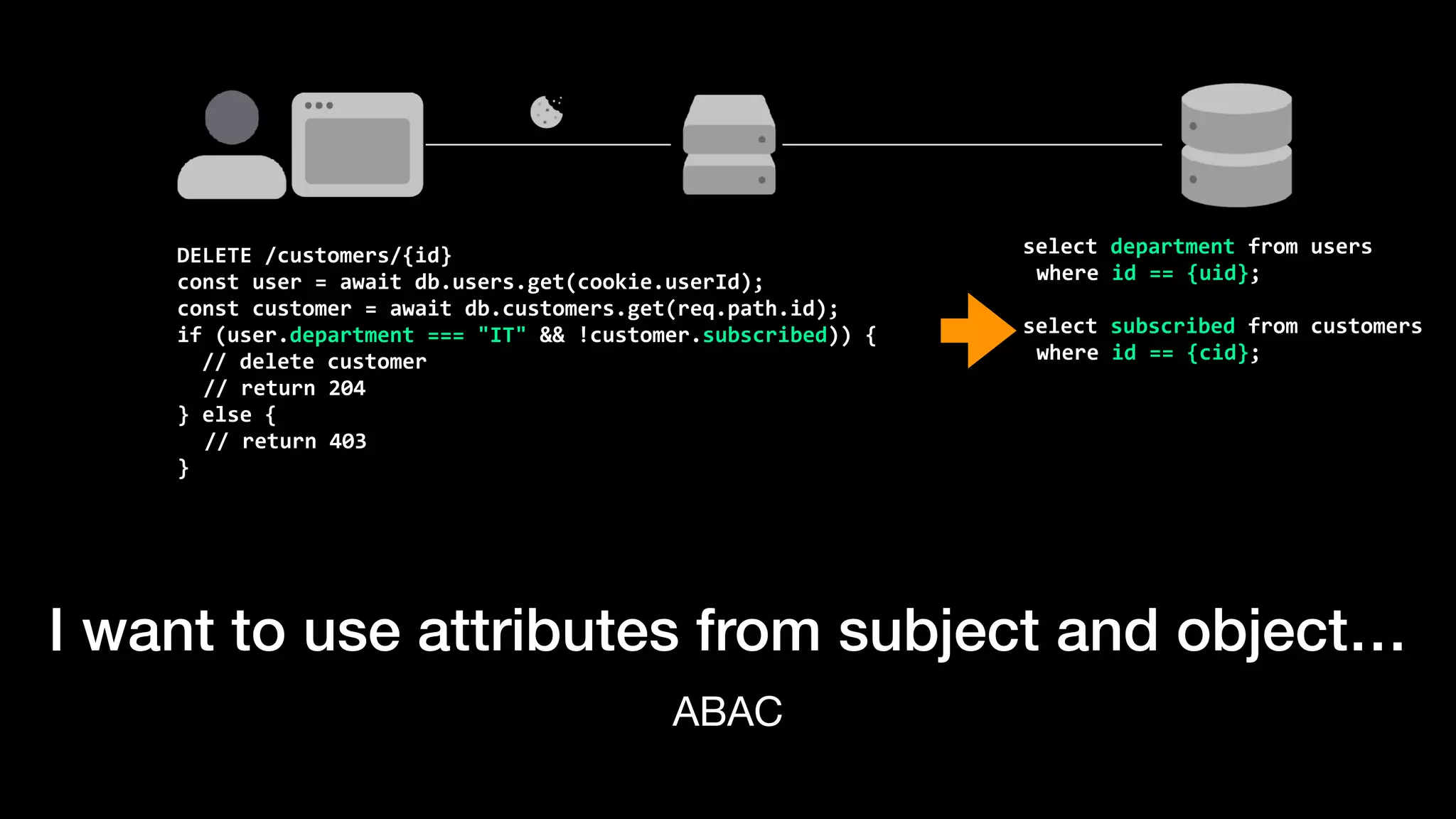
I want to use attributes from subject and object…
ABAC
DELETE	/customers/{id}


const	user	=	await	db.users.get(cookie.userId);


const	customer	=	await	db.customers.get(req.path.id);


if	(user.department	===	"IT"	&&	!customer.subscribed))	{


		//	delete	customer


	//	return	204


}	else	{


//	return	403


}
select	department	from	users


where	id	==	{uid};


select	subscribed	from	customers


where	id	==	{cid};
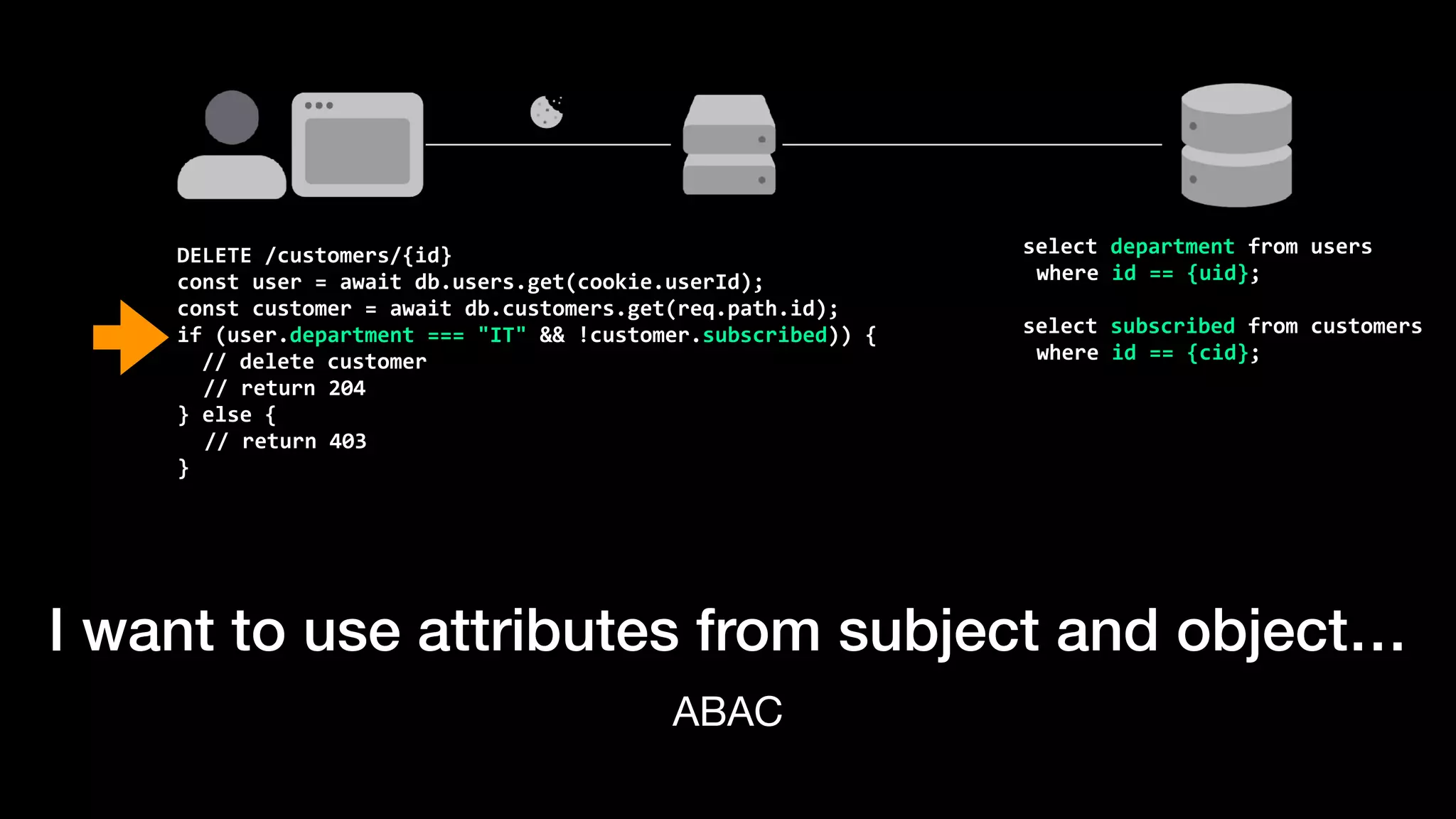
I want to use attributes from subject and object…
ABAC
DELETE	/customers/{id}


const	user	=	await	db.users.get(cookie.userId);


const	customer	=	await	db.customers.get(req.path.id);


if	(user.department	===	"IT"	&&	!customer.subscribed))	{


		//	delete	customer


	//	return	204


}	else	{


//	return	403


}
select	department	from	users


where	id	==	{uid};


select	subscribed	from	customers


where	id	==	{cid};
I want to use attributes from subject and object…
ABAC
DELETE	/customers/{id}


const	user	=	await	db.users.get(cookie.userId);


const	customer	=	await	db.customers.get(req.path.id);


if	(user.department	===	"IT"	&&	!customer.subscribed))	{


		//	delete	customer


	//	return	204


}	else	{


//	return	403


}
select	department	from	users


where	id	==	{uid};


select	subscribed	from	customers


where	id	==	{cid};
I want to use attributes from subject and object…
ABAC
DELETE	/customers/{id}


const	user	=	await	db.users.get(cookie.userId);


const	customer	=	await	db.customers.get(req.path.id);


if	(user.department	===	"IT"	&&	!customer.subscribed))	{


		//	delete	customer


	//	return	204


}	else	{


//	return	403


}
select	department	from	users


where	id	==	{uid};


select	subscribed	from	customers


where	id	==	{cid};
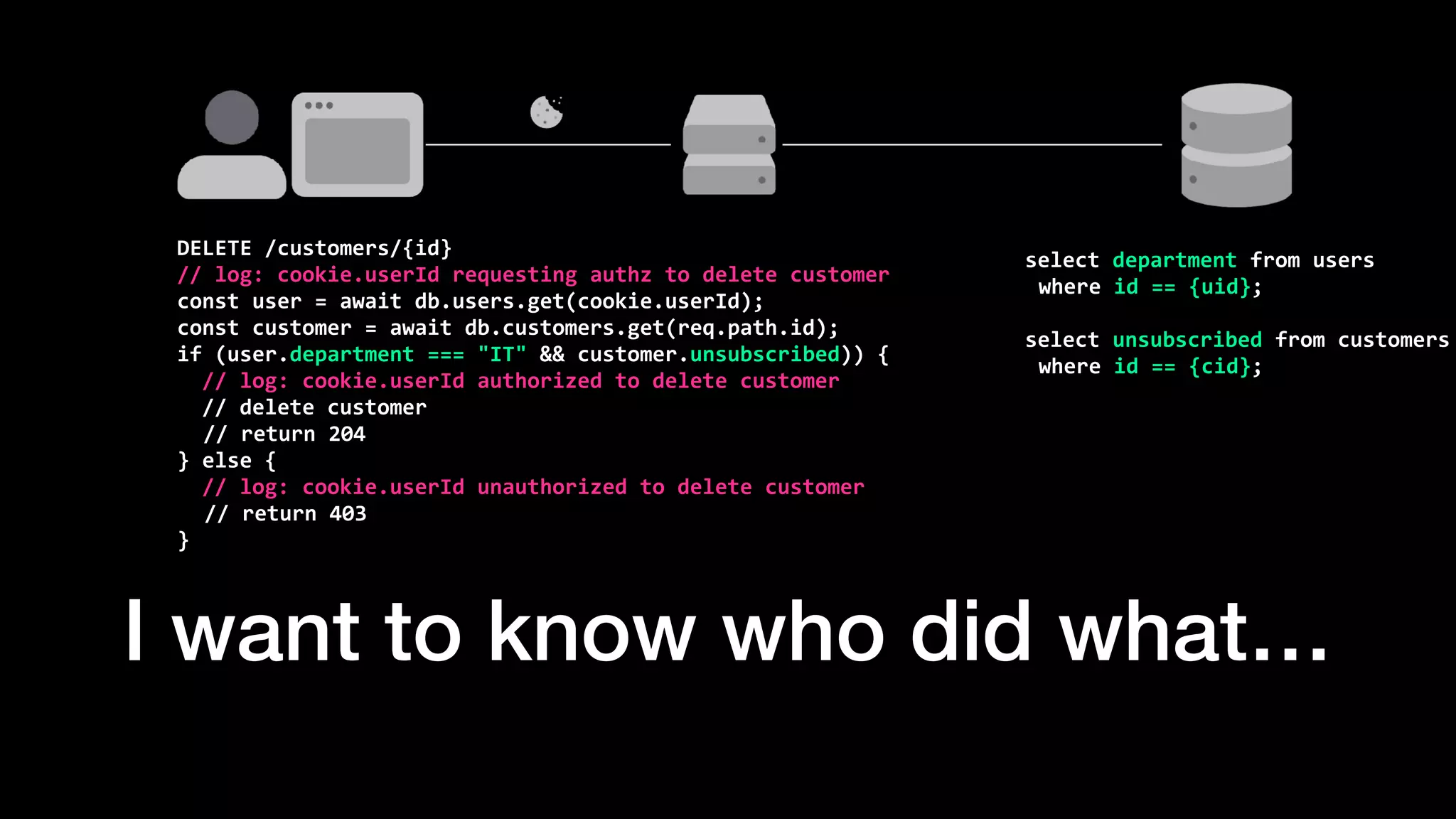
I want to know who did what…
DELETE	/customers/{id}


//	log:	cookie.userId	requesting	authz	to	delete	customer


const	user	=	await	db.users.get(cookie.userId);


const	customer	=	await	db.customers.get(req.path.id);


if	(user.department	===	"IT"	&&	customer.unsubscribed))	{


		//	log:	cookie.userId	authorized	to	delete	customer


		//	delete	customer


	//	return	204


}	else	{


		//	log:	cookie.userId	unauthorized	to	delete	customer


//	return	403


}
select	department	from	users


where	id	==	{uid};


select	unsubscribed	from	customers


where	id	==	{cid};
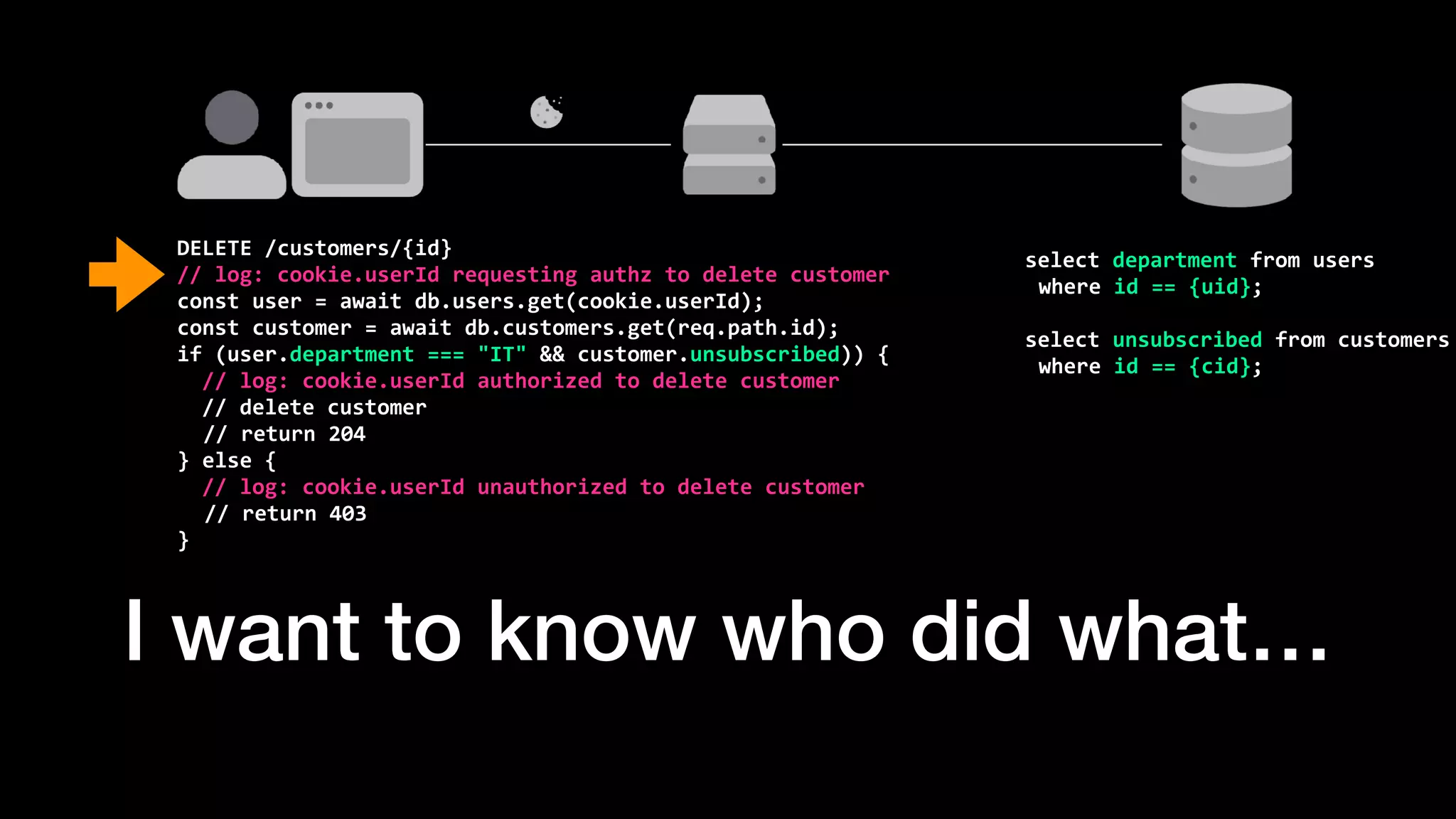
I want to know who did what…
DELETE	/customers/{id}


//	log:	cookie.userId	requesting	authz	to	delete	customer


const	user	=	await	db.users.get(cookie.userId);


const	customer	=	await	db.customers.get(req.path.id);


if	(user.department	===	"IT"	&&	customer.unsubscribed))	{


		//	log:	cookie.userId	authorized	to	delete	customer


		//	delete	customer


	//	return	204


}	else	{


		//	log:	cookie.userId	unauthorized	to	delete	customer


//	return	403


}
select	department	from	users


where	id	==	{uid};


select	unsubscribed	from	customers


where	id	==	{cid};
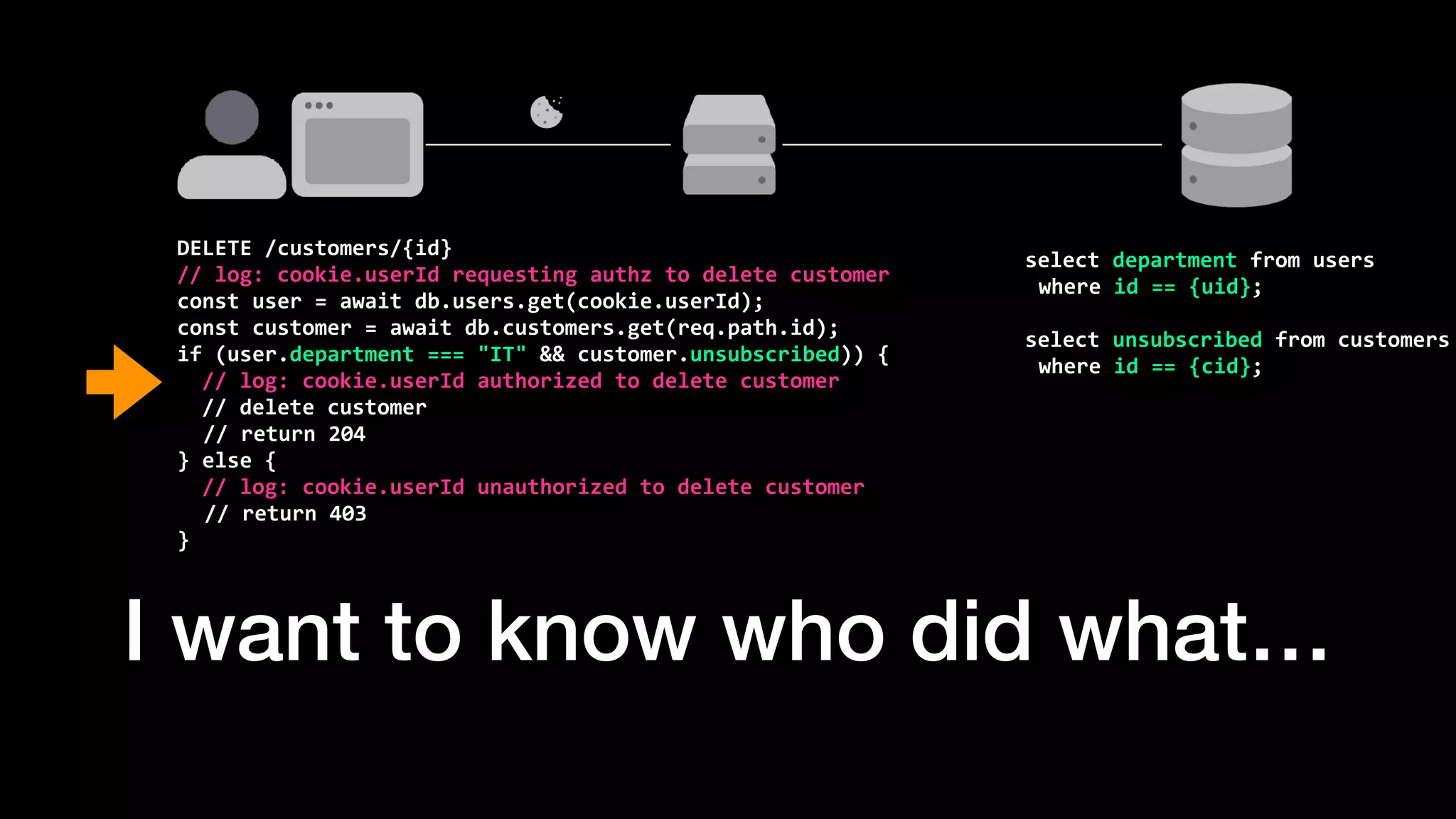
I want to know who did what…
DELETE	/customers/{id}


//	log:	cookie.userId	requesting	authz	to	delete	customer


const	user	=	await	db.users.get(cookie.userId);


const	customer	=	await	db.customers.get(req.path.id);


if	(user.department	===	"IT"	&&	customer.unsubscribed))	{


		//	log:	cookie.userId	authorized	to	delete	customer


		//	delete	customer


	//	return	204


}	else	{


		//	log:	cookie.userId	unauthorized	to	delete	customer


//	return	403


}
select	department	from	users


where	id	==	{uid};


select	unsubscribed	from	customers


where	id	==	{cid};
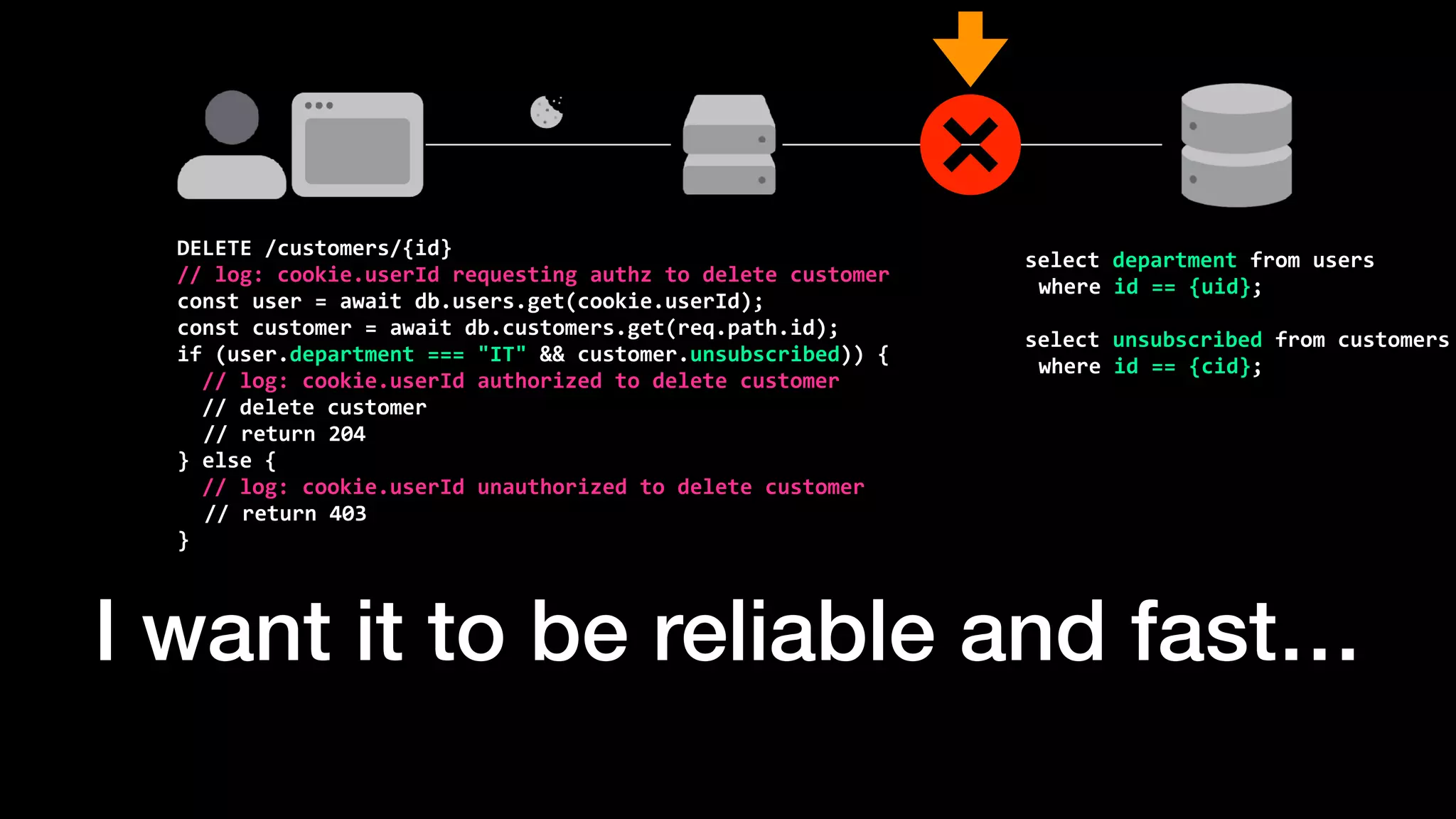
I want it to be reliable and fast…
DELETE	/customers/{id}


//	log:	cookie.userId	requesting	authz	to	delete	customer


const	user	=	await	db.users.get(cookie.userId);


const	customer	=	await	db.customers.get(req.path.id);


if	(user.department	===	"IT"	&&	customer.unsubscribed))	{


		//	log:	cookie.userId	authorized	to	delete	customer


		//	delete	customer


	//	return	204


}	else	{


		//	log:	cookie.userId	unauthorized	to	delete	customer


//	return	403


}
select	department	from	users


where	id	==	{uid};


select	unsubscribed	from	customers


where	id	==	{cid};
Access Review?
Who can access what?
Approval?
Change Management
Auditing?
What happened?
Reliability?
Latency?
Developer APIs
Approach #1: Policies
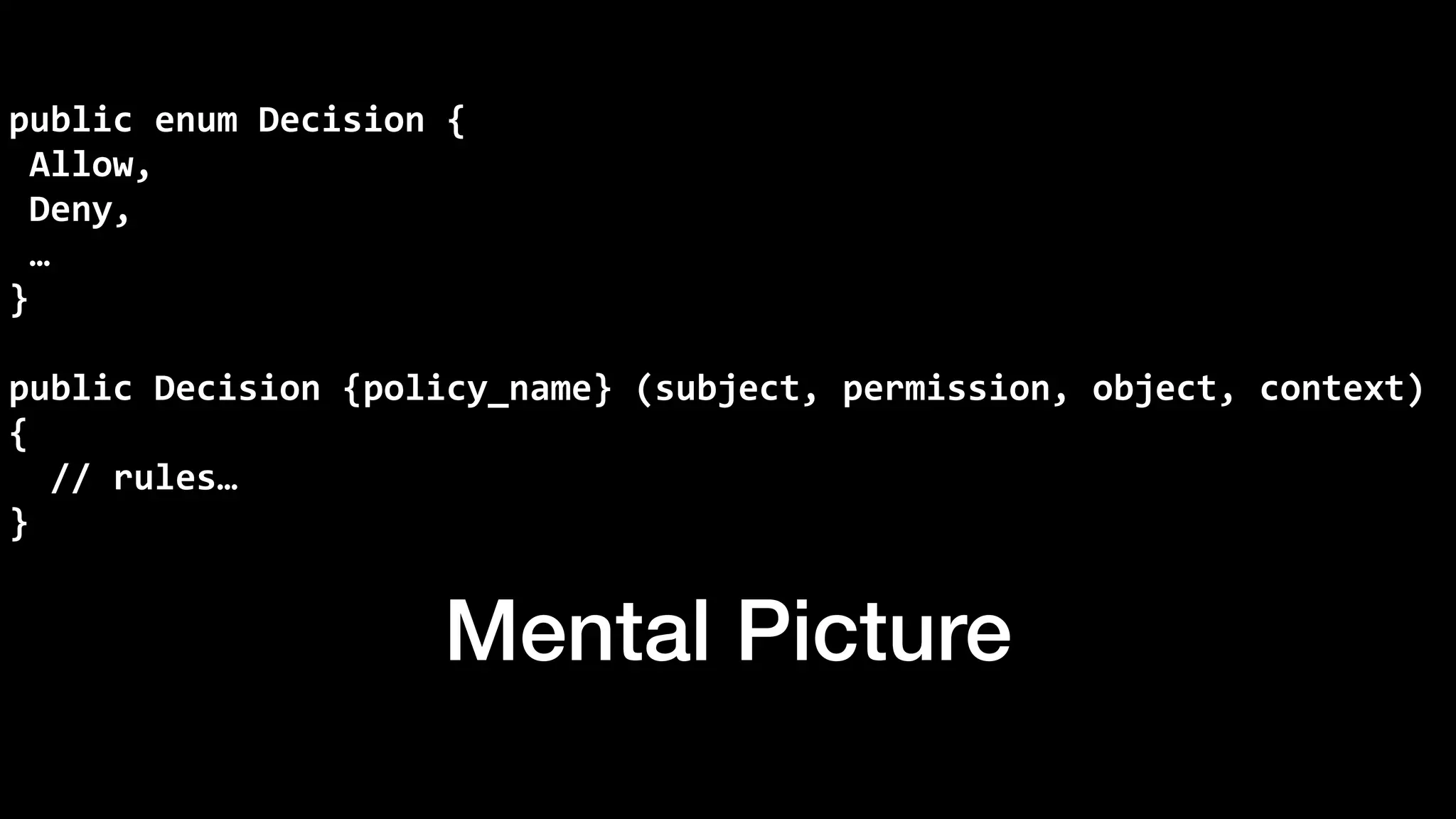
Mental Picture
public	enum	Decision	{


	Allow,


	Deny,


	…


}


public	Decision	{policy_name}	(subject,	permission,	object,	context)	
{


		//	rules…


}
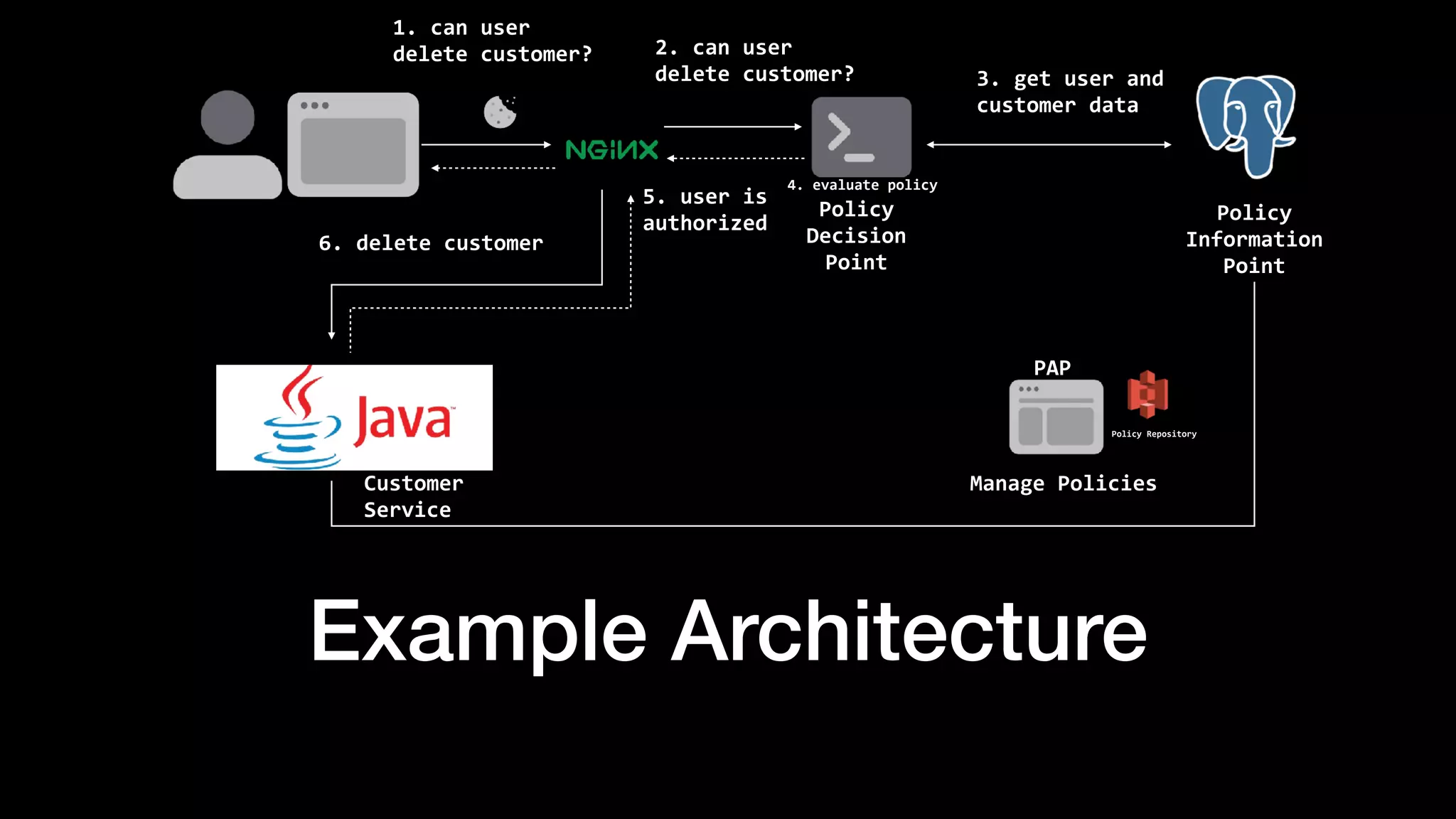
Example Architecture
3.	get	user	and	
customer	data


2.	can	user	
delete	customer?


1.	can	user	
delete	customer?


Manage	Policies


PAP
Policy	
Decision	
Point


Policy	
Information	
Point
6.	delete	customer


5.	user	is	
authorized


Policy	Repository


Customer	
Service


4.	evaluate	policy
Advantages
• Easier to understand what authorization logic applies

• Authorization change management is simpler than having it in code

• Auditing is implemented outside of business logic
Disadvantages
• Requires operating more components
Disadvantages
• Requires operating more components

• Does not handle storage of authz data 

• 👉 latency + reliability + scale

• 👉 collaboration scenarios

•
Approach #2: "Zanzibar"
Zanzibar
Not this one…
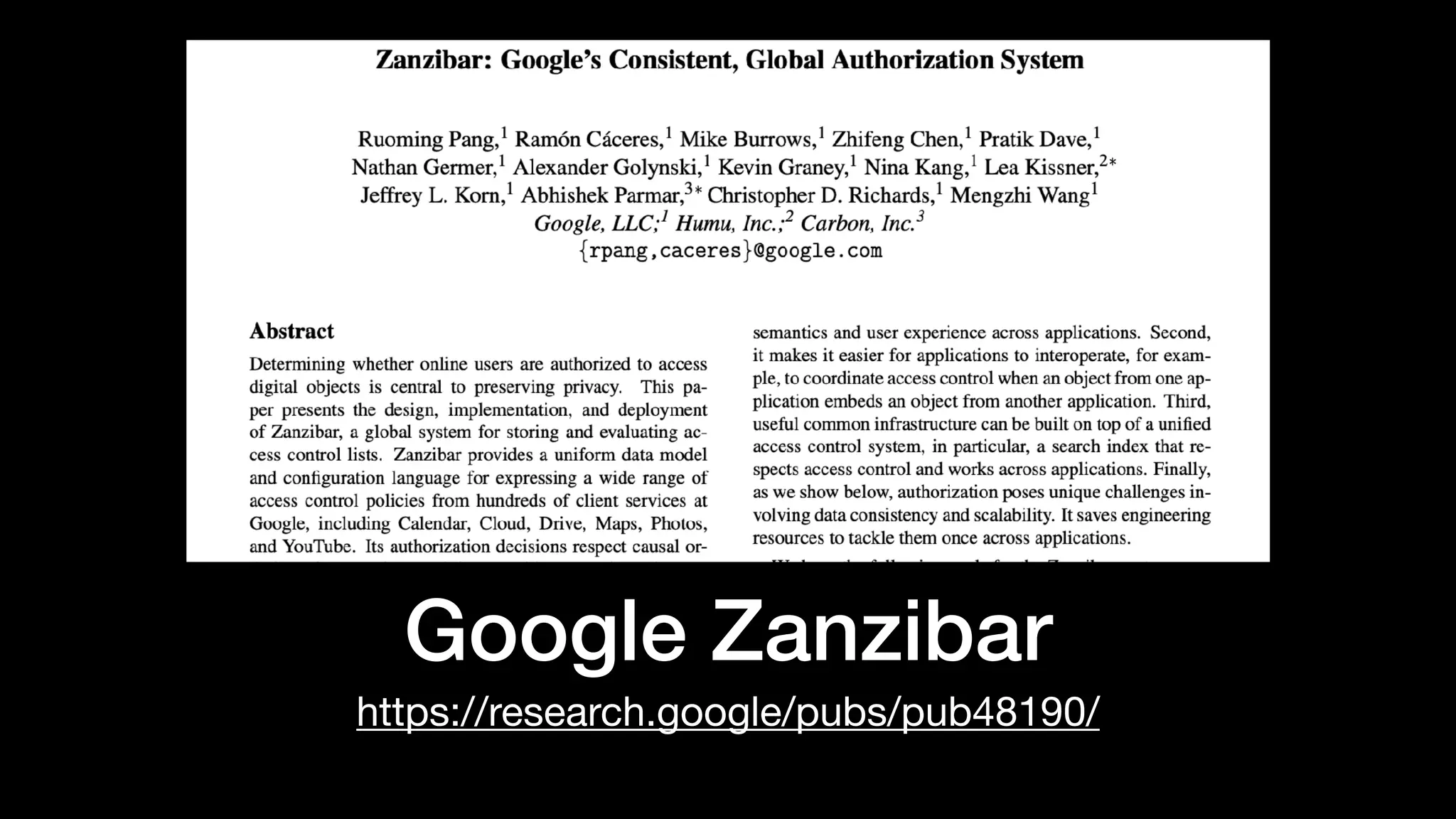
Google Zanzibar
https://research.google/pubs/pub48190/
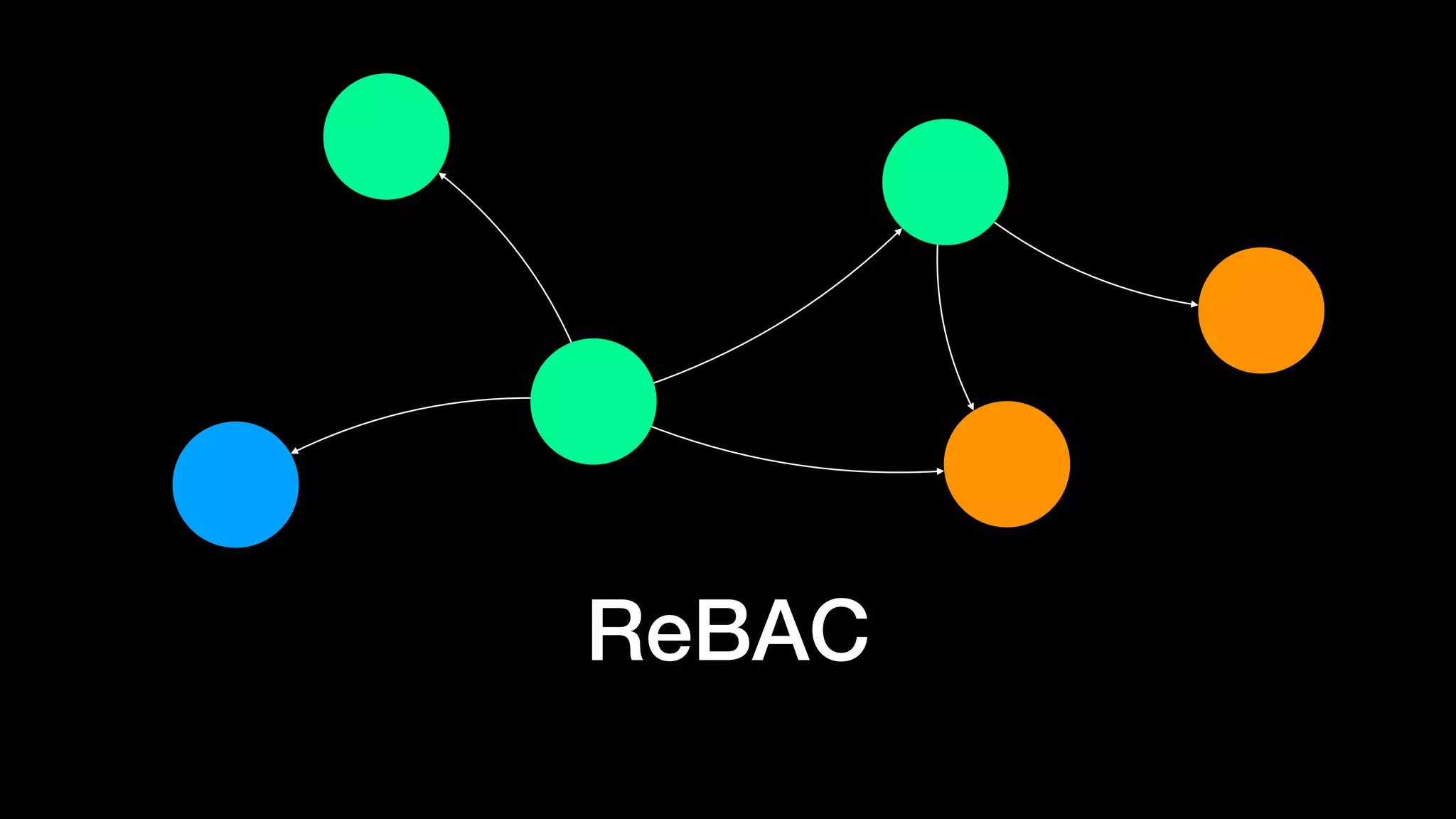
ReBAC
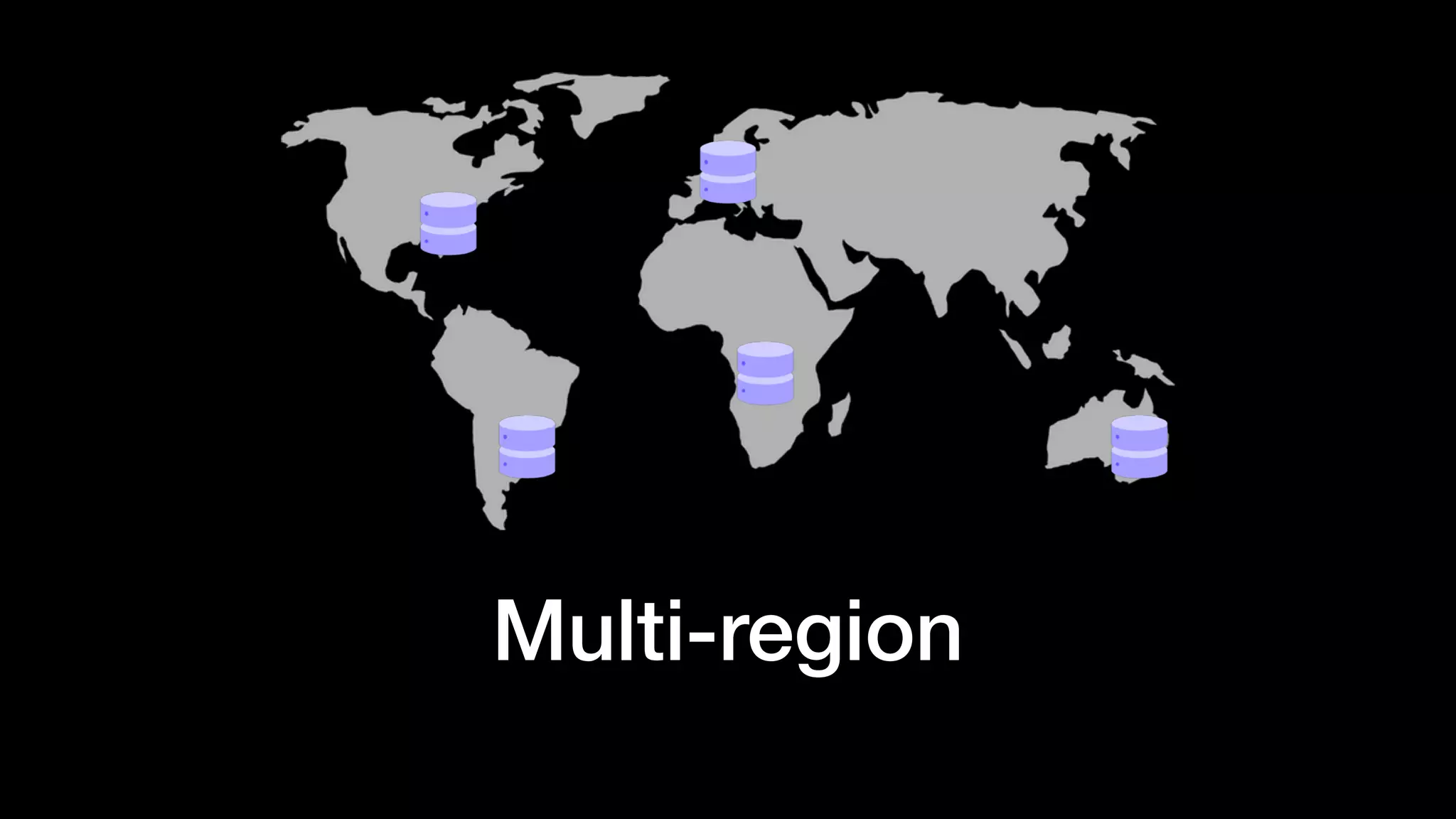
Multi-region
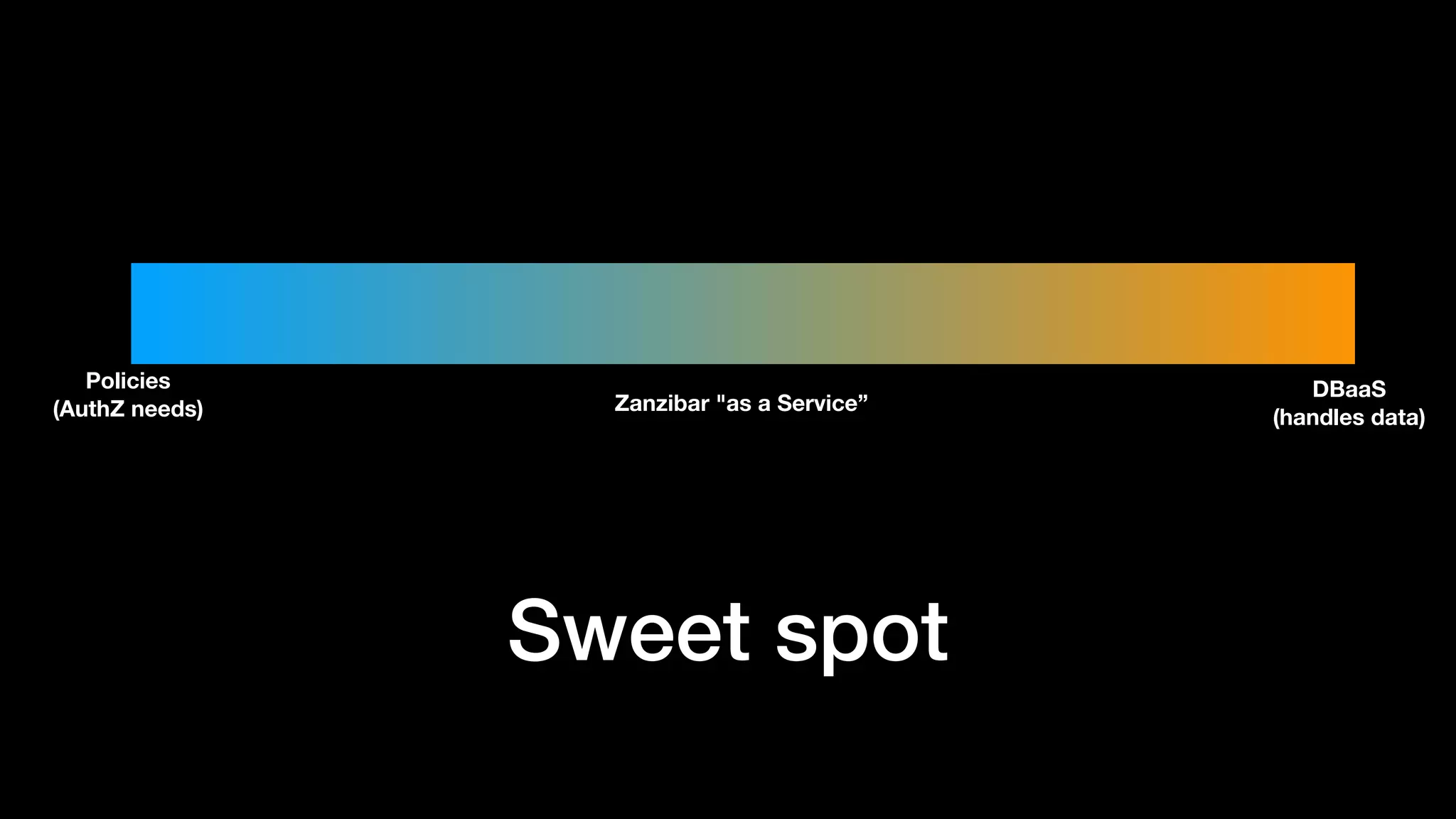
Sweet spot
Policies
(AuthZ needs)
DBaaS
(handles data)
Zanzibar "as a Service”
Industry
Alternatives
(disclaimer: I work on Project "Sandcastle")
Project "Sandcastle"
DEMO
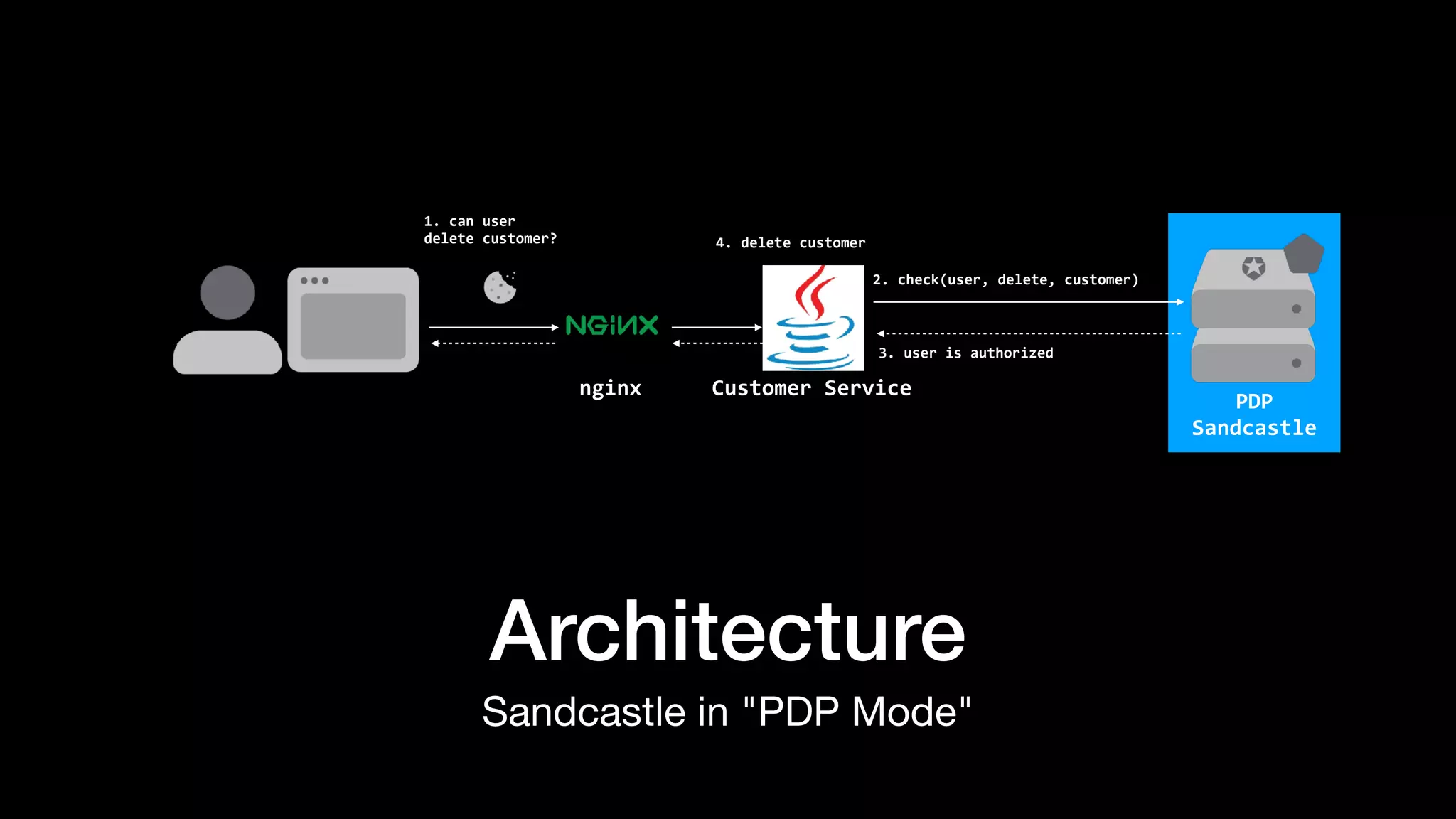
Architecture
Sandcastle in "PDP Mode"
2.	check(user,	delete,	customer)


1.	can	user	
delete	customer?


Customer	Service
PDP


Sandcastle
4.	delete	customer


3.	user	is	authorized


nginx
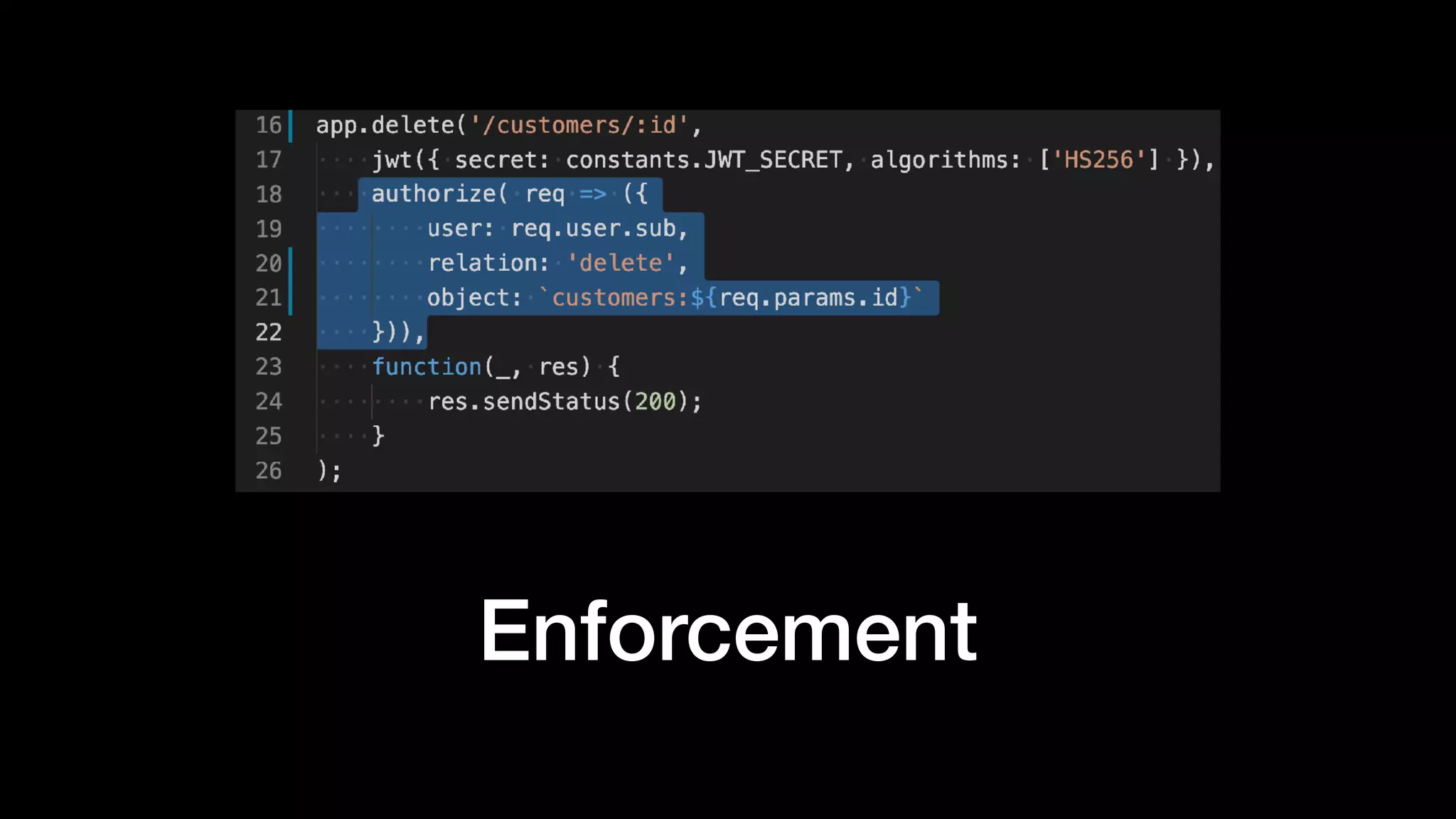
Enforcement
Advantages
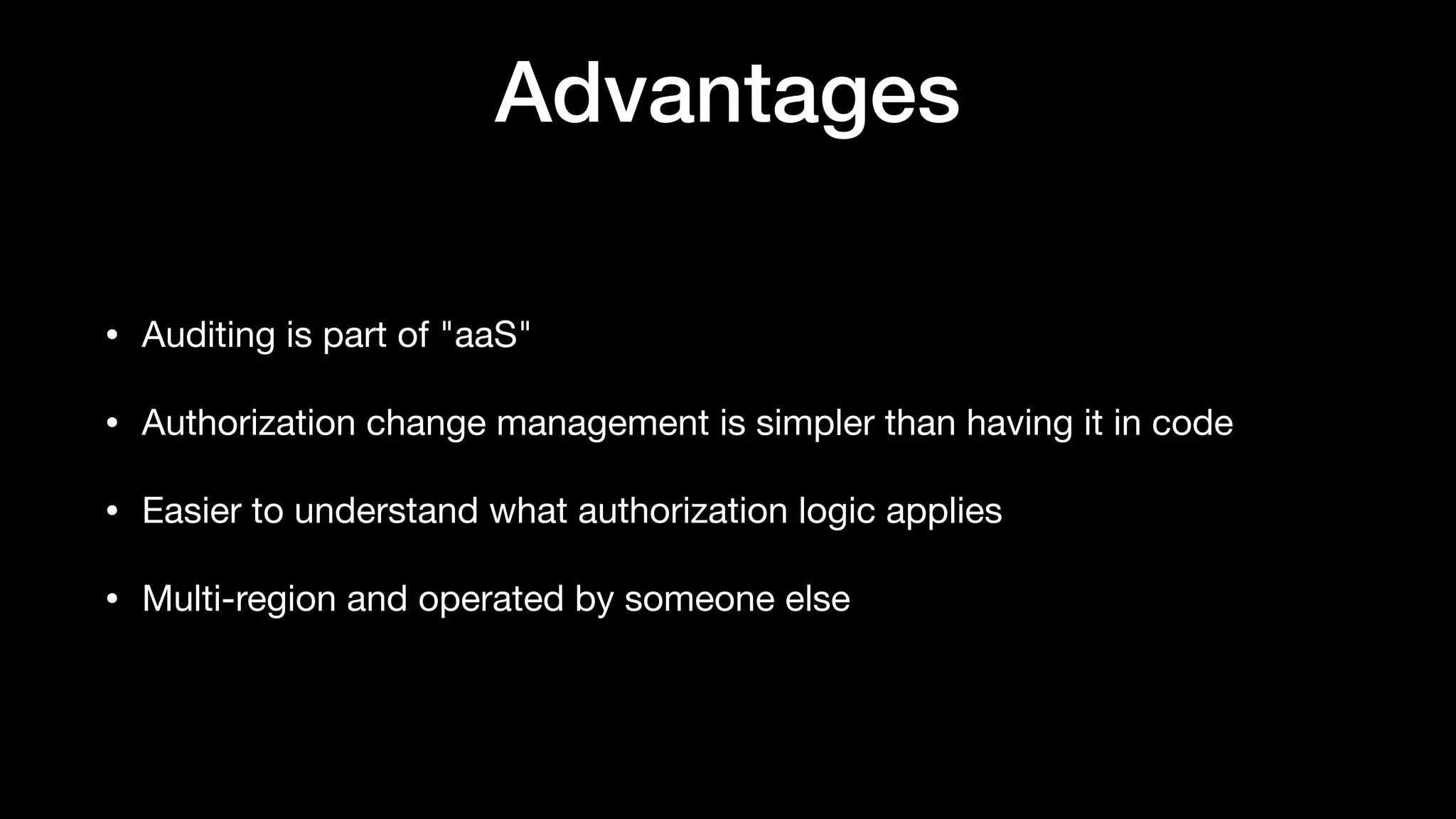
• Auditing is part of "aaS"

• Authorization change management is simpler than having it in code

• Easier to understand what authorization logic applies

• Multi-region and operated by someone else
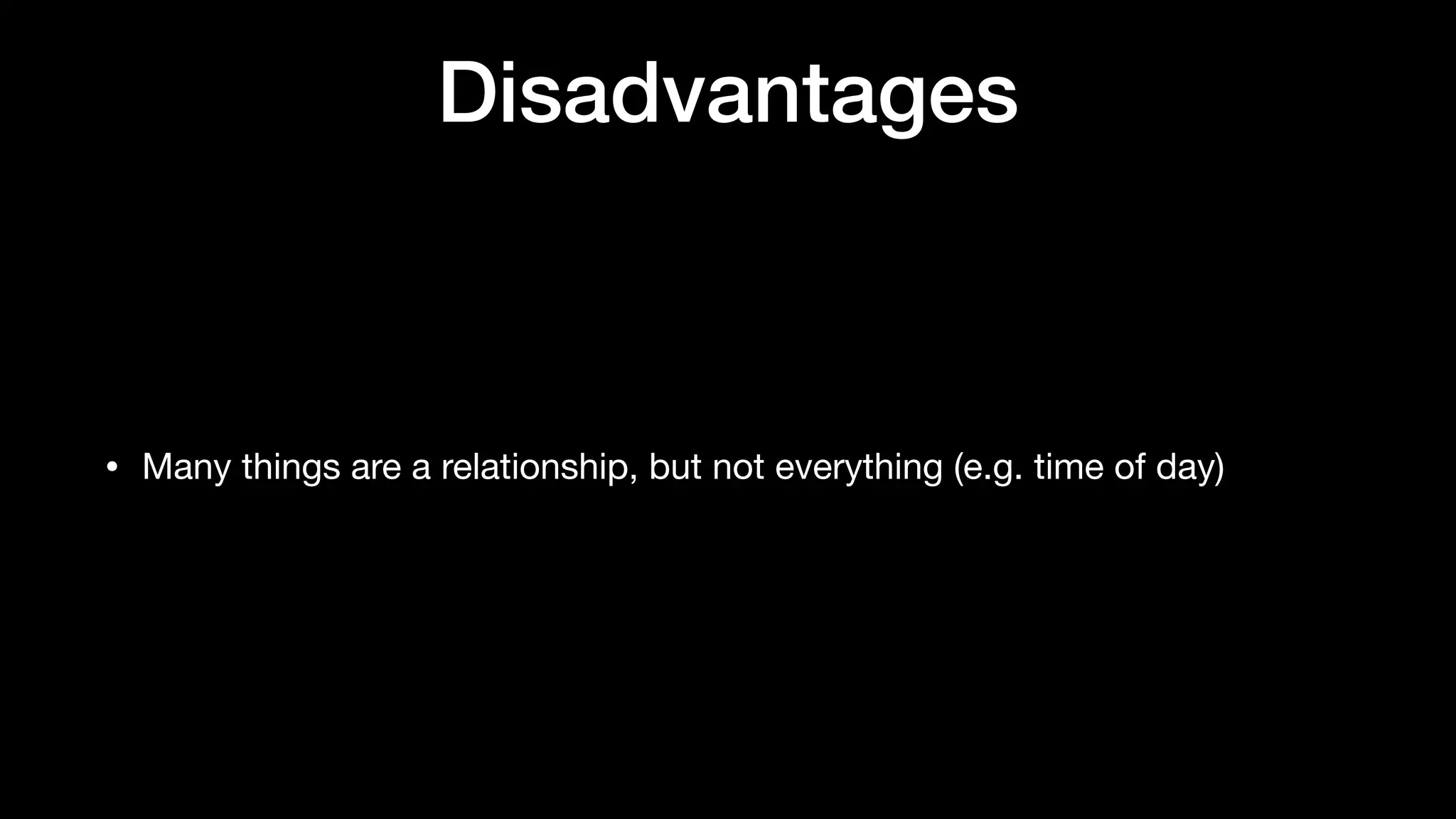
Disadvantages
• Many things are a relationship, but not everything (e.g. time of day)
Approach #3: Combined
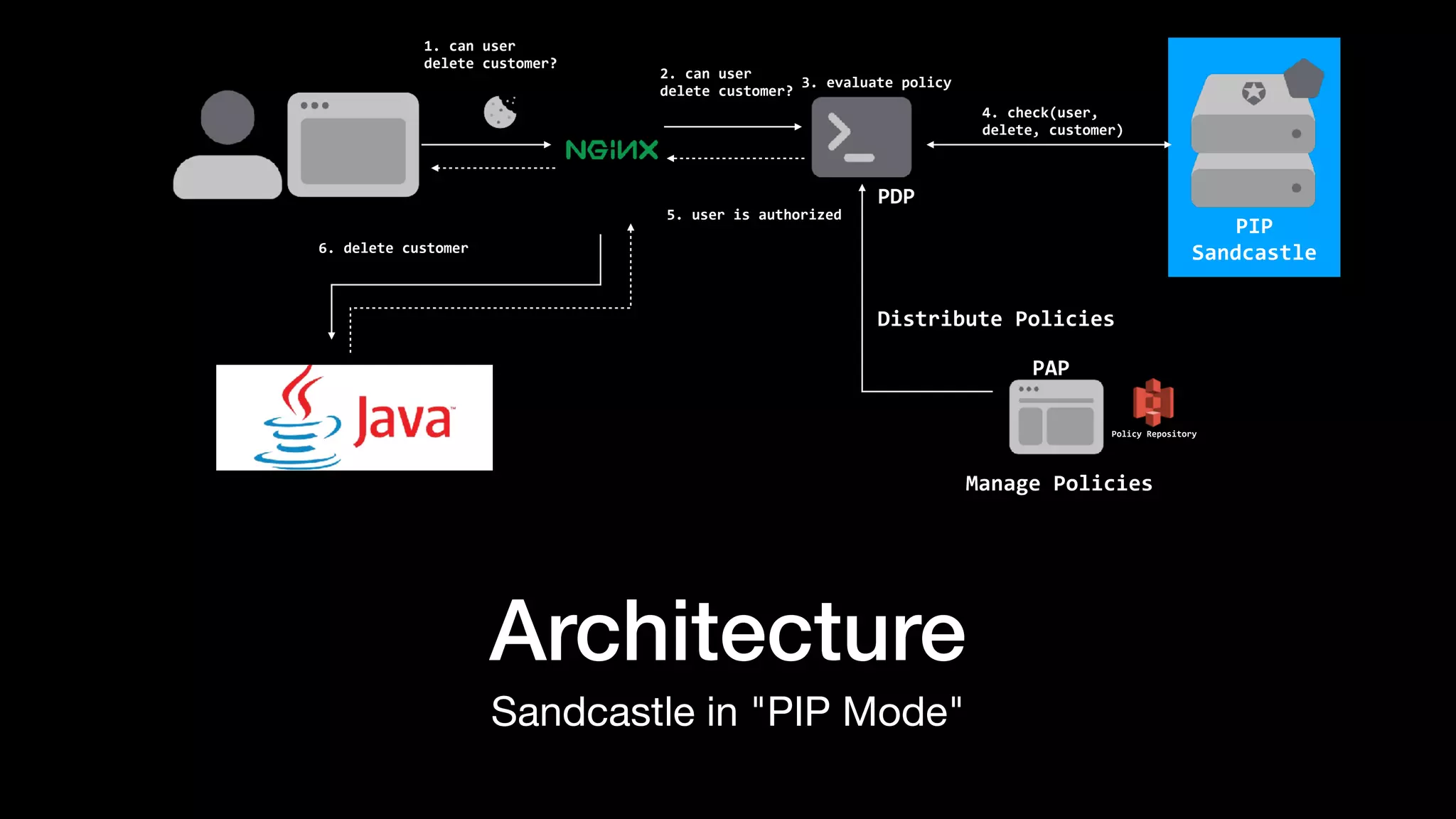
Architecture
Sandcastle in "PIP Mode"
4.	check(user,	
delete,	customer)


2.	can	user	
delete	customer?


1.	can	user	
delete	customer?


Manage	Policies


Distribute	Policies
PAP
PDP


PIP


Sandcastle
6.	delete	customer


5.	user	is	authorized


Policy	Repository


3.	evaluate	policy
Final Thoughts
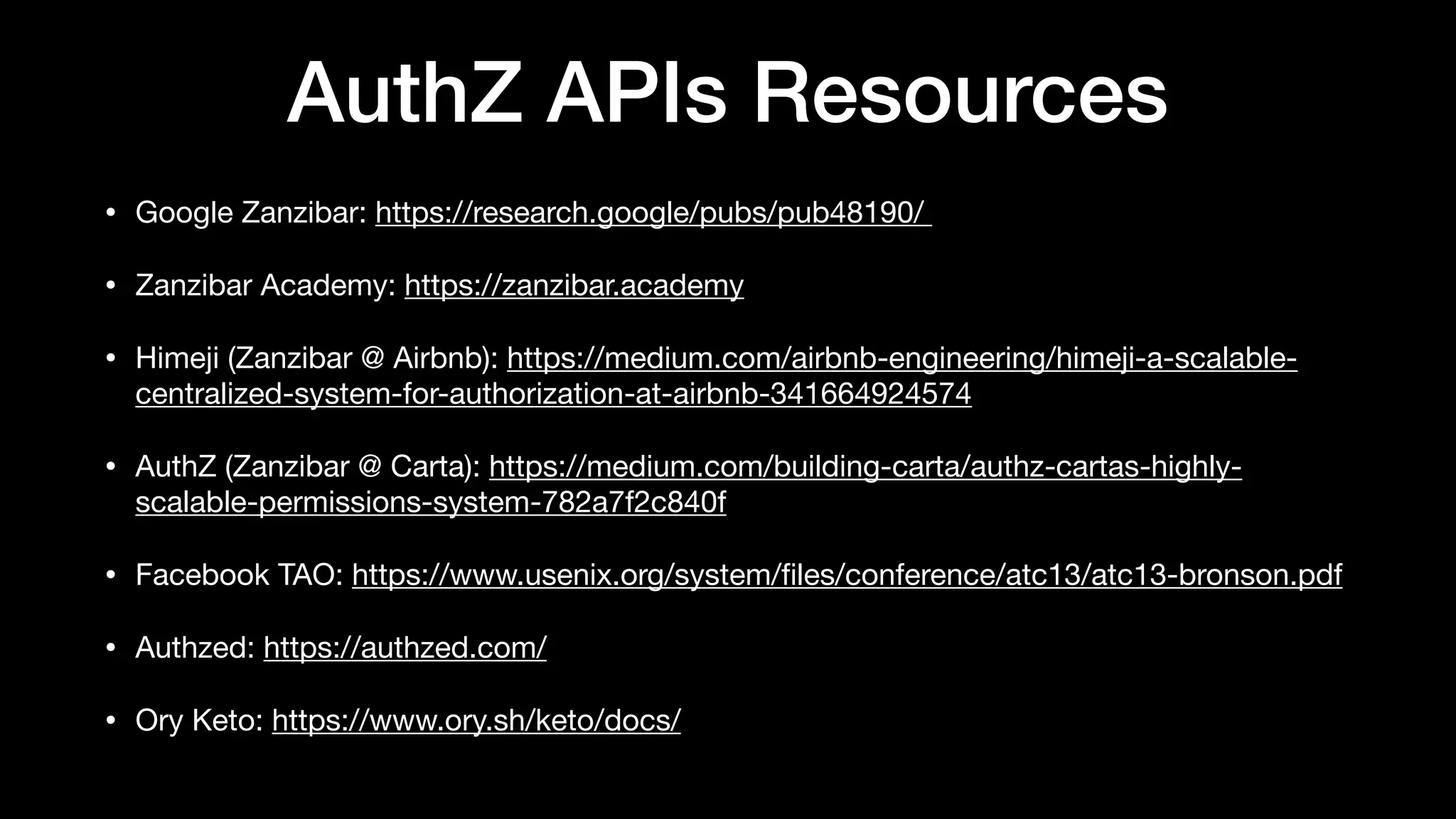
AuthZ APIs Resources
• Google Zanzibar: https://research.google/pubs/pub48190/ 

• Zanzibar Academy: https://zanzibar.academy

• Himeji (Zanzibar @ Airbnb): https://medium.com/airbnb-engineering/himeji-a-scalable-
centralized-system-for-authorization-at-airbnb-341664924574

• AuthZ (Zanzibar @ Carta): https://medium.com/building-carta/authz-cartas-highly-
scalable-permissions-system-782a7f2c840f

• Facebook TAO: https://www.usenix.org/system/
fi
les/conference/atc13/atc13-bronson.pdf

• Authzed: https://authzed.com/

• Ory Keto: https://www.ory.sh/keto/docs/
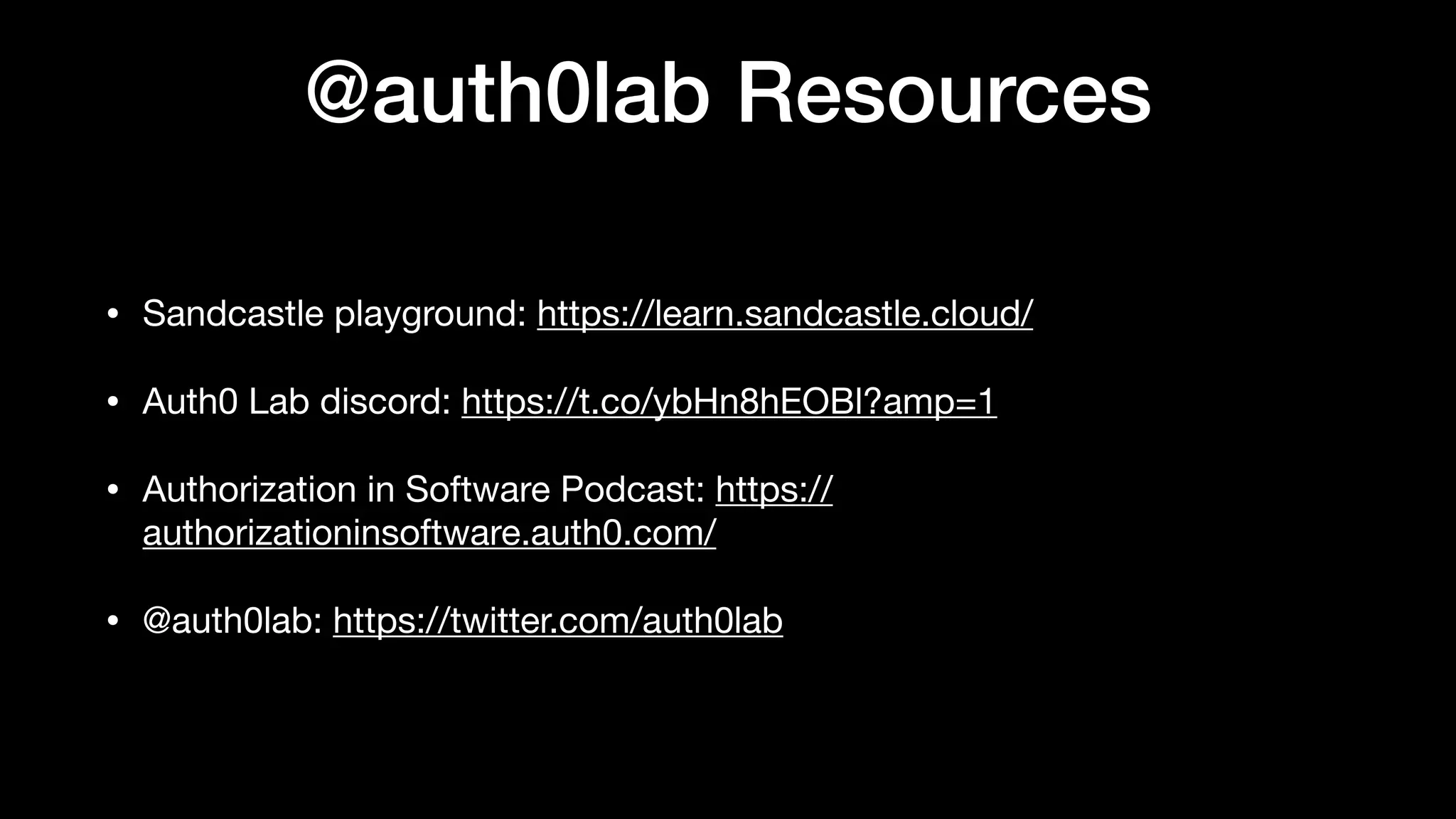
@auth0lab Resources
• Sandcastle playground: https://learn.sandcastle.cloud/

• Auth0 Lab discord: https://t.co/ybHn8hEOBl?amp=1

• Authorization in Software Podcast: https://
authorizationinsoftware.auth0.com/

• @auth0lab: https://twitter.com/auth0lab
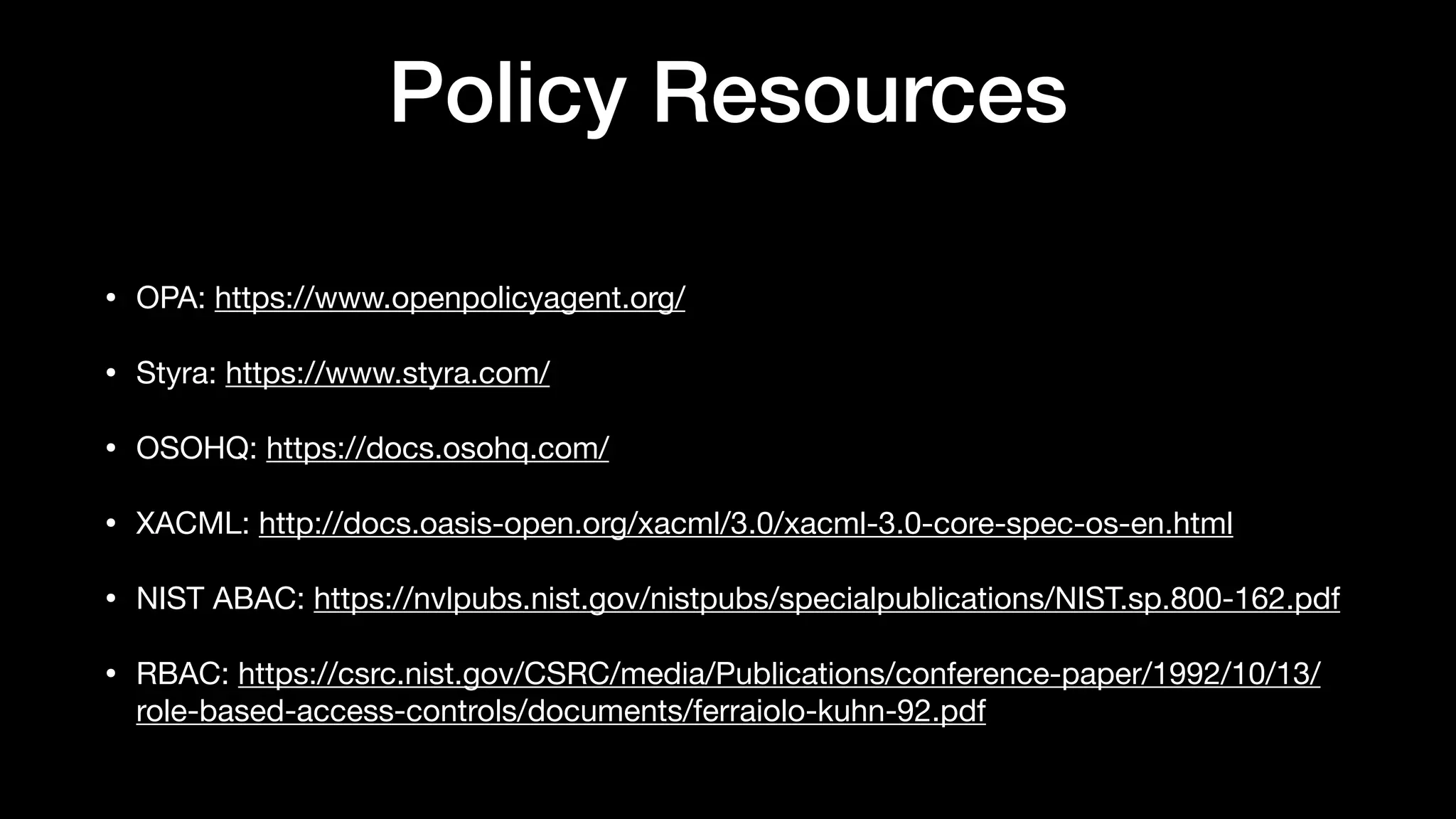
Policy Resources
• OPA: https://www.openpolicyagent.org/

• Styra: https://www.styra.com/

• OSOHQ: https://docs.osohq.com/

• XACML: http://docs.oasis-open.org/xacml/3.0/xacml-3.0-core-spec-os-en.html

• NIST ABAC: https://nvlpubs.nist.gov/nistpubs/specialpublications/NIST.sp.800-162.pdf

• RBAC: https://csrc.nist.gov/CSRC/media/Publications/conference-paper/1992/10/13/
role-based-access-controls/documents/ferraiolo-kuhn-92.pdf
Thanks!
@dschenkelman

@auth0lab
Questions?
New York
JULY
Australia
SEPTEMBER
Singapore
APRIL
Helsinki & North
MARCH
Paris
DECEMBER
London
OCTOBER
Jakarta
FEBRUARY
Hong Kong
AUGUST
JUNE
India
MAY
Check out our API Conferences here
50+ events since 2012, 14 countries, 2,000+ speakers, 50,000+ attendees,
300k+ online community
Want to talk at one of our conferences?
Apply to speak here

apidays LIVE London 2021 - Authorization is on the rise. by Damian Schenkelman, Auth0