Understanding Cloud Native API Deployment
Improving customer experience at speed
October, 2021
Hello!
2
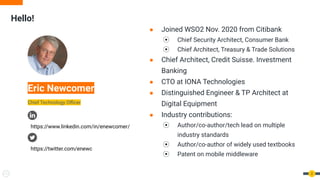
Eric Newcomer
Chief Technology Officer
● Joined WSO2 Nov. 2020 from Citibank
⦿ Chief Security Architect, Consumer Bank
⦿ Chief Architect, Treasury & Trade Solutions
● Chief Architect, Credit Suisse. Investment
Banking
● CTO at IONA Technologies
● Distinguished Engineer & TP Architect at
Digital Equipment
● Industry contributions:
⦿ Author/co-author/tech lead on multiple
industry standards
⦿ Author/co-author of widely used textbooks
⦿ Patent on mobile middleware
https://www.linkedin.com/in/enewcomer/
https://twitter.com/enewc
How it started - where it’s going now
3
4
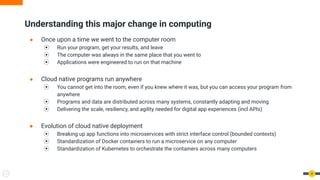
● Once upon a time we went to the computer room
⦿ Run your program, get your results, and leave
⦿ The computer was always in the same place that you went to
⦿ Applications were engineered to run on that machine
● Cloud native programs run anywhere
⦿ You cannot get into the room, even if you knew where it was, but you can access your program from
anywhere
⦿ Programs and data are distributed across many systems, constantly adapting and moving
⦿ Delivering the scale, resiliency, and agility needed for digital app experiences (incl APIs)
● Evolution of cloud native deployment
⦿ Breaking up app functions into microservices with strict interface control (bounded contexts)
⦿ Standardization of Docker containers to run a microservice on any computer
⦿ Standardization of Kubernetes to orchestrate the containers across many computers
Understanding this major change in computing
5
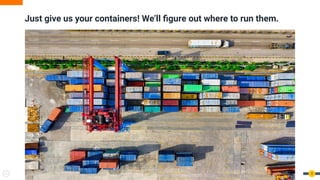
Just give us your containers! We’ll figure out where to run them.
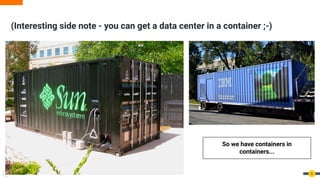
(Interesting side note - you can get a data center in a container ;-)
6
So we have containers in
containers...
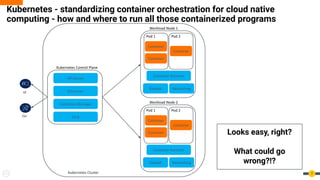
Kubernetes - standardizing container orchestration for cloud native
computing - how and where to run all those containerized programs
CLI
UI
Kubernetes Control Plane
API Server
Scheduler
Controller-Manager
Etcd
Workload Node 1
Container Runtime
Pod 1
Container
Pod 2
Container
Container
Kubelet Networking
Workload Node 2
Container Runtime
Pod 1
Container
Pod 2
Container
Container
Kubelet Networking
Kubernetes Cluster
Looks easy, right?
What could go
wrong?!?
7
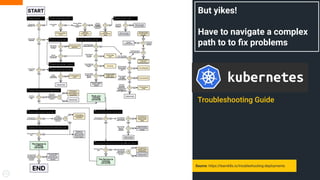
Troubleshooting Guide
8
Source: https://learnk8s.io/troubleshooting-deployments
But yikes!
Have to navigate a complex
path to to fix problems
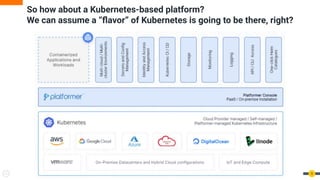
So how about a Kubernetes-based platform?
We can assume a “flavor” of Kubernetes is going to be there, right?
9
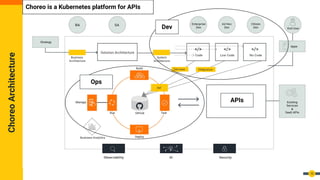
Choreo
Architecture
10
Dev
Ops
APIs
Choreo is a Kubernetes platform for APIs
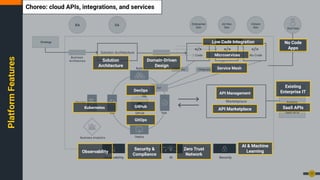
Platform
Features
11
Microservices
Kubernetes
Low Code
DevOps
API Marketplace
Existing
Enterprise IT
SaaS APIs
AI & Machine
Learning
Service Mesh
Security &
Compliance
GitOps
API Management
No Code
Apps
Low Code Integration
Zero Trust
Network
Observability
Solution
Architecture
GitHub
Domain-Driven
Design
Choreo: cloud APIs, integrations, and services
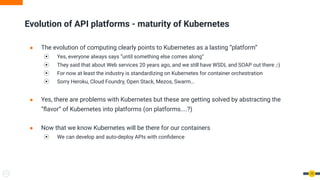
Evolution of API platforms - maturity of Kubernetes
● The evolution of computing clearly points to Kubernetes as a lasting “platform”
⦿ Yes, everyone always says “until something else comes along”
⦿ They said that about Web services 20 years ago, and we still have WSDL and SOAP out there ;-)
⦿ For now at least the industry is standardizing on Kubernetes for container orchestration
⦿ Sorry Heroku, Cloud Foundry, Open Stack, Mezos, Swarm…
● Yes, there are problems with Kubernetes but these are getting solved by abstracting the
“flavor” of Kubernetes into platforms (on platforms....?)
● Now that we know Kubernetes will be there for our containers
⦿ We can develop and auto-deploy APIs with confidence
12
13
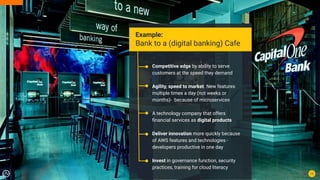
Example:
Bank to a (digital banking) Cafe
Competitive edge by ability to serve
customers at the speed they demand
Agility, speed to market. New features
multiple times a day (not weeks or
months)- because of microservices
A technology company that offers
financial services as digital products
Deliver innovation more quickly because
of AWS features and technologies -
developers productive in one day
Invest in governance function, security
practices, training for cloud literacy
Summary
● Kubernetes platform
○ Is here to stay - the maturity of cloud deployment is based on it
○ Has an important role to play as a platform for APIs, integrations, and services
● Choreo fulfills this role by
○ Delivering the benefits of cloud native computing development through full code, low
code & no code abstractions
○ Automatically builds and deploys APIs, integrations, and services
○ Spend more time innovating, less time plumbing
○ AI & machine learning data mapping, coding tips, runtime diagnostics
○ Identity & access management with Asgardeo IDaaS (also from WSO2)
● Delivered in the cloud, on-premises, and hybrid
○ Abstracts development
○ Abstracts deployment
● Get the cloud native benefits of Capital One not in years but months!
14
wso2.com
Thanks!
Appendix
Thanks!
16

[API World 2021 ] - Understanding Cloud Native Deployment

  • 1.
    Understanding Cloud NativeAPI Deployment Improving customer experience at speed October, 2021
  • 2.
    Hello! 2 Eric Newcomer Chief TechnologyOfficer ● Joined WSO2 Nov. 2020 from Citibank ⦿ Chief Security Architect, Consumer Bank ⦿ Chief Architect, Treasury & Trade Solutions ● Chief Architect, Credit Suisse. Investment Banking ● CTO at IONA Technologies ● Distinguished Engineer & TP Architect at Digital Equipment ● Industry contributions: ⦿ Author/co-author/tech lead on multiple industry standards ⦿ Author/co-author of widely used textbooks ⦿ Patent on mobile middleware https://www.linkedin.com/in/enewcomer/ https://twitter.com/enewc
  • 3.
    How it started- where it’s going now 3
  • 4.
    4 ● Once upona time we went to the computer room ⦿ Run your program, get your results, and leave ⦿ The computer was always in the same place that you went to ⦿ Applications were engineered to run on that machine ● Cloud native programs run anywhere ⦿ You cannot get into the room, even if you knew where it was, but you can access your program from anywhere ⦿ Programs and data are distributed across many systems, constantly adapting and moving ⦿ Delivering the scale, resiliency, and agility needed for digital app experiences (incl APIs) ● Evolution of cloud native deployment ⦿ Breaking up app functions into microservices with strict interface control (bounded contexts) ⦿ Standardization of Docker containers to run a microservice on any computer ⦿ Standardization of Kubernetes to orchestrate the containers across many computers Understanding this major change in computing
  • 5.
    5 Just give usyour containers! We’ll figure out where to run them.
  • 6.
    (Interesting side note- you can get a data center in a container ;-) 6 So we have containers in containers...
  • 7.
    Kubernetes - standardizingcontainer orchestration for cloud native computing - how and where to run all those containerized programs CLI UI Kubernetes Control Plane API Server Scheduler Controller-Manager Etcd Workload Node 1 Container Runtime Pod 1 Container Pod 2 Container Container Kubelet Networking Workload Node 2 Container Runtime Pod 1 Container Pod 2 Container Container Kubelet Networking Kubernetes Cluster Looks easy, right? What could go wrong?!? 7
  • 8.
    Troubleshooting Guide 8 Source: https://learnk8s.io/troubleshooting-deployments Butyikes! Have to navigate a complex path to to fix problems
  • 9.
    So how abouta Kubernetes-based platform? We can assume a “flavor” of Kubernetes is going to be there, right? 9
  • 10.
  • 11.
    Platform Features 11 Microservices Kubernetes Low Code DevOps API Marketplace Existing EnterpriseIT SaaS APIs AI & Machine Learning Service Mesh Security & Compliance GitOps API Management No Code Apps Low Code Integration Zero Trust Network Observability Solution Architecture GitHub Domain-Driven Design Choreo: cloud APIs, integrations, and services
  • 12.
    Evolution of APIplatforms - maturity of Kubernetes ● The evolution of computing clearly points to Kubernetes as a lasting “platform” ⦿ Yes, everyone always says “until something else comes along” ⦿ They said that about Web services 20 years ago, and we still have WSDL and SOAP out there ;-) ⦿ For now at least the industry is standardizing on Kubernetes for container orchestration ⦿ Sorry Heroku, Cloud Foundry, Open Stack, Mezos, Swarm… ● Yes, there are problems with Kubernetes but these are getting solved by abstracting the “flavor” of Kubernetes into platforms (on platforms....?) ● Now that we know Kubernetes will be there for our containers ⦿ We can develop and auto-deploy APIs with confidence 12
  • 13.
    13 Example: Bank to a(digital banking) Cafe Competitive edge by ability to serve customers at the speed they demand Agility, speed to market. New features multiple times a day (not weeks or months)- because of microservices A technology company that offers financial services as digital products Deliver innovation more quickly because of AWS features and technologies - developers productive in one day Invest in governance function, security practices, training for cloud literacy
  • 14.
    Summary ● Kubernetes platform ○Is here to stay - the maturity of cloud deployment is based on it ○ Has an important role to play as a platform for APIs, integrations, and services ● Choreo fulfills this role by ○ Delivering the benefits of cloud native computing development through full code, low code & no code abstractions ○ Automatically builds and deploys APIs, integrations, and services ○ Spend more time innovating, less time plumbing ○ AI & machine learning data mapping, coding tips, runtime diagnostics ○ Identity & access management with Asgardeo IDaaS (also from WSO2) ● Delivered in the cloud, on-premises, and hybrid ○ Abstracts development ○ Abstracts deployment ● Get the cloud native benefits of Capital One not in years but months! 14
  • 15.
  • 16.