Apache Pulsar in Action MEAP V04 David Kjerrumgaard
Apache Pulsar in Action MEAP V04 David Kjerrumgaard
Apache Pulsar in Action MEAP V04 David Kjerrumgaard
Apache Pulsar in Action MEAP V04 David Kjerrumgaard
Apache Pulsar in Action MEAP V04 David Kjerrumgaard
1.
Apache Pulsar inAction MEAP V04 David
Kjerrumgaard download
https://textbookfull.com/product/apache-pulsar-in-action-
meap-v04-david-kjerrumgaard/
Download full version ebook from https://textbookfull.com
2.
We believe theseproducts will be a great fit for you. Click
the link to download now, or visit textbookfull.com
to discover even more!
Spring in Action - Sixth Edition (MEAP V04) Craig Walls
https://textbookfull.com/product/spring-in-action-sixth-edition-
meap-v04-craig-walls/
Machine Learning Engineering in Action MEAP V04 Ben T
Wilson
https://textbookfull.com/product/machine-learning-engineering-in-
action-meap-v04-ben-t-wilson/
Five Lines of Code MEAP V04 Christian Clausen
https://textbookfull.com/product/five-lines-of-code-
meap-v04-christian-clausen/
Microservices in NET Core Second Edition MEAP V04
Christian Horsdal Gammelgaard
https://textbookfull.com/product/microservices-in-net-core-
second-edition-meap-v04-christian-horsdal-gammelgaard/
3.
Domain Specific LanguagesMade Easy MEAP V04 Meinte
Boersma
https://textbookfull.com/product/domain-specific-languages-made-
easy-meap-v04-meinte-boersma/
Quantum Computing In Action MEAP v09 Johan Vos
https://textbookfull.com/product/quantum-computing-in-action-
meap-v09-johan-vos/
Kubernetes in Action, Second Edition (MEAP V05) Marko
Luksa
https://textbookfull.com/product/kubernetes-in-action-second-
edition-meap-v05-marko-luksa/
CMIS and Apache Chemistry in Action 1st Edition Florian
Muller
https://textbookfull.com/product/cmis-and-apache-chemistry-in-
action-1st-edition-florian-muller/
Designing APIs with Swagger and OpenAPI MEAP V04 Joshua
S Ponelat Lukas L Rosenstock
https://textbookfull.com/product/designing-apis-with-swagger-and-
openapi-meap-v04-joshua-s-ponelat-lukas-l-rosenstock/
welcome
As a frequentsubscriber to Manning’s early access program,
I am thrilled to welcome you the MEAP for my very own
book, Pulsar in Action! In order to get the most out of this
book, you should have some established skills in Java
programming, along with basic experience running
container-based applications with Docker.
Pulsar is a complex messaging system that was originally
created at Yahoo and has been contributed to the Apache
Software Foundation. It was designed to provide fast,
scalable, and durable messaging and much more. I see
Pulsar raising the standard for both messaging and storage
platforms as the world shifts away from batch-processing
and towards real-time stream processing.
The book is divided into three parts. Part 1 will cover the
basics of messaging, streaming data, and stream processing
with a focus on how Pulsar provides these features. It will
also cover Pulsar unique architecture and contrast it against
the other popular messaging frameworks such as Kafka.
The second part will focus on Pulsar’s native stream
processing capability, known as Pulsar Functions, that
makes it easy to deploy lightweight computing logic using
simple functions written in one of several popular
programming languages including Python, Java, .NET, and
8.
Go. It willalso cover how to use Pulsar Functions to develop
event-driven applications and microservices by providing in-
depth examples that you can download and try yourself.
The third and final part will focus on Stream storage, and
how Pulsar’s unique de-coupled architecture enables retain
messages indefinitely on cloud storage services such as
AWS S3 or Azure Blob storage. We will also explore how this
capability directly supports event sourcing and the
development of applications that follow the Command
Query Responsibility Segregation (CQRS) architecture
pattern. Lastly, we will demonstrate how to query raw
message data inside Pulsar using standard SQL query
syntax by leveraging the Presto execution engine.
Your feedback is essential to creating the best book
possible, and I encourage you to please share your
comments, questions, and suggestions in Manning’s
liveBook Discussion Forum for my book.
—David Kjerrumgaard
9.
brief contents
Part 1:Getting Started with Apache Pulsar
1 Introduction to Apache Pulsar
2 Getting to Know Pulsar
Part 2: Apache Pulsar Development
Essentials
3 Pulsar Functions
4 Pulsar IO Connectors
5 Pulsar Security
6 Pulsar Schema Registry
Part 3: Hands-on application development
with Apache Pulsar
7 Pulsar Function Patterns
8 Resiliency Patterns
9 Data Access Patterns
1 Introduction toApache Pulsar
This chapter covers
· Introduction to streaming data concepts
· How Apache Pulsar can handle all of streaming data needs.
· Compare Apache Pulsar to other messaging systems such as
Apache Kafka.
· Real-world use cases where Pulsar is currently being used for
stream processing.
Developed at Yahoo in 2013, Pulsar was first open sourced in
2016, and only 2 years after joining the Apache Software
Foundations’ incubation program graduated to Top Level
Project status. Apache Pulsar was designed from the ground
up to address the gaps in current open source messaging
systems such as multi-tenancy, geo-replication, and strong
durability guarantees.
The Apache Pulsar site describes it as a distributed pub-sub
messaging system that provides very low publish and end-
to-end latency, guaranteed message delivery, zero data loss,
and a serverless lightweight computing framework for
stream native data processing. Apache Pulsar provides the
three key capabilities for processing large data sets in real-
time:
12.
· Real-time messaging:Data needs to be moved from
sources to your processing applications reliably with
consistent performance and without risk of data loss.
· Real-time compute: These real-time datasets must
be transformed, processed, and joined with other
datasets to provide value to your applications.
· Scalable storage: In order to provide consistent
experiences for end users, data must be available even
in the event of power failures or network connectivity
issues. Pulsar’s scalable storage layer is able to expand
to meet peak demand and support infinite data
retention policies.
1.1 Unified Messaging
Apache Pulsar is the only messaging platform that combines
high-performance streaming (which Apache Kafka pursues)
and traditional queuing (which RabbitMQ pursues) into a
unified messaging model and API. Pulsar gives you one
system for both streaming and queuing, with the same high
performance, using a unified API.
For those of you not familiar with messaging systems and
the associated concepts, you can think of messaging as the
reliable transmission of data from one system to another via
an intermediary system.
Unlike point-to-point communication channels where the
producers need to know the receivers in advance, messaging
systems decouple the message senders from the receivers.
13.
This decoupling simplifiesapplication development by
providing a standardized, reliable intra-component
communication channel that serves as a persistent buffer for
handling data, even when some of the components are
offline. As you can see in Figure 1.1, a messaging systems
main purpose is to route incoming data from producers to
the appropriate consumers in an efficient and reliable way.
Figure 1.1 A Conceptual Messaging System
Messaging is a broad term that covers several distinct
communication methods that differ based on how data is
routed between message producers and consumers. The two
primary messaging models are publish-subscribe, (aka pub-
sub) messaging, and message queuing.
14.
1.1.1 Publish-Subscribe Messaging
AsI mentioned earlier, Pulsar is as a distributed publish-
subscribe messaging system. In pub-sub messaging,
producers publish messages to named channels known as
“topics”. Consumers can then subscribe to those topics to
receiving the incoming messages.
A publish-subscribe (pub-sub) message channel receives
incoming messages from multiple producers and stores them
in the exact order that they arrive. However, it differs from
message queuing on the consumption side because it
supports multiple consumers receiving each message in a
topic via a subscription mechanism as shown below in Figure
1.2.
Figure 1.2 Publish-Subscribe Message Channel
Publish-subscribe messaging systems are ideally suited for
use cases that require multiple consumers to receive each
message, or those in which the order in which the messages
are received and processed is crucial to maintaining a
correct system state. Consider the case of stock price
service that can be used by a large number of systems. Not
only is it important that these services receive all the
15.
messages, it isequally important that the price changes
arrive in the correct order. Pulsar supports three different
modes of subscriptions; exclusive, shared, and failover as
illustrated in Figure 1.3 below:
An exclusive subscription only permits a single consumer to
attach to the subscription and consume the messages. This
mode is used when you want to ensure that each message is
processed exactly once, and by a known consumer. In
contrast, shared subscriptions support multiple consumers
with messages getting delivered in round robin fashion
across all the consumers. While each message is processed
only once, you are unable to determine which consumer will
receive the message.
16.
Figure 1.3 Pulsar’sSubscription Modes
Failover subscriptions incorporate concepts from the
previous two subscription modes. They allow multiple
consumers to attach to the subscription like a shared
subscription, but only one consumer is selected to receive
the messages like an exclusive subscription. This
configuration allows for you to provide a failover consumer
to continue processing the messages in to topic in the event
of a consumer failure. If the active consumer fails to process
a message, Pulsar automatically fails over to the next
consumer in the list and continues delivering the messages.
17.
1.1.2 Message Queuing
Pulsaralso supports messaging queuing, where incoming
messages from multiple producers are queued up in the
exact order that they arrive. Each message in the queue is
processed by exactly one consumer as shown below in
Figure 1.4. Due to its exactly-once processing guarantees,
message queuing is ideal for work queue use cases.
Figure 1.4 Message Queuing
Message queues can easily support higher rates of
consumption by scaling up the number of consumers in the
event of a high number of backlogged messages. To ensure
that a message is processed exactly once, each message
must be removed from the queue after it has been
successfully processed and acknowledged by the consumer.
In the event of consumer failures (meaning no
acknowledgement is received within a specified timeframe),
the message will be resent at to another consumer. In such
a scenario, the message will most likely be processed out of
order. Therefore, message queues are well suited for use
cases where it is critical that each message is processed
18.
exactly once, butthe order in which the messages is
processed is not important.
1.2 Stream Native Processing
Included with Apache Pulsar is a lightweight computing
engine named “Pulsar Functions” which allows developers to
deploy a simple function implementation in Java or Python.
This feature allows users to enjoy the benefits of serverless
computing, similar to AWS Lambda computing within an
open-source messaging platform without being tied to a
proprietary cloud providers API.
This serverless lightweight computing framework allows you
to apply processing logic to data as it is routed through the
messaging system. Unlike other messaging systems which
act a “dumb pipes” for moving data from system to system,
Pulsar provides the capabilities to perform simple
computations on the messages before they are routed to the
consumers.
While there isn’t an official definition, the term streaming
processing generally refers to the processing of unbounded
datasets that are stream in continuously from some source
system. One of the key architectural decisions within a
stream processing framework is how and when to process
these endless datasets. There are three basic approaches to
processing these datasets, batch processing, micro-batching,
and streaming.
19.
1.2.1 Traditional Batching
Historically,the vast majority of data processing frameworks
have been designed for batch processing. Traditional data
warehouses, Hadoop, and Spark are just a few common
examples of systems that process large datasets in batches.
Data is often fed into these systems via long-running and
complex data pipelines or ETL pipelines, that cleanse,
prepare, and format the incoming data for consumption.
Messaging systems often serve as little more than
intermediate buffers that store and route the data between
the various processing stages of the pipeline.
These long-running data ingestion pipelines are often
comprised of multiple processing engines that are designed
to process big datasets such as Apache Hive, Spark, and
traditional SQL processing engines which are all designed to
process static data. Therefore, in order to maximize the
throughput of these frameworks, the streaming dataset gets
processed accumulated into large batches before it is
processed, as shown in Figure 1.5. What’s more, these
resultant datasets are fed into other batching systems for
additional processing.
There are several drawbacks to this approach, but one of the
biggest ones was the processing latency between a data
element arrive and when it was processed. Users of these
batch-oriented processing systems were often making
decisions on old data and are not able to access information
until several hours after the event that generated the data
had occurred.
20.
1.2.2 Micro-Batching
One techniquethat was introduced to address the processing
latency that plagued more traditional batch processing
engines was to dramatically reduce either the batch size or
the processing interval. Even though the processing may
occur more frequently, the data is still processed one batch
at a time, so it is often referred to as micro-batching and is
used by such processing frameworks as Spark Streaming or
Apache Flink.
In micro-batch processing, newly arriving data elements are
collected into a logical group and then processed together at
some point in time in the future as batch, as shown in Figure
1.5. Typically, the processing occurs at either a fixed time
interval or when a certain amount of data has been
collected.
Figure 1.5 Batch Processing Cadence
While this approach does decrease the processing latency
between when a data element arrives and when it was
processed, it still introduces artificial delays into the process
21.
that compound asthe complexity of the data pipeline
increases. Consequently, even micro-batch processing
applications cannot rely on consistent response times and
need to account for delays between when the data arrived
and when it has been processed.
This makes batch processing more appropriate for use cases
that do not require having the most recent data and can
tolerate slower response times, whereas stream processing
is better suited for use cases that require near real-time
responsiveness such as fraud detection, real-time pricing,
and system monitoring.
1.2.3 Stream Processing
In Pulsar’s native stream processing framework, each new
piece of data is processed when it arrives, as illustrated
below in Figure 1.6. Unlike batch processing, there are no
arbitrary processing intervals and each individual data
element is processed separately.
Figure 1.6 Stream Processing Cadence
Although it may seem as though the differences between
stream processing and micro-batch are just a matter of
22.
timing, there implicationsfor both the data processing
systems and the applications that rely on them.
The business value of data decreases rapidly after it is
created, particularly in use cases such as fraud prevention or
anomaly detection. The high-volume, high-velocity datasets
used to feed these use cases often contain valuable, but
perishable, insights that must be acted upon immediately. A
fraudulent business transaction, such as transferring money
or downloading licensed software must be identified and
acted upon before the transaction completes, otherwise it
will too late to prevent the thief from obtaining the funds
illegally.
In order to maximize the value of their data for these use
cases, developers must fundamentally change their
approach to processing real-time data by focusing on
reducing the processing latency introduced from traditional
batch processing frameworks and utilize a more reactive
approach such as stream processing.
1.3 Scalable Storage
Apache Pulsar’s Multi-layered architecture completely
decouples the message serving layer from the message
storage layer, allowing each to scale independently.
Traditional distributed data processing technologies such as
Hadoop and Spark have taken the approach of co-locating
data processing and data storage on the same cluster nodes
or instances. That design choice offered a simpler
23.
infrastructure and somepossible performance benefits due
to reducing transfer of data over the network, but at the cost
of a lot of tradeoffs that impact scalability, resiliency, and
operations.
Pulsar’s architecture takes a very different approach, one
that’s starting to gain traction in a number of “cloud-native”
solutions and that is made possible in part by the significant
improvements in network bandwidth that are commonplace
today, namely separation of compute and storage. Pulsar’s
architecture decouples data serving and data storage into
separate layers: data serving is handled by stateless
“broker” nodes, while data storage is handled by “bookie”
nodes as shown in Figure 1.7.
This decoupling has many benefits. For one, it enables each
layer to scale independently to provide infinite, elastic
capacity. By leveraging the ability of elastic environments
(such as cloud and containers) to automatically scale
resources up and down, this architecture can dynamically
adapt to traffic spikes. It also improves system availability
and manageability by significantly reducing the complexity
of cluster expansions and upgrades. Further, this design is
container-friendly, making Pulsar the ideal technology for
hosting a cloud native streaming system.
Apache Pulsar is backed by a highly scalable, durable stream
storage layer based on Apache BookKeeper that provides
strong durability guarantees, distributed data storage and
replication, and built-in geo-replication.
24.
Figure 1.7: DecoupledStorage and Serving Layers
A natural extension of the multi-layered approach approach
is the concept of tiered storage in which less frequently
accessed data can be offloaded to a more cost-effective
persistence store such as S3 or Azure Cloud. Pulsar provides
the ability to configure the automated offloaded of data from
local disks in the storage layer to those popular cloud
storage platforms. These offloads are triggered based upon a
pre-defined storage size or time period and provide you with
a safe backup of all your event data while simultaneously
freeing up storage capacity on the local disk for incoming
data.
1.4 Comparison to Apache Kafka
Both Apache Kafka and Apache Pulsar have similar
messaging concepts. Clients interact with both systems via
topics that are logically separated into multiple partitions.
When an unbounded data stream is written to a topic, it is
often divided into a fixed number of equal sized groupings
known as partitions. This allows the data to be even
25.
distributed across thesystem and consumed by multiple
clients concurrently.
The fundamental difference between Apache Pulsar and
Apache Kafka is the underlying architectural approach each
system takes to storing these partitions. Apache Kafka is a
partition-centric pub/sub system that is designed to run as a
monolithic architecture in which the serving and storage
layers are located on the same node.
1.4.1 Partition-Centric Storage in Kafka
In Kafka, the partition data is stored as a single continuous
piece of data on the leader node, and then replicated to a
pre-configured number of replica nodes for redundancy. This
design limits the capacity of the partition, and by extension
the topic, in two ways; First off, since the partition must be
stored on local disk, the maximum size of the partition is
that of the largest single disk on the host machine
(approximately 4TB in a “fresh” install scenario), secondly,
since the data must be replicated the partition can only grow
to the size of smallest amount of disk space on the replica
nodes.
26.
Figure 1.8: KafkaPartitions
Let’s consider the scenario in which you were fortunate
enough to have your leader be placed on a new node that
can dedicate an entire 4TB disk to the storage of the
partition, and the two replica nodes each only have 1TB of
storage capacity. After you have published 1TB of data to the
topic, Kafka would detect that the replica nodes are unable
to receive any more data and all incoming messages on the
topic would be halted until space is made available on the
replica nodes, as shown in Figure 1.9 This scenario could
potentially lead to data loss, if you have producers that are
unable to buffer the messages during this outage.
Once you have identified the issue, your only remedies are
to either make more room on the existing replica nodes by
deleting data from the disks, which will result in data loss,
27.
since the datais from other topics and most likely has not
been consumed yet. The other option is to add additional
nodes to the Kafka cluster and “rebalance” the partition so
that the newly added nodes will serve as the replicas.
Unfortunately, this requires recopying the entire 1TB
partition, which is an expensive, time-consuming, and error
prone process that requires an enormous amount of network
bandwidth and disk I/O. What’s worse is that the entire
partition is completely offline during this process, which is
not an ideal situation for a production application that has
stringent uptime SLAs.
Figure 1.9: Kafka Failure Scenario and Expansion
Unfortunately, recopying of partition data isn't limited to only
cluster expansion scenarios in Kafka. Several other failures
28.
can trigger datarecopying, including replica failures, disks
failures, or machine failures. This limitation is often missed
until users experience a failure in a production scenario.
1.4.2 Segment-Centric Storage in Pulsar
Within a segment-centric storage architecture, such as the
one used by Apache Pulsar, partitions are further broken
down further into segments that are rolled over based on a
pre-configured time or size limit. These segments are then
even distributed across a number of bookies in the storage
layer for redundancy and scale.
Figure 1.10: Pulsar Segments
29.
Let’s look atthe behavior of Apache Pulsar in the previous
scenario in which one of the bookies disks fills up and can no
longer accept incoming data. Since the partition is further
broken down into small segments, there is no need to
replicate the content of the entire bookie to the newly added
bookie. Instead, Pulsar would continue to write incoming
message segments to the remaining bookies with storage
capacity until the new bookie is added. At that point the
traffic will instantly and automatically ramp up on new nodes
or new partitions, and old data doesn’t have be recopied.
thirst. But itcould not be obtained without money, and money was not to be
had except by working for it, or by begging. Of these two methods the
Indian preferred the last.
“Work is for squaws!” he said, in a spiteful and contemptuous manner.
“It is not for warriors.”
But John, as he was sometimes called, did not look like the noble
warriors whom Cooper describes. He was a shaggy vagabond, content to
live on the alms he could obtain from the whites in the towns which he
visited. As for lodgings, he was forced to lie down in his blanket wherever
he could find the shelter of a tree or a forest.
The sight of the child had suggested to John a notable revenge. He could
steal the little child, who had called him an ugly man—an expression which
he understood. Thus he could wring the mother’s heart, and obtain revenge.
There would be little danger of interference, for he knew that Mr. Taylor
was away.
Mrs. Taylor and Carrie went back to the sitting-room where the mother
resumed her sewing, and Carrie began to play with her blocks on the floor.
Neither of them suspected that, just outside, the Indian was crouching, and
that from time to time he glanced into the room to watch his chances of
carrying out his plan.
By and by Carrie grew sleepy, as children are apt to do in the hot
summer afternoons, and when they are tired.
“Lie down on the sofa, my darling,” said her mother.
“So I will, mother,” said Carrie. “I am very hot and sleepy.”
She lay down, and her mother tenderly placed a cushion under the little,
weary head.
Soon Carrie was wrapped in the deep, unconscious sleep of childhood.
The Indian, with a look of satisfaction, beheld her repose, as he stole a
glance through the window.
Soon Mrs. Taylor thought of a direction she wished to give Jane.
Glancing at little Carrie, she left the room, knowing that the child would not
miss her.
No sooner had she left the room than the Indian, who had been waiting
for this, sprang in through the open window, clasped the unconscious child
in his arms, whose slumber was too profound to be disturbed even by this
32.
action, and ina moment was out on the lawn, speeding rapidly away with
the little girl in his arms.
Suspecting no harm, Mrs. Taylor remained absent for fifteen minutes,
then returning, her first glance was at the sofa, where she had left Carrie.
Her heart gave a sudden bound when she discovered her absence. But even
then she did not suspect the truth. She thought the child might have waked
up, and gone upstairs.
“Carrie! Carrie!” she called out, in the greatest uncertainty and alarm.
But there was no answer.
She summoned Jane, and together they hunted high and low for the little
girl, but in vain.
Then first a suspicion of the truth came to her.
“The Indian has carried her off!” she exclaimed in anguish, and sank
fainting to the floor.
33.
CHAPTER XXIII.
KIDNAPPED.
The Indianwas fleet-footed, like most of his race. After obtaining
possession of the child, he struck across the fields, for on the public road he
would have been liable to be seen and stopped. Little Carrie was in the deep
sleep of childhood, and did not awake for some time. This of course was
favorable to his design, for he had over a mile to go before he reached the
woods, in which the instinct of his race led him to take refuge. It was not till
a stray twig touched her cheek that the little girl awoke.
Opening her eyes, her glance rested on the dark face of the Indian, and,
as might have been expected, she uttered a shriek of terror. At the same time
she tried to get away.
“Put me down,” she cried in her fright.
“Not yet,” said the Indian.
“Where are you taking me, you ugly Indian? I want to go to my
mamma.”
“No go,” said the Indian.
“I want to go home,” said Carrie; and she renewed her efforts to get
away.
“No go home. Stay with John,” said the Indian.
“I don’t want to stay with you. Take me home.”
“No take home,” said the Indian; but he put her down, tired perhaps with
carrying her.
Carrie looked about her bewildered. All about her were thick woods, and
she could not see her way out. She did not know in what direction lay the
home to which she was so anxious to return, but she thought it might be in
the direction from which they had come. She started to run, but in an instant
the Indian was at her side. He seized her hand in his firm grasp, and
frowned upon her.
“Where go?” he asked.
34.
“Home to mymamma.”
“No go,” said he, shaking his head.
“Why did you take me away from my mamma?” asked the poor child.
“Bad woman! No give poor Indian money,” responded the savage.
“Take me home, and she will give you money,” urged the child.
“Not now. Did not give before. Too late,” responded John.
“Are you going to keep me here? Will you never take me home?” asked
Carrie, overwhelmed with alarm.
“Little girl stay with Indian; be Indian’s pickaninny.”
“I don’t want to be a pickaninny,” said Carrie. “Poor mamma will be so
frightened. Did she see you take me away?”
“No. She go out. Leave child asleep. Indian jump through window. Take
little girl.”
When Carrie understood how it was that she had been kidnapped, she
felt very much frightened; but even in her terror she felt some curiosity
about the Indian, and his mode of life.
“Where is your house?” she asked. “Is it here in the woods?”
“All places, under trees.”
“What! do you sleep under trees, without any roof?”
“Yes.”
“Why don’t you build a house?”
“Indian live in wigwam.”
“Then why don’t you live in a wigwam?”
“My wigwam far away—over there,” and he pointed to the north.
“Where will you sleep to-night?”
“Under tree.”
“Then you must take me home, I can’t sleep under a tree. I would catch
my death of cold. So mamma says.”
“Must stay. Get used to it. Indian make bed of leaves for pickaninny.”
“I don’t want to sleep on leaves. I want to sleep in my little bed at
home.”
“Come,” said John; and he dragged the child forward.
“Where are you taking me? Oh, carry me home!” pleaded Carrie.
35.
“Stop!” said theIndian, sternly. “No cry, or I kill you.”
Carrie stopped, in greater fear than ever. The stern face of her companion
made it not improbable that he might carry out the fearful threat he had
uttered. So she checked her audible manifestations of grief, but the tears
still coursed silently down her cheeks.
“What will mamma say, and papa—and Julius?” This was the thought
that continually occupied her mind. Would she never see these dear ones
again? Must she spend all her life with the wicked Indian? At any rate,
when she got to be a woman—a great, strong woman, and knew her way
about, she would run away, and go home. But there would be a good many
years first. She wondered whether her skin would turn red, and she would
look like the Indians. Then her father and mother would not know her, and
would send her back again to live with the Indians. Altogether, however
groundless some of her fears might be, little Carrie was very miserable and
unhappy.
Meanwhile the Indian strode along. The little girl was forced at times to
run, in order to keep up with her companion. She began to feel tired, but did
not dare to complain.
At length they stopped. It was at a place where the Indian had spent the
previous night. A few leaves had been piled up, and the pile was arched
over by some branches which he had broken off from the surrounding trees.
It was a rude shelter, but was a little better than lying on the bare ground.
He turned to the little girl, and said, “This Indian’s house.”
“Where?” asked the child, bewildered.
“There,” he said, pointing to the pile of leaves. “Suppose pickaninny
tired; lie down.”
Carrie sat down on the leaves, for she did feel tired, and it was a relief to
sit. Had Julius been with her, or her father, she would have enjoyed the
novel sensation of being in the heart of the woods, knowing that she would
be carried home again. But with the Indian it was different. Her situation
seemed to her very dreadful, and she would have cried, but that she had
already cried till she could cry no more.
The Indian gathered some more leaves, and threw himself down by her
side. He looked grave and impassive, and did not speak. Carrie stole
glances at him from time to time, but also kept silence. She felt too
miserable even to repeat her entreaties that he would take her home.
36.
But a childcannot always keep silence. After an hour she mustered
courage to accost her fearful companion.
“Are you married?” she asked.
The Indian looked at her, and grunted, but did not reply.
“Have you got a wife?”
“Had squaw once—she dead,” answered John.
“Have you got any little girls like me?”
“No.”
“I wish you had,” sighed Carrie.
“What for you wish?”
“Because, then you would let me go to my papa. If you had a little girl,
you would not like to have any one carry her off, would you?” and the little
girl fixed her eyes on his face.
He grunted once more, but did not reply.
“Think how sorry your little girl would be,” said Carrie.
But the Indian was not strong in the way of sentiment. His feelings were
not easily touched. Besides, he felt sleepy. So he answered thus: “Little girl
no talk. Indian tired. He go sleep.”
So saying, he stretched himself out at length on the leaves. But first he
thought it necessary to give the child a caution.
“Little girl stay here,” he said. “Sleep, too.”
“I am not sleepy any more,” said Carrie.
“No go way. Suppose go, then Indian kill her,” he concluded, with a
fierce expression.
“You wouldn’t be so wicked as to kill me, would you?” said Carrie,
turning pale.
“Me kill you, if go away.”
Carrie implicitly believed him; and, as she did not know her way about,
she would not have dared to disobey his commands. Then all at once there
came another fear. The evening before Julius had read her a story of a
traveler meeting a lion in the forest, and narrowly escaping with his life. It
is true the forest was in Africa, but Carrie did not remember that. She did
not know but that lions were in the habit of prowling about in the very
37.
forest where shewas. Suppose one should come along while the Indian was
asleep. She shuddered at the thought, and the fear made her speak.
“Are there any lions in this wood?” she asked.
“Why ask?” said the Indian.
“If one came while you were asleep, he might eat me up.”
The Indian was quick-witted enough to avail himself of this fear to
prevent the child’s leaving him.
“Suppose one come; you wake me. Me kill him.”
“Then there are lions here?” she repeated, terror-stricken.
“Yes. Suppose you go away. Maybe meet him; he kill you.”
“I won’t go away,” said Carrie, quickly. “Are you sure you could kill
one, if he came?”
“Yes; me kill many,” answered the Indian, with a disregard of truth more
often to be found among civilized than barbarous nations.
Poor Carrie!—her sensations were by no means to be envied, as she sat
by the side of the sleeping Indian, agitated by fears which, to her, were very
real. On the one side was the Indian, on the other the lion who might spring
upon her at any minute. From time to time she cast a terrified glance about
her in search of the possible lion. She did not see him; but what was her
delight when, as a result of one of these glances, she caught sight of a boy’s
face—the face of Julius—peeping from behind a tree!
She would have uttered a cry of joy, but he put his hand to his lips, and
shook his head earnestly. She understood the sign, and instantly checked
herself.
38.
CHAPTER XXIV.
FOUND.
Mr. Taylorand Julius had reached home about twenty minutes after Mrs.
Taylor’s discovery of the disappearance of her little girl. The former was
not a little startled, when his wife, pale and with disheveled hair, ran out to
meet them.
“What is the matter, Emma?” he asked hastily.
“Oh, Ephraim, our poor child!”—and the poor mother burst into tears.
“What has happened to her? Is she sick?” he asked, anxiously.
“She’s gone.”
“Gone! What do you mean?” he asked, utterly at a loss to understand his
wife’s meaning.
“An Indian has carried her off. I shall never see her again;” and Mrs.
Taylor burst into a fresh flood of tears.
“Tell me how it all happened, as quickly as possible,” said the father. “I
don’t understand.”
After a time he succeeded in obtaining from his wife an account of the
Indian’s application, and the revenge which followed her refusal to supply
him with money.
“Oh, I wish I had given him what he asked! I would rather give all I had,
than lose my little darling. But I knew you did not want me to give money
to strangers,” sobbed Mrs. Taylor.
“You did right, Emma. Whatever the consequences, you did right. But
that is not the question now. We must immediately go in search of our lost
child. Julius, call Abner.”
Abner was at the barn, having just returned from the fields. He came
back with Julius.
“Abner,” said Mr. Taylor, after briefly explaining the case, “we will
divide. You go in one direction, and I in another. Have you got a gun?”
“Yes, Mr. Taylor.”
39.
“Take it; youmay need it. I have another.”
“Have you got one for me?” asked Julius.
“Do you know how to fire a gun?”
“Yes, sir; Abner showed me last week.”
“I am afraid even with one you would be no match for an Indian. I
cannot give you a gun, but I have a pistol in the house. You shall have that.”
“I’ll take it,” said Julius. “Perhaps I shall be the one to find Carrie.”
“Take it, and God bless you!” said the father, as he brought out a small
pistol, and placed it in the hands of Julius. “Be prudent, and run no
unnecessary risk.”
The three started in different directions, but it chanced that Julius had
selected the right path, and, though he knew it not, was on the track of the
Indian and the lost child, while Abner and Mr. Taylor started wrong.
There had been some delay in getting ready, and altogether the Indian
had a start of nearly an hour. On the other hand, he was incumbered with
the weight of the child, which had a tendency to diminish his speed. Again,
Julius ran a part of the way. He knew little of the Indians from personal
observation, but he had read stories of Indian adventure, and he concluded
that the captor of little Carrie would take to the woods. He therefore struck
across the fields for the very woods in which the little girl was concealed.
He wandered about at random till chance brought him to the very tree
from behind which he caught sight of the object of his search, under the
guardianship of the sleeping Indian. His heart gave a bound of exultation,
for he saw that circumstances were favorable to her rescue. His great fear
was that when she saw him she would utter a cry of joy, which would
arouse the sleeping savage. Just at this moment, as described in the last
chapter, Carrie espied him. Fortunately she caught his signal, and checked
the rising cry of joy. She looked eagerly toward Julius, to learn what she
must do. He beckoned her to come to him. She arose from her leafy seat
cautiously, and moved, with a caution which danger taught her, toward our
hero. He had the satisfaction of taking her hand in his, and of observing that
her movements had not been heard by her savage companion, who was so
tired that he still slept.
“Come with me, Carrie,” he whispered, “and make as little noise as
possible.”
40.
“Yes, Julius,” saidthe little girl, whispering in reply. “Where is papa?”
“He came after you, too; but he did not take the right road.”
“How did you know where I was?”
“I guessed at it, and I guessed right. Don’t make any noise.”
“Yes, Julius.”
So they walked hand in hand. Julius hurried his little companion, for he
feared that the Indian would awake and pursue them. If he did so, he was by
no means sure that he could defend her. His pistol was loaded, but it had but
one barrel, and when it was discharged, he would be completely
defenseless.
“Has the Indian got a gun?” he asked, in a whisper.
“I didn’t see any,” said Carrie.
Then he felt more easy in mind. If hard pressed, he would at least be able
to fire one shot.
But there was another difficulty. He had not come directly to the place
where he had found Carrie, but had wandered about in different directions.
The result was that he didn’t know his way out of the woods.
“Do you know which way you came, Carrie?” he asked, in some
perplexity.
“No, Julius. I didn’t wake up till I was in the woods.”
“I don’t know my way. I wish I could fall in with your father or Abner.”
“What would you do if you met a lion?” asked Carrie, anxiously.
“There are no lions here.”
“The Indian said so. He said they would eat me if I ran away.”
“That was only to frighten you, and prevent your escaping.”
“Then are there no lions?”
“No, Carrie. The Indian is the worst lion there is in the woods.”
“Let us go home quick, Julius,” said Carrie, clasping his hand tighter in
her fear.
“Yes, Carrie; we will keep on as fast as we can. We will go straight. If
we keep on far enough, I am sure we must get out of the woods. But I am
afraid you will get tired.”
“No, Julius. I want to go home.”
41.
So they kepton, Julius looking anxiously about him and behind him,
fearing that the Indian might have waked up, and even now be in pursuit of
his little captive.
He had reason for his fear. The slumbers of the savage were light, and,
though they had not been interrupted by the flight of Carrie, he roused
himself about ten minutes later. He turned slowly around, expecting to see
her sitting on the pile of leaves. Discovering that she was gone, he sprang to
his feet with a cry of rage and disappointment. He was surprised, for he had
supposed that she would be afraid to leave him.
He instantly formed the determination to get her back. Without her his
revenge would be incomplete. Besides, it would be mortifying to his pride
as a warrior that a little child should escape from him, thus getting the better
of him.
He was broad awake now, and his senses were on the alert. With Indian
quickness he tracked the footsteps of the little girl to the tree. Thus far it
seemed that she had run away without assistance. But at this point he found
another trail. He stooped over, and carefully scrutinized the track made by
our young hero, and it helped him to a conclusion.
“Boy,” he muttered. “Small foot. Come when Indian sleep. No matter.
Me catch him.”
A white man would have obtained no clew to guide him in the pursuit of
the fugitives; but the Indian’s practiced skill served him. With his eyes upon
the ground, marking here a print, and there a slight pressure on the scattered
leaves, he kept on his way, sure of success.
42.
CHAPTER XXV.
JULIUS BECOMESA CAPTIVE.
Julius was still wandering about in uncertainty, holding Carrie by the
hand, when the Indian came in sight of him. Stealthily creeping up, he
seized our hero by the shoulder before he realized that the enemy was upon
him. He had no time to draw his pistol, nor did he deem it prudent to do so
now, as the Indian could easily wrest it from him, and turn it against him.
“Me got you!” exclaimed the savage, in accents of fierce exultation.
Little Carrie uttered a dismal cry when she looked up and saw that her
dreaded captor was near.
“Don’t be frightened, Carrie,” said Julius, soothingly, though, to tell the
truth, he felt rather uncomfortable himself.
“What do you want?” he demanded, putting a bold face on.
“Want little girl,” answered the Indian.
“I am taking her home. Her father sent me for her.”
“No matter; no go,” said the Indian, frowning.
“What good will it do you to keep her?” asked Julius, though he
suspected argument would be of no avail.
“No matter; come!” said the savage, and he seized Carrie by the hand.
“Oh, Julius, don’t let him carry me off,” said Carrie, beginning to cry.
“We must go, Carrie,” said our hero, in a low voice. “Perhaps he will let
us go after a while.”
“But I want to go to mamma!” said the little girl, piteously.
“No go. Mother bad,” said the Indian.
“She isn’t bad,” said Carrie, forgetting her fear in her indignation. “She’s
good. You are bad.”
“Hush, Carrie!” said Julius, who foresaw that it would not be prudent to
provoke the savage.
“You come, too,” said the Indian to Julius. “What for you steal little
girl?”
43.
Julius felt thathe might with great propriety have put this question to his
companion, but he forebore. He was trying to think of some way of escape.
The Indian plunged into the thick wood, holding Carrie by the hand.
Julius followed close after him.
“So it seems,” he said to himself, “instead of recovering Carrie I am
caught myself. I wish Mr. Taylor and Abner would come along. We should
be too much for the Indian, then.”
This gave him an idea. He took a piece of paper quietly from his pocket,
and wrote on it:
“I am with Carrie and the Indian. He is leading us into the middle of the
wood. I will drop pieces of paper here and there on the way.
Julius.”
This he dropped casually in the path, without the knowledge of the
Indian.
“There,” he said to himself; “if either of them comes this way, it may be
the means of saving us.”
But though John did not observe this, he did notice the pieces of paper
which Julius dropped, and he was sharp enough to detect his motive for
doing this.
“What for drop paper?” he demanded, seizing Julius roughly by the
shoulder.
Julius knew that it would be of no use to equivocate, and he answered,
manfully. “To let Mr. Taylor know where we are.”
“Umph!” grunted the Indian. “Pick up.”
Julius was forced to pick up all the bits of paper he had scattered, but the
original one containing the message he left where it lay.
“Now come.”
The Indian made Julius go in front, and the three went on till they
reached the pile of leaves where Carrie and the Indian had rested before.
The Indian resumed his reclining position, and made Julius and Carrie sit
down also. Our hero, who still had the pistol, was in doubt whether to use it,
44.
but a moment’sreflection satisfied him that it would be of no use. If he
wounded the Indian, the latter in his rage might kill them both. Another idea
came to him. He had heard from Mrs. Taylor that the Indian had demanded
money, and had probably taken offense because it was not given him. He
had two dollars in his pocket. If he should give this to their captor, he would
probably be eager to invest it in “fire water,” and this would make it
necessary to go to the village. While he was absent Carrie and he could start
again on their way home.
Upon this hint he spoke.
“Let us go,” he said, “and I will give you money.”
As he spoke he drew four silver half-dollars from his pocket.
“Give me,” said the Indian, his dull eye lighting up.
Julius surrendered them, but said, “Can we go home?”
“No go,” said the Indian. “Stay here.”
Our hero expected nothing better. Still he felt disappointed.
By and by the anticipated effect was produced. The Indian was eager to
exchange the money for drink, but he did not want his captives to escape.
He arose to his feet, and approached Julius.
“Come,” he said.
He took the wondering boy by the shoulder, and placed his back against
a tree.
“What is he going to do?” thought our hero, rather alarmed.
He was not long left in uncertainty.
The Indian drew from some hiding place in his raiment a stout cord, and
proceeded dexterously to tie Julius to the tree.
“Don’t hurt him!” exclaimed Carrie, terrified, thinking that something
dreadful was going to be done to Julius.
The Indian did not deign to reply, but proceeded to perform his task so
thoroughly that Julius felt uncomfortably cramped.
When it was accomplished, the Indian turned to go.
“Go ’way,” he said. “Soon come back. Stay here.”
Julius felt that he was likely to obey the command, as there was not
much chance of his breaking his bonds. But there was one hope yet that
somewhat encouraged him.
45.
“Feel in mypocket, Carrie,” he said, “and see if I have a knife.”
Carrie obeyed, but the search was unavailing.
“How unlucky!” said Julius. “I usually have it with me, but I remember
leaving it in my other pants. If I only had it, you could cut the string, and
we could escape.”
“Do you think he will keep us always, Julius?” asked Carrie,
disconsolately.
“No, Carrie; I will find a way to get you home, before long,” said Julius
in a tone that expressed more cheerfulness than he felt.
“It’s provoking,” he thought, “to be tied up here, when there is such a
good chance to escape. I’ll never go without a knife again. I didn’t think
how much good it might do me.”
46.
CHAPTER XXVI.
THE RESCUE.
MeanwhileMr. Taylor and Abner had pursued the search in vain. From
opposite directions they met at the entrance to the wood.
“Have you found no traces of Carrie, Abner?” asked the father,
anxiously.
“No, sir,” said Abner.
“Have you met Julius?”
“No, sir.”
“I, too, have been unsuccessful; but I am impressed with the belief that
my dear child is somewhere in this wood.”
“Very likely, sir. It would be nat’ral for an Indian to make for the woods;
that is, if he’s got her.”
“I am afraid there is no doubt of that,” sighed Mr. Taylor. “Do you think
he would hurt her, Abner?” he asked, anxiously.
“No, I reckon not. He’d keep her to get money out of you.”
“I would rather give half my fortune than lose my darling.”
“It won’t be necessary to go as high as that, Mr. Taylor. Most likely he’s
got her in here somewhere. If we go together, we’ll be too much for the red
rascal.”
“Come on, then, and may God speed us.”
So they entered the wood, and plunged deeper and deeper into its gloom.
By and by Abner’s attention was drawn to a white fragment of paper, half
concealed in the grass. Elsewhere it would not have been noticed, but in the
woods it must evidently have been dropped by some one.
He picked it up, and glanced at it.
“Hurrah!” he shouted. “It’s the boy’s hand-writing.”
“What boy?”
“Julius.”
47.
“Give it tome, quick,” said Mr. Taylor.
“Read it out loud,” said Abner, almost equally interested.
Mr. Taylor read:
“I am with Carrie and the Indian. He is leading us into the middle of the
wood. I will drop pieces of paper here and there on the way.”
“Bully for Julius!” said Abner. “We’ve got the Indian now, sure.”
“I am glad he is with Carrie. She would be so frightened,” said Mr.
Taylor.
“That’s true. She thinks a heap of Julius.”
“He is a good boy—quick-witted, too, or he wouldn’t have thought of
the paper.”
“I don’t see the scraps of paper he told about,” said Abner, who had been
very anxiously peering about him.
“It may be that he was afraid to drop them, lest it should attract the
Indian’s attention,” said Mr. Taylor, coming very near the truth.
“Maybe so. There is another way we can track them.”
“How is that?”
“Noticing where the grass and sticks are trodden over. That’s the Indian
way. We’ll fight the red man in his own way.”
“Well thought of, Abner. Your eyes are better than mine. Lead the way,
and I will follow.”
Abner was sharp-sighted, nor was he wholly ignorant of the Indians and
their ways; and thus it was that he led the anxious father almost directly to
the place where Carrie and Julius were waiting in fear and anxiety for the
Indian’s return.
Abner spied them first.
“There they are!” he exclaimed, “and the Indian isn’t with them.”
Unable to control his impatience, Mr. Taylor, with a cry of joy, rushed to
the spot, and in a moment his beloved little daughter, Carrie, was in his
arms.
48.
“My dear littlegirl,” he said, kissing her again and again, “I thought I
had lost you altogether. Were you very much frightened?”
“I was so frightened, papa, till Julius came. I didn’t mind it so much
then.”
Meanwhile Abner was loosening the cord by which our hero was tied.
“I s’pose the redskin did this,” said he. “Looks like his work.”
“Yes; he liked my company so much he didn’t want to let me go,” said
Julius.
“Where is he?”
“Gone to the village to buy rum, I expect.”
“Where did he get his money?”
“I offered him money to let Carrie and me go, but he took it, and then
tied me up here. That’s what I call mean.”
“So do I,” said Abner; “but he’ll find the bird flown when he gets back, I
reckon.”
“The birds, you mean.”
“Julius,” said Mr. Taylor, grasping the hand of our hero, now released
from his uncomfortable situation, “you have earned my heartfelt gratitude.
But for you my darling would still be in the power of that miserable
Indian.”
“I didn’t do much,” said Julius, modestly. “I only managed to get taken,
too.”
“It was the paper which you had the forethought to drop that led us
here.”
“Did you find it?” asked Julius, eagerly. “Then it did some good after all.
I was afraid it wouldn’t. The Indian saw me dropping bits of paper, and he
was sharp enough to know what it meant. He made me pick them up, but I
left the paper with writing on it. He didn’t see that.”
“That’s the way I thought it was,” said Mr. Taylor. “I told Abner you
were prevented from giving us the clew, as you promised.”
“Well, it’s all right now,” said Julius. “Our copper-colored friend will
have to dispense with our company to-night.”
“We must be getting home,” said Mr. Taylor. “Your mother is terribly
anxious about you, Carrie. Are you tired?”
49.
“Yes, papa; theIndian made me walk so fast.”
“I will take you in my arms, my poor child. He shan’t get hold of you
again.”
“I’ll take her part of the time, Mr. Taylor,” said Abner.
But the glad father did not seem to feel the weight of his recovered
treasure. Quickly they retraced their steps, and when they came near the
house Mrs. Taylor ran out to meet them, clasping Carrie to her bosom with
grateful joy. It was a day of thanksgiving, for the lost had been found.
50.
CHAPTER XXVII.
JULIUS BUYSA HOUSE.
An hour later the Indian was found drunk by the roadside. After
procuring a supply of liquor with the money which he had taken from
Julius, he set out on his return to the woods, but stopped from time to time
to drink. His potations were so deep that he was finally incapable of
proceeding farther.
His agency in kidnapping little Carrie having become known, he was
arrested, and brought before a justice. The magistrate sentenced him to a
month’s imprisonment, assuring him that when it was over it would not be
expedient for him to visit the neighborhood again. The savage endured his
imprisonment with the stoicism characteristic of his race, and on the day of
his release departed, and was not seen again in Brookville.
On the day succeeding Carrie’s adventure, Mr. Taylor said to Julius, “I
shall to-day place to your credit in the savings bank two hundred and fifty
dollars, in acknowledgment of your service in rescuing my little girl, though
it involved risk to yourself.”
“Thank you, sir,” said Julius, gratefully; “but I don’t think I deserve so
much.”
“Let me be the judge of that.”
“Abner did as much as I.”
“Abner will not go unrewarded. I shall deposit a similar sum in the bank
for him.”
“Then, sir, I can only thank you for your kindness. I hope I shall deserve
it.”
“I hope and believe you will,” said his patron, warmly. “Only keep on as
you have begun, and you will win the respect and good-will of all.”
Though Julius said little, this commendation gave him great satisfaction.
Little more than a year before he had been a poor and ignorant street boy,
the companion of two burglars, with no prospects in life except to grow up
in ignorance, and perhaps vice. To-day he was a member of a family of
51.
social position, aswell educated as most boys of his age, with every
encouragement to keep on in the right path, worth three hundred dollars in
money, and with a prosperous future before him.
“How fortunate I am,” he thought. “It was a lucky thing for me when I
made up my mind to come out West.”
But his good fortune was not exhausted. One morning, a few months
later, Mr. Taylor called him back as he was leaving the breakfast table.
“Julius,” he said, “I want to speak to you on a matter of business.”
“Yes, sir,” said Julius, inquiringly.
“You have three hundred dollars in the savings bank.”
“It is more now, sir, as some interest was added in January.”
“Very true. Now, I am going to give you some advice about investing it.”
“I shall be very glad to follow your advice, Mr. Taylor.”
“This is what I have in view: You know Mr. Cathcart’s place, about a
mile from here?”
“Yes, sir.”
“There is a small house and barn on the place, and about ten acres of
land are connected with it. He is anxious to sell, as he has had a very good
offer of employment in Minnesota. Now, I advise you to buy the place. It is
sure to rise in value on account of its location. I should not be surprised if it
doubled in value in five years.”
“But,” said Julius, rather bewildered, “he won’t sell for three hundred
dollars, will he?”
“No, probably not,” answered Mr. Taylor, smiling.
“That is all the money I have.”
“He asks fifteen hundred dollars, which is cheap for it, in my opinion.”
“Then I don’t see how I can buy it.”
“Suppose he should be willing to take three hundred dollars down, and
the remainder at the end of a few years, you paying the interest in the
meantime.”
“Yes, I see,” said Julius.
“The twelve hundred dollars would be secured by a mortgage, which
you would eventually pay off.”
52.
Here Mr. Taylorexplained to Julius, whose knowledge of real estate
transactions was limited, the nature of a mortgage, and the laws relating to
it.
“I should like to buy it, if you think best,” said our hero, at length.
“Then I will arrange matters, as your guardian. By the time you are
twenty-one, you will, I venture to say, be worth quite a little property.”
“But what shall I do with the place?” asked Julius. “I can’t go to live
there.”
“You may as well defer that till you are married,” said Mr. Taylor; a
suggestion which made Julius smile. “The proper course is to find a tenant
for it. The rent will enable you to pay taxes and the interest on the
mortgage, and probably yield you a profit beside. Even if not, you will be
richly repaid in time by the increased value of the property.”
No time was lost in effecting this transaction, as Mr. Cathcart was
anxious to leave Brookville as soon as possible. The money was drawn
from the savings bank, and almost before he knew it Julius found himself
the owner of a house and outbuildings, and ten acres of land. He went out to
see it, and it gave him a peculiar feeling to think that he, late a ragged New
York street boy, was now the proprietor of a landed estate.
“I wonder what Jack and Marlowe would say if they knew it,” he
thought. “It would make Marlowe mad, I know. He never at any time liked
me very much, and now he hates me bad enough, I am afraid.”
A week after the property passed into our hero’s hands, a respectable-
looking man called at Mr. Taylor’s door. He was a young mechanic, a
carpenter, who had recently established himself in Brookville.
“Take a seat, Mr. Brown,” said Mr. Taylor, politely.
“I came on a little business,” said the young man. “I would like to hire
the Cathcart place. I hear you are the purchaser.”
“You are perfectly right, Mr. Brown,” said Mr. Taylor. “I purchased it,
but it was in behalf of my ward Julius, here. You will have to speak to him
about hiring it.”
“Indeed!” said the young man. “I hope,” turning to Julius, “you won’t
object to me as a tenant.”
“I have so little experience as a landlord,” said Julius, laughing, “that I
don’t quite know what to say. What rent are you willing to give?”
53.
“I could affordto pay ten dollars a month.”
“That is a fair price, Julius,” said Mr. Taylor.
“Then I shall be glad to accept your offer,” said Julius. “You can move in
as soon as you please.”
“That is satisfactory. I hope you will find me a desirable tenant.”
“And I hope you will find me a good landlord,” said Julius.
“I think we shall agree pretty well,” said the young man. “After we get
settled, we shall be glad to receive a visit from our landlord.”
Julius laughingly agreed to call.
“It seems like a joke,” he said afterward to Mr. Taylor, “my being a
landlord. I don’t know how to act.”
“I hope it will prove a profitable joke, Julius,” said Mr. Taylor. “I have
reason to think it will.”
“I think I will write to Mr. O’Connor and tell him how I am getting
along,” said Julius.
“Do so,” said Mr. Taylor.
Julius wrote that very day, not without pride and satisfaction.
54.
CHAPTER XXVIII.
A BUSINESSJOURNEY.
We must now carry forward the story two years. It has been a profitable
time for Julius. His excellent natural abilities, stimulated by ambition, have
advanced him very considerably in the education which comes from books,
while the hours spent in labor on the farm have strengthened his muscles,
and developed his figure, so that he presents a strong contrast to the
undersized and slender boy who came from the city streets in Mr.
O’Connor’s company. The effort of generous diet also may be seen in his
improved looks. He would now be regarded as quite a good-looking boy,
though he privately considers himself entitled to the more dignified
appellation of a young man.
I am glad to be able to record that in other ways also he has improved.
As a street boy, he was not wholly free from the errors common to his class.
Now he has a regard for truth, and Mr. Taylor has come to have implicit
confidence in his word. He has even come to feel a paternal interest in the
once neglected waif, and treats him in all respects like a son. Little Carrie,
too, calls him Brother Julius, and probably feels as much affection for him
as if he were her own brother.
Thus happily situated, Julius is not troubled as to his real parentage.
There is a mystery attending his origin, which he will probably never be
able to solve. But he is content to regard Mr. and Mrs. Taylor as his parents,
since they have allowed him to do so, and will always be known by the
name of Julius Taylor.
Of course he has not forgotten his old associates, Jack Morgan and
Marlowe. About two years after his arrival in Brookville a paragraph was
copied into the county paper from the New York Herald, recording the
daring attempts of these two criminals to escape from the prison at Sing
Sing. Jack Morgan was caught and brought back, but Marlowe managed to
make good his escape.
“I suppose,” thought Julius, “Jack was too fat. He couldn’t get over the
ground as fast as Marlowe.”
55.
In this hewas correct. Jack Morgan’s size and clumsiness had interfered
with his escape, while Marlowe, who was not so incumbered, got away.
“Marlowe would be glad to know where I am,” said our hero to himself.
“He’d like to punish me for getting him caught. But he isn’t likely to find
me out here. And even if he did, I think I can take care of myself better than
I could when he knew me.”
Julius surveyed his figure in the glass complacently as he said this. He
was five feet eight inches in height, and weighed one hundred and fifty
pounds. His arm was powerful; and though he could not contend on equal
terms with the tall burglar, he felt that the time would soon come when he
could do so.
“I wonder if he’d know me now,” thought our hero.
This question was soon to be solved, though Julius did not know it.
In the month of October Mr. Taylor proposed to Julius to set out on a
collecting tour, among the towns in the neighborhood.
“I have claims against a dozen persons,” he said, “which ought to be
presented and paid. At present, however, it is not convenient for me to leave
home. If you will take my place, it will be quite a relief.”
“There is nothing I should like better,” said Julius, elated at the prospect
of a journey.
“I thought you might like it,” said Mr. Taylor.
“I am glad you feel sufficient confidence in me to send me,” said our
hero.
“You have given me reason to confide in you,” said Mr. Taylor, quietly.
“You will judge of the extent of my confidence when I say that the bills
which I shall give you to collect amount to a thousand dollars, or, perhaps, a
little more.”
“I will bring back every cent,” said Julius, promptly.
“Every cent you succeed in collecting. I have no doubt of it. The only
caution I have to give you is, to guard against being robbed. If it is
supposed that you have a considerable sum of money, you might be in
danger of having it stolen.”
“It’ll take a smart thief to get it away from me,” said Julius, confidently.
“I didn’t live fifteen years in the streets of New York for nothing. When do
you want me to start?”
56.
“To-morrow morning. Ishall give you the horse and buggy, and we will
plan the order of your journey to-night. You will stop at hotels, and expend
whatever is needful. I will ask you only to keep an account of your
expenses, to be submitted to me on your return.”
“Very well, sir. How long do you expect me to be gone?”
“That will depend on how much success you meet with. I should think a
week might be sufficient. If you find it necessary to stay longer, do so; but
let me know from time to time what progress you make in your mission.”
“Yes, sir, I’ll write to you every day.”
There are few boys of seventeen who would not have experienced
pleasure in such an expedition. To have the command of a horse and buggy,
to drive from town to town, putting up at hotels by night, would to most be
a pleasant prospect. But Julius thoroughly understood that, however
pleasant it might be, the motive of his journey was business; and he
resolved to exert himself to the utmost in the interests of his guardian and
benefactor.
57.
CHAPTER XXIX.
MARLOWE.
Four dayslater Julius arrived about dusk in the village of Lawrenceburg.
There was a citizen of this place against whom Mr. Taylor had given him a
note to collect. He put up at the hotel, and after entering his name inquired
where Mr. Philip Thompson resided.
“Two miles distant, on the Northcote road,” said the landlord. “Have you
business with him?”
Julius answered in the affirmative.
“If you want to go over there after supper, I will send my boy to show
you the way.”
“I think I will wait till morning,” said Julius, who felt tired. “My
business will wait till then.”
There was a man sitting on the piazza of the tavern when Julius drove
up. He was a tall man, rather shabbily built, with a slouching gait, who kept
his eyes bent downward, while his face was partly shaded by a soft felt hat.
Julius did not notice him, or rather did not do so particularly; but the
stranger fixed his eyes eagerly on the boy’s face, and started perceptibly,
while a look partly of recognition, partly of hatred, swept over his
countenance.
I do not intend to make this man’s personality a mystery. It was Dan
Marlowe, the burglar, whom, three years before, Julius had been
instrumental in trapping, and who, until within two or three months, had
been confined in Sing Sing prison. His escape has already been referred to.
He had now two ends to accomplish. One was to elude capture, the other
to revenge himself on Julius.
While in prison he had heard from a fellow-prisoner that Julius was
somewhere in the West. He could not ascertain where. Till to-day he had no
clew whereby he might discover him; when all at once chance brought him
face to face with his young enemy. In spite of his growth he recognized the
boy, for he seldom forgot a face; but, to make certainty more certain, he
58.
lounged into theoffice after Julius had recorded his name, and examined
the signature.
“Julius Taylor,” he repeated to himself. “The young cub has picked up
another name since he left us. But it’s he—it’s the same Julius. I thought I
couldn’t be mistaken. His face is the same, though he’s almost twice as
large as he was. He little dreams that Dan Marlowe is on his track. I’d like
to wring the boy’s neck!” he muttered to himself. “He’s cost me over two
years in Sing Sing; and poor Jack’s there yet.”
Having satisfied himself, he went back to his seat on the piazza.
Pretty soon Julius came out, and gave a casual look at Marlowe. But the
latter had his hat pulled down over his eyes, and not enough of his features
could be seen for our hero to distinguish him. Besides, Julius was not
thinking of Marlowe. He had no reason to suspect that his old companion
was in the neighborhood. If not caught, he supposed that he was somewhere
in hiding in the city of New York, or nearby.
Marlowe did not, however, care to run even a small risk of discovery. He
had not changed as much as Julius, and the latter might probably recognize
him. So, finding that our hero had also seated himself outside, he quietly
arose from his chair, and went out to walk.
“An ill-looking fellow,” thought Julius, casually. “He looks like a
tramp.”
Marlowe strolled off at random, not caring where he went. His sole
object was to keep out of the way of Julius. He went perhaps a mile, and
then, turning into a field, sat down on the grass. Here he remained for a
long time. He did not set out on his return till he judged that it was near ten
o’clock. When he entered the inn, not Julius alone, but all the other guests
had retired; for in the country late hours are not popular.
“We were just going to shut up, Mr. Jones,” said the landlord.
Jones was the assumed name by which Marlowe now passed.
“I went out for a walk,” said, Marlowe, “and didn’t know how time was
passing, having no watch with me.”
“You must like walking in the dark better than I do.”
“I wasn’t walking all the time,” said Marlowe. “I had some business on
my mind, and went out to think it over. Who was that young fellow that
came about six o’clock.
59.
“Julius Taylor. He’sfrom Brookville. Do you wish to know him? If so, I
will introduce you to him.”
“I only asked from curiosity,” said Marlowe, carelessly.
“His room is next to yours, No. 8. Yours is No. 7.”
This was what Marlowe wanted to know, and he heard the information
with satisfaction. He proposed to make Julius a visit that night. What might
be the result he did not stop to consider. He only knew that this was the boy
to whom he owed two years of imprisonment, and that he would have him
in his power. He did not ask himself what he should do. He did not consider
whether he was about to endanger his own safety, and expose himself to the
risk of recapture. His spirit was fierce and revengeful, and he had made up
his mind to gratify it.
He called for a light, and ascended the staircase to his room, No. 7. He
noticed the number over the door which Julius occupied, and outside he saw
a pair of shoes, which had been left to be blacked.
“He’s been prospering,” he said to himself, gloomily, “while Jack and
me have been shut up. He’s had a good home, and good fare, and grown up
to consider himself a gentleman; while me and Jack, that brought him up,
have been confined like wild beasts. That’s his pay for selling us to the
cops. But the end is not yet. Marlowe’s on his track, and this night there’ll
be a reckoning.”
He sat down on the side of the bed and waited. He wanted to make sure
that all were asleep in the inn, that he might carry out his dark designs
without interruption.
60.
CHAPTER XXX.
CONCLUSION.
Julius wastired, and fell asleep almost as soon as his head touched the
pillow. He slept so soundly that he did not hear Marlowe fumbling at the
lock with some of the burglar’s tools which he always carried with him.
Curiously he was dreaming of his old life, when he was under the
guardianship of Jack and Morgan, and Marlowe was a constant visitor. It
seemed to him that the latter had been accusing him to Jack, and was
threatening him with uplifted arm, when, all at once, he was aroused from
sleep by a violent shaking, and, opening his eyes, his first glance rested on
the man of whom he had been dreaming.
He stared at him in bewilderment and alarm, but said nothing, such was
his surprise.
“Well, boy,” said Marlowe, growing impatient, “why are you staring at
me so hard? Don’t you know me?”
“Yes,” said Julius, the spell broken, “you are Dan Marlowe.”
“Did you see me downstairs?”
“Were you the man that was sitting on the piazza when I drove up?”
“Yes.”
“I wish I had known it,” thought Julius. “I should have been on my
guard.”
“It is some time since we met,” said Marlowe.
“Yes, it is.”
“And I suppose,” he added, sneeringly, “you wish it had been longer.”
“You are right there; I didn’t care to see you again,” returned Julius,
boldly.
“I don’t wonder at that, after your base treachery, you rascally hound!”
said Marlowe, furiously. “Do you know how Jack and me spent the last two
years?”
“In prison?” said Julius, hesitating.
61.
“Yes; in prison,and we have you to thank for it. You might as well have
turned against your own father as against Jack.”
“No,” said Julius, firmly. “I am sorry for Jack. I wouldn’t have gone
against him, if there was any other way of saving Paul. Paul had been kind
to me when I needed it. What did Jack ever do for me? We lived together
when he was out of prison, but it was I that brought him all my earnings. I
paid my own way and more, too, even when I was a boy of eight. I owe
Jack nothing. But I am sorry for him all the same. I wish he could get free.”
“And what about me?” asked Marlowe, sneeringly. “Are you glad I am
free?”
“No, I’m not,” said Julius, boldly. “I never liked you as well as Jack.
He’s bad enough, but you’re worse. Though he didn’t take care of me, he
was generally kind to me. Even if I owe him something, I owe you
nothing.”
“But I owe you something, my chicken,” said Marlowe, between his
teeth. “Do you know why I am here? No? Well, I’ll tell you. I met Ned
Sanders soon after I got out, and he told me the tricks you played on him. I
found out from him that you had come out West, and that’s why I came
here. I hadn’t forgotten who sent me up. I swore, at the time, I’d be
revenged, and now I’ve got the chance.”
The man looked so malicious—so possessed by the spirit of evil—that
Julius could not help shuddering as he met his baleful gaze.
“What do you mean to do to me?” he asked, feeling helpless, as he
realized that in spite of his increased strength he was no match for the
stalwart ruffian.
“I mean to kill you,” said Marlowe, fiercely.
Julius shuddered, as well he might; but he answered: “If you do, your
life will be in danger.”
“What do you mean?” quickly asked Marlowe, taking it as a threat.
“You will be hung.”
“They must catch me first,” said he, coolly. “But first you must answer
me a question. How much money have you?”
“I can’t tell without counting.”
“Don’t dare to trifle with me, boy!”
“I am telling you the truth.”
62.
It may bementioned that, apart from his personal apprehension, Julius
was anxious about his money. He had in a wallet six hundred dollars
belonging to Mr. Taylor, which he had collected in various places. He was
ambitious to justify his benefactor’s confidence, and carry it to him in
safety; but Marlowe threatened to take both the money and his life. He was
only a boy, but emergencies make men out of boys. He had been provided
by Mr. Taylor with a revolver, not with any supposition that he would need
it, but as a safeguard in case robbery should be attempted on the road. He
had forgotten to put it under his pillow, but it was in the pocket of his coat,
and that coat was hanging over a chair on the opposite side of the bed from
that on which Marlowe was standing. He could only obtain possession of it
by stratagem.
“Give me your money,” said Marlowe, fiercely.
“Then spare my life,” said Julius, assuming a tone of entreaty.
“I cannot promise,” said Marlowe; “but I will assuredly kill you at once
unless you give me the money.”
“Then wait till I get it for you,” said Julius.
He jumped out of bed, Marlowe suspecting nothing, and put his hand in
the pocket of his coat. He drew out, not a pocketbook, but the revolver,
which he deliberately pointed at Marlowe.
“Dan Marlowe,” he said, quietly, “you are stronger than I, but this pistol
is loaded, and I know how to use it. Come toward me, and I fire.”
“Confusion!” exclaimed the burglar, furiously, and his impulse was to
spring upon Julius. But there was something in the boy’s resolute tone
which made him pause.
“He wouldn’t be so cool if it wasn’t loaded,” he thought.
A doubt in the mind of Julius was solved. Marlowe had no pistol, or he
would have produced it. Disagreeable as it was, the burglar stopped to
parley. He could postpone his revenge, and only exact money now.
“Put up your pistol,” he said. “I only wanted to frighten you a bit.
You’ve done me a bad turn, and you owe me some return. Give me all the
money you have with you, and I’ll say quits.”
“I can’t do that,” said Julius, “for the money isn’t mine.”
“Whose is it?”
“It belongs to my guardian.”
63.
Welcome to ourwebsite – the ideal destination for book lovers and
knowledge seekers. With a mission to inspire endlessly, we offer a
vast collection of books, ranging from classic literary works to
specialized publications, self-development books, and children's
literature. Each book is a new journey of discovery, expanding
knowledge and enriching the soul of the reade
Our website is not just a platform for buying books, but a bridge
connecting readers to the timeless values of culture and wisdom. With
an elegant, user-friendly interface and an intelligent search system,
we are committed to providing a quick and convenient shopping
experience. Additionally, our special promotions and home delivery
services ensure that you save time and fully enjoy the joy of reading.
Let us accompany you on the journey of exploring knowledge and
personal growth!
textbookfull.com













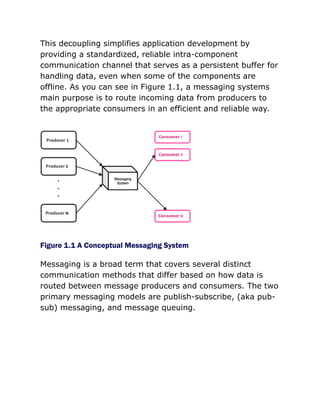



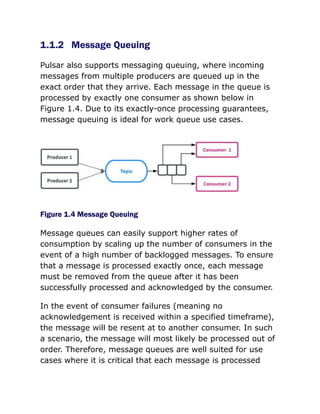








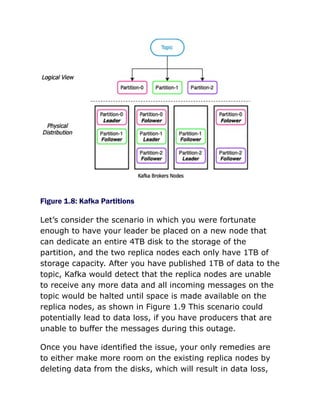
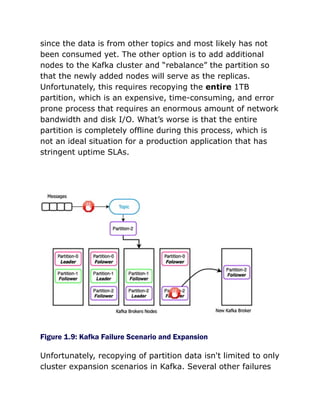









![[AerospikeRoadshow] Apache Pulsar Unifies Streaming and Messaging for Real-Ti...](https://cdn.slidesharecdn.com/ss_thumbnails/aerospikeroadshowapachepulsarunifiesstreamingandmessagingforreal-timedata2-221103174214-18ce3fa2-thumbnail.jpg?width=640&height=640&fit=bounds)


![[March sn meetup] apache pulsar + apache nifi for cloud data lake](https://cdn.slidesharecdn.com/ss_thumbnails/marchsnmeetupapachepulsarapachenififorclouddatalake-220311125943-thumbnail.jpg?width=640&height=640&fit=bounds)


