Assoc. Prof. Ivan Lambev
e-mail: itlambev@mail.bg
Antifungal drugs
Human fungal infections have increased dramatically
in recent years, owing mainly to advances in surgery,
cancer treatment, and critical care accompanied by
increases in the use of broad-spectrum antimicrobials
and the HIV epidemic.
Fungal infections are usually more difficult to treat
than bacterial infections, because fungal organisms grow
slowly and because fungal infections often occur in
tissues that are poorly penetrated by antimicrobial agents
(e.g., devitalized or avascular tissues). Therapy of fungal
infections usually requires prolonged treatment.
Superficial fungal infections involve cutaneous
surfaces (skin, nails, and hair), and mucous membrane
surfaces (oropharynx and vagina).
Deepseated or disseminated fungal infections caused
by dimorphic fungi, the yeasts Cryptococcus neoformans,
and various Candida spp. respond to a limited number
of systemic agents: amphotericin B (a polyene),
flucytosine (a pyrimidine antimetabolite), the newer
azoles (ketoconazole, fluconazole, itraconazole, and
voriconazole), and caspofungin (an echinocandin).
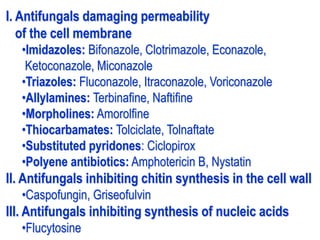
I. Antifungals damaging permeability
of the cell membrane
•Imidazoles: Bifonazole, Clotrimazole, Econazole,
Ketoconazole, Miconazole
•Triazoles: Fluconazole, Itraconazole, Voriconazole
•Allylamines: Terbinafine, Naftifine
•Morpholines: Amorolfine
•Thiocarbamates: Tolciclate, Tolnaftate
•Substituted pyridones: Ciclopirox
•Polyene antibiotics: Amphotericin B, Nystatin
II. Antifungals inhibiting chitin synthesis in the cell wall
•Caspofungin, Griseofulvin
III. Antifungals inhibiting synthesis of nucleic acids
•Flucytosine
1. Polyene antibiotics
Amphotericin B and Nystatin bind to the fungal
cell membrane component ergosterol, leading to
increased fungal cell membrane permeability and
the loss of intracellular constituents. Amphotericin has
a lesser affinity for the mammalian cell membrane
component cholesterol, but this interaction does
account for most adverse toxic effects.
Amphotericin B has activity against Candida spp.,
Cryptococcus neoformans, Blastomyces dermatitidis,
Histoplasma capsulatum, Sporothrix schenckii,
Coccidioides immitis, Paracoccidioides braziliensis,
Aspergillus spp., Penicillium marneffei, etc.
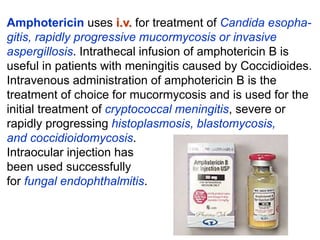
Amphotericin uses i.v. for treatment of Candida esopha-
gitis, rapidly progressive mucormycosis or invasive
aspergillosis. Intrathecal infusion of amphotericin B is
useful in patients with meningitis caused by Coccidioides.
Intravenous administration of amphotericin B is the
treatment of choice for mucormycosis and is used for the
initial treatment of cryptococcal meningitis, severe or
rapidly progressing histoplasmosis, blastomycosis,
and coccidioidomycosis.
Intraocular injection has
been used successfully
for fungal endophthalmitis.
The major acute reaction to i.v. amphotericin B is
fever and chills. Tachypnea and respiratory stridor
or modest hypotension also may occur. Patients with
preexisting cardiac or pulmonary disease may
tolerate the metabolic demands of the reaction
poorly and develop hypoxia or hypotension.
Although the reaction ends spontaneously in 30 to
45 minutes, pethidine may shorten it.
Pretreatment with oral paracetamol or use of i.v.
hydrocortisone hemisuccinate, at the start of the
infusion decreases reactions. Azotemia occurs in
80% of patients who receive amphotericin
in deep mycoses.
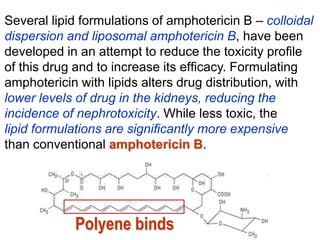
Several lipid formulations of amphotericin B – colloidal
dispersion and liposomal amphotericin B, have been
developed in an attempt to reduce the toxicity profile
of this drug and to increase its efficacy. Formulating
amphotericin with lipids alters drug distribution, with
lower levels of drug in the kidneys, reducing the
incidence of nephrotoxicity. While less toxic, the
lipid formulations are significantly more expensive
than conventional amphotericin B.
Polyene binds
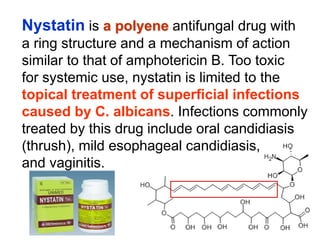
Nystatin is a polyene antifungal drug with
a ring structure and a mechanism of action
similar to that of amphotericin B. Too toxic
for systemic use, nystatin is limited to the
topical treatment of superficial infections
caused by C. albicans. Infections commonly
treated by this drug include oral candidiasis
(thrush), mild esophageal candidiasis,
and vaginitis.
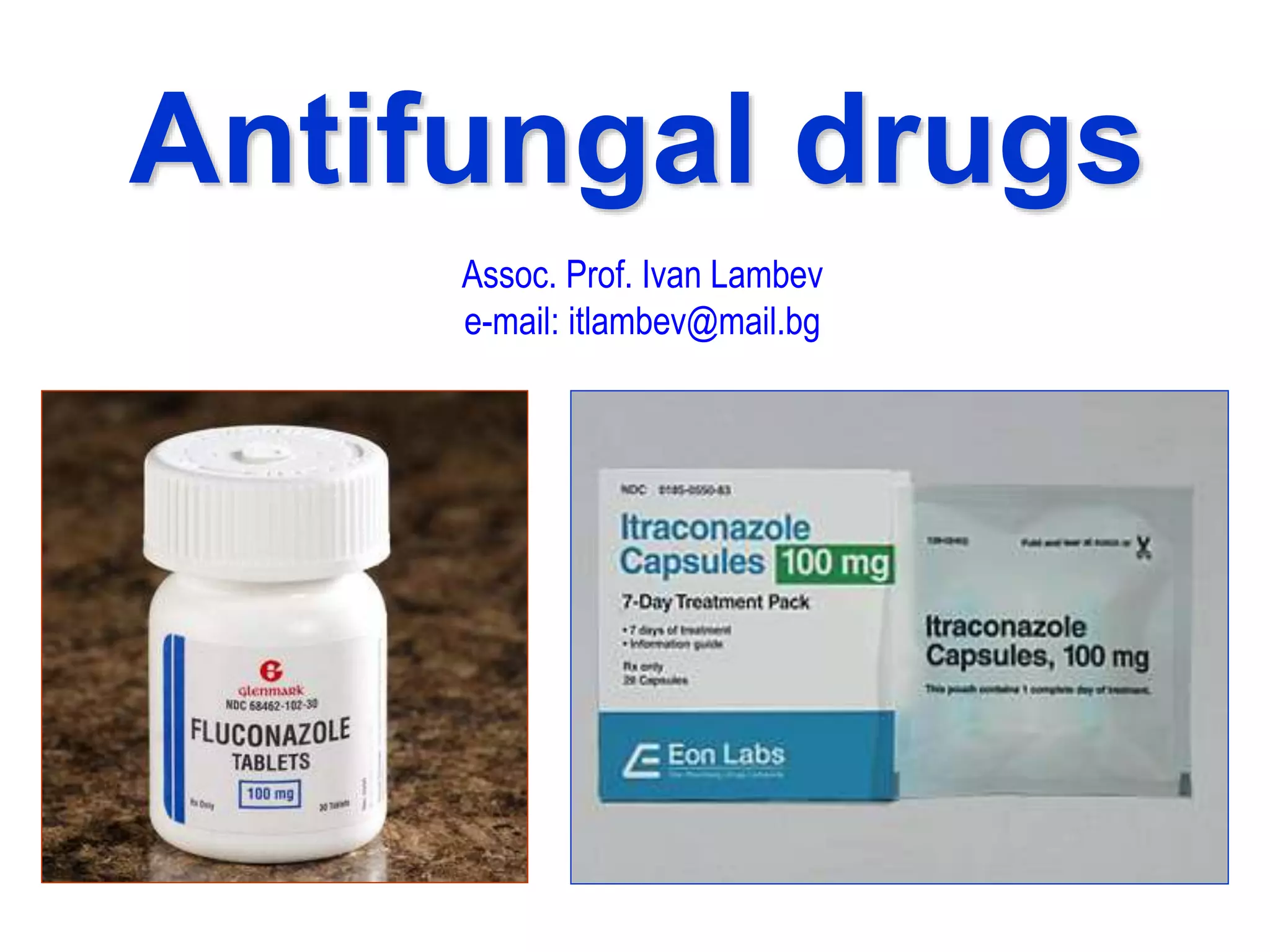
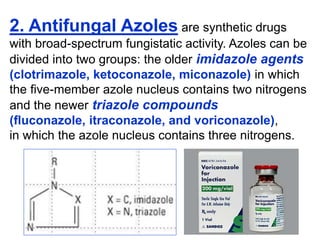
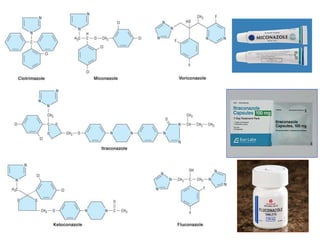
2. Antifungal Azoles are synthetic drugs
with broad-spectrum fungistatic activity. Azoles can be
divided into two groups: the older imidazole agents
(clotrimazole, ketoconazole, miconazole) in which
the five-member azole nucleus contains two nitrogens
and the newer triazole compounds
(fluconazole, itraconazole, and voriconazole),
in which the azole nucleus contains three nitrogens.
All azoles exert antifungal activity by inhibiting
cytochrome P450 enzymes responsible for the
demethylation of lanosterol to ergosterol.
Reduced fungal membrane ergosterol concen-
trations result in damaged, leaky cell membranes.
The toxicity of these drugs depends on
their relative affinities for mammalian and fungal
cytochrome P450 enzymes.
The triazoles tend to have fewer side effects,
better absorption, better drug distribution in
body tissues, and fewer drug interactions.
Fluconazole does not require an acidic
environment, as does ketoconazole, for GI absorption.
About 80 to 90% of an orally administered
dose is absorbed, yielding high serum drug levels. The
t1/2 of the drug is 27 to 37 h, permitting once-daily
dosing in patients with normal renal function. Only 11%
of the circulating drug is bound to plasma proteins.
The drug penetrates widely into most body tissues.
Cerebrospinal fluid levels are 60 to 80% of serum levels,
permitting effective treatment for fungal meningitis.
About 80% of the drug is excreted unchanged in the
urine. Dosage reductions are required in the presence
of renal insufficiency.
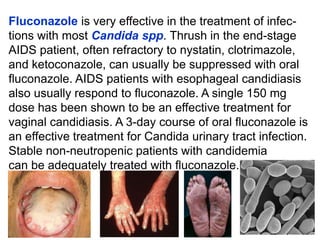
Fluconazole is very effective in the treatment of infec-
tions with most Candida spp. Thrush in the end-stage
AIDS patient, often refractory to nystatin, clotrimazole,
and ketoconazole, can usually be suppressed with oral
fluconazole. AIDS patients with esophageal candidiasis
also usually respond to fluconazole. A single 150 mg
dose has been shown to be an effective treatment for
vaginal candidiasis. A 3-day course of oral fluconazole is
an effective treatment for Candida urinary tract infection.
Stable non-neutropenic patients with candidemia
can be adequately treated with fluconazole.
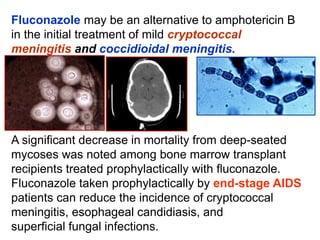
Fluconazole may be an alternative to amphotericin B
in the initial treatment of mild cryptococcal
meningitis and coccidioidal meningitis.
A significant decrease in mortality from deep-seated
mycoses was noted among bone marrow transplant
recipients treated prophylactically with fluconazole.
Fluconazole taken prophylactically by end-stage AIDS
patients can reduce the incidence of cryptococcal
meningitis, esophageal candidiasis, and
superficial fungal infections.
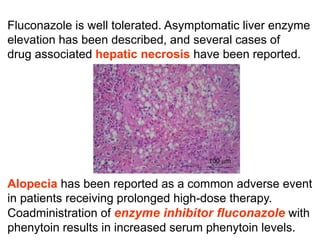
Fluconazole is well tolerated. Asymptomatic liver enzyme
elevation has been described, and several cases of
drug associated hepatic necrosis have been reported.
Alopecia has been reported as a common adverse event
in patients receiving prolonged high-dose therapy.
Coadministration of enzyme inhibitor fluconazole with
phenytoin results in increased serum phenytoin levels.
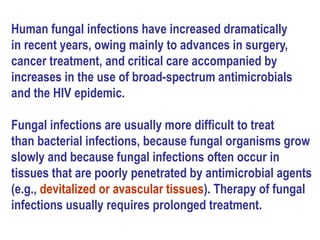
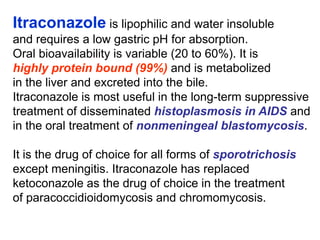
Itraconazole is lipophilic and water insoluble
and requires a low gastric pH for absorption.
Oral bioavailability is variable (20 to 60%). It is
highly protein bound (99%) and is metabolized
in the liver and excreted into the bile.
Itraconazole is most useful in the long-term suppressive
treatment of disseminated histoplasmosis in AIDS and
in the oral treatment of nonmeningeal blastomycosis.
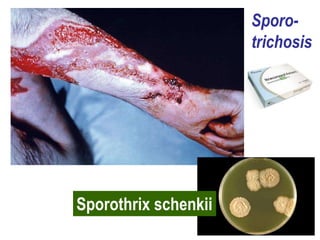
It is the drug of choice for all forms of sporotrichosis
except meningitis. Itraconazole has replaced
ketoconazole as the drug of choice in the treatment
of paracoccidioidomycosis and chromomycosis.
Sporo-
trichosis
Sporothrix schenkii
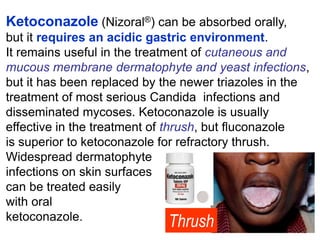
Ketoconazole (Nizoral®) can be absorbed orally,
but it requires an acidic gastric environment.
It remains useful in the treatment of cutaneous and
mucous membrane dermatophyte and yeast infections,
but it has been replaced by the newer triazoles in the
treatment of most serious Candida infections and
disseminated mycoses. Ketoconazole is usually
effective in the treatment of thrush, but fluconazole
is superior to ketoconazole for refractory thrush.
Widespread dermatophyte
infections on skin surfaces
can be treated easily
with oral
ketoconazole.
Thrush
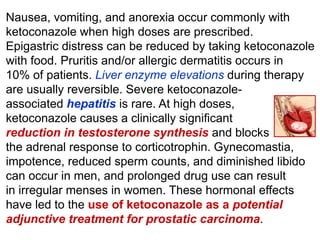
Nausea, vomiting, and anorexia occur commonly with
ketoconazole when high doses are prescribed.
Epigastric distress can be reduced by taking ketoconazole
with food. Pruritis and/or allergic dermatitis occurs in
10% of patients. Liver enzyme elevations during therapy
are usually reversible. Severe ketoconazole-
associated hepatitis is rare. At high doses,
ketoconazole causes a clinically significant
reduction in testosterone synthesis and blocks
the adrenal response to corticotrophin. Gynecomastia,
impotence, reduced sperm counts, and diminished libido
can occur in men, and prolonged drug use can result
in irregular menses in women. These hormonal effects
have led to the use of ketoconazole as a potential
adjunctive treatment for prostatic carcinoma.
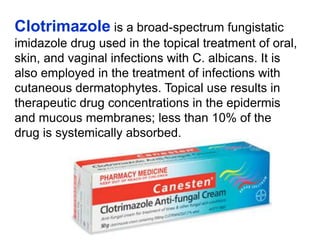
Clotrimazole is a broad-spectrum fungistatic
imidazole drug used in the topical treatment of oral,
skin, and vaginal infections with C. albicans. It is
also employed in the treatment of infections with
cutaneous dermatophytes. Topical use results in
therapeutic drug concentrations in the epidermis
and mucous membranes; less than 10% of the
drug is systemically absorbed.
3. Fluorinated pyrimidines
Flucytosine (5-flucytosine, 5-FC)
is an analogue of cytosine that was originally
synthesized for possible use as an antineoplastic
agent. 5-FC is converted to 5-fluorouracil inside the cell
by the fungal enzyme cytosine deaminase. The active
metabolite 5-fluorouracil interferes with fungal DNA
synthesis by inhibiting thymidylate synthetase.
Incorporation of these metabolites into fungal RNA
inhibits protein synthesis.
Flucytosine has a significant antifungal activity against
Candida spp. and the fungal organisms responsible
for chromomycosis.
4. Allylamines – reversible noncompetitive
inhibitors of the fungal enzyme squalene
monooxygenase, which converts squalene to lanosterol.
With a decrease in lanosterol production, ergosterol
production is also diminished, affecting fungal cell
membrane synthesis and function. These agents
exhibit fungicidal activity against dermatophytes
and fungistatic activity against yeasts.
Naftifine is available for topical use only in the treat-
ment of cutaneous dermatophyte and Candida infections.
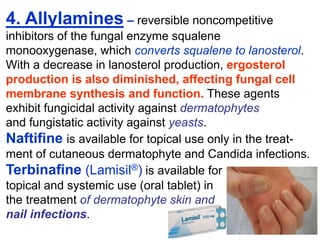
Terbinafine (Lamisil®) is available for
topical and systemic use (oral tablet) in
the treatment of dermatophyte skin and
nail infections.
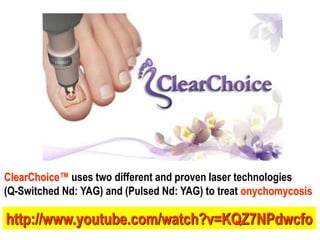
ClearChoice™ uses two different and proven laser technologies
(Q-Switched Nd: YAG) and (Pulsed Nd: YAG) to treat onychomycosis
http://www.youtube.com/watch?v=KQZ7NPdwcfo
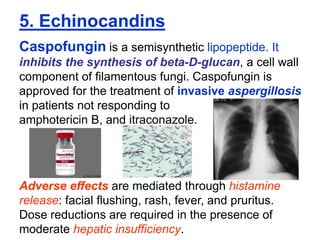
5. Echinocandins
Caspofungin is a semisynthetic lipopeptide. It
inhibits the synthesis of beta-D-glucan, a cell wall
component of filamentous fungi. Caspofungin is
approved for the treatment of invasive aspergillosis
in patients not responding to
amphotericin B, and itraconazole.
Adverse effects are mediated through histamine
release: facial flushing, rash, fever, and pruritus.
Dose reductions are required in the presence of
moderate hepatic insufficiency.
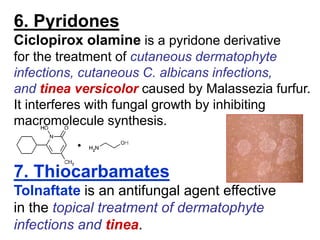
6. Pyridones
Ciclopirox olamine is a pyridone derivative
for the treatment of cutaneous dermatophyte
infections, cutaneous C. albicans infections,
and tinea versicolor caused by Malassezia furfur.
It interferes with fungal growth by inhibiting
macromolecule synthesis.
7. Thiocarbamates
Tolnaftate is an antifungal agent effective
in the topical treatment of dermatophyte
infections and tinea.
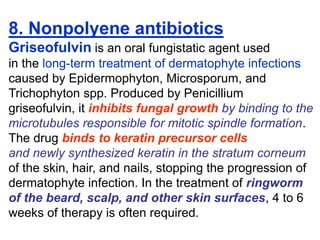
8. Nonpolyene antibiotics
Griseofulvin is an oral fungistatic agent used
in the long-term treatment of dermatophyte infections
caused by Epidermophyton, Microsporum, and
Trichophyton spp. Produced by Penicillium
griseofulvin, it inhibits fungal growth by binding to the
microtubules responsible for mitotic spindle formation.
The drug binds to keratin precursor cells
and newly synthesized keratin in the stratum corneum
of the skin, hair, and nails, stopping the progression of
dermatophyte infection. In the treatment of ringworm
of the beard, scalp, and other skin surfaces, 4 to 6
weeks of therapy is often required.
Antifungal drugs_E.ppt

Antifungal drugs_E.ppt

  • 1.
    Assoc. Prof. IvanLambev e-mail: itlambev@mail.bg Antifungal drugs
  • 2.
    Human fungal infectionshave increased dramatically in recent years, owing mainly to advances in surgery, cancer treatment, and critical care accompanied by increases in the use of broad-spectrum antimicrobials and the HIV epidemic. Fungal infections are usually more difficult to treat than bacterial infections, because fungal organisms grow slowly and because fungal infections often occur in tissues that are poorly penetrated by antimicrobial agents (e.g., devitalized or avascular tissues). Therapy of fungal infections usually requires prolonged treatment.
  • 3.
    Superficial fungal infectionsinvolve cutaneous surfaces (skin, nails, and hair), and mucous membrane surfaces (oropharynx and vagina). Deepseated or disseminated fungal infections caused by dimorphic fungi, the yeasts Cryptococcus neoformans, and various Candida spp. respond to a limited number of systemic agents: amphotericin B (a polyene), flucytosine (a pyrimidine antimetabolite), the newer azoles (ketoconazole, fluconazole, itraconazole, and voriconazole), and caspofungin (an echinocandin).
  • 4.
    I. Antifungals damagingpermeability of the cell membrane •Imidazoles: Bifonazole, Clotrimazole, Econazole, Ketoconazole, Miconazole •Triazoles: Fluconazole, Itraconazole, Voriconazole •Allylamines: Terbinafine, Naftifine •Morpholines: Amorolfine •Thiocarbamates: Tolciclate, Tolnaftate •Substituted pyridones: Ciclopirox •Polyene antibiotics: Amphotericin B, Nystatin II. Antifungals inhibiting chitin synthesis in the cell wall •Caspofungin, Griseofulvin III. Antifungals inhibiting synthesis of nucleic acids •Flucytosine
  • 5.
    1. Polyene antibiotics AmphotericinB and Nystatin bind to the fungal cell membrane component ergosterol, leading to increased fungal cell membrane permeability and the loss of intracellular constituents. Amphotericin has a lesser affinity for the mammalian cell membrane component cholesterol, but this interaction does account for most adverse toxic effects. Amphotericin B has activity against Candida spp., Cryptococcus neoformans, Blastomyces dermatitidis, Histoplasma capsulatum, Sporothrix schenckii, Coccidioides immitis, Paracoccidioides braziliensis, Aspergillus spp., Penicillium marneffei, etc.
  • 6.
    Amphotericin uses i.v.for treatment of Candida esopha- gitis, rapidly progressive mucormycosis or invasive aspergillosis. Intrathecal infusion of amphotericin B is useful in patients with meningitis caused by Coccidioides. Intravenous administration of amphotericin B is the treatment of choice for mucormycosis and is used for the initial treatment of cryptococcal meningitis, severe or rapidly progressing histoplasmosis, blastomycosis, and coccidioidomycosis. Intraocular injection has been used successfully for fungal endophthalmitis.
  • 7.
    The major acutereaction to i.v. amphotericin B is fever and chills. Tachypnea and respiratory stridor or modest hypotension also may occur. Patients with preexisting cardiac or pulmonary disease may tolerate the metabolic demands of the reaction poorly and develop hypoxia or hypotension. Although the reaction ends spontaneously in 30 to 45 minutes, pethidine may shorten it. Pretreatment with oral paracetamol or use of i.v. hydrocortisone hemisuccinate, at the start of the infusion decreases reactions. Azotemia occurs in 80% of patients who receive amphotericin in deep mycoses.
  • 8.
    Several lipid formulationsof amphotericin B – colloidal dispersion and liposomal amphotericin B, have been developed in an attempt to reduce the toxicity profile of this drug and to increase its efficacy. Formulating amphotericin with lipids alters drug distribution, with lower levels of drug in the kidneys, reducing the incidence of nephrotoxicity. While less toxic, the lipid formulations are significantly more expensive than conventional amphotericin B. Polyene binds
  • 9.
    Nystatin is apolyene antifungal drug with a ring structure and a mechanism of action similar to that of amphotericin B. Too toxic for systemic use, nystatin is limited to the topical treatment of superficial infections caused by C. albicans. Infections commonly treated by this drug include oral candidiasis (thrush), mild esophageal candidiasis, and vaginitis.
  • 10.
    2. Antifungal Azolesare synthetic drugs with broad-spectrum fungistatic activity. Azoles can be divided into two groups: the older imidazole agents (clotrimazole, ketoconazole, miconazole) in which the five-member azole nucleus contains two nitrogens and the newer triazole compounds (fluconazole, itraconazole, and voriconazole), in which the azole nucleus contains three nitrogens.
  • 11.
    All azoles exertantifungal activity by inhibiting cytochrome P450 enzymes responsible for the demethylation of lanosterol to ergosterol. Reduced fungal membrane ergosterol concen- trations result in damaged, leaky cell membranes. The toxicity of these drugs depends on their relative affinities for mammalian and fungal cytochrome P450 enzymes. The triazoles tend to have fewer side effects, better absorption, better drug distribution in body tissues, and fewer drug interactions.
  • 13.
    Fluconazole does notrequire an acidic environment, as does ketoconazole, for GI absorption. About 80 to 90% of an orally administered dose is absorbed, yielding high serum drug levels. The t1/2 of the drug is 27 to 37 h, permitting once-daily dosing in patients with normal renal function. Only 11% of the circulating drug is bound to plasma proteins. The drug penetrates widely into most body tissues. Cerebrospinal fluid levels are 60 to 80% of serum levels, permitting effective treatment for fungal meningitis. About 80% of the drug is excreted unchanged in the urine. Dosage reductions are required in the presence of renal insufficiency.
  • 14.
    Fluconazole is veryeffective in the treatment of infec- tions with most Candida spp. Thrush in the end-stage AIDS patient, often refractory to nystatin, clotrimazole, and ketoconazole, can usually be suppressed with oral fluconazole. AIDS patients with esophageal candidiasis also usually respond to fluconazole. A single 150 mg dose has been shown to be an effective treatment for vaginal candidiasis. A 3-day course of oral fluconazole is an effective treatment for Candida urinary tract infection. Stable non-neutropenic patients with candidemia can be adequately treated with fluconazole.
  • 15.
    Fluconazole may bean alternative to amphotericin B in the initial treatment of mild cryptococcal meningitis and coccidioidal meningitis. A significant decrease in mortality from deep-seated mycoses was noted among bone marrow transplant recipients treated prophylactically with fluconazole. Fluconazole taken prophylactically by end-stage AIDS patients can reduce the incidence of cryptococcal meningitis, esophageal candidiasis, and superficial fungal infections.
  • 16.
    Fluconazole is welltolerated. Asymptomatic liver enzyme elevation has been described, and several cases of drug associated hepatic necrosis have been reported. Alopecia has been reported as a common adverse event in patients receiving prolonged high-dose therapy. Coadministration of enzyme inhibitor fluconazole with phenytoin results in increased serum phenytoin levels.
  • 17.
    Itraconazole is lipophilicand water insoluble and requires a low gastric pH for absorption. Oral bioavailability is variable (20 to 60%). It is highly protein bound (99%) and is metabolized in the liver and excreted into the bile. Itraconazole is most useful in the long-term suppressive treatment of disseminated histoplasmosis in AIDS and in the oral treatment of nonmeningeal blastomycosis. It is the drug of choice for all forms of sporotrichosis except meningitis. Itraconazole has replaced ketoconazole as the drug of choice in the treatment of paracoccidioidomycosis and chromomycosis.
  • 18.
  • 19.
    Ketoconazole (Nizoral®) canbe absorbed orally, but it requires an acidic gastric environment. It remains useful in the treatment of cutaneous and mucous membrane dermatophyte and yeast infections, but it has been replaced by the newer triazoles in the treatment of most serious Candida infections and disseminated mycoses. Ketoconazole is usually effective in the treatment of thrush, but fluconazole is superior to ketoconazole for refractory thrush. Widespread dermatophyte infections on skin surfaces can be treated easily with oral ketoconazole. Thrush
  • 20.
    Nausea, vomiting, andanorexia occur commonly with ketoconazole when high doses are prescribed. Epigastric distress can be reduced by taking ketoconazole with food. Pruritis and/or allergic dermatitis occurs in 10% of patients. Liver enzyme elevations during therapy are usually reversible. Severe ketoconazole- associated hepatitis is rare. At high doses, ketoconazole causes a clinically significant reduction in testosterone synthesis and blocks the adrenal response to corticotrophin. Gynecomastia, impotence, reduced sperm counts, and diminished libido can occur in men, and prolonged drug use can result in irregular menses in women. These hormonal effects have led to the use of ketoconazole as a potential adjunctive treatment for prostatic carcinoma.
  • 21.
    Clotrimazole is abroad-spectrum fungistatic imidazole drug used in the topical treatment of oral, skin, and vaginal infections with C. albicans. It is also employed in the treatment of infections with cutaneous dermatophytes. Topical use results in therapeutic drug concentrations in the epidermis and mucous membranes; less than 10% of the drug is systemically absorbed.
  • 22.
    3. Fluorinated pyrimidines Flucytosine(5-flucytosine, 5-FC) is an analogue of cytosine that was originally synthesized for possible use as an antineoplastic agent. 5-FC is converted to 5-fluorouracil inside the cell by the fungal enzyme cytosine deaminase. The active metabolite 5-fluorouracil interferes with fungal DNA synthesis by inhibiting thymidylate synthetase. Incorporation of these metabolites into fungal RNA inhibits protein synthesis. Flucytosine has a significant antifungal activity against Candida spp. and the fungal organisms responsible for chromomycosis.
  • 23.
    4. Allylamines –reversible noncompetitive inhibitors of the fungal enzyme squalene monooxygenase, which converts squalene to lanosterol. With a decrease in lanosterol production, ergosterol production is also diminished, affecting fungal cell membrane synthesis and function. These agents exhibit fungicidal activity against dermatophytes and fungistatic activity against yeasts. Naftifine is available for topical use only in the treat- ment of cutaneous dermatophyte and Candida infections. Terbinafine (Lamisil®) is available for topical and systemic use (oral tablet) in the treatment of dermatophyte skin and nail infections.
  • 24.
    ClearChoice™ uses twodifferent and proven laser technologies (Q-Switched Nd: YAG) and (Pulsed Nd: YAG) to treat onychomycosis http://www.youtube.com/watch?v=KQZ7NPdwcfo
  • 25.
    5. Echinocandins Caspofungin isa semisynthetic lipopeptide. It inhibits the synthesis of beta-D-glucan, a cell wall component of filamentous fungi. Caspofungin is approved for the treatment of invasive aspergillosis in patients not responding to amphotericin B, and itraconazole. Adverse effects are mediated through histamine release: facial flushing, rash, fever, and pruritus. Dose reductions are required in the presence of moderate hepatic insufficiency.
  • 26.
    6. Pyridones Ciclopirox olamineis a pyridone derivative for the treatment of cutaneous dermatophyte infections, cutaneous C. albicans infections, and tinea versicolor caused by Malassezia furfur. It interferes with fungal growth by inhibiting macromolecule synthesis. 7. Thiocarbamates Tolnaftate is an antifungal agent effective in the topical treatment of dermatophyte infections and tinea.
  • 27.
    8. Nonpolyene antibiotics Griseofulvinis an oral fungistatic agent used in the long-term treatment of dermatophyte infections caused by Epidermophyton, Microsporum, and Trichophyton spp. Produced by Penicillium griseofulvin, it inhibits fungal growth by binding to the microtubules responsible for mitotic spindle formation. The drug binds to keratin precursor cells and newly synthesized keratin in the stratum corneum of the skin, hair, and nails, stopping the progression of dermatophyte infection. In the treatment of ringworm of the beard, scalp, and other skin surfaces, 4 to 6 weeks of therapy is often required.