Downloaded 23 times


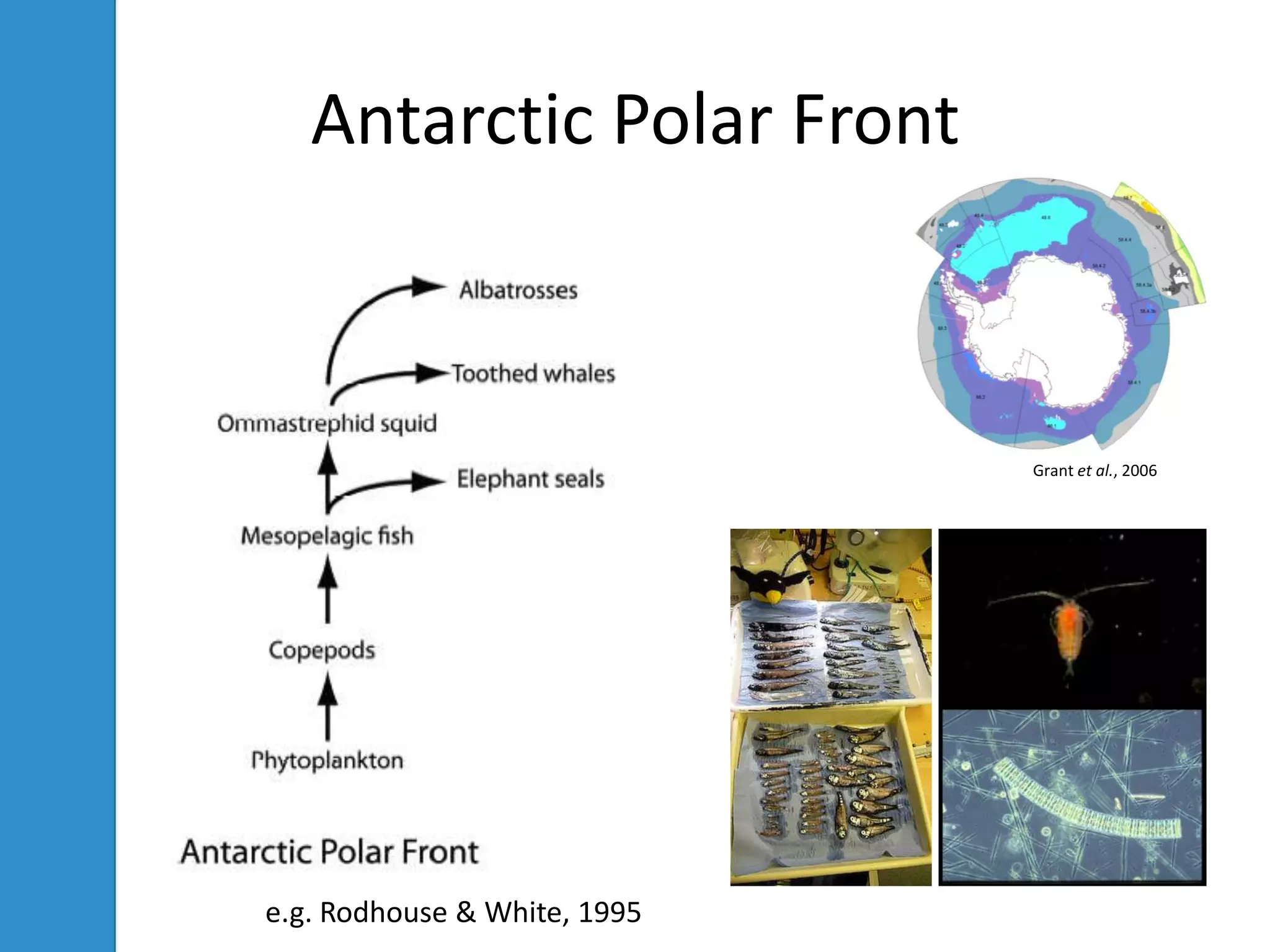
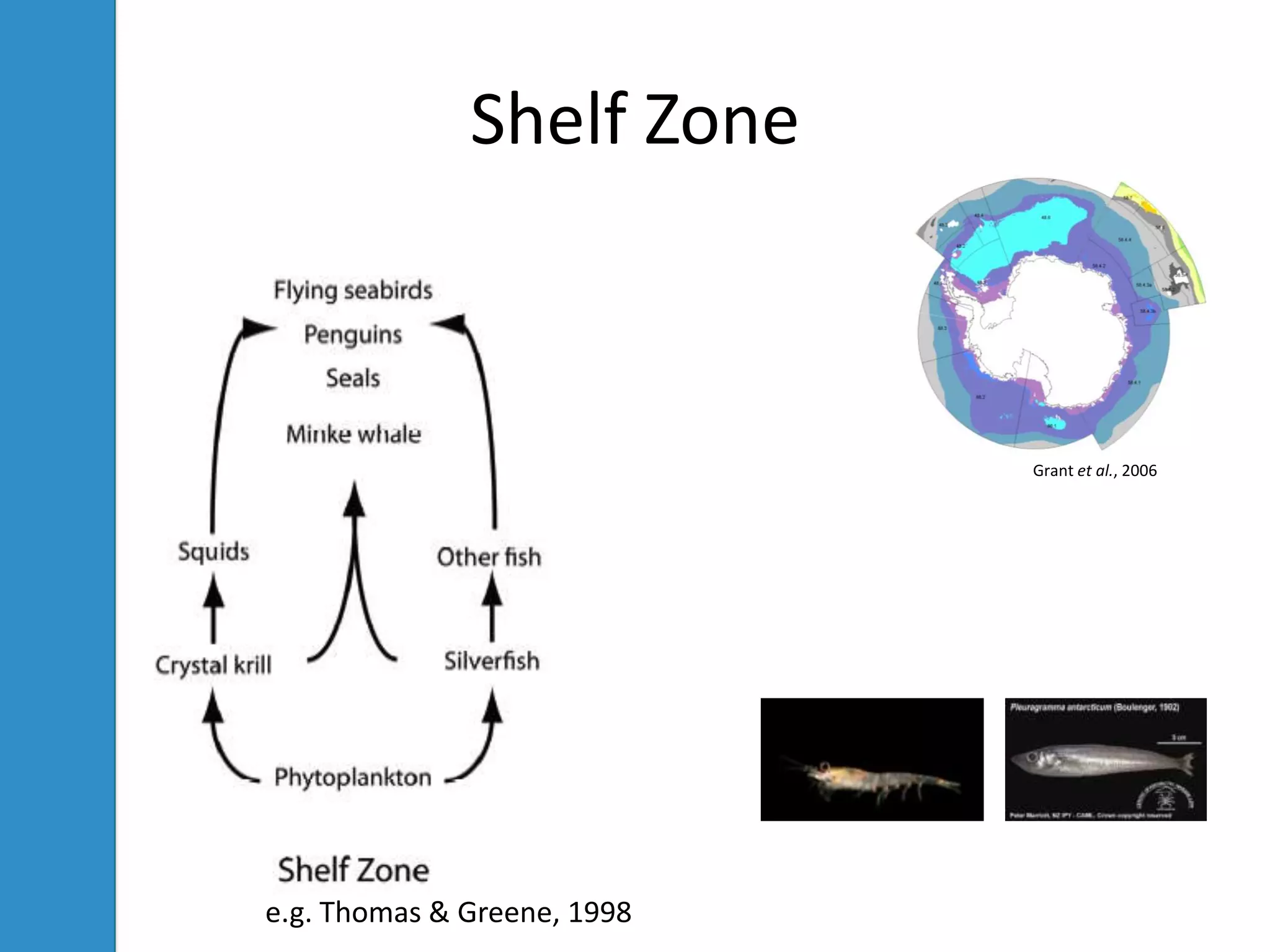


This document discusses the complexity of Antarctic pelagic food webs. It notes that the traditional view of a simple krill-centered food chain is an oversimplification, as food webs vary spatially and temporally. Different techniques like gut content analysis, stable isotopes, DNA barcoding are used to identify trophic links between species. While krill remain an important base of the food web, other species like copepods and lanternfish may play a more significant role than previously thought under certain conditions. The document advocates for a better understanding of Antarctic food webs through modeling and considering various sources of uncertainty.


