Anemia
14 May 2020By Clinical Knowledge 1
What is Anemia?
 Anemia means that you don’t have enough red blood cells in your blood or
that these cells don’t work right. Red blood cells contain hemoglobin, which
helps carry oxygen throughout the body. If you have anemia, your body won’t
get all the oxygen it needs and you may feel “run down.”
14 May 2020By Clinical Knowledge 2
What are common Symptoms?
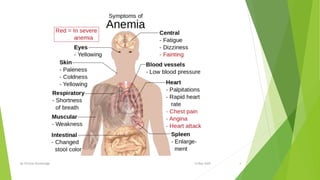
 Common symptoms include:-
 Fatigue
 Heart palpitations or a fast heartbeat
 Chest pain
 Shortness of breath
 Light-headedness
 Headache, and weakness.
 But some people don’t have any symptoms at first, and anemia may be
discovered from a routine blood test.
14 May 2020By Clinical Knowledge 3
14 May 2020By Clinical Knowledge 4
How do I know I have anemia?
 Your healthcare provider will ask you about your health history and examine
you.
 A sample of your blood will be taken to check your red blood cells and
hemoglobin.
 Your healthcare provider will test your stool for hidden blood; you may not
know you have slow internal bleeding that’s causing your anemia
14 May 2020By Clinical Knowledge 5
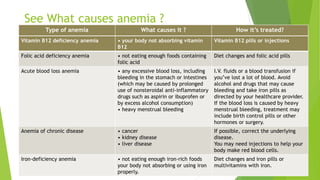
See What causes anemia ?
Type of anemia What causes it ? How it’s treated?
14 May 2020By Clinical Knowledge 6
Vitamin B12 deficiency anemia • your body not absorbing vitamin
B12
Vitamin B12 pills or injections
Folic acid deficiency anemia • not eating enough foods containing
folic acid
Diet changes and folic acid pills
Acute blood loss anemia • any excessive blood loss, including
bleeding in the stomach or intestines
(which may be caused by prolonged
use of nonsteroidal anti-inflammatory
drugs such as aspirin or ibuprofen or
by excess alcohol consumption)
• heavy menstrual bleeding
I.V. fluids or a blood transfusion if
you’ve lost a lot of blood. Avoid
alcohol and drugs that may cause
bleeding and take iron pills as
directed by your healthcare provider.
If the blood loss is caused by heavy
menstrual bleeding, treatment may
include birth control pills or other
hormones or surgery.
Anemia of chronic disease • cancer
• kidney disease
• liver disease
If possible, correct the underlying
disease.
You may need injections to help your
body make red blood cells.
Iron-deficiency anemia • not eating enough iron-rich foods
your body not absorbing or using iron
properly.
Diet changes and iron pills or
multivitamins with iron.
How is anemia treated?
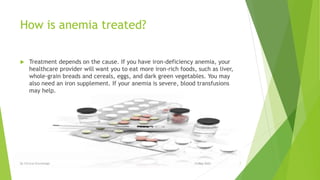
 Treatment depends on the cause. If you have iron-deficiency anemia, your
healthcare provider will want you to eat more iron-rich foods, such as liver,
whole-grain breads and cereals, eggs, and dark green vegetables. You may
also need an iron supplement. If your anemia is severe, blood transfusions
may help.
14 May 2020By Clinical Knowledge 7

Anemia

  • 1.
    Anemia 14 May 2020ByClinical Knowledge 1
  • 2.
    What is Anemia? Anemia means that you don’t have enough red blood cells in your blood or that these cells don’t work right. Red blood cells contain hemoglobin, which helps carry oxygen throughout the body. If you have anemia, your body won’t get all the oxygen it needs and you may feel “run down.” 14 May 2020By Clinical Knowledge 2
  • 3.
    What are commonSymptoms?  Common symptoms include:-  Fatigue  Heart palpitations or a fast heartbeat  Chest pain  Shortness of breath  Light-headedness  Headache, and weakness.  But some people don’t have any symptoms at first, and anemia may be discovered from a routine blood test. 14 May 2020By Clinical Knowledge 3
  • 4.
    14 May 2020ByClinical Knowledge 4
  • 5.
    How do Iknow I have anemia?  Your healthcare provider will ask you about your health history and examine you.  A sample of your blood will be taken to check your red blood cells and hemoglobin.  Your healthcare provider will test your stool for hidden blood; you may not know you have slow internal bleeding that’s causing your anemia 14 May 2020By Clinical Knowledge 5
  • 6.
    See What causesanemia ? Type of anemia What causes it ? How it’s treated? 14 May 2020By Clinical Knowledge 6 Vitamin B12 deficiency anemia • your body not absorbing vitamin B12 Vitamin B12 pills or injections Folic acid deficiency anemia • not eating enough foods containing folic acid Diet changes and folic acid pills Acute blood loss anemia • any excessive blood loss, including bleeding in the stomach or intestines (which may be caused by prolonged use of nonsteroidal anti-inflammatory drugs such as aspirin or ibuprofen or by excess alcohol consumption) • heavy menstrual bleeding I.V. fluids or a blood transfusion if you’ve lost a lot of blood. Avoid alcohol and drugs that may cause bleeding and take iron pills as directed by your healthcare provider. If the blood loss is caused by heavy menstrual bleeding, treatment may include birth control pills or other hormones or surgery. Anemia of chronic disease • cancer • kidney disease • liver disease If possible, correct the underlying disease. You may need injections to help your body make red blood cells. Iron-deficiency anemia • not eating enough iron-rich foods your body not absorbing or using iron properly. Diet changes and iron pills or multivitamins with iron.
  • 7.
    How is anemiatreated?  Treatment depends on the cause. If you have iron-deficiency anemia, your healthcare provider will want you to eat more iron-rich foods, such as liver, whole-grain breads and cereals, eggs, and dark green vegetables. You may also need an iron supplement. If your anemia is severe, blood transfusions may help. 14 May 2020By Clinical Knowledge 7