Ancient Ireland The Mesolithic Stone Age The Neolithic Stone Age The Bronze Age The Celts
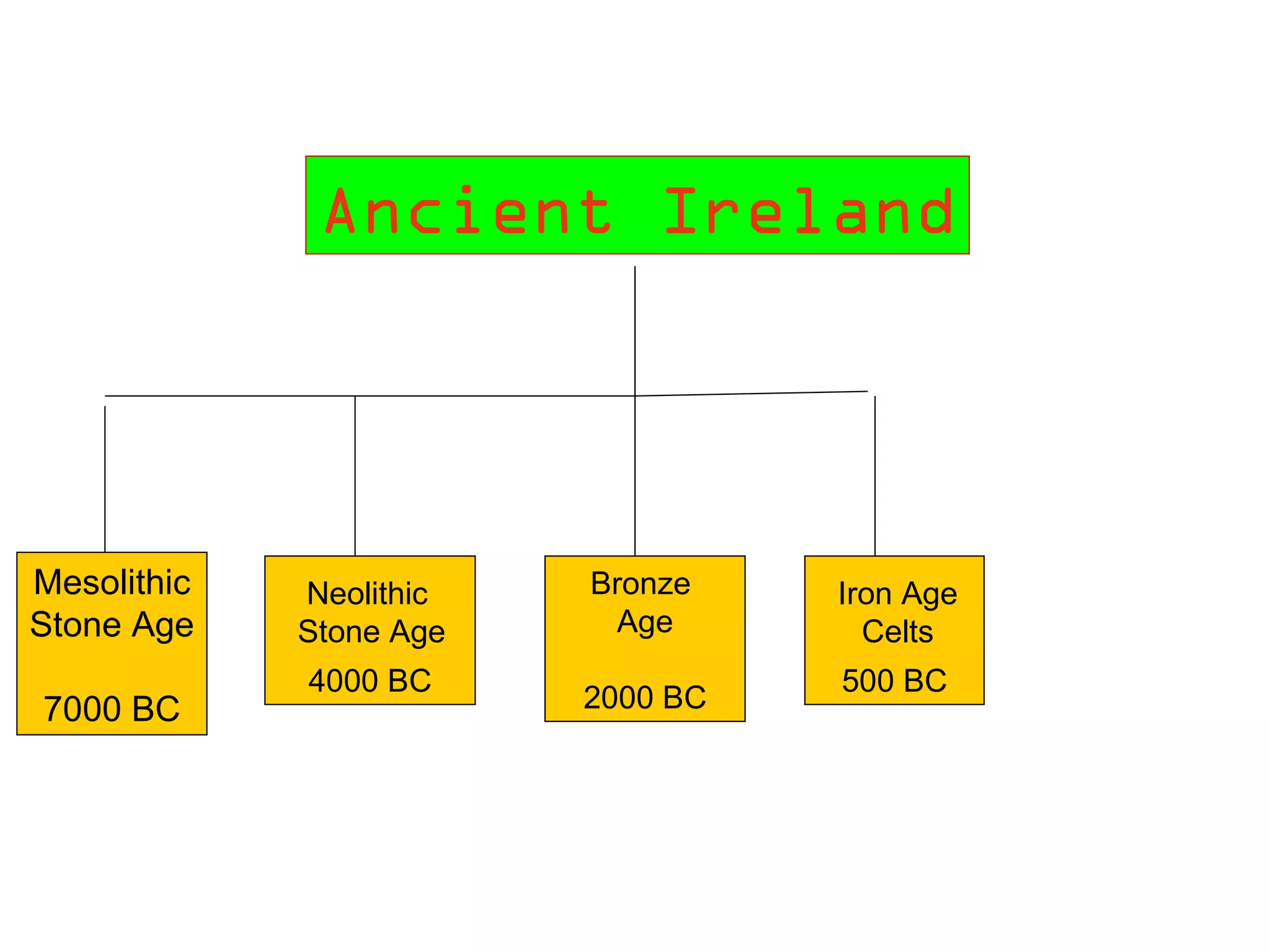
Mesolithic Stone Age 7000 BC ? 4000 BC Bronze  Age 2000 BC ? 500 BC Neolithic  Stone Age Iron Age Celts Ancient Ireland
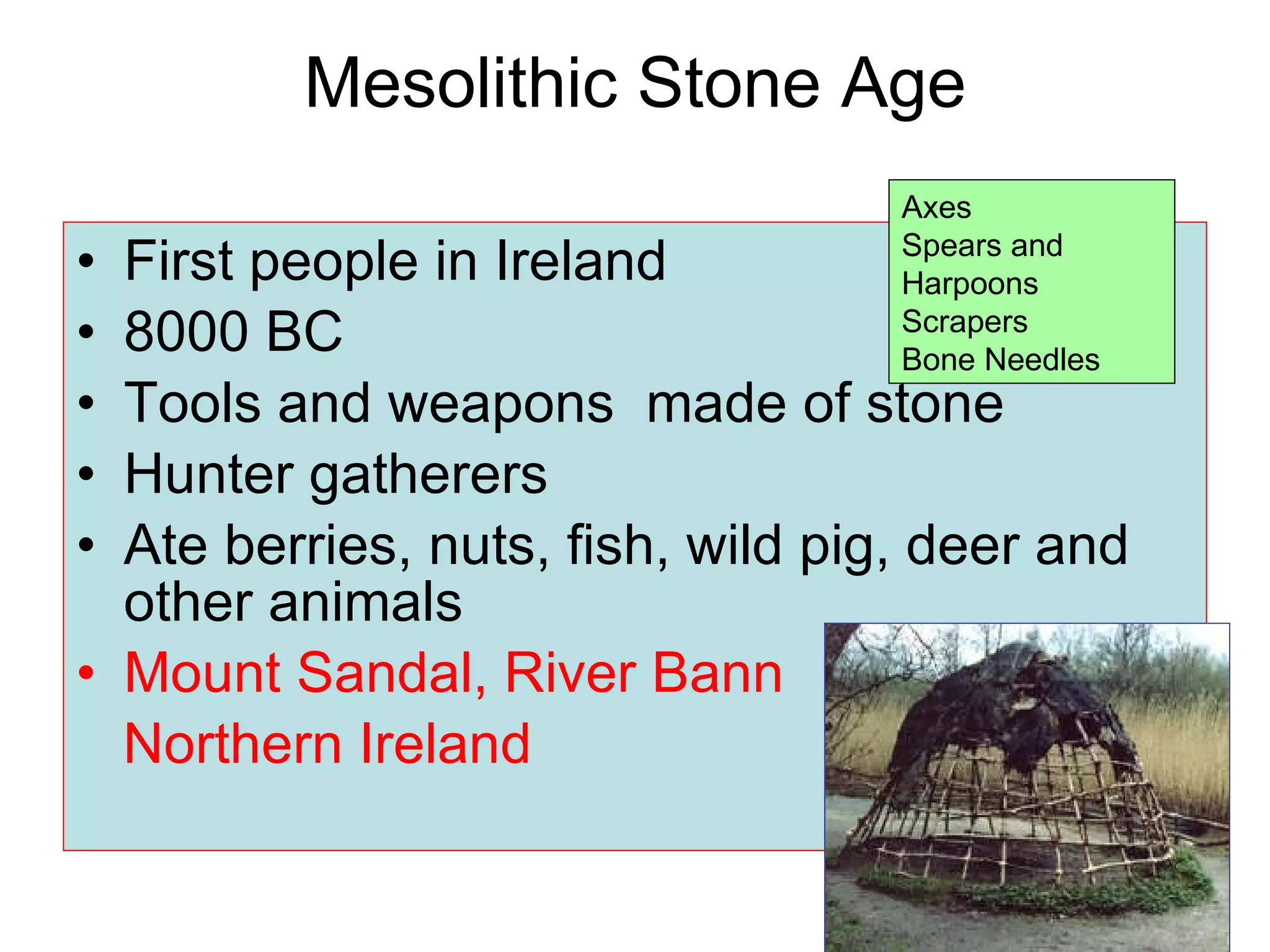
Mesolithic Stone Age First people in Ireland 8000 BC Tools and weapons  made of stone Hunter gatherers Ate berries, nuts, fish, wild pig, deer and other animals Mount Sandal, River Bann Northern Ireland Axes Spears and Harpoons Scrapers Bone Needles
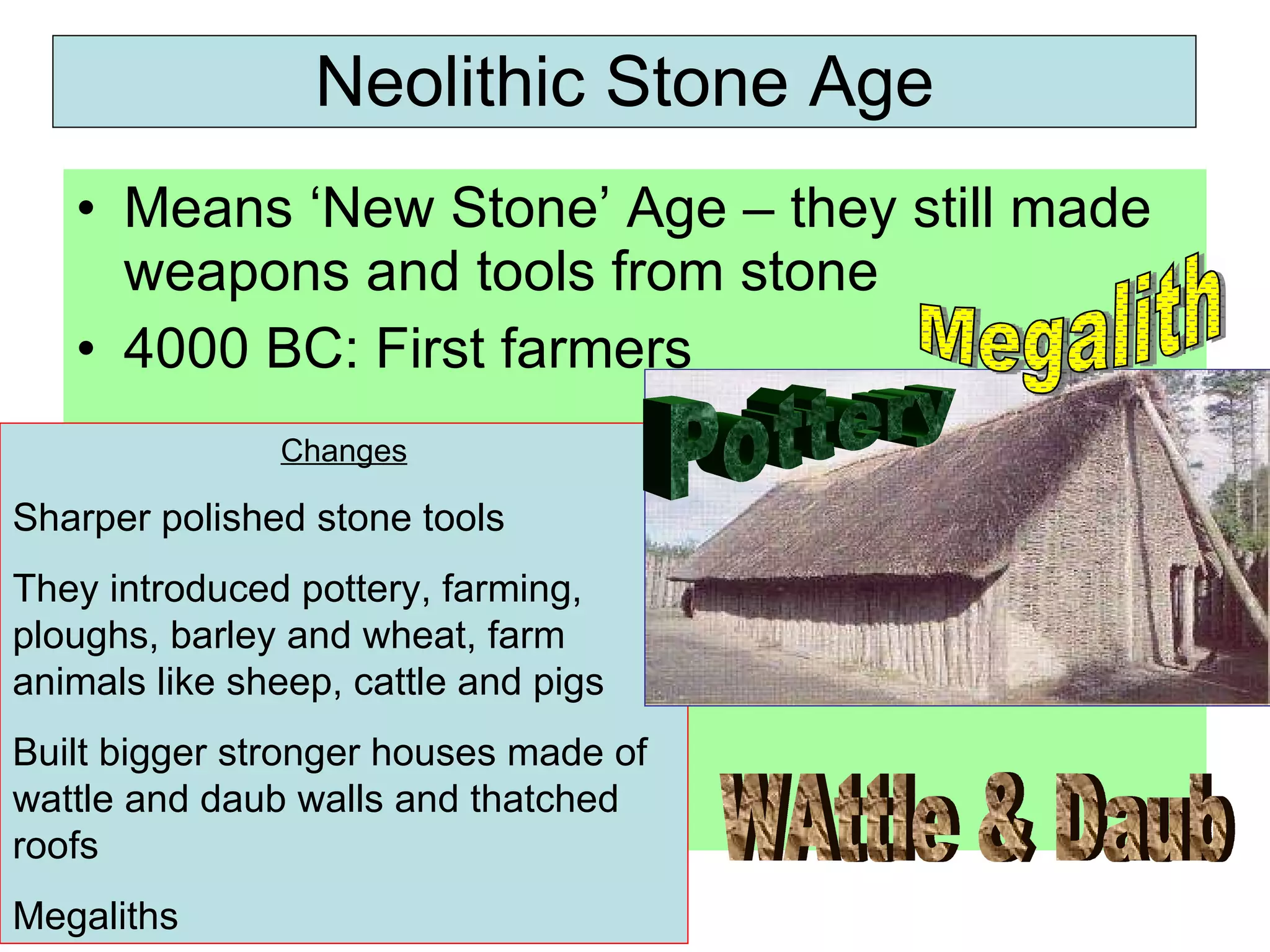
Neolithic Stone Age Means ‘New Stone’ Age – they still made weapons and tools from stone 4000 BC: First farmers Changes Sharper polished stone tools They introduced pottery, farming, ploughs, barley and wheat, farm animals like sheep, cattle and pigs Built bigger stronger houses made of wattle and daub walls and thatched roofs Megaliths Megalith Pottery WAttle & Daub
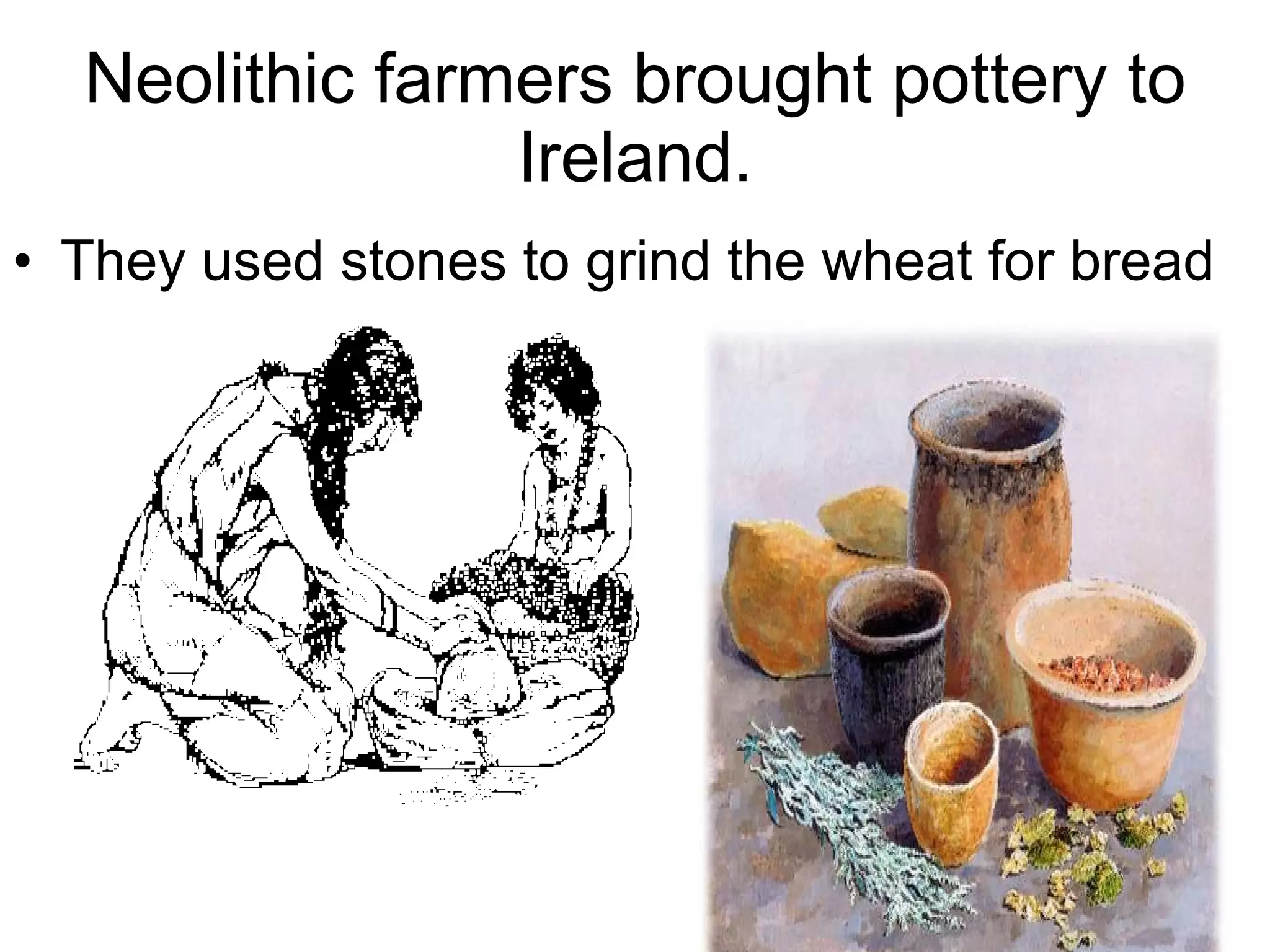
Neolithic farmers brought pottery to Ireland. They used stones to grind the wheat for bread
Look at the houses on page 21 Usually rectangular. thatched roofs made of straw. A hole in the roof was a chimney for fires, lit on a stone in the middle of the floor. They drove timber posts into the ground and held them in place with rocks. They made walls out of ‘wattle’ and ‘daub’.  Wattle was made by weaving twigs and branches through sticks (like basket making) Daub is a mixture of mud and straw which was ‘daubed’ on the wattle. Wattle and daub made the houses warmer and less drafty.
First Farmers: Sites Because the ‘Neolithic Farmers Settled in one place Had a reliable food supply they were able to form communities and work together, for example: They were able to build bigger structures: megaliths Megaliths prove they believed in life after death Sites where neolithic farmers lived Lough Gur, County Limerick,  The Ceide Fields, County Mayo,
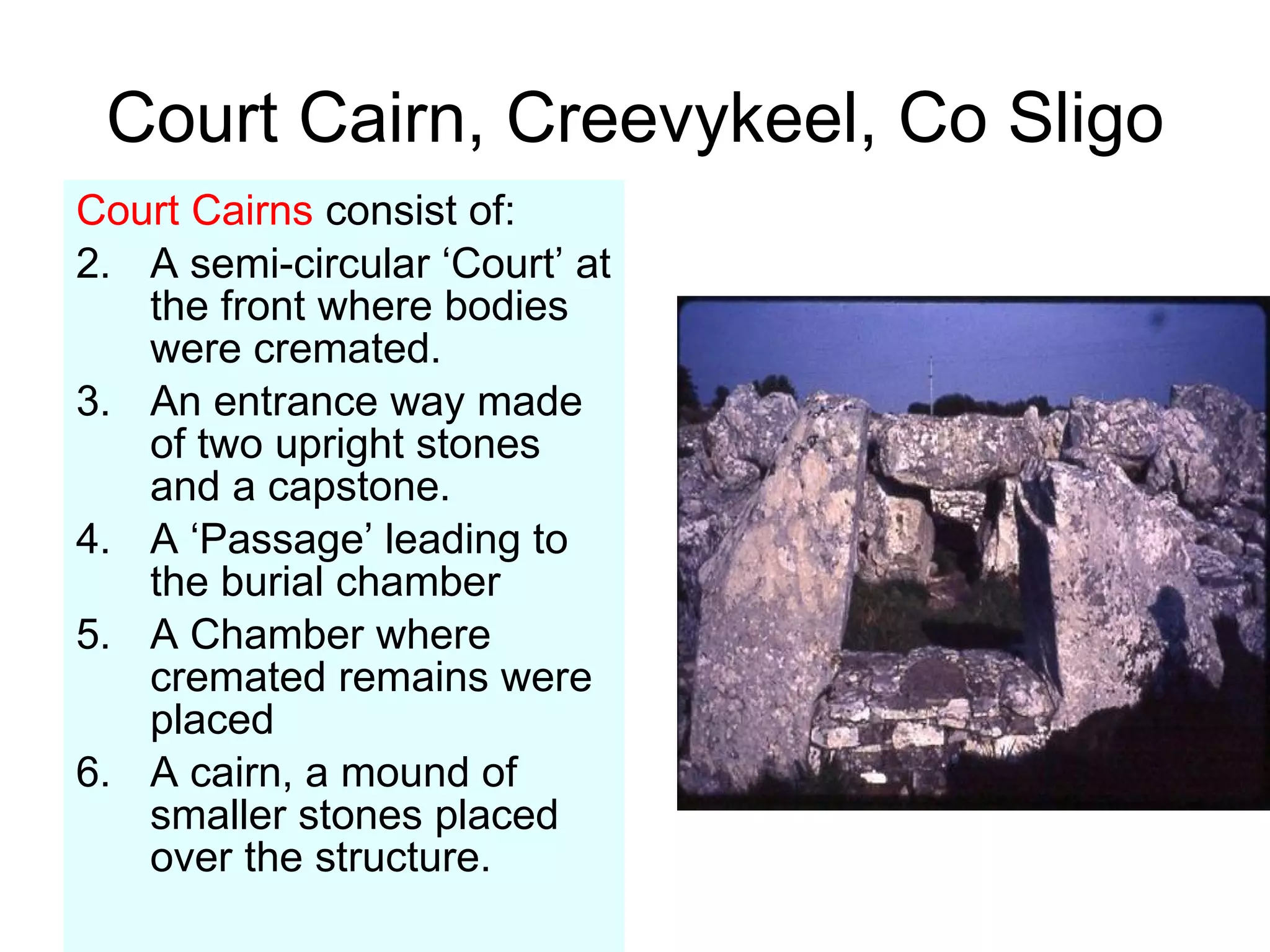
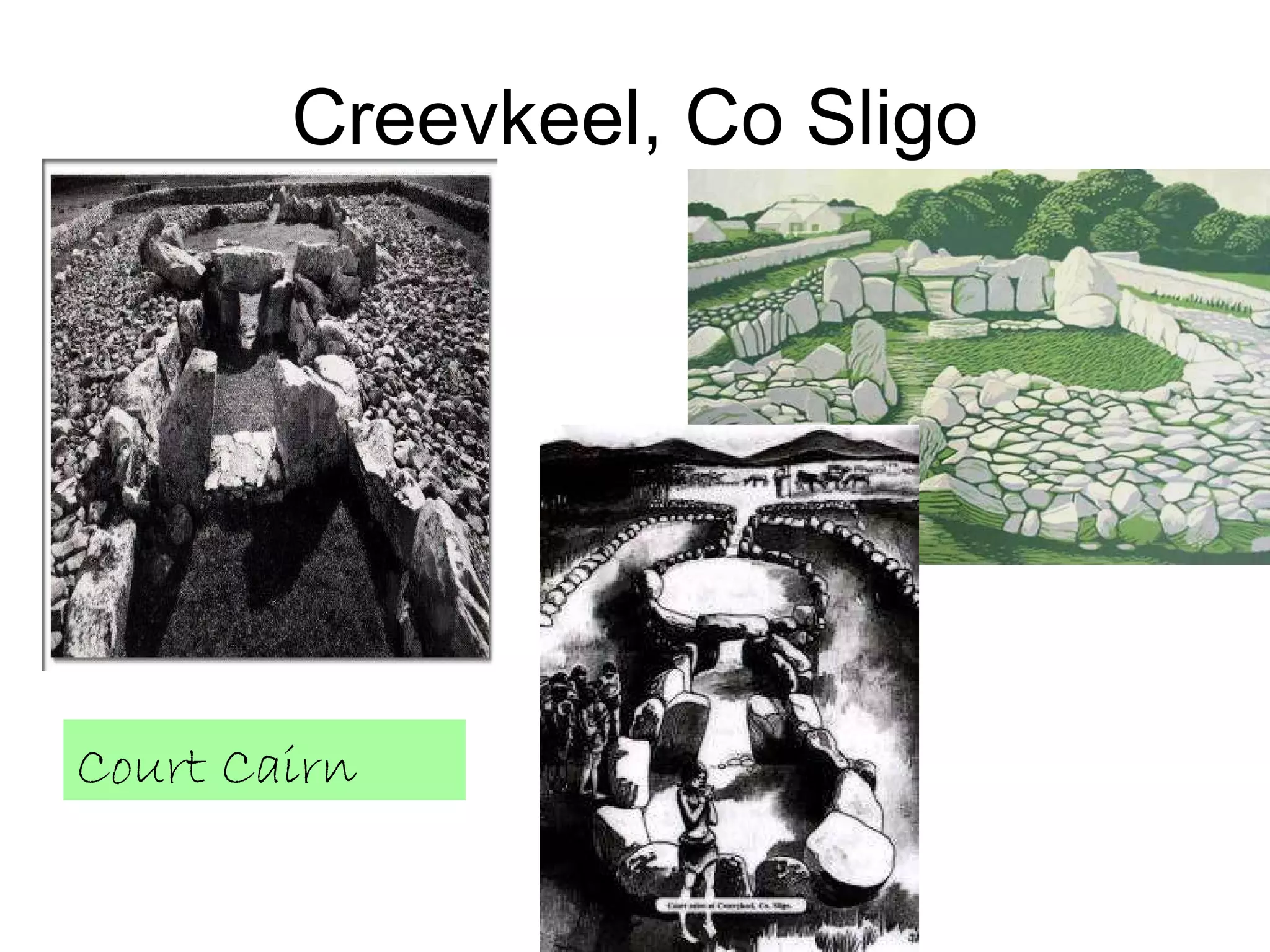
Court Cairn, Creevykeel, Co Sligo Court Cairns  consist of: A semi-circular ‘Court’ at the front where bodies were cremated. An entrance way made of two upright stones and a capstone. A ‘Passage’ leading to the burial chamber A Chamber where cremated remains were placed A cairn, a mound of smaller stones placed over the structure.
Creevkeel, Co Sligo Court Cairn
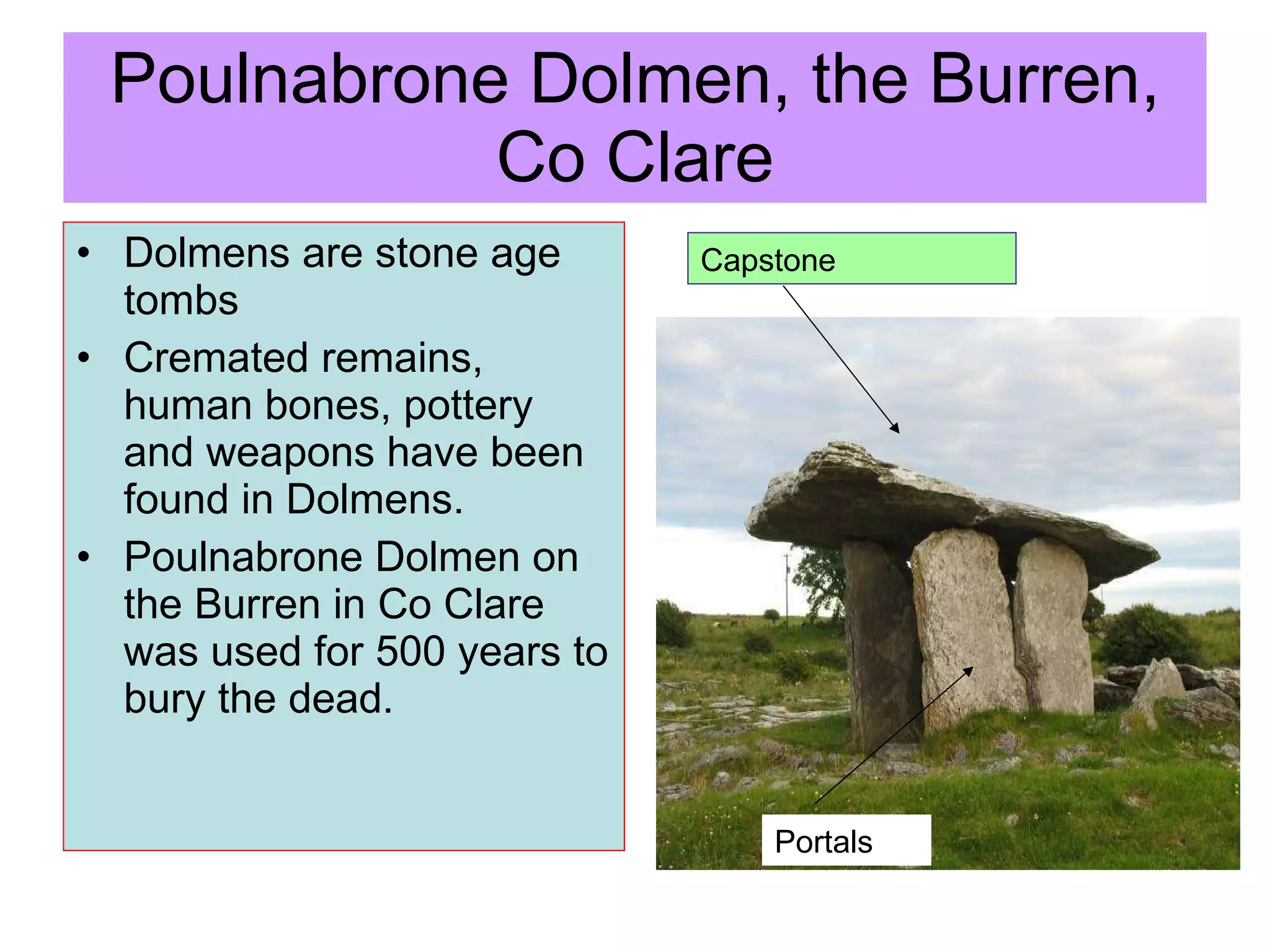
Poulnabrone Dolmen, the Burren, Co Clare Dolmens are stone age tombs Cremated remains, human bones, pottery and weapons have been found in Dolmens. Poulnabrone Dolmen on the Burren in Co Clare was used for 500 years to bury the dead.  Capstone Portals
Passage Graves A long passage leads to a chamber deep inside The walls of the passage are made of large upright slabs The roof is corbelled and covered with an earth mound Examples are Newgrange, Dowth and Knowth Newgrange is a case study
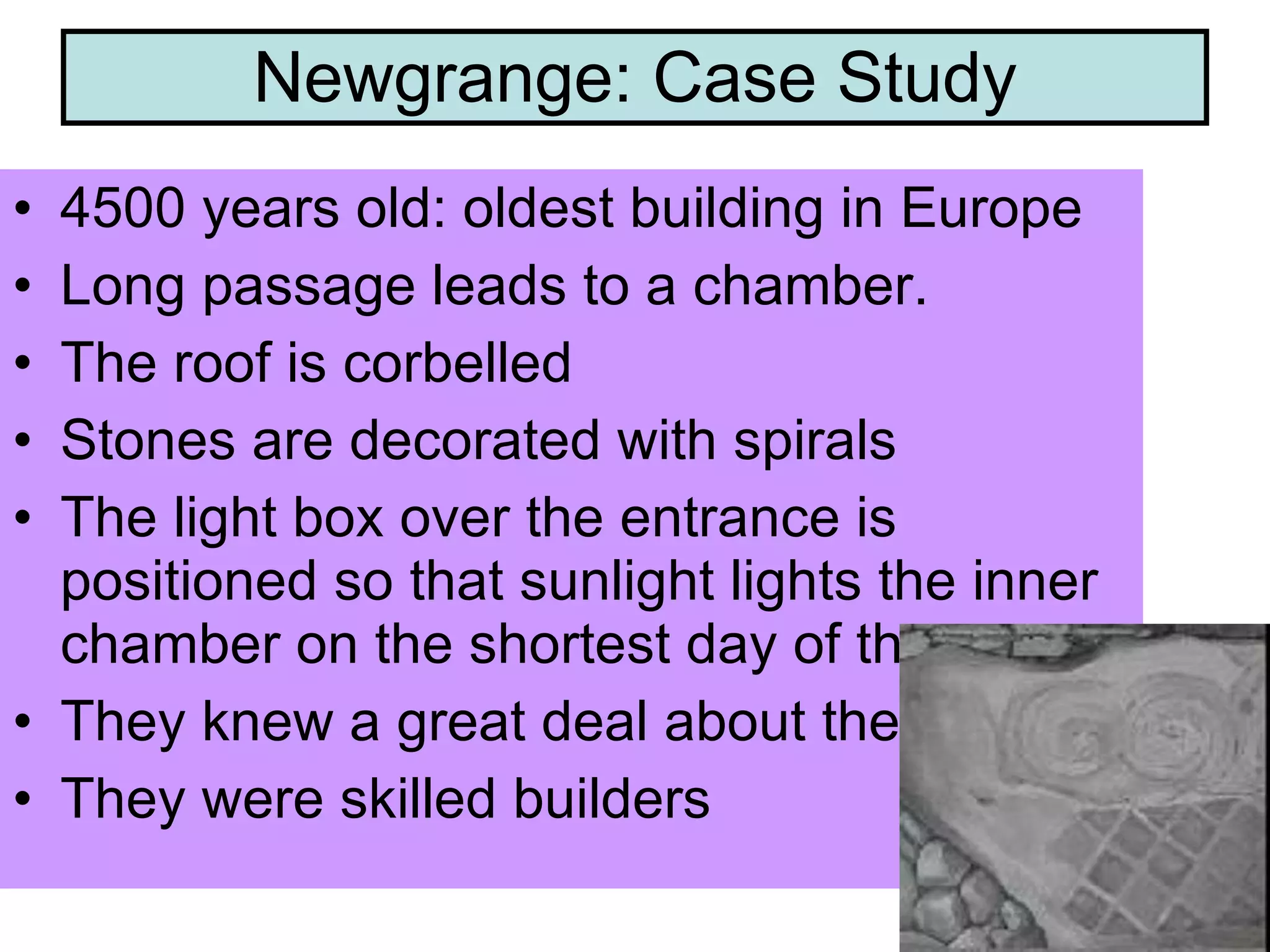
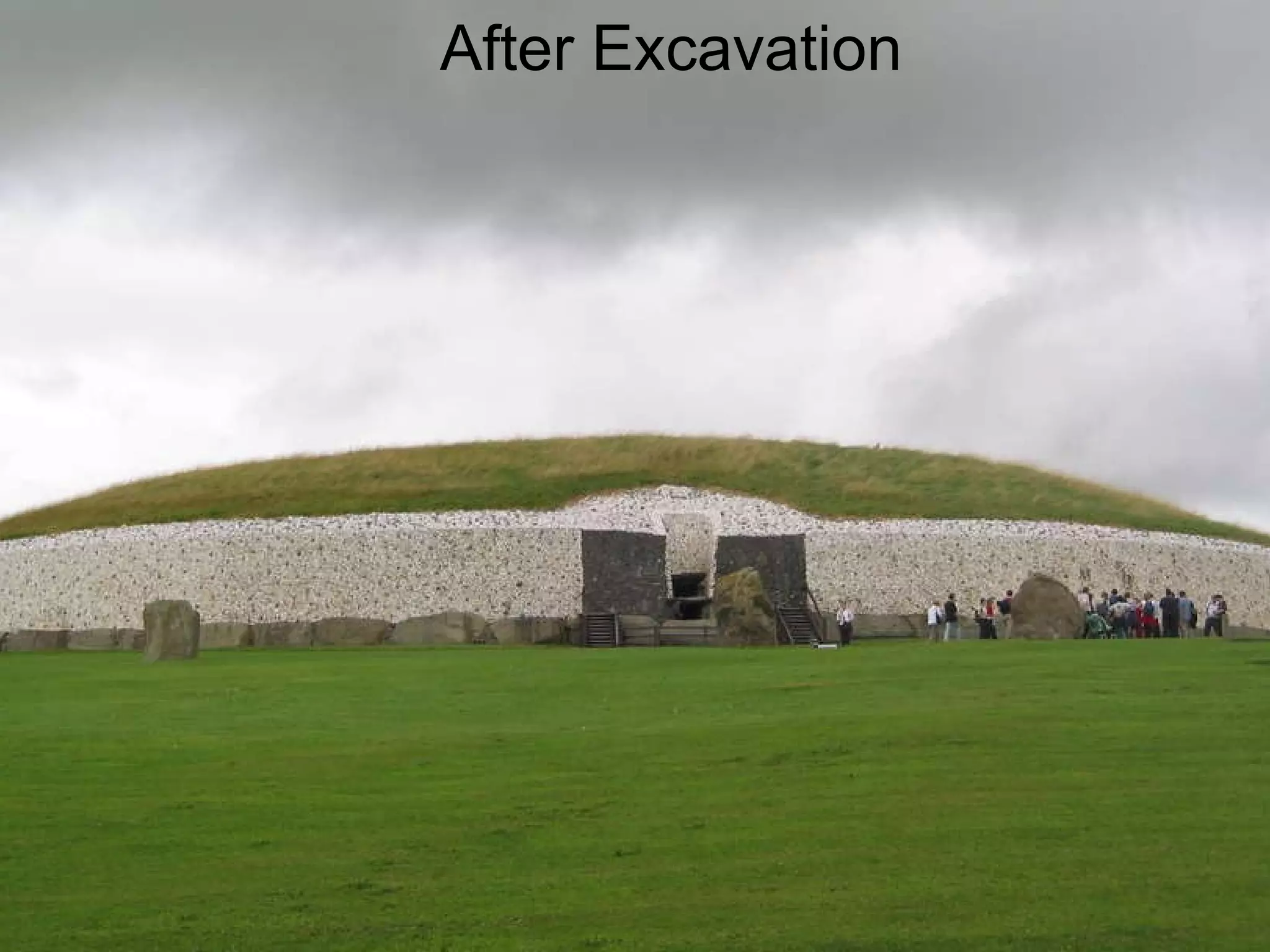
Newgrange: Case Study 4500 years old: oldest building in Europe Long passage leads to a chamber. The roof is corbelled Stones are decorated with spirals The light box over the entrance is positioned so that sunlight lights the inner chamber on the shortest day of the year They knew a great deal about the sun. They were skilled builders
After Excavation
Neolithic Settlements Lough Gur, Co Limerick Circular houses with wattle and daub wall and thatched roofs Post holes  Ceide Fields, Co Mayo Sewed wheat and barley Ground the grain with a rotary quern Kept cows, sheep and goats in stone walled fields
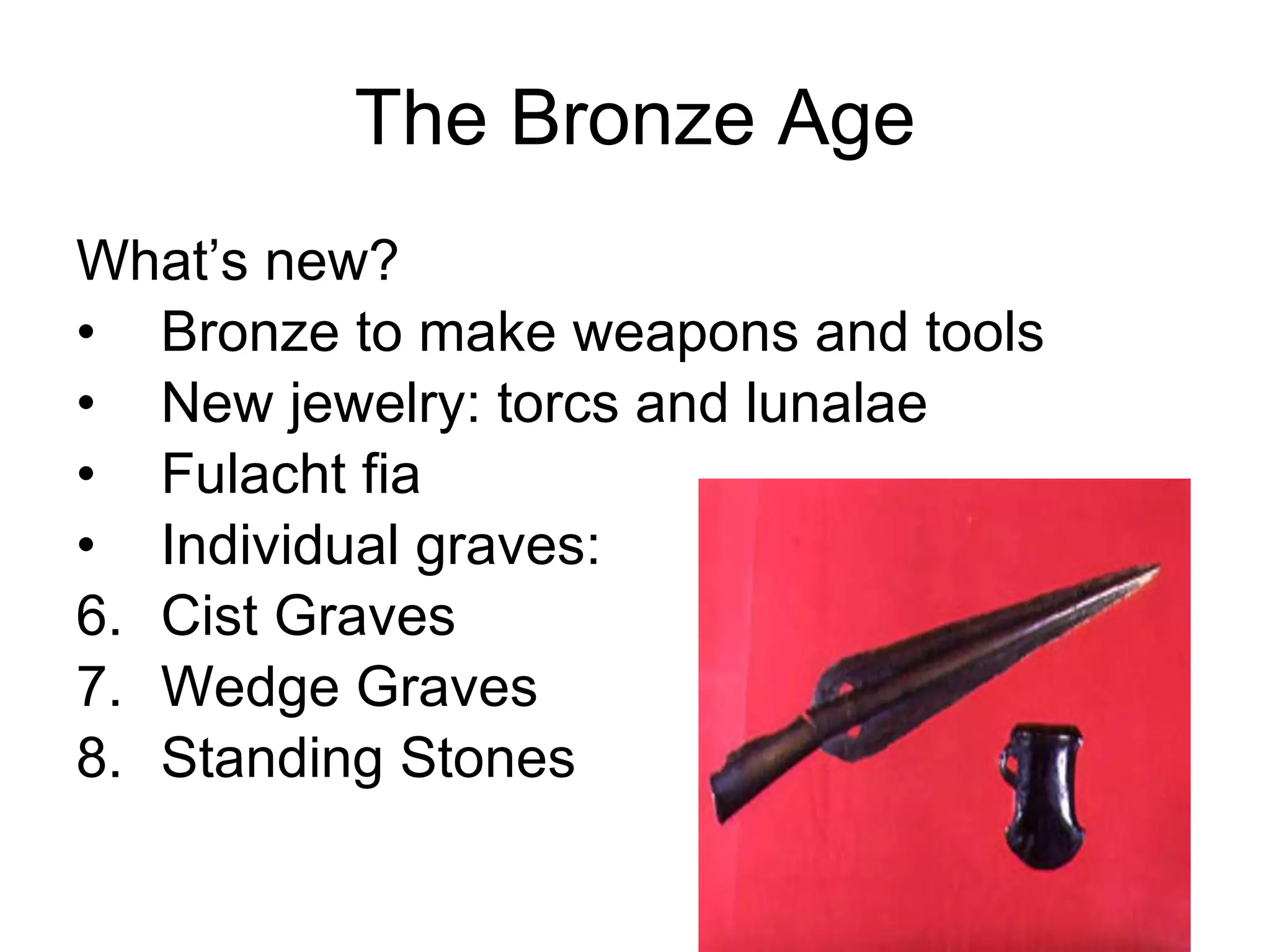
The Bronze Age What’s new? Bronze to make weapons and tools New jewelry: torcs and lunalae Fulacht fia Individual graves:  Cist Graves Wedge Graves Standing Stones
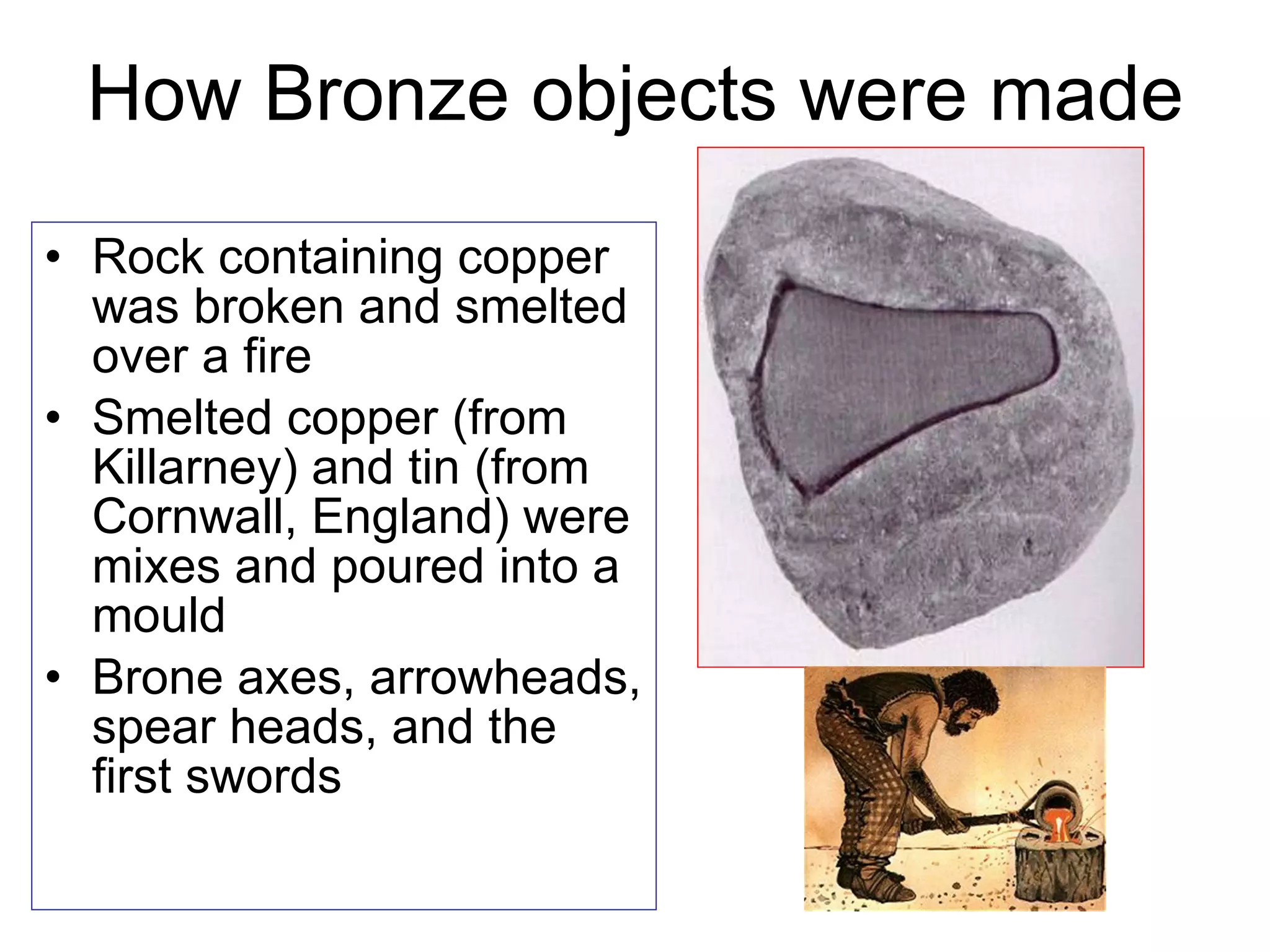
How Bronze objects were made Rock containing copper was broken and smelted over a fire Smelted copper (from Killarney) and tin (from Cornwall, England) were mixes and poured into a mould Brone axes, arrowheads, spear heads, and the first swords
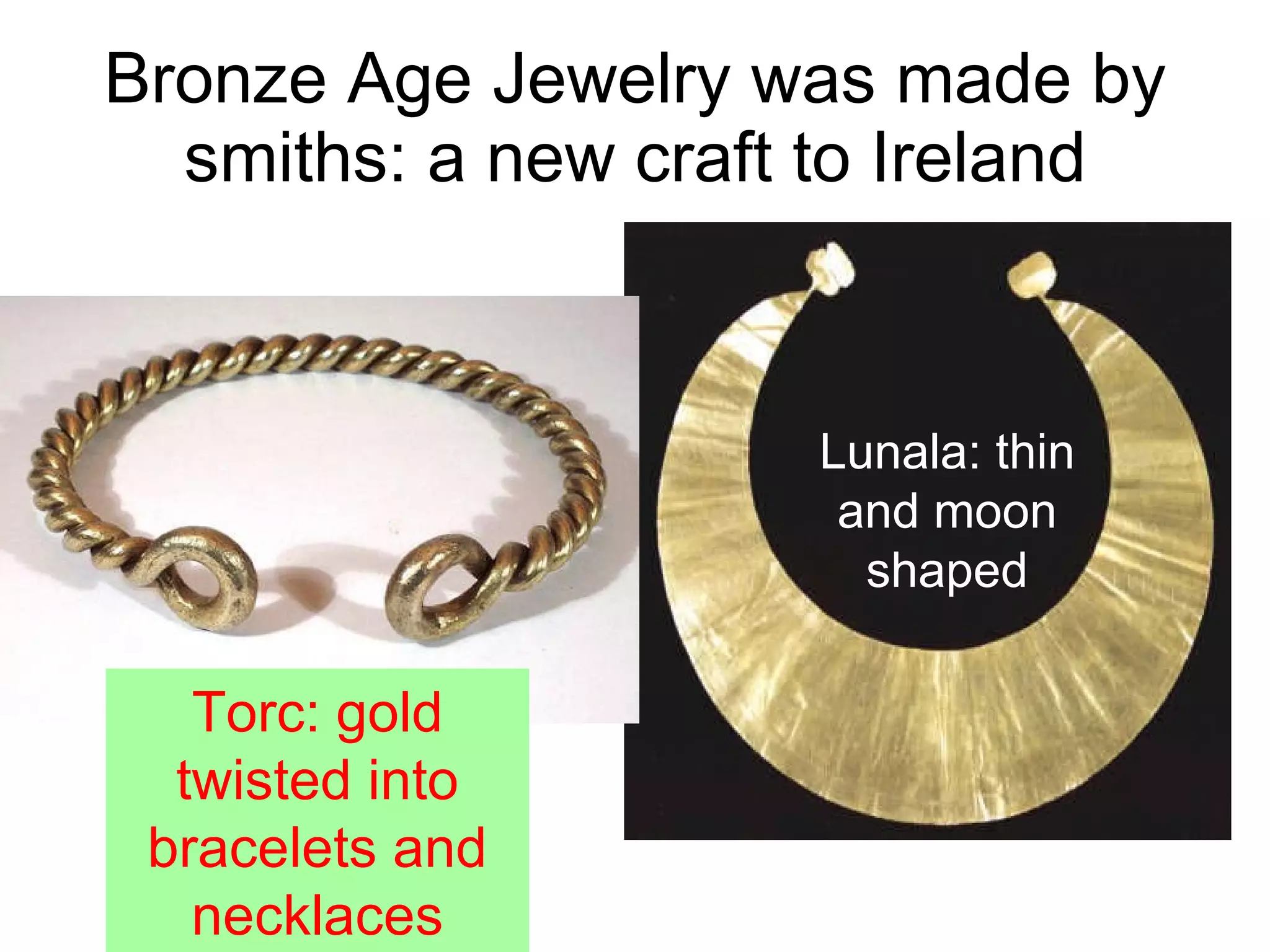
Bronze Age Jewelry was made by smiths: a new craft to Ireland Lunala: thin and moon shaped Torc: gold twisted into bracelets and necklaces
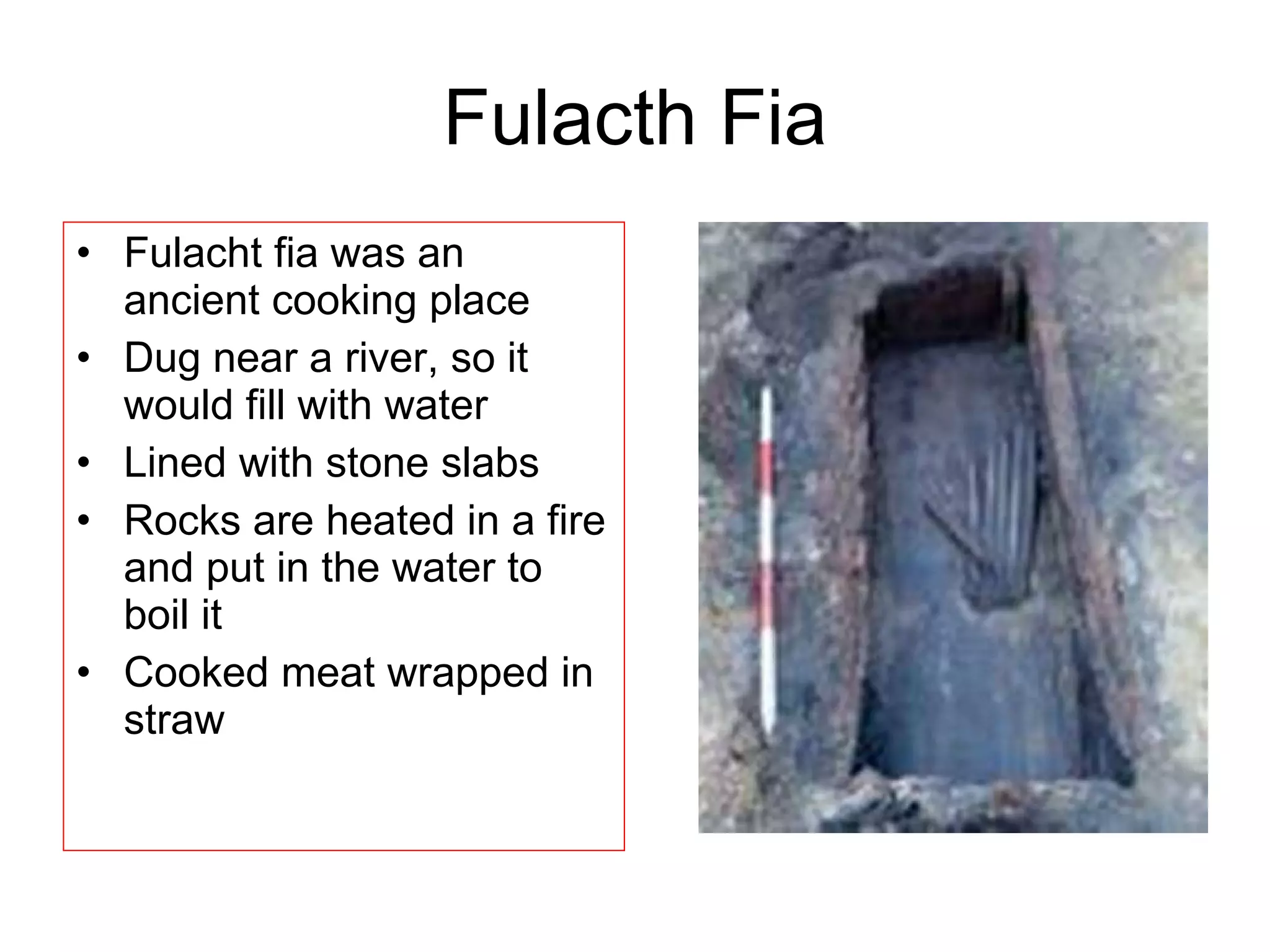
Fulacth Fia Fulacht fia was an ancient cooking place Dug near a river, so it would fill with water Lined with stone slabs Rocks are heated in a fire and put in the water to boil it Cooked meat wrapped in straw
Bronze Age Graves 1. Cist Grave  Carnmore, Co Louth Rectangular pit lined with stone slabs Person buried in crouched position with grave goods such as food and weapons
Wedge Tombs Lisdoonvarna, Co Clare Shaped like a wedge of cheese Standing Stones Drombeg, Co Cork Might have been a type of calendar Wedge Tomb
2000 BC Weapons and tools made of bronze Torc & Lunala Smelting and moulds First smiths First swords Fulacht fia / rotary querns Individual graves Cist Graves  (Carnmore, Co Louth) Wedge Tombs  (Lisdoonvarna, Co Clare) Standing Stones  (Drombeg, Co Cork) 4000 BC First Farmers Wattle and daub houses Pottery, wheat and barley Pigs, sheep and cattle Megaliths Dolmens  (Poulnabrone) Court Cairns (Creevkeel ) Passage Graves  (Newgrange) Ceide Fields Lough Gur 8000 BC Hunter Gatherers Hut-like houses Weapons and tools made of stone Mount Sandal Bronze Age Neolithic Stone Age Mesolithic Stone Age

Ancient ireland 1

  • 1.
    Ancient Ireland TheMesolithic Stone Age The Neolithic Stone Age The Bronze Age The Celts
  • 2.
    Mesolithic Stone Age7000 BC ? 4000 BC Bronze Age 2000 BC ? 500 BC Neolithic Stone Age Iron Age Celts Ancient Ireland
  • 3.
    Mesolithic Stone AgeFirst people in Ireland 8000 BC Tools and weapons made of stone Hunter gatherers Ate berries, nuts, fish, wild pig, deer and other animals Mount Sandal, River Bann Northern Ireland Axes Spears and Harpoons Scrapers Bone Needles
  • 4.
    Neolithic Stone AgeMeans ‘New Stone’ Age – they still made weapons and tools from stone 4000 BC: First farmers Changes Sharper polished stone tools They introduced pottery, farming, ploughs, barley and wheat, farm animals like sheep, cattle and pigs Built bigger stronger houses made of wattle and daub walls and thatched roofs Megaliths Megalith Pottery WAttle & Daub
  • 5.
    Neolithic farmers broughtpottery to Ireland. They used stones to grind the wheat for bread
  • 6.
    Look at thehouses on page 21 Usually rectangular. thatched roofs made of straw. A hole in the roof was a chimney for fires, lit on a stone in the middle of the floor. They drove timber posts into the ground and held them in place with rocks. They made walls out of ‘wattle’ and ‘daub’. Wattle was made by weaving twigs and branches through sticks (like basket making) Daub is a mixture of mud and straw which was ‘daubed’ on the wattle. Wattle and daub made the houses warmer and less drafty.
  • 7.
    First Farmers: SitesBecause the ‘Neolithic Farmers Settled in one place Had a reliable food supply they were able to form communities and work together, for example: They were able to build bigger structures: megaliths Megaliths prove they believed in life after death Sites where neolithic farmers lived Lough Gur, County Limerick, The Ceide Fields, County Mayo,
  • 8.
    Court Cairn, Creevykeel,Co Sligo Court Cairns consist of: A semi-circular ‘Court’ at the front where bodies were cremated. An entrance way made of two upright stones and a capstone. A ‘Passage’ leading to the burial chamber A Chamber where cremated remains were placed A cairn, a mound of smaller stones placed over the structure.
  • 9.
  • 10.
    Poulnabrone Dolmen, theBurren, Co Clare Dolmens are stone age tombs Cremated remains, human bones, pottery and weapons have been found in Dolmens. Poulnabrone Dolmen on the Burren in Co Clare was used for 500 years to bury the dead. Capstone Portals
  • 11.
    Passage Graves Along passage leads to a chamber deep inside The walls of the passage are made of large upright slabs The roof is corbelled and covered with an earth mound Examples are Newgrange, Dowth and Knowth Newgrange is a case study
  • 12.
    Newgrange: Case Study4500 years old: oldest building in Europe Long passage leads to a chamber. The roof is corbelled Stones are decorated with spirals The light box over the entrance is positioned so that sunlight lights the inner chamber on the shortest day of the year They knew a great deal about the sun. They were skilled builders
  • 13.
  • 14.
    Neolithic Settlements LoughGur, Co Limerick Circular houses with wattle and daub wall and thatched roofs Post holes Ceide Fields, Co Mayo Sewed wheat and barley Ground the grain with a rotary quern Kept cows, sheep and goats in stone walled fields
  • 15.
    The Bronze AgeWhat’s new? Bronze to make weapons and tools New jewelry: torcs and lunalae Fulacht fia Individual graves: Cist Graves Wedge Graves Standing Stones
  • 16.
    How Bronze objectswere made Rock containing copper was broken and smelted over a fire Smelted copper (from Killarney) and tin (from Cornwall, England) were mixes and poured into a mould Brone axes, arrowheads, spear heads, and the first swords
  • 17.
    Bronze Age Jewelrywas made by smiths: a new craft to Ireland Lunala: thin and moon shaped Torc: gold twisted into bracelets and necklaces
  • 18.
    Fulacth Fia Fulachtfia was an ancient cooking place Dug near a river, so it would fill with water Lined with stone slabs Rocks are heated in a fire and put in the water to boil it Cooked meat wrapped in straw
  • 19.
    Bronze Age Graves1. Cist Grave Carnmore, Co Louth Rectangular pit lined with stone slabs Person buried in crouched position with grave goods such as food and weapons
  • 20.
    Wedge Tombs Lisdoonvarna,Co Clare Shaped like a wedge of cheese Standing Stones Drombeg, Co Cork Might have been a type of calendar Wedge Tomb
  • 21.
    2000 BC Weaponsand tools made of bronze Torc & Lunala Smelting and moulds First smiths First swords Fulacht fia / rotary querns Individual graves Cist Graves (Carnmore, Co Louth) Wedge Tombs (Lisdoonvarna, Co Clare) Standing Stones (Drombeg, Co Cork) 4000 BC First Farmers Wattle and daub houses Pottery, wheat and barley Pigs, sheep and cattle Megaliths Dolmens (Poulnabrone) Court Cairns (Creevkeel ) Passage Graves (Newgrange) Ceide Fields Lough Gur 8000 BC Hunter Gatherers Hut-like houses Weapons and tools made of stone Mount Sandal Bronze Age Neolithic Stone Age Mesolithic Stone Age