MARKETING ENVIRONMENT
The actorsand forces outside marketing that affect
marketing management’s ability to build and maintain
successful relationships with target customers.
The marketing environment consists of a
microenvironment and a macroenvironment.
3.
MICROENVIRONMENT
The actors closeto the company that affect its ability to serve its
customers —the company, suppliers, marketing intermediaries,
customer markets, competitors, and publics.
4.
THE COMPANY
In designingmarketing plans, marketing management takes
other company groups into account—groups such as top
management, finance, research and development (R&D),
purchasing, operations, and accounting. All of these interrelated
groups form the internal environment. Top management sets
the company’s mission, objectives, broad strategies, and policies.
Marketing managers make decisions within the strategies and
plans made by top management.
5.
SUPPLIERS
Suppliers form animportant link in the company’s overall
customer value delivery network. They provide the resources
needed by the company to produce its goods and services.
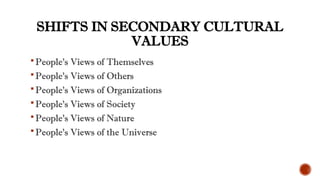
Supplier problems can seriously affect marketing. Marketing
managers must watch supply availability and costs. Supply
shortages or delays, labor strikes, and other events can cost sales
in the short run and damage customer satisfaction in the long
run. Rising supply costs may force price increases that can harm
the company’s sales volume.
6.
MARKETING INTERMEDIARIES
Help thecompany promote, sell, and distribute its products to
final buyers. They include resellers, physical distribution firms,
marketing services agencies, and financial intermediaries.
Resellers are distribution channel firms that help the company
find customers or make sales to them. These include wholesalers
and retailers who buy and resell merchandise.
7.
COMPETITORS
The marketing conceptstates that, to be successful, a company
must provide greater customer value and satisfaction than its
competitors do. Thus, marketers must do more than simply
adapt to the needs of target consumers. They also must gain
strategic advantage by positioning their offerings strongly against
competitors’ offerings in the minds of consumers.
8.
PUBLICS
Any groupthat has an actual or potential interest in or impact on an
organization’s ability to achieve its objectives.
Financial publics
Media publics
Government publics
Citizen-action publics
Local publics
General public
Internal publics
9.
CUSTOMERS
The most importantactors in the company’s microenvironment.
The aim of the entire value delivery network is to serve target
customers and create strong relationships with them.
Consumer markets
Business markets
Reseller markets
Government markets
International markets
10.
MACROENVIRONMENT
The larger societalforces that affect the microenvironment—
demographic, economic, natural, technological, political, and
cultural forces.
11.
THE DEMOGRAPHIC ENVIRONMENT
Thestudy of human populations in terms of size, density,
location, age, gender, race, occupation, and other statistics. The
demographic environment is of major interest to marketers
because it involves people, and people make up markets. The
world population is growing at an explosive rate. It now exceeds
6.8 billion people and is expected to grow to more than 8 billion
by the year 2030. The world’s large and highly diverse
population poses both opportunities and challenges.
12.
THE CHANGING AGESTRUCTURE
OF THE POPULATION
The U.S. population is currently about 310 million and may
reach almost 364 million by 2030. The single most important
demographic trend in the United States is the changing age
structure of the population. The U.S. population contains
several generational groups. Here, we discuss the three largest
groups, the baby boomers, Generation X, and the Millennials—
and their impact on today’s marketing strategies.
13.
THE BABY BOOMERS
Thepost–World War II baby boom produced 78 million baby
boomers, who were born between 1946 and 1964. Over the
years, the baby boomers have been one of the most powerful
forces shaping the marketing environment. The youngest
boomers are now in their mid-forties; the oldest are in their
sixties and approaching retirement. The maturing boomers are
rethinking the purpose and value of their work, responsibilities,
and relationships.
14.
GENERATION X
The45 million people born between 1965 and 1976 in the “birth
dearth” following the baby boom.
The Generation Xers are defined as much by their shared experiences
as by their age. Increasing parental divorce rates and higher
employment for their mothers made them the first generation of
latchkey kids. Although they seek success, they are less materialistic;
they prize experience, not acquisition. For many of the Gen Xers who
are parents, family comes first—both children and their aging parents
—and career second. From a marketing standpoint, the Gen Xers are
a more skeptical bunch. They tend to research products before they
consider a purchase, prefer quality to quantity, and tend to be less
receptive to overt marketing pitches.
15.
MILLENNIALS
The 83 millionchildren of the baby boomers, born between 1977
and 2000
Both the baby boomers and Gen Xers will one day be passing
the reins to the Millennials (also called Generation Y or the echo
boomers). Born between 1977 and 2000, these children of the
baby boomers number 83 million, dwarfing the Gen Xers and
larger even than the baby boomer segment. This group includes
several age cohorts: tweens (ages 10–12), teens (13–18), and
young adults (19–33). With total purchasing power of more than
$733 billion, the Millennials are a huge and attractive market.
16.
THE ECONOMIC ENVIRONMENT
Marketsrequire buying power as well as people. The economic
environment consists of economic factors that affect consumer
purchasing power and spending patterns. Marketers must pay
close attention to major trends and consumer spending patterns
both across and within their world markets.
17.
CHANGES IN CONSUMERSPENDING
Economic factors can have a dramatic effect on consumer spending
and buying behavior. For example, until fairly recently, American
consumers spent freely, fueled by income growth, a boom in the stock
market, rapid increases in housing values, and other economic good
fortunes. They bought and bought, seemingly without caution,
amassing record levels of debt. However, the free spending and high
expectations of those days were dashed by the Great Recession. Says
one economist, “For a generation that … substituted rising home
equity and stock prices for personal savings, the … economic
meltdown [was] psychologically wrenching after a quarter century of
unquestioned prosperity.”
18.
INCOME DISTRIBUTION
Marketers shouldpay attention to income distribution as well as
income levels. Over the past several decades, the rich have
grown richer, the middle class has shrunk, and the poor have
remained poor. The top 5 percent of American earners get more
than 21 percent of the country’s adjusted gross income, and the
top 20 percent of earners capture 49 percent of all income. In
contrast, the bottom 40 percent of American earners get just 13
percent of the total income.
19.
THE NATURAL ENVIRONMENT
Thenatural environment involves the natural resources that are
needed as inputs by marketers or that are affected by marketing
activities. Environmental concerns have grown steadily over the
past three decades. In many cities around the world, air and
water pollution have reached dangerous levels. World concern
continues to mount about the possibilities of global warming,
and many environmentalists fear that we soon will be buried in
our own trash.
20.
THE TECHNOLOGICAL
ENVIRONMENT
The technologicalenvironment is perhaps the most dramatic
force now shaping our destiny. Technology has released such
wonders as antibiotics, robotic surgery, miniaturized electronics,
smartphones, and the Internet. It also has released such horrors
as nuclear missiles, chemical weapons, and assault rifles. It has
released such mixed blessings as the automobile, television, and
credit cards. Our attitude toward technology depends on
whether we are more impressed with its wonders or its blunders.
21.
THE POLITICAL ANDSOCIAL
ENVIRONMENT
Marketing decisions are strongly affected by developments in the
political environment. The political environment consists of
laws, government agencies, and pressure groups that influence
or limit various organizations and individuals in a given society.
22.
LEGISLATION REGULATING
BUSINESS
Even themost liberal advocates of free-market economies agree
that the system works best with at least some regulation. Well-
conceived regulation can encourage competition and ensure fair
markets for goods and services. Thus, governments develop
public policy to guide commerce—sets of laws and regulations
that limit business for the good of society as a whole. Almost
every marketing activity is subject to a wide range of laws and
regulations.
23.
THE CULTURAL ENVIRONMENT
Thecultural environment consists of institutions and other
forces that affect a society’s basic values, perceptions,
preferences, and behaviors. People grow up in a particular
society that shapes their basic beliefs and values. They absorb a
worldview that defines their relationships with others. The
following cultural characteristics can affect marketing decision
making.
24.
THE PERSISTENCE OFCULTURAL
VALUES
People in a given society hold many beliefs and values. Their
core beliefs and values have a high degree of persistence.
25.
SHIFTS IN SECONDARYCULTURAL
VALUES
Although core values are fairly persistent, cultural swings do
take place. Consider the impact of popular music groups, movie
personalities, and other celebrities on young people’s hairstyling
and clothing norms. Marketers want to predict cultural shifts to
spot new opportunities or threats. Several firms offer “futures”
forecasts in this connection.
26.
SHIFTS IN SECONDARYCULTURAL
VALUES
People’s Views of Themselves
People’s Views of Others
People’s Views of Organizations
People’s Views of Society
People’s Views of Nature
People’s Views of the Universe
27.
RESPONDING TO THEMARKETING
ENVIRONMENT
Someone once observed, “There are three kinds of companies:
those who make things happen, those who watch things happen,
and those who wonder what’s happened.”
Other companies take a proactive stance toward the marketing
environment. “Instead of letting the environment define their
strategy,” advises one marketing expert, “craft a strategy that
defines your environment.”


![CHANGES IN CONSUMER SPENDING
Economic factors can have a dramatic effect on consumer spending
and buying behavior. For example, until fairly recently, American
consumers spent freely, fueled by income growth, a boom in the stock
market, rapid increases in housing values, and other economic good
fortunes. They bought and bought, seemingly without caution,
amassing record levels of debt. However, the free spending and high
expectations of those days were dashed by the Great Recession. Says
one economist, “For a generation that … substituted rising home
equity and stock prices for personal savings, the … economic
meltdown [was] psychologically wrenching after a quarter century of
unquestioned prosperity.”](https://image.slidesharecdn.com/analyzingthemarketingenvironmentppt-250228124241-459529a3/85/Analyzing-the-Marketing-Environment-_PPT-pptx-17-320.jpg)