Presented by: Swati Wadhawan
M. Pharm 1st yr
ANALYSIS OF COSMETICS,
TOXICITY SCREENING AND
TEST METHODS
DRUG AND COSMETIC ACT
 The Drugs and Cosmetics Act, 1940 is an Act of
the Parliament of India which regulates the import,
manufacture and distribution of drugs in India.
 It consist of 168 rules and XIX subpart .Drug and
cosmetic act contain schedules A to Y
Types Cosmetics Formulations
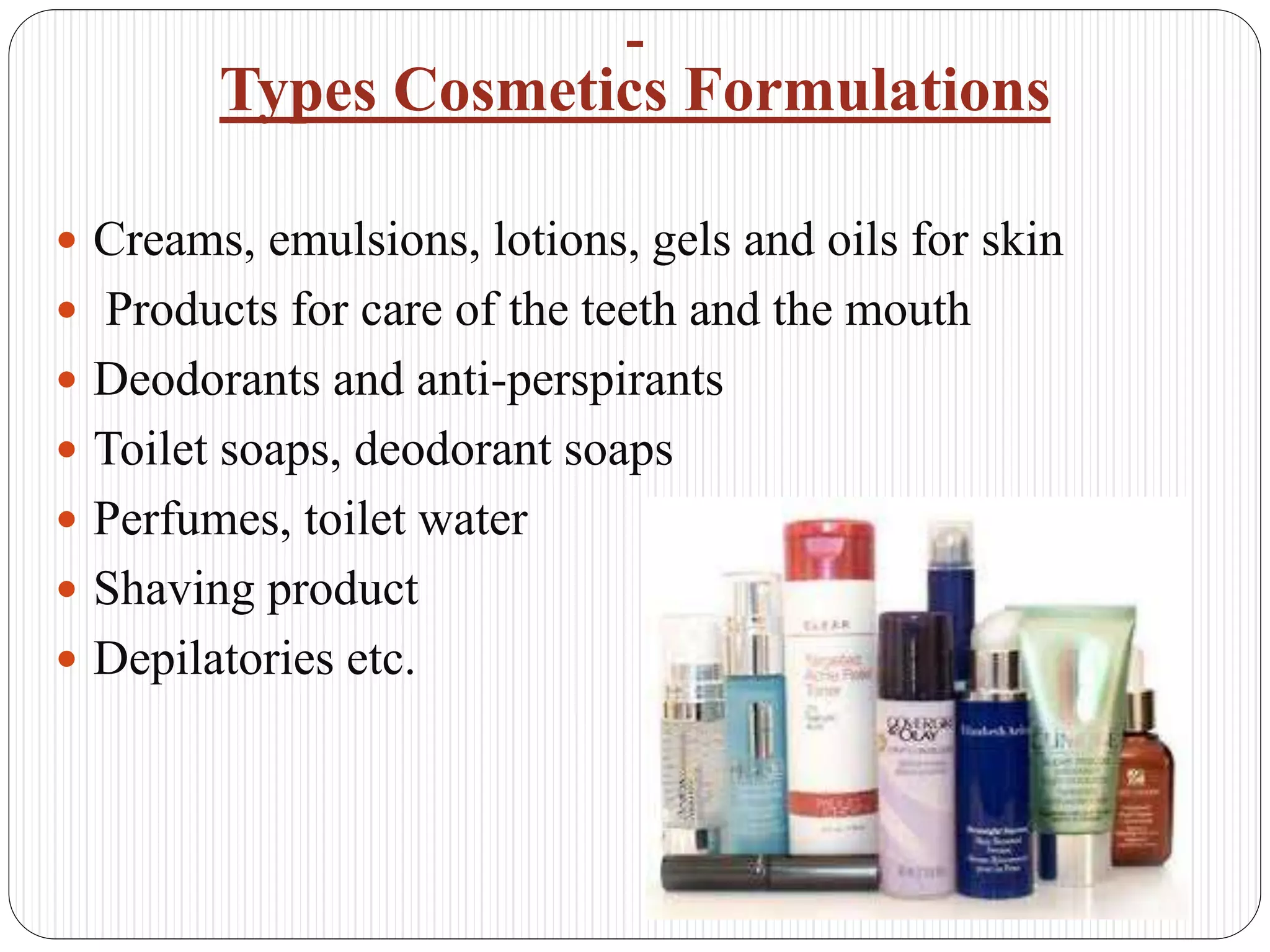
 Creams, emulsions, lotions, gels and oils for skin
 Products for care of the teeth and the mouth
 Deodorants and anti-perspirants
 Toilet soaps, deodorant soaps
 Perfumes, toilet water
 Shaving product
 Depilatories etc.
Analysis of cosmetics
 Physical Evaluation
 Chemical evaluation
 Microbiological evaluation
1. Physical evaluation
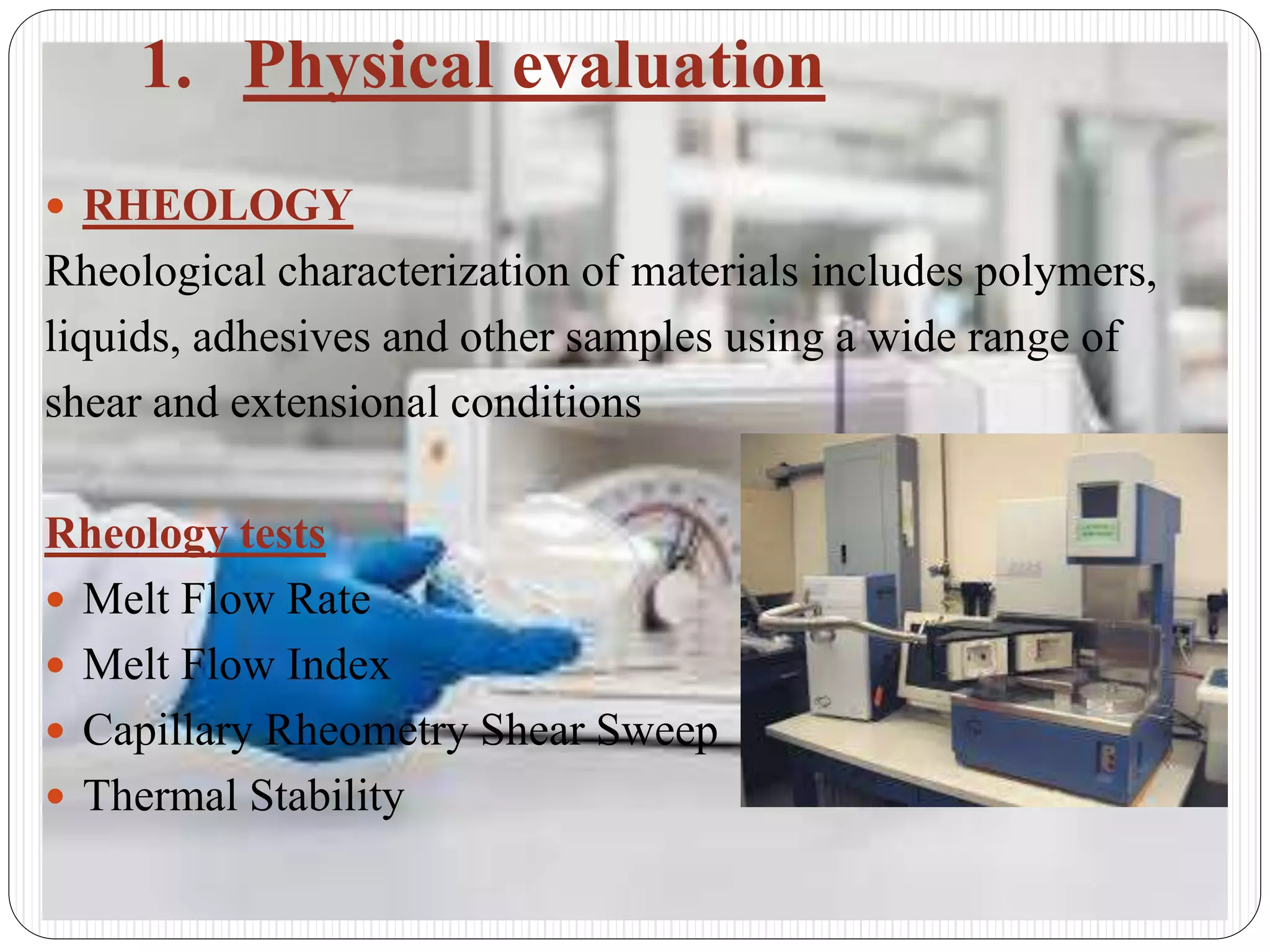
 RHEOLOGY
Rheological characterization of materials includes polymers,
liquids, adhesives and other samples using a wide range of
shear and extensional conditions
Rheology tests
 Melt Flow Rate
 Melt Flow Index
 Capillary Rheometry Shear Sweep
 Thermal Stability
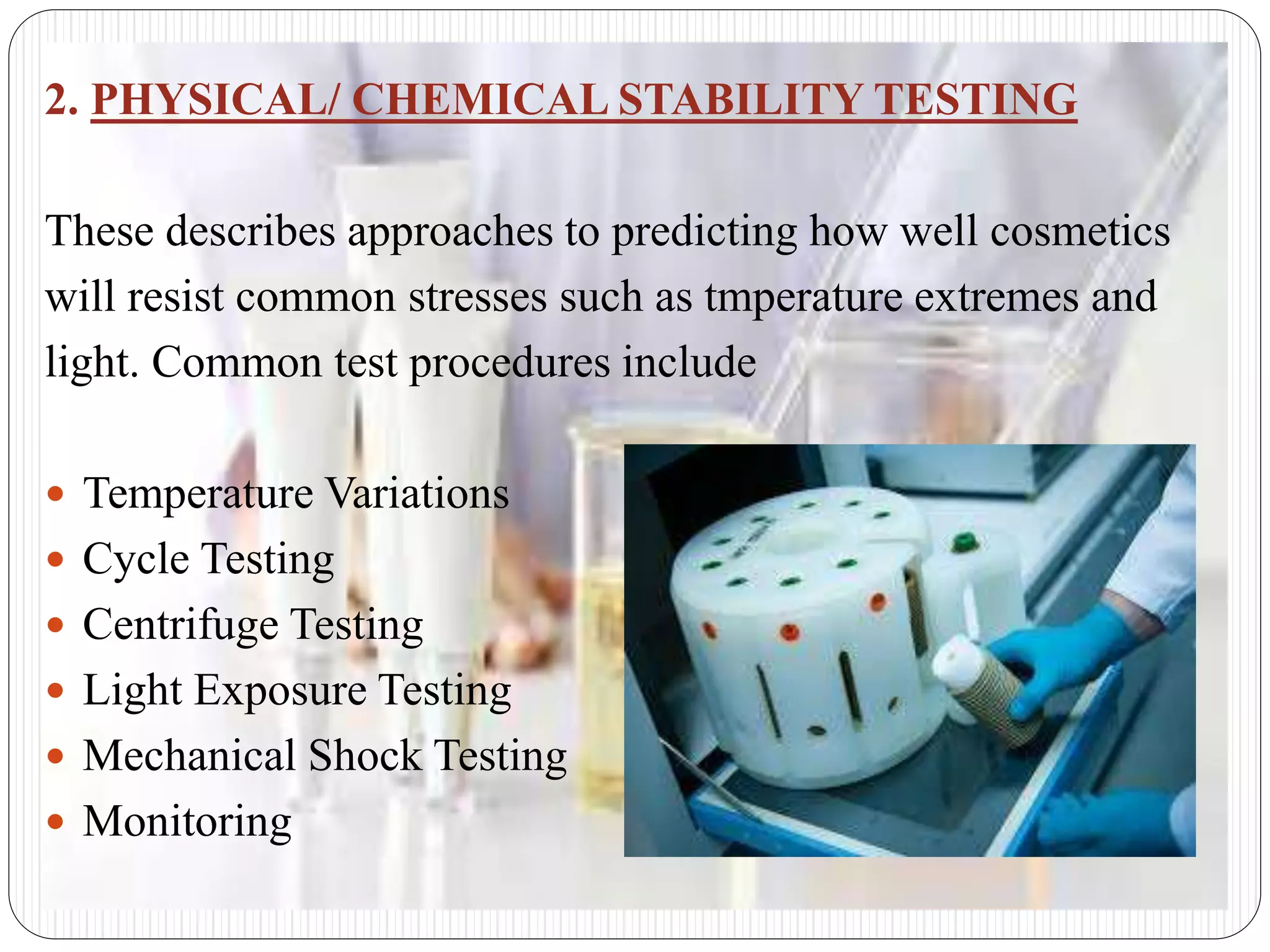
2. PHYSICAL/ CHEMICAL STABILITY TESTING
These describes approaches to predicting how well cosmetics
will resist common stresses such as tmperature extremes and
light. Common test procedures include
 Temperature Variations
 Cycle Testing
 Centrifuge Testing
 Light Exposure Testing
 Mechanical Shock Testing
 Monitoring
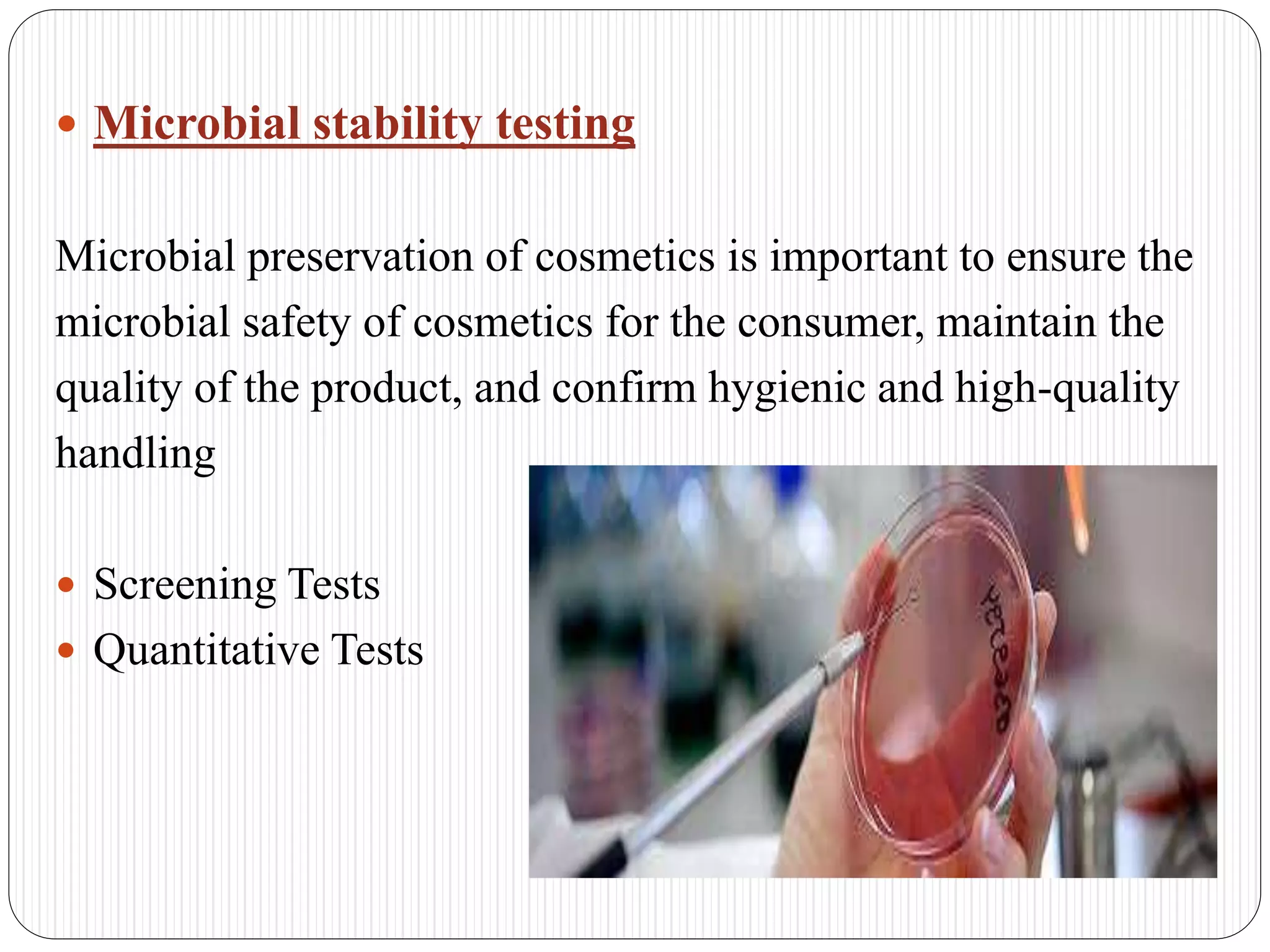
 Microbial stability testing
Microbial preservation of cosmetics is important to ensure the
microbial safety of cosmetics for the consumer, maintain the
quality of the product, and confirm hygienic and high-quality
handling
 Screening Tests
 Quantitative Tests
 Packaging of stability testing
Packaging can directly affect finished product stability
because of interactions which can occur between the
product, the package, and the external environment
 Glass Tests
 Weight Loss Tests
 Leaking Tests
 Viscosity
 Particle size
Chemical evaluation
i) DETERMINATION OF TOTAL FATTY SUBSTANCE
CONTENT
ii) DETERMINATION OF RESIDUE
iii) TEST FOR HEAVY METALS
iv) DETERMINATION OF ARSENIC
i) Determination of total fatty
substance content
Principle of the method
The emulsion is broken with dilute mineral acid and the fatty matter
is extracted with petroleum ether. It is weighed after removal of the
Solvent
REAGENTS
1 Dilute Hydrochloric Acid
2 Petroleum Ether
3 Methyl Orange Indicator Solution
4 Sodium Sulphate
ii) DETERMINATION OF RESIDUE
PROCEDURE
 Weigh accurately about 5 g of the material in a weighed,
clean and dry squat form weighing bottle and
 Residue percent by mass = 100; dry to constant mass at
105 ± 1 ºC. Cool in a desiccators and weigh.
iii) TEST FOR HEAVY METALS
Outline of the method
The colour produced with hydrogen sulphide solution is matched
against that obtained with standard lead solution.
APPARATUS
1 Nessler Cylinders — 50-ml capacity
REAGENTS
1 Dilute Hydrochloric Acid
2 Dilute Acetic Acid
3 Dilute Ammonium Hydroxide
4 Hydrogen Sulphide Solution
5 Standard Lead Solution
iv) DETERMINATION OF ARSENIC
OUTLINE OF THE METHOD
Arsenic present in a solution of the material is reduced to arsine,
which is made to react with mercuric bromide paper. The stain
produced is compared with a standard stain.
REAGENTS
1 Mixed Acid
2 Ferric Ammonium Sulphate Solution
3 Concentrated Hydrochloric Acid
4 Stannous Chloride Solution
3) MICROBIOLOGICAL EVALUATION
To ensure the quality and product safety of cosmetics it is
necessary to evaluate the product or its components with
defined microbiological tests.
 Determination of the Bioburden
 Testing of Efficacy of Preservation
 Stability Testing
Requirements to quality management
 Document
 Personnel
 Environment
 Test and calibration methods and method validation
 Equipment
 Reagents and culture media
 Internal quality control
 External quality assessment (proficiency testing)
TOXICITY STUDIES
 The determination of toxic potential is the first step in the
hazard assessment of an ingredient and consists of a series
of toxicity studies, specific to distinct toxicological end
points
 The in vitro methodologies for evaluating the toxic
potential of ingredients reported in the literature
 In vivo studies to investigate the toxicological profile of
a cosmetic ingredient when applied to an animal by a
route of exposure similar to that of human exposure
ACUTE TOXICITY
 Two oral in vivo acute toxicity methods recently adopted by
OECD (organization for economic cooperation &
development)
 The OECD group of national co-ordinators proposes
inclusion in the text of Guideline 401
 In the Annex 1 to these guidelines, the SCCNFP stresses that
acute toxicity data only have to be provided when they are
already available
PERCUTANEOUS ABSORPTION
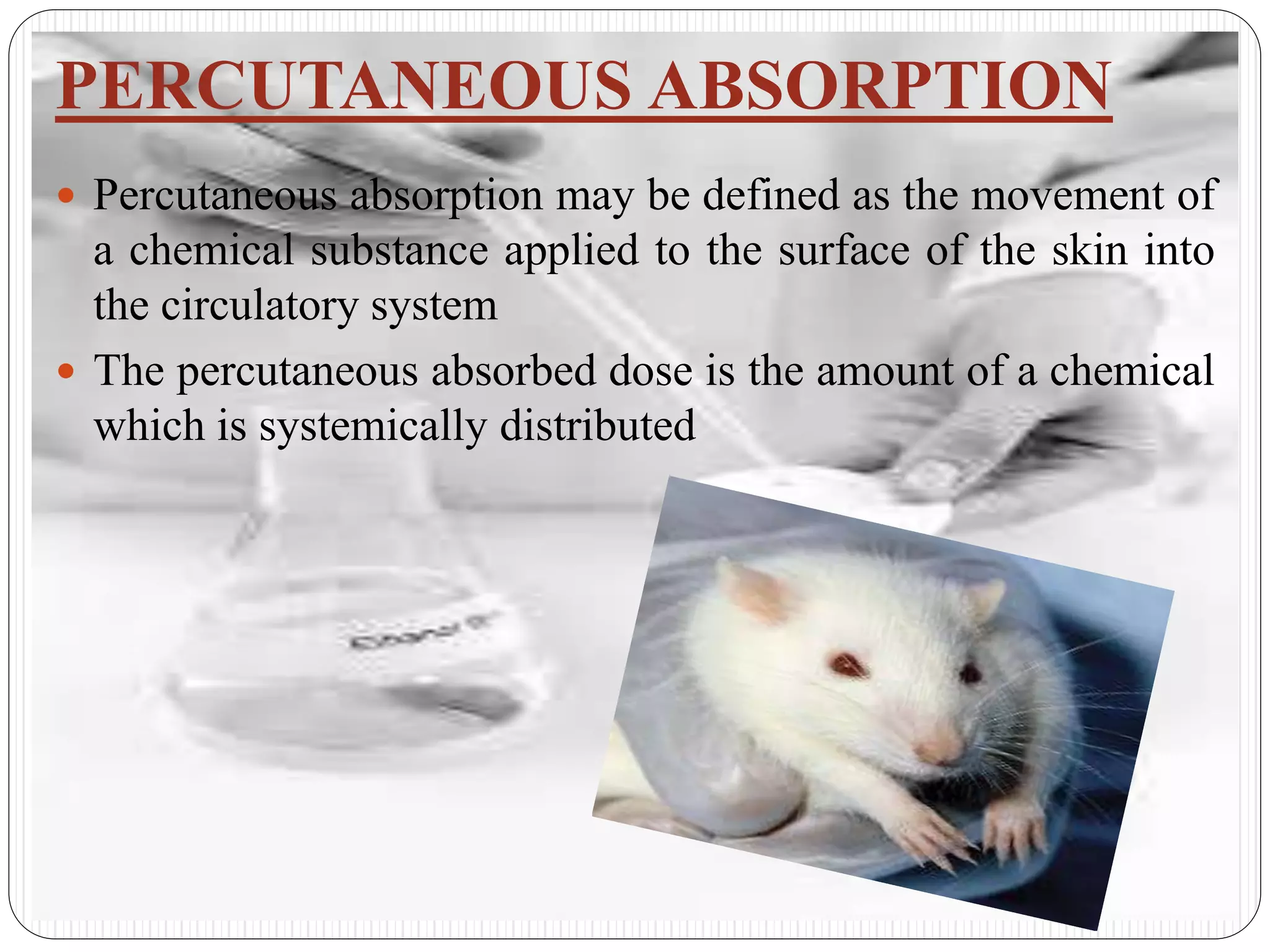
 Percutaneous absorption may be defined as the movement of
a chemical substance applied to the surface of the skin into
the circulatory system
 The percutaneous absorbed dose is the amount of a chemical
which is systemically distributed
SKIN IRRITATION
 There are to date no validated alternative methods capable of
replacing the OECD 404 in vivo skin irritation test
 ECVAM (European center for the validation of alternative
methods) has concluded positively the validation of 2 in vitro
methods to assess the skin corrosivity potential of different
chemicals
EYE IRRITATION
The international EC/Home Office validation study of
alternatives to the Draize eye irritancy test did not achieve
the expected objectives but triggered the organisation of an
ECVAM workshop on the practical aspects of validation
and the preparation of a prevalidation schedule, as well as
the planning of the COLIPA (European cosmetic, toiletry
and perfumery association) study
SKIN SENSITISATION AND PHOTOSENSITISATION
 Concerning skin sensitization a proposal for developing an in
vitro test for the detection of the sensitizing potential of
chemical substances
SUBCHRONIC TOXICITY
 development of ingredients evaluated by the SCCNFP
(Scientific committee on cosmetic & non-food products)
which have specific biological properties
 Evaluation of the systemic risk is a key element in evaluating
the safety of new ingredients
MUTAGENICITY/GENOTOXICITY
 Several in vitro genotoxicity tests are available. the
combination of two in vitro tests:
1. Bacterial reverse mutation test (or in vitro mammalian
cell gene mutation test for specific chemicals, for which a
scientific justification must be provided)
2. In vitro mammalian cell chromosome aberration test
provides in general sufficient evidence of mutagenic
and/or genotoxic potential
Use of in vivo tests is limited to confirmation of a
mutagenic activity already observed in Vitro
PHOTOTOXICITY/PHOTOIRRITATION
 All chemicals which are able to absorb UVA and/or UVB
light, may change their molecular configuration and may
undergo further biological reaction of toxicological
relevance for consumers
 Animal models have not been validated for testing for
phototoxicity
 The principle of the method is based on a comparison of the
cytotoxicity of a chemical
PHOTOMUTAGENICITY PHOTOGENOTOXICITY
 In 1990 the SCC (standard coordinating committee) adopted
guidelines for testing the photomutagenicity /
photogenotoxicity of UV radiation absorbing cosmetic
ingredients
 Since 1990, COLIPA has submitted dossiers on UV filters
containing photomutagenicity data obtained from different
types of tests
References
 https://www2.mst.dk/udgiv/publications/2010/978-87-92668-
66-0/pdf/978-87-92668-67-7.pdf
 http://www.chemeng.lth.se/exjobb/E28
 www.mdpi.com/journal/cosmetics/special_issues/quality-
control-cosmetics
 https://www.lctech.de/fileadmin/user_upload/.../LCTech-
Flyer-Cosmetics-en.pdf
 ec.europa.eu/health/ph_risk/committees/sccp/documents/out1
30_en.
 https://www.ufag-laboratorien.ch/en/cosmetics.../quality-
control-of-products.htm
Analysis of cosmetics, toxicity screening and test methods

Analysis of cosmetics, toxicity screening and test methods

  • 1.
    Presented by: SwatiWadhawan M. Pharm 1st yr ANALYSIS OF COSMETICS, TOXICITY SCREENING AND TEST METHODS
  • 2.
    DRUG AND COSMETICACT  The Drugs and Cosmetics Act, 1940 is an Act of the Parliament of India which regulates the import, manufacture and distribution of drugs in India.  It consist of 168 rules and XIX subpart .Drug and cosmetic act contain schedules A to Y
  • 3.
    Types Cosmetics Formulations Creams, emulsions, lotions, gels and oils for skin  Products for care of the teeth and the mouth  Deodorants and anti-perspirants  Toilet soaps, deodorant soaps  Perfumes, toilet water  Shaving product  Depilatories etc.
  • 4.
    Analysis of cosmetics Physical Evaluation  Chemical evaluation  Microbiological evaluation
  • 5.
    1. Physical evaluation RHEOLOGY Rheological characterization of materials includes polymers, liquids, adhesives and other samples using a wide range of shear and extensional conditions Rheology tests  Melt Flow Rate  Melt Flow Index  Capillary Rheometry Shear Sweep  Thermal Stability
  • 6.
    2. PHYSICAL/ CHEMICALSTABILITY TESTING These describes approaches to predicting how well cosmetics will resist common stresses such as tmperature extremes and light. Common test procedures include  Temperature Variations  Cycle Testing  Centrifuge Testing  Light Exposure Testing  Mechanical Shock Testing  Monitoring
  • 7.
     Microbial stabilitytesting Microbial preservation of cosmetics is important to ensure the microbial safety of cosmetics for the consumer, maintain the quality of the product, and confirm hygienic and high-quality handling  Screening Tests  Quantitative Tests
  • 8.
     Packaging ofstability testing Packaging can directly affect finished product stability because of interactions which can occur between the product, the package, and the external environment  Glass Tests  Weight Loss Tests  Leaking Tests  Viscosity  Particle size
  • 9.
    Chemical evaluation i) DETERMINATIONOF TOTAL FATTY SUBSTANCE CONTENT ii) DETERMINATION OF RESIDUE iii) TEST FOR HEAVY METALS iv) DETERMINATION OF ARSENIC
  • 10.
    i) Determination oftotal fatty substance content Principle of the method The emulsion is broken with dilute mineral acid and the fatty matter is extracted with petroleum ether. It is weighed after removal of the Solvent REAGENTS 1 Dilute Hydrochloric Acid 2 Petroleum Ether 3 Methyl Orange Indicator Solution 4 Sodium Sulphate
  • 11.
    ii) DETERMINATION OFRESIDUE PROCEDURE  Weigh accurately about 5 g of the material in a weighed, clean and dry squat form weighing bottle and  Residue percent by mass = 100; dry to constant mass at 105 ± 1 ºC. Cool in a desiccators and weigh.
  • 12.
    iii) TEST FORHEAVY METALS Outline of the method The colour produced with hydrogen sulphide solution is matched against that obtained with standard lead solution. APPARATUS 1 Nessler Cylinders — 50-ml capacity REAGENTS 1 Dilute Hydrochloric Acid 2 Dilute Acetic Acid 3 Dilute Ammonium Hydroxide 4 Hydrogen Sulphide Solution 5 Standard Lead Solution
  • 13.
    iv) DETERMINATION OFARSENIC OUTLINE OF THE METHOD Arsenic present in a solution of the material is reduced to arsine, which is made to react with mercuric bromide paper. The stain produced is compared with a standard stain. REAGENTS 1 Mixed Acid 2 Ferric Ammonium Sulphate Solution 3 Concentrated Hydrochloric Acid 4 Stannous Chloride Solution
  • 14.
    3) MICROBIOLOGICAL EVALUATION Toensure the quality and product safety of cosmetics it is necessary to evaluate the product or its components with defined microbiological tests.  Determination of the Bioburden  Testing of Efficacy of Preservation  Stability Testing
  • 15.
    Requirements to qualitymanagement  Document  Personnel  Environment  Test and calibration methods and method validation  Equipment  Reagents and culture media  Internal quality control  External quality assessment (proficiency testing)
  • 16.
    TOXICITY STUDIES  Thedetermination of toxic potential is the first step in the hazard assessment of an ingredient and consists of a series of toxicity studies, specific to distinct toxicological end points  The in vitro methodologies for evaluating the toxic potential of ingredients reported in the literature  In vivo studies to investigate the toxicological profile of a cosmetic ingredient when applied to an animal by a route of exposure similar to that of human exposure
  • 17.
    ACUTE TOXICITY  Twooral in vivo acute toxicity methods recently adopted by OECD (organization for economic cooperation & development)  The OECD group of national co-ordinators proposes inclusion in the text of Guideline 401  In the Annex 1 to these guidelines, the SCCNFP stresses that acute toxicity data only have to be provided when they are already available
  • 18.
    PERCUTANEOUS ABSORPTION  Percutaneousabsorption may be defined as the movement of a chemical substance applied to the surface of the skin into the circulatory system  The percutaneous absorbed dose is the amount of a chemical which is systemically distributed
  • 19.
    SKIN IRRITATION  Thereare to date no validated alternative methods capable of replacing the OECD 404 in vivo skin irritation test  ECVAM (European center for the validation of alternative methods) has concluded positively the validation of 2 in vitro methods to assess the skin corrosivity potential of different chemicals
  • 20.
    EYE IRRITATION The internationalEC/Home Office validation study of alternatives to the Draize eye irritancy test did not achieve the expected objectives but triggered the organisation of an ECVAM workshop on the practical aspects of validation and the preparation of a prevalidation schedule, as well as the planning of the COLIPA (European cosmetic, toiletry and perfumery association) study
  • 21.
    SKIN SENSITISATION ANDPHOTOSENSITISATION  Concerning skin sensitization a proposal for developing an in vitro test for the detection of the sensitizing potential of chemical substances SUBCHRONIC TOXICITY  development of ingredients evaluated by the SCCNFP (Scientific committee on cosmetic & non-food products) which have specific biological properties  Evaluation of the systemic risk is a key element in evaluating the safety of new ingredients
  • 22.
    MUTAGENICITY/GENOTOXICITY  Several invitro genotoxicity tests are available. the combination of two in vitro tests: 1. Bacterial reverse mutation test (or in vitro mammalian cell gene mutation test for specific chemicals, for which a scientific justification must be provided) 2. In vitro mammalian cell chromosome aberration test provides in general sufficient evidence of mutagenic and/or genotoxic potential Use of in vivo tests is limited to confirmation of a mutagenic activity already observed in Vitro
  • 23.
    PHOTOTOXICITY/PHOTOIRRITATION  All chemicalswhich are able to absorb UVA and/or UVB light, may change their molecular configuration and may undergo further biological reaction of toxicological relevance for consumers  Animal models have not been validated for testing for phototoxicity  The principle of the method is based on a comparison of the cytotoxicity of a chemical
  • 24.
    PHOTOMUTAGENICITY PHOTOGENOTOXICITY  In1990 the SCC (standard coordinating committee) adopted guidelines for testing the photomutagenicity / photogenotoxicity of UV radiation absorbing cosmetic ingredients  Since 1990, COLIPA has submitted dossiers on UV filters containing photomutagenicity data obtained from different types of tests
  • 25.
    References  https://www2.mst.dk/udgiv/publications/2010/978-87-92668- 66-0/pdf/978-87-92668-67-7.pdf  http://www.chemeng.lth.se/exjobb/E28 www.mdpi.com/journal/cosmetics/special_issues/quality- control-cosmetics  https://www.lctech.de/fileadmin/user_upload/.../LCTech- Flyer-Cosmetics-en.pdf  ec.europa.eu/health/ph_risk/committees/sccp/documents/out1 30_en.  https://www.ufag-laboratorien.ch/en/cosmetics.../quality- control-of-products.htm