 A-myo-trophic comes from Greek
› A = no/negative
› Myo = muscle
› Trophic = nourishment
› No Muscle Nourishment
 Lateral = defines location of the nerve cells that signal and
control the muscles
 Sclerosis = scarring and hardening in the degenerating
region
 Also known as:
› Motor neuron disease
› Charcot’s disease
› Lou Gehrig’s disease
 A progressive neurodegenerative disease.
 Cells of the brain and spinal cord are lost.
 Affects mostly motor neurons
› The cells that control needed voluntary muscle
activity such as:
 Speaking
 Skeletal muscle movement
 Breathing
 Swallowing
 When the motor neurons eventually die, the ability
of the brain to control muscle movement is lost.
 Causing paralysis of essential body systems.
 When muscles no longer receive the messages
from the motor neurons that they require to
function, the muscles begin to atrophy.
 According to the ALS CARE Database
› 60% of the people with ALS in the database are men
› 93% of patients in the database are caucasian
 Normally occurs in people between 40 to 70
years of age
› Also can occur in people in their 20’s and 30’s
 Copper/zinc Superoxide dismutase 1
(SOD1)
 Heavy neurofilament subunit (NEFH)
 Peripherin (PRPH)
 Dynactin (DCTN1)
 Due to a mutation in SOD1, the superoxide
radicals are not neutralized
 The radicals attack the motor neurons and
degrade them
 Muscles are not able to be stimulated
 Free radicals
› Inherited form of ALS often involves a mutation in a
gene responsible for producing a strong antioxidant
enzyme that protects cells from damage caused by
free radicals — the byproducts of oxygen
metabolism.
 Glutamate
› People who have ALS typically have higher than
normal levels of glutamate, a chemical messenger in
the brain, in their spinal fluid.
› Too much glutamate is known to be toxic to some
nerve cells.
 Autoimmune Response
› Immune system begins to attack normal cells
› Scientists have speculated that such antibodies
may trigger the process that results in ALS
 Two types of ALS:
› Sporadic – no family history
› Familial – family history/background
 Autosomal dominant
 Autosomal recessive
 X-linked dominant
 90% of the known cases are sporadic
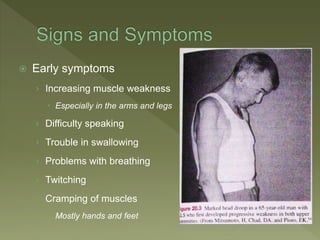
 Early symptoms
› Increasing muscle weakness
 Especially in the arms and legs
› Difficulty speaking
› Trouble in swallowing
› Problems with breathing
› Twitching
› Cramping of muscles
 Mostly hands and feet
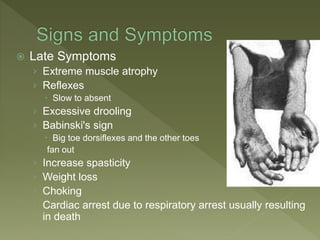
 Late Symptoms
› Extreme muscle atrophy
› Reflexes
 Slow to absent
› Excessive drooling
› Babinski's sign
 Big toe dorsiflexes and the other toes
fan out
› Increase spasticity
› Weight loss
› Choking
› Cardiac arrest due to respiratory arrest usually resulting
in death
 S/ S or patterns of symptoms are not the same for each ALS
individual
 Progressive muscle weakness and paralysis are universally
experienced
 Since ALS attacks only motor neurons, the sense of sight,
touch, hearing, taste, and smell are not affected
 Average life expectancy is 3 to 5 years after diagnosis
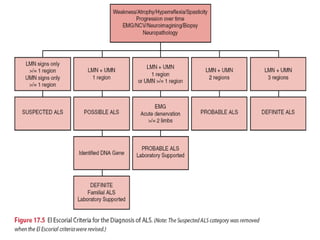
 MRI
 Muscle and nerve biopsy
 Electomyography (EMG)
 Nerve conduction velocity (NCV)
 Blood and urine studies
 Spinal tap
 Even with all this technology ALS is
extremely difficult to diagnose. This is
because many diseases mimic signs of ALS
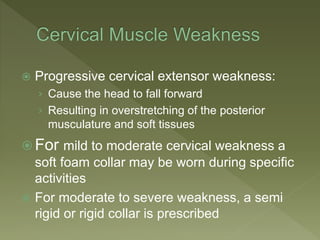
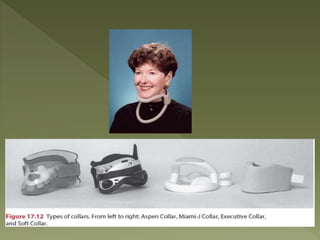
 Progressive cervical extensor weakness:
› Cause the head to fall forward
› Resulting in overstretching of the posterior
musculature and soft tissues
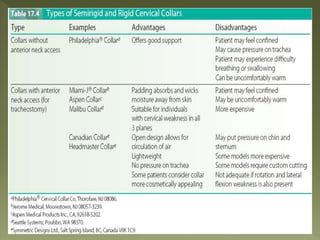
 For mild to moderate cervical weakness a
soft foam collar may be worn during specific
activities
 For moderate to severe weakness, a semi
rigid or rigid collar is prescribed
 Shoulder Pain:
› May develop shoulder pain with capsular pattern
› Secondary to spasticity or weakness causing
imbalance that may lead to:
 Impingement
 Overuse of strong muscles
 Muscle strain
 Poor re sting position
 Glenohumeral subluxation secondary to weakness
 Breathing and positioning to optimize
ventilation
 Airway clearance techniques may be
necessary when conditions that cause
secretion retention arise
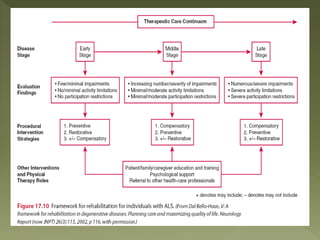
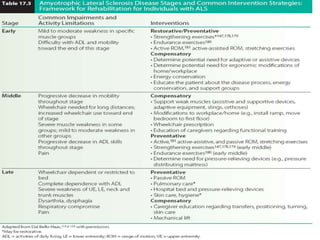
 Decrease the stress on remaining function
 Conserve energy
 Minimize local or general muscle fatigue
 The type of ambulatory assistive device
prescribed is dependent on:
› Proximal muscle strength or instability
› Function of the UEs
› The pattern , extent and rate of disease progression
› financial constraints
Amyotropic Lateral Sclerosis (1). physiologypptx

Amyotropic Lateral Sclerosis (1). physiologypptx

  • 2.
     A-myo-trophic comesfrom Greek › A = no/negative › Myo = muscle › Trophic = nourishment › No Muscle Nourishment  Lateral = defines location of the nerve cells that signal and control the muscles  Sclerosis = scarring and hardening in the degenerating region
  • 3.
     Also knownas: › Motor neuron disease › Charcot’s disease › Lou Gehrig’s disease
  • 4.
     A progressiveneurodegenerative disease.  Cells of the brain and spinal cord are lost.  Affects mostly motor neurons › The cells that control needed voluntary muscle activity such as:  Speaking  Skeletal muscle movement  Breathing  Swallowing
  • 5.
     When themotor neurons eventually die, the ability of the brain to control muscle movement is lost.  Causing paralysis of essential body systems.  When muscles no longer receive the messages from the motor neurons that they require to function, the muscles begin to atrophy.
  • 6.
     According tothe ALS CARE Database › 60% of the people with ALS in the database are men › 93% of patients in the database are caucasian  Normally occurs in people between 40 to 70 years of age › Also can occur in people in their 20’s and 30’s
  • 7.
     Copper/zinc Superoxidedismutase 1 (SOD1)  Heavy neurofilament subunit (NEFH)  Peripherin (PRPH)  Dynactin (DCTN1)
  • 8.
     Due toa mutation in SOD1, the superoxide radicals are not neutralized  The radicals attack the motor neurons and degrade them  Muscles are not able to be stimulated
  • 9.
     Free radicals ›Inherited form of ALS often involves a mutation in a gene responsible for producing a strong antioxidant enzyme that protects cells from damage caused by free radicals — the byproducts of oxygen metabolism.  Glutamate › People who have ALS typically have higher than normal levels of glutamate, a chemical messenger in the brain, in their spinal fluid. › Too much glutamate is known to be toxic to some nerve cells.
  • 10.
     Autoimmune Response ›Immune system begins to attack normal cells › Scientists have speculated that such antibodies may trigger the process that results in ALS
  • 11.
     Two typesof ALS: › Sporadic – no family history › Familial – family history/background  Autosomal dominant  Autosomal recessive  X-linked dominant  90% of the known cases are sporadic
  • 13.
     Early symptoms ›Increasing muscle weakness  Especially in the arms and legs › Difficulty speaking › Trouble in swallowing › Problems with breathing › Twitching › Cramping of muscles  Mostly hands and feet
  • 14.
     Late Symptoms ›Extreme muscle atrophy › Reflexes  Slow to absent › Excessive drooling › Babinski's sign  Big toe dorsiflexes and the other toes fan out › Increase spasticity › Weight loss › Choking › Cardiac arrest due to respiratory arrest usually resulting in death
  • 16.
     S/ Sor patterns of symptoms are not the same for each ALS individual  Progressive muscle weakness and paralysis are universally experienced  Since ALS attacks only motor neurons, the sense of sight, touch, hearing, taste, and smell are not affected  Average life expectancy is 3 to 5 years after diagnosis
  • 17.
     MRI  Muscleand nerve biopsy  Electomyography (EMG)  Nerve conduction velocity (NCV)  Blood and urine studies  Spinal tap  Even with all this technology ALS is extremely difficult to diagnose. This is because many diseases mimic signs of ALS
  • 23.
     Progressive cervicalextensor weakness: › Cause the head to fall forward › Resulting in overstretching of the posterior musculature and soft tissues  For mild to moderate cervical weakness a soft foam collar may be worn during specific activities  For moderate to severe weakness, a semi rigid or rigid collar is prescribed
  • 26.
     Shoulder Pain: ›May develop shoulder pain with capsular pattern › Secondary to spasticity or weakness causing imbalance that may lead to:  Impingement  Overuse of strong muscles  Muscle strain  Poor re sting position  Glenohumeral subluxation secondary to weakness
  • 27.
     Breathing andpositioning to optimize ventilation  Airway clearance techniques may be necessary when conditions that cause secretion retention arise
  • 28.
     Decrease thestress on remaining function  Conserve energy  Minimize local or general muscle fatigue  The type of ambulatory assistive device prescribed is dependent on: › Proximal muscle strength or instability › Function of the UEs › The pattern , extent and rate of disease progression › financial constraints