November 2020
OIES Paper: EL 42
Ammonia as a storage solution for
future decarbonized energy
systems
Aliaksei Patonia, OIES-Saudi Aramco Fellow and
Rahmatallah Poudineh, Senior Research Fellow, OIES
The contents of this paper are the authors’ sole responsibility. They do not
necessarily represent the views of the Oxford Institute for Energy Studies or any of
its members.
i
Copyright © 2020
Oxford Institute for Energy Studies
(Registered Charity, No. 286084)
This publication may be reproduced in part for educational or non-profit purposes without special
permission from the copyright holder, provided acknowledgment of the source is made. No use of this
publication may be made for resale or for any other commercial purpose whatsoever without prior
permission in writing from the Oxford Institute for Energy Studies.
ISBN 978-1-78467-167-9
Ammonia as a storage solution for future decarbonized energy
systems
Aliaksei Patonia
OIES–Saudi Aramco Fellow
Rahmatallah
Poudineh
Senior Research Fellow and Director of Research, Electricity Research Programme, Oxford
Institute for Energy Studies
Abstract
This paper analyses whether ammonia can be viewed as an economically efficient and
technologically suitable solution that can address the challenge of large-scale, long-duration,
transportable energy storage in the decarbonized energy systems of the future. It compares all types
of currently available energy storage techniques and shows that ammonia and hydrogen are the two
most promising solutions that, apart from serving the objective of long-term storage in a low-carbon
economy, could also be generated through a carbon-free process. The paper argues that ammonia,
as an energy vector of hydrogen, is preferable to pure hydrogen from economic,
environmental, and technological perspectives. It then analyses the available ammonia generation
techniques, identifying conditions under which zero-carbon ammonia makes sense
economically, and briefly highlights policy prerequisites for such production to be attractive for
investors. Given the current state of the industry, large-scale deployment of green ammonia is
unlikely to happen without policy supports such as adequate carbon taxes and/or alternative
incentives. In the absence of such policies, green ammonia is only likely to make small-scale
advances in the energy system, in areas with extremely low-cost renewable energy production or a
significant surplus of generated energy.
ii
Contents
Abstract ................................................................................................................................................... ii
Figures ................................................................................................................................................... iii
Ta b l e s . . . . . . . . . . . . . . . . . . . . . . . . . . . . . . . . . . . . . . . . . . . . . . . . . . . . . . . . . . . . . . . . . . . . . . . . . . . . . .
. . . . . . . . . . . . . . . . . . . . . . . . . . . . . . . . . . . . . . . . . . . . . . . . . . . . . . . . . . . . . . . . . . . . . . .
iii
1. Introduction .........................................................................................................................................4
2. Energy storage technologies: candidates for long-term large-scale storage......................................5
1.
E l e c t r i c a l . . . . . . . . . . . . . . . . . . . . . . . . . . . . . . . . . . . . . . . . . . . . . . . . . . . . . . . . . . . . . . . . . . . . . . . . . . . . . . . .
. . . . . . . . . . . . . . . . . . . . . . . . . . . . . . . . . . . . . . . . . . . . . . . . . . . . . . .
5
2.
E l e c t r o c h e m i c a l . . . . . . . . . . . . . . . . . . . . . . . . . . . . . . . . . . . . . . . . . . . . . . . . . . . . . . . . . . . . . . . . . . . . .
. . . . . . . . . . . . . . . . . . . . . . . . . . . . . . . . . . . . . . . . . . . . . . . . . . . . . . .
6
3. Mechanical ................................................................................................................................... 6
4. Chemical ...................................................................................................................................... 6
3. Ammonia production and application ................................................................................................11
1. U s e s of ammonia ....................................................................................................................... 11
2. A m m o n i a production methods ................................................................................................... 13
4. The key challenge of ammonia production .......................................................................................18
1. Steam reforming vs. electrolysis in hydrogen production .......................................................... 19
2. The choice between electrolysis and steam reforming in a net zero future............................... 20
5. Green ammonia and investors ..........................................................................................................24
1. Key cost factors of green ammonia production ......................................................................... 24
2. Other drivers of green ammonia production .............................................................................. 27
3. Green ammonia revenue generation ......................................................................................... 28
6. Summary and Conclusions ...............................................................................................................33
References: ...........................................................................................................................................35
Figures
Figure 1: A comparison of different storage options in terms of capacity and duration ..........................7 Figure 2:
World ammonia production (106 tonnes) ..............................................................................11
Figure 3: Global application of ammonia ..............................................................................................12
Figure 4: Feasible technologies of ammonia production by stage........................................................14
Figure 5: Feedstock source for ammonia production ...........................................................................18
Figure 6: Source shares of electricity generation..................................................................................20
Figure 7: ‘Green’ ammonia production costs by components...............................................................25
Figure 8: Anhydrous ammonia prices by month from 2009 to 2018 (USD/mt-NH3) .
.
.
.
.
.
.
.
.
.
.
.
.
.
.
.
.
.
.
.
.
.
.
.
.
.
.
.
.
2
9 Figure 9: Ammonia production
pathway ...............................................................................................29
iii
Tables
Table 1: Available energy storage technologies .....................................................................................8
Table 2: Main ammonia production technologies: Summary by stage .................................................15
Table 3: Approximate pollution levels of steam reforming technologies by feedstock and the cost of CO2
avoided and left .....................................................................................................................................22
Table 4: Approximate estimated costs of ammonia production in the US for gas- and electricity-powered
projects (USD/mt-NH3) in 2017 .............................................................................................................24
Table 5: Approximate storage, transportation, and decomposition costs (best case) ..........................30
1. Introduction
The main function of energy storage is to transfer energy across time, but when the stored energy is
transportable, it can also transfer energy across space. These two functions are critical to address
variations in energy supply and demand and to deliver remote energy resources to end users.
Seasonal fluctuations in energy demand are significant in most countries of the world, owing primarily
to climatic and geographic conditions which cause temperature variability during the year (Omura, 2012,
p.499). Winter heating in colder countries, and summer cooling in warmer ones, constitute substantial
parts of the national energy demand of such countries. For instance, heating buildings during cold
months accounts for around 25 per cent of the UK’s energy demand (Energy Research Partnership,
2016). Normally, such a seasonal demand peak is addressed through energy storage (Paksoy, 2007),
which in many countries appears to be through a form of fossil fuel such as natural gas. In particular,
natural gas provides significant flexibility as it is produced, bought, and stored underground during the
pre-heating season, so that it does not have to be purchased during the winter, when demand for it is
high (British Geological Survey, 2019).
Although currently the heating sector (and the cooling sector based on fossil fuel electricity) is mainly
dominated by fossil fuels across the globe, in a future low-carbon scenario, fossil fuels will have to be
replaced with green electricity or other zero-carbon alternatives if there is no economic way of capturing
CO2 emissions at the point of combustion. However, renewable energy generation cannot be
substantially increased, on demand, to meet peak demand. This means – in the absence of long-term
energy storage – that in order to cover seasonal winter heating, or summer cooling, solely by
renewables, there is a need for significant excess capacity in the electricity system, which makes it very
inefficient.
The need for long-term large-scale energy storage is also motivated by the plausibility of unpredictable
disturbances that could have significant adverse effects on energy supplies. This is specifically important
in renewables-dominated energy systems, which are characterized by high levels of variability and
uncertainty. In addition, in many places, peak demand for heating and/or cooling does not coincide with
peak renewable generation. For instance, in temperate zones, winter often coincides with ‘dark calm’
(‘Dunkelflaute’) periods with ‘challenging weather conditions’ – such as snow cover, or high pressure
that minimizes the potential for solar or wind generation (Fuchs et al., 2012, p. 6). In a similar manner,
in the Gulf Cooperation Council Countries (GCC), where demand peaks during summer months, solar
PV generation drops because of the adverse effects of ambient temperature and sandstorms on solar
panel outputs (Alshawaf, Poudineh, and Alhajeri, 2020). There are also studies arguing that climate
change itself might increase the likelihood of long periods of low wind generation, leading to increased
seasonal variability or intensified fluctuations of wind power generation from year to year (Weber et al.
2018, p. 1; Giannakopoulos and Psiloglou, 2006, p. 97). These all mean that, in a renewable energy
dominated power system, storing large volumes of energy for a long period of time is likely to be crucial
in addressing the challenge of meeting peak demand.
In addition to the time aspect, there is also a spatial dimension to energy storage. The cheapest and/or
the cleanest energy resources are not necessarily close to demand centres, and connecting low-carbon
energy resources to users may not always be easy or cheap. In the case of electricity, for example, the
costs of electricity transmission infrastructure can be an impediment to the utilization of some wind and
solar resources in remote areas (Mazzanti and Marzinotto, 2013). Specifically, the construction of power
interconnections over extreme distances is very costly and likely to face technical limitations due to
geographical complexity. For instance, despite having officially announced the idea of constructing a
1,500 km subsea High Voltage Direct Current (HVDC) interconnector between Iceland and Great Britain
in 2012, Iceland and Britain have already shifted the commencement date several times, due to the
considerable degree of uncertainty in the economic efficiency of the project (Bloomberg, 2013). As a
result, the IceLink project – the world’s longest power link of its kind – is still at its feasibility and
4
commitment stage, with the ‘new’ launch date planned for the mid-2020s (Atlantic SuperConnection,
2019).
Delivering low-carbon electricity over very long distances and in complex environments by conventional
means might not always be the most efficient approach. Thus, finding the missing link that could connect
low-cost renewable energy resources with final users is just as important to the overall success of
decarbonization as generating green electricity and electrifying energy consumption. Generation and
consumption could potentially be connected in space by means of storing large volumes of energy in a
transportable form.
While technologies allowing for the large-scale preservation of energy are multiple, the future of energy
storage is more often associated with either electrochemical storage (for example, batteries) or chemical
storage (such as hydrogen or ammonia). Currently, despite the gradually decreasing production cost of
electrochemical storage, the cost of storing energy per kWh for chemical storages such as hydrogen
(H2) is significantly lower in comparison with most long-lasting batteries. On the other hand, despite being often
viewed as an option to address the challenge of long-term large-scale energy storage, pure H2 poses a
number of challenges associated with the way it is kept and delivered. This has resulted in a growing interest in
exploring ammonia (NH3) as a more advantageous storage option.
Although ammonia has the potential to be used as a fuel in a direct combustion process or in ammonia-
fuelled fuel cells for land and marine transport or power generation purposes, its highest product value
can be achieved when used as a hydrogen carrier. Ammonia could thus be appropriate for most power
and energy systems. In countries with excess power from, primarily, non-intermittent low-carbon energy
sources, such as nuclear, ammonia can assist in organizing the stable export of energy to previously
unexplored markets. On the other hand, in places with intermittent energy resources, such as wind and
solar, ammonia can help to balance the energy system while sporadically augmenting the country’s
energy exports if there is excess generation. In hydro systems, ammonia could help in dealing with the
seasonal variability of water flow. In places with load centres scattered over a vast geographical territory,
ammonia could offer new means to deliver sources of green energy to remote locations and regions.
This paper analyses the role of ammonia in energy systems and briefly discusses the conditions under
which it provides an efficient decarbonized energy storage solution to preserve large volumes of energy,
for a long period of time and in a transportable form. The outline of this paper is as follows. The next
section compares all the currently available storage solutions that allow for the prolonged preservation
of large volumes of energy; it then highlights ammonia’s unique features, its specific advantages and
disadvantages. Section 3 discusses some uses of ammonia and methods used in its production. Key
challenges of ammonia production are discussed in Section 4. Section 5 analyses the cost drivers of
ammonia production. Finally, section 6 provides the concluding remarks.
2. Energy storage technologies: candidates for long-term large-scale storage
Fundamentally, there are four different types of energy storage technologies: electrical, electrochemical,
mechanical, and chemical (see Table 11). In this section we discuss each of these storage types and
their specifications, with respect to their ability to provide large-scale long-duration storage service.
1. Electrical
Electrical energy storage is primarily represented by superconductors and supercapacitors (Fuchs
et al., 2012). The superconductor is normally characterized by very high efficiency, but its relatively low
storage capacity, energy density, and intensive daily energy loss (self-discharge) are likely to limit its
large-scale integration in the energy system. Additionally, and potentially most importantly for the
1
Although direct storage of heat is also possible, the paper does not discuss that; instead it focuses on the main methods of
energy preservation with application in the electricity sector as the driver towards a more sustainable future.
5
standard size of most applications, its cost would be prohibitive (Bañares-Alcántara et al., 2015, p. 122).
On the other hand, with similar high efficiency indicators, but significantly lower energy installation costs,
supercapacitors are most suitable for short-term small-scale storage (ibid). Thus, at its current
development stage, electrical storage is not suitable for long-term large-scale energy storage.
2. Electrochemical
Electrochemical energy storage is represented by four main types of batteries (redox flow, lead-acid,
lithium-ion, and high temperature). Lithium-ion technology has the highest round-trip efficiency and
storage capacity among batteries and could dominate the energy storage future as its continuing decline
in price, along with improved performance, will likely open new markets (Renewable Energy World,
2019). There are also arguments in favour of vanadium redox flow batteries, due to the fact that there
is much more vanadium in the earth’s crust than lithium, which makes this technology more scalable
(Energy Post, 2019). The other two technologies (lead-acid and high temperature), however, are not
suitable for large-scale use as their energy capacity is several times smaller in comparison with lithium-
ion and redox flow (Fuchs et al., 2012). Although lithium-ion and redox flow are potential candidates for
global utility-scale storage capacity, none of the technologies has progressed sufficiently to increase its
energy storage capacity to a level comparable with that of fossil fuels, in order to make the transportation
of batteries over long distances economically feasible. On top of that, as can be seen from Table 1,
these technologies are among the most expensive on the cost curve. Thus, electrochemical energy
storage will have to be further advanced to address the long-term large-scale energy storage dilemma.
3. Mechanical
Mechanical energy storage technologies (such as flywheel, compressed air, and pumped hydro),
while each performing quite different roles, have greater industrial applicability in a net-zero carbon
scenario, due to their lower installation costs when compared to supercapacitors and superconductors.
Despite their high energy density (80–200 Wh/l) and round-trip efficiency (80–95 per cent), flywheels
are approximately similar to electrical types of energy storage in terms of low capacity (about
0.0001GWh) and extremely high daily energy loss (self-discharge of 5–15 per cent/hour) (Fuchs et al.,
2012 and Bañares-Alcántara et al., 2015). Therefore, although currently assisting with fast-response
ancillary services, flywheels do not seem to be suitable candidates for storing energy in large quantities
and for a long time. On the other hand, though rarely used despite its low cost and self-discharge rate,
compressed air complements pumped hydro (currently described as one of the most prevalent method
of grid-scale energy storage) (Bañares-Alcántara et al., 2015, pp. 120). Indeed, apart from offering
ancillary services requiring short-term electricity storage, both technologies can also serve for long-term
large-scale energy preservation, as they can cater for periodic and seasonal storage as well as
emergency backup. This is not surprising as, notwithstanding their relatively low energy density,
compressed air and pumped hydro can provide significant storage capacity (ibid). However, the
downside is that neither of these storage technologies is transportable. In this sense, even if they could
potentially solve the problem of decarbonizing on-land grids, pumped hydro and compressed air will not
be able to deliver energy over distances. That is why mechanical applications do not seem to be suitable
for providing the ultimate solution to the challenge of large-scale, long-term, and transportable energy
storage.
4. Chemical
Chemical energy storage is viewed as an important candidate for a large-scale, long-duration, and
transportable form of energy preservation as, apart from sources such as natural gas, energy can be
stored in the form of hydrogen and ammonia (NH3). (Bañares-Alcántara et al., 2015). As natural gas does not
fully align with environmental objectives in the absence of carbon capture, utilization, and storage
(CCUS), the solution of the long-term large-scale energy storage dilemma seems to belong to either
hydrogen or ammonia. Hydrogen and ammonia have roughly the same energy intensity and costs
(Fuchs et al., 2012). However, as ‘liquid ammonia has over 50 per cent more volumetric energy than
liquid hydrogen; more than twice the volumetric energy of hydrogen gas at 700 bar’, it seems to be
more
6
economically advantageous (US Department of Energy, 2010). In addition, in comparison to hydrogen,
ammonia is easier and less dangerous to handle. Specifically, its vapor pressure is much lower (‘10 bar
at 25oC’), which to a great extent simplifies the design of storage tanks for transportation purposes
(Rivard, Trudeau, and Zaghib, 2019, p. 11). Therefore (if it is generated through a carbon-free process)
ammonia can be used for storing large amounts of energy for a long time in a transportable form
because of its specific physical features; this is essential for achieving a low-carbon future.
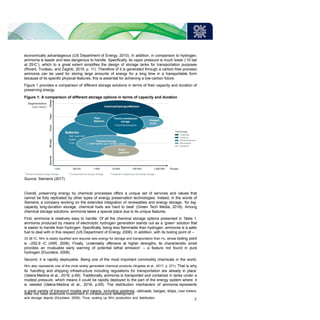
Figure 1 provides a comparison of different storage solutions in terms of their capacity and duration of
preserving energy.
Figure 1: A comparison of different storage options in terms of capacity and duration
Source: Siemens (2017)
Overall, preserving energy by chemical processes offers a unique set of services and values that
cannot be fully replicated by other types of energy preservation technologies. Indeed, in the words of
Siemens, a company working on the extended integration of renewables and energy storage, ‘for big-
capacity, long-duration storage, chemical fuels are hard to beat’ (Green Tech Media, 2018). Among
chemical storage solutions, ammonia takes a special place due to its unique features.
First, ammonia is relatively easy to handle. Of all the chemical storage options presented in Table 1,
ammonia produced by means of electrolytic hydrogen generation stands out as a ‘green’ solution that
is easier to handle than hydrogen. Specifically, being less flammable than hydrogen, ammonia is a safer
fuel to deal with in this respect (US Department of Energy, 2006). In addition, with its boiling point of –
33.36 oC, NH3 is easily liquefied and requires less energy for storage and transportation than H2, whose boiling point
is –252.9 oC (IIAR, 2008). Finally, ‘undeniably offensive at higher strengths, its characteristic smell
provides an invaluable early warning of potential lethal emission’ – a feature not found in pure
hydrogen (Elucidare, 2008).
Second, it is rapidly deployable. Being one of the most important commodity chemicals in the world,
NH3 also represents one of the most widely generated chemical products (Angeles et al., 2017, p. 271). That is why
its ‘handling and shipping infrastructure including regulations for transportation are already in place’
(Valera-Medina et al., 2018, p.69). Traditionally, ammonia is transported and contained in tanks under a
modest pressure, which means it could be rapidly deployed to the part of the energy system where it
is needed (Valera-Medina et al., 2018, p.69). The distribution mechanism of ammonia represents
a great variety of transport modes and means, including pipelines, railroads, barges, ships, road trailers,
and storage depots (Elucidare, 2008). Thus, scaling up NH3 production and distribution
does not need extensive investment in infrastructure development.
7
Table 1: Available energy storage technologies
Technologies
Current
max.
storage
capacity
(GWh)
Energy
density
(Wh/l)
Maximum
storage
duration
Round trip
efficiency
(%)
Self-
discharge
(%/day)
Approximate costs2
Services to the
power system
Advantages Drawbacks
Type
Appliances Power
installation
(USD/kW)
Energy
installation
(USD/kWh)
Electrical
Supercapacitor approx.
0.0001
2–10 Seconds–
minutes/
hours–
days
90–94 <=12.5 11-22 11,000-
22,000
Frequen
cy control
 Voltage
control
 Peak
Shaving
 Easy to store
Easy
to
transport
 High
efficiency
 Low energy density
 Low storage capacity
 Short storage time
High self-
discharge rate
 High costs per
installed density
Superconducting
coil
<=0.1 0.5–10 80–90 10–15 320–650 1,000–
72,000
Electrochemical
(batteries)
Flow
V-redox <=0.8 20–70 Hours–
days
60–70 0.15–1 1,100–1,650 315–1050  Frequency control
 Emergency
backup
 (Potentially
)
periodic and
seasonal storage
 Easy to store
Potentiall
y
transportable
 Medium
efficiency
 High costs
 Medium storage time
Relatively high
self- discharge
Zn-Br 8–33.6 525–1650
Lead-acid
Flooded 0.04 50–100 70–82 0.09–0.4 165–220 105–473  Frequency
control
 Peak shaving
 Load levelling
 Emergency
backup
Low
self-
discharge
 Low
power
installation
costs
 Transpor
table
 High costs
 Medium storage time
 Leak-prone
Valve
regulated
70–80
Li-ion
Li-Fe
Phosphate
<=0.5 (for
stationary
module
systems)
200–350 <=92 0.09–0.36 200–840  Frequency control
 Voltage control
 Peak shaving
 Load levelling
 (Potentially)
seasonal
storage
High
efficiency
 Mediu
m
energy
density
 Long
lifetime
 Transp
ortable
 High cost
Complex battery
management system
needed (single cell
monitoring)
Li-Titanate <=96 473–1260
Ni-Co-Al <=95 200–840
Ni-Mg-Co
2
Costs in currencies other than USD were converted to USD according to the rate on Bloomberg (2019a) as of 12 November 2019 and hence are approximate.
8
High
tempe-
rature
Na-Ni-Cl <=0.034 150–250 <=84 0.05–15 315–488 Frequen
cy control
 Peak
shaving
 Load
levelling
High
efficiency
Medium
energy density
 Transportabl
e
 High cost
Potential hazard
due to high
temperatures
 Relatively low
storage
capacity
Na-S <=80 0.05–1 263–735
Mechanical
Flywheel 0.0001 80–200 Seconds–
Minutes
80–95 120–360 330 ~1100 Frequen
cy control
 Voltage
control
 Peak
shaving
 Fast charge
Low
maintenance
costs
 Low storage capacity
 Short storage time
 High self-discharge
Safety
threats (cracks)
Compressed air <=1 3–6 Hours–
days/
weeks–
months
60–70 0.5–1 770–1100 45–90  Frequency control
 Voltage control
 Peak shaving
 Load levelling
 Standing reserve
 Black start
 Emergency
backup
 Periodic and
seasonal storage
Low
self-
discharge
Mediu
m round-
trip
efficiency
Long
storage time
 Low energy density
Storage
capacity
constrained by
geography
Limited
transportability
 Only large-
scale units
connected to grid are
economically feasible
Pumped hydro Currently,
~3,
potentially
<=14
0.27–1.5 75–82 0.005–0.02 550–1100 5.50–22
Chemical
Natural gas ~1260,
(undergroun
d caverns)
10.1
(natural gas)
6,200 (LNG)
Weeks–
Months
30–35 0.003–0.03 1100–2200 ~0.09 Emergen
cy backup
Periodic and
seasonal storage
 Transportable
Large
storage capacity
 Long storage
time
Low
self-
discharge
 Low
energy
installation
costs
High
energy density
Extremely
low self-
discharge
High costs
of
electrolysers
Low round-
trip efficiency
High energy
consumption
High power
installation costs
Hydrogen 0.13 (tanks),
~124-167
(undergroun
d caverns)
2,400 (liquid) 30–60 1650–2200 0.35–17
Ammonia
Steam
reforming
0.25 (cooling
tanks)
~300
(undergroun
d caverns)
3,194–4,325
(liquid)
20–25 ~1,100 >=0.11
Electrolysis <= 40–72 1210–2300 >=0.24
9
Source: authors compiled from AEA Group (2010), Nomura et al. (2010), Brown (2011), Energy Research Partnership (2011), Fuchs et al. (2012), GENI (2012),Patil, Laumas, and
Vrijenhoef (2014), Bañares-Alcántara et al. (2015), Bunger at al. (2016), EIA (2017), IEEE (2017), IRENA (2017), Wang, Mitsos, and Marquardt (2017), BloombergNEF (2018), Gur
(2018), PG&E (2018), US Department of Energy (2018), Horseman et al. (2019), IEA (2019b)
Third, NH3 bonds together one nitrogen atom and three hydrogen atoms, which makes ammonia a ‘better
molecule at packing together with itself’ in comparison to hydrogen (H2) (Kraemer, 2018, p. 1). Thus, there is a
greater mass of hydrogen in a litre of liquid ammonia than in a litre of liquid hydrogen (ibid). That is
why liquid ammonia seems to be a more efficient hydrogen carrier than liquid hydrogen itself, as more
energy can be delivered within the same volume of storage vessel.
Finally, it potentially produces no carbon emissions. Ammonia is unique as a fuel because it does not
contain carbon, which means its combustion does not produce CO2 emissions. It can also be produced carbon-free.
Although the traditional process of producing ammonia – steam reforming – normally utilizes either
natural gas or coal as the main fuel, if ammonia is produced from green hydrogen there would be no
CO2 emission. Here, however, as in other similar cases, in order to gain wider use, the zero-carbon process of
ammonia production needs to be proven economically efficient.
Ammonia also has a number of disadvantages. For instance, the direct burning of NH3 is technically impeded by
its low flammability and radiation intensity (Kobayashi et al., 2019). In particular, these
characteristics hamper ammonia’s self-sustained burning and heat transfer in a combustion system,
and thus turn it into a challenging fuel to rely on (Coelho, 2017). At the same time, even with a
successful NH3 incineration, ‘an additional challenge of NH3/air combustion relates to the high fuel NOx emission’
(Kobayashi et al., 2019, p. 111). That is why, to abate NOx emissions, some more advanced
technologies such as, for example, Selective Catalytic Reduction, are needed (Kim et al., 2020). This,
however, will lead to additional cost. Therefore, with the currently available ammonia incineration
technologies, this fuel is unlikely to represent a first-choice option for a combustion process.
Another disadvantage is that green ammonia production is not yet fully established. As of 2018, pilot
plants for the production of green ammonia had just started operations in the UK and Japan, and new
demonstration plants were announced in Australia, Denmark, Morocco, and the Netherlands (Ammonia
Energy Association, 2018). As this generally implies the current limited scope of the popularization of
unconventional ammonia production, NH3 generation based on electrolysis is yet to be well-established.
Furthermore, despite being less flammable than hydrogen, it is a highly toxic chemical associated with
‘coma and convulsions’ at ‘a blood ammonium concentration of 200 µmol/L’ (UCL, 2018). This toxicity
factor appears to be ‘one of the major impediments to deploy these technologies, as public perception
is very formative’ (Valera-Medina et al., 2018, p.67). That is why, despite its highly identifiable odour
making leakage identification easier, proper storage of NH3 and prevention of its leakage should be viewed as a
priority – not only by ammonia producers, but also by its storage operators, transporters, and end
users, especially because of the substance’s tendency to concentrate near the ground and quickly
dissolve in water (UCL, 2018). If any leak happens, this may not only create a precondition for the
eutrophication3 of bodies of water but also pose significant threats to public health (Kanmann and
Johnsson, 2001).
The hazardous features of NH3 place additional pressure on the actors dealing with the substance. For instance,
companies organizing ammonia transportation and storage in tanks need to take measures to avoid
the so-called ‘Ammonia Stress Corrosion Cracking’ – the ‘phenomena of cracks being formed in
carbon steel in contact with ammonia’ (Fertilizers Europe, 2019). In addition, due to the tendency of an
ammonia–air mixture to explode when exposed to high heat, preserving the right temperature is
crucial (New York State Department of Health, 2004 and Fertilizers Europe, 2013). In this context, with
a broader use of ammonia in the future and an increased number of actors involved in its handling,
undertaking the required safety measures will not only presuppose additional indirect costs but also
require a more comprehensive approach to safety training, public education, and policymaking.
3
Eutrophication is generally defined as ‘the nutrient enrichment of waters that stimulates an array of symptomatic changes, that
can include increased phytoplankton and rooted aquatic plant (macrophyte) production, fisheries and water quality
deterioration, and other undesirable changes that interfere with water uses’ (Holland and Turekian, 2005, p. 312).
10
The contents of this paper are the authors’ sole responsibility. They do not necessarily represent the views
of the Oxford Institute for Energy Studies or any of its Members.
3. Ammonia production and application
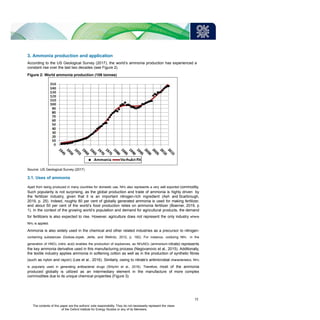
According to the US Geological Survey (2017), the world’s ammonia production has experienced a
constant rise over the last two decades (see Figure 2).
Figure 2: World ammonia production (106 tonnes)
Source: US Geological Survey (2017)
3.1. Uses of ammonia
Apart from being produced in many countries for domestic use, NH3 also represents a very well exported commodity.
Such popularity is not surprising, as the global production and trade of ammonia is highly driven by
the fertilizer industry, given that it is an important nitrogen-rich ingredient (Ash and Scarbrough,
2019, p. 25). Indeed, roughly 80 per cent of globally generated ammonia is used for making fertilizer,
and about 50 per cent of the world’s food production relies on ammonia fertilizer (Boerner, 2019, p
1). In the context of the growing world’s population and demand for agricultural products, the demand
for fertilizers is also expected to rise. However, agriculture does not represent the only industry where
NH3 is applied.
Ammonia is also widely used in the chemical and other related industries as a precursor to nitrogen-
containing substances (Godula-Jopek, Jehle, and Wellnitz, 2012, p. 182). For instance, oxidizing NH3 in the
generation of HNO3 (nitric acid) enables the production of explosives, as NH4NO3 (ammonium nitrate) represents
the key ammonia derivative used in this manufacturing process (Negovanovic et al., 2015). Additionally,
the textile industry applies ammonia in softening cotton as well as in the production of synthetic fibres
(such as nylon and rayon) (Lee et al., 2016). Similarly, owing to nitrate’s antimicrobial characteristics, NH3
is popularly used in generating antibacterial drugs (Shtyrlin et al., 2016). Therefore, most of the ammonia
produced globally is utilized as an intermediary element in the manufacture of more complex
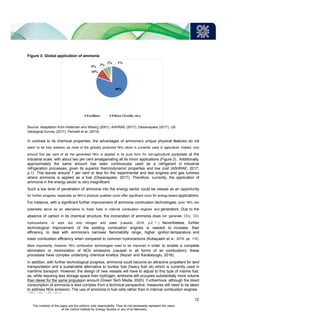
commodities due to its unique chemical properties (Figure 3):
11
The contents of this paper are the authors’ sole responsibility. They do not necessarily represent the views
of the Oxford Institute for Energy Studies or any of its Members.
Figure 3: Global application of ammonia
Source: Adaptation from Holleman and Wiberg (2001), ASHRAE (2017), Dissanayake (2017), US
Geological Survey (2017), Perinelli et al. (2019)
In contrast to its chemical properties, the advantages of ammonia’s unique physical features do not
seem to be fully realized, as most of the globally produced NH3 stock is currently used in agriculture. Indeed, only
around five per cent of all the generated NH3 is applied in its pure form for non-agricultural purposes at the
industrial scale, with about two per cent amalgamating all its minor applications (Figure 3). Additionally,
approximately the same amount has been continuously used as a refrigerant in industrial
refrigeration processes, given its superior thermodynamic properties and low cost (ASHRAE, 2017,
p.1). This leaves around 1 per cent or less for the experimental and test engines and gas turbines
where ammonia is applied as a fuel (Dissanayake, 2017). Therefore, currently, the application of
ammonia in the energy sector is very insignificant.
Such a low level of penetration of ammonia into the energy sector could be viewed as an opportunity
for further progress, especially as NH3’s physical qualities could offer significant room for energy-based applications.
For instance, with a significant further improvement of ammonia combustion technologies, pure NH3 can
potentially serve as an alternative to fossil fuels in internal combustion engines and generators. Due to the
absence of carbon in its chemical structure, the incineration of ammonia does not generate CO2, CO,
hydrocarbons, or soot, but only nitrogen and water (Lasocki, 2018, p.2 4 ). Nevertheless, further
technological improvement of the existing combustion engines is needed to increase their
efficiency, to deal with ammonia’s narrower flammability range, higher ignition temperature, and
lower combustion efficiency when compared to common hydrocarbons (Kobayashi et al., 2019, pp. 112).
More importantly, however, NH3 combustion technologies need to be improved in order to enable a complete
elimination or minimization of NOx emissions (caused in all forms of air combustion); these
processes have complex underlying chemical kinetics (Nozari and Karabeyoglu, 2016).
In addition, with further technological progress, ammonia could become an attractive propellant for land
transportation and a sustainable alternative to bunker fuel (heavy fuel oil) which is currently used in
maritime transport. However, the design of new vessels will have to adjust to this type of marine fuel,
as, while requiring less storage space than hydrogen, ammonia still occupies substantially more volume
than diesel for the same propulsion amount (Green Tech Media, 2020). Furthermore, although the direct
consumption of ammonia is less complex from a technical perspective, measures still need to be taken
to address NOx emission. The use of ammonia in fuel cells rather than in internal combustion engines
4
4NH3 + 3O2 → 2N2 + 6H2O
80%
5%
10%
2%
2% 1%
Fertilizer Fibers (Textile, etc.)
12
The contents of this paper are the authors’ sole responsibility. They do not necessarily represent the views
of the Oxford Institute for Energy Studies or any of its Members.
could effectively address the NOx pollution challenge and provide a better overall performance;
however, there is a greater level of technical challenges to overcome in ammonia-fuelled fuel cells.
Therefore, at the moment, the issue of using NH3 in the carbon-free shipping economy appears to be at an early
stage of its development (ibid).
Another alternative approach to the direct combustion of ammonia is to utilize it as the energy vector of
hydrogen, where ammonia could be viewed as its storable source, while the direct storage and
transportation of hydrogen in large quantities is still challenging and expensive (Valera-Medina, 2018,
p. 76). Ammonia contains 17.5 wt per cent5 hydrogen, which makes it an ideal (and potentially carbon-
free) fuel for fuel cells that is easy to preserve and transport (Lan and Tao, 2014, pp. 1). Additionally,
H2 generated from NH3 can be combusted with ‘high power output, high efficiency, and ultra-low emissions’
(Verhelst et al., 2011, p. 427). In this case, hydrogen-fuelled internal combustion engines will only
produce water vapour – that is, neither carbon dioxide nor soot (just as in the case of combusted
ammonia): H2 + ½O2 → H2O (ibid). Furthermore, much of the existing combustion equipment only needs minor
adjustments to accommodate hydrogen. However, due to practical issues with storing hydrogen in a
quantity suitable for direct combustion, the preferred approach to using hydrogen in the long term is via
fuel cells. This process, which essentially is the reverse of electrolysis, combines hydrogen and
oxygen in the presence of a catalyst to generate electricity, with only water as the by-product. Fuel cells
are more efficient than direct combustion of hydrogen; however, the main issue with fuel cells is the
cost. Overall, irrespective of the way hydrogen is used as a new fuel, integrating ammonia into the
energy system as an energy vector of hydrogen seems to be the way forward.
3.2. Ammonia production methods
Presently, more than 90 per cent of the world’s ammonia production is realized through a process called
the ‘Haber–Bosch synthesis’ which was developed in the first decade of the 20th century (Bicer et al.,
2016, p.1379). This process combines hydrogen (H2) and nitrogen (N2) with the help of a catalyst. It is energy
intensive and requires high pressure and temperatures, which are usually provided using fossil fuels
(ibid).
The Haber–Bosch synthesis represents only the final stage in ammonia’s production and utilizes about
a third of the energy involved in the total process, whereas two thirds of the energy is spent on the
generation of ammonia’s components – hydrogen and nitrogen (Bañares-Alcántara et al., 2015). In
other words, prior to the NH3 synthesis itself, both H2 and N2 need to be obtained, and this process is very energy
intensive.
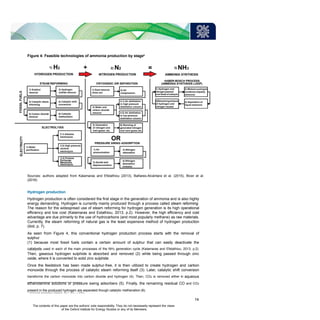
The key stages of the main commercial and industrial processes that are currently used for stable
ammonia manufacturing are summarized in Figure 4.
5
wt%’ is ‘weight per cent’ – i.e. mass percentage.
13
The contents of this paper are the authors’ sole responsibility. They do not necessarily represent the views
of the Oxford Institute for Energy Studies or any of its Members.
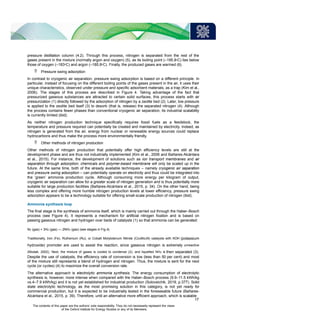
Figure 4: Feasible technologies of ammonia production by stage6
Sources: authors adapted from Kalamaras and Efstathiou (2013), Bañares-Alcántara et al. (2015), Bicer et al.
(2016)
Hydrogen production
Hydrogen production is often considered the first stage in the generation of ammonia and is also highly
energy demanding. Hydrogen is currently mainly produced through a process called steam reforming.
The reason for the widespread use of steam reforming for hydrogen generation is its high operational
efficiency and low cost (Kalamaras and Estathiou, 2013, p.2). However, the high efficiency and cost
advantage are due primarily to the use of hydrocarbons (and most popularly methane) as raw materials.
Currently, the steam reforming of natural gas is the least expensive method of hydrogen production
(ibid, p. 7).
As seen from Figure 4, this conventional hydrogen production process starts with the removal of
sulphur
(1) because most fossil fuels contain a certain amount of sulphur that can easily deactivate the
catalysts used in each of the main processes of the NH3 generation cycle (Kalamaras and Efstathiou, 2013, p.2).
Then, gaseous hydrogen sulphide is absorbed and removed (2) while being passed through zinc
oxide, where it is converted to solid zinc sulphide.
Once the feedstock has been made sulphur-free, it is then utilized to create hydrogen and carbon
monoxide through the process of catalytic steam reforming itself (3). Later, catalytic shift conversion
transforms the carbon monoxide into carbon dioxide and hydrogen (4). Then, CO2 is removed either in aqueous
ethanolamine solutions or pressure swing adsorbers (5). Finally, the remaining residual CO and CO2
present in the produced hydrogen are separated though catalytic methanation (6).
6
Ammonia production reaction: N2 + 3H2 ↔ 2NH3
14
The contents of this paper are the authors’ sole responsibility. They do not necessarily represent the views
of the Oxford Institute for Energy Studies or any of its Members.
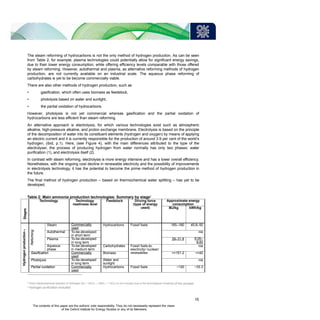
The steam reforming of hydrocarbons is not the only method of hydrogen production. As can be seen
from Table 2, for example, plasma technologies could potentially allow for significant energy savings,
due to their lower energy consumption, while offering efficiency levels comparable with those offered
by steam reforming. However, autothermal and plasma, as alternative reforming methods of hydrogen
production, are not currently available on an industrial scale. The aqueous phase reforming of
carbohydrates is yet to be become commercially viable.
There are also other methods of hydrogen production, such as
•
•
•
gasification, which often uses biomass as feedstock,
photolysis based on water and sunlight,
the partial oxidation of hydrocarbons.
However, photolysis is not yet commercial whereas gasification and the partial oxidation of
hydrocarbons are less efficient than steam reforming.
An alternative approach is electrolysis, for which various technologies exist such as atmospheric
alkaline, high-pressure alkaline, and proton exchange membrane. Electrolysis is based on the principle
of the decomposition of water into its constituent elements (hydrogen and oxygen) by means of applying
an electric current and it is currently responsible for the production of around 3.9 per cent of the world’s
hydrogen, (ibid, p.1). Here, (see Figure 4), with the main differences attributed to the type of the
electrolyser, the process of producing hydrogen from water normally has only two phases: water
purification (1), and electrolysis itself (2).
In contrast with steam reforming, electrolysis is more energy intensive and has a lower overall efficiency.
Nonetheless, with the ongoing cost decline in renewable electricity and the possibility of improvements
in electrolysis technology, it has the potential to become the prime method of hydrogen production in
the future.
The final method of hydrogen production – based on thermochemical water splitting – has yet to be
developed.
Table 2: Main ammonia production technologies: Summary by stage7
Stages
Technology Technology
readiness level
Feedstock Driving force
(type of energy
used)
Approximate energy
consumption
MJ/kg kWh/kg
Hydrogen
production
8
Reforming
Steam Commercially
used
Hydrocarbons Fossil fuels 165–180 45.8–50
Autothermal To-be-developed
in short term
n/a
Plasma To-be-developed
in long term
29–31.8 8.05–
8.83
Aqueous
phase
To-be-developed
in medium term
Carbohydrates Fossil fuels-to-
electricity/ nuclear/
renewables
n/a
Gasification Commercially
used
Biomass <=151.2 <=42
Photolysis To-be-developed
in long term
Water and
sunlight
n/a
Partial oxidation Commercially
used
Hydrocarbons Fossil fuels ~120 ~33.3
7
Direct electrochemical reduction of dinitrogen (N2 + 3H2O ↔ 2NH3 + 1.5O2) is not included due to the technological immaturity of the process.
8
Hydrogen purification excluded.
15
The contents of this paper are the authors’ sole responsibility. They do not necessarily represent the views
of the Oxford Institute for Energy Studies or any of its Members.
Electrolysis
Atmospheric
alkaline
Commercially
used
Water and
electricity
Fossil fuels-to-
electricity/ nuclear/
renewables
188.96–
192.24
52.5–
53.4
High
pressure
alkaline
Proton
exchange
membrane
224.28–
252.36
62.3–
70.1
Thermochemical water
splitting
To-be-developed
in long term
Water and
heat
n/a
Nitrogen
production
Air
separation
Adsorption To-be-developed
in short term
Air, electricity,
heat
Fossil fuels/ fossil
fuels-to-electricity/
nuclear/
renewables
Chemical To-be-developed
in long term
Cryogenic Commercially
used
Air and
electricity
Fossil fuels-to-
electricity/ nuclear/
renewables
0.86–1.98 0.24–
0.55
Polymeric
membrane
To-be-developed
in short term
n/a
Ion transport
membrane
To-be-developed
in long term
Air, electricity,
heat
Fossil fuels/ fossil
fuels-to-electricity/
nuclear/
renewables
Pressure swing
adsorption
Commercially
used
Air/biogas
(landfill gas)
and electricity
0.4-1.04 0.11–
0.29
Ammonia
synthesis
Haber-
Bosch
Fe catalyst Air, electricity,
heat
14.4–28.44 4–7.9
Ru catalyst
Co3Mo3N
catalyst
Electrolytic
(electroche-
mical)
synthesis
Liquid
electrolyte
To-be-developed
in long term
Electricity Fossil fuels-to-
electricity/ nuclear/
renewables
35.64–41.4 9.9–11.5
Molten salts
Composite
membrane
Solid state
electrolyte
To-be-developed
in medium term
<=35,64 <=9.9
16
The contents of this paper are the authors’ sole responsibility. They do not necessarily represent the views
of the Oxford Institute for Energy Studies or any of its Members.
Sources: authors adapted from Smith and Klosek (2001), Kim et al. (2006), Chao et al. (2008), Centre for Low
Carbon Futures (2013),Giddey, Badwal, and Kulkarni (2013), Kalamaras and Estathiou (2013), Garagounis et
al. (2014), Aneke and Wang (2015), Bañares-Alcántara et al. (2015), Chorzowski and Gizicki (2015), Ray
(2015), Rutberg et al. (2015), Bicer et al. (2016), McEnaney et al. (2017), Rao and Dey (2017), Mehmeti et al.
(2018), Soloveichik (2019), Yang, Weng, Xiao (2019)
Nitrogen production
The production of nitrogen – another phase preceding the ammonia production loop – is currently
conducted through either cryogenic air separation or pressure swing adsorption (Bañares-Alcántara et
al., 2015). Although both methods allow for successful N2 generation, cryogenic air separation
represents the most popular approach because it is more suitable for production on an industrial scale
(ibid). However, both methods usually utilize fossil fuels such as natural gas, fuel oil, and naphtha as a
feedstock to create the right pressure and temperature (Ray, 2015).
 Cryogenic air separation
Based on a similar principle – utilizing the various boiling temperatures of different gases – cryogenic
air separation generally represents the process of selective distillation of the required elements (here,
nitrogen) from air that is cooled until it is liquid (Ray, 2015). The stages of this process are shown in
Figure 4. For the same, previously mentioned, reasons that pure hydrogen is required, the Haber–
Bosch process also requires high purity nitrogen. Air separation starts with dust removal from the air
(1) and then moves to the compression of the purified air (2) to facilitate efficiency enhancement. Later,
molecular sieves remove water and carbon dioxide (3). Then, the already processed air is passed
through the heat exchanger and cooled so that it can be distilled either in a high pressure (4.1) or a low
pressure distillation column (4.2). Through this process, nitrogen is separated from the rest of the
gases present in the mixture (normally argon and oxygen) (5), as its boiling point (–195.8oC) lies below
those of oxygen (–183oC) and argon (–185.8oC). Finally, the produced gases are warmed (6).
 Pressure swing adsorption
In contrast to cryogenic air separation, pressure swing adsorption is based on a different principle. In
particular, instead of focusing on the different boiling points of the gases present in the air, it uses their
unique characteristics, observed under pressure and specific adsorbent materials, as a trap (Kim et al.,
2006). The stages of this process are described in Figure 4. Taking advantage of the fact that
pressurized gaseous substances are attracted to certain solid surfaces, this process starts with air
pressurization (1) directly followed by the adsorption of nitrogen by a zeolite bed (2). Later, low pressure
is applied to the zeolite bed itself (3) to desorb (that is, release) the separated nitrogen (4). Although
the process contains fewer phases than conventional cryogenic air separation, its industrial scalability
is currently limited (ibid).
As neither nitrogen production technique specifically requires fossil fuels as a feedstock, the
temperature and pressure required can potentially be created and maintained by electricity. Indeed, as
nitrogen is generated from the air, energy from nuclear or renewable energy sources could replace
hydrocarbons and thus make the process more environmentally friendly.
 Other methods of nitrogen production
Other methods of nitrogen production that potentially offer high efficiency levels are still at the
development phase and are thus not industrially implemented (Kim et al., 2006 and Bañares-Alcántara
et al., 2015). For instance, the development of solutions such as ion transport membranes and air
separation through adsorption, chemicals and polymer-based membrane will only be scaled up in the
future. At the same time, both of the already available techniques – namely cryogenic air separation
and pressure swing adsorption – can potentially operate on electricity and thus could be integrated into
the ‘green’ ammonia production cycle. Although consuming more energy per kilogram of output,
cryogenic air separation can allow for a greater scale of nitrogen generation and is thus potentially more
suitable for large production facilities (Bañares-Alcántara et al., 2015, p. 34). On the other hand, being
less complex and offering more humble nitrogen production levels at lower efficiency, pressure swing
adsorption appears to be a technology suitable for offering small-scale production of nitrogen (ibid).
Ammonia synthesis loop
The final stage is the synthesis of ammonia itself, which is mainly carried out through the Haber–Bosch
process (see Figure 4). It represents a mechanism for artificial nitrogen fixation and is based on
passing gaseous nitrogen and hydrogen over beds of catalysts (1) so that ammonia can be generated:
N2 (gas) + 3H2 (gas) ↔ 2NH3 (gas) (see stages in Fig 4).
Traditionally, Iron (Fe), Ruthenium (Ru), or Cobalt Molybdenum Nitride (Co3Mo3N) catalysts with KOH (potassium
hydroxide) promoter are used to assist the reaction, since gaseous nitrogen is extremely unreactive
(Modak, 2002). Next, the mixture of gases is cooled to condense (2), and liquefied NH3 is then separated (3).
Despite the use of catalysts, the efficiency rate of conversion is low (less than 50 per cent) and most
of the mixture still represents a blend of hydrogen and nitrogen. Thus, the mixture is sent for the next
cycle (or cycles) (4) to maximize the overall conversion rate.
The alternative approach is electrolytic ammonia synthesis. The energy consumption of electrolytic
synthesis is, however, more intense when compared with the Haber–Bosch process (9.9–11.5 kWh/kg
vs.4–7.9 kWh/kg) and it is not yet established for industrial production (Soloveichik, 2019, p.377). Solid
state electrolytic technology, as the most promising solution in this category, is not yet ready for
commercial production, but it is expected to be industrially tested in the foreseeable future (Bañares-
Alcántara et al., 2015, p. 39). Therefore, until an alternative more efficient approach, which is scalable
17
The contents of this paper are the authors’ sole responsibility. They do not necessarily represent the views
of the Oxford Institute for Energy Studies or any of its Members.
to industrial level, is developed, the Haber–Bosch process seems to represent the mainstay of the
industrial production of ammonia from hydrogen and nitrogen.
4. The key challenge of ammonia production
The manufacturing of ammonia is an established process, and thus the main challenge is not how to
produce it at an industrial scale with minimum cost, but to how to produce it carbon-free and,
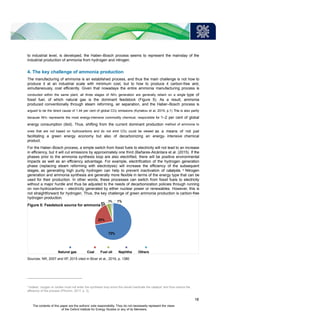
simultaneously, cost efficiently. Given that nowadays the entire ammonia manufacturing process is
conducted within the same plant, all three stages of NH3 generation are generally reliant on a single type of
fossil fuel, of which natural gas is the dominant feedstock (Figure 5). As a result, ammonia
produced conventionally through steam reforming, air separation, and the Haber–Bosch process is
argued to be the direct cause of 1.44 per cent of global CO2 emissions (Kyriakou et al, 2019, p.1) This is also partly
because NH3 represents the most energy-intensive commodity chemical, responsible for 1–2 per cent of global
energy consumption (ibid). Thus, shifting from the current dominant production method of ammonia to
ones that are not based on hydrocarbons and do not emit CO2 could be viewed as a means of not just
facilitating a green energy economy but also of decarbonizing an energy- intensive chemical
product.
For the Haber–Bosch process, a simple switch from fossil fuels to electricity will not lead to an increase
in efficiency, but it will cut emissions by approximately one third (Bañares-Alcántara et al. (2015). If the
phases prior to the ammonia synthesis loop are also electrified, there will be positive environmental
impacts as well as an efficiency advantage. For example, electrification of the hydrogen generation
phase (replacing steam reforming with electrolysis) will increase the efficiency of the subsequent
stages, as generating high purity hydrogen can help to prevent inactivation of catalysts. 9 Nitrogen
generation and ammonia synthesis are generally more flexible in terms of the energy type that can be
used for their production. In other words, these processes can switch from fossil fuels to electricity
without a major hurdle and thus be adjusted to the needs of decarbonization policies through running
on non-hydrocarbons – electricity generated by either nuclear power or renewables. However, this is
not straightforward for hydrogen. Thus, the key challenge of green ammonia production is carbon-free
hydrogen production.
Figure 5: Feedstock source for ammonia production
Sources: NR, 2007 and IIP, 2015 cited in Bicer et al., 2016, p. 1380
9
Indeed, ‘oxygen or oxides must not enter the synthesis loop since this would inactivate the catalyst’ and thus reduce the
efficiency of the process (Pfromm, 2017, p. 3).
4%
1% 1%
22%
72%
Natural gas Coal Fuel oil Naphtha Others
18
The contents of this paper are the authors’ sole responsibility. They do not necessarily represent the views
of the Oxford Institute for Energy Studies or any of its Members.
4.1. Steam reforming vs. electrolysis in hydrogen production
As one of the core process of manufacturing ammonia, hydrogen production defines the type of energy
used in the later phases of NH3 generation. Since fossil fuels still constitute the lion’s share of the world’s primary
energy use, the popularity of hydrocarbons-based steam reforming over other methods is not
surprising (EESI, 2019). However, the need to achieve decarbonization targets requires reduction in
the use of combustion-driven technologies, while intensifying electrification; hydrogen production based
on electricity is thus expected to gain greater attention (World Energy Council, 2019). In this sense, if
major ammonia producers replace steam reforming with electrolysis, the entire industry will potentially
be transformed, in response to the new sustainability requirements. This, however, entails significant
changes in the process of ammonia production, as the feedstock used by each technology is very
specific.
Currently, based on the catalyst-assisted reaction of higher hydrocarbons with steam (forming carbon
oxides and hydrogen), steam reforming usually utilizes methane as its primary feedstock in the
production of hydrogen. At the global level, close to 50 per cent of hydrogen demand is met via the
steam reforming of natural gas (Kalamaras and Efstathiou, 2013, p.1). In contrast to steam reforming,
electrolysis not only uses a completely different feedstock (water), but also represents a process with
fewer phases. Overall, this approach to hydrogen production has a number of advantages when
compared to steam reforming.
Advantages of electrolysis
High purity of hydrogen. Since hydrogen and oxygen are the only products of the decomposition of
water, by means of an electric current, the presence of other elements does not have a significant
influence on the hydrogen production process. Therefore, electrolysis could be considered as a
convenient and established technology which can produce pure hydrogen (Scott, 2019, p. 25). The
production of high-quality hydrogen that needs no further purification could be considered a significant
advantage for the later stages of ammonia production, as each stage utilizes catalysts that are sensitive
to any impurities in the components.
Lower complexity. Due to the smaller number of stages involved in the process of hydrogen generation,
electrolysis represents a less complex mechanism and thus ‘has the advantages for generating
hydrogen at small facilities for localized high-purity hydrogen and oxygen supplies’ (Revankar, 2019, p.
49). It can thus potentially assist in spreading ammonia production beyond large-scale NH3 generation plants. For
instance, small electrolysers could be integrated into intermittent power generation plants (such as
wind or solar). Similarly, hydrogen production facilities could be installed at hydropower or nuclear
power plants, potentially utilizing excess electricity.
Lower capital costs. Although the scale of appliances for electrolysis-based hydrogen production may
be less impressive than those for steam reforming, even the cost of installing small electrolysers with
water purifiers will represent a lower capital cost than installing water purification facilities in fully fledged
steam reformers with all their accompanying devices.
Absence of pollution in the production process. With the significant negative environmental impact
associated with steam reforming, electrolysis is ‘ecologically clean because no greenhouse gases are
formed during the hydrogen production, and the oxygen produced has further industrial applications’
(Kalamaras and Efstathious, 2013, p.6). Although CO2 emissions associated with the electricity used are not
often considered, these aspects should not be excluded from the estimation of hydrogen
production costs.
Disadvantages of electrolysis
Despite the aforementioned advantages, hydrogen production by means of electrolysis has three main
drawbacks and challenges.
19
The contents of this paper are the authors’ sole responsibility. They do not necessarily represent the views
of the Oxford Institute for Energy Studies or any of its Members.
Source: IEA (2019a)
For illustrative purposes, we make a simple comparison between the energy cost of producing hydrogen
through steam reforming versus electrolysis, using the aforementioned retail prices for natural gas and
electricity (we are aware that these may not be realistic prices for this purpose, however, given the
spread between gas and electricity prices per kWh, our argument here still holds). As it was shown in
Table 2, steam reforming, as the more efficient process, requires between 45.8 and 50 kWh per kg of
hydrogen, in comparison to 52.5–70.1 kWh in the case of electrolysis. Therefore, taking the average
23.0%
38.5%
3.3%
15.9%
10.3%
The infrastructure is set for steam reforming. Due to the fact that steam reforming is the dominant
technology, most of the hydrogen- and ammonia-production infrastructure is adjusted to hydrocarbons
as a feedstock. In this respect, switching from hydrocarbons to electricity may require additional costs
associated with the conversion of existing facilities, or the construction of new ones. Indirect costs –
such as the development of new energy infrastructure (for example, renewable power and extensions
to the grid) and the replacement of old energy infrastructure (like gas turbines and pipelines) – should
be added to the expenditures associated with the replacement of steam reformers with electrolysers.
Since these costs seem to be expensive, they are likely to hamper the transition process.
Lower efficiency. The thermal efficiency of steam reforming is currently between 70 and 85 per cent,
whereas the (electrical) efficiency of electrolysis varies between 50 and 70 per cent. Although it is
possible that the efficiency of electrolytic hydrogen production could rise to about 85 per cent with
technological improvement (SINTEF, 2015), an efficiency level comparable to steam reforming is yet to
be reached.
Lower production efficiency makes economics of electrolysis weaker than for steam reforming. Indeed,
the average energy consumption per kg of hydrogen varies between 52.5 and 70.1 kWh for electrolysis,
whereas it only reaches 50 kWh in the case of steam reforming (see Table 2). As, at the moment,
natural gas ‘is cheaper than other fuels’ in most cases, it will be economically feasible to prefer
electrolytic hydrogen generation to steam reforming only when electricity is cheaper than natural gas,
ceteris paribus (Di Pascoli, Femia, and Luzzati, 2001, p. 187).
4.2. The choice between electrolysis and steam reforming in a net zero future
Currently, the price for natural gas (methane) is generally several times lower than the price for
electricity in most countries of the world. In September 2019, the world average retail price for electricity
was 0.15 USD/kWh for households and 0.13 USD/kWh for businesses, whereas the natural gas
equivalent was only 0.06 and 0.05 USD/kWh, respectively (Global Petrol Prices, 2019a and Global
Petrol Prices, 2019b). This substantial price difference is partly due to the fact that electricity is a
secondary energy source whereas natural gas is a primary energy source (EIA, 2019). Globally, more
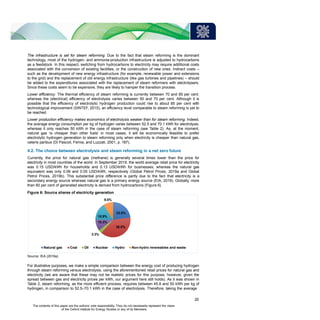
than 60 per cent of generated electricity is derived from hydrocarbons (Figure 6).
Figure 6: Source shares of electricity generation
9.0%
Natural gas Coal Oil Nuclear Hydro Non-hydro renewables and waste
20
The contents of this paper are the authors’ sole responsibility. They do not necessarily represent the views
of the Oxford Institute for Energy Studies or any of its Members.
price of natural gas and electricity for industries and the average energy consumption, we could
calculate the average energy cost per kg of hydrogen for each technology as follows:
a) Steam reforming: 45.8–50 kWh/kg * 0.05 USD/kWh = 2.29–2.5 USD/kg
b) Electrolysis: 52.5–70.1 kWh/kg * 0.13 USD/kWh = 6.83–9.11 USD/kg
Although the above calculation is very simplistic and the actual costs of hydrogen produced by steam
reforming and electrolysis vary from place to place, it is easy to see that, on average, the energy cost
per kg of H2 produced through steam reforming is around three to four times lower than through electrolysis.
In other words, with similar operating costs, to achieve the same price per kg of H2, an average electrolyser
should use electricity at a price which is three to four times lower than the current average price of
electricity – namely 0.033–0.043 USD/kWh instead of 0.13 USD/kWh.
On the other hand, while being more economically attractive, steam–methane reforming does not
provide a direct solution to the challenge of carbon emission. Although using natural gas, in contrast to
coal, naphtha, or fuel oil, could potentially be viewed as a more environmentally friendly approach to
the process, carbon dioxide emissions are unavoidable since they are still part of the chemical reaction
(as shown in the formulae below):
CH4 + H2O → CO + 3H2 (Steam–methane reforming reaction) CO +
H2O → CO2 + H2 (Water–gas shift reaction)
This means that if the net zero target is to be met without completely abandoning the original feedstock,
ammonia producers will have to invest in carbon capture and storage (CCS). CCS is an important
option for decarbonizing certain industrial processes, and is a key technology for decarbonizing
energy systems which have a high share of fossil fuels (World Energy Council, 2016). Operating CCS
facilities in parallel with running conventional ammonia production will result in further expenses being
added to the ultimate cost of hydrogen, and thus ammonia. Although avoided CO2 costs will depend on a number of
factors, the type of feedstock used will be the most significant factor in determining their variability
(Global CCS Institute, 2017). For the ammonia production industry, the added costs resulting from the
use of CCS are estimated to vary between 23.8 and 25.4 USD/tonne – namely 0.025 USD/kg CO2-eq on average
(ibid10).
To incentivize ammonia producers to adopt low-emission approaches, there is a need for either direct
regulation or taxation of CO2. This would account for the economic damage caused by each marginal tonne of
carbon dioxide emissions (Institute for Policy Integrity, 2015, p. 18) in the final price of the hydrogen
and ammonia generated. A widely adopted metric is the social cost of carbon (SCC). Although there is
no global consensus on its exact value, in 2015, the SCC had been expected to grow in
subsequent decades from about 15 to about 60 USD/tonne, with the annual levelized cost varying
between 26.24 and 59.35 USD/tonne (Luckow et al., 2015). If we take this estimation, the average
SCC per kg of CO2-eq would be around USD0.043. Although this value is greater than the value assessed by the
US Environmental Protection Agency (USD0.036), it is close to USD0.045 – namely the SCC price
set by the Obama administration (Bordoff, 2017 and Fleurbaey, et al., 2019).
This level of carbon tax is too low to effectively achieve a market-based transition away from fossil
fuels, and some countries have increased the carbon tax. For instance, while Finland’s tax per tonne of CO2
reached USD65 in 2017, Sweden ‘disincentivized’ potential polluters, forcing them to pay twice that
amount (USD131) (Carbon Market Watch, 2017). On the other hand, some other countries have
introduced significantly lower carbon taxes. In particular, with Denmark and France setting the tax bar
at about half the average level (at 26 and 25 USD/tonne CO2, respectively), Ireland lowered it even
10
The costs estimated by IEA (2019c, p. 40) for the integrated ammonia/urea plants are even higher:
USD90–115 t/CO2
21
The contents of this paper are the authors’ sole responsibility. They do not necessarily represent the views
of the Oxford Institute for Energy Studies or any of its Members.
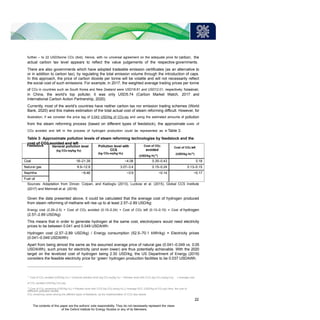
further – to 22 USD/tonne CO2 (ibid). Hence, with no universal agreement on the adequate price for carbon, the
actual carbon tax level appears to reflect the value judgements of the respective governments.
There are also governments which have adopted tradeable emission certificates (as an alternative to
or in addition to carbon tax), by regulating the total emission volume through the introduction of caps.
In this approach, the price of carbon dioxide per tonne will be volatile and will not necessarily reflect
the social cost of such emissions. For example, in 2017, the weighted average trading prices per tonne
of CO2 in countries such as South Korea and New Zealand were USD18.81 and USD12.01, respectively; however,
in China, the world’s top polluter, it was only USD5.74 (Carbon Market Watch, 2017 and
International Carbon Action Partnership, 2020).
Currently, most of the world’s countries have neither carbon tax nor emission trading schemes (World
Bank, 2020) and this makes estimation of the total actual cost of steam reforming difficult. However, for
illustration, if we consider the price tag of 0.043 USD/kg of CO2-eq and using the estimated amounts of pollution
from the steam reforming process (based on different types of feedstock), the approximate costs of
CO2 avoided and left in the process of hydrogen production could be represented as in Table 3:
Table 3: Approximate pollution levels of steam reforming technologies by feedstock and the
cost of CO2 avoided and left
Feedstock General pollution level
(kg CO2-eq/kg H2)
Pollution level with
CCS
(kg CO2-eq/kg H2)
Cost of CO2
avoided
(USD/kg H211)
Cost of CO2 left
(USD/kg H212)
Coal 18–21.39 ~4.08 0.35–0.43 0.18
Natural gas 8.9–12.9 3.07–3.4 0.15–0.24 0.13–0.15
Naphtha ~9.46 ~3.9 ~0.14 ~0.17
Fuel oil
Sources: Adaptation from Dincer, Colpan, and Kadioglu (2013), Luckow et al. (2015), Global CCS Institute
(2017) and Mehmeti et al. (2018)
Given the data presented above, it could be calculated that the average cost of hydrogen produced
from steam reforming of methane will rise up to at least 2.57–2.89 USD/kg:
Energy cost (2.29–2.5) + Cost of CO2 avoided (0.15–0.24) + Cost of CO2 left (0.13–0.15) = Cost of hydrogen
(2.57–2.89 USD/kg)
This means that in order to generate hydrogen at the same cost, electrolysers would need electricity
prices to be between 0.041 and 0.049 USD/kWh:
Hydrogen cost (2.57–2.89 USD/kg) / Energy consumption (52.5–70.1 kWh/kg) = Electricity prices
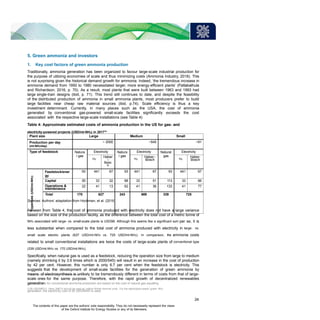
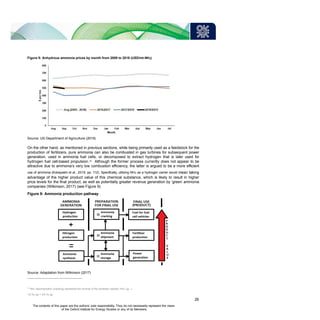
(0.041–0.049 USD/kWh)
Apart from being almost the same as the assumed average price of natural gas (0.041–0.049 vs. 0.05
USD/kWh), such prices for electricity (and even lower) are thus potentially achievable. With the 2020
target on the levelized cost of hydrogen being 2.30 USD/kg, the US Department of Energy (2019)
considers the feasible electricity price for ‘green’ hydrogen production facilities to be 0.037 USD/kWh.
11
Cost of CO2 avoided (USD/kg H2) = (General pollution level (kg CO2-eq/kg H2) – Pollution level with CCS (kg CO2-eq/kg H2)) x Average cost
of CO2 avoided (USD/kg CO2-eq)
12
Cost of CO2 remaining (USD/kg H2) = Pollution level with CCS (kg CO2-eq/kg H2) x Average SCC (USD/kg of CO2-eq) Here, the cost of
CO2 remaining varies among the different types of feedstock, as the implementation of CCS also leaves
different pollution levels.
22
The contents of this paper are the authors’ sole responsibility. They do not necessarily represent the views
of the Oxford Institute for Energy Studies or any of its Members.
Given the falling cost of solar and wind power in recent years (especially in the areas most suitable for
the placement of these resources), achieving such a cost for electrolytic hydrogen generation is not
impossible.
An important point to note is that the costs of steam reforming are also very much contingent upon the
scale of the reforming facilities. Indeed, the cost of producing hydrogen via steam reforming of natural
gas (methane) varies from around 1.25 USD/kg for large systems to about 3.50 USD/kg for small ones
(Dagdougui et al., 2018, p.11). While there are large benefits from economies of scale in centralized
production, distributed (in other words, decentralized) production infrastructure at smaller scale, based
on conventional technology, could potentially be more expensive than the green distributed system
based on electrolysis. Therefore, small-scale decentralized systems are likely to be the pathway for the
future development of the ammonia industry in a decarbonized environment (ibid). This is feasible,
especially because of the cost decline of decentralized resources and the very low marginal cost of
renewable electricity.
Apart from becoming economically attractive, with the gradually falling costs of renewable electricity,
electrolysis-based hydrogen production offers additional advantages in comparison to hydrocarbons-
based steam reforming. Specifically, CCS applications at their current stage of technological
development do not allow for achieving a fully carbon-free process. In particular, as seen from Table 3,
though significantly reducing CO2 emissions, they do not fully absorb the entire amount of carbon dioxide
generated during the hydrogen production process. Indeed, even the estimates including just the
‘carbon captured from energy production at a fossil fuel plant itself and not upstream emissions’
assume that CCS can ‘remediate 85–90 per cent of carbon emissions’ (Stanford News, 2019). However,
in the case that all the upstream emissions associated with power plants are included, the actual amount
of CO2 captured is likely to be even lower – down to 11 per cent, as the Stanford University research
demonstrates (ibid and Jacobson, 201913).
While currently being characterized with relatively low overall capture efficiency, CCS applications will
generate additional capital, operating, and maintenance costs. These expenses, however, may not
guarantee that the carbon dioxide stored is safely kept for the entire duration of the facility’s operation.
Indeed, as most CCS technologies presuppose the injection of pollutants into underground formations,
‘potential CO2 leakage is a major concern for geological storage’ (Leung, Caramanna, and Maroto- Valer, 2014,
pp. 435). Additionally, such an approach puts significant limitations on the use and scale of CCS
technologies with respect to hydrogen and ammonia production. In particular, it currently almost
completely excludes the possibility of applying them at the small-scale facilities of smaller businesses,
giving priority instead to large capital-intensive investment projects.
Finally, a facility with a CCS system ‘would also need roughly 10–40 per cent more energy than a plant
of equivalent output without CCS’ (Eldariry and Habib, 2018, p.2). Hence, to maintain hydrogen
production at the same level, more hydrocarbons will have to be combusted to cater for the production
itself and for the carbon capture. In this sense, using CCS instead of promoting renewable H2 generation will create a
perverse incentive to intensify emissions, instead of reducing pollution to comply with net zero
objectives. Thus, combining steam reforming with carbon capture and storage will bear an
additional negative social cost, when compared to the use of renewables.
13
‘Upstream emissions are emissions, including from leaks and combustion, from mining and transporting a fuel such as coal
or natural gas’ (Stanford News, 2019).
23
The contents of this paper are the authors’ sole responsibility. They do not necessarily represent the views
of the Oxford Institute for Energy Studies or any of its Members.
5. Green ammonia and investors
1. Key cost factors of green ammonia production
Traditionally, ammonia generation has been organized to favour large-scale industrial production for
the purpose of utilizing economies of scale and thus minimizing costs (Ammonia Industry, 2018). This
is not surprising given the historical demand growth for ammonia. Indeed, ‘the tremendous increase in
ammonia demand from 1950 to 1980 necessitated larger, more energy-efficient plants’ (Pattabathula
and Richardson, 2016, p. 70). As a result, most plants that were built between 1963 and 1993 had
large single-train designs (ibid, p. 71). This trend still continues to date, and despite the feasibility
of the distributed production of ammonia in small ammonia plants, most producers prefer to build
large facilities near cheap raw material sources (ibid, p.74). Scale efficiency is thus a key
investment determinant. Currently, in many places such as the USA, the cost of ammonia
generated by conventional gas-powered small-scale facilities significantly exceeds the cost
associated with the respective large-scale installations (see Table 4):
Table 4: Approximate estimated costs of ammonia production in the US for gas- and
electricity-powered projects (USD/mt-NH3) in 201714
Sources: Authors’ adaptation from Hochman, et al. (2019)
As seen from Table 4, the cost of ammonia produced with electricity does not have a large variance
based on the size of the production facility, as the difference between the total cost of a metric tonne of
NH3 associated with large- vs. small-scale plants is USD98. Although this seems like a significant sum per se, it is
less substantial when compared to the total cost of ammonia produced with electricity in large- vs.
small scale electric plants (627 USD/mt-NH3 vs. 725 USD/mt-NH3). In comparison, the ammonia costs
related to small conventional installations are twice the costs of large-scale plants of conventional type
(339 USD/mt-NH3 vs. 170 USD/mt-NH3).
Specifically, when natural gas is used as a feedstock, reducing the operation size from large to medium
(namely shrinking it by 3.6 times which is 2000/545) will result in an increase in the cost of production
by 42 per cent. However, this number is only 6.7 per cent when the feedstock is electricity. This
suggests that the development of small-scale facilities for the generation of green ammonia by
means of electrosynthesis is unlikely to be tremendously different in terms of costs from that of large-
scale ones for the same purpose. Therefore, with the rapid growth of decentralized renewables
generation
14
Calculations for conventional ammonia production are based on the cost of natural gas equalling
3.08 USD/MBTU. Here, MBTU should be read as ‘million British thermal units’. For the electrolysis-based ‘green’ NH3
generation, the electricity cost of 50 USD/MWh is used.
24
The contents of this paper are the authors’ sole responsibility. They do not necessarily represent the views
of the Oxford Institute for Energy Studies or any of its Members.
Plant size Large Medium Small
Production per day
(mt-NH3/day)
~ 2000 ~545 ~91
Type of feedstock Natura
l gas
Electricity Natura
l gas
Electricity Natural
gas
Electricity
H2
Haber
–
Bosc
h
H2
Haber–
Bosch H2
Haber-
Bosch
Expenses
(USD/mt-NH
3
)
Feedstock/ener
gy
93 441 67 93 441 67 93 441 67
Capital 55 33 32 88 33 51 113 33 66
Operations &
maintenance
22 41 13 62 41 36 133 41 77
Total 170 627 243 669 339 725
15
Here, low capital costs are due to the assumed implementation of membrane-less electrolysers characterized by high
‘potential for simple construction and high current densities […] driving down capital costs to the levels required for water
technologies in the future, electricity-based NH3 production is likely to be organized and expanded in the form of a
small- or medium-scale operations.
Indeed, in contrast to the previous trend – which was moving towards larger and ever larger production
facilities – a new trend is expected to emerge that moves towards smaller plants. These will, however,
be sufficiently large to serve a regional market while representing a viable business model (Ammonia
Industry, 2018a). Although in the US model, demonstrated in Table 4, the cost of green ammonia is
significantly higher than the cost of NH3 obtained through conventional processes, this may not
necessarily be the case everywhere, as the actual costs are highly place-specific. In other words, under
certain conditions, electricity-based ammonia production may be cost-competitive with conventional
gas-based generation.
To identify these conditions, it is useful to review the previously described US model from a different
perspective – namely, highlighting all the components of the final NH3 cost (see Figure 7).
Figure 7: ‘Green’ ammonia production costs by components
100.0%
80.0%
60.0%
40.0%
20.0%
0.0%
Large-scale Medium-scale Small-scale
Electricity (H2 generation) Electricity (Haber–Bosch)
Capital (H2 generation)
Capital (Haber–Bosch) O&M (H2 generation)
O&M (Haber–Bosch)
Sources: Authors’ adaptation from Hochman, et al. (2019)
The key cost components of green ammonia production are electricity, capital investment, and
operations and maintenance (O&M). As seen from Figure 7, with a share of around 80 per cent in
large- and 70 per cent in small-scale installations, the electricity costs significantly outweigh the rest
of the components. At the same time, capital15 and O&M costs – jointly varying between 30 and 20 per
cent for small- and large-scale facilities – still represent a substantial share. These three
categories of expenses will have a direct impact on the ultimate cost of ammonia; we therefore
examine them further below.
Electricity cost
Unlike other energy sources such as oil and gas which have a global market, electricity is mainly local.
This means that there is a huge difference between the cost of electricity across the world, as it
depends on generation mix and government policy, as well as the structure of the electricity market.
In some places, electricity is subject to significant taxation (such in Europe) whereas in other places it
is heavily subsidized (such as in MENA). Thus, little can be said about the price of electricity at the
global level.
electrolysis to compete with steam–methane reforming’ (Esposito, 2017, p.651).
25
The contents of this paper are the authors’ sole responsibility. They do not necessarily represent the views
of the Oxford Institute for Energy Studies or any of its Members.
Nonetheless, there are some general trends in the electricity sector – such as decentralization and
digitalization – that are expected to affect the cost of producing electricity worldwide.
The likely effect of decentralization on electricity production costs is evident from recent solar and wind
power auctions. For example, the record low bid of 0.016 (0.01567) USD/kWh for an 800 MW Qatari
solar PV facility, or Saudi Arabia’s ACWA Power bid of 0.017 (0.016953) USD/kWh for the 900 MW fifth
phase of the Mohammed bin Rashid Al Maktoum Solar Park in Dubai (PV Magazine, 2019 and PV
Magazine, 2020) are indications of the rapid cost decline of renewables in suitable areas of the world.
Such prices are three times lower than the 2019 average retail price of natural gas (0.05 USD/kWh).16
If a reliable electricity supply at such a price is utilized for the production of green ammonia, production
costs can be significantly reduced.
For illustration, let us consider the US model described in Table 4 with a three-fold decrease in the cost
of energy input compared with natural gas. If such a decline in energy cost is realized, the ultimate cost
of a tonne of NH3 produced with electricity by small-scale facilities becomes comparable to a tonne produced
with natural gas:
Cost of electricity (USD441 + USD67)/3 + Capital cost (USD33 + USD66) + O&M cost (USD41 +
USD77) = USD386 (vs. USD339 for conventional production)
For large-scale facilities, however, electricity-based NH3 generation, even at the same cost of energy, is less cost-
competitive when compared to gas-based production:
Cost of electricity (USD441 + USD67)/3 + Capital cost (USD33 + USD32) + O&M cost (USD41 +
USD13) = USD288 (vs. USD170 for conventional production).
Indeed, even with the assumption of massively low electricity prices, the cost of 288 USD/mt-NH3 for large-scale
‘green’ ammonia production is less attractive than both large- and medium-scale conventional
ammonia synthesis, with the respective costs being 170 and 243 USD/mt-NH3. This, however, may not pose
a significant threat for the future development of ‘green’ NH3 generation projects, as technologies for
small-scale ammonia production are becoming increasingly viable as the industry moves toward more
sustainable and renewable feedstocks (Nitrogen+Syngas, 2018). In other words, renewable electricity
may change the traditional paradigm of ammonia production facility design based on economy of
scale.17
Capital cost
The capital expenditures incurred by investors are normally diluted with the growing scale of the
ammonia generation plant, and thus the ultimate capital spending per tonne of NH3 at large plants will be less
significant than at small installations. For instance, according to Vrijenhoef (2017, p.6), for the large
conventional ammonia plants in the USA, the average capital cost per tonne investment is ‘in the range
of 1,000–1,500 USD/tonne annual capacity installed’. In contrast, ‘for the smaller plants of 4,000 tpa18
the capital expenditure costs can be as high as 3,000 USD/tonne installed’ (ibid). That is why small-
scale ammonia production facilities are often viewed as less attractive for investors.
There is an argument that the production of small-scale loops disintegrated from the rest of the ammonia
cycle may currently bear low economic sense. Traditionally tied to the main feedstock (natural gas)
used in all the stages of NH3 generation, conventional ammonia plants represent an integrated workshop
of large-scale hardware, taking advantage of the interconnectedness of all the elements, allowing
greater energy efficiency to be achieved, and economies of scale to be utilized. In most places,
16
Global Petrol Prices (2019b).
17
Further research is needed to analyse the possibility and implications of the overall reduction of global electricity prices due
to the fall in renewable prices.
18
tpa – tonnes per annum
26
The contents of this paper are the authors’ sole responsibility. They do not necessarily represent the views
of the Oxford Institute for Energy Studies or any of its Members.
gas turbines are integrated with an ammonia process to improve energy efficiency (Sahafzadeh et al.,
2013, p. 594). Therefore, if the production process is disintegrated, energy efficiency may be not be
optimized. Similarly, the high costs of water electrolysis, coupled with the often low price of natural gas,
makes the electrolysis-based Haber–Bosch (HB) process less economically attractive than
conventional HB synthesis (Ye et al., 2017, p. 713).
The above argument is true for most conventional plants; however, this rationale does not consider the
fact that small-scale ammonia production can be (and already is) organized in a ‘modular’ way. As
hydrogen and nitrogen units are being deployed at a smaller scale, the cost of such standard units is
low because the need to use integrated front-ends for small-scale ammonia plants is absent (Vrijenhoef,
2017, p. 7). Consequently, the construction expenses are minimized, as both units can, in theory, be
supplied more or less off-the-shelf, delivered to the production site, and assembled as modules (ibid).
In such conditions, the main remaining fraction of capital costs is related to the Haber–Bosch (ammonia
synthesis) loop, which is responsible for about 10 per cent of all the expenses (see Figure 7).
Advances in this area – such as the skid-mounted ammonia loop ‘with a maximum height of 12
metres’ – make this piece of technology not only easily transportable but also capable of being
used as one of the modules in the production cycle (Vrijenhoef, 2017). Therefore, all the
elements of the ammonia production system can disintegrated with no loss of economic
efficiency. Alternatively, to further minimize the capital cost or to eliminate the massive upfront
capital costs altogether, all parts of the equipment can potentially be treated as a long-term lease
(Ammonia Industry, 2018a).
Operations and maintenance cost
Apart from energy and capital costs, potential investors should consider the costs of operations and
maintenance of green ammonia plants. Here, with respect to operations, the load factors of the NH3 generation
facilities should be taken into account as they directly influence productivity and thus the ultimate
cost of the product. For instance, due to varying geographic and climatic conditions, renewable energy
sources with high intermittency (such as solar and wind power) may not generate a sufficiently stable
electricity supply on a continuous basis to make ammonia production economically feasible
everywhere. Some studies estimate that investment in green ammonia production based on intermittent
energy feedstock should be suggested in areas ‘where load factors can reach up to 3,000 full load
hours (FLH) for solar photovoltaics (PV) and up to 5,000 FLH for wind turbines’ (Philibert, 2017, p.1).
Although this potentially increases the maintenance expenses, due to the greater time in operation, the
ultimate costs may be reduced, as ‘high investments in electrolysers require a large onstream to
minimize costs per ton’ (ISPT, 2018, p.6).
When it comes to the valuation of operating costs, however, these depend, among other factors, on the
combination of the exact characteristics of each specific facility and specific area of operations. As seen
from Figure 7, operating costs are generally responsible for about 15 per cent of the total expenditures.
In absolute terms this can be very low for small-scale facilities compared with large-scale ammonia
plants. Indeed, for a small facility running on sustainable electricity averaging 0.02–0.03 USD/kWh,
operating costs can be as low as around 50 USD per tonne of ammonia (Vrijenhoef, 2017, p.5).
Therefore, with low capital costs for the modular deployment of ammonia facilities, this increases the
economic attractiveness for investors.
5.2. Other drivers of green ammonia production
Although renewable electricity is growing fast in many regions of the world, natural gas-based ammonia
production in large facilities still dominates the NH3 market. In the absence of stable low-cost low-carbon electricity,
intermittency-free ammonia plants based on hydrocarbons are likely to remain the mainstream
form of production. In places where fossil fuels are cheaper than electricity, this advantage is more
obvious. For example, as seen from Table 4, in the USA, the average cost of a metric tonne of NH3
produced at small-scale conventional plants (339 USD/mt-NH3) is USD386 (53.2 per cent) cheaper than a metric
tonne of ammonia generated in a small-scale electric plant (725 USD/mt-NH3). Not
27
The contents of this paper are the authors’ sole responsibility. They do not necessarily represent the views
of the Oxford Institute for Energy Studies or any of its Members.
surprisingly, for large-scale facilities, this difference (USD457 or 72.9 per cent) is even more significant.
Similarly, the average gap between electricity- and gas-based ammonia in Europe is 300 EUR/mt-NH3 (ISPT,
2018).
In such circumstances, successful ‘green’ ammonia production is economically feasible if there are
policies that restrict emissions or internalize the cost of externalities. In other words, the cost gap
between a metric tonne of conventionally-produced ammonia and a metric tonne of ‘green’ ammonia
could be narrowed or eliminated through appropriate policies.
With legislative pledges to achieve net zero carbon by the end of the first half of this century, many
progressive governments have already imposed some forms of carbon pricing either in the form of tax
or tradeable emission certificates. The use of cap-and-trade schemes is becoming particularly popular.
However, since the market price for CO2 allowances may not necessarily reflect the real social cost of emissions,
imposing carbon taxes with emission limits on heavy polluters could potentially stimulate ‘green’
ammonia businesses more effectively than allowing them to sell the certificates to potentially wealthier
large-scale conventional NH3 producers. Alternatively, governments can introduce a minimum price for tradeable
emission certificates that will allow small ‘green’ ammonia and other businesses to compete with
larger conventional producers through levelling their costs of production. Just as in the case of
emission restrictions and carbon taxes, this will require a thorough economic analysis as well as a
specific legislative initiative in each particular country.
There is also the possibility of offering incentives to green ammonia producers. Various incentives (such
as subsidies or tax breaks) could be used as an alternative, or to complement, carbon pricing in order
to narrow the cost gap between conventional and ‘green’ ammonia; this could also create favourable
conditions for the sustainable operation of such businesses in the future. Specifically, apart from the
subsidies to renewable energy producers that already exist in many countries of the world, governments
could subsidize decarbonized hydrogen generation. Since renewable energy generation and ammonia
synthesis are, in contrast to the production of ‘green’ hydrogen, already quite well-developed,
incentivizing H2 production will help this part of the ammonia cycle to be brought ‘to scale’ (Hydrogen Council,
2020, p. vi). The claim is that, globally, ‘achieving competitive renewable hydrogen from
electrolysis requires the deployment of aggregated 70 GW of electolyser capacity’ (ibid). Thus, by
providing incentives for ‘green’ hydrogen producers in the form of subsidies or tax breaks, governments
could make such businesses more competitive and scale up the production.
5.3. Green ammonia revenue generation
As mentioned previously, small-scale NH3 generation based on renewables produced in favourable
geographical conditions (such as solar power in the Middle East region) could potentially result in the
cost of a metric tonne of ‘green’ ammonia being as low as USD386. In these circumstances, depending
on the specific cost components and government policies in each case, the revenue of ‘green’ NH3 producers
will vary. For example, if no other expenditures are incurred, in the case that the price of a metric
tonne of ammonia remains at the 2009–2018 average decade level (see Figure 8), the revenue of low-
cost green ammonia producers could theoretically be in the range of 234–294 USD/mt-NH3 (620– 680 USD/mt-NH3 –
386 USD/mt-NH3 = 234–294 USD/mt-NH3).
At the same time, due to the oil price shocks of early 2020, the price of anhydrous ammonia in spring
this year fell to its lowest level in a decade (Successful Farming, 2020). Specifically, according to ICIS
(2020), the average monthly contract prices in April 2020 were around 215–250 USD/mt, which is
lower than the minimum production cost of sustainable ammonia by more than USD100. This makes
green NH3 generation at USD386 uncompetitive on a global fertilizer market where ‘conventional’ ammonia
producers would have competitive advantage due to the currently low feedstock prices.
28
The contents of this paper are the authors’ sole responsibility. They do not necessarily represent the views
of the Oxford Institute for Energy Studies or any of its Members.
Figure 8: Anhydrous ammonia prices by month from 2009 to 2018 (USD/mt-NH3)
Source: US Department of Agriculture (2019)
On the other hand, as mentioned in previous sections, while being primarily used as a feedstock for the
production of fertilizers, pure ammonia can also be combusted in gas turbines for subsequent power
generation, used in ammonia fuel cells, or decomposed to extract hydrogen that is later used for
hydrogen fuel cell-based propulsion.19 Although the former process currently does not appear to be
attractive due to ammonia’s very low combustion efficiency, the latter is argued to be a more efficient
use of ammonia (Kobayashi et al., 2019, pp. 112). Specifically, utilizing NH3 as a hydrogen carrier would mean taking
advantage of the higher product value of this chemical substance, which is likely to result in higher
price levels for the final product, as well as potentially greater revenue generation by ‘green’ ammonia
companies (Wilkinson, 2017) (see Figure 9).
Figure 9: Ammonia production pathway
Source: Adaptation from Wilkinson (2017)
19
NH3 decomposition (cracking) represents the reverse of the synthesis reaction: NH3 (g) →
1/2 N2 (g) + 3/2 H2 (g)
29
The contents of this paper are the authors’ sole responsibility. They do not necessarily represent the views
of the Oxford Institute for Energy Studies or any of its Members.
As shown in Figure 9, in the case that NH3 is used as hydrogen carrier, apart from the direct production costs,
‘green’ ammonia’s pathway to the final customer is associated with three additional sets of
expenditures: (1) storage, (2) transportation (shipment), and (3) cracking. Although further technological
development, and progress in the overall transition to a net zero economy, could mean that all these
costs are likely to be occupied by niche companies, small-scale ‘green’ NH3 enthusiasts may have to cover them
by themselves, in order to deliver the product to the target destination. That is why it seems
reasonable to estimate whether such a journey of ‘green’ ammonia as a means of carrying hydrogen
makes economic sense, in comparison to the direct delivery of hydrogen to the final consumer (for
example fuel cell vehicle owners). In this connection, such a comparison should encompass the ultimate
cumulative costs after all the relevant post-generation stages. Here, for ‘green’ ammonia, apart from
direct spending on NH3 synthesis (0), it will include all the three described phases (storage (1),
transportation (2), and cracking (3)), whereas for ‘green’ hydrogen it will exclude the final phase
(decomposition) – leaving H2 synthesis (0), storage (1), and shipping (2) (see Table 5).
Table 5: Approximate storage, transportation, and decomposition costs (best case)
# Cost type Ammonia Hydrogen
0 Production costs (USD/mt) 386 221
1
Storage
costs
(USD/mt)
Storage form Compressed Liquefied
Tanks ~120–180 ~145–234 ~820–1,990
Salt caverns ~101–165
A Minimal cumulative costs:
production + transportable storage (USD/mt)
~506–566 ~366–455 ~1,041–
2,211
2
Transportation
costs
(USD/mt-km
20
)
Indicative distance (km) Atmospheri
c air
pressure
(bar)
350 430 n/a
Road (truck) <1,000 ~0.21 ~1.88 ~1.47 ~0.58
Rail ~800–4,000 ~0.025 ~0.39 ~0.35 ~0.18
Shipping >4,000 ~0.019 ~0.37 ~0.33 ~0.057
B Minimal cumulative costs:
production + transportable storage + transport (USD/mt per
1000 km)
~531–591 ~736–825 ~696–785 ~1,098–
2,268
C Minimal cumulative costs:
production + transportable storage + transport (USD/mt per
2000 km)
~556–616 ~1,106–
1,195
~1,026–
1,115
1,278–2,448
3 Decomposition (cracking) costs (USD/mt-H2)
~241–343 n/a
D Minimal cumulative costs (ammonia):
production + transportable storage + transport (1000 km)
+ decomposition
~773–934
E Minimal cumulative costs (ammonia):
production + transportable storage + transport (2000 km)
+ decomposition
~797–959
Source: Adaptation from ARENA (2018), CSIRO (2018), Boddula and Asiri (2020), Royal Society
(2020)
20
mt-km (metric tonne-kilometre) – the transportation of one metric tonne of hydrogen/ammonia by a given transport mode over
a distance of one kilometre.
30
The contents of this paper are the authors’ sole responsibility. They do not necessarily represent the views
of the Oxford Institute for Energy Studies or any of its Members.
 Production costs (0)
In Table 5, at the initial stage indicating expenses related to ammonia and hydrogen synthesis (section
0), the approximate cost of ‘green’ NH3 is estimated in compliance with the model described in Section
5.1 where the cost of electricity is assumed to be around 0.016 USD/kWh (namely three times lower
than the estimated cost of ‘green’ ammonia production for average electricity-powered projects in the
USA) (described in Table 4). Following this assumption, the costs of ‘green’ ammonia production at a
small-scale electricity-based facility is calculated to be around USD386/mt. As H2 generation represent the first
stage in the process of ammonia production, for the same facility the cost of hydrogen
production could be calculated as follows:
Cost of electricity (USD441)/3 + Capital cost (USD33) + O&M cost (USD41) = USD221/mt
 Storage costs (1)
Traditionally, for the long-term preservation of large amounts of hydrogen and ammonia, ‘low-
temperature storage is used based on cost considerations’ (Bartels, 2008, p.63). At the same time,
apart from low temperature, high pressure is normally applied to enable the storage of both substances
in either compressed or liquefied form in specialized tanks or (salt) caverns (ibid). Here, though,
underground storage of ammonia in salt caverns is often not considered, due to the challenges
associated with its high toxicity (Bartels, 2008), Keeping hydrogen in underground salt caverns,
however, is a technically feasible option, despite the fact that most globally generated H2 is currently stored in
tanks as a compressed gas or cryogenic liquid (US Department of Energy, 2020).
Indeed, at the moment, underground hydrogen storage in salt caverns is represented by only a handful
of projects in the UK and USA, which is primarily due to the fact that most of the suitable underground
storage facilities are exploited for the preservation of natural gas – a more popular fuel in the current
energy paradigm (Caglayan et al., 2020). Here, economic reasons play a key role, because a H2 cavern contains
around four times less energy than an equivalent cavern storing natural gas (Stonergy, 2019).
Nonetheless, the idea of keeping H2 in salt caverns could potentially gain more popularity in the future. This is
because, due to its low volumetric energy density, ‘high-pressure tanks of sufficient size that store
enough hydrogen (as a gas) to be useful to energy systems on a nation scale are simply
impractical’ (Energy Post, 2020). Furthermore, hydrogen preservation in vessels is subject to H2’s
permeability challenge (Nemanic, 2019).21 Instead, if geological conditions allow, substantial amounts
of pressurized H2 can be preserved underground (at 45–150 bar) (Stonergy, 2019). The downside, however, is
that the global potential of underground hydrogen storage is geographically restricted, due to its
transportability limitations.
When it comes to storing these substances in a deliverable form, keeping compressed ammonia in a
transportable vessel (tank) is cheaper than preserving either compressed or liquefied hydrogen in a
tank (120–180 USD/mt for compressed NH3 vs. 145–234 USD/mt for compressed H2 or 820–1,990 USD/mt for
liquefied H2).
At this point, however, despite the fact that transportable storage of ammonia is cheaper than
transportable storage of hydrogen, the cumulative expenditures (generation + transportable storage)
would still be lower for hydrogen (~506–566 USD/mt-H2 for NH3 vs. ~ 366–455 USD/mt for H2,due to the lower
initial production expenses of H2 (see section A in Table 5). On the other hand, if investors also include capital
costs, the odds will be on ‘green’ ammonia’s side again. Indeed, according to Bartels
21
Hydrogen permeates through many non-metallic materials in the molecular (namely diatomic) form; as atomic hydrogen, it
can permeate through structural metals (Walker, 2008).
31
The contents of this paper are the authors’ sole responsibility. They do not necessarily represent the views
of the Oxford Institute for Energy Studies or any of its Members.
(2008, p. 70), ‘ammonia storage facility capital cost is nearly 25 times less than that of hydrogen per
unit of stored energy’.
 Transportation and decomposition costs (2 and 3)
As seen from section 2 in Table 5, delivering ammonia is significantly cheaper than delivering hydrogen
by all traditional transport modes. Here, in addition to representing the mode with the shortest indicative
operating range, road transport (truck) appears to be the most expensive option for both ammonia and
hydrogen. In contrast, transportation of both substances for extremely long distances (over 4,000 km)
is economically most attractive if conducted by maritime transport, when compared to rail and road. At
this stage, the minimal cumulative costs calculated per 1,000 km (in other words, production +
transportable storage + transportation) indicate that ammonia is already cheaper than the next-
cheapest variant – that is hydrogen compressed at 430 bar:
For ammonia:
Production cost (386 USD/mt) + Transportable storage cost (120–180 USD/mt) + Minimal
transportation cost
(19 USD/mt per 1000 km) = 531–591 USD/mt per 1000 km
For hydrogen:
Production cost (221 USD/mt) + Transportable storage cost (145–234 USD/mt) + Minimal
transportation cost
(330 USD/mt per 1000 km) = 696–785 USD/mt per 1000 km
Although at this point it seems clear that the delivery of hydrogen over long distances is more
expensive than similar transportation of ammonia, the cost of decomposition of NH3 should be added to obtain a
clear picture of the competitiveness of ammonia as a H2 carrier:
Pre-cracking cost (532–591 USD/mt per 1000 km) + Cracking cost (241–343 USD/mt-H2) = 772-934
USD/mt-H2 per 1000 km (see part 3 and sections B and D in Table 5).
As seen, although the costs happen to be close to those incurred in the case of hydrogen delivery,
transporting such ‘green’ NH3 a distance of 1,000 km for the purpose of delivering H2 is still slightly more
expensive than transporting pure H2 (~772–936 USD/mt-H2 per 1000 km for NH3 vs. ~ 696–785 USD/mt-H2 per 1000
km for H2 (see sections B and D in Table 5)
On the other hand, in the case that ammonia’s delivery distance rises to 2,000 km, it already appears
to be significantly cheaper than hydrogen (~797–959 USD/mt-H2 per 2000 km for NH3 vs. ~1,026– 1,115
USD/mt-H2 per 2000 for H2 ) (see sections C and E in Table 5).
Apart from road, rail, and maritime transportation, ammonia can also be delivered through pipelines. In
fact, in some regions of the world, long-distance ammonia delivery is typically conducted through
pipelines as they represent a more economical transport method (Appl, 1999). In the USA, for example,
cost considerations spurred the development of an extensive network of NH3 pipelines, the total length of which had
already exceeded 4,800 km more than a decade ago (Bartels, 2008). In contrast, despite the extensive
use of hydrogen in US industry, only 719 km of H2 pipelines had been constructed in the same timeframe; this
could potentially indicate a significantly lower interest in this mode of hydrogen delivery (ibid). One of
the reasons for such low popularity of this transport mode could be the problem of hydrogen
embrittlement, which affects steel pipelines. To combat this issue, a different type of steel22
22
Ammonia pipelines use carbon steel; hydrogen pipelines should be made from steel with yield strength of 689 megapascals
(MPa) rather than from high-strength steels (Argonne National Laboratory, 2007).
32
The contents of this paper are the authors’ sole responsibility. They do not necessarily represent the views
of the Oxford Institute for Energy Studies or any of its Members.
is required for H2 pipelines and additional testing is needed before high-pressure hydrogen pipelines are used on
a large scale (Argonne National Laboratory, 2007).
The ammonia pipeline system also has a higher efficiency than the hydrogen pipeline system (93.4 per
cent against 86.9 per cent, respectively) (Bartels, 2008, p. 95). In addition, due to the special structure
of the ammonia molecule (namely, having one nitrogen atom and three hydrogen atoms), the NH3 pipeline is
able to carry ‘nearly twice the energy for an assumed pipe diameter’ when compared to the H2 pipeline
(ibid). As a result, the cost estimations of Bartels demonstrate that for the long-distance transportation of
energy (here, over 1,610 km) ammonia pipeline infrastructure appears to be cheaper than the
equivalent for hydrogen (ibid). Furthermore, ‘as the transmission distance increases, the cost of
transporting hydrogen by pipeline escalates faster than the cost for ammonia since a greater number of
compressor stations are required’ (IEA, 2019c, p. 78). Following this principle, ‘if the transmission
distance is 2,500 km the cost of transporting ammonia by pipeline, including the conversion cost,
becomes broadly similar to the cost of transporting hydrogen as a gas’ (ibid). Hence, for the purpose of
carrying and delivering hydrogen over long distances on land, ammonia appears to be economically
more attractive than either compressed or liquefied pure hydrogen.
Overall, it could be concluded that, despite possessing a higher initial cost of production, ammonia
could potentially represent an economically feasible option for delivering ‘green’ hydrogen over long
distances, as well for preserving it in a transportable form for a long time. In fact, according to the Royal
Society (2020, p. 24), out of all the energy storage options not based on fossil fuels, ‘ammonia is the
lowest-cost method and the most technologically-ready option for transporting energy over long
distances’. That is why, despite the currently less attractive technological and market conditions facing
green ammonia producers in generating revenue from ammonia synthesis for its direct combustion or
further use as a fertilizer, it seems that there is an economically efficient alternative – in other words,
that of producing ammonia for the purpose of preserving hydrogen.
6. Summary and Conclusions
Storing large volumes of energy for prolonged periods of time in a transportable form can significantly
assist decarbonized energy and power systems. Specifically, apart from offering the possibility for
connecting energy sources with consumers, periodic and seasonal transportable storage can balance
the energy system at times when climatic conditions are unfavourable. This could allow for a more
efficient utilization of renewables in the energy system and facilitate the decarbonization of the entire
energy sector.
Out of all the currently available types of energy storage solutions, only some electrochemical,
mechanical, and chemical options allow for the preservation of energy for periods exceeding weeks and
months. Despite possessing impressive volume and duration characteristics, mechanical energy
storage solutions (such as pumped hydro and compressed air) are less attractive than electrochemical
(li-ion and flow batteries) or chemical storage (natural gas, hydrogen, and ammonia) when
transportation of stored energy is needed. On the other hand, at the current stage of technological
development, transportable batteries with significantly lower storage duration appear to be substantially
less advantageous than most of the chemical options in terms of storage capacity, energy density, as
well as deployment costs. That is why chemical storage options represent a promising solution for the
long-term large-scale preservation of energy in a transportable form.
Natural gas, hydrogen, and ammonia are notable candidates among chemical energy storage solutions.
Natural gas has a number of advantages over hydrogen and ammonia, but it has a serious drawback
as it is a fossil fuel. Unlike natural gas, hydrogen and ammonia could potentially be generated carbon-
free. Hydrogen has a lower volumetric energy and higher vapour pressure than ammonia. These
characteristics create additional difficulties for its preservation and transportation, by making its
handling more complicated, expensive, and less safe. On the contrary, despite representing a toxic
substance whose ‘green’ production technology is not fully established or scaled, ammonia is a
33
The contents of this paper are the authors’ sole responsibility. They do not necessarily represent the views
of the Oxford Institute for Energy Studies or any of its Members.
relatively rapidly deployable and easy-to-handle substance that does not produce any carbon emissions
in the case of direct combustion of if used for ammonia or hydrogen fuel cell. As a result, for a
decarbonized scenario, ammonia, if produced in a green way, is a promising substance for storing
transportable energy in large volumes and for a long period of time.
Ammonia best fits in the energy system as an energy vector of hydrogen. Additionally, as a hydrogen
carrier, ammonia represents a more economical way of delivering hydrogen over long distances than
the conventional way of transporting hydrogen in compressed or liquefied forms. In this sense, green
ammonia producers could also benefit from the integration of their product into the hydrogen energy
economy of the future. Apart from the intra-sectoral alignment of different elements of the energy
industry across territories and geographic areas, spreading the use of ammonia as a means of long-
term large-scale energy storage could allow for cross-sectoral integration, which would offer new
benefits to other sectors (such as transport).
Despite the unique features of ammonia, its use in the energy system has been very limited. Indeed,
about 80 per cent of the global use of ammonia is related to the fertilizer industry and only less than 1
per cent is utilized for energy-related purposes. Thus, the integration of ammonia into the energy system
offers a broad space for further improvement. However, the conventional method of producing
ammonia, based on fossil fuels, is an impediment to its growth in the energy system. Specifically, in
most cases, at the first stage of the ammonia production process (utilizing natural gas to produce
hydrogen through steam–methane reforming) is cheaper than using electrolysis. The second phase
(nitrogen production via air separation or pressure swing adsorption) incurs similar costs for both
feedstocks (natural gas and electricity). The final stage of ammonia generation (based on the Haber–
Bosch process or electrolytic/electrochemical synthesis) again puts the odds in favour of natural gas,
due to the low overall prices of this fuel and maturity of the technology.
Nevertheless, a set of endogenous and exogenous factors can tip the balance in ‘green’ ammonia’s
favour. In particular, in places where climatic conditions allow for ultra-low-cost green electricity (such
as that produced from wind or solar PV installations), small-scale ammonia synthesis can compete with
conventional ammonia facilities of the same scale. This is currently limited to specific places, but with
further technological progress, the production of ‘green’ ammonia by small-scale facilities could become
well-spread internationally. Also, the possibility of decentralized ammonia production through
distributed generation would lower transportation costs and thus potentially offer a cheaper product.
There are other factors that could facilitate the development of the green ammonia industry in the future.
Specifically, apart from the likely growth in global demand for ammonia, government incentives for
decarbonization (through introducing emission restrictions, carbon taxes, subsidies, or tax breaks for
investors) can boost green ammonia production.
In sum, ammonia represents a promising solution for the dilemma of long-term large-scale energy
storage. As such, with the potential to integrate different elements of the energy system, it could become
a decisive element in the global effort to reduce carbon emissions and enhance overall decarbonization
strategies. However, at the current stage of technological development, green ammonia production
appears to be economically efficient only if conducted on a small-scale basis in specific geographic
regions, where weather and climate conditions favour ultra-low-cost electricity generation. Therefore,
there is a need for policy and regulatory support to encourage large-scale deployment of this storage
solution. Furthermore, the rules around energy storage, as well as its very definition, need to be updated
and clarified so that innovation and deployment of green ammonia technology are stimulated and
barriers to its growth are lifted.
34
The contents of this paper are the authors’ sole responsibility. They do not necessarily represent the views
of the Oxford Institute for Energy Studies or any of its Members.
References:
AEA Group (2010) Energy Storage and Management Study [Online]. Available from:
https://www.webarchive.org.uk/wayback/archive/20170113164907/http://www.gov.scot/Publications/2
010/10/28091356/14 (Accessed: 13 November 2019).
Alshawaf, M., Poudineh, R., and Alhajeri, N.S. (2020) ‘Solar PV in Kuwait: The effect of ambient
temperature and sandstorms on output variability and uncertainty’, Renewable and Sustainable
Energy Reviews, 134 (1), pp. 1-11.
Ammonia Energy Association (2018) Green ammonia plants, commercially available today [Online].
Available from: https://www.ammoniaenergy.org/articles/green-ammonia-plants-commercially-
available-today/ (Accessed: 4 December 2019).
Ammonia Industry (2018) Small-scale ammonia production is the next big thing [Online]. Available
from: https://ammoniaindustry.com/small-scale-ammonia-production-is-the-next-big-thing/ (Accessed:
8 February 2020).
Aneke, M. and Wang, M. (2015) ‘Potential for improving the energy efficiency of cryogenic air
separation unit (ASU) using binary heat recovery cycles’, Applied Thermal Engineering, 81 (1), pp.
223–31.
Angeles et al. (2017) ‘Carbon and nitrogen footprint optimization of ammonia as an automotive
fuel’,
Chemical Engineering Transactions, 61 (1), pp. 271–6.
Appl, M. (1999) Ammonia: Principles and industrial practice, New York, NY: Weinheim.
Argonne National Laboratory (2007) Overview of interstate hydrogen pipeline systems [Online].
Available from: https://publications.anl.gov/anlpubs/2008/02/61012.pdf (Accessed: 11 October
2020).
ARENA (2018) Opportunities for Australia from hydrogen exports, Melbourne, VIC: ACIL Allen
Consulting.
Ash, N. and Scarbrough, T. (2019) Sailing on solar: Could green ammonia decarbonize international
shipping? London, UK: Environmental Defense Fund.
ASHRAE (2017) Ammonia as a refrigerant, Atlanta, GE: ASHRAE.
Atlantic SuperConnection (2019) Renewable energy partnership with Iceland [Online]. Available from:
http://www.atlanticsuperconnection.com/#timeline (Accessed: 29 October 2019).
Bañares-Alcántara, R. et al. (2015) Analysis of islanded ammonia-based energy storage systems,
Oxford, UK: University of Oxford.
Bartels, J.R. (2008) A feasibility study of implementing an Ammonia Economy, Ames, IA: Iowa State
University.
Bicer et al. (2016) ‘Comparative life cycle assessment of various ammonia production methods’,
Journal of Cleaner Production, 135 (1), pp. 1379–95.
Bloomberg (2013) Iceland seeks second power cable study to tap European markets [Online].
Available from: https://www.bloomberg.com/news/articles/2013-07-15/iceland-seeks-second-power-
cable-study-to-tap-european-markets (Accessed: 29 October 2019).
Bloomberg (2019a) Currencies [Online]. Available from:
https://www.bloomberg.com/markets/currencies (Accessed: 13 November 2019).
BloombergNEF (2018) Tumbling costs for wind, solar, batteries are squeezing fossil fuels [Online].
Available from: https://about.bnef.com/blog/tumbling-costs-wind-solar-batteries-squeezing-fossil-fuels/
(Accessed: 16 November 2019).
35
The contents of this paper are the authors’ sole responsibility. They do not necessarily represent the views
of the Oxford Institute for Energy Studies or any of its Members.
Boddula, I.R. and Asiri, A.M. (2020) Sustainable ammonia production, Cham, Switzerland: Springer
Nature Switzerland AG.
Boerner, L. K. (2019) ‘Industrial ammonia production emits more CO2 than any other chemical-making reaction.
Chemist want to change that’, Chemical & Engineering News, 97 (24), pp. 1–9.
Bordoff, J. (2017) ‘Trump vs. Obama on the social cost of carbon – and why it matters’, The Wall
Street Journal, 15 (11), 1–3.
British Geological Survey (2019) Underground natural gas storage in the UK [Online]. Available from:
https://www.bgs.ac.uk/research/energy/undergroundGasStorage.html (Accessed: 08 November
2019).
Brown, N. (2011) Cheaper ultracapacitors for electric vehicles [Online]. Available from:
https://cleantechnica.com/2011/05/11/cheaper-ultracapacitors-for-electric-vehicles/ (Accessed: 24
September 2019).
Bunger, U., Michalski, J., Crotogino, F., and Kruck, O. (2016) ‘Large-scale underground storage of
hydrogen for the grid integration of renewable energy and other applications’, Hydrogen Use, Safety
and the Hydrogen Economy, 4 (1), pp. 133–63.
Caglayan, D.G., et al. (2020) ‘Technical potential of salt caverns for hydrogen storage in Europe’,
International Journal of Hydrogen Energy, 1 (1), pp. 1–13.
Carbon Market Watch (2017) Pricing carbon to achieve the Paris goals [Online]. Available from:
https://euagenda.eu/upload/publications/untitled-103401-ea.pdf (Accessed:01 February 2020).
Centre for Low Carbon Futures (2013) Liquid air in the energy and transport systems. Opportunities
for industry and innovation in the UK. York, UK: The Centre for Low Carbon Futures.
Chao, Y., Huang, C.T., Lee, H.M., and Chang, M.B. (2008) ‘Hydrogen production via partial oxidation
of methane with plasma-assisted catalysis’, International Journal of Hydrogen Energy, 33 (1), pp.
664–71.
Chorzowski, M. and Gizicki, W. (2015) ‘Technical and economic aspects of oxygen separation for
oxy-fuel purposes’, Archives of Thermodynamics, 36 (1), pp. 157–70.
Coelho, P.J. (2017) ‘Radiative Transfer in Combustion Systems’, in: Kulacki, F. (eds) Handbook of
Thermal Science and Engineering, Springer, Cham.
CSIRO (2018) National hydrogen roadmap. Pathways to an economically sustainable hydrogen
industry in Australia, Canberra, ACT: Commonwealth Scientific and Industrial Research Organisation.
Dagdougui, H., Sacile, R., Bersani, C., and Ouammi, A. (2018) Hydrogen infrastructure for energy
applications. Production, storage, distribution and safety, London, UK: Academic Press.
Dincer, I., Colpan, C.O., and Kadioglu, F. (2013) Causes, impacts and solutions to global warming,
New York, NY: Springer.
Di Pascoli, S.D., Femia, A.M., and Luzzati, T. (2001) ‘Natural gas, cars and the environment. A
(relatively) “clean” and cheap fuel looking for users’, Ecological Economist, 38 (1), pp. 179–89.
Dissanayake, K. (2017) ‘Ammonia as an alternative for fuel internal combustion engines’, IOSR
Journal of Medical and Civil Engineering, 14 (1/VI), pp. 46–9.
EESI (2019) Fossil fuels [Online]. Available from: https://www.eesi.org/topics/fossil-fuels/description
(Accessed: 30 December 2019).
EIA (2017) Cost and performance characteristics of new generating technologies, Annual Energy
Outlook 2019 [Online]. Available from:
https://www.eia.gov/outlooks/aeo/assumptions/pdf/table_8.2.pdf (Accessed: 24 September 2019).
36
The contents of this paper are the authors’ sole responsibility. They do not necessarily represent the views
of the Oxford Institute for Energy Studies or any of its Members.
EIA (2019) Electricity explained [Online]. Available from:
https://www.eia.gov/energyexplained/electricity/ (Accessed: 15 January 2020).
Eldardiry, H. and Habib, E. (2018) ‘Carbon capture and sequestration in power generation: Review of
impacts and opportunities for water sustainability’, Sustainability and Society, 8 (6), pp. 1–15.
Elucidare (2008) Ammonia. New possibilities for hydrogen storage and transportation [Online].
Available from: http://www.elucidare.co.uk/news/Ammonia%20as%20H2%20carrier.pdf (Accessed:
04 December 2019).
Energy Post (2019) Can Vanadium Flow Batteries beat Li-ion for utility-scale storage? [Online].
Available from: https://energypost.eu/can-vanadium-flow-batteries-beat-li-ion-for-utility-scale-storage/
(Accessed: 19 November 2019).
Energy Post (2020) Green Ammonia can replace fossil fuel storage at scale [Online]. Available from:
https://energypost.eu/green-ammonia-can-replace-fossil-fuel-storage-at-scale/ (Accessed: 07 October
2020).
Energy Research Partnership (2011) The future role for energy storage in the UK main report
[Online]. Available from: http://erpuk.org/wp-content/uploads/2014/10/52990-ERP-Energy-Storage-
Report-v3.pdf (Accessed: 06 November 2019).
Energy Research Partnership (2016) Heating buildings. Reducing energy demand and greenhouse
gas emissions [Online]. Available from: http://erpuk.org/wp-content/uploads/2017/01/ERP-Heating-
Buildings-report-Oct-2016.pdf (Accessed: 07 November 2019).
Esposito, D.V. (2017) ‘Membraneless electrolyzers for low-cost hydrogen production in a renewable
energy future’, Joule, 1 (1), pp. 651–8.
Fertilizers Europe (2013) Guidance for inspection and leak detection in liquid ammonia pipelines
[Online]. Available from: https://www.fertilizerseurope.com/wp-
content/uploads/2019/08/Guidance_for_inspection_of_and_leak_detection_in_liquid_ammonia_pipeli
nes_FINAL_01.pdf (Accessed: 10 October 2020).
Fertilizers Europe (2019) Ammonia Stress Corrosion Cracking [Online]. Available from:
https://www.fertilizerseurope.com/wp-content/uploads/2019/08/SCC2.pdf (Accessed: 08 October
2020).
Fleurbaey, M., et al. (2019) ‘The social cost of carbon: Valuing inequality, risk, and population for
climate policy’, The Monist, 102, 1, pp. 84–109.
Fuchs, G., Lunz, B., Leuthold, M., and Sauer, D.U. (2012) Technology overview on electricity storage.
Overview on the potential and on the deployment perspectives of electricity storage technologies,
Aachen: ISEA.
Garagounis, I., Kyriakou, V., Skodra, A., Vasileiou, E., and Stoukides, M. (2014) ‘Electrochemical
synthesis of ammonia in solid electrolyte cells’, Frontiers in Energy Research, 2 (1), pp. 1–10.
GENI (2012) Energy storage technologies & their role in renewable integration [Online]. Available
from: http://www.geni.org/globalenergy/research/energy-storage-technologies/Energy-Storage-
Technologies.pdf (Accessed: 14 November 2019).
Giannakopoulos, C. and Psiloglou, B.E. (2006) ‘Trends in energy load demand for Athens, Greece:
Weather and non-weather related factors’, Climate Research, 31 (1), pp. 97–108.
Giddey, S., Badwal, S.P.S., and Kulkarni, A. (2013) ‘Review of electrochemical ammonia production
technologies and materials’, International Journal of Hydrogen Energy, 38 (1), pp. 14576–94.
37
The contents of this paper are the authors’ sole responsibility. They do not necessarily represent the views
of the Oxford Institute for Energy Studies or any of its Members.
Global CCS Institute (2017) Global costs of carbon capture and storage [Online]. Available from:
https://www.globalccsinstitute.com/archive/hub/publications/201688/global-ccs-cost-updatev4.pdf
(Accessed: 13 January 2020).
Global Petrol Prices (2019a) Electricity prices [Online]. Available from:
https://www.globalpetrolprices.com/electricity_prices/ (Accessed: 15 January 2020).
Global Petrol Prices (2019b) Natural gas prices [Online]. Available from:
https://www.globalpetrolprices.com/natural_gas_prices/ (Accessed: 15 January 2020).
Godula-Jopek, A., Jehle, W., and Wellnitz, J. (2012) Hydrogen storage technologies. New Materials,
Transport, and Infrastructure, Weinheim, Germany: Wiley-VCH Verlag & Co. KGaA.
Green Tech Media (2018) Siemens tests ammonia as a form of energy storage for renewables
[Online]. Available from: https://www.greentechmedia.com/articles/read/siemens-ammonia-hydrogen-
energy-storage (Accessed: 04 December 2019).
Green Tech Media (2020) Marine sector turns to ammonia to decarbonize shipping [Online]. Available
from: https://www.greentechmedia.com/articles/read/marine-sector-looks-to-ammonia-to-decarbonize-
shipping (Accessed: 05 October 2020).
Gur, T.M. (2018) ‘Review of electrical energy storage technologies, materials and systems:
Challenges and prospects for large-scale grid storage’, Energy and Environmental Science, 10 (1),
pp. 2696–767.
Hochman, G., et al. (2019) The potential economic feasibility of direct electrochemical nitrogen
reduction as a route to ammonia [Online]. Available from:
https://chemrxiv.org/articles/The_Potential_Economic_Feasibility_of_Direct_Electrochemical_Nitrogen
_Reduction_as_a_Route_to_Ammonia/9894437 (Accessed: 11 February 2020).
Holland, H.D. and Turekian, K.K. (2005) Treatise on geochemistry, Boston, MA: Elsevier.
Holleman, A.F. and Wiberg, E. (2001) Inorganic chemistry, San Diego, CA: UCSD Academic Press.
Horseman, S., Evans, D., Rowley, J., and Chadwick, A. (2019) ‘Underground gas storage. Geology,
technology, planning and regulation’, Energy Resources, 1 (1), pp. 12–13.
Hydrogen Council (2020) Path to hydrogen competitiveness. A cost perspective, Brussels, Belgium:
Hydrogen Council.
ICIS (2020) Ammonia prices, markets & analysis [Online]. Available from:
https://www.icis.com/explore/commodities/chemicals/ammonia/ (Accessed: 24 April 2020).
IEA (2019a) Key world energy statistics [Online]. Available from:
https://webstore.iea.org/download/direct/2831?fileName=Key_World_Energy_Statistics_2019.pdf
(Accessed: 15 January 2020).
IEA (2019b) World Energy Investment 2019 [Online]. Available from: https://webstore.iea.org/world-
energy-investment-2019 (Accessed: 26 October 2019).
IEA (2019c) The future of hydrogen. Seizing today’s opportunities, Paris, France: International Energy
Agency.
IEEE (2017) It’s big and long-lived, and it won’t catch fire: The vanadium redox-flow battery [Online].
Available from: https://spectrum.ieee.org/green-tech/fuel-cells/its-big-and-longlived-and-it-wont-catch-
fire-the-vanadium-redoxflow-battery (Accessed: 14 November 2019).
IIAR (2008) Ammonia data book [Online]. Available from:
http://web.iiar.org/membersonly/PDF/CO/databook_ch2.pdf (Accessed: 04 December 2019).
38
The contents of this paper are the authors’ sole responsibility. They do not necessarily represent the views
of the Oxford Institute for Energy Studies or any of its Members.
Institute for Policy Integrity (2015) Expert consensus on the economics of climate change, New York,
NY: Institute for Policy Integrity.
International Carbon Action Partnership (2020) China – Beijing pilot ETS [Online]. Available from:
https://icapcarbonaction.com/en/?option=com_etsmap&task=export&format=pdf&layout=list&systems
%5B%5D=53 (Accessed: 02 February 2020).
IRENA (2017) Electricity storage and renewables: Costs and markets to 2030 [Online]. Available
from: https://www.irena.org/-
/media/Files/IRENA/Agency/Publication/2017/Oct/IRENA_Electricity_Storage_Costs_2017.pdf
(Accessed: 14 November 2019).
ISPT (2018) Power to ammonia. Feasibility study for the value chains and business cases to produce
CO2-free ammonia suitable for various market applications, Amersfoort, Netherlands: Institute for Sustainable
Process Technology.
Jacobson, M.Z. (2019) ‘The health and climate impacts of carbon capture and direct air capture’,
Energy and Environmental Science, 12 (1), 3567–74.
Kalamaras, C.M. and Efstathiou, A.M. (2013) ‘Hydrogen production technologies: Current state and
future developments’, Conference Papers in Energy, 1 (1), pp. 1–9.
Kanman, E. and Jonsson, H. (2001) ‘Including oxidization of ammonia in the eutrophication impact
category’, The International Journal of Life Cycle Assessment, 6 (29), pp. 29–33.
Kim, H.S., et al. (2020) ‘Current catalyst technology of Selective Catalytic Reduction (SCR) for NOx
removal in South Korea’, Catalysts, 10 (1), pp. 1–36.
Kim, J.N., Chue, K.T., Cho, S.H., and Kim, J.D. (2006) ‘Production of high-purity nitrogen from air by
pressure swing adsorption on zeolite X’, Separation Science and Technology, 30 (3), pp. 347–68.
Kobayashi, H., Hayakawa, A., Somarathne, K.D.K.A., and Okafor, E.C. (2019) ‘Science and
technology of ammonia combustion’, Proceedings of the Combustion Institute, 37 (1), pp. 109–33.
Kraemer, S. (2018) ‘Missing link for a solar hydrogen is … ammonia?’, PhysOrg, 9 January, pp. 1–
4.
Kyriakou, V., Garagounis, I., Vourros, A., Vasileiou, E., and Stoukides, M. (2019) ‘An electrochemical
Haber-Bosch process’, Joule, 4 (1), pp. 1-17.
Lan, R. and Tao, S. (2014) ‘Ammonia as a suitable fuel for fuel cells’, Frontiers in Energy Research, 2
(35), 1–4.
Lasocki, J. (2018) ‘Ammonia and conventional engine fuels: Comparative environmental impact
assessment’, E3S Web of Conferences, 22 (1), pp. 1–8.
Lee, I.Y., Kim, S.D., Hwang, C.S., Kim, S.R., and Park, S.W. (2016) ‘Effects of liquid ammonia
treatment on the physical properties of knit fabric’, Materials Science and Engineering, 141 (1), 1–8.
Leung, D.Y.C., Caramanna, G., and Maroto-Valer, M.M. (2014) ‘An overview of current status of
carbon dioxide capture and storage technologies’, Renewable and Sustainable Energy Reviews, 39
(1), pp. 426–43.
Luckow, P. et al. (2015) 2015 Carbon dioxide price forecast, Cambridge, MA: Synapse Energy
Economics, Inc.
Mazzanti, G. and Marzinotto, M. (2013) Extruded cables for high-voltage direct-current transmission:
Advances in research and development, New York, NY: Wiley-IEEE Press.
McEnaney, E.M. et al. (2017) ‘Ammonia synthesis from N2 and H2O using a lithium cycling
electrification strategy at atmospheric pressure’, Energy and Environmental Science, 10 (7), pp.
1621–30.
39
The contents of this paper are the authors’ sole responsibility. They do not necessarily represent the views
of the Oxford Institute for Energy Studies or any of its Members.
Mehmeti, A., Angelis-Dimakis, A., Arampatzis, G., McPhail, S.J., and Ulgiati, S. (2018) ‘Life cycle
assessment and water footprint of hydrogen production methods: From conventional to emerging
technologies’, Environments, 5 (1), pp. 1–19.
Modak, J.M. (2002) ‘Haber process for ammonia synthesis’, Resonance, 7 (1), pp. 69–77.
Negovanovic, M., Kricak, L., Milanovic, S., Dokic, N., and Simic, N. (2015) ‘Ammonium nitrate
explosion hazards’, Underground Mining Engineering, 27 (1), pp. 49–63.
Nemanic, V. (2019) ‘Hydrogen permeation barriers: Basic requirements, materials selection,
deposition methods, and quality evaluation’, Nuclear Materials and Energy, 19 (1), pp. 451–7.
New York State Department of Health (2004) The facts about ammonia. General information [Online].
Available from:
https://www.health.ny.gov/environmental/emergency/chemical_terrorism/docs/ammonia_general.pdf
(Accessed: 09 October 2020).
Nitrogen+Syngas (2018) Sustainable ammonia for food and power [Online]. Available from:
https://www.protonventures.com/wp-content/uploads/2018/09/NS-354-Small-scale-plant-design-
PROTON-VENTURES-3-1.pdf (Accessed: 14 February 2020).
Nomura, S. et al. (2010) ‘Technical and cost evaluation on SMES for electric power
compensation’,
IEEE Transactions on Applied Superconductivity, 20 (1), pp. 1373–8.
Nozari, H. and Karabeyoglu, A. (2016) ‘NOx emission analysis and flame stabilization of ammonia-
hydrogen-air premixed flames’, NH3 Fuel Conference 2016, Koc University, 22 August. Istanbul: NH3
Fuel Association.
Omura, A. (2012) ‘Enhanced temperature variability in high-altitude climate change’, Theoretical and
Applied Climatology, 110 (4), pp. 499–508.
Paksoy, H.O. (2007) Thermal energy storage for sustainable energy consumption: Fundamentals,
case studies and design, New York, NY: Springer.
Patil, A., Laumans, L., and Vrijenhoef, H. (2014) ‘Solar to ammonia – via Proton’s NFuel units’,
Procedia Engineering, 83 (2), pp. 322–7.
Pattabathula, V. and Richardson, J. (2016) ‘Introduction to ammonia production’, Chemical
Engineering Progress, 9 (1), pp. 69–75.
Perinelli, D.R. et al. (2019) ‘Quaternary ammonium leucine-based surfactants: The effect of a benzyl
group on physicochemical properties and antimicrobial activity’, Pharmaceutics, 11 (287), pp. 1–11.
Philibert, C. (2017) Producing ammonia and fertilizers: New opportunities from renewables. Paris,
France: International Energy Agency.
Pfromm, P. (2017) ‘Towards sustainable agriculture: Fossil-free ammonia’, Journal of Renewable and
Sustainable Energy, 9 (1), pp. 1–11.
PG&E (2018) Resolution E-4949 [Online]. Available from:
https://docs.cpuc.ca.gov/PublishedDocs/Published/G000/M238/K048/238048767.PDF (Accessed: 14
November 2019).
PV Magazine (2019) Dubai confirms Saudi’s ACWA won 900 MW solar project tender with $
0.016953/kWh bid [Online]. Available from: https://www.pv-magazine.com/2019/11/22/dubai-confirms-
saudis-acwa-won-900-mw-solar-project-tender-with-0-016953-kwh-
bid/?utm_source=Bibblio&utm_campaign=Internal (Accessed: 13 February 2020).
PV Magazine (2020) Qatar’s 800 MW tender draws world record solar power price of $0.01567/kWh
[Online]. Available from: https://www.pv-magazine.com/2020/01/23/qatars-800-mw-pv-tender-saw-
world-record-final-price-0-01567-kwh/ (Accessed: 03 February 2020).
40
The contents of this paper are the authors’ sole responsibility. They do not necessarily represent the views
of the Oxford Institute for Energy Studies or any of its Members.
Rao, C.N.R. and Dey, S. (2017) ‘Solar thermochemical splitting of water to generate hydrogen’,
PNAS, 114 (51), pp. 13385–93.
Ray, A. (2015) ‘Cryogenic separation of atmospheric air in a typical air separation unit (ASU) using
Hampson–Linde cycle’, International Journal of Engineering and Technical Research, 3 (12), pp. 81–
4.
Renewable Energy World (2019) Why lithium-ion technology is poised to dominate the energy storage
future [Online]. Available from: https://www.renewableenergyworld.com/2019/04/03/why-lithiumion-
technology-is-poised-to-dominate-the-energy-storage-future/ (Accessed: 19 November 2019).
Revankar, S.T. (2019) ‘Nuclear hydrogen production’, in: Storage and hybridization of nuclear energy,
Amsterdam: Elsevier, pp. 49–117.
Rivard, E., Trudeau, M., and Zaghib, K. (2019) ‘Hydrogen storage for mobility: A review’, MDPI, 12
(1973), pp. 1–22.
Royal Society (2020) Ammonia: Zero-carbon fertiliser, fuel and energy store, London, UK: The Royal
Society.
Rutberg, P.G. et al. (2015) ‘Conversion of methane by CO2 + H2O + CH4 plasma’, Applied Energy, 148 (1), pp.
159–68.
Sahafzadeh, M., Ataei, A., Tahouni, N., and Panjeshahi, M.H. (2013) ‘Integration of a gas turbine with
an ammonia process for improving energy efficiency’, Applied Thermal Engineering, 58 (1–2), pp.
594–604.
Scott, K. (2019) ‘Introduction to electrolysis, electrolysers and hydrogen production’, in:
Electrochemical methods for hydrogen production, London, UK: Royal Society of Chemistry, pp. 1–
27.
Shtyrlin, N. et al. (2016) ‘Synthesis and antibacterial activity of quaternary ammonium 4-
deoxypyridoxine derivatives’, BioMed Research International, 1 (1), pp. 1–8.
SINTEF (2015) Cost reduction strategies for PEM electrolysis [Online]. Available from:
https://www.sintef.no/contentassets/1ac5d74dbeac4e5ea19aa3079df0997a/02-02_anderson-
proton.pdf/ (Accessed: 30 December 2019).
Siemens (2017) ‘Green Ammonia REFUEL Kickoff Meeting, August 17, Denver Elfriede Simon, CT
REE STS’ https://arpa-e.energy.gov/sites/default/files/04c%20Denver-Green%20Ammonia-Siemens-
final.pdf.
Smith, A.R. and Klosek, J. (2001) ‘A review of air separation technologies and their integration with
energy conversion processes’, Fuel Processing Technology, 70 (1), pp. 115–34.
Soloveichik, G. (2019) ‘Electrochemical synthesis of ammonia as a potential alternative to the Haber–
Bosch process’, Nature Catalysis, 2 (1), pp. 377–80.
Stanford News (2019) Stanford study casts doubt on carbon capture [Online]. Available from:
https://news.stanford.edu/2019/10/25/study-casts-doubt-carbon-capture/ (Accessed: 19 January
2020).
Stonergy (2019) Underground storage of hydrogen in salt caverns [Online]. Available from:
http://www.energnet.eu/sites/default/files/3-Hevin-Underground%20Storage%20H2%20in%20Salt.pdf
(Accessed: 06 October 2020).
Successful Farming (2020) Fertilizer prices fall to lowest levels in a decade, economist says [Online].
Available from: https://www.agriculture.com/news/crops/fertilizer-prices-fall-to-lowest-levels-in-a-
decade-economist-says (Accessed: 24 April 2020).
41
The contents of this paper are the authors’ sole responsibility. They do not necessarily represent the views
of the Oxford Institute for Energy Studies or any of its Members.
UCL (2018) Ammonia toxicity [Online]. Available from:
https://www.ucl.ac.uk/~ucbcdab/urea/amtox.htm (Accessed: 04 December 2019).
US Department of Agriculture (2019) USDA Market News [Online]. Available from:
https://www.ams.usda.gov/market-news (Accessed: 05 April 2020).
US Department of Energy (2006) Potential roles of ammonia in a hydrogen economy [Online].
Available from:
https://www.energy.gov/sites/prod/files/2015/01/f19/fcto_nh3_h2_storage_white_paper_2006.pdf
(Accessed: 04 December 2019).
US Department of Energy (2010) Alternatives to electricity for transmission and annual-scale firming
storage for diverse, stranded, renewable energy resources: Hydrogen and ammonia [Online].
Available from: https://www.osti.gov/etdeweb/servlets/purl/21396853 (Accessed: 27 November
2019).
US Department of Energy (2018) A review of emerging energy storage technologies [Online].
Available from:
https://www.energy.gov/sites/prod/files/2018/06/f53/EAC_A%20Review%20of%20Emerging%20Ener
gy%20Storage%20Technologies%20%28June%202018%29.pdf (Accessed: 08 August 2019).
US Department of Energy (2019) DOE Technical Targets for Hydrogen Production from Electrolysis
[Online]. Available from: https://www.energy.gov/eere/fuelcells/doe-technical-targets-hydrogen-
production-electrolysis (Accessed: 19 January 2020).
US Department of Energy (2020) Hydrogen storage – basics [Online]. Available from:
https://www.energy.gov/eere/fuelcells/hydrogen-storage-basics-0 (Accessed: 06 October 2020).
US Geological Survey (2017) Nitrogen statistics and information [Online]. Available from:
https://www.usgs.gov/centers/nmic/nitrogen-statistics-and-information (Accessed: 12 December
2019).
Valera-Medina, A. et al. (2018) ‘Ammonia for power’, Progress in Energy and Combustion Science,
69 (1), 63–102.
Verhelst, S. et al. (2011) ‘Electricity powering combustion: Hydrogen engines’, Proceedings of the
IEEE, 100 (2), pp. 427–39.
Vrijenhoef, J.P. (2017) Opportunities for small scale ammonia production. London, UK: International
Fertiliser Society.
Walker, G. (2008) Solid-state hydrogen storage, Cambridge, UK: Woodhead Publishing.
Wang, G., Mitsos, A., and Marquardt, W. (2017) ‘Conceptual design of ammonia-based energy
storage system: System design and time-invariant performance’, AlChE Journal, 7 (17), pp. 1–80.
Weber, J. et al. (2018) ‘Impact of climate change on backup energy and storage needs in wind-
dominated power systems in Europe’, PLoS One, 13 (8), pp. 1–20.
Wilkinson, I. (2017) The role of “green” ammonia in decarbonizing energy systems: Practical
demonstration and economic considerations [Online]. Available from:
https://nh3fuelassociation.org/2017/09/26/the-role-of-green-ammonia-in-decarbonising-energy-
systems-practical-demonstration-and-economic-considerations/ (Accessed: 05 April 2020).
World Bank (2020) Carbon Pricing Dashboard [Online]. Available from:
https://carbonpricingdashboard.worldbank.org/ (Accessed: 02 February 2020).
World Energy Council (2016) World Energy Resources 2016 [Online]. Available from:
https://www.worldenergy.org/assets/images/imported/2016/10/World-Energy-Resources-Full-report-
2016.10.03.pdf (Accessed: 17 January 2020).
42
The contents of this paper are the authors’ sole responsibility. They do not necessarily represent the views
of the Oxford Institute for Energy Studies or any of its Members.
World Energy Council (2019) World Energy Scenarios 2019 [Online]. Available from:
https://www.worldenergy.org/assets/downloads/Scenarios_Report_FINAL_for_website.pdf (Accessed:
30 December 2019).
Yang, J., Weng, W., and Xiao, W. (2019) ‘Electrochemical synthesis of ammonia in molten salts’,
Journal of Energy Chemistry, 43 (1), pp. 195–207.
Ye, L., Nayak-Luke, R., Banares-Alcantara, R., and Tsang, E. (2017) ‘Reaction: “Green” ammonia
production’, Chem, 3 (5), pp. 712–14.
43
The contents of this paper are the authors’ sole responsibility. They do not necessarily represent the views
of the Oxford Institute for Energy Studies or any of its Members.

Ammonia-as-a-storage-solution-for-future-decarbonized-systems-EL-42.pptx

  • 1.
    November 2020 OIES Paper:EL 42 Ammonia as a storage solution for future decarbonized energy systems Aliaksei Patonia, OIES-Saudi Aramco Fellow and Rahmatallah Poudineh, Senior Research Fellow, OIES
  • 2.
    The contents ofthis paper are the authors’ sole responsibility. They do not necessarily represent the views of the Oxford Institute for Energy Studies or any of its members. i Copyright © 2020 Oxford Institute for Energy Studies (Registered Charity, No. 286084) This publication may be reproduced in part for educational or non-profit purposes without special permission from the copyright holder, provided acknowledgment of the source is made. No use of this publication may be made for resale or for any other commercial purpose whatsoever without prior permission in writing from the Oxford Institute for Energy Studies. ISBN 978-1-78467-167-9
  • 3.
    Ammonia as astorage solution for future decarbonized energy systems Aliaksei Patonia OIES–Saudi Aramco Fellow Rahmatallah Poudineh Senior Research Fellow and Director of Research, Electricity Research Programme, Oxford Institute for Energy Studies Abstract This paper analyses whether ammonia can be viewed as an economically efficient and technologically suitable solution that can address the challenge of large-scale, long-duration, transportable energy storage in the decarbonized energy systems of the future. It compares all types of currently available energy storage techniques and shows that ammonia and hydrogen are the two most promising solutions that, apart from serving the objective of long-term storage in a low-carbon economy, could also be generated through a carbon-free process. The paper argues that ammonia, as an energy vector of hydrogen, is preferable to pure hydrogen from economic, environmental, and technological perspectives. It then analyses the available ammonia generation techniques, identifying conditions under which zero-carbon ammonia makes sense economically, and briefly highlights policy prerequisites for such production to be attractive for investors. Given the current state of the industry, large-scale deployment of green ammonia is unlikely to happen without policy supports such as adequate carbon taxes and/or alternative incentives. In the absence of such policies, green ammonia is only likely to make small-scale advances in the energy system, in areas with extremely low-cost renewable energy production or a significant surplus of generated energy. ii
  • 4.
    Contents Abstract ................................................................................................................................................... ii Figures................................................................................................................................................... iii Ta b l e s . . . . . . . . . . . . . . . . . . . . . . . . . . . . . . . . . . . . . . . . . . . . . . . . . . . . . . . . . . . . . . . . . . . . . . . . . . . . . . . . . . . . . . . . . . . . . . . . . . . . . . . . . . . . . . . . . . . . . . . . . . . . . . . . . . . . . . . . . . . . . . . . . . . . . iii 1. Introduction .........................................................................................................................................4 2. Energy storage technologies: candidates for long-term large-scale storage......................................5 1. E l e c t r i c a l . . . . . . . . . . . . . . . . . . . . . . . . . . . . . . . . . . . . . . . . . . . . . . . . . . . . . . . . . . . . . . . . . . . . . . . . . . . . . . . . . . . . . . . . . . . . . . . . . . . . . . . . . . . . . . . . . . . . . . . . . . . . . . . . . . . . . . . 5 2. E l e c t r o c h e m i c a l . . . . . . . . . . . . . . . . . . . . . . . . . . . . . . . . . . . . . . . . . . . . . . . . . . . . . . . . . . . . . . . . . . . . . . . . . . . . . . . . . . . . . . . . . . . . . . . . . . . . . . . . . . . . . . . . . . . . . . . . . . . . 6 3. Mechanical ................................................................................................................................... 6 4. Chemical ...................................................................................................................................... 6 3. Ammonia production and application ................................................................................................11 1. U s e s of ammonia ....................................................................................................................... 11 2. A m m o n i a production methods ................................................................................................... 13 4. The key challenge of ammonia production .......................................................................................18 1. Steam reforming vs. electrolysis in hydrogen production .......................................................... 19 2. The choice between electrolysis and steam reforming in a net zero future............................... 20 5. Green ammonia and investors ..........................................................................................................24 1. Key cost factors of green ammonia production ......................................................................... 24 2. Other drivers of green ammonia production .............................................................................. 27 3. Green ammonia revenue generation ......................................................................................... 28 6. Summary and Conclusions ...............................................................................................................33 References: ...........................................................................................................................................35 Figures Figure 1: A comparison of different storage options in terms of capacity and duration ..........................7 Figure 2: World ammonia production (106 tonnes) ..............................................................................11 Figure 3: Global application of ammonia ..............................................................................................12 Figure 4: Feasible technologies of ammonia production by stage........................................................14 Figure 5: Feedstock source for ammonia production ...........................................................................18 Figure 6: Source shares of electricity generation..................................................................................20 Figure 7: ‘Green’ ammonia production costs by components...............................................................25 Figure 8: Anhydrous ammonia prices by month from 2009 to 2018 (USD/mt-NH3) . . . . . . . . . . . . . . . . . . . . . . . . . . . . . 2 9 Figure 9: Ammonia production pathway ...............................................................................................29 iii Tables Table 1: Available energy storage technologies .....................................................................................8 Table 2: Main ammonia production technologies: Summary by stage .................................................15 Table 3: Approximate pollution levels of steam reforming technologies by feedstock and the cost of CO2 avoided and left .....................................................................................................................................22 Table 4: Approximate estimated costs of ammonia production in the US for gas- and electricity-powered projects (USD/mt-NH3) in 2017 .............................................................................................................24 Table 5: Approximate storage, transportation, and decomposition costs (best case) ..........................30
  • 5.
    1. Introduction The mainfunction of energy storage is to transfer energy across time, but when the stored energy is transportable, it can also transfer energy across space. These two functions are critical to address variations in energy supply and demand and to deliver remote energy resources to end users. Seasonal fluctuations in energy demand are significant in most countries of the world, owing primarily to climatic and geographic conditions which cause temperature variability during the year (Omura, 2012, p.499). Winter heating in colder countries, and summer cooling in warmer ones, constitute substantial parts of the national energy demand of such countries. For instance, heating buildings during cold months accounts for around 25 per cent of the UK’s energy demand (Energy Research Partnership, 2016). Normally, such a seasonal demand peak is addressed through energy storage (Paksoy, 2007), which in many countries appears to be through a form of fossil fuel such as natural gas. In particular, natural gas provides significant flexibility as it is produced, bought, and stored underground during the pre-heating season, so that it does not have to be purchased during the winter, when demand for it is high (British Geological Survey, 2019). Although currently the heating sector (and the cooling sector based on fossil fuel electricity) is mainly dominated by fossil fuels across the globe, in a future low-carbon scenario, fossil fuels will have to be replaced with green electricity or other zero-carbon alternatives if there is no economic way of capturing CO2 emissions at the point of combustion. However, renewable energy generation cannot be substantially increased, on demand, to meet peak demand. This means – in the absence of long-term energy storage – that in order to cover seasonal winter heating, or summer cooling, solely by renewables, there is a need for significant excess capacity in the electricity system, which makes it very inefficient. The need for long-term large-scale energy storage is also motivated by the plausibility of unpredictable disturbances that could have significant adverse effects on energy supplies. This is specifically important in renewables-dominated energy systems, which are characterized by high levels of variability and uncertainty. In addition, in many places, peak demand for heating and/or cooling does not coincide with peak renewable generation. For instance, in temperate zones, winter often coincides with ‘dark calm’ (‘Dunkelflaute’) periods with ‘challenging weather conditions’ – such as snow cover, or high pressure that minimizes the potential for solar or wind generation (Fuchs et al., 2012, p. 6). In a similar manner, in the Gulf Cooperation Council Countries (GCC), where demand peaks during summer months, solar PV generation drops because of the adverse effects of ambient temperature and sandstorms on solar panel outputs (Alshawaf, Poudineh, and Alhajeri, 2020). There are also studies arguing that climate change itself might increase the likelihood of long periods of low wind generation, leading to increased seasonal variability or intensified fluctuations of wind power generation from year to year (Weber et al. 2018, p. 1; Giannakopoulos and Psiloglou, 2006, p. 97). These all mean that, in a renewable energy dominated power system, storing large volumes of energy for a long period of time is likely to be crucial in addressing the challenge of meeting peak demand. In addition to the time aspect, there is also a spatial dimension to energy storage. The cheapest and/or the cleanest energy resources are not necessarily close to demand centres, and connecting low-carbon energy resources to users may not always be easy or cheap. In the case of electricity, for example, the costs of electricity transmission infrastructure can be an impediment to the utilization of some wind and solar resources in remote areas (Mazzanti and Marzinotto, 2013). Specifically, the construction of power interconnections over extreme distances is very costly and likely to face technical limitations due to geographical complexity. For instance, despite having officially announced the idea of constructing a 1,500 km subsea High Voltage Direct Current (HVDC) interconnector between Iceland and Great Britain in 2012, Iceland and Britain have already shifted the commencement date several times, due to the considerable degree of uncertainty in the economic efficiency of the project (Bloomberg, 2013). As a result, the IceLink project – the world’s longest power link of its kind – is still at its feasibility and 4
  • 6.
    commitment stage, withthe ‘new’ launch date planned for the mid-2020s (Atlantic SuperConnection, 2019). Delivering low-carbon electricity over very long distances and in complex environments by conventional means might not always be the most efficient approach. Thus, finding the missing link that could connect low-cost renewable energy resources with final users is just as important to the overall success of decarbonization as generating green electricity and electrifying energy consumption. Generation and consumption could potentially be connected in space by means of storing large volumes of energy in a transportable form. While technologies allowing for the large-scale preservation of energy are multiple, the future of energy storage is more often associated with either electrochemical storage (for example, batteries) or chemical storage (such as hydrogen or ammonia). Currently, despite the gradually decreasing production cost of electrochemical storage, the cost of storing energy per kWh for chemical storages such as hydrogen (H2) is significantly lower in comparison with most long-lasting batteries. On the other hand, despite being often viewed as an option to address the challenge of long-term large-scale energy storage, pure H2 poses a number of challenges associated with the way it is kept and delivered. This has resulted in a growing interest in exploring ammonia (NH3) as a more advantageous storage option. Although ammonia has the potential to be used as a fuel in a direct combustion process or in ammonia- fuelled fuel cells for land and marine transport or power generation purposes, its highest product value can be achieved when used as a hydrogen carrier. Ammonia could thus be appropriate for most power and energy systems. In countries with excess power from, primarily, non-intermittent low-carbon energy sources, such as nuclear, ammonia can assist in organizing the stable export of energy to previously unexplored markets. On the other hand, in places with intermittent energy resources, such as wind and solar, ammonia can help to balance the energy system while sporadically augmenting the country’s energy exports if there is excess generation. In hydro systems, ammonia could help in dealing with the seasonal variability of water flow. In places with load centres scattered over a vast geographical territory, ammonia could offer new means to deliver sources of green energy to remote locations and regions. This paper analyses the role of ammonia in energy systems and briefly discusses the conditions under which it provides an efficient decarbonized energy storage solution to preserve large volumes of energy, for a long period of time and in a transportable form. The outline of this paper is as follows. The next section compares all the currently available storage solutions that allow for the prolonged preservation of large volumes of energy; it then highlights ammonia’s unique features, its specific advantages and disadvantages. Section 3 discusses some uses of ammonia and methods used in its production. Key challenges of ammonia production are discussed in Section 4. Section 5 analyses the cost drivers of ammonia production. Finally, section 6 provides the concluding remarks. 2. Energy storage technologies: candidates for long-term large-scale storage Fundamentally, there are four different types of energy storage technologies: electrical, electrochemical, mechanical, and chemical (see Table 11). In this section we discuss each of these storage types and their specifications, with respect to their ability to provide large-scale long-duration storage service. 1. Electrical Electrical energy storage is primarily represented by superconductors and supercapacitors (Fuchs et al., 2012). The superconductor is normally characterized by very high efficiency, but its relatively low storage capacity, energy density, and intensive daily energy loss (self-discharge) are likely to limit its large-scale integration in the energy system. Additionally, and potentially most importantly for the 1 Although direct storage of heat is also possible, the paper does not discuss that; instead it focuses on the main methods of energy preservation with application in the electricity sector as the driver towards a more sustainable future. 5
  • 7.
    standard size ofmost applications, its cost would be prohibitive (Bañares-Alcántara et al., 2015, p. 122). On the other hand, with similar high efficiency indicators, but significantly lower energy installation costs, supercapacitors are most suitable for short-term small-scale storage (ibid). Thus, at its current development stage, electrical storage is not suitable for long-term large-scale energy storage. 2. Electrochemical Electrochemical energy storage is represented by four main types of batteries (redox flow, lead-acid, lithium-ion, and high temperature). Lithium-ion technology has the highest round-trip efficiency and storage capacity among batteries and could dominate the energy storage future as its continuing decline in price, along with improved performance, will likely open new markets (Renewable Energy World, 2019). There are also arguments in favour of vanadium redox flow batteries, due to the fact that there is much more vanadium in the earth’s crust than lithium, which makes this technology more scalable (Energy Post, 2019). The other two technologies (lead-acid and high temperature), however, are not suitable for large-scale use as their energy capacity is several times smaller in comparison with lithium- ion and redox flow (Fuchs et al., 2012). Although lithium-ion and redox flow are potential candidates for global utility-scale storage capacity, none of the technologies has progressed sufficiently to increase its energy storage capacity to a level comparable with that of fossil fuels, in order to make the transportation of batteries over long distances economically feasible. On top of that, as can be seen from Table 1, these technologies are among the most expensive on the cost curve. Thus, electrochemical energy storage will have to be further advanced to address the long-term large-scale energy storage dilemma. 3. Mechanical Mechanical energy storage technologies (such as flywheel, compressed air, and pumped hydro), while each performing quite different roles, have greater industrial applicability in a net-zero carbon scenario, due to their lower installation costs when compared to supercapacitors and superconductors. Despite their high energy density (80–200 Wh/l) and round-trip efficiency (80–95 per cent), flywheels are approximately similar to electrical types of energy storage in terms of low capacity (about 0.0001GWh) and extremely high daily energy loss (self-discharge of 5–15 per cent/hour) (Fuchs et al., 2012 and Bañares-Alcántara et al., 2015). Therefore, although currently assisting with fast-response ancillary services, flywheels do not seem to be suitable candidates for storing energy in large quantities and for a long time. On the other hand, though rarely used despite its low cost and self-discharge rate, compressed air complements pumped hydro (currently described as one of the most prevalent method of grid-scale energy storage) (Bañares-Alcántara et al., 2015, pp. 120). Indeed, apart from offering ancillary services requiring short-term electricity storage, both technologies can also serve for long-term large-scale energy preservation, as they can cater for periodic and seasonal storage as well as emergency backup. This is not surprising as, notwithstanding their relatively low energy density, compressed air and pumped hydro can provide significant storage capacity (ibid). However, the downside is that neither of these storage technologies is transportable. In this sense, even if they could potentially solve the problem of decarbonizing on-land grids, pumped hydro and compressed air will not be able to deliver energy over distances. That is why mechanical applications do not seem to be suitable for providing the ultimate solution to the challenge of large-scale, long-term, and transportable energy storage. 4. Chemical Chemical energy storage is viewed as an important candidate for a large-scale, long-duration, and transportable form of energy preservation as, apart from sources such as natural gas, energy can be stored in the form of hydrogen and ammonia (NH3). (Bañares-Alcántara et al., 2015). As natural gas does not fully align with environmental objectives in the absence of carbon capture, utilization, and storage (CCUS), the solution of the long-term large-scale energy storage dilemma seems to belong to either hydrogen or ammonia. Hydrogen and ammonia have roughly the same energy intensity and costs (Fuchs et al., 2012). However, as ‘liquid ammonia has over 50 per cent more volumetric energy than liquid hydrogen; more than twice the volumetric energy of hydrogen gas at 700 bar’, it seems to be more 6
  • 8.
    economically advantageous (USDepartment of Energy, 2010). In addition, in comparison to hydrogen, ammonia is easier and less dangerous to handle. Specifically, its vapor pressure is much lower (‘10 bar at 25oC’), which to a great extent simplifies the design of storage tanks for transportation purposes (Rivard, Trudeau, and Zaghib, 2019, p. 11). Therefore (if it is generated through a carbon-free process) ammonia can be used for storing large amounts of energy for a long time in a transportable form because of its specific physical features; this is essential for achieving a low-carbon future. Figure 1 provides a comparison of different storage solutions in terms of their capacity and duration of preserving energy. Figure 1: A comparison of different storage options in terms of capacity and duration Source: Siemens (2017) Overall, preserving energy by chemical processes offers a unique set of services and values that cannot be fully replicated by other types of energy preservation technologies. Indeed, in the words of Siemens, a company working on the extended integration of renewables and energy storage, ‘for big- capacity, long-duration storage, chemical fuels are hard to beat’ (Green Tech Media, 2018). Among chemical storage solutions, ammonia takes a special place due to its unique features. First, ammonia is relatively easy to handle. Of all the chemical storage options presented in Table 1, ammonia produced by means of electrolytic hydrogen generation stands out as a ‘green’ solution that is easier to handle than hydrogen. Specifically, being less flammable than hydrogen, ammonia is a safer fuel to deal with in this respect (US Department of Energy, 2006). In addition, with its boiling point of – 33.36 oC, NH3 is easily liquefied and requires less energy for storage and transportation than H2, whose boiling point is –252.9 oC (IIAR, 2008). Finally, ‘undeniably offensive at higher strengths, its characteristic smell provides an invaluable early warning of potential lethal emission’ – a feature not found in pure hydrogen (Elucidare, 2008). Second, it is rapidly deployable. Being one of the most important commodity chemicals in the world, NH3 also represents one of the most widely generated chemical products (Angeles et al., 2017, p. 271). That is why its ‘handling and shipping infrastructure including regulations for transportation are already in place’ (Valera-Medina et al., 2018, p.69). Traditionally, ammonia is transported and contained in tanks under a modest pressure, which means it could be rapidly deployed to the part of the energy system where it is needed (Valera-Medina et al., 2018, p.69). The distribution mechanism of ammonia represents a great variety of transport modes and means, including pipelines, railroads, barges, ships, road trailers, and storage depots (Elucidare, 2008). Thus, scaling up NH3 production and distribution does not need extensive investment in infrastructure development. 7
  • 9.
    Table 1: Availableenergy storage technologies Technologies Current max. storage capacity (GWh) Energy density (Wh/l) Maximum storage duration Round trip efficiency (%) Self- discharge (%/day) Approximate costs2 Services to the power system Advantages Drawbacks Type Appliances Power installation (USD/kW) Energy installation (USD/kWh) Electrical Supercapacitor approx. 0.0001 2–10 Seconds– minutes/ hours– days 90–94 <=12.5 11-22 11,000- 22,000 Frequen cy control  Voltage control  Peak Shaving  Easy to store Easy to transport  High efficiency  Low energy density  Low storage capacity  Short storage time High self- discharge rate  High costs per installed density Superconducting coil <=0.1 0.5–10 80–90 10–15 320–650 1,000– 72,000 Electrochemical (batteries) Flow V-redox <=0.8 20–70 Hours– days 60–70 0.15–1 1,100–1,650 315–1050  Frequency control  Emergency backup  (Potentially ) periodic and seasonal storage  Easy to store Potentiall y transportable  Medium efficiency  High costs  Medium storage time Relatively high self- discharge Zn-Br 8–33.6 525–1650 Lead-acid Flooded 0.04 50–100 70–82 0.09–0.4 165–220 105–473  Frequency control  Peak shaving  Load levelling  Emergency backup Low self- discharge  Low power installation costs  Transpor table  High costs  Medium storage time  Leak-prone Valve regulated 70–80 Li-ion Li-Fe Phosphate <=0.5 (for stationary module systems) 200–350 <=92 0.09–0.36 200–840  Frequency control  Voltage control  Peak shaving  Load levelling  (Potentially) seasonal storage High efficiency  Mediu m energy density  Long lifetime  Transp ortable  High cost Complex battery management system needed (single cell monitoring) Li-Titanate <=96 473–1260 Ni-Co-Al <=95 200–840 Ni-Mg-Co 2 Costs in currencies other than USD were converted to USD according to the rate on Bloomberg (2019a) as of 12 November 2019 and hence are approximate. 8
  • 10.
    High tempe- rature Na-Ni-Cl <=0.034 150–250<=84 0.05–15 315–488 Frequen cy control  Peak shaving  Load levelling High efficiency Medium energy density  Transportabl e  High cost Potential hazard due to high temperatures  Relatively low storage capacity Na-S <=80 0.05–1 263–735 Mechanical Flywheel 0.0001 80–200 Seconds– Minutes 80–95 120–360 330 ~1100 Frequen cy control  Voltage control  Peak shaving  Fast charge Low maintenance costs  Low storage capacity  Short storage time  High self-discharge Safety threats (cracks) Compressed air <=1 3–6 Hours– days/ weeks– months 60–70 0.5–1 770–1100 45–90  Frequency control  Voltage control  Peak shaving  Load levelling  Standing reserve  Black start  Emergency backup  Periodic and seasonal storage Low self- discharge Mediu m round- trip efficiency Long storage time  Low energy density Storage capacity constrained by geography Limited transportability  Only large- scale units connected to grid are economically feasible Pumped hydro Currently, ~3, potentially <=14 0.27–1.5 75–82 0.005–0.02 550–1100 5.50–22 Chemical Natural gas ~1260, (undergroun d caverns) 10.1 (natural gas) 6,200 (LNG) Weeks– Months 30–35 0.003–0.03 1100–2200 ~0.09 Emergen cy backup Periodic and seasonal storage  Transportable Large storage capacity  Long storage time Low self- discharge  Low energy installation costs High energy density Extremely low self- discharge High costs of electrolysers Low round- trip efficiency High energy consumption High power installation costs Hydrogen 0.13 (tanks), ~124-167 (undergroun d caverns) 2,400 (liquid) 30–60 1650–2200 0.35–17 Ammonia Steam reforming 0.25 (cooling tanks) ~300 (undergroun d caverns) 3,194–4,325 (liquid) 20–25 ~1,100 >=0.11 Electrolysis <= 40–72 1210–2300 >=0.24 9 Source: authors compiled from AEA Group (2010), Nomura et al. (2010), Brown (2011), Energy Research Partnership (2011), Fuchs et al. (2012), GENI (2012),Patil, Laumas, and Vrijenhoef (2014), Bañares-Alcántara et al. (2015), Bunger at al. (2016), EIA (2017), IEEE (2017), IRENA (2017), Wang, Mitsos, and Marquardt (2017), BloombergNEF (2018), Gur (2018), PG&E (2018), US Department of Energy (2018), Horseman et al. (2019), IEA (2019b)
  • 11.
    Third, NH3 bondstogether one nitrogen atom and three hydrogen atoms, which makes ammonia a ‘better molecule at packing together with itself’ in comparison to hydrogen (H2) (Kraemer, 2018, p. 1). Thus, there is a greater mass of hydrogen in a litre of liquid ammonia than in a litre of liquid hydrogen (ibid). That is why liquid ammonia seems to be a more efficient hydrogen carrier than liquid hydrogen itself, as more energy can be delivered within the same volume of storage vessel. Finally, it potentially produces no carbon emissions. Ammonia is unique as a fuel because it does not contain carbon, which means its combustion does not produce CO2 emissions. It can also be produced carbon-free. Although the traditional process of producing ammonia – steam reforming – normally utilizes either natural gas or coal as the main fuel, if ammonia is produced from green hydrogen there would be no CO2 emission. Here, however, as in other similar cases, in order to gain wider use, the zero-carbon process of ammonia production needs to be proven economically efficient. Ammonia also has a number of disadvantages. For instance, the direct burning of NH3 is technically impeded by its low flammability and radiation intensity (Kobayashi et al., 2019). In particular, these characteristics hamper ammonia’s self-sustained burning and heat transfer in a combustion system, and thus turn it into a challenging fuel to rely on (Coelho, 2017). At the same time, even with a successful NH3 incineration, ‘an additional challenge of NH3/air combustion relates to the high fuel NOx emission’ (Kobayashi et al., 2019, p. 111). That is why, to abate NOx emissions, some more advanced technologies such as, for example, Selective Catalytic Reduction, are needed (Kim et al., 2020). This, however, will lead to additional cost. Therefore, with the currently available ammonia incineration technologies, this fuel is unlikely to represent a first-choice option for a combustion process. Another disadvantage is that green ammonia production is not yet fully established. As of 2018, pilot plants for the production of green ammonia had just started operations in the UK and Japan, and new demonstration plants were announced in Australia, Denmark, Morocco, and the Netherlands (Ammonia Energy Association, 2018). As this generally implies the current limited scope of the popularization of unconventional ammonia production, NH3 generation based on electrolysis is yet to be well-established. Furthermore, despite being less flammable than hydrogen, it is a highly toxic chemical associated with ‘coma and convulsions’ at ‘a blood ammonium concentration of 200 µmol/L’ (UCL, 2018). This toxicity factor appears to be ‘one of the major impediments to deploy these technologies, as public perception is very formative’ (Valera-Medina et al., 2018, p.67). That is why, despite its highly identifiable odour making leakage identification easier, proper storage of NH3 and prevention of its leakage should be viewed as a priority – not only by ammonia producers, but also by its storage operators, transporters, and end users, especially because of the substance’s tendency to concentrate near the ground and quickly dissolve in water (UCL, 2018). If any leak happens, this may not only create a precondition for the eutrophication3 of bodies of water but also pose significant threats to public health (Kanmann and Johnsson, 2001). The hazardous features of NH3 place additional pressure on the actors dealing with the substance. For instance, companies organizing ammonia transportation and storage in tanks need to take measures to avoid the so-called ‘Ammonia Stress Corrosion Cracking’ – the ‘phenomena of cracks being formed in carbon steel in contact with ammonia’ (Fertilizers Europe, 2019). In addition, due to the tendency of an ammonia–air mixture to explode when exposed to high heat, preserving the right temperature is crucial (New York State Department of Health, 2004 and Fertilizers Europe, 2013). In this context, with a broader use of ammonia in the future and an increased number of actors involved in its handling, undertaking the required safety measures will not only presuppose additional indirect costs but also require a more comprehensive approach to safety training, public education, and policymaking. 3 Eutrophication is generally defined as ‘the nutrient enrichment of waters that stimulates an array of symptomatic changes, that can include increased phytoplankton and rooted aquatic plant (macrophyte) production, fisheries and water quality deterioration, and other undesirable changes that interfere with water uses’ (Holland and Turekian, 2005, p. 312). 10 The contents of this paper are the authors’ sole responsibility. They do not necessarily represent the views of the Oxford Institute for Energy Studies or any of its Members.
  • 12.
    3. Ammonia productionand application According to the US Geological Survey (2017), the world’s ammonia production has experienced a constant rise over the last two decades (see Figure 2). Figure 2: World ammonia production (106 tonnes) Source: US Geological Survey (2017) 3.1. Uses of ammonia Apart from being produced in many countries for domestic use, NH3 also represents a very well exported commodity. Such popularity is not surprising, as the global production and trade of ammonia is highly driven by the fertilizer industry, given that it is an important nitrogen-rich ingredient (Ash and Scarbrough, 2019, p. 25). Indeed, roughly 80 per cent of globally generated ammonia is used for making fertilizer, and about 50 per cent of the world’s food production relies on ammonia fertilizer (Boerner, 2019, p 1). In the context of the growing world’s population and demand for agricultural products, the demand for fertilizers is also expected to rise. However, agriculture does not represent the only industry where NH3 is applied. Ammonia is also widely used in the chemical and other related industries as a precursor to nitrogen- containing substances (Godula-Jopek, Jehle, and Wellnitz, 2012, p. 182). For instance, oxidizing NH3 in the generation of HNO3 (nitric acid) enables the production of explosives, as NH4NO3 (ammonium nitrate) represents the key ammonia derivative used in this manufacturing process (Negovanovic et al., 2015). Additionally, the textile industry applies ammonia in softening cotton as well as in the production of synthetic fibres (such as nylon and rayon) (Lee et al., 2016). Similarly, owing to nitrate’s antimicrobial characteristics, NH3 is popularly used in generating antibacterial drugs (Shtyrlin et al., 2016). Therefore, most of the ammonia produced globally is utilized as an intermediary element in the manufacture of more complex commodities due to its unique chemical properties (Figure 3): 11 The contents of this paper are the authors’ sole responsibility. They do not necessarily represent the views of the Oxford Institute for Energy Studies or any of its Members.
  • 13.
    Figure 3: Globalapplication of ammonia Source: Adaptation from Holleman and Wiberg (2001), ASHRAE (2017), Dissanayake (2017), US Geological Survey (2017), Perinelli et al. (2019) In contrast to its chemical properties, the advantages of ammonia’s unique physical features do not seem to be fully realized, as most of the globally produced NH3 stock is currently used in agriculture. Indeed, only around five per cent of all the generated NH3 is applied in its pure form for non-agricultural purposes at the industrial scale, with about two per cent amalgamating all its minor applications (Figure 3). Additionally, approximately the same amount has been continuously used as a refrigerant in industrial refrigeration processes, given its superior thermodynamic properties and low cost (ASHRAE, 2017, p.1). This leaves around 1 per cent or less for the experimental and test engines and gas turbines where ammonia is applied as a fuel (Dissanayake, 2017). Therefore, currently, the application of ammonia in the energy sector is very insignificant. Such a low level of penetration of ammonia into the energy sector could be viewed as an opportunity for further progress, especially as NH3’s physical qualities could offer significant room for energy-based applications. For instance, with a significant further improvement of ammonia combustion technologies, pure NH3 can potentially serve as an alternative to fossil fuels in internal combustion engines and generators. Due to the absence of carbon in its chemical structure, the incineration of ammonia does not generate CO2, CO, hydrocarbons, or soot, but only nitrogen and water (Lasocki, 2018, p.2 4 ). Nevertheless, further technological improvement of the existing combustion engines is needed to increase their efficiency, to deal with ammonia’s narrower flammability range, higher ignition temperature, and lower combustion efficiency when compared to common hydrocarbons (Kobayashi et al., 2019, pp. 112). More importantly, however, NH3 combustion technologies need to be improved in order to enable a complete elimination or minimization of NOx emissions (caused in all forms of air combustion); these processes have complex underlying chemical kinetics (Nozari and Karabeyoglu, 2016). In addition, with further technological progress, ammonia could become an attractive propellant for land transportation and a sustainable alternative to bunker fuel (heavy fuel oil) which is currently used in maritime transport. However, the design of new vessels will have to adjust to this type of marine fuel, as, while requiring less storage space than hydrogen, ammonia still occupies substantially more volume than diesel for the same propulsion amount (Green Tech Media, 2020). Furthermore, although the direct consumption of ammonia is less complex from a technical perspective, measures still need to be taken to address NOx emission. The use of ammonia in fuel cells rather than in internal combustion engines 4 4NH3 + 3O2 → 2N2 + 6H2O 80% 5% 10% 2% 2% 1% Fertilizer Fibers (Textile, etc.) 12 The contents of this paper are the authors’ sole responsibility. They do not necessarily represent the views of the Oxford Institute for Energy Studies or any of its Members.
  • 14.
    could effectively addressthe NOx pollution challenge and provide a better overall performance; however, there is a greater level of technical challenges to overcome in ammonia-fuelled fuel cells. Therefore, at the moment, the issue of using NH3 in the carbon-free shipping economy appears to be at an early stage of its development (ibid). Another alternative approach to the direct combustion of ammonia is to utilize it as the energy vector of hydrogen, where ammonia could be viewed as its storable source, while the direct storage and transportation of hydrogen in large quantities is still challenging and expensive (Valera-Medina, 2018, p. 76). Ammonia contains 17.5 wt per cent5 hydrogen, which makes it an ideal (and potentially carbon- free) fuel for fuel cells that is easy to preserve and transport (Lan and Tao, 2014, pp. 1). Additionally, H2 generated from NH3 can be combusted with ‘high power output, high efficiency, and ultra-low emissions’ (Verhelst et al., 2011, p. 427). In this case, hydrogen-fuelled internal combustion engines will only produce water vapour – that is, neither carbon dioxide nor soot (just as in the case of combusted ammonia): H2 + ½O2 → H2O (ibid). Furthermore, much of the existing combustion equipment only needs minor adjustments to accommodate hydrogen. However, due to practical issues with storing hydrogen in a quantity suitable for direct combustion, the preferred approach to using hydrogen in the long term is via fuel cells. This process, which essentially is the reverse of electrolysis, combines hydrogen and oxygen in the presence of a catalyst to generate electricity, with only water as the by-product. Fuel cells are more efficient than direct combustion of hydrogen; however, the main issue with fuel cells is the cost. Overall, irrespective of the way hydrogen is used as a new fuel, integrating ammonia into the energy system as an energy vector of hydrogen seems to be the way forward. 3.2. Ammonia production methods Presently, more than 90 per cent of the world’s ammonia production is realized through a process called the ‘Haber–Bosch synthesis’ which was developed in the first decade of the 20th century (Bicer et al., 2016, p.1379). This process combines hydrogen (H2) and nitrogen (N2) with the help of a catalyst. It is energy intensive and requires high pressure and temperatures, which are usually provided using fossil fuels (ibid). The Haber–Bosch synthesis represents only the final stage in ammonia’s production and utilizes about a third of the energy involved in the total process, whereas two thirds of the energy is spent on the generation of ammonia’s components – hydrogen and nitrogen (Bañares-Alcántara et al., 2015). In other words, prior to the NH3 synthesis itself, both H2 and N2 need to be obtained, and this process is very energy intensive. The key stages of the main commercial and industrial processes that are currently used for stable ammonia manufacturing are summarized in Figure 4. 5 wt%’ is ‘weight per cent’ – i.e. mass percentage. 13 The contents of this paper are the authors’ sole responsibility. They do not necessarily represent the views of the Oxford Institute for Energy Studies or any of its Members.
  • 15.
    Figure 4: Feasibletechnologies of ammonia production by stage6 Sources: authors adapted from Kalamaras and Efstathiou (2013), Bañares-Alcántara et al. (2015), Bicer et al. (2016) Hydrogen production Hydrogen production is often considered the first stage in the generation of ammonia and is also highly energy demanding. Hydrogen is currently mainly produced through a process called steam reforming. The reason for the widespread use of steam reforming for hydrogen generation is its high operational efficiency and low cost (Kalamaras and Estathiou, 2013, p.2). However, the high efficiency and cost advantage are due primarily to the use of hydrocarbons (and most popularly methane) as raw materials. Currently, the steam reforming of natural gas is the least expensive method of hydrogen production (ibid, p. 7). As seen from Figure 4, this conventional hydrogen production process starts with the removal of sulphur (1) because most fossil fuels contain a certain amount of sulphur that can easily deactivate the catalysts used in each of the main processes of the NH3 generation cycle (Kalamaras and Efstathiou, 2013, p.2). Then, gaseous hydrogen sulphide is absorbed and removed (2) while being passed through zinc oxide, where it is converted to solid zinc sulphide. Once the feedstock has been made sulphur-free, it is then utilized to create hydrogen and carbon monoxide through the process of catalytic steam reforming itself (3). Later, catalytic shift conversion transforms the carbon monoxide into carbon dioxide and hydrogen (4). Then, CO2 is removed either in aqueous ethanolamine solutions or pressure swing adsorbers (5). Finally, the remaining residual CO and CO2 present in the produced hydrogen are separated though catalytic methanation (6). 6 Ammonia production reaction: N2 + 3H2 ↔ 2NH3 14 The contents of this paper are the authors’ sole responsibility. They do not necessarily represent the views of the Oxford Institute for Energy Studies or any of its Members.
  • 16.
    The steam reformingof hydrocarbons is not the only method of hydrogen production. As can be seen from Table 2, for example, plasma technologies could potentially allow for significant energy savings, due to their lower energy consumption, while offering efficiency levels comparable with those offered by steam reforming. However, autothermal and plasma, as alternative reforming methods of hydrogen production, are not currently available on an industrial scale. The aqueous phase reforming of carbohydrates is yet to be become commercially viable. There are also other methods of hydrogen production, such as • • • gasification, which often uses biomass as feedstock, photolysis based on water and sunlight, the partial oxidation of hydrocarbons. However, photolysis is not yet commercial whereas gasification and the partial oxidation of hydrocarbons are less efficient than steam reforming. An alternative approach is electrolysis, for which various technologies exist such as atmospheric alkaline, high-pressure alkaline, and proton exchange membrane. Electrolysis is based on the principle of the decomposition of water into its constituent elements (hydrogen and oxygen) by means of applying an electric current and it is currently responsible for the production of around 3.9 per cent of the world’s hydrogen, (ibid, p.1). Here, (see Figure 4), with the main differences attributed to the type of the electrolyser, the process of producing hydrogen from water normally has only two phases: water purification (1), and electrolysis itself (2). In contrast with steam reforming, electrolysis is more energy intensive and has a lower overall efficiency. Nonetheless, with the ongoing cost decline in renewable electricity and the possibility of improvements in electrolysis technology, it has the potential to become the prime method of hydrogen production in the future. The final method of hydrogen production – based on thermochemical water splitting – has yet to be developed. Table 2: Main ammonia production technologies: Summary by stage7 Stages Technology Technology readiness level Feedstock Driving force (type of energy used) Approximate energy consumption MJ/kg kWh/kg Hydrogen production 8 Reforming Steam Commercially used Hydrocarbons Fossil fuels 165–180 45.8–50 Autothermal To-be-developed in short term n/a Plasma To-be-developed in long term 29–31.8 8.05– 8.83 Aqueous phase To-be-developed in medium term Carbohydrates Fossil fuels-to- electricity/ nuclear/ renewables n/a Gasification Commercially used Biomass <=151.2 <=42 Photolysis To-be-developed in long term Water and sunlight n/a Partial oxidation Commercially used Hydrocarbons Fossil fuels ~120 ~33.3 7 Direct electrochemical reduction of dinitrogen (N2 + 3H2O ↔ 2NH3 + 1.5O2) is not included due to the technological immaturity of the process. 8 Hydrogen purification excluded. 15 The contents of this paper are the authors’ sole responsibility. They do not necessarily represent the views of the Oxford Institute for Energy Studies or any of its Members.
  • 17.
    Electrolysis Atmospheric alkaline Commercially used Water and electricity Fossil fuels-to- electricity/nuclear/ renewables 188.96– 192.24 52.5– 53.4 High pressure alkaline Proton exchange membrane 224.28– 252.36 62.3– 70.1 Thermochemical water splitting To-be-developed in long term Water and heat n/a Nitrogen production Air separation Adsorption To-be-developed in short term Air, electricity, heat Fossil fuels/ fossil fuels-to-electricity/ nuclear/ renewables Chemical To-be-developed in long term Cryogenic Commercially used Air and electricity Fossil fuels-to- electricity/ nuclear/ renewables 0.86–1.98 0.24– 0.55 Polymeric membrane To-be-developed in short term n/a Ion transport membrane To-be-developed in long term Air, electricity, heat Fossil fuels/ fossil fuels-to-electricity/ nuclear/ renewables Pressure swing adsorption Commercially used Air/biogas (landfill gas) and electricity 0.4-1.04 0.11– 0.29 Ammonia synthesis Haber- Bosch Fe catalyst Air, electricity, heat 14.4–28.44 4–7.9 Ru catalyst Co3Mo3N catalyst Electrolytic (electroche- mical) synthesis Liquid electrolyte To-be-developed in long term Electricity Fossil fuels-to- electricity/ nuclear/ renewables 35.64–41.4 9.9–11.5 Molten salts Composite membrane Solid state electrolyte To-be-developed in medium term <=35,64 <=9.9 16 The contents of this paper are the authors’ sole responsibility. They do not necessarily represent the views of the Oxford Institute for Energy Studies or any of its Members. Sources: authors adapted from Smith and Klosek (2001), Kim et al. (2006), Chao et al. (2008), Centre for Low Carbon Futures (2013),Giddey, Badwal, and Kulkarni (2013), Kalamaras and Estathiou (2013), Garagounis et al. (2014), Aneke and Wang (2015), Bañares-Alcántara et al. (2015), Chorzowski and Gizicki (2015), Ray (2015), Rutberg et al. (2015), Bicer et al. (2016), McEnaney et al. (2017), Rao and Dey (2017), Mehmeti et al. (2018), Soloveichik (2019), Yang, Weng, Xiao (2019) Nitrogen production The production of nitrogen – another phase preceding the ammonia production loop – is currently conducted through either cryogenic air separation or pressure swing adsorption (Bañares-Alcántara et al., 2015). Although both methods allow for successful N2 generation, cryogenic air separation represents the most popular approach because it is more suitable for production on an industrial scale (ibid). However, both methods usually utilize fossil fuels such as natural gas, fuel oil, and naphtha as a feedstock to create the right pressure and temperature (Ray, 2015).  Cryogenic air separation Based on a similar principle – utilizing the various boiling temperatures of different gases – cryogenic air separation generally represents the process of selective distillation of the required elements (here, nitrogen) from air that is cooled until it is liquid (Ray, 2015). The stages of this process are shown in Figure 4. For the same, previously mentioned, reasons that pure hydrogen is required, the Haber– Bosch process also requires high purity nitrogen. Air separation starts with dust removal from the air (1) and then moves to the compression of the purified air (2) to facilitate efficiency enhancement. Later, molecular sieves remove water and carbon dioxide (3). Then, the already processed air is passed through the heat exchanger and cooled so that it can be distilled either in a high pressure (4.1) or a low
  • 18.
    pressure distillation column(4.2). Through this process, nitrogen is separated from the rest of the gases present in the mixture (normally argon and oxygen) (5), as its boiling point (–195.8oC) lies below those of oxygen (–183oC) and argon (–185.8oC). Finally, the produced gases are warmed (6).  Pressure swing adsorption In contrast to cryogenic air separation, pressure swing adsorption is based on a different principle. In particular, instead of focusing on the different boiling points of the gases present in the air, it uses their unique characteristics, observed under pressure and specific adsorbent materials, as a trap (Kim et al., 2006). The stages of this process are described in Figure 4. Taking advantage of the fact that pressurized gaseous substances are attracted to certain solid surfaces, this process starts with air pressurization (1) directly followed by the adsorption of nitrogen by a zeolite bed (2). Later, low pressure is applied to the zeolite bed itself (3) to desorb (that is, release) the separated nitrogen (4). Although the process contains fewer phases than conventional cryogenic air separation, its industrial scalability is currently limited (ibid). As neither nitrogen production technique specifically requires fossil fuels as a feedstock, the temperature and pressure required can potentially be created and maintained by electricity. Indeed, as nitrogen is generated from the air, energy from nuclear or renewable energy sources could replace hydrocarbons and thus make the process more environmentally friendly.  Other methods of nitrogen production Other methods of nitrogen production that potentially offer high efficiency levels are still at the development phase and are thus not industrially implemented (Kim et al., 2006 and Bañares-Alcántara et al., 2015). For instance, the development of solutions such as ion transport membranes and air separation through adsorption, chemicals and polymer-based membrane will only be scaled up in the future. At the same time, both of the already available techniques – namely cryogenic air separation and pressure swing adsorption – can potentially operate on electricity and thus could be integrated into the ‘green’ ammonia production cycle. Although consuming more energy per kilogram of output, cryogenic air separation can allow for a greater scale of nitrogen generation and is thus potentially more suitable for large production facilities (Bañares-Alcántara et al., 2015, p. 34). On the other hand, being less complex and offering more humble nitrogen production levels at lower efficiency, pressure swing adsorption appears to be a technology suitable for offering small-scale production of nitrogen (ibid). Ammonia synthesis loop The final stage is the synthesis of ammonia itself, which is mainly carried out through the Haber–Bosch process (see Figure 4). It represents a mechanism for artificial nitrogen fixation and is based on passing gaseous nitrogen and hydrogen over beds of catalysts (1) so that ammonia can be generated: N2 (gas) + 3H2 (gas) ↔ 2NH3 (gas) (see stages in Fig 4). Traditionally, Iron (Fe), Ruthenium (Ru), or Cobalt Molybdenum Nitride (Co3Mo3N) catalysts with KOH (potassium hydroxide) promoter are used to assist the reaction, since gaseous nitrogen is extremely unreactive (Modak, 2002). Next, the mixture of gases is cooled to condense (2), and liquefied NH3 is then separated (3). Despite the use of catalysts, the efficiency rate of conversion is low (less than 50 per cent) and most of the mixture still represents a blend of hydrogen and nitrogen. Thus, the mixture is sent for the next cycle (or cycles) (4) to maximize the overall conversion rate. The alternative approach is electrolytic ammonia synthesis. The energy consumption of electrolytic synthesis is, however, more intense when compared with the Haber–Bosch process (9.9–11.5 kWh/kg vs.4–7.9 kWh/kg) and it is not yet established for industrial production (Soloveichik, 2019, p.377). Solid state electrolytic technology, as the most promising solution in this category, is not yet ready for commercial production, but it is expected to be industrially tested in the foreseeable future (Bañares- Alcántara et al., 2015, p. 39). Therefore, until an alternative more efficient approach, which is scalable 17 The contents of this paper are the authors’ sole responsibility. They do not necessarily represent the views of the Oxford Institute for Energy Studies or any of its Members.
  • 19.
    to industrial level,is developed, the Haber–Bosch process seems to represent the mainstay of the industrial production of ammonia from hydrogen and nitrogen. 4. The key challenge of ammonia production The manufacturing of ammonia is an established process, and thus the main challenge is not how to produce it at an industrial scale with minimum cost, but to how to produce it carbon-free and, simultaneously, cost efficiently. Given that nowadays the entire ammonia manufacturing process is conducted within the same plant, all three stages of NH3 generation are generally reliant on a single type of fossil fuel, of which natural gas is the dominant feedstock (Figure 5). As a result, ammonia produced conventionally through steam reforming, air separation, and the Haber–Bosch process is argued to be the direct cause of 1.44 per cent of global CO2 emissions (Kyriakou et al, 2019, p.1) This is also partly because NH3 represents the most energy-intensive commodity chemical, responsible for 1–2 per cent of global energy consumption (ibid). Thus, shifting from the current dominant production method of ammonia to ones that are not based on hydrocarbons and do not emit CO2 could be viewed as a means of not just facilitating a green energy economy but also of decarbonizing an energy- intensive chemical product. For the Haber–Bosch process, a simple switch from fossil fuels to electricity will not lead to an increase in efficiency, but it will cut emissions by approximately one third (Bañares-Alcántara et al. (2015). If the phases prior to the ammonia synthesis loop are also electrified, there will be positive environmental impacts as well as an efficiency advantage. For example, electrification of the hydrogen generation phase (replacing steam reforming with electrolysis) will increase the efficiency of the subsequent stages, as generating high purity hydrogen can help to prevent inactivation of catalysts. 9 Nitrogen generation and ammonia synthesis are generally more flexible in terms of the energy type that can be used for their production. In other words, these processes can switch from fossil fuels to electricity without a major hurdle and thus be adjusted to the needs of decarbonization policies through running on non-hydrocarbons – electricity generated by either nuclear power or renewables. However, this is not straightforward for hydrogen. Thus, the key challenge of green ammonia production is carbon-free hydrogen production. Figure 5: Feedstock source for ammonia production Sources: NR, 2007 and IIP, 2015 cited in Bicer et al., 2016, p. 1380 9 Indeed, ‘oxygen or oxides must not enter the synthesis loop since this would inactivate the catalyst’ and thus reduce the efficiency of the process (Pfromm, 2017, p. 3). 4% 1% 1% 22% 72% Natural gas Coal Fuel oil Naphtha Others 18 The contents of this paper are the authors’ sole responsibility. They do not necessarily represent the views of the Oxford Institute for Energy Studies or any of its Members.
  • 20.
    4.1. Steam reformingvs. electrolysis in hydrogen production As one of the core process of manufacturing ammonia, hydrogen production defines the type of energy used in the later phases of NH3 generation. Since fossil fuels still constitute the lion’s share of the world’s primary energy use, the popularity of hydrocarbons-based steam reforming over other methods is not surprising (EESI, 2019). However, the need to achieve decarbonization targets requires reduction in the use of combustion-driven technologies, while intensifying electrification; hydrogen production based on electricity is thus expected to gain greater attention (World Energy Council, 2019). In this sense, if major ammonia producers replace steam reforming with electrolysis, the entire industry will potentially be transformed, in response to the new sustainability requirements. This, however, entails significant changes in the process of ammonia production, as the feedstock used by each technology is very specific. Currently, based on the catalyst-assisted reaction of higher hydrocarbons with steam (forming carbon oxides and hydrogen), steam reforming usually utilizes methane as its primary feedstock in the production of hydrogen. At the global level, close to 50 per cent of hydrogen demand is met via the steam reforming of natural gas (Kalamaras and Efstathiou, 2013, p.1). In contrast to steam reforming, electrolysis not only uses a completely different feedstock (water), but also represents a process with fewer phases. Overall, this approach to hydrogen production has a number of advantages when compared to steam reforming. Advantages of electrolysis High purity of hydrogen. Since hydrogen and oxygen are the only products of the decomposition of water, by means of an electric current, the presence of other elements does not have a significant influence on the hydrogen production process. Therefore, electrolysis could be considered as a convenient and established technology which can produce pure hydrogen (Scott, 2019, p. 25). The production of high-quality hydrogen that needs no further purification could be considered a significant advantage for the later stages of ammonia production, as each stage utilizes catalysts that are sensitive to any impurities in the components. Lower complexity. Due to the smaller number of stages involved in the process of hydrogen generation, electrolysis represents a less complex mechanism and thus ‘has the advantages for generating hydrogen at small facilities for localized high-purity hydrogen and oxygen supplies’ (Revankar, 2019, p. 49). It can thus potentially assist in spreading ammonia production beyond large-scale NH3 generation plants. For instance, small electrolysers could be integrated into intermittent power generation plants (such as wind or solar). Similarly, hydrogen production facilities could be installed at hydropower or nuclear power plants, potentially utilizing excess electricity. Lower capital costs. Although the scale of appliances for electrolysis-based hydrogen production may be less impressive than those for steam reforming, even the cost of installing small electrolysers with water purifiers will represent a lower capital cost than installing water purification facilities in fully fledged steam reformers with all their accompanying devices. Absence of pollution in the production process. With the significant negative environmental impact associated with steam reforming, electrolysis is ‘ecologically clean because no greenhouse gases are formed during the hydrogen production, and the oxygen produced has further industrial applications’ (Kalamaras and Efstathious, 2013, p.6). Although CO2 emissions associated with the electricity used are not often considered, these aspects should not be excluded from the estimation of hydrogen production costs. Disadvantages of electrolysis Despite the aforementioned advantages, hydrogen production by means of electrolysis has three main drawbacks and challenges. 19 The contents of this paper are the authors’ sole responsibility. They do not necessarily represent the views of the Oxford Institute for Energy Studies or any of its Members.
  • 21.
    Source: IEA (2019a) Forillustrative purposes, we make a simple comparison between the energy cost of producing hydrogen through steam reforming versus electrolysis, using the aforementioned retail prices for natural gas and electricity (we are aware that these may not be realistic prices for this purpose, however, given the spread between gas and electricity prices per kWh, our argument here still holds). As it was shown in Table 2, steam reforming, as the more efficient process, requires between 45.8 and 50 kWh per kg of hydrogen, in comparison to 52.5–70.1 kWh in the case of electrolysis. Therefore, taking the average 23.0% 38.5% 3.3% 15.9% 10.3% The infrastructure is set for steam reforming. Due to the fact that steam reforming is the dominant technology, most of the hydrogen- and ammonia-production infrastructure is adjusted to hydrocarbons as a feedstock. In this respect, switching from hydrocarbons to electricity may require additional costs associated with the conversion of existing facilities, or the construction of new ones. Indirect costs – such as the development of new energy infrastructure (for example, renewable power and extensions to the grid) and the replacement of old energy infrastructure (like gas turbines and pipelines) – should be added to the expenditures associated with the replacement of steam reformers with electrolysers. Since these costs seem to be expensive, they are likely to hamper the transition process. Lower efficiency. The thermal efficiency of steam reforming is currently between 70 and 85 per cent, whereas the (electrical) efficiency of electrolysis varies between 50 and 70 per cent. Although it is possible that the efficiency of electrolytic hydrogen production could rise to about 85 per cent with technological improvement (SINTEF, 2015), an efficiency level comparable to steam reforming is yet to be reached. Lower production efficiency makes economics of electrolysis weaker than for steam reforming. Indeed, the average energy consumption per kg of hydrogen varies between 52.5 and 70.1 kWh for electrolysis, whereas it only reaches 50 kWh in the case of steam reforming (see Table 2). As, at the moment, natural gas ‘is cheaper than other fuels’ in most cases, it will be economically feasible to prefer electrolytic hydrogen generation to steam reforming only when electricity is cheaper than natural gas, ceteris paribus (Di Pascoli, Femia, and Luzzati, 2001, p. 187). 4.2. The choice between electrolysis and steam reforming in a net zero future Currently, the price for natural gas (methane) is generally several times lower than the price for electricity in most countries of the world. In September 2019, the world average retail price for electricity was 0.15 USD/kWh for households and 0.13 USD/kWh for businesses, whereas the natural gas equivalent was only 0.06 and 0.05 USD/kWh, respectively (Global Petrol Prices, 2019a and Global Petrol Prices, 2019b). This substantial price difference is partly due to the fact that electricity is a secondary energy source whereas natural gas is a primary energy source (EIA, 2019). Globally, more than 60 per cent of generated electricity is derived from hydrocarbons (Figure 6). Figure 6: Source shares of electricity generation 9.0% Natural gas Coal Oil Nuclear Hydro Non-hydro renewables and waste 20 The contents of this paper are the authors’ sole responsibility. They do not necessarily represent the views of the Oxford Institute for Energy Studies or any of its Members.
  • 22.
    price of naturalgas and electricity for industries and the average energy consumption, we could calculate the average energy cost per kg of hydrogen for each technology as follows: a) Steam reforming: 45.8–50 kWh/kg * 0.05 USD/kWh = 2.29–2.5 USD/kg b) Electrolysis: 52.5–70.1 kWh/kg * 0.13 USD/kWh = 6.83–9.11 USD/kg Although the above calculation is very simplistic and the actual costs of hydrogen produced by steam reforming and electrolysis vary from place to place, it is easy to see that, on average, the energy cost per kg of H2 produced through steam reforming is around three to four times lower than through electrolysis. In other words, with similar operating costs, to achieve the same price per kg of H2, an average electrolyser should use electricity at a price which is three to four times lower than the current average price of electricity – namely 0.033–0.043 USD/kWh instead of 0.13 USD/kWh. On the other hand, while being more economically attractive, steam–methane reforming does not provide a direct solution to the challenge of carbon emission. Although using natural gas, in contrast to coal, naphtha, or fuel oil, could potentially be viewed as a more environmentally friendly approach to the process, carbon dioxide emissions are unavoidable since they are still part of the chemical reaction (as shown in the formulae below): CH4 + H2O → CO + 3H2 (Steam–methane reforming reaction) CO + H2O → CO2 + H2 (Water–gas shift reaction) This means that if the net zero target is to be met without completely abandoning the original feedstock, ammonia producers will have to invest in carbon capture and storage (CCS). CCS is an important option for decarbonizing certain industrial processes, and is a key technology for decarbonizing energy systems which have a high share of fossil fuels (World Energy Council, 2016). Operating CCS facilities in parallel with running conventional ammonia production will result in further expenses being added to the ultimate cost of hydrogen, and thus ammonia. Although avoided CO2 costs will depend on a number of factors, the type of feedstock used will be the most significant factor in determining their variability (Global CCS Institute, 2017). For the ammonia production industry, the added costs resulting from the use of CCS are estimated to vary between 23.8 and 25.4 USD/tonne – namely 0.025 USD/kg CO2-eq on average (ibid10). To incentivize ammonia producers to adopt low-emission approaches, there is a need for either direct regulation or taxation of CO2. This would account for the economic damage caused by each marginal tonne of carbon dioxide emissions (Institute for Policy Integrity, 2015, p. 18) in the final price of the hydrogen and ammonia generated. A widely adopted metric is the social cost of carbon (SCC). Although there is no global consensus on its exact value, in 2015, the SCC had been expected to grow in subsequent decades from about 15 to about 60 USD/tonne, with the annual levelized cost varying between 26.24 and 59.35 USD/tonne (Luckow et al., 2015). If we take this estimation, the average SCC per kg of CO2-eq would be around USD0.043. Although this value is greater than the value assessed by the US Environmental Protection Agency (USD0.036), it is close to USD0.045 – namely the SCC price set by the Obama administration (Bordoff, 2017 and Fleurbaey, et al., 2019). This level of carbon tax is too low to effectively achieve a market-based transition away from fossil fuels, and some countries have increased the carbon tax. For instance, while Finland’s tax per tonne of CO2 reached USD65 in 2017, Sweden ‘disincentivized’ potential polluters, forcing them to pay twice that amount (USD131) (Carbon Market Watch, 2017). On the other hand, some other countries have introduced significantly lower carbon taxes. In particular, with Denmark and France setting the tax bar at about half the average level (at 26 and 25 USD/tonne CO2, respectively), Ireland lowered it even 10 The costs estimated by IEA (2019c, p. 40) for the integrated ammonia/urea plants are even higher: USD90–115 t/CO2 21 The contents of this paper are the authors’ sole responsibility. They do not necessarily represent the views of the Oxford Institute for Energy Studies or any of its Members.
  • 23.
    further – to22 USD/tonne CO2 (ibid). Hence, with no universal agreement on the adequate price for carbon, the actual carbon tax level appears to reflect the value judgements of the respective governments. There are also governments which have adopted tradeable emission certificates (as an alternative to or in addition to carbon tax), by regulating the total emission volume through the introduction of caps. In this approach, the price of carbon dioxide per tonne will be volatile and will not necessarily reflect the social cost of such emissions. For example, in 2017, the weighted average trading prices per tonne of CO2 in countries such as South Korea and New Zealand were USD18.81 and USD12.01, respectively; however, in China, the world’s top polluter, it was only USD5.74 (Carbon Market Watch, 2017 and International Carbon Action Partnership, 2020). Currently, most of the world’s countries have neither carbon tax nor emission trading schemes (World Bank, 2020) and this makes estimation of the total actual cost of steam reforming difficult. However, for illustration, if we consider the price tag of 0.043 USD/kg of CO2-eq and using the estimated amounts of pollution from the steam reforming process (based on different types of feedstock), the approximate costs of CO2 avoided and left in the process of hydrogen production could be represented as in Table 3: Table 3: Approximate pollution levels of steam reforming technologies by feedstock and the cost of CO2 avoided and left Feedstock General pollution level (kg CO2-eq/kg H2) Pollution level with CCS (kg CO2-eq/kg H2) Cost of CO2 avoided (USD/kg H211) Cost of CO2 left (USD/kg H212) Coal 18–21.39 ~4.08 0.35–0.43 0.18 Natural gas 8.9–12.9 3.07–3.4 0.15–0.24 0.13–0.15 Naphtha ~9.46 ~3.9 ~0.14 ~0.17 Fuel oil Sources: Adaptation from Dincer, Colpan, and Kadioglu (2013), Luckow et al. (2015), Global CCS Institute (2017) and Mehmeti et al. (2018) Given the data presented above, it could be calculated that the average cost of hydrogen produced from steam reforming of methane will rise up to at least 2.57–2.89 USD/kg: Energy cost (2.29–2.5) + Cost of CO2 avoided (0.15–0.24) + Cost of CO2 left (0.13–0.15) = Cost of hydrogen (2.57–2.89 USD/kg) This means that in order to generate hydrogen at the same cost, electrolysers would need electricity prices to be between 0.041 and 0.049 USD/kWh: Hydrogen cost (2.57–2.89 USD/kg) / Energy consumption (52.5–70.1 kWh/kg) = Electricity prices (0.041–0.049 USD/kWh) Apart from being almost the same as the assumed average price of natural gas (0.041–0.049 vs. 0.05 USD/kWh), such prices for electricity (and even lower) are thus potentially achievable. With the 2020 target on the levelized cost of hydrogen being 2.30 USD/kg, the US Department of Energy (2019) considers the feasible electricity price for ‘green’ hydrogen production facilities to be 0.037 USD/kWh. 11 Cost of CO2 avoided (USD/kg H2) = (General pollution level (kg CO2-eq/kg H2) – Pollution level with CCS (kg CO2-eq/kg H2)) x Average cost of CO2 avoided (USD/kg CO2-eq) 12 Cost of CO2 remaining (USD/kg H2) = Pollution level with CCS (kg CO2-eq/kg H2) x Average SCC (USD/kg of CO2-eq) Here, the cost of CO2 remaining varies among the different types of feedstock, as the implementation of CCS also leaves different pollution levels. 22 The contents of this paper are the authors’ sole responsibility. They do not necessarily represent the views of the Oxford Institute for Energy Studies or any of its Members.
  • 24.
    Given the fallingcost of solar and wind power in recent years (especially in the areas most suitable for the placement of these resources), achieving such a cost for electrolytic hydrogen generation is not impossible. An important point to note is that the costs of steam reforming are also very much contingent upon the scale of the reforming facilities. Indeed, the cost of producing hydrogen via steam reforming of natural gas (methane) varies from around 1.25 USD/kg for large systems to about 3.50 USD/kg for small ones (Dagdougui et al., 2018, p.11). While there are large benefits from economies of scale in centralized production, distributed (in other words, decentralized) production infrastructure at smaller scale, based on conventional technology, could potentially be more expensive than the green distributed system based on electrolysis. Therefore, small-scale decentralized systems are likely to be the pathway for the future development of the ammonia industry in a decarbonized environment (ibid). This is feasible, especially because of the cost decline of decentralized resources and the very low marginal cost of renewable electricity. Apart from becoming economically attractive, with the gradually falling costs of renewable electricity, electrolysis-based hydrogen production offers additional advantages in comparison to hydrocarbons- based steam reforming. Specifically, CCS applications at their current stage of technological development do not allow for achieving a fully carbon-free process. In particular, as seen from Table 3, though significantly reducing CO2 emissions, they do not fully absorb the entire amount of carbon dioxide generated during the hydrogen production process. Indeed, even the estimates including just the ‘carbon captured from energy production at a fossil fuel plant itself and not upstream emissions’ assume that CCS can ‘remediate 85–90 per cent of carbon emissions’ (Stanford News, 2019). However, in the case that all the upstream emissions associated with power plants are included, the actual amount of CO2 captured is likely to be even lower – down to 11 per cent, as the Stanford University research demonstrates (ibid and Jacobson, 201913). While currently being characterized with relatively low overall capture efficiency, CCS applications will generate additional capital, operating, and maintenance costs. These expenses, however, may not guarantee that the carbon dioxide stored is safely kept for the entire duration of the facility’s operation. Indeed, as most CCS technologies presuppose the injection of pollutants into underground formations, ‘potential CO2 leakage is a major concern for geological storage’ (Leung, Caramanna, and Maroto- Valer, 2014, pp. 435). Additionally, such an approach puts significant limitations on the use and scale of CCS technologies with respect to hydrogen and ammonia production. In particular, it currently almost completely excludes the possibility of applying them at the small-scale facilities of smaller businesses, giving priority instead to large capital-intensive investment projects. Finally, a facility with a CCS system ‘would also need roughly 10–40 per cent more energy than a plant of equivalent output without CCS’ (Eldariry and Habib, 2018, p.2). Hence, to maintain hydrogen production at the same level, more hydrocarbons will have to be combusted to cater for the production itself and for the carbon capture. In this sense, using CCS instead of promoting renewable H2 generation will create a perverse incentive to intensify emissions, instead of reducing pollution to comply with net zero objectives. Thus, combining steam reforming with carbon capture and storage will bear an additional negative social cost, when compared to the use of renewables. 13 ‘Upstream emissions are emissions, including from leaks and combustion, from mining and transporting a fuel such as coal or natural gas’ (Stanford News, 2019). 23 The contents of this paper are the authors’ sole responsibility. They do not necessarily represent the views of the Oxford Institute for Energy Studies or any of its Members.
  • 25.
    5. Green ammoniaand investors 1. Key cost factors of green ammonia production Traditionally, ammonia generation has been organized to favour large-scale industrial production for the purpose of utilizing economies of scale and thus minimizing costs (Ammonia Industry, 2018). This is not surprising given the historical demand growth for ammonia. Indeed, ‘the tremendous increase in ammonia demand from 1950 to 1980 necessitated larger, more energy-efficient plants’ (Pattabathula and Richardson, 2016, p. 70). As a result, most plants that were built between 1963 and 1993 had large single-train designs (ibid, p. 71). This trend still continues to date, and despite the feasibility of the distributed production of ammonia in small ammonia plants, most producers prefer to build large facilities near cheap raw material sources (ibid, p.74). Scale efficiency is thus a key investment determinant. Currently, in many places such as the USA, the cost of ammonia generated by conventional gas-powered small-scale facilities significantly exceeds the cost associated with the respective large-scale installations (see Table 4): Table 4: Approximate estimated costs of ammonia production in the US for gas- and electricity-powered projects (USD/mt-NH3) in 201714 Sources: Authors’ adaptation from Hochman, et al. (2019) As seen from Table 4, the cost of ammonia produced with electricity does not have a large variance based on the size of the production facility, as the difference between the total cost of a metric tonne of NH3 associated with large- vs. small-scale plants is USD98. Although this seems like a significant sum per se, it is less substantial when compared to the total cost of ammonia produced with electricity in large- vs. small scale electric plants (627 USD/mt-NH3 vs. 725 USD/mt-NH3). In comparison, the ammonia costs related to small conventional installations are twice the costs of large-scale plants of conventional type (339 USD/mt-NH3 vs. 170 USD/mt-NH3). Specifically, when natural gas is used as a feedstock, reducing the operation size from large to medium (namely shrinking it by 3.6 times which is 2000/545) will result in an increase in the cost of production by 42 per cent. However, this number is only 6.7 per cent when the feedstock is electricity. This suggests that the development of small-scale facilities for the generation of green ammonia by means of electrosynthesis is unlikely to be tremendously different in terms of costs from that of large- scale ones for the same purpose. Therefore, with the rapid growth of decentralized renewables generation 14 Calculations for conventional ammonia production are based on the cost of natural gas equalling 3.08 USD/MBTU. Here, MBTU should be read as ‘million British thermal units’. For the electrolysis-based ‘green’ NH3 generation, the electricity cost of 50 USD/MWh is used. 24 The contents of this paper are the authors’ sole responsibility. They do not necessarily represent the views of the Oxford Institute for Energy Studies or any of its Members. Plant size Large Medium Small Production per day (mt-NH3/day) ~ 2000 ~545 ~91 Type of feedstock Natura l gas Electricity Natura l gas Electricity Natural gas Electricity H2 Haber – Bosc h H2 Haber– Bosch H2 Haber- Bosch Expenses (USD/mt-NH 3 ) Feedstock/ener gy 93 441 67 93 441 67 93 441 67 Capital 55 33 32 88 33 51 113 33 66 Operations & maintenance 22 41 13 62 41 36 133 41 77 Total 170 627 243 669 339 725
  • 26.
    15 Here, low capitalcosts are due to the assumed implementation of membrane-less electrolysers characterized by high ‘potential for simple construction and high current densities […] driving down capital costs to the levels required for water technologies in the future, electricity-based NH3 production is likely to be organized and expanded in the form of a small- or medium-scale operations. Indeed, in contrast to the previous trend – which was moving towards larger and ever larger production facilities – a new trend is expected to emerge that moves towards smaller plants. These will, however, be sufficiently large to serve a regional market while representing a viable business model (Ammonia Industry, 2018a). Although in the US model, demonstrated in Table 4, the cost of green ammonia is significantly higher than the cost of NH3 obtained through conventional processes, this may not necessarily be the case everywhere, as the actual costs are highly place-specific. In other words, under certain conditions, electricity-based ammonia production may be cost-competitive with conventional gas-based generation. To identify these conditions, it is useful to review the previously described US model from a different perspective – namely, highlighting all the components of the final NH3 cost (see Figure 7). Figure 7: ‘Green’ ammonia production costs by components 100.0% 80.0% 60.0% 40.0% 20.0% 0.0% Large-scale Medium-scale Small-scale Electricity (H2 generation) Electricity (Haber–Bosch) Capital (H2 generation) Capital (Haber–Bosch) O&M (H2 generation) O&M (Haber–Bosch) Sources: Authors’ adaptation from Hochman, et al. (2019) The key cost components of green ammonia production are electricity, capital investment, and operations and maintenance (O&M). As seen from Figure 7, with a share of around 80 per cent in large- and 70 per cent in small-scale installations, the electricity costs significantly outweigh the rest of the components. At the same time, capital15 and O&M costs – jointly varying between 30 and 20 per cent for small- and large-scale facilities – still represent a substantial share. These three categories of expenses will have a direct impact on the ultimate cost of ammonia; we therefore examine them further below. Electricity cost Unlike other energy sources such as oil and gas which have a global market, electricity is mainly local. This means that there is a huge difference between the cost of electricity across the world, as it depends on generation mix and government policy, as well as the structure of the electricity market. In some places, electricity is subject to significant taxation (such in Europe) whereas in other places it is heavily subsidized (such as in MENA). Thus, little can be said about the price of electricity at the global level. electrolysis to compete with steam–methane reforming’ (Esposito, 2017, p.651). 25 The contents of this paper are the authors’ sole responsibility. They do not necessarily represent the views of the Oxford Institute for Energy Studies or any of its Members.
  • 27.
    Nonetheless, there aresome general trends in the electricity sector – such as decentralization and digitalization – that are expected to affect the cost of producing electricity worldwide. The likely effect of decentralization on electricity production costs is evident from recent solar and wind power auctions. For example, the record low bid of 0.016 (0.01567) USD/kWh for an 800 MW Qatari solar PV facility, or Saudi Arabia’s ACWA Power bid of 0.017 (0.016953) USD/kWh for the 900 MW fifth phase of the Mohammed bin Rashid Al Maktoum Solar Park in Dubai (PV Magazine, 2019 and PV Magazine, 2020) are indications of the rapid cost decline of renewables in suitable areas of the world. Such prices are three times lower than the 2019 average retail price of natural gas (0.05 USD/kWh).16 If a reliable electricity supply at such a price is utilized for the production of green ammonia, production costs can be significantly reduced. For illustration, let us consider the US model described in Table 4 with a three-fold decrease in the cost of energy input compared with natural gas. If such a decline in energy cost is realized, the ultimate cost of a tonne of NH3 produced with electricity by small-scale facilities becomes comparable to a tonne produced with natural gas: Cost of electricity (USD441 + USD67)/3 + Capital cost (USD33 + USD66) + O&M cost (USD41 + USD77) = USD386 (vs. USD339 for conventional production) For large-scale facilities, however, electricity-based NH3 generation, even at the same cost of energy, is less cost- competitive when compared to gas-based production: Cost of electricity (USD441 + USD67)/3 + Capital cost (USD33 + USD32) + O&M cost (USD41 + USD13) = USD288 (vs. USD170 for conventional production). Indeed, even with the assumption of massively low electricity prices, the cost of 288 USD/mt-NH3 for large-scale ‘green’ ammonia production is less attractive than both large- and medium-scale conventional ammonia synthesis, with the respective costs being 170 and 243 USD/mt-NH3. This, however, may not pose a significant threat for the future development of ‘green’ NH3 generation projects, as technologies for small-scale ammonia production are becoming increasingly viable as the industry moves toward more sustainable and renewable feedstocks (Nitrogen+Syngas, 2018). In other words, renewable electricity may change the traditional paradigm of ammonia production facility design based on economy of scale.17 Capital cost The capital expenditures incurred by investors are normally diluted with the growing scale of the ammonia generation plant, and thus the ultimate capital spending per tonne of NH3 at large plants will be less significant than at small installations. For instance, according to Vrijenhoef (2017, p.6), for the large conventional ammonia plants in the USA, the average capital cost per tonne investment is ‘in the range of 1,000–1,500 USD/tonne annual capacity installed’. In contrast, ‘for the smaller plants of 4,000 tpa18 the capital expenditure costs can be as high as 3,000 USD/tonne installed’ (ibid). That is why small- scale ammonia production facilities are often viewed as less attractive for investors. There is an argument that the production of small-scale loops disintegrated from the rest of the ammonia cycle may currently bear low economic sense. Traditionally tied to the main feedstock (natural gas) used in all the stages of NH3 generation, conventional ammonia plants represent an integrated workshop of large-scale hardware, taking advantage of the interconnectedness of all the elements, allowing greater energy efficiency to be achieved, and economies of scale to be utilized. In most places, 16 Global Petrol Prices (2019b). 17 Further research is needed to analyse the possibility and implications of the overall reduction of global electricity prices due to the fall in renewable prices. 18 tpa – tonnes per annum 26 The contents of this paper are the authors’ sole responsibility. They do not necessarily represent the views of the Oxford Institute for Energy Studies or any of its Members.
  • 28.
    gas turbines areintegrated with an ammonia process to improve energy efficiency (Sahafzadeh et al., 2013, p. 594). Therefore, if the production process is disintegrated, energy efficiency may be not be optimized. Similarly, the high costs of water electrolysis, coupled with the often low price of natural gas, makes the electrolysis-based Haber–Bosch (HB) process less economically attractive than conventional HB synthesis (Ye et al., 2017, p. 713). The above argument is true for most conventional plants; however, this rationale does not consider the fact that small-scale ammonia production can be (and already is) organized in a ‘modular’ way. As hydrogen and nitrogen units are being deployed at a smaller scale, the cost of such standard units is low because the need to use integrated front-ends for small-scale ammonia plants is absent (Vrijenhoef, 2017, p. 7). Consequently, the construction expenses are minimized, as both units can, in theory, be supplied more or less off-the-shelf, delivered to the production site, and assembled as modules (ibid). In such conditions, the main remaining fraction of capital costs is related to the Haber–Bosch (ammonia synthesis) loop, which is responsible for about 10 per cent of all the expenses (see Figure 7). Advances in this area – such as the skid-mounted ammonia loop ‘with a maximum height of 12 metres’ – make this piece of technology not only easily transportable but also capable of being used as one of the modules in the production cycle (Vrijenhoef, 2017). Therefore, all the elements of the ammonia production system can disintegrated with no loss of economic efficiency. Alternatively, to further minimize the capital cost or to eliminate the massive upfront capital costs altogether, all parts of the equipment can potentially be treated as a long-term lease (Ammonia Industry, 2018a). Operations and maintenance cost Apart from energy and capital costs, potential investors should consider the costs of operations and maintenance of green ammonia plants. Here, with respect to operations, the load factors of the NH3 generation facilities should be taken into account as they directly influence productivity and thus the ultimate cost of the product. For instance, due to varying geographic and climatic conditions, renewable energy sources with high intermittency (such as solar and wind power) may not generate a sufficiently stable electricity supply on a continuous basis to make ammonia production economically feasible everywhere. Some studies estimate that investment in green ammonia production based on intermittent energy feedstock should be suggested in areas ‘where load factors can reach up to 3,000 full load hours (FLH) for solar photovoltaics (PV) and up to 5,000 FLH for wind turbines’ (Philibert, 2017, p.1). Although this potentially increases the maintenance expenses, due to the greater time in operation, the ultimate costs may be reduced, as ‘high investments in electrolysers require a large onstream to minimize costs per ton’ (ISPT, 2018, p.6). When it comes to the valuation of operating costs, however, these depend, among other factors, on the combination of the exact characteristics of each specific facility and specific area of operations. As seen from Figure 7, operating costs are generally responsible for about 15 per cent of the total expenditures. In absolute terms this can be very low for small-scale facilities compared with large-scale ammonia plants. Indeed, for a small facility running on sustainable electricity averaging 0.02–0.03 USD/kWh, operating costs can be as low as around 50 USD per tonne of ammonia (Vrijenhoef, 2017, p.5). Therefore, with low capital costs for the modular deployment of ammonia facilities, this increases the economic attractiveness for investors. 5.2. Other drivers of green ammonia production Although renewable electricity is growing fast in many regions of the world, natural gas-based ammonia production in large facilities still dominates the NH3 market. In the absence of stable low-cost low-carbon electricity, intermittency-free ammonia plants based on hydrocarbons are likely to remain the mainstream form of production. In places where fossil fuels are cheaper than electricity, this advantage is more obvious. For example, as seen from Table 4, in the USA, the average cost of a metric tonne of NH3 produced at small-scale conventional plants (339 USD/mt-NH3) is USD386 (53.2 per cent) cheaper than a metric tonne of ammonia generated in a small-scale electric plant (725 USD/mt-NH3). Not 27 The contents of this paper are the authors’ sole responsibility. They do not necessarily represent the views of the Oxford Institute for Energy Studies or any of its Members.
  • 29.
    surprisingly, for large-scalefacilities, this difference (USD457 or 72.9 per cent) is even more significant. Similarly, the average gap between electricity- and gas-based ammonia in Europe is 300 EUR/mt-NH3 (ISPT, 2018). In such circumstances, successful ‘green’ ammonia production is economically feasible if there are policies that restrict emissions or internalize the cost of externalities. In other words, the cost gap between a metric tonne of conventionally-produced ammonia and a metric tonne of ‘green’ ammonia could be narrowed or eliminated through appropriate policies. With legislative pledges to achieve net zero carbon by the end of the first half of this century, many progressive governments have already imposed some forms of carbon pricing either in the form of tax or tradeable emission certificates. The use of cap-and-trade schemes is becoming particularly popular. However, since the market price for CO2 allowances may not necessarily reflect the real social cost of emissions, imposing carbon taxes with emission limits on heavy polluters could potentially stimulate ‘green’ ammonia businesses more effectively than allowing them to sell the certificates to potentially wealthier large-scale conventional NH3 producers. Alternatively, governments can introduce a minimum price for tradeable emission certificates that will allow small ‘green’ ammonia and other businesses to compete with larger conventional producers through levelling their costs of production. Just as in the case of emission restrictions and carbon taxes, this will require a thorough economic analysis as well as a specific legislative initiative in each particular country. There is also the possibility of offering incentives to green ammonia producers. Various incentives (such as subsidies or tax breaks) could be used as an alternative, or to complement, carbon pricing in order to narrow the cost gap between conventional and ‘green’ ammonia; this could also create favourable conditions for the sustainable operation of such businesses in the future. Specifically, apart from the subsidies to renewable energy producers that already exist in many countries of the world, governments could subsidize decarbonized hydrogen generation. Since renewable energy generation and ammonia synthesis are, in contrast to the production of ‘green’ hydrogen, already quite well-developed, incentivizing H2 production will help this part of the ammonia cycle to be brought ‘to scale’ (Hydrogen Council, 2020, p. vi). The claim is that, globally, ‘achieving competitive renewable hydrogen from electrolysis requires the deployment of aggregated 70 GW of electolyser capacity’ (ibid). Thus, by providing incentives for ‘green’ hydrogen producers in the form of subsidies or tax breaks, governments could make such businesses more competitive and scale up the production. 5.3. Green ammonia revenue generation As mentioned previously, small-scale NH3 generation based on renewables produced in favourable geographical conditions (such as solar power in the Middle East region) could potentially result in the cost of a metric tonne of ‘green’ ammonia being as low as USD386. In these circumstances, depending on the specific cost components and government policies in each case, the revenue of ‘green’ NH3 producers will vary. For example, if no other expenditures are incurred, in the case that the price of a metric tonne of ammonia remains at the 2009–2018 average decade level (see Figure 8), the revenue of low- cost green ammonia producers could theoretically be in the range of 234–294 USD/mt-NH3 (620– 680 USD/mt-NH3 – 386 USD/mt-NH3 = 234–294 USD/mt-NH3). At the same time, due to the oil price shocks of early 2020, the price of anhydrous ammonia in spring this year fell to its lowest level in a decade (Successful Farming, 2020). Specifically, according to ICIS (2020), the average monthly contract prices in April 2020 were around 215–250 USD/mt, which is lower than the minimum production cost of sustainable ammonia by more than USD100. This makes green NH3 generation at USD386 uncompetitive on a global fertilizer market where ‘conventional’ ammonia producers would have competitive advantage due to the currently low feedstock prices. 28 The contents of this paper are the authors’ sole responsibility. They do not necessarily represent the views of the Oxford Institute for Energy Studies or any of its Members.
  • 30.
    Figure 8: Anhydrousammonia prices by month from 2009 to 2018 (USD/mt-NH3) Source: US Department of Agriculture (2019) On the other hand, as mentioned in previous sections, while being primarily used as a feedstock for the production of fertilizers, pure ammonia can also be combusted in gas turbines for subsequent power generation, used in ammonia fuel cells, or decomposed to extract hydrogen that is later used for hydrogen fuel cell-based propulsion.19 Although the former process currently does not appear to be attractive due to ammonia’s very low combustion efficiency, the latter is argued to be a more efficient use of ammonia (Kobayashi et al., 2019, pp. 112). Specifically, utilizing NH3 as a hydrogen carrier would mean taking advantage of the higher product value of this chemical substance, which is likely to result in higher price levels for the final product, as well as potentially greater revenue generation by ‘green’ ammonia companies (Wilkinson, 2017) (see Figure 9). Figure 9: Ammonia production pathway Source: Adaptation from Wilkinson (2017) 19 NH3 decomposition (cracking) represents the reverse of the synthesis reaction: NH3 (g) → 1/2 N2 (g) + 3/2 H2 (g) 29 The contents of this paper are the authors’ sole responsibility. They do not necessarily represent the views of the Oxford Institute for Energy Studies or any of its Members.
  • 31.
    As shown inFigure 9, in the case that NH3 is used as hydrogen carrier, apart from the direct production costs, ‘green’ ammonia’s pathway to the final customer is associated with three additional sets of expenditures: (1) storage, (2) transportation (shipment), and (3) cracking. Although further technological development, and progress in the overall transition to a net zero economy, could mean that all these costs are likely to be occupied by niche companies, small-scale ‘green’ NH3 enthusiasts may have to cover them by themselves, in order to deliver the product to the target destination. That is why it seems reasonable to estimate whether such a journey of ‘green’ ammonia as a means of carrying hydrogen makes economic sense, in comparison to the direct delivery of hydrogen to the final consumer (for example fuel cell vehicle owners). In this connection, such a comparison should encompass the ultimate cumulative costs after all the relevant post-generation stages. Here, for ‘green’ ammonia, apart from direct spending on NH3 synthesis (0), it will include all the three described phases (storage (1), transportation (2), and cracking (3)), whereas for ‘green’ hydrogen it will exclude the final phase (decomposition) – leaving H2 synthesis (0), storage (1), and shipping (2) (see Table 5). Table 5: Approximate storage, transportation, and decomposition costs (best case) # Cost type Ammonia Hydrogen 0 Production costs (USD/mt) 386 221 1 Storage costs (USD/mt) Storage form Compressed Liquefied Tanks ~120–180 ~145–234 ~820–1,990 Salt caverns ~101–165 A Minimal cumulative costs: production + transportable storage (USD/mt) ~506–566 ~366–455 ~1,041– 2,211 2 Transportation costs (USD/mt-km 20 ) Indicative distance (km) Atmospheri c air pressure (bar) 350 430 n/a Road (truck) <1,000 ~0.21 ~1.88 ~1.47 ~0.58 Rail ~800–4,000 ~0.025 ~0.39 ~0.35 ~0.18 Shipping >4,000 ~0.019 ~0.37 ~0.33 ~0.057 B Minimal cumulative costs: production + transportable storage + transport (USD/mt per 1000 km) ~531–591 ~736–825 ~696–785 ~1,098– 2,268 C Minimal cumulative costs: production + transportable storage + transport (USD/mt per 2000 km) ~556–616 ~1,106– 1,195 ~1,026– 1,115 1,278–2,448 3 Decomposition (cracking) costs (USD/mt-H2) ~241–343 n/a D Minimal cumulative costs (ammonia): production + transportable storage + transport (1000 km) + decomposition ~773–934 E Minimal cumulative costs (ammonia): production + transportable storage + transport (2000 km) + decomposition ~797–959 Source: Adaptation from ARENA (2018), CSIRO (2018), Boddula and Asiri (2020), Royal Society (2020) 20 mt-km (metric tonne-kilometre) – the transportation of one metric tonne of hydrogen/ammonia by a given transport mode over a distance of one kilometre. 30 The contents of this paper are the authors’ sole responsibility. They do not necessarily represent the views of the Oxford Institute for Energy Studies or any of its Members.
  • 32.
     Production costs(0) In Table 5, at the initial stage indicating expenses related to ammonia and hydrogen synthesis (section 0), the approximate cost of ‘green’ NH3 is estimated in compliance with the model described in Section 5.1 where the cost of electricity is assumed to be around 0.016 USD/kWh (namely three times lower than the estimated cost of ‘green’ ammonia production for average electricity-powered projects in the USA) (described in Table 4). Following this assumption, the costs of ‘green’ ammonia production at a small-scale electricity-based facility is calculated to be around USD386/mt. As H2 generation represent the first stage in the process of ammonia production, for the same facility the cost of hydrogen production could be calculated as follows: Cost of electricity (USD441)/3 + Capital cost (USD33) + O&M cost (USD41) = USD221/mt  Storage costs (1) Traditionally, for the long-term preservation of large amounts of hydrogen and ammonia, ‘low- temperature storage is used based on cost considerations’ (Bartels, 2008, p.63). At the same time, apart from low temperature, high pressure is normally applied to enable the storage of both substances in either compressed or liquefied form in specialized tanks or (salt) caverns (ibid). Here, though, underground storage of ammonia in salt caverns is often not considered, due to the challenges associated with its high toxicity (Bartels, 2008), Keeping hydrogen in underground salt caverns, however, is a technically feasible option, despite the fact that most globally generated H2 is currently stored in tanks as a compressed gas or cryogenic liquid (US Department of Energy, 2020). Indeed, at the moment, underground hydrogen storage in salt caverns is represented by only a handful of projects in the UK and USA, which is primarily due to the fact that most of the suitable underground storage facilities are exploited for the preservation of natural gas – a more popular fuel in the current energy paradigm (Caglayan et al., 2020). Here, economic reasons play a key role, because a H2 cavern contains around four times less energy than an equivalent cavern storing natural gas (Stonergy, 2019). Nonetheless, the idea of keeping H2 in salt caverns could potentially gain more popularity in the future. This is because, due to its low volumetric energy density, ‘high-pressure tanks of sufficient size that store enough hydrogen (as a gas) to be useful to energy systems on a nation scale are simply impractical’ (Energy Post, 2020). Furthermore, hydrogen preservation in vessels is subject to H2’s permeability challenge (Nemanic, 2019).21 Instead, if geological conditions allow, substantial amounts of pressurized H2 can be preserved underground (at 45–150 bar) (Stonergy, 2019). The downside, however, is that the global potential of underground hydrogen storage is geographically restricted, due to its transportability limitations. When it comes to storing these substances in a deliverable form, keeping compressed ammonia in a transportable vessel (tank) is cheaper than preserving either compressed or liquefied hydrogen in a tank (120–180 USD/mt for compressed NH3 vs. 145–234 USD/mt for compressed H2 or 820–1,990 USD/mt for liquefied H2). At this point, however, despite the fact that transportable storage of ammonia is cheaper than transportable storage of hydrogen, the cumulative expenditures (generation + transportable storage) would still be lower for hydrogen (~506–566 USD/mt-H2 for NH3 vs. ~ 366–455 USD/mt for H2,due to the lower initial production expenses of H2 (see section A in Table 5). On the other hand, if investors also include capital costs, the odds will be on ‘green’ ammonia’s side again. Indeed, according to Bartels 21 Hydrogen permeates through many non-metallic materials in the molecular (namely diatomic) form; as atomic hydrogen, it can permeate through structural metals (Walker, 2008). 31 The contents of this paper are the authors’ sole responsibility. They do not necessarily represent the views of the Oxford Institute for Energy Studies or any of its Members.
  • 33.
    (2008, p. 70),‘ammonia storage facility capital cost is nearly 25 times less than that of hydrogen per unit of stored energy’.  Transportation and decomposition costs (2 and 3) As seen from section 2 in Table 5, delivering ammonia is significantly cheaper than delivering hydrogen by all traditional transport modes. Here, in addition to representing the mode with the shortest indicative operating range, road transport (truck) appears to be the most expensive option for both ammonia and hydrogen. In contrast, transportation of both substances for extremely long distances (over 4,000 km) is economically most attractive if conducted by maritime transport, when compared to rail and road. At this stage, the minimal cumulative costs calculated per 1,000 km (in other words, production + transportable storage + transportation) indicate that ammonia is already cheaper than the next- cheapest variant – that is hydrogen compressed at 430 bar: For ammonia: Production cost (386 USD/mt) + Transportable storage cost (120–180 USD/mt) + Minimal transportation cost (19 USD/mt per 1000 km) = 531–591 USD/mt per 1000 km For hydrogen: Production cost (221 USD/mt) + Transportable storage cost (145–234 USD/mt) + Minimal transportation cost (330 USD/mt per 1000 km) = 696–785 USD/mt per 1000 km Although at this point it seems clear that the delivery of hydrogen over long distances is more expensive than similar transportation of ammonia, the cost of decomposition of NH3 should be added to obtain a clear picture of the competitiveness of ammonia as a H2 carrier: Pre-cracking cost (532–591 USD/mt per 1000 km) + Cracking cost (241–343 USD/mt-H2) = 772-934 USD/mt-H2 per 1000 km (see part 3 and sections B and D in Table 5). As seen, although the costs happen to be close to those incurred in the case of hydrogen delivery, transporting such ‘green’ NH3 a distance of 1,000 km for the purpose of delivering H2 is still slightly more expensive than transporting pure H2 (~772–936 USD/mt-H2 per 1000 km for NH3 vs. ~ 696–785 USD/mt-H2 per 1000 km for H2 (see sections B and D in Table 5) On the other hand, in the case that ammonia’s delivery distance rises to 2,000 km, it already appears to be significantly cheaper than hydrogen (~797–959 USD/mt-H2 per 2000 km for NH3 vs. ~1,026– 1,115 USD/mt-H2 per 2000 for H2 ) (see sections C and E in Table 5). Apart from road, rail, and maritime transportation, ammonia can also be delivered through pipelines. In fact, in some regions of the world, long-distance ammonia delivery is typically conducted through pipelines as they represent a more economical transport method (Appl, 1999). In the USA, for example, cost considerations spurred the development of an extensive network of NH3 pipelines, the total length of which had already exceeded 4,800 km more than a decade ago (Bartels, 2008). In contrast, despite the extensive use of hydrogen in US industry, only 719 km of H2 pipelines had been constructed in the same timeframe; this could potentially indicate a significantly lower interest in this mode of hydrogen delivery (ibid). One of the reasons for such low popularity of this transport mode could be the problem of hydrogen embrittlement, which affects steel pipelines. To combat this issue, a different type of steel22 22 Ammonia pipelines use carbon steel; hydrogen pipelines should be made from steel with yield strength of 689 megapascals (MPa) rather than from high-strength steels (Argonne National Laboratory, 2007). 32 The contents of this paper are the authors’ sole responsibility. They do not necessarily represent the views of the Oxford Institute for Energy Studies or any of its Members.
  • 34.
    is required forH2 pipelines and additional testing is needed before high-pressure hydrogen pipelines are used on a large scale (Argonne National Laboratory, 2007). The ammonia pipeline system also has a higher efficiency than the hydrogen pipeline system (93.4 per cent against 86.9 per cent, respectively) (Bartels, 2008, p. 95). In addition, due to the special structure of the ammonia molecule (namely, having one nitrogen atom and three hydrogen atoms), the NH3 pipeline is able to carry ‘nearly twice the energy for an assumed pipe diameter’ when compared to the H2 pipeline (ibid). As a result, the cost estimations of Bartels demonstrate that for the long-distance transportation of energy (here, over 1,610 km) ammonia pipeline infrastructure appears to be cheaper than the equivalent for hydrogen (ibid). Furthermore, ‘as the transmission distance increases, the cost of transporting hydrogen by pipeline escalates faster than the cost for ammonia since a greater number of compressor stations are required’ (IEA, 2019c, p. 78). Following this principle, ‘if the transmission distance is 2,500 km the cost of transporting ammonia by pipeline, including the conversion cost, becomes broadly similar to the cost of transporting hydrogen as a gas’ (ibid). Hence, for the purpose of carrying and delivering hydrogen over long distances on land, ammonia appears to be economically more attractive than either compressed or liquefied pure hydrogen. Overall, it could be concluded that, despite possessing a higher initial cost of production, ammonia could potentially represent an economically feasible option for delivering ‘green’ hydrogen over long distances, as well for preserving it in a transportable form for a long time. In fact, according to the Royal Society (2020, p. 24), out of all the energy storage options not based on fossil fuels, ‘ammonia is the lowest-cost method and the most technologically-ready option for transporting energy over long distances’. That is why, despite the currently less attractive technological and market conditions facing green ammonia producers in generating revenue from ammonia synthesis for its direct combustion or further use as a fertilizer, it seems that there is an economically efficient alternative – in other words, that of producing ammonia for the purpose of preserving hydrogen. 6. Summary and Conclusions Storing large volumes of energy for prolonged periods of time in a transportable form can significantly assist decarbonized energy and power systems. Specifically, apart from offering the possibility for connecting energy sources with consumers, periodic and seasonal transportable storage can balance the energy system at times when climatic conditions are unfavourable. This could allow for a more efficient utilization of renewables in the energy system and facilitate the decarbonization of the entire energy sector. Out of all the currently available types of energy storage solutions, only some electrochemical, mechanical, and chemical options allow for the preservation of energy for periods exceeding weeks and months. Despite possessing impressive volume and duration characteristics, mechanical energy storage solutions (such as pumped hydro and compressed air) are less attractive than electrochemical (li-ion and flow batteries) or chemical storage (natural gas, hydrogen, and ammonia) when transportation of stored energy is needed. On the other hand, at the current stage of technological development, transportable batteries with significantly lower storage duration appear to be substantially less advantageous than most of the chemical options in terms of storage capacity, energy density, as well as deployment costs. That is why chemical storage options represent a promising solution for the long-term large-scale preservation of energy in a transportable form. Natural gas, hydrogen, and ammonia are notable candidates among chemical energy storage solutions. Natural gas has a number of advantages over hydrogen and ammonia, but it has a serious drawback as it is a fossil fuel. Unlike natural gas, hydrogen and ammonia could potentially be generated carbon- free. Hydrogen has a lower volumetric energy and higher vapour pressure than ammonia. These characteristics create additional difficulties for its preservation and transportation, by making its handling more complicated, expensive, and less safe. On the contrary, despite representing a toxic substance whose ‘green’ production technology is not fully established or scaled, ammonia is a 33 The contents of this paper are the authors’ sole responsibility. They do not necessarily represent the views of the Oxford Institute for Energy Studies or any of its Members.
  • 35.
    relatively rapidly deployableand easy-to-handle substance that does not produce any carbon emissions in the case of direct combustion of if used for ammonia or hydrogen fuel cell. As a result, for a decarbonized scenario, ammonia, if produced in a green way, is a promising substance for storing transportable energy in large volumes and for a long period of time. Ammonia best fits in the energy system as an energy vector of hydrogen. Additionally, as a hydrogen carrier, ammonia represents a more economical way of delivering hydrogen over long distances than the conventional way of transporting hydrogen in compressed or liquefied forms. In this sense, green ammonia producers could also benefit from the integration of their product into the hydrogen energy economy of the future. Apart from the intra-sectoral alignment of different elements of the energy industry across territories and geographic areas, spreading the use of ammonia as a means of long- term large-scale energy storage could allow for cross-sectoral integration, which would offer new benefits to other sectors (such as transport). Despite the unique features of ammonia, its use in the energy system has been very limited. Indeed, about 80 per cent of the global use of ammonia is related to the fertilizer industry and only less than 1 per cent is utilized for energy-related purposes. Thus, the integration of ammonia into the energy system offers a broad space for further improvement. However, the conventional method of producing ammonia, based on fossil fuels, is an impediment to its growth in the energy system. Specifically, in most cases, at the first stage of the ammonia production process (utilizing natural gas to produce hydrogen through steam–methane reforming) is cheaper than using electrolysis. The second phase (nitrogen production via air separation or pressure swing adsorption) incurs similar costs for both feedstocks (natural gas and electricity). The final stage of ammonia generation (based on the Haber– Bosch process or electrolytic/electrochemical synthesis) again puts the odds in favour of natural gas, due to the low overall prices of this fuel and maturity of the technology. Nevertheless, a set of endogenous and exogenous factors can tip the balance in ‘green’ ammonia’s favour. In particular, in places where climatic conditions allow for ultra-low-cost green electricity (such as that produced from wind or solar PV installations), small-scale ammonia synthesis can compete with conventional ammonia facilities of the same scale. This is currently limited to specific places, but with further technological progress, the production of ‘green’ ammonia by small-scale facilities could become well-spread internationally. Also, the possibility of decentralized ammonia production through distributed generation would lower transportation costs and thus potentially offer a cheaper product. There are other factors that could facilitate the development of the green ammonia industry in the future. Specifically, apart from the likely growth in global demand for ammonia, government incentives for decarbonization (through introducing emission restrictions, carbon taxes, subsidies, or tax breaks for investors) can boost green ammonia production. In sum, ammonia represents a promising solution for the dilemma of long-term large-scale energy storage. As such, with the potential to integrate different elements of the energy system, it could become a decisive element in the global effort to reduce carbon emissions and enhance overall decarbonization strategies. However, at the current stage of technological development, green ammonia production appears to be economically efficient only if conducted on a small-scale basis in specific geographic regions, where weather and climate conditions favour ultra-low-cost electricity generation. Therefore, there is a need for policy and regulatory support to encourage large-scale deployment of this storage solution. Furthermore, the rules around energy storage, as well as its very definition, need to be updated and clarified so that innovation and deployment of green ammonia technology are stimulated and barriers to its growth are lifted. 34 The contents of this paper are the authors’ sole responsibility. They do not necessarily represent the views of the Oxford Institute for Energy Studies or any of its Members.
  • 36.
    References: AEA Group (2010)Energy Storage and Management Study [Online]. Available from: https://www.webarchive.org.uk/wayback/archive/20170113164907/http://www.gov.scot/Publications/2 010/10/28091356/14 (Accessed: 13 November 2019). Alshawaf, M., Poudineh, R., and Alhajeri, N.S. (2020) ‘Solar PV in Kuwait: The effect of ambient temperature and sandstorms on output variability and uncertainty’, Renewable and Sustainable Energy Reviews, 134 (1), pp. 1-11. Ammonia Energy Association (2018) Green ammonia plants, commercially available today [Online]. Available from: https://www.ammoniaenergy.org/articles/green-ammonia-plants-commercially- available-today/ (Accessed: 4 December 2019). Ammonia Industry (2018) Small-scale ammonia production is the next big thing [Online]. Available from: https://ammoniaindustry.com/small-scale-ammonia-production-is-the-next-big-thing/ (Accessed: 8 February 2020). Aneke, M. and Wang, M. (2015) ‘Potential for improving the energy efficiency of cryogenic air separation unit (ASU) using binary heat recovery cycles’, Applied Thermal Engineering, 81 (1), pp. 223–31. Angeles et al. (2017) ‘Carbon and nitrogen footprint optimization of ammonia as an automotive fuel’, Chemical Engineering Transactions, 61 (1), pp. 271–6. Appl, M. (1999) Ammonia: Principles and industrial practice, New York, NY: Weinheim. Argonne National Laboratory (2007) Overview of interstate hydrogen pipeline systems [Online]. Available from: https://publications.anl.gov/anlpubs/2008/02/61012.pdf (Accessed: 11 October 2020). ARENA (2018) Opportunities for Australia from hydrogen exports, Melbourne, VIC: ACIL Allen Consulting. Ash, N. and Scarbrough, T. (2019) Sailing on solar: Could green ammonia decarbonize international shipping? London, UK: Environmental Defense Fund. ASHRAE (2017) Ammonia as a refrigerant, Atlanta, GE: ASHRAE. Atlantic SuperConnection (2019) Renewable energy partnership with Iceland [Online]. Available from: http://www.atlanticsuperconnection.com/#timeline (Accessed: 29 October 2019). Bañares-Alcántara, R. et al. (2015) Analysis of islanded ammonia-based energy storage systems, Oxford, UK: University of Oxford. Bartels, J.R. (2008) A feasibility study of implementing an Ammonia Economy, Ames, IA: Iowa State University. Bicer et al. (2016) ‘Comparative life cycle assessment of various ammonia production methods’, Journal of Cleaner Production, 135 (1), pp. 1379–95. Bloomberg (2013) Iceland seeks second power cable study to tap European markets [Online]. Available from: https://www.bloomberg.com/news/articles/2013-07-15/iceland-seeks-second-power- cable-study-to-tap-european-markets (Accessed: 29 October 2019). Bloomberg (2019a) Currencies [Online]. Available from: https://www.bloomberg.com/markets/currencies (Accessed: 13 November 2019). BloombergNEF (2018) Tumbling costs for wind, solar, batteries are squeezing fossil fuels [Online]. Available from: https://about.bnef.com/blog/tumbling-costs-wind-solar-batteries-squeezing-fossil-fuels/ (Accessed: 16 November 2019). 35 The contents of this paper are the authors’ sole responsibility. They do not necessarily represent the views of the Oxford Institute for Energy Studies or any of its Members.
  • 37.
    Boddula, I.R. andAsiri, A.M. (2020) Sustainable ammonia production, Cham, Switzerland: Springer Nature Switzerland AG. Boerner, L. K. (2019) ‘Industrial ammonia production emits more CO2 than any other chemical-making reaction. Chemist want to change that’, Chemical & Engineering News, 97 (24), pp. 1–9. Bordoff, J. (2017) ‘Trump vs. Obama on the social cost of carbon – and why it matters’, The Wall Street Journal, 15 (11), 1–3. British Geological Survey (2019) Underground natural gas storage in the UK [Online]. Available from: https://www.bgs.ac.uk/research/energy/undergroundGasStorage.html (Accessed: 08 November 2019). Brown, N. (2011) Cheaper ultracapacitors for electric vehicles [Online]. Available from: https://cleantechnica.com/2011/05/11/cheaper-ultracapacitors-for-electric-vehicles/ (Accessed: 24 September 2019). Bunger, U., Michalski, J., Crotogino, F., and Kruck, O. (2016) ‘Large-scale underground storage of hydrogen for the grid integration of renewable energy and other applications’, Hydrogen Use, Safety and the Hydrogen Economy, 4 (1), pp. 133–63. Caglayan, D.G., et al. (2020) ‘Technical potential of salt caverns for hydrogen storage in Europe’, International Journal of Hydrogen Energy, 1 (1), pp. 1–13. Carbon Market Watch (2017) Pricing carbon to achieve the Paris goals [Online]. Available from: https://euagenda.eu/upload/publications/untitled-103401-ea.pdf (Accessed:01 February 2020). Centre for Low Carbon Futures (2013) Liquid air in the energy and transport systems. Opportunities for industry and innovation in the UK. York, UK: The Centre for Low Carbon Futures. Chao, Y., Huang, C.T., Lee, H.M., and Chang, M.B. (2008) ‘Hydrogen production via partial oxidation of methane with plasma-assisted catalysis’, International Journal of Hydrogen Energy, 33 (1), pp. 664–71. Chorzowski, M. and Gizicki, W. (2015) ‘Technical and economic aspects of oxygen separation for oxy-fuel purposes’, Archives of Thermodynamics, 36 (1), pp. 157–70. Coelho, P.J. (2017) ‘Radiative Transfer in Combustion Systems’, in: Kulacki, F. (eds) Handbook of Thermal Science and Engineering, Springer, Cham. CSIRO (2018) National hydrogen roadmap. Pathways to an economically sustainable hydrogen industry in Australia, Canberra, ACT: Commonwealth Scientific and Industrial Research Organisation. Dagdougui, H., Sacile, R., Bersani, C., and Ouammi, A. (2018) Hydrogen infrastructure for energy applications. Production, storage, distribution and safety, London, UK: Academic Press. Dincer, I., Colpan, C.O., and Kadioglu, F. (2013) Causes, impacts and solutions to global warming, New York, NY: Springer. Di Pascoli, S.D., Femia, A.M., and Luzzati, T. (2001) ‘Natural gas, cars and the environment. A (relatively) “clean” and cheap fuel looking for users’, Ecological Economist, 38 (1), pp. 179–89. Dissanayake, K. (2017) ‘Ammonia as an alternative for fuel internal combustion engines’, IOSR Journal of Medical and Civil Engineering, 14 (1/VI), pp. 46–9. EESI (2019) Fossil fuels [Online]. Available from: https://www.eesi.org/topics/fossil-fuels/description (Accessed: 30 December 2019). EIA (2017) Cost and performance characteristics of new generating technologies, Annual Energy Outlook 2019 [Online]. Available from: https://www.eia.gov/outlooks/aeo/assumptions/pdf/table_8.2.pdf (Accessed: 24 September 2019). 36 The contents of this paper are the authors’ sole responsibility. They do not necessarily represent the views of the Oxford Institute for Energy Studies or any of its Members.
  • 38.
    EIA (2019) Electricityexplained [Online]. Available from: https://www.eia.gov/energyexplained/electricity/ (Accessed: 15 January 2020). Eldardiry, H. and Habib, E. (2018) ‘Carbon capture and sequestration in power generation: Review of impacts and opportunities for water sustainability’, Sustainability and Society, 8 (6), pp. 1–15. Elucidare (2008) Ammonia. New possibilities for hydrogen storage and transportation [Online]. Available from: http://www.elucidare.co.uk/news/Ammonia%20as%20H2%20carrier.pdf (Accessed: 04 December 2019). Energy Post (2019) Can Vanadium Flow Batteries beat Li-ion for utility-scale storage? [Online]. Available from: https://energypost.eu/can-vanadium-flow-batteries-beat-li-ion-for-utility-scale-storage/ (Accessed: 19 November 2019). Energy Post (2020) Green Ammonia can replace fossil fuel storage at scale [Online]. Available from: https://energypost.eu/green-ammonia-can-replace-fossil-fuel-storage-at-scale/ (Accessed: 07 October 2020). Energy Research Partnership (2011) The future role for energy storage in the UK main report [Online]. Available from: http://erpuk.org/wp-content/uploads/2014/10/52990-ERP-Energy-Storage- Report-v3.pdf (Accessed: 06 November 2019). Energy Research Partnership (2016) Heating buildings. Reducing energy demand and greenhouse gas emissions [Online]. Available from: http://erpuk.org/wp-content/uploads/2017/01/ERP-Heating- Buildings-report-Oct-2016.pdf (Accessed: 07 November 2019). Esposito, D.V. (2017) ‘Membraneless electrolyzers for low-cost hydrogen production in a renewable energy future’, Joule, 1 (1), pp. 651–8. Fertilizers Europe (2013) Guidance for inspection and leak detection in liquid ammonia pipelines [Online]. Available from: https://www.fertilizerseurope.com/wp- content/uploads/2019/08/Guidance_for_inspection_of_and_leak_detection_in_liquid_ammonia_pipeli nes_FINAL_01.pdf (Accessed: 10 October 2020). Fertilizers Europe (2019) Ammonia Stress Corrosion Cracking [Online]. Available from: https://www.fertilizerseurope.com/wp-content/uploads/2019/08/SCC2.pdf (Accessed: 08 October 2020). Fleurbaey, M., et al. (2019) ‘The social cost of carbon: Valuing inequality, risk, and population for climate policy’, The Monist, 102, 1, pp. 84–109. Fuchs, G., Lunz, B., Leuthold, M., and Sauer, D.U. (2012) Technology overview on electricity storage. Overview on the potential and on the deployment perspectives of electricity storage technologies, Aachen: ISEA. Garagounis, I., Kyriakou, V., Skodra, A., Vasileiou, E., and Stoukides, M. (2014) ‘Electrochemical synthesis of ammonia in solid electrolyte cells’, Frontiers in Energy Research, 2 (1), pp. 1–10. GENI (2012) Energy storage technologies & their role in renewable integration [Online]. Available from: http://www.geni.org/globalenergy/research/energy-storage-technologies/Energy-Storage- Technologies.pdf (Accessed: 14 November 2019). Giannakopoulos, C. and Psiloglou, B.E. (2006) ‘Trends in energy load demand for Athens, Greece: Weather and non-weather related factors’, Climate Research, 31 (1), pp. 97–108. Giddey, S., Badwal, S.P.S., and Kulkarni, A. (2013) ‘Review of electrochemical ammonia production technologies and materials’, International Journal of Hydrogen Energy, 38 (1), pp. 14576–94. 37 The contents of this paper are the authors’ sole responsibility. They do not necessarily represent the views of the Oxford Institute for Energy Studies or any of its Members.
  • 39.
    Global CCS Institute(2017) Global costs of carbon capture and storage [Online]. Available from: https://www.globalccsinstitute.com/archive/hub/publications/201688/global-ccs-cost-updatev4.pdf (Accessed: 13 January 2020). Global Petrol Prices (2019a) Electricity prices [Online]. Available from: https://www.globalpetrolprices.com/electricity_prices/ (Accessed: 15 January 2020). Global Petrol Prices (2019b) Natural gas prices [Online]. Available from: https://www.globalpetrolprices.com/natural_gas_prices/ (Accessed: 15 January 2020). Godula-Jopek, A., Jehle, W., and Wellnitz, J. (2012) Hydrogen storage technologies. New Materials, Transport, and Infrastructure, Weinheim, Germany: Wiley-VCH Verlag & Co. KGaA. Green Tech Media (2018) Siemens tests ammonia as a form of energy storage for renewables [Online]. Available from: https://www.greentechmedia.com/articles/read/siemens-ammonia-hydrogen- energy-storage (Accessed: 04 December 2019). Green Tech Media (2020) Marine sector turns to ammonia to decarbonize shipping [Online]. Available from: https://www.greentechmedia.com/articles/read/marine-sector-looks-to-ammonia-to-decarbonize- shipping (Accessed: 05 October 2020). Gur, T.M. (2018) ‘Review of electrical energy storage technologies, materials and systems: Challenges and prospects for large-scale grid storage’, Energy and Environmental Science, 10 (1), pp. 2696–767. Hochman, G., et al. (2019) The potential economic feasibility of direct electrochemical nitrogen reduction as a route to ammonia [Online]. Available from: https://chemrxiv.org/articles/The_Potential_Economic_Feasibility_of_Direct_Electrochemical_Nitrogen _Reduction_as_a_Route_to_Ammonia/9894437 (Accessed: 11 February 2020). Holland, H.D. and Turekian, K.K. (2005) Treatise on geochemistry, Boston, MA: Elsevier. Holleman, A.F. and Wiberg, E. (2001) Inorganic chemistry, San Diego, CA: UCSD Academic Press. Horseman, S., Evans, D., Rowley, J., and Chadwick, A. (2019) ‘Underground gas storage. Geology, technology, planning and regulation’, Energy Resources, 1 (1), pp. 12–13. Hydrogen Council (2020) Path to hydrogen competitiveness. A cost perspective, Brussels, Belgium: Hydrogen Council. ICIS (2020) Ammonia prices, markets & analysis [Online]. Available from: https://www.icis.com/explore/commodities/chemicals/ammonia/ (Accessed: 24 April 2020). IEA (2019a) Key world energy statistics [Online]. Available from: https://webstore.iea.org/download/direct/2831?fileName=Key_World_Energy_Statistics_2019.pdf (Accessed: 15 January 2020). IEA (2019b) World Energy Investment 2019 [Online]. Available from: https://webstore.iea.org/world- energy-investment-2019 (Accessed: 26 October 2019). IEA (2019c) The future of hydrogen. Seizing today’s opportunities, Paris, France: International Energy Agency. IEEE (2017) It’s big and long-lived, and it won’t catch fire: The vanadium redox-flow battery [Online]. Available from: https://spectrum.ieee.org/green-tech/fuel-cells/its-big-and-longlived-and-it-wont-catch- fire-the-vanadium-redoxflow-battery (Accessed: 14 November 2019). IIAR (2008) Ammonia data book [Online]. Available from: http://web.iiar.org/membersonly/PDF/CO/databook_ch2.pdf (Accessed: 04 December 2019). 38 The contents of this paper are the authors’ sole responsibility. They do not necessarily represent the views of the Oxford Institute for Energy Studies or any of its Members.
  • 40.
    Institute for PolicyIntegrity (2015) Expert consensus on the economics of climate change, New York, NY: Institute for Policy Integrity. International Carbon Action Partnership (2020) China – Beijing pilot ETS [Online]. Available from: https://icapcarbonaction.com/en/?option=com_etsmap&task=export&format=pdf&layout=list&systems %5B%5D=53 (Accessed: 02 February 2020). IRENA (2017) Electricity storage and renewables: Costs and markets to 2030 [Online]. Available from: https://www.irena.org/- /media/Files/IRENA/Agency/Publication/2017/Oct/IRENA_Electricity_Storage_Costs_2017.pdf (Accessed: 14 November 2019). ISPT (2018) Power to ammonia. Feasibility study for the value chains and business cases to produce CO2-free ammonia suitable for various market applications, Amersfoort, Netherlands: Institute for Sustainable Process Technology. Jacobson, M.Z. (2019) ‘The health and climate impacts of carbon capture and direct air capture’, Energy and Environmental Science, 12 (1), 3567–74. Kalamaras, C.M. and Efstathiou, A.M. (2013) ‘Hydrogen production technologies: Current state and future developments’, Conference Papers in Energy, 1 (1), pp. 1–9. Kanman, E. and Jonsson, H. (2001) ‘Including oxidization of ammonia in the eutrophication impact category’, The International Journal of Life Cycle Assessment, 6 (29), pp. 29–33. Kim, H.S., et al. (2020) ‘Current catalyst technology of Selective Catalytic Reduction (SCR) for NOx removal in South Korea’, Catalysts, 10 (1), pp. 1–36. Kim, J.N., Chue, K.T., Cho, S.H., and Kim, J.D. (2006) ‘Production of high-purity nitrogen from air by pressure swing adsorption on zeolite X’, Separation Science and Technology, 30 (3), pp. 347–68. Kobayashi, H., Hayakawa, A., Somarathne, K.D.K.A., and Okafor, E.C. (2019) ‘Science and technology of ammonia combustion’, Proceedings of the Combustion Institute, 37 (1), pp. 109–33. Kraemer, S. (2018) ‘Missing link for a solar hydrogen is … ammonia?’, PhysOrg, 9 January, pp. 1– 4. Kyriakou, V., Garagounis, I., Vourros, A., Vasileiou, E., and Stoukides, M. (2019) ‘An electrochemical Haber-Bosch process’, Joule, 4 (1), pp. 1-17. Lan, R. and Tao, S. (2014) ‘Ammonia as a suitable fuel for fuel cells’, Frontiers in Energy Research, 2 (35), 1–4. Lasocki, J. (2018) ‘Ammonia and conventional engine fuels: Comparative environmental impact assessment’, E3S Web of Conferences, 22 (1), pp. 1–8. Lee, I.Y., Kim, S.D., Hwang, C.S., Kim, S.R., and Park, S.W. (2016) ‘Effects of liquid ammonia treatment on the physical properties of knit fabric’, Materials Science and Engineering, 141 (1), 1–8. Leung, D.Y.C., Caramanna, G., and Maroto-Valer, M.M. (2014) ‘An overview of current status of carbon dioxide capture and storage technologies’, Renewable and Sustainable Energy Reviews, 39 (1), pp. 426–43. Luckow, P. et al. (2015) 2015 Carbon dioxide price forecast, Cambridge, MA: Synapse Energy Economics, Inc. Mazzanti, G. and Marzinotto, M. (2013) Extruded cables for high-voltage direct-current transmission: Advances in research and development, New York, NY: Wiley-IEEE Press. McEnaney, E.M. et al. (2017) ‘Ammonia synthesis from N2 and H2O using a lithium cycling electrification strategy at atmospheric pressure’, Energy and Environmental Science, 10 (7), pp. 1621–30. 39 The contents of this paper are the authors’ sole responsibility. They do not necessarily represent the views of the Oxford Institute for Energy Studies or any of its Members.
  • 41.
    Mehmeti, A., Angelis-Dimakis,A., Arampatzis, G., McPhail, S.J., and Ulgiati, S. (2018) ‘Life cycle assessment and water footprint of hydrogen production methods: From conventional to emerging technologies’, Environments, 5 (1), pp. 1–19. Modak, J.M. (2002) ‘Haber process for ammonia synthesis’, Resonance, 7 (1), pp. 69–77. Negovanovic, M., Kricak, L., Milanovic, S., Dokic, N., and Simic, N. (2015) ‘Ammonium nitrate explosion hazards’, Underground Mining Engineering, 27 (1), pp. 49–63. Nemanic, V. (2019) ‘Hydrogen permeation barriers: Basic requirements, materials selection, deposition methods, and quality evaluation’, Nuclear Materials and Energy, 19 (1), pp. 451–7. New York State Department of Health (2004) The facts about ammonia. General information [Online]. Available from: https://www.health.ny.gov/environmental/emergency/chemical_terrorism/docs/ammonia_general.pdf (Accessed: 09 October 2020). Nitrogen+Syngas (2018) Sustainable ammonia for food and power [Online]. Available from: https://www.protonventures.com/wp-content/uploads/2018/09/NS-354-Small-scale-plant-design- PROTON-VENTURES-3-1.pdf (Accessed: 14 February 2020). Nomura, S. et al. (2010) ‘Technical and cost evaluation on SMES for electric power compensation’, IEEE Transactions on Applied Superconductivity, 20 (1), pp. 1373–8. Nozari, H. and Karabeyoglu, A. (2016) ‘NOx emission analysis and flame stabilization of ammonia- hydrogen-air premixed flames’, NH3 Fuel Conference 2016, Koc University, 22 August. Istanbul: NH3 Fuel Association. Omura, A. (2012) ‘Enhanced temperature variability in high-altitude climate change’, Theoretical and Applied Climatology, 110 (4), pp. 499–508. Paksoy, H.O. (2007) Thermal energy storage for sustainable energy consumption: Fundamentals, case studies and design, New York, NY: Springer. Patil, A., Laumans, L., and Vrijenhoef, H. (2014) ‘Solar to ammonia – via Proton’s NFuel units’, Procedia Engineering, 83 (2), pp. 322–7. Pattabathula, V. and Richardson, J. (2016) ‘Introduction to ammonia production’, Chemical Engineering Progress, 9 (1), pp. 69–75. Perinelli, D.R. et al. (2019) ‘Quaternary ammonium leucine-based surfactants: The effect of a benzyl group on physicochemical properties and antimicrobial activity’, Pharmaceutics, 11 (287), pp. 1–11. Philibert, C. (2017) Producing ammonia and fertilizers: New opportunities from renewables. Paris, France: International Energy Agency. Pfromm, P. (2017) ‘Towards sustainable agriculture: Fossil-free ammonia’, Journal of Renewable and Sustainable Energy, 9 (1), pp. 1–11. PG&E (2018) Resolution E-4949 [Online]. Available from: https://docs.cpuc.ca.gov/PublishedDocs/Published/G000/M238/K048/238048767.PDF (Accessed: 14 November 2019). PV Magazine (2019) Dubai confirms Saudi’s ACWA won 900 MW solar project tender with $ 0.016953/kWh bid [Online]. Available from: https://www.pv-magazine.com/2019/11/22/dubai-confirms- saudis-acwa-won-900-mw-solar-project-tender-with-0-016953-kwh- bid/?utm_source=Bibblio&utm_campaign=Internal (Accessed: 13 February 2020). PV Magazine (2020) Qatar’s 800 MW tender draws world record solar power price of $0.01567/kWh [Online]. Available from: https://www.pv-magazine.com/2020/01/23/qatars-800-mw-pv-tender-saw- world-record-final-price-0-01567-kwh/ (Accessed: 03 February 2020). 40 The contents of this paper are the authors’ sole responsibility. They do not necessarily represent the views of the Oxford Institute for Energy Studies or any of its Members.
  • 42.
    Rao, C.N.R. andDey, S. (2017) ‘Solar thermochemical splitting of water to generate hydrogen’, PNAS, 114 (51), pp. 13385–93. Ray, A. (2015) ‘Cryogenic separation of atmospheric air in a typical air separation unit (ASU) using Hampson–Linde cycle’, International Journal of Engineering and Technical Research, 3 (12), pp. 81– 4. Renewable Energy World (2019) Why lithium-ion technology is poised to dominate the energy storage future [Online]. Available from: https://www.renewableenergyworld.com/2019/04/03/why-lithiumion- technology-is-poised-to-dominate-the-energy-storage-future/ (Accessed: 19 November 2019). Revankar, S.T. (2019) ‘Nuclear hydrogen production’, in: Storage and hybridization of nuclear energy, Amsterdam: Elsevier, pp. 49–117. Rivard, E., Trudeau, M., and Zaghib, K. (2019) ‘Hydrogen storage for mobility: A review’, MDPI, 12 (1973), pp. 1–22. Royal Society (2020) Ammonia: Zero-carbon fertiliser, fuel and energy store, London, UK: The Royal Society. Rutberg, P.G. et al. (2015) ‘Conversion of methane by CO2 + H2O + CH4 plasma’, Applied Energy, 148 (1), pp. 159–68. Sahafzadeh, M., Ataei, A., Tahouni, N., and Panjeshahi, M.H. (2013) ‘Integration of a gas turbine with an ammonia process for improving energy efficiency’, Applied Thermal Engineering, 58 (1–2), pp. 594–604. Scott, K. (2019) ‘Introduction to electrolysis, electrolysers and hydrogen production’, in: Electrochemical methods for hydrogen production, London, UK: Royal Society of Chemistry, pp. 1– 27. Shtyrlin, N. et al. (2016) ‘Synthesis and antibacterial activity of quaternary ammonium 4- deoxypyridoxine derivatives’, BioMed Research International, 1 (1), pp. 1–8. SINTEF (2015) Cost reduction strategies for PEM electrolysis [Online]. Available from: https://www.sintef.no/contentassets/1ac5d74dbeac4e5ea19aa3079df0997a/02-02_anderson- proton.pdf/ (Accessed: 30 December 2019). Siemens (2017) ‘Green Ammonia REFUEL Kickoff Meeting, August 17, Denver Elfriede Simon, CT REE STS’ https://arpa-e.energy.gov/sites/default/files/04c%20Denver-Green%20Ammonia-Siemens- final.pdf. Smith, A.R. and Klosek, J. (2001) ‘A review of air separation technologies and their integration with energy conversion processes’, Fuel Processing Technology, 70 (1), pp. 115–34. Soloveichik, G. (2019) ‘Electrochemical synthesis of ammonia as a potential alternative to the Haber– Bosch process’, Nature Catalysis, 2 (1), pp. 377–80. Stanford News (2019) Stanford study casts doubt on carbon capture [Online]. Available from: https://news.stanford.edu/2019/10/25/study-casts-doubt-carbon-capture/ (Accessed: 19 January 2020). Stonergy (2019) Underground storage of hydrogen in salt caverns [Online]. Available from: http://www.energnet.eu/sites/default/files/3-Hevin-Underground%20Storage%20H2%20in%20Salt.pdf (Accessed: 06 October 2020). Successful Farming (2020) Fertilizer prices fall to lowest levels in a decade, economist says [Online]. Available from: https://www.agriculture.com/news/crops/fertilizer-prices-fall-to-lowest-levels-in-a- decade-economist-says (Accessed: 24 April 2020). 41 The contents of this paper are the authors’ sole responsibility. They do not necessarily represent the views of the Oxford Institute for Energy Studies or any of its Members.
  • 43.
    UCL (2018) Ammoniatoxicity [Online]. Available from: https://www.ucl.ac.uk/~ucbcdab/urea/amtox.htm (Accessed: 04 December 2019). US Department of Agriculture (2019) USDA Market News [Online]. Available from: https://www.ams.usda.gov/market-news (Accessed: 05 April 2020). US Department of Energy (2006) Potential roles of ammonia in a hydrogen economy [Online]. Available from: https://www.energy.gov/sites/prod/files/2015/01/f19/fcto_nh3_h2_storage_white_paper_2006.pdf (Accessed: 04 December 2019). US Department of Energy (2010) Alternatives to electricity for transmission and annual-scale firming storage for diverse, stranded, renewable energy resources: Hydrogen and ammonia [Online]. Available from: https://www.osti.gov/etdeweb/servlets/purl/21396853 (Accessed: 27 November 2019). US Department of Energy (2018) A review of emerging energy storage technologies [Online]. Available from: https://www.energy.gov/sites/prod/files/2018/06/f53/EAC_A%20Review%20of%20Emerging%20Ener gy%20Storage%20Technologies%20%28June%202018%29.pdf (Accessed: 08 August 2019). US Department of Energy (2019) DOE Technical Targets for Hydrogen Production from Electrolysis [Online]. Available from: https://www.energy.gov/eere/fuelcells/doe-technical-targets-hydrogen- production-electrolysis (Accessed: 19 January 2020). US Department of Energy (2020) Hydrogen storage – basics [Online]. Available from: https://www.energy.gov/eere/fuelcells/hydrogen-storage-basics-0 (Accessed: 06 October 2020). US Geological Survey (2017) Nitrogen statistics and information [Online]. Available from: https://www.usgs.gov/centers/nmic/nitrogen-statistics-and-information (Accessed: 12 December 2019). Valera-Medina, A. et al. (2018) ‘Ammonia for power’, Progress in Energy and Combustion Science, 69 (1), 63–102. Verhelst, S. et al. (2011) ‘Electricity powering combustion: Hydrogen engines’, Proceedings of the IEEE, 100 (2), pp. 427–39. Vrijenhoef, J.P. (2017) Opportunities for small scale ammonia production. London, UK: International Fertiliser Society. Walker, G. (2008) Solid-state hydrogen storage, Cambridge, UK: Woodhead Publishing. Wang, G., Mitsos, A., and Marquardt, W. (2017) ‘Conceptual design of ammonia-based energy storage system: System design and time-invariant performance’, AlChE Journal, 7 (17), pp. 1–80. Weber, J. et al. (2018) ‘Impact of climate change on backup energy and storage needs in wind- dominated power systems in Europe’, PLoS One, 13 (8), pp. 1–20. Wilkinson, I. (2017) The role of “green” ammonia in decarbonizing energy systems: Practical demonstration and economic considerations [Online]. Available from: https://nh3fuelassociation.org/2017/09/26/the-role-of-green-ammonia-in-decarbonising-energy- systems-practical-demonstration-and-economic-considerations/ (Accessed: 05 April 2020). World Bank (2020) Carbon Pricing Dashboard [Online]. Available from: https://carbonpricingdashboard.worldbank.org/ (Accessed: 02 February 2020). World Energy Council (2016) World Energy Resources 2016 [Online]. Available from: https://www.worldenergy.org/assets/images/imported/2016/10/World-Energy-Resources-Full-report- 2016.10.03.pdf (Accessed: 17 January 2020). 42 The contents of this paper are the authors’ sole responsibility. They do not necessarily represent the views of the Oxford Institute for Energy Studies or any of its Members.
  • 44.
    World Energy Council(2019) World Energy Scenarios 2019 [Online]. Available from: https://www.worldenergy.org/assets/downloads/Scenarios_Report_FINAL_for_website.pdf (Accessed: 30 December 2019). Yang, J., Weng, W., and Xiao, W. (2019) ‘Electrochemical synthesis of ammonia in molten salts’, Journal of Energy Chemistry, 43 (1), pp. 195–207. Ye, L., Nayak-Luke, R., Banares-Alcantara, R., and Tsang, E. (2017) ‘Reaction: “Green” ammonia production’, Chem, 3 (5), pp. 712–14. 43 The contents of this paper are the authors’ sole responsibility. They do not necessarily represent the views of the Oxford Institute for Energy Studies or any of its Members.