Allergies and Allergens
Overview
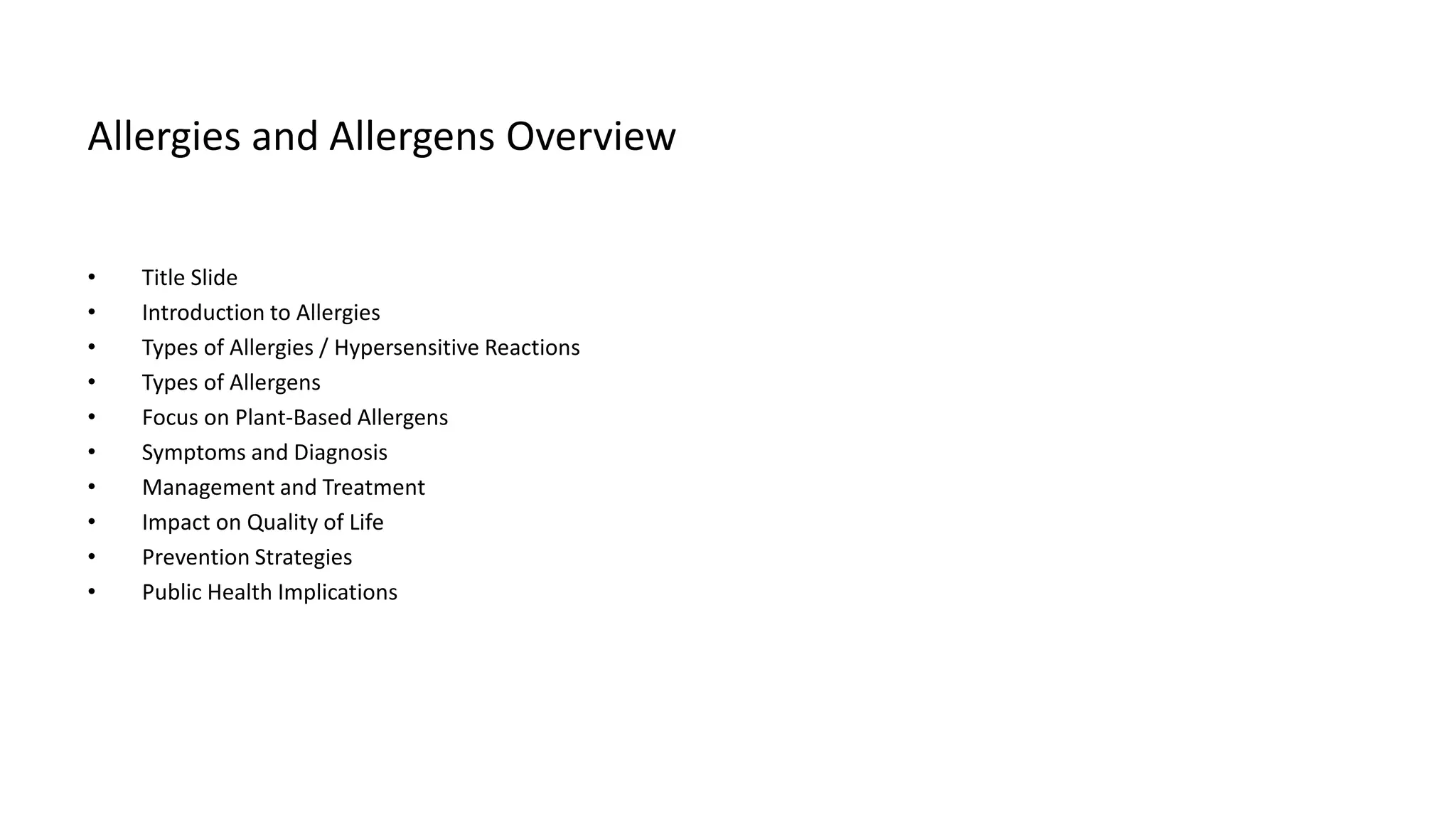
Allergies and Allergens Overview
• Title Slide
• Introduction to Allergies
• Types of Allergies / Hypersensitive Reactions
• Types of Allergens
• Focus on Plant-Based Allergens
• Symptoms and Diagnosis
• Management and Treatment
• Impact on Quality of Life
• Prevention Strategies
• Public Health Implications
Allergies and Allergens Overview
• Future Research Directions
• Conclusion
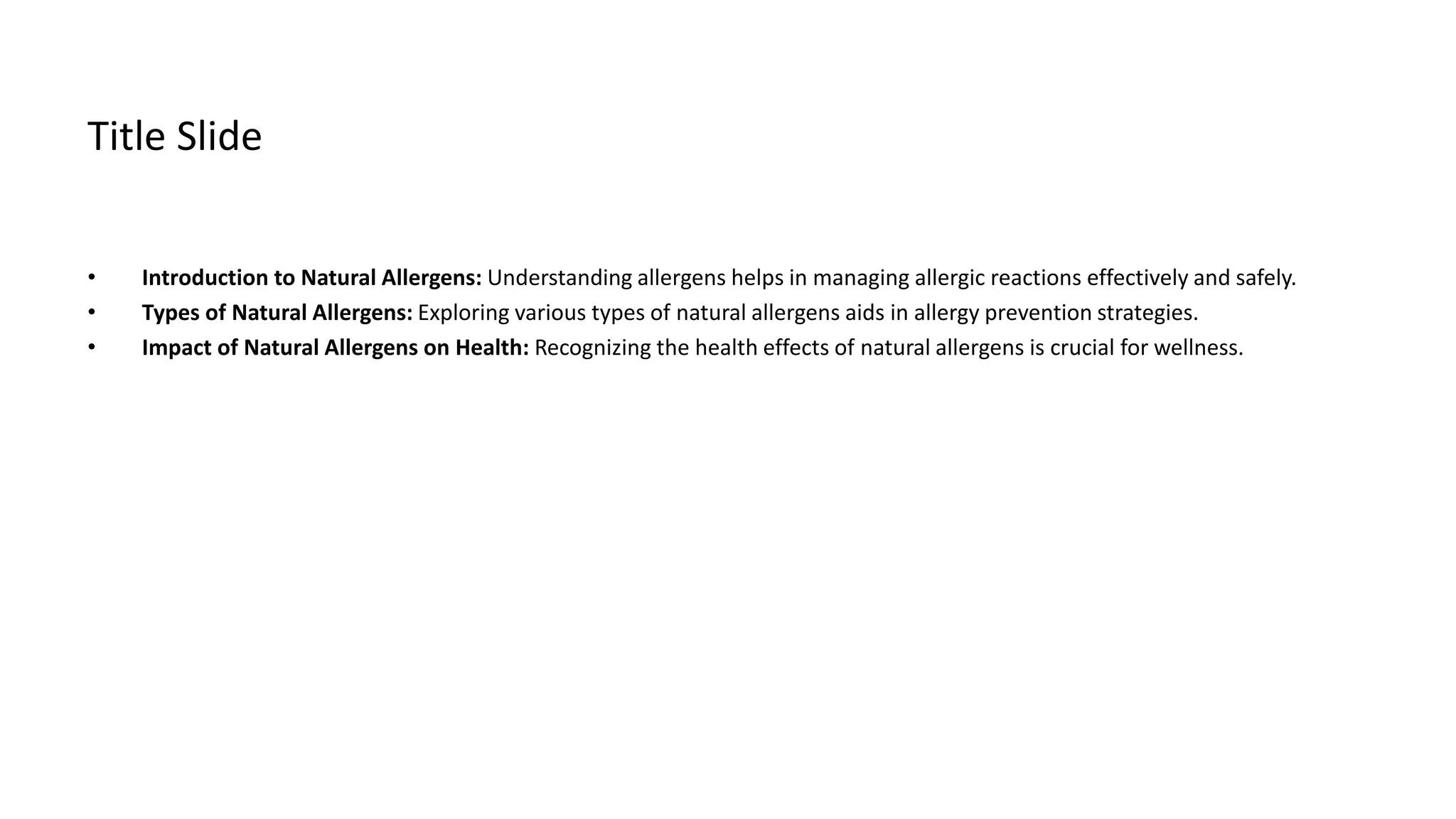
Title Slide
• Introduction to Natural Allergens: Understanding allergens helps in managing allergic reactions effectively and safely.
• Types of Natural Allergens: Exploring various types of natural allergens aids in allergy prevention strategies.
• Impact of Natural Allergens on Health: Recognizing the health effects of natural allergens is crucial for wellness.
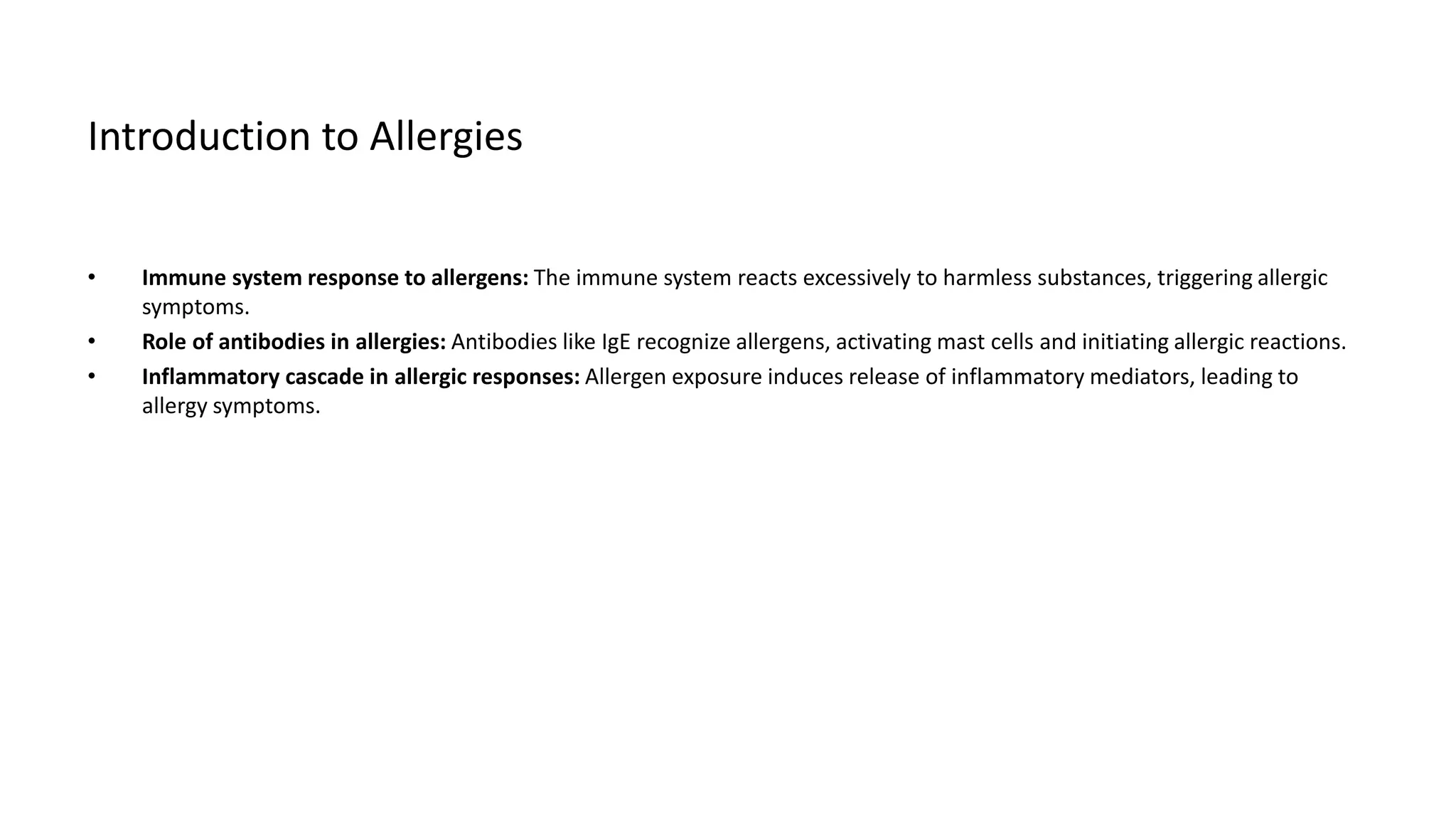
Introduction to Allergies
• Immune system response to allergens: The immune system reacts excessively to harmless substances, triggering allergic
symptoms.
• Role of antibodies in allergies: Antibodies like IgE recognize allergens, activating mast cells and initiating allergic reactions.
• Inflammatory cascade in allergic responses: Allergen exposure induces release of inflammatory mediators, leading to
allergy symptoms.
Types of Allergies / Hypersensitive Reactions
• Type I (Immediate Hypersensitivity): Rapid onset allergic
reaction mediated by IgE antibodies triggering mast cells.
• Type II (Cytotoxic Hypersensitivity): Antibodies target cell
surface antigens causing cell destruction, e.g., hemolytic
anemia.
• Type IV (Delayed-Type Hypersensitivity): T-cell mediated
response developing over hours to days, like contact
dermatitis.
Photo by Pavel Danilyuk on Pexels
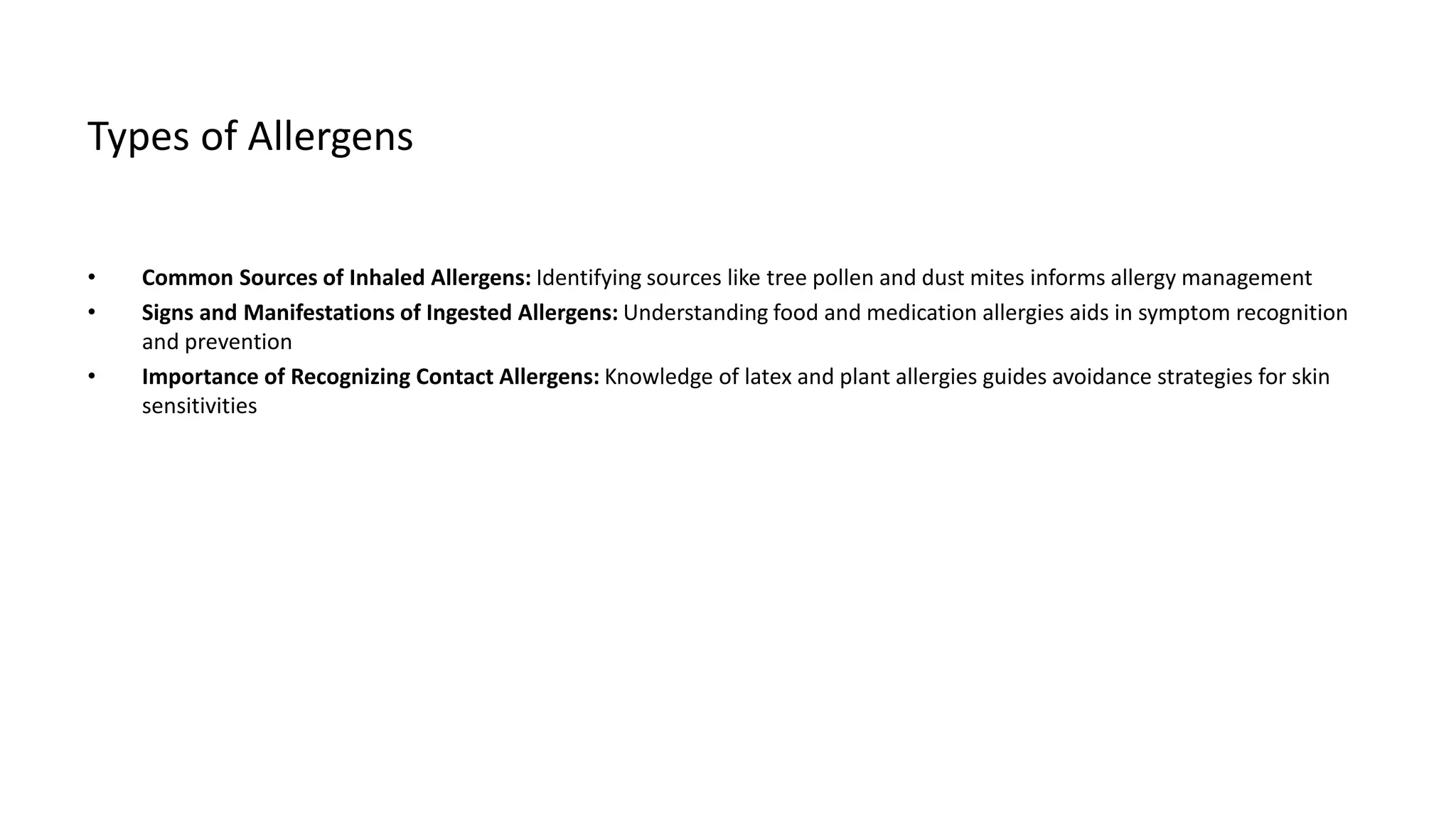
Types of Allergens
• Common Sources of Inhaled Allergens: Identifying sources like tree pollen and dust mites informs allergy management
• Signs and Manifestations of Ingested Allergens: Understanding food and medication allergies aids in symptom recognition
and prevention
• Importance of Recognizing Contact Allergens: Knowledge of latex and plant allergies guides avoidance strategies for skin
sensitivities
Focus on Plant-Based Allergens
• Botanical Names of Plant-Based Allergens: Recognizing Latin names aids accurate identification and allergy management
practices.
• Familial Classification of Key Plant Allergens: Understanding plant families helps in predicting cross-reactivity and common
allergen characteristics.
• Diverse Sources of Plant Contact Allergens: Identifying various toxic plants enhances prevention strategies for skin
reactions.
Symptoms and Diagnosis
• Diagnostic Methods for Allergic Symptoms: Timely diagnosis through skin and blood tests is crucial for identifying allergens.
• Differentiating Allergy from Other Conditions: Accurate diagnosis helps differentiate allergic symptoms from non-allergic
conditions.
• Preventing Severe Allergic Reactions: Early identification of allergens can prevent potential life-threatening anaphylactic
reactions.
Management and Treatment
• Managing Allergies with Avoidance Measures: Implementing avoidance strategies reduces allergen exposure, minimizing
allergic reactions effectively.
• Utilizing Allergy Medications for Symptom Relief: Pharmacotherapy like antihistamines and corticosteroids alleviate allergy
symptoms for improved quality of life.
• Benefits of Immunotherapy through Allergy Shots: Immunotherapy offers long-term relief by desensitizing the immune
system to specific allergens.
Impact on Quality of Life
• Negative Impact on Productivity: Allergy symptoms like
fatigue can reduce work efficiency, highlighting the
importance of effective management.
• Disruption of Sleep Patterns: Sleep disturbances from
allergies can affect daily functioning, necessitating
focused management strategies.
• Chronic Fatigue and Quality of Life: Persistent fatigue
due to allergies can greatly impair overall well-being,
underscoring the critical need for symptom control.
Photo by Pavel Danilyuk on Pexels
Prevention Strategies
• Allergen avoidance for prevention: Avoiding allergens reduces exposure risk, preventing allergic reactions effectively and
improving quality of life.
• Importance of maintaining clean indoor environments: Clean indoor spaces reduce allergen accumulation, minimizing
allergy triggers and promoting wellness.
• Educating individuals on allergen exposure risks: Knowledge empowers effective allergen management, enhancing
prevention strategies and reducing allergic reactions.
Public Health Implications
• Economic Impact of Allergies: Understanding the economic burden highlights the importance of efficient allergy
management.
• Healthcare Costs Associated with Allergies: Addressing healthcare costs emphasizes the need for sustainable allergy
prevention and treatment strategies.
• Role of Allergy Awareness Campaigns: Allergy awareness campaigns promote optimal disease management and enhance
public health outcomes.
Future Research Directions
• Advancements in Allergy Diagnostic Techniques: New diagnostic tools enhance accuracy, aiding in precise allergen
identification and treatment.
• Personalized Medicine in Allergy Treatment: Tailored therapies address individual allergies, optimizing outcomes and
reducing adverse reactions.
• Innovative Treatment Modalities for Allergic Conditions: Novel treatments offer alternative options, improving symptom
management and enhancing quality of life.
Conclusion
• Raising Allergy Awareness in Communities: Increasing
awareness fosters early detection and intervention,
improving allergy outcomes.
• Incorporating Patient Education in Medical Practices:
Educating patients enhances self-management skills,
contributing to better quality of life.
• Implementing Comprehensive Allergy Management
Plans: Integrated strategies optimize care pathways,
leading to holistic allergy management approaches.
Photo by cottonbro studio on Pexels

Allergies and natural Allergens Overview

  • 1.
  • 2.
    Allergies and AllergensOverview • Title Slide • Introduction to Allergies • Types of Allergies / Hypersensitive Reactions • Types of Allergens • Focus on Plant-Based Allergens • Symptoms and Diagnosis • Management and Treatment • Impact on Quality of Life • Prevention Strategies • Public Health Implications
  • 3.
    Allergies and AllergensOverview • Future Research Directions • Conclusion
  • 4.
    Title Slide • Introductionto Natural Allergens: Understanding allergens helps in managing allergic reactions effectively and safely. • Types of Natural Allergens: Exploring various types of natural allergens aids in allergy prevention strategies. • Impact of Natural Allergens on Health: Recognizing the health effects of natural allergens is crucial for wellness.
  • 5.
    Introduction to Allergies •Immune system response to allergens: The immune system reacts excessively to harmless substances, triggering allergic symptoms. • Role of antibodies in allergies: Antibodies like IgE recognize allergens, activating mast cells and initiating allergic reactions. • Inflammatory cascade in allergic responses: Allergen exposure induces release of inflammatory mediators, leading to allergy symptoms.
  • 6.
    Types of Allergies/ Hypersensitive Reactions • Type I (Immediate Hypersensitivity): Rapid onset allergic reaction mediated by IgE antibodies triggering mast cells. • Type II (Cytotoxic Hypersensitivity): Antibodies target cell surface antigens causing cell destruction, e.g., hemolytic anemia. • Type IV (Delayed-Type Hypersensitivity): T-cell mediated response developing over hours to days, like contact dermatitis. Photo by Pavel Danilyuk on Pexels
  • 7.
    Types of Allergens •Common Sources of Inhaled Allergens: Identifying sources like tree pollen and dust mites informs allergy management • Signs and Manifestations of Ingested Allergens: Understanding food and medication allergies aids in symptom recognition and prevention • Importance of Recognizing Contact Allergens: Knowledge of latex and plant allergies guides avoidance strategies for skin sensitivities
  • 8.
    Focus on Plant-BasedAllergens • Botanical Names of Plant-Based Allergens: Recognizing Latin names aids accurate identification and allergy management practices. • Familial Classification of Key Plant Allergens: Understanding plant families helps in predicting cross-reactivity and common allergen characteristics. • Diverse Sources of Plant Contact Allergens: Identifying various toxic plants enhances prevention strategies for skin reactions.
  • 9.
    Symptoms and Diagnosis •Diagnostic Methods for Allergic Symptoms: Timely diagnosis through skin and blood tests is crucial for identifying allergens. • Differentiating Allergy from Other Conditions: Accurate diagnosis helps differentiate allergic symptoms from non-allergic conditions. • Preventing Severe Allergic Reactions: Early identification of allergens can prevent potential life-threatening anaphylactic reactions.
  • 10.
    Management and Treatment •Managing Allergies with Avoidance Measures: Implementing avoidance strategies reduces allergen exposure, minimizing allergic reactions effectively. • Utilizing Allergy Medications for Symptom Relief: Pharmacotherapy like antihistamines and corticosteroids alleviate allergy symptoms for improved quality of life. • Benefits of Immunotherapy through Allergy Shots: Immunotherapy offers long-term relief by desensitizing the immune system to specific allergens.
  • 11.
    Impact on Qualityof Life • Negative Impact on Productivity: Allergy symptoms like fatigue can reduce work efficiency, highlighting the importance of effective management. • Disruption of Sleep Patterns: Sleep disturbances from allergies can affect daily functioning, necessitating focused management strategies. • Chronic Fatigue and Quality of Life: Persistent fatigue due to allergies can greatly impair overall well-being, underscoring the critical need for symptom control. Photo by Pavel Danilyuk on Pexels
  • 12.
    Prevention Strategies • Allergenavoidance for prevention: Avoiding allergens reduces exposure risk, preventing allergic reactions effectively and improving quality of life. • Importance of maintaining clean indoor environments: Clean indoor spaces reduce allergen accumulation, minimizing allergy triggers and promoting wellness. • Educating individuals on allergen exposure risks: Knowledge empowers effective allergen management, enhancing prevention strategies and reducing allergic reactions.
  • 13.
    Public Health Implications •Economic Impact of Allergies: Understanding the economic burden highlights the importance of efficient allergy management. • Healthcare Costs Associated with Allergies: Addressing healthcare costs emphasizes the need for sustainable allergy prevention and treatment strategies. • Role of Allergy Awareness Campaigns: Allergy awareness campaigns promote optimal disease management and enhance public health outcomes.
  • 14.
    Future Research Directions •Advancements in Allergy Diagnostic Techniques: New diagnostic tools enhance accuracy, aiding in precise allergen identification and treatment. • Personalized Medicine in Allergy Treatment: Tailored therapies address individual allergies, optimizing outcomes and reducing adverse reactions. • Innovative Treatment Modalities for Allergic Conditions: Novel treatments offer alternative options, improving symptom management and enhancing quality of life.
  • 15.
    Conclusion • Raising AllergyAwareness in Communities: Increasing awareness fosters early detection and intervention, improving allergy outcomes. • Incorporating Patient Education in Medical Practices: Educating patients enhances self-management skills, contributing to better quality of life. • Implementing Comprehensive Allergy Management Plans: Integrated strategies optimize care pathways, leading to holistic allergy management approaches. Photo by cottonbro studio on Pexels